 Andrei from New York City/Juneau, U.S.A. on Wikimedia
On November 18th, residents of Utqiagvik, Alaska, watched their last sunrise of the year slip below the horizon.
For the next 65 days, the sun won't return. Well, no, this isn't a fictional scenario—it's an annual reality for America's northernmost city, where polar night converts daily life into something most people can barely imagine. So, what causes this strange predicament and what is it actually like to live through it?
Living At The Top Of The World
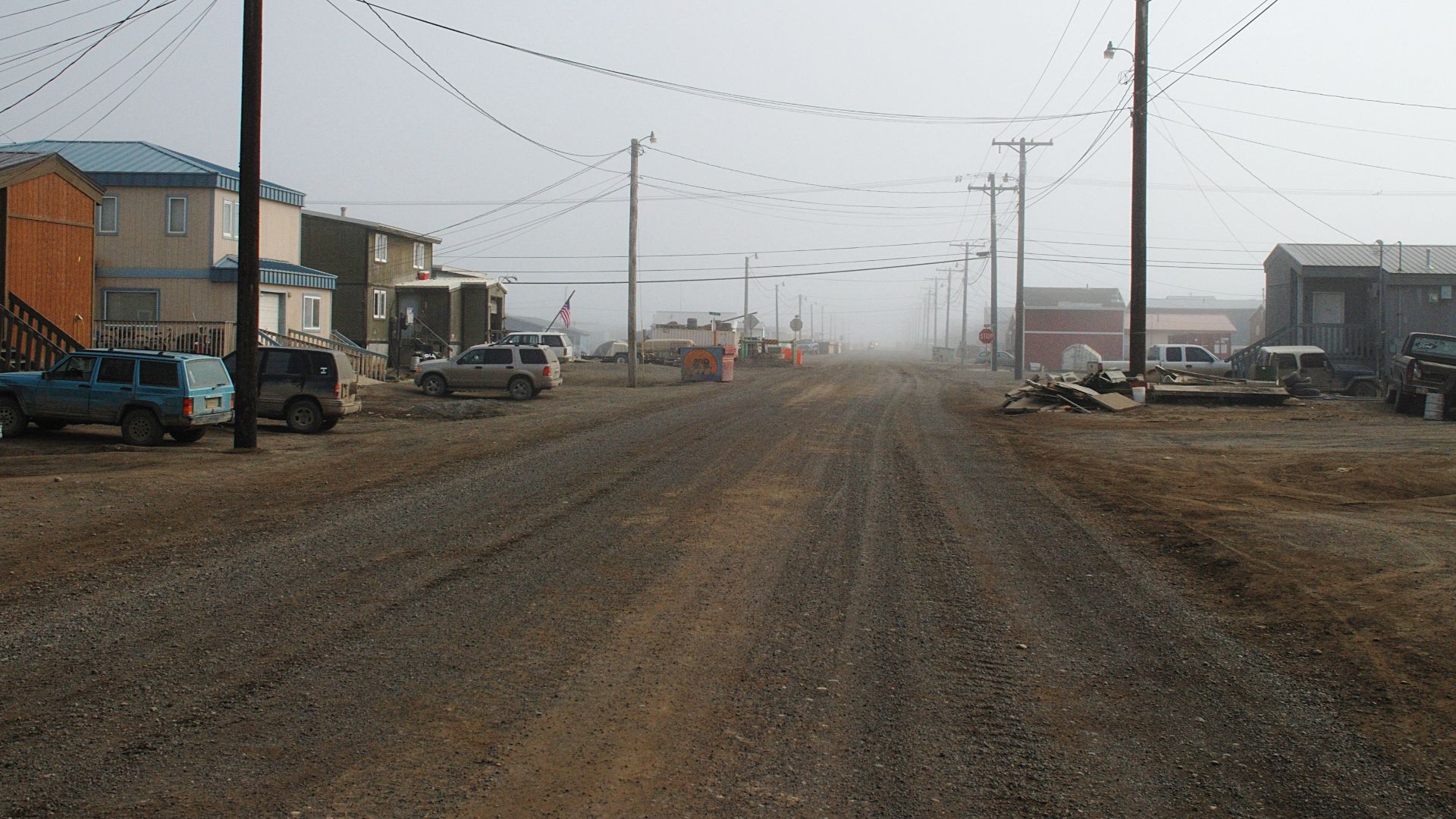
Utqiagvik sits 320 miles north of the Arctic Circle on Alaska's northern coast, making it the northernmost city in the United States. Formerly known as Barrow until residents voted to restore its traditional Iñupiaq name in 2016, this community of roughly 5,000 people experiences one of Earth's most extreme light cycles.
When the sun disappeared below the horizon in mid-November, it marked the beginning of a phenomenon that only occurs in the polar regions. The science behind polar night is surprisingly straightforward. Earth tilts on its axis at 23.5 degrees, and as our planet orbits the sun, this tilt causes the poles to alternatively lean toward and away from the sun throughout the year.
It is said that during the winter months, locations above the Arctic Circle tilt so far away that the sun never really rises above the horizon. The farther north you go, the longer this darkness lasts. Utqiagvik's extreme latitude means residents won't glimpse the sun again until January 22, 2026.
More Than Complete Darkness
Contrary to popular belief, polar night doesn't mean total darkness around the clock. Utqiagvik experiences civil twilight during midday hours, creating a distinctive blue-gray glow that illuminates the frozen landscape. This phenomenon occurs because even though the sun stays below the horizon, it comes close enough that its light scatters through the atmosphere.
The result is several hours of dim, otherworldly light that photographers and artists find mesmerizing. Moonlight also plays a significant role during these months. When the moon is full, its reflection off the snow and ice creates surprisingly bright conditions. Add the occasional aurora borealis dancing across the Arctic sky, and polar night becomes less about darkness and more about experiencing light in completely different ways than most people ever witness.
Adapting To Extreme Seasons

The Iñupiat people have thrived in this environment for thousands of years, developing cultural practices and survival skills ideally suited to extreme seasonal changes. Modern residents maintain this resilience while embracing contemporary technology. Special lamps that mimic sunlight help regulate circadian rhythms, and community activities keep spirits high during the long darkness.
Oh, and the flip side arrives in May, when Utqiagvik enters polar day. We’re talking 84 consecutive days of midnight sun. From May 10th through August 1st, the sun never sets, creating its own unique challenges and opportunities. This dramatic swing between extremes shapes everything from local wildlife patterns to human psychology, making Utqiagvik one of Earth's most fascinating places to experience our planet's celestial mechanics firsthand.