I Nursed My Dying Husband for Years—Then His Children Accused Me of Stealing Everything
I Nursed My Dying Husband for Years—Then His Children Accused Me of Stealing Everything
The Last Morning
Richard died on a Thursday morning in late September, with autumn light streaming through our bedroom window and his hand still warm in mine. I'd been up all night, of course—I'd barely slept in months—but that morning felt different. Quieter. His breathing had changed around dawn, becoming shallow and irregular, and I knew without anyone telling me that we were at the end. Twenty years of marriage, and I was about to watch it slip away with his final exhale. I didn't cry right then. I just sat there holding his hand, telling him it was okay to let go, that I'd be alright. When he took that last breath, it wasn't dramatic like in the movies. It was just... over. The hospice nurse arrived an hour later and handled everything with gentle efficiency, but I felt like I was watching it all happen to someone else. I called his children—Melissa, Andrew, and David—and left voicemails because none of them answered. The next few days blurred together in a fog of arrangements and condolence calls. Three days later, the lawyer's office called with a meeting date, and I had no idea my grief was about to become a battlefield.
 Image by RM AI
The Funeral Faces
The funeral was small, dignified, exactly what Richard would have wanted. I stood at the front of the chapel in my black dress, greeting people I half-recognized from Richard's work life, accepting hugs from neighbors who'd watched him decline. His three children sat in the front row—Melissa with her designer handbag, Andrew in his expensive suit, David checking his phone every few minutes. They'd all flown in the night before, staying at hotels rather than the house they'd grown up in. When they approached me after the service, their condolences felt rehearsed. 'Thank you for taking care of Dad,' Melissa said, her smile not quite reaching her eyes. Andrew shook my hand like we were closing a business deal. David mumbled something about it being 'for the best' and immediately turned to talk to someone else. I told myself they were just processing their grief differently, that everyone handles loss in their own way. But there was something hollow in their expressions, something distant that went beyond shock or sadness. Melissa touched my arm and said, 'We'll need to talk soon about Dad's affairs,' and something in her tone made my stomach drop.
 Image by RM AI
Twenty Years in Reverse
Looking back now, I can see how the distance between us built up gradually, like sediment settling at the bottom of a lake. When Richard and I married twenty years ago, his kids were already adults—Melissa was eighteen, Andrew twenty-two, David fifteen. I never tried to be their mother. Their mom had passed away five years earlier, and I knew better than to assume I could fill that space. But I tried. God, how I tried. I hosted birthday dinners and holiday gatherings, remembered their favorite foods, asked about their jobs and relationships. I sent care packages when they moved to new cities, offered our guest room when they visited. For the first few years, they seemed to tolerate me. We weren't close, but we were cordial. Then, slowly, the calls became less frequent. The holiday visits shortened. Melissa started declining invitations, Andrew always had work conflicts, David would show up late and leave early. By year ten, our relationship had cooled into polite formality. By year fifteen, I only saw them at major holidays, and even then, they seemed eager to leave. I'd hosted dozens of dinners, remembered every birthday, but when Richard got sick, they barely came—and now they wanted to 'talk about affairs.'
 Image by RM AI
The Diagnosis Day
The diagnosis came eighteen months before Richard died—stage three pancreatic cancer with a grim prognosis. I remember sitting in that sterile oncologist's office, watching Richard's face go pale as the doctor explained treatment options and timelines. The word 'months' kept coming up instead of 'years.' We drove home in silence, both of us trying to process what we'd just heard. That night, I made the calls to his children, my voice shaking as I explained what the doctor had said. They were shocked, sympathetic, promised to visit soon. Melissa sent flowers the next day with a card that said 'Thinking of you both.' Andrew and David created a group text to coordinate visits. But somehow 'soon' never quite materialized. There were work obligations, travel conflicts, childcare issues. I understood, or at least I tried to. They had their own lives, their own responsibilities. Meanwhile, I quit my part-time job at the library to become Richard's full-time caregiver. Someone had to manage his medications, drive him to appointments, help him when he was too weak to shower alone. The kids sent flowers and a group text saying they'd visit soon, but 'soon' turned into weeks, then months.
 Image by RM AI
The Sleepless Months
I don't think people who haven't been caregivers really understand what it means. It's not just making soup and fluffing pillows. It's administering medications on strict schedules, managing side effects from chemotherapy, helping someone you love use the bathroom when they're too weak to stand alone. It's watching them lose weight, lose hair, lose the person they used to be. Richard was so proud, so private. He didn't want his children to see him like that—vulnerable, dependent, diminished. I understood that, even if it hurt. So I handled everything. The midnight crises, the doctor appointments, the insurance paperwork, the hospital stays. I slept in a chair beside his bed, learned to change IV lines, became fluent in medical terminology I'd never wanted to know. I lost fifteen pounds myself and developed permanent shadows under my eyes. When Andrew finally visited about six months in, he stayed twenty minutes, sat on the edge of the couch like he might catch something, and checked his phone constantly. Richard was napping upstairs. As Andrew was leaving, he asked casually, 'Has Dad updated his paperwork recently? You know, legal stuff?' I was so exhausted I didn't even register the question as strange. When Andrew finally visited, he stayed twenty minutes, checked his phone constantly, and asked if Dad had 'updated his paperwork recently.'
 Image by RM AI
The Empty Chair
The worst part wasn't the physical exhaustion—it was watching Richard wait. Every time the doorbell rang or a car pulled into the driveway, his face would transform with hope. He'd try to sit up straighter, smooth down his thinning hair, paste on a smile. Then I'd come back from answering the door—just the mail carrier, just a neighbor dropping off casserole—and watch that hope drain away. 'Maybe tomorrow,' he'd say, settling back into his pillows. Melissa would call occasionally, always rushed, always with some excuse why she couldn't visit just yet. 'Work is crazy right now, Dad, but I'm thinking about you.' David sent text messages with heart emojis. Andrew promised to come for Thanksgiving, then Christmas, then 'definitely in the spring.' By the end, Richard stopped asking when they'd visit. He'd just look at me with these tired, knowing eyes, and we'd both pretend his heart wasn't breaking. One night, after Melissa canceled yet another planned visit, Richard squeezed my hand and whispered, 'At least I have you,' and I saw something break behind his eyes.
 Image by RM AI
The Lawyer's Office
The lawyer's office was one of those old downtown buildings with dark wood paneling and leather chairs that creaked when you sat down. I arrived five minutes early, still feeling like I was moving through water, everything slightly unreal. Grief does that—makes the world feel muffled and distant. I expected this meeting to be awkward and sad, just another ritual to endure. Then Melissa, Andrew, and David walked in together, and something in the air shifted. They weren't wearing the soft, stunned expressions of people still processing loss. They looked focused. Alert. Melissa's eyes swept the room, cataloging everything, before landing on me with an intensity that made me want to shrink into my chair. Andrew sat down with the deliberate posture of someone preparing for a business negotiation. Even David, usually the most scattered of the three, seemed unnaturally attentive. They'd barely spoken to their father in his final months, but now they were here, present, engaged in a way they hadn't been at the funeral. I felt my throat tighten with anxiety I couldn't quite name. The lawyer opened the folder, and I watched Melissa lean forward like a hawk spotting prey.
 Image by RM AI
The Reading
Mr. Gonzalez, the lawyer, was a soft-spoken man in his fifties who'd handled Richard's affairs for years. He adjusted his reading glasses and began going through the will with methodical precision. I heard my name first—the house where Richard and I had lived for two decades, the savings account we'd built together, the lakeside cabin we'd bought as a retirement dream. Then something I hadn't known about: a substantial scholarship fund Richard had established in his name at his alma mater, designated to continue in perpetuity. My vision blurred with tears at that gesture, so perfectly Richard. Mr. Gonzalez continued reading. There were modest bequests to each of his children—not insignificant amounts, but not the windfall they'd apparently expected. I saw Andrew's jaw clench. Melissa's perfectly manicured fingers gripped the armrest of her chair. David had gone completely still, his usual fidgeting ceased. The room felt airless, like all the oxygen had been sucked out. I hadn't even known the contents of Richard's will—we'd never discussed it in detail, and I'd never asked. Before the lawyer finished the last page, Andrew said, 'This is wrong,' and Melissa's eyes locked onto mine with something that looked like accusation.
 Image by RM AI
The Accusations Begin
David spoke first, his voice tight and controlled. 'So, Caroline, how exactly did you manage to get everything?' The word 'manage' landed like a slap. I opened my mouth to respond, but Melissa cut in before I could form words. 'We need to talk about Dad's mental state those last few months,' she said, her tone professionally concerned, like a prosecutor laying groundwork. 'He was on so many medications. Was he really competent to make these decisions?' I felt my face flush hot. 'Your father was lucid until nearly the end. Mr. Gonzalez can confirm—' 'Can he?' David interrupted. 'Or did you just control who saw him when he was having good days?' The accusation hung in the air, ugly and absurd. I'd never prevented them from visiting. They'd chosen not to come. But before I could defend myself, before I could explain anything about the careful records I'd kept or the doctors who'd assessed Richard's capacity right up until he signed the updated will, Andrew stood up and said, 'We'll be contesting this,' and walked out before I could say a word.
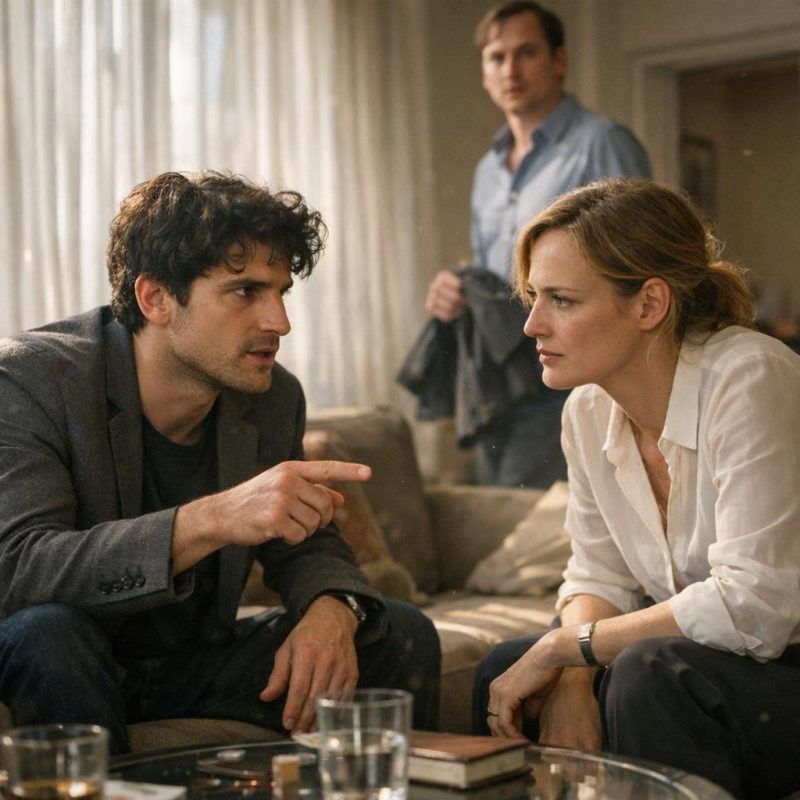 Image by RM AI
The First Night Alone
I drove home in a fog, barely registering the familiar turns. The house felt cavernous and silent when I walked in—not the peaceful quiet of mourning, but something heavier, more oppressive. Richard's reading glasses were still on the side table where he'd left them weeks ago. His coffee mug sat in the dish rack, washed but never put away because I couldn't bring myself to file it back into the cabinet. Just that morning, I'd been a widow trying to figure out how to breathe through grief. Now I was apparently a defendant in a legal war that had started before I'd even left the lawyer's office. The speed of it felt surreal, like I'd stepped through some invisible threshold into a parallel nightmare version of my life. I made tea I didn't drink and sat at the kitchen table until it grew dark outside. My phone buzzed around eight o'clock, and I stared at the unknown number before listening to the voicemail. I found a voicemail from an unknown number: a lawyer representing Richard's children, requesting 'all documentation' regarding his medical care and financial decisions.
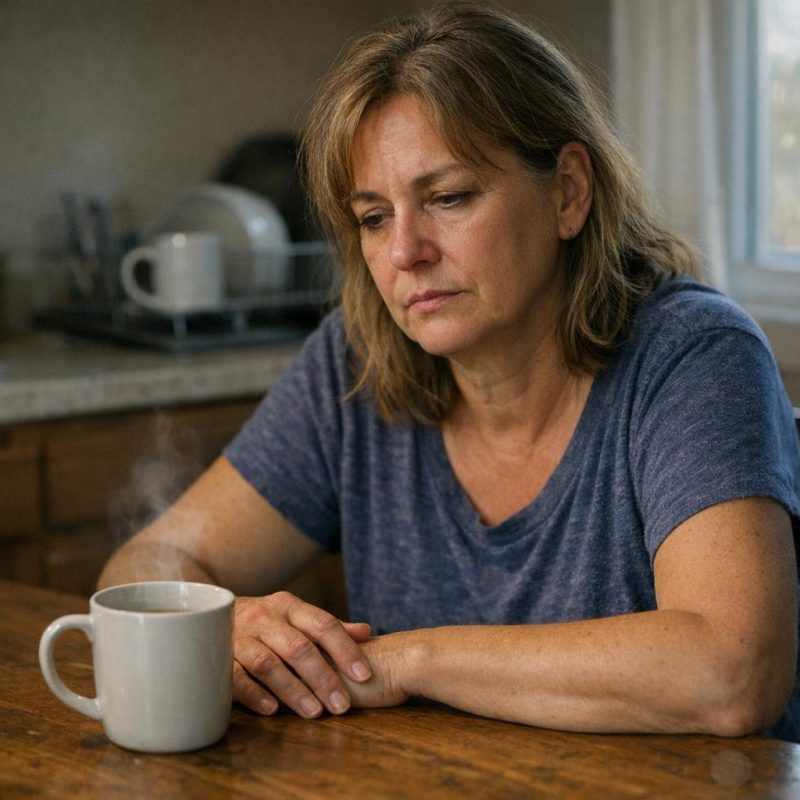 Image by RM AI
Searching for Help
I called Mr. Gonzalez first thing the next morning, my hands shaking as I held the phone. He agreed to represent me and asked me to come to his office that afternoon. Sitting across from his mahogany desk, I felt small and exposed, like I was the one on trial already. 'I need you to understand what we're facing,' he said, folding his hands. 'This isn't uncommon in second marriages, especially when there's a significant estate involved. But it's going to be difficult.' He outlined the process: depositions, financial disclosures, character witnesses. Everything about my relationship with Richard would be scrutinized and dissected. 'Do you have documentation? Records of his medical treatments, visitor logs, financial transactions?' I nodded. I'd kept meticulous records during Richard's illness—partly out of necessity, partly because I'm just that type of person. 'Good. That'll help. But Caroline, you need to prepare yourself.' He leaned forward slightly, his expression grave. 'They're going to paint you as a manipulator who isolated their father—prepare for it to get ugly.'
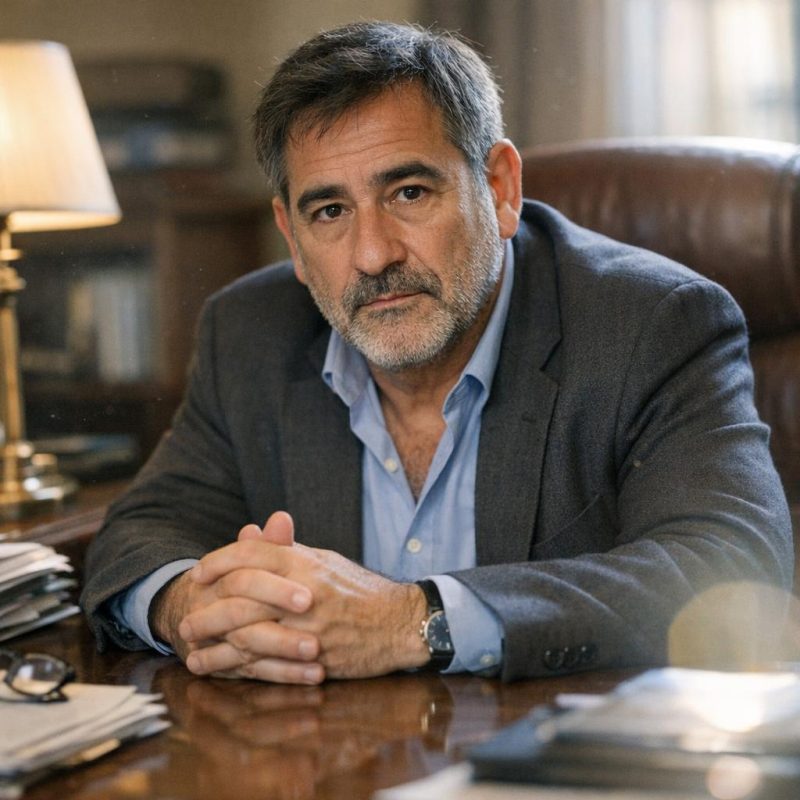 Image by RM AI
The Formal Contest
The official complaint arrived by courier a week later, a thick envelope with a law firm's return address embossed in raised lettering. I made myself read it at the kitchen table, forcing my eyes across each page even as my vision blurred. 'Undue influence.' 'Isolation of the decedent from his natural heirs.' 'Lack of testamentary capacity due to medication and cognitive decline.' The legal language was cold and clinical, but the implications were crystal clear—they were saying I'd manipulated a sick, vulnerable man into leaving me everything. That I'd kept his children away deliberately. That I'd taken advantage of his weakened state to enrich myself. They described our marriage as a calculated scheme, painted my caregiving as control, twisted my devotion into something mercenary and cruel. Every moment I'd held Richard's hand through pain, every medication schedule I'd managed, every night I'd slept in a chair beside his bed—all of it reduced to evidence of manipulation. Reading the legal language that described my marriage as a calculated manipulation made me physically ill.
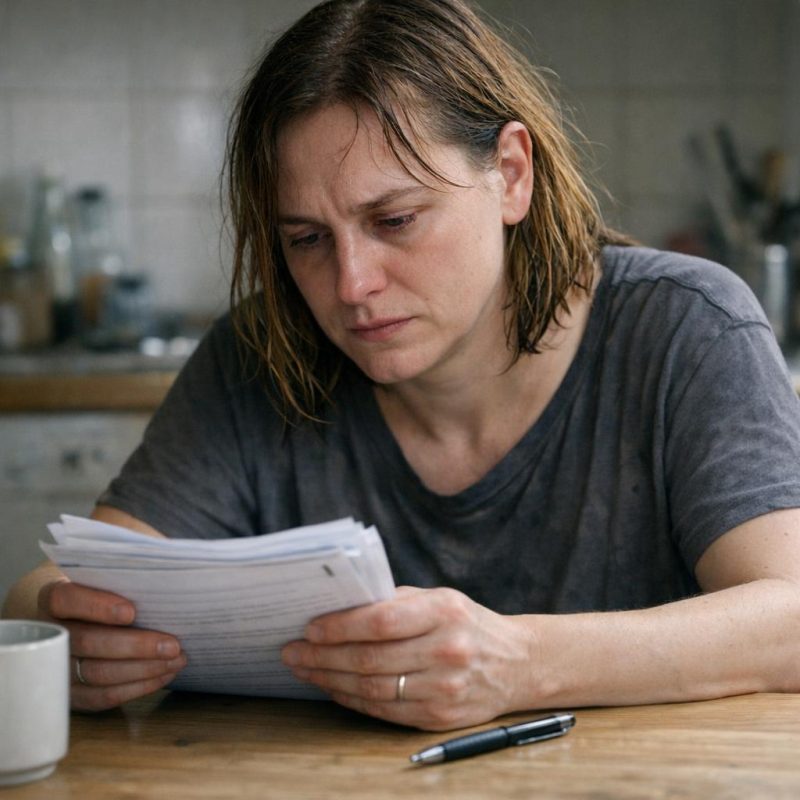 Image by RM AI
The Isolation Claim
Their attorney's narrative, as Mr. Gonzalez explained it to me over the phone, was thorough and damning. According to their version, I'd systematically prevented the children from visiting their father, screening calls and making excuses whenever they tried to come by. I'd controlled Richard's medication schedule to keep him sedated or confused during times when he might have been lucid enough to question my influence. I'd deliberately scheduled their visits during his worst hours—when the pain was unbearable or the medication had him disoriented—to make them believe he was more incapacitated than he actually was. It was a comprehensive theory of manipulation, and hearing it laid out made my stomach turn. 'But I documented everything,' I told Mr. Gonzalez. 'I kept visitor logs. I have medication records that match exactly what his doctors prescribed. I wrote in a journal every single day about his condition, his visitors, everything.' 'I know,' he said. 'And that'll be important. But Caroline, they're going to argue you created those documents to protect yourself. That you knew what you were doing.' I had kept visitor logs, medication records, and a detailed journal—but would anyone believe me over three grieving children?
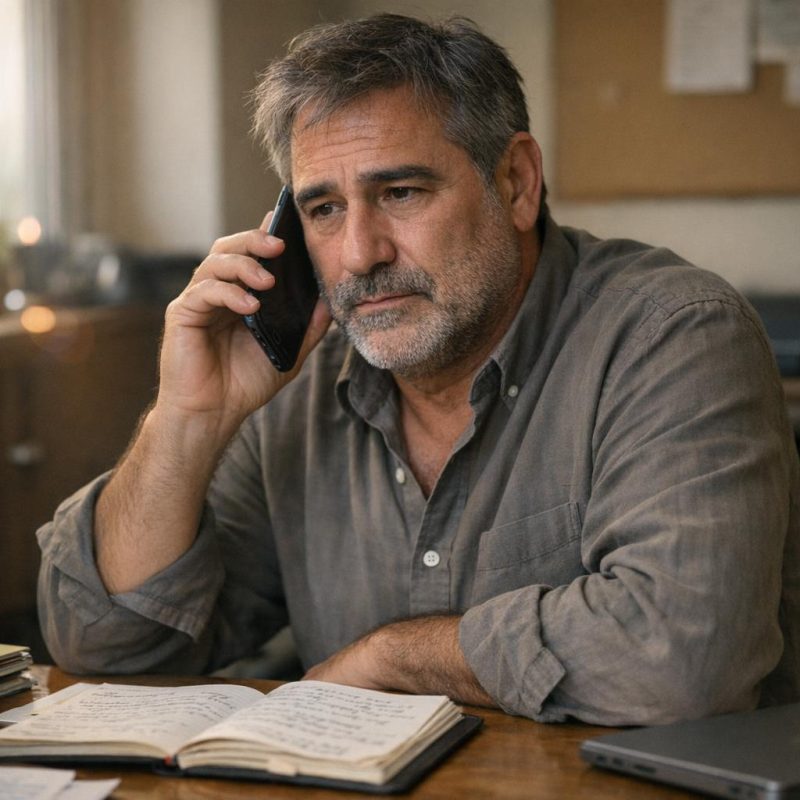 Image by RM AI
The Broken Window
I heard the crash from upstairs around ten o'clock at night, a sharp shattering that sent adrenaline flooding through my system. For a confused second, I thought maybe I'd imagined it—stress and exhaustion playing tricks. But when I crept downstairs and turned on the lights, cold air was pouring through the broken back window in the kitchen. Glass covered the floor like scattered ice. My first instinct was to call 911, but something made me check the house first. The living room was untouched. The bedroom was fine. But when I reached Richard's study, my breath caught. Papers were everywhere—drawers yanked open, files scattered across the floor, his desk completely ransacked. My jewelry box upstairs hadn't been touched. My laptop sat on the coffee table where I'd left it. The TV, the good silver Richard's first wife had left him, my grandmother's china—all still there. Nothing valuable was taken, but Richard's desk had been thoroughly searched, and I couldn't shake the feeling that someone was looking for something specific.
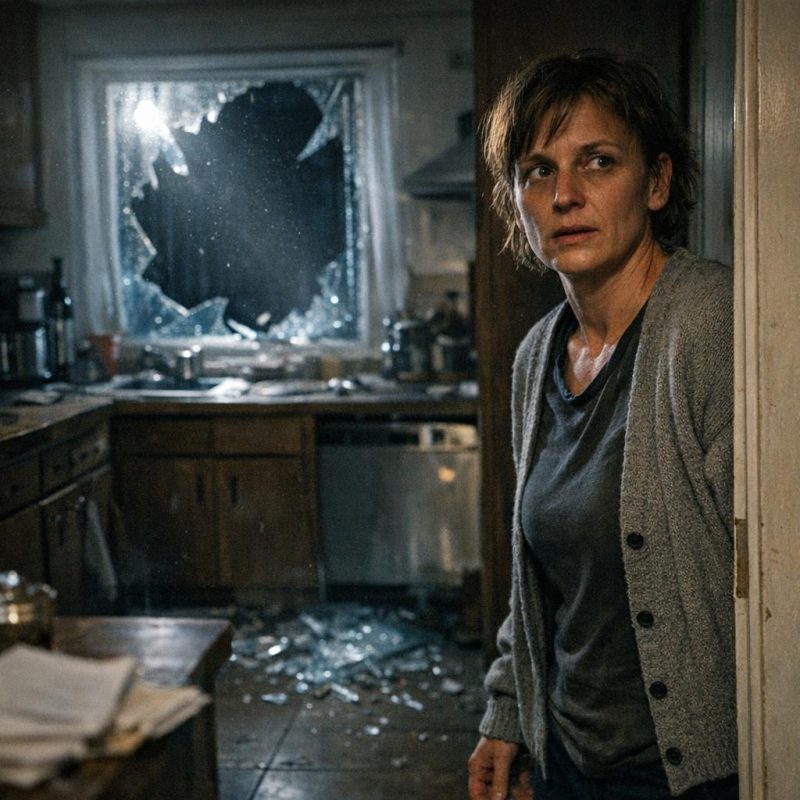 Image by RM AI
The Police Report
The officer who took my statement was young and looked tired, like he'd already handled a dozen calls that night. I walked him through what I'd found, showed him the ransacked study, mentioned the will contest and the timing. He wrote it all down dutifully, but I could see the skepticism in his eyes. 'Without proof connecting the break-in to the legal dispute, ma'am, it's hard to say.' He was professional but unmoved. 'Could be random. Could be kids looking for quick cash and they got spooked.' 'Nothing was taken,' I repeated. 'Just my husband's papers searched through.' 'I understand. We'll increase patrols in the area. Call if anything else happens.' It felt like shouting into the void. I signed the report and walked out into the parking lot, exhausted and frustrated. That's when I saw David's car parked across the street, the engine running. Our eyes met through the windshield, and instead of looking away or driving off, he just stared at me. As I left the station, I saw David's car parked across the street, and when our eyes met, he didn't look away.
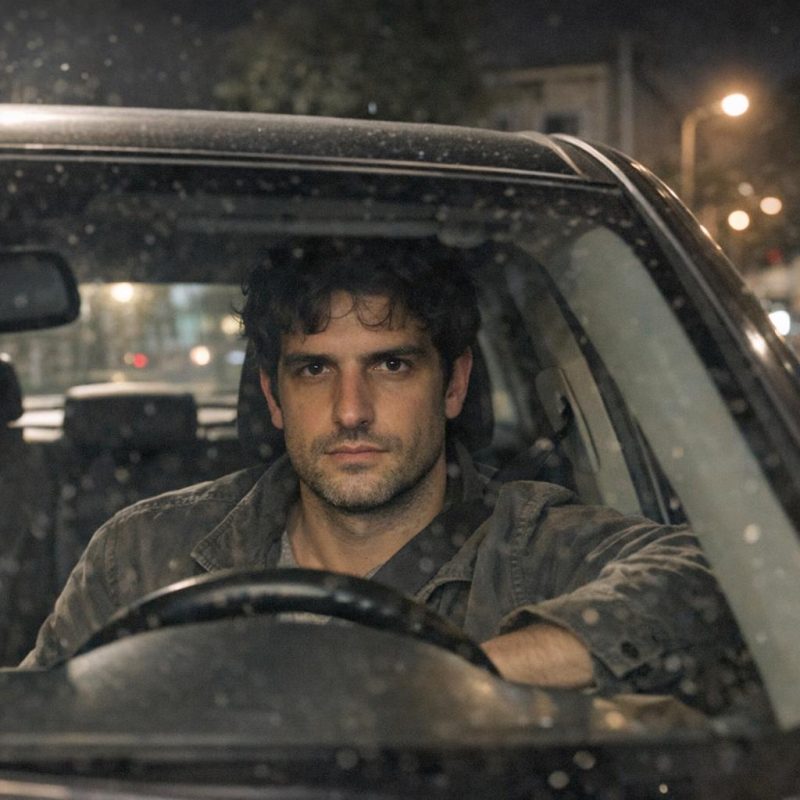 Image by RM AI
The Voicemail
The voicemail came two days later while I was at the grocery store, Andrew's number flashing on my missed calls. I listened to it sitting in my parked car, bags of food growing warm in the trunk. It started reasonably enough—'Caroline, it's Andrew. I think we should talk, just you and me, before this gets any further out of hand.' There was a pause, and I could hear him breathing. Then his tone shifted, something harder creeping into his voice. 'You need to understand the position you're putting us in. Dad would've wanted his children taken care of. You know that. You have a chance here to do the right thing, to honor his memory by being fair.' Another pause, longer this time. 'But if you're going to keep pretending you deserve everything, if you're going to hide behind lawyers and play the victim, then you should know we're prepared to do whatever it takes. We have resources you don't. We have information you don't want public.' His voice dropped lower, almost intimate in its menace. His final words were, 'You have no idea what we're capable of, Caroline,' and the line went dead.
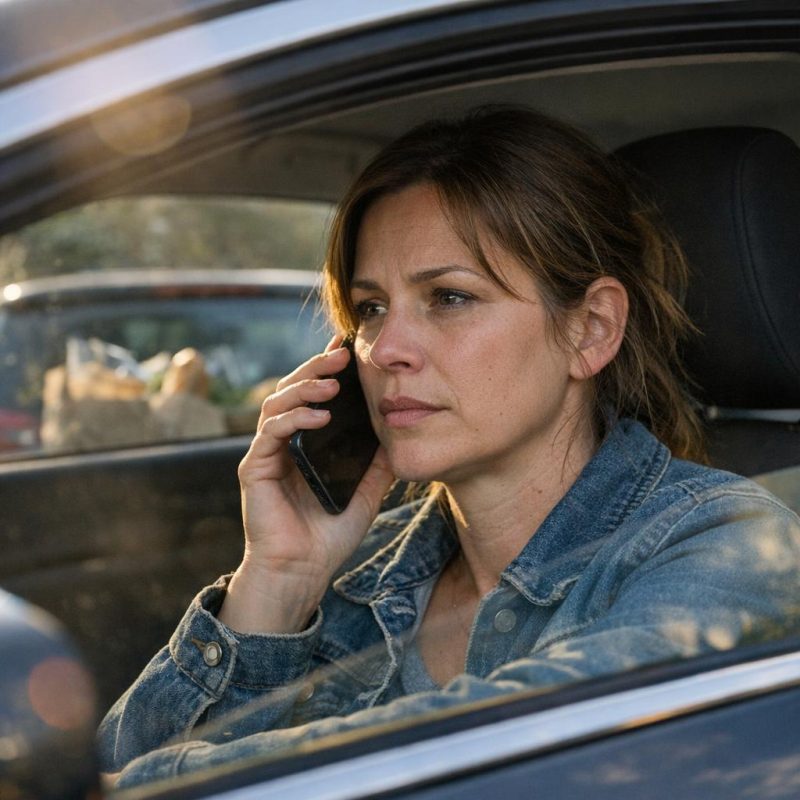 Image by RM AI
The Restraining Order Hearing
Mr. Gonzalez didn't waste time. Within forty-eight hours of that voicemail, we were standing in Judge Martha Reynolds' courtroom for an emergency restraining order hearing. The courtroom was smaller than I'd expected, fluorescent lights humming overhead, smelling faintly of furniture polish and old paper. Andrew sat at the opposing table with his attorney, wearing a charcoal suit that probably cost more than my monthly grocery budget. He looked composed, almost bored, like this was just another tedious business meeting. Mr. Gonzalez played the voicemail on a small speaker, Andrew's threatening words filling the quiet room. 'You have no idea what we're capable of, Caroline.' I watched Judge Reynolds' expression harden as she listened. She was younger than I'd expected, maybe late fifties, with steel-gray hair pulled back severely and reading glasses that caught the light. When the recording ended, she looked directly at Andrew. 'This behavior is unacceptable,' she said flatly. 'Restraining order granted. Mr. Wilson, you are to have no contact with Mrs. Wilson outside of court proceedings and only through attorneys.' The whole thing took maybe twenty minutes. Andrew stared at me across the courtroom with such contempt that I understood: this wasn't about money anymore, it was personal.
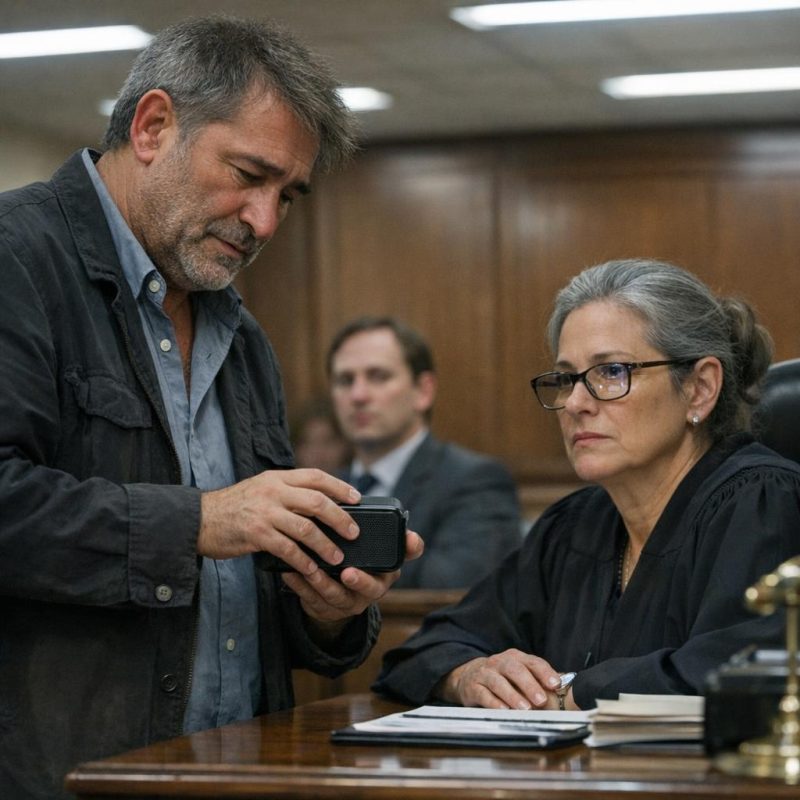 Image by RM AI
The Lakeside Cabin
I needed to get away from it all, even just for a weekend. The lakeside cabin felt like the only place left where Richard and I still existed together, untainted by lawyers and courtrooms and his children's accusations. We'd bought it as a wreck fifteen years ago—sagging porch, holes in the roof, more mice than furniture. Richard had insisted we could restore it ourselves, and somehow we did. Every summer weekend for three years, we drove up with tools and sandpaper and paint, transforming that disaster into something beautiful. I'd stripped wallpaper while he replaced floorboards. We'd argued about paint colors and laughed until we cried when the kitchen sink fell through the rotted counter. The drive up felt like going back in time, pine trees lining the narrow road, the air getting cooler and cleaner with every mile. I had groceries in the back seat, my favorite mystery novel, a bottle of wine. My shoulders started to relax for the first time in weeks. I turned down the gravel drive, hearing rocks ping against the undercarriage, already imagining sitting on the porch with coffee at sunrise. When I arrived, the locks had been changed, and David's truck was in the driveway.
 Image by RM AI
The Standoff
I stood there for a solid minute just staring at that truck, my brain refusing to process what I was seeing. Then I walked up to the door and tried my key. It didn't fit. Not stuck, not jammed—the entire lock mechanism was different. I knocked, my heart hammering. David opened the door wearing sweatpants and one of Richard's old fishing shirts, looking at me like I was a door-to-door salesman. 'What are you doing here?' I asked, my voice shaking. He leaned against the doorframe, arms crossed. 'I have just as much right to be here as you do. More, actually, since this is family property and you're just Dad's widow.' I could smell coffee brewing inside, see dishes in the sink through the doorway. He'd made himself at home in the place Richard and I built with our own hands. 'You changed the locks,' I said. 'You can't just—' 'Can't I?' he interrupted. 'You're the one trespassing, Caroline. This cabin belongs to Dad's estate, and you're trying to steal it like everything else.' He smiled then, this cold little smile that made my stomach turn. I called Mr. Gonzalez from the driveway while David watched from the window with his arms crossed, daring me to do something about it.
 Image by RM AI
The Emergency Motion
Mr. Gonzalez met me at his office an hour later, Saturday afternoon, still wearing his weekend clothes—jeans and a pullover sweater instead of his usual suit. He listened to everything, taking notes on a yellow legal pad, his jaw getting tighter with each detail. 'He can't do this,' I said, stating the obvious. 'I know he can't, but he did, and now what?' Mr. Gonzalez set down his pen and looked at me over his glasses. 'Now we file an emergency motion to remove him from the property and restore your access. It's clear-cut—you're the surviving spouse, the will gives you the cabin outright, and he's essentially squatting.' He started pulling up forms on his computer, fingers flying over the keyboard. 'This is actually good for us, Caroline,' he added. 'I know it doesn't feel like it, but David just handed us ammunition. He's showing a pattern of aggression and disrespect for legal process. Judges notice these things.' I watched him work, feeling that strange mix of gratitude and exhaustion that had become so familiar. The printer whirred to life, spitting out pages of legal text. The hearing was scheduled for three days later, and Mr. Gonzalez warned me that David's behavior might actually help our case.
 Image by RM AI
The Cabin Hearing
The emergency hearing had the same fluorescent lights, the same furniture polish smell, but this time David sat at the opposing table instead of Andrew. He'd brought their lawyer, a sharp-faced woman in an expensive suit who argued that David was 'protecting family assets from potential waste and mismanagement by Mrs. Wilson.' She made it sound so reasonable, like David was some kind of responsible guardian instead of someone who'd broken into my property and changed the locks. Mr. Gonzalez presented the deed showing the cabin was mine outright, showed photos of the changed locks, presented a timeline of when I'd been locked out. Judge Reynolds—the same judge from Andrew's restraining order hearing—listened with that same severe expression. When David's lawyer finished talking, the judge removed her glasses and rubbed the bridge of her nose. 'Mr. Wilson,' she said, looking directly at David. 'Do you have any legal documentation giving you the right to occupy this property?' David shifted in his seat. 'It was my father's cabin,' he said. 'It's been in our family—' 'That's not what I asked,' Judge Reynolds interrupted. The ruling took maybe five minutes. Judge Reynolds ordered David out of the cabin immediately and warned that his behavior would be 'noted' in the main will contest proceedings.
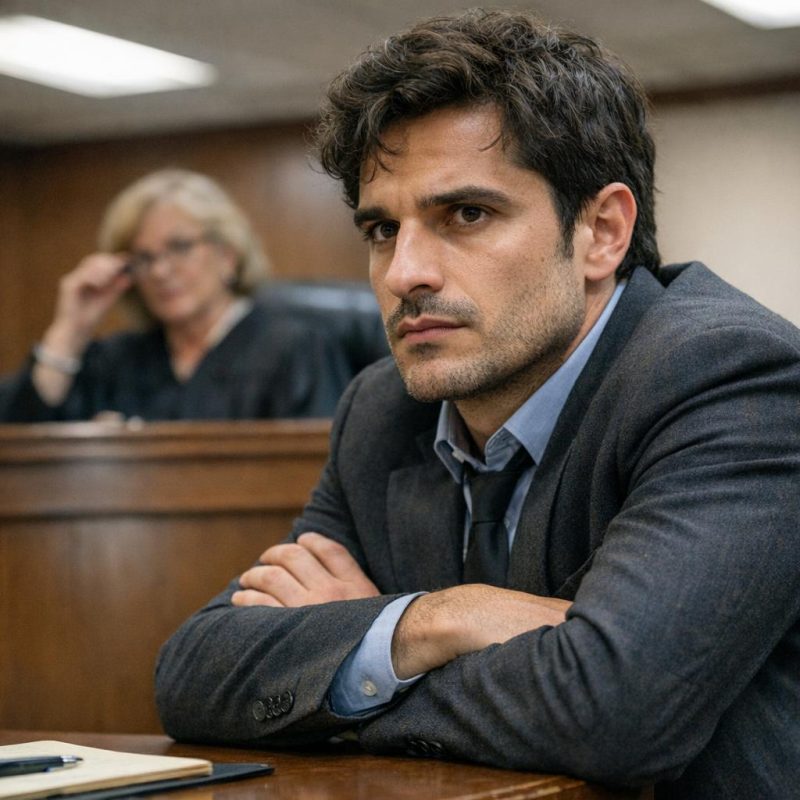 Image by RM AI
The Backbone Returns
Walking out of that courtroom, I felt something shift inside me—something that had been broken since Richard died, maybe even before that, during those long months of caregiving when I'd forgotten I was anything more than a nurse and a caretaker. Mr. Gonzalez held the door for me, the afternoon sunlight almost blinding after the dim courtroom. 'You did well in there,' he said. I hadn't done anything except sit quietly, but I knew what he meant. I'd shown up. I'd stood my ground. I hadn't crumbled or cried or let them intimidate me into giving up. My backbone was coming back, vertebra by vertebra, and I could feel it straightening my shoulders, lifting my chin. For the first time since Richard's death, I felt like myself again—not the crushed widow they thought they could bully into submission. I thought about driving back to the cabin that weekend, reclaiming it, sitting on that porch with my coffee and my book like I'd planned. Maybe I'd even change the locks myself this time, make it truly mine again. But Melissa was waiting outside, and the look on her face told me the war was far from over.
 Image by RM AI
The Medical Records Request
The subpoena arrived on a Tuesday, delivered by a nervous courier who made me sign for it like I was accepting a bomb. Mr. Gonzalez called that afternoon to explain what it meant—the children's lawyer was demanding all of Richard's medical records from the last two years of his life. They were going to argue he lacked mental capacity when he wrote his will, that the cancer or the pain medication or maybe just the stress had made him incompetent to make decisions. 'It's a common tactic,' Mr. Gonzalez said, his voice calm and professional. 'And honestly, the records are going to help us, not hurt us. Richard was sharp until the very end. We both know that.' I knew he was right, but I couldn't stop thinking about strangers reading through Richard's most vulnerable moments—the appointments where we learned the cancer had spread, the consultations about hospice care, the notes about pain management and end-of-life decisions. Those were our moments, private and sacred and terrible. Now they'd be exhibits in a courtroom, dissected by lawyers looking for ammunition. Mr. Gonzalez said the records would actually help us, but I couldn't stop thinking about strangers reading Richard's most vulnerable moments.
 Image by RM AI
Dr. Chen's Records
Dr. Patricia Chen called me herself, which surprised me. I'd expected some administrative assistant or paralegal to handle the records request, but she wanted to talk to me directly. We met at her office on a Thursday afternoon, the same office where Richard and I had received so much bad news over the years. She was younger than me by about a decade, always professional but warm, the kind of doctor who remembered details about your life beyond just the cancer. 'I've reviewed all my notes from Richard's treatment,' she said, sliding a folder across her desk toward me. 'His mental capacity was never in question. Even in his final weeks, he was making informed decisions about his care, understanding complex medical information, discussing options with complete clarity.' She paused, looking at me with something that might have been sympathy. 'He was an exceptional patient that way—very present, very engaged.' I felt relief wash through me, followed immediately by that familiar ache of missing him. Then Dr. Chen added something that made my breath catch. She also mentioned that Richard had specifically asked her to document his mental clarity because he anticipated 'family challenges' after his death.
 Image by RM AI
The Text Messages
I spent an entire weekend going through my phone, scrolling back through months and months of text exchanges with Richard. Mr. Gonzalez had suggested it—digital evidence, he called it, proof that Richard's mind was sharp right up until the end. So I sat there with my laptop open, copying and pasting our conversations into a document. Richard texting me about articles he'd read in The Atlantic. Me sending him photos of dinner. Him making observations about city council meetings he'd watched on public access television because he couldn't sleep. We'd discussed books, politics, the neighbors' ongoing dispute about a property line. He'd sent me reminders about doctor's appointments and grocery lists and random thoughts about movies we'd watched together. Each message was so completely, unmistakably him—thoughtful, engaged, occasionally sarcastic, always present. I worked methodically, organizing them by date, highlighting the ones that showed particular mental clarity. Then I got to the final messages, the ones from his last week. The last text he sent me, three days before he died, was a joke about a news headline, and I had to stop reading through tears.
 Image by RM AI
The Hospice Testimony
Mr. Gonzalez set up interviews with all three hospice nurses who'd cared for Richard in those final weeks. I sat in on them, mostly listening, occasionally clarifying timeline details. Each nurse said essentially the same thing: Richard had been alert, mentally present, clear about his wishes regarding pain management and end-of-life care. Marianne, who'd worked the day shifts, described how he'd wanted to discuss the news with her every morning, how he'd asked thoughtful questions about her family. Kevin, the night nurse, talked about Richard's insistence on making his own decisions about medication timing, about how he'd been reading until just days before the end. 'He was one of the most engaged patients I've ever worked with,' Kevin said. 'No confusion, no cognitive decline beyond what you'd expect from the pain medication, and even that was minimal.' Mr. Gonzalez took careful notes, clearly pleased with what he was hearing. Then Rosa, who'd been there for the final seventy-two hours, said something that made my chest tighten. One nurse added, 'He talked about his wife with such love, but he never mentioned his children—I assumed they were estranged.'
 Image by RM AI
The Mediation Notice
The court order came in the mail on a Tuesday. Both parties were required to attend mediation before the trial could proceed—standard procedure in estate disputes, apparently, though Mr. Gonzalez seemed skeptical about the whole thing. We met in his office to discuss what to expect. 'Mediation works when both sides genuinely want to find middle ground,' he explained, leaning back in his chair with a tired expression. 'When emotions are running this high, when one side is absolutely convinced they've been wronged beyond any possibility of misunderstanding, it rarely accomplishes anything.' I asked if there was any point in even trying, and he shrugged. 'The judge requires it. We go through the motions, we document that we made a good-faith effort, and then we prepare for trial.' I felt a heavy dread settling into my stomach at the thought of sitting across from Melissa, Andrew, and David in some conference room, pretending we could have a reasonable conversation. I hadn't seen them since the day they'd confronted me at the house. Mr. Gonzalez warned me that mediation rarely works when emotions run this high, but the judge required it anyway.
 Image by RM AI
The Mediation Room
The mediation took place in a bland conference room at the courthouse, the kind with beige walls and fluorescent lighting that makes everyone look slightly ill. I arrived with Mr. Gonzalez ten minutes early. Melissa, Andrew, and David came in five minutes late with their lawyer, a sharp-dressed woman named Patricia Ellison who didn't smile. We sat on opposite sides of a long table with the mediator, an older man named Bernard, positioned at the head. The tension was immediate and suffocating. Melissa wouldn't make eye contact with me at all—she stared at the wall behind my head like I wasn't even there. David scrolled through his phone, barely acknowledging the mediator's introduction. Andrew at least looked uncomfortable, his jaw tight, his hands folded on the table in front of him. Bernard went through his preliminary speech about good faith and finding common ground, his voice practiced and weary. He explained the process, asked if everyone understood, received minimal acknowledgment. The mediator asked if anyone wanted to speak first, and Melissa said, 'There's nothing to discuss until she admits what she did.'
 Image by RM AI
The Failed Settlement
Bernard tried to redirect the conversation toward practical matters—asset division, timeline, potential compromises—but Melissa kept steering it back to what she called 'the truth.' She insisted that their father would 'never' choose his second wife over his children, that something must have happened to change his mind, that the will couldn't possibly reflect his genuine wishes. Her voice was tight with conviction, and I realized with sinking certainty that no amount of evidence was going to reach her. Mr. Gonzalez stayed calm, presenting Dr. Chen's evaluation, the hospice testimonies, the text messages that showed Richard's mental clarity. Patricia Ellison looked through them with professional detachment, occasionally making notes. David seemed almost bored. Andrew looked increasingly uncomfortable but said nothing. Then Mr. Gonzalez brought out copies of Richard's journals—pages where he'd written about his relationship with his children, his disappointment, his reasons for his decisions. I watched Melissa's face as she looked at her father's handwriting. When Mr. Gonzalez presented Richard's own words from his journals, Melissa called them forgeries and walked out.
 Image by RM AI
The Journal Decision
After the mediation collapsed, Mr. Gonzalez and I sat in his office discussing trial strategy. 'The journals are our strongest evidence,' he said carefully. 'Richard's own words, in his own handwriting, explaining his thought process and his relationship with his children. A jury will find that compelling.' I felt sick at the thought of it. Those journals were private—Richard's most personal thoughts, his pain, his disappointments, things he'd written never intending for anyone but possibly me to read. 'It feels like a violation,' I said. Mr. Gonzalez nodded. 'I understand. But Richard documented these things for a reason. He knew what might happen after he died. He wanted his truth on record.' We talked through the implications, the parts that would be most relevant, how they'd be presented. I asked for copies to review myself before we made a final decision. That night, I sat at the kitchen table reading Richard's entries about his children—about Melissa's phone calls that only came when she needed money, about David's complete absence, about Andrew's promises to visit that never materialized. I spent the night reading Richard's entries about his children, and each one felt like a betrayal to share—but also like the truth he deserved to have told.
 Image by RM AI
The Trial Begins
The courtroom was smaller than I'd expected, wood-paneled and formal but not particularly impressive. Judge Reynolds sat elevated at her bench, her expression neutral and professional. I sat at the defense table with Mr. Gonzalez while Melissa, Andrew, and David sat across the aisle with Patricia Ellison. The gallery behind us was mostly empty—just a court reporter and a few people I didn't recognize. Patricia Ellison stood to deliver the opening statement for the plaintiffs, and I had to grip the edge of the table to keep my hands from shaking. She painted a picture of me as a calculating woman who'd identified a vulnerable widower, isolated him from his family, and systematically turned him against his own children for financial gain. She described our marriage as a con, Richard's will as the product of manipulation, his estate as something I'd stolen through emotional abuse. Her voice was measured and confident, presenting this nightmare version of my life like established fact. Mr. Gonzalez had warned me this was coming, but hearing it out loud in a courtroom, official and public, was different. Sitting in that courtroom, hearing my marriage described as a con, I had to grip the table to keep from standing up and shouting.
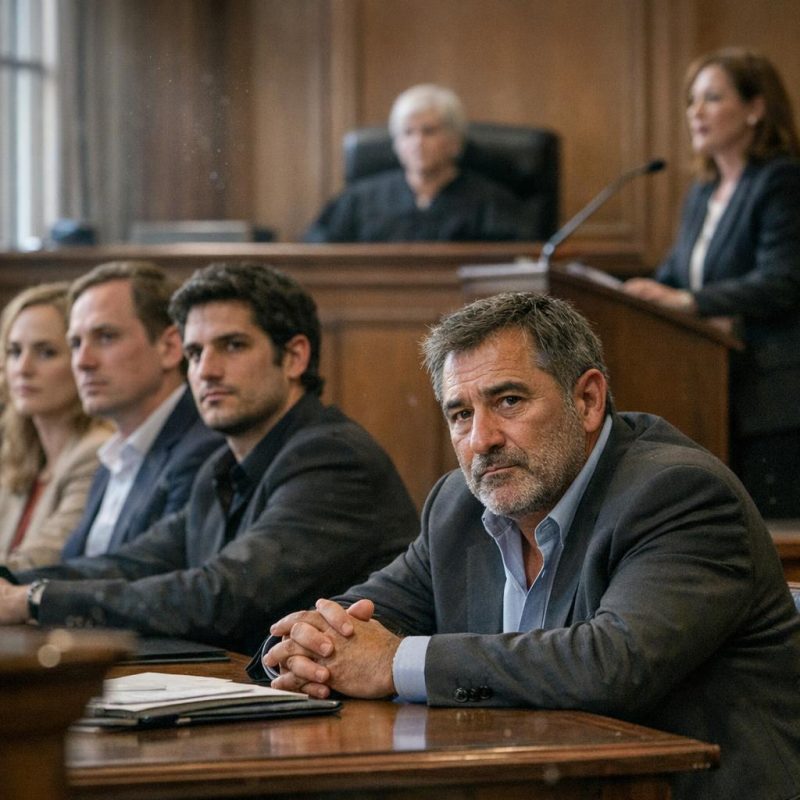 Image by RM AI
The Parade of Witnesses
The children's side called their witnesses first. A cousin of Richard's who lived in Arizona and hadn't visited in eight years. An old colleague from the university who'd retired and moved to Florida. Melissa's college roommate who'd met Richard maybe three times total. Each one testified that Richard had seemed 'different' after our marriage, more distant, less engaged with his children. They spoke with confident concern, painting a picture of gradual alienation. I watched the judge's face, trying to read her reaction, seeing nothing. Then Mr. Gonzalez stood for cross-examination, and I watched him methodically dismantle their credibility. When was the last time you actually spent time with Richard? How many hours would you say? Did you call him, or did he have to call you? Can you name a single specific conversation you had with him in the last two years? One by one, each witness had to admit they hadn't actually been present in Richard's life. The Arizona cousin hadn't visited since before Richard's cancer diagnosis. The colleague had sent Christmas cards but nothing more. Under cross-examination, Mr. Gonzalez got each one to admit they hadn't actually spent meaningful time with Richard in years.
 Image by RM AI
Melissa Takes the Stand
When Melissa took the stand, she transformed. The coldness from the mediation vanished, replaced by tears and trembling hands. She talked about Sunday dinners at our old house, about how close she'd been to her father, about their supposedly deep connection. She made it sound like they'd talked every day, like she'd been his confidant and closest friend. 'He changed after the marriage,' she said softly, dabbing at her eyes. 'Caroline gradually cut us off. She controlled his phone, screened his calls, made us feel unwelcome in his own home.' I sat there listening to this fictional version of our lives, my hands folded in my lap, fighting the urge to stand up and scream. Mr. Gonzalez let her talk, taking notes with an expression of polite interest. The judge watched carefully. Melissa painted herself as the devoted daughter, shut out by the wicked stepmother. It was a performance, and honestly, it was pretty good. Then Mr. Gonzalez stood for cross-examination, and his first few questions were gentle, almost sympathetic. He asked about her childhood memories, about Richard's career. And then, casually, he asked her to name the last book her father read, and she couldn't answer.
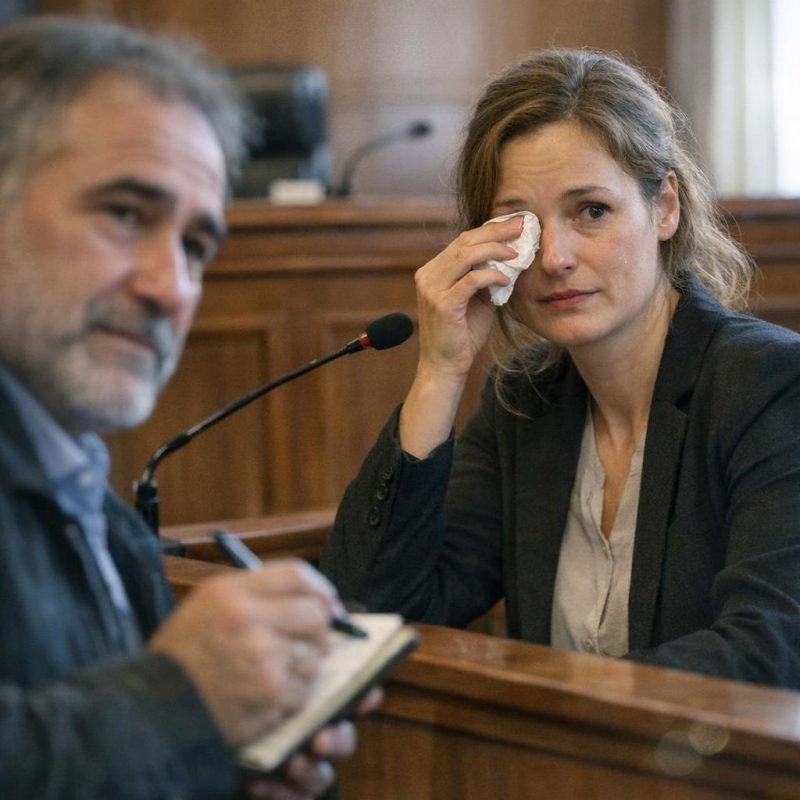 Image by RM AI
The Visitor Logs
Mr. Gonzalez opened a folder and pulled out what looked like dozens of pages. 'Your Honor, I'd like to introduce Exhibit Twelve—a detailed log Mrs. Wilson kept throughout Mr. Wilson's illness.' I'd forgotten about those logs, honestly. The hospice nurse had suggested I track visitors and symptoms for medical continuity. I'd noted every visitor, every call, every text message. Now those notes were being projected onto the courtroom screen. The numbers were stark. In the eighteen months of Richard's decline, Melissa had visited four times. Andrew twice. David once. A combined total of seven visits while their father fought cancer and lost. The longest visit was forty minutes. Most were under twenty. The logs showed my sister visiting more than Richard's own children. The nurse who came weekly had logged more hours than all three siblings combined. I watched the judge read through the records, page after page of documentation showing exactly who'd been there and who hadn't. The judge looked up from the records with an expression I couldn't quite read, and Melissa's lawyer asked for a recess.
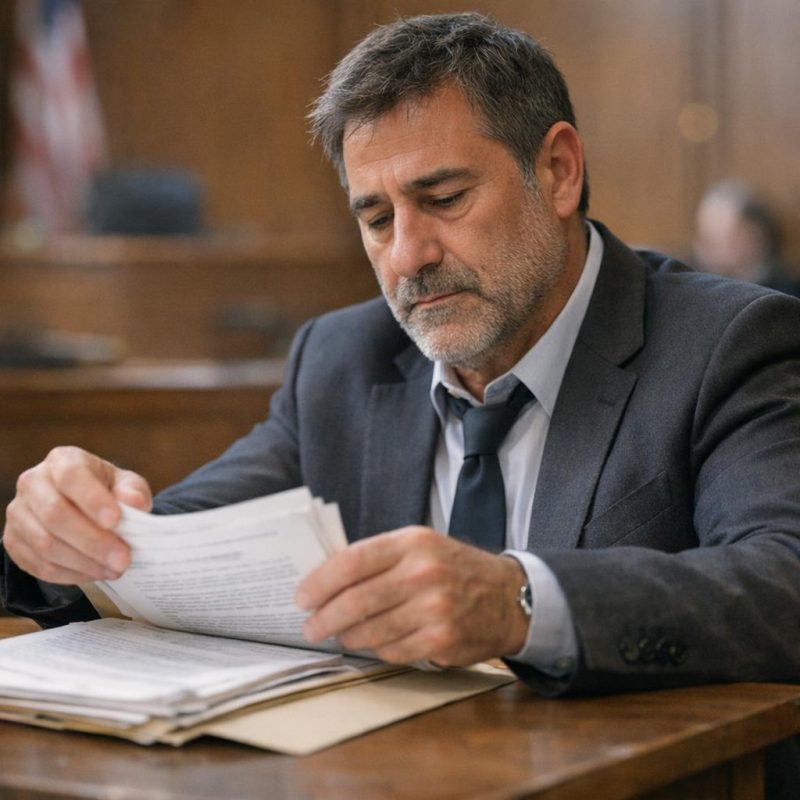 Image by RM AI
David's Deflection
After the break, David took the stand with his usual confidence. He had an explanation ready, and it was all about me. 'Caroline made visits uncomfortable,' he said earnestly. 'She'd hover during conversations, monitor what we discussed with Dad, make passive-aggressive comments after we left. It felt like she was keeping us from having a real relationship with him.' He made it sound so reasonable, like he'd wanted to visit but I'd somehow prevented it. Like I was this controlling presence who'd built a wall between Richard and his children. He talked about feeling unwelcome, about how I'd changed the locks on the house, about how I'd always seemed to be listening in on their phone calls. 'I felt like I couldn't have a private moment with my own father,' he said. The performance was almost convincing. Then Mr. Gonzalez stood for his cross-examination. He didn't argue with David's characterization. Instead, he simply asked: 'Mr. Wilson, if in-person visits felt monitored or uncomfortable, why didn't you call your father directly on his cell phone? Or text him? Or email him? Or send letters?' David opened his mouth, closed it, and had no answer.
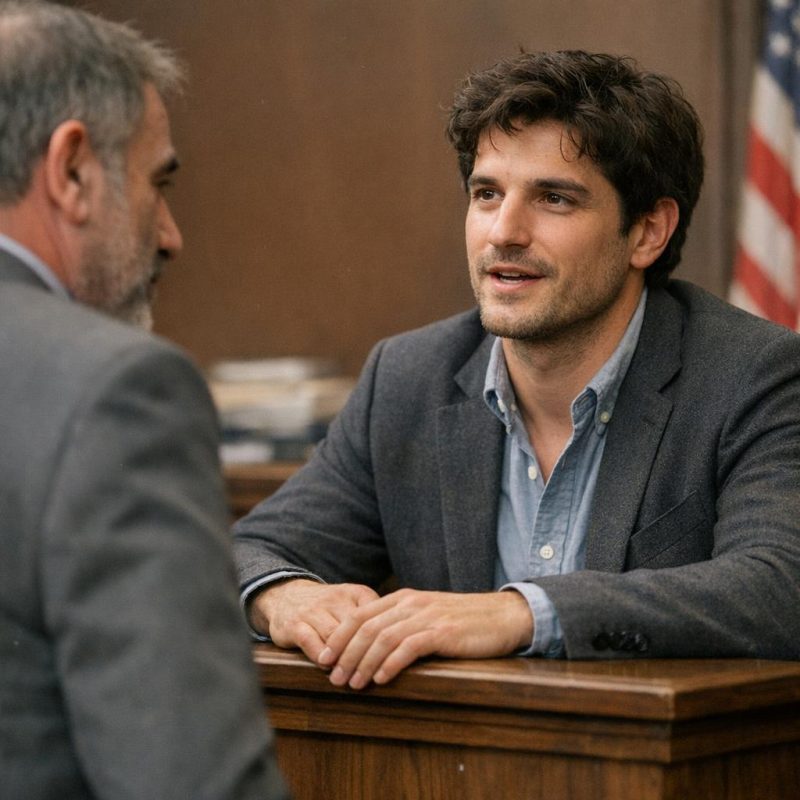 Image by RM AI
Dr. Chen's Testimony
Dr. Patricia Chen took the stand looking exactly as I remembered her—calm, professional, unshakeable. She'd been Richard's oncologist for three years, and she'd seen him through everything. Mr. Gonzalez walked her through Richard's medical history, his treatment timeline, his cognitive function throughout his illness. 'Dr. Chen, in your professional opinion, was Mr. Wilson mentally competent during the period when he revised his will?' She didn't hesitate. 'Absolutely. Mr. Wilson remained cognitively sharp until his final week. He understood his diagnosis, his prognosis, and the implications of his treatment choices. He made informed decisions about his own care consistently.' Then came the part that made me sit up straighter. 'Dr. Chen, did Mr. Wilson ever discuss his estate planning with you?' She nodded. 'Yes. About six months before his death, he specifically asked me to document his mental clarity. He said he was making significant changes to his will and wanted medical confirmation that he was of sound mind. I performed a cognitive assessment at his request and documented my findings.' She pulled out her own records. The judge leaned forward. She concluded by saying, 'Mr. Wilson knew exactly what he was doing when he revised his will, and he told me he was at peace with his decisions.'
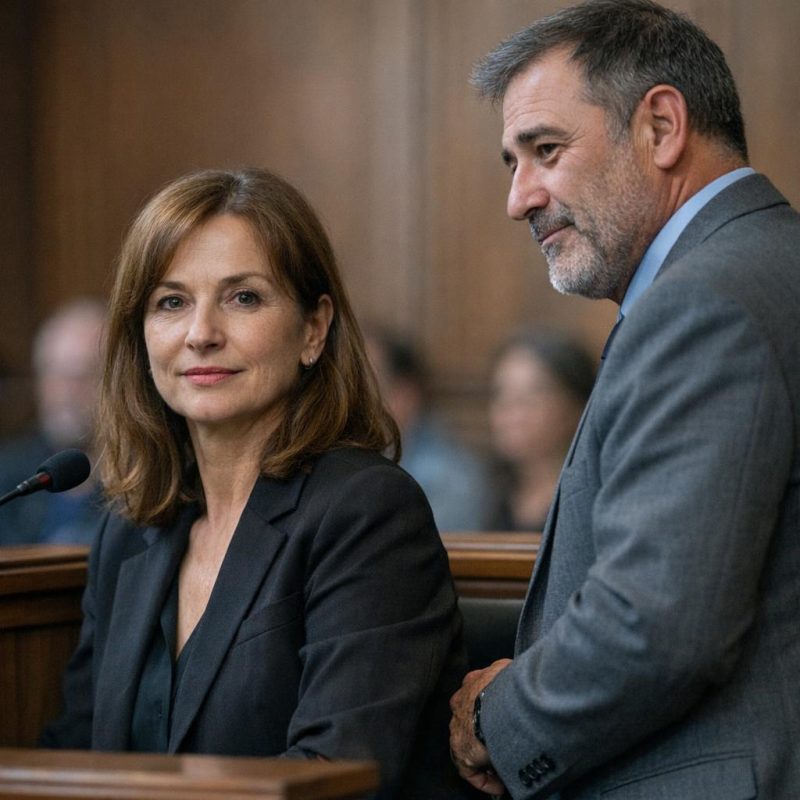 Image by RM AI
The Text Message Evidence
Then Mr. Gonzalez introduced the text messages. I'd forgotten he'd requested my phone records, and suddenly there they were—months of conversations between Richard and me, projected on the courtroom screens for everyone to read. The mundane and the meaningful, all mixed together. Grocery lists and medication reminders, yes, but also jokes, article links, ongoing debates about politics and literature. You could see Richard's personality in every message. His dry humor. His curiosity. His affection. The messages showed a man who was fully engaged with life, even as his body failed him. There were discussions about books he was reading, comments on news articles, terrible puns that made me smile even now. Mr. Gonzalez scrolled through them methodically, showing the judge a mind that was sharp and clear until nearly the end. The final exchange was from three days before Richard died. I'd sent him an article about the Supreme Court. His response appeared on the screen, and I had to close my eyes for a moment. It was a joke about politics, typically sardonic, perfectly Richard. When Richard's last message appeared on the courtroom screen—a joke about politics sent three days before his death—I saw Melissa look away.
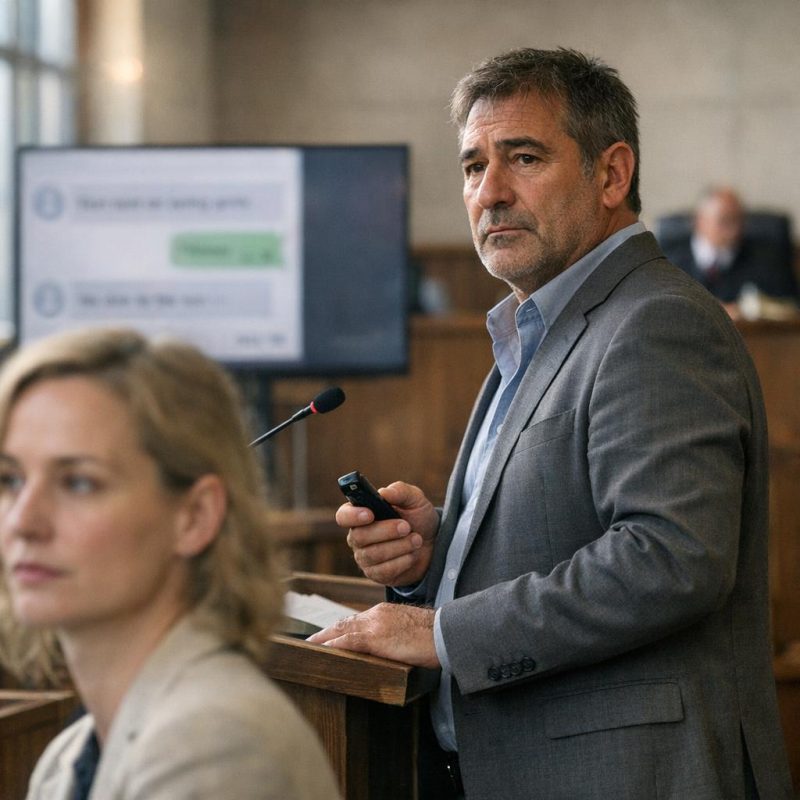 Image by RM AI
The Hospice Nurse
The hospice nurse, Grace, testified next. I'd almost forgotten she'd been subpoenaed. She was a gentle woman in her fifties who'd come three times a week during Richard's final month. Mr. Gonzalez asked her to describe Richard's mental state during that time. 'He was remarkable,' she said quietly. 'Thoughtful, articulate, very clear about his wishes. He talked about his life, his career, his regrets. He was deeply devoted to his wife—he talked about Caroline constantly, worried about how she'd manage after he was gone.' She described their conversations, how Richard had discussed philosophy and literature even as pain management became more aggressive. How he'd been making lists of things Caroline would need to know, writing letters, organizing files. 'He was very much himself until the final days,' Grace said. 'Some patients fade mentally long before the end, but Mr. Wilson stayed present.' Then Mr. Gonzalez asked about the children's visits. Grace paused, looking genuinely regretful. 'I worked with Mr. Wilson for six weeks before he passed,' she said carefully. When asked about the children's visits, she said gently, 'I never met them—Mr. Wilson mentioned he hadn't heard from them in months.'
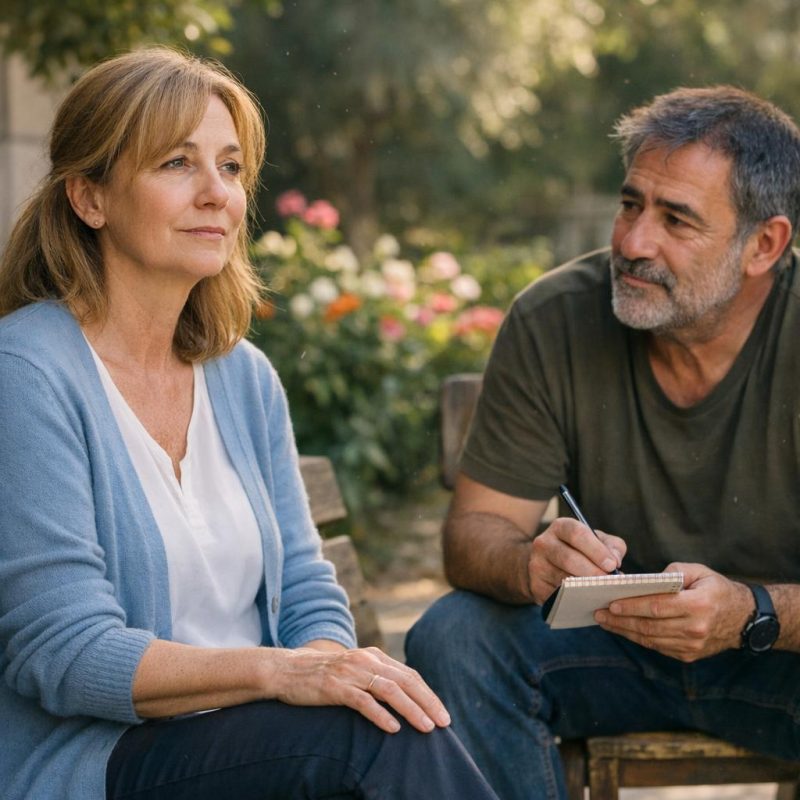 Image by RM AI
The Journal Photocopies
Mr. Gonzalez approached the bench with a new folder, and something in his expression made my stomach tighten. 'Your Honor, I'd like to introduce photocopies of Mr. Wilson's personal journals from the last three years of his life.' I hadn't known he'd kept journals—not consistently, anyway. I knew he wrote sometimes, but I hadn't realized he'd saved them, hadn't known they still existed. Melissa's lawyer immediately objected, but the judge allowed it. The photocopies appeared on the courtroom screens, Richard's familiar handwriting filling the monitors. His handwriting had gotten shakier toward the end, but it was unmistakably his—those cramped, precise letters I'd seen on grocery lists and birthday cards. I watched the children's faces as their father's words appeared before them. Andrew went pale. David stared at the screen with no expression at all. Melissa's hands gripped the table edge. The first entry Mr. Gonzalez displayed was dated about eighteen months before Richard's death. The first entry read: 'Andrew called today, but only to ask about the cabin's property value—he didn't ask how I was feeling.'
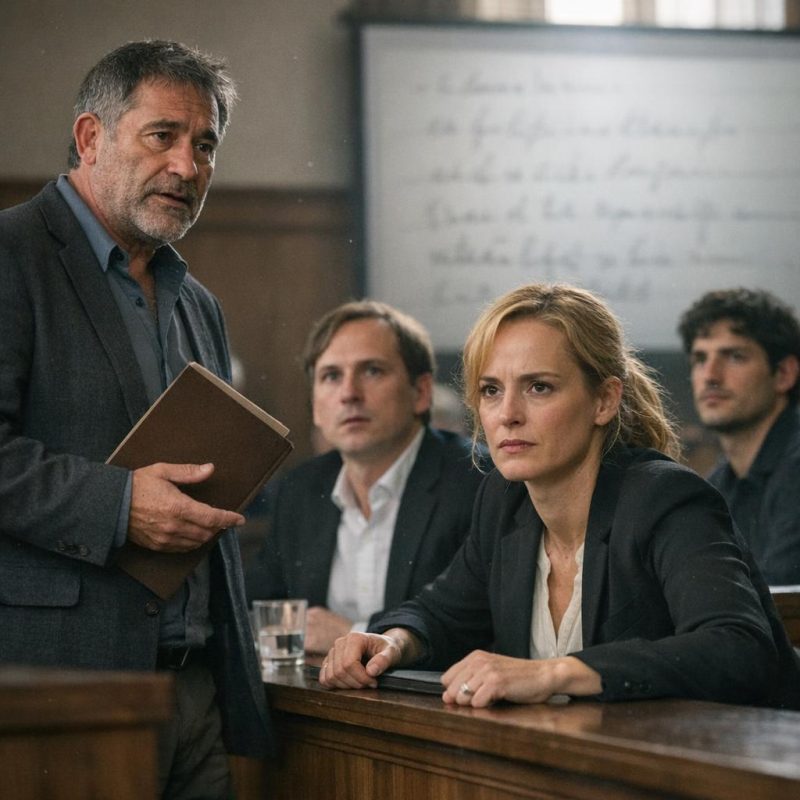 Image by RM AI
The Pattern Emerges
Mr. Gonzalez didn't rush through the journal entries. He displayed them one by one, letting each speak for itself. Entry after entry documented the same heartbreaking pattern. Andrew calling to discuss real estate values and investment accounts. Melissa visiting and spending the entire time talking about her divorce settlement. David asking about the vintage car collection and whether Richard had gotten it appraised recently. Between these entries were long gaps—weeks, sometimes months—where Richard noted the silence. 'Haven't heard from Melissa in six weeks,' read one entry. 'Called Andrew twice, no response,' read another. The entries weren't angry or bitter. They were sad, confused, gradually understanding. Richard had been documenting his own marginalization, watching his children's interest in him narrow to what he could provide. 'David asked about my retirement accounts today,' one entry read. 'Didn't ask about the test results.' The pattern was undeniable, and it had been building for years, long before his cancer diagnosis. The judge read each entry carefully. I could feel the courtroom's atmosphere shifting. One entry from two months before his death read: 'I'm rewriting my will tomorrow. Caroline is the only one who stayed.'
 Image by RM AI
The Final Entries
Mr. Gonzalez showed us the final entries, and these were different from the sad, confused earlier ones. Richard had made peace with everything. 'I've decided to establish a scholarship fund in my field,' one entry read. 'If my children won't carry forward what matters to me, maybe someone else will.' He wrote about his love for me without reservation. 'Caroline stayed when everyone else left. She didn't stay for money—she stayed because she cared. That's the difference.' Another entry explained his reasoning with such clarity it hurt to read. 'I spent years trying to earn my children's attention with gifts and promises. I realize now I was teaching them the wrong lesson—that love is something you buy and sell.' The dates on these entries were from his final weeks, written in a shakier hand but with absolute conviction. He wasn't angry anymore. He'd moved past that to something like acceptance mixed with sadness. He hoped they'd understand eventually, but he wasn't going to keep waiting. His final written words were: 'I hope they understand someday that love isn't transactional, but I'm done waiting for them to learn.'
 Image by RM AI
The Opposing Lawyer's Attack
The children's lawyer stood up, and I could see desperation in his movements. He argued that the journals could have been edited, that Caroline might have influenced what Richard wrote, that a dying man on medication might not have been thinking clearly. His voice got louder as he went on, suggesting the entries were too convenient, too perfect for our case. Some of the earlier entries were critical of me, he pointed out—why would I keep those if I'd edited the journals? But then he pivoted, suggesting maybe Richard wrote them while under my 'undue influence,' whatever that meant. The judge looked skeptical, but she was listening. My hands went cold. What if this worked? What if years of Richard's honest, painful documentation could be dismissed because it was inconvenient for his children's narrative? Mr. Gonzalez stood slowly, and there was something almost amused in his expression. He calmly asked if the opposing counsel was suggesting Caroline had forged years of consistent handwriting, and the lawyer had no response.
 Image by RM AI
The Scholarship Fund
Mr. Gonzalez walked the judge through Richard's vision for the scholarship fund, and it was beautiful in its simplicity. Richard wanted to support students entering his field—mechanical engineering—particularly those from working-class backgrounds like he'd come from. The fund would cover not just tuition but also tools and equipment, the practical things scholarships often missed. He'd outlined criteria, selected the university, even drafted the announcement. This wasn't a spite-driven decision or a last-minute impulse. It was Richard trying to create something meaningful that would outlive him, something that reflected his actual values. 'He wanted his life's work to continue,' Mr. Gonzalez explained. 'He wanted to help young people the way he wished someone had helped him.' The opposing lawyer immediately objected, calling it a waste of the children's rightful inheritance. He actually used those words—waste and rightful. I watched the judge's eyebrow raise slightly. The children's lawyer argued it was a vanity project, money that should go to Richard's own bloodline. And sitting there, I realized they genuinely couldn't understand that Richard wanted to create something meaningful.
 Image by RM AI
The Closing Arguments Begin
The children's lawyer stood for his closing argument, and I'll admit, it was powerful. He painted a picture of three adult children who'd lived their own busy lives, maybe not perfect but not monsters either, who'd assumed their father's new wife was caring for him. He talked about the natural order of inheritance, about family bonds that shouldn't be severed, about how no father would willingly disinherit his children unless something had poisoned that relationship. His voice got emotional when he described orphaned adults, essentially, robbed of their final connection to their father through his estate. He suggested that loneliness and pain had made Richard vulnerable, that I'd filled a void and gradually pushed his children out. Some of what he said even made sense—I could see how someone might believe that version of events if they didn't know the full story. The judge was listening intently, her expression neutral. My chest felt tight. It was a powerful argument, one that appealed to basic assumptions about family and loyalty. It was a powerful argument until Mr. Gonzalez stood up and said, 'Unless those children abandoned him when he needed them most.'
 Image by RM AI
Mr. Gonzalez's Summation
Mr. Gonzalez walked through everything methodically, building his case piece by piece. The text messages that went unanswered. The visits that became shorter and more transactional. The phone records showing how I'd called for help while his children were unreachable. The journal entries documenting years of his children's gradual withdrawal, long before I entered the picture. He displayed the visitor logs from Richard's final hospital stay—my name dozens of times, their names barely at all. 'This wasn't alienation,' he said. 'This was abandonment.' He pointed out that the children's own testimony had focused almost entirely on money—property values, inheritance percentages, fair distribution. Not one of them had shared a meaningful memory of their father from the past five years. Not one had described caring for him, sitting with him, being present during his illness. 'Caroline didn't manipulate Richard into cutting out his children,' Mr. Gonzalez said. 'His children cut themselves out through years of neglect, and Richard simply documented what they'd already done.' He let that sink in before concluding: 'The question isn't why Richard left his estate to Caroline—it's why his children think they deserved it after abandoning him.'
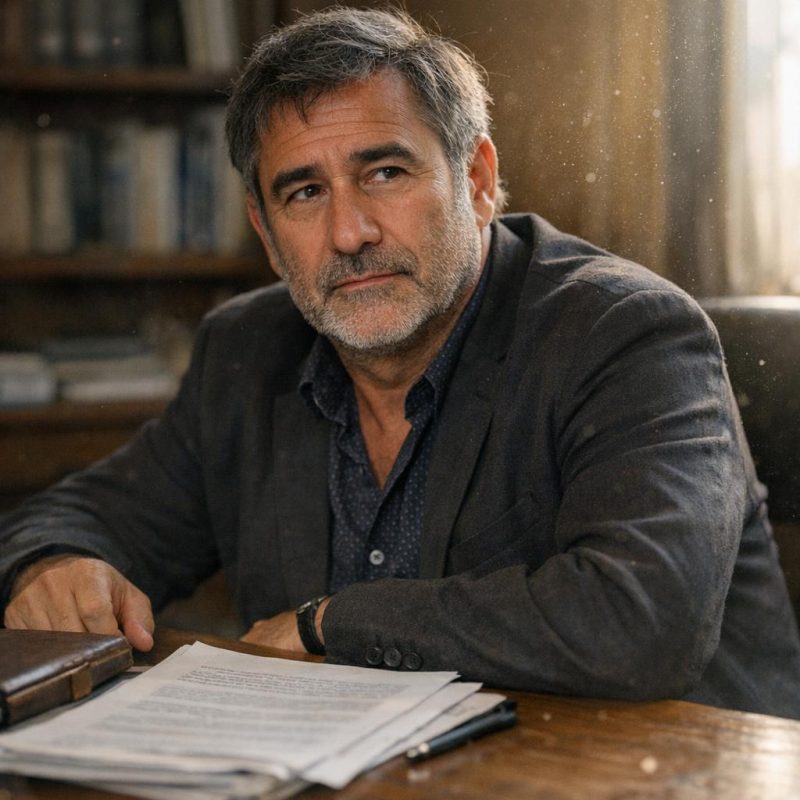 Image by RM AI
The Unexpected Recess
The judge was about to speak when Andrew's lawyer stood up abruptly and requested a recess. The judge looked surprised but granted it. Then Andrew himself stood and asked to speak privately with his attorney, and there was something off about his voice—strained, almost panicked. His lawyer looked confused but followed him out into the hallway. Melissa and David exchanged glances, clearly not understanding what was happening. Neither did I. We all filed out of the courtroom, and I found myself near one of the windows that looked out into the corridor. I shouldn't have watched, but I couldn't help it. Andrew and his lawyer were arguing intensely. I couldn't hear the words, but Andrew's body language was all wrong—he kept running his hands through his hair, pacing, gesturing desperately. His lawyer looked frustrated, kept shaking his head. At one point Andrew actually grabbed the man's arm, pleading something. The lawyer pulled away, and they argued more. I watched through the courtroom window as Andrew and his lawyer argued intensely, and something about his body language suggested a crack in the united front.
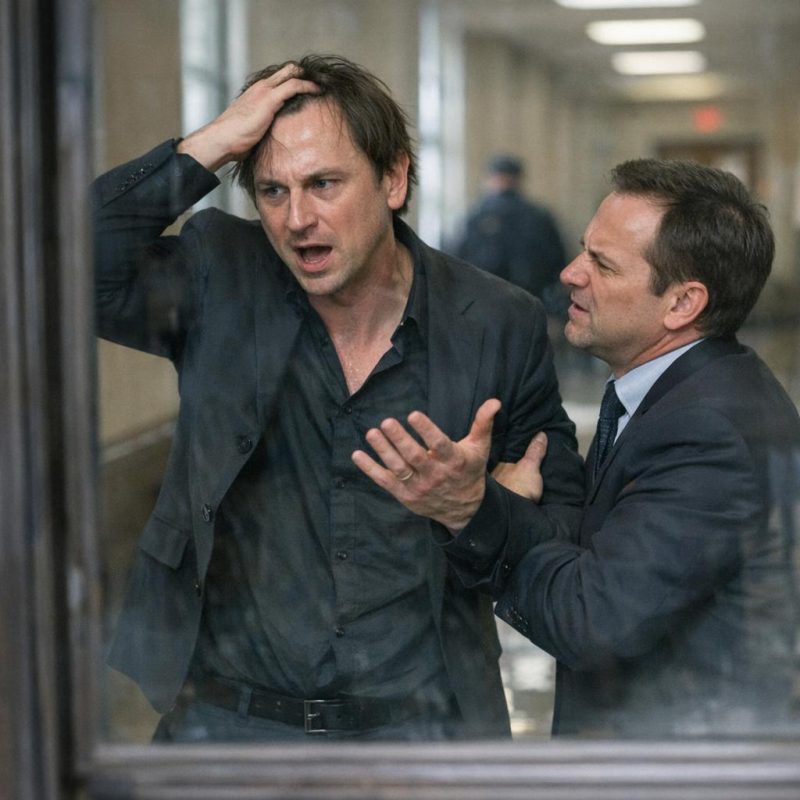 Image by RM AI
The Courtroom Returns
When court resumed fifteen minutes later, there was a strange energy in the room. Melissa and David looked tense, whispering to each other. Andrew sat apart from them, staring at his hands. The judge asked if we were ready to proceed, and Andrew's lawyer stood up. His voice was tight when he announced that his client wished to make a statement. The courtroom went completely silent. Melissa's head snapped toward Andrew, her face transforming from confusion to alarm. David leaned forward, mouthing something at his brother that I couldn't make out. Andrew didn't look at either of them. The judge asked Andrew's lawyer to clarify what kind of statement, and the lawyer said his client wished to testify. Melissa's lawyer was on her feet immediately, objecting, asking for another recess to consult with her client. The judge denied it. This was Andrew's right. David was gripping the edge of the table so hard his knuckles were white. Mr. Gonzalez glanced at me, equally confused. Andrew walked to the witness stand without looking at his siblings, and I had no idea what was about to happen.
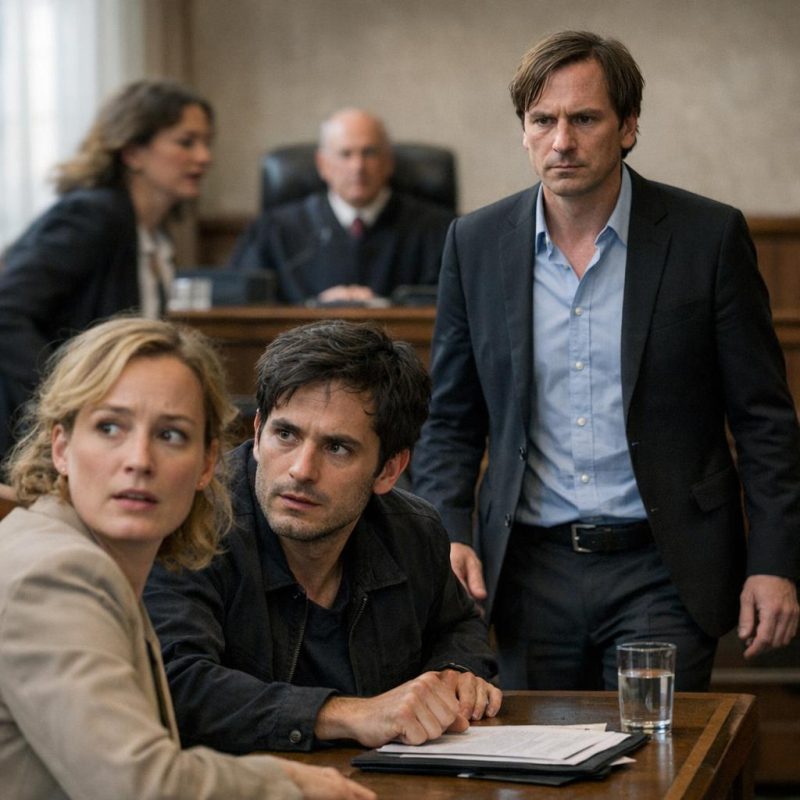 Image by RM AI
The Truth Breaks
Andrew was sworn in, and for a long moment he just sat there, staring at his hands. Then he started talking, and everything changed. He said the three siblings had discussed dividing their father's inheritance while Richard was still alive—calculating amounts, planning what they'd each do with their share. He said they'd visited rarely because they'd essentially written their father off, convinced he'd last years and they'd deal with him when absolutely necessary. His voice cracked when he admitted he'd been counting on the inheritance money to cover gambling debts, serious ones he'd hidden from everyone including his siblings. He'd gotten in deep with the wrong people, and his father's estate was supposed to be his way out. 'We treated Dad like a bank account,' he said, tears running down his face now. 'We visited when we needed something. We called when we wanted to check on our investment. We talked about his assets like he was already dead.' Melissa was pale, David was staring straight ahead like he'd disconnected from reality. Andrew finally looked at me. He said, 'We treated Dad like a bank account, and now we're angry the account closed before we could make a withdrawal—Caroline, I'm sorry.'
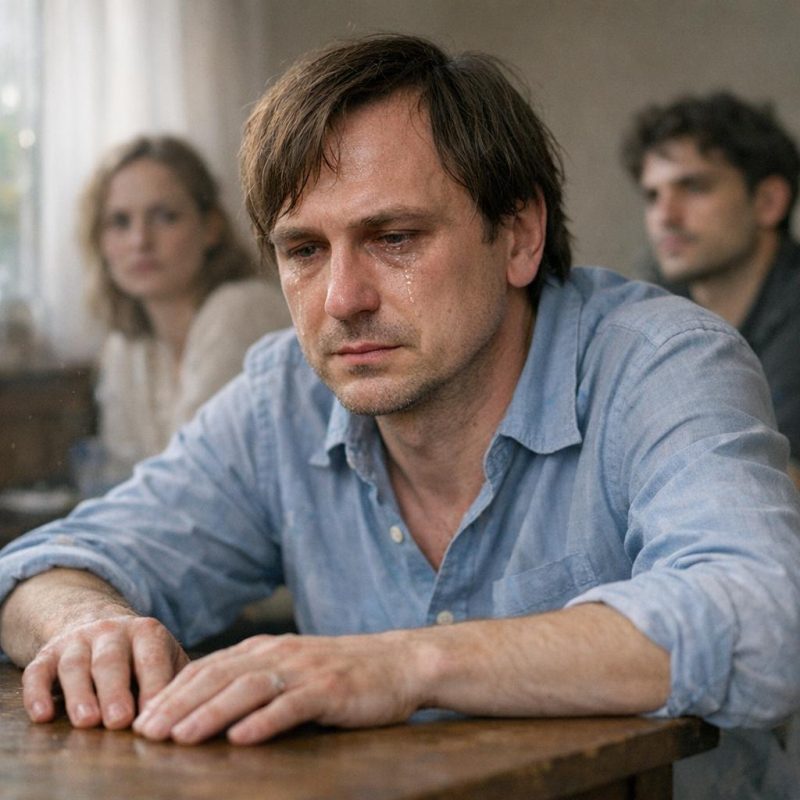 Image by RM AI
The Courtroom Aftermath
The courtroom just exploded. I mean, you could feel the shockwave of Andrew's testimony hit everyone at once. Their lawyer was on his feet immediately, trying to object to something—anything—but the judge waved him down with this look of barely concealed contempt. Melissa's face had gone from pale to this splotchy red, and David was shaking his head slowly like he was watching a car crash in slow motion. Mr. Gonzalez sat very still beside me, but I caught the slight exhale, the subtle relaxation in his shoulders. Andrew was still in the witness box, tears streaming down his face, looking like he might be sick. The lawyer tried to argue that Andrew's testimony should be stricken, that he was unreliable, that he was lying to save himself from something, though they couldn't quite articulate what. But the damage was done. You could see it in the judge's face, in the way the court reporter had actually stopped typing for a moment during Andrew's confession. The entire narrative they'd built—the devoted children worried about their vulnerable father—it had just collapsed like a house of cards. Melissa stood up and shouted, 'You're a traitor,' and the judge ordered her to sit down or be held in contempt.
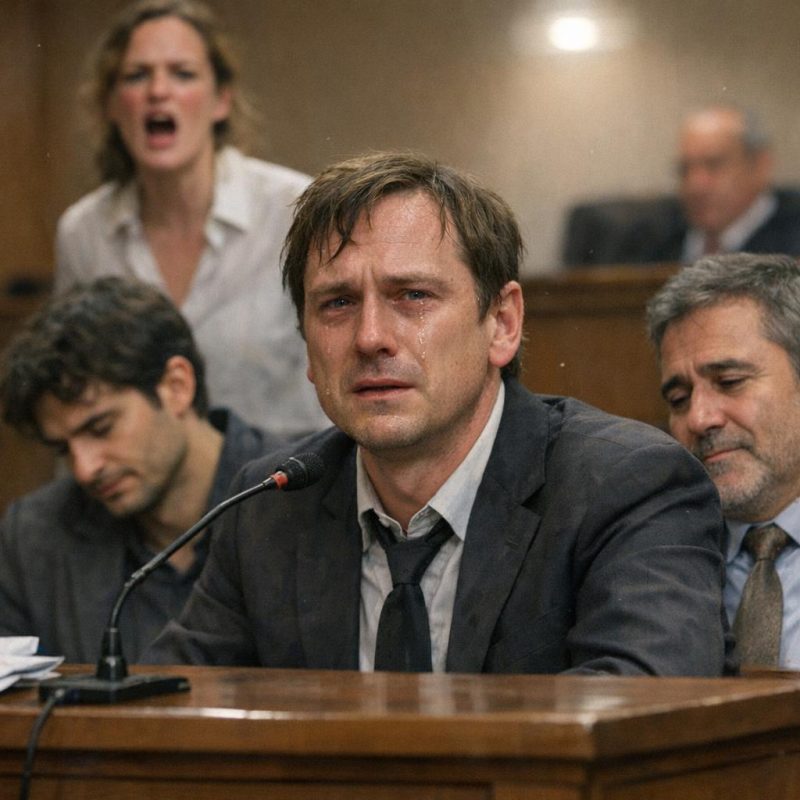 Image by RM AI
Andrew's Full Account
Mr. Gonzalez approached Andrew for questioning, and I watched my stepson lay out the entire ugly truth in excruciating detail. He described a conversation they'd had at Christmas, two years before Richard's diagnosis, where they'd calculated what the estate would be worth, how they'd split it three ways, what each of them would do with their share. Melissa wanted to buy a bigger house. David was planning to invest in some startup. Andrew needed to cover gambling debts, though he hadn't told his siblings the full extent back then. He talked about phone calls between the three of them during Richard's illness, checking in with each other but not with their father. He described a group text thread where they'd discussed logistics—who had to visit when, how to coordinate their minimal presence to make it look like they cared. The specifics were devastating. He remembered exact phrases, exact dates. Mr. Gonzalez asked about their visits during Richard's final months, and Andrew broke down describing how they'd timed their visits to avoid overlapping, to minimize their collective time investment. He admitted they'd even joked about the cabin being 'worth the wait' while their father was in hospice.
 Image by RM AI
Melissa's Desperation
Melissa took the stand again, and you could see the desperation radiating off her. She tried to claim Andrew was lying, that he was fabricating everything out of guilt over his gambling addiction, that he'd turned on them to save himself from his own shame. But Mr. Gonzalez pulled out the phone records we'd subpoenaed, showed the text messages between the siblings—not the deleted ones, but enough to establish a pattern. He asked her about specific conversations Andrew had mentioned, and her answers kept shifting. First she denied they'd happened, then she admitted they'd discussed the estate but claimed it was normal family planning, then she changed her story again to say they'd only talked about it once. Her earlier testimony had painted them as devoted children who visited constantly. Now she was admitting they'd coordinated minimal visits. She couldn't keep track of what she'd already said under oath. Her lawyer tried to object, to redirect, but she kept digging herself deeper, her voice getting higher and more frantic. The judge interrupted and said, 'Ms. Wilson, you're not helping your case—I suggest you stop talking.'
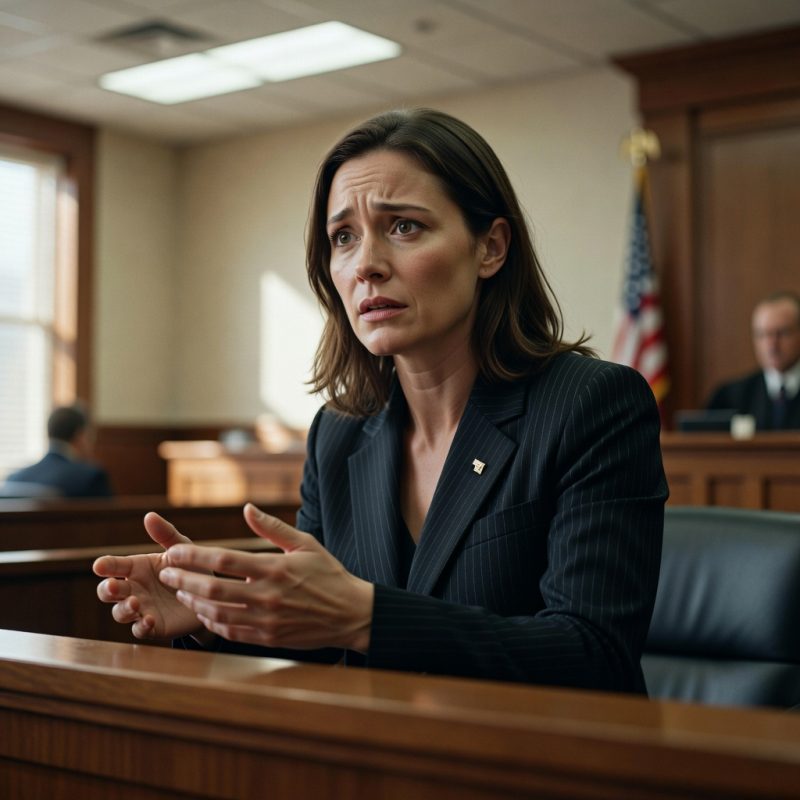 Image by RM AI
David's Silence
David's turn came, and his lawyer stood up with this carefully neutral expression and announced they were withdrawing David from active participation in the contest while maintaining his original filing. It was pure legal maneuvering—they wanted to distance him from Melissa's crumbling testimony and Andrew's confession without actually conceding anything. If he didn't testify further, he couldn't perjure himself. If he maintained the filing, he could theoretically appeal or claim he'd been misrepresented by co-plaintiffs later. I watched the judge's eyebrows rise slightly, and I knew she'd seen this move before. She asked David directly if he wished to testify in support of his claim, and he just shook his head. She asked if he had any evidence of undue influence he wished to present. Another head shake. It was cowardly, honestly, trying to hide behind legal technicalities while his siblings imploded. But you know what? The judge wasn't having it. She made a note in her file with these very deliberate pen strokes, and the look she gave David's lawyer could have frozen water. It was a legal maneuver to avoid perjury while keeping some claim alive, and the judge saw right through it.
 Image by RM AI
The Judge's Questions
Judge Reynolds set down her pen and looked directly at Melissa, and I felt the energy in the room shift. She started asking questions—not through the lawyers, but directly from the bench, using her authority to cut through the legal posturing. She asked about Richard's daily routines, his hobbies, what he liked to do on weekends. Melissa fumbled through vague answers about him reading and enjoying nature. The judge asked what kind of books. Melissa said non-fiction, maybe? The judge asked about his medical conditions before the cancer diagnosis, the medications he'd been on for years. Melissa couldn't remember. She asked about his friends, the people he spent time with before I entered his life. Melissa named two people, but got one of their names wrong—I knew because Richard had talked about them. The questions kept coming, each one more specific, each one revealing just how little these children actually knew their father. The judge asked about his military service, what branch, what years. Melissa knew he'd been in the military but couldn't remember anything else. Then Judge Reynolds asked Melissa to name her father's favorite author, and after a long silence, Melissa whispered, 'I don't remember.'
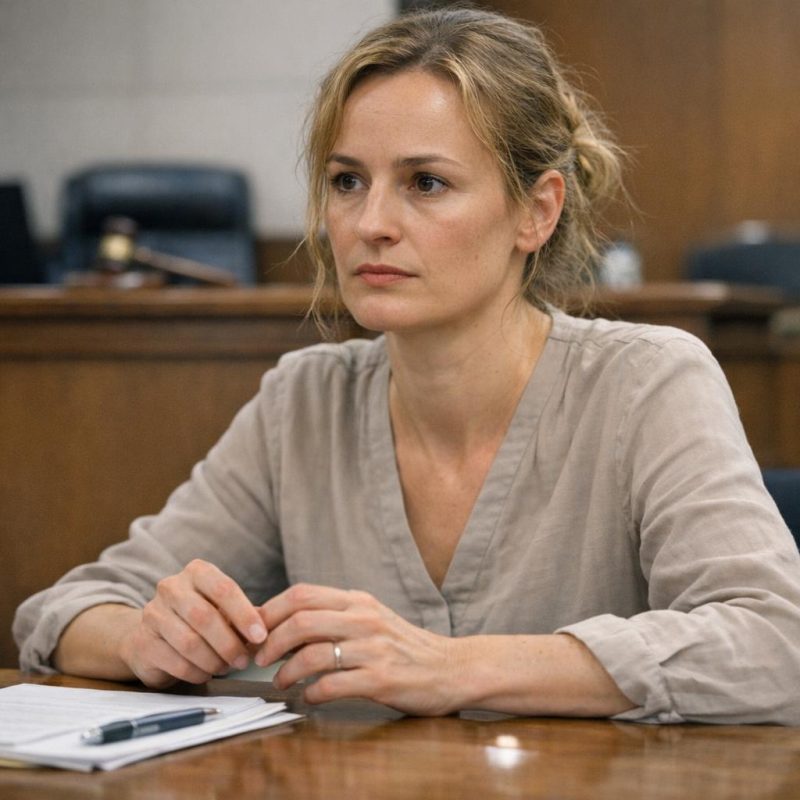 Image by RM AI
The Ruling Begins
Judge Reynolds straightened in her chair and announced she was ready to rule, and my heart just about stopped. I'd been through so much to get to this moment—months of legal battles, the depositions, the public humiliation, the cost both financial and emotional. Mr. Gonzalez reached over and touched my hand briefly, a gesture of support, and I tried to breathe normally. The judge said she'd reviewed every piece of evidence with great care, every document, every testimony, every journal entry and medical record. She'd considered the arguments from both sides, examined the legal precedents, and evaluated the credibility of each witness. Her voice was measured, professional, revealing nothing about which way she was leaning. She talked about the standards for contesting a will, the burden of proof required to show undue influence or lack of testamentary capacity. She mentioned that she'd practiced family law for twenty years before taking the bench, that she'd seen many estate disputes, that she understood the complex emotions involved when families fracture over inheritance. The courtroom was absolutely silent. She said, 'This case represents one of the clearest examples of testamentary clarity I've encountered,' and I felt my heart begin to race.
 Image by RM AI
The Decision
Judge Reynolds delivered her ruling with the kind of clarity that left no room for doubt. She found no evidence whatsoever of undue influence—Richard's medical records showed full cognitive capacity until his final days, multiple witnesses testified to his clear intentions, and the timeline showed he'd made his decisions carefully and consistently. She noted that the will was professionally drafted, properly witnessed, and reflected wishes Richard had expressed repeatedly to multiple people over months. She addressed the claims about isolation, pointing out that Richard's children had isolated themselves through their own choices, their own absence, their own calculated distance. The journals were particularly damning, she said—they revealed a father who knew exactly what his children were doing, who'd made his decisions with open eyes and a clear mind. She found the contest to be without merit, baseless, and filed in bad faith given the evidence of the children's mercenary approach to their father's final years. The will would stand, exactly as Richard had written it. Then she added that she was dismissing the contest as baseless and would be awarding costs, which meant the children would pay my legal fees.
 Image by RM AI
The Judge's Commentary
But Judge Reynolds wasn't finished. She set down her papers and looked directly at the three siblings, and her expression shifted from judicial neutrality to something colder, sadder. She said the evidence had painted a picture of profound parental abandonment, of children who'd treated their father as nothing more than a future source of funds. She referenced the journals specifically—passages where Richard wrote about waiting for calls that never came, about grandchildren he barely knew, about feeling like he mattered to his children only as an inheritance. Her voice was firm but there was real emotion underneath, like she was angry on Richard's behalf, which honestly made me want to cry right there. She talked about how estate law exists to honor the wishes of the deceased, to ensure that people can direct their assets to those they choose, and that Richard Wilson had made his choice with painful clarity born from painful experience. She noted that no amount of legal maneuvering could rewrite the fundamental truth of their relationship with their father. She looked directly at Melissa and David and said, 'Your father deserved better, and this court will not reward your abandonment.'
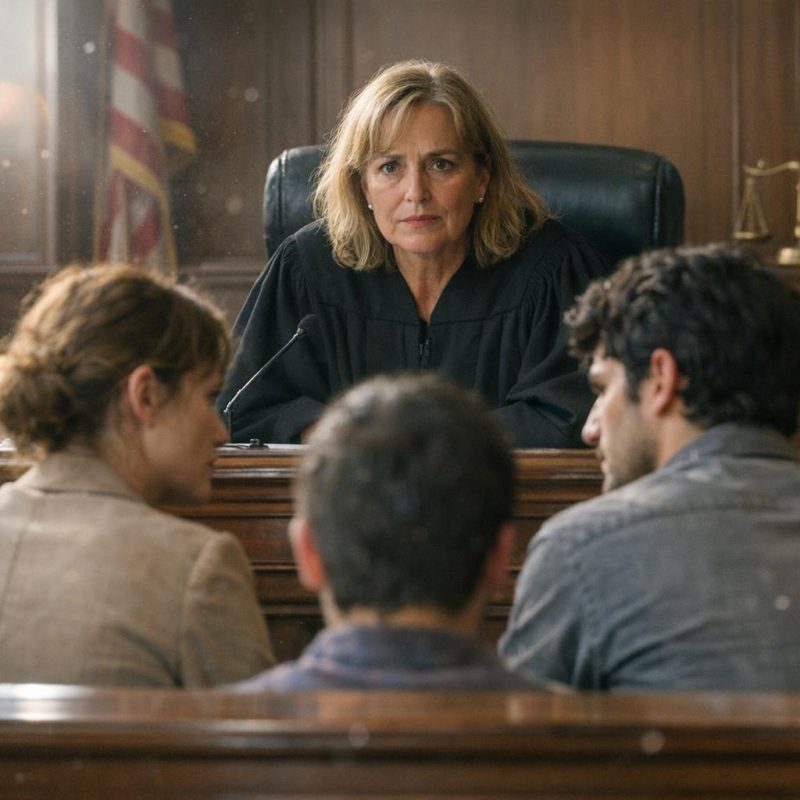 Image by RM AI
Walking Out
I walked out of that courtroom with Mr. Gonzalez beside me, his hand lightly on my elbow like he thought I might collapse, which honestly wasn't unreasonable. My legs felt disconnected from my body. The overhead lights in the hallway seemed too bright, bouncing off the polished floors, and I could hear my own breathing more clearly than the voices around me. Mr. Gonzalez was saying something about paperwork and timelines, but it all sounded distant, like I was underwater. What I felt wasn't triumph, wasn't satisfaction—it was release, like I'd been holding my breath for months and could finally exhale. I could grieve now without looking over my shoulder, without defending myself at every turn. The weight of it almost knocked me over right there in the courthouse hallway. I heard the doors open behind us, and Mr. Gonzalez squeezed my arm gently before stepping aside to take a phone call. That's when I saw him through the glass doors, standing in the parking lot. Outside, I saw Andrew standing alone by his car, and he looked up at me with an expression I couldn't quite read.
 Image by RM AI
The House in Order
Three weeks after the ruling, I started putting the house back together. Not erasing Richard—I'd never do that—but making it livable again, making it mine in a way it hadn't been since before he got sick. I replaced the medical bed with a reading chair I'd had in storage. I opened the curtains in the living room and let actual sunlight flood the space. I donated equipment, sorted through paperwork, filed away the legal documents in boxes I could finally close. The house started to feel like a home instead of a battlefield or a hospital ward. It was strange, walking through rooms without wondering if someone was documenting my movements, without that constant tension in my shoulders. I could breathe differently. One afternoon, I was going through Richard's study, packing books he'd marked for donation—he'd wanted his collection to go to people who'd use it, not gather dust. I found a box of philosophy texts with sticky notes marking passages he'd loved. And inside was a note in his handwriting, dated just two months before he died: 'For Caroline—start your own library now.'
 Image by RM AI
The Scholarship Fund Moves Forward
The scholarship fund became real in early spring. I worked with the foundation Richard had chosen, filling out forms, setting up the criteria exactly as he'd outlined in his will—supporting graduate students in environmental science who showed both academic excellence and genuine passion for the work. It felt important, giving his money the purpose he'd intended, making sure his professional legacy continued beyond grants and published papers. The foundation handled most of the administrative work, but I stayed involved, reviewing applications, reading about these young people who reminded me so much of Richard when he was starting out. The first scholarship was awarded in April to a woman studying wetland restoration. She sent me a thank-you letter a few weeks later, three pages of handwritten gratitude, talking about how she'd been ready to quit her program because of financial stress, how this funding meant she could continue her research, how she'd looked up Richard's work and felt honored to carry forward his mission. The first recipient sent me a thank-you letter saying the scholarship changed her life, and I cried reading it, knowing Richard would have loved that.
 Image by RM AI
Coffee with Andrew
Andrew called me in May. Not Melissa, not David—Andrew, alone, asking if I'd be willing to meet for coffee. His voice on the phone was careful, almost shy, nothing like the anger from months before. I said yes, though I honestly wasn't sure why. Maybe because Richard's journals had shown me something about all of them I hadn't fully understood—that Andrew had at least tried, at least sometimes, before he stopped. Maybe because I was tired of being angry. Maybe because Richard's final act, leaving everything to me, had been love speaking louder than I'd realized, and it revealed who'd actually shown up when it mattered. So we met at a quiet café on a Wednesday morning, neutral territory, both of us nervous. The silence between us felt heavy with everything unsaid, months of accusations and hurt and legal warfare sitting right there at the table with our untouched coffee cups. I wasn't ready to forgive, wasn't sure I ever would be completely, but I could listen. We sat across from each other in uncertain silence, and then Andrew said, 'I want to tell you about my father—the real one, before I stopped paying attention.'
 Image by RM AI