I Trained My Replacement, Then She Stole My Career — Until I Discovered Who Really Pulled the Strings
I Trained My Replacement, Then She Stole My Career — Until I Discovered Who Really Pulled the Strings
Twelve Years in the Same Chair
Twelve years is a long time to sit in the same chair. Not literally the same one—we upgraded to those mesh-back ergonomic things around year seven—but you know what I mean. Same desk cluster, same view of the parking lot through those half-tinted windows, same coffee station where the creamer's always about to run out. I'd built something there, though. Not the corner office or the flashy title, but something more subtle. The clients knew my voice. They'd ask for me specifically when problems came up, trusted me with their budgets, remembered details I'd mentioned months earlier about campaigns. My work spoke quietly, the way I did. I wasn't the person who made noise in meetings or sent those reply-all emails with excessive exclamation points. I just did the work, kept things running, made sure nothing fell through the cracks. Management didn't exactly celebrate that, but they relied on it. I'd become part of the infrastructure, essential but invisible, like the ventilation system. Comfortable, maybe. Complacent, possibly. But something was about to shift in a way I never saw coming.
 Image by RM AI
The Idea That Wouldn't Let Go
The idea hit me on a Tuesday night, washing dishes after a dinner I'd barely tasted. We kept losing clients after the first year, a pattern everyone accepted as normal churn. But I'd noticed something in my twelve years of watching: the clients who stayed weren't necessarily getting better service. They were getting consistency. Personal touchpoints. Someone who remembered their brand voice, their quirks, their annual cycles. I started sketching out a framework that night, water dripping onto my notepad. Over the next three months, I built it entirely on my own time. Evenings, weekends, that dead hour before anyone else arrived at the office. A whole retention program with check-in schedules, personalized milestone acknowledgments, data tracking for client preferences. I pulled stats from our CRM, created templates, designed a measurement system. It felt good, creating something from nothing. Something with my fingerprints all over it. For the first time in years, I felt like I was contributing beyond just maintaining. I was innovating, building, solving a real problem. I had no idea that sharing this idea would become the biggest mistake of my career.
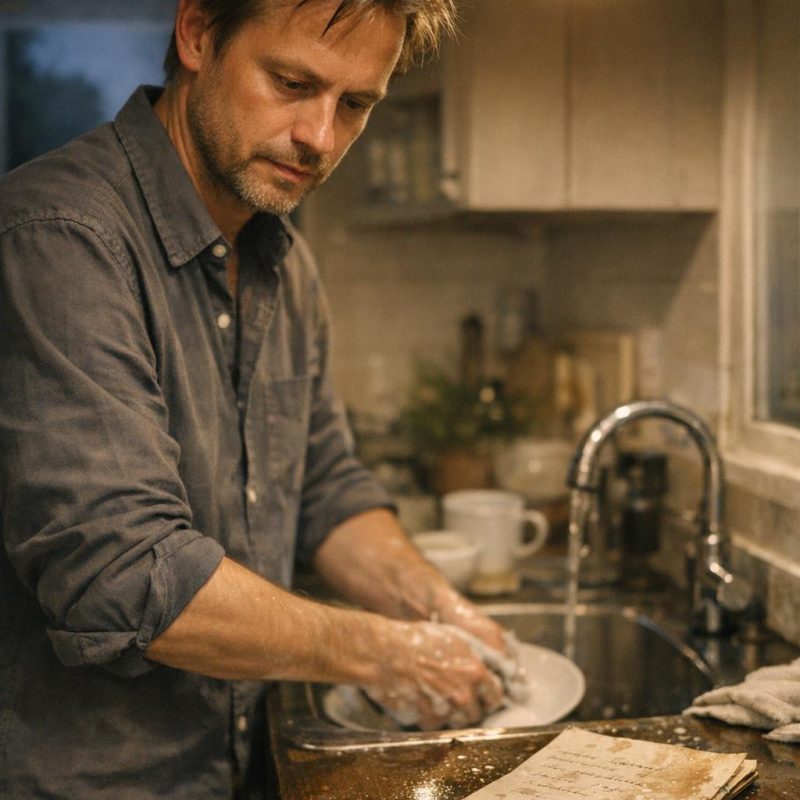 Image by RM AI
The New Hire with Bright Eyes
Kelsey arrived on a Monday in late September, wearing a blazer that still had the price tag crease and carrying a notebook already filled with color-coded tabs. Fresh out of college, maybe twenty-four, with that specific kind of eagerness that hasn't been dimmed by a single performance review yet. Daniel dropped her at my desk cluster with minimal ceremony. 'Sharon, you'll be training our new associate. Show her how things actually work around here.' Then he was gone, off to whatever meeting filled his calendar that morning. She stood there, smiling, waiting for direction. I saw myself in her, honestly. Not the physical resemblance—she was tall, blonde, composed in a way I'd never mastered. But that hopefulness. That belief that working hard and being smart would be enough. That someone might notice, might reward the effort. I'd had that once, before twelve years wore it down to something more realistic. She asked good questions from day one, took notes on everything, even stuff about the coffee machine and the printer codes. She reminded me so much of my younger self that I wanted to help her succeed in ways I never did.
 Image by RM AI
Teaching Her the Unwritten Rules
Training Kelsey became the best part of my workday. We'd spend mornings going through client files, and I'd share the stuff they don't put in onboarding manuals. How Mrs. Patterson at the dental group always wanted updates on Wednesdays before noon. How the brewery account needed casual language but ironclad deadlines. Which colleagues to trust, which to document everything with. She absorbed it all, asked follow-up questions that showed she was actually thinking, not just transcribing. We'd grab lunch sometimes, eating sad desk salads while I explained the unwritten hierarchy, the politics, who'd been passed over for what promotion. I showed her my email templates, my organization system, the spreadsheet I'd built to track project timelines. She was grateful in a way that felt genuine. She'd actually say thank you, tell me she was learning more from me than she'd learned in four years of marketing classes. It made me feel visible again, valuable. Like maybe mentoring was my next chapter, the contribution I was meant to make. I thought I was building an ally, maybe even a friend.
 Image by RM AI
Daniel's Approving Nod
Daniel started showing up at our desk cluster more often, always when Kelsey was there. He'd lean against the partition, arms crossed, nodding while she talked through whatever project we were reviewing. 'Good thinking, Kelsey,' he'd say, or 'I like where your head's at with this.' He never said those things to me, but I'd stopped expecting them years ago. His attention didn't seem unusual at first—she was new, promising, the kind of employee who made managers look good for hiring her. During team meetings, I noticed his gaze would land on her when he asked questions, even open-ended ones anyone could answer. She'd respond confidently, using some of the frameworks I'd taught her, and he'd smile that tight smile he reserved for people he was mentally filing under 'potential.' I felt something small and uncomfortable watching it, like a pebble in your shoe you keep meaning to deal with. But I pushed it down. This was good for her, wasn't it? Visibility mattered. I'd never had it at her age. At the time, I thought he was just being supportive of new talent.
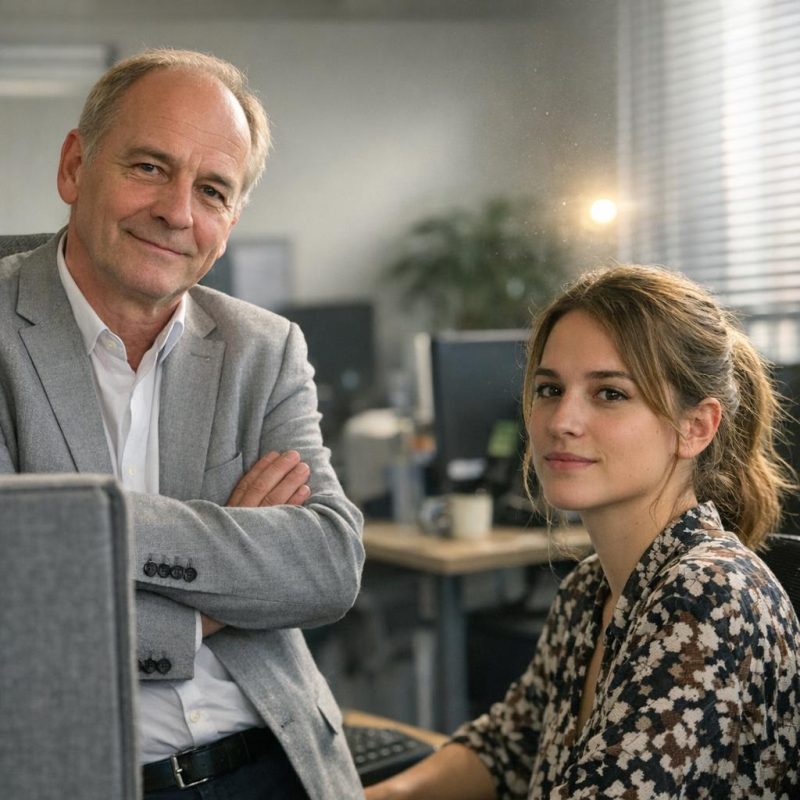 Image by RM AI
Sharing the Blueprint
I told her about the retention program on a Thursday afternoon when the office had that drowsy, end-of-week energy. She'd asked what I was working on, noticed I'd been staying late. So I showed her. Pulled up the files on my screen, walked her through the framework, the research I'd compiled, the metrics I'd designed to prove ROI. Her eyes got wide. 'Sharon, this is brilliant,' she said, and she sounded like she meant it. 'This could change how we structure all our client relationships. Have you shown Daniel?' I hadn't yet. I was still refining it, wanted it perfect before presentation. She asked if she could read through my documentation, said she'd love to understand the thinking behind it. I sent her everything. The templates, the data analysis, my implementation timeline, even my rough draft of the pitch deck. We spent an hour talking through it, her asking questions about methodology, about rollout strategy, about how I'd identified the gaps. She asked thoughtful questions, and for the first time in years, someone seemed to truly see the value in what I'd built.
 Image by RM AI
Small Suggestions
Over the next few days, Kelsey would stop by with little ideas. 'What if we segmented by industry vertical instead of account size?' or 'Have you considered integrating this with the quarterly review process?' Some of her suggestions were actually good, showed she'd really digested the material. I appreciated having someone to think through the details with, someone who seemed as invested as I was. We were collaborating, or that's what it felt like. She'd bring coffee, we'd workshop the approach, refine the messaging. When she proposed adding a mentorship component for clients' junior staff, I thought it was genius. It addressed a gap I'd missed. So I revised the presentation deck to include it, gave her a verbal credit during our discussion, though I didn't add her name to the documentation. It was still my project, after all. But I wanted her to know I valued her input, that this was what professional relationships could look like. I even added one of her ideas to the presentation deck.
 Image by RM AI
Coffee Shop Confessions
We went to the coffee shop across the street one afternoon, the one with the too-loud espresso machine and wobbly tables. Not for work, just to talk. Kelsey opened up about feeling overwhelmed sometimes, uncertain if she belonged in corporate marketing, worried she didn't have what it took. I recognized that doubt. I'd carried it for years, still did some mornings. I told her about my early struggles, the times I'd been overlooked, how I'd learned to find satisfaction in the work itself rather than the recognition. She listened with this intense focus, like she was cataloging everything. 'You're so resilient,' she said. 'I don't know if I could handle being invisible the way this place makes you invisible.' It stung a little, hearing it said out loud. But then she smiled. 'I admire how you've carved out respect in a place that doesn't always see you. You've built something real here, Sharon. People like you are why people like me don't give up.' Her eyes were so sincere, her voice so warm. She told me she admired how I'd carved out respect in a place that didn't always see me, and I believed her.
 Image by RM AI
The Routine Meeting Announcement
Daniel sent the calendar invite on a Thursday morning. 'Department Update - Friday 2pm.' Nothing unusual about that. We had these meetings every few weeks, usually to discuss campaign performance or budget allocations. I clicked 'accept' without thinking much about it. The next afternoon, I grabbed my usual coffee and notebook, the one with all my project notes tucked inside. Kelsey was already in the conference room when I arrived, sitting near the front with her laptop open. She gave me a small smile. Daniel came in right at two, closing the door behind him with that efficient click he always did. 'Thanks for making time, everyone,' he said, pulling up his agenda slide. 'Quick updates today, then Kelsey has something to share that I think you'll all find interesting.' I glanced at Kelsey. She was looking down at her hands, not meeting anyone's eyes. I figured maybe she'd finished that client report ahead of schedule or had some new social media metrics to share. Nothing about the moment felt wrong. I walked in with my coffee, my notebook, and no idea that everything was about to change.
 Image by RM AI
The Moment She Stood Up
Daniel went through the usual agenda items first. Campaign performance, budget updates, the quarterly timeline. I was half-listening, making notes about a deadline he mentioned. Then he paused and turned toward Kelsey with this expectant look. 'Kelsey's been working on something I'm really excited about,' he said. 'A framework for how we approach integrated campaigns moving forward. I asked her to put together her thoughts.' Kelsey stood up slowly, like she was gathering courage. She connected her laptop to the projector. My first thought was that it was nice to see her gaining confidence, stepping up like this. I felt almost proud. Then the first slide appeared on the screen. 'Integrated Brand Narrative Framework,' it read. The exact title I'd used in my proposal. I blinked, thinking maybe it was just coincidence. Lots of people use similar language in marketing, right? But then she advanced to the second slide, and I saw the three-pillar structure I'd developed. Story. Channel. Measurement. The same order. The same phrasing. Then she started talking, and I recognized every single word.
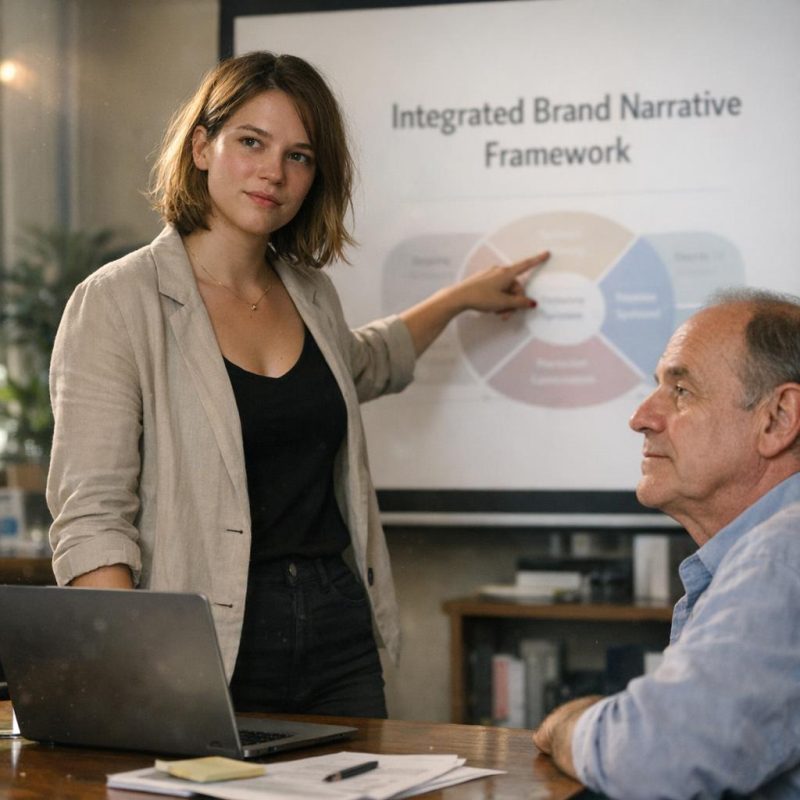 Image by RM AI
Watching My Words Leave Her Mouth
She was reading from my document. Not paraphrasing, not building on my ideas. She was presenting my exact framework, using phrases I'd written late at night at my kitchen table. 'The key is establishing narrative continuity across touchpoints,' she said, and I'd written that exact sentence. I'd struggled with that sentence, actually, rewriting it four times until it felt right. She clicked to the next slide. There was my diagram, the one I'd sketched out and then recreated in PowerPoint, showing how different campaign elements connected. My color scheme. My examples. I felt like I was watching myself from outside my body. Around me, people were nodding, taking notes. Daniel was leaning back in his chair with this satisfied expression, like he was watching a protégé bloom. I kept waiting for Kelsey to say something, to credit me, to explain that this was based on work I'd shared with her. But she just kept going, slide after slide, presenting my months of work as if she'd thought of it all herself. The room started applauding, and I couldn't move.
 Image by RM AI
Forcing My Voice to Work
My hands were shaking when I finally found my voice. 'This is very similar to the framework I developed,' I said. The words came out quieter than I'd intended. The room went silent. A few people glanced at me, then at Kelsey. She was staring at the table, her face flushed. Daniel turned toward me with raised eyebrows, like I'd interrupted a sacred moment. 'Sorry, Sharon, what was that?' I cleared my throat. 'The framework Kelsey just presented. It's nearly identical to the integrated campaign proposal I've been working on. The same structure, the same terminology. I shared it with her a few weeks ago.' I tried to keep my voice steady, professional. I wasn't accusing anyone. I was just stating a fact. Daniel tilted his head slightly, that gesture he did when he was pretending to consider something he'd already decided. 'Well, it's great to see alignment across the team,' he said smoothly. 'This kind of convergent thinking shows we're moving in the right direction together.' He smiled at me, then at Kelsey. 'Glad everyone's on the same page.' Then he advanced to the next agenda item like nothing had happened. Daniel gave me a tight smile and said it was great to see team alignment, then moved on like I hadn't spoken at all.
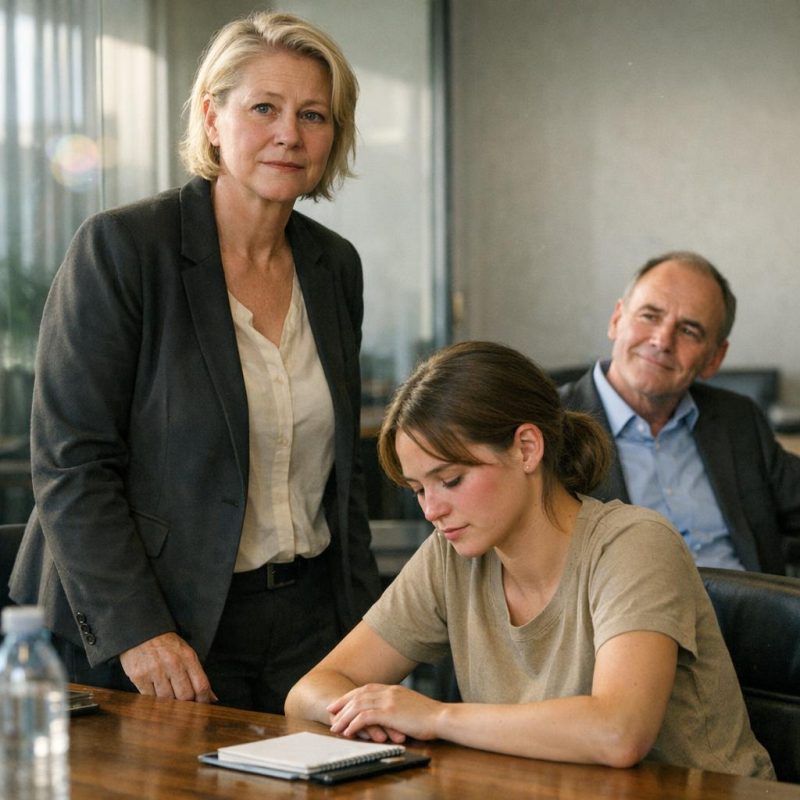 Image by RM AI
The Hallway Confrontation
I waited in the hallway after the meeting ended, my heart pounding so hard I thought people could see it through my blouse. When Kelsey finally emerged, I stepped in front of her. 'We need to talk,' I said. She looked around nervously, then nodded. We walked to the end of the hallway, away from the conference room. 'Why would you do that?' I asked, trying to keep my voice low. 'That was my work. You know it was my work. I showed it to you. I walked you through every piece of it.' She wouldn't meet my eyes. Her face had gone pale. 'I know,' she said quietly. 'I know, Sharon, and I'm so sorry, I just—' She stopped, pressing her lips together. 'You just what?' My voice was sharper now. I couldn't help it. She looked miserable, but I didn't care. I wanted an explanation that made sense. I wanted her to tell me this was some terrible misunderstanding. She took a breath, and when she spoke again, her voice was barely above a whisper. She hesitated, then said three words that changed everything: 'He told me to.'
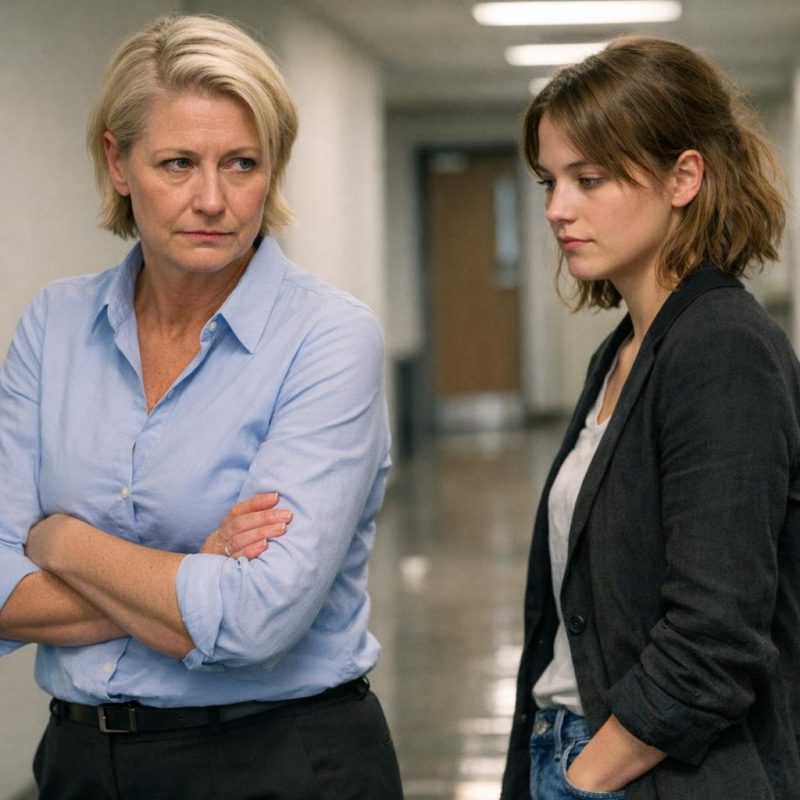 Image by RM AI
He Said It Would Look Better
I stared at her. 'What do you mean, he told you to?' Kelsey glanced back down the hallway, checking if anyone was nearby. 'Daniel,' she said. 'He asked me to put together a presentation based on your framework. He said it would look better coming from someone newer, someone the leadership team might see as more... fresh.' She swallowed. 'He said you'd done great foundational work, but that the company needed to see new energy behind it. That it would have more impact if I presented it.' I felt like the floor had dropped out from under me. 'And you just agreed?' She looked down. 'He's the director, Sharon. When your boss tells you to do something, you do it. I thought maybe he'd talked to you about it. I thought maybe this was the plan.' Her voice cracked slightly. 'I should have asked you directly. I should have said no. I know that now.' I wanted to believe she was lying, making up an excuse to cover her own ambition. But something in her voice, the way her hands were trembling, told me she wasn't. I wanted to believe she was lying, but something in her voice told me she wasn't.
 Image by RM AI
The Pieces That Don't Fit
I spent the weekend replaying everything. The meeting. Kelsey's presentation. Daniel's dismissive response when I'd spoken up. Those three words: 'He told me to.' I kept trying to piece it together. If Daniel had wanted someone else to present the framework, why not just ask me directly? Why not have Kelsey co-present with me, building on my foundation? Why erase my involvement entirely? And the way he'd handled my objection in the meeting, that smooth deflection about 'team alignment.' Like he'd been ready for it. Like he'd prepared what to say if I spoke up. I thought about all the times Daniel had praised my work in our one-on-ones but never mentioned it in larger meetings. The way he'd encouraged me to mentor Kelsey, to share everything with her. Had he planned this from the beginning? Or was I being paranoid, seeing conspiracy where there was just ordinary workplace politics? Maybe Kelsey had misunderstood his instructions. Maybe I'd misunderstood what happened in the meeting. But I kept coming back to her face when she'd admitted it. The guilt there. The fear. Something about the way Daniel handled it felt too smooth, too prepared.
 Image by RM AI
The Promotion Email
The email arrived two weeks later. Subject line: 'Organizational Update - New Project Lead Role.' I almost deleted it, thinking it was just another corporate announcement. But I opened it. Daniel had written it personally, sent to the whole marketing department. He was pleased to announce that Kelsey was being promoted to Project Lead for Strategic Campaigns, effective immediately. 'Kelsey has demonstrated exceptional strategic thinking and initiative,' he wrote. 'Her recent presentation of the Integrated Brand Narrative Framework showcased exactly the kind of innovative leadership we need going forward.' There was more. Three paragraphs about her promise, her fresh perspective, her dedication. My name appeared nowhere in the email. At the bottom, there was a list of her initial responsibilities. Leading the Q4 integrated campaign rollout. Developing department-wide narrative standards. Implementing the new framework across all brand channels. I read that last line three times, my coffee going cold in my hand. My project was listed as her first assignment.
 Image by RM AI
Asked to Support Her
Daniel called me into his office on a Tuesday afternoon. He had that smile again, the one I'd seen when he first introduced me to Kelsey. 'Sharon, I wanted to talk to you about the transition,' he said, gesturing for me to sit. 'As you know, Kelsey's taking point on the integrated campaign rollout.' I nodded, not trusting my voice. 'I think there's a real opportunity here for you to support her implementation. Your expertise, your institutional knowledge—that's invaluable as she gets up to speed.' He leaned back in his chair, fingers steepled. 'I'm thinking you could serve as a resource on the project. Answer questions, provide context, help smooth the way with stakeholders who are used to working with you.' A resource. That's what he called it. 'You'd still be involved,' he continued, 'just in more of a supporting capacity. I think it could be a great learning experience for both of you.' The fluorescent light above his desk flickered slightly. My hands were steady in my lap, but everything inside me was screaming. He said it like he was doing me a favor, giving me a chance to contribute.
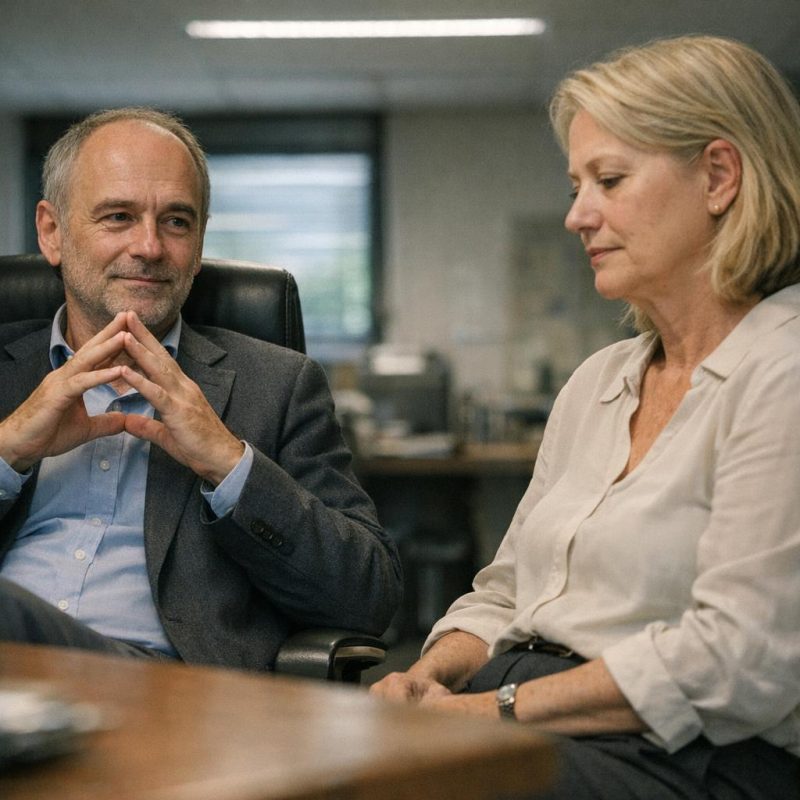 Image by RM AI
Considering HR
That night, I sat at my kitchen table with my laptop open to the HR portal. The complaint form stared back at me, cursor blinking in the first empty field. I'd read through the policy manual twice. Intellectual property theft. Credit appropriation. Age discrimination. The words were all there, perfectly applicable to what had happened. I started typing, then stopped. Started again. Deleted everything. The thing was, Daniel had been so careful. Every email he'd sent had been cc'd to multiple people. Every decision had been framed as departmental strategy, not personal preference. Kelsey's promotion announcement had praised her initiative and innovation, never explicitly claiming the framework was her original work. I thought about the presentation, how he'd introduced her, how he'd watched me realize what was happening. There were no smoking guns, no paper trail that definitively proved anything. It would be my word against his interpretation of events. His position against mine. And I'd seen how these things went—the person who complained was the one who ended up looking difficult, oversensitive, unable to adapt. There was a confidence in the way he'd handled everything, like he knew there would be no consequences.
 Image by RM AI
The Avoided Glances
Kelsey started avoiding me completely after that. I'd see her in the hallway and watch her eyes slide past me, focus suddenly fixed on her phone or the wall or anything that wasn't my face. In the break room, she'd turn and walk out if I entered. During the department meeting on Thursday, she sat on the opposite side of the table, never once looking in my direction even when discussing the framework—my framework—that was now her signature project. It wasn't subtle. Other people were starting to notice. Marcus had given me a questioning look when Kelsey abruptly ended a conversation as I approached. I tried to catch her eye once, just to see what I'd find there. Anger, maybe. Triumph. Some acknowledgment of what she'd done. But she was too quick, always turning away before our gazes could meet. When I finally did glimpse her expression—a brief moment when she didn't see me watching—something about it surprised me. Her face looked tense, almost pinched. Not the confidence of someone who'd successfully climbed a ladder. She didn't look guilty so much as trapped, and that bothered me more than anger would have.
 Image by RM AI
Working Late, Forgotten Folder
I'd left my folder on my desk that evening, the one with the original framework drafts I'd been reviewing. Stupid, leaving it there overnight, but I'd been distracted. So I went back around eight, figuring the office would be empty. The parking lot was mostly dark, just a few scattered cars including Daniel's black sedan. I used my keycard at the side entrance and took the stairs to avoid the elevator noise. The second floor was dim, most of the overhead lights on their automatic night setting. My desk was in the open workspace area, and I grabbed the folder quickly, ready to leave. That's when I heard voices coming from Daniel's office down the hall. His door was partially closed but not latched. I wouldn't have paid attention except the building was supposed to be empty. I moved quietly past the conference room, not intending to eavesdrop, just curious who else was working late. Maybe security. Maybe the cleaning crew had questions. Then I heard my name, and I stopped walking.
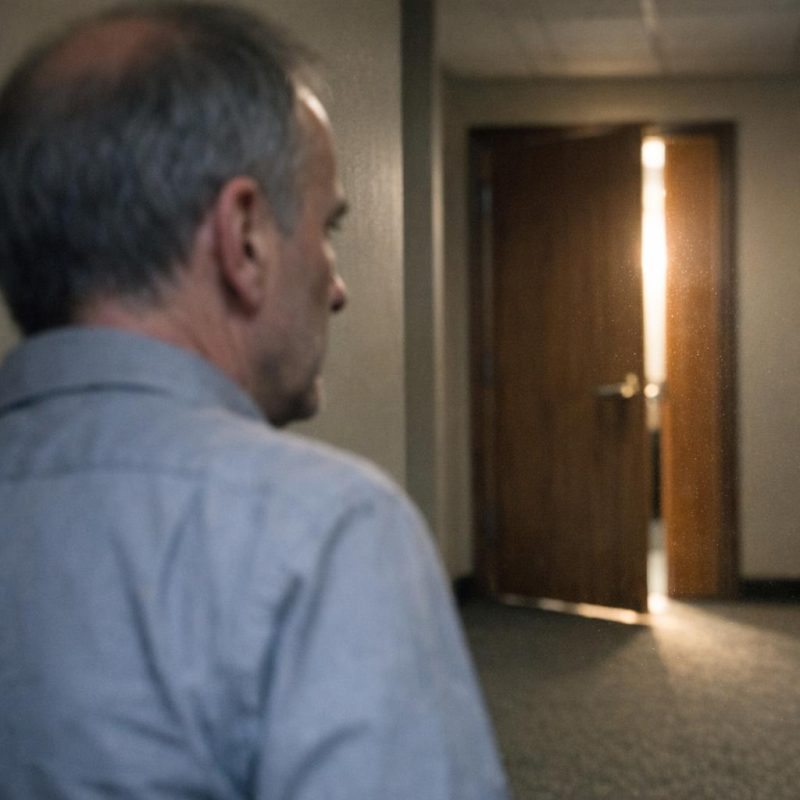 Image by RM AI
She's Too Careful
Daniel's voice carried through the gap in the door, clear and relaxed. 'Sharon won't push back,' he was saying. 'I've worked with her for three years. She's too careful, too concerned about being seen as a team player. She'll accept the support role because that's what she does—she accepts things.' I pressed myself against the wall beside the doorframe, pulse hammering. 'But what if she goes to HR?' That was Kelsey, her voice tight with worry. Daniel laughed. Actually laughed. 'She won't. She's already had two weeks to file a complaint and hasn't done it. She's thinking about it, sure, but she's also thinking about her reputation, her retirement timeline, all the reasons not to make waves. People like Sharon don't make formal complaints. They suffer quietly and tell themselves it'll get better.' He paused. 'Besides, I've documented everything carefully. Her performance reviews have been fine but not exceptional. The framework presentation emphasized team collaboration. There's no case to make.' The certainty in his voice made my stomach turn.
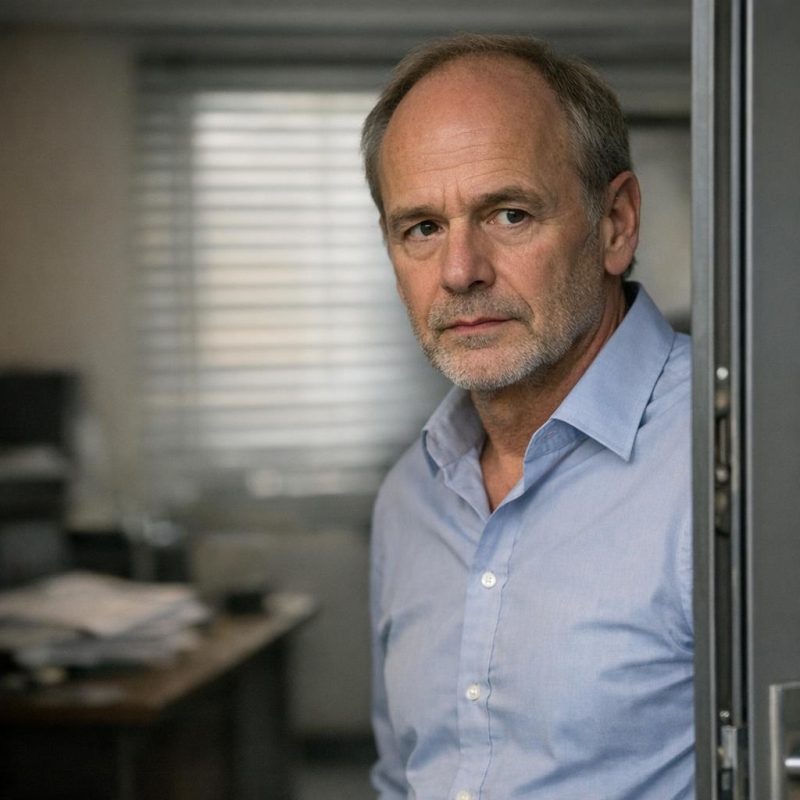 Image by RM AI
This Wasn't What You Promised
Kelsey said something I couldn't quite hear, her voice dropping lower. Then, clearer: 'I don't like this. This isn't what you promised.' There was a pause. I imagined Daniel doing that thing with his hands, the dismissive wave he used when he wanted to move past something. 'What I promised was an accelerated career path,' he said, tone shifting to something sharper. 'Which is exactly what you're getting. Project Lead in under six months. That's unheard of at your level.' 'By stealing someone else's work,' Kelsey said, and I heard something in her voice I hadn't expected—genuine distress. 'You said it would be a collaborative transition. You said she was ready to step back, that she'd welcome mentoring someone younger. You made it sound—' 'I made it sound exactly how it needed to sound,' Daniel interrupted. 'And you went along with it because you wanted the promotion. Don't pretend you're the victim here.' My hand was gripping the folder so hard the edges bit into my palm. That word—promised—hit me harder than anything else.
 Image by RM AI
Stepping Away Before They Notice
I needed to leave. Now. Before one of them came out and found me standing there like some pathetic spy in my own office. I stepped backward carefully, testing each footfall before putting my weight down. The industrial carpet absorbed the sound. Ten steps to the stairwell door. Eight. Six. Behind me, Daniel's voice continued, saying something about timeline and optics. Kelsey's response was too quiet to make out. Four steps. Two. My hand found the stairwell door handle and I eased it open, slipping through the gap before it could swing wide. Inside the concrete shaft, I finally let myself breathe. The door clicked shut with a soft sound that seemed deafening. I waited, counting to thirty, listening for any indication they'd heard. Nothing. I took the stairs down in the dark, not wanting to trigger the motion-sensor lights. In my car, I sat gripping the steering wheel, the folder still clutched against my chest. Promised. He'd promised her something, orchestrated the whole thing. This wasn't opportunism. It was planned. My mind was racing with questions I didn't know how to answer.
 Image by RM AI
Watching the Changes
The exclusions started immediately after that, though maybe they'd been happening gradually and I'd only now started truly seeing them. Thursday morning, I wasn't cc'd on the campaign timeline email that went to the rest of the team. Friday, I showed up to the stakeholder meeting only to find it had been rescheduled without anyone telling me. When I checked my calendar, the original appointment was simply gone, deleted by the organizer. Monday brought a thread about brand messaging standards—my area—that included twelve people but not me. I started taking screenshots, documenting each exclusion with timestamps. Marcus mentioned a planning session I hadn't heard about. Linda referenced decisions from a meeting I hadn't attended. My name was disappearing from distribution lists, my access quietly shrinking. No one said anything directly. There were no announcements, no explanations. I was just suddenly absent from conversations I'd been central to weeks before. In the department org chart updated that week, my title was unchanged but my project list had been shortened, reassigned. The framework I'd built wasn't listed under my name anymore. I was being erased in slow motion.
 Image by RM AI
Documents Under a New Name
I was searching for a campaign brief I'd written two months earlier when I found it. The same document, almost word-for-word, saved in our shared drive under Kelsey's name. The content was mine—my research, my strategic recommendations, even my specific phrasing about target demographics. She'd changed a few words here and there, adjusted some paragraph breaks, added a header with her name. I opened another folder and found more. A client presentation I'd developed. A brand positioning document I'd spent weeks refining. A messaging framework I'd created from scratch. All of them now existed in duplicate versions attributed to Kelsey, dated just days after my originals. My hands shook as I took screenshots of everything, the file properties showing creation dates, the metadata that proved I'd authored them first. I created a folder on my personal drive and started copying evidence. Some of the documents were still being used in active projects, circulated by Daniel or Marcus with Kelsey listed as the creator. No one questioned it. No one seemed to remember or care that I'd been the one who'd actually done the work. They'd even changed the formatting, like that would make it less obvious.
 Image by RM AI
The Client Call That Stung
Rebecca from Northpoint Media called my direct line Wednesday afternoon. We'd worked together for six years, built three successful campaigns, had that easy rapport you get with clients who trust you. 'Sharon, hey,' she said, and I could hear the confusion in her voice. 'I just got an email from someone named Kelsey saying she's taking over our account? I wanted to check in with you first because, honestly, nobody told me anything was changing.' I felt my face get hot. I hadn't known about the reassignment. Nobody had mentioned it in any meeting, sent any transition email. 'Oh,' I said, trying to sound casual, professional, like this was completely normal. 'Yes, we're shifting some account management around.' The lie tasted bitter. Rebecca paused. 'Is everything okay? You've always been our person. This feels kind of sudden.' I wanted to tell her the truth—that I was being systematically erased, that my work was being stolen, that I had no idea what was happening. I didn't have an answer that wouldn't make me sound bitter.
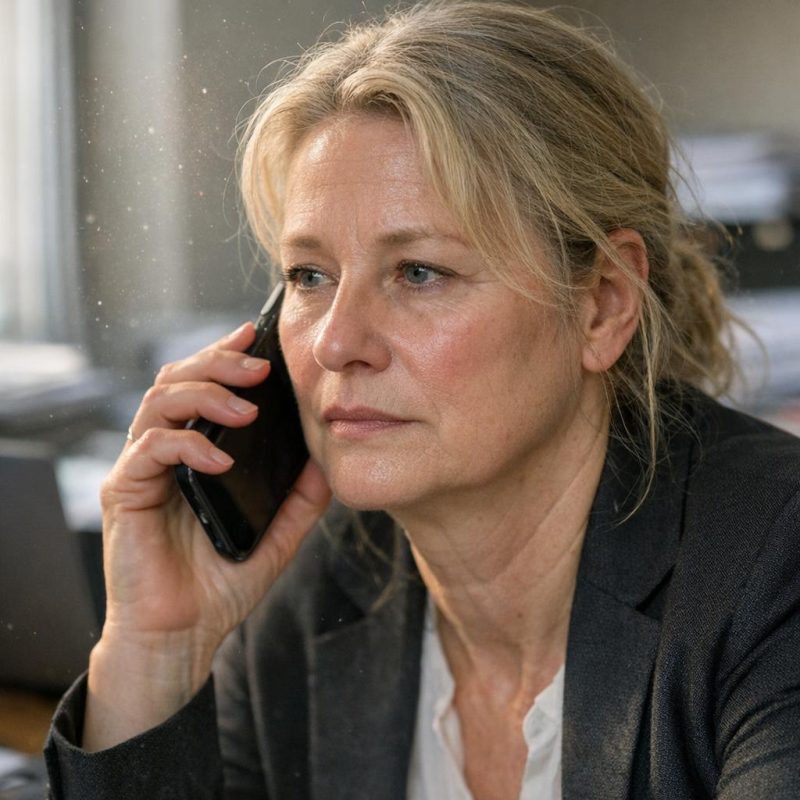 Image by RM AI
Lunch Alone
I started eating lunch at my desk, but that Thursday I needed air, so I went to the break room. Bad choice. Kelsey was there with Marcus, Linda, and two people from creative, all of them clustered around the table, laughing at something on someone's phone. The same table where I used to sit, where people used to ask my opinion about weekend plans and share complaints about traffic. I got my salad from the fridge and sat at the small table by the window, the one nobody uses because it's too close to the vending machines. They didn't look over. Not once. I watched them the way you watch a party through a window, seeing the warmth and connection but not feeling any of it. Kelsey said something and they all laughed again. Marcus touched her shoulder, the casual familiar gesture of someone who's part of the inner circle. That used to be me. I used to be the one people gravitated toward, whose stories people wanted to hear. Now I was furniture. Décor. Something they didn't notice anymore. I wondered how long it would take before they forgot I'd ever mattered.
 Image by RM AI
Thinking About Quitting
That night I sat in my car in the parking garage for twenty minutes after everyone else had left. I'd pulled up a blank email to Daniel, cursor blinking in the subject line, trying to compose a resignation. Just walking away seemed easier than enduring this slow professional death. No more watching Kelsey take credit for my work. No more sitting alone while my former colleagues formed new alliances. No more pretending everything was fine when I was clearly being pushed out. I could find something else. I had experience, a decent portfolio, connections outside this company. Start fresh somewhere that valued me. The email stayed blank. Because leaving now meant they'd won completely. Daniel would get exactly what he wanted—me gone, Kelsey installed in my place, no mess, no questions. I'd disappear and nobody would even ask why. My work would stay attributed to Kelsey. My clients would forget my name. The framework I'd built would continue bearing someone else's signature. And Daniel would do this again to someone else, because there'd been no consequences, no resistance. I closed the email without saving it. I wasn't ready to disappear just yet.
 Image by RM AI
The Old File Box
I started going through everything. Old performance reviews, project files, emails I'd archived years ago. I wasn't sure what I was looking for exactly—patterns, maybe, or proof that I hadn't imagined my own competence. Evidence that I'd actually built what they were now dismantling. My file cabinet at home had folders from every year I'd worked there, organized by project and client. I spread them across my dining table Friday night, timeline forming in the papers. Campaigns I'd led. Strategies I'd developed. Recognition I'd received. Then the shift—right around when Daniel took over the department. Suddenly my name appeared less frequently in leadership emails. My project assignments got smaller. New initiatives went to other people. I'd noticed it peripherally but hadn't connected the dots, hadn't seen the pattern. I pulled out an old company directory from four years ago, back when we still printed them. Flipped through the faces, remembering people who'd left, reorganizations that had felt random at the time. That's when I found an old company directory and remembered someone who might have answers.
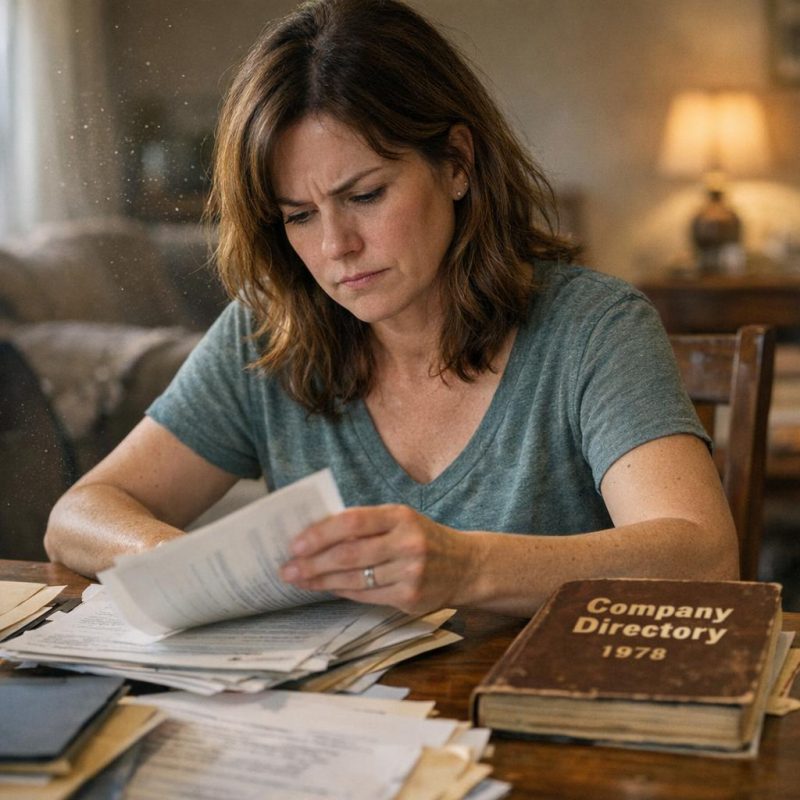 Image by RM AI
A Name I Hadn't Thought of in Years
Linda. Not my coworker Linda—Daniel's ex-wife Linda. She used to come to company events back when they were still married, the holiday parties and summer picnics when spouses were invited. Elegant, quiet, always slightly separate from the corporate crowd. I remembered her at the dessert table once, and we'd talked about her work—something in nonprofit management. She'd asked thoughtful questions about my job, seemed genuinely interested. That was maybe five years ago, before their divorce. I'd heard it was messy, whispered about in break rooms, but I'd never known details. After they split, she stopped appearing at events, obviously. Daniel never mentioned her. I found myself wondering what she knew. If she'd seen patterns in Daniel's behavior that I was only now recognizing. If there was a reason their marriage had fallen apart that connected to the way he operated professionally. It felt like a stretch, maybe even desperate, but I needed to understand who I was actually dealing with. I had no idea if she'd even talk to me, but I had to try.
 Image by RM AI
Running Into Her at the Grocery Store
I wasn't planning to contact her—I didn't even know how to find her. But Sunday afternoon I was at Whole Foods, debating between two kinds of yogurt like that mattered, when I looked up and saw her in the produce section. Older, shorter hair, but definitely Linda. She glanced over at the same moment, and I watched recognition cross her face. We did that awkward thing where you're not sure if you should acknowledge someone from your past, but then she smiled slightly and walked over. 'Sharon, right? You worked with Daniel.' Her voice was exactly how I remembered it, warm but measured. We exchanged the usual pleasantries—how've you been, it's been years, you look well. I almost left it at that. But something in her steady gaze made me honest. 'I still work with him, actually,' I said. 'Still in the same department.' When I mentioned I still worked with Daniel, her expression changed completely.
 Image by RM AI
Be Careful With Him
The warmth left her face, replaced by something I couldn't quite read. Concern, maybe. Or recognition. She glanced around the produce section, then back at me. 'How long have you been there?' she asked. I told her—almost fifteen years now. Her jaw tightened slightly. 'And how are things going? With Daniel as your boss?' The way she asked made it clear she wasn't just making conversation. I hesitated, not sure how much to say, but exhaustion won over caution. 'Honestly? Not great. There's a new person, and everything's kind of falling apart.' Linda nodded slowly, like she'd expected that. 'Be careful with him,' she said quietly. 'Daniel has a pattern. With how he operates, with people he works with. Especially women who've been around a while.' My pulse quickened. She knew something. This wasn't just ex-wife bitterness or coincidence. 'What kind of pattern?' I asked. She looked at her shopping cart, then at me, weighing something internally. I asked what she meant, and she hesitated before deciding to tell me.
 Image by RM AI
Ambitious Young Women
Linda glanced toward the bakery section, then back to me. 'During our marriage,' she said carefully, 'Daniel had this habit at work. He'd attach himself to ambitious younger women. Not romantically—at least, I don't think so—but professionally.' She paused, choosing her words. 'He'd notice someone bright, eager, talented. Someone who wanted to move up quickly. And he'd become their champion.' I felt my stomach drop slightly, but I stayed quiet. 'He'd fast-track them,' Linda continued. 'Give them opportunities, visibility, access to projects that mattered. They'd flourish under his mentorship, and everyone would think he was this great leader who believed in developing talent.' Her expression hardened. 'But then I started noticing something else. The employees who'd been around longer—the ones who actually knew how things worked, who had institutional knowledge—they'd start having problems. Their work would be questioned. They'd be sidelined. And eventually, they'd leave.' My hands gripped the shopping cart handle tighter. 'And the younger women?' I asked. Linda's jaw set. 'He encouraged them, fast-tracked them, then used them to push out employees he saw as threats.'
 Image by RM AI
He Doesn't Like People Who Know Too Much
I stood there in the grocery store aisle, trying to process what she was telling me. 'Why would he do that?' I asked, though some part of me already knew. Linda shifted her weight, still holding that bag of apples. 'Daniel doesn't like people who know too much about how things really work,' she said quietly. 'People who've been around long enough to see patterns, to remember when policies were different, to know where the bodies are buried, so to speak.' She looked directly at me. 'Experienced employees have power, even if they don't realize it. They can question decisions. They can push back with evidence. They know when something doesn't add up.' I thought about all the times I'd noticed inconsistencies, all the times I'd gently pointed out that we'd tried something similar years ago and it hadn't worked. 'Newer employees don't have that context,' Linda continued. 'They're easier to shape, to control. They don't know what questions to ask.' A woman pushed past us with her cart, muttering an apology. Neither of us moved. Suddenly, twelve years of being overlooked made a different kind of sense.
 Image by RM AI
Thinking About Others Who Left
I drove home on autopilot, Linda's words circling through my mind. Once I got inside, I made tea I didn't drink and sat at my kitchen table, thinking. How many people had left over the past few years? I grabbed a notepad and started writing names. There was Marcus, who'd been with the company for ten years before leaving suddenly to 'pursue other opportunities.' Diane, who'd managed a major client portfolio before her role was restructured and she decided to leave. Robert, who'd been there even longer than me, pushed into early retirement after a reorganization. I kept writing. The list grew longer than I expected. Seven people in four years, all experienced, all left under circumstances that seemed vague at the time. 'Pursuing new challenges.' 'Ready for a change.' 'Mutual decision.' I'd been to some of their goodbye lunches, heard their carefully worded explanations, noticed the tightness around their smiles. At the time, I'd felt a pang of envy—they were moving on to something better while I stayed stuck. Now I looked at the list differently. Had they really found better opportunities, or had they been pushed out the same way I was being pushed out? I'd always assumed they just found better opportunities, but now I wasn't so sure.
 Image by RM AI
Finding Their Contact Information
The next morning, I did something I'd never done before—I started looking for them. LinkedIn made it easier than I expected. Marcus was working at a smaller consulting firm across town. Diane had moved into freelance project management. Robert had apparently actually retired, though he was only sixty-one. I stared at my computer screen for a long time before doing anything. What would I even say? 'Hi, remember me? Did our boss systematically push you out too?' It sounded paranoid even in my own head. But Linda's words kept echoing. Pattern. Fast-track. Push out. I opened a new message window and started typing to Marcus, deleting and rewriting several times. I kept it simple: mentioned that I was still at the firm, that some things had come up that made me think about his departure, asked if he'd be willing to talk. I did the same with Diane, adjusting the wording slightly. My finger hovered over the send button for both messages. This felt like crossing a line somehow, like I was turning a suspicion into an investigation. But what choice did I have? I hit send on both. I drafted a careful message asking if they'd be willing to talk about their time at the firm.
 Image by RM AI
Marcus Replies First
Marcus replied within two hours. I was sitting at my desk during lunch, mindlessly scrolling through emails, when the notification popped up. 'Sharon,' his message read, 'I wondered when someone would reach out. Yes, absolutely let's talk. How about coffee tomorrow? There's a lot I can tell you.' My heart started pounding. I read the message three times, analyzing every word. 'Wondered when someone would reach out.' What did that mean? Had he been waiting? Did he know something specific? We arranged to meet at a café near his current office, neutral territory. The rest of the afternoon dragged. I couldn't focus on work, couldn't stop thinking about what Marcus might say. That evening, Diane responded too—more cautiously, but still willing to meet. By the time I got to the café the next day, I'd rehearsed the conversation a dozen times in my head. Marcus was already there, older than I remembered, grayer, but his expression was alert and knowing. We ordered coffee and sat down. 'So,' he said, leaning forward slightly. 'Daniel's doing it again, isn't he?' I nodded. He said he'd been waiting for someone to ask the right questions.
 Image by RM AI
Diane's Story Mirrors Mine
Meeting Diane was harder, emotionally. We'd been friendly when she worked at the firm, had occasionally grabbed lunch together. Seeing her again brought back how abruptly she'd left, how little explanation she'd given at the time. We met at a wine bar she suggested, somewhere quiet. She looked good—better than when I'd last seen her, actually. Less stressed. 'I'm glad you reached out,' she said after we ordered. 'I've thought about that place a lot.' I told her what was happening with Kelsey, with my projects, with the systematic way I was being sidelined. Her face changed as I talked, recognition flooding in. 'It's the same,' she said quietly. 'Almost exactly the same.' She told me about her last year at the firm. How her ideas had suddenly stopped gaining traction. How a younger team member had been brought in to 'support' her but ended up taking over her client relationships. How Daniel had started having concerns about her 'adaptability' and 'collaborative approach.' The details were eerily parallel to mine. 'I left before it got worse,' Diane said, swirling her wine. 'Before I was actually pushed out. I saw where it was heading.' She paused, looking at me directly. 'But I always wondered if I should have fought.'
 Image by RM AI
Starting a Document
Within a week, the three of us were sitting in Diane's home office, laptops open, creating a shared document. It started as just our stories, laid out side by side. But as we dug deeper, we found more. Marcus remembered another employee, Catherine, who'd left two years before him under similar circumstances. Diane mentioned James, whose role had been restructured out of existence. We added their stories based on what we remembered, the patterns we'd observed. The document grew. We organized it by timeline, by tactics used, by outcomes. Certain phrases kept appearing: 'concerns about adaptability,' 'restructuring for efficiency,' 'bringing in fresh perspectives.' We noted the younger employees who'd been elevated during each of our tenures—bright, ambitious people who'd been given opportunities that seemed to come at someone else's expense. I found myself staying up late, adding details I'd forgotten, moments that had seemed insignificant at the time but fit the pattern now. Marcus was meticulous, cross-referencing dates and initiatives. Diane contributed observations about Daniel's management style, the way he positioned changes. We video-called to discuss what we were finding. The similarities were too precise to be coincidence.
 Image by RM AI
The Younger Employees Who Disappeared Too
During one of our calls, Marcus went quiet for a moment. 'I need to tell you something else,' he said. 'Something I noticed after I left.' Diane and I waited. 'Remember Emily? The younger employee who was fast-tracked during my last year?' I nodded—she'd been talented, impressive. 'She left about eighteen months after I did,' Marcus said. 'And from what I heard through former colleagues, it wasn't voluntary.' He pulled up his notes. 'Same with Jordan, the one who came up during Diane's time. Gone within two years. And Alicia, before that. I started tracking it after I noticed the pattern.' He shared his screen. There they were: the younger employees Daniel had championed, elevated, used to push out experienced staff. And every single one had eventually left the company, usually within two to three years of their rapid promotion. 'He cycles through them too,' Marcus said. 'Once they've served their purpose—or once they start developing their own expertise and authority—they become the next problem to solve.' I thought about Kelsey, about how enthusiastic and grateful she'd been at first. They weren't just using us—they were disposable too.
 Image by RM AI
Deciding Not to Confront Daniel Directly
After Marcus laid out what he'd found, we sat there in silence for a moment. Diane broke it first. 'So what do we do? Confront him?' I'd been thinking about that exact question since we'd started connecting the dots. My first instinct had been to march into Daniel's office with everything we'd learned and demand answers. But the more I considered it, the more I realized that would be the worst possible move. 'If we confront him directly,' I said slowly, 'he'll know we're onto him. He'll have time to cover his tracks, spin the narrative, make us look like disgruntled former employees with axes to grind.' Marcus nodded. 'He's good at this. He's been doing it for years. The moment he knows we're digging, everything gets buried or reframed.' Diane leaned back in her chair. 'So we need to be smarter than that.' Exactly. We couldn't give him warning. We couldn't let him prepare his defense or manipulate the situation before we had something solid. This required strategy, not emotion. We needed more than suspicions—we needed proof he couldn't deny.
 Image by RM AI
Looking for Paper Trails
I started going through everything I still had access to. Old emails I'd saved, project files on my personal drive, performance reviews I'd kept copies of over the years. I wasn't even sure what I was looking for at first—just anything that might show the pattern we'd identified. I spent hours scrolling through correspondence, looking for moments when decisions didn't quite make sense. A project reassignment that came out of nowhere. A promotion that bypassed the usual protocol. Meetings I'd been excluded from without explanation. The evidence was there, but it was subtle. Nothing jumped out as obviously malicious. That was the problem with what Daniel did—it all looked reasonable on the surface. Each individual decision could be explained away. It was only when you stepped back and saw the whole picture that the pattern emerged. I found emails where he'd praised my work publicly while simultaneously reassigning key aspects of my projects to Kelsey. I found performance reviews that were positive overall but included just enough criticism to establish a paper trail. I found subtle things—reassignments without explanation, promotions that bypassed protocol—but nothing definitive yet.
 Image by RM AI
Kelsey's Closed Office Door
I'd been watching Kelsey more carefully since my conversations with Marcus and Diane. Not obviously—I wasn't about to make things awkward or tip my hand—but I paid attention. What I noticed was concerning. She was spending a lot of time in closed-door meetings with Daniel. That wasn't unusual in itself; she was running the project now, after all. But there was something about the way she looked when she came out of those meetings. Strained. Tense. Sometimes I'd see her sitting at her desk afterward, staring at her screen with this expression I couldn't quite read. Once, I passed by the conference room and heard raised voices—Daniel's smooth tone and Kelsey's higher pitch, though I couldn't make out words. When she emerged twenty minutes later, her face was flushed. She walked past me without making eye contact. Another day, I saw her leave his office and head straight to the bathroom. She was in there for almost fifteen minutes. These weren't the behaviors of someone riding high on success. I started to wonder if she was beginning to understand what I already suspected.
 Image by RM AI
The Project Rollout
The company-wide presentation was scheduled for a Thursday afternoon. Everyone from senior leadership to junior staff packed into the main conference room to see Kelsey unveil the client retention program. I sat in the back, watching her set up her slides. She looked polished, professional. Confident, even. Daniel sat in the front row, occasionally nodding with approval. When Kelsey started talking, I barely recognized the project anymore. Oh, the core concepts were there—the ones I'd developed, the frameworks I'd built. But they'd been repackaged, refined, presented with a level of polish that came from Daniel's coaching. She delivered it flawlessly. She fielded questions with ease. The leadership team looked impressed. At one point, our CEO interrupted to commend her innovative thinking. Daniel beamed like a proud mentor. I should have felt angry. I should have felt the urge to stand up and say something. But I didn't. Instead, I watched Kelsey's hands tremble slightly as she advanced to the next slide. I noticed how she kept glancing at Daniel for reassurance. Watching her stand there, I didn't feel anger—I felt something closer to pity.
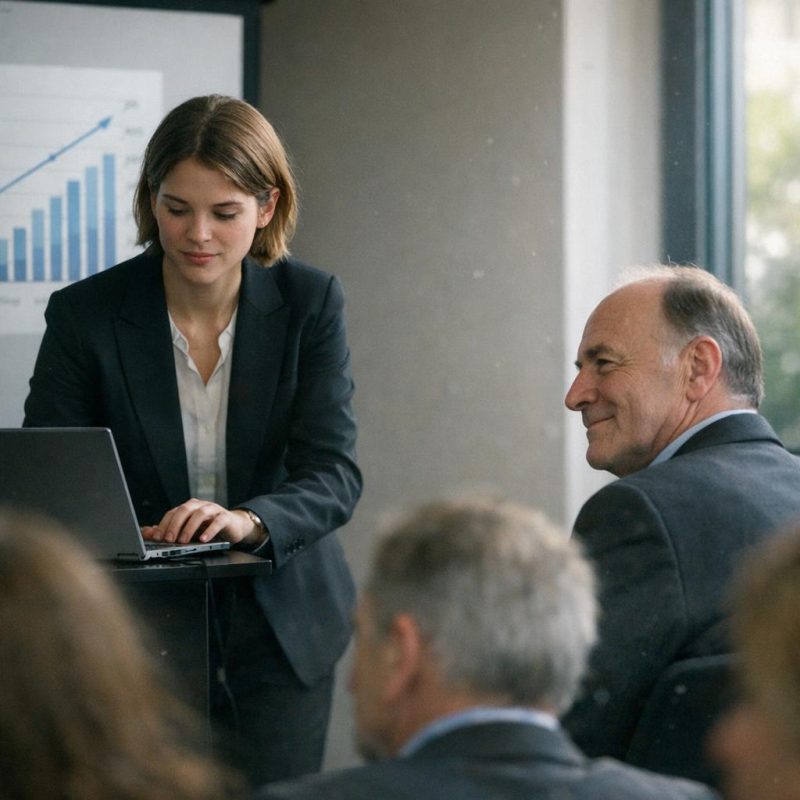 Image by RM AI
Late Night Message
The text came at 11:47 PM on a Tuesday. I was already in bed, reading on my tablet, when my phone lit up. Unknown number, but the message was clear: 'Sharon, this is Kelsey. Can we talk? Not at work. Please.' I read it three times. My first thought was that it was some kind of trap. Maybe Daniel had put her up to it—a way to see what I knew, what I was planning. But something about the timing, the late hour, the 'please' at the end, felt genuine. Desperate, even. I set my phone down and tried to go back to my book. Couldn't focus. Picked up the phone again. What did she want to talk about? Why now? Had something happened? Marcus's warning echoed in my head: Daniel cycled through the younger employees too. Once they served their purpose, they became disposable. Was Kelsey figuring that out? I typed and deleted several responses. 'Yes.' 'When?' 'Why?' 'What about?' Finally, I just set the phone on my nightstand and turned off the light. I stared at my phone for a long time before deciding to respond.
 Image by RM AI
I Can't Do This Anymore
We met in a grocery store parking lot two days later, early evening when it was busy enough that we'd blend in but quiet enough to talk. Kelsey was already there when I arrived, sitting in her car. She got out when she saw me, and we stood between our vehicles like we were conducting some kind of spy exchange. 'Thank you for coming,' she said. Her voice was hoarse. 'I wasn't sure you would.' I didn't say anything, just waited. She looked around, then back at me. 'I can't do this anymore,' she said. 'What Daniel's asking me to do. What he's... what we did to you. I can't.' I felt my guard go up. 'What changed?' She laughed, but there was no humor in it. 'I'm not stupid, Sharon. I see what's happening. The same thing that happened to you is starting to happen to me.' She pulled out her phone, then seemed to think better of it and put it away. 'He's already planning the next phase. Already identifying what I'm doing wrong, where I'm falling short.' She looked exhausted, and when she started talking, I realized she knew far more than I'd expected.
 Image by RM AI
He Has Plans to Push Me Out Next
Kelsey wrapped her arms around herself even though it wasn't cold. 'There's a new hire starting next month,' she said. 'Jake. Twenty-three, fresh MBA, eager to prove himself. Sound familiar?' It did. It sounded exactly like her a year ago. 'Daniel's already talking about bringing him into the project. Giving him opportunities to learn from me.' She met my eyes. 'That's how it started with you, isn't it? You were supposed to mentor me, teach me everything you knew.' I nodded slowly. 'And once you'd served your purpose...' she trailed off. 'Once I'd transferred all my knowledge and relationships to you, I became expendable,' I finished. 'Exactly.' Kelsey pulled out her phone again, this time she didn't put it away. 'I've seen the emails, Sharon. Between Daniel and HR. Between him and other department heads. He's already building the case. Too focused on execution, not strategic enough, doesn't delegate well.' The same playbook. The same manufactured criticisms. 'He has plans to push me out next,' she said quietly. Then she looked at me with something like desperation. 'But I have access to things you didn't. Documents. Email chains. Evidence.' She said she'd seen emails—real proof—and she was willing to help me expose him.
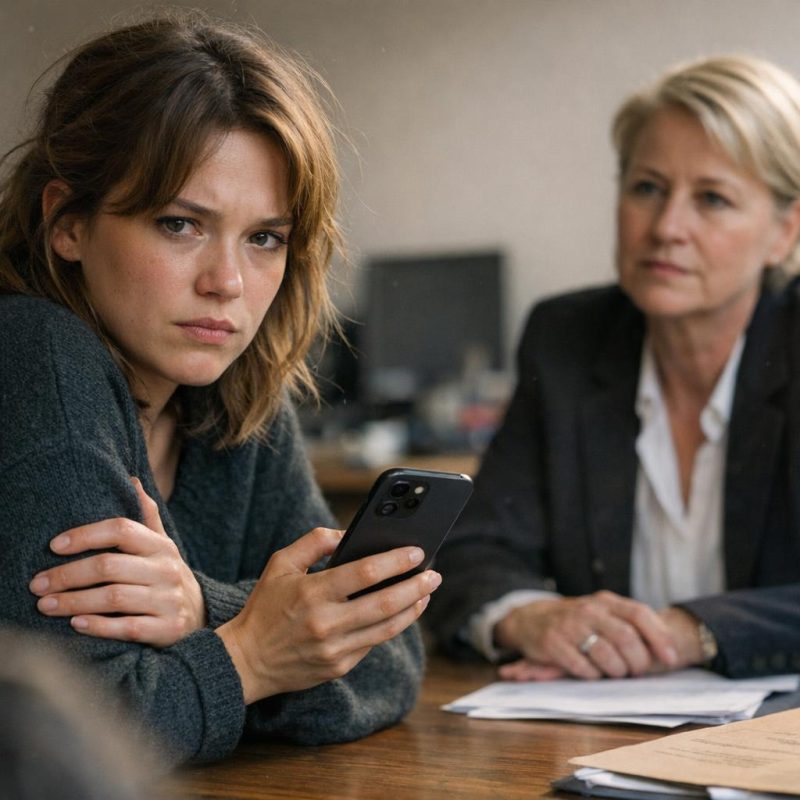 Image by RM AI
The Pattern Laid Bare
We met again the next evening, this time at a coffee shop three towns over. Kelsey brought her laptop. 'I started looking after I realized what was happening to me,' she said, opening files. 'And once I knew what to look for, it was everywhere.' She showed me emails dating back six years. Performance improvement plans that followed the same template. Sudden project reassignments. Younger employees brought in as 'mentees' who systematically took over their mentors' responsibilities. I saw Diane's name. Marcus's name. Three others I didn't even know. Each case followed the same pattern: identify an experienced employee with valuable knowledge, pair them with an ambitious younger hire, gradually shift responsibilities while documenting manufactured performance issues, then push out the veteran. 'He keeps templates,' Kelsey said, showing me a folder she'd found on the shared drive, buried in Daniel's archived files. 'He literally has a playbook.' There were timelines. Strategies for different personality types. Notes on how to frame conversations with HR. It was methodical. Calculated. Not opportunistic—systematic. This wasn't just about me, or her, or even the handful of people we'd talked to—it was how he operated, over and over again.
 Image by RM AI
Taking It to Richard
We requested a meeting with Richard, and he agreed to see us three days later. Kelsey and I arrived together, carrying printed copies of everything we'd found—the emails, the templates, the documentation spanning six years. Richard's office was corner suite, all glass and leather, the kind of space that reminded you exactly who held power in that building. He gestured for us to sit, his expression neutral but attentive. I could feel my heart pounding as I laid out the folder. 'We've discovered a pattern,' I said, keeping my voice steady. 'Daniel has been systematically targeting experienced employees for years.' Kelsey walked him through the evidence, showing him case after case, the timelines, the playbook. I added context where I could—my own experience, Diane's, Marcus's. Richard's face remained unreadable as he turned pages, examining each document carefully. The silence in that room felt heavy, like the air before a storm. When we finished, he closed the folder and leaned back in his chair. He listened without interrupting, and when we finished, he closed the folder and said he needed time to investigate.
 Image by RM AI
The Waiting Game
Four days went by with nothing. No email. No update. No acknowledgment that the meeting had even happened. I kept checking my phone compulsively, refreshing my inbox every few minutes like some kind of anxious reflex. Kelsey texted me twice asking if I'd heard anything. I hadn't. The silence felt worse than rejection would have—at least rejection is an answer. I started wondering if we'd made a mistake, if bringing this to Richard had been pointless, if nothing was ever going to change. Maybe they'd just file it away somewhere and protect Daniel because that's what companies do. Maybe we'd exposed ourselves for nothing. I couldn't focus on work. Every time someone walked past my cubicle, I looked up, expecting something, anything. Sleep became difficult. I'd lie awake running through the meeting in my head, wondering what we'd said wrong, what we should have emphasized more. The doubt crept in the way it always does when you're waiting for powerful people to decide your fate. Then Richard called me into his office, and I could tell from his face that something had shifted.
 Image by RM AI
Daniel Called Into a Meeting
I was at my desk when I saw Daniel get summoned. Richard's assistant came down personally—that never happened for routine meetings. 'Daniel, they need you upstairs,' she said quietly. He glanced up, mildly annoyed but not concerned. 'Now?' he asked. She nodded. He saved whatever he was working on and stood, straightening his jacket with that casual confidence he always carried. I watched him head toward the elevators, completely unaware. Other people in the office kept working, oblivious to what was happening. But I knew. I couldn't focus on anything else. I kept glancing toward the elevator bank, checking the time. Twenty minutes passed. Then an hour. Then two. When the elevator finally opened again and Daniel emerged, everything about him looked different. His face was pale, his jaw tight. He didn't make eye contact with anyone as he walked back to his office. His shoulders were slightly hunched, his stride shorter. He walked in confident, but when he came out two hours later, everything about him had changed.
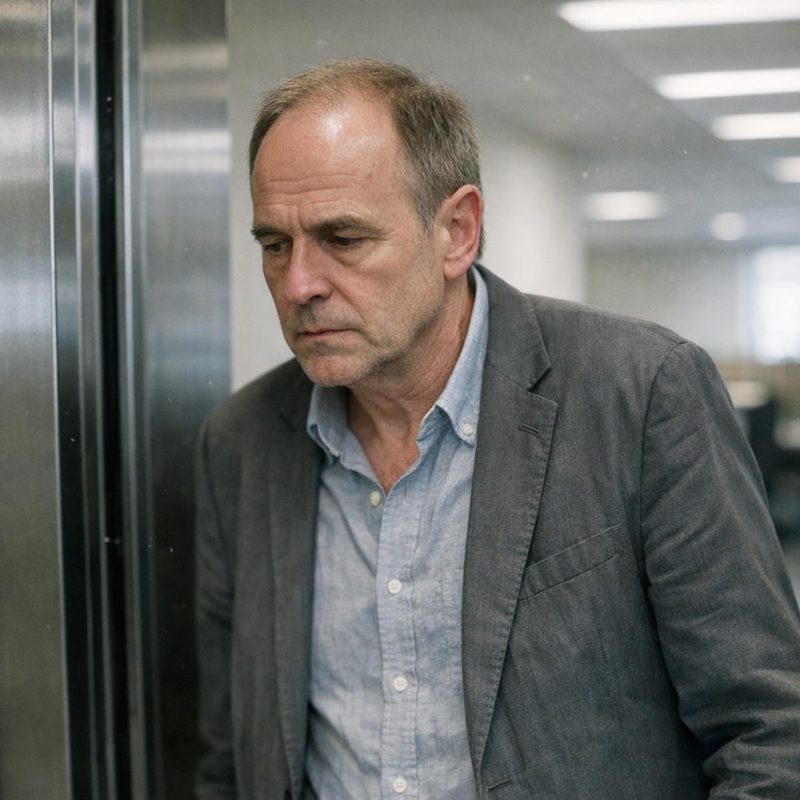 Image by RM AI
The Investigation Findings
Richard called me back into his office the next morning. This time his expression was clearer—serious, but not hostile. He asked me to close the door and sit down. 'We conducted a thorough review,' he said, folding his hands on his desk. 'We brought in HR, legal, and went through every case you flagged. We also examined decisions going back further than what you provided.' He paused, and I held my breath. 'What we found was deeply concerning. Multiple instances of policy violations, improper documentation, and patterns that suggest intentional manipulation of performance review processes.' My hands were shaking in my lap. 'There were protocols Daniel should have followed—transparency requirements with HR, proper justification for reassignments—that were repeatedly bypassed or misrepresented.' Richard's voice was measured, almost regretful. 'This represents a serious breach of both company policy and the trust we place in management.' He looked directly at me. 'I want to thank you for bringing this forward. It took courage.' Then he delivered the words I'd been waiting to hear. They were removing him from his position effective immediately.
 Image by RM AI
Daniel's Last Day
Daniel packed his office the following afternoon. Security stood nearby—standard procedure, they said, though we all knew what it really meant. He moved mechanically, placing framed certificates and personal items into a cardboard box. His desk had always been organized, minimal, and now it looked even emptier as he cleared it out. People pretended not to watch, but everyone noticed. The atmosphere in the office was strange—hushed, awkward, like we were all witnessing something we weren't supposed to see. I stayed at my desk, but I could see his office from where I sat. At one point he paused, standing there with a stack of folders in his hands, and looked out across the floor. Our eyes met for just a second. I didn't look away. Neither did he. There was no anger in his expression anymore, no dismissiveness. Just something like recognition, maybe even resignation. He didn't say anything, but the look on his face told me he finally understood that I wasn't too careful after all.
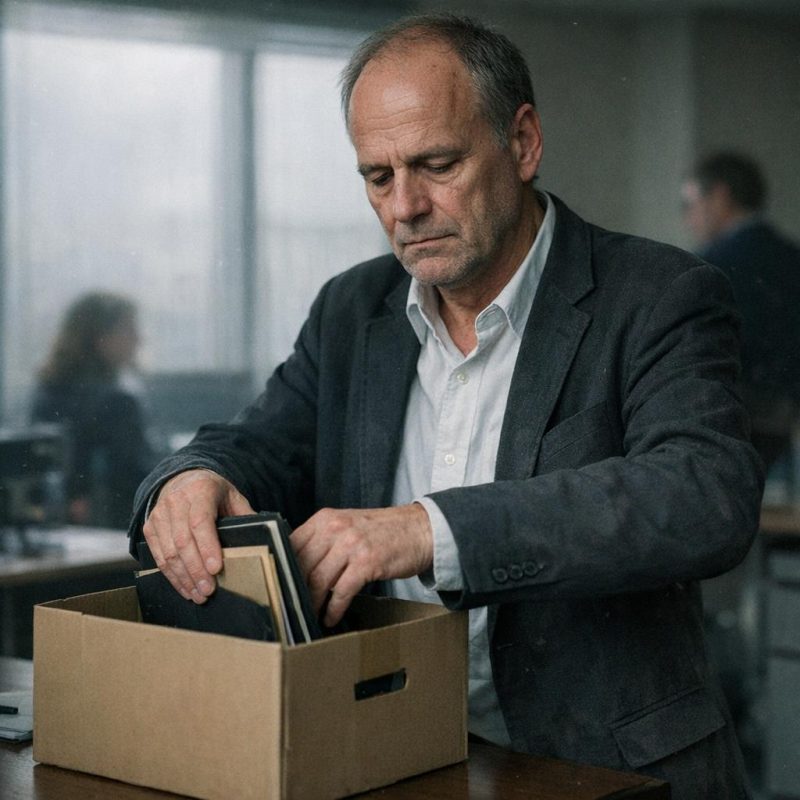 Image by RM AI
Kelsey's Resignation
Kelsey came to me two days after Daniel left. She asked if we could talk privately, so we went to the same coffee shop where we'd first started comparing notes. She looked tired, like she hadn't been sleeping well. 'I'm stepping down from the project lead role,' she said without preamble. 'I already told Richard this morning.' I started to respond, but she held up her hand. 'I know they offered to let me keep it. They said I wasn't responsible for Daniel's actions, that I'd proven myself by coming forward. But that's not true.' Her voice was steady but raw. 'I took that position knowing what was happening to you. I convinced myself I deserved it, that I'd earned it, but I didn't. Not really. Not like that.' She looked down at her coffee cup. 'I can't keep something I got that way. I need to start over somewhere that doesn't have all this history attached to it.' There was something honest in her face, something genuinely self-aware. I respected her for that more than I expected to.
 Image by RM AI
The Apology
Before she left the coffee shop that day, Kelsey said one more thing. 'I need to actually apologize,' she said, meeting my eyes. 'Not just explain or justify. I need to say that I'm sorry for what I did.' Her voice wavered slightly. 'I saw what was happening to you. I knew it was wrong. And I made the choice to participate anyway because it benefited me. I told myself I was just doing my job, just being ambitious, but that was bullshit. I hurt you. I took something that was yours. And I'm sorry.' The words hung between us. I could see how much it cost her to say them—really say them, without hedging or softening. There were tears in her eyes that she didn't try to hide. I sat there for a moment, feeling everything I'd felt over the past months—the anger, the humiliation, the betrayal. And then I let it go, just a little. 'Thank you,' I said quietly. I could see it took everything she had to face me, and I told her I forgave her—not because she deserved it yet, but because holding onto anger would only hurt me.
 Image by RM AI
Offered to Lead the Project
Richard offered me the project the following week. He called me into his office—the same office where this had all started to unravel—and laid it out clearly. 'We'd like you to officially lead the client retention initiative. Full project ownership, team selection authority, budget control. Everything it should have been from the beginning.' He slid a document across the desk outlining the new role, the compensation adjustment, the formal recognition. It was everything I'd wanted months ago when I'd first proposed the project. Everything I'd been quietly devastated to lose. I looked at the offer letter, at my name printed at the top, and felt... different than I expected. Not triumphant, exactly. Not vindicated in the way I'd imagined during all those sleepless nights. Something quieter. Something steadier. 'I accept,' I said, and I meant it. I wanted to lead this project. I'd created it, after all. But as I signed the paperwork and shook Richard's hand, I realized something had fundamentally shifted inside me. I accepted, but something inside me had already changed—I didn't need their validation anymore.
 Image by RM AI
Realizing What I'd Really Won
I walked back to my desk with the signed paperwork, and everything looked exactly the same as it had an hour earlier. Same desk, same view of the office, same coffee mug I'd been using for three years. But I felt completely different. The project was mine now, officially, but that wasn't what made my hands steady as I set down the folder. It wasn't the title or the compensation adjustment or even the acknowledgment that I'd been right all along. It was simpler than that. I'd stood up. I'd spoken. I'd refused to disappear quietly when someone tried to erase me. For fifty-nine years, I'd been the person who kept the peace, who didn't make waves, who accommodated and adjusted and made room for everyone else's ambitions. I'd watched younger colleagues leap past me while I told myself it was fine, I was fine, that being good at my job was enough. But it hadn't been enough, had it? Not until I'd finally looked Daniel in the eye and said: I see what you did. Not until I'd made Richard and the entire executive team acknowledge what had happened. The victory wasn't in getting the project back. It was in refusing to be silent about losing it. That was worth more than any promotion.
 Image by RM AI
Three Months Later
Three months later, I sent out the quarterly report on the client retention initiative to Richard and the executive team. The numbers were exactly what I'd projected when I'd first proposed this project a year ago—client satisfaction up eighteen percent, renewal rates climbing steadily, three accounts we'd been on the verge of losing now signed for multi-year contracts. I'd built the team carefully this time, choosing people who actually wanted to collaborate rather than compete. We met weekly, adjusted strategies based on real feedback, celebrated small wins together. It felt like work was supposed to feel, I think. Purposeful. Mine. I got responses within an hour. Richard wrote back with congratulations. Two other executives asked to schedule meetings to discuss expanding the program. One client personally emailed me to say how much the new approach had changed their experience with the company. I read that email twice, then saved it in a folder I'd started keeping—evidence that I knew what I was doing, that my instincts had been right all along. I didn't need the folder, really. I already knew. But it felt good to collect the proof anyway. The work felt different now—it was mine, completely and without question.
 Image by RM AI
Kelsey Moves On
Kelsey sent me an email on a Tuesday afternoon. The subject line was simple: 'Thank you.' I almost didn't open it—we'd been cordial since everything happened, professional and polite, but we hadn't exactly been close. When I finally clicked, the message was brief. She'd accepted a position at a mid-sized consulting firm, something entry-level but honest, a place where she could build her skills without shortcuts. She thanked me for not destroying her professionally when I could have. She said she was sorry for what had happened, that she understood now how Daniel had used both of us, that she hoped someday she'd have the courage I'd shown. I sat with that email for a long time. Part of me wanted to write back something profound, some kind of wisdom I'd earned through all of this. But I didn't have wisdom, really. Just experience. Just the knowledge that we all make choices under pressure, and sometimes those choices hurt people, and sometimes we get the chance to do better next time. I wrote back: 'Good luck. I mean that.' And I did. I hoped she'd find what she was looking for—a place where she wouldn't have to compromise who she was.
 Image by RM AI
No Longer Invisible
I think about invisibility differently now. For so long, I believed I'd become invisible somewhere along the way—that I'd turned fifty, then fifty-five, then fifty-nine, and the world had simply stopped seeing me. That age and gender and twenty years of steady work had somehow erased me from the room. But that wasn't quite right, was it? I'd been visible the entire time. Visible enough for Daniel to see me as useful. Visible enough for Richard to rely on my work while promoting others. Visible enough for Kelsey to study how I built relationships and then replicate my methods. I was never invisible. I was simply surrounded by people who benefited from pretending not to see me. People who found it convenient to look past me, to assume I'd stay quiet, to take what I built and put someone else's name on it. The problem wasn't that I'd disappeared. The problem was that I'd believed them when they acted like I had. I'd accepted their version of reality instead of trusting my own. That was what changed, in the end. Not the project or the recognition or even the confrontation. What changed was that I stopped waiting for permission to be seen. I stopped shrinking to make room for people who wanted me small. And once I understood that, I finally saw myself.
 Image by RM AI