An Unexpected Inheritance
My name is Lorna, I'm 59, and I'll admit it: when I got the call that my cousin Maribel had left me her home, my first reaction wasn't grief or gratitude—it was confusion. Maribel and I had been close when we were younger, sharing secrets and dreams under her parents' porch light, but life pulls people in different directions. We'd drifted apart like so many family members do, connected only by occasional holiday cards and those obligatory "how are you doing" calls that never go deeper than the weather. So when her attorney invited me into his chrome-and-leather office and slid the paperwork across his polished desk, I expected a small cash gift, maybe a piece of jewelry—something that said, "I remembered you existed." Instead, it was a deed. A whole house. I nearly choked on my complimentary office water. "There must be some mistake," I told him, adjusting my reading glasses to make sure I wasn't hallucinating. The attorney—a man who looked like he ironed his eyebrows—simply shook his head. "No mistake, Mrs. Harmon. The property is yours, free and clear." I sat there, stunned, as questions swirled through my mind. Why me? What was Maribel thinking? And most importantly, what was I supposed to do with a house I never asked for? Little did I know, this unexpected inheritance wasn't just about property—it was about secrets.
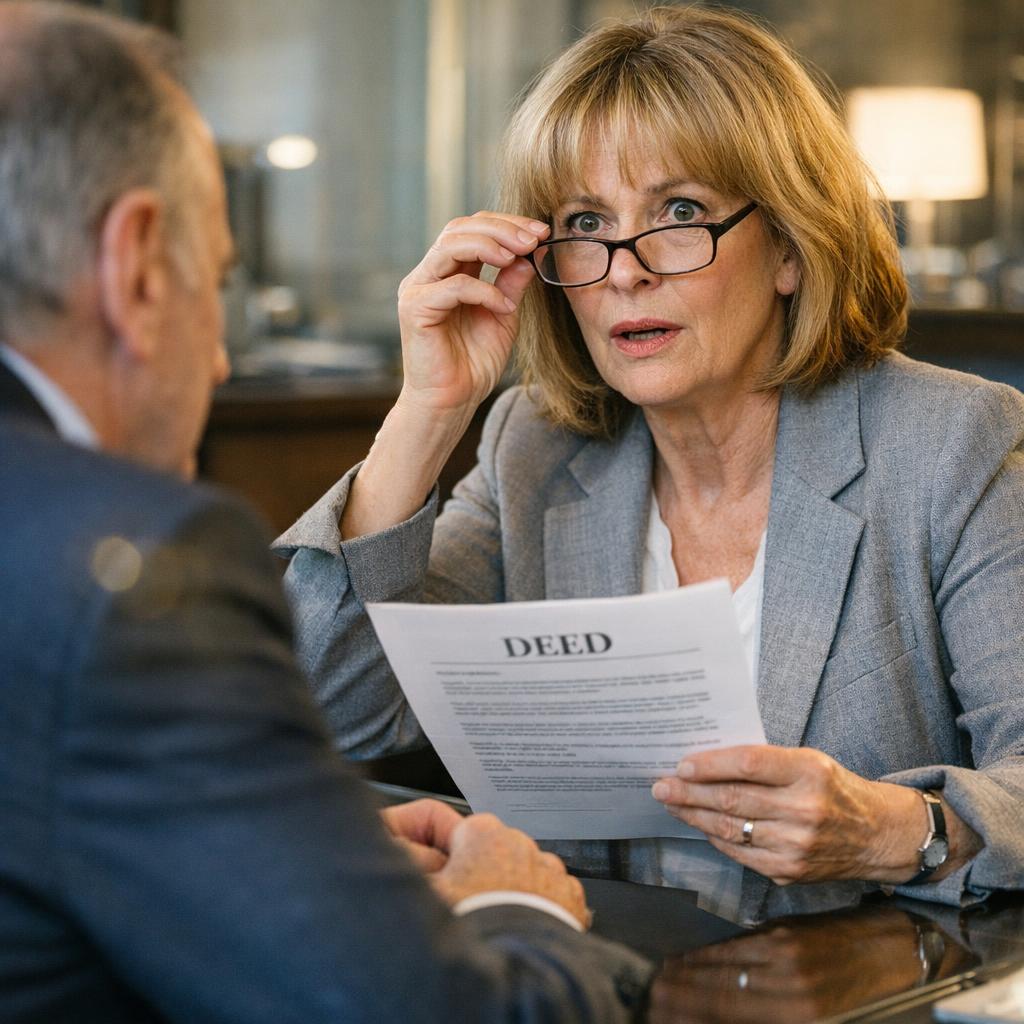 Image by RM AI
The Strange Condition
The attorney cleared his throat with that practiced sound lawyers make when they're about to drop a bombshell. 'There is, however, one condition,' he said, straightening his already perfectly straight tie. 'Mrs. Alvarez stipulated that you cannot sell the property for one full year from the date of acceptance. Not list it, not transfer it, not even sign an agreement to sell later.' His eyes locked with mine, deadly serious. 'She was very specific about this point.' I let out a nervous laugh that echoed awkwardly in his minimalist office. 'That's... unusual,' I said, waiting for him to join my attempt at lightening the mood. He didn't. Not even a courtesy smile. Instead, he slid another document toward me, his Mont Blanc pen positioned precisely at the signature line. 'Do you accept the inheritance under these terms?' he asked, his tone suggesting this was my final answer on a game show with no lifelines left. I hesitated for only a moment. My husband and I weren't exactly flush with cash these days—who is at our age when retirement looms and the 401k looks more like a 201k? A mortgage-free house was a mortgage-free house. 'Yes,' I said, taking the pen. 'I accept.' As I signed my name, I couldn't shake the feeling that Maribel's strange condition wasn't just a quirky final request—it was a warning. And I had just agreed to whatever came with it.
 Image by RM AI
The Tidy Ranch
The following weekend, I drove out to see my unexpected inheritance. The GPS led me down winding country roads until I pulled up to a modest ranch-style house with faded blue siding and white trim. Nothing fancy—just the kind of place where you'd expect to find potpourri and a collection of ceramic birds. A massive maple tree dominated the front yard, its branches stretching protectively over the roof like an old guardian. I sat in my car for a moment, keys in hand, wondering what I was getting myself into. My husband Tom had wanted to come, but someone needed to stay with our temperamental water heater that had chosen this weekend to act up. "Take pictures of everything," he'd said, already mentally calculating renovation costs. I walked up the cracked concrete path, noticing dandelions pushing through like tiny yellow rebels. The key turned smoothly in the lock—at least something was cooperating. I figured I'd spend the next few months cleaning it up, maybe rent it out after Maribel's mysterious one-year ban expired, or perhaps sell it if our retirement fund needed the boost. Simple enough plan, right? But as I pushed open the door and the familiar scent of Maribel's lavender soap washed over me, I felt a strange certainty settle in my bones. This wasn't about property values or rental income. The year-long waiting period wasn't about money at all. It was about time—and whatever Maribel had been trying to buy with it.
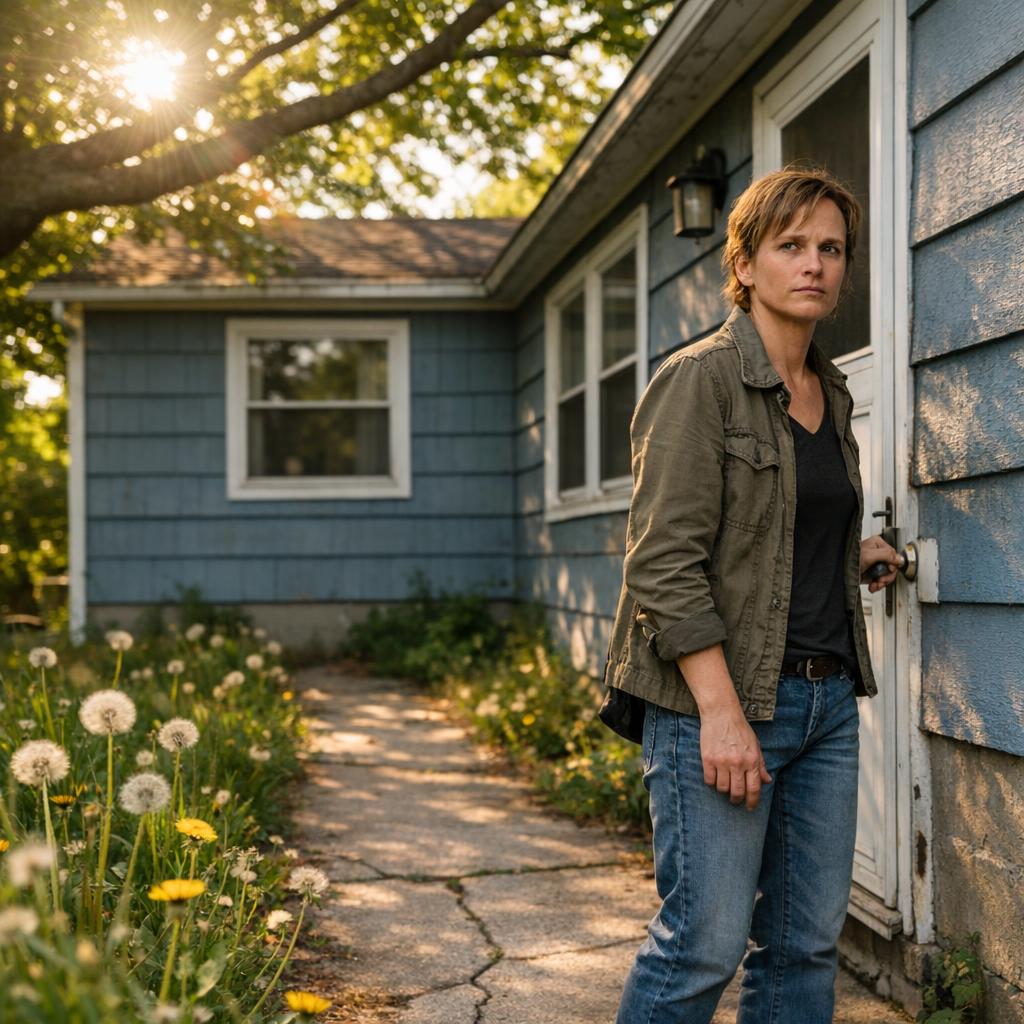 Image by RM AI
First Visit
I spent that first week at Maribel's house feeling like an intruder in someone else's life. The place was exactly what you'd expect from a woman who'd lived alone for decades—a time capsule of careful habits and quiet routines. Every drawer had a purpose. Every cabinet told a story. I ran my fingers along her kitchen counters, noticing how she'd labeled every spice jar and pantry container in that perfect cursive handwriting teachers don't even teach anymore. Her calendar hung by the fridge, filled with notes in careful script—doctor appointments, garden club meetings, and oddly specific reminders like "check shed lock" that appeared multiple times. The stack of unopened mail in the wicker basket by the door made my heart ache a little. Bills and flyers addressed to someone who would never read them. I opened windows to let fresh air chase away the mustiness, but I couldn't bring myself to disturb much else. Not yet. The house wasn't screaming any mysteries at me—no hidden compartments or suspicious stains—just a lonely place with too many quiet corners and the lingering scent of lavender soap that made me feel like Maribel might walk through the door any minute. I was just locking up, mentally planning my cleaning schedule for the next visit, when I noticed a car slowing down in front of the house. The driver seemed to be studying the property with unusual interest, and something about their deliberate pace made the hair on my arms stand up.
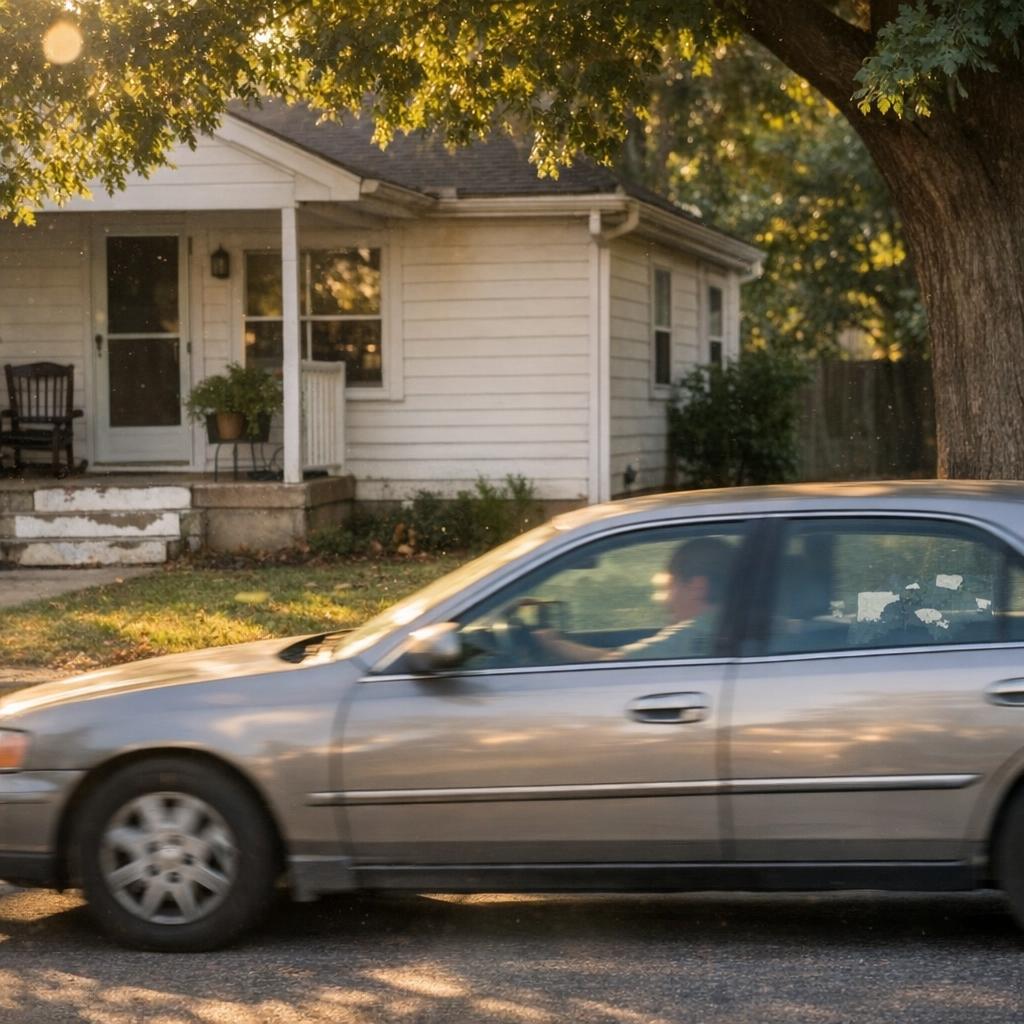 Image by RM AI
The Unexpected Visitor
I was just turning the key in the lock when I heard the crunch of footsteps on the gravel driveway. Turning around, I found myself face-to-face with a man who looked like he'd stepped out of a real estate brochure—crisp polo shirt tucked into khaki pants, leather loafers that probably cost more than my monthly grocery budget, and that too-wide smile salespeople perfect in front of bathroom mirrors. He strode up to me with the confidence of someone who'd been invited, not even slowing down as he approached. No introduction. No 'excuse me.' Just a breezy, 'Hi! I'm just here for the showing,' like we had an appointment I'd somehow forgotten. I blinked at him, my hand still on the doorknob. 'There's no showing,' I told him, trying to keep the confusion out of my voice. His smile flickered for just a second—so quick I almost missed it—before he pulled out his phone and frowned at the screen with theatrical concern. 'But the listing said this property was available to view today at 3:00.' My stomach did that weird drop you feel when you miss a step on the stairs. Listing? What listing? Maribel's house wasn't for sale. It couldn't be for sale. The will explicitly forbade it. Something cold and unsettling crept up my spine as I realized this wasn't a simple mix-up. Someone was advertising my cousin's house—my house now—without my knowledge or permission. And judging by the way this man was looking past me toward the door, he wasn't planning to leave empty-handed.
 Image by RM AI
The Phantom Listing
I felt my stomach drop as I stared at his phone. There it was—a full-blown real estate listing with professional photos of Maribel's living room, her kitchen with the chipped blue tile she'd always meant to replace, even her backyard with the bird feeder I'd filled just yesterday. The listing boldly declared the property was 'available immediately' and listed at a price that made my heart skip—about 30% above market value, the kind of price that attracts cash buyers looking to close fast. 'This is impossible,' I muttered, scrolling through images of a house I'd legally inherited less than a month ago. 'Where did you find this?' The man pointed to the screen, to the logo of one of those big national real estate websites everyone uses. 'It's right there,' he said, as if I was the confused one. 'Listed three days ago.' I handed his phone back, trying to keep my hand from shaking. 'This house is not for sale,' I said firmly. 'It cannot be sold for at least a year. Someone has posted a fraudulent listing.' He looked at me like I was trying to pull a fast one, then glanced back at the house with naked disappointment. 'Look, if you changed your mind about selling, just say so,' he said, already backing toward his car. 'No need for the runaround.' As I watched him drive away, I realized with growing unease that this wasn't just a misunderstanding. Someone wanted this house badly enough to create a fake listing—complete with interior photos that could only have been taken recently. Which meant someone had been inside. Without my permission.
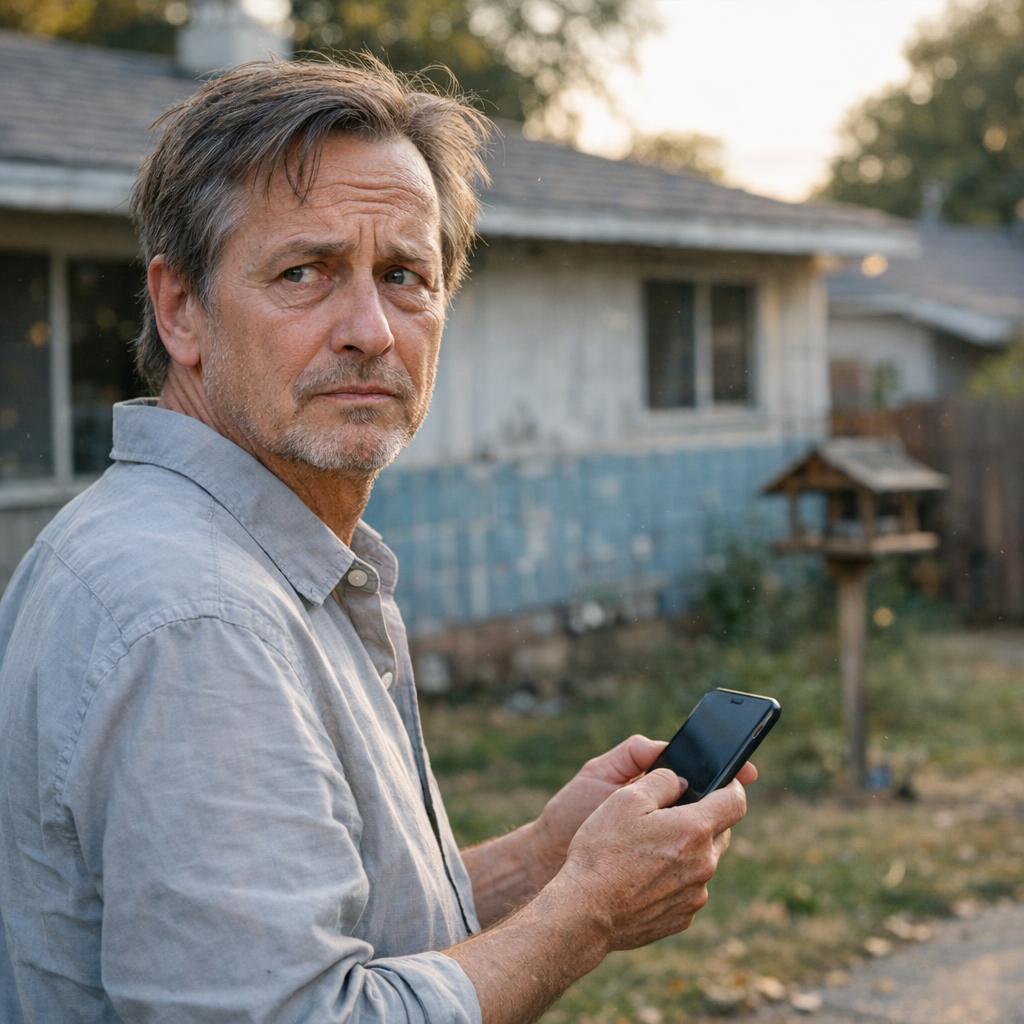 Image by RM AI
Calling the Attorney
I stood in the driveway long after the man left, feeling violated in a way I couldn't quite articulate—like someone had gone through my purse without actually touching it. My hands were shaking as I fumbled with my phone, scrolling to find the attorney's number. It was nearly 8 PM when I finally called him, not caring about the late hour. 'Someone is selling my cousin's house,' I blurted out before he could finish his greeting. There was a long pause on the other end. 'Mrs. Harmon,' he finally said, his voice dropping to that serious lawyer tone, 'I can assure you we have not listed anything.' I explained about the man, the photos, the listing I'd seen with my own eyes. With each detail, the attorney's breathing got heavier. 'This is... concerning,' he said, in what had to be the understatement of the year. 'The will explicitly forbids selling for a year. Someone is deliberately circumventing Maribel's wishes.' He cleared his throat. 'Document everything. Take screenshots of the listing. Change the locks immediately—today, if possible.' I nodded, then realized he couldn't see me. 'What about the police?' I asked. 'Not yet,' he advised. 'First, we need evidence this isn't just a misunderstanding.' After hanging up, I sat in my car, staring at Maribel's house—my house now—with its drawn curtains and darkening windows. For the first time, I wondered if the year-long selling ban wasn't just a quirk but a protection against something Maribel knew was coming. And suddenly, I felt like I was being watched.
 Image by RM AI
Securing the Property
I didn't waste any time securing Maribel's house. The next day, I called a local locksmith who charged me double for the emergency service but installed new deadbolts and reinforced door frames by sunset. "Lady, you expecting the National Guard to break in?" he joked as I asked him to check the windows too. I didn't laugh. I also ordered those doorbell cameras everyone has these days—the ones that send alerts to your phone when someone so much as sneezes on your porch. Tom thought I was overreacting, but he hadn't seen the look in that man's eyes, that entitled certainty that the house should be available to him. After setting up cameras at both the front and back entrances, I contacted the local realtor association with screenshots of the fraudulent listing. The woman on the phone sounded genuinely alarmed. "This happens more than you'd think," she said grimly. "Scammers create fake listings to collect application fees or deposits from unsuspecting buyers." They removed the listing within 24 hours, and I felt a wave of relief wash over me. Problem solved, right? I even treated myself to a glass of wine that night, toasting Maribel's portrait and promising her I'd take good care of her home. But the universe has a sick sense of humor. Just when you think you've patched all the leaks, the whole dam breaks. My phone pinged the very next afternoon with a motion alert from the front camera. I opened the app to see a young couple standing on the porch, the woman bouncing excitedly on her toes as the man reached for the doorbell. Their faces were bright with hope—the kind you only see on people about to make the biggest purchase of their lives.
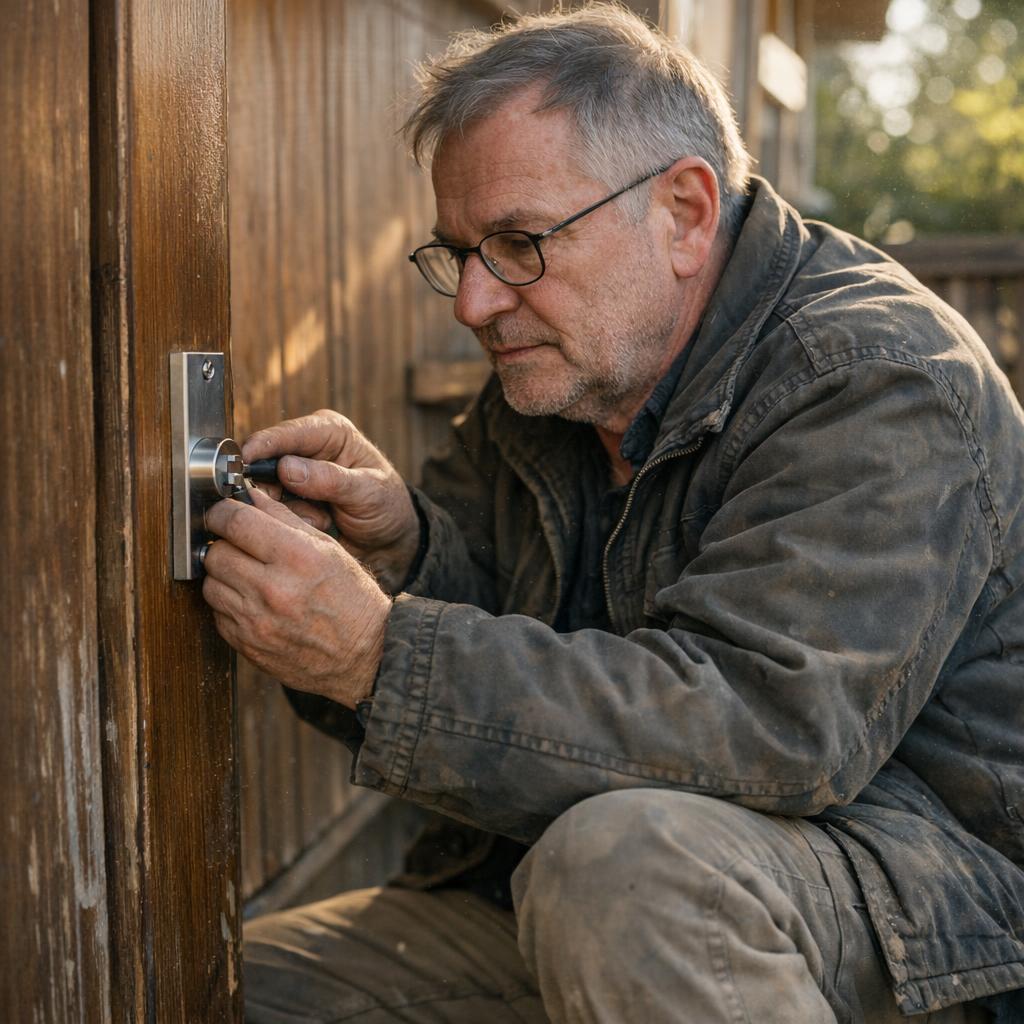 Image by RM AI
The Young Couple
I thought the fake listing removal would end it all, but boy, was I wrong. People kept showing up at Maribel's house like it was an open house weekend. Not every day, thank goodness, but often enough that it stopped feeling like coincidence. The doorbell camera became my personal reality show—ping after ping of strangers on the porch. The young couple that arrived that afternoon was the most heartbreaking. They pulled into the driveway in their sensible sedan, holding hands as they walked up the path, their faces lit with that special kind of hope reserved for first-time homebuyers. The woman actually bounced on her toes as her husband (I assumed, from the matching rings) reached for the doorbell. When I answered through the camera speaker, they looked startled but quickly recovered. "Hi! We're the Millers! We have an appointment to see the house today?" they chirped in unison. I explained—for what felt like the hundredth time—that the house wasn't for sale, wasn't being shown, and any listing they'd seen was fraudulent. Their confusion seemed so genuine, so disappointed, that I almost believed them. Almost. But there was something rehearsed about it, like they'd been coached on exactly how to react. "But the realtor said..." the woman trailed off, looking past me through the glass door as if mentally placing their furniture. As they reluctantly returned to their car, I noticed the man glance toward the backyard shed with particular interest. That's when it clicked—these weren't just random people responding to fake listings. Someone was sending them here deliberately, and they were looking for something specific.
 Image by RM AI
The Contractor
Just when I thought the parade of strange visitors couldn't get any weirder, a white pickup truck with 'Wilson Home Services' stenciled on the door pulled into the driveway. A man in his forties, wearing a polo shirt with the same logo and carrying a clipboard, approached me with the confident stride of someone who belongs exactly where they are. "Good morning, ma'am! I noticed you've inherited this property recently. I'm with Wilson's, and we specialize in helping folks like yourself get quick cash offers without all the hassle of traditional listings." My guard went up immediately. How did he know I'd inherited the place? I hadn't told anyone except close family. "I'm not interested in selling," I said firmly. He smiled—that practiced, too-wide smile that never reaches the eyes. "Well, before you decide, you should know we're particularly interested in properties with outbuildings. That shed of yours has good bones, despite the electrical issues." I froze. Electrical issues? Maribel had never mentioned any problems with the shed, and I certainly hadn't discussed it with anyone. When I pressed him on how he knew these details, his smile faltered. "Just an educated guess. I've been in this business a long time." He handed me a business card and retreated to his truck with surprising speed when I started asking more questions. As he drove away, I jotted down his license plate number in the little notebook I'd started keeping in my purse. Something told me this wouldn't be the last "contractor" to show up with information they shouldn't have, and I was beginning to understand why Maribel had become so private in her final years.
 Image by RM AI
The Bank Representative
The next visitor took the professional approach to a whole new level. I was sorting through Maribel's old photo albums when the doorbell camera pinged. A woman in a crisp navy blazer and pencil skirt stood on the porch, her hair pulled back in a tight bun that screamed 'I mean business.' When I answered through the speaker, she smiled directly at the camera. 'Good afternoon, I'm with the bank,' she announced with practiced authority. 'I need to verify occupancy on this property.' Something about her tone made my skin prickle. When I asked which bank specifically, she hesitated just a beat too long before saying, 'First National,' as if she'd just remembered her lines. I came to the door but kept the chain on. 'I'll need to see some identification,' I told her. She patted her pockets with exaggerated surprise. 'Oh! I must have left it in my car. Let me grab it.' But instead of heading to her vehicle, she tried to peer past me into the house. 'While I'm here, I should probably check the outbuildings too. That shed in back—is it still in good condition?' The question hit me like a slap. How would a bank representative know about the shed? Why would they care? I told her I'd wait for her ID, but she never came back with it. Instead, she lingered in the driveway for several minutes, making a phone call and glancing repeatedly toward the backyard. When she finally drove away, I couldn't shake the feeling that these 'visitors' weren't just random people responding to fake listings—they were looking for something specific. And whatever it was, it had something to do with that ordinary-looking shed.
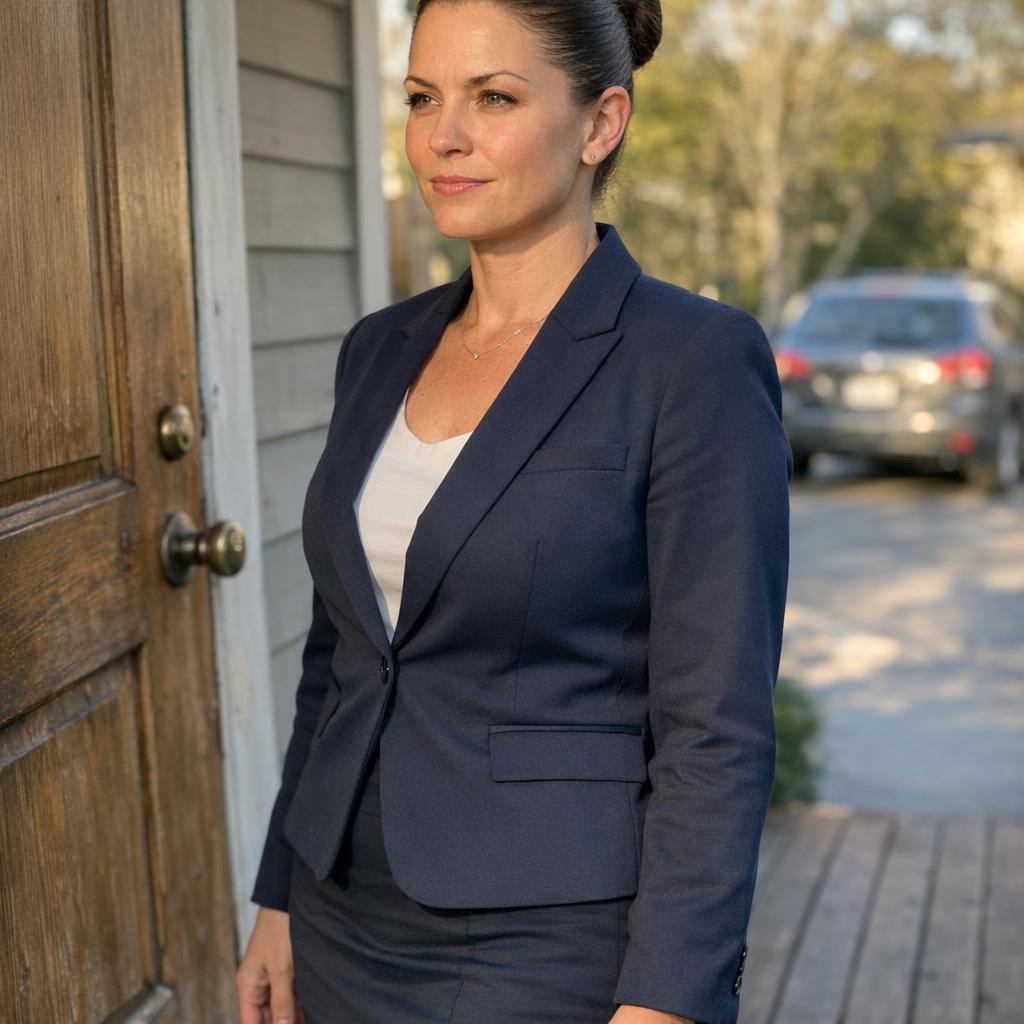 Image by RM AI
Unsettling Details
What really got under my skin were the specific details these strangers knew about Maribel's property. A woman in her fifties with expensive highlights and a real estate folder asked, with practiced casualness, "Does the shed still have that old freezer in it?" I hadn't even checked the shed thoroughly yet. How did she know about a freezer? Another day, a man in a golf shirt claimed, "Maribel used to let us park here for meetings," like I should obviously know what he was talking about. The word 'meetings' made my skin crawl. What kind of meetings would happen at my quiet, private cousin's house? I started keeping a log of these visitors and their unsettling comments. One asked if the "problem with the north corner of the foundation had been fixed." Another wondered if I'd "found all the paperwork yet." Each question felt like a probe, testing how much I knew. I started answering their questions with questions of my own: "How exactly did you know Maribel?" or "When was the last time you were inside this house?" That's when they'd get flustered, check their phones, and suddenly remember they had another appointment. After each encounter, I'd walk through the house, looking at it through new eyes, wondering what secrets these walls might be hiding. And that shed... I kept finding myself staring at it through the kitchen window, both drawn to it and reluctant to investigate too closely. What was in there that had so many strangers asking about it?
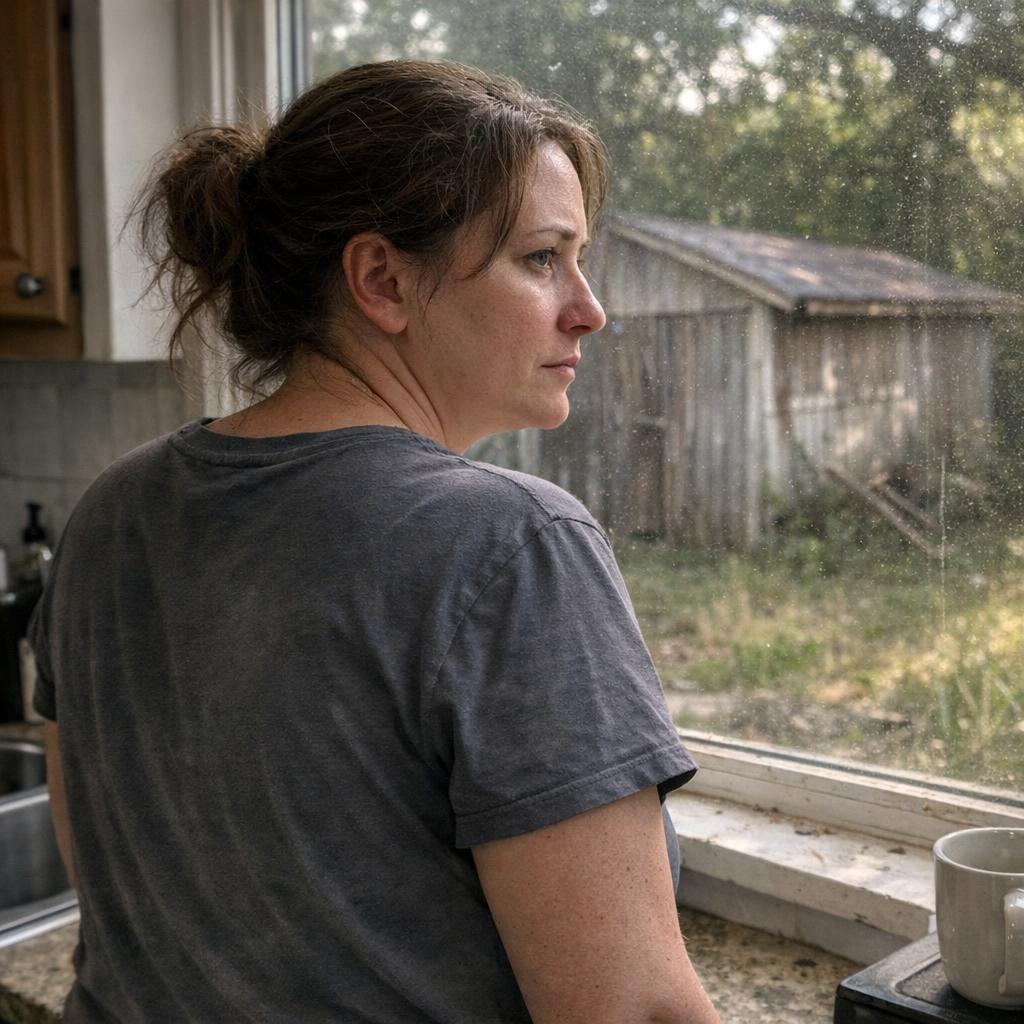 Image by RM AI
Searching for Clues
I became a detective in my cousin's life, methodically combing through every inch of her house. I wasn't looking for jewelry or cash—I was hunting for answers. In the kitchen junk drawer, beneath a tangle of rubber bands and spare keys, I found it: a small leather-bound notebook with Maribel's neat handwriting. The first page made my blood run cold: "If anything happens to me, do not sell the house. Not for one year." Below that were dates, first names, and cryptic notes like "showing scheduled," "cash offer," and "bad vibes." One phrase appeared repeatedly, underlined with increasing pressure: "They think they can rush it." My hands trembled as I flipped through the pages. Maribel hadn't been paranoid—she'd been documenting something systematic. She'd known exactly what would happen after she died. She'd anticipated these strangers with their probing questions and fake appointments. I sat on her floral couch, the notebook heavy in my lap, as pieces started clicking together. The shed. The freezer. The meetings. The foundation. All these strangers asking about specific things weren't random—they were looking for something. And Maribel had known they would come. I called Tom that night, my voice shaking. "I don't think this is about real estate at all," I told him. "I think Maribel was hiding something, and these people are using fake showings as cover to search for it." What I didn't tell him was how the last entry in Maribel's notebook, dated just two weeks before her death, contained five words that made my skin crawl: "They're getting desperate. Watch the shed."
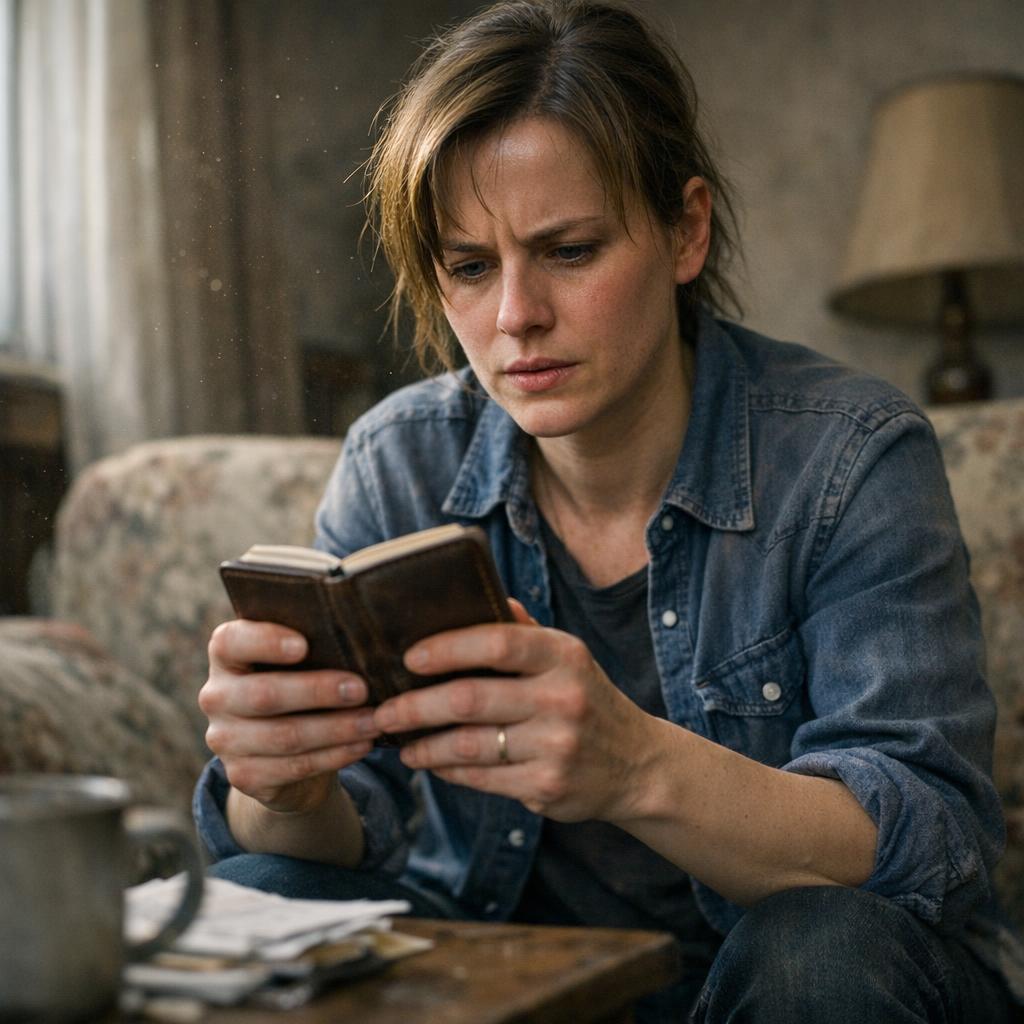 Image by RM AI
The Kitchen Drawer
I've always been the type to snoop—not in a creepy way, just curious. But finding Maribel's notebook felt different, like I was crossing a line she'd drawn specifically for me to find. My hands trembled as I pulled it from beneath the jumble of rubber bands and forgotten keys in her kitchen drawer. The leather cover was worn smooth, like she'd handled it often. When I opened it, her handwriting jumped out at me—still so precise, so Maribel. The first page hit me like a punch: "If anything happens to me, do not sell the house. Not for one year." My throat tightened. Below that were meticulous entries: dates, first names, and notes that suddenly made all those strange visitors make sense. "April 15 - Michael - showing scheduled - seemed too interested in basement." "May 3 - Jennifer - cash offer way above market - refused to leave when asked." "May 17 - bad vibes - man in truck watching house." And then, underlined multiple times throughout the pages: "They think they can rush it." I sank onto one of Maribel's kitchen chairs, the notebook heavy in my hands. She hadn't been paranoid. She'd been documenting something systematic, something that had followed her right up until her death—and now it was following me. What had my quiet, careful cousin gotten herself into that made her so afraid someone would force the sale of her home after she was gone?
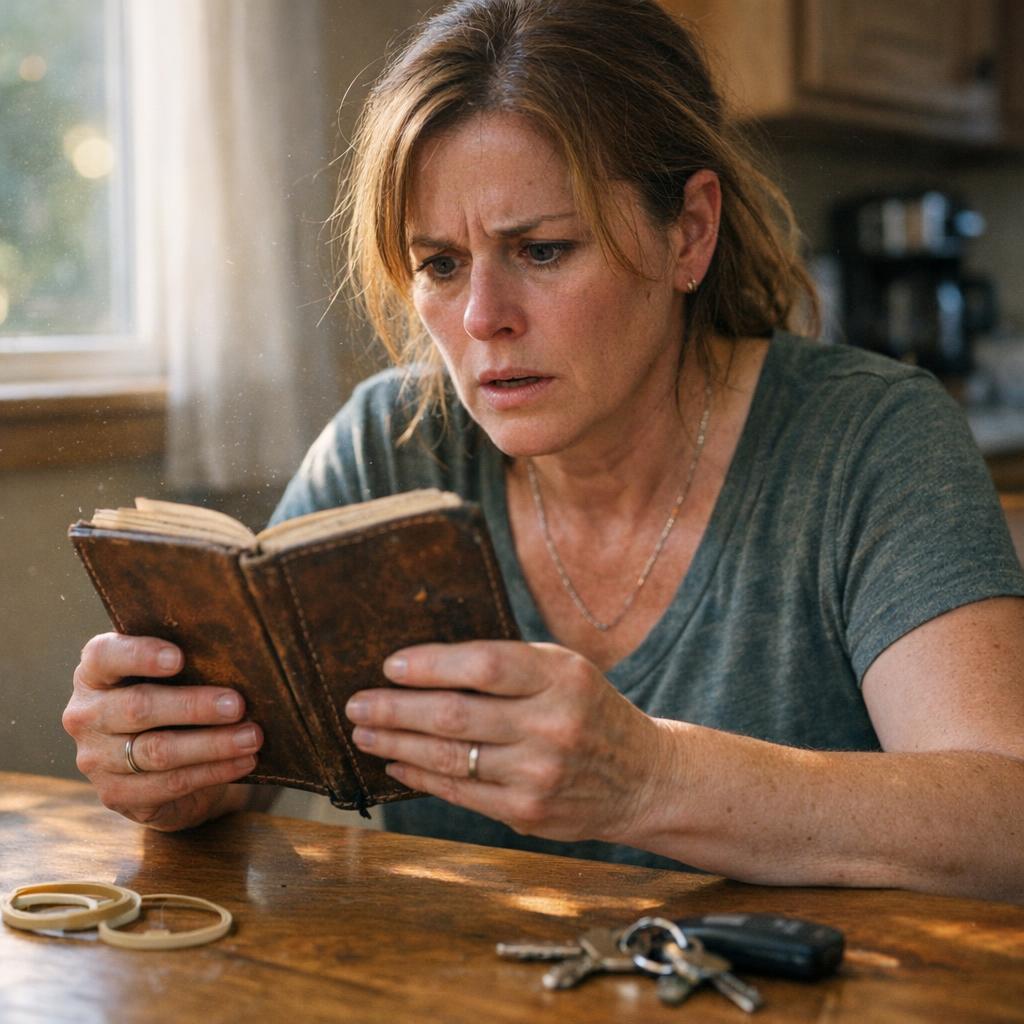 Image by RM AI
Maribel's Warning
My hands trembled so badly I had to set the notebook down on Maribel's kitchen table. The pages were filled with her neat, precise handwriting—documenting what I now realized was a campaign of harassment. She'd recorded everything: names, dates, suspicious behaviors. "April 28 - Man claiming to be from water company asked about basement access." "May 12 - Second offer this week, $50K over market, cash, no inspection." "June 3 - Someone tried shed door at night. Changed locks again." I flipped through page after page, my stomach knotting tighter with each entry. The last one, dated just three weeks before she died, sent a chill down my spine: "They're getting bolder. Changed my number again. Remember: one year." I ran my fingers over the indentations her pen had made in the paper. Maribel hadn't been paranoid—she'd been prepared. She knew they wouldn't stop when she died. She knew they'd come for me next. What terrified me most wasn't just that she'd predicted everything happening now—it was wondering what exactly would happen when that one-year mark finally arrived. And what was so important about that shed that people would go to these lengths to get access to it?
 Image by RM AI
The Midnight Visitor
I was half-asleep when my phone buzzed with an alert from the security camera. Groggily, I grabbed it, expecting to see a raccoon or stray cat. Instead, my heart nearly stopped. A man in a dark jacket stood at my front door, calmly inserting a key into the lock as if he owned the place. This wasn't some teenager pulling a prank—he moved with the confidence of someone who belonged there, someone who expected that key to work. When it didn't, he didn't panic or rush away. He just stood there, head tilted slightly, considering the door like it had personally offended him. Then—and this is what still makes my skin crawl—he looked directly at the camera, his face illuminated by the porch light, and smiled. Not a friendly smile, but the kind that says 'I know you're watching.' Then he simply turned and walked away, unhurried, like he had all the time in the world. I sat up in bed, fully awake now, my thumb hovering over the emergency call button. Who tries a key at midnight? And more importantly, how did he get a key that he thought would work? I couldn't go back to sleep, so I replayed the footage over and over, trying to place his face. He wasn't one of the 'visitors' who'd come before, but something about him seemed familiar, like I'd seen him somewhere in the background of my life. The next morning, I discovered something that made my blood run cold: the shed door was cracked open.
 Image by RM AI
The Disturbed Shed
I stood frozen in the doorway of the shed, my heart hammering against my ribs. The door had been firmly latched yesterday—I was certain of it. Now it hung open just enough to taunt me, like a whispered threat. Inside, nothing seemed obviously disturbed at first glance, but I'd spent enough time organizing Maribel's things to notice the subtle changes. The stack of paint cans she'd neatly arranged had been shifted slightly, their dusty tops showing fresh fingerprints. Worse, the plywood board in the corner of the floor—the one I'd barely noticed before—was slightly askew, as if someone had lifted it and hastily replaced it. I knelt down, my knees protesting against the hard concrete, and ran my fingers along the edge of the board. It lifted easily, revealing a shallow space beneath. Empty now, but clearly used for something. That's when it hit me like a thunderbolt—this wasn't about real estate at all. The fake listings, the strange visitors with their rehearsed confusion, the midnight key-turner—they weren't trying to pressure me into selling. They were using these "showings" as cover to search the property. To search this shed. I sank back on my heels, suddenly understanding why Maribel had been so insistent about the one-year waiting period. Whatever had been hidden here—whatever these people wanted badly enough to forge documents and harass a dying woman—was something worth protecting. And now that protection fell to me.
 Image by RM AI
Calling the Police
I finally broke down and called the police. Not 911—I wasn't that dramatic—but the non-emergency line where a tired-sounding dispatcher took my information with the enthusiasm of someone filing their taxes. Officer Ramirez arrived about an hour later, a middle-aged man with kind eyes and a notebook he barely wrote in. I walked him through everything—the fake listings, the midnight visitor, the disturbed shed—showing him my security footage and Maribel's notebook. He nodded politely, but I could tell from the way his eyes kept drifting that this wasn't registering as high-priority. 'Ma'am,' he said finally, setting his barely-used notebook on his knee, 'what you're describing happens more than you'd think. People try to squat in vacant houses all the time, especially nice ones like this.' I felt my face flush. 'But these aren't squatters,' I insisted. 'Squatters don't create professional real estate listings or send well-dressed couples to the door with appointment times.' He gave me that look—the one men give women when they think we're being hysterical. 'Keep your cameras running,' he advised, standing up to leave. 'Document everything. If anyone actually trespasses, call us right away.' As I watched his patrol car pull away, I realized I was truly on my own with this. Whatever Maribel had been protecting, whatever was hidden in or under that shed, the authorities weren't going to help me find it. And that's when I decided to do something that would have made my cautious cousin proud: I was going to set a trap.
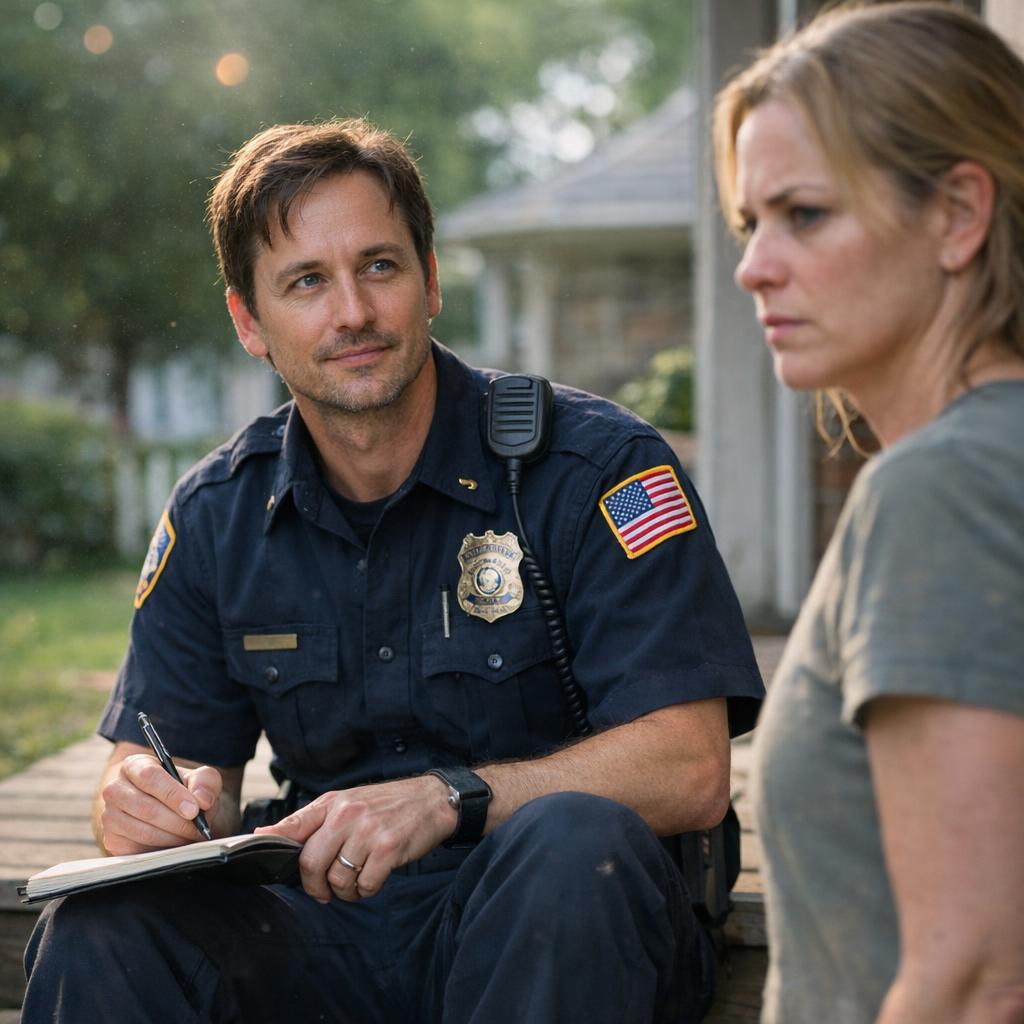 Image by RM AI
Meeting Phyllis
The police weren't going to be much help—that much was clear. So I did what people did before the internet solved everything: I went old school. I called Maribel's neighbor, Phyllis, a retired schoolteacher who'd lived next door for thirty years. When I pulled into the driveway the next day, she was already watching from her porch, waving like she'd been expecting me. Within minutes, she was crossing the lawn with an actual casserole, steam still rising from the foil top. "I've been wondering when you'd come around," she said, handing me the dish. "Tuna noodle. It's what people my age do when we don't know what else to do." I liked her immediately. Inside, Phyllis didn't waste time on small talk. She settled at Maribel's kitchen table like she'd been there a thousand times before. "I wondered who she'd leave it to," she said quietly, running her finger along the edge of the placemat. "Maribel wasn't paranoid, you know. She was careful." The way she emphasized that last word made my skin prickle. "What do you mean?" I asked, serving us both slices of the casserole I didn't really want. Phyllis took a bite, chewed thoughtfully, then set her fork down. "For the last year, there were cars. Late at night. They'd park down the street, lights off, just sitting there. Ten, fifteen minutes, then gone." She leaned forward. "And the men in suits who'd come knocking, asking strange questions about 'documents' and 'storage.'" My fork froze halfway to my mouth. "Storage? Like... a shed?" Phyllis nodded slowly, her eyes never leaving mine. "Maribel told me something once, right before she got really sick. She said, 'If I sell, they win. If I wait, their deal expires.' I didn't know what she meant then." But I was beginning to understand exactly what Maribel had been fighting against—and why she'd chosen me to continue the battle.
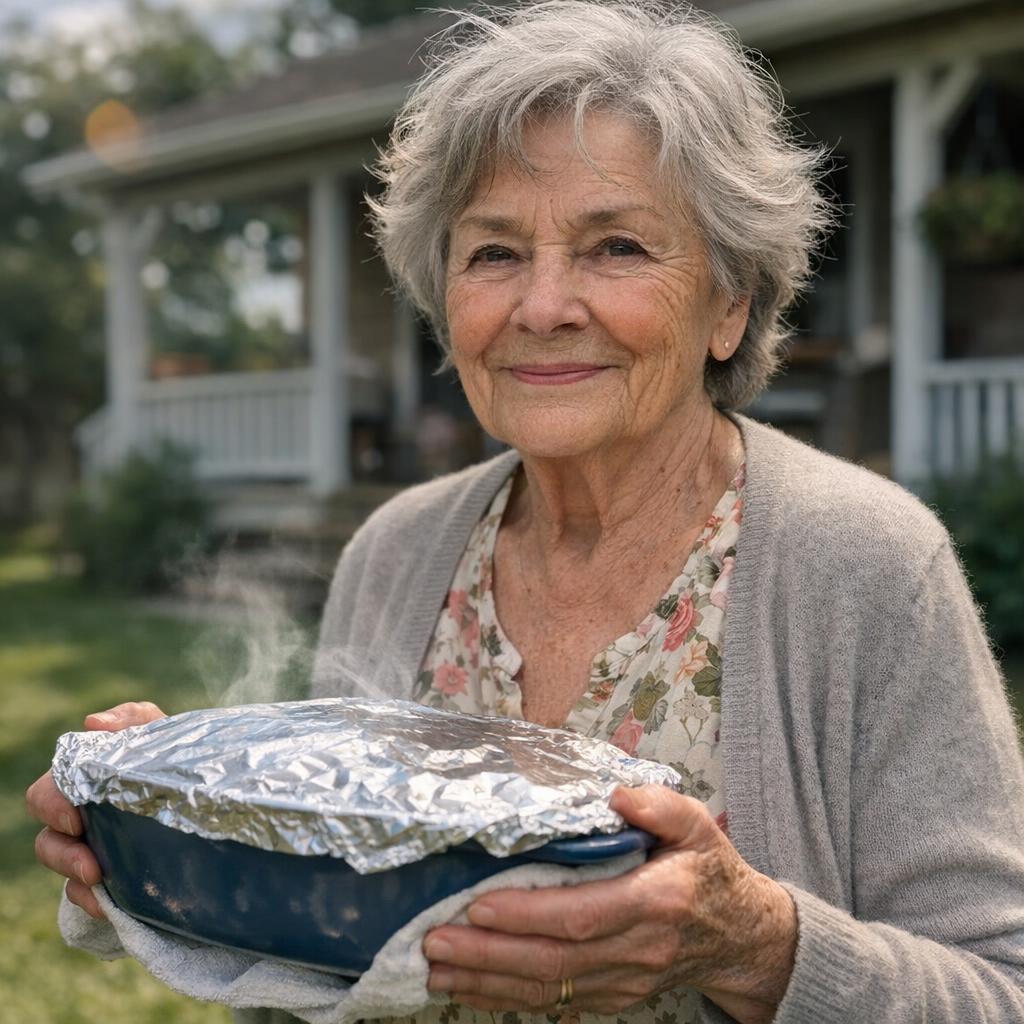 Image by RM AI
Phyllis's Revelations
Phyllis leaned closer across Maribel's kitchen table, her voice dropping to a near-whisper. "There's more to it than just nosy visitors," she said, stirring her tea absently. "That developer—Westbrook Properties—they've been buying up this whole street. One house at a time, like a chess game." She explained how they'd started three years ago, offering fair prices at first, then getting aggressive with the holdouts. Maribel had been their final obstacle. "Your cousin was smart," Phyllis continued. "She noticed things. Like how the same cars would cruise by at odd hours, parking down the street with their lights off. Just sitting there, watching." A chill ran through me as she described men in expensive suits knocking on Maribel's door, asking pointed questions about property documents and storage spaces. "She told me once, 'If I sell, they win. If I wait, their deal expires.' I didn't understand what she meant then." Phyllis's eyes met mine. "But I do remember the day she said it. It was right after she'd gotten a call that upset her terribly. Something about financing windows and contract deadlines." She reached across the table and squeezed my hand. "Lorna, whatever Maribel was protecting, it was important enough that she was willing to die without giving in. And now they think you'll be easier to manipulate than she was."
 Image by RM AI
The Developer
After Phyllis left, I couldn't stop thinking about the name she'd dropped. Richard Westbrook. I immediately pulled out my phone and searched him. The results made my stomach drop. There he was—silver-haired, square-jawed, with the kind of smile that doesn't reach the eyes—posing in countless ribbon-cutting photos and charity galas. Westbrook Properties had tentacles everywhere in the county: shopping centers, apartment complexes, and now, apparently, our quiet little neighborhood. "Owns half the county already, but wants it all," Phyllis had said. The more I scrolled, the clearer the picture became. Westbrook had a reputation for what business articles euphemistically called "aggressive acquisition strategies." Translation: he didn't take no for an answer. I found a three-year-old article about a historic district where residents mysteriously faced code violations right before selling to Westbrook at reduced prices. Another piece mentioned how a community garden was suddenly deemed "unsafe" until Westbrook swooped in to "save" the property. It was all so... calculated. I sat at Maribel's kitchen table, staring at his smiling face on my screen, and suddenly remembered one of the business cards I'd collected from the strange visitors. I dug it out of my purse, turned it over, and there it was in small print at the bottom: "A Westbrook Properties Partner." My hands started shaking. This wasn't random harassment—this was a coordinated campaign, and I was up against someone with resources, connections, and apparently no scruples about harassing a dying woman.
 Image by RM AI
The Hidden Envelope
I was cleaning out Maribel's bedroom closet when my fingers brushed against something unusual behind her winter coats. Pulling the hangers aside, I discovered an envelope taped to the back wall, hidden from casual view. My heart skipped a beat when I saw the handwritten address: 'Whoever lives here next.' Not her attorney. Not me specifically. Just whoever ended up in this house after her. With trembling fingers, I carefully peeled the tape away and sat on the edge of her bed, the envelope heavy in my hands. Inside was a letter, folded neatly around a small USB drive. The letter was typed, unlike Maribel's usual handwritten notes, as if she wanted absolute clarity. As I read, the room seemed to grow colder. Maribel explained that someone had forged her signature on a quitclaim deed months before her death. They'd filed it quietly with the county, creating just enough legal confusion to claim the ownership was 'in dispute.' The forged deed was connected to a time-limited contract and financing window. If the property remained unsold for one year, the contract would expire, and the forgery would become useless. 'I couldn't trust the system to protect me quickly enough,' she wrote, 'so I set a trap with time.' I plugged the USB drive into my laptop, and what I found made my blood run cold. This wasn't just about real estate anymore—this was about fraud, intimidation, and a conspiracy that had been slowly closing in around my cousin in her final days.
 Image by RM AI
Maribel's Letter
I sat on Maribel's bed, the letter trembling in my hands as I read her final confession. She'd discovered something horrifying in her last months: someone had forged her signature on a quitclaim deed and filed it with the county. Not a complete transfer, but enough to create what legal types call 'ownership in dispute.' Clever and terrifying. The forgers hadn't counted on Maribel being so thorough, though. She'd traced it all back to a time-limited contract with a financing window that would expire after exactly one year. That's why she'd made that strange condition in her will—it wasn't eccentric at all, it was brilliant. 'I couldn't fight them while dying,' she wrote, 'but I could set a trap with time itself.' If the house remained unsold for a year, their entire scheme would collapse. The contract would expire, the financing would disappear, and the forgery would become useless. I felt a chill run through me as I realized what I'd stumbled into. These weren't just aggressive real estate people—they were criminals who'd tried to steal from a dying woman. And now they were trying to intimidate me into unknowingly completing their scheme. I looked at the USB drive that had fallen into my lap. What else had my quiet, careful cousin documented in her final days? And more importantly, how dangerous would these people become when they realized I knew exactly what they were up to?
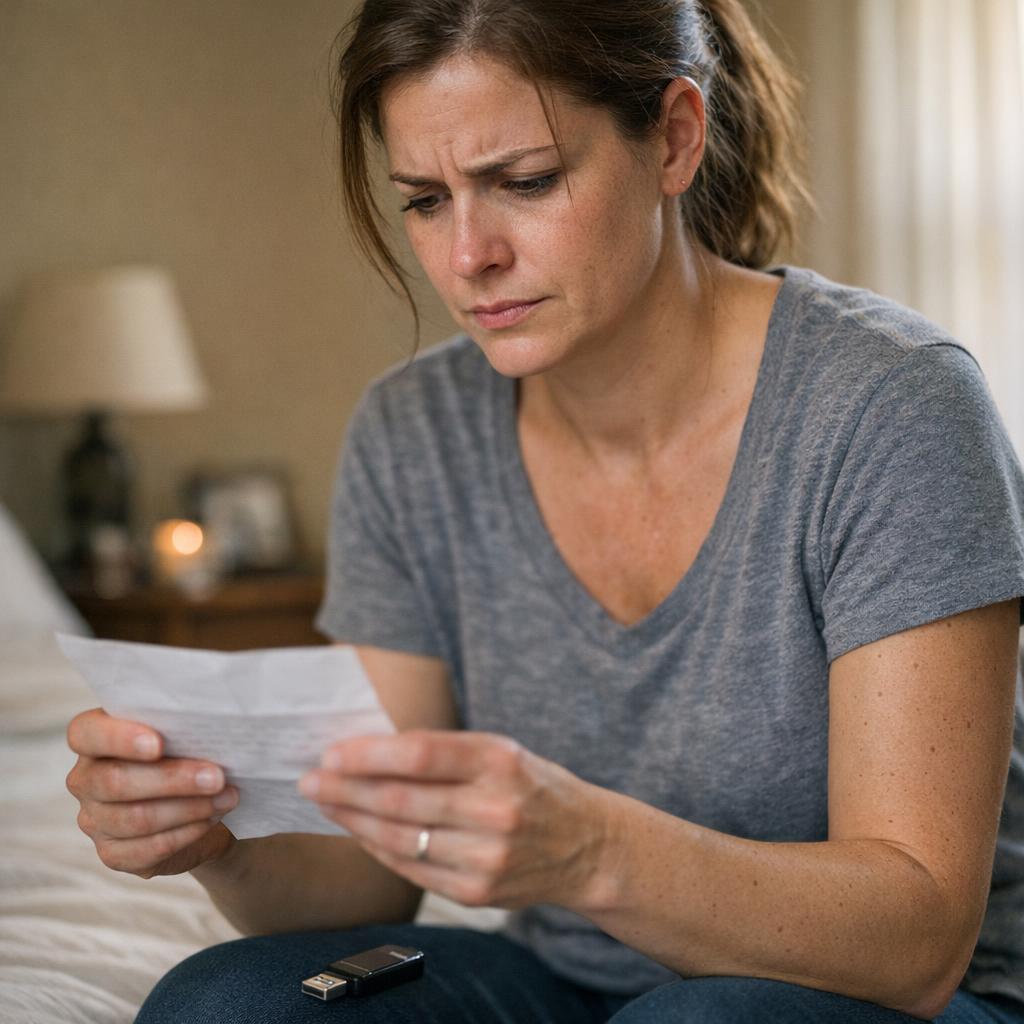 Image by RM AI
The USB Drive
With shaking hands, I plugged the USB drive into my laptop. What loaded on the screen felt like opening Pandora's box—except this wasn't mythology, this was my cousin's life. Maribel had documented everything with the precision of someone building their own case file. There were neatly organized folders containing scanned emails where she'd repeatedly declined offers, each one higher and more insistent than the last. She'd kept a meticulous log of every uninvited visitor, complete with dates, times, and notes about their behavior. 'Man claimed to be from gas company but asked about property lines' and 'Woman said she was delivering package but took photos of backyard.' Most disturbing were the business cards she'd collected—all connected to shell companies that, I'd bet my life savings, traced back to Westbrook. But what made my blood run cold were the screenshots of text messages from an unknown number. 'Sell now or we make it hard,' one read. Another simply said, 'Everyone has a breaking point.' The final message had no text at all—just a photo of Maribel's own front door, clearly taken from the street. Not explicitly violent, but the message was crystal clear: we're watching you. I felt violated on her behalf, imagining her alone in this house, knowing someone was out there, taking pictures, sending threats. No wonder she'd been so careful, so thorough in her documentation. She wasn't just protecting her property—she was building a case against people who thought they could intimidate a quiet woman into submission. And now that evidence was in my hands.
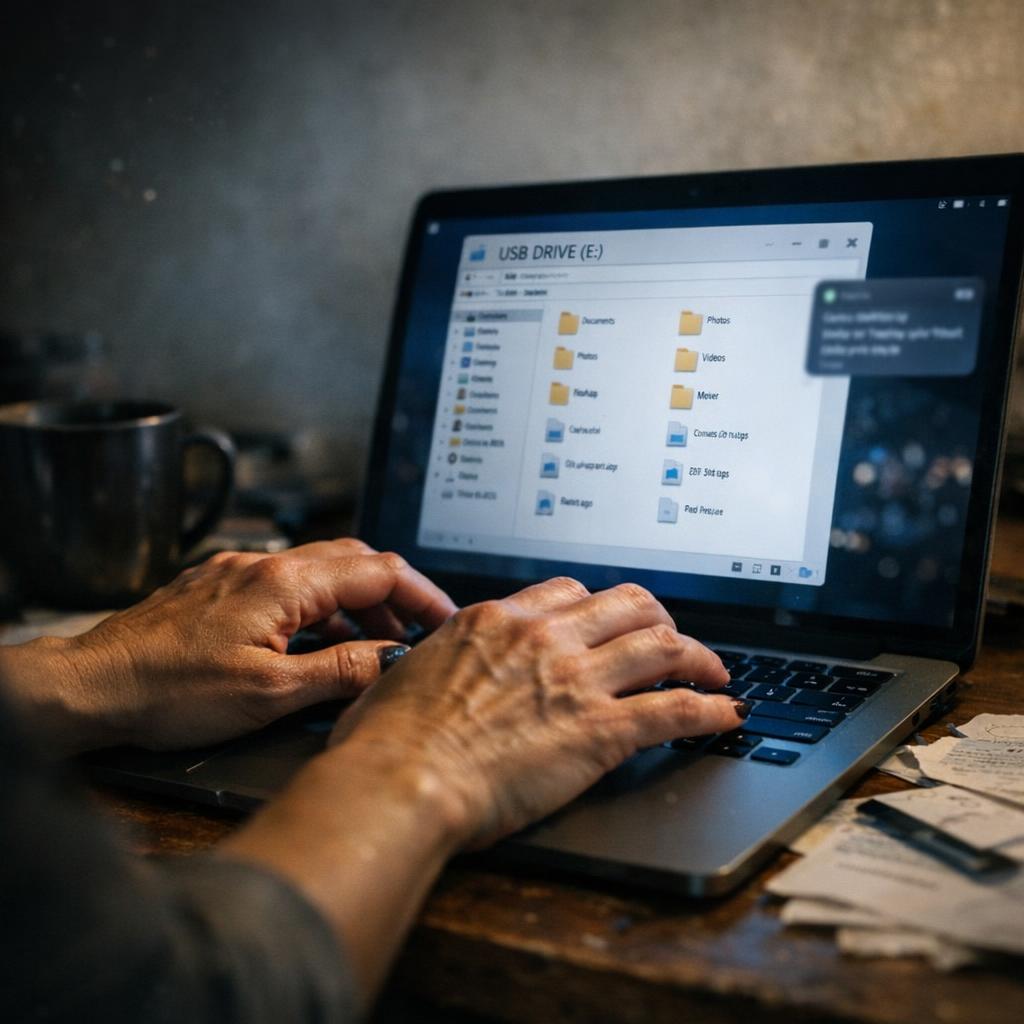 Image by RM AI
Back to the Attorney
I gathered Maribel's USB drive, her notebook, and the letter, placing everything in my tote bag with the care of someone handling evidence—which, I realized, I was. The next morning, I marched into the attorney's office without an appointment, my determination overriding my usual politeness. 'This is an emergency,' I told the receptionist, who must have seen something in my face because she immediately called Mr. Hargrove. When I dumped the contents of my bag onto his desk, he didn't seem surprised—just deeply concerned. 'I need to bring in someone else,' he said after reviewing the documents, and within an hour, a sharp-eyed woman named Ms. Patel was sitting across from us, her specialty apparently being property fraud. She examined the forged deed with the intensity of someone defusing a bomb. 'This is sophisticated work,' she murmured, 'but they made mistakes.' They immediately contacted the county recorder's office, putting them on alert about the fraudulent filing. 'This is fraud, plain and simple,' Mr. Hargrove said, removing his glasses and rubbing the bridge of his nose. 'But proving it and stopping it are two different things.' Ms. Patel nodded grimly. 'Whoever did this has resources and connections. They'll fight back.' I felt a chill run through me as I realized what we were up against. This wasn't just some shady real estate deal—this was organized, calculated criminal activity. And something told me that Westbrook Properties wasn't going to simply walk away when they discovered I'd found Maribel's evidence.
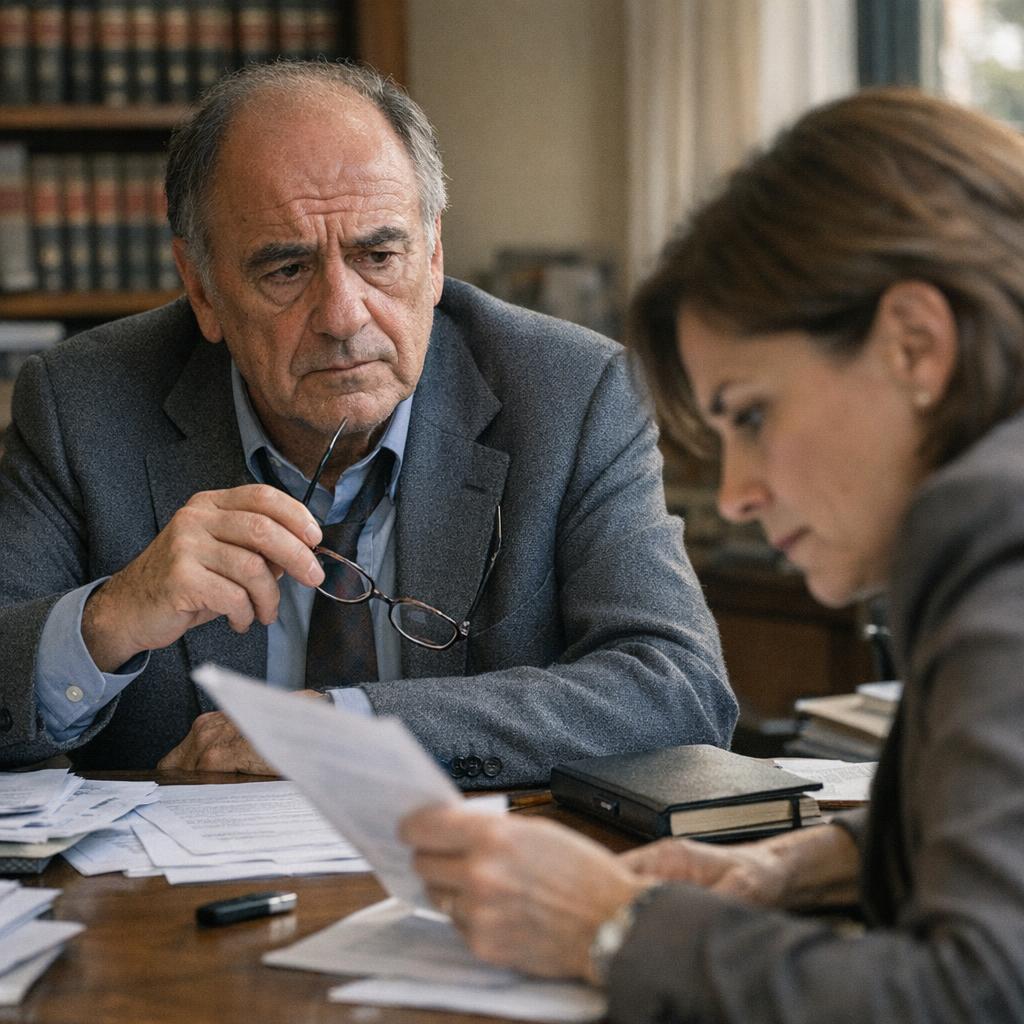 Image by RM AI
Understanding the Visitors
As I sat at Maribel's kitchen table, surrounded by her notes and the USB drive's contents, everything suddenly clicked into place like the final pieces of a puzzle. These weren't random people interested in buying a house—they were pawns in a calculated game. The polite couple who'd 'just wanted to see the backyard'? Probably looking for access to the shed. The contractor offering a 'quick cash deal'? Likely trying to end this before the year was up. The woman claiming to be 'from the bank'? Gathering intel on whether I'd found anything suspicious. Each visitor had been carefully selected and scripted, their confusion rehearsed when I told them the house wasn't for sale. I thought about the midnight visitor with his key, the disturbed shed floor, the questions about 'storage'—they weren't just pressuring me to sell; they were desperately searching for Maribel's evidence before I could find it. And now I had it all. The forged documents, the threatening texts, the photos taken without permission—everything they needed to stay hidden was now sitting in plain sight on my laptop. I felt a chill run down my spine as I realized what this meant: if they were willing to forge documents and harass a dying woman, what would they do to me now that I'd uncovered their scheme?
 Image by RM AI
The Forged Notary
The next morning, Ms. Patel called with news that made my coffee go cold in my hand. 'We've traced the notary stamp,' she said, her voice tight with controlled anger. 'The ID number belongs to someone who doesn't exist.' I nearly dropped the phone. 'What do you mean, doesn't exist?' She explained that the stamp was registered to a 'Maria Gonzalez' with credentials that led nowhere—a ghost created specifically to validate fraudulent documents. The stamp traced back to a small 'document services' business operating out of a strip mall that had already been investigated twice for similar schemes. 'And here's where it gets interesting,' Ms. Patel continued. 'That business? It's owned by an LLC registered to Craig Westbrook—Richard Westbrook's cousin.' I sank into Maribel's kitchen chair, stunned. This wasn't just about bullying an old woman into selling her home. This was organized fraud with family connections and a paper trail they thought they'd hidden. No wonder Maribel had been so careful, so methodical in her documentation. She hadn't been living a quiet, lonely life at all—she'd been in a silent war with people who had money, power, and absolutely no scruples. As I hung up the phone, I realized with perfect clarity that the year-long waiting period wasn't just clever—it was the only weapon Maribel had trusted to outlast these people. And now I was the one holding the line.
 Image by RM AI
Moving In Part-Time
After discovering the depth of Westbrook's scheme, I made a decision that would have made Maribel proud: I became a part-time resident of her house. Every other night, I'd pack a small suitcase, kiss my husband Frank goodbye, and drive the forty minutes to Maribel's place. 'You're being paranoid,' Frank said at first, his forehead creased with worry. But after I showed him the threatening texts and the forged documents, his tune changed completely. 'We're not letting them win,' he declared, helping me install additional security cameras and motion-sensor lights. I turned Maribel's guest room into my temporary bedroom, set up a small workstation in her kitchen, and created a routine that would make the house look continuously occupied. Lights on timers, TV sounds playing at random intervals, and my car visibly parked in the driveway. I alerted Phyllis and the other neighbors, giving them my cell number and asking them to call if they noticed anything suspicious. 'Maribel would be so proud,' Phyllis told me, bringing over another casserole (apparently her love language). 'She fought them alone, but you don't have to.' The first few nights were eerie—every creak and shadow made me jump. But gradually, I settled into a rhythm, almost feeling Maribel's presence guiding me. The visitors became less frequent, more hesitant. They were realizing I wasn't going to be an easy mark. What they didn't know was that while they were watching me, I was building a case against them, piece by piece, day by day. And as the months ticked by, I could almost feel their desperation growing—because time, that silent weapon Maribel had chosen, was running out for them.
 Image by RM AI
The Script
By month six, I'd perfected what I called 'The Script.' Whenever someone showed up with that familiar look of entitlement—clipboard in hand or phone at the ready—I'd meet them at the edge of the property, camera visibly recording. 'This property is not for sale. Any trespassing is recorded. Please leave.' No smile, no apology, no room for negotiation. The first few times I delivered it, my voice shook slightly. By the twentieth time, it rolled off my tongue with the confidence of a seasoned security guard. The frequency of these visits changed dramatically. Where once I'd had three or four 'interested buyers' a week, now I might see one every couple of weeks. And their demeanor had shifted too—less aggressive, more cautious. They'd back away quickly, muttering apologies instead of arguments. But the watching never stopped. At night, I'd notice cars cruising by at walking speed, headlights sweeping across Maribel's living room windows like searchlights. Sometimes they'd park down the block, engine running, just... waiting. I started keeping a log like Maribel had—dates, times, descriptions. One silver sedan appeared so regularly I'd nicknamed it 'Stalker Steve.' The whole thing felt like psychological warfare—they couldn't force their way in anymore, but they could remind me I was being watched. What they didn't realize was that with each passing month, their deadline crept closer, and my resolve only strengthened. I wasn't just protecting a house anymore; I was honoring a promise to a woman who'd fought this battle alone.
 Image by RM AI
Researching Westbrook
During the quiet hours at Maribel's house, I dove into researching Richard Westbrook, hoping to understand what kind of man would forge documents and harass a dying woman. What I found made my skin crawl. Westbrook Properties wasn't just any development company—it was a machine that consumed small towns whole. Their website showcased gleaming shopping centers and luxury apartments, all built where family homes once stood. Local news archives told a different story: community meetings erupting in shouting matches, elderly residents in tears as their neighborhoods transformed beyond recognition. One article from the County Chronicle featured Westbrook himself—tall and imposing with perfectly coiffed silver hair and an expensive suit that probably cost more than my monthly mortgage. His smile never reached his eyes, which remained cold and calculating even as he cut ribbons at grand openings. "Bringing prosperity to forgotten communities" was his tagline, but reading between the lines of these articles, I saw a pattern: mysterious code violations appearing just before he made offers, sudden water quality issues in neighborhoods he targeted, and community leaders who opposed him finding themselves facing audits or personal scandals. The more I read, the more I understood why Maribel had fought so hard. This wasn't just about a house—it was about standing up to a predator who'd built an empire by bullying people who couldn't fight back. And now I was on his radar.
 Image by RM AI
The Coffee Shop Encounter
I was enjoying a quiet moment at Perks & Brews, the local coffee shop, when a woman with sharp eyes and a no-nonsense bob haircut slid into the chair across from me without asking. I nearly spilled my latte. 'You're Maribel's cousin,' she stated flatly. Not a question, but a declaration. I nodded, suddenly on high alert. The woman extended her hand. 'I'm Elena. I worked with Maribel at the environmental assessment office.' My eyebrows shot up—Maribel had never mentioned an environmental job. Elena leaned forward, her voice dropping to just above a whisper. 'She was trying to stop them, you know. It's not just about the houses.' Her eyes darted around the coffee shop before continuing. 'That development Westbrook wants to build? It would destroy the wetlands that filter the town's water supply.' My mind raced, connecting dots I hadn't even known existed. This wasn't just about property values or neighborhood character—it was about the town's literal lifeblood. Before I could ask any of the dozen questions suddenly crowding my mind, Elena stood abruptly. 'I've said too much already.' She slid a business card across the table. 'Call me when you're somewhere more private.' And just like that, she was gone, leaving me staring at her untouched coffee and a card that simply read 'Elena Vasquez, Environmental Engineer' with a phone number. Suddenly, Maribel's battle felt much bigger than a single house on a quiet street.
 Image by RM AI
Environmental Connections
I called Elena that evening from Maribel's kitchen, pacing nervously as the phone rang. When she answered, her voice was hushed, as if she was afraid of being overheard. 'I've been waiting for your call,' she said. What she revealed next made my stomach drop. Maribel hadn't just been a stubborn homeowner—she'd been an environmental whistleblower. 'Your cousin was gathering evidence of serious environmental violations at Westbrook's previous developments,' Elena explained. 'Contaminated runoff, falsified impact studies, bribes to inspectors.' She paused, letting that sink in. 'But the house—that's the key piece. It's not just a house, Lorna. It's a strategic location.' According to Elena, if Westbrook acquired Maribel's property, he would complete his land assembly for a massive shopping center that would sit directly atop critical wetlands that naturally filtered the town's water supply. 'Three of his previous developments caused irreversible damage to local watersheds,' Elena continued, her voice tight with anger. 'Maribel found the pattern and started collecting proof.' I sank into a kitchen chair, suddenly understanding why the pressure on my cousin had been so intense. This wasn't just about real estate—it was about covering up environmental crimes that could cost Westbrook millions in fines and potentially even criminal charges. 'Maribel kept copies of everything,' Elena said. 'She told me they were hidden somewhere safe.' I thought about the loose floorboard in the shed, the one that had been disturbed. What else had my quiet, careful cousin hidden that Westbrook's people were so desperate to find?
 Image by RM AI
The Town Meeting
I never thought I'd find myself at a town hall meeting on a Tuesday night, but Elena insisted it was crucial I see Westbrook in action. 'Know your enemy,' she texted. So there I was, sitting in the back row of the community center, watching Richard Westbrook himself command the room like a seasoned politician. He was taller in person, with that perfect silver hair I'd seen in photos and a tailored suit that probably cost more than my car. His presentation was slick—digital renderings of a 'community-focused shopping center' with green spaces and water features that looked nothing like the concrete monstrosities I'd seen in his previous developments. When residents raised concerns about the wetlands and water quality, he dismissed them with the practiced ease of someone who'd been deflecting environmental questions for decades. 'Our studies show minimal impact,' he said smoothly, not actually addressing anything specific. 'And we're creating jobs for your children and grandchildren.' The room erupted in a mix of applause and grumbling. That's when it happened—our eyes met across the crowded room, and for just a second, his public mask slipped. The smile vanished, replaced by something cold and calculating that made my skin crawl. He recognized me. Somehow, he knew exactly who I was and why I was there. And in that moment, I understood that Maribel's battle wasn't just about a house or even the environment—it was about standing up to a man who believed he could buy or bully his way through anyone who dared to say no.
 Image by RM AI
The Parking Lot Confrontation
The parking lot was nearly empty when I pushed through the community center doors, my mind still reeling from that chilling moment of recognition. I'd made it halfway to my car when I heard footsteps behind me, too measured and deliberate to be casual. 'Ms. Harmon.' His voice sliced through the night air like a blade. I turned to find Richard Westbrook himself, standing there in his thousand-dollar suit, using my last name though we'd never been formally introduced. That alone sent ice down my spine – he'd been researching me. 'I understand you've inherited Maribel's property,' he continued, his smile all business, not reaching those calculating eyes. 'I'd like to make you an offer – no waiting period.' The way he emphasized those last words made it clear he knew about Maribel's condition. My heart hammered against my ribs, but I kept my voice steady. 'I'm not selling,' I said, gripping my car keys tightly. Something shifted in his expression then, the polished veneer cracking just enough to reveal what lurked beneath. His smile tightened, eyes hardening to flint. 'Everyone sells eventually, Ms. Harmon,' he said, stepping closer. 'It's just a matter of price... or pressure.' He didn't touch me, didn't raise his voice, but the threat hung in the air between us like poison gas. I realized then that this wasn't just business for him – this was personal. And as he turned and walked away, his expensive shoes clicking on the asphalt, I knew with absolute certainty that Maribel hadn't just left me a house – she'd left me her war.
 Image by RM AI
The Break-In
I was jolted awake at 2:17 AM by my phone's security alert. My heart nearly stopped when I saw two men in dark hoodies moving through Maribel's living room like shadows who knew exactly where they were going. I watched in horror, frozen in my own bed miles away, as they went straight to the closet where I'd found the envelope, methodically searching before moving to the kitchen drawer where the notebook had been. They weren't random burglars—they knew precisely what they were looking for. The way they moved through the house with such purpose sent chills down my spine. They'd bypassed my new deadbolts completely by simply breaking the small window in the back bathroom—a vulnerability I hadn't considered. I called the police immediately, but by the time officers arrived, the men were long gone, leaving behind only shattered glass and the violated feeling that comes when strangers invade your space. The officer took notes with the same polite disinterest I'd seen before. "Probably looking for valuables," he suggested. I didn't bother explaining that the real valuables—Maribel's evidence—were safely tucked away in a bank vault where Westbrook couldn't reach them. What terrified me most wasn't the break-in itself, but the timing. It happened the very night after my parking lot confrontation with Westbrook. He wasn't just sending a message—he was declaring war.
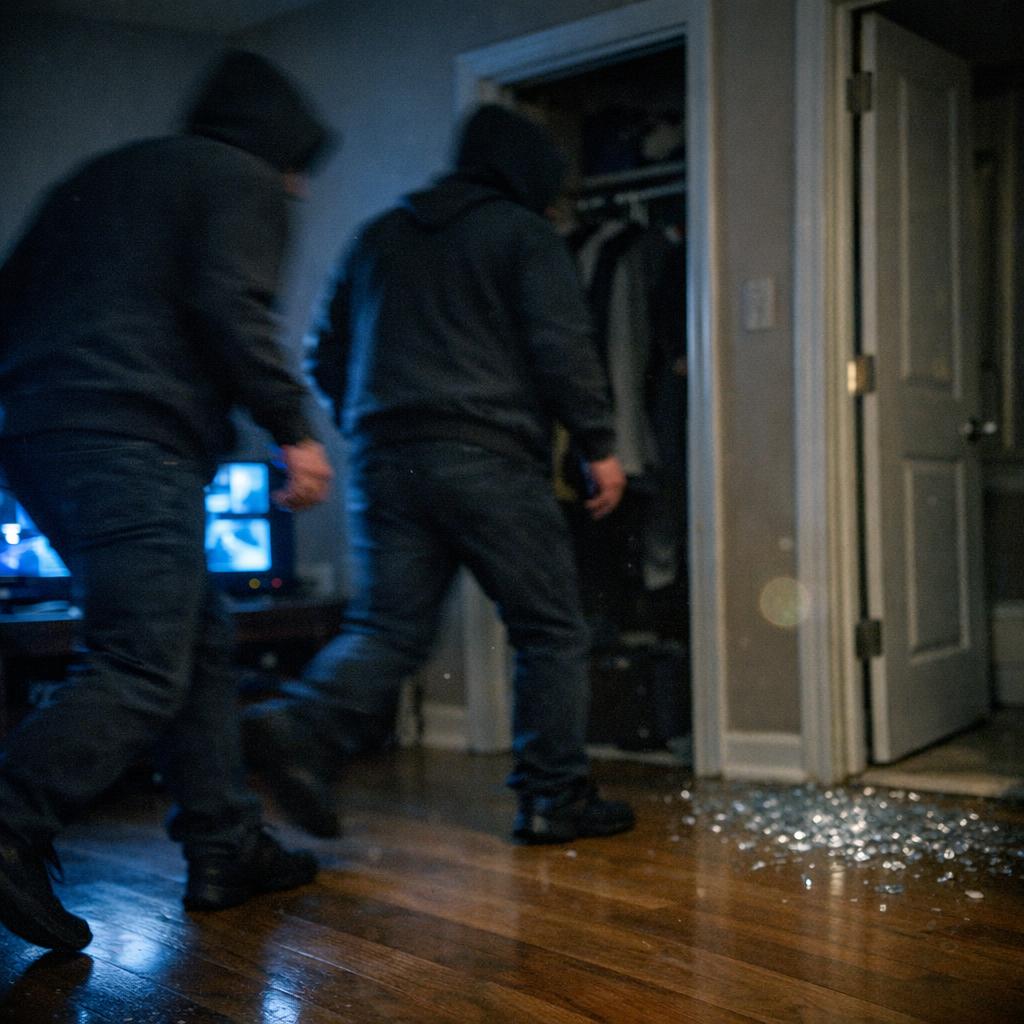 Image by RM AI
Police Report
The morning after the break-in, I was surprised to see not just Officer Daniels returning, but a detective in tow—Detective Rivera, a woman with sharp eyes and a no-nonsense demeanor. This time, they weren't dismissing me with platitudes about 'random burglaries.' They took fingerprints, photographed the broken window, and reviewed my security footage with genuine interest. 'This doesn't look like a random burglary,' Detective Rivera said, studying the way the men had moved directly to specific locations. 'They knew exactly what they wanted.' I took a deep breath and told them everything—about Westbrook's veiled threat in the parking lot, the forged documents, even Elena's revelations about the environmental concerns. Detective Rivera listened intently, making detailed notes while Officer Daniels examined the precisely targeted areas the intruders had searched. 'Look,' Detective Rivera finally said, closing her notebook, 'I'll be straight with you. Without direct evidence linking Westbrook to the break-in, there's not much we can do legally.' She handed me her card with her personal cell number written on the back. 'But that doesn't mean we're not paying attention now.' As they left, I felt slightly more protected but also more certain than ever that Westbrook wouldn't stop here. The clock was ticking—five more months until Maribel's one-year condition was fulfilled—and something told me Westbrook was getting desperate enough to make a serious mistake.
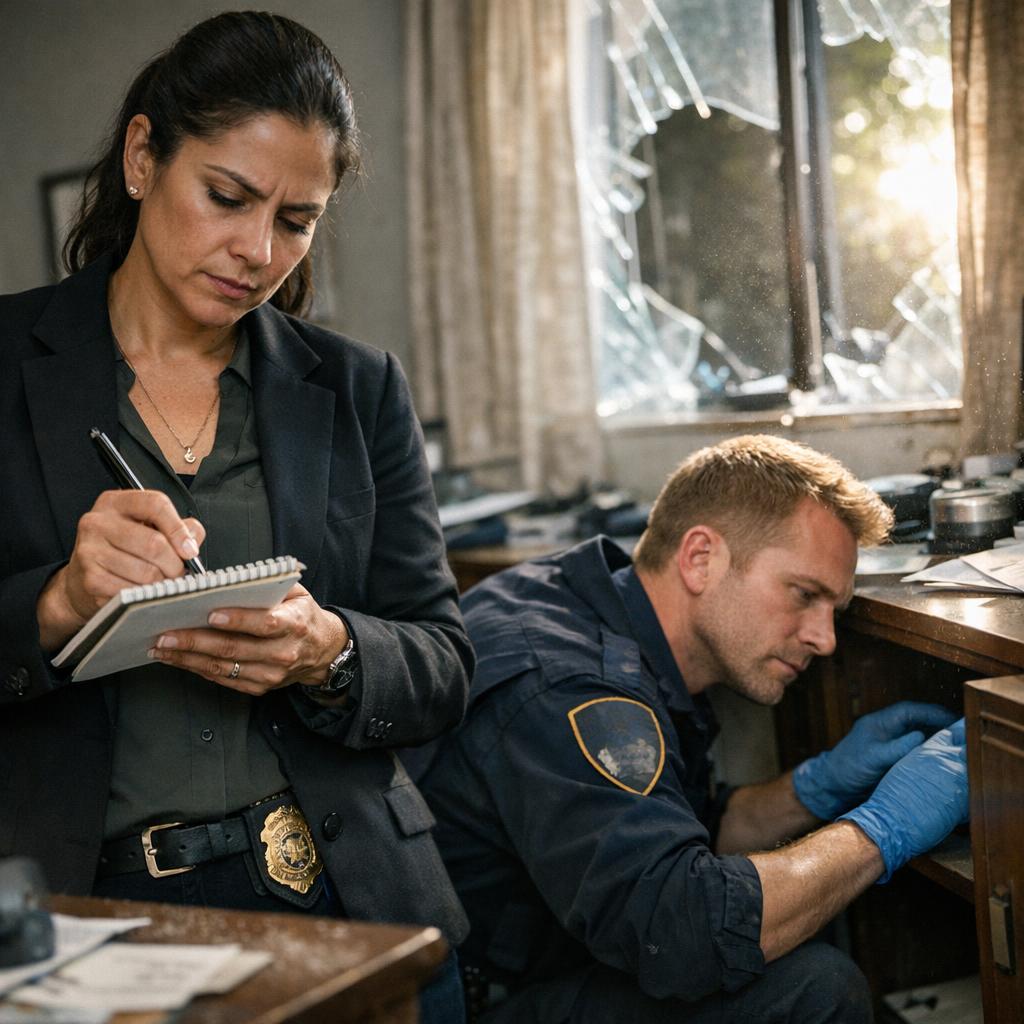 Image by RM AI
The Newspaper Article
I nearly choked on my coffee when Phyllis called me, her voice trembling with indignation. 'Lorna, have you seen today's Gazette?' I hadn't, but twenty minutes later I was staring at a small article tucked away on page six with the headline 'Abandoned Property Becomes Neighborhood Concern.' My hands shook as I read how an 'inherited property on Maple Street' was becoming a 'source of community concern' following recent vandalism. The article mentioned me by name as 'Maribel Cortez's cousin from out of town' who 'rarely visits the property'—a blatant lie since I'd been there every other night for months. It quoted an 'anonymous neighbor' claiming the house was 'bringing down property values' and 'attracting troublemakers.' Not once did they mention the break-in was a targeted crime. Not once did they contact me for comment. I immediately called Detective Rivera, who sighed heavily. 'Classic intimidation tactic,' she said. 'They're trying to create public pressure.' I spent the afternoon calling neighbors, most of whom were horrified by the article's mischaracterization. Only Mrs. Finch across the street seemed oddly evasive, avoiding eye contact when I asked if she'd spoken to any reporters. That night, I sat at Maribel's kitchen table, the newspaper spread before me, and realized this wasn't just Westbrook's doing—he had allies in this town, people willing to help push a false narrative to force my hand. The question was: how far would they go next?
 Image by RM AI
The Anonymous Call
I was making dinner when my cell phone rang with an unknown number. Normally I'd let it go to voicemail, but something told me to answer. 'Hello?' I said cautiously. 'You should check the property records for the neighboring houses,' a woman's voice said without introduction. Her tone was urgent but controlled. 'Look at who owns them now.' Before I could ask who was calling or how she got my number, she hung up. The call lasted less than fifteen seconds, but it sent my mind racing. The next morning, I drove straight to the county records office, a place I'd never visited before Maribel's house came into my life. The clerk seemed amused by my intensity as I requested property records for all the homes surrounding Maribel's. I spent three hours hunched over documents, connecting dots that made my stomach sink with each discovery. Three neighboring properties—the Johnsons' old place, the blue house on the corner, and Mrs. Finch's home (which explained her evasiveness)—had all been purchased within the past year by different LLCs with innocuous names like 'Maple Street Holdings' and 'Hometown Investments.' But when I dug deeper, following paper trails through registered agents and corporate filings, each one led back to shell companies connected to Westbrook Properties. The realization hit me like a physical blow: Westbrook wasn't just after Maribel's house—he was systematically buying up the entire block, piece by piece, neighbor by neighbor. And I was the only one standing in his way.
 Image by RM AI
Meeting with Elena's Group
Elena's environmental group met in the back room of a local bookstore—the kind of place with mismatched furniture and the lingering scent of coffee. Seven people gathered around a table covered with maps, documents, and laptops. I felt like I'd stumbled into a scene from some eco-thriller movie, except this was my life now. 'Maribel wasn't just fighting for her home,' Elena explained, spreading out aerial photos of wetlands. 'She was our inside source.' The group had been tracking Westbrook's environmental violations for years—contaminated groundwater in Fairview County, destroyed habitats in Millerton, falsified environmental impact studies in three different developments. 'Your cousin had access to records nobody else could get,' said a bearded man named Marcus, sliding a folder toward me. 'She worked at the county assessor's office—perfectly positioned to notice when certain officials kept approving Westbrook's projects despite glaring environmental concerns.' I flipped through the folder, seeing Maribel's neat handwriting connecting dots between Westbrook and various county officials—campaign contributions, family connections, sudden purchases of vacation homes after approving his projects. 'She was building a RICO case,' Elena said quietly. 'Corruption, environmental fraud, conspiracy—the works.' My throat tightened as I realized the true scope of what Maribel had been doing. She wasn't just a stubborn homeowner—she was gathering evidence that could potentially send Westbrook to prison. No wonder he was so desperate to get into her house. The question now was: where had she hidden the most damning evidence?
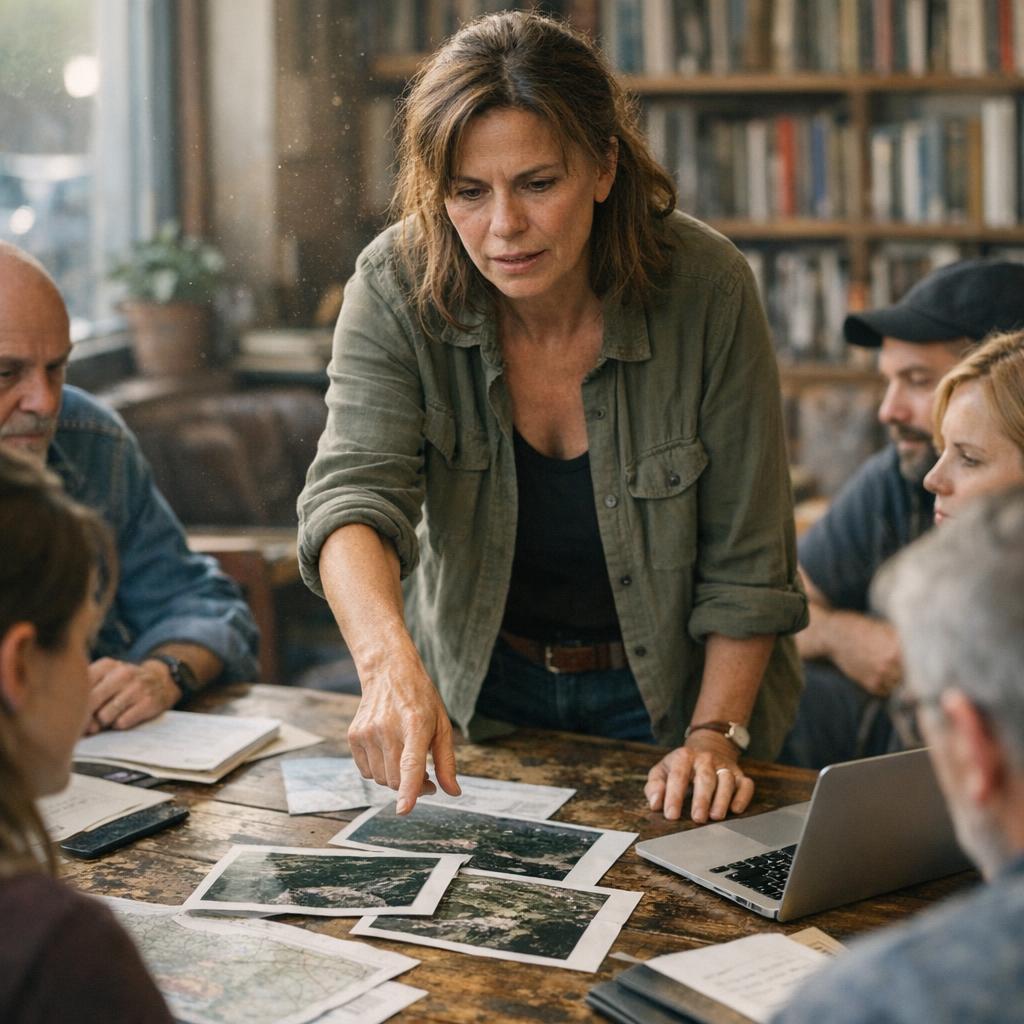 Image by RM AI
The Assessor's Office
The county assessor's office was exactly as I'd imagined it—fluorescent lights buzzing overhead, the smell of old paper and coffee, and rows of filing cabinets that seemed to stretch forever. I'd made an appointment with Martha, who'd worked alongside Maribel for fifteen years. When I mentioned my cousin's name, Martha's eyes darted nervously to a security camera in the corner. 'Let's grab coffee,' she suggested, her voice barely above a whisper. At the café across the street, Martha's hands trembled slightly as she stirred her latte. 'Maribel was the most detail-oriented person I've ever met,' she said, leaning forward. 'About six months before she got sick, she started noticing patterns in Westbrook's acquisitions.' Martha explained how properties Westbrook targeted were mysteriously assessed at 15-20% below market value—a pattern too consistent to be coincidence. 'Lower assessments meant he paid less in taxes after buying them,' she explained. 'And guess who signed off on those assessments? Commissioner Davis—the same man who suddenly bought a boat and renovated his kitchen last year.' Martha's eyes welled with tears. 'Maribel was compiling everything for the state auditor. She told me she had a meeting scheduled the week she ended up in the hospital.' As Martha spoke, I felt a chill run down my spine. This wasn't just about environmental concerns or a house—it was about systematic corruption at the highest levels of county government. And somewhere in Maribel's house was the evidence that could bring it all crashing down.
 Image by RM AI
The Shed's Secret
I stood in the shed that evening, flashlight in hand, staring at that loose floorboard that had been nagging at me for weeks. Something about the way it had been disturbed during the break-in kept pulling me back. With a deep breath, I wedged my fingers into the gap and pulled. The board came up easier than I expected, revealing a small cavity underneath. My heart nearly stopped when I spotted a waterproof container tucked neatly inside. Maribel, you clever woman. Inside were documents—dozens of them—meticulously organized and labeled in my cousin's precise handwriting. As I spread them across the shed floor, the pieces of the puzzle clicked into place. Emails between Westbrook and county officials discussing 'expedited approvals' and 'assessment adjustments' in language that barely disguised their corrupt intentions. Photos of Westbrook meeting with shady characters Maribel had identified as 'document services' employees—the same outfit connected to the forged deed. One email particularly chilled me: 'Once we secure the Cortez property, all evidence of the previous assessments will be permanently removed from county records.' My hands trembled as I gathered everything back into the container. This wasn't just evidence of environmental violations—it was proof of systematic corruption that reached into the highest levels of county government. No wonder they were so desperate to get their hands on Maribel's house. What I held in my hands could send people to prison, including some powerful figures who probably thought they were untouchable. The question now wasn't just how to protect myself for the remaining months of Maribel's one-year condition—it was what to do with a bombshell that could blow the whole town wide open.
 Image by RM AI
The Threatening Note
I was heading back to my car after meeting with Elena when I spotted it—a folded piece of paper tucked under my windshield wiper. At first, I thought it was just another flyer, maybe for a local pizza place or a lost pet. But as soon as I unfolded it, my blood turned to ice. 'Stop digging or start digging a grave.' Seven words. That's all it took to make my hands shake so badly I nearly dropped my keys. This wasn't some prank or misunderstanding—this was a direct threat. I took a photo of it before carefully folding it into a plastic baggie I had in my purse (thank goodness for those true crime podcasts that taught me about preserving evidence). Detective Rivera's expression changed the moment I placed the note on her desk. Gone was the professional detachment, replaced by genuine concern. 'This crosses a line,' she said, her voice hardening. 'We can open a harassment investigation now.' She asked if I had somewhere else I could stay temporarily, somewhere safe. I did—my sister's place across town had a spare room. But something in me rebelled at the thought of running away. Maribel hadn't backed down when they pressured her, and I wouldn't either. 'I'll be careful,' I promised Detective Rivera, 'but I'm not abandoning Maribel's house.' Not when I was finally getting closer to the truth. Not when I could almost hear Maribel whispering, 'Keep going, Lorna. You're almost there.'
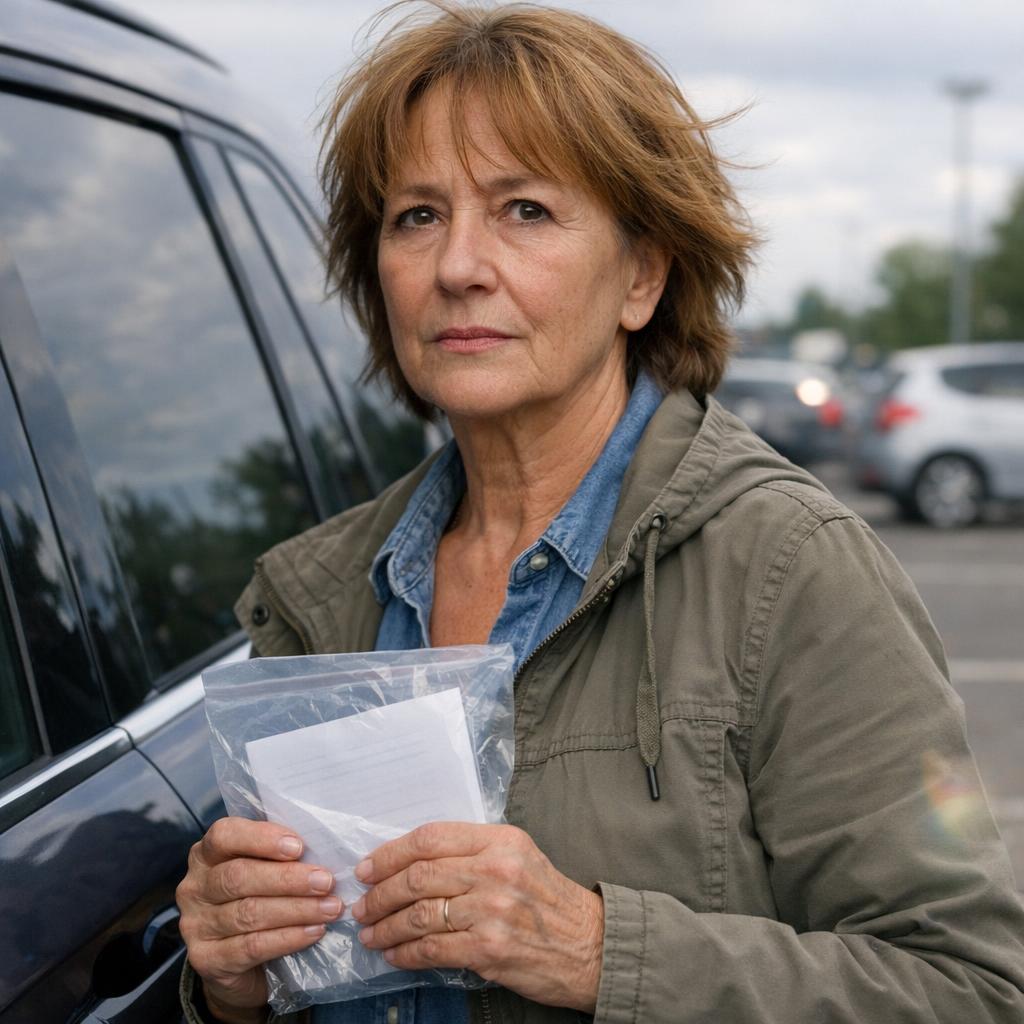 Image by RM AI
Frank's Concern
I could see the worry etched on Frank's face as he paced our kitchen, running his hands through his salt-and-pepper hair. 'This is getting dangerous, Lorna,' he said, his voice tight with concern. 'Maybe we should just sell the house and be done with it.' I spread Maribel's evidence across our dining table like a detective in one of those crime shows—the forged deed, the property records, the damning emails that connected Westbrook to county officials. 'Look at all this,' I said, my voice steadier than I felt. 'This isn't just about a house anymore. It's about justice for Maribel and stopping Westbrook from bullying people and destroying the environment.' Frank picked up the threatening note, his jaw clenching as he read those seven chilling words again. 'He's not just some greedy developer, Frank. He's corrupt to the core, and Maribel knew it.' My husband sat heavily in the chair across from me, silent for what felt like forever. I could almost see the battle playing out behind his eyes—the practical side that wanted us safe versus the part of him that had always stood up for what was right. Finally, he reached across the table and took my hand. 'Then we fight,' he said, his voice low but resolute. 'But we're smarter about it. No more going to that house alone. No more meetings without backup.' The relief that washed over me was so intense I nearly cried. I hadn't realized until that moment how much I needed Frank fully in my corner for what was coming next. Because something told me Westbrook was about to escalate this war to a whole new level.
 Image by RM AI
The Journalist
I met Victor at a coffee shop downtown—the kind with exposed brick walls and overpriced lattes that somehow still feel worth it. Elena had vouched for him, saying he'd been chasing Westbrook's corruption for years without landing the knockout punch. 'He's like a ghost,' Victor explained, his eyes lighting up as I spread Maribel's documents across the table. 'Leaves fingerprints everywhere but nothing that sticks.' Victor was in his forties with the kind of intensity you only get from someone who's been denied justice too many times. He carefully examined each document, occasionally muttering 'Jesus' or 'This is it' under his breath. When he finally looked up, his expression was a mix of excitement and dread. 'This is the smoking gun I've been searching for,' he said, tapping the emails between Westbrook and county officials. 'But Lorna, you need to understand something.' He leaned forward, lowering his voice. 'Once we publish this, Westbrook won't just be threatening you with notes under windshield wipers. Men like him have resources, connections. They fight dirty when cornered.' I thought about Maribel, fighting this battle alone until cancer took her strength away. 'So do I,' I replied, surprising myself with my own conviction. Victor nodded slowly, a hint of respect in his eyes. 'Give me three days to verify everything independently,' he said. 'Then we blow this wide open.' As I watched him carefully photograph each document, I couldn't shake the feeling that I'd just lit a fuse that couldn't be extinguished.
 Image by RM AI
The Decision
I sat at Maribel's kitchen table, surrounded by the evidence we'd gathered, feeling the weight of the decision pressing down on me. The attorney's words echoed in my head: 'The year strategy is working. Just wait it out.' He wasn't wrong—we only had three months left before Maribel's condition would be fulfilled and Westbrook's financing window would slam shut. The safe play was to hunker down, keep the evidence secure, and let time do the work. But Victor's argument kept gnawing at me. 'Sunlight is the best disinfectant,' he'd said, leaning forward with that intense look journalists get when they smell corruption. 'And the best security system.' I traced my finger over Maribel's handwriting on one of the documents. What would she want? She'd chosen the year-long waiting game, but she hadn't known someone would break into her home, that threats would be left on my windshield, that Westbrook would be systematically buying up the neighborhood. Frank walked in with two mugs of coffee, setting one in front of me. 'You know,' he said quietly, 'sometimes the best defense is a good offense.' I looked up at him, surprised. 'What happened to being careful?' He shrugged. 'I've been thinking. These people are counting on your fear. On your silence.' He was right. The longer I sat on this evidence, the more time Westbrook had to find it—or worse, to find ways to discredit me before I could use it. I picked up my phone and texted Victor: 'Let's do it. Run the story.' My finger hovered over the send button for a long moment before I pressed it, knowing that once I did, there would be no going back.
 Image by RM AI
The Compromise
After days of heated debate with Victor, Frank, and Elena, we finally reached a compromise that everyone could live with. Victor would prepare his exposé on Westbrook's corruption, complete with Maribel's meticulously gathered evidence, but he wouldn't publish until we reached month eleven of my ownership. 'It's strategic timing,' Victor explained, tapping his fingers on Maribel's kitchen table. 'Close enough to your deadline that Westbrook's financing will already be hanging by a thread, but with enough runway for public outrage to ensure that forged deed gets officially invalidated.' I had to admit, it made sense. This way, we weren't just relying on the clock to run out—we were setting up a one-two punch that Westbrook couldn't possibly recover from. In the meantime, I continued my vigilant documentation of every strange car that drove by, every 'casual' inquiry about the property, every whispered conversation between neighbors that stopped when I approached. Frank installed additional security cameras and motion-sensor lights, while Elena's group took turns driving by the house at random intervals. 'We're playing chess while Westbrook thinks we're playing checkers,' Frank said one night as we reviewed our security footage. The waiting game continued, but now with purpose—like a predator patiently stalking its prey. What none of us realized was that Westbrook had one more desperate move to make, and it would come from the most unexpected direction imaginable.
 Image by RM AI
The Unexpected Ally
I was comparing prices on cereal boxes when I felt someone watching me. Looking up, I found myself face-to-face with a man in an expensive charcoal suit—the kind that screams 'corporate success' without being flashy. 'Ms. Harmon,' he said in a voice just above a whisper. I tensed immediately, my hand instinctively tightening around my phone. How did he know my name? 'My name is James Keller. I used to work for Westbrook Development.' He offered a business card between two manicured fingers. The logo showed he now worked for Horizon Partners—one of Westbrook's biggest competitors. 'I left because of what they did to people like your cousin,' he continued, his eyes darting around as if checking for eavesdroppers. 'I have information that might help you.' Every alarm bell in my head was ringing. After months of threats and manipulation, a stranger approaching me in the frozen foods aisle seemed like the latest Westbrook tactic. 'Why should I trust you?' I asked bluntly. Something flickered across his face—was it respect? 'You shouldn't,' he replied. 'That's why I'm suggesting we meet tomorrow at Riverside Café. Public place, lots of witnesses.' He smiled thinly. 'I'm not the enemy, Ms. Harmon. Some of us have been waiting for someone like you to finally stand up to Westbrook.' Against my better judgment, I agreed to meet him the next day, but not before texting Frank his full name and the café location. What I didn't tell James was that Elena would be sitting at the next table, pretending to read while recording every word.
 Image by RM AI
Keller's Information
The Riverside Café buzzed with mid-morning chatter as I sat across from James Keller, watching him spread documents across our table with methodical precision. 'This is why Maribel was so brilliant,' he said, tapping a financial agreement with the bank's logo prominently displayed. 'Westbrook's entire development hinges on a strict completion timeline. If he doesn't acquire all properties by the one-year mark—your one-year mark—the financing collapses.' I leaned forward, scanning the numbers that made my eyes widen. 'He stands to lose millions in non-refundable deposits,' Keller continued, his voice low but intense. 'That's why the pressure tactics, why the forgeries, why everything.' He slid another document toward me—internal emails showing Westbrook had used the same shady document service company for at least three other questionable property filings. 'Your cousin knew exactly what she was doing with that one-year condition,' he said, genuine admiration in his voice. 'She didn't just leave you a house—she left you a time bomb.' I sat back, feeling a strange mix of pride and fear wash over me. Maribel hadn't been paranoid or eccentric. She'd been strategic, setting up a chess move so perfect that Westbrook was now in the corporate equivalent of checkmate. What I couldn't figure out was why Keller was helping me—until he slid one final document across the table that made my blood run cold.
 Image by RM AI
The Counteroffer
I was washing dishes when the doorbell rang. Standing on Maribel's porch was a man in a tailored suit holding a leather portfolio—the kind that screams 'I bill $400 an hour.' He introduced himself as Lawrence Thornton, Westbrook's attorney, and asked if he could come in to discuss 'a mutually beneficial resolution.' Against my better judgment, I invited him to sit at the kitchen table. He placed a document in front of me with a number that made me blink twice. 'My client is prepared to offer double the market value for the property,' he said, his voice smooth as expensive whiskey. 'This offer expires in 48 hours.' I studied his face—confident, practiced, used to people saying yes. 'I appreciate Mr. Westbrook's generosity,' I replied, sliding the paper back, 'but as I've said repeatedly, this house isn't for sale. Not for another three months.' The change in Thornton was subtle but unmistakable—a tightening around the eyes, a slight clench of the jaw. The mask of professional courtesy slipped just enough for me to see what was underneath. 'Mrs. Harmon,' he said, closing his portfolio with deliberate slowness, 'you're making a serious mistake. Mr. Westbrook doesn't like to lose.' He stood up, straightening his already perfect tie. 'And neither do I.' As I watched him walk to his gleaming BMW, I couldn't shake the feeling that Westbrook was running out of polite options—and what came next wouldn't involve men in suits with smiles and paperwork.
 Image by RM AI
The Utility Shutdown
I woke up to the sound of silence—no humming refrigerator, no ticking clock. When I flipped the light switch, nothing happened. 'You've got to be kidding me,' I muttered, fumbling for my phone. The screen showed it was barely 7 AM. I tried the kitchen faucet—bone dry. Someone had cut off both electricity and water to Maribel's house overnight. My first call was to Frank, who arrived with coffee and a portable charger. My second was to the utility companies, where I spent three excruciating hours being transferred between departments, repeating my story until my throat was raw. 'According to our records, service was discontinued yesterday at the request of the property owner due to vacancy,' the water company representative said with practiced indifference. 'But I AM the property owner!' I practically shouted, clutching Maribel's deed in my hand like a shield. It took emails of legal documents, calls from my attorney, and even a visit to the utility office with my ID and paperwork before they finally acknowledged the 'error.' By late afternoon, with services slowly coming back online, I sat at Maribel's kitchen table, watching the refrigerator hum back to life. This wasn't a coincidence or clerical mistake—it was Westbrook's latest attempt to make the house uninhabitable, to force my hand. As I watched the lights flicker on one by one, I realized something that sent a chill down my spine: if Westbrook was willing to fabricate utility disconnection orders, what other official systems might he manipulate next?
 Image by RM AI
The Community Rally
The community center was packed to the rafters when I arrived—every folding chair filled, people standing along the walls, a buzz of conversation that felt electric. Elena had outdone herself, spreading the word through neighborhood apps and old-fashioned flyers. 'We need to show strength in numbers,' she'd told me. I clutched my folder of notes, heart hammering as I approached the podium. Looking out at all those faces—some curious, some angry, all attentive—I took a deep breath and told Maribel's story. Our story. I carefully omitted the bombshell evidence we were saving for Victor's exposé, but shared enough about the forged deed, the mysterious 'showings,' and the utility shutdown to make people gasp. 'This isn't just happening to me,' I said, my voice growing stronger. 'This is happening to our community.' That opened the floodgates. One by one, neighbors stood up—Mrs. Patel describing how Westbrook's representatives had photographed her children playing in her yard; Tom from the hardware store revealing how he'd been offered 'consulting fees' to pressure certain property owners; even shy Mr. Gonzalez sharing how his elderly mother had been told her home violated codes that didn't exist. By meeting's end, we had a plan: twenty of us would attend next week's town council meeting wearing matching t-shirts Elena's daughter was designing. 'Remember,' I said as people filed out, exchanging phone numbers and handshakes, 'Westbrook is counting on our silence and isolation.' What I didn't tell them was that Westbrook had no idea what was coming—or that the clock on his financing was ticking louder every day.
 Image by RM AI
The Council Meeting
The town council chambers were standing room only by the time I arrived with Frank and Elena. We'd coordinated our matching t-shirts—bright blue with 'Community Not Commodity' emblazoned across the front—and seeing dozens of them scattered throughout the crowd gave me a surge of courage. Westbrook stood at the podium looking every inch the successful businessman in his tailored suit, his voice smooth as he gestured toward a slick PowerPoint presentation. 'This development will bring 200 jobs and increase tax revenue by 15%,' he promised, flashing renderings of gleaming buildings where our homes currently stood. I noticed several council members nodding appreciatively. When public comment finally opened, I was amazed as person after person approached the microphone. Mrs. Patel spoke about preserving green spaces for children. Mr. Gonzalez, who I'd never heard speak above a whisper, delivered a passionate speech about his family's three generations in that neighborhood. When my turn came, my hands trembled, but my voice didn't. 'Westbrook Development has forged documents, harassed homeowners, and cut off utilities to force people out,' I stated clearly, making eye contact with each council member. 'Is this who you want shaping our community?' The council members exchanged uncomfortable glances, clearly unprepared for the overwhelming opposition. When they announced they were postponing their decision 'pending further review,' I caught Westbrook's ice-cold stare from across the room. I held his gaze steadily, refusing to look away first. In that moment, I understood something crucial: Westbrook wasn't just angry—he was scared. And a scared predator is the most dangerous kind.
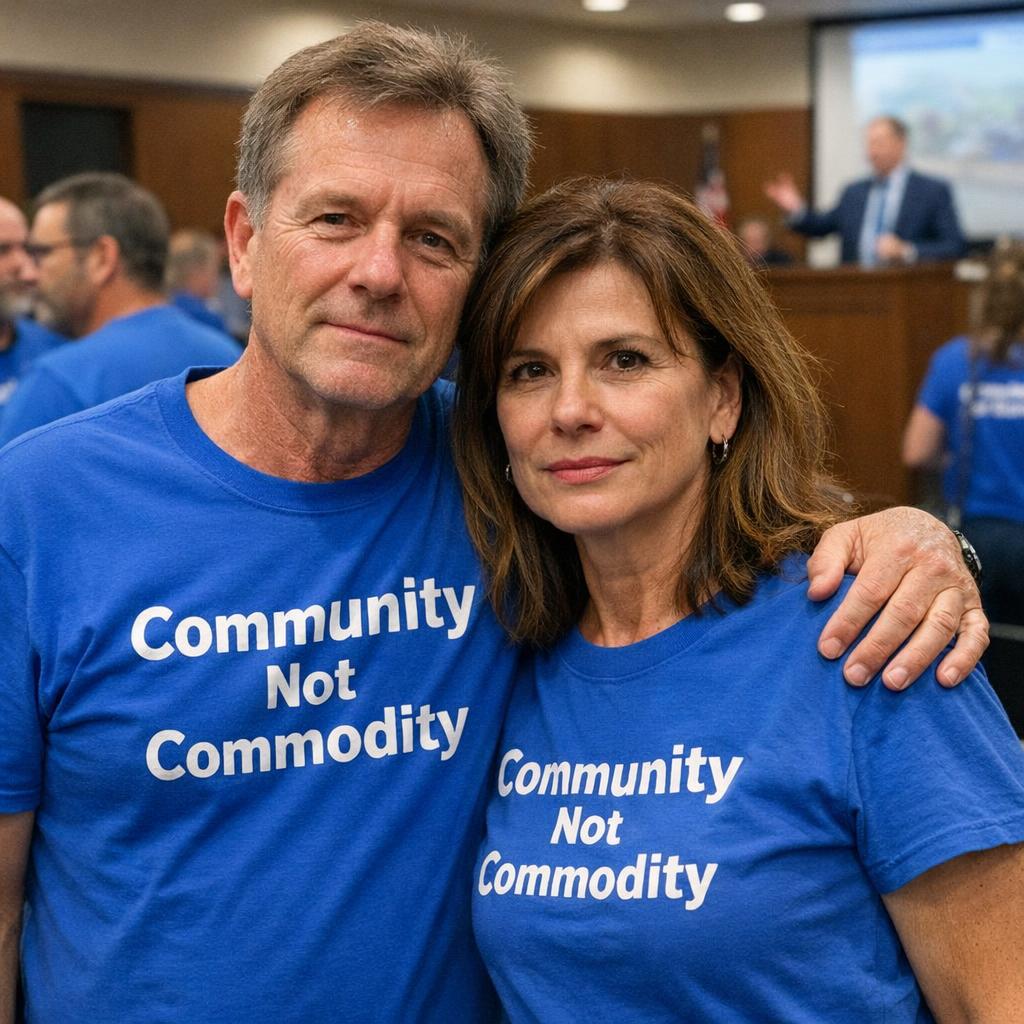 Image by RM AI
The Parking Lot Threat
The council meeting had barely ended when I found myself cornered in the dimly lit parking lot. Westbrook materialized between me and my car, his expensive cologne hanging in the humid evening air. Gone was the polished businessman from the podium—this was raw, unfiltered rage in a tailored suit. 'You've made this personal,' he hissed, stepping closer than comfort allowed. His face had turned an alarming shade of red, veins visibly pulsing at his temples. 'I've built developments in twelve counties, and I've never let one stubborn woman stop me.' The way he said 'woman' made my skin crawl, but I stood my ground, clutching my car keys between my fingers like a weapon. Frank was just yards away, talking with Elena, but I wanted to handle this myself. Westbrook's eyes narrowed as he continued, 'I don't know what Maribel told you, but she was delusional. Paranoid.' He practically spat the words. Something in me shifted then—a calm certainty replacing the fear I'd carried for months. I smiled, which clearly wasn't the reaction he expected. 'She was right about you,' I said, my voice steadier than I felt. 'And I have proof.' The flash of uncertainty that crossed his face was worth every sleepless night I'd endured. He recovered quickly, smoothing his tie with manicured fingers. 'Be careful, Lorna,' he said, his voice dropping to a whisper. 'Accidents happen to people who don't know when to back down.' As he walked away, I realized my hands were shaking—not from fear, but from anger. This man had terrorized Maribel in her final days, and now he thought he could do the same to me. What he didn't know was that I had something Maribel never got to use: a ticking clock that was about to run out on his entire operation.
 Image by RM AI
The Fire
The phone's shrill ring jolted me awake at 2:17 AM. I fumbled for it in the dark, heart already racing before I even heard Phyllis's panicked voice. 'Lorna! The shed—it's on fire!' I threw on clothes and sped to Maribel's house, my headlights cutting through the night as I ran every yellow light. From two blocks away, I could see the orange glow against the sky. By the time I screeched into the driveway, the shed was fully engulfed, flames licking twenty feet into the air. Neighbors stood in their robes and slippers while firefighters battled the blaze. I found Phyllis clutching her housecoat closed at her throat. 'I woke up to use the bathroom and saw the light,' she whispered. 'I knew it wasn't right.' The firefighters managed to contain it before it reached the house, but the shed—and everything in it—was gone. The next morning, the fire chief walked me through the charred remains, pointing to burn patterns and the unmistakable smell of gasoline. 'This wasn't an accident, ma'am,' he said, his face grim beneath his helmet. 'Someone wanted this place burned to the ground.' I nodded, numb but not surprised. I knew exactly who that someone was. Westbrook was getting desperate, trying to destroy any evidence Maribel might have hidden in the shed. What he didn't know was that the most damning evidence wasn't in the shed at all—it was safely tucked away with Victor, who was putting the finishing touches on his exposé. As I stood in the acrid smoke, watching investigators collect samples in little plastic bags, I realized something that made my blood run cold: if Westbrook was willing to commit arson, what else might he do in the eleven days we had left?
 Image by RM AI
The Decision to Publish
The charred remains of Maribel's shed changed everything. I stood in my kitchen the next morning, hands trembling around my coffee mug as Victor paced back and forth, his journalist instincts on high alert. 'We can't wait anymore, Lorna,' he said firmly. 'Westbrook just graduated from harassment to arson. Next time it might not be just the shed.' I nodded, feeling a strange mix of terror and relief wash over me. The waiting game that had consumed my life for months was finally ending. That afternoon, Frank, Elena, Victor and I spread everything across my dining room table like detectives in a crime show—Maribel's meticulous notes, copies of the forged deed, Keller's internal documents, my harassment log, and the fire chief's preliminary report with photos of the accelerant patterns. 'This is enough,' Victor said, his eyes gleaming with the righteous anger journalists get when they've found corruption worth exposing. 'I can have this ready in three days.' As I watched him carefully organize each piece of evidence into his leather portfolio, I felt Maribel's presence so strongly it made my throat tight. She'd fought this battle alone, in silence, documenting everything while pretending nothing was wrong. Now her voice would finally be heard. What I didn't realize then was that Westbrook had one final, desperate move to make—and it would come from a direction none of us saw coming.
 Image by RM AI
The Exposé
I'll never forget the morning Victor's exposé hit the newsstands. 'DEVELOPER'S DIRTY DEALS: Forgery, Harassment, and Environmental Concerns' blazed across the front page in bold black letters that felt like justice incarnate. My hands trembled as I read through the meticulously detailed account of Westbrook's tactics—the forged deed that had nearly stolen Maribel's home, the systematic harassment that had made her final months a nightmare, and the environmental corners he'd cut on previous projects. Victor had woven together my testimony with Elena's passionate community advocacy, Keller's insider revelations, and statements from dozens of others who'd faced Westbrook's bulldozer tactics. By noon, my phone was blowing up with notifications as national news outlets picked up the story. By dinner, Maribel's quiet battle had become a viral sensation, with social media users sharing outraged comments and tagging Westbrook Development in their posts. 'This is for you, Maribel,' I whispered, watching the view counter on the online version climb into the thousands. The validation felt overwhelming—after months of being dismissed as paranoid or difficult, the world finally saw what we were up against. What I didn't anticipate was how quickly Westbrook would respond—or how the exposure would force other players out of the shadows who had their own reasons for wanting this story buried.
 Image by RM AI
The Fallout
The morning after Victor's exposé hit the newsstands, it felt like the entire world had shifted on its axis. My phone wouldn't stop buzzing with notifications—friends, neighbors, and even strangers sending messages of support. The state attorney general's office announced they were launching a full investigation into Westbrook Development and the county officials mentioned in the article. I nearly spilled my coffee when I saw the breaking news alert. The bank financing Westbrook's project issued a carefully worded statement that they were 'reviewing the situation'—corporate-speak for 'we're running for the hills.' Most satisfying of all, Westbrook himself had vanished from public view. His company released a brief, terse statement denying all allegations, but the damage was done. The visitors to Maribel's house—those mysterious people with their fake showings and probing questions—stopped completely. No more cars idling at the curb, no more strangers with clipboards, no more 'accidental' deliveries. For the first time in months, I slept through the night without jolting awake at every creak and groan of the house. As I stood on Maribel's porch the next morning, watching the sun rise over her maple tree, I felt something I hadn't experienced since this whole ordeal began: peace. But a small voice in the back of my mind whispered a warning—men like Westbrook don't just disappear. They regroup, they plan, and they wait for the perfect moment to strike back.
 Image by RM AI
Month Eleven
Month eleven felt like emerging from a long, dark tunnel. I sat at Maribel's kitchen table, surrounded by stacks of legal documents, as my attorney confirmed what we'd been fighting for: Westbrook's financing window had officially expired. The forged deed had been flagged in the system, essentially rendering it useless. 'It's over, Lorna,' he said, a rare smile crossing his usually serious face. 'Maribel's plan worked.' I ran my fingers over her handwriting in the margins of her calendar—little notes about garden plans she'd never get to implement. Outside, the maple tree was beginning to show its fall colors, just as it had when this battle began nearly a year ago. The town council's unanimous rejection of Westbrook's proposal felt like sweet vindication after months of being dismissed as paranoid. His company was imploding spectacularly—investors pulling out, projects stalled, his reputation in tatters. Elena called that evening, breathless with excitement about her environmental group's progress in getting the wetlands protected. 'We're going to name the conservation area after Maribel,' she said, making my eyes well up. That night, I walked through each room of the house, touching doorframes and window sills, feeling Maribel's presence in every corner. For the first time, I allowed myself to think about what I might actually do with this house when the year was up—not as a burden to manage, but as a gift to honor. What I didn't realize was that Westbrook, cornered and desperate, had one final, devastating card to play.
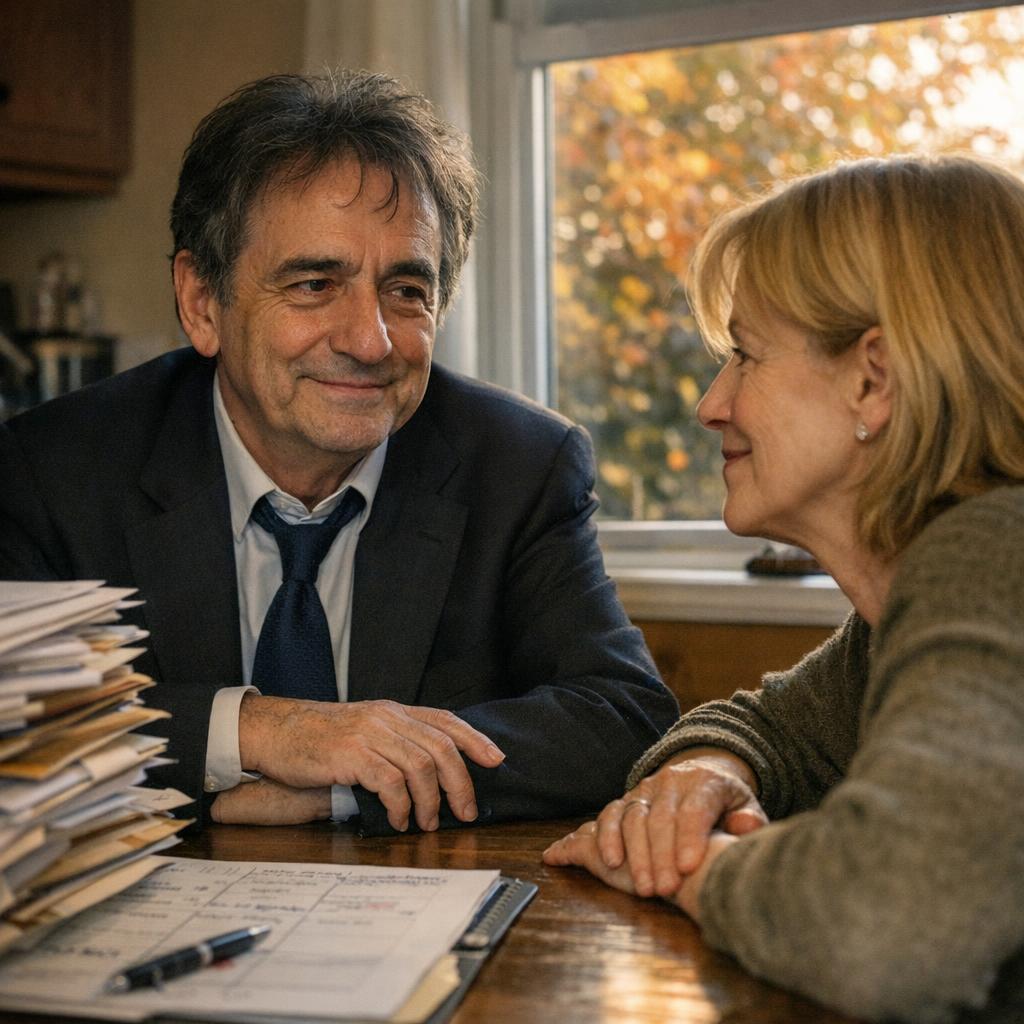 Image by RM AI
The Anniversary
One year to the day after I'd accepted Maribel's strange inheritance, I stood in her kitchen—now my kitchen—holding the house key in my palm like a talisman. The morning light streamed through windows that no longer needed to be constantly watched, illuminating dust motes that danced peacefully in the air. I ran my fingers along the countertop where I'd once found her hidden notebook, remembering how confused I'd been back then. Now, everything made perfect sense. Maribel hadn't left me a house—she'd entrusted me with her battle, carefully calculating the timing so I could win it without even knowing what game we were playing. The year wasn't about money or property values; it was about outlasting Westbrook's financing window, about letting time itself become our weapon. I smiled, thinking how brilliant she'd been. This quiet, supposedly reclusive woman had outmaneuvered a powerful developer and his army of suits simply by understanding that sometimes, winning doesn't require fighting—it just requires surviving. As I walked through each room, touching doorframes and window sills that now felt like old friends, I realized I'd grown to love this place not despite the battle it represented, but because of it. 'We did it, Maribel,' I whispered to the empty house that somehow didn't feel empty at all. What I didn't know then was that while our victory over Westbrook was complete, the secrets Maribel's house still held were only beginning to reveal themselves.
 Image by RM AI
New Beginnings
With Westbrook defeated and the one-year mark behind me, I stood in Maribel's garden—my garden now—and faced the question I'd been avoiding: what next? Frank and I had several heart-to-hearts about selling. 'We could use that money for retirement,' he'd suggested gently. But every time I walked through those rooms, I felt Maribel's presence guiding me toward something else. 'This house wasn't meant to be flipped and forgotten,' I told Frank one evening. 'It was meant to stand for something.' That's when the idea hit me like a bolt of lightning. Two weeks later, I was meeting with contractors about converting the living room into a meeting space and adding accessibility ramps. Elena nearly cried when I proposed partnering with her environmental group to create the Maribel Sanchez Community Center for Environmental Education. 'She would have absolutely loved this,' Elena whispered, squeezing my hand. Yesterday, I planted a maple sapling where the burned shed once stood—a symbol of new beginnings rising from destruction. As I patted the soil around its tender trunk, I found myself talking to Maribel as if she were standing right beside me. 'Thank you for trusting me with your battle,' I said softly. 'Your house is safe now. And so is your legacy.' What I didn't realize then was that the maple sapling wasn't the only thing I'd planted that day—I'd also planted the seeds for discoveries about Maribel's past that would soon change everything I thought I knew about my quiet, careful cousin.
 Image by RM AI