My Neighbor Left Me a Key in His Will. When His Family Saw What It Unlocked, They Went Silent.
My Neighbor Left Me a Key in His Will. When His Family Saw What It Unlocked, They Went Silent.
The Call That Changed Everything
The call came on a Tuesday morning while I was unloading the dishwasher, which is probably the most ordinary sentence I've ever written, but that's exactly how extraordinary things tend to start, isn't it? The voice on the other end introduced himself as David Morse, attorney-at-law, and asked if I was Susan Hale. I said yes, already mentally running through whether I'd forgotten to pay a parking ticket or something equally mundane. Then he said my neighbor, Mr. Barker, had passed away three weeks ago. I stopped mid-reach for a coffee mug. I hadn't even known he was sick. Mr. Morse continued in that careful lawyer voice they must teach in law school—measured, professional, revealing nothing accidentally. He told me Mr. Barker had named me in his will. I actually laughed, which I immediately regretted because it sounded so inappropriate. But honestly, it felt like a mistake, like he'd confused me with someone else. I'd lived next door to the man for fourteen years, sure, but we weren't close. We waved over the fence. We made small talk about the weather. That was it. Why on earth would he leave me anything? Mr. Morse asked if I could come to his office on Friday at two o'clock for the reading of the will. I started to say I didn't think I needed to be there, that surely this was some kind of error, but he cut me off gently. The lawyer said Mr. Barker had specifically requested I attend in person, and his tone made it sound less like a request and more like a final instruction from the dead.
 Image by RM AI
Fourteen Years of Waving Over the Fence
After I hung up, I sat at my kitchen table for a long time just staring at the business card Mr. Morse had promised to email me—though I'd already scribbled his number on the back of an envelope. I kept trying to piece together some reason, some moment that would explain this. Mr. Barker had moved in right after my divorce was finalized, back when the house still felt too big and too quiet. He was polite, always nodded hello, kept his yard neat. We'd chat occasionally when we both happened to be outside—him trimming his hedges, me weeding the flower beds. He never talked about family, and I never asked. That seemed to be the unspoken agreement between us: friendly but not friends. I brought him cookies once at Christmas. He thanked me and mentioned he didn't get many visitors. Another time, I signed for a package when he wasn't home. Once, maybe twice, I'd helped him carry in groceries when I saw him struggling with too many bags. Standard neighbor stuff. Nothing remotely personal. Nothing that would warrant being remembered in a will. I tried to remember the last time I'd even seen him—maybe a month before he died? He'd waved from his driveway. I'd waved back. That was it. I had helped him once or twice with small things, but never anything that would explain why I was now sitting in my kitchen staring at a lawyer's business card.
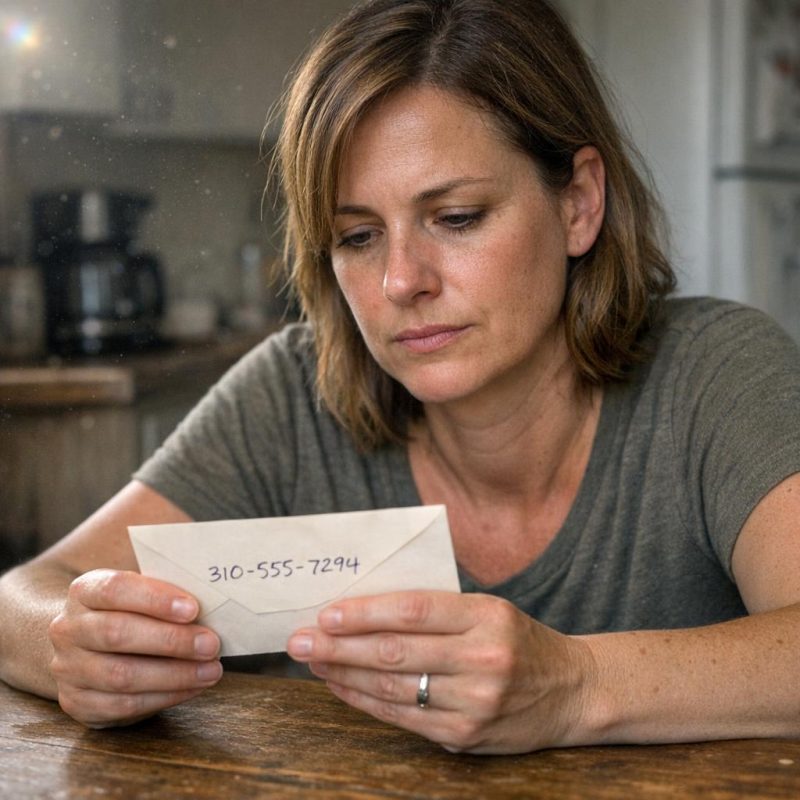 Image by RM AI
The Conference Room
The law office was one of those renovated Victorians downtown, all dark wood and tall windows. I arrived ten minutes early because that's what you do when you're anxious and have no idea what to expect. The receptionist led me down a narrow hallway to a conference room where four people were already seated around a glossy mahogany table. I recognized none of them, though I assumed they were Mr. Barker's family—the relatives I'd never once seen visit him in fourteen years. The lawyer, Mr. Morse, stood and introduced me, gesturing to an empty chair. The two older ones—a man and a woman, both dressed like they'd come from somewhere important—barely glanced at me. The younger woman, maybe late twenties, looked me up and down with open curiosity. I felt immediately out of place in my department store blouse and the blazer I'd pulled from the back of my closet. Nobody smiled. Nobody offered a greeting. The air in that room was thick with something I couldn't name yet—resentment, maybe, or suspicion. I sat down carefully, folding my hands in front of me like I was about to be interrogated. Mr. Morse shuffled some papers, cleared his throat, and was just beginning to speak when the older man leaned forward in his chair. Wayne's eyes locked on me and he said, 'Why is she here?' before the lawyer had even sat down.
 Image by RM AI
Before Family
Mr. Morse didn't flinch. He just looked at Wayne—I'd learn his name soon enough—and said in that same measured tone that everyone present had been named in the will and had a legal right to attend. Wayne sat back, but his jaw was clenched so tight I could see the muscle working. The woman beside him, who I assumed was his wife, touched his arm lightly, but her expression was just as cold. The younger woman kept staring at me like I was a puzzle she couldn't solve. I wanted to explain that I didn't know why I was there either, that this was as confusing for me as it apparently was for them, but I kept my mouth shut. Mr. Morse began reading from the document in front of him, starting with the standard legal language that I barely absorbed. Then he said that Mr. Barker had requested the bequests be read in a specific order, and that my name would come first, before the family inheritance. The temperature in the room seemed to drop ten degrees. I felt my face flush hot. I hadn't asked for this. I hadn't asked for any of it. Wayne's knuckles went white where he gripped the edge of the table. His wife's mouth pressed into a thin, bloodless line. When the lawyer said my name would be read first, Tricia crossed her arms so tightly I thought her blouse might tear.
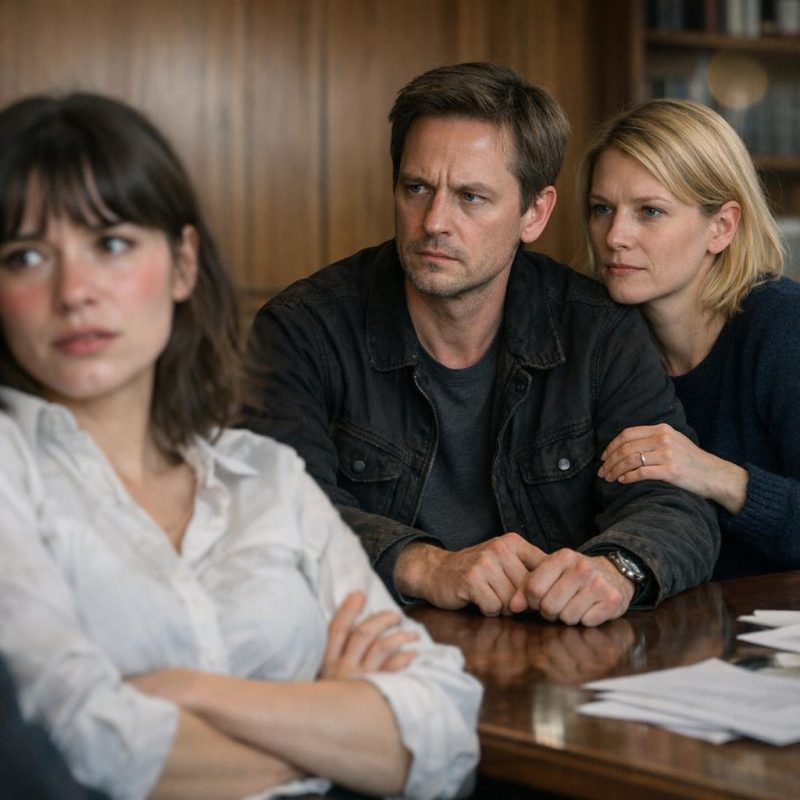 Image by RM AI
The Envelope
Mr. Morse reached into a leather folder and pulled out a small manila envelope, the kind you might use for a greeting card. Next to it, he placed a single brass key on a thin ring. Both items slid across the polished table toward me, and I just stared at them. The envelope had my name written on it in shaky handwriting—Mr. Barker's handwriting, I assumed. The key looked old, tarnished in spots, with a simple round head and a single tooth. I didn't reach for them right away. I think part of me still believed that if I didn't touch them, this would all turn out to be some administrative mistake. But everyone was looking at me. Waiting. So I picked up the envelope first, feeling the slight weight of paper inside, and then the key. It was warm from Mr. Morse's hand, or maybe that was just my imagination. The room was so quiet I could hear someone's watch ticking. I looked up at the lawyer, silently asking what I was supposed to do with these things. He nodded toward the envelope, indicating I should open it. I started to break the seal, my fingers clumsy and uncertain. The second my fingers touched the envelope, Wayne muttered something under his breath about manipulation.
 Image by RM AI
The Handwritten Note
I froze, the envelope half-open in my hands. Mr. Morse shot Wayne a look that could've frozen water, but said nothing. I pulled out a single piece of notebook paper, folded twice. The handwriting was the same as on the envelope—shaky but deliberate, like it had been written by someone who knew their time was running out. I read it silently first, my eyes scanning the words twice because they didn't make sense the first time. Then Mr. Morse asked, quietly, if I would read it aloud for the record. My voice came out thinner than I intended. The note instructed me to go to Mr. Barker's house—apparently still unsold, still holding his belongings—and use the key to open the false drawer in his desk in the study. It said I would know which desk. It said I would understand when I saw what was inside. And then, at the bottom, one more line that made my stomach turn over. I read it slowly, trying to keep my voice steady. The note said I was chosen because I was the only person who ever noticed what was wrong and did not look away—but I had no idea what he meant.
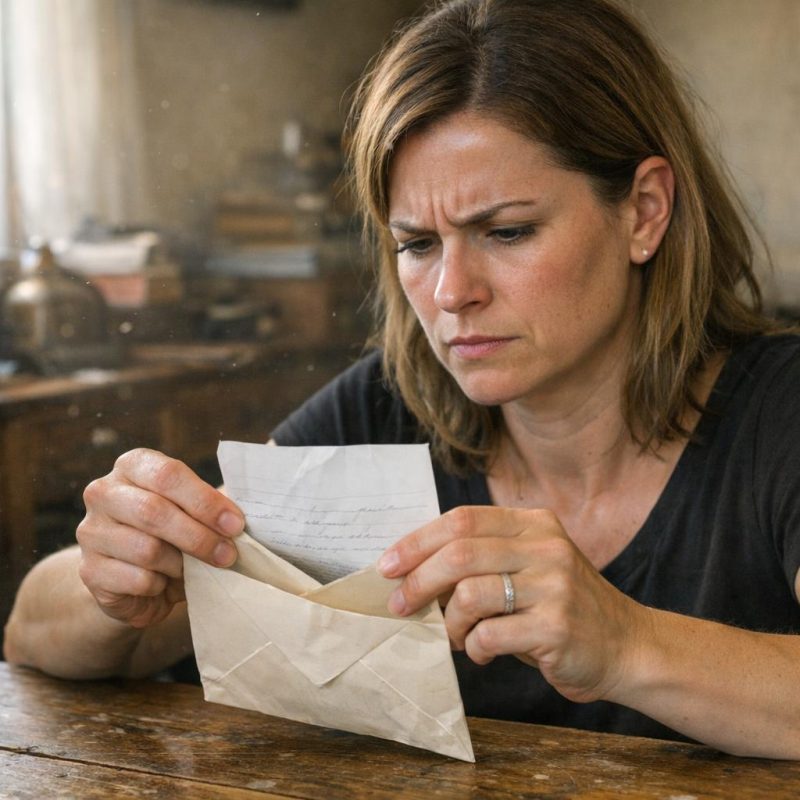 Image by RM AI
The Shift in the Room
I looked up from the paper, my hands still trembling slightly, and scanned the faces around the table. I expected more anger, maybe an outburst from Wayne or a sharp comment from his wife. Instead, I saw something entirely different. Wayne had gone pale. Not flushed with rage, but actually pale, like the blood had drained straight out of his face. His wife Tricia had uncrossed her arms and was now gripping the edge of the table, her eyes locked on the note in my hand. Even the younger woman—April, I'd later learn—looked stricken, her earlier curiosity replaced with something that looked uncomfortably close to panic. The air in the room had changed. It wasn't just tense anymore. It was afraid. Mr. Morse was watching them too, I noticed, his expression carefully neutral but his attention sharp. Nobody spoke. Nobody moved. The silence stretched out so long I wondered if I was supposed to say something, to break whatever spell had fallen over the room. But I had no idea what to say. I didn't understand what was happening. I didn't understand what Mr. Barker had noticed, or what I'd supposedly seen. For the first time since I'd entered the room, the relatives didn't look angry. They looked frightened.
 Image by RM AI
Not a Gift
I folded the note carefully and placed it back in the envelope, then set both the envelope and the key in my purse. My hands were still shaking. Mr. Morse continued reading the rest of the will—something about the house going to Wayne, investments split between Tricia and April—but I barely heard any of it. My mind was racing, trying to connect dots that didn't seem to exist. What had I noticed? When? I ran through every interaction I'd ever had with Mr. Barker, every wave over the fence, every brief conversation about weather or lawn care. Nothing stood out. Nothing seemed wrong. But the way the family was looking at me now—wary, calculating, scared—told me that they knew exactly what he meant. They knew what was in that desk. And whatever it was, it was bad enough to turn three hostile strangers into three terrified ones in the span of a single sentence. The realization came to me slowly, then all at once, like cold water down my spine. Mr. Barker hadn't left me a keepsake. He hadn't left me something to remember him by. He'd left me evidence. He'd left me proof. It hit me so suddenly I almost couldn't breathe: Mr. Barker had not left me something sentimental. He had made me a witness.
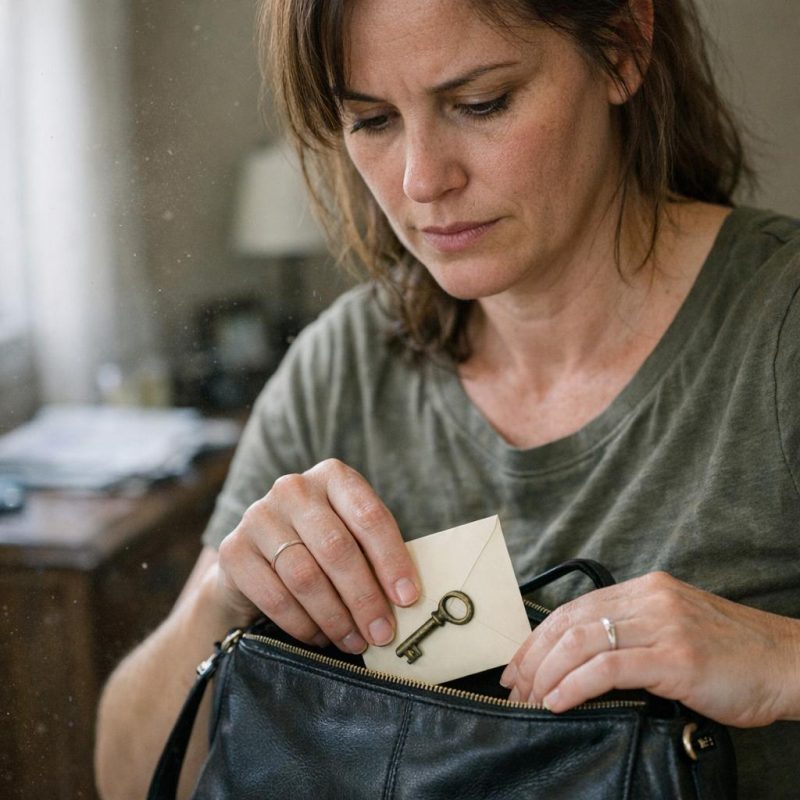 Image by RM AI
Wayne Objects
Wayne stood so fast his chair scraped against the floor, the sound sharp enough to make me flinch. 'This is ridiculous,' he said, his voice tight and controlled in that way people get when they're barely holding it together. 'My father was ninety-two years old. He was clearly not in his right mind when he made these arrangements.' Mr. Morse looked up from the papers, his expression professionally neutral. 'Mr. Barker was examined by two physicians and found to be of sound mind when this will was drafted,' he said calmly. 'I have their signed statements.' Wayne's jaw worked like he was chewing something bitter. 'I don't care what some doctors said. This whole thing—giving keys to neighbors, talking about hidden drawers—it's insane.' Tricia touched his arm, but he shook her off. 'We need to stop this process,' Wayne continued. 'Right now. Nothing else should happen without a full review.' The thing that got me was how he said it. Not angry, exactly. More desperate. Like he was running out of time to stop something that had already been set in motion. Wayne stood so fast his chair scraped the floor and said this was ridiculous, that none of this should continue without further review.
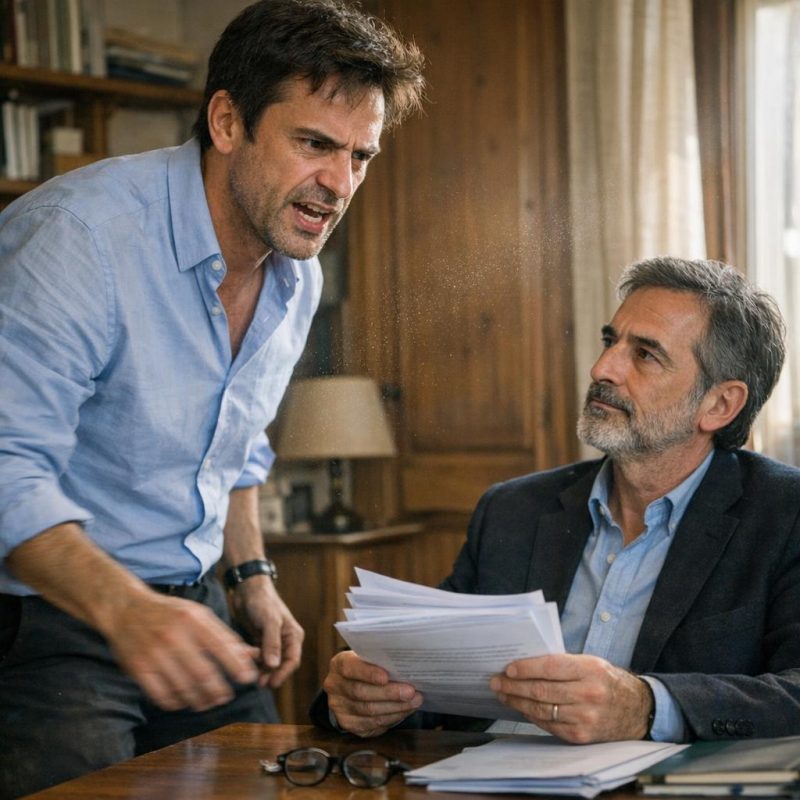 Image by RM AI
The Granddaughter's Silence
While Wayne paced and argued with the lawyer about competency evaluations and proper procedures, I found myself watching April instead. She hadn't moved since her grandfather's note had been read. Hadn't spoken. Hadn't even shifted in her seat. Her hands were folded in her lap, fingers laced together so tightly I could see the white knuckles from across the table. Her face had gone pale—not just pale, but ashen, like someone who'd just witnessed something terrible and was still processing it. Every time Wayne raised his voice, her shoulders tensed slightly, but she never looked at him. Never looked at any of us, really. She just stared at a spot somewhere in the middle of the conference table, her breathing shallow and careful. It reminded me of how my daughter used to sit during thunderstorms when she was little, trying to make herself small and still until the danger passed. Tricia noticed too. She kept glancing at April with this strange expression—part concern, part warning. Like she wanted to comfort her but was afraid of drawing attention to her instead. April, pale as paper, stayed very still, as if moving might shatter something fragile in the air.
 Image by RM AI
The False Drawer
Mr. Morse waited until Wayne finally sat back down, then turned to me with a question that made the room go quiet. 'Mrs. Hale, did your neighbor ever mention anything to you about a false drawer? Or hidden compartments in his desk?' I opened my mouth to say no, because honestly, Mr. Barker and I had never talked about anything like that. We talked about weather and lawn care and occasionally his complaints about the squirrels getting into his bird feeder. But then something caught in my memory—a fragment of a conversation I'd completely forgotten until that moment. 'Wait,' I said slowly. 'I'm not sure. Maybe?' Wayne leaned forward. 'What does that mean, maybe?' There was an edge to his voice now, something sharp and urgent. Mr. Morse held up a hand. 'Let her think, please.' I closed my eyes, trying to pull the memory into focus. It was winter. February, I think. Cold. I'd been returning something—what was it? A casserole dish. I said no, but suddenly I remembered something from the previous winter that made my stomach turn.
 Image by RM AI
Too Much Paper and Not Enough Trust
I'd knocked on Mr. Barker's back door because his front steps were icy, and he'd called for me to come in. The house had been warm, almost too warm, the way older people keep their thermostats. I'd found him in his study, surrounded by file folders and loose papers spread across every surface. He'd looked frustrated, maybe even a little distressed, shuffling through documents like he couldn't find what he needed. 'Sorry,' I'd said. 'I can come back.' But he'd waved me in, set down the papers he was holding. 'No, no. I'm just dealing with too much paper and not enough trust.' He'd said it lightly, almost like a joke, but his eyes had been serious. He'd looked at me for a long moment then, studying my face in a way that had made me uncomfortable. Then he'd asked me if I knew what it was like to realize you'd made a terrible mistake and spent years compounding it. I'd thought he meant something about filing or organization. Maybe even about his wife, who'd died a decade earlier. So I'd said something generic and comforting and left. At the time I thought it was just an old man's comment. Now it sounded like a warning.
 Image by RM AI
To the House
Mr. Morse closed the folder in front of him and stood up. 'I think we need to go to the house,' he said. 'Right now.' Wayne started to protest again, but the lawyer cut him off. 'Mr. Barker's will specifically requires that the desk be opened in the presence of all beneficiaries and Mrs. Hale. That includes today. Not next week, not after further review. Today.' Tricia stood slowly, her face unreadable. April finally moved, pushing her chair back with trembling hands. We all filed out of the conference room and down to the parking lot, and I remember thinking how surreal it felt—like we were going on some sort of field trip, except instead of excitement there was just this heavy, suffocating dread. Mr. Morse led the way in his sedan. I followed in my car. Wayne and Tricia took their Mercedes, and April drove separately in a small Honda. The whole convoy felt absurd and ominous at the same time. Wayne objected all the way there, talking about privacy and procedure, but he sounded less offended than afraid of being late.
 Image by RM AI
The Study
The house looked exactly as it had the last time I'd seen it, just before Mr. Barker died. Same neat lawn, same dark shutters, same brass knocker on the front door. Mr. Morse had a key, of course. We all followed him inside, through the foyer with its old-fashioned wallpaper and into the hallway that led to the study. I'd only been in that room once before—that day in February when I'd found him surrounded by papers. Wayne and Tricia had never been invited in, I realized suddenly. In all the years they'd visited, Mr. Barker had kept them in the living room or the kitchen. Never the study. That felt significant somehow, though I couldn't have told you why. The study was small and wood-paneled, with built-in bookshelves and a massive oak desk that dominated the space. There were framed photographs on the walls—Mr. Barker in his younger years, his wife, April as a child. The room smelled faintly of old wood and paper, and I realized I was the only person there who had ever been invited inside.
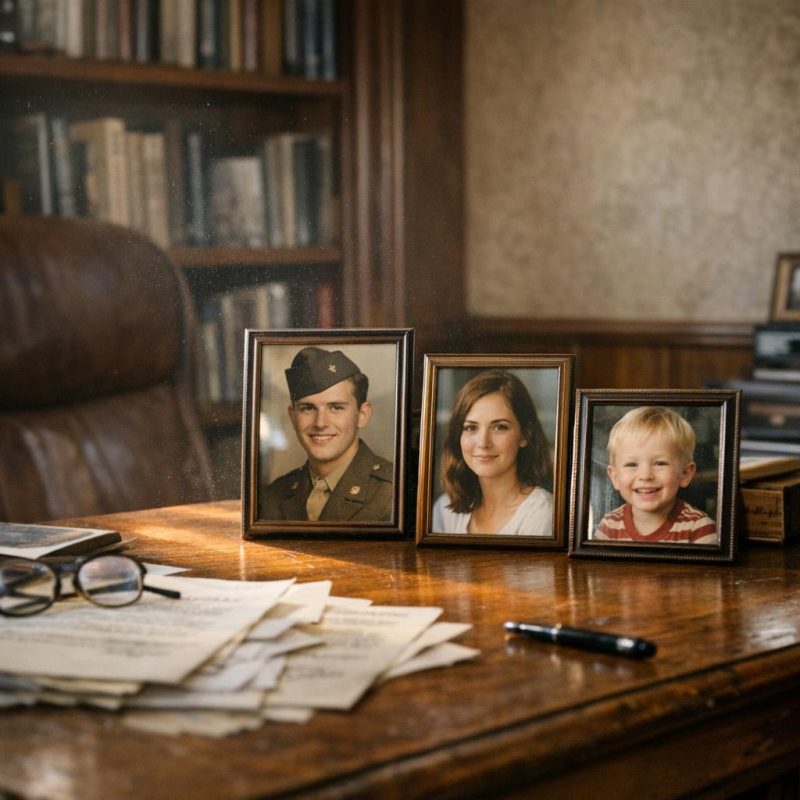 Image by RM AI
Unlocking the Desk
Mr. Morse held out his hand, and I fumbled in my purse for the key Mr. Barker had left me. It felt heavier now than it had in the conference room, weighted with meaning I still didn't fully understand. The lawyer took it carefully, almost reverently, and approached the desk. The lock was visible on the front, just below the writing surface—a small brass mechanism that looked original to the piece. The key slid in smoothly, and when Mr. Morse turned it, the click echoed in the silent room. He pulled open the main drawer first, revealing pens and paper clips and the mundane debris of a life. Then he ran his fingers along the inside edge of the drawer, pressing and feeling. Wayne had gone very still. Tricia was holding her breath. April had positioned herself near the door, like she was preparing to run. Mr. Morse's fingers found something, and there was a soft snapping sound. A false bottom shifted, then slid aside. It took only a minute to find the false drawer, and when it slid open, Tricia actually gasped.
 Image by RM AI
The Contents
Inside the hidden compartment were things I hadn't expected. Three small flash drives in a clear plastic case. A stack of canceled checks bound with a rubber band. Property documents with official-looking seals. And on top of everything, a sealed envelope, thick and cream-colored. Mr. Morse lifted each item carefully, setting them on the desk's surface like evidence at a crime scene. Which, I suppose, they might have been. Wayne made a sound—not quite a word, more like air being forced out of his lungs. Tricia had pressed one hand to her mouth. April was crying silently now, tears running down her pale cheeks. I stood there feeling like I'd stumbled into someone else's nightmare, still not understanding what I was looking at. Mr. Morse picked up the envelope last, turning it over in his hands. The paper was expensive, the kind you use for important documents. There was writing on the front in Mr. Barker's shaky handwriting, and the lawyer read it aloud: 'To whomever finally opens this.' The lawyer lifted the letter carefully, as if it might burn his hands, and said it was addressed to 'Whomever finally opens this.'
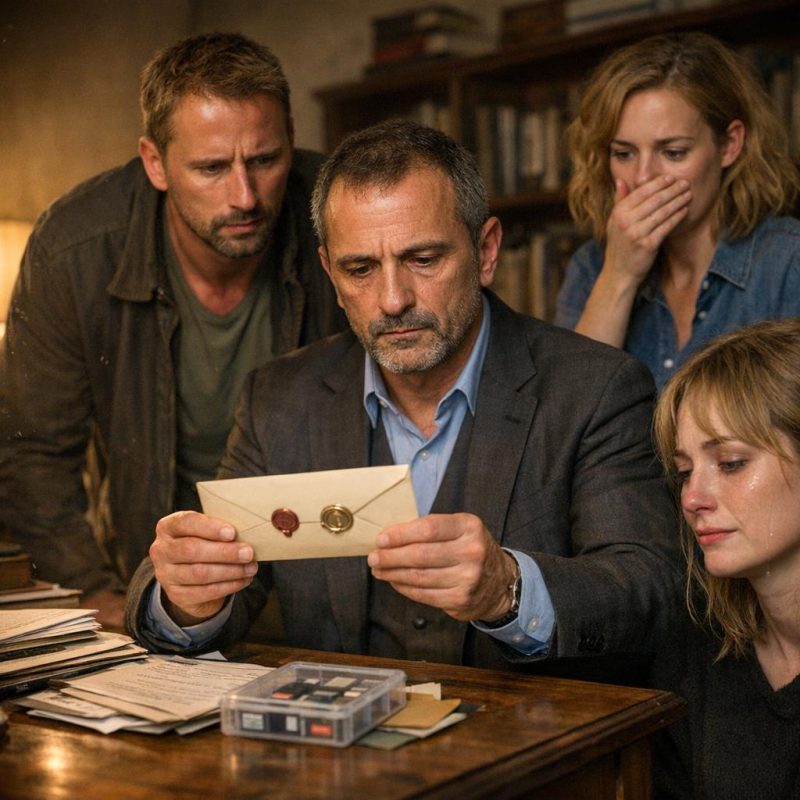 Image by RM AI
The Letter Begins
Mr. Morse unfolded the letter with careful fingers, his lawyer's composure slipping just slightly. I could see his hands weren't quite steady. He cleared his throat once, then began reading aloud in that measured courtroom voice lawyers use when they want everyone to hear clearly. 'I am writing this because I need someone to know the truth,' the letter began, 'and because I fear what might happen if I don't.' The words were Mr. Barker's, but hearing them spoken in that quiet office made them feel more real somehow. More urgent. He went on to explain that he'd spent months keeping detailed records, documenting things he'd hoped he was imagining. The lawyer's voice dropped lower as he read the next part. Mr. Barker had tracked discrepancies, noticed patterns, and eventually reached a conclusion he hadn't wanted to face. I glanced at Wayne, who'd gone absolutely rigid in his chair, his jaw clenched so tight I could see the muscle jumping. Tricia had her arms crossed over her chest like she was trying to hold herself together. April was staring at the floor, tears dripping onto her folded hands. Mr. Morse continued reading, and the next words hit the room like a physical blow. For nearly three years, Mr. Barker had suspected Wayne of stealing from him in small, careful ways.
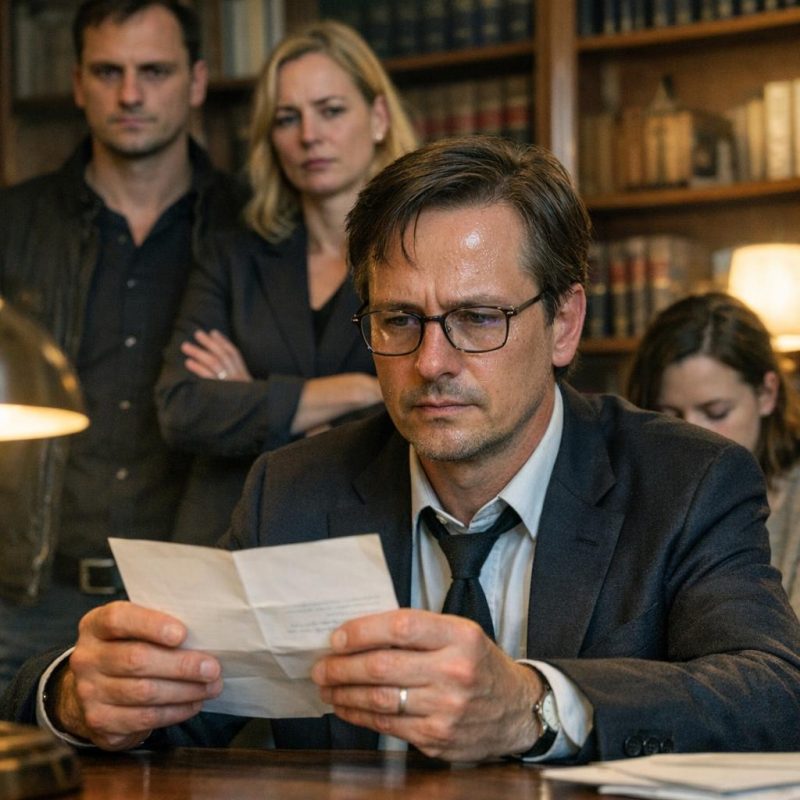 Image by RM AI
Missing Cash and Unexplained Withdrawals
The lawyer kept reading, his voice steady even as the contents grew darker. At first it had been cash, Mr. Barker wrote. Twenty dollars here, fifty there, always from the envelope he kept in his desk drawer for grocery shopping and incidentals. He'd started marking the bills with tiny notations in the corner, recording serial numbers in a little notebook. When the marked bills disappeared, he knew he wasn't imagining things. Then came unauthorized ATM withdrawals, always just under the threshold that would trigger a bank alert. Two hundred dollars every week or so, never enough to seem catastrophic but adding up to thousands over months. I felt my stomach turn as Mr. Morse read the dates and amounts Mr. Barker had meticulously documented. Wayne had apparently learned the PIN somehow, maybe by watching over his father's shoulder, maybe by going through his wallet while he slept. The old man had changed it twice, and each time the withdrawals stopped for a few weeks before resuming. He'd even gone to the bank in person once to inquire, but Wayne had accompanied him that day and explained to the teller that his father sometimes forgot making withdrawals. I watched Wayne's face as the lawyer read this part. He wasn't denying anything, just sitting there with his hands gripped together. Then came the pressure to sign papers he was told were routine, and I felt my chest tighten.
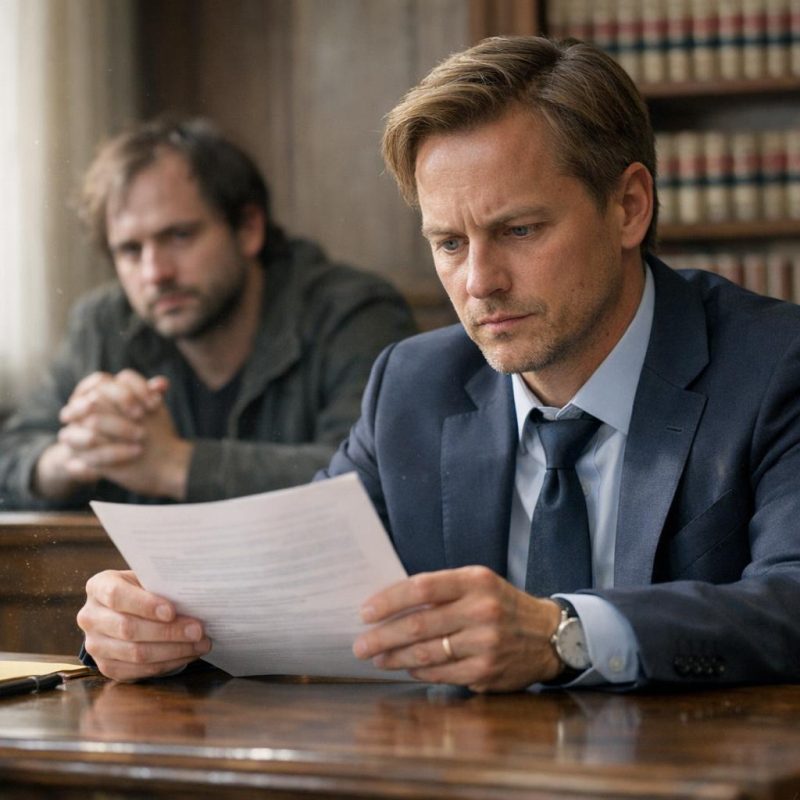 Image by RM AI
Pretending to Forget
This was the part that broke my heart, honestly. Mr. Morse read slowly, letting each word sink in. Mr. Barker wrote that he'd realized his family expected him to be confused, so he'd started giving them exactly what they expected. He played up his forgetfulness, asked the same questions twice, pretended not to remember conversations from the day before. The more muddled he seemed, the more carelessly they spoke around him. Wayne and Tricia started having entire conversations in his presence as if he weren't there or couldn't understand. They'd discuss finances, property values, timelines for 'when we can finally move forward with things.' I thought about all those afternoons I'd seen Mr. Barker on his porch, that sharp look in his eyes that didn't match the frail image everyone else seemed to see. He'd been perfectly lucid, perfectly aware, and playing a role to protect himself. Or at least to gather evidence. The lawyer's voice caught slightly as he read the next part. Mr. Barker described the loneliness of pretending to lose yourself while everyone around you celebrated your decline. He wrote about hearing Tricia tell someone on the phone that it wouldn't be much longer now, that he was 'really going downhill fast.' He wrote that he began acting confused so the family would grow careless in front of him, and I realized how alone he must have felt.
 Image by RM AI
The Recorder
The next section explained what I'd been wondering since we opened that desk drawer. Mr. Barker had purchased a small digital recorder, the kind that looks like a pen, and he'd kept it in his shirt pocket during family visits. He'd recorded everything. Conversations about moving him to 'managed care' so Wayne could rent out the house. Discussions about what the property was worth, what they'd do with the proceeds, how they'd split everything. Tricia's voice apparently featured prominently, talking about renovations she wanted to make to her own kitchen 'once this is settled.' Wayne discussing investment opportunities he was researching. The recorder had captured it all, and Mr. Barker had transferred the files to those flash drives on the table in front of us. He'd made copies of every suspicious document Wayne had asked him to sign. He'd photographed the checks, recorded every withdrawal, kept a diary of dates and times and conversations. The letter explained his methodology in calm, precise detail, the work of someone who knew he needed ironclad evidence. Someone who knew he'd only get one chance to be believed. He made copies of everything, and suddenly the flash drives on the table looked less like clutter and more like ammunition.
 Image by RM AI
The House Transfer
Mr. Morse picked up one of the official-looking documents from the desk, studying it as he continued reading. The property transfer paperwork was the worst of it, Mr. Barker wrote. Wayne had brought papers for him to sign on three separate occasions over the past year, each time presenting them as something routine. The first batch was supposedly for updating the homeowner's insurance after the company changed underwriters. The second was described as a property tax reassessment form that needed a signature. The third, just two months before Mr. Barker died, was allegedly a utility easement for the city to access the gas line. But they weren't any of those things. They were quit-claim deeds, transfer of ownership documents, paperwork that would have signed the house over to Wayne with Mr. Barker retaining only a life estate that would expire upon his death. Mr. Barker had signed the first set before he realized what was happening. But then he'd had copies made, consulted with a different attorney in the next county, and started refusing to sign anything else. He told Wayne his hands were shaking too much, that his arthritis was bad that day, always an excuse. The paperwork had been disguised as maintenance authorizations and insurance forms, and I felt sick.
 Image by RM AI
April Breaks
That's when April broke. She'd been crying quietly this whole time, but suddenly she let out this awful sob that made everyone turn. 'He told us Grandpa couldn't remember things,' she gasped between tears, looking at her father with something like horror. 'He said Grandpa was confused all the time, that he needed help managing everything.' Her voice was shaking, words tumbling out faster. 'I believed him. I thought we were helping. I thought Grandpa was getting worse and Dad was taking care of things because someone had to.' Tricia reached for her, but April pulled away. She looked at Mr. Morse with red, swollen eyes. 'I didn't know about any of this. I swear I didn't know about the house or the withdrawals or any of it.' The lawyer nodded slowly, making a note on a legal pad. He said something about contacting the police, about a Detective Patricia Lim who specialized in elder fraud cases. Wayne finally spoke then, just one word: 'Don't.' But Mr. Morse ignored him and pulled out his phone. April was still crying, saying over and over that she just thought her grandfather was sick, that she'd trusted her father. She said she didn't know about the house, but her voice cracked on the word 'know,' and I wasn't sure I believed her.
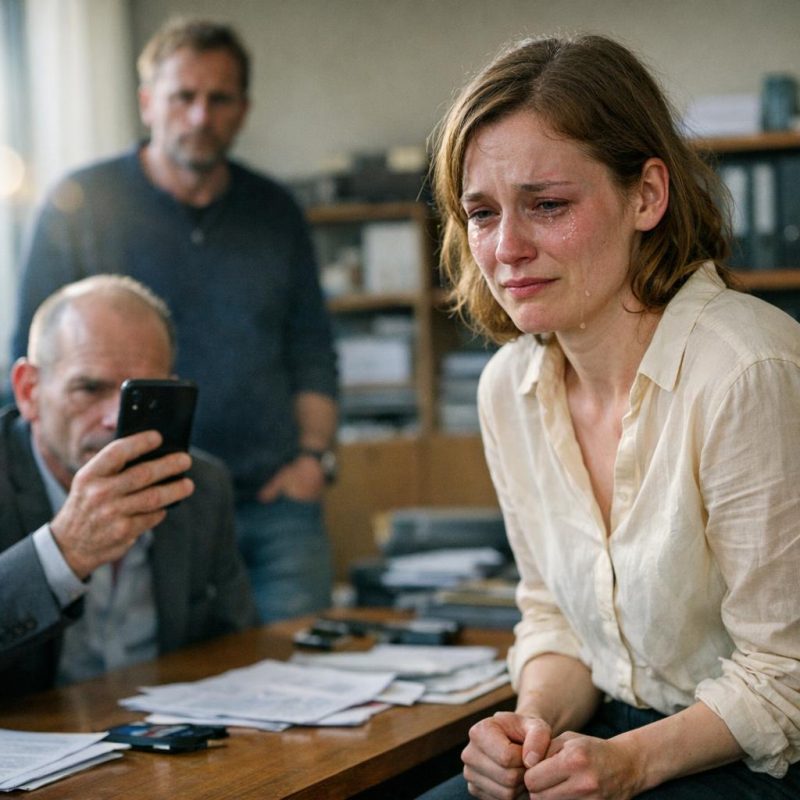 Image by RM AI
Why Me
Mr. Morse had reached the final section of the letter now. This part was addressed to me directly. 'To Susan Hale,' he read, 'who has probably been wondering why a near-stranger would leave her a key and a burden she never asked for.' My throat felt tight. Mr. Barker wrote that he'd needed someone outside the family, someone Wayne couldn't manipulate or threaten into silence. Someone who had no stake in the inheritance and therefore no reason to cover anything up. He'd watched me for months, he admitted, noting how I kept to myself, how I'd never once asked him for anything. How I'd helped with small things, like bringing in his trash cans or mentioning when the forecast called for ice, without making a production of it or expecting anything in return. He wrote that Wayne had noticed too. The lawyer paused, then picked up a second sheet of paper that had been tucked beneath the letter. It was dated from about four months ago, just a few lines in Mr. Barker's handwriting. He'd apparently overheard Wayne and Tricia talking in the kitchen, thinking he was napping in his chair. Wayne's voice, low and irritated, saying they needed to be more careful. Tucked beneath the letter was a note describing the day Wayne told Tricia that 'the neighbor woman notices too much.'
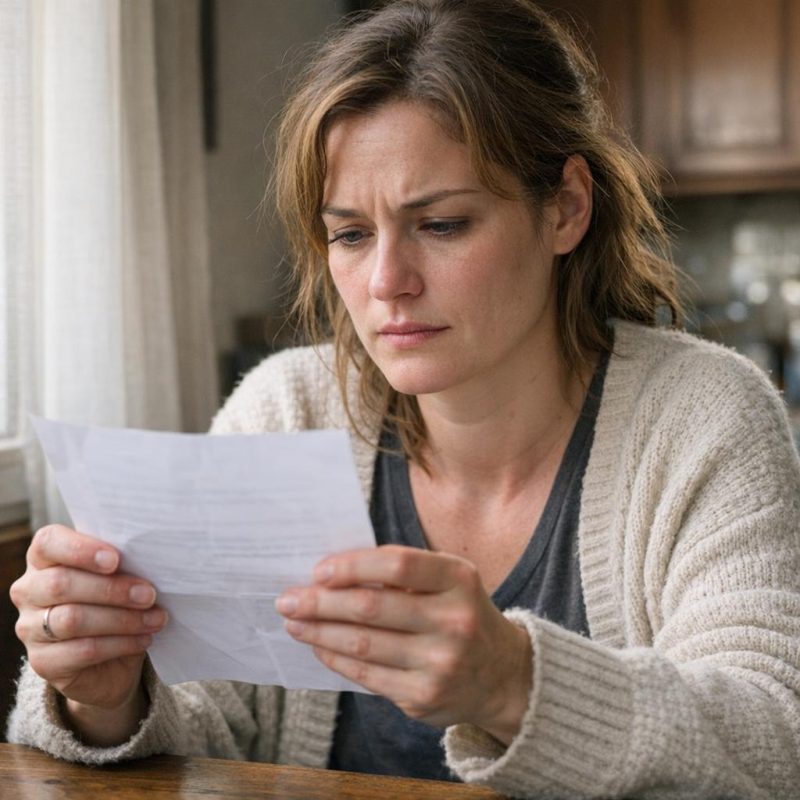 Image by RM AI
The Pharmacy Envelope
The final page was the one that made me understand everything. Mr. Morse read it quietly, almost gently. Mr. Barker wrote about a day I'd almost forgotten, maybe three years back. A pharmacy envelope had been delivered to my house by mistake, prescription bottles with his name on them. I'd walked it over that same afternoon, and when he'd answered the door, I'd noticed he looked tired. More than tired—defeated somehow. So I'd asked if he was all right. Not the casual 'how are you' people say without wanting an answer, but an actual question. I'd stood there on his porch and waited for a response. He'd said he was fine, just a long day, but he'd looked at me with this grateful expression I hadn't understood at the time. Now I knew. It was probably the same week Wayne had brought over those first property transfer papers. The same week he'd discovered cash missing from his desk drawer. The same week he'd started to realize his own son was stealing from him. And I'd asked if he was all right like a person who actually cared about the answer. Mr. Morse's voice was barely above a whisper as he read the last line. He wrote that I was the only person who had asked him that without also asking for access, signatures, or keys.
 Image by RM AI
Dangerous Enough to Be Chosen
Mr. Morse turned to the final page of the letter, and I could see his expression shift. He glanced at me for a moment, then continued reading aloud. Mr. Barker had written that he knew I'd seen things—the late-night visits from Wayne, the way Tricia watched me sometimes with that calculating look, the strained conversations they'd have on his porch that would go silent when I walked past. He wrote that I'd witnessed enough to piece things together, even if I hadn't realized what I was seeing. But here was the part that made my chest tighten. He wrote that I'd also been kind enough to never push, never pry, never turn those observations into gossip or ammunition. When Wayne had come to my door asking about his father's habits, I'd said I minded my own business. When Tricia had tried to pump me for information about his health, I'd politely redirected. I hadn't done it strategically—I'd just done it because it felt right. But Mr. Barker had noticed. He'd noticed everything. Wayne's face had gone from pale to deep red, his jaw clenched so tight I thought I heard his teeth grinding. Tricia sat perfectly still, but her hands were gripping the edge of her chair. 'She saw enough to be dangerous to them,' he wrote, 'and kind enough to ask without humiliating me. That is why she gets the envelope.'
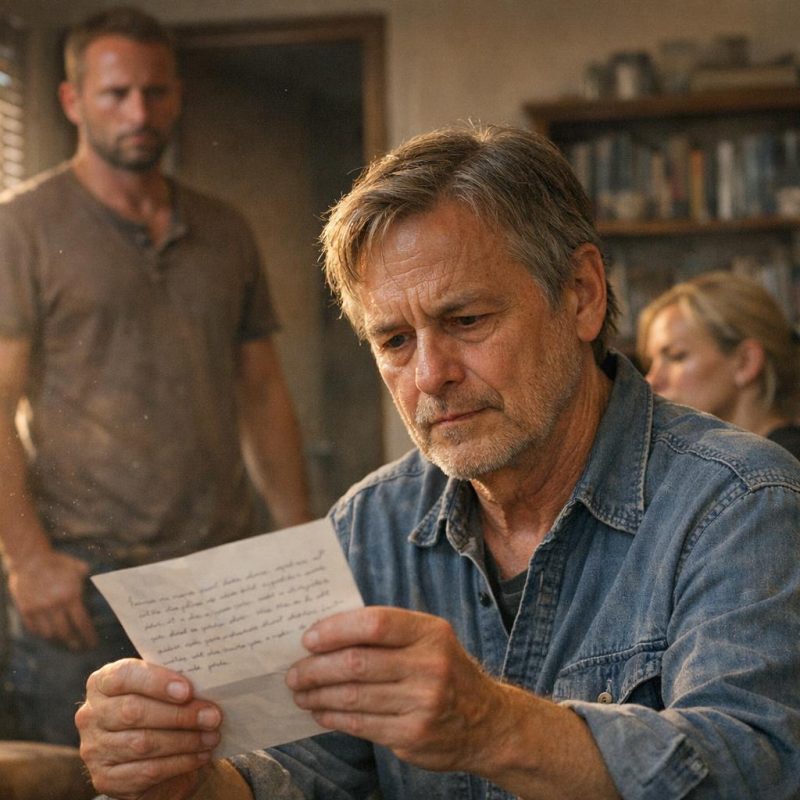 Image by RM AI
Wayne Demands His Lawyer
Wayne shot to his feet so fast his chair scraped against the hardwood floor. 'This is slander,' he said, his voice shaking with rage. 'You can't—he was confused, he was sick, he didn't know what he was saying.' Mr. Morse closed the folder calmly and looked at Wayne without flinching. 'Your father was of sound mind when he made this will,' he said. 'I assessed him personally. And these aren't accusations, Mr. Barker. These are documented transactions.' Wayne's face was now a dark, mottled red. 'I need my own lawyer. I'm not saying another word without representation.' Mr. Morse nodded slowly. 'That's your right, of course. But the evidence doesn't require your commentary.' He gestured to the stacks of paper on the table—the cancelled checks, the property transfer attempts, the bank statements with Wayne's initials, the recordings Mr. Barker had made on his phone during their conversations. It was all there, labeled and timestamped. Wayne opened his mouth, then closed it again. Whatever he'd been about to say died on his tongue. The checks, the recordings, and the documents were all there, and Wayne's bluster sounded hollow against the paper trail.
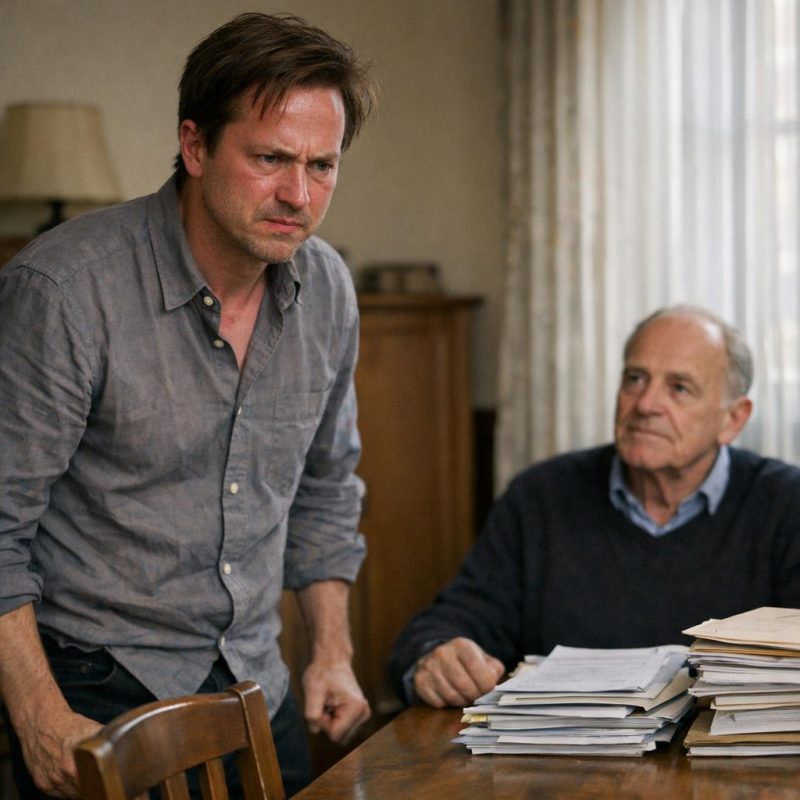 Image by RM AI
Tricia's Silence
While Wayne stood there sputtering about his rights and demanding to know who Mr. Morse thought he was, Tricia just sat. She hadn't moved since Wayne had jumped up. Her hands were still gripping the chair, but now she was staring at the floor with this blank, vacant expression. I kept expecting her to say something—to defend Wayne, to defend herself, to claim it was all a misunderstanding. But she didn't. She just sat there like a statue, her jaw set, her eyes fixed on a spot somewhere near her shoes. April glanced at her mother once, a quick nervous look, but Tricia didn't acknowledge her. It was like she'd decided that the safest thing she could possibly do was become invisible. Or maybe she'd just realized that anything she said would only make things worse. Wayne kept talking, his voice rising and falling in waves of indignation, but Tricia's silence was what unsettled me. It felt deliberate. Calculated. Like she was already three steps ahead, already planning her next move, and that move involved saying absolutely nothing until she had a lawyer of her own. Tricia's silence felt heavier than Wayne's shouting, as if she had decided the only safe move was to vanish.
 Image by RM AI
The Lawyer's Next Steps
Mr. Morse waited until Wayne had exhausted himself, then he spoke in that same measured, professional tone. 'I'm obligated by law to report this evidence to the appropriate authorities,' he said. 'This goes beyond estate disputes. We're looking at potential elder financial abuse, fraud, and possibly forgery.' Wayne's face went from red to pale in a matter of seconds. 'You can't do that,' he said, but his voice had lost its edge. 'I absolutely can,' Mr. Morse replied. 'And I will. A forensic accountant has already been retained to review the full scope of the transactions. His name is Roger Tennant, and he'll be conducting a thorough audit of your father's finances over the past five years.' He gestured to a man I hadn't really noticed before, someone who'd been sitting quietly in the corner with a laptop. Roger Tennant nodded once, his expression neutral and clinical. 'Additionally,' Mr. Morse continued, 'I'll be contacting the police within the next twenty-four hours to provide them with copies of all documentation.' Wayne looked like he might be sick. Tricia still hadn't moved. April was staring at her hands. He said the police would be involved within twenty-four hours, and Wayne's face went pale.
 Image by RM AI
The Greenhouse Susan Never Bought
After the room had gone quiet again, Mr. Morse turned back to me with a softer expression. 'There's one more thing,' he said, and he pulled a smaller envelope from his briefcase. 'Mr. Barker left you a bequest. Five thousand dollars, earmarked specifically for the purchase of a greenhouse.' I stared at him. 'A greenhouse?' He nodded. 'He was very specific. He said you'd mentioned wanting one, and he hoped you'd finally get it.' I felt my throat tighten. I'd mentioned it exactly once, maybe four years ago, while I was watering my tomato plants over the fence. Mr. Barker had been sitting on his porch with a book, and we'd started talking about gardening. I'd said something offhand about how nice it would be to have a little greenhouse so I could start seedlings earlier in the spring. That was it. One sentence, years ago, and he'd remembered. He'd remembered, and he'd made sure I'd have the money to do it. I took the envelope with shaking hands, and for a moment I couldn't speak. I had mentioned wanting a greenhouse exactly once, years ago, while watering tomatoes over the fence, and he had remembered.
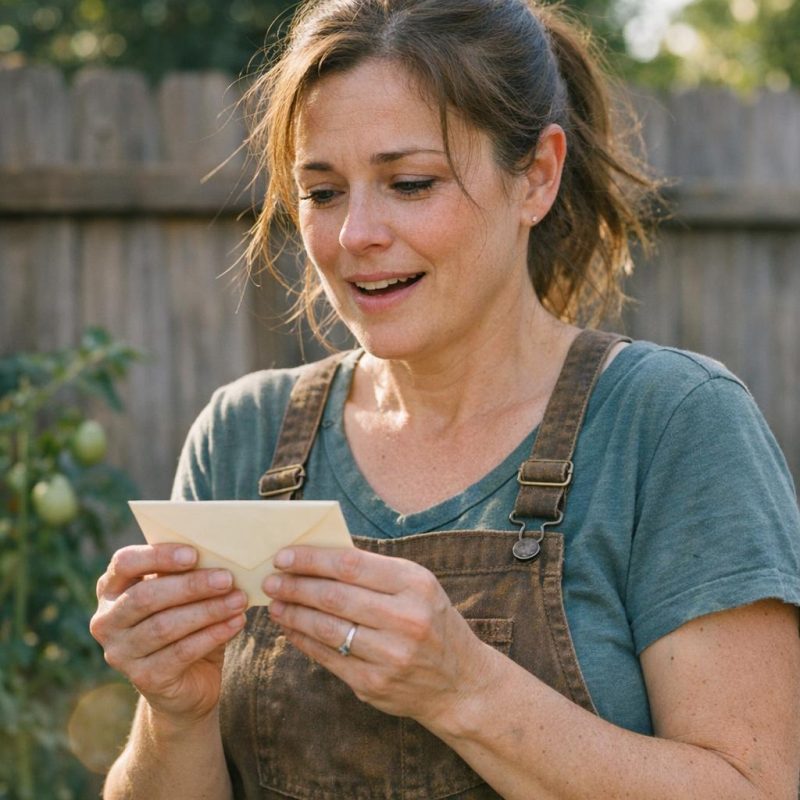 Image by RM AI
Leaving the House
Mr. Morse packed up his briefcase and stood, gesturing for me to follow him. I got up on unsteady legs and walked toward the door. Wayne was still standing by the table, his fists clenched, his face a mask of fury and panic. Tricia hadn't moved. She was still staring at the floor like she could will herself into the ground. I didn't say goodbye. I didn't know what to say. Mr. Morse held the door open for me, and we stepped out into the hallway. The house felt colder somehow, emptier, even though it was full of people and furniture and all the remnants of Mr. Barker's life. I followed Mr. Morse through the front door and down the walkway toward my car. The air outside was crisp and clear, and I took a deep breath, trying to steady myself. My hands were still shaking. I unlocked my car and turned back for just a second, glancing at the house. That's when I saw her. April was standing at the front window, her arms crossed, watching me. Her face was unreadable—not angry, not sad, just… watching. As I walked to my car, I glanced back and saw April watching me through the window, her expression unreadable.
 Image by RM AI
That Night
I drove home on autopilot, barely noticing the streets or the other cars. When I pulled into my driveway, I sat in the car for a long time before I could make myself go inside. The house was quiet. Too quiet. I made tea I didn't drink and sat at the kitchen table with the greenhouse envelope in front of me. I kept replaying the scene in my head—Wayne's face, Tricia's silence, the way Mr. Morse had read that letter like he was delivering a eulogy and an indictment at the same time. I kept thinking about what Mr. Barker had written. That I'd seen enough to be dangerous. That I'd been kind enough not to humiliate him. I didn't feel kind. I felt scared. Because Wayne had looked at me with pure hatred when Mr. Morse read that line, and I knew that look. That was the look of someone who blamed me for everything that had just happened. It didn't matter that I hadn't asked for any of this. It didn't matter that Mr. Barker had made his own choices. Wayne saw me as the enemy, and I had no idea what he might do about it. I kept thinking about Wayne's face when he realized I had the key, and I wondered if Mr. Barker had known how afraid I would be.
 Image by RM AI
The Detective Calls
The call came the next morning while I was still in my bathrobe, staring at a cup of coffee I hadn't touched. The number was unfamiliar, and I almost didn't answer. But something made me pick up. 'Ms. Hale? This is Detective Patricia Lim with the county police department.' My stomach dropped. 'Attorney Morse provided us with documentation related to the estate of your neighbor, Mr. Barker. I'd like to schedule a time to speak with you about what you may have observed over the past few years.' I sat down hard at the kitchen table. 'Observed?' 'Anything unusual,' she said. 'Visits, conversations, changes in Mr. Barker's behavior or demeanor. We're building a timeline, and your perspective would be very helpful.' I agreed to meet her the next afternoon at the station. When I hung up, I realized my hands were shaking again. I'd thought my role in this was over—that I'd just hand over the envelope and walk away. But Detective Lim's voice had been calm, professional, and thorough. She wasn't asking me to be a witness. She was treating me like one. She said she wanted to hear my side of things, and I realized I wasn't just a witness—I was part of the investigation.
 Image by RM AI
The Interview
The police station smelled like burnt coffee and disinfectant. Detective Lim met me in the lobby and led me to a small interview room with a table, two chairs, and a recording device that made my pulse quicken. She was younger than I'd expected, maybe early forties, with sharp eyes that didn't miss much. 'Thank you for coming in, Ms. Hale,' she said, settling into her chair with a notepad. 'I know this is uncomfortable.' I nodded, my purse clutched too tightly in my lap. She asked me to walk her through my relationship with Mr. Barker—how often we spoke, what we discussed, whether I'd ever been inside his home. I told her the truth. We talked over the hedge maybe once a week. He loved his roses. He'd invited me in twice, both times to his study. I'd never met Wayne or Tricia until the will reading, though I'd seen them coming and going. 'Did Mr. Barker ever mention feeling unsafe?' she asked. I hesitated. 'Not unsafe, exactly. But he seemed... tired. Like something was wearing him down.' She made a note. Then she leaned forward, her gaze steady. 'Did you ever feel threatened by Wayne?' I opened my mouth, then closed it. The question sat between us like a stone. Detective Lim leaned forward and asked if I had ever felt threatened by Wayne, and I hesitated before answering.
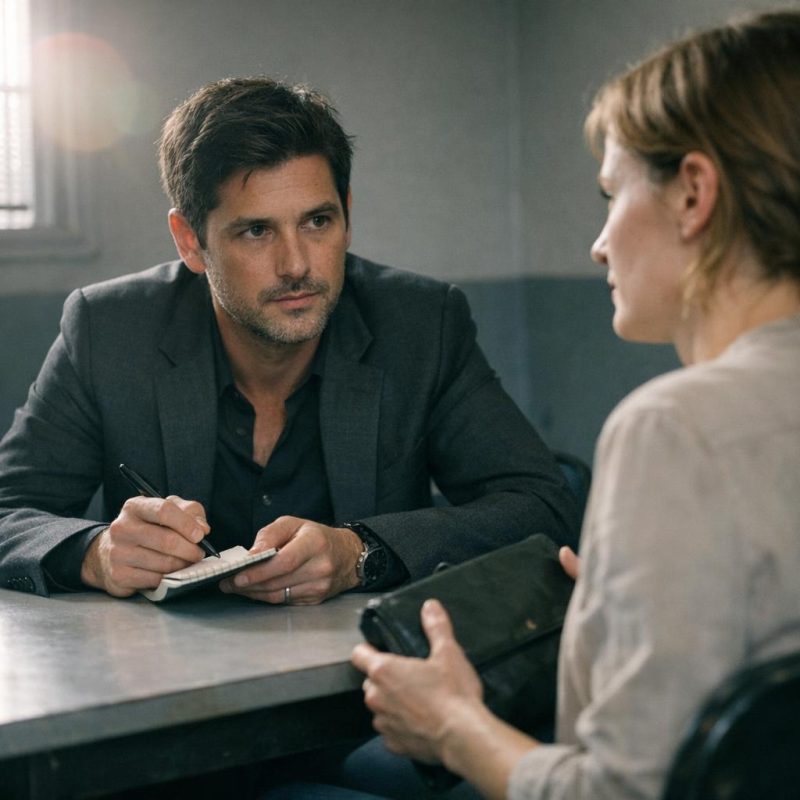 Image by RM AI
The Recordings
I told her the truth—that Wayne had been hostile at the reading, but I hadn't felt physically threatened. Just unsettled. Detective Lim nodded slowly, like she'd expected that answer. 'I'd like you to listen to something,' she said, pulling out a small digital recorder. 'These are excerpts from the recordings Mr. Barker made. I want to know if you recognize the voices.' She pressed play. The quality was tinny but clear. Mr. Barker's voice came first, frail and careful, asking Wayne about a transfer form. Then Wayne's voice cut in—louder, impatient, dismissive. 'We've been over this, Dad. Just sign it. You're not using that account anyway.' The coldness in his tone made my skin prickle. I'd never heard Wayne speak before the will reading, and hearing him now, in that unguarded moment, was chilling. There was no pretense of care. Just irritation. Tricia's voice came next, softer but equally firm. 'Wayne's right. You don't need to worry about the details. We're handling everything.' Detective Lim paused the recording and watched me. 'There's more,' she said quietly. She hit play again. Wayne was telling Tricia that once the old man signed the deed transfer, they'd be done with him, and my hands went cold.
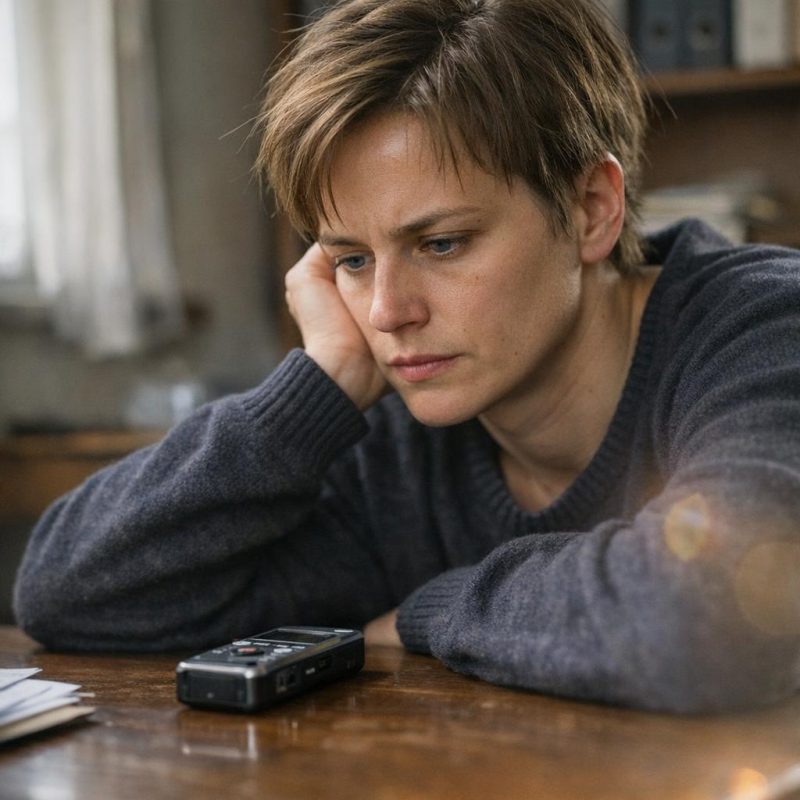 Image by RM AI
Done With Him
Detective Lim stopped the recording. The silence in the room felt thick, almost suffocating. 'What did he mean by that?' I asked, though part of me didn't want to know. 'Done with him?' She set the recorder down carefully. 'That's what we're trying to determine. It could mean they planned to cut off contact once they secured the assets. Or it could mean something worse.' I stared at the table, my mind racing. Mr. Barker had died of a heart attack. Natural causes. The lawyer had said so. But the way Wayne had spoken—so casual, so dismissive—made my stomach turn. 'You think they hurt him?' I whispered. Detective Lim's expression didn't change. 'We're looking at all possibilities. Financial elder abuse is clear. But there are indicators that suggest coercion may have extended beyond financial matters.' I thought of Mr. Barker in that study, surrounded by files and recordings, knowing what was happening to him. Knowing his own son was robbing him blind. Had he been afraid? Had he felt trapped? 'We're also reviewing his medical history,' she continued. 'There are some inconsistencies we need to understand.' My throat tightened. Detective Lim said they were investigating whether Wayne had done anything to hasten Mr. Barker's death, and the room tilted.
 Image by RM AI
Natural Causes
I gripped the edge of the table to steady myself. 'But the death certificate said natural causes,' I managed. 'His heart.' Detective Lim nodded. 'It did. And there's no evidence of direct harm—no signs of poisoning, no physical trauma. Mr. Barker was eighty-three and had a history of cardiac issues. His death, on paper, is entirely consistent with his medical profile.' She paused, flipping through her notes. 'But his primary care physician flagged something during a routine follow-up about a month before Mr. Barker passed. He told the doctor he was feeling pressured to skip certain medications. He said Wayne told him the pills were making him 'confused' and that he'd be better off without them.' My chest tightened. 'Which medications?' 'Blood pressure and a mild anticoagulant,' she said. 'Nothing immediately life-threatening to discontinue, but over time, the absence of those drugs would increase his risk significantly.' I felt sick. It was so calculated. So quiet. No violence, no obvious crime. Just a son convincing his father to stop taking the pills that kept him alive. 'We can't prove intent,' Detective Lim said carefully. 'But the pattern is concerning.' The doctor said Mr. Barker had mentioned feeling pressured to skip medications, and I wondered how much of his decline had been natural at all.
 Image by RM AI
The Forensic Accountant's Report
Detective Lim excused herself and returned a few minutes later with a man in a gray suit carrying a leather folder. 'This is Roger Tennant,' she said. 'He's the forensic accountant who's been reviewing Mr. Barker's financial records.' Tennant nodded at me and sat down, opening the folder with the precision of someone who dealt in numbers, not emotions. 'Ms. Hale, I want to walk you through what we've found,' he said, his accent faintly European, his tone clinical. 'Over a three-year period, Wayne Barker systematically diverted funds from his father's accounts. Small amounts at first—wire transfers labeled as 'home repairs' or 'medical expenses.' Then larger sums as he gained confidence.' He slid a spreadsheet across the table. The numbers blurred in front of me. 'In total, we estimate he embezzled approximately one hundred fifty-three thousand dollars.' I stared at the page, my stomach churning. That was Mr. Barker's security, his independence, stolen piece by piece. 'The thefts were careful,' Tennant continued, almost admiringly. 'Gradual. He varied the amounts, the timing, the accounts. It was elegant in its design.' Elegant. The word made me want to scream. The accountant said the thefts were careful and gradual, almost elegant in their design, and I thought of Mr. Barker alone in that study, watching it happen.
 Image by RM AI
Tricia's Signatures
Tennant turned to another page, this one covered in photocopied signatures. 'Now, here's where it gets more troubling,' he said, tapping a row of initials. 'Many of these transactions required secondary authorization—a co-signer or witness. In most cases, that was Tricia Barker.' I leaned closer, squinting at the signatures. They looked like Mr. Barker's handwriting, shaky but legible. 'Those aren't his,' Tennant said flatly. 'We had a handwriting analyst compare them to known samples. Tricia forged his initials on at least six occasions, possibly more. She wasn't just aware of the fraud—she was an active participant.' Detective Lim's expression was grim. 'Wayne orchestrated it, but Tricia executed it. They were working together.' I felt a wave of disgust so strong it nearly choked me. I'd thought maybe Tricia had been willfully blind, turning away while her husband destroyed his father. But this was different. This was deliberate. She'd held the pen. She'd signed the forms. She'd looked at an old man's dwindling accounts and decided to take more. 'She's facing charges too,' Detective Lim said quietly. 'Forgery, conspiracy, elder abuse.' I nodded, unable to speak. Tricia had not been a passive bystander; she had forged Mr. Barker's initials on at least six occasions.
 Image by RM AI
April's Inheritance
Detective Lim walked Tennant out, then returned and sat down across from me again. She folded her hands on the table, her expression thoughtful. 'There's one more person we need to discuss,' she said. 'April Barker.' I stiffened. 'What about her?' 'She stood to inherit a significant portion of the estate under the original will—before your neighbor changed it. We're trying to determine whether she knew about the fraud. Whether she was complicit, even indirectly.' I thought back to the will reading. April sitting in that chair, her face pale and drawn. The way she'd looked at her parents, confusion and hurt flickering across her features. 'She seemed shocked,' I said slowly. 'When the lawyer read the new will, she looked... lost.' Detective Lim nodded. 'That's consistent with what we've observed. But it's also possible she knew what her parents were doing and stayed silent because she benefited from it. We're still gathering evidence.' I didn't know what to believe. April had cried in that study when she saw the envelope. She'd thanked me, her voice breaking. But people could fake tears. People could fake grief. 'Do you believe she knew?' Detective Lim asked. I said I didn't know, but I remembered April crying in that study, and I couldn't decide if the tears were real or rehearsed.
 Image by RM AI
A Visit Next Door
I didn't sleep much that night. I kept replaying the recordings in my head, Wayne's voice curling through my thoughts like smoke. Around eleven, I got up to get a glass of water and glanced out the kitchen window. A car was parked in Mr. Barker's driveway. The house was supposed to be empty—locked up while the estate sorted itself out. I stood at the window, my heart pounding, watching for movement. A light flicked on inside, faint and brief, like someone using a flashlight. Then a silhouette passed by the study window. My first instinct was to call Detective Lim. My second was to call 911. But I hesitated, unsure if I was overreacting. Maybe it was the estate lawyer. Maybe it was April, retrieving something personal. Then I thought of Wayne's voice on that recording, cold and calculating. The way he'd said they'd be 'done' with the old man. The way he'd looked at me in the lawyer's office, his eyes full of barely contained rage. I pulled my phone from my robe pocket, my thumb hovering over the screen. The silhouette moved again, slow and deliberate, like someone searching for something. I watched the silhouette move past the window, and I wondered if Wayne had come back for something he'd left behind.
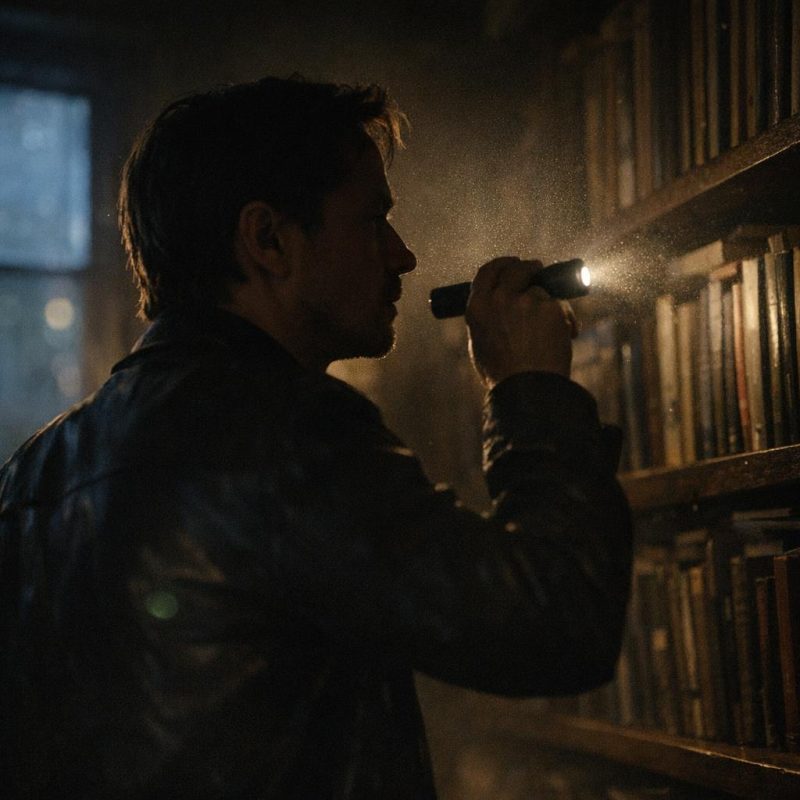 Image by RM AI
The Message on the Door
I didn't go outside until nearly nine the next morning. I'd spent most of the night watching Mr. Barker's house from my bedroom window, waiting for the silhouette to reappear, but it never did. When I finally opened my front door to get the newspaper, something white fluttered to the ground. A folded piece of paper, wedged between the door and the frame. My stomach dropped before I even picked it up. The handwriting was harsh, the letters pressed so hard into the paper that they'd almost torn through in places. 'Stay out of family business. You've done enough damage.' That was it. No signature. No explanation. Just those two sentences, scrawled in what looked like black marker. I stood there on my porch in my bathrobe, holding that note, and I felt the world tilt sideways. Someone had been on my porch. Someone had stood right here, maybe while I was sleeping, maybe while I was watching the house next door. Someone had gotten close enough to wedge this paper into my door, and I hadn't heard a thing. My hands were shaking as I went back inside and locked the door behind me. I put the note on the kitchen table and stared at it, trying to figure out if I recognized the handwriting. The note was unsigned, but the handwriting looked rushed and angry, and I realized I was no longer safe being a bystander.
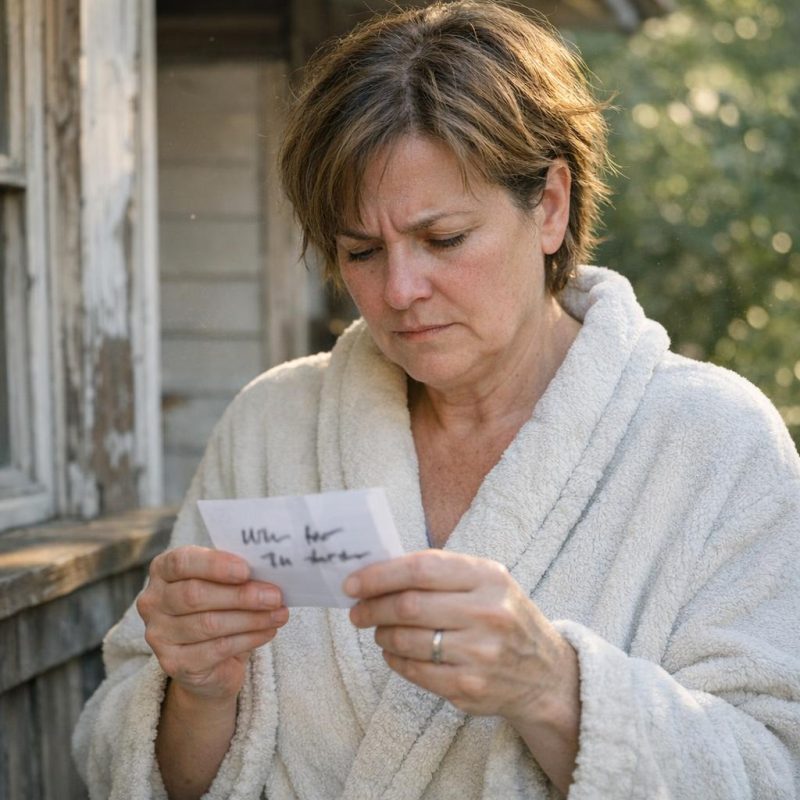 Image by RM AI
Detective Lim Takes It Seriously
I called Detective Lim within ten minutes. My voice sounded steadier than I felt when I told her about the note, about the car in Mr. Barker's driveway, about the light moving through the study window. She told me to lock my doors and stay inside until she got there. She arrived forty minutes later with another officer, a younger man who took photos of the note from every angle while Detective Lim walked the perimeter of my house, checking for footprints or signs of forced entry. 'This is a direct threat,' she said, standing in my kitchen with her arms crossed. 'We're taking this seriously.' She arranged for patrol cars to drive past my house every two hours, day and night. She gave me her personal cell phone number and told me to call immediately if I saw anything unusual. 'Wayne Novak is desperate right now,' she said. 'The recordings you provided are damning evidence. He knows that. And desperate people don't always think clearly.' I nodded, trying to absorb what she was saying, trying to understand that I was now part of this in a way I'd never intended to be. After she left, I went through the house and checked every window lock, every door, the latch on the basement entrance I never used. Detective Lim said Wayne was desperate, and desperate people made dangerous mistakes, and I locked my doors that night with shaking hands.
 Image by RM AI
Wayne's Arrest
Detective Lim called me three days later, and I knew from her tone that something had changed. 'Wayne Novak was arrested this morning,' she said. 'We charged him with elder financial abuse, fraud, and coercion. The recordings you provided were crucial evidence.' I sat down at my kitchen table, feeling my legs go weak with relief. 'What about the note?' I asked. 'We can't prove he wrote it,' she admitted. 'But we're pursuing it as part of the intimidation pattern. It strengthens the case.' I asked if he was in custody, and she said yes, for now, pending a bail hearing. Then she paused, and I heard her take a breath. 'Tricia was arrested too,' she said. 'She was complicit in the financial manipulation. We have bank records showing she received transfers from her father that originated from Mr. Barker's accounts.' I should have felt vindicated. I should have felt like justice was being served. Instead, I just felt hollow, like someone had scooped out my insides and left me empty. The Novaks had destroyed their own father's final years, stolen from a dying man, and now they'd pay for it. But Mr. Barker was still gone. The damage was still done. She said Tricia had been arrested too, and I felt a strange mix of relief and emptiness, as if something had ended but nothing had been solved.
 Image by RM AI
April Reaches Out
April called me two days after her father's arrest. I almost didn't answer when I saw 'Unknown Number' on my phone, but something made me pick up. 'Susan? It's April Novak.' Her voice was quiet, tentative. I didn't say anything right away. 'I know you probably don't want to talk to me,' she continued. 'But I need to explain what really happened. I need you to understand that I didn't know everything my father was doing.' I gripped the phone tighter. 'Your father threatened me,' I said. 'Someone left a note on my door telling me to stay out of family business.' 'I know,' she said softly. 'And I'm so sorry. That wasn't me. I swear that wasn't me.' She asked if we could meet somewhere public, just for coffee, just so she could explain her side of things. I should have said no. I should have hung up and blocked her number. But there was something in her voice that sounded genuine, or maybe I just wanted to believe that not everyone in that family was rotten to the core. I told her I'd meet her at the Bluebird Diner on Thursday morning. She thanked me three times before hanging up. April's voice sounded small over the phone, and I couldn't tell if she was asking for forgiveness or trying to manipulate me one last time.
 Image by RM AI
Coffee With April
The Bluebird was half-empty when I arrived, just a few regulars at the counter drinking coffee and reading the paper. April was already in a booth near the back, wearing jeans and a plain sweater, no makeup, her hair pulled back in a ponytail. She looked younger than she had at the will reading, smaller somehow. I slid into the seat across from her and ordered coffee when the waitress came by. April didn't waste time. 'I suspected something was wrong,' she said, her hands wrapped around her own coffee cup. 'About a year ago, I noticed my father was spending a lot of time at Mr. Barker's house. More than usual. And he was evasive when I asked about it.' She said she'd seen documents on her father's desk once, bank statements with Mr. Barker's name on them, and when she asked about them, Wayne had exploded. Told her she was being paranoid. Told her that if she ever questioned him again, she'd lose her inheritance and destroy the family. 'I was scared,' she said, her eyes welling up. 'I know that sounds pathetic. I'm almost thirty years old. But my father has always been controlling, and I didn't know what to do.' I watched her carefully, looking for signs that she was lying, that this was just another performance. April said her father told her that if she ever talked to anyone about it, she'd lose her inheritance and her family, and I saw tears in her eyes that looked real this time.
 Image by RM AI
The Lawyer's Warning
Attorney Morse called me the following afternoon. I was folding laundry in the living room when my phone rang, and when I saw his name on the screen, my heart started racing. 'Susan, I wanted to give you a heads-up,' he said, his voice tense. 'Wayne Novak posted bail this morning.' I stopped folding mid-shirt. 'He's out?' 'Yes. The judge set conditions. He's not allowed to contact you or come within five hundred feet of your property. But I thought you should know that he's been asking questions.' My mouth went dry. 'What kind of questions?' 'He called my office twice yesterday asking for your address. My assistant didn't give it to him, obviously, but he was persistent. Aggressive, even.' I sank onto the couch, the laundry basket forgotten at my feet. 'Does Detective Lim know?' I asked. 'I called her right before I called you,' he said. 'She's aware. But I wanted to make sure you heard it from me too. Be careful, Susan. Lock your doors. Don't answer the door for anyone you don't recognize.' I thanked him and hung up, then sat there staring at the wall, feeling the fear creep back in like cold water rising. He said Wayne was prohibited from contacting me, but that didn't mean he wouldn't try, and I felt the fear rush back.
 Image by RM AI
Detective Lim's Explanation
I couldn't stop thinking about it. Why me? That's what I kept asking myself. Why had Mr. Barker involved me in all of this instead of just going to the police? So I called Detective Lim and asked her directly. She was quiet for a moment, like she was deciding how much to tell me. 'That's a good question,' she finally said. 'And honestly, I've been thinking about it too.' She explained that elderly abuse cases were notoriously difficult to prosecute while the victim was still alive. Family members often had legal authority, power of attorney, access to accounts. Victims were sometimes too scared or confused to testify. 'Mr. Barker was dying,' she said. 'He knew he didn't have much time. If he'd reported Wayne while he was alive, Wayne could have retaliated. Cut him off from care. Isolated him further. Made his final months a living hell.' I understood that, but it still didn't explain why he'd pulled me into it. Why the key, why the recordings, why the will. 'There's something else, isn't there?' I said. Detective Lim hesitated. 'I think so,' she admitted. 'I think Mr. Barker was protecting more than just his estate.' Detective Lim said Mr. Barker likely didn't trust the system to protect him while he was alive, and I started to wonder if there was more to the story than theft.
 Image by RM AI
The Real Reason
Detective Lim came to my house the next morning. She didn't call ahead. She just knocked on my door and asked if she could come in. We sat at my kitchen table, and she pulled out a folder. 'We found something in the recordings,' she said. 'A conversation Wayne had on the phone about two weeks before Mr. Barker died.' She opened the folder and slid a transcript across the table. I scanned the words, my heart pounding. Wayne was talking to someone about 'that nosy neighbor,' about how I'd asked if Mr. Barker was all right, about how I might cause problems. 'She's seen too much,' Wayne had said. 'After the old man's gone, we'll need to make sure she keeps her mouth shut.' Detective Lim watched me as I read. 'Mr. Barker heard that conversation,' she said quietly. 'We think that's when he made the decision to involve you the way he did. The will reading, the key, the recordings—it was all designed to bring the truth into a public, legally witnessed forum where Wayne couldn't retaliate without exposing himself. He made you untouchable by making you essential.' I sat in stunned silence as Detective Lim explained that Mr. Barker hadn't just made me a witness—he had made me untouchable by turning the reading of his will into a shield I didn't even know I needed.
 Image by RM AI
The Recordings of Susan
Detective Lim reached into her folder and pulled out a small audio player. 'I need you to hear this,' she said. 'It's from about three weeks before Mr. Barker passed.' She pressed play, and Wayne's voice filled my kitchen—casual, almost bored. He was talking to Tricia. 'The neighbor's becoming a problem,' he said. 'She knocked on the door yesterday asking if Dad was okay. She's paying too much attention.' Tricia's voice came through, sharp and irritated. 'So what do you want to do about it?' Wayne paused, and the silence made my stomach clench. 'After he's gone, we'll need to deal with her quietly,' he said. 'Make sure she doesn't start asking questions to the wrong people. A break-in, maybe. An accident. Something that looks unrelated.' Detective Lim stopped the recording and watched my face. I felt cold all over, like the temperature in the room had dropped twenty degrees. Wayne had been planning something for me. Not just intimidation. Something permanent. Detective Lim's expression was grave. 'Mr. Barker heard this conversation two days later,' she said. 'That's when he changed his will and set everything in motion.' Hearing Wayne discuss me like I was an obstacle to be removed made my skin crawl, and I understood why Mr. Barker had moved so carefully.
 Image by RM AI
Why Public Exposure Was Necessary
Detective Lim leaned back in her chair and folded her hands on the table. 'Do you understand what Mr. Barker did for you?' she asked. I nodded slowly, but she continued anyway. 'By naming you in his will, by making you the key holder at a public reading with lawyers and witnesses present, he made you untouchable. Wayne couldn't harm you without immediately drawing suspicion. Every single person in that room knew your name and your role. You became the most visible piece of evidence in the case.' I stared at the transcript still lying on the table. It made sense now—the strange formality of the will reading, the way Mr. Barker had orchestrated everything to happen in front of witnesses. He hadn't just been exposing Wayne's crimes. He'd been building a fortress around me. 'If something had happened to you after that reading,' Detective Lim said, 'Wayne would have been the first person we'd investigate. He knew that. Mr. Barker made sure of it.' I felt a wave of gratitude so strong it brought tears to my eyes. Mr. Barker had seen the danger I couldn't see. He'd protected me even as he was dying, even as his own son was plotting against him. She said Mr. Barker had essentially made me radioactive to Wayne—any harm that came to me now would point straight back to him.
 Image by RM AI
Wayne's Second Arrest
Three days later, Detective Lim called me again. 'Wayne's back in custody,' she said, and I heard the satisfaction in her voice. 'What happened?' I asked, gripping the phone. She explained that Wayne had hired a private investigator to follow me, to document my routines and whereabouts. The investigator had contacted the police after realizing he was being asked to surveil a protected witness in an active criminal case. 'Wayne violated his bail conditions,' Detective Lim said. 'He was explicitly prohibited from any contact with you, direct or indirect. The judge revoked his bail this morning.' I sat down heavily on my couch, relief flooding through me. I'd felt the presence of that investigator, I realized—the car that seemed to appear too often on my street, the man I'd seen twice at the grocery store. I'd thought I was being paranoid. 'He's not getting out again before trial,' Detective Lim continued. 'The prosecutor argued he's a flight risk and a danger to witnesses. The judge agreed.' My hands were shaking, but this time it was from relief rather than fear. Wayne had been so close, still circling, still trying to find a way to silence me. Detective Lim said Wayne had hired someone to follow me, and his bail was revoked on the spot.
 Image by RM AI
The Trial Date
The trial date came faster than I expected. A woman from the prosecutor's office called and introduced herself as Amanda Chen, the assistant district attorney handling the case. 'We have a court date,' she said. 'January fourteenth. Wayne and Tricia will stand trial for financial fraud, elder abuse, and attempted witness intimidation.' I wrote the date on my calendar with a hand that wasn't quite steady. 'We'll need you to testify,' she continued. 'Your observations of Mr. Barker's condition, your discovery of the hidden evidence, and Wayne's threatening note. You're a crucial witness.' I told her I would, of course. What else could I say? Mr. Barker had trusted me with this responsibility. I couldn't back away now. After we hung up, I stared at the date circled on my calendar. January fourteenth was six weeks away. Six weeks to prepare myself to sit in a courtroom and face Wayne again, to speak about everything I'd witnessed, to read that horrible note aloud in front of strangers. The thought made my stomach twist, but beneath the dread was something else—a quiet determination. Mr. Barker had given me the tools to bring his son to justice. The least I could do was see it through. The prosecutor called to say they wanted me to testify, and I realized I'd have to face Wayne one more time.
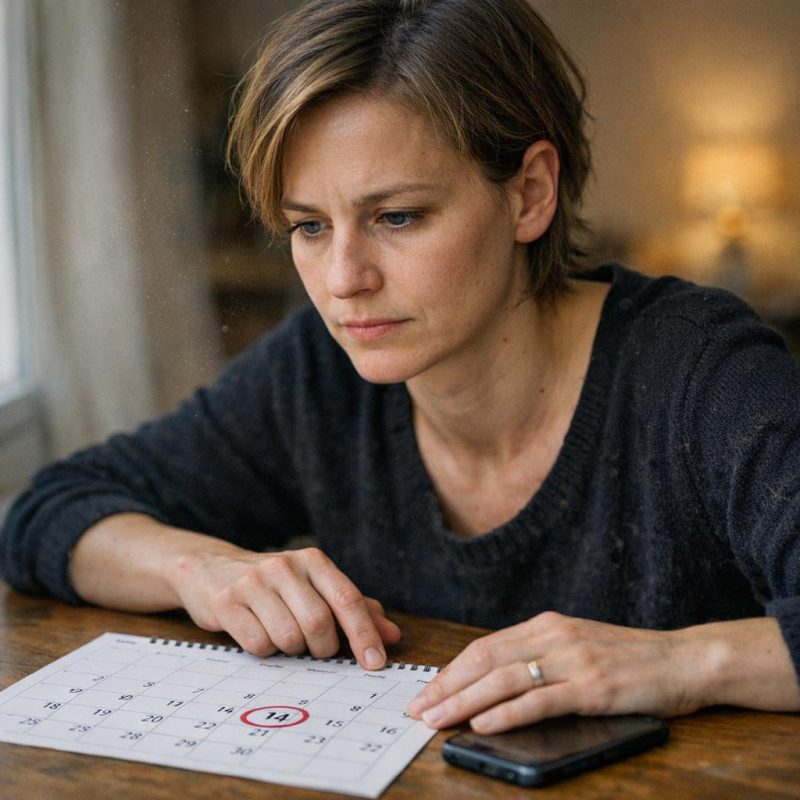 Image by RM AI
Preparing to Testify
Amanda Chen asked me to come to her office a week before the trial. She had a conference room set up with folders and evidence bags spread across the table. 'I want to walk through your testimony,' she said. 'No surprises, nothing you're not comfortable with. Just your story, as clearly as you can tell it.' We spent three hours going over every detail. She asked me about my conversations with Mr. Barker, about the day I'd noticed his trembling hands and confusion. She asked about finding the false drawer, about the recordings, about Wayne's note. 'The defense will try to suggest you misunderstood things, that you had an agenda or were manipulated,' she said. 'Just stick to what you observed. What you saw, what you heard, what you felt.' I practiced reading Wayne's note aloud, my voice catching on the words 'stay out of our family's business.' Amanda nodded approvingly. 'Good. Let them see how it affected you. Let them see this was real intimidation, not a misunderstanding.' As I left her office that afternoon, I felt the weight of what was coming. But I also felt prepared. Amanda had said something that stuck with me as I walked to my car. The prosecutor said my testimony was the human thread that tied all the evidence together, and I felt the weight of Mr. Barker's trust.
 Image by RM AI
The Courtroom
The courtroom was smaller than I expected, more institutional and less dramatic than what you see on television. I arrived early, and Amanda met me in the hallway. 'They're already inside,' she said quietly. 'Don't let them rattle you. Just focus on me and the questions.' When I walked through those double doors, the first thing I saw was Wayne and Tricia sitting at the defense table. Wayne wore a suit that looked expensive, his face carefully blank. Tricia sat beside him in a dark dress, her expression hard and resentful. They both turned to look at me as I entered. The bailiff directed me to a seat behind the prosecutor's table, and I had to walk past them to get there. My heart was pounding so loud I was sure everyone could hear it. But I kept my eyes forward, my shoulders straight. I'd done nothing wrong. I'd only tried to help a dying man, and I wouldn't let them make me feel ashamed of that. When I finally sat down, I allowed myself one glance back. Wayne was still watching me, his eyes cold and calculating. I'd seen that look before—through his father's window, in the lawyer's office, in every interaction we'd had. Wayne stared at me as I walked to the witness stand, and I met his eyes without looking away.
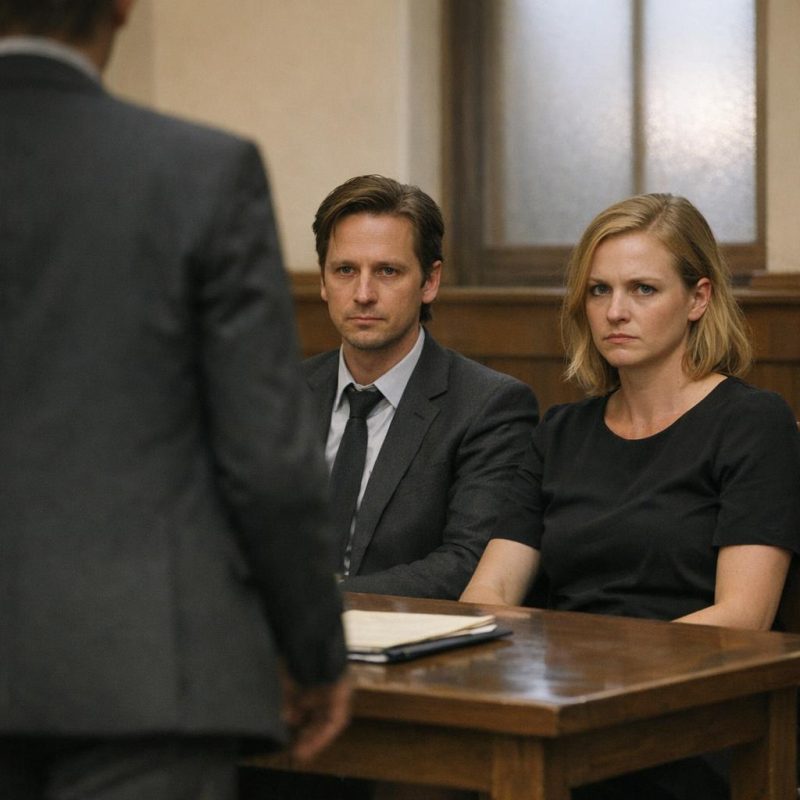 Image by RM AI
Susan's Testimony
Amanda's questions were straightforward and gentle. She asked me to describe how I'd known Mr. Barker, how I'd noticed changes in his health and behavior. I told the jury about bringing him soup, about seeing him struggle to remember simple things, about the afternoon I'd found him confused in his own kitchen. 'And did you observe any interactions between Mr. Barker and his son during this time?' Amanda asked. I described Wayne's visits, the raised voices, Mr. Barker's visible distress afterward. I told them about the day I'd found the false drawer, about the recordings and documents hidden inside. The defense attorney objected twice, but the judge overruled him both times. Then Amanda handed me a plastic evidence bag containing Wayne's note. 'Can you identify this?' she asked. I nodded. 'It's a note Wayne Barker left on my porch after the will reading.' Amanda asked me to read it aloud. I pulled the note from the bag, my fingers steady now. 'Stay out of our family's business. You have no idea what you've stepped into. People who interfere tend to regret it.' My voice carried clearly through the courtroom, each word landing like a stone. When the prosecutor asked me to read Wayne's note aloud, my voice didn't shake, and I knew Mr. Barker would have been proud.
 Image by RM AI
The Verdict
The jury deliberated for seven hours. I waited in the hallway with Detective Lim, unable to eat or focus on anything. When the bailiff finally called us back in, I felt like I might throw up. The jury filed in, their faces serious and unreadable. The judge asked if they'd reached a verdict. The forewoman stood. 'We have, Your Honor.' On the count of financial fraud: guilty. On the count of elder abuse: guilty. On the count of attempted witness intimidation: guilty. The verdicts kept coming, one after another, and with each word the tension in my chest loosened slightly. Around me, people were murmuring, leaning toward each other and whispering. I kept my eyes on Wayne. His lawyer was leaning close, speaking urgently, but Wayne just sat there. His face had gone completely blank, like a mask had dropped over his features. Tricia covered her mouth with her hand, her shoulders shaking. The judge thanked the jury and set a sentencing date for six weeks later. As the bailiff led Wayne and Tricia out of the courtroom in handcuffs, Wayne turned and looked at me one last time. There was no anger in his expression now. Just emptiness. Wayne's face went blank as the verdict was read, and I felt something inside me finally release.
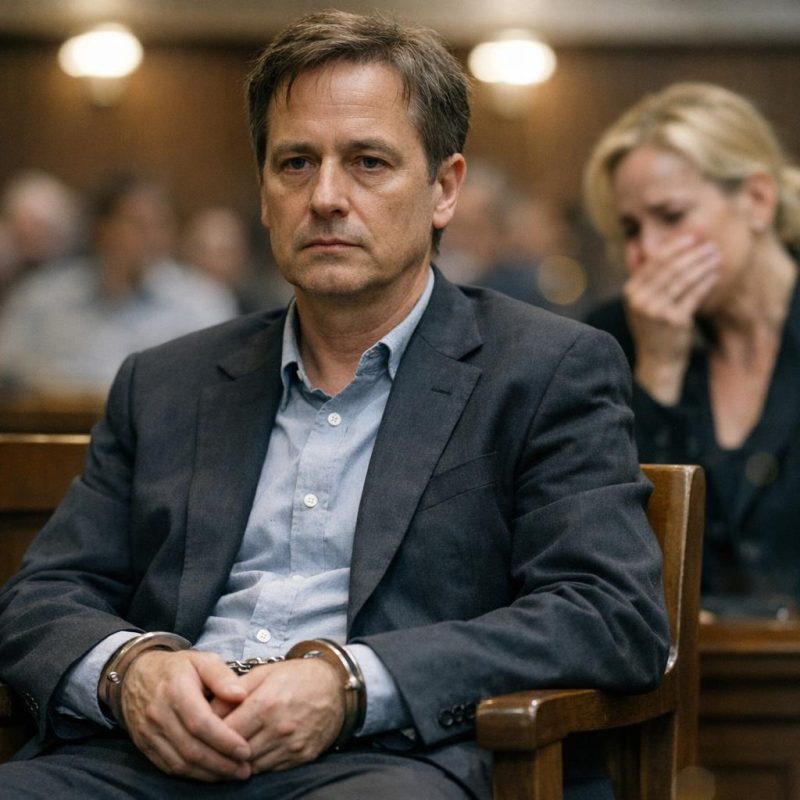 Image by RM AI
April's Apology
I was heading to my car when I heard someone call my name. April stood at the edge of the courthouse steps, looking smaller than I remembered. She'd lost weight, and there were dark circles under her eyes. She waited until I reached her, then took a shaky breath. 'I needed to say something before you left,' she said quietly. 'I'm so sorry for what my parents did to you. And I'm sorry I didn't stand up for you sooner. I knew something was wrong—I knew—but I was scared of them.' Her voice cracked on the last word. I could see how hard this was for her, how much courage it took to approach me after everything. 'They've controlled me my whole life,' she continued. 'Every choice, every relationship. When you came forward, I wanted to help, but I was terrified of what they'd do. That doesn't excuse it, I know. But I need you to know I'm ashamed.' I thought about all the years she'd spent under Wayne and Tricia's influence, how fear can make us smaller than we really are. 'April,' I said gently, 'you did help. Your testimony mattered.' She shook her head, tears streaming down her face. 'Not enough. Not soon enough.' I reached out and squeezed her hand. April said she was ashamed she hadn't been braver, and I told her that sometimes survival is the only bravery we can manage.
 Image by RM AI
Building the Greenhouse
The contractors broke ground on the greenhouse in early November. I'd decided to use part of Mr. Barker's money for something he would have appreciated—something growing and alive. We'd talked about it once, years ago, over the fence on a warm spring morning. I'd mentioned wanting a proper greenhouse someday, and he'd lit up, telling me about the one his mother had kept in Germany. He'd described the smell of warm earth and tomato plants, the way condensation would bead on the glass in the early mornings. I hadn't thought about that conversation in years until I was sitting with the lawyer, learning what he'd left me. The greenhouse took shape slowly—a beautiful glass structure with a peaked roof and cedar framing. I chose every detail carefully: the shelving layout, the ventilation system, the stone floor that would hold the day's heat. When it was finished, I spent an entire weekend setting up growing beds and organizing my tools. The space smelled like cedar and potting soil and possibility. I bought tomato seedlings at the nursery—heirloom varieties with names like Brandywine and Cherokee Purple. As I planted the first tomato seedlings, I thought about Mr. Barker remembering that one conversation over the fence, and I smiled through tears.
 Image by RM AI
The Empty House Next Door
The 'For Sale' sign went up next door in January. I watched from my kitchen window as the real estate agent took photos, as strangers walked through on Sunday afternoons, as the lawn service came to tidy the yard one last time. The house sold quickly—some bank bought it at auction to settle the debts and legal fees. I wondered what would happen to all of Mr. Barker's things, whether anyone would understand the care he'd put into organizing his records, his quiet life. Then in March, a moving truck pulled up. A young couple emerged, probably in their early thirties, followed by two kids and a golden retriever that immediately started exploring the yard. I watched the dog sniff around Mr. Barker's garden beds, tail wagging. The woman laughed at something her husband said while the kids chased each other across the lawn. It was so different from the silence that had hung over that house for months. So different from the tension of the Barkers' visits. I thought about going over, introducing myself, maybe warning them about the sprinkler system that always acted up in July. Instead, I just stood at my window and felt something tight in my chest finally loosen. The new neighbors waved as they unloaded boxes, and I waved back, grateful for the chance to start over with kindness instead of secrets.
 Image by RM AI
What He Left Behind
I think about Mr. Barker often now, especially when I'm working in the greenhouse. I understand better what he did and why—not just the legal maneuvers or the hidden evidence, but the deeper choice he made. He saw me. In a world where we're all so busy, so distracted, so wrapped up in our own lives, he actually paid attention. He noticed when I came home tired from work. He remembered our conversation about greenhouses. He understood that Wayne and Tricia would come after me, and he made sure I wouldn't face them alone. That kind of seeing, that kind of caring—it's rarer than we think. We pass people every day without really looking at them. We wave to neighbors whose names we don't know. We're all so isolated in our own houses, our own problems. Mr. Barker was quiet, reserved, probably lonely. But he chose to notice the world around him, to care about it, to protect it in the only way he could. The money he left me changed my life in practical ways. The evidence he gathered brought justice. But the real gift was simpler and more profound than any of that. I realized that what Mr. Barker really left me wasn't the money or the truth—it was the reminder that being seen, truly seen, is one of the greatest gifts we can give each other.
 Image by RM AI