I Babysat Every Saturday for a Year While My Son Went to Marriage Counseling—Until I Got a Shocking Phone Call
I Babysat Every Saturday for a Year While My Son Went to Marriage Counseling—Until I Got a Shocking Phone Call
The Saturday Agreement
I could tell something was wrong the moment Michael and Jenna sat down at my kitchen table. They weren't fighting — that wasn't it. It was more like the air between them had gone careful, the way people get when they've been choosing their words for a long time. Michael kept his hands wrapped around his coffee mug. Jenna sat very straight. They'd been struggling, they said. Not with anything dramatic, just the slow drift that happens when two people are busy and tired and not quite talking anymore. They'd found a counselor — a good one, they said — and she ran Saturday morning sessions. Intensive work, the kind that takes time. They needed someone to watch Sophie and her little brother while they went. They looked at me when they said it, both of them, and I felt the full weight of what they were asking. I didn't hesitate. Of course I would be there. Every Saturday, as long as they needed. Jenna's shoulders dropped about an inch when I said yes, and Michael reached across the table and squeezed my hand. I thought about Robert then — about how he always said the most important thing a family can do is show up for each other. Sitting there with my son and my daughter-in-law, watching the tension ease just slightly from their faces, I felt like I was doing exactly what I was supposed to do.
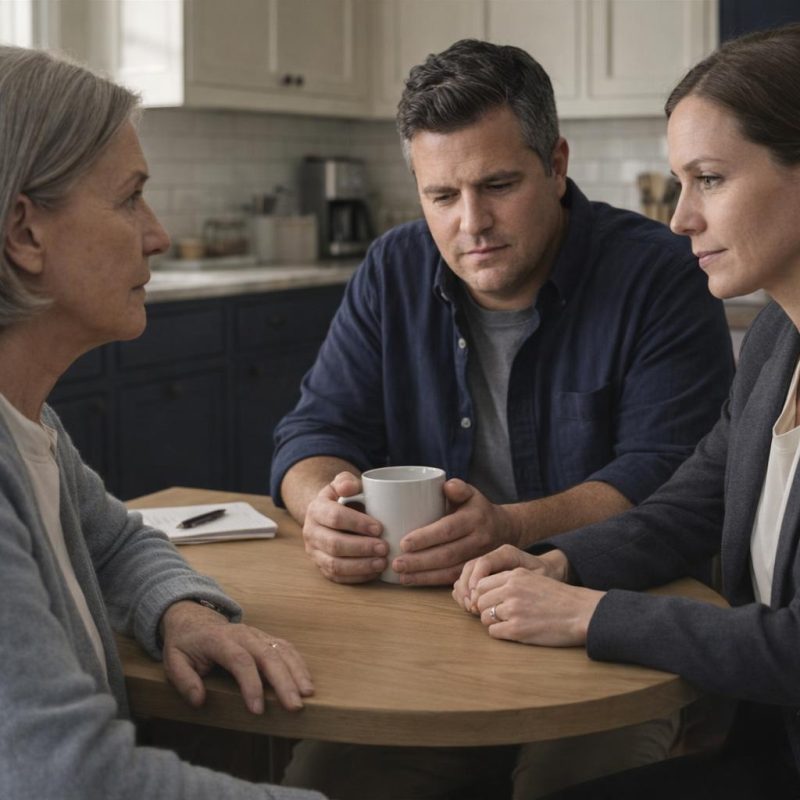 Image by RM AI
The First Morning
The first Saturday came around faster than I expected. Michael and Jenna pulled into my driveway just after eight, Sophie in the backseat already clutching a stuffed rabbit and looking perfectly at ease with the whole arrangement. Her little brother was half-asleep against his car seat buckle. They both looked tired — Michael especially, with shadows under his eyes that hadn't been there a few months ago. Jenna had her hair pulled back and moved with that brisk, purposeful energy she gets when she's focused on something. I had the kitchen table set up with crayons and paper, and Sophie made a beeline for it the second her shoes were off. I got the little one settled on the couch with a blanket and his favorite show, and by the time I looked up, Michael and Jenna were already saying their goodbyes. Quick hugs, a few instructions about snacks and nap time, and then they were moving toward the door together. I walked them out to the porch and watched them cross the driveway side by side. They didn't hold hands, but they were close. Michael opened the passenger door for Jenna before going around to his side. I stood there with my cardigan pulled across my chest as they backed out of the drive, and something about the look on Jenna's face as the car turned onto the street made me pause — though I couldn't have said what it was, exactly, or why it stayed with me.
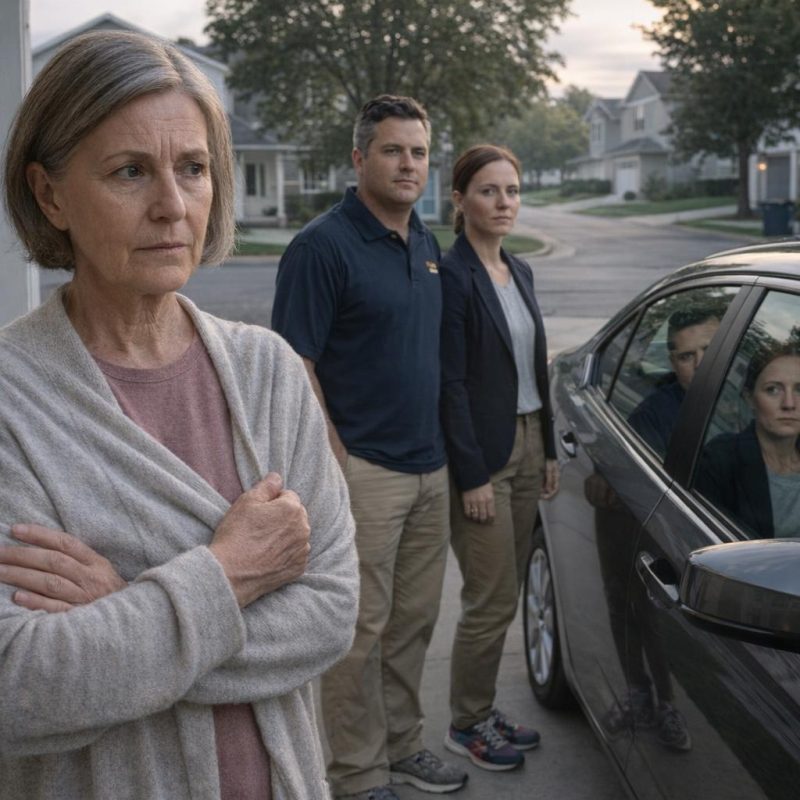 Image by RM AI
Settling In
By the third Saturday, it already felt like we'd been doing it forever. I'd figured out that Sophie liked her eggs scrambled soft, not firm, and that her little brother would eat almost anything if you called it a 'special breakfast.' I'd learned which cartoons held their attention and which ones led to arguments, and I'd started keeping a small basket of art supplies by the back door for when the weather was good enough to sit outside. The children seemed completely comfortable with the routine — no tears at drop-off, no anxious questions about when their parents were coming back. They just settled in, easy as anything, like Saturday mornings at my house were simply part of how the week worked. Michael and Jenna always came back around noon, sometimes a little after. They looked wrung out in that particular way you do after something that takes real effort — not unhappy, just spent. I never pushed for details. I'd hand back the kids, hear a quick 'thank you, Mom' from Michael, and watch them load everyone into the car. I'd go back inside and wash up the breakfast dishes and feel, genuinely, like I'd done something useful. There's a particular kind of quiet that settles over a house after children leave, and I found I didn't mind it. It felt earned. Those Saturday mornings became something I could count on, a small steady rhythm in the week that felt solid and good.
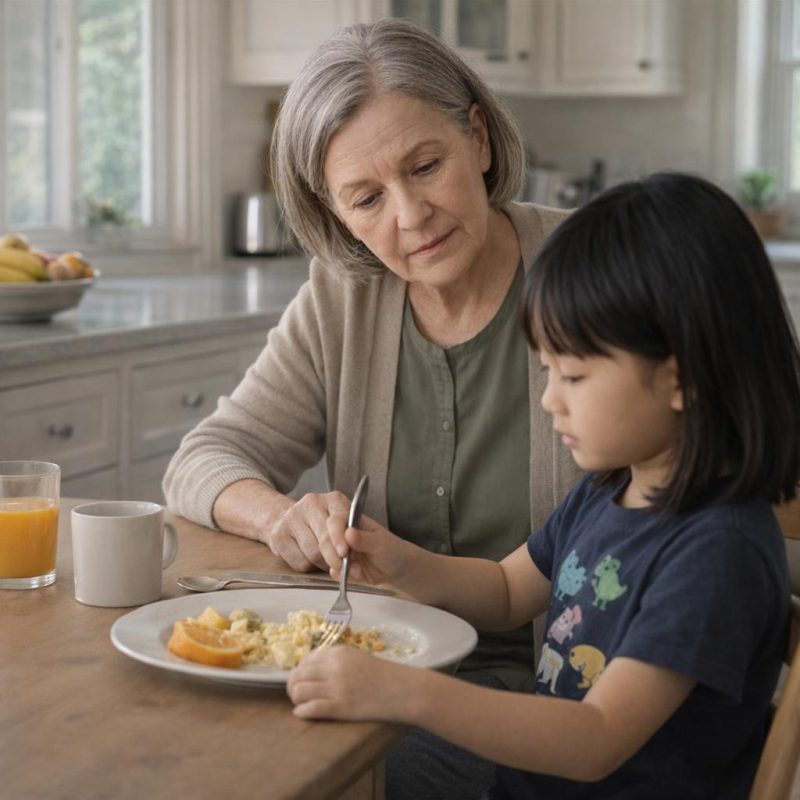 Image by RM AI
Months of Commitment
Somewhere around the fourth month, I started marking the Saturdays on my kitchen calendar with a small star. Not for any particular reason — it just helped me keep track, made the commitment feel real and visible. I'd flip back sometimes and count the stars, and I'd feel a quiet kind of pride looking at that row of marks. Four months is not nothing. Most people, when things get hard in a marriage, find reasons to stop trying. Michael and Jenna hadn't stopped. They kept showing up, week after week, and I respected that more than I could easily say. I noticed changes too, small ones. When they came to pick up the children, they seemed less guarded with each other. Michael would sometimes have his hand at the small of Jenna's back as they came up the porch steps. Jenna laughed more easily. They mentioned once or twice that they were working on communication — learning to hear each other differently, they said, which sounded exactly like the kind of thing a good counselor would teach. Sophie told me one afternoon that her mom and dad talked more at dinner now, which I took as the best possible sign. I didn't need the details. I just needed to see that it was working. I'd look at that calendar before bed some nights, at all those little stars lined up across the months, and feel the steady, reliable shape of what we'd all built together.
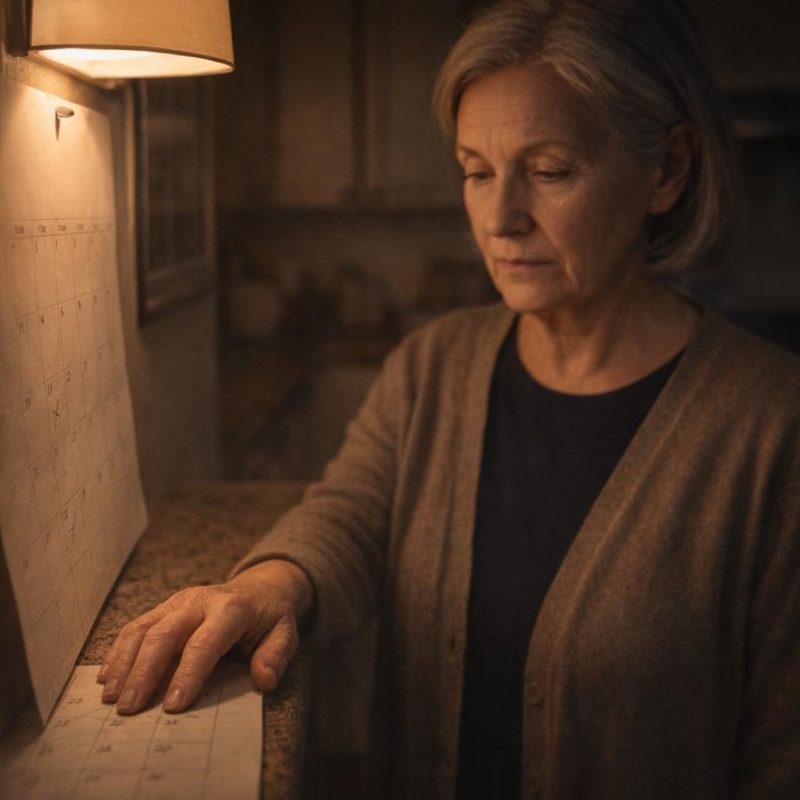 Image by RM AI
The Declined Invitation
It was my friend Carol who first made me notice how locked in I'd become. She called on a Tuesday in October to invite me to a day trip — a group of us, a drive up to see the fall foliage, lunch at a place she'd been wanting to try for years. It sounded lovely. It was on a Saturday. I didn't even pause before I told her I couldn't make it. She asked if everything was all right, and I said yes, of course, I just had my grandchildren on Saturdays. She said she understood, and we talked for a few more minutes about nothing in particular, and after I hung up I sat for a moment at the kitchen table. I thought about the garden club meeting I'd rescheduled in September, and the hair appointment I'd moved twice, and the standing lunch with my neighbor that had quietly dissolved because she worked weekends and I was never free. I didn't feel sorry for myself — that's not what it was. I just noticed the shape of it, the way the commitment had grown into the week like something structural. And I found I didn't mind. Carol would plan another trip. The foliage would come back next year. But Michael and Jenna were doing the hard work of saving their marriage, and Sophie and her brother needed someone steady, and I was that person. I picked up my calendar and wrote Carol's name in the margin as a reminder to call her back, and I heard myself say out loud to the empty kitchen, 'Family comes first.'
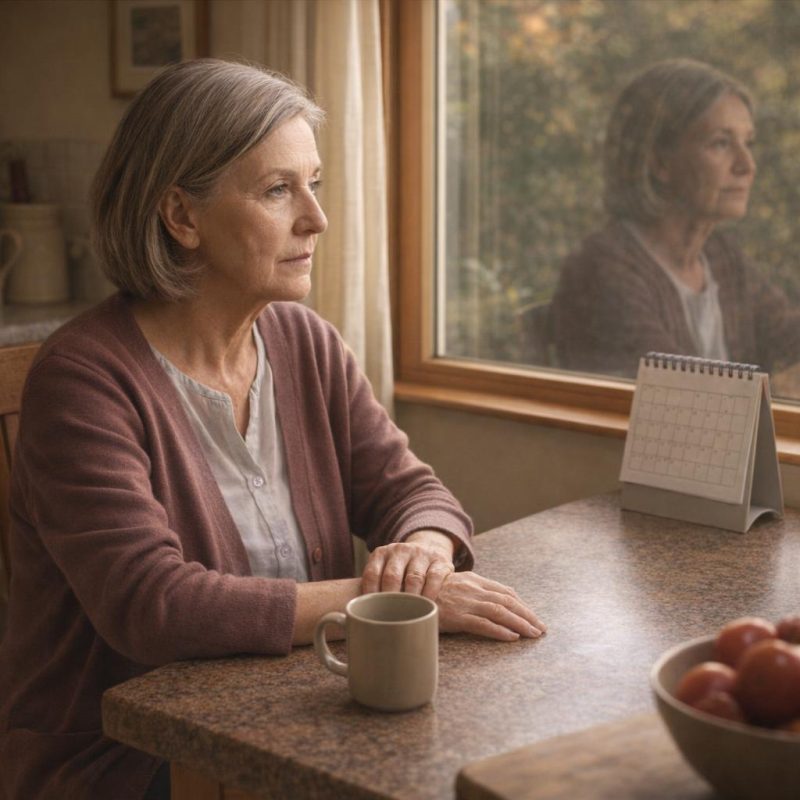 Image by RM AI
Nearly a Year
It was a Sunday morning in late November when I finally sat down with the calendar and actually counted. I'd been meaning to do it for a while — not for any particular reason, just curiosity. I spread the last twelve months open on the kitchen table, flipping back page by page, and I counted every starred Saturday. I had to recount twice because the number surprised me. Forty-seven Saturdays. Nearly a full year. I sat back in my chair and looked at that number for a long moment. I thought about what forty-seven Saturdays meant in terms of effort — theirs and mine both. That's a lot of early mornings, a lot of sessions, a lot of work. When Michael and Jenna had come by the previous weekend, they'd mentioned they were making real progress, that things felt different between them in ways that were hard to describe but easy to feel. I believed them. I could see it. The stiffness that used to sit between them at my kitchen table was mostly gone. They finished each other's sentences sometimes now, the comfortable way couples do when they've found their footing again. I thought about how many people give up long before forty-seven weeks. I thought about how proud Robert would have been of Michael for sticking with it. I turned back to November and looked at the remaining Saturdays still to come, and the calendar showed forty-seven stars behind me and a handful of blank squares still ahead.
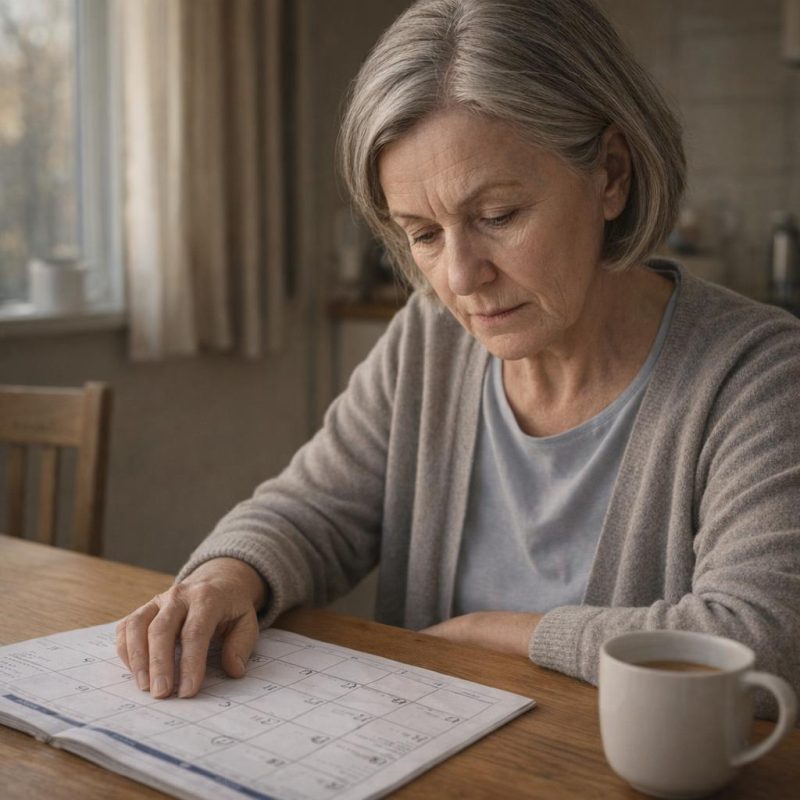 Image by RM AI
Communication Exercises
It was sometime in December when Michael and Jenna stayed for dinner after pickup, and the conversation turned to what they'd been working on in their sessions. I hadn't pushed — I never pushed — but Michael brought it up himself, almost like he wanted to talk about it. He said they'd been doing active listening exercises, where one person speaks and the other has to reflect back what they heard before responding. He demonstrated it a little, turning to Jenna and repeating something she'd just said in his own words, and she smiled and nodded. Jenna talked about setting shared goals — not just for the marriage, but for what they wanted their life to look like in five years, ten years. She said the counselor had them write things down separately and then compare, and that some of the answers had surprised them both. I asked a few questions — what kinds of goals, what had surprised them — and they answered in that careful, general way people do when something is still tender and private. I didn't press. It all sounded reasonable to me, the kind of work I imagined good counseling involved. I felt reassured sitting there at my own dinner table, watching them pass the bread and talk easily with each other. The descriptions they gave were vague in the way that personal things often are, and I found I could picture some of it but not all, and I let that be enough.
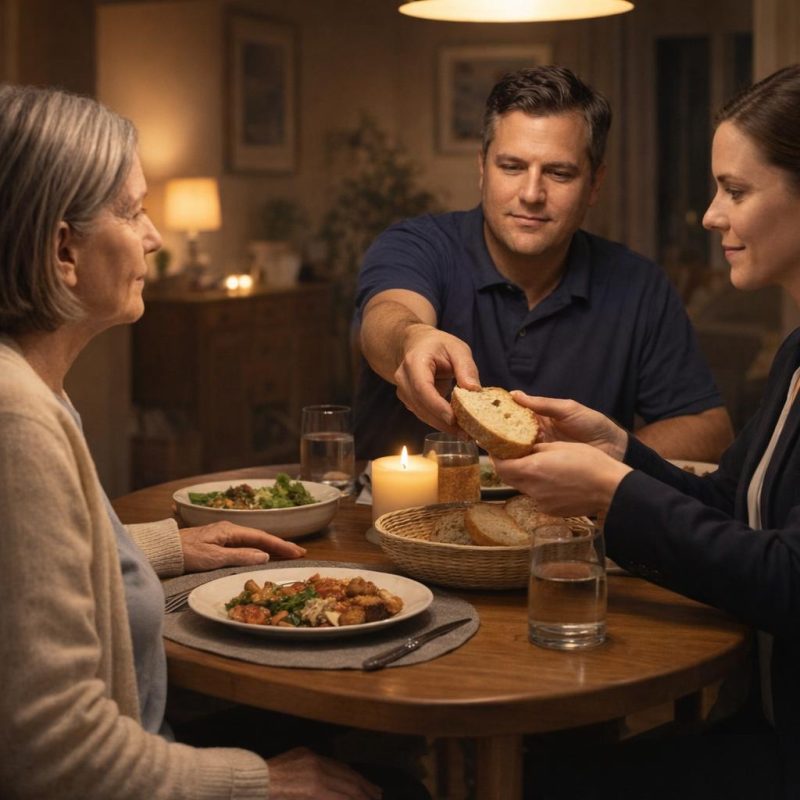 Image by RM AI
The Children's Observations
Sophie had always been a talker. From the time she could string sentences together, she'd narrated her entire inner life without any apparent filter, which I'd always loved about her. So it didn't surprise me when, one Saturday afternoon in January while we were doing a puzzle together, she started telling me about her parents. She said they were tired a lot, but the good kind of tired, she thought — like after soccer practice, not like when you're sick. I asked her what she meant by that, and she thought about it with the serious expression she gets when she's working something out. She said her mom and dad talked about their goals all the time at home now. I asked what kinds of goals, keeping my voice easy and light. She said they wanted to help people. She said they wanted to be better. I smiled and told her that sounded wonderful, and I meant it — it sounded exactly like what good counseling work produces, that outward-facing generosity that comes when a marriage finds its footing again. I went back to the puzzle feeling quietly encouraged. But a few minutes later, Sophie looked up and added, almost as an afterthought, that her parents talked about wanting to do something good for families someday, and I nodded and told her that her mom and dad had good hearts.
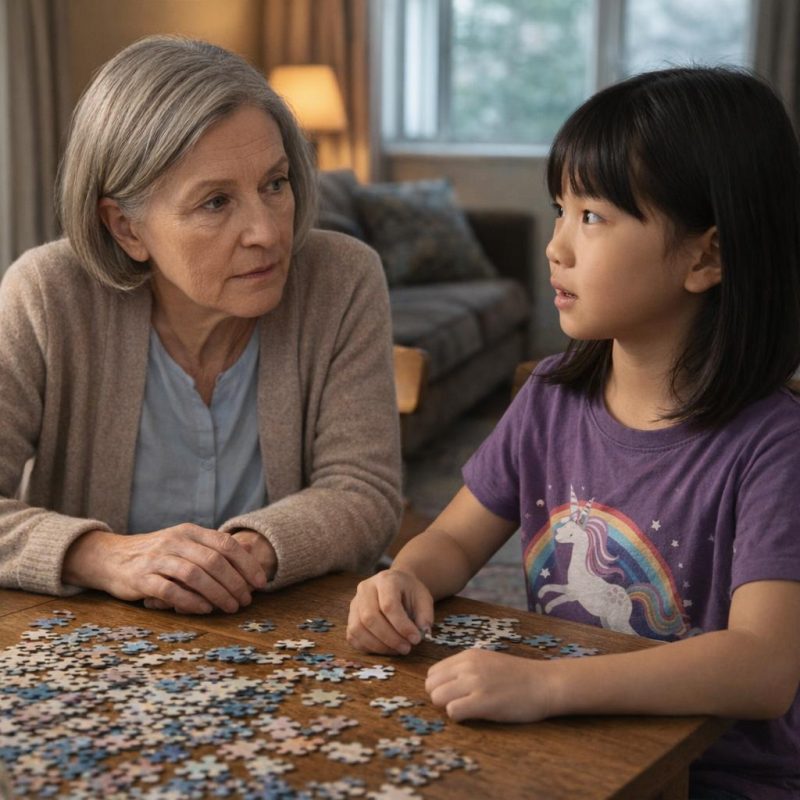 Image by RM AI
The Phone Call
It was a Saturday like any other — Sophie and her younger siblings were spread out at my kitchen table with a box of crayons and a stack of coloring pages I'd picked up at the dollar store. The house smelled like the chicken soup I had going on the stove, and I was refilling juice cups when my phone rang. I almost let it go to voicemail. The woman on the other end introduced herself as Dr. Morrison, and she said she was calling from the family counseling program. I felt a small warm flutter — I'd always been glad Michael and Jenna had taken that step, and I assumed this was some kind of check-in call, maybe a reminder about a follow-up appointment. Dr. Morrison asked if I was Michael's mother, and when I said yes, she paused in a way that made me set down the juice pitcher. She said she was trying to reach Michael and Jenna because they had missed an important meeting, and she was hoping I might be able to pass along a message. I told her of course, and I asked if it was about rescheduling a session. She paused again, and this time the pause was longer. Sophie looked up from her coloring and asked if I wanted the orange crayon. I smiled at her and shook my head, and I pressed the phone a little closer to my ear, waiting for Dr. Morrison to say something that would make the pause make sense.
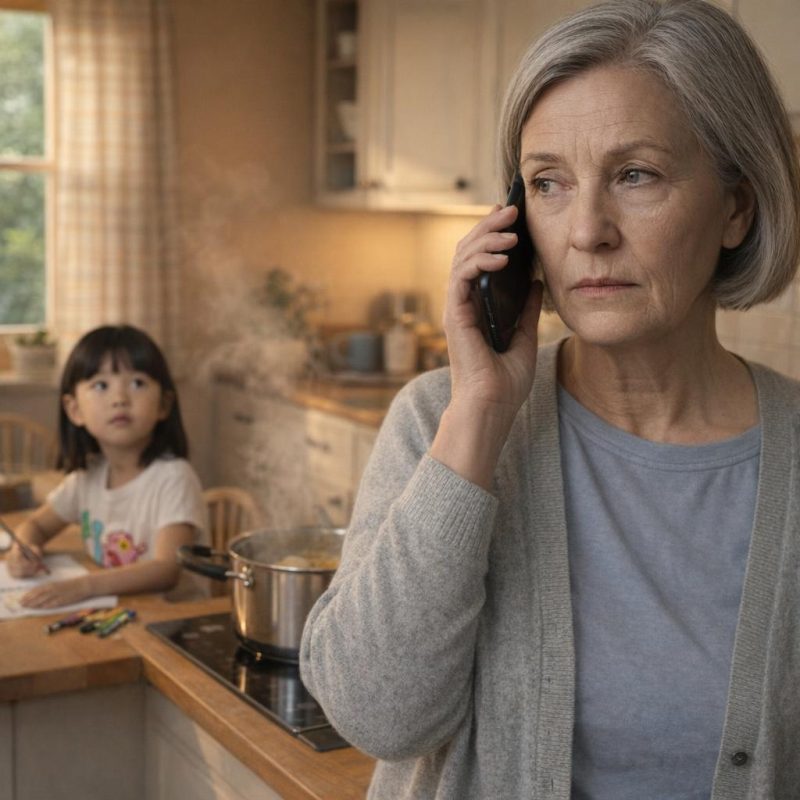 Image by RM AI
Never Attended
Dr. Morrison asked me to hold for just a moment while she pulled up her records. I stood at the kitchen counter listening to the faint sound of papers shuffling on the other end of the line. Sophie had gone back to her coloring, humming something tuneless and cheerful, and I watched her without really seeing her. When Dr. Morrison came back on, her voice was careful and measured. She said that Michael and Jenna had registered for the program nearly a year ago. She said they had filled out all the intake paperwork and been assigned a counselor. And then she said the thing that stopped me cold. She said they had never attended a single session. Not one. I asked her to repeat that, because I was certain I had misheard her. She repeated it, gently but clearly — not one session in almost twelve months. She asked if I knew whether something had come up, whether there had been a change in their situation, whether I had any idea why they might have stopped coming before they ever started. I told her I didn't know. My voice came out steadier than I felt. I thanked her and told her I would pass along her message, and I ended the call and set the phone down on the counter. Sophie was still humming. The soup was still simmering. Everything in the kitchen looked exactly the same as it had five minutes ago, and yet something had shifted in a way I couldn't yet name, and the weight of it settled somewhere in the middle of my chest and stayed there.
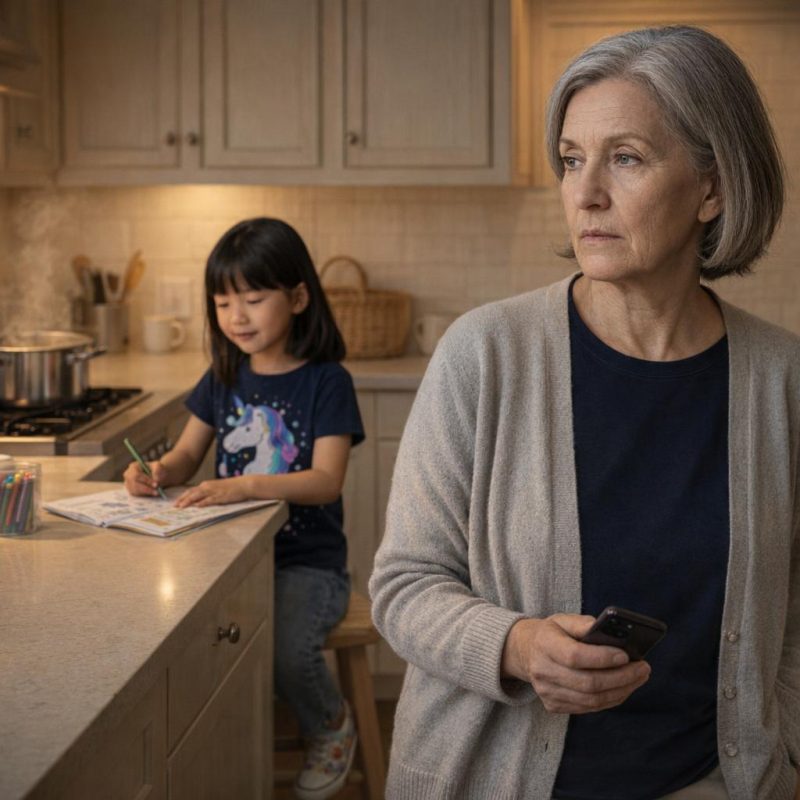 Image by RM AI
Frozen
I don't know how long I stood at that counter before I made myself sit down. Sophie glanced up at me once and asked if I was okay, and I told her I was fine, that I'd just had a funny phone call. She accepted that the way children do when they trust you completely, and went right back to her drawing. Her little brother was working on a dinosaur page with great concentration, his tongue pressed to the corner of his mouth. Everything about the scene was ordinary and soft and safe, and I sat in the middle of it feeling like the floor had shifted two inches to the left without anyone else noticing. I kept turning the same thought over in my mind — nearly a year. Every Saturday for nearly a year, I had driven over or they had dropped Sophie off, and I had spent those mornings feeling quietly proud of them for doing the hard work. I had told myself that the tiredness I saw in their faces was the good kind, the kind that comes from growth. I had believed every bit of it. I hadn't questioned a single Saturday. I pressed my hands flat on the table and looked at the coloring pages scattered between the crayons and the juice cups, and I tried to find some explanation that would make what Dr. Morrison had told me untrue. I couldn't find one. The kitchen was warm and full of small sounds, and the silence inside me pressed down like something with real weight.
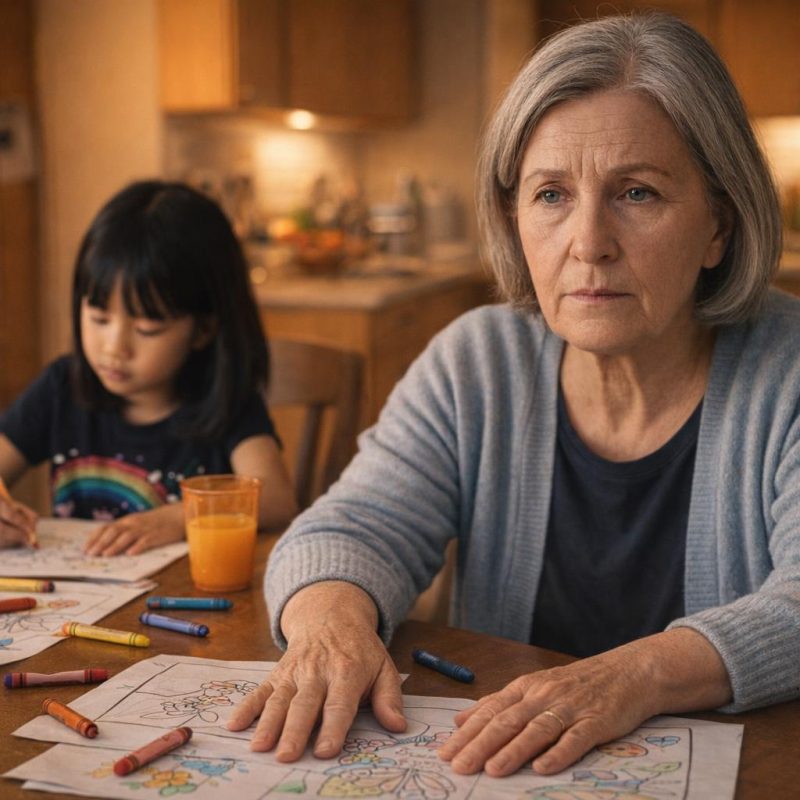 Image by RM AI
The Affair Question
After I got the children settled with a movie that afternoon, I sat in the armchair by the window and let my mind go where it had been trying to go all day. If they hadn't been at counseling, they had been somewhere else. And if they had lied about where they were going, there had to be a reason. The first place my mind went — the place I didn't want it to go — was an affair. It was the obvious answer, wasn't it? People lie about their whereabouts for a handful of reasons, and that one sits at the top of the list. I tried to think about which of them it might be, and the thought made me feel genuinely ill. Michael, with his tired eyes and his talk about wanting to be better — was that guilt? Was that the particular exhaustion of a man carrying something he couldn't put down? Or Jenna, always so composed, always so careful about what she said and how she said it — was that control the kind that comes from keeping a secret? I pressed my fingers against my temple and tried to think clearly, but the images kept coming anyway, the way they do when you're trying not to imagine something. My hands had started to shake somewhere in the middle of all of it, and I pressed them together in my lap and stared out the window at the gray January sky, and the scenarios my mind kept producing made my stomach turn.
 Image by RM AI
Together
I sat with that fear for the better part of the evening, and then something shifted. I started going back through my memories of Saturday mornings, one by one, the way you'd go through a drawer looking for something specific. And what I kept finding was the same image, over and over: the two of them leaving together. Not Michael slipping out early while Jenna made excuses. Not Jenna arriving late with a story about traffic. They always left in the same car, at the same time, and they always came back the same way — together, a little tired, sometimes talking quietly to each other before they came inside. I had watched it happen dozens of times without thinking anything of it, because it had looked exactly like what I thought it was. But now, turning it over with fresh eyes, it didn't fit the picture I'd been afraid of. An affair is a solitary thing, a secret kept from the other person. Whatever Michael and Jenna were doing on those Saturday mornings, they were doing it side by side. That thought loosened something in my chest that had been pulled very tight all day. It didn't answer anything — I still had no idea where they had been going or why they had felt the need to lie about it — but the worst version of the story, the one that had made my hands shake, didn't hold up. I sat with that small relief and the larger confusion it left behind, and let them settle together.
 Image by RM AI
Watching Closer
By the time I went to bed that night, I had made up my mind about one thing: I wasn't going to call Michael and demand an explanation. Not yet. I'd raised him, and I knew how he responded to being cornered — he'd go quiet and careful, and I'd get the version of the truth he thought I could handle, which wasn't the same thing as the truth itself. If I wanted to understand what was actually going on, I needed to watch first and ask questions later. I thought about the small things I'd already noticed without registering them — the tiredness that Sophie had described as the good kind, the way Michael and Jenna sometimes exchanged a look when they thought I wasn't paying attention, the way Jenna always seemed to be carrying something just below the surface of her composure. I hadn't thought much of any of it at the time. Now I turned each detail over carefully, the way you handle something fragile, trying to see it from a different angle. I owed them the chance to explain themselves in their own time and their own words. But I also owed myself the truth, and I wasn't going to get it by asking before I understood what I was asking about. I would pay closer attention. I would watch how they moved through a Saturday morning, what they said and didn't say, what they carried in with them when they came through the door. The decision settled into something that felt less like suspicion and more like quiet determination.
 Image by RM AI
The Casual Mention
The following Saturday, Michael and Jenna arrived right on time, the way they always did. Michael had Sophie's backpack over one shoulder and was telling her something that made her laugh as they came up the front walk. Jenna was a step behind them, her auburn hair pulled back, her coat buttoned against the cold. Everything looked completely normal. I let them in, took the backpack, got Sophie set up with her things, and then I put the kettle on and made small talk about the weather and whether the roads had been icy. I waited until there was a natural lull, until we were all just standing in the kitchen in that easy way families do, and then I mentioned it the way you'd mention anything unremarkable. I said I'd gotten a call earlier in the week from someone named Dr. Morrison — that she'd said she was from a counseling program and had asked me to pass along a message. I kept my voice light and my eyes on the kettle. But I was watching them in my peripheral vision, and I saw it happen — both of their faces changed in the same instant, a quick, involuntary shift that was there and then smoothed over so fast I might have missed it if I hadn't been looking for exactly that.
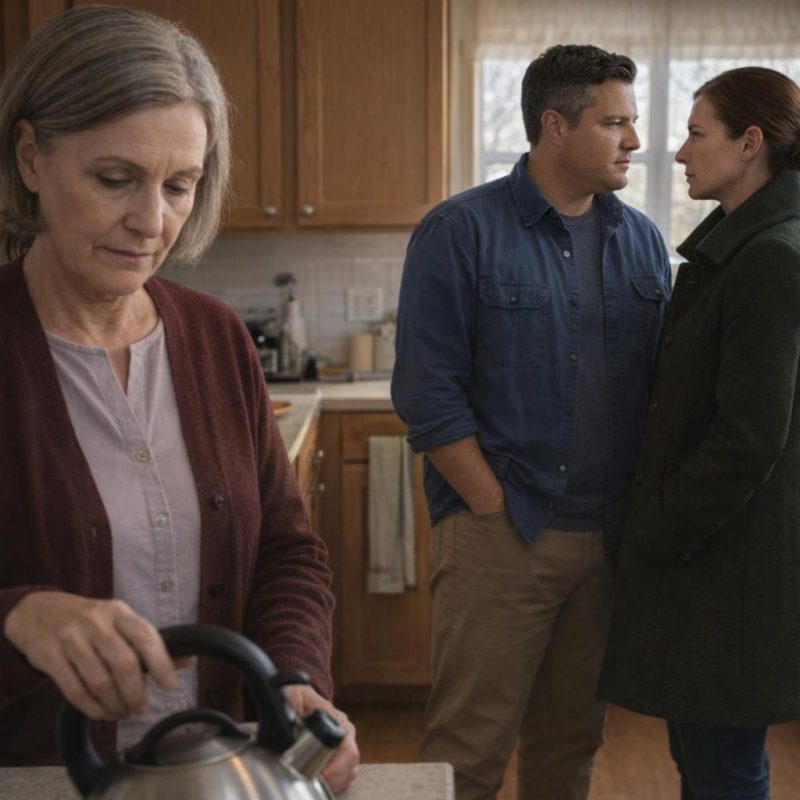 Image by RM AI
Synchronized Defense
Michael spoke first. He said Dr. Morrison must have gotten them mixed up with another couple, that there had been some kind of administrative error, that the program had apparently had issues with their records. He said it easily, without hesitating, and his voice was steady. Before I could respond, Jenna added that they had actually looked into a different counseling option and must not have properly cancelled with that office, and that she was sorry I'd been bothered with it. The two explanations fit together neatly, one picking up where the other left off. I nodded and said I see, and I poured the hot water into the mugs, and I kept my face as neutral as I could manage. Something about the whole exchange felt off to me — not wrong in any way I could point to directly, just too smooth, too immediate, the words arriving before I'd even finished my sentence. I noticed that neither of them looked at each other while they were speaking, which struck me as strange, because people usually glance at each other when they're working something out together. They had both looked straight at me, steady and calm. And then, when the explanation was finished and the silence came back in, they looked at each other — just for a half second, a quick, flat exchange that was over before it began.
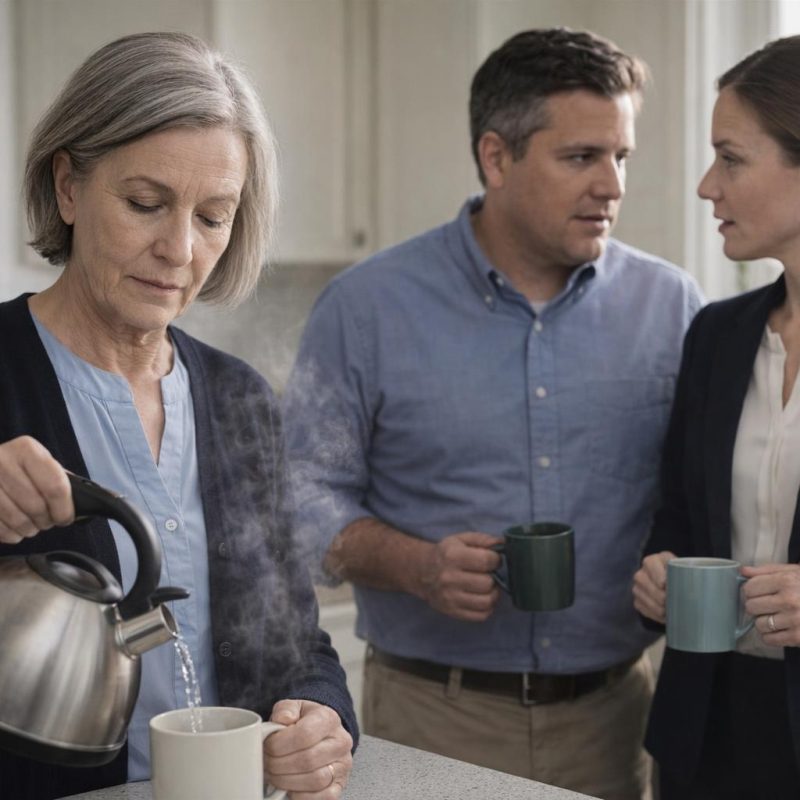 Image by RM AI
The Confusion Excuse
I let Michael finish before I said anything. He was confident about it — steady voice, no stumbling, the kind of calm that comes from having thought something through. He said Dr. Morrison must have confused them with another couple, that there was probably a pair with a similar last name in the same program, and that record-keeping at those offices was notoriously unreliable. Jenna nodded along and added something about how they'd heard the program had grown quickly and the administrative side hadn't kept up. It all sounded reasonable on the surface. But I kept thinking about what Dr. Morrison had actually said to me. She hadn't just said they were absent — she'd mentioned their registration date. She'd referenced the intake paperwork. You don't pull up a registration date and read it out with that kind of specificity if you're looking at the wrong file. I didn't say any of that. I just nodded and said it sounded like a frustrating situation. Michael held eye contact the whole time he was talking, which I noticed because it felt slightly too deliberate, like a person who has been told that looking away makes you seem dishonest. I wrapped both hands around my mug and let the silence settle. The explanation had covered the absence. What it hadn't covered was why Dr. Morrison had known exactly when they signed up.
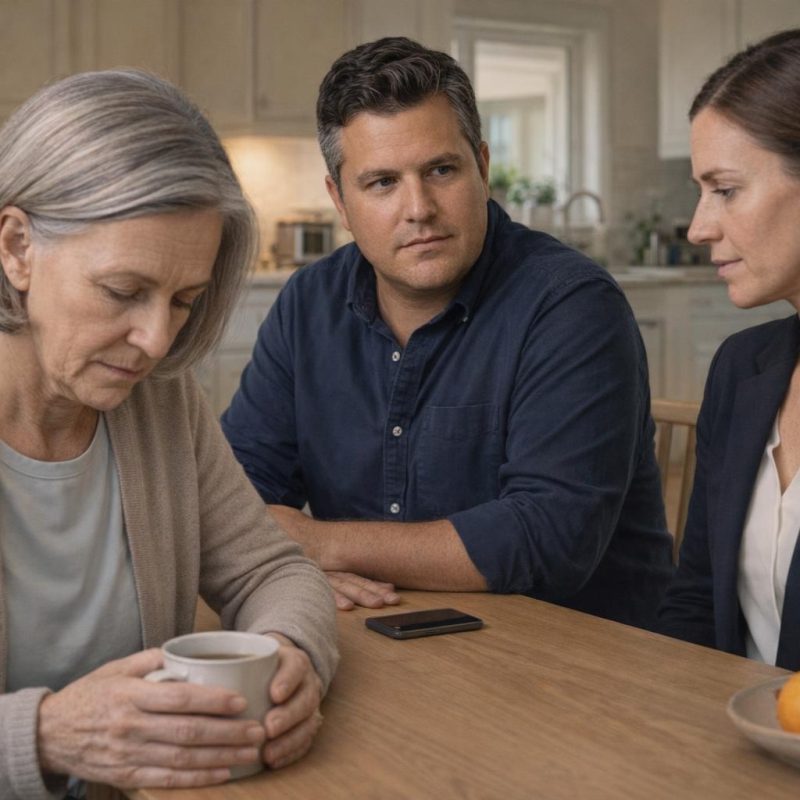 Image by RM AI
Subject Change
Before I could find a way back to the question sitting in my chest, Jenna turned toward the hallway and called out Sophie's name in that bright, carrying voice she uses when she wants the room to shift. Sophie came padding in from the back of the house, and suddenly we were talking about the school science fair and whether Sophie's project on butterfly migration was going to need a display board or just a poster. Michael leaned forward and asked Sophie something about the caterpillar she'd been keeping in a jar on her windowsill, and just like that the whole temperature of the kitchen changed. I found myself answering a question about whether I had any old shoe boxes Sophie could use, and then we were discussing glue sticks and whether metallic markers were easier to read than regular ones. I answered everything they asked me. I smiled when Sophie demonstrated how wide the display board needed to be with her arms stretched out. But some part of me was still back at the moment before Sophie walked in, still holding the thread of what I'd been about to say. By the time Sophie went back to her room to find her sketch of the butterfly life cycle, the counseling conversation was simply gone — not resolved, not addressed, just quietly replaced. The kitchen felt warm and ordinary, and I sat with the strange stillness of a question I hadn't been allowed to finish asking.
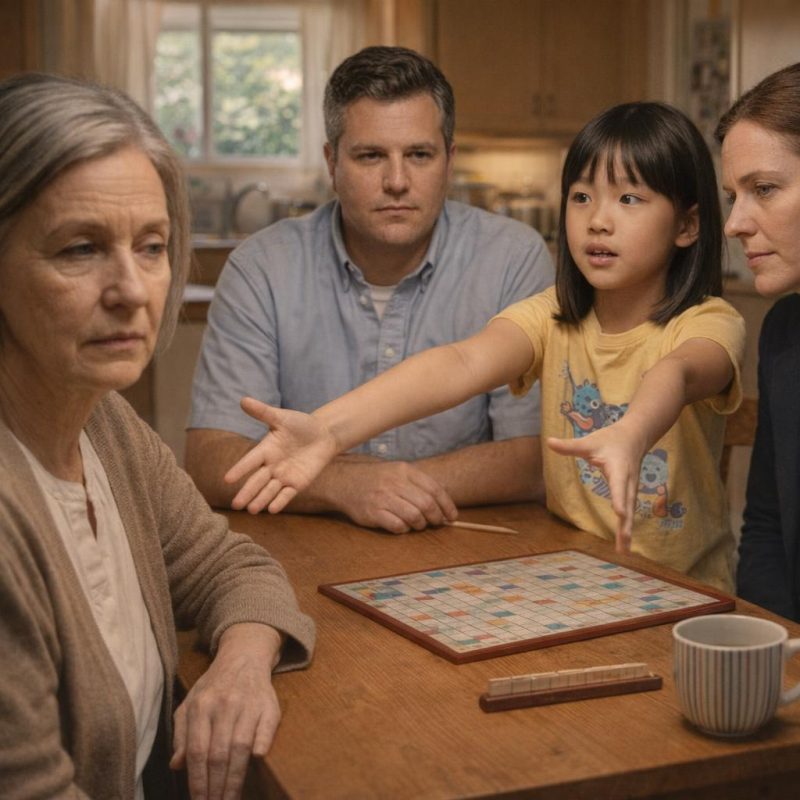 Image by RM AI
Quiet Investigation
After they left that evening, I sat at my kitchen table for a long time without turning on the television. I went back over the conversation the way you replay a film you're not sure you understood — pausing on the small things, the timing, the way the explanations had arrived so quickly and fit together so neatly. I thought about the look they'd exchanged when it was over, that half-second of eye contact that had passed between them like a signal. I thought about how Jenna had called Sophie's name at exactly the right moment. I couldn't prove any of it meant what I suspected it might mean. But I also couldn't keep sitting with the feeling that I was missing something important and doing nothing about it. I wasn't going to confront them again — not yet, not without something more solid than a bad feeling and a timing that seemed too convenient. If I pushed now and I was wrong, I'd damage something that mattered to me. And if I pushed now and I was right, they'd just find a smoother explanation. What I needed was to understand what was actually happening before I said another word about it. I decided that night that I would pay closer attention. I would ask quieter questions. I would watch and listen and wait until I had something real to hold onto. That decision settled into me slowly, the way a long exhale does — not dramatic, just certain.
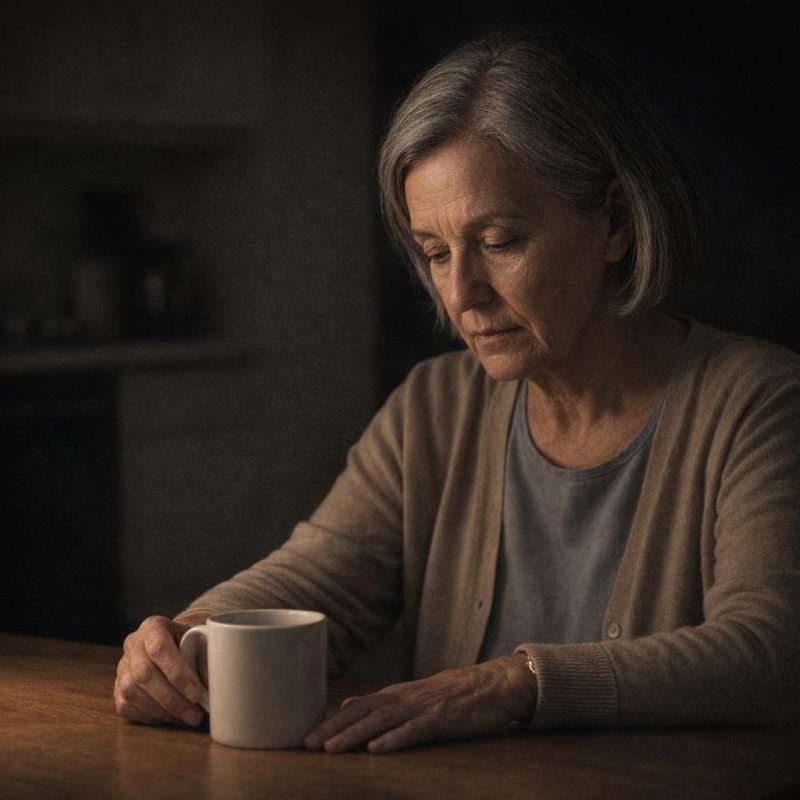 Image by RM AI
Sophie's Innocent Comment
The following Saturday, Sophie and I spread newspaper across the dining room table and set up her watercolor paints. She was working on a picture of a horse, which kept changing shape as she added more water to the brush, and she narrated the whole process in that easy, unfiltered way she has when she's concentrating on something else entirely. I asked her about school, about her friends, about whether the butterfly project had come together. She answered everything without looking up from the paper. At some point she said, almost as an aside, that her mom and dad were really excited this week. I asked what about, keeping my voice light. She said about their project. She said it the way children say things they assume are common knowledge — matter-of-factly, without any sense that it might be news to me. I asked which project she meant, and she looked up from the horse for the first time, a small furrow between her brows, like I'd asked something slightly odd. She said the one they were always working on. She said they talked about it all the time. I kept my expression easy and asked her to tell me more about it, and she looked back down at her painting and said it was the one that was going to help a lot of people. I set my coffee mug down carefully on the edge of the newspaper. She said her parents called it their most important project yet.
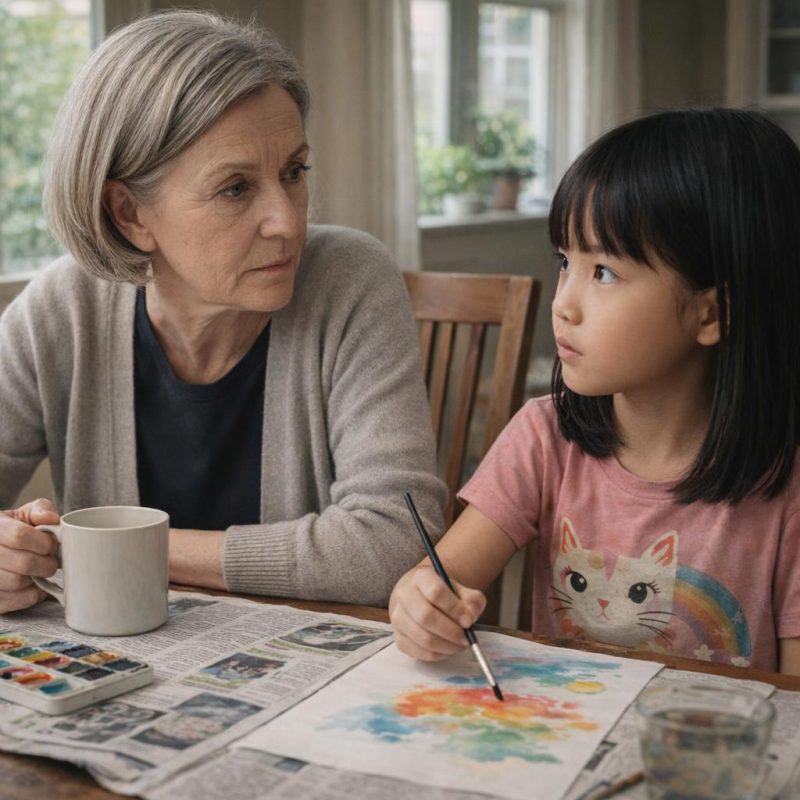 Image by RM AI
The Project
I asked Sophie what kind of help she meant, and she shrugged the way kids do when they're repeating something they've heard but not fully processed. She said something about families who needed support, people who were going through hard times. She said her parents talked about it at dinner sometimes, not to her directly but in that way adults talk around children when they think they're not being listened to. She said they used words she didn't always understand. I asked if she knew where this project was, and she thought about it for a moment and said she thought it was somewhere in the city, but she wasn't sure exactly where. She went back to adding brown to the horse's mane, unbothered. I kept my hands busy with the paint water, rinsing her brushes when she handed them to me, trying to keep my face from showing what was moving through my mind. This project — helping families, somewhere in the city, something they talked about at dinner like it mattered deeply to them — didn't fit anywhere in the picture I thought I had. I turned it over from every angle I could think of and it didn't resolve into anything I recognized. Sophie hummed quietly to herself and asked if the horse's legs looked right. I told her they looked just fine. The not-knowing sat with me, heavy and shapeless, long after she'd moved on to painting the sky.
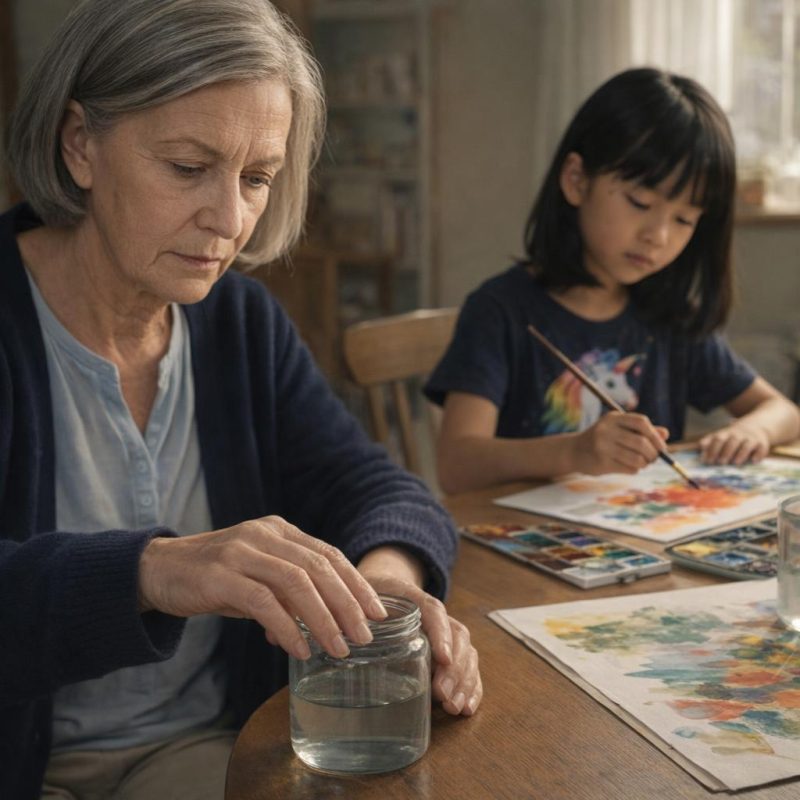 Image by RM AI
Assumed Knowledge
I tried once more, gently, asking Sophie if she could remember anything else her parents had said about the project — any names, any details. She set her brush down and looked at me with that particular expression children get when an adult is behaving unexpectedly. She said she thought I already knew about it. I asked her why she would think that. She said because her mom and dad talked about it like it was important to everyone in the family. She said it in a simple, factual way, the way she might say the sky is blue — not as a revelation, just as a thing that was obviously true. I asked what she meant by everyone, and she said she didn't know exactly, just that it seemed like a big deal to a lot of people. Then she picked her brush back up and returned to the horse, apparently satisfied that she'd answered the question. I didn't push further. She was seven years old and she'd already told me more than she probably should have, without knowing she'd told me anything at all. But what stayed with me after she went quiet was not the detail itself — it was the assumption underneath it. Michael and Jenna apparently spoke about this openly enough in their home that their daughter had absorbed it as shared family knowledge. Whatever this was, I was the only one who hadn't been told. I sat with that, and it felt lonelier than I'd expected it to.
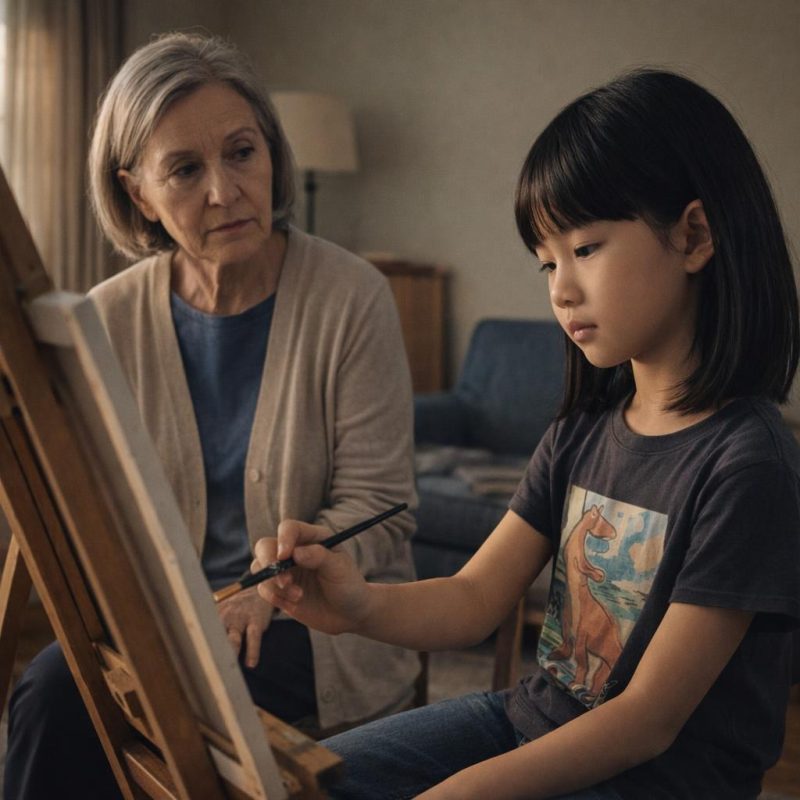 Image by RM AI
Social Media Search
That evening I opened my laptop at the kitchen table and pulled up Michael's social media page. I hadn't looked at it in months — I check in occasionally but I'm not someone who scrolls through feeds every day. I went back through his posts slowly, looking for anything from a Saturday, anything that might give me a location or a context. Most of what I found was what I expected: photos of Sophie at a soccer game, a picture of Jenna at someone's birthday dinner, a few things about work. He didn't post often. Neither did Jenna, whose page I checked next. Her posts were mostly about the children, a few shared articles about education and community programs. I scrolled back further, past the summer, into the early spring. There wasn't much. I was about to close the laptop when I found one — a photo Michael had posted about three months ago. It was slightly blurry, taken at an angle, showing what looked like the interior of a large room mid-renovation. The caption said something brief about good work happening in the city. I almost scrolled past it. Then I noticed the location tag attached to the post — a street address in a part of the city I didn't recognize at all, somewhere on the east side, nowhere near their neighborhood or his office. I leaned closer to the screen and read the address again.
 Image by RM AI
No Signs of Trouble
I wrote the address down on the notepad I keep by the phone and then sat back and tried to think clearly. I went over the last several months in my mind — every family dinner, every Sunday afternoon at my house, every phone call. I was looking for the signs I must have missed, the tension or the distance that would explain why two people might need marriage counseling. I couldn't find them. Michael and Jenna had seemed, by every measure I could apply, genuinely at ease with each other. They finished each other's sentences at the dinner table. They laughed at the same things. At Easter, Michael had reached over and tucked a strand of hair behind Jenna's ear without thinking about it, the kind of small gesture that belongs to people who are comfortable together. There had been no strained silences, no careful politeness that masks something harder underneath, no moments where I'd sensed one of them pulling away from the other. I'd been watching, even before I knew I was watching, and I hadn't seen any of it. I couldn't square what I was remembering with the idea of two people who needed help saving their marriage. Michael and Jenna, by every interaction I could recall, moved through their life together like a unit — and that absence of any visible crack between them left me more puzzled than anything else I had turned up.
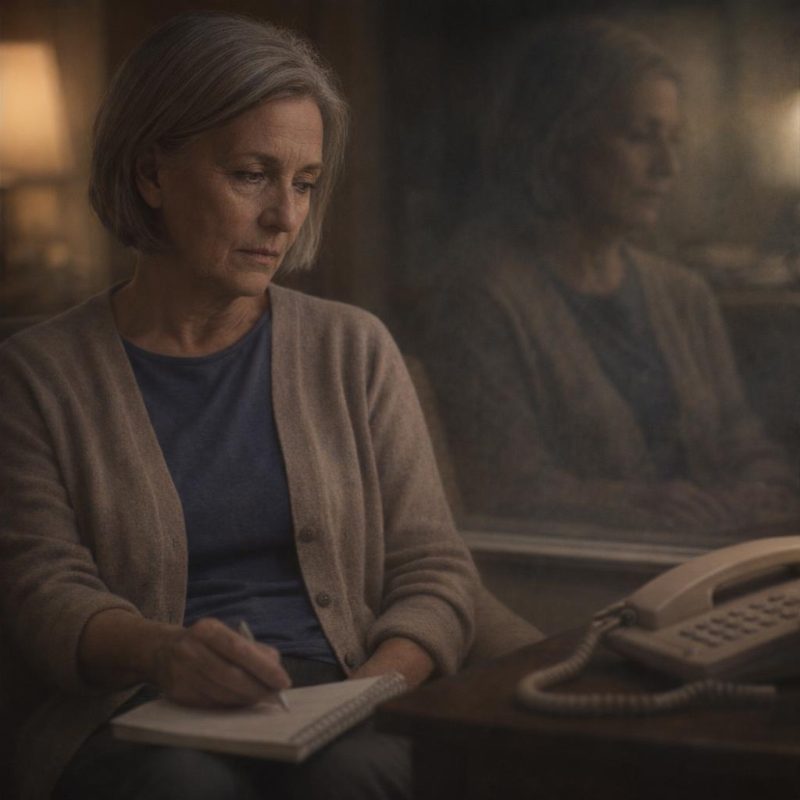 Image by RM AI
Behavioral Patterns
I started going back through the Saturdays in my head, one by one, the way you might flip through old photographs. I'd been so focused on the counseling story that I hadn't stopped to look at the details sitting right in front of me. They always arrived in casual clothes — jeans, old shirts, the kind of thing you'd wear to do yard work, not to sit across from a therapist. I'd noticed it at the time and thought nothing of it, told myself maybe they changed at the office or maybe therapists these days didn't care about that sort of thing. But now that I was paying attention, the clothes were only part of it. When they came back to pick up Sophie, they were tired in a particular way — not the wrung-out, red-eyed tired of people who'd been talking through hard things, but the kind of tired that lives in your shoulders and your lower back. Physical tired. Work tired. And their hands — I remembered now, more than once, noticing dirt under Michael's fingernails when he lifted Sophie up to hug her. I'd assumed he'd been gardening that morning before they left. I hadn't thought to wonder why Jenna's hands sometimes looked the same way. I kept turning it over, trying to find the shape of it. And then I remembered the bag — a worn canvas bag, olive green, with a fraying strap. They had it every single Saturday, tucked in the back seat or slung over Michael's shoulder when they walked up my front path.
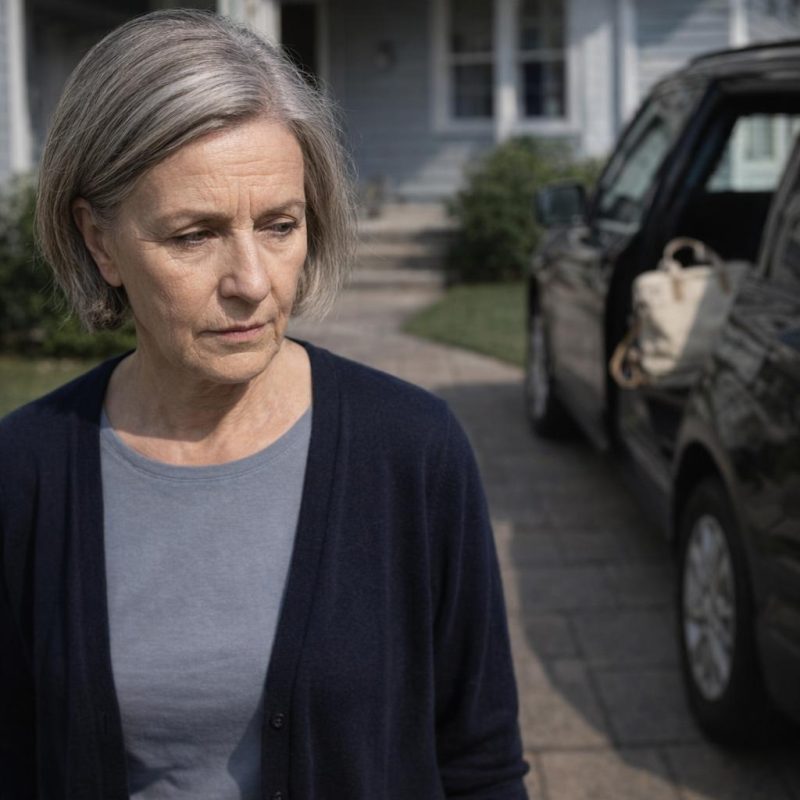 Image by RM AI
The Cash Withdrawals
The bank statement was sitting on the kitchen counter when I went to refill Sophie's juice one Saturday afternoon, maybe three weeks before I finally decided I'd had enough of wondering. I wasn't snooping — it was just there, face up, next to the fruit bowl. I wouldn't have thought anything of it except that my eye caught a column of withdrawals, one after another, each one marked simply as cash. I stood there longer than I should have, reading down the page. Each withdrawal was somewhere between two and four hundred dollars. Some months had two of them. I did the rough math in my head and felt my stomach tighten. It wasn't a fortune, but it wasn't nothing either — not spread across a year, not at that frequency. I pulled out my phone and took a photograph before I could talk myself out of it, then set the statement back exactly as I'd found it and walked back to the living room like nothing had happened. Sophie was building something with her blocks and didn't look up. I sat down on the couch and tried to keep my face neutral. I kept thinking there had to be a reasonable explanation — a home repair paid in cash, a contractor who didn't take cards, something ordinary and forgettable. But the withdrawals were too regular, too consistent, spaced out like a schedule someone was keeping. I looked at the photo on my phone that evening after I got home, and the steadiness of those numbers sat with me in a way I couldn't shake.
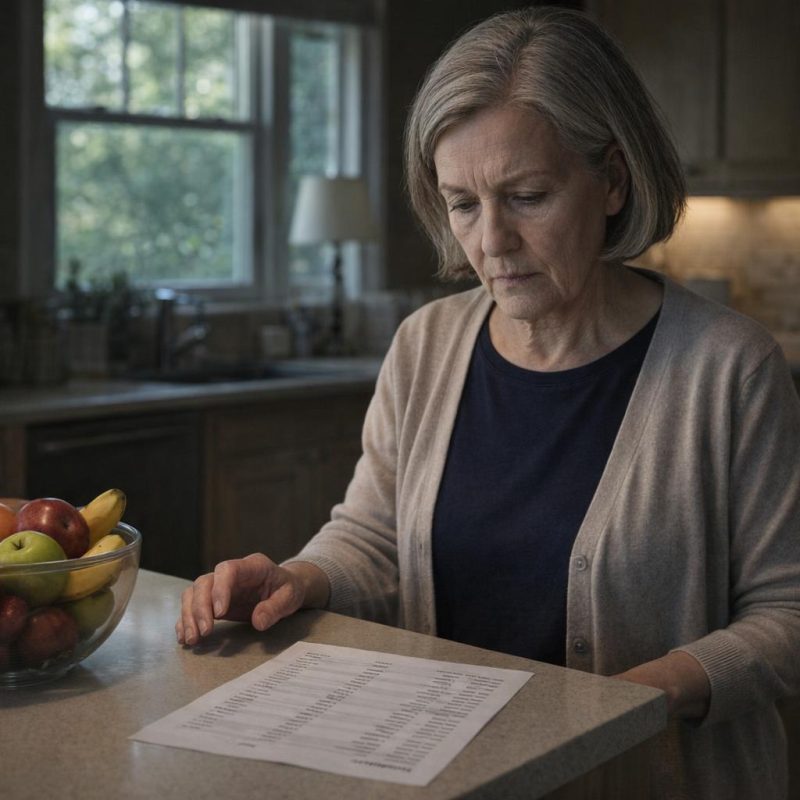 Image by RM AI
Bills Paid
I spent a few days going over everything I knew about Michael and Jenna's finances — not because I had access to their accounts, but because you pick things up over the years when you're close to a family. I knew their mortgage payment had gone through without interruption because Michael had mentioned refinancing last spring and seemed relieved about the new rate. I knew their utility bills were current because Jenna had once complained, almost proudly, about switching providers to save forty dollars a month — the kind of detail you only share when things are under control. Sophie's school fees were paid, her activities were running, the house was kept up. There was no sign anywhere of a family quietly falling behind. That was what made the cash withdrawals harder to set aside. If they'd been struggling, the money leaving would have made a kind of sense — catching up on something, covering a gap. But everything I could see pointed to a household that was managing just fine. The cash wasn't filling a hole. It was going somewhere else entirely, somewhere separate from the ordinary machinery of their life. I thought about that for a long time. People don't pull out several hundred dollars in cash, month after month, on a schedule, without a reason. Whatever the reason was, it wasn't desperation. It felt more like intention — like money being directed somewhere specific, quietly and consistently, over the course of a year.
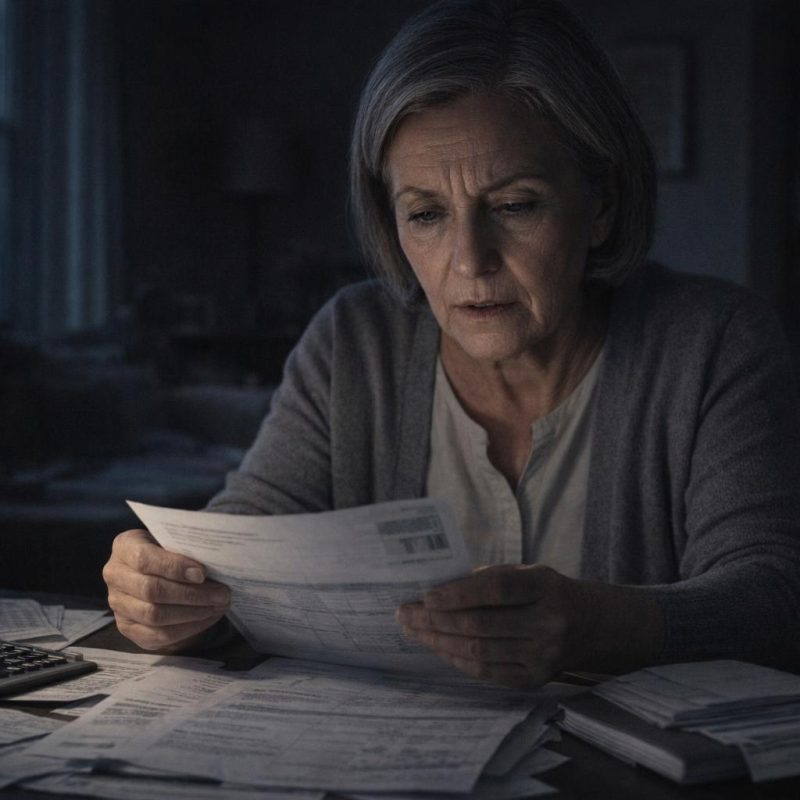 Image by RM AI
The Decision to Follow
I sat at my kitchen table on a Thursday evening with my notepad and my phone and the photograph of that bank statement, and I made myself say it plainly: I was not going to figure this out from my living room. I had the canvas bag and the work-tired hands and the cash withdrawals and the fact that they had never once set foot in Dr. Morrison's office, and none of it added up to anything I could name. The only way I was going to get an answer was to see for myself where they went. I knew what that meant. It meant following my son's car on a Saturday morning like I didn't trust him — because, if I was being honest with myself, I didn't, not about this. The thought made me feel small and a little ashamed. Michael was not a child. He was a grown man with a family, and whatever he was doing on those Saturdays was his business, and following him felt like a violation of something I'd always believed about how you treat the people you love. But I also thought about the year of Saturdays I'd given, and the lie that had been the reason for all of them, and I thought about Jenna, and Sophie, and what I might be missing. I decided I would ask my neighbor to take the children for the morning. I would park down the street and wait. I would follow them, and I would feel guilty about it the whole way there, and I would do it anyway.
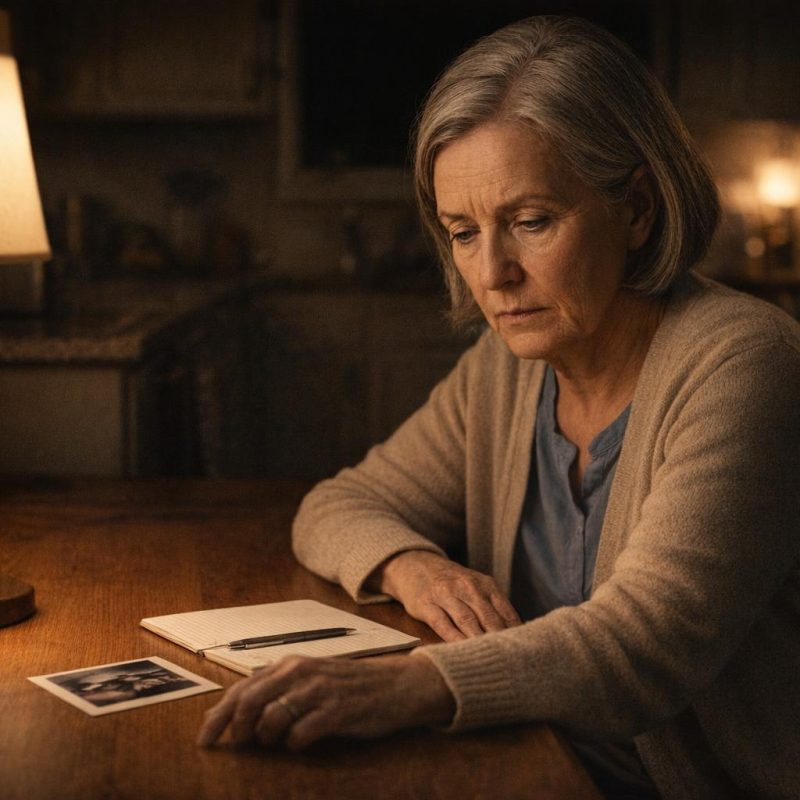 Image by RM AI
The Route
My neighbor Carol agreed without asking too many questions, bless her, and by eight-thirty that Saturday morning I was sitting in my car half a block down from my own house, engine running, feeling like a fool in a movie I hadn't meant to be in. Michael and Jenna arrived right on time, the way they always did. I watched them come up the front path — Michael with the canvas bag over his shoulder, Jenna with her hair pulled back — and I waited while they went inside and said their hellos to Sophie. About fifteen minutes later they came back out, got into their car, and pulled away from the curb. I gave them a full block before I followed. I kept two or three cars between us whenever I could, which wasn't always easy on the quieter streets, and I told myself more than once to just turn around and go home. I didn't. They drove steadily, no hesitation, no wrong turns, the way people drive a route they know by heart. We moved through our neighborhood and then out past the commercial strip I knew well, past the park where I used to take Michael when he was small, past the edge of town where the streets start to widen and the buildings thin out. They weren't heading toward any part of the city I associated with offices or clinics. The familiar landmarks fell away behind me, and the distance between where we'd started and wherever we were going stretched out quietly around my car.
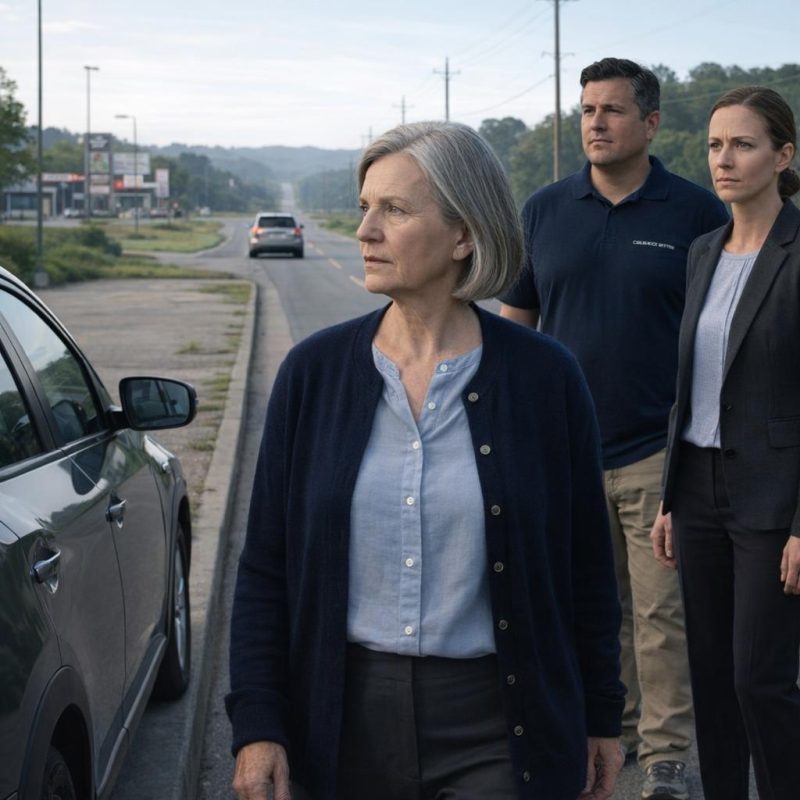 Image by RM AI
Riverside District
We drove for nearly an hour. I hadn't expected that. I'd imagined something closer, something I might have passed without noticing, but they took us well out of any neighborhood I recognized, deeper into a part of the city I'd had no reason to visit in years. The streets changed gradually — the storefronts got older, the signage more faded, a few windows boarded up with plywood that had weathered through more than one season. It wasn't dangerous-feeling, exactly, but it was worn in the way that places get when investment has moved on and left them to manage on their own. I saw a laundromat with a hand-lettered sign, a corner grocery with metal grating still pulled halfway down even though it was mid-morning, a vacant lot where something had been torn down and nothing had gone up in its place. Michael and Jenna drove through it all without slowing, without consulting a phone or a map, turning where they needed to turn like they'd done it many times before. I followed at a distance, trying to keep at least one car between us, my hands tighter on the wheel than they needed to be. I didn't know this part of the city. I didn't know what they were doing here. I just kept driving, watching their car move ahead of me through streets I didn't recognize, past buildings that looked like they were waiting for something to change.
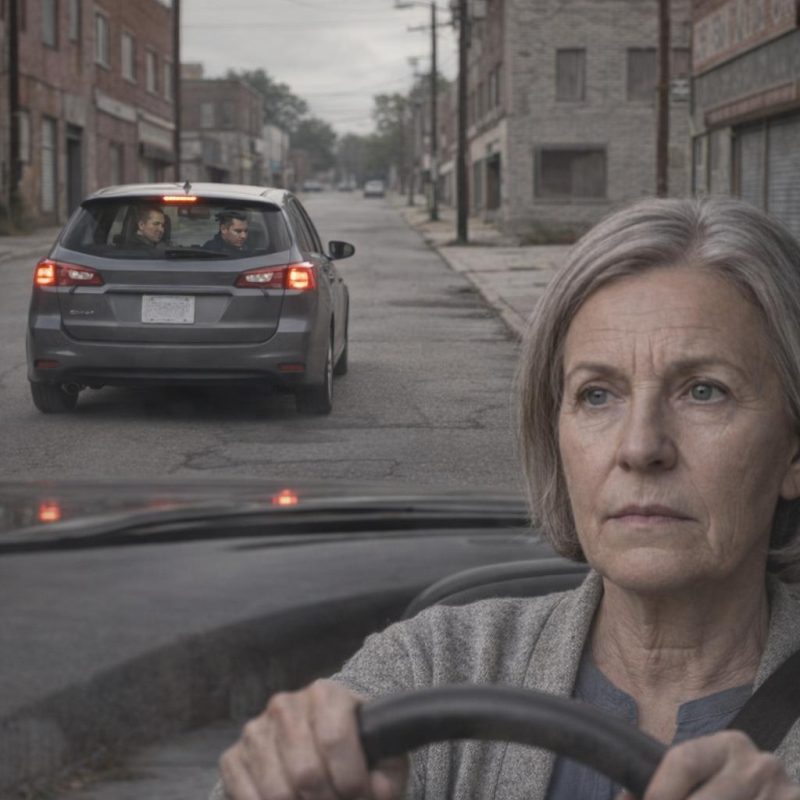 Image by RM AI
The Old Building
They turned into a small parking lot off a side street and I pulled over half a block back, close enough to see but far enough, I hoped, that they wouldn't notice. The building in front of them was three stories, brick, the kind of structure that had probably been a warehouse or a light industrial space at some point in its life. Most of it still looked its age — worn brick, old mortar, the upper floors with their original windows intact. But the first floor was different. The windows there were new, clean double-paned glass that caught the morning light in a way the rest of the building didn't. Scaffolding ran along the left side of the exterior, and I could see fresh pointing on some of the brickwork nearby, the pale gray of new mortar against the darker old. Someone was working on this building, carefully and in stages. Michael got out of the car and reached into the back seat for the canvas bag. Jenna came around from the passenger side and they stood together for a moment in the lot, not talking, just orienting themselves the way people do when they've arrived somewhere and are shifting into a different mode. Then they walked toward the front entrance — not hesitantly, not like visitors, but with the easy familiarity of people who knew exactly where they were going — and the door closed behind them.
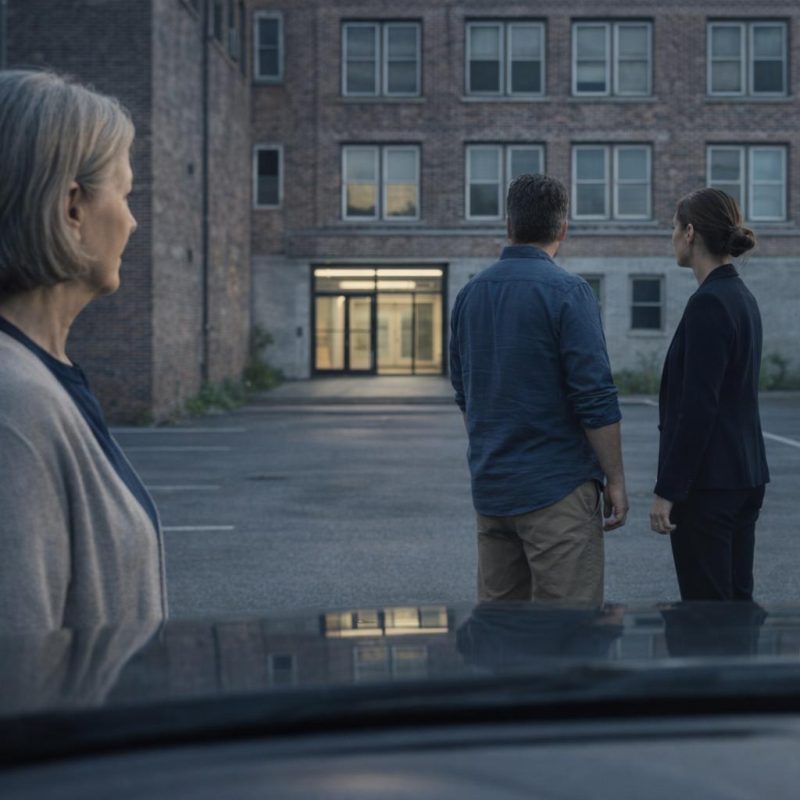 Image by RM AI
Public Records
I drove home with more questions than I'd left with, which I hadn't thought was possible. That evening I sat down at my computer and started with what I had: the address of the building, which I'd written on a scrap of paper while I was parked on that side street. I found the county property records database without too much trouble — I'd used it years ago when Robert and I were looking at a piece of land — and I typed in the address. The record came up quickly. The building had changed hands six months ago. Before that it had sat in the name of a holding company for nearly a decade, the kind of entry that suggests a property waiting for someone to decide what to do with it. The sale price was listed, modest for a three-story commercial building, and the buyer's name was entered in plain text in the ownership field. I leaned closer to the screen and read it twice. The new owner was listed under a name I didn't recognize — a small nonprofit organization I had never heard of.
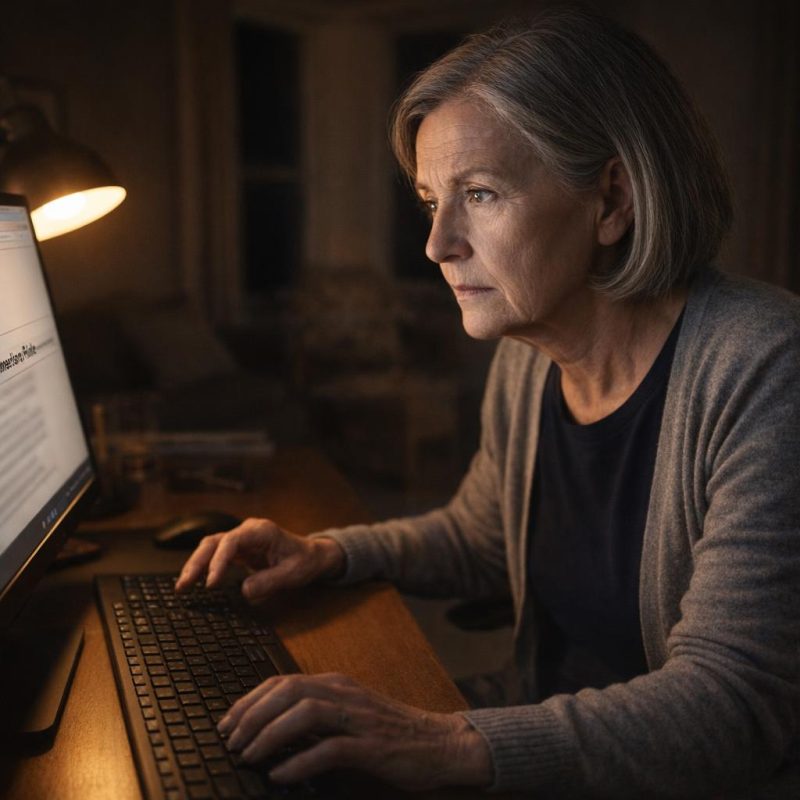 Image by RM AI
No Public Connection
I spent the better part of that evening digging through every public record I could find on the nonprofit. The state's charity registration database was easier to navigate than I expected — Robert had always said I was better with computers than I gave myself credit for. I found the organization's filing without much trouble. The stated purpose was community support services, which told me almost nothing. I read through the registration documents twice, looking for anything familiar. The founding date, the registered agent's name, the listed address — none of it connected to anything I already knew. Then I found the board member list, a short column of names attached to the annual report. I read each one carefully. There were five names total. I didn't recognize a single one of them. I went back and checked the founding documents again, thinking maybe Michael and Jenna had been listed there instead. Nothing. I searched the organization's name alongside both of their names in a general search, hoping something would surface — a news mention, a community announcement, anything. The results came back thin. A few local news items about the building's renovation, a brief mention in a neighborhood newsletter. Neither name appeared in any of it. I sat back and looked at the board member list one more time, five names that meant nothing to me, and not one of them was my son or my daughter-in-law.
 Image by RM AI
Hidden Involvement
I closed the laptop and sat with that for a while. It wasn't that their names were simply missing — names get left off things for all kinds of reasons. What stayed with me was the consistency of it. Not one document, not one public filing, not one news item. If they were spending every Saturday at that building, if they were connected to whatever was happening inside it, someone had made a point of keeping their names out of the paperwork. I didn't know enough yet to say why. Maybe there was a legal reason. Maybe the nonprofit structure required it. I turned those possibilities over and tried to let them settle, but they didn't quite fit. The counseling story had been specific and sustained — not a vague excuse but a detailed, repeated explanation that Jenna had offered me every single week for months. That kind of consistency takes effort. And now here was this building, this organization, this whole operation that seemed to involve them directly, and their names were nowhere in the public record. I thought about the cash withdrawals again, the ones I'd noticed in the bank statements. I still didn't know where that money had gone. But whatever was happening at that address, the secrecy around it went further than just the story they'd told me about counseling — it ran through everything I'd found so far, quiet and unbroken.
 Image by RM AI
Return Visit
I gave myself a couple of days before I went back. I didn't want to go on a Saturday — that felt too close, too much risk of running into them — so on a Tuesday afternoon I drove back to the Riverside District and parked across the street from the building. It looked different in the middle of a weekday. The first time I'd seen it, the street had been quiet. Now there was a steady trickle of people going in and out. A man in work clothes carried a folder under his arm and held the door for a woman pushing a stroller. Two teenagers came out together, backpacks on, talking over each other the way teenagers do. An older woman in a yellow cardigan stood near the entrance for a moment, then went inside. I watched for close to an hour. The foot traffic wasn't heavy, but it was consistent — the kind of activity that suggests a place people rely on rather than visit once out of curiosity. The building's exterior was plain, the signage modest, nothing that would draw your eye if you weren't already looking. I was trying to work out what kind of place drew that particular mix of people — working adults, young mothers, teenagers — when the wind shifted and a gap opened in the ambient street noise, and through it came the unmistakable sound of children's voices from somewhere inside.
 Image by RM AI
The Grateful Woman
I was still sitting with that sound when the front door opened and a woman came out carrying a little girl on her hip, maybe two years old, with a juice cup clutched in one small fist. The woman looked to be in her mid-thirties, warm eyes, a practical dress, the kind of tired-but-content expression you see on people who are genuinely busy with something that matters to them. She was heading toward the parking area when she glanced over and saw me standing near my car. I must have looked like I belonged there, or maybe she just assumed — because she changed direction and walked straight toward me with a smile that was completely unguarded. Before I could say a word, she shifted the little girl to her other hip and reached out to touch my arm. She said her name was Maria. And then she said thank you. Just like that, warm and direct, as if we'd met before, as if I already knew what she was thanking me for. She said her family had been coming here for four months and that it had changed things for them in ways she was still finding words for. She spoke quickly, the way people do when they've been wanting to say something for a while and finally have the chance. I didn't interrupt her. I didn't correct her. I just stood there on the sidewalk and let her words come, and the gratitude in her voice was something I felt long after she finished speaking.
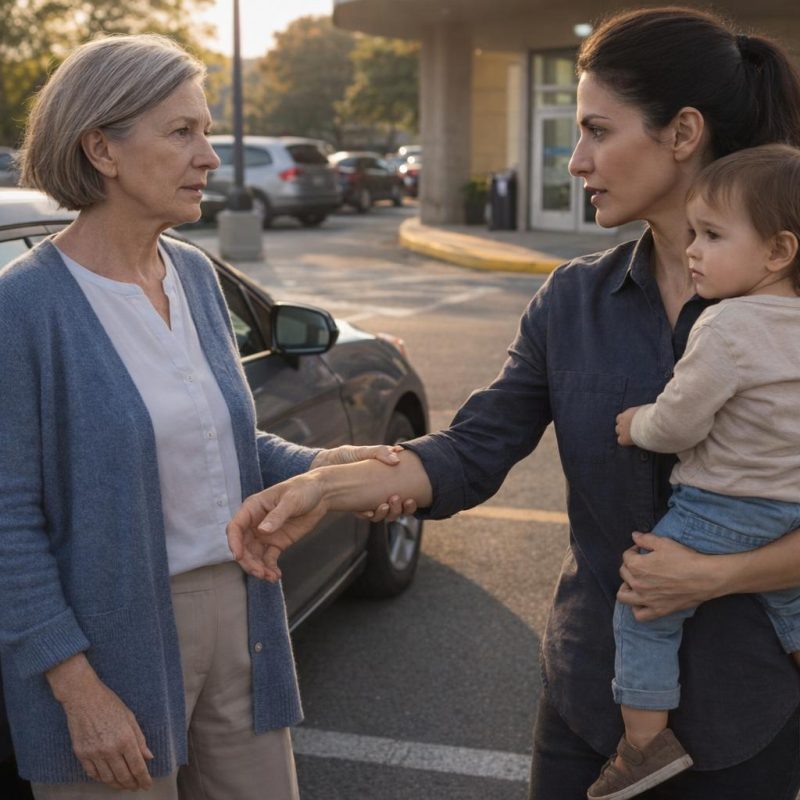 Image by RM AI
Their Work
Maria kept talking, and I kept listening. She mentioned Michael by name first — said he'd been the one who'd walked her through the intake process on her first visit, that he'd taken the time to sit with her and explain every program available to her family. Then she mentioned Jenna, said she had a way of making people feel like their situation wasn't hopeless, that she'd helped Maria put together a plan when things had been at their worst. Maria said they'd been here every Saturday without fail, that she'd never once shown up and not found one of them present. She talked about how the building had looked when they started — she'd heard the stories from people who'd been involved from the beginning — and how different it was now. She described my son and my daughter-in-law the way you describe people who have genuinely changed the shape of your life. Dedicated, she said. Tireless. She said the word tireless twice, like it still surprised her. I nodded when it seemed right to nod. I asked a small question here and there, careful ones, the kind that kept her talking without revealing how little I actually knew. The little girl on her hip had fallen half-asleep by then, head tipped against her mother's shoulder. I stood there on that sidewalk and let the full weight of what Maria was describing settle over me, slow and enormous.
 Image by RM AI
The Resource Center
Maria wasn't finished. She wanted me to understand what the center actually did, and she listed it the way someone does when they've personally needed every item on the list. Free childcare for parents working irregular hours — that was how she'd first come through the door, she said, because her shift started before any school program opened. After-school tutoring for kids who were falling behind, the kind of patient one-on-one help that didn't exist anywhere else in the neighborhood at no cost. Job training, resume workshops, interview preparation for people who hadn't been in the workforce in years and didn't know where to start. And then the emergency assistance — food, help with utility bills, short-term support for families who were one bad week away from losing their footing entirely. She said that last part quietly, like she was including herself in it. I listened to each item and tried to hold it. These weren't abstract services listed on a grant application. They were the specific things that stood between a family and a crisis. Maria said there were families here every single week who had nowhere else to go. She said it simply, without drama, and that simplicity made it land harder. I thought about the steady stream of people I'd watched going through that door all afternoon, and something about the number of them — the sheer, quiet number — settled into me like a stone dropping into still water.
 Image by RM AI
Major Commitment
Maria eventually said goodbye, shifting the drowsy little girl back to her other hip and heading toward her car with a wave that felt like we were old friends. I got back into my own car and sat there. The street had quieted some. I didn't start the engine right away. I thought about the cash withdrawals — the ones I'd been turning over in my mind for weeks, the ones that had felt so alarming when I first noticed them. They made a different kind of sense now. Not reckless spending, not something hidden out of shame. Funding. Supplies, repairs, program materials, whatever a place like this needed to keep running week after week. I thought about how tired Michael and Jenna looked every Saturday evening when they came to collect Sophie. I'd attributed it to stress, to whatever strain I imagined their marriage was under. But it wasn't that. They'd been working. Really working, the physical and emotional kind that leaves you hollowed out by the end of the day. Every Saturday for months. Their own money, their own time, their own energy poured into something that served people they didn't even know. I sat with that for a long time, the engine off, the afternoon light going flat around me, and the sheer size of what they had quietly taken on pressed down on me in a way I hadn't expected.
 Image by RM AI
Why Hide Goodness
I drove home slowly, not because of traffic but because I needed the time. The thing I kept coming back to was this: what they had built was good. Not just good in a vague, general sense — genuinely, concretely good, the kind of thing that changes the daily reality of people's lives. Families were eating because of that center. Children were keeping up in school. Parents were finding work. That was real. That was something to stand behind, something most people would want their family to know about. And yet Michael and Jenna had looked me in the eye, week after week, and told me they were in marriage counseling. They had constructed an entire explanation, detailed and consistent, and handed it to me every Saturday morning like it was the truth. I turned that over the whole drive home and couldn't find the angle that made it make sense. If the work was something to be proud of — and it clearly was — why had they felt the need to hide it from me? What was it about what they were doing that required a lie? I pulled into my driveway and sat in the car a moment longer, the question turning in my mind without finding anywhere to land.
 Image by RM AI
Admirable Deception
I sat at the kitchen table for a long time after I got home, turning everything Maria had told me over in my mind. The center was real. The need it served was real. Dozens of families — people who couldn't keep the lights on, parents who didn't know how they'd feed their kids through the week — were getting actual help because of what Michael and Jenna had built. They had given their Saturdays, their money, their energy, to something that genuinely mattered. I could see that clearly, and I didn't want to minimize it. But I kept coming back to the same wall. Every Saturday morning for a year, one of them had looked me in the eye and said the words — counseling, working on things, making progress. Detailed, consistent, delivered without a flinch. I had believed them because I had no reason not to, and because I loved them, and because that's what you do when your family tells you something. The goodness of what they'd built didn't reach back through time and change what those mornings felt like now. I could hold both things at once — the admiration and the hurt — but I couldn't make them cancel each other out. Good work and a year of lies were sitting side by side on that table, and neither one was moving.
 Image by RM AI
The Past
I didn't sleep well that night. I kept drifting back to a stretch of time I hadn't thought about in years — when Michael and Jenna's youngest was born, maybe six or seven years ago now. Michael had lost his job that same season, some kind of restructuring at the company, and I remembered the way he'd sounded on the phone when he told me. Careful. Controlled. Like he was already managing how much I was allowed to worry. I had offered to help — money, groceries, whatever they needed — and he had thanked me and said they were fine. Jenna had said the same thing when I asked her separately. They were fine. They had a plan. I hadn't pushed, because they were adults and I didn't want to overstep, but I remembered watching for signs that things were getting worse. And then, faster than I would have expected, things seemed to level out. Michael found new work. The tension in his voice eased. I had filed it away as one of those hard seasons that families move through and come out the other side of. I hadn't asked too many questions about how they'd managed it. Sitting here now, I found myself wondering about that gap — the months between the crisis and the recovery — and what I might have missed inside it.
 Image by RM AI
The Charity
I couldn't let it go, so I did what I always do when something won't leave me alone — I started looking. I pulled out the old photo albums from the hall closet, the ones I keep meaning to organize and never do. I wasn't sure what I was looking for exactly, just something that might fill in the shape of that time. I went through pictures slowly — Sophie as a newborn, Michael looking exhausted and proud, Jenna thinner than I remembered. Ordinary family moments from a hard year. I was nearly through the second album when something slipped out from between two pages and landed on the floor. A card, small and plain, the kind that comes tucked inside a gift basket or a food delivery. I picked it up. It wasn't a gift card. It was a thank-you note — or rather, a note thanking them for accepting assistance, which is a different thing entirely. The language was gentle and formal, the kind organizations use when they want people to feel dignity instead of charity. At the bottom, in small print, was the name of the organization that had sent it. Riverside Community Services. I sat very still. I had seen that name just yesterday, in my research, connected to the neighborhood where the center now stood. I turned the card over in my hands, and there, handwritten on the back in ink that had faded to gray, was a note I hadn't expected to find.
 Image by RM AI
The Emails
The handwriting on the back of the card was Jenna's — I recognized the tight, precise letters she uses when she's being careful. It was just a few lines, something she'd written to herself or to Michael, a reminder that they would pay this forward someday. I set the card down and sat with it for a while. Then I did something I'm not entirely proud of. Michael had left his laptop at my house the previous Saturday — Sophie had been using it to watch something — and it was still sitting on the counter. I told myself I was only going to look for information about Riverside, about the timeline, about how the center had started. I wasn't going to read anything personal. I opened it and searched his email for the name. There were more results than I expected. I found an exchange from about eighteen months ago, early in whatever planning stage they'd been in, and the tone of it stopped me. This wasn't two people excitedly building something together. Michael's messages were clipped and worried, full of numbers and worst-case scenarios. Jenna's responses pushed back, but there was an edge underneath the confidence that I hadn't heard from her before, not in writing. They were disagreeing — seriously, not just logistically — about whether they could afford to keep going. The warmth I associated with both of them was almost entirely absent from those early messages, and the words on the screen sat there, pulled tight with a strain I had never seen from either of them.
 Image by RM AI
The Ironic Truth
I kept reading. I told myself I'd stop after one more thread, and then one more after that, and before I knew it an hour had passed and I was sitting in the dark with the laptop screen the only light in the room. I found the thread from fourteen months ago. Michael had written to Jenna in the middle of the night — I could see the timestamp, 2:17 a.m. — and the message was not about the center's finances or its logistics. It was about them. He wrote that the project was pulling them apart, that they were fighting every day, that he didn't recognize what their marriage had become. Jenna's response came four hours later and it was just as raw. She wrote that she had been thinking the same thing, that they were closer to separating than she had ever told anyone, and that she didn't know if they could survive both the project and each other. I had to read that sentence twice. And then, further down in the same thread, I found the line that made everything click into place. Michael had written that they needed a reason to explain the Saturdays, something that would buy them time while they figured out whether to keep going or walk away from all of it — the center, and maybe each other. Jenna had written back one word: counseling. They had been lying about marriage counseling to cover the fact that their marriage was actually falling apart.
 Image by RM AI
Fear of Opposition
I scrolled further, even though part of me wanted to close the laptop and pretend I hadn't seen any of it. There was a thread from about a month after that one where they had talked about whether to tell family the truth — the real truth, all of it. Jenna had written that she was worried about what I would think, that I would see the financial risk they were taking and push them to stop, that I would mean well and make everything harder. Michael had agreed. He wrote that if they told anyone before the center was on solid ground, the well-meaning questions and the worry would wear them down before they had a chance to prove it could work. He wasn't wrong about how I would have reacted — I probably would have worried, probably would have asked hard questions about the money, probably would have said things I thought were helpful that weren't. I could see myself in what he'd written, and that made it sting in a particular way. They hadn't lied to me because they thought I was cruel or unsupportive. They had lied to me because they knew exactly how much I loved them, and they were afraid that love would get in the way. I understood the logic. I even understood the fear. But understanding it didn't make it hurt less, and the proof of it was right there on the screen in Michael's own words, plain and unambiguous.
 Image by RM AI
Self-Perpetuating
There was one more thread I found, from about five months in, and it was the one that stayed with me longest. Michael had written to Jenna saying he didn't know how to tell the truth anymore. Not that he didn't want to — he wrote that he thought about it every Saturday when he dropped Sophie off, every time he looked me in the eye and said the words. But the lie had been running so long by then that unwinding it felt impossible. How do you explain a year of Saturday mornings? How do you hand someone that much accumulated deception and ask them to absorb it all at once? Jenna had written back that she felt the same way, that they had built a wall around themselves one brick at a time and now they couldn't see over it. They had planned, from the beginning, to tell everyone at the grand opening — to stand up in front of the people they loved and explain everything, let the work speak for itself, and ask for forgiveness in the same breath. But every Saturday that passed made that eventual conversation heavier. I sat back in my chair and looked at the ceiling for a long time. I had spent a year feeling trusted and useful, and they had spent that same year carrying something they couldn't put down and didn't know how to hand over. That weight had been in the room with us every single Saturday, and I had never once felt it.
 Image by RM AI
The Grand Opening
Near the end of the email thread I found one more message, sent just three weeks ago. It was from Michael to Jenna, and the tone was different from everything that had come before — lighter, almost relieved. He wrote that the grand opening was confirmed, that the date was set for two weeks out, and that after everything they had been through, they were finally going to be able to tell the truth. He had written a list, actually — family members they planned to invite, things they wanted to explain, the order in which they hoped to say it all. My name was near the top of that list. He had written a note next to it: Mom first, before the event if possible. She deserves to hear it from us directly. I read that line several times. They had been two weeks away from telling me everything. I had found my way here on my own, sitting in the dark with a borrowed laptop and a card from an old photo album, and they had been two weeks away from walking through my front door and handing me the whole story themselves. I closed the laptop and set it carefully back on the counter. The house was quiet around me, and somewhere in that quiet was the strange, suspended feeling of having arrived at a destination just before the people who were supposed to bring you there.
 Image by RM AI
Robert's Wing
I almost missed it. I had been scrolling through the email attachments looking for budget documents and permit filings, the kind of paperwork that tells you how serious a project really is, when I clicked on something labeled simply 'Floor Plan — Final.' The image loaded slowly on the borrowed laptop, and I leaned in closer. It was a detailed architectural drawing, room by room, with labels in small neat type. I traced the layout with my finger against the screen — a reception area, a childcare room, a job training suite, a family crisis resource office. And then, in the far left corner of the building, a larger section set apart from the rest. I had to zoom in to read the label clearly. My breath stopped somewhere in my chest before I even finished the words. 'Robert Fletcher Family Support Wing.' I sat back in the chair and just stared at it. Robert. My Robert. His name was printed right there in architectural type, as permanent and deliberate as anything I had ever seen. The wing was designed to provide emergency assistance to families in crisis — exactly the kind of help he had spent his whole life quietly giving to anyone who needed it. They had named it after him. Michael and Jenna had built an entire wing of this community center and named it after my husband, and I had been sitting at home every Saturday thinking my son was in therapy.
 Image by RM AI
His Values Live On
I sat with that floor plan on the screen for a long time, and somewhere in the sitting, the shock began to soften into something else. I started thinking about Robert — the real Robert, the one I had lived beside for forty-one years. The neighbor who showed up with groceries when the Hendersons lost their jobs. The man who spent three weekends helping a young couple down the street move into their first apartment because they couldn't afford movers. He never made a production of it. He never wanted recognition or thanks. He just believed, in the plainest and most unshakeable way, that people were supposed to take care of each other. That was it. That was the whole philosophy. Michael had grown up watching his father do those things. He had watched Robert press folded cash into a neighbor's hand and then change the subject so the neighbor wouldn't have to feel embarrassed. He had watched his father sit with people in hard moments without needing to fix anything, just be present. And now I was looking at a building — an actual building — that Michael and Jenna had spent years constructing around that same belief. The floor plan was still open on the screen. Robert Fletcher Family Support Wing. The name his son had given to the place where strangers could come when they had nowhere else to turn.
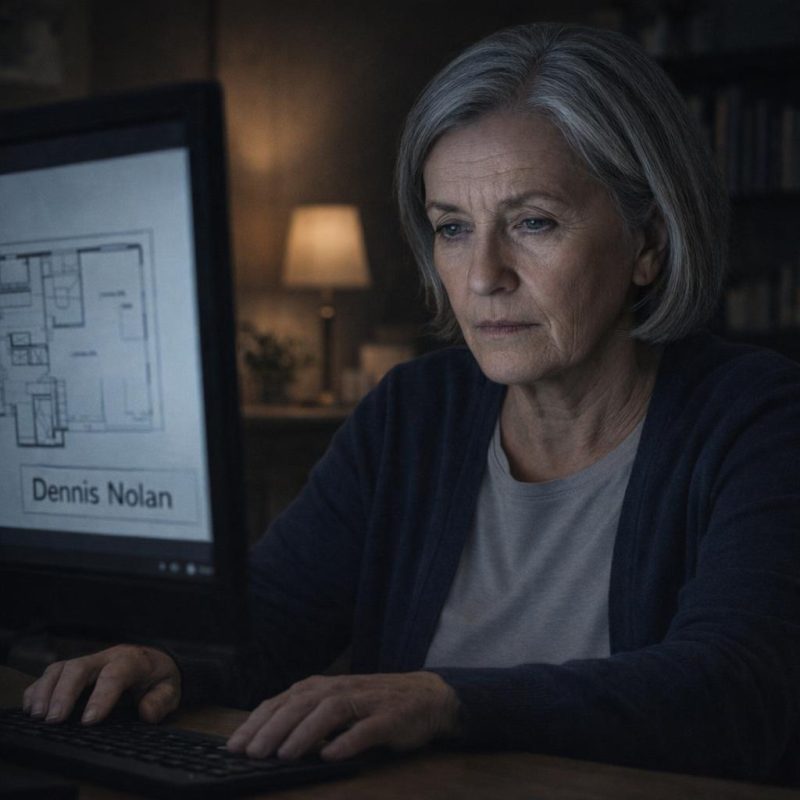 Image by RM AI
The Confrontation
I drove to their house the next morning without calling ahead. I had thought about calling. I had picked up the phone twice and put it back down. But I knew that if I called, they would have time to prepare, and I didn't want prepared. I wanted real. Michael answered the door in a t-shirt and looked at my face and went very still. Jenna appeared behind him a moment later, and she went still too. I asked if I could come in. We sat in their living room — me on the armchair, the two of them side by side on the couch — and I told them everything. I told them about the phone call from Dr. Morrison's office. I told them about following Michael one Saturday and watching him walk into a building I didn't recognize. I told them about meeting Maria, about the conversation that told me more than she probably realized. I told them I had found the laptop and read the emails and seen the floor plan with the wing labeled in my husband's name. I watched their faces move through shock and then something that looked like relief and then something that looked very much like shame. When I finished, the room was completely quiet. I hadn't raised my voice once. I hadn't needed to. The silence that settled after my last word felt like it had weight to it, like it was holding everything I had said.
 Image by RM AI
Expected Anger
Michael spoke first. He started with 'Mom, I'm so sorry' and then immediately began explaining — the timeline, the reasons, the pressures — and I could hear him building toward a defense before he had even finished the apology. Jenna jumped in right behind him, her voice tight, saying they had never meant to deceive me, that it had started as something small and then grown beyond what they expected. I let them go for about thirty seconds. Then I held up my hand and they both stopped. I told them I wasn't there to be angry. I told them I had spent a week being angry, alone in my house, and I was done with that part. What I needed now was the truth — not the version that made them feel better about it, not the version that explained it away, but the actual truth, start to finish, nothing left out. They looked at each other. It was the kind of look that passes between two people who have been through something hard together, a look that asks whether it's safe to be honest. Whatever they saw in each other's faces, it seemed to be enough. Michael's shoulders dropped. Jenna unclasped her hands in her lap. The defensiveness that had been sitting in the room like a third person quietly left it.
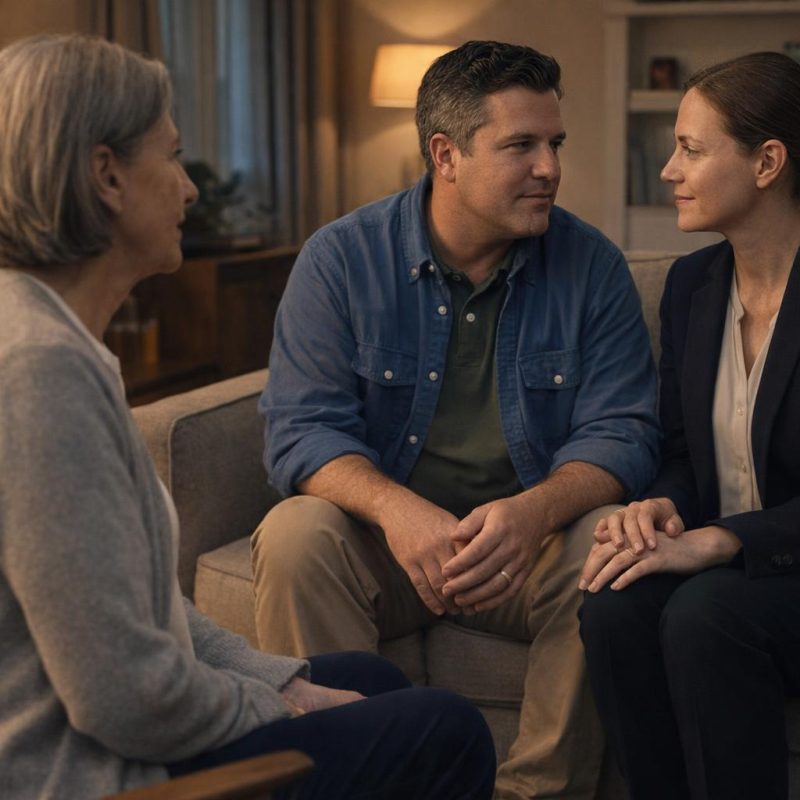 Image by RM AI
Hours of Truth
We sat in that living room for nearly four hours. Michael did most of the talking at first, and then Jenna took over for the parts that were harder for him to say, and then they finished together. Five years ago, when Sophie was still a baby and Michael had just lost his job, they had been in serious trouble — not just financially but in every way a young family can be in trouble at once. A small local charity had stepped in. They had provided emergency childcare so Jenna could keep working. They had connected Michael with job training. They had helped them stay in their apartment when they were two months behind on rent. That charity had saved them, Michael said, and he wasn't using the word loosely. Two years later, the charity closed because it ran out of funding, and Michael said he had never stopped thinking about the families who came after them and found nothing there. So they had started planning. Quietly, carefully, over years, while holding down jobs and raising Sophie and trying not to let the weight of it crack their marriage — which it nearly did, more than once. They had kept it from family because they were afraid. Afraid of being talked out of it, afraid of failing publicly, afraid of all the voices that would tell them it was too much. By the time Michael finished talking, his voice had gone rough and Jenna was looking at her hands, and the whole long story lay between us like something finally set down after being carried too far.
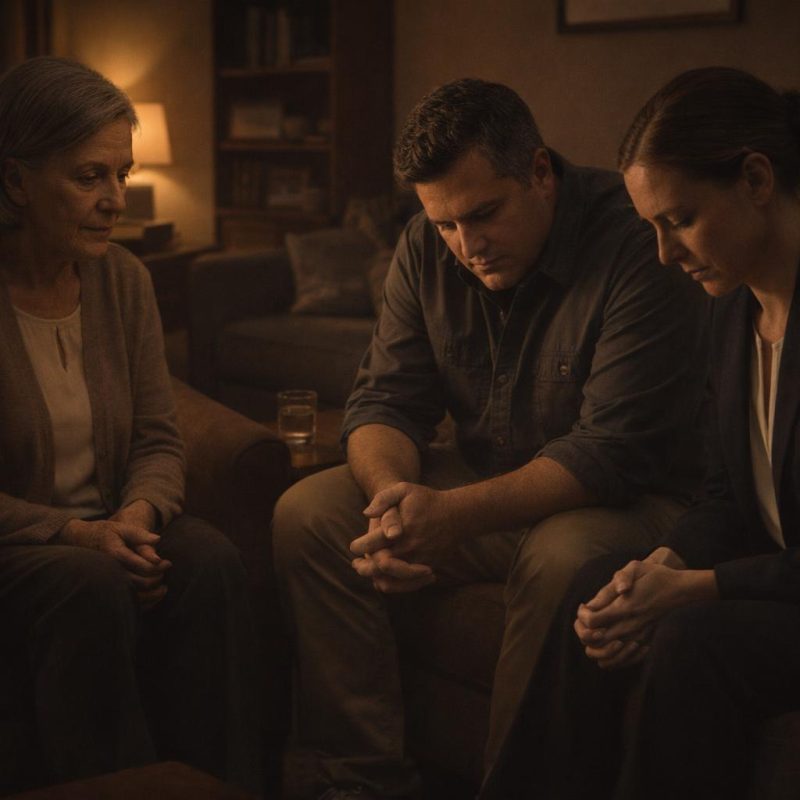 Image by RM AI
The Memorial Surprise
We had been sitting quietly for a few minutes when Michael leaned forward and said there was one more thing he needed to tell me. He said it carefully, like he was handling something fragile. He told me that the wing — the Robert Fletcher Family Support Wing — had not been an afterthought. He and Jenna had designed it from the beginning with my husband in mind. They had talked about my Robert in their very first planning meetings, Michael said, about the way he had lived and what he had believed and how he had shown both of them, in different ways, what it looked like to help someone without making them feel small for needing it. The wing was built to do exactly that — to serve families in their worst moments with dignity and without judgment. Jenna said they had commissioned a dedication plaque months ago. She described it quietly: Robert's full name, the years of his life, and a single line underneath that Michael had written himself. They had planned to unveil it at the grand opening. They had planned to bring me there without telling me why, to walk me through the doors and down the hall and let me see his name on the wall before they said a single word of explanation. Michael's voice dropped when he described it. He said they had imagined that moment — the look on my face when I saw it — and had been holding onto that image for over a year. Then he told me what the line on the plaque said.
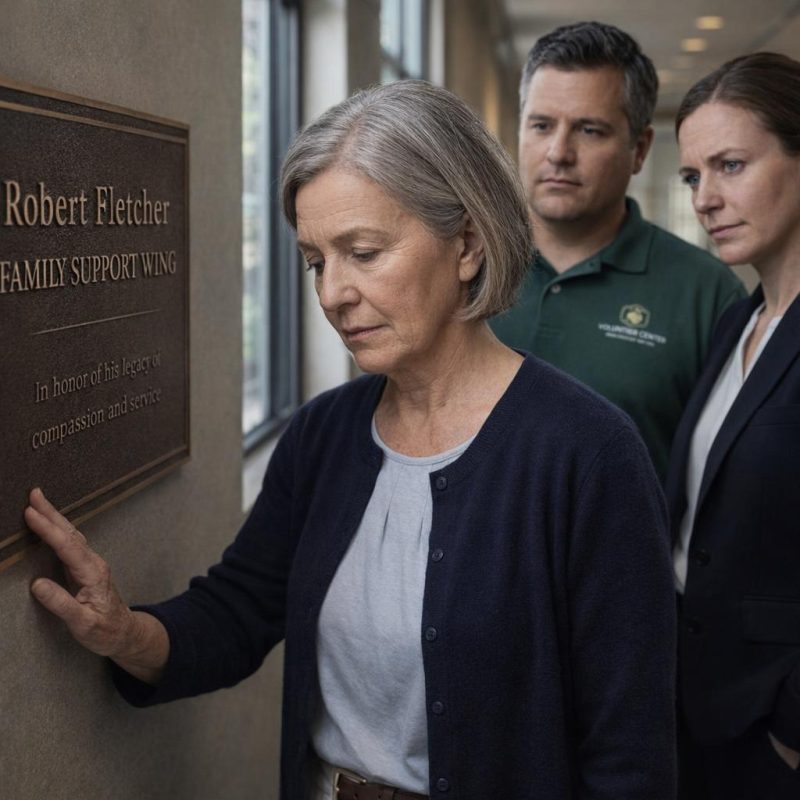 Image by RM AI
The Grand Opening
The grand opening was the following Saturday. I had asked Michael and Jenna to let me come as a regular guest — not backstage, not in the family section, just in the crowd. I wanted to see it the way the community would see it. Sophie held my hand as we walked up to the building, her dark hair pulled back in two braids, chattering about the banner she had helped Jenna hang the night before. The parking lot was already full. Families were gathered on the front steps and spilling onto the sidewalk — parents with strollers, older couples, teenagers, a group of men in work jackets who looked like they had come straight from a job site. Maria was near the entrance, directing people with a clipboard and a wide smile, and she caught my eye and gave me a nod that told me she had figured out who I was. A local official spoke first, then a woman from the county housing office, and both of them talked about what a resource like this meant for a community that had been asking for one for years. When Michael and Jenna were introduced as the founders, the applause was immediate and full. I watched my son stand at that podium looking exhausted and proud and a little stunned, the way people look when something they built with their own hands turns out to be real. Then someone cut the ribbon, and the doors came open.
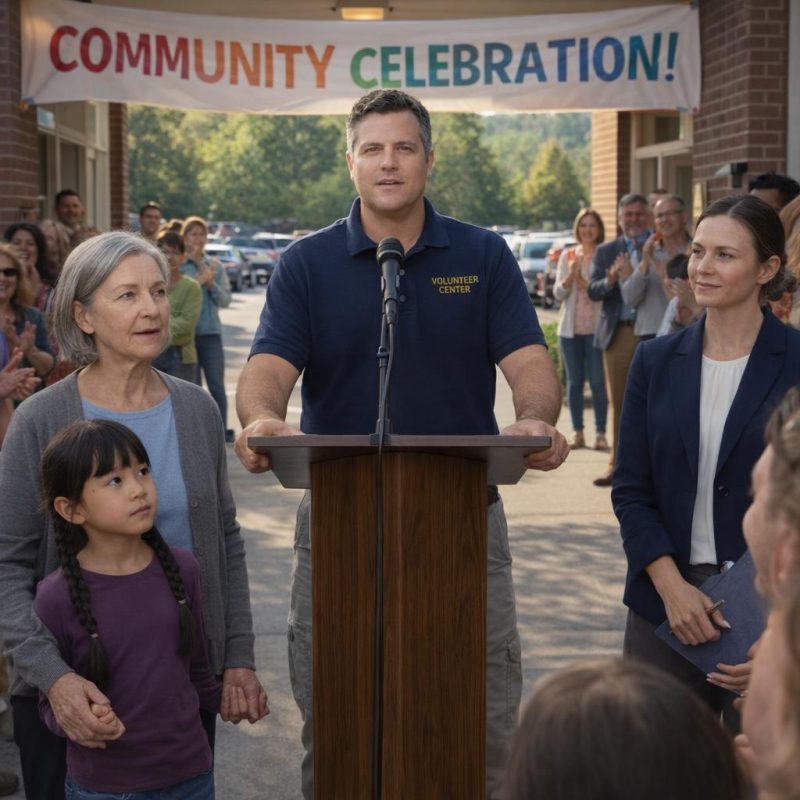 Image by RM AI
Transformation Stories
They had set up a small stage inside near the entrance, and after the ribbon cutting, a few families came up to speak. Maria went first, and she talked about the Saturday morning two years ago when she had shown up at a temporary location Michael and Jenna had been running out of a church basement, desperate for childcare so she could take a second job and keep her lights on. She said it plainly, without embarrassment, the way people speak when they have moved past the hardest part of a story. A father came up next and described the tutoring program that had pulled his son back from the edge of failing out of middle school. Then a man in his forties talked about the job training certification he had earned through the center's program, and the position he had been hired into three months later, and how he had been able to stop asking his sister for money for the first time in four years. Each story landed differently. Each one added something to the picture I was building of what Michael and Jenna had actually done with all those Saturdays I had spent wondering. I was standing near the back, Sophie's hand still in mine, when a woman stepped up to the microphone — young, maybe thirty, with a toddler on her hip — and said that six months ago she had been two days away from losing her children to the state, and that this center was the reason her family was still together.
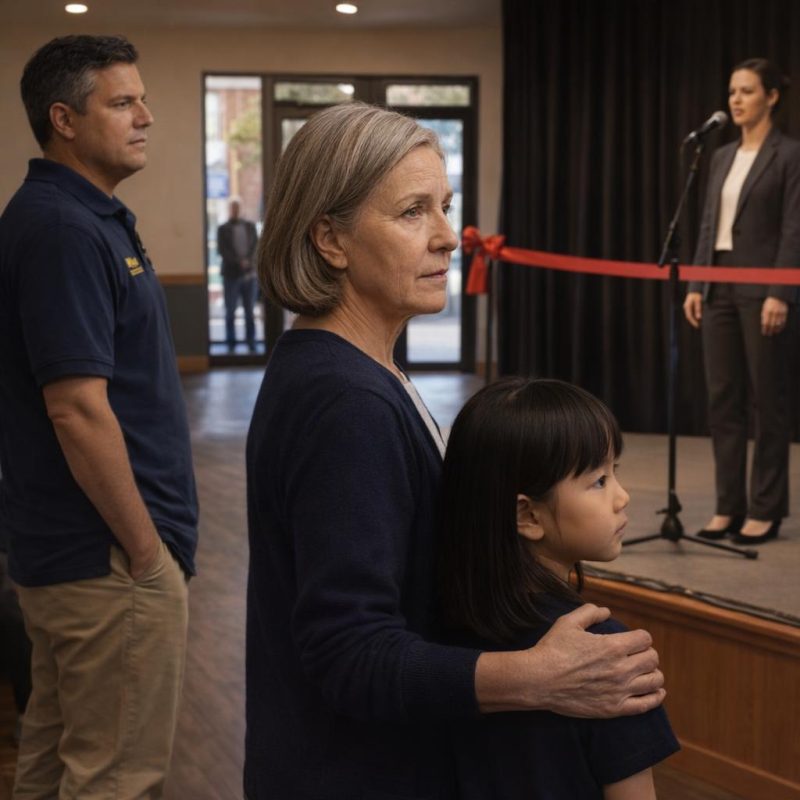 Image by RM AI
Sacrifice and Deception
The woman with the toddler stepped back from the microphone, and the room filled with quiet applause, and I stood there holding Sophie's hand and felt something crack open in my chest that I didn't have a name for yet. I watched Michael move through the crowd — shaking hands, crouching down to speak to children at eye level, laughing at something an older man said — and I felt proud of him in a way that almost hurt. He had done this. He and Jenna had built something real, something that had kept a family together and put a man back on his feet and given a mother a fighting chance. I could see it in every face in that room. And I also felt the sting of it, sharp and specific, because every single Saturday I had sat on my couch waiting for him to come home from a counseling session that never existed, I had been carrying a worry that wasn't mine to carry. He had let me carry it. They both had. Jenna caught my eye from across the room and gave me a small, careful smile — the kind that asks a question it isn't sure it wants answered. I didn't look away. I loved them. I was hurt by them. Both of those things were true at the same time, and neither one canceled the other out.
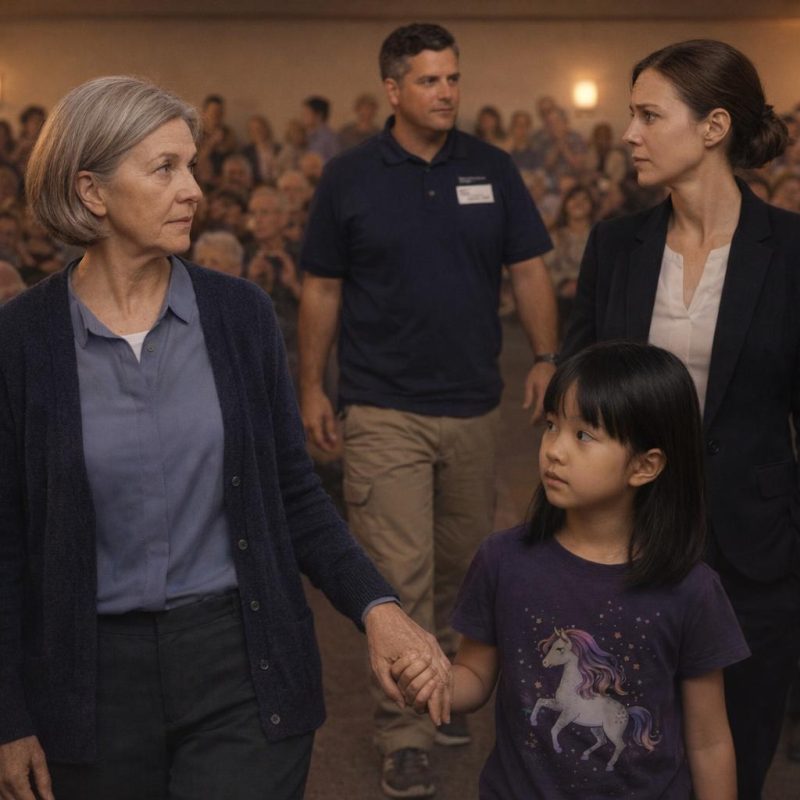 Image by RM AI
Consequences
We found a quiet corner after most of the families had filtered out, the three of us standing near a window while Sophie ran circles around a row of folding chairs nearby. I had thought about what I wanted to say for days, and when the moment came I kept it simple. I told them that what they had built was remarkable and that I meant that without reservation. Then I told them that lying to me for a year — regardless of the reason, regardless of the outcome — was wrong. Michael started to speak and I held up my hand, not unkindly, and he stopped. I said I understood they had been afraid I wouldn't support it, and maybe they were right to worry, but they had taken that choice away from me entirely. They had made me a prop in a story I wasn't allowed to read. Jenna's eyes were wet. She said, 'You're right. There's no version of this where what we did was okay.' Michael nodded and didn't try to qualify it. He just said, 'I'm sorry, Mom. I really am.' I told them I believed them. I also told them that belief and trust were different things, and that trust was going to take time and consistency and honesty — not grand gestures, just honesty. Sophie laughed at something across the room, bright and oblivious, and the three of us stood in the silence that followed, each of us holding the weight of what had just been said.
 Image by RM AI
Rebuilding Trust
The months that followed were quieter than I expected, and harder in some ways, and better in others. Michael started calling me on Tuesday evenings — not for any particular reason, just to talk, the way he used to when he was in his twenties and still figuring things out. Jenna began sending me updates about the center: enrollment numbers, new programs, a grant they had applied for, a volunteer coordinator they had finally been able to hire. They invited me to their monthly planning meetings, and I went, and I sat at the table and listened and occasionally offered an opinion, and they listened back. There were apologies along the way — not the sweeping, dramatic kind, but the small specific ones that mean more. Michael said once, over dinner, that the thing he regretted most wasn't the secret itself but the fact that he had underestimated me. He said he had been so sure I would try to talk him out of it that he had never given me the chance to surprise him. I didn't say anything to that. I just let it sit between us. Sophie, for her part, remained entirely herself — loud and curious and completely unaware that anything had ever been wrong, which was its own kind of gift. I wasn't all the way back to where we had been before. But I was moving in that direction, slowly, the way trust actually rebuilds — not in a single moment, but in the accumulation of small ones.
 Image by RM AI
The Lesson
I went back to the center on a Thursday afternoon about six months later, on my own, no particular occasion. The lobby was busy — a woman filling out paperwork at the front desk, two teenagers working through something on a laptop in the corner, a toddler asleep in a stroller near the window. I walked slowly through the main hall and stopped in front of the memorial wall near the back, where Robert's name was set into a small bronze plaque beside a photograph I recognized from our kitchen table, taken the summer before he got sick. I stood there for a long time. Robert had spent forty years believing that the most important thing a person could do was show up for the people around them — not just the people they loved, but the ones they hadn't met yet. Michael had inherited that. So had Jenna, in her own way. What they hadn't inherited, or hadn't learned yet, was that the people who love you most can't help you carry something they don't know you're holding. That was the part that had cost us a year. I had forgiven them — fully, not as a performance but as a decision I made and kept making. But I also knew that the lesson wasn't only theirs. I could have asked harder questions. I could have pushed. I had chosen to trust without looking, and that was on me too. Robert's photograph looked back at me from the wall, steady and unhurried, the way he always had been.
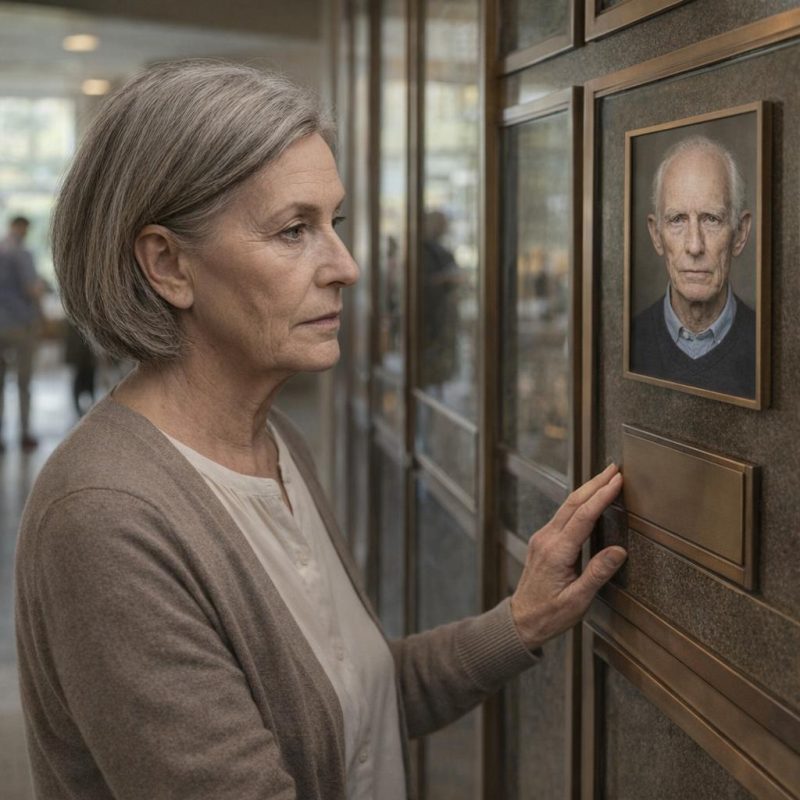 Image by RM AI