I Found My Husband's Secret Phone And Discovered My Best Friend's Texts—But The Truth Was Far Worse Than I Thought
I Found My Husband's Secret Phone And Discovered My Best Friend's Texts—But The Truth Was Far Worse Than I Thought
The Guest Room Migration
After thirty-six years of marriage, you develop a rhythm with someone, and when that rhythm breaks, you feel it in your bones before your brain catches up. David announced he'd be sleeping in the guest room because his back was acting up again, which seemed reasonable enough on its surface—he'd had that herniated disc trouble a few years back, and our mattress was admittedly softer than what the doctor had recommended. But there was something in the way he said it, standing in the doorway with his pillow already tucked under his arm, that felt rehearsed somehow, like he'd been practicing the line in his head. I told myself I was being ridiculous, that I was reading into things because I'd just finished one of those psychological thrillers Rachel had recommended, the kind where every husband has seven secrets and a burner phone. David kissed my forehead—a brief, distracted press of lips—and I tried to remember the last time he'd really looked at me when we said goodnight. I couldn't. That bothered me more than I wanted to admit. He closed the door behind him with a quiet finality I had never heard before.
 Image by RM AI
The Phone That Never Leaves His Hand
The phone thing started small, the kind of behavioral shift you might not notice if you weren't already on edge. David had always been casual about his phone, leaving it on the kitchen counter while he showered, face-up on the coffee table during dinner, sometimes forgetting it in his jacket pocket for hours. Now it went everywhere with him—into the bathroom, down to the basement when he did laundry, even out to the garage when he took the recycling bins to the curb. He kept it face-down constantly, which is such a tell, isn't it? Like when someone covers their poker hand too carefully and you know they're either bluffing or holding something dangerous. I watched him jump slightly when a text notification came through during breakfast, his hand shooting out to flip the phone over before I could even glance at the screen. The frequency bothered me too—constant buzzing, constant checking, his thumb moving in that mindless scroll even when we were supposedly watching television together. When I finally asked him who kept texting, he said 'just work stuff' without meeting my eyes.
 Image by RM AI
Linda's Strange Questions
Linda had been my closest friend for almost twenty years, the kind of friendship where you don't need to schedule coffee dates because you're already in each other's lives constantly, showing up with wine when things are hard and garden vegetables when they're good. But over the past month, she'd stopped dropping by the house as often, which I'd initially attributed to her busy season at work—she managed a small consulting firm and always complained about Q3 deadlines. The texts, though, kept coming, and they'd taken on this strange, probing quality that didn't feel like her usual directness. She'd ask whether David seemed distant lately, whether we were doing okay, whether I felt appreciated in my marriage. I responded with the usual reassurances, confused by the line of questioning but not wanting to seem defensive. Then her messages got more pointed, almost philosophical, asking whether I thought marriages could survive when people stopped really seeing each other. It felt like she was building toward something but wouldn't quite say it. Her last message sat on my screen: 'You deserve someone who sees you. Does he still see you?'
 Image by RM AI
Cleaning Day Discovery
I've always been the one who handles the deep cleaning in our house, the kind that happens when seasons change and you finally get around to the baseboards and window tracks. The guest room had become David's territory now, and I'd given him space for two weeks before deciding that space or not, the dust couldn't wait forever. I was wiping down the nightstand when I noticed the drawer wasn't closing flush, something wedged in the back corner preventing it from sliding all the way in. I pulled it open fully, expecting to find a book or a charging cable, and instead found an old athletic sock rolled into a tight bundle, the kind of hiding spot a teenager might use. The weight of it was wrong for just fabric. I unrolled the sock slowly, feeling something hard and rectangular inside, and a phone slid out into my palm—not David's regular phone, but an older model, screen dark, deliberately switched off. My mind went exactly where you'd expect it to go, running through every cliché of infidelity and secret lives. My hands shook as I pressed the power button and waited for it to light up.
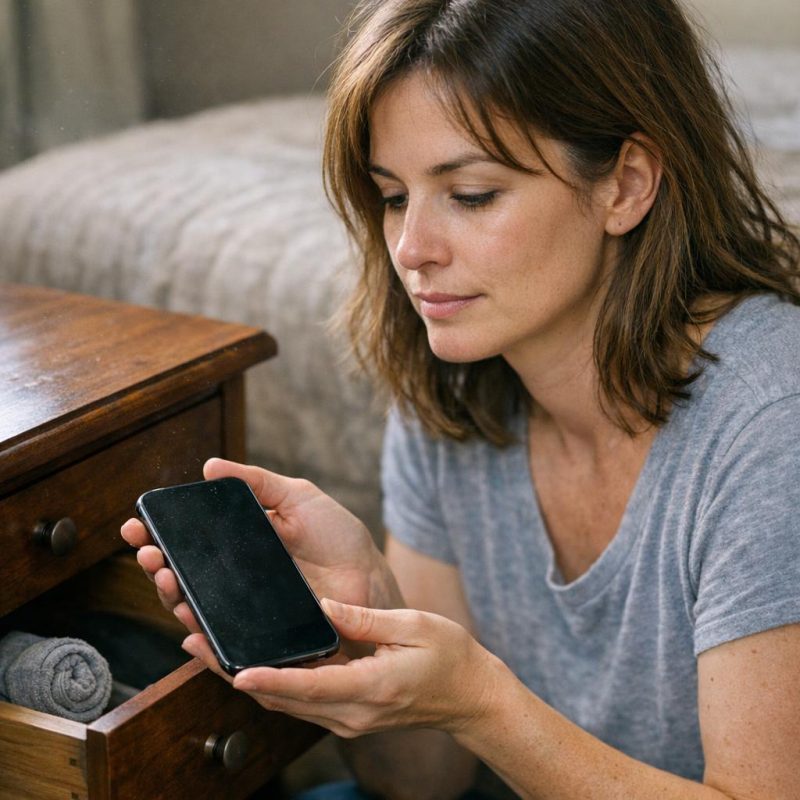 Image by RM AI
Messages Between Two People I Trusted
The phone took forever to boot up, or maybe it just felt that way because my heart was doing that thing where it beats in your throat and you can't quite swallow around it. When the home screen finally appeared—no lock code, which felt like either carelessness or arrogance—I went straight to the messages. Dozens of unread texts between David and Linda, stretching back weeks, timestamped at all hours like they couldn't go more than a few hours without checking in. The messages had that intimate shorthand that develops between people who talk constantly, inside jokes I didn't understand, references to conversations I hadn't been part of. Linda asking how he was holding up. David saying it was harder than he'd expected. Her telling him she understood, that she was there for him, that they'd figure it out together. Him thanking her for being the one person he could talk to about this. I felt sick reading it, my vision actually blurring at the edges like my body wanted to reject what my eyes were seeing. One message read: 'I hate lying to her,' and I felt the ground drop away.
 Image by RM AI
The Careful Language
I kept reading because what else could I do, scrolling back through weeks of messages, looking for something definitive, some clear evidence of whatever this was. But the strange thing—the thing that kept nagging at me even through the nausea and betrayal—was how careful the language stayed. They never talked about meeting up, never referenced physical intimacy, never even used the kind of loaded emotional language you'd expect from people having an affair. Instead, everything felt oddly formal, almost scripted, like they were both performing concern and confession without ever quite saying what they were concerned about or confessing to. David would write something vulnerable, and Linda would respond with exactly the right supportive phrase, and then the conversation would just end, no natural flow to it. I've read enough texts between people who are actually involved to know what that looks like—the escalation, the impatience, the need to see each other. This wasn't that. This was something else, something I couldn't quite name. Something didn't sit right, but I couldn't name what.
 Image by RM AI
Rachel's Call
Rachel called that evening, just her usual Thursday check-in call, the kind of routine we'd established after she moved to Portland and wanted to stay connected across the time zones. I almost told her everything right then—had the words lined up in my throat, ready to spill out about the phone and the messages and the feeling that my entire marriage might be built on sand I'd never noticed shifting. But something stopped me, maybe the same instinct that keeps you from saying the thing you can't take back, the thing that once spoken aloud becomes real in a way it wasn't before. So I swallowed it down and asked about her work instead, let her tell me about some client presentation that had gone well, made the appropriate encouraging sounds while my mind stayed stuck on those messages. I must have sounded off because she paused mid-sentence and her tone changed, getting that worried edge daughters get when they sense their mothers are lying. 'Mom, you sound weird. Is Dad okay?' she asked, and I lied and said everything was fine.
 Image by RM AI
Tom's Visit
Tom showed up for dinner on Saturday with a bottle of wine and a story about a disastrous first date that had somehow ended with him accidentally adopting a cat, which under normal circumstances would have had me laughing until my sides hurt. David played his part perfectly—laughing at all the right moments, asking follow-up questions, refilling Tom's wine glass, being exactly the warm, engaged father our son expected him to be. I sat at the table watching both of them like I was viewing the scene through glass, participating but separate, aware of every gesture and word in a way that felt almost clinical. Tom didn't notice anything wrong, too caught up in his own stories and the easy rapport he'd always had with his father. I envied him that, the ability to sit in a room and just be present without constantly analyzing subtext and wondering what everyone was hiding. The evening stretched on and I kept my performance going, matching David's normalcy with my own manufactured version of it. After Tom left, David asked if I was feeling okay, and I wanted to scream.
 Image by RM AI
Observing Instead of Confronting
I made a conscious decision not to confront either of them yet, which I realize now sounds passive but felt at the time like the only way to maintain some semblance of control over a situation that was rapidly slipping away from me. Instead, I watched. I watched David like I was studying a specimen under glass, cataloging every expression, every sigh, every moment when he thought I wasn't looking. What I saw didn't match the narrative I'd constructed in my head—he didn't have that electric quality of someone carrying on an affair, that barely suppressed excitement I'd read about in books and articles about infidelity. He looked tired. He looked ground down. He'd come home from work and sit on the couch with his laptop, and instead of the furtive texting I expected, he'd just stare at the screen with this expression of such profound weariness that I almost—almost—felt sorry for him. His shoulders had a permanent slump I'd never noticed before. He'd started rubbing his temples more, drinking an extra glass of scotch in the evenings, falling asleep with his reading glasses still on. If this was an affair, why did he look like a man carrying a weight instead of a secret?
 Image by RM AI
Linda's Tension
Linda called on a Tuesday afternoon, and from the first syllable I could hear something off in her voice—a tightness, a higher pitch than usual, like someone walking on ice and trying not to crack it. We'd been best friends for over twenty years and I knew her registers better than I knew my own. She asked how I was doing in that overly careful way people use when they already know the answer isn't 'fine.' Then she started in with the advice, unprompted and oddly urgent. 'You need to take care of yourself, Claire,' she said, and there was something almost rehearsed about it. 'Start thinking about what you want. What you really want.' I made some noncommittal sound, trying to keep my voice neutral, but my hand was gripping the phone so hard my knuckles went white. She kept going, circling back to the same theme—my happiness, my needs, my future—like she was working from talking points. The conversation felt less like comfort and more like preparation, though for what I couldn't yet name. Her voice cracked when she said, 'You deserve to be happy, Claire. Don't forget that.'
 Image by RM AI
David's Urging
Then David started saying the same things. Not the exact words, but close enough that the echo was unmistakable. He brought it up over breakfast three days after Linda's call, asking me if I'd been thinking about what I wanted 'for the next chapter' of my life. The phrase felt foreign in his mouth, too coached, too deliberate. That same evening, he circled back to it again while we were loading the dishwasher, asking if I was happy, if I felt fulfilled, if I'd been considering what would make me feel 'more satisfied' with my life. I kept my responses vague, watching him carefully, and he had this look—not quite guilty, but searching, like he was waiting for a specific response I wasn't giving him. The similarity to Linda's language was impossible to ignore. The timing was too perfect, the themes too aligned, the phrasing too coordinated for coincidence. I started to feel like I was being managed, like both of them were reading from the same script, trying to guide me toward some conclusion they'd already reached without me. It felt rehearsed, but I had no proof, only a growing sense that I was missing something.
 Image by RM AI
The Paperwork Message
I saw the message purely by accident—David had left his phone on the bathroom counter while he was in the shower, and the screen lit up with a text from Linda just as I was walking past. I shouldn't have looked. I know that. But at that point, I was so far past the boundaries of normal marital trust that one more transgression barely registered. The preview showed enough: 'She can't know yet, not until the paperwork is final.' I stood there staring at those words, feeling the blood drain from my face, my vision tunneling until all I could see was that single sentence glowing on the screen. Paperwork. Final. The language of endings, of legal dissolution, of things that couldn't be undone. My mind immediately supplied the rest of the story—divorce papers being drawn up in secret, legal separations, asset divisions, a future without me already mapped out in some lawyer's office while I'd been walking around thinking my marriage was intact. They were coordinating behind my back, waiting for the right moment, getting everything in order before they told me my life was over. I imagined divorce papers, legal separations, a future without me already drawn up in secret.
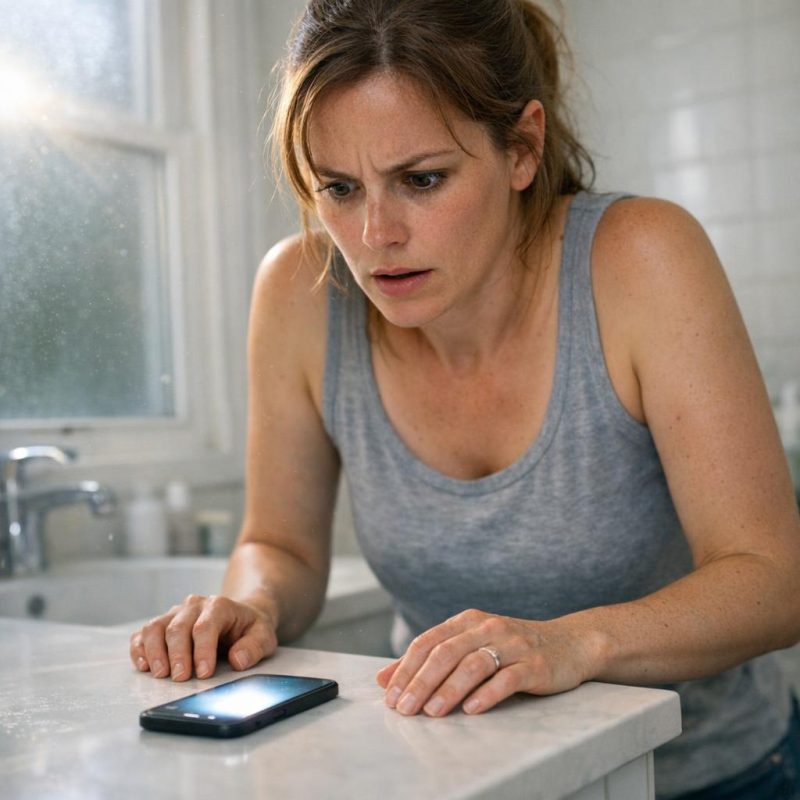 Image by RM AI
Quiet Preparations
I started making preparations of my own, moving through the motions with a kind of grim mechanical efficiency that surprised me. I'd never been the type to imagine divorce, had never even mentally rehearsed what the logistics might look like, but once I started thinking practically about it, the steps seemed obvious. I gathered our financial documents—bank statements, investment accounts, the deed to the house, David's retirement information—and made copies of everything, storing them in a folder in my car where he wouldn't find them. I made lists: joint assets, individual assets, debts, accounts in whose names. I researched divorce attorneys, reading reviews on my phone in parking lots like I was shopping for a restaurant. I started documenting dates and times, building a timeline of when the secretive behavior had started, when the texts had begun. It felt both paranoid and prudent, self-protective in a way I'd never needed to be in thirty-six years of marriage. The strangest part was how methodical I felt about it, how little I cried. I opened a separate bank account for the first time in thirty-six years.
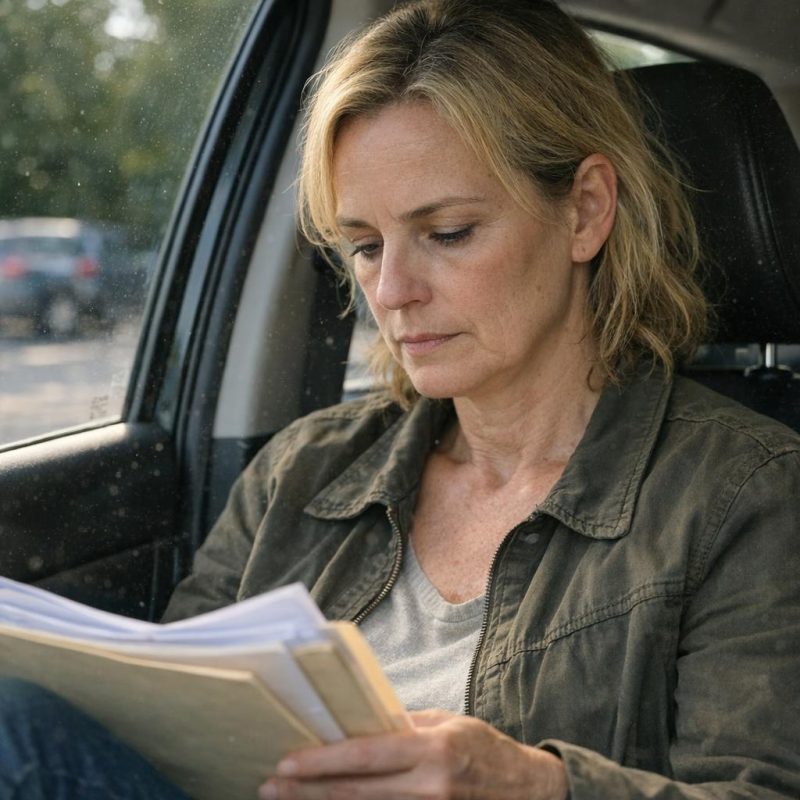 Image by RM AI
The Shared Computer
I was looking for something completely mundane on our shared computer—a recipe I'd saved months ago—when I stumbled across the email in David's inbox. He'd been careless, or maybe he'd stopped caring whether I found things, I don't know. It was from a financial planning office I didn't recognize, dated two weeks prior, thanking Linda—Linda, not David—for 'coordinating the meeting' and confirming the follow-up appointment to discuss 'asset protection strategies.' I read it twice, then a third time, trying to make the pieces fit together. Asset protection. That was a term with implications, suggesting there was something that needed protecting, some threat or liability on the horizon. But what kind of threat? And why was Linda coordinating meetings about our assets? She wasn't family, wasn't on any of our accounts as far as I knew, had no legal standing in our financial life. Unless David had given her that standing somehow, added her to things without telling me, made her a part of decisions I should have been making with him. The email was professional and neutral in tone, but the content opened up new questions I hadn't even thought to ask. Asset protection from what? Or from whom?
 Image by RM AI
Family Disclosures
I scrolled down and found an attachment I'd missed on first reading—a PDF outlining the topics to be covered in the next meeting. Most of it was financial jargon I'd need time to decipher, but one phrase jumped out at me, appearing multiple times throughout the document: 'family disclosures.' I sat there staring at those words, turning them over in my mind, trying to make them make sense in the context of everything else I'd discovered. Family disclosures. What did that mean? Disclosures to the family? Disclosures about the family? Disclosures required by family members? None of those interpretations fit with an affair, with divorce planning, with the scenario I'd been constructing for weeks now. If David and Linda were planning to leave their respective marriages and be together, why would they need a financial planner talking about family disclosures and asset protection? The terminology felt wrong, too formal, too complicated for what should have been a straightforward division of marital property. I kept trying to force it into the narrative I'd built—maybe they were protecting assets from me during the divorce?—but it wouldn't fit properly, kept sticking out at odd angles. I read the phrase three times, trying to fit it into the story I'd built, and it wouldn't go.
 Image by RM AI
The Decision to Confront
I couldn't do it anymore—the watching, the waiting, the constructing of theories based on fragments and half-glimpsed screens. I decided I would confront David that evening after dinner, would lay out everything I knew and demand the truth, whatever that turned out to be. I spent the afternoon rehearsing what I would say, how I would say it, trying to find the right tone between accusatory and composed. Would I lead with the phone I'd found? The texts with Linda? The financial planner email? I wanted to be strategic, wanted to present the evidence in a way that would make denial impossible, but I also just wanted to scream at him, to break through whatever careful facade we'd both been maintaining. I imagined his face when I confronted him—the surprise, the calculation, the decision about whether to continue lying or finally admit what was happening. I imagined his excuses: it's not what you think, you're misunderstanding, I was going to tell you. I imagined his denials, the wounded expression, the attempt to turn it around and make me feel crazy for suspecting anything. I imagined his denials, his excuses, and steeled myself against both.
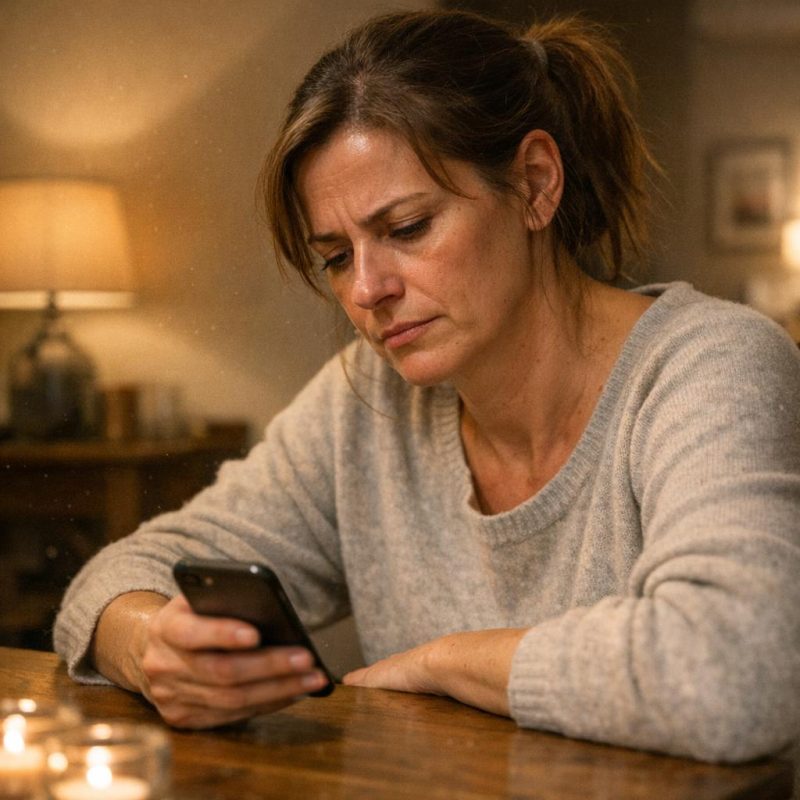 Image by RM AI
Breaking Down
When David came home that evening, I didn't wait for dinner, didn't stage it carefully the way I'd planned. I just confronted him in the hallway, holding up the phone I'd found, and watched his face go through every emotion I'd imagined and several I hadn't. But what I hadn't anticipated was the complete breakdown—not the calculated deflection or wounded denial, but actual tears streaming down his face as he sank onto the bottom step of the staircase. He looked suddenly older, diminished, like something vital had collapsed inside him. 'It's not what you think,' he said, which was exactly the line I'd expected, but the way he said it—with this raw desperation—made me pause. 'I'm not having an affair with Linda. God, Claire, I'm not. But I should have told you what was happening.' He pressed his palms against his eyes like he couldn't bear to look at me. 'I made such a terrible mistake keeping this from you. Such a terrible mistake.' I stood there holding that phone, feeling my carefully constructed anger waver against something that looked genuinely like anguish. 'Let me explain before you walk away,' he begged, and I didn't know if I could trust a word.
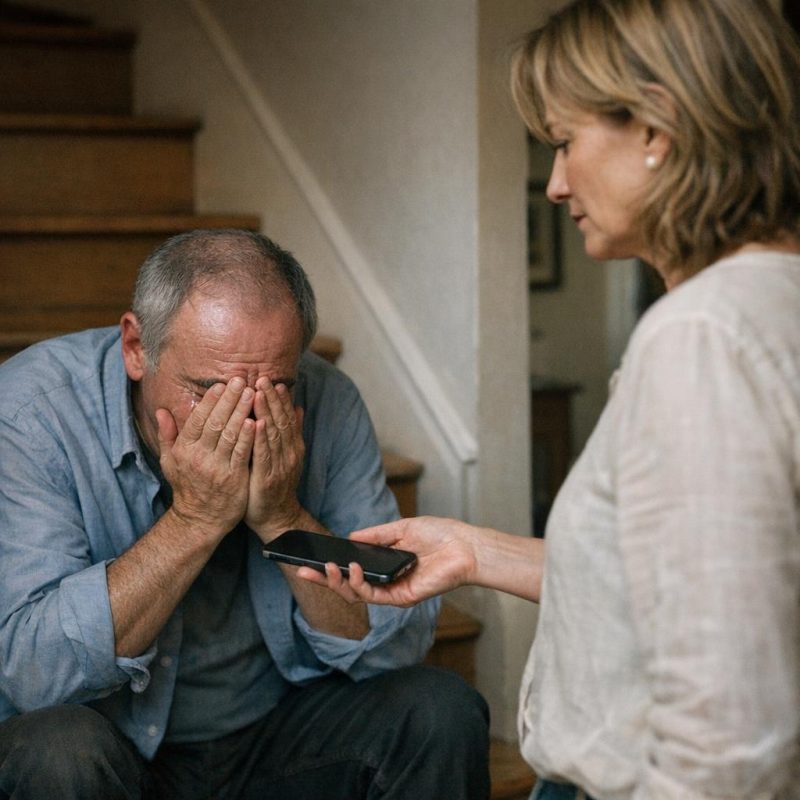 Image by RM AI
Linda's Panic
David started talking in this rushed, stumbling way, words tumbling over each other like he was afraid I'd stop him before he got it all out. He said Linda had come to him last spring, around March or April, in what he described as a complete panic about a financial situation she'd gotten into. Apparently she'd co-signed a loan for her nephew years ago—the one who'd moved to Phoenix and then disappeared for a while—and the nephew had defaulted spectacularly, leaving Linda on the hook for payments she couldn't make. 'She was terrified,' David said, wiping his eyes. 'She didn't want anyone to know, didn't want you to think less of her family. You know how proud she is.' What had started as a few missed payments had compounded into something much worse, with penalties and interest turning the original amount into a sum that could genuinely devastate someone on Linda's fixed income. David said she'd been trying to negotiate with the lender, trying to work out payment plans, trying to protect her credit and her savings. He'd been helping her figure out options, looking at different strategies to minimize the damage. A loan for a relative that had quietly snowballed into something that could drag us all down.
 Image by RM AI
Shared Accounts
But here's where it got more complicated, David explained, his voice dropping lower. Over the years—God, over decades of friendship—we'd all gotten tangled up in each other's lives in ways that seemed harmless at the time but now felt ominous. There were old agreements, informal arrangements we'd made to help each other out that apparently had legal weight I'd never considered. Joint accounts we'd opened for that vacation rental property we'd all gone in on together fifteen years ago. Credit cards with multiple authorized users. Little financial connections we'd established back when everything was simpler, when we all trusted each other completely. David said Linda had showed him paperwork he'd barely remembered signing, documents with all our names on them that meant her financial crisis could potentially become our problem too. 'We co-signed something fifteen years ago,' he said, looking at me with exhausted eyes. 'I didn't even remember until she showed me the papers.' I felt something cold settle in my stomach, realizing how vulnerable we might be, how a problem that seemed like Linda's mess could somehow reach into our retirement, our savings, everything we'd carefully protected.
 Image by RM AI
Why the Secret Phone
I asked him why the secret phone, why all the elaborate hiding if this was really just about financial problems. David ran his hand through his hair and said Linda had insisted on it, had practically demanded they communicate separately from our normal channels. According to him, she was worried I would misinterpret their constant communication, would see them texting and calling at all hours and jump to exactly the conclusion I had jumped to. 'She knew how it would look,' David said. 'All these private conversations, all this secrecy. She thought keeping it separate would protect you from worrying until we had solutions.' He claimed they'd rationalized it as temporary, just until they sorted through the options and figured out how to handle the situation without dragging me into the stress of it all. He said Linda had even suggested specific times to communicate, ways to keep everything compartmentalized so I wouldn't notice or question. It was supposed to be protective, he insisted, a way to shield me from problems that might resolve themselves before I ever needed to know. But that explanation didn't account for the intimate tone, the late-night confessions.
 Image by RM AI
The Emotional Tone
I pressed him on that, on the language Linda had used in those texts—the stuff about feeling 'chosen' and 'seen,' about him understanding her in ways no one else did. Those weren't words you used to discuss loan consolidation strategies or credit counseling options. 'Explain that part,' I said, hearing my voice go hard. 'Explain why she's writing to you like you're her emotional support system, like there's something deeper happening between you two.' David looked away, staring at the floor, and for several long seconds he didn't answer. When he finally spoke, his voice was barely above a whisper. 'That part got complicated,' he admitted. I waited, letting the silence stretch out, refusing to make this easier for him. The clock in the hallway ticked loudly in the quiet. Outside, I could hear a neighbor's dog barking. David's shoulders sagged further, and I realized that whatever explanation was coming next, it was going to hurt worse than what I already knew. He looked away and said, 'That part got complicated.'
 Image by RM AI
Linda's Dependence
David finally looked at me again and admitted that somewhere along the way, Linda's fear about the financial situation had transformed into something else—an emotional dependence that neither of them had seen coming. She'd started calling him not just for advice about payment plans or negotiation strategies, but for reassurance, for comfort, for someone to tell her everything would be okay. 'She was scared,' he said quietly. 'Really genuinely terrified of losing everything. And I...' He trailed off, then continued. 'I felt responsible somehow. Like I should have caught this earlier, should have known she was in trouble.' He described late-night conversations that went beyond spreadsheets and budget calculations, Linda crying on the phone, sharing fears about her future, about ending up alone and broke. David said he'd tried to maintain boundaries but Linda kept needing more—more time, more attention, more of him. 'I should have told you,' he said again. 'I know I should have. But it just kept escalating and I didn't know how to explain it without making it sound like something it wasn't.' He said they didn't notice the lines blurring until it was too late.
 Image by RM AI
Needing Time
I stood there listening to all of it, trying to process everything David was saying, trying to separate truth from potential manipulation. My head was pounding and I felt exhausted in a way that went beyond physical tiredness—it was the exhaustion of having your reality completely upended, of not knowing what to believe anymore. 'I need time,' I told him finally. 'I need time to think about all of this.' I asked him to sleep in the guest room again that night, needing physical space to match the emotional distance I felt. David nodded immediately, not arguing or trying to negotiate, just accepting the boundary I was setting. 'Whatever you need,' he said. 'I understand.' He started to reach for my hand, then thought better of it, letting his arm drop back to his side. I watched him gather a few things and head upstairs, his movements slow and defeated. Part of me wanted to believe him, wanted this to be the truth finally laid bare. But another part kept circling back to those texts, to the intimacy of the language, to the elaborate deception of the hidden phone. He nodded without argument, looking defeated in a way that almost made me pity him.
 Image by RM AI
Calling Linda
The next morning, after David left for work, I picked up my phone and called Linda. My hands were shaking but I kept my voice perfectly steady, perfectly neutral. 'Hey,' I said when she answered. 'We need to talk. Can we meet somewhere today?' There was a long pause on the other end of the line, and I could hear her breathing, could almost feel her calculating what this might be about. 'Is everything okay?' she asked carefully. 'Everything's fine,' I lied. 'I just think we should catch up. It's been too long since we had a real conversation.' I suggested a coffee shop halfway between our houses, a public place where neither of us would feel too comfortable making a scene. Linda agreed, but there was something off in her tone, something wary and uncertain that hadn't been there before. She was usually so confident, so sure of herself in our friendship. But now she sounded almost frightened, like she knew something was coming but wasn't sure what it would be. We agreed on two o'clock that afternoon. Linda hesitated before saying yes, and I heard something like fear in her voice.
 Image by RM AI
Coffee Shop Confrontation
I arrived at the coffee shop fifteen minutes early, because I needed to see her walk in, needed to watch her face before she had time to compose it. The place was one of those generic chains with comfortable anonymity, tables spaced far enough apart that you could have a difficult conversation without the entire room listening in. When Linda pushed through the door, she looked older somehow, or maybe just tired, the kind of tired that settles into your bones when you've been carrying something heavy for too long. She spotted me immediately and crossed to the table, and I noticed how carefully she was moving, like someone walking on ice. We exchanged the usual pleasantries, ordered our drinks, waited for the barista to deliver them and retreat. Then I looked at her directly and said, 'I found David's second phone. I saw the messages between you two.' Her face went pale in a way that made me certain she'd been dreading this conversation, probably since the moment I'd called. She didn't try to deny it, didn't ask what I was talking about. Linda's hands shook as she wrapped them around her cup, and she said, 'I didn't want you to find out this way.'
 Image by RM AI
Linda's Version
Linda took a long breath, staring down at her coffee like it might tell her what to say next. 'It's about money,' she said finally, her voice so quiet I had to lean forward to hear her properly. 'I made some terrible investments, trusted someone I shouldn't have, and now I'm in serious trouble. Legal trouble, Claire. The kind that could mean losing everything.' She explained that she'd come to David because she was terrified of how I'd react, because she knew I'd be disappointed in her, because our friendship meant everything and she couldn't bear the thought of losing it. 'I needed help navigating the situation,' she said. 'David knows people, financial people, and he was trying to help me figure out my options.' I listened, watching her face carefully, trying to determine how much of this was true and how much was performance. Part of me wanted to believe her, wanted this to be nothing more than a friend reaching out in crisis. But something about the framing bothered me, the way she was making this about protecting me from worry rather than about the secrecy itself. 'You're my best friend,' she said. 'I couldn't lose you over money.'
 Image by RM AI
Why the Intimate Messages
I set my cup down and looked at Linda directly, not letting her avoid my eyes. 'Okay, but why did the messages sound like that?' I asked. 'Some of them were so intimate, Linda. Like there was something more happening between you two.' She flinched slightly, glanced away toward the window where rain had started to streak the glass. 'I was vulnerable,' she said quietly. 'You have to understand, I was terrified, barely sleeping, and David was the only person who knew what I was going through. He was kind to me during all of it. Really kind.' Her voice had taken on this strange quality, almost wistful, and I felt something twist in my chest. 'When you're that scared and someone is that present for you, maybe the boundaries get a little blurred,' she continued. 'Not physically, nothing like that. Just emotionally, I guess. The way you talk to someone when they're the only lifeline you have.' I wanted to press harder, to demand a clearer explanation, but she looked so fragile sitting there that I hesitated. 'Maybe too kind,' she whispered, and I didn't know what that meant.
 Image by RM AI
Rachel Calls Again
That evening, my phone rang and Rachel's name appeared on the screen. I almost didn't answer, because I wasn't sure I could keep the conversation light and normal when nothing felt light or normal anymore. But I picked up anyway, and before I could even say hello properly, she launched in with, 'Mom, I need to ask you something and I need you to be honest with me.' Her tone was serious in a way that immediately put me on edge. 'Are you and Dad having problems?' she asked. 'Tom said something about you seeming stressed lately, and I can tell from your voice that something's wrong.' I tried to laugh it off, told her everything was fine, just the usual middle-age nonsense of too many responsibilities and not enough sleep. She wasn't buying it. 'I'm not a kid anymore,' she said. 'I can tell when you're keeping something from me. Is it serious? Should I come home?' The guilt hit me like a physical thing, this terrible awareness that my attempt to protect my family from the mess I was navigating was actually making them worry more. I told her we were fine, and she said, 'You're lying, Mom. I can hear it.'
 Image by RM AI
Tom's Observation
Two days later, Tom stopped by the house unannounced, something he rarely did since moving out three years ago. He accepted my offer of coffee and we sat at the kitchen table, making small talk about his job and his girlfriend until I could tell he had something specific on his mind. 'I ran into Linda last week,' he said casually, but his eyes were watching me carefully. 'At the grocery store. She seemed really off, Mom. Not herself at all.' I kept my expression neutral, sipped my coffee, waited for him to continue. 'I asked if she was okay and she kind of brushed me off, but she looked like she'd been crying. Her eyes were all red and puffy.' He paused, studying my reaction. 'Do you know what's going on with her? Is she having problems with Rick?' I told him I wasn't sure, that Linda and I hadn't talked much lately, which was technically true depending on how you defined 'talked.' Tom nodded slowly, clearly not entirely satisfied with my answer. 'She looked like she'd been crying,' he said, and I wondered what version of events she was telling herself.
 Image by RM AI
Reviewing the Messages Again
After Tom left, I went upstairs and retrieved David's second phone from its hiding place. I'd been avoiding looking at it again, as if not reading the messages would somehow make them less real, but now I needed to understand what I'd actually seen. I sat on the edge of the bed and scrolled through the conversation again, more slowly this time, paying attention not just to content but to rhythm and structure. Something about certain messages felt off in a way I hadn't quite identified before. They were dramatic, theatrical almost, like someone had carefully crafted them to sound worse than they were. 'I keep thinking about what you said,' Linda had written in one. 'You make me feel understood in a way I haven't felt in years.' Who talked like that in actual text messages? It felt scripted, deliberate, designed to be read by someone other than the intended recipient. I thought about what Linda had said at the coffee shop, about boundaries getting blurred, and tried to match that explanation with these specific words. It was as if Linda wanted them to sound worse than they were, but why would anyone do that?
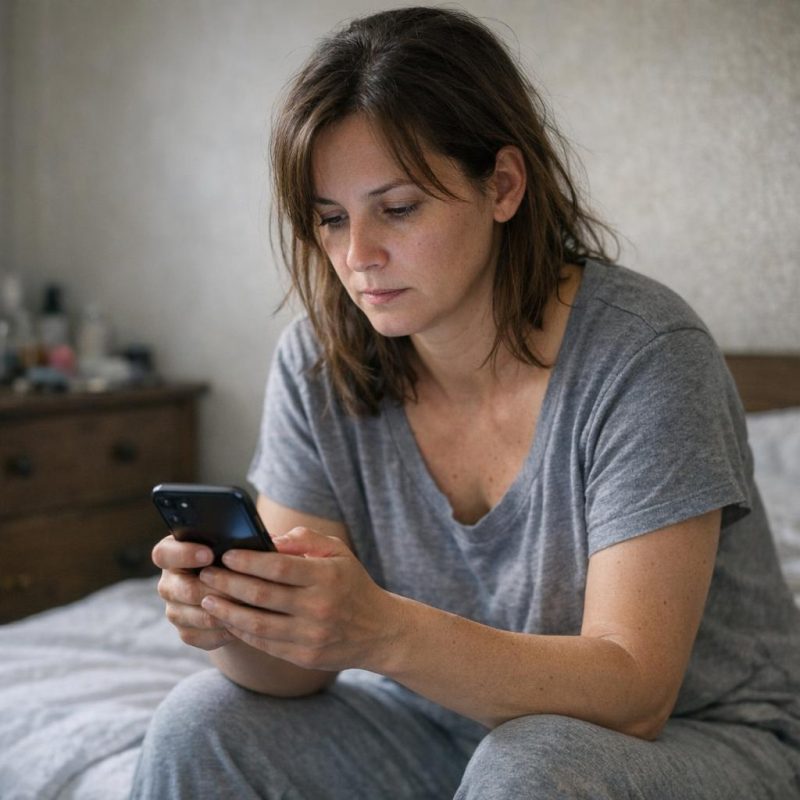 Image by RM AI
The Financial Planner
I'd found an email in David's phone from someone named Mitchell Bryce, a financial planner whose signature indicated he specialized in 'crisis management and liability mitigation.' The email had been brief, just confirming a meeting time and mentioning he'd reviewed the preliminary information David had sent. I decided to call him directly, figuring that sometimes it's easier to get information when you pretend you already have it. I introduced myself as Linda's friend, said I was following up on her behalf regarding the consultation. Mitchell Bryce was professional but cautious in his responses. 'I can't discuss client details without proper authorization,' he said, 'but I can confirm we're working with Mr. Harrison on a complex financial situation.' I pressed gently, mentioned that Linda had been so stressed lately and I just wanted to understand the timeline. 'We're still waiting on documentation to assess liability exposure,' he said carefully. 'It's a complicated situation involving multiple parties and some historical agreements that need to be reviewed.' The phrase 'liability exposure' made my stomach drop. The planner said, 'We're still waiting on documentation to assess liability exposure. It's a complicated situation.'
 Image by RM AI
Old Paperwork
That phrase kept circling in my mind. Historical agreements. Multiple parties. I went down to our basement office where we kept old financial records in filing cabinets that probably should have been digitized years ago. I started pulling files, looking through tax returns and investment statements and loan documents from decades past. About an hour in, buried in a folder labeled '2008 - Misc,' I found it. A loan agreement, formally notarized, for sixty-five thousand dollars to help Linda's brother Marcus avoid foreclosure during the financial crisis. I remembered the situation vaguely, remembered Linda being desperate to help her brother, remembered David saying we should co-sign because we had better credit. What I didn't remember, or maybe had never fully understood, was what co-signing actually meant in legal terms. The document spelled it out clearly: joint and several liability, meaning each signer was responsible for the full amount. Marcus had apparently defaulted, and now somehow this fifteen-year-old loan was back to haunt us. Her signature sat next to David's, and I realized we were in deeper than I'd imagined.
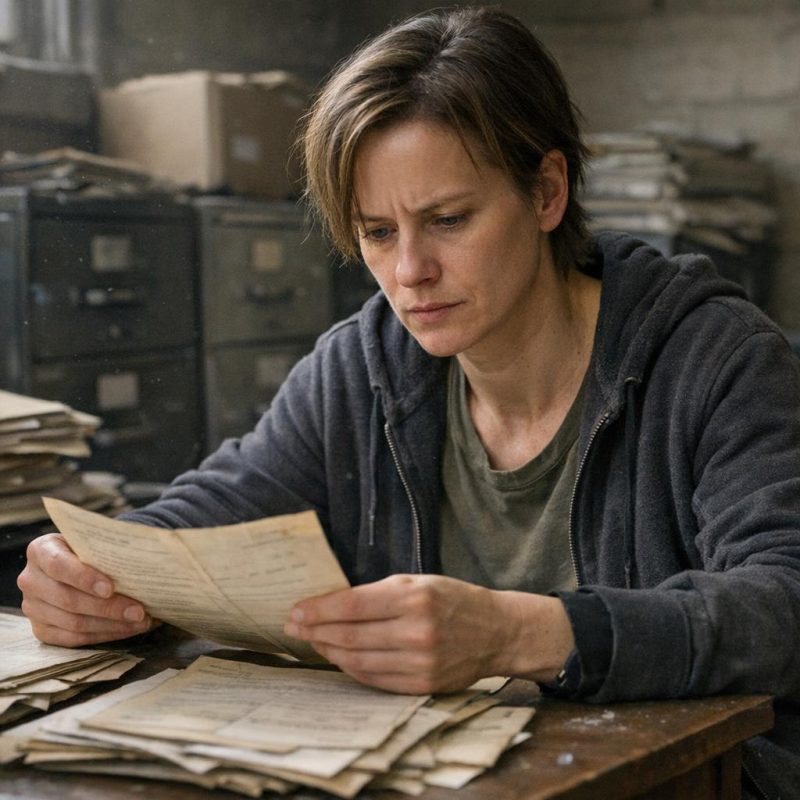 Image by RM AI
Linda's Brother
I found Marcus's number in the loan documents and called him that evening, half-expecting him not to answer. He did, though, and once I explained who I was, there was this long pause before he started talking. He confirmed everything—the foreclosure, the loan Linda and David had co-signed, the default that came two years later when his business failed completely. 'I tried to keep up with it,' he said, voice heavy with what sounded like genuine regret. 'But I just couldn't. I told Linda I'd figure it out, that I'd file bankruptcy if I had to, but she insisted on trying to handle it herself.' He explained that Linda had made payments sporadically over the years, apparently without telling anyone, draining her own savings and eventually taking out additional credit to cover what he couldn't pay. 'She was trying to protect everyone,' he said. 'Protect me from bankruptcy, protect you and David from the liability.' I felt my chest tighten with an uncomfortable mix of sympathy and confusion—sympathy for what Linda had tried to shoulder alone, confusion about why she'd kept it secret for so long. 'She never told you?' he said quietly. 'She must have been ashamed.'
 Image by RM AI
David's Exhaustion Explained
When David came home that night, I told him about my conversation with Marcus, and he sat down heavily at the kitchen table, looking more exhausted than I'd seen him in weeks. 'I've been working with lawyers since this all came to light,' he said, rubbing his eyes. 'Trying to figure out what we can shield, what they can actually come after if this goes to court.' He explained that he'd been meeting with financial advisors, restructuring accounts, moving retirement funds into protected vehicles—all the things I'd noticed but hadn't fully understood. 'I was terrified we'd lose the house,' he admitted. 'Terrified we'd lose everything we've built over thirty years because of one signature I barely remember making.' His voice cracked slightly, and I realized how much weight he'd been carrying without telling me, how alone he must have felt trying to navigate it. I reached across the table and took his hand, feeling the first real connection we'd had in weeks. 'I didn't tell you because I didn't want you to hate her before we knew how bad it was,' he said.
 Image by RM AI
Linda's Reduced Visits
Later that evening, after we'd both calmed down a bit, I mentioned how Linda had stopped coming over to the house as frequently over the past year or so. I'd noticed it at the time but attributed it to busy schedules, to life just getting in the way the way it does when you're in your late fifties and everyone's dealing with aging parents and health issues. David nodded slowly. 'She told me she couldn't face you,' he said. 'That she felt too guilty about what was happening financially, about the possibility that her brother's mess might drag us down.' He explained that Linda had deliberately created distance, declining dinner invitations, making excuses about being too busy, all because she was ashamed of what she thought might be coming. It made a certain kind of sense—the kind of twisted logic that comes from shame and fear. I could almost understand why someone would pull away from their closest friend rather than admit they'd made a catastrophic financial mistake. Almost. But even as I tried to make peace with this explanation, something still felt off. The texts asking about my marriage, about whether David and I were happy, about whether we still talked about everything—those still didn't fit that story.
 Image by RM AI
The Paperwork Timeline
I couldn't sleep that night, so I went back downstairs and pulled up the emails from David's financial planner again, looking at the dates more carefully this time. The first email about the loan liability issue was dated March 15th. I opened the secret phone and scrolled back through Linda's messages to David, looking for the timeline. March 18th was when she first asked if he and I were 'still solid,' if we were 'communicating about the big stuff.' March 22nd, she asked if he'd told me about 'everything that's been happening.' March 29th, she sent that message about how hard it must be to carry burdens alone. I sat there staring at the dates, watching the pattern emerge with uncomfortable clarity. Every escalation in her personal questions, every message that pushed toward intimacy, aligned almost perfectly with developments in the financial crisis. It wasn't gradual or organic—it was responsive, timed, deliberate in a way that made my skin crawl. Maybe it was coincidence. Maybe I was seeing patterns where none existed because I wanted to make sense of betrayal. But the timing felt too precise to be coincidence.
 Image by RM AI
Screenshots
I kept digging through the secret phone, and that's when I found the folder. It was buried in the photo gallery, labeled 'Backup,' and it contained screenshots—dozens of them—of specific text conversations between Linda and David. Not all of them, just certain ones. The messages she'd saved were the ones where David sounded most vulnerable, most isolated, most like he was confiding in her about things he supposedly wasn't telling me. There were screenshots of his messages about feeling overwhelmed, about not knowing how to handle everything, about appreciating that she understood. None of the screenshots included her responses, interestingly—just his messages, isolated and preserved. I sat there on the basement floor, phone in my lap, trying to understand what I was looking at. Why would someone carefully document conversations like this? Why save only certain messages and not others? If this was genuinely just an emotional affair, why the selective archiving? People don't typically curate evidence of their own inappropriate relationships unless they're either deeply sentimental or deeply calculating, and Linda had never struck me as particularly sentimental about anything. Why would someone document their own emotional affair unless they had a reason?
 Image by RM AI
David's Confusion
I showed David the screenshots the next morning, watching his face as he scrolled through the folder. His expression shifted from confusion to something darker—recognition, maybe, or the first stirrings of real suspicion. 'These are all my messages,' he said slowly. 'None of hers. Why would she save just my side of the conversations?' I told him I'd been wondering the same thing, that it felt intentional in a way I couldn't quite articulate. He kept scrolling, his jaw tightening as he recognized message after message. 'I remember some of these,' he said. 'I remember feeling like she was the only person I could talk to about the financial stuff, because telling you felt too risky.' He looked up at me, and I could see the wheels turning behind his eyes, the same uncomfortable realization I'd been circling around. 'She told me to delete everything,' he said slowly, his voice taking on an edge I hadn't heard before. 'After every conversation, she'd remind me to clear my messages, said it was better if you didn't accidentally see something that would worry you. So why would she save them?'
 Image by RM AI
Rachel's Insight
I finally called Rachel, something I probably should have done weeks ago but couldn't bring myself to do until now. I didn't tell her everything—didn't mention the secret phone or the full extent of what I'd discovered—but I told her enough. I told her about the financial crisis, about Linda's involvement, about the strange timing of everything. Rachel was quiet for a long moment, and then she said something that made my chest tighten. 'I never completely trusted her,' she admitted. 'I know she was your best friend, and I didn't want to say anything, but she always seemed a little too interested in your life.' She explained that over the years, she'd noticed how Linda asked pointed questions about my marriage, about our finances, about decisions David and I made together. 'It wasn't casual curiosity,' Rachel said. 'It felt like she was keeping track of something.' I asked her why she'd never mentioned it, and she sighed. 'Because it's a horrible thing to say about someone's best friend without proof,' she said. 'And maybe I was wrong. But now, with everything you're telling me...' She trailed off, and I felt a strange sense of validation mixed with dread. 'I never trusted her completely,' Rachel admitted. 'She always needed something from you.'
 Image by RM AI
Confronting Linda Again
David and I agreed we needed to confront Linda together, no more separate conversations where she could control the narrative differently with each of us. We called her and asked her to come over, and when she arrived, I could see the wariness in her eyes—she knew something had shifted. We sat in the living room, the three of us, and David pulled out his phone with the screenshots I'd forwarded to him. 'We need you to explain something,' he said, his voice steady but cold. 'Why did you save screenshots of our conversations? Why just my messages and not yours?' Linda's face went very still, the kind of careful blankness that comes from being caught off guard. I added my own question before she could formulate an answer. 'And why did you tell David to delete everything if you were keeping your own copies?' We watched her, waiting, and I could see her mind working, trying to decide how much to admit, how much she could still spin. The silence stretched out between us, heavy and accusatory, until finally she drew a breath and looked at both of us with an expression I couldn't quite read—part resignation, part something else. Linda's face went pale, and she said, 'I can explain, but you're not going to like it.'
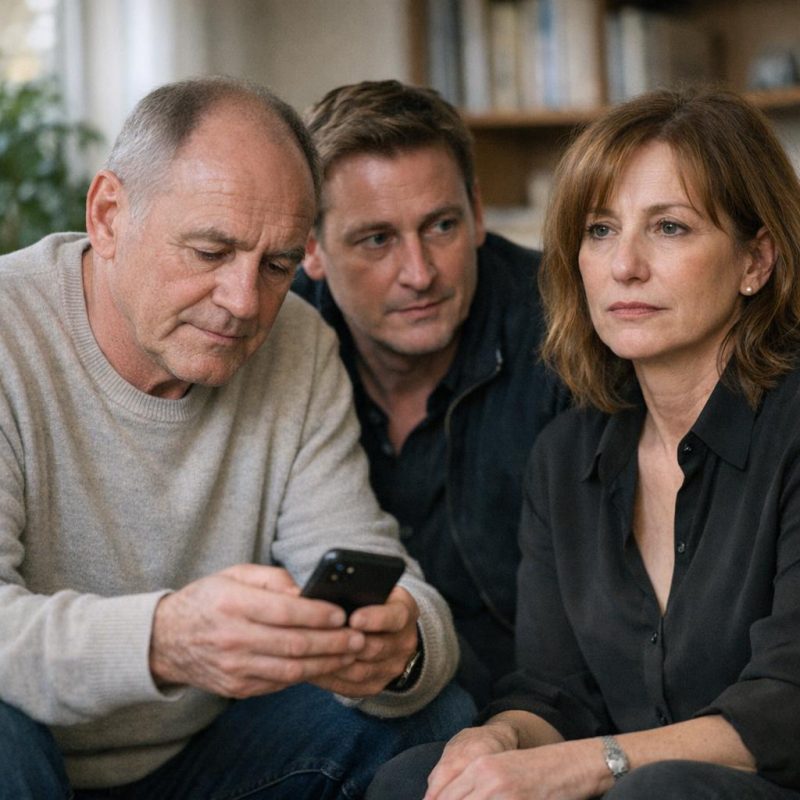 Image by RM AI
Linda's Defense
Linda's hands were shaking slightly as she set down her coffee cup, and she looked at both of us with an expression that might have been contrition if I didn't know her so well. 'I saved those messages,' she said slowly, 'because I knew how this would look to you, Claire. I knew you'd find out eventually about David and me talking, and I wanted proof—actual evidence—that nothing physical happened. That it was all innocent.' She spread her hands in a gesture of openness that felt rehearsed. 'I thought if I had his exact words, you'd be able to see there was no romance, no sexual tension, just two old friends supporting each other through hard times.' David frowned, clearly trying to process this, but I watched her eyes. They shifted when she said 'innocent,' just the smallest flicker to the left, the kind of tell you only notice after decades of knowing someone. I'd seen that exact movement when she'd lied to her mother about why she'd missed Thanksgiving, when she'd told her ex-husband she hadn't been drinking, when she'd promised me she'd paid back money she never intended to return. But her eyes shifted when she said it, and I knew she was lying.
 Image by RM AI
David's Realization
David had gone very quiet, and I could see him staring at Linda with a strange expression, like something was clicking into place in his mind. 'Wait,' he said suddenly, his voice tight. 'Linda, do you remember when we were texting about Claire's mother's anniversary? You said—you told me it would sound better if I phrased it differently. You actually suggested the exact words.' He pulled out his phone, scrolling frantically. 'Here. I wrote that I was 'thinking about her,' and you texted back saying I should say I was 'holding space for her grief.' I thought you were just being thoughtful, helping me express myself better.' His face had gone pale. 'And there were other times. You'd say things like, 'Maybe tell her you can't stop thinking about what she said,' or 'Say it keeps you up at night.'' Linda's expression had frozen completely. David looked at me, then back at her, and I watched the full horror of understanding spread across his features. 'She was writing our conversation,' he said, his voice barely above a whisper. 'She was directing it.'
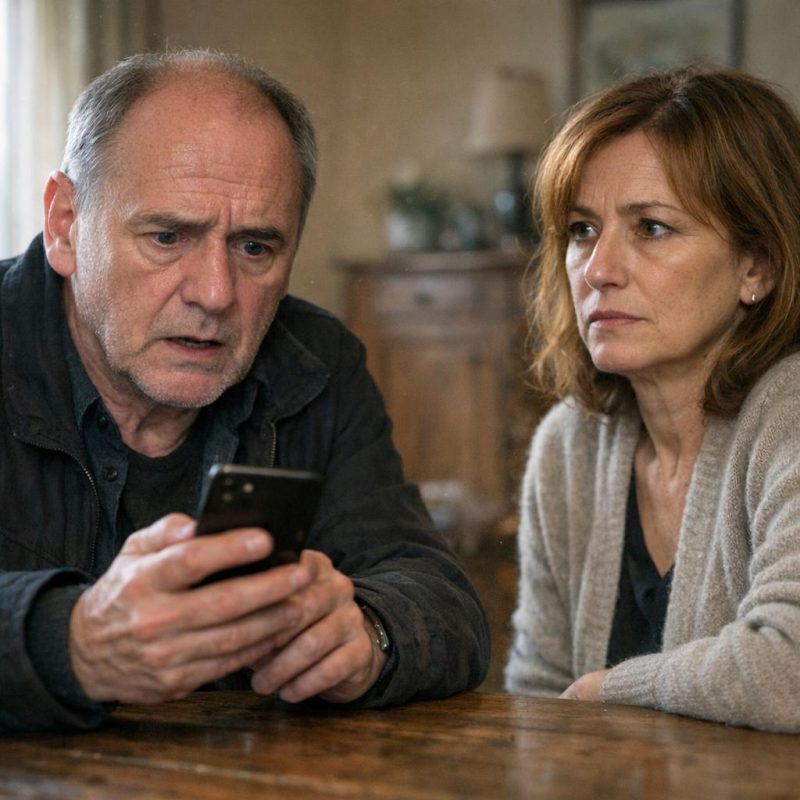 Image by RM AI
The Strategy Unfolds
After Linda left—she'd mumbled something about needing air and practically fled—David and I sat in the living room in stunned silence. My mind was working through it all, trying to fit the pieces together in a way that made sense. Linda had orchestrated an emotional affair that didn't actually exist, feeding David lines that would sound intimate and inappropriate when read by someone else. She'd saved only his responses, creating a one-sided narrative that looked damning. She'd told him to delete everything while keeping her own evidence. Why go to all that trouble? What was the point of making me think my husband and best friend were falling in love? 'She needed you distracted,' David said quietly, following my same train of thought. 'Something big enough to consume all your attention.' And then it hit me—the timing. All of this had ramped up right when I'd started questioning some financial decisions we'd made together, when I'd mentioned wanting to review our accounts and the business partnership we'd formed years ago with Linda. If I was too hurt and angry to think straight, I wouldn't dig into the numbers.
 Image by RM AI
Checking the Accounts
I went into my office and pulled up our banking records, something I should have done weeks ago instead of torturing myself over text messages. I started with our joint checking account, scrolling back through the statements from the past three months. At first, everything looked normal—mortgage payment, utilities, the usual groceries and gas. Then I saw it: a transfer for $8,500 on March 3rd, labeled 'Investment opportunity—discussed.' I had no memory of discussing any such thing. Another one on March 17th for $6,200, noted as 'Partnership distribution.' We hadn't received any partnership distributions. A third on April 2nd, right in the middle of the heaviest texting period, for $11,000, marked 'Loan repayment to L. Henderson.' Linda's maiden name. We hadn't loaned Linda money—or if we had, I certainly hadn't agreed to it. I checked the dates against my timeline of when I'd been most devastated, most consumed by the messages I'd found. They lined up perfectly. Every major transfer had occurred during a week when I was crying myself to sleep, when I was too shattered to think about anything except David's supposed betrayal. Money had been moving while I was drowning in heartbreak.
 Image by RM AI
The Lawyer's Call
The phone rang the next morning while I was still staring at the bank statements, and the caller ID showed a law firm I didn't recognize. 'Mrs. Fischer? This is Robert Kellerman from Kellerman and Associates. I'm calling regarding some financial transactions that require clarification.' My stomach dropped. He explained that he represented a creditor who was investigating irregularities in a business loan application that listed both David and me as guarantors—a loan I knew nothing about. 'We've been reviewing the documentation, and there are several items that raise questions,' he said carefully. 'Specifically, there are three separate documents with your signature authorizing transfers and liability agreements. The creditor is concerned about possible fraud, but before we proceed, I need to ask you directly.' He paused, and I could hear papers rustling. 'Mrs. Fischer, did you sign authorization forms for a $47,000 line of credit in February? Did you co-sign a liability waiver for business debts in March? Did you approve a transfer of assets into a partnership LLC?' My hand was shaking so badly I almost dropped the phone. 'No,' I whispered. 'I didn't sign any of those things.' 'She used your name on three separate documents,' the lawyer said quietly. 'Did you sign them?'
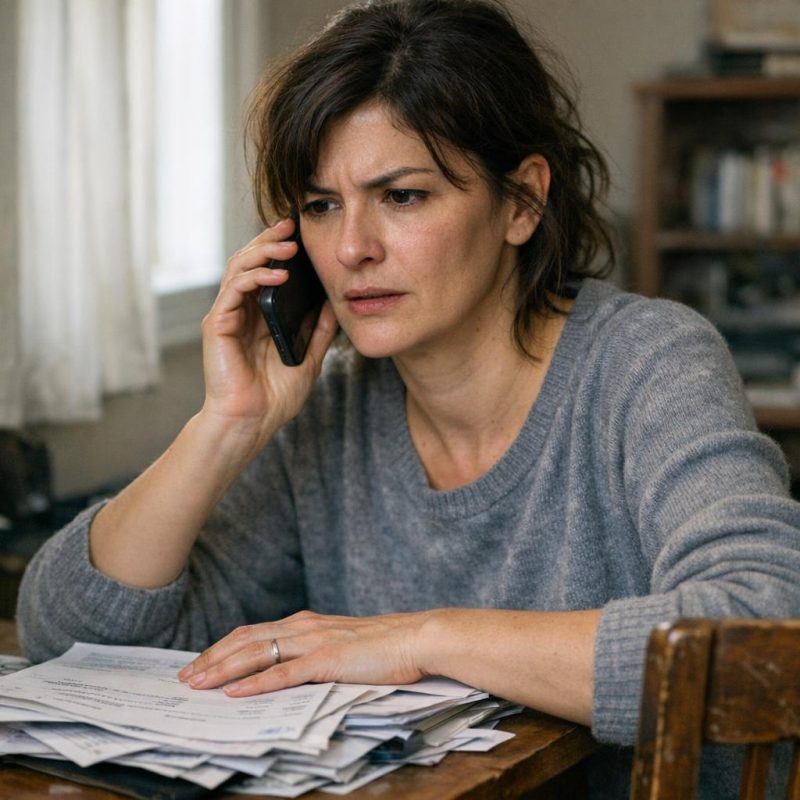 Image by RM AI
Tom's Warning
Tom called that afternoon, and I almost didn't answer because I was still reeling from the lawyer's revelations. But something made me pick up, maybe the memory of how he'd been there for me during those first awful days. 'Mom,' he said, and there was concern in his voice, 'I need to tell you something kind of weird. Aunt Linda called me yesterday.' I felt my entire body tense. 'She asked if I could lend her some money—not a huge amount, like five thousand dollars—but she said it was for a surprise for you. Something about a birthday trip she wanted to plan, and she wanted to book it before prices went up.' He paused. 'It didn't feel right, the way she was talking. Really insistent, kind of desperate, and when I said I'd have to think about it, she got almost angry. Said I didn't understand how important this was, how you deserved something special after everything you'd been through.' My throat was tight. 'What did you tell her?' 'I said no,' Tom replied firmly. 'I told her if she wanted to plan something for you, she should talk to you directly about it. I didn't give her anything,' he said, 'but I thought you should know she's asking around.'
 Image by RM AI
The Deliberate Framing
I'd almost forgotten about the second phone, the one that had started this entire nightmare. It was still in my desk drawer where I'd left it after the initial discovery, and something made me pull it out again, go through it one more time now that I knew what Linda was capable of. I scrolled through the message history, and then I saw it—a folder I hadn't noticed before labeled 'Drafts.' There was only one message inside, unsent, dated from two weeks before I'd found the phone. It was addressed to David's number. But it wasn't a simple text. It was a script. 'Try this version,' it read at the top. Then below: 'I keep thinking about our conversation. It's been keeping me up at night, the way you understand things no one else does.' Crossed out. Rewritten: 'I can't stop thinking about what you said. It's like you see parts of me I've forgotten existed.' Then in a different color, a note to herself: 'Too obvious? Maybe softer. More vulnerable. He'll feel protective.' She'd been workshopping the emotional manipulation like a playwright drafting dialogue. She'd been scripting our destruction, word by word.
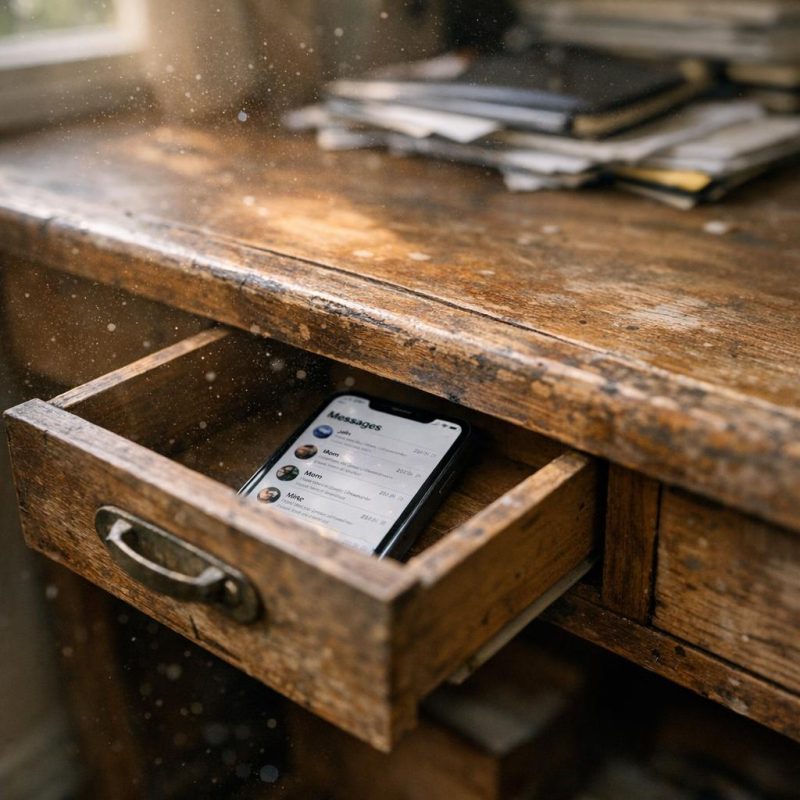 Image by RM AI
Linda's Full Confession
We called Linda back over, and this time I had the lawyer's information, the bank statements, Tom's warning, and the draft message all laid out on the coffee table like evidence at a trial. She looked at everything and something in her just collapsed. 'I needed you not to look,' she said finally, her voice hollow. 'The business partnership we formed ten years ago—I'd been moving money through it, borrowing against it, and it had gotten so complicated and so deep that if you started investigating, you'd find irregularities that would implicate all of us. The accounts were joint. The liability was shared. If it came out, David could be held responsible too.' She looked at him with something like desperation. 'I thought if Claire was focused on an affair, on being hurt and betrayed emotionally, she wouldn't dig into the finances until I could fix it. I directed the messages to sound intimate. I saved them to look damning. I made sure you'd find them.' Tears were streaming down her face now, but I felt nothing but cold clarity. 'And the forgery?' I asked. 'The documents I supposedly signed?' She nodded miserably. 'I practiced your signature for weeks. I thought I could make it right before anyone noticed.' Then she looked at David with an expression I'd never seen before, raw and desperate and years in the making. She said she'd been in love with David for years, not out of passion, but because he represented the stability she'd lost and desperately needed.
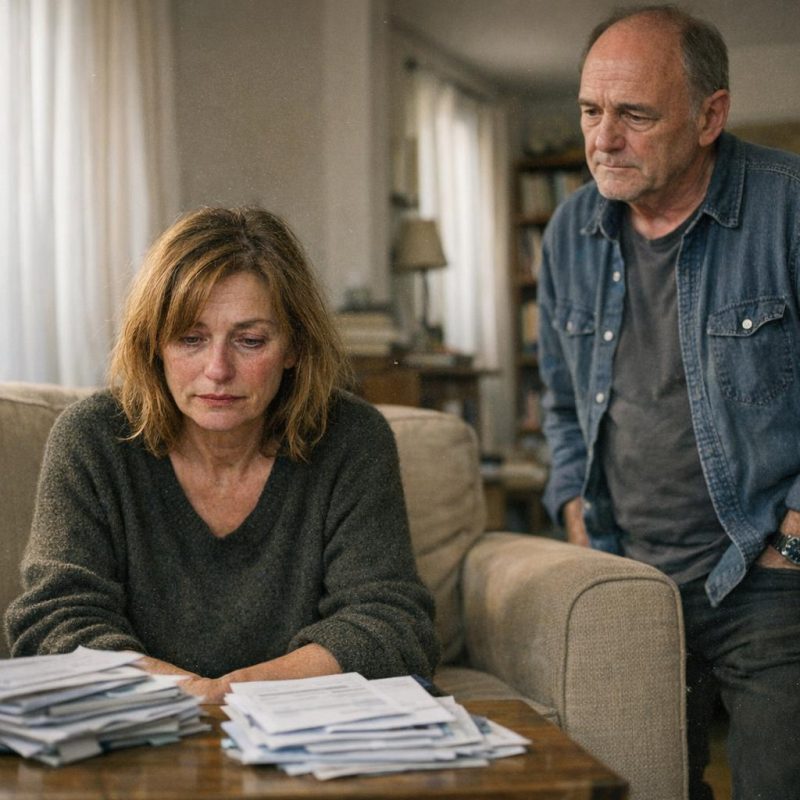 Image by RM AI
The Years of Lies
Linda started talking then, really talking, and what emerged over the next two hours was a portrait of calculation that spanned decades. She'd positioned herself deliberately after her divorce, she said, when her life felt like it was disintegrating and ours looked so stable it hurt to witness. She'd made herself essential to us—the friend who always answered, who showed up with groceries when we were sick, who remembered birthdays and offered business advice and knew exactly how to make herself irreplaceable. Every kindness had been strategic, though she claimed it had felt genuine at the time. She'd learned our patterns, our vulnerabilities, the exact pressure points where we'd lean on her rather than question her. When the financial troubles started, she already had access to everything—our trust, our accounts, our unguarded moments. She'd cultivated it all, year by year, gesture by gesture, making sure we'd never think to doubt her until it was far too late to unwind what she'd woven. I sat there thinking about every dinner party, every vacation we'd invited her on, every confidence I'd shared, and felt them all curdle into something unrecognizable. 'I needed you to need me,' she said finally, her voice breaking. 'Because I had nothing else.'
 Image by RM AI
David's Guilt
After Linda left—escorted out by Tom, who looked like he wanted to say something cutting but couldn't find words adequate to the betrayal—David and I sat in the horrible silence she'd left behind. I asked him when he'd really known, not suspected but known, that Linda's attachment to us had crossed some line into dependency or obsession or whatever we were supposed to call this. He was quiet for a long time, then admitted he'd recognized it years ago, maybe five or six years back, when she'd started calling him with business questions that didn't quite make sense, that seemed designed more to maintain contact than to seek actual advice. He'd thought he could manage it, he said, by setting gentle boundaries, by being less available, by subtly redirecting her attention. He'd convinced himself that involving me would hurt me unnecessarily, that it was kinder to handle it quietly, that he was protecting our friendship and my feelings by keeping his concerns to himself. But really, he said, looking at me with an expression of such tired regret, he'd just been avoiding a difficult conversation and hoping the problem would resolve itself. 'I thought I was protecting you,' he said. 'I was just lying to both of us.'
 Image by RM AI
The Financial Reckoning
I met with the lawyers alone two days later, in an office with too much glass and not enough warmth, and they walked me through the full scope of what Linda had done. The forged signatures numbered at least seven across various documents—loan applications, partnership amendments, liability transfers. She'd moved funds through accounts in ways that created a shell game of responsibility, making it genuinely difficult to trace where money had originated and where it had actually gone. Some transfers appeared legitimate on paper because she'd backdated authorizations she'd forged months earlier. The business partnership we'd formed a decade ago, which had seemed like a simple formalization of our professional collaboration, had become a vehicle for her to borrow against our credit, secure loans in our names, and create financial obligations that listed us as guarantors without our knowledge. The lawyers said we'd recover most of it, eventually, but the process would be lengthy and invasive and would require full cooperation with investigators. They laid out the options with professional detachment, and then the lead attorney looked at me directly, his expression carefully neutral. The lawyer said, 'You'll recover, but you'll need to press charges.'
 Image by RM AI
Rachel's Anger
Rachel came over the next evening and I'd never seen her that angry—not the explosive kind of anger she'd had as a teenager, but something colder and more focused. She'd known Linda her entire life. Linda had been at her graduation, her wedding, in the hospital when both her children were born. She'd been Aunt Linda, the fun one who brought expensive presents and remembered inside jokes, and now Rachel was having to recontextualize every memory through the lens of manipulation. She paced around our living room like she couldn't contain the energy of her fury, asking questions I couldn't answer about how someone fakes affection that convincingly for that long. She wanted details I'd spared her before—about the forged signatures, the manipulated messages, the calculated positioning Linda had described. I told her everything, watching her face cycle through disbelief and recognition and something like grief. Then she stopped pacing and looked at me with an expression I recognized from when she was small and someone had hurt one of her friends. 'Let me talk to her,' Rachel said, her voice steady and dangerous. 'I want her to see what she's done.'
 Image by RM AI
Tom's Silence
Tom's reaction was completely different, and somehow that made it worse. When I called to tell him everything—the full story, not the partial version he'd pieced together from warning me about the business irregularities—he barely said anything. Just listened with that quality of attention that made me aware of every word I was choosing, every detail I was including or leaving out. I could hear him breathing on the other end of the line, could picture him in his study with that particular stillness he got when processing something difficult. He asked a few clarifying questions about the timeline, about which signatures were forged and when, but mostly he was quiet in a way that felt heavy with thinking. When I finished, he was silent for so long I almost asked if he was still there. Then I heard him exhale, and I knew he was struggling with the same thing I'd struggled with—how to reconcile the Linda we'd known with the Linda who'd done this. His voice, when he finally spoke, was carefully controlled but I could hear the tightness in it. He finally said, 'She was at my wedding. She held my kids. How do you fake that?'
 Image by RM AI
The Decision to Press Charges
I went back to the lawyer's office alone and told them I wanted to press charges. David had said it was my decision, that he'd support whatever I chose, but I knew he was hoping I'd find some way to handle it privately, to resolve it without the public exposure and legal consequences that prosecution would bring. Part of me wanted that too—some neat, quiet solution that would let us recover our money and move on without turning this into a criminal matter. But I kept thinking about what Linda had said, about needing us to need her, about positioning herself in our lives with such calculated intention, and I realized that letting it go quietly would be just another way of protecting her from consequences, of prioritizing her comfort over the truth. The lawyers had the papers ready, had probably anticipated this outcome, and they walked me through what would happen next—the investigation, the likely charges, the timeline for prosecution. I thought about Rachel's fury and Tom's quiet devastation and all the years of friendship that had been a performance I'd never audited. I signed the papers with a hand that didn't shake, and felt something break and heal at once.
 Image by RM AI
Linda's Final Apology
The letter arrived three days after I filed charges, delivered by regular mail like she couldn't risk any form of contact that might constitute witness tampering or violate whatever legal boundaries now existed between us. It was handwritten, which felt like another performance—Linda's graceful script on expensive stationery, as if presentation could somehow soften the content. She apologized, said she never meant for things to go this far, that each decision had felt small at the time and the scope of the deception had grown beyond her control. She claimed she'd genuinely loved us, had genuinely valued our friendship even as she was exploiting it, and that the two things had coexisted in her mind without contradiction. She wrote about her divorce, her fear of irrelevance, the way our stability had felt like both a comfort and a reproach. Some of it rang true. Some of it sounded like exactly what she thought I'd want to hear. I read it twice, looking for some definitive sign of sincerity or manipulation, but all I could see was the same Linda I'd always known—articulate, self-aware, impossible to read with certainty. The last line read, 'I loved you both, and that's the only true thing I have left.'
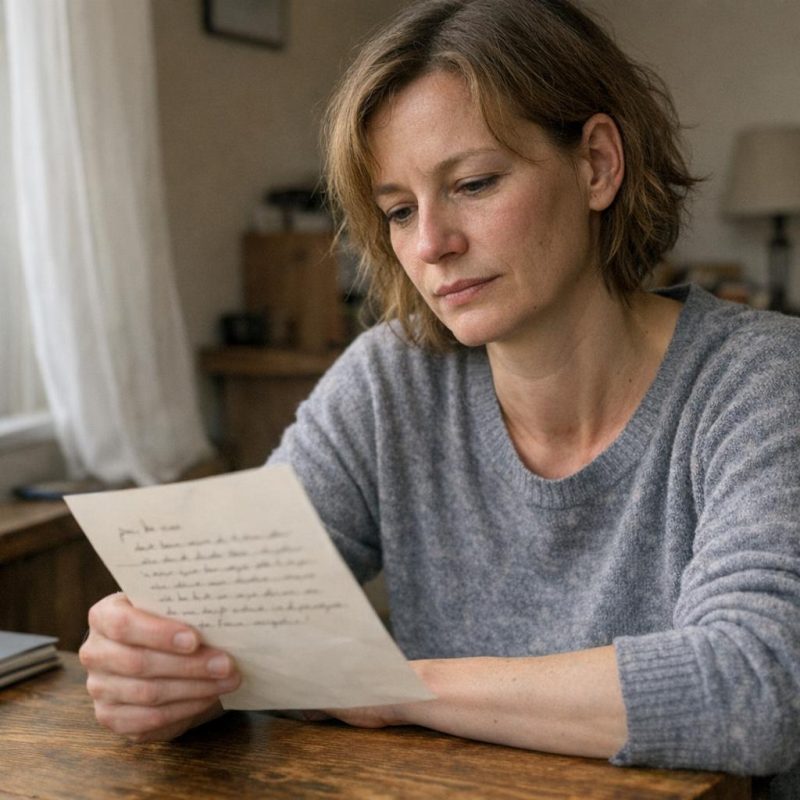 Image by RM AI
The Marriage Conversation
David and I finally sat down to talk about us, not about Linda or the legal situation or the financial recovery, but about whether our marriage could survive what had happened. We'd been circling this conversation for days, both of us too exhausted and overwhelmed to face it directly, but it couldn't be avoided any longer. I told him I understood why he'd kept his concerns about Linda to himself, could even see the logic of it from his perspective, but that his silence had made me complicit in something I never agreed to and had robbed me of the chance to protect myself. He didn't defend himself, didn't offer excuses, just nodded and said he understood. He said he'd convinced himself that managing the situation quietly was the mature, protective thing to do, but he could see now how that was just another form of control, of deciding what I should and shouldn't know about my own life. We talked about trust, about how his intentions had been good but the impact had been devastating, about whether good intentions mattered when the outcome was the same. It felt like the most honest conversation we'd had in years, painful and necessary and without any easy resolution. 'I don't know if I can trust you the way I did,' I said finally, and he nodded slowly. 'I know. But I'd like to try again.'
 Image by RM AI
Moving the Furniture Back
David moved his things back into our bedroom on a Tuesday afternoon, neither of us making a big deal of it, just him carrying his clothes and toiletries from the guest room while I pretended to read a magazine. We'd agreed the night before that we should try sleeping in the same room again, that the physical separation was just prolonging the distance between us, but I won't pretend I wasn't terrified. The sight of his shirts back in the closet, his reading glasses on his nightstand again, felt both familiar and foreign, like returning to a house you'd lived in years ago and finding it both exactly the same and completely different. We went through our evening routines carefully, politely, giving each other space in the bathroom, neither of us acknowledging how strange this all felt. When we finally turned off the lights and lay down, there was at least two feet of mattress between us, a careful buffer zone neither of us crossed. I could hear him breathing in the darkness, steady and deliberate, and I wondered if he was as awake as I was. We didn't touch, didn't speak, didn't reach across that space. But we'd chosen to be there, in the same bed, in the same room, trying. That first night we lay side by side in the dark, not touching, but choosing to be there.
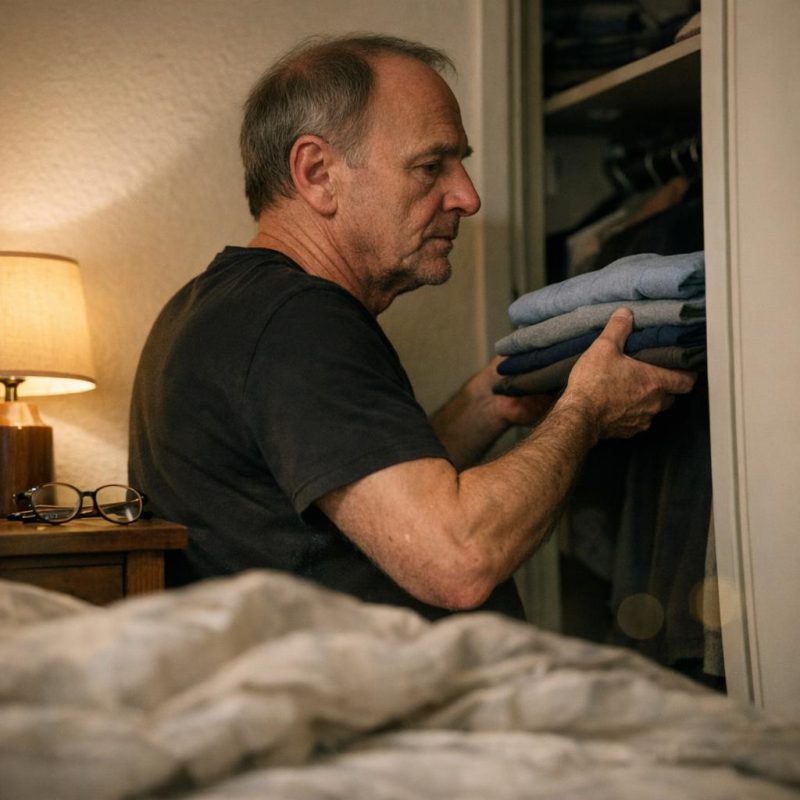 Image by RM AI
Rebuilding on Transparency
We started having what David called 'uncomfortable truth sessions' every Sunday evening, sitting at the kitchen table with tea, committing to telling each other the things we'd normally swallow or soften or avoid altogether. The first few were excruciating, me admitting I still sometimes looked at him and felt a surge of anger I couldn't quite control, him confessing that he'd felt excluded from my friendship with Linda for years and had resented it more than he'd realized. We established ground rules: no interrupting, no defending, just listening and acknowledging what the other person was experiencing. I told him I was afraid I'd never stop second-guessing him, wondering what else he might be managing without telling me. He told me he was terrified I'd leave anyway despite everything we were trying to rebuild. Some weeks were worse than others, old resentments surfacing in ways that surprised both of us, but we kept showing up for those conversations even when we wanted to cancel them. The pattern itself became the point, I think, the reliability of it, the commitment to not hiding anymore. It didn't fix everything, didn't erase what had happened, but it created something new between us, something more honest than comfortable. It was harder than I expected, admitting fears and resentments out loud, but it also felt like breathing.
 Image by RM AI
What I Lost and Found
I'd lost my best friend of thirty-six years and had come terrifyingly close to losing my marriage, but somewhere in the wreckage I'd found something I hadn't known was missing: a clearer sense of who I was when I wasn't prioritizing comfort over truth. Linda and I had built our friendship on a kind of unconditional support that had felt like love but was really just enabling, both of us protecting each other from consequences and difficult conversations, calling it loyalty when it was really just avoidance. David and I had built our marriage on similar foundations, him protecting me from unpleasant realities, me accepting that protection and calling it trust. I'd been so afraid of conflict, of discomfort, of being the person who demanded more or questioned the narrative I was given, that I'd essentially outsourced my own judgment to the people closest to me. The irony wasn't lost on me that it took betrayal from both of them to wake me up to my own passivity. I was fifty-nine years old and finally learning to sit with uncertainty, to trust my own instincts even when they made others uncomfortable, to choose truth even when lies were softer. The loss was real and it still hurt, probably always would, but what I'd gained felt essential in a way I couldn't quite articulate. I'd spent thirty-six years choosing safety, and it had almost cost me everything.
 Image by RM AI
The Second Phone, Powered Down
I sat at the kitchen table one afternoon with the second phone in front of me, the one that had started all of this, and methodically deleted every message thread, every call log, every piece of evidence I'd collected. The lawyer had confirmed we didn't need it anymore, that the settlement was finalized and there was no reason to keep it, but I'd been holding onto it anyway, unable to let go. I scrolled through the texts one last time, Linda's words about my marriage and my naivety, David's careful responses, all of it feeling like it had happened to someone else in a different lifetime. When the phone was finally empty, wiped clean of everything except the factory settings, I powered it down and put it in the back of my desk drawer, knowing I'd probably never turn it on again. It felt symbolic in a way that embarrassed me slightly, like something from a self-help book, but I needed the finality of it, the physical act of putting it away. My life wasn't fixed, my marriage wasn't magically healed, and I still had moments when the anger and hurt surfaced unexpectedly, but I was choosing to move forward anyway, to build something new on the ruins of what I'd lost. The ground beneath me felt steady for the first time in months, built not on comfort, but on something I chose to believe in despite everything.
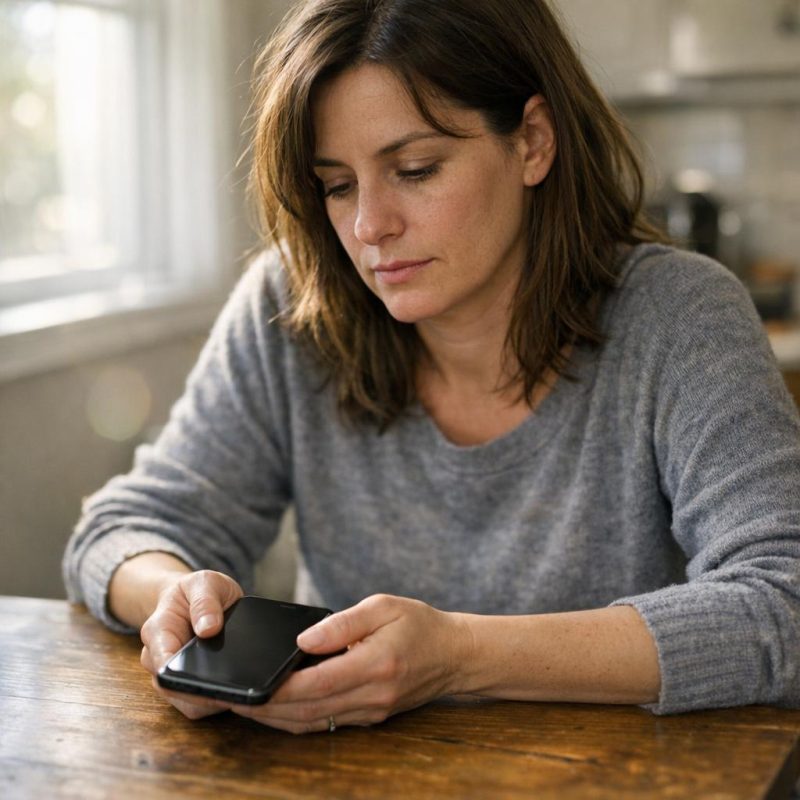 Image by RM AI