The Sentence That Defined Him
For most of my life, my dad was a sentence my mom said the same way every time—quick, flat, and sharp enough to end the conversation before it started. 'He passed when you were a baby.' That's it. No lingering details. No soft stories. No 'he would've loved this' moments. Just a clean, cold fact delivered like a door being shut. I'm Ellie, 28, living in Boston where I design logos and websites that tell other people's stories while my own remains this weird, empty outline. It's strange how you can build an entire identity around an absence. When friends talk about daddy issues or share childhood fishing trips with their fathers, I just nod along, mentally checking the 'deceased' box I've carried since forever. My mom never cries about him. Never gets that misty-eyed nostalgic look other single parents get. Instead, she gets annoyed when his name comes up, like he's an overdue bill rather than someone she once loved enough to create me with. I've learned to mirror her emotional economy—efficient, unsentimental, forward-moving. But sometimes, usually when I'm alone scrolling through Instagram posts of father-daughter dances or graduation photos, I wonder about the ghost whose DNA I carry. I never thought I'd get answers... until yesterday, when my entire understanding of my life cracked open on a random sidewalk.
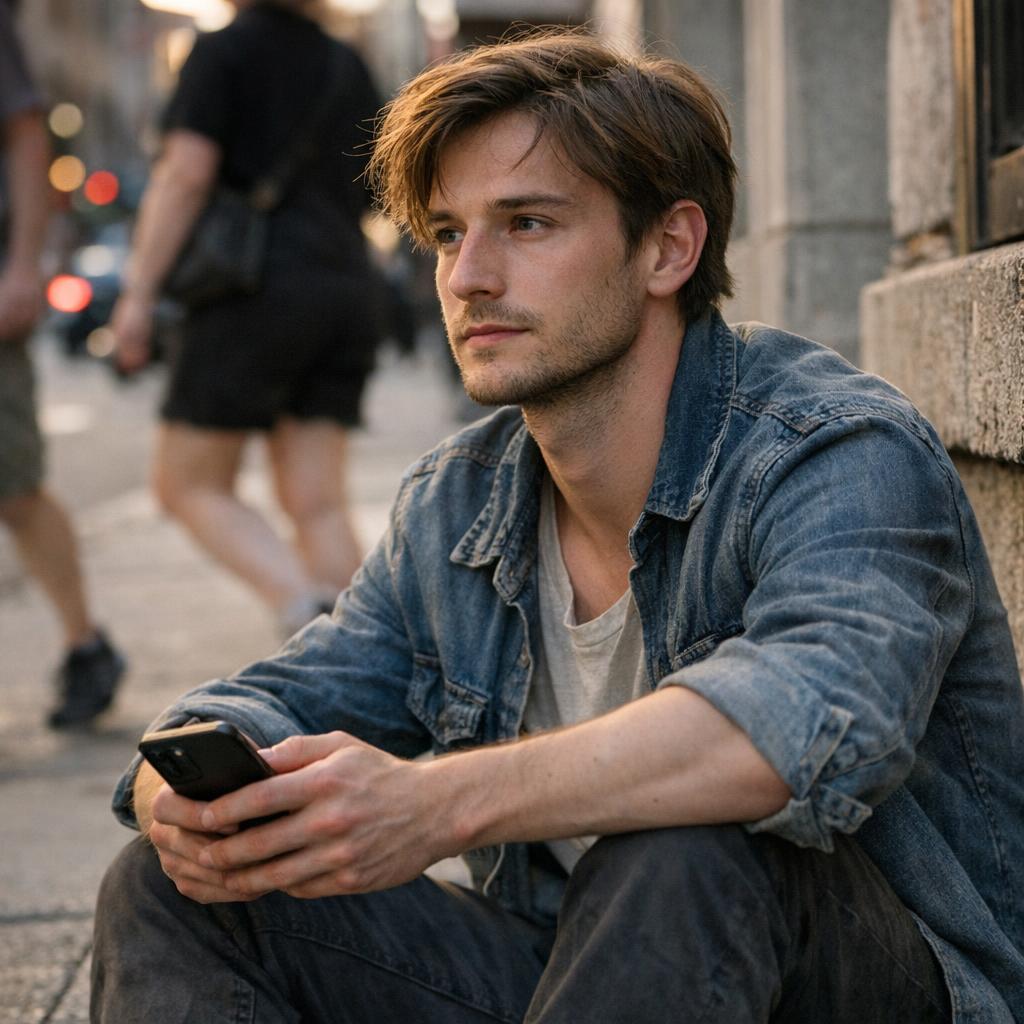 Image by RM AI
The Sealed Room
When people talk about losing a parent young, they usually describe this aching void, this constant yearning for what could have been. But that wasn't my experience. In our house, Dad wasn't a missing puzzle piece—he was a sealed room with a 'Do Not Enter' sign. Mom's face would transform whenever his name came up, her expression tightening like she'd just bitten into a lemon. Not sad. Not wistful. Just... annoyed. Like he was an inconvenience rather than a tragedy. And kids are emotional sponges, right? I absorbed her reaction until it became my own. I trained myself to feel nothing when classmates asked about him, when Father's Day projects came around, when TV shows had those tearful reunion scenes. If he was gone, he was gone. End of story. No use crying over spilled milk, as Mom would say. So I built my life around his absence without questioning it, the way you might build a house around a tree instead of cutting it down. The strange part? I knew what he looked like. Mom kept old photos in a drawer—not displayed, not cherished, just... stored. Like receipts you might need someday but hope you won't. I'd sneak peeks sometimes, studying the dark-haired man with my eyes who smiled like he had no idea what was coming. Little did I know, that sealed room was about to blow wide open.
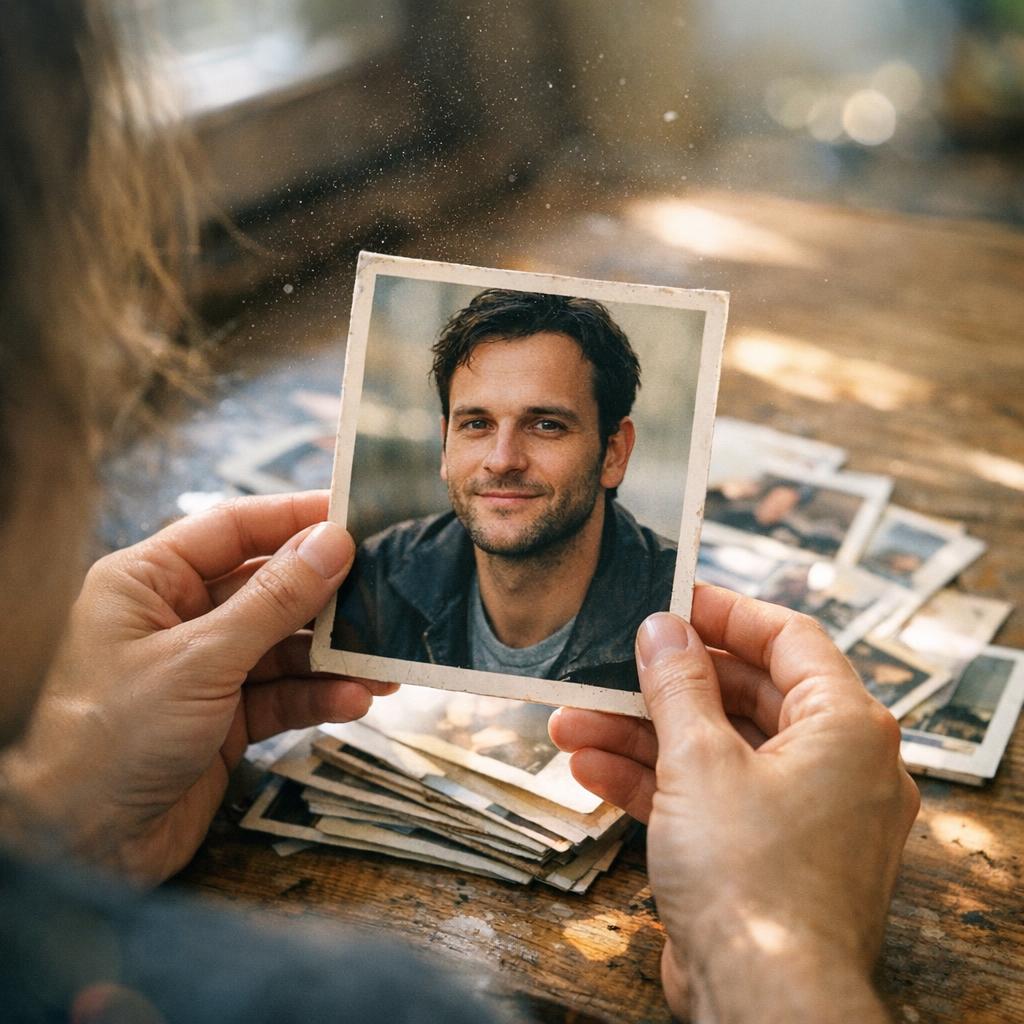 Image by RM AI
The Drawer of Ghosts
The photos lived in Mom's bedside drawer, tucked beneath old birthday cards and expired coupons she never threw away. I'd sneak peeks when she was in the shower or working late shifts at the hospital. It felt like archaeology—digging for evidence of a man who supposedly didn't exist anymore. In those yellowing snapshots, he looked so solid, so undeniably real. His arm wrapped around Mom's waist, both of them laughing on some forgotten beach. His eyes—my eyes—crinkling at the corners. One photo showed him painting a nursery wall, looking over his shoulder at the camera with a paintbrush in hand and this goofy, excited smile that screamed 'dad-to-be.' Whenever Mom caught me looking, she'd snatch them away with a sharp, 'Put those back, Ellie,' like I was handling something radioactive. I'd watch her shove them back in the drawer, her movements quick and angry. Never sad. Never nostalgic. Just irritated, like finding me with an embarrassing middle school photo rather than evidence of the man she once loved. The older I got, the more I wondered: who gets that angry about someone who simply 'passed away'? What I didn't realize then was that those photos weren't just images of my father—they were clues to a mystery I wasn't even aware I was supposed to be solving.
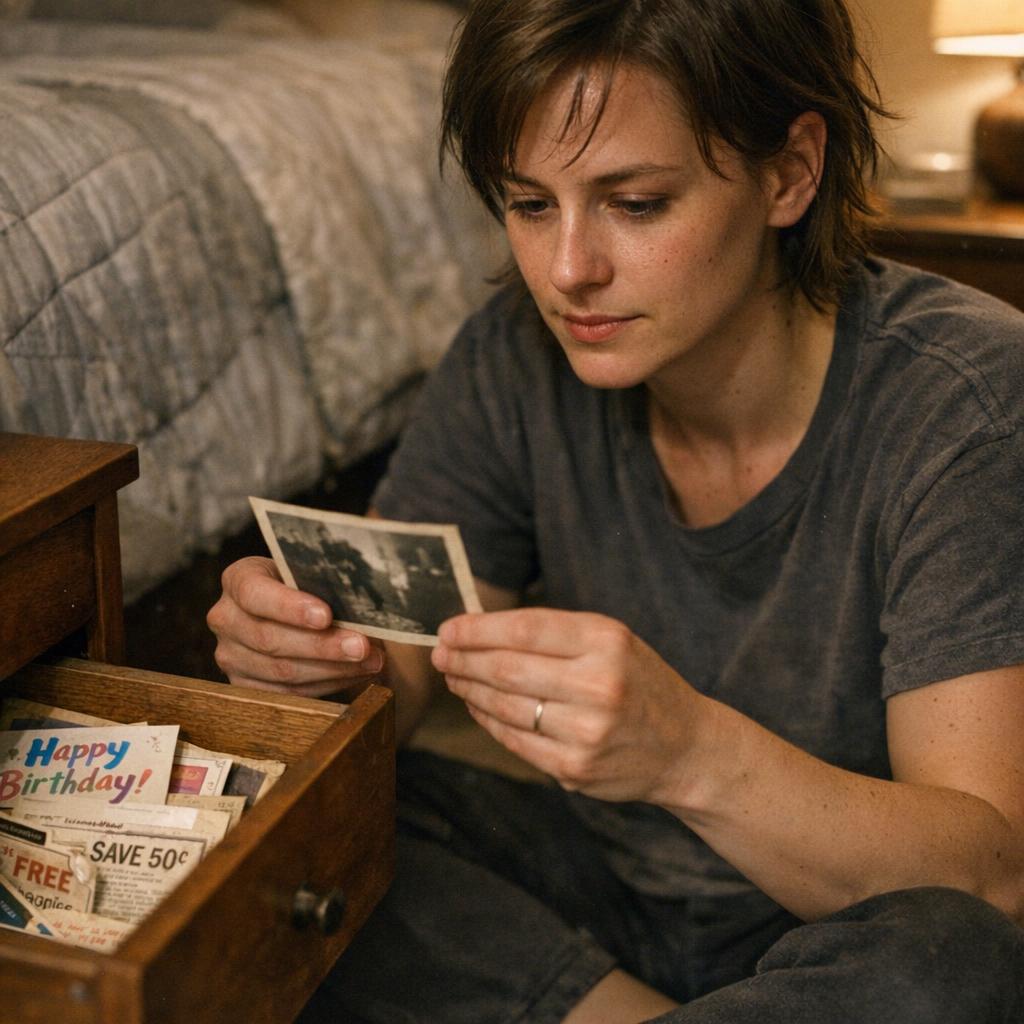 Image by RM AI
Put Those Away
I learned quickly that my dad's memory wasn't something we honored in our house—it was something we avoided like a conversational landmine. Whenever Mom caught me with those photos, her reaction was always the same: 'Put those away, Ellie,' she'd snap, with the same urgent tone she used when I was about to touch the burner on the stove. Not because the photos would hurt me, but because they irritated her. Like, deeply irritated her. The first few times, I thought maybe she was protecting me from grief or something profound like that. But as I got older, I realized the truth was much simpler: she just didn't want to deal with him, even in memory form. It was weird how efficiently she'd trained me to mirror her reactions. By middle school, I'd developed this automatic emotional shutdown whenever father-related topics came up. Father's Day? Just another Sunday. 'Take your dad to school day'? Great time to catch up on homework. I became so good at compartmentalizing that my friends thought I was remarkably well-adjusted about the whole dead-dad thing. Little did they know I wasn't processing grief—I was avoiding a subject that, according to my mom's behavior, wasn't worth the emotional investment. What I couldn't understand then was why she kept those photos at all if looking at them made her so angry.
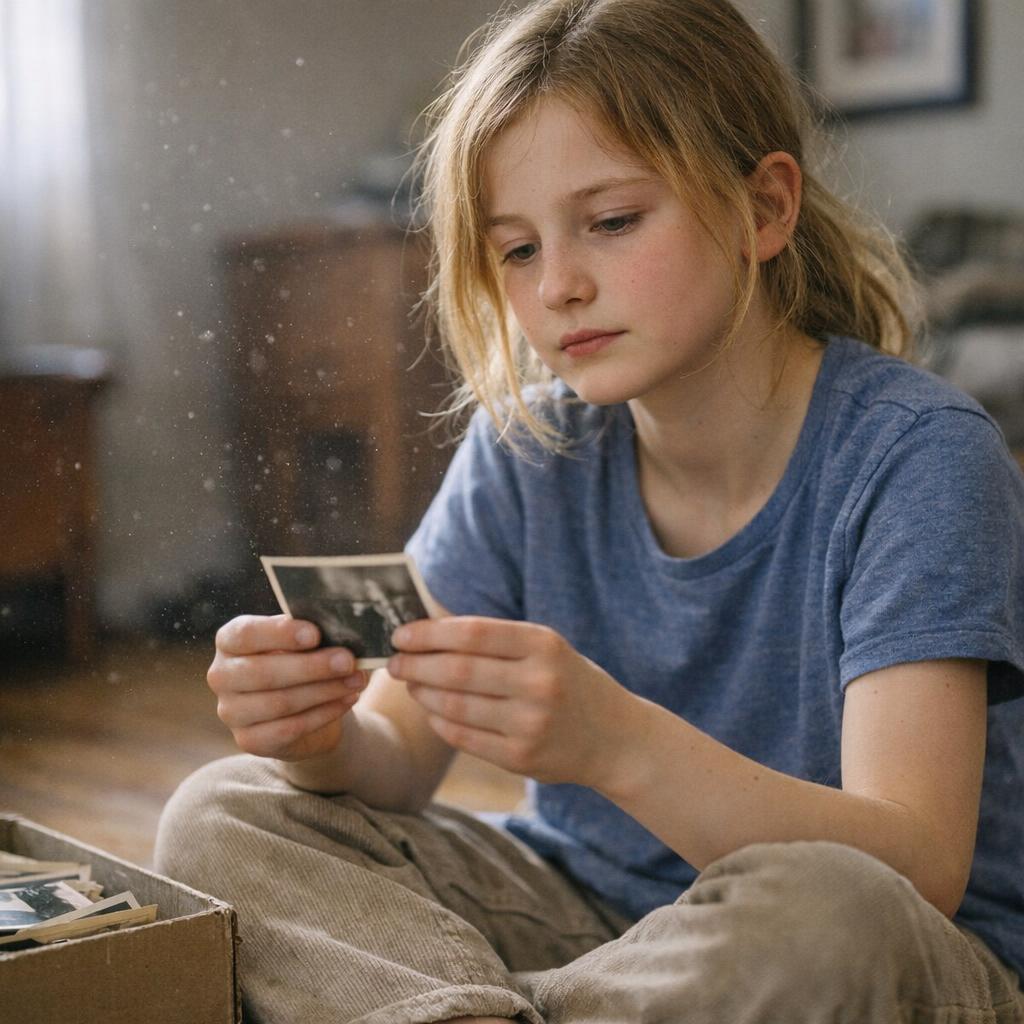 Image by RM AI
The Unvisited Grave
It's weird how you can grow up never questioning the most obvious things. Like, it never once occurred to me to ask about my dad's grave. Not once. Most people would probably think that's messed up, but in my world, it made perfect sense. Graves were for people whose absence left a hole—people you visited with flowers and tearful stories about how much you missed them. My mom didn't miss my dad. She spoke about him with this practiced disdain that felt like a script she'd been rehearsing for years. 'He passed when you were a baby' wasn't delivered like a tragedy—it was delivered like a fact as mundane as our address. So I never asked where he was buried. Never wondered if we should visit on his birthday or death anniversary. Never thought to bring flowers to wherever his body supposedly rested. I just accepted the reality I was given: he was gone, and whatever he'd been, it wasn't something we honored. Looking back, I should have realized that people who genuinely grieve don't get annoyed when the dead person's name comes up. They get sad. They get nostalgic. They don't suddenly need to aggressively wash dishes to avoid the conversation. But I wouldn't understand what all those little clues meant until that random Tuesday afternoon when my entire reality collapsed on a busy sidewalk.
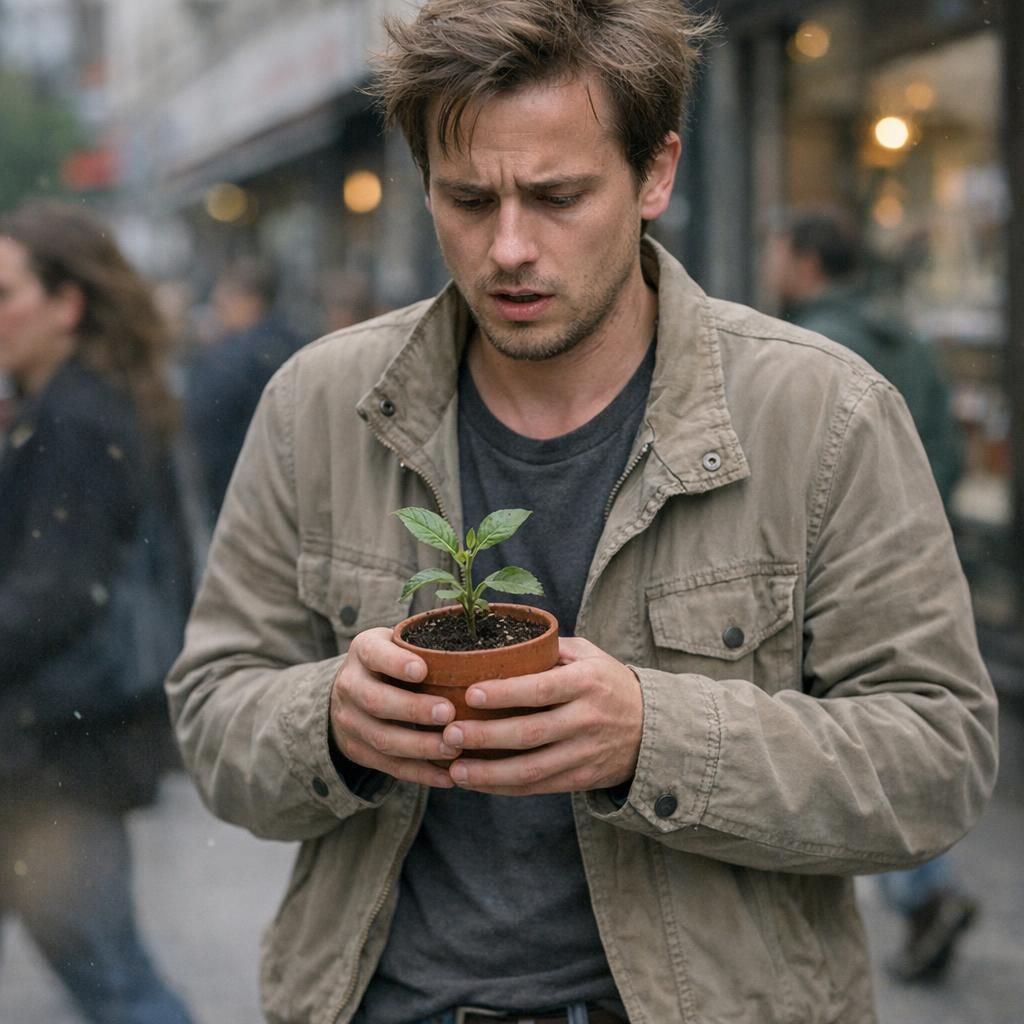 Image by RM AI
Building Around Absence
It's amazing how you can build an entire identity around something that isn't there. Like constructing a house with a room-sized hole in the middle and just walking around it every day like it's normal. I became an expert at the dead-dad dance—nodding sympathetically when friends complained about their fathers' embarrassing jokes or strict curfews, offering the perfect amount of information when teachers asked about my family situation. "He passed when I was a baby," I'd say with practiced casualness, the same way you might mention you're allergic to shellfish. I got good at managing the awkward silence that followed, the pitying head-tilt, the inevitable "I'm so sorry." I'd wave it away with a small smile. "It's okay, I don't even remember him." And that was true—how could I remember someone who supposedly left when I was still learning to hold my head up? I never realized how much of my personality formed around this absence—my independence, my discomfort with Father's Day commercials, my tendency to date guys who didn't want to get too serious. It was like I'd been given a script for my life at birth: fatherless daughter who's totally fine with it, thank you very much. I never questioned whether that script was accurate until the moment I saw a ghost walking toward me on that ordinary Tuesday afternoon.
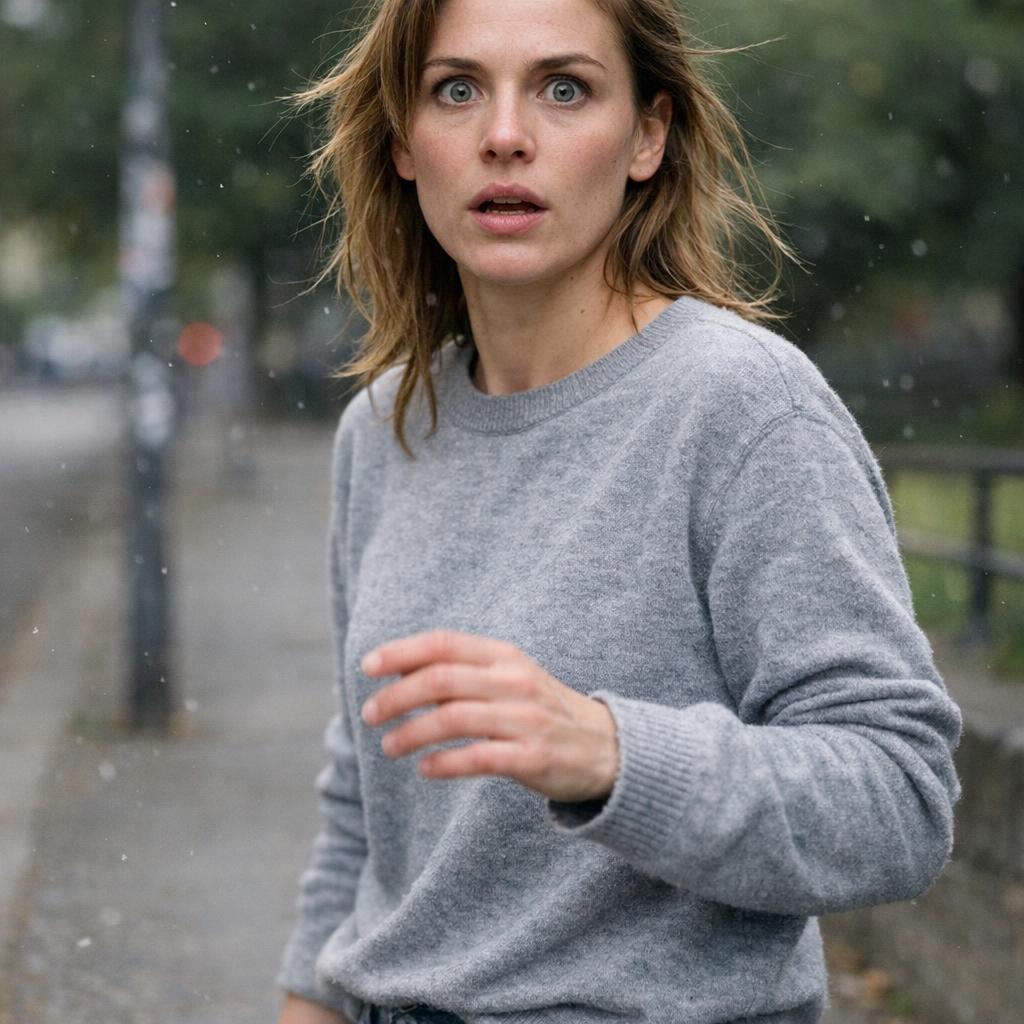 Image by RM AI
An Ordinary Tuesday
It wasn't some dramatic day when everything changed. No thunderstorms. No ominous music swelling in the background like in the movies. Just a random Tuesday afternoon in April, sun shining with that half-hearted spring effort that makes you wear a jacket anyway. I was walking home from my coffee run, juggling a paper bag with groceries in one hand and scrolling mindlessly through Instagram with the other. You know those moments when you're just existing? Not particularly happy or sad, just... moving through the day, thinking about what to make for dinner and whether you remembered to pay the electric bill. The street was busy in that city way—people brushing past each other, everyone locked in their own little worlds. That's when I saw him. At first, my brain refused to process it. Just a man walking toward the crosswalk, hands in his pockets, moving with the casual confidence of someone who belonged in the world. But my body reacted before my mind caught up. My stomach dropped so hard it felt like I'd missed a step on stairs. I stopped walking without meaning to. Because I recognized him. Not in a vague, 'he looks like someone' way. In a specific, terrifying way. The shape of his face. The angle of his jaw. The eyes I'd seen in those drawer photos. It was like the past had stepped out of those yellowing snapshots and into the sunlight.
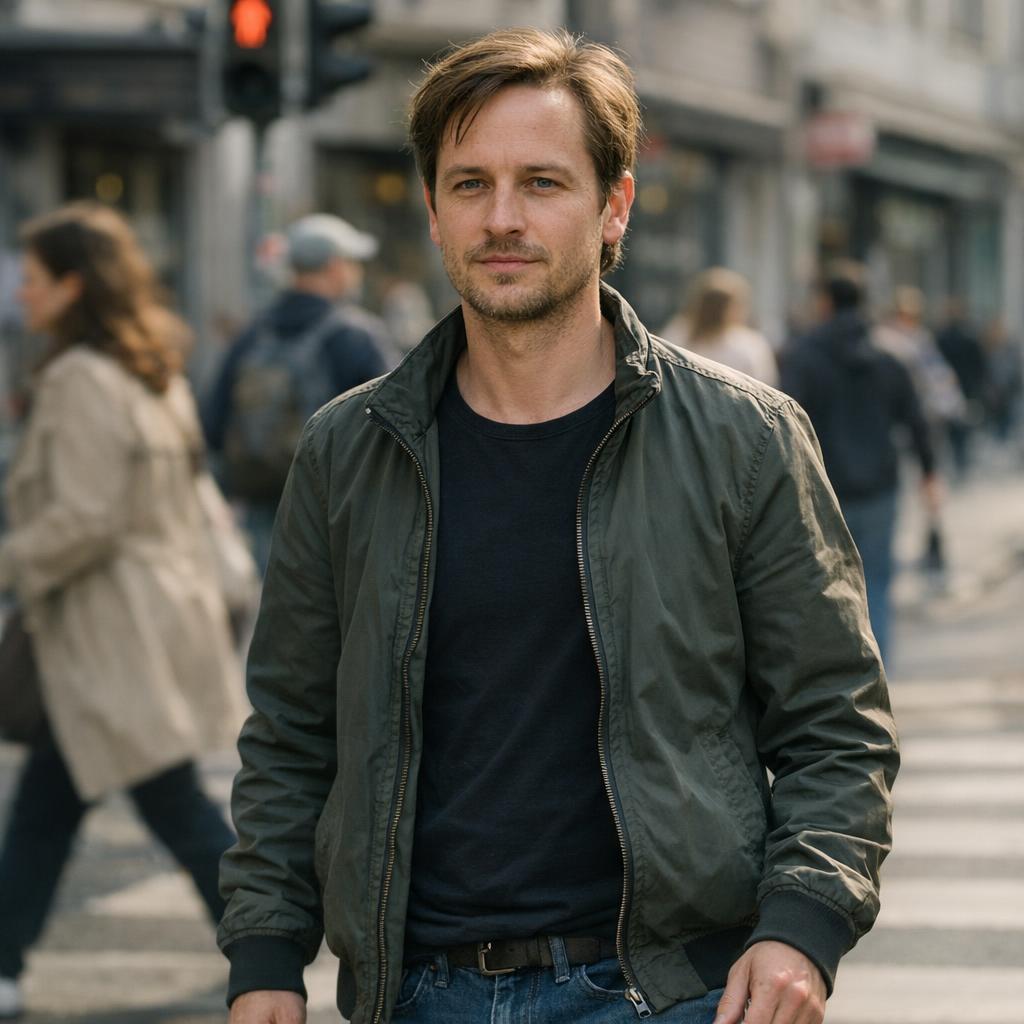 Image by RM AI
The Ghost Made Flesh
I froze on that sidewalk, my coffee bag cutting into my fingers, watching a dead man walk down the street like he had somewhere normal to be. My heart started that frantic, stupid pounding that makes you feel like you might pass out. I actually looked around for some logical explanation—maybe there was a billboard with his face, maybe I was having some weird stress hallucination. But there was no billboard. No trick. Just him, real and solid and alive. And then the most horrifying part happened: when he glanced up, his eyes landed on me and his expression changed. He recognized me. Not with certainty at first—more like a double-take, like his brain was doing the same impossible math mine was. Then his face went pale in a way that made my skin go cold. The street noise faded away, like someone had turned down the volume on the world so I could hear my own panic clearly. We stood there staring at each other, two strangers connected by a lie so massive it had shaped my entire existence. Finally, he took a step toward me, careful, like he was approaching a skittish animal. And that's when I realized I was about to hear a truth that would either set me free or shatter everything I thought I knew about myself.
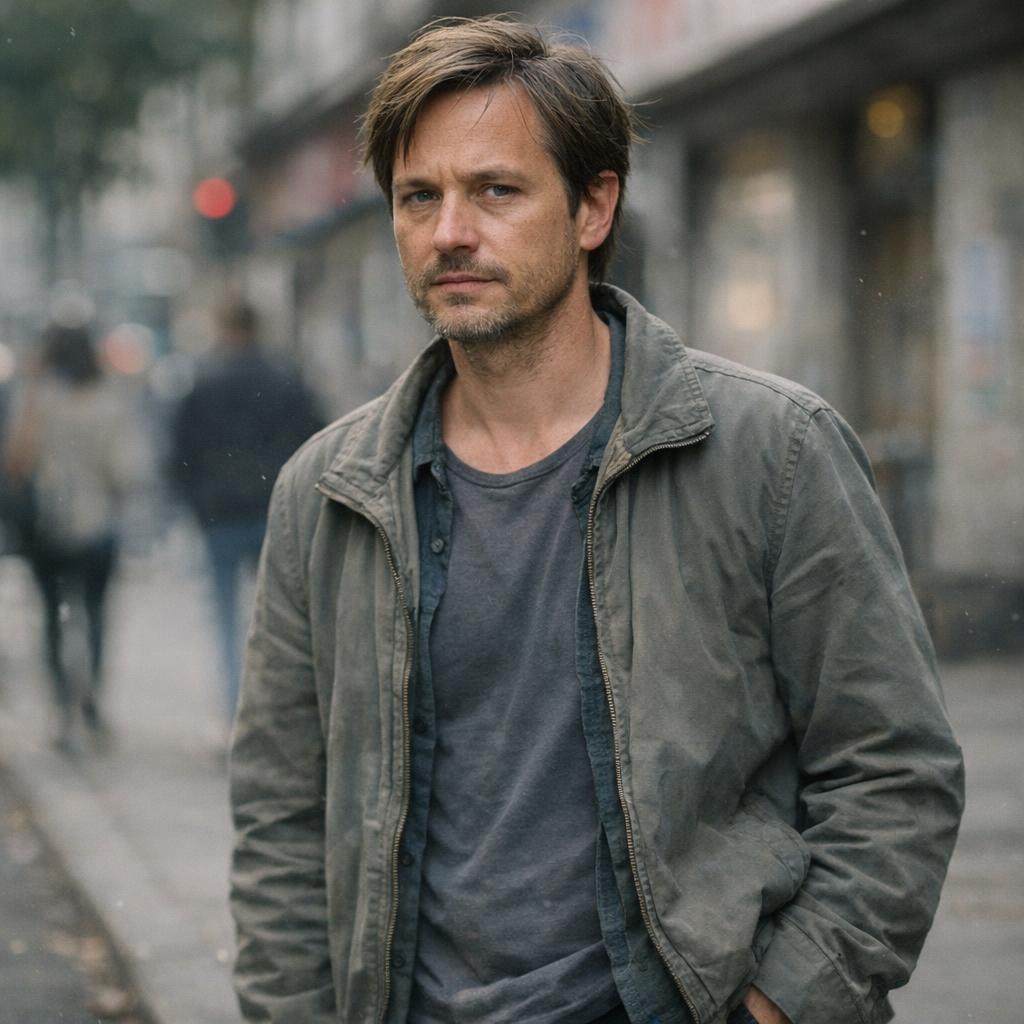 Image by RM AI
The Recognition
I didn't even realize I was shaking until I heard my own voice come out thin and strange. 'You're... you're—' My tongue couldn't finish the sentence. You're dead. You're my dad. You're not real. None of it fit. His throat bobbed when he swallowed, and his eyes—my eyes—looked wet, like he was trying to keep himself from breaking open right there on the sidewalk. 'I...' he started, then stopped, like he didn't know what version of the truth I'd been fed. I could've run. I could've screamed. I could've pulled out my phone and called my mom to demand answers right then and there. Instead, I just stood there, staring at him like if I blinked he'd vanish. 'Who are you?' I asked, which was absurd, because I knew. His voice was quiet when he answered, barely audible above the street noise. 'I'm your father.' The word 'father' hit me like a physical blow. I felt something rise up my chest—anger, grief, disbelief, a kind of nausea that wasn't about my stomach at all. I thought of my mom's flat voice. I thought of the photos in the drawer. I thought of all the times I'd told people he was gone. 'You... you passed,' I managed. 'My mom said you passed.' His face tightened, a flash of pain crossing it so quickly it almost looked like shame. 'No,' he said. 'I didn't.'
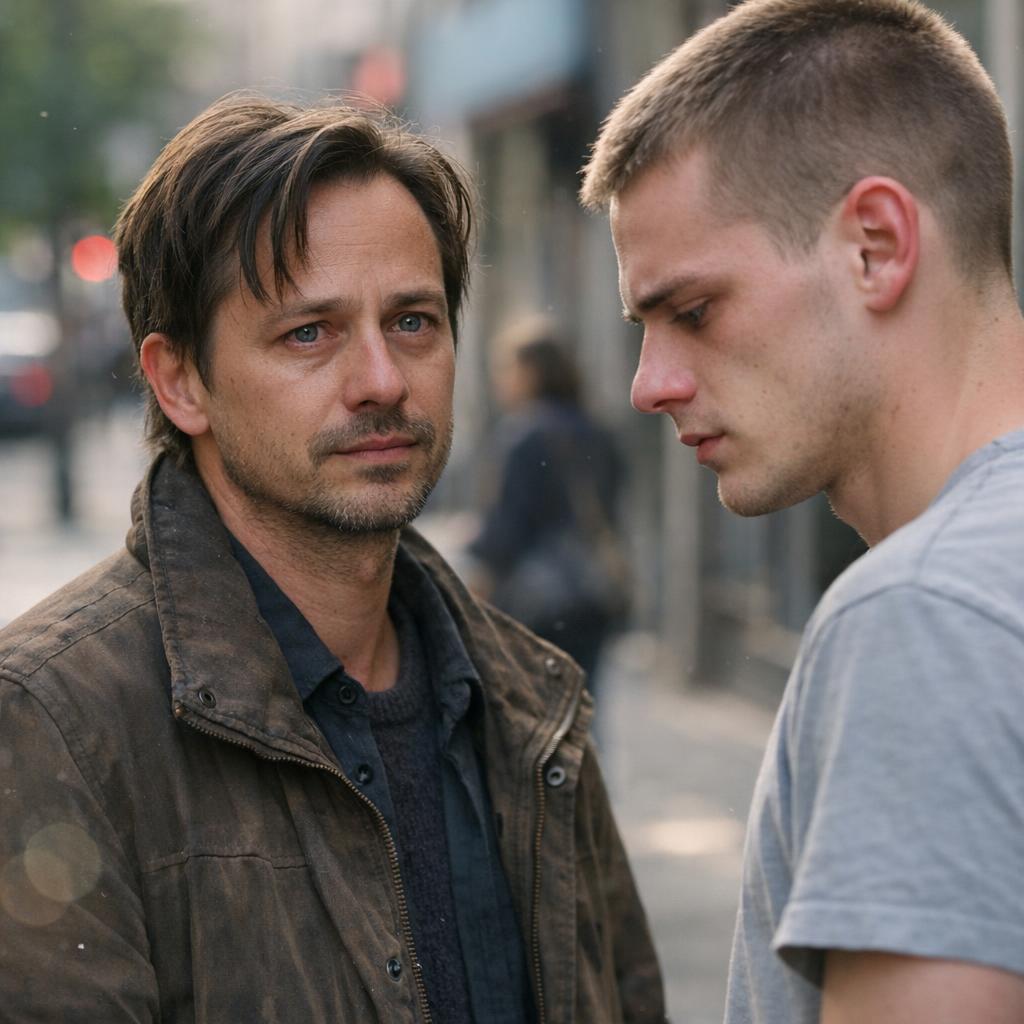 Image by RM AI
The Impossible Conversation
I heard myself laugh, sharp and humorless. 'So what? She just... made you up? Lied? Why would she—' My voice cracked as twenty-eight years of certainty crumbled around me. He looked like he was choosing his words with his whole body, like each one was going to cut. 'She thought I cheated,' he said finally. 'And I swear to you—I didn't. It was a misunderstanding. A stupid, devastating misunderstanding.' He exhaled, shaky. 'She kicked me out anyway.' My brain tried to reject it. The story didn't match the one I'd lived with. Mom wasn't the villain in my mind. She was the parent who stayed. The one who did everything. The one who worked herself to the bone and kept us afloat. How could that same person invent a death like it was nothing? I felt tears sting my eyes, not because I suddenly loved him, but because something fundamental inside me had just been ripped in half: the story I'd been handed, and whatever the truth was underneath it. I could barely breathe. 'So you just... left?' I demanded. 'You just let her tell me you were dead?' His shoulders sagged like the question weighed a thousand pounds. 'I tried,' he said. 'I tried more than you know. But she made it impossible. And then time passed, and... it got harder.' He looked at me like he was afraid of what he'd see. 'I never stopped thinking about you.'
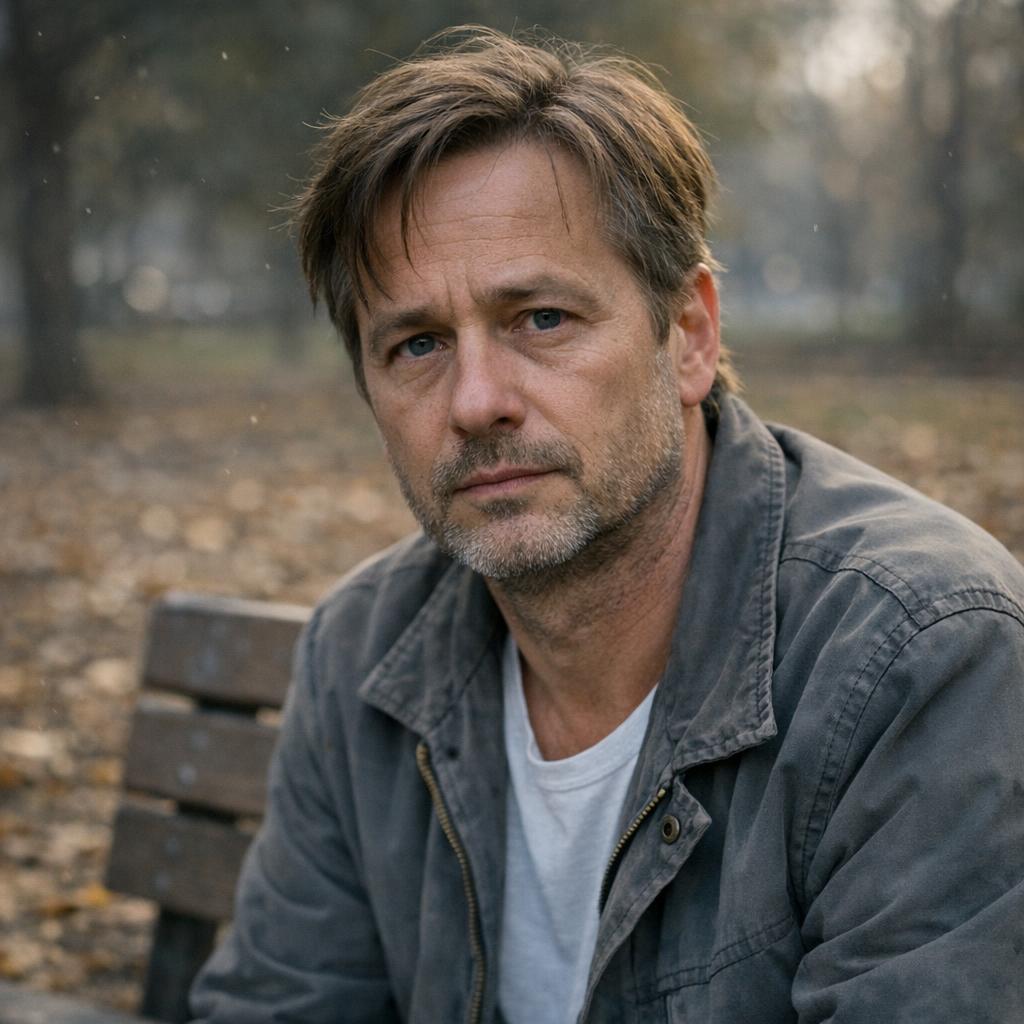 Image by RM AI
The Lie Unravels
I wanted to scream. The word 'father' hung in the air between us like some sick joke. My entire life had been built around his absence—his death—and now here he was, flesh and blood, telling me it was all a lie. 'She thought I cheated,' he'd said, as if that explained erasing someone's existence. As if suspicion justified telling your child their father was dead. I felt my world tilting sideways, everything I thought I knew about my mom, my childhood, myself, suddenly unreliable. The grocery bag in my hand felt impossibly heavy as my fingers went numb. 'So you just... left?' I demanded, my voice cracking. 'You just let her tell me you were dead?' His face crumpled, shoulders sagging like Atlas himself. 'I tried,' he whispered. 'I tried more than you know. But she made it impossible.' He swallowed hard, Adam's apple bobbing. 'And then time passed, and... it got harder.' His eyes—my eyes—searched my face desperately. 'I never stopped thinking about you.' I wanted to believe him. I wanted to hate him. I wanted to run back to yesterday when my life made sense. But standing there on that ordinary sidewalk, I realized I was about to hear the truth that my mother had buried beneath 28 years of lies.
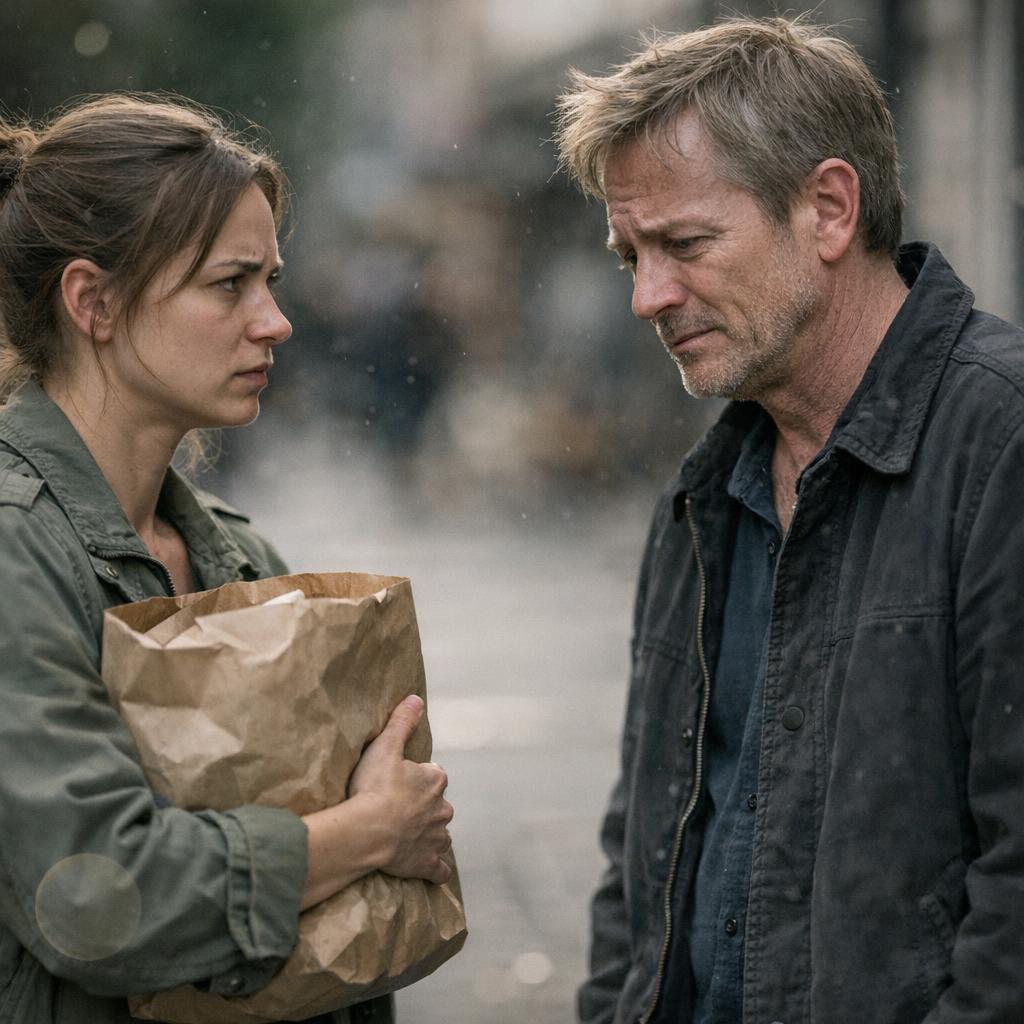 Image by RM AI
The Misunderstanding
I stood there, my grocery bag cutting into my fingers, trying to process his words. A misunderstanding? That's what he was calling it? Twenty-eight years of believing he was dead, and he's chalking it up to a 'misunderstanding'? My mind raced through a thousand questions at once. How does someone let their child believe they're dead over a suspicion of cheating? How does a mother fabricate an entire death rather than just say 'your dad left us'? I studied his face—the face I'd only known from yellowing drawer photos—searching for lies. But all I saw was pain, regret, and something else... fear. Fear of my reaction, maybe. Fear of this moment he must have imagined for decades. 'Tell me,' I demanded, my voice steadier than I felt. 'Tell me exactly what happened.' He glanced around at the busy sidewalk, people streaming past us like we weren't having the most surreal conversation of my life. 'Not here,' he said softly. 'Please. Can we sit somewhere?' Part of me wanted to refuse, to walk away and pretend this sidewalk collision never happened. But the larger part—the part that had lived with a ghost for a father—needed answers. What I didn't realize was that his version of the truth would make me question not just my past, but everything I thought I knew about my mother.
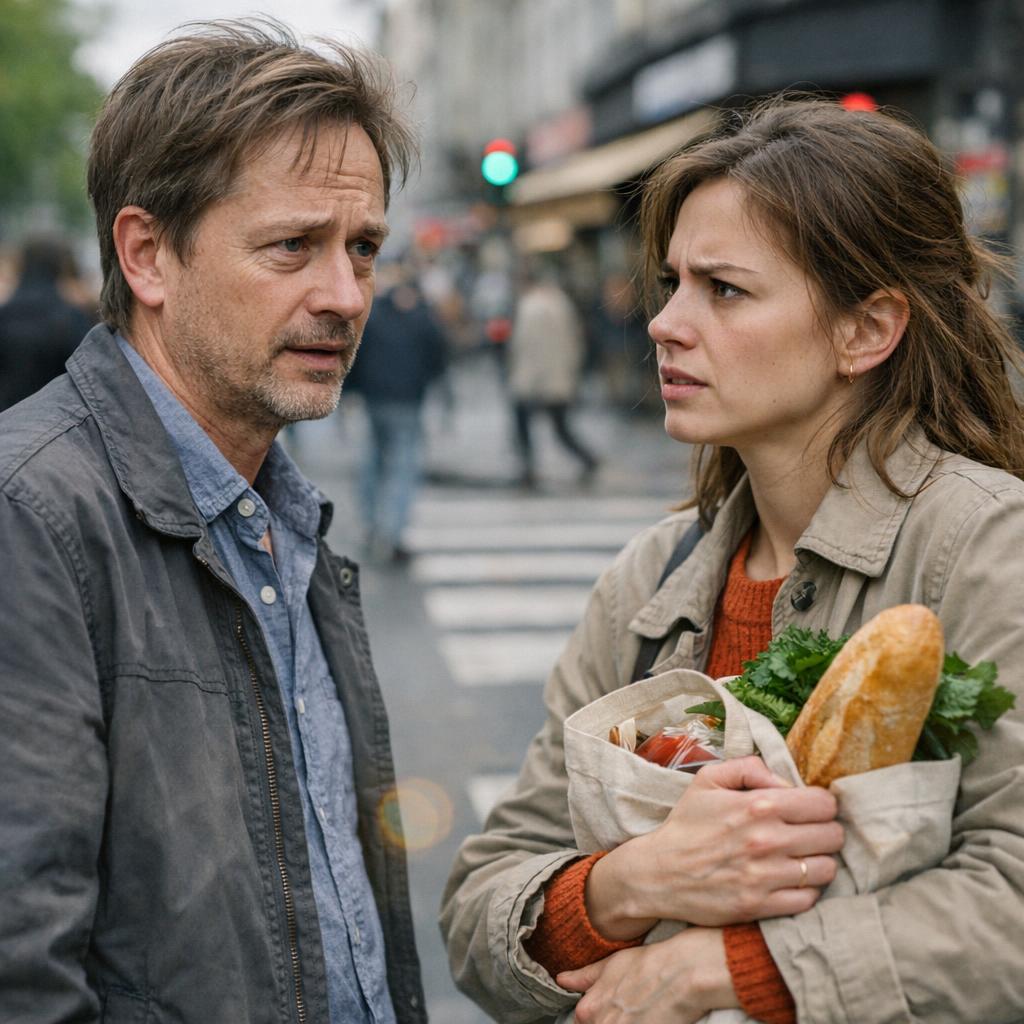 Image by RM AI
The Impossible Choice
I wanted to scream at him, to demand how he could have just vanished from my life. But the raw pain in his eyes stopped me. We moved to a nearby coffee shop, sliding into a corner booth away from curious ears. 'Your mother gave me an ultimatum,' he said, hands wrapped around a mug he hadn't sipped from. 'She said if I tried to see you, she'd move away where I'd never find you. She threatened restraining orders, custody battles—everything.' His voice cracked. 'I hired a lawyer, but she had documentation—forged texts, manipulated photos—making me look unstable, even dangerous.' He pulled out his wallet, unfolding a worn school photo of me at age 8. 'I paid the school photographer every year just to get these.' I stared at the picture, trying to process that while I was learning multiplication tables, he was secretly collecting evidence I existed. 'But why tell me you were dead?' I whispered. He looked up, eyes glistening. 'That was the cruelest part. She told me if I fought her, she'd make sure you grew up thinking I was a monster who abandoned you. At least with me "dead," you wouldn't hate me.' The impossible choice he described made my stomach turn—disappear completely or become the villain in my story.
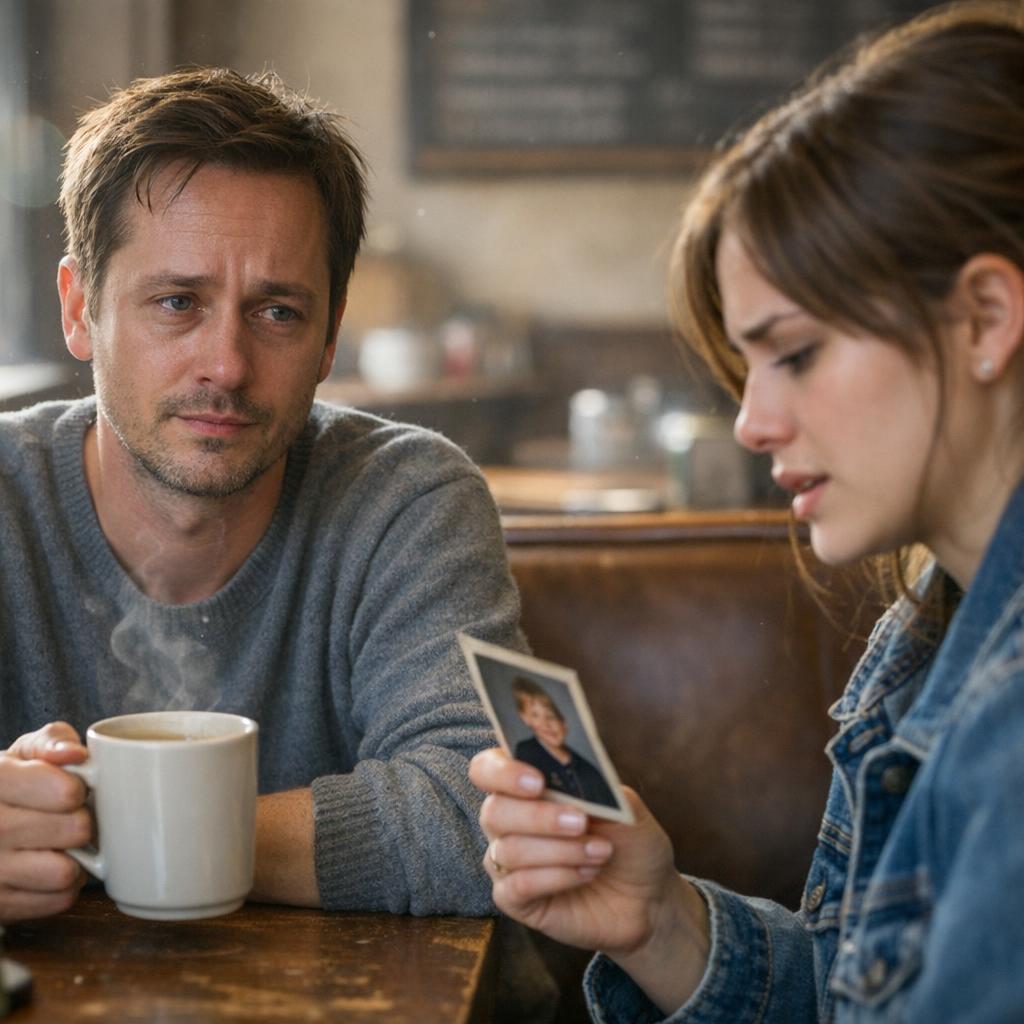 Image by RM AI
Coffee with a Ghost
We sat across from each other in a tiny café that suddenly felt too small for the weight of our conversation. I kept staring at his hands wrapped around the coffee mug—living, breathing hands that belonged to a man who was supposed to be buried somewhere I'd never bothered to visit. The silence between us stretched like taffy, neither of us knowing how to begin unpacking twenty-eight years of lies. Every few seconds, I'd glance up at his face, searching for myself in his features. The eyes were undeniable—the same ones that looked back at me in the mirror every morning. He hadn't touched his coffee. Neither had I. The mundane sounds of the café—the hiss of the espresso machine, the clink of spoons against ceramic, the low murmur of normal people having normal conversations—felt almost offensive. How dare the world continue spinning when mine had just been knocked completely off its axis? I opened my mouth twice to speak, then closed it again. What do you even say to the ghost sitting across from you? 'So...' he finally ventured, his voice soft and uncertain, 'I don't know where to start.' I let out a laugh that sounded more like a sob. 'Maybe with why my mother told me you were dead when you've been alive this whole time?'
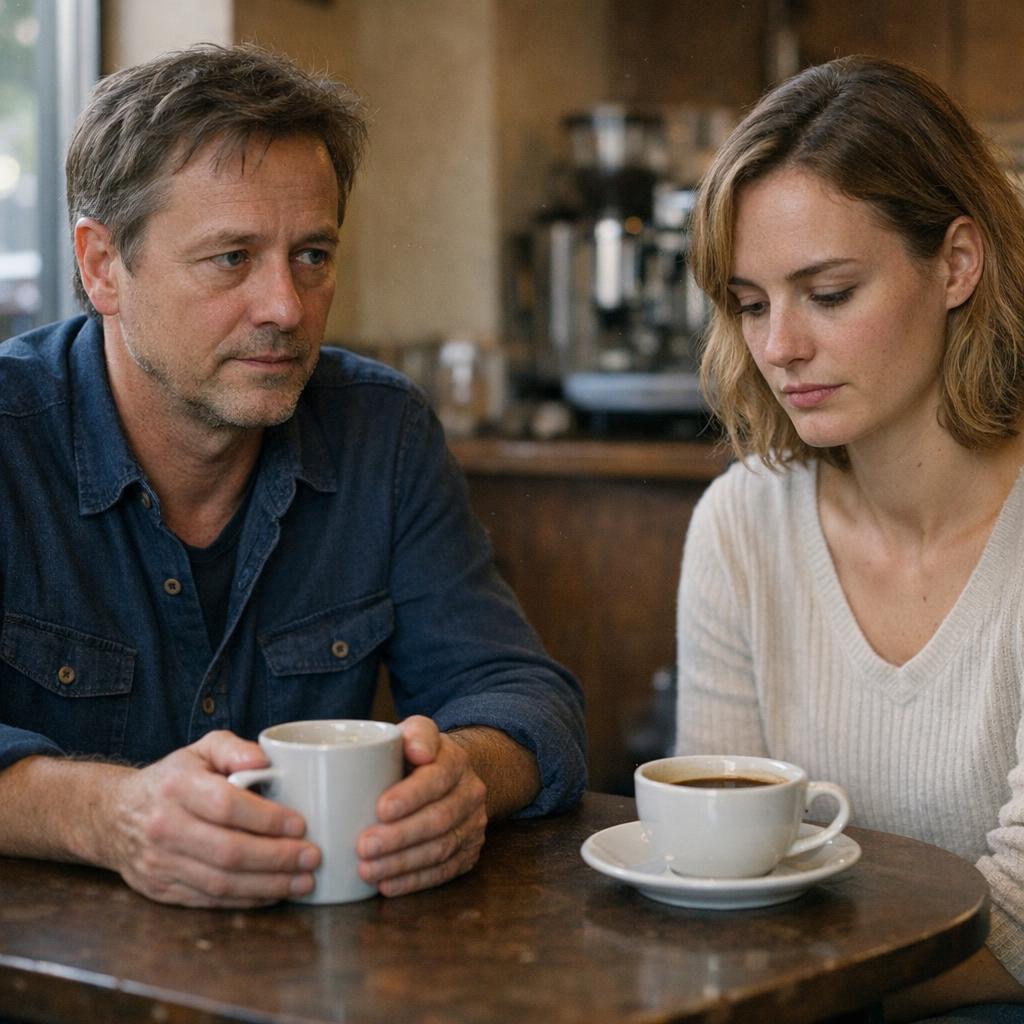 Image by RM AI
The Beginning of the Truth
He leaned forward, elbows on the table, and began unraveling the past like a ball of yarn. 'We met at a campus coffee shop,' he said, 'not unlike this one.' His voice took on a warmth I'd never heard before as he described my mother as a driven law student with a laugh that could fill a room. He was finishing his architecture degree, staying up all night with blueprints and dreams. They fell hard and fast—the kind of love that makes you stupid, he admitted with a sad smile. Married within a year, me on the way shortly after. 'The first time I held you,' he said, his voice cracking, 'your fingers were so tiny they barely wrapped around my thumb.' I watched his hands tremble slightly around his untouched coffee. Part of me wanted to reach across the table and grab them, to feel if they were real. The other part wanted to bolt out the door and pretend this conversation never happened. How do you reconcile twenty-eight years of believing someone is dead with the living, breathing proof sitting across from you? His eyes—my eyes—looked up at me, pleading for understanding. 'I know this is impossible to process,' he said softly. 'But please, let me explain what happened next. That's when everything fell apart.'
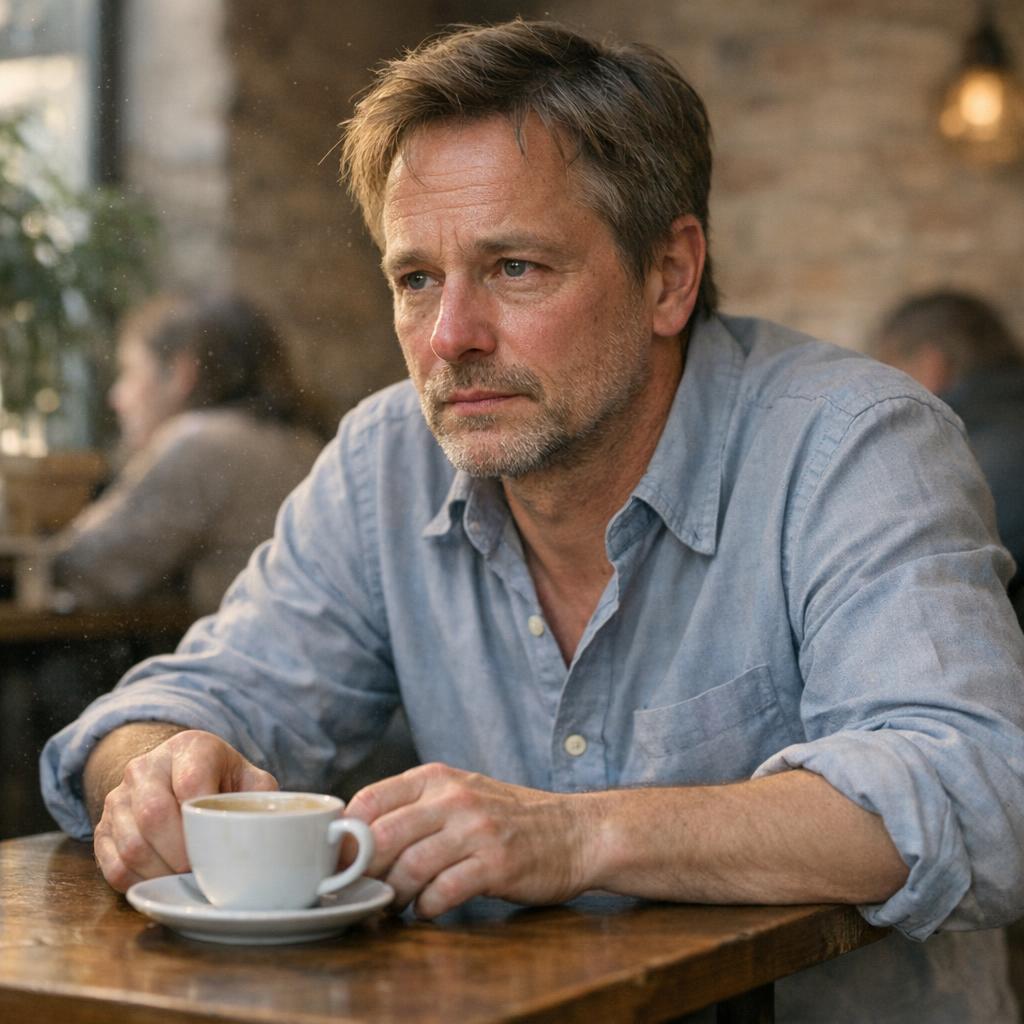 Image by RM AI
The Colleague
He took a deep breath, his coffee still untouched. 'The trouble started with a colleague named Sophia,' he said, his voice hollow with the weight of old pain. 'We were working late on this massive project—deadline stuff, you know? Nothing more than that.' He explained how my mother had found texts between them that, taken out of context, seemed suspicious. The way he described it, I could picture it all too clearly: him desperately trying to explain, my mother's face hardening with each word he spoke. 'Your mom has always been...' he hesitated, searching for the right word, '...decisive. Quick to anger, slow to forgive.' I felt a chill of recognition. That was the mother I knew—the woman whose mind, once made up, set like concrete. How many times had I experienced that myself? The immovable force of her certainty, the way she could rewrite reality to match her conclusions. I remembered being sixteen, trying to explain why I was thirty minutes late, watching her expression shift from concern to disbelief to judgment in the span of seconds. 'I tried everything,' he continued, his voice breaking. 'I begged her to believe me. But she'd already decided I was guilty.' What he said next made my blood run cold.
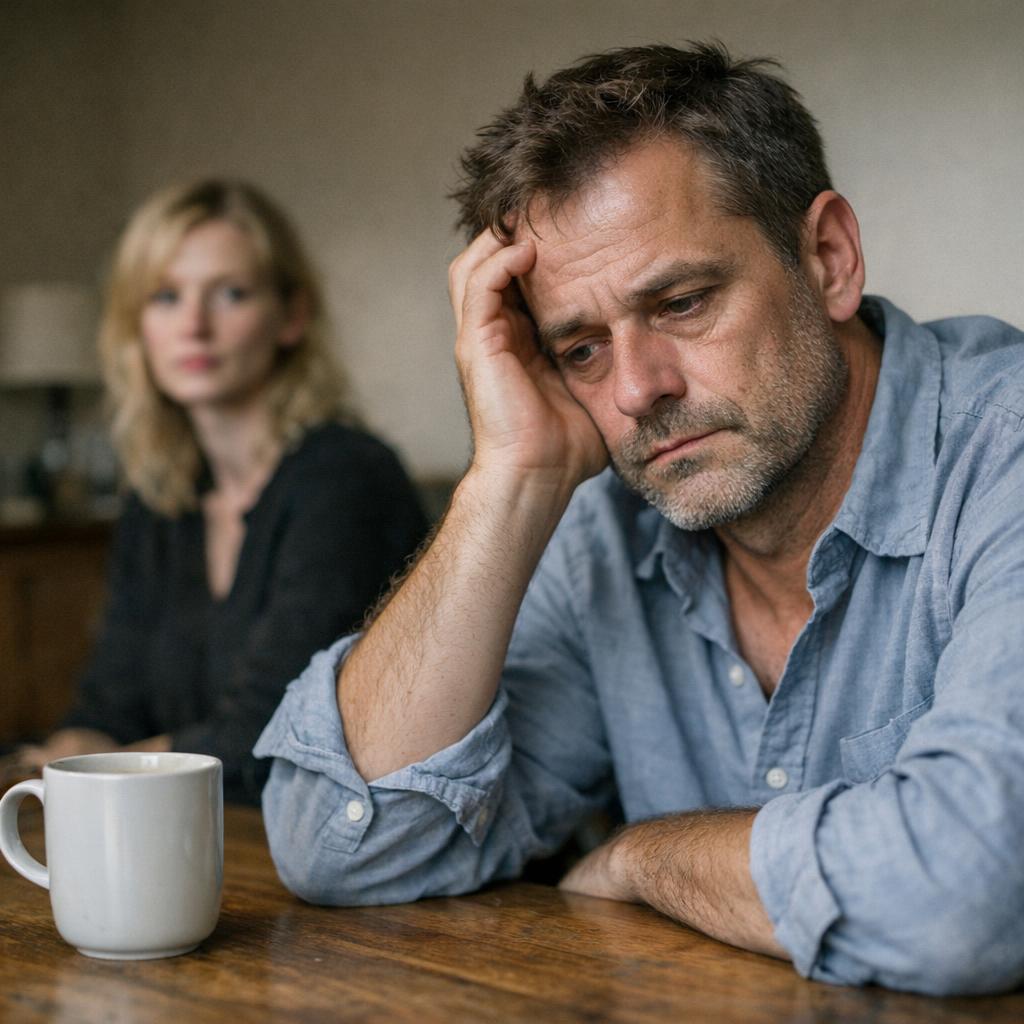 Image by RM AI
The Night Everything Changed
He leaned back in his chair, eyes fixed on some invisible point in the past. 'It was a Thursday night,' he said quietly. 'You were just nine months old, crying in your crib while we shouted downstairs.' His voice cracked as he described how Mom had found a hotel receipt in his jacket pocket—a place downtown he couldn't immediately explain. 'It was for our anniversary,' he said, running his hand through his hair. 'I was planning a surprise weekend. The reservation, champagne, everything.' But Mom, already convinced of his guilt, wouldn't hear it. She'd thrown his clothes into a duffel bag, hurled it at his chest, and told him to get out. 'I left thinking it was temporary,' he whispered. 'That she'd cool down in a few days and we could talk.' His eyes met mine, haunted by decades of regret. 'I never—not once—imagined she'd tell you I was dead. That she'd erase me so completely.' He swallowed hard. 'When I called a week later, she said if I ever tried to see you, she'd disappear with you where I'd never find you. And I believed her, because your mother never made threats she didn't intend to keep.' What he told me next made me question everything I thought I knew about the woman who raised me.
 Image by RM AI
The Attempts
He pulled out a small, worn photo album from his jacket pocket, his hands trembling slightly. 'I tried everything to see you,' he said, voice thick with emotion. 'For months after she kicked me out, I called daily. I sent letters. I even showed up at the house.' His finger traced over a blurry photo of a toddler on a swing set. 'Your mom got a restraining order against me, claiming I was harassing her.' I felt my stomach twist as he flipped through pages of stolen moments—me at a park, bundled in a winter coat I vaguely remembered; me outside my preschool, holding a finger painting. 'She moved twice to get away from me. Changed her number. Threatened to sue if I didn't stop.' Each photo was labeled with a date, location, even what I was wearing—documented with the precision of someone desperately trying to hold onto something slipping away. 'I was a stranger to my own child,' he whispered, 'but I collected these moments like they were gold.' I stared at the evidence of his persistence, this secret archive of a life I never knew was being watched. What hit me hardest wasn't just that he'd tried—it was realizing my mother had gone to extraordinary lengths to erase him completely.
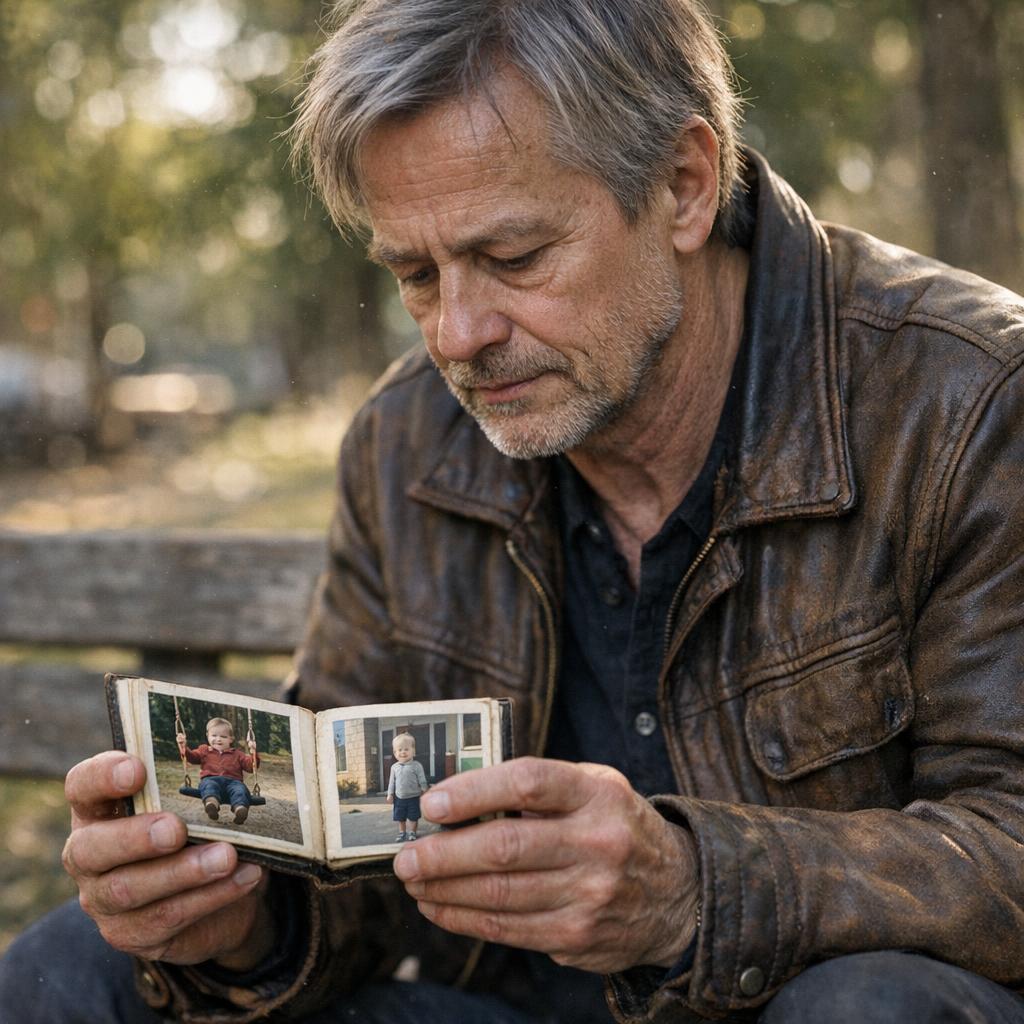 Image by RM AI
The Legal Battle
His voice grew quieter as he described the legal nightmare that followed. 'I tried to fight for custody,' he said, staring into his cold coffee. 'But your mom... she had connections through her firm. Partners who owed her favors.' I watched his hands shake as he explained how she systematically destroyed him in court, painting him as unstable, obsessive—even dangerous. 'I couldn't afford the kind of lawyers she had,' he said. 'Every petition, every appeal... I lost them all.' The unfairness of it made my chest ache. He described a particularly devastating hearing where a judge—someone who'd never met either of us—advised him to stop pursuing contact altogether. 'He said it would be 'less traumatic' for you to have stability than to introduce a father figure years later.' Dad's voice cracked on the word 'traumatic,' like it physically hurt to say it. 'So that was it. Some stranger in a black robe decided you were better off thinking I was dead than knowing I was fighting to see you.' I felt sick imagining him walking out of that courtroom, knowing the system that was supposed to protect families had just sanctioned the lie that shaped my entire life. What he told me next about my mother's final move to ensure I'd never find him made my blood run cold.
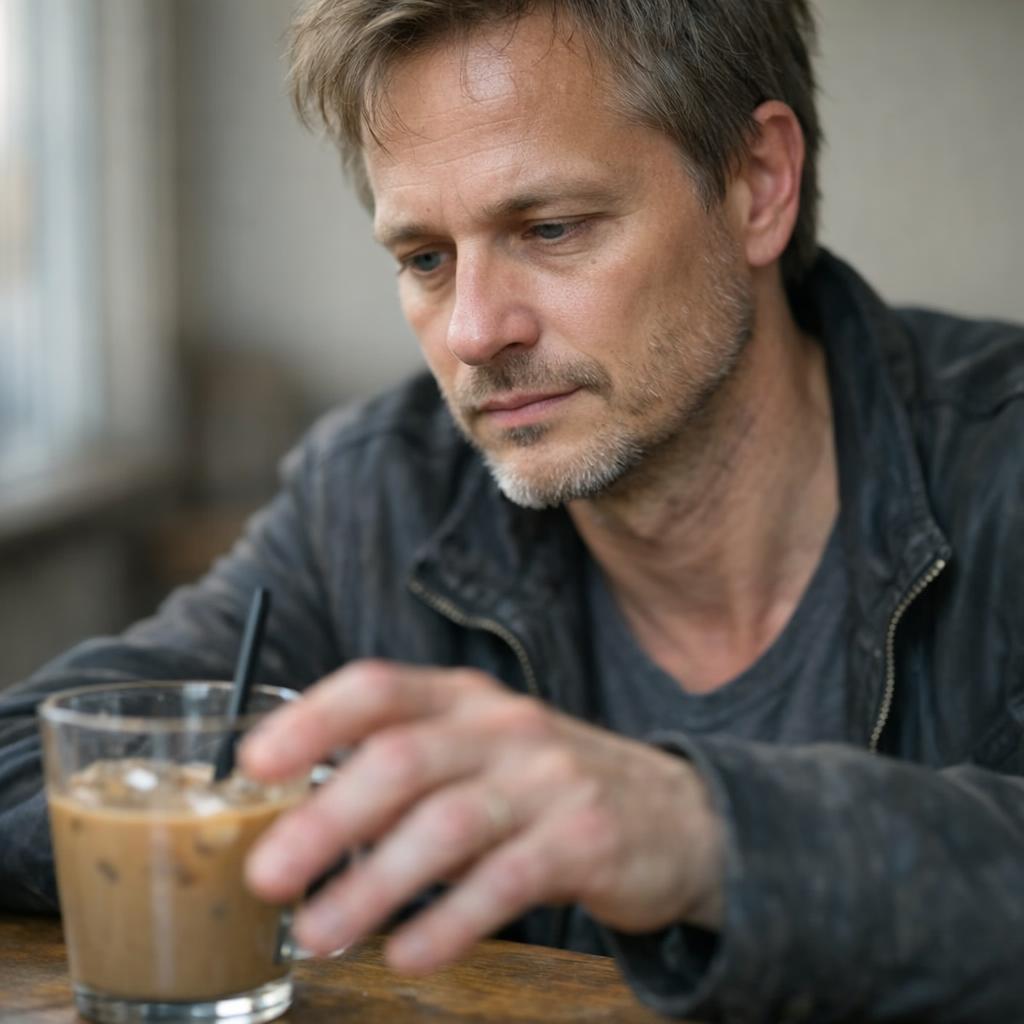 Image by RM AI
The Surrender
He stared down at his hands, the weight of defeat visible in the slump of his shoulders. 'After five years of fighting, I surrendered,' he said quietly. 'Not because I wanted to—God, never because I wanted to—but because my lawyer said continuing would only hurt you.' I felt something crack inside me. Five years. While I was learning to read and ride a bike, he'd been drowning in legal battles. He explained how he'd moved to Chicago afterward, trying to rebuild some semblance of a life from the ashes of the one my mother had burned down. 'I kept tabs on you, though,' he admitted, pulling out another photo—me at a middle school science fair I barely remembered. 'Through friends of friends, social media once that became a thing.' I swallowed hard, wondering how many moments of my life had been witnessed from afar. 'Why didn't you try again when I was older?' I asked, my voice barely above a whisper. 'When I could understand?' His answer was simple and devastating: 'I was told you believed I was dead. I didn't know how to undo that damage without causing more.' The raw honesty in his voice made me wonder what kind of courage it would take to approach someone who thought you were a ghost.
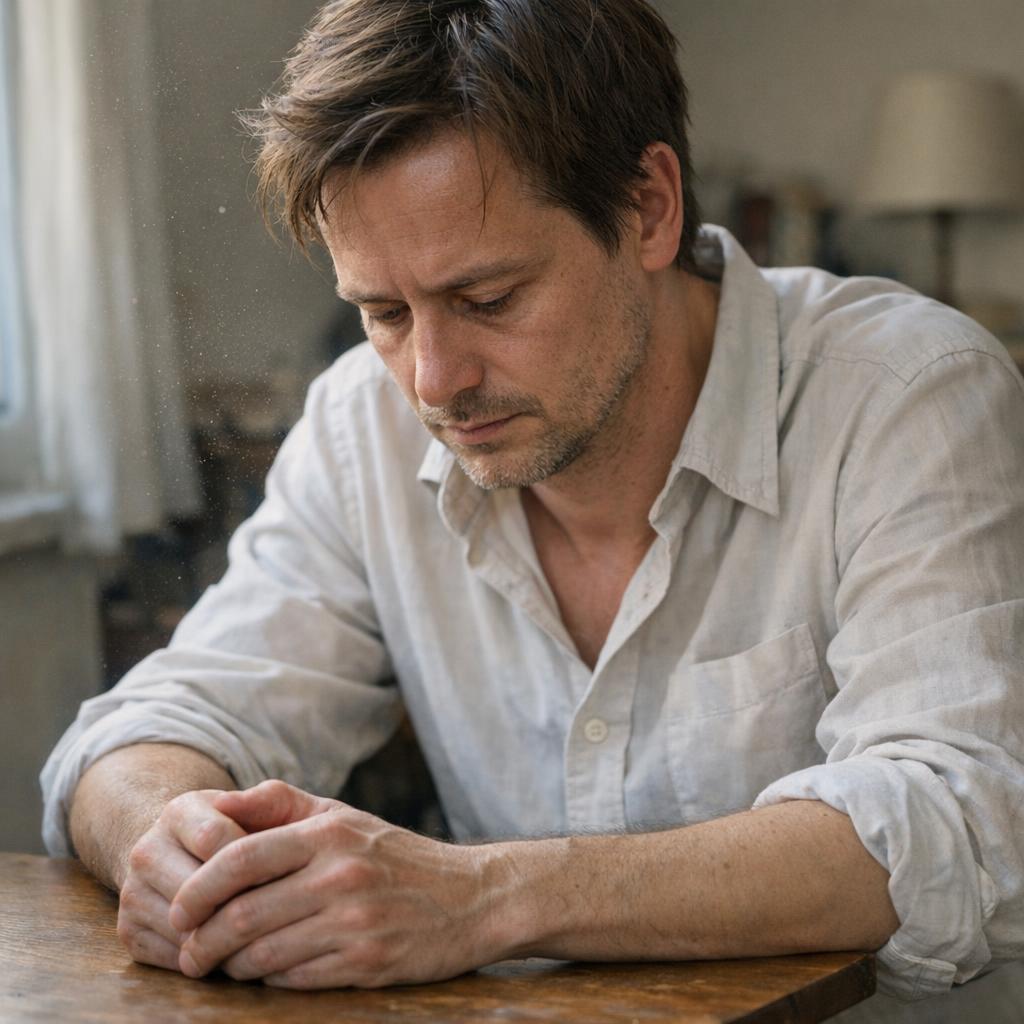 Image by RM AI
The Return
He'd only moved back to Boston three months ago. 'I took a position at Hancock Tower,' he explained, his voice soft with disbelief. 'I never thought... I mean, what are the odds?' He shook his head, still processing our sidewalk collision as much as I was. Boston was supposed to be big enough to avoid this exact scenario—over 700,000 people, and somehow we'd ended up on the same block at the same time. He told me he'd been torturing himself for weeks, drafting emails he never sent, picking up his phone to call numbers he couldn't find. 'I kept asking myself if you deserved the truth or if I'd just be selfishly disrupting your life,' he said, running his thumb along the edge of his cold coffee mug. 'And then fate just... decided for us.' I stared at him—this stranger with my eyes, my chin, my hands—feeling like I was looking at my life through a shattered mirror. Everything I thought I knew about myself was fragmented now, reflecting back at me in pieces that no longer fit together. The worst part wasn't learning my father was alive—it was realizing my mother had orchestrated an elaborate death rather than admit she might have been wrong.
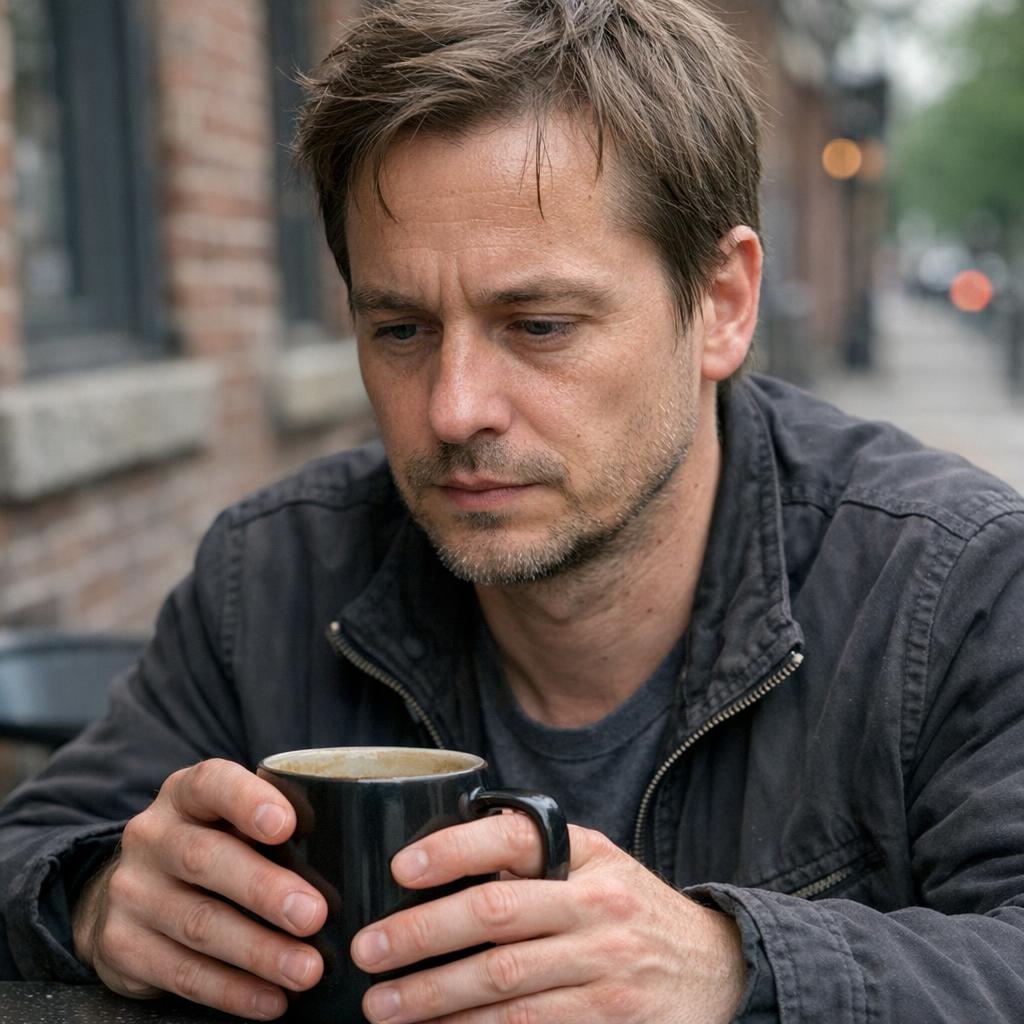 Image by RM AI
The Evidence
Dad's hands trembled as he pulled out his phone, swiping through a digital archive of my childhood he'd never been allowed to participate in. "I kept everything," he said, voice cracking. "Every court document, every email, every photo I managed to get." I watched in stunned silence as he showed me restraining orders with my mother's elegant signature, court transcripts where she'd painted him as dangerous, emails where he'd begged—literally begged—just to know if I was okay. The dates aligned perfectly with memories I'd always found strange: our sudden move when I was six that Mom claimed was for a "better school district," her inexplicable rage when certain names came up at dinner, the way she'd change the channel when father-daughter stories appeared on TV. "This one," he said, showing me a photo of me at my 10th birthday party, taken from what looked like a car window. "Your mom told everyone it was a princess theme, but you wanted dinosaurs. I remember because you were the only girl wearing a T-Rex shirt among all those tiaras." My breath caught—he was right. I'd forgotten that detail myself, but seeing the photo brought it rushing back. The puzzle pieces of my childhood were rearranging themselves into a picture I barely recognized, and the woman at the center of it—my mother—was becoming someone I wasn't sure I knew at all.
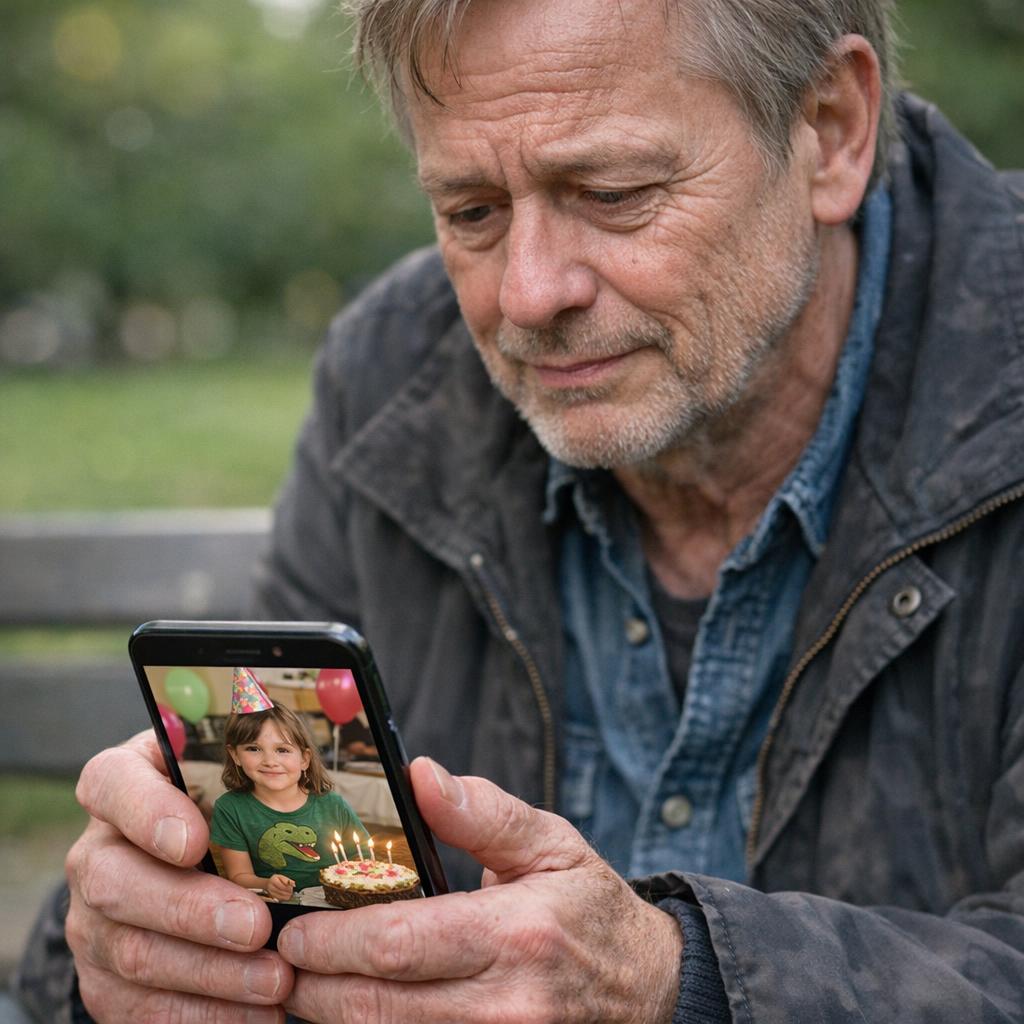 Image by RM AI
The Question of Proof
I stared at him across the table, my mind racing between trust and suspicion. Was this really happening, or was I being played by some elaborate con artist who'd somehow gotten hold of old family photos? 'What was my birth weight?' I asked suddenly, my voice sharper than I intended. '7 pounds, 4 ounces,' he answered without hesitation. 'You were born at 3:17 in the morning after your mom was in labor for almost 22 hours.' He smiled faintly. 'She craved pineapple her entire pregnancy—ate it on everything, even pizza, which I thought was disgusting.' My breath caught. Mom still ate pineapple pizza. It was her comfort food. 'The hospital wrapped you in this hideous yellow blanket,' he continued, 'but your mom insisted on bringing it home because she said it was the first thing that ever touched you.' I felt my defenses cracking. These weren't just facts someone could Google—these were intimate details of a shared history. I wanted to believe him. God, I wanted to believe him so badly it physically hurt. But believing him meant accepting that my mother—the woman who'd packed my lunches and kissed my scraped knees and taught me how to drive—had orchestrated the most devastating lie imaginable. And I wasn't sure which truth was more terrifying: that the stranger across from me was my father, or that the woman who raised me was capable of such calculated cruelty.
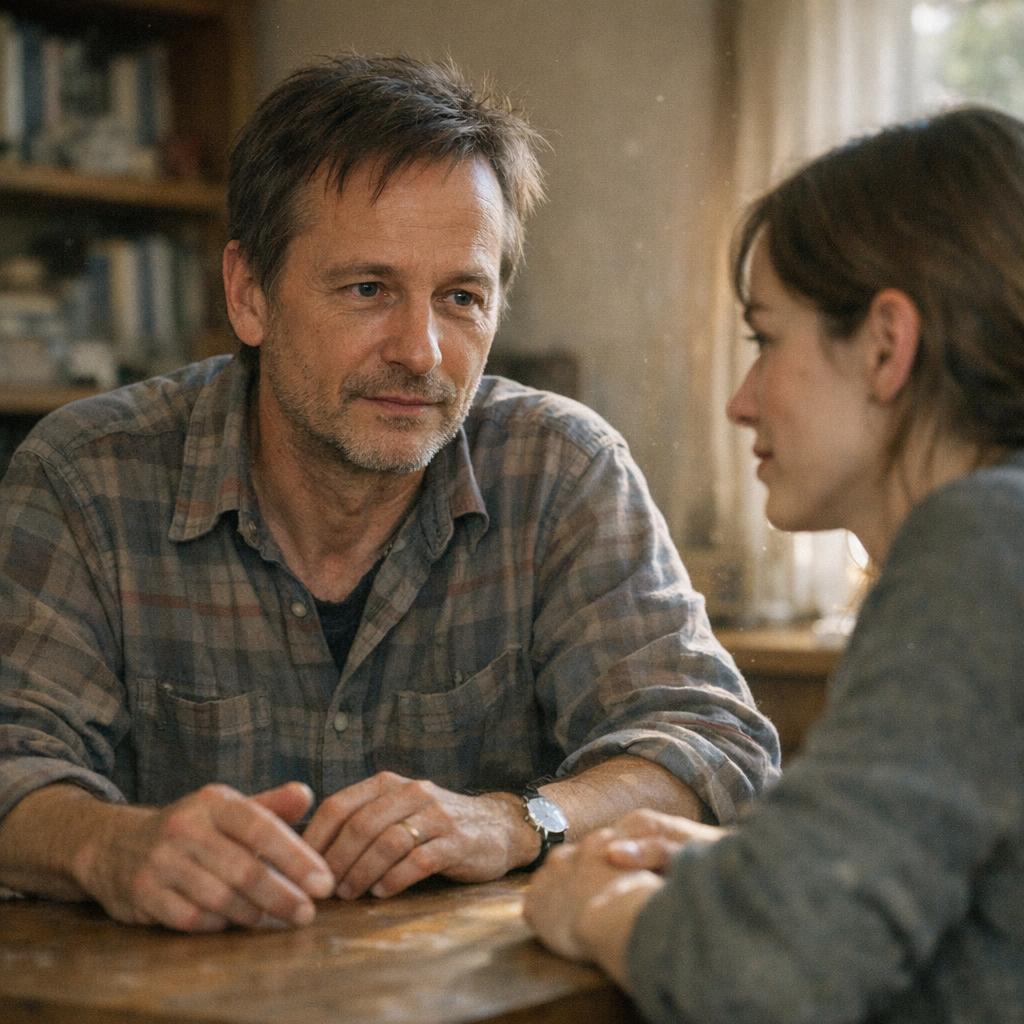 Image by RM AI
The DNA Test
I stared at my phone, the five missed calls from Mom glaring back at me like accusatory eyes. After three hours in that café, I needed something solid—something science couldn't lie about. "I think we should do a DNA test," I said, my voice steadier than I felt. His face brightened with what looked like relief. "Absolutely. Whatever you need." We huddled over our phones, shoulders almost touching as we researched labs. The strange intimacy of it hit me—this was my first father-daughter activity, happening at 28 years old in a coffee shop after believing he was dead my entire life. We found a place that could rush results in 48 hours, and as we gathered our things to leave, I felt a weird mix of dread and hope. Walking beside him to the lab, I kept stealing glances, cataloging similarities—the way we both walked with our hands in our pockets, how we both tilted our heads slightly when thinking. I wasn't sure what terrified me more: that the test would confirm he was my father, or that somehow, against all evidence, it wouldn't. What I did know was that regardless of the results, I'd have to face my mother and the elaborate house of lies she'd built around us both.
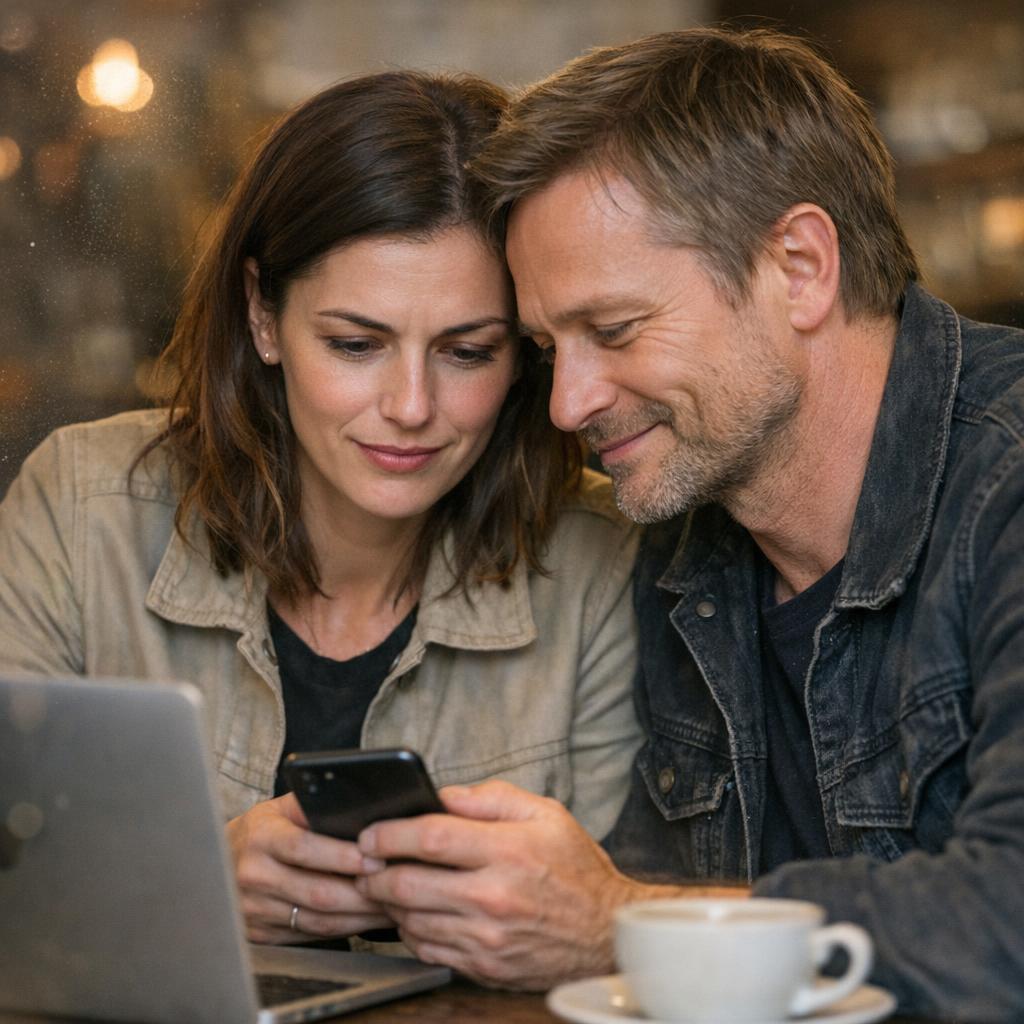 Image by RM AI
The Missed Calls
I stared at my phone as it buzzed again, Mom's name flashing on the screen for the sixth time in an hour. My stomach twisted into knots. Mom never called this many times unless something was seriously wrong—like when Grandma had her stroke or when our neighbor's house caught fire. With shaking hands, I checked her voicemails, each one progressively more frantic than the last. 'Ellie, call me back.' Then: 'Ellie, where are you? Janet from book club saw you downtown with someone.' By the fourth message, her voice had that tight, controlled panic I recognized from childhood emergencies: 'Ellie, please tell me you're okay.' The final voicemail made my blood run cold. 'Ellie, please call me immediately. I think I know who you're with, and you need to get away from him now.' I felt the air leave my lungs. She knew. Somehow, she already knew I'd found him—or rather, that he'd found me. The carefully constructed fiction of my dead father was crumbling, and the architect of that lie was desperately trying to shore up the walls before everything collapsed. I looked across the lab waiting room at the man quietly filling out paperwork, the man with my eyes and my hands, and realized I was standing at the edge of a truth that would destroy one of my parents—I just wasn't sure which one yet.
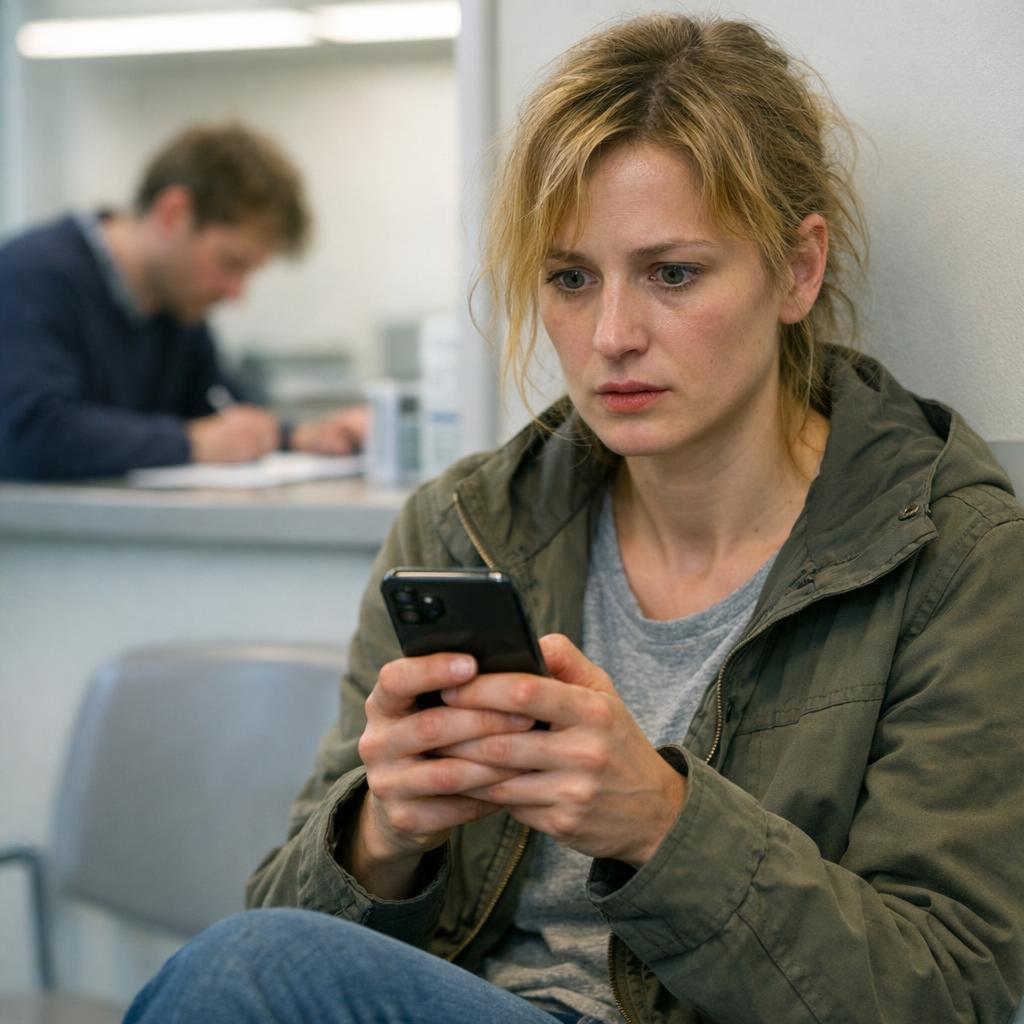 Image by RM AI
The Decision
I stood there frozen, my phone buzzing like an angry hornet in my palm. Six missed calls from Mom. My stomach dropped as I glanced from the screen to my father—my actual, living, breathing father. The crossroads I faced felt impossibly heavy: call Mom back and confront the architect of this lifelong lie, or continue walking with this stranger who shared my DNA toward a truth I wasn't sure I was ready for. Dad must have seen the conflict written all over my face. 'I understand if you need to go,' he said softly, his eyes—my eyes—full of a patience I hadn't expected. 'I've waited twenty-eight years. I can wait however long you need.' Something about his lack of pressure, the gentle resignation in his voice, made me trust him more. With trembling fingers, I typed out a quick text to Mom: 'I'm fine. Will explain later.' Then I switched my phone to silent and slipped it into my pocket, feeling both terrified and strangely liberated. 'Let's go,' I said, my voice steadier than I felt. Each step toward the DNA lab felt like walking on a tightrope—beneath me, the comfortable fiction of my life was unraveling, and ahead lay a truth that would forever change how I saw the woman who raised me. What I didn't realize then was that the results would reveal something neither of us was prepared for.
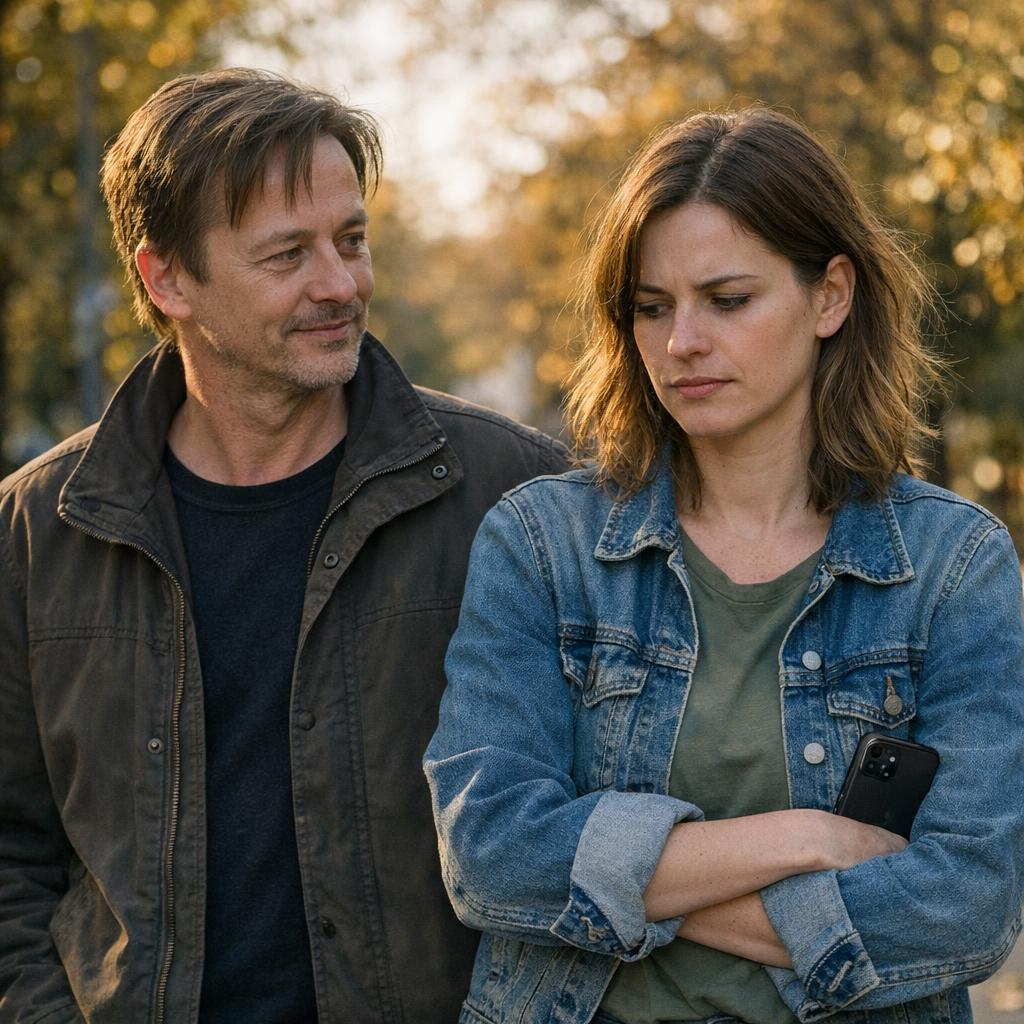 Image by RM AI
The Swab
The lab was blindingly white and smelled like antiseptic—the kind of place that makes you hyper-aware of every surface you touch. The technician, a woman with tired eyes and practiced efficiency, handed us each a sealed package containing what looked like oversized Q-tips. "Swab the inside of your cheek for 30 seconds," she instructed, barely looking up from her computer. Dad and I stood side by side, awkwardly scraping the insides of our mouths in unison. It felt surreal—this mundane act that would either confirm or destroy everything I thought I knew about myself. When we finished, she labeled our samples with barcoded stickers, had us sign a few forms, and took my credit card with the detached professionalism of someone who regularly witnessed life-altering moments. "Results in 48 hours," she said, handing me a slip of paper with a case number. "You can check online." As we stepped back into the afternoon sun, Dad cleared his throat. "So... would you want to meet when the results come in?" he asked, his voice careful, like he was afraid of pushing too hard. I surprised myself with my answer. "Actually," I said, "I don't think I can wait that long. Would you want to come to my apartment for dinner tomorrow?" The look of cautious joy on his face made my chest ache. What I didn't tell him was that I already had a plan for that dinner—one that involved the box of my mother's hidden papers I'd discovered last Christmas.
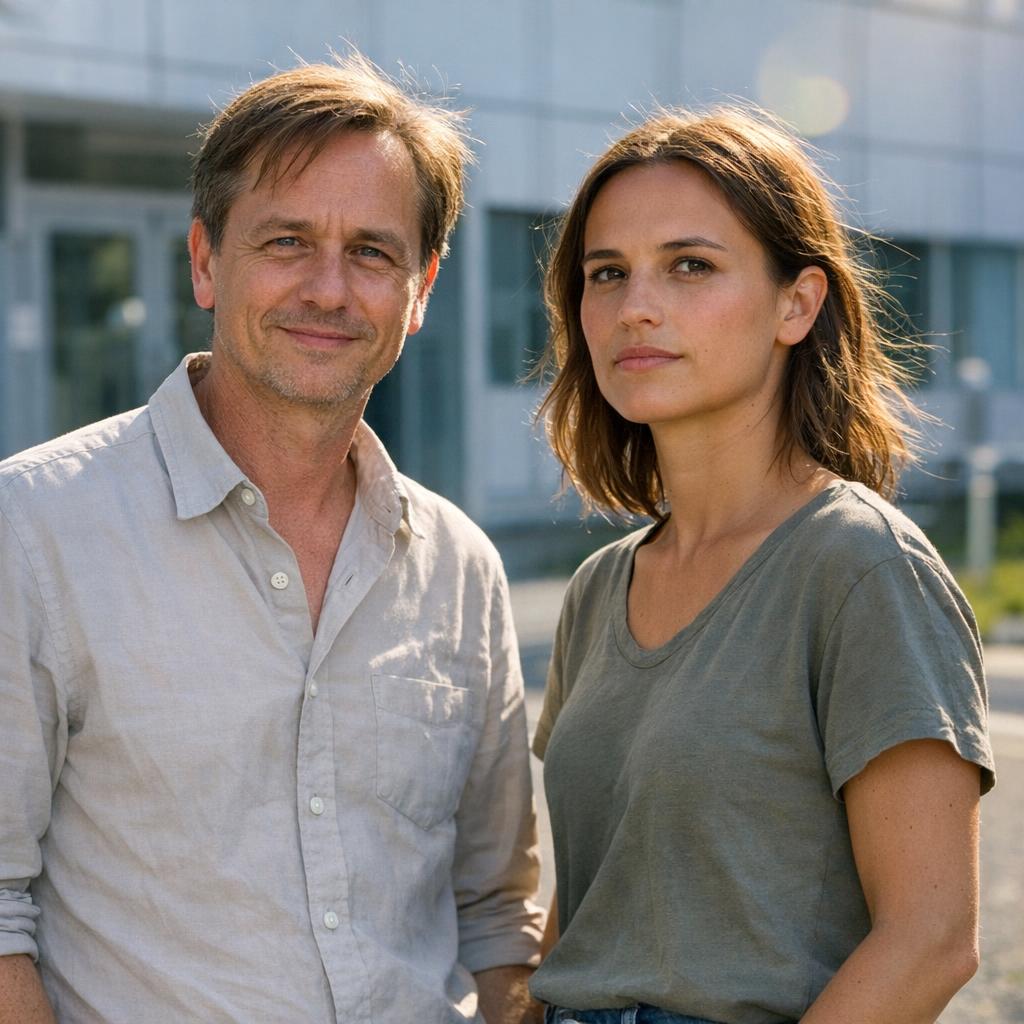 Image by RM AI
The Confrontation
I unlocked my apartment door, exhausted from the emotional whiplash of the day, only to find Mom sitting on my couch. She looked like a statue—rigid, pale, with red-rimmed eyes I barely recognized. In twenty-eight years, I'd seen her cry maybe three times. 'He found you,' she said flatly. Not a question. An accusation. The words hung between us like a physical thing. I dropped my keys on the counter, the sound unnaturally loud in the tension-filled room. 'Yes,' I replied, my voice steadier than I felt. 'My father—who is very much alive—found me.' She didn't flinch at the word 'alive.' Didn't deny it. Didn't scramble to explain. She just stared at me with this haunted expression and whispered, 'You have no idea what you're getting into, Ellie.' The foundation of my childhood crumbled completely in that moment. Not because she'd lied—I'd already processed that shock hours ago—but because she wasn't even trying to deny it. Whatever story she'd been telling herself all these years, whatever justification she'd built her life around, she believed it so completely that she couldn't imagine I wouldn't eventually see things her way. What terrified me most wasn't just discovering my father was alive—it was realizing I might not know my mother at all.
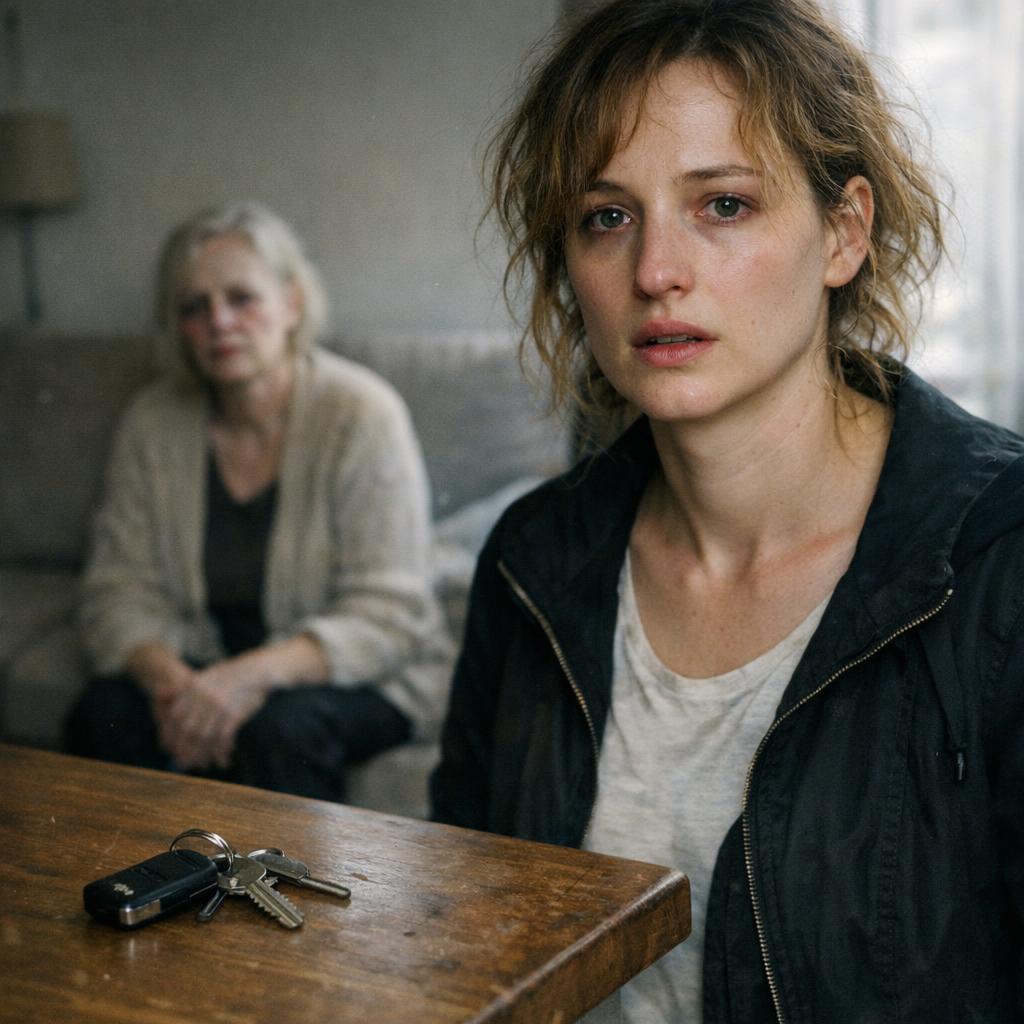 Image by RM AI
The Other Side
Mom's version hit me like a truck. She sat across from me, her hands steady as she laid out a completely different reality. 'He cheated, Ellie. Multiple times.' Her voice was firm, unwavering. 'That hotel receipt you saw? That was from when I caught him with Sophia.' She described a man I couldn't reconcile with the one I'd just met—manipulative, with a temper that would flare without warning. When I brought up the custody battle, she didn't deny it. 'Of course I fought it,' she said, her eyes narrowing. 'I was protecting you.' The way she said it made my skin crawl, like I'd been in danger I never knew about. 'I told you he was dead because it was easier than the truth—that he chose to leave us.' She delivered this with such absolute conviction that for a moment, I almost believed her again. But something had shifted in me. For the first time in my life, I was looking at my mother and wondering if her certainty was the same as truth. The woman who taught me to question everything had never once encouraged me to question her. As I sat there, caught between two opposing realities, I realized with a sickening clarity that someone was lying to me—and I had no idea who to believe.
 Image by RM AI
The Ultimatum
Mom's face hardened into something I'd never seen before—a mask of fear disguised as anger. 'If you see him again, Ellie, we're done,' she said, her voice trembling despite her attempt to sound firm. 'I mean it. Twenty-eight years I've protected you, and this is how you repay me?' I stood there, stunned by the ultimatum. This wasn't the woman who taught me to stand up for myself, who preached independence and critical thinking. This was someone desperate, cornered. When I told her about tomorrow's dinner plans, she didn't yell or cry. She just grabbed her purse with shaking hands, keys jingling violently as she fumbled with them. At the door, she paused, her back to me. 'When he hurts you—and he will—don't say I didn't warn you.' The door closed with a soft click that somehow felt more final than a slam would have. I sank onto my couch, the silence of my apartment pressing in from all sides. For the first time in my life, I was choosing a version of the truth my mother didn't approve of. The realization was both terrifying and strangely liberating. As I sat there, I couldn't help wondering: if she'd lied about something this fundamental, what else had she been hiding from me all these years?
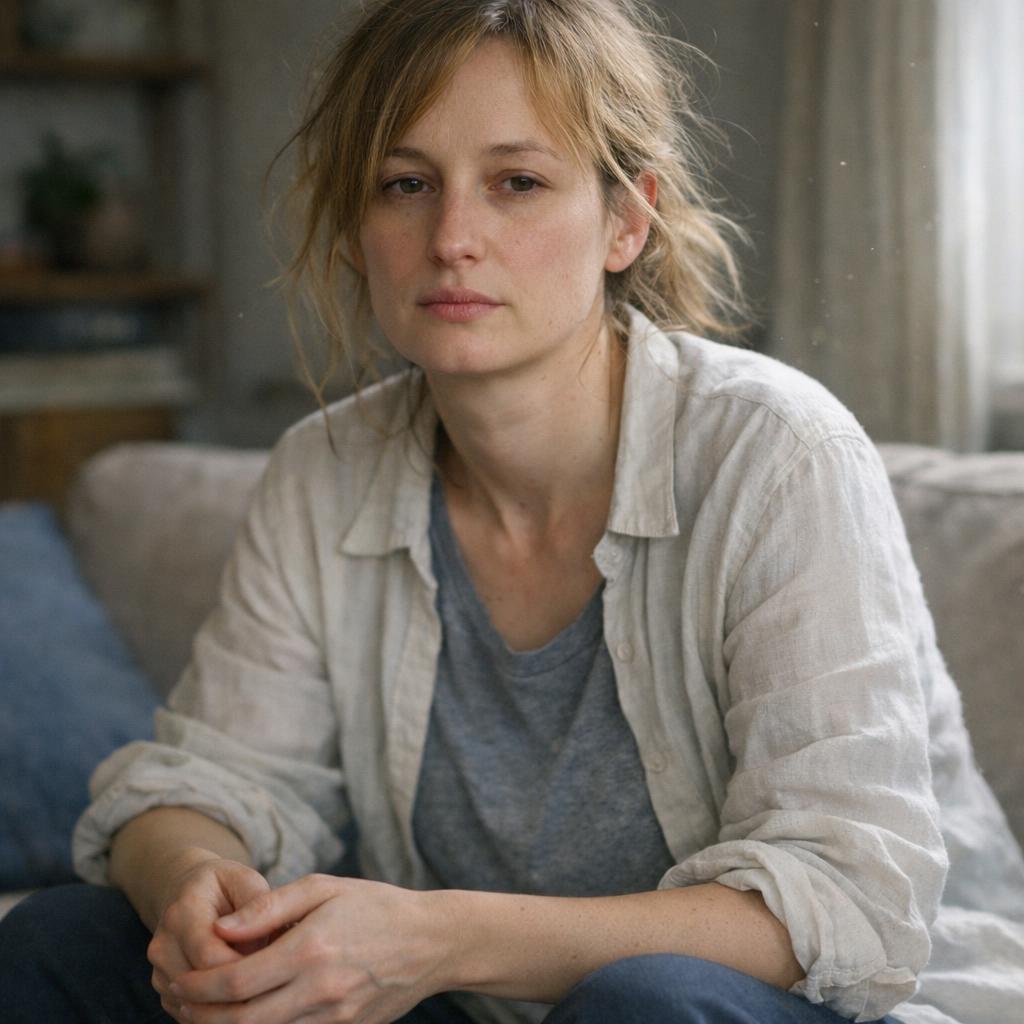 Image by RM AI
The Sleepless Night
Sleep was a lost cause that night. I sat cross-legged on my bedroom floor, surrounded by the contraband photos I'd smuggled from Mom's drawer years ago—my own little act of rebellion she never discovered. I spread them out like puzzle pieces of a life I never knew, studying Dad's face for any hint of the monster Mom described. Was that the smile of a cheater? Were those the eyes of someone who'd abandon his family? All I saw was the same genuine warmth I'd witnessed today when he recognized me on that sidewalk. I created a mental timeline on a notepad, trying to match Mom's version against Dad's, marking contradictions with angry red circles. Why did we move so suddenly when I was six? Why did Mom always change the subject when certain names came up? Why did she keep those photos if she hated him so much? The digital clock on my nightstand blinked 4:37 AM when I finally admitted what was keeping me awake: What if everything I knew about myself was built on a foundation of lies? And worse—what if tomorrow's dinner revealed a truth neither of us was prepared to face?
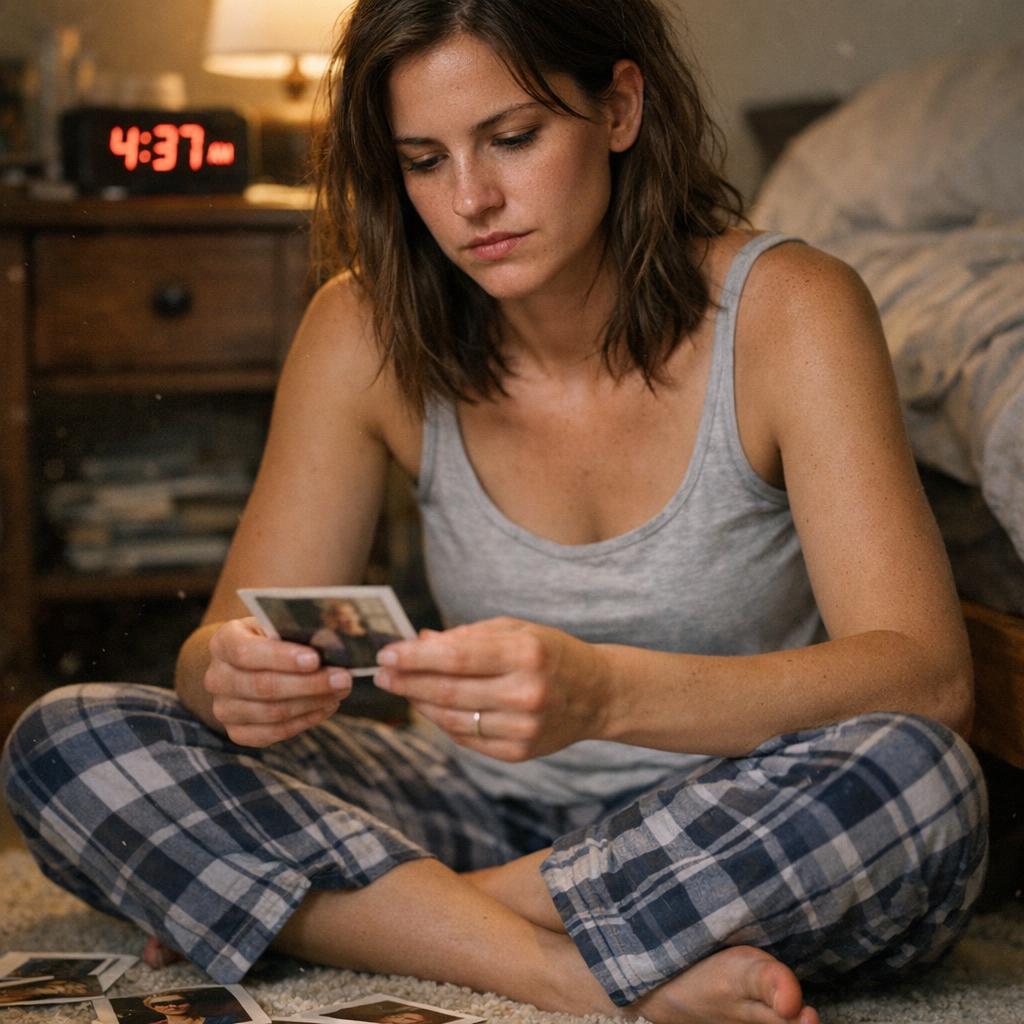 Image by RM AI
The Call to Zoe
At 7:30 AM, with my eyes burning from lack of sleep, I called Zoe. If anyone could help me make sense of this mess, it was her. We'd been friends since college, and she'd seen me through breakups, job losses, and that disastrous pixie cut phase of 2018—but this was next level. "Holy. Actual. Shit," she whispered after I finished explaining everything. The line went quiet for so long I checked to see if the call dropped. "Zoe?" "I'm here, just... processing," she finally said. "Have you considered that maybe they're both telling partial truths?" The question hit me like a bucket of ice water. I'd been so focused on figuring out who was lying that I hadn't considered they might both believe their own versions. "What if," she continued carefully, "whatever happened between them was complicated enough that they each remember it differently?" I sank onto my kitchen floor, back against the cabinets. "I don't know what's worse—that Mom deliberately lied about Dad being dead, or that she convinced herself it was true." Zoe didn't hesitate: "I'm coming over before he arrives. I'll be in the coffee shop across the street if you need me." As I hung up, I realized I was about to host the most important dinner of my life, and I had absolutely no idea what to serve a father who'd been dead until yesterday.
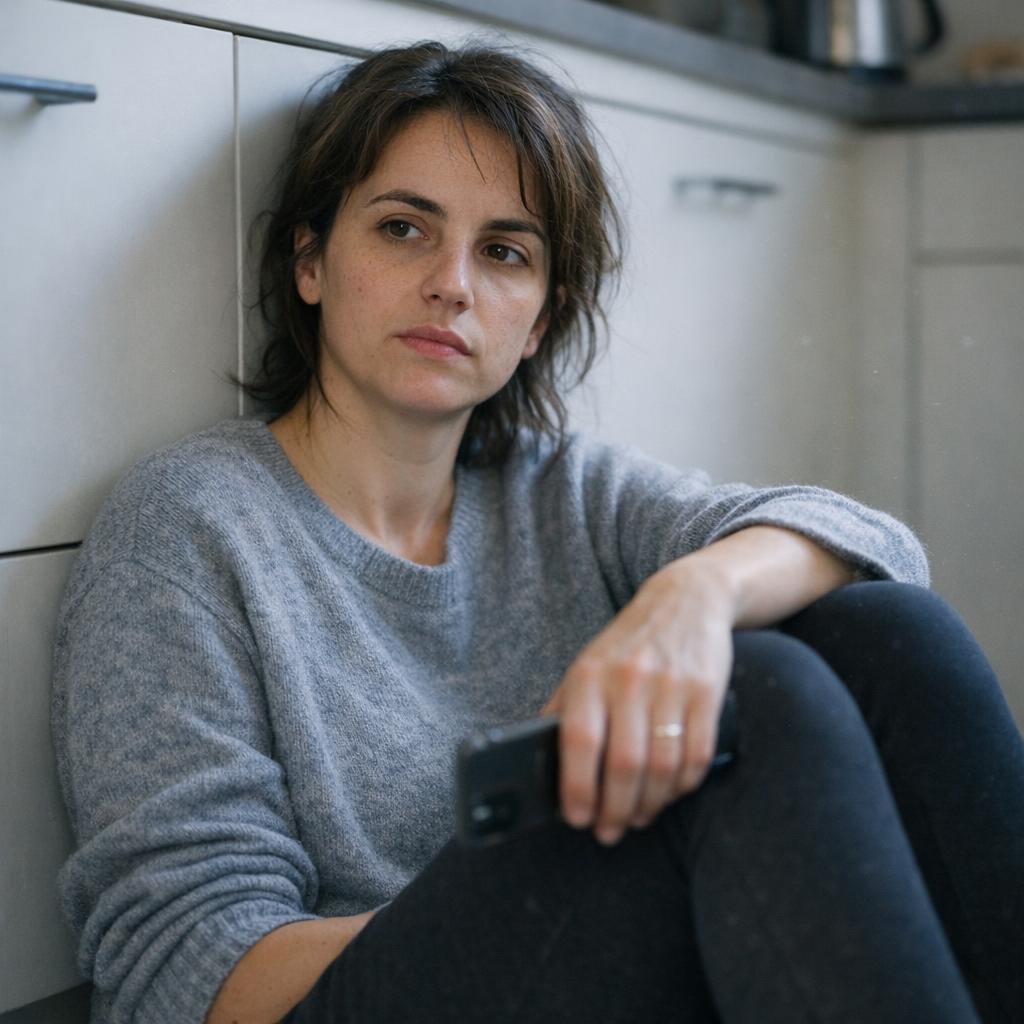 Image by RM AI
The Preparation
I spent the entire day in a bizarre state of suspended reality, like I was preparing for a dinner party in a parallel universe. My apartment had never been so clean—I scrubbed surfaces I didn't even know existed, as if spotless countertops could somehow make this situation less messy. I made lists of questions, then crossed them out, then rewrote them again. Too accusatory? Too casual? How exactly do you talk to someone who's been a ghost your whole life? When Dad mentioned yesterday that he used to make a special pasta with sun-dried tomatoes and basil, I found myself at the grocery store buying ingredients, as if cooking his favorite meal would somehow bridge the 28-year gap between us. The domesticity of it all felt absurd—measuring pasta for a dead man. I caught myself staring at two wine glasses on the counter, wondering if this was what normal father-daughter dinners felt like. By 6:15, everything was ready, and I was anything but. I paced my living room, rehearsing opening lines that all sounded ridiculous. When the doorbell finally rang at 6:30, my hands were shaking so badly I nearly shattered the wine glass I was holding. Standing there, frozen between my kitchen and front door, I realized I was about to have dinner with a man who knew everything about my birth but nothing about who I'd become.
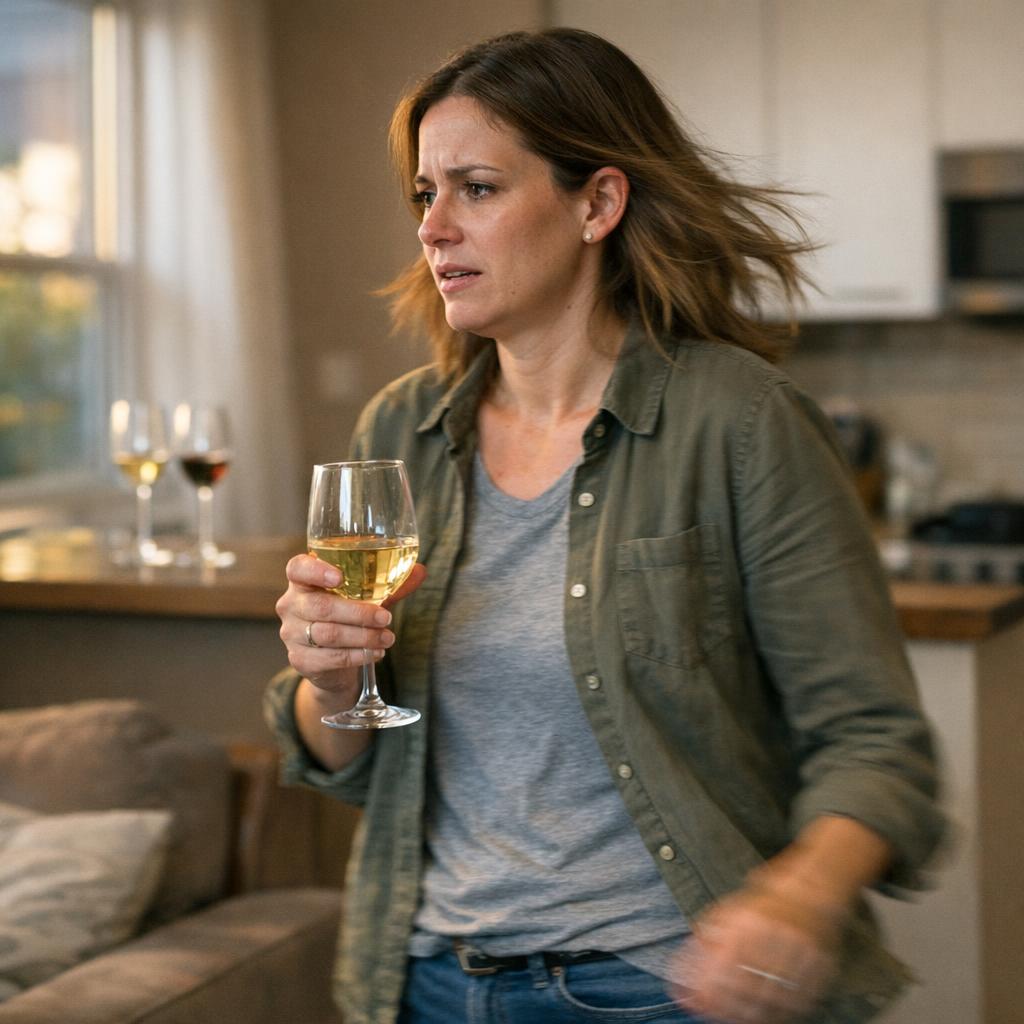 Image by RM AI
The Dinner
The doorbell rang at exactly 6:30, and my heart nearly jumped out of my chest. When I opened the door, Dad—it felt so strange to even think that word—stood there awkwardly holding a bouquet of lilies and a small wrapped package. "I wasn't sure what to bring," he said, his voice carrying that same nervous energy I felt coursing through my veins. The first twenty minutes were excruciating—like the world's most high-stakes first date, except with someone who literally contributed to your DNA. We danced around small talk while I served the pasta, both of us hyper-aware of every movement. But somewhere between the main course and dessert, something shifted. He told me about his work as an architect, his voice gaining confidence as he described buildings he'd designed across the country. I found myself leaning forward, captivated not just by his stories but by the eerie familiarity of his gestures. He talked with his hands exactly like I did. We both twirled pasta the same way, fork against spoon. We even had the same habit of pausing mid-sentence to gather thoughts. These genetic echoes felt like puzzle pieces clicking into place—parts of myself I'd never understood suddenly making perfect sense. What terrified me most wasn't how different we were, but how similar—and what that might mean about the mother who'd raised me on lies.
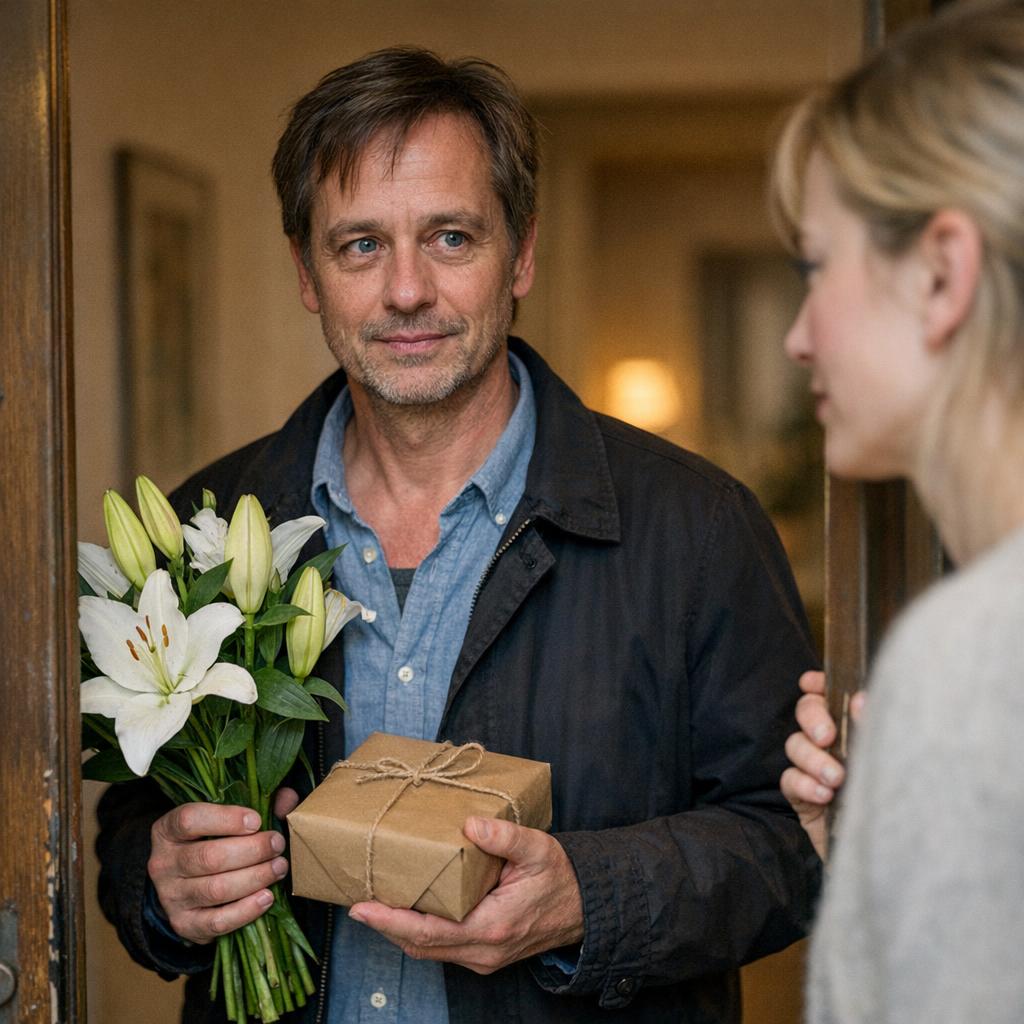 Image by RM AI
The Gift
After we'd cleared the plates, Dad reached for the small wrapped package he'd brought. 'I've been waiting to give you this for a long time,' he said, his voice catching slightly. I unwrapped it carefully to find a handcrafted wooden box with my name carved into the lid. When I opened it, my breath caught in my throat. Inside were dozens of letters, all addressed to me, spanning twenty-eight years of my life. Birthday cards with '7 today!' and 'Sweet 16!' written in excited script. Christmas wishes. Updates about his life. Things he wanted to tell me but couldn't. Each one had been returned, marked 'Recipient Unknown' or 'Return to Sender' in Mom's unmistakable handwriting. My hands trembled as I opened the first letter, dated just weeks after he supposedly 'died.' 'My dearest Ellie,' it began, 'I don't know when you'll read this, but I want you to know I'm fighting to see you...' I couldn't finish reading through my tears. The evidence of his attempts to reach me—year after year after year—sat in stark contrast to Mom's story of abandonment. As I looked up at him through blurry eyes, I realized the most devastating truth wasn't just that Mom had lied about his death—it was that she'd actively prevented him from being part of my life while convincing me he'd never wanted to be.
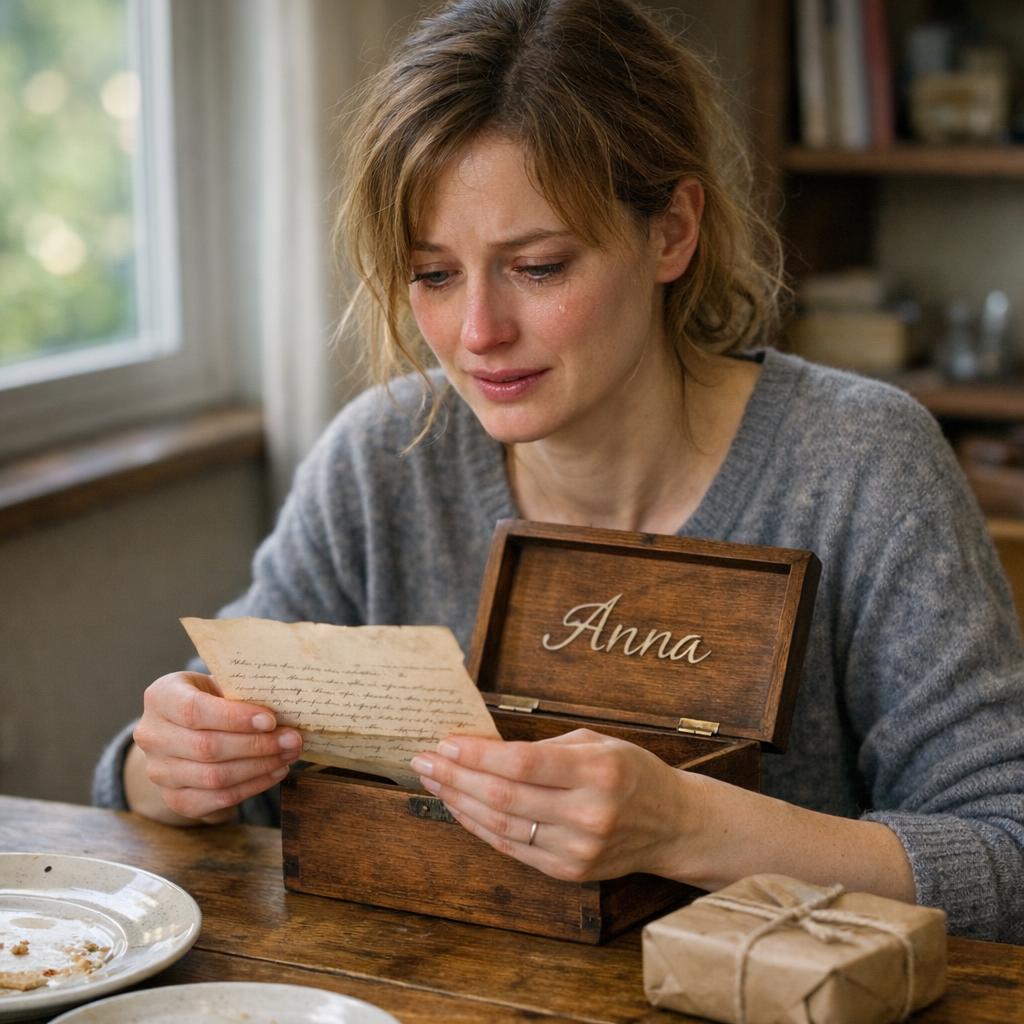 Image by RM AI
The Hard Questions
With the box of letters between us, I finally asked the questions that had been burning inside me. 'Why didn't you fight harder?' I demanded, my voice cracking. Dad's shoulders slumped as he explained how the court system had failed him, how Mom's accusations—though false—had been enough to limit his access. 'I was afraid,' he admitted, eyes downcast. 'Afraid that pushing harder would hurt you more.' When I brought up Sophia, his jaw tightened. 'Nothing happened,' he insisted, 'but I put myself in a situation that looked bad. Your mother found a hotel receipt from a business trip where Sophia stayed in the same hotel.' He described how that single piece of paper became Mom's smoking gun. I listened, searching his face for lies, for the monster Mom had described. Instead, I saw something worse: a deeply flawed man who had made mistakes, who had given up too easily, who had let fear win over his right to know his daughter. 'I should have found you when you turned eighteen,' he said, his voice thick with regret. 'That's the thing I'll never forgive myself for.' As I sat there, processing his complicated, messy truth, I realized we were both victims of something neither of us fully understood—a love story that had curdled into something toxic long before I could remember it.
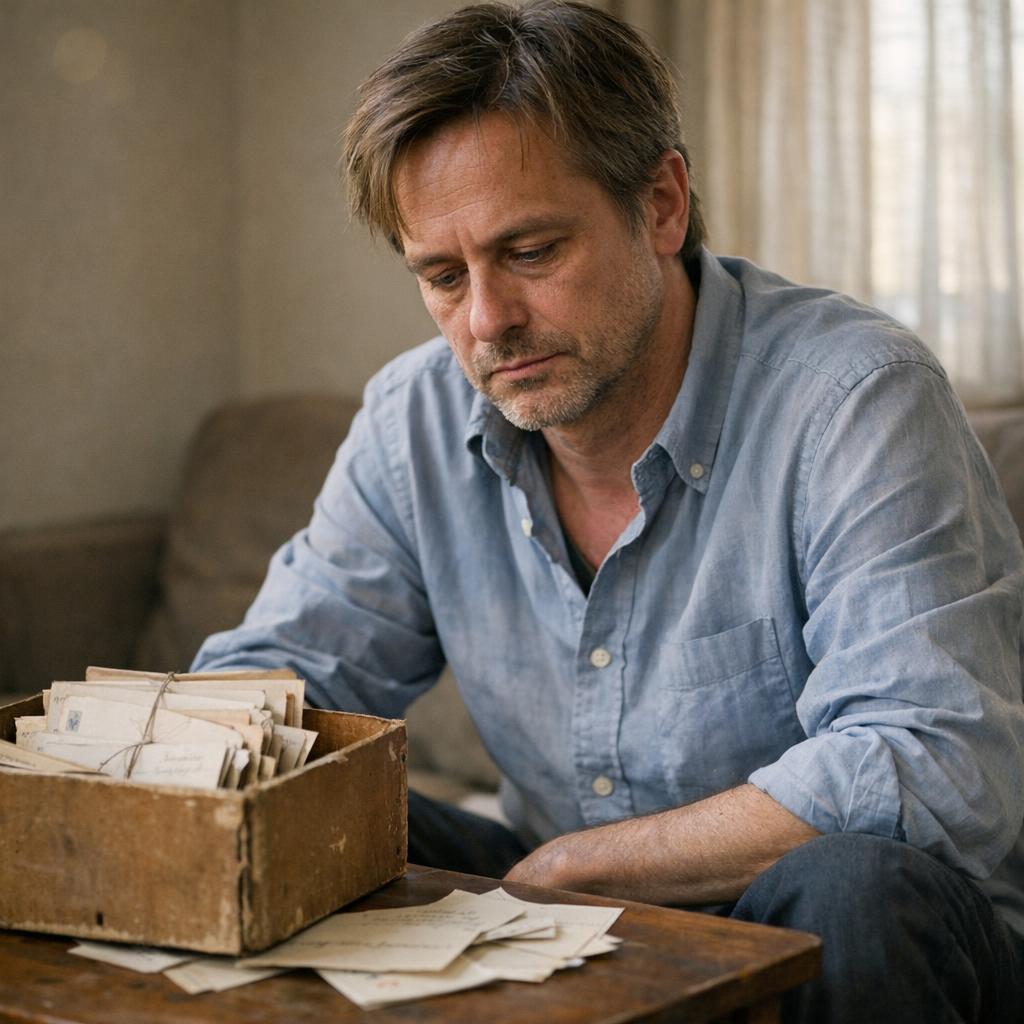 Image by RM AI
The Phone Call
My phone buzzed on the table, Mom's name flashing on the screen like a warning. I let it go to voicemail, but seconds later, her frantic message played through the speaker: "Ellie, I'm coming over. Don't do anything stupid. We need to talk before you make a terrible mistake." Dad's face fell, the brief happiness we'd found evaporating instantly. "I should go," he offered, already half-rising from his chair. "No," I said, surprising myself with how firm my voice sounded. "I'm done running from this." Twenty minutes later, my doorbell rang with the aggressive persistence that could only be my mother. When I opened the door, she stormed past me like a hurricane, then froze mid-step when she saw Dad sitting at my kitchen table, the wooden box open between us, decades of returned letters spread out like evidence in a trial. Her face transformed—shock to disbelief to something I'd never seen before: raw, unfiltered fury. "You," she hissed at him, as if he were an intruder rather than the man whose DNA I carried. "After everything, you dare show up here?" I stepped between them, suddenly feeling like the only adult in a room full of wounded children, and realized with crystal clarity that whatever happened next would permanently alter the story of who we were to each other.
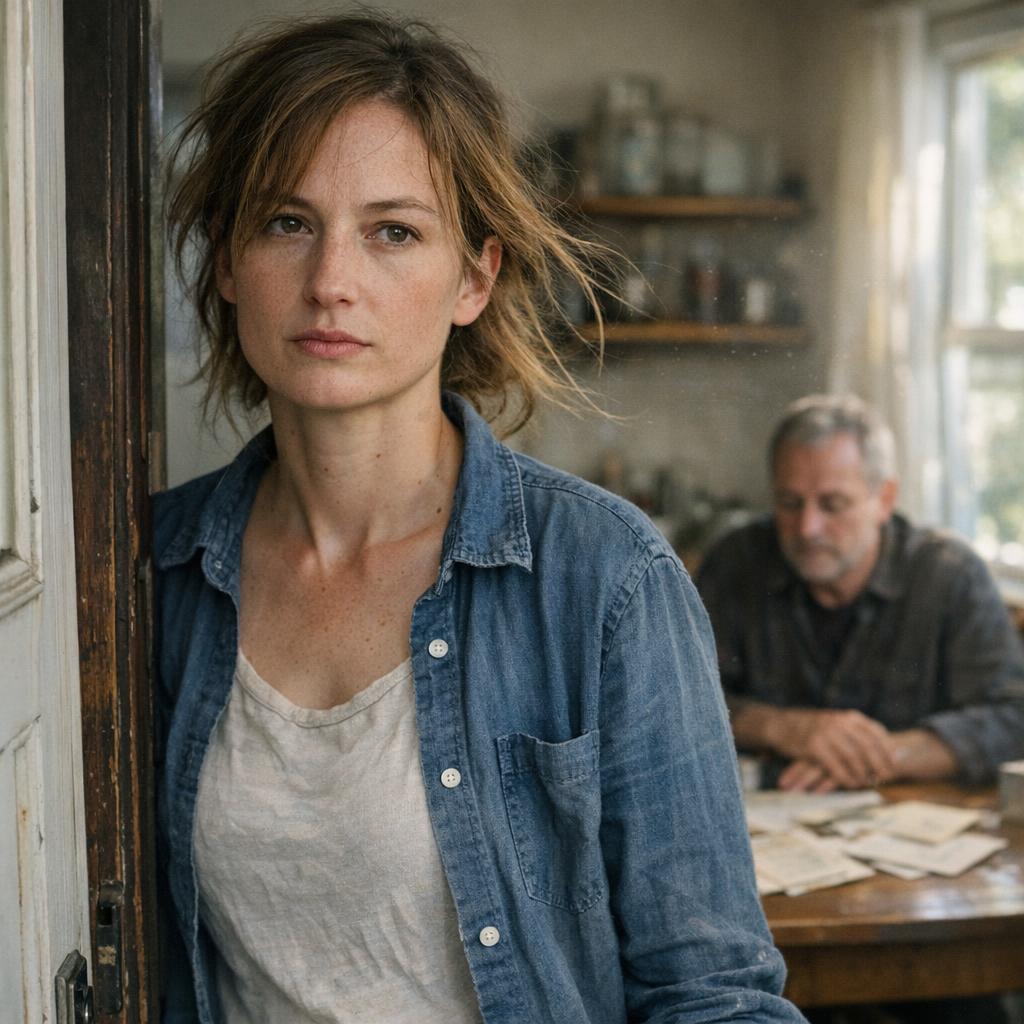 Image by RM AI
The Confrontation
I stood frozen between them, watching twenty-eight years of unspoken rage crackle in the air like electricity. My apartment—my safe space—had transformed into a battlefield I never signed up for. 'Still playing the victim, James?' Mom's voice cut through the silence, cold and sharp as she glared at the scattered letters. Her hands were trembling, but her eyes remained steel. Dad didn't rise to the bait. He just sat there, shoulders squared, looking older than he had just minutes ago. 'Catherine, please,' he said quietly. 'Can we talk about this rationally? For Ellie's sake?' The sound of my name in his mouth made Mom flinch. I felt dizzy, like I was simultaneously five years old and fifty—too young to handle this, yet somehow the only adult in the room. These two people who created me were strangers to each other now, and partially strangers to me. The wooden box sat between us like a bomb that had already detonated, its shrapnel—those returned letters—exposing truths neither of them could hide anymore. I took a deep breath and stepped forward. 'Both of you, sit down,' I said, surprising myself with how steady my voice sounded. 'I've spent my entire life not knowing the truth. That ends tonight.'
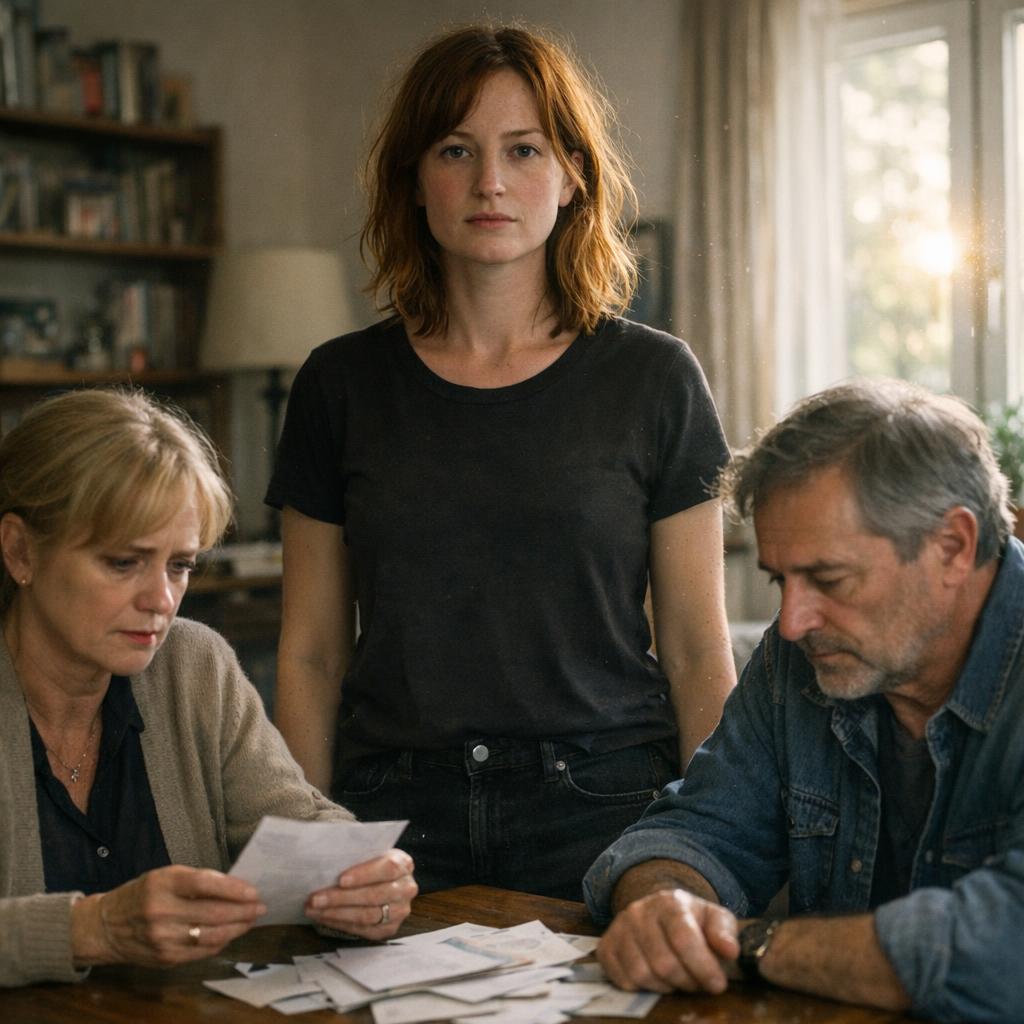 Image by RM AI
The Accusations
They sat across from each other at my kitchen table, two people who once shared a life now hurling fragments of a broken past like weapons. 'You were always checking my phone,' Dad said, his voice tight. 'Nothing I did was ever enough.' Mom scoffed, that familiar dismissive sound I'd heard my whole life. 'Maybe because I found lipstick on your collar twice,' she fired back. 'Or the credit card statements from hotels I never saw.' I stood there, watching history being rewritten in real-time. Dad mentioned Mom's refusal to try counseling; Mom countered with stories of his explosive temper. Each accusation was met with a defense that painted an entirely different picture. The most unsettling part wasn't the shouting—it was how genuinely convinced they both seemed. Mom pulled out her phone, showing emails from years ago that 'proved' her side. Dad gestured to the returned letters, evidence of her systematic erasure of him from my life. I felt like I was watching two people describe completely different movies they'd both starred in. The truth, I was beginning to realize, wasn't going to be found in either of their versions—it was buried somewhere in the wreckage between them, in a place neither seemed willing to excavate.
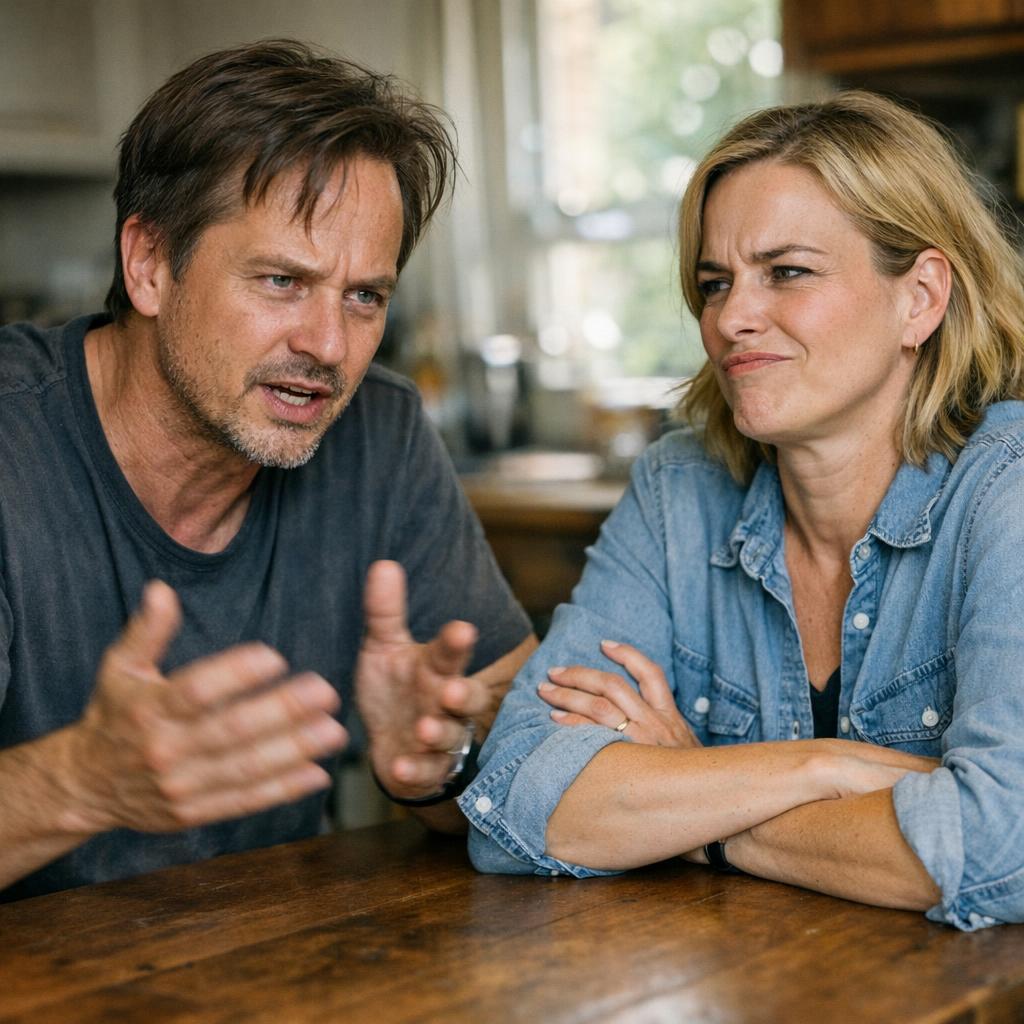 Image by RM AI
The Breaking Point
"I did what any mother would do to protect her child," Mom said, her voice breaking slightly. Those words hung in the air between us like a grenade with its pin pulled. I felt something inside me snap—a tether that had kept me bound to her version of reality for twenty-eight years. "Protect me?" I repeated, my voice rising. "By telling me my father was DEAD?" Dad sat silently, his eyes fixed on the table. Mom's face hardened, that familiar defensive mask sliding into place. "It was cleaner than explaining he'd abandoned us," she insisted. I gestured wildly at the scattered letters, my hand shaking. "He didn't abandon us! You MADE him disappear!" For the first time, I was seeing my mother's actions through adult eyes—not through the lens of a child's unquestioning acceptance. The woman standing before me had systematically erased half of who I was, had intercepted birthday cards, had returned Christmas presents, had fabricated an entire narrative about my origin story. And she'd done it while positioning herself as the hero. "Cleaner," I repeated, the word tasting bitter in my mouth. "You didn't do this for me. You did it for you." The look that crossed her face then—a flash of naked guilt quickly replaced by righteous indignation—told me everything I needed to know about the truth I'd been denied my entire life.
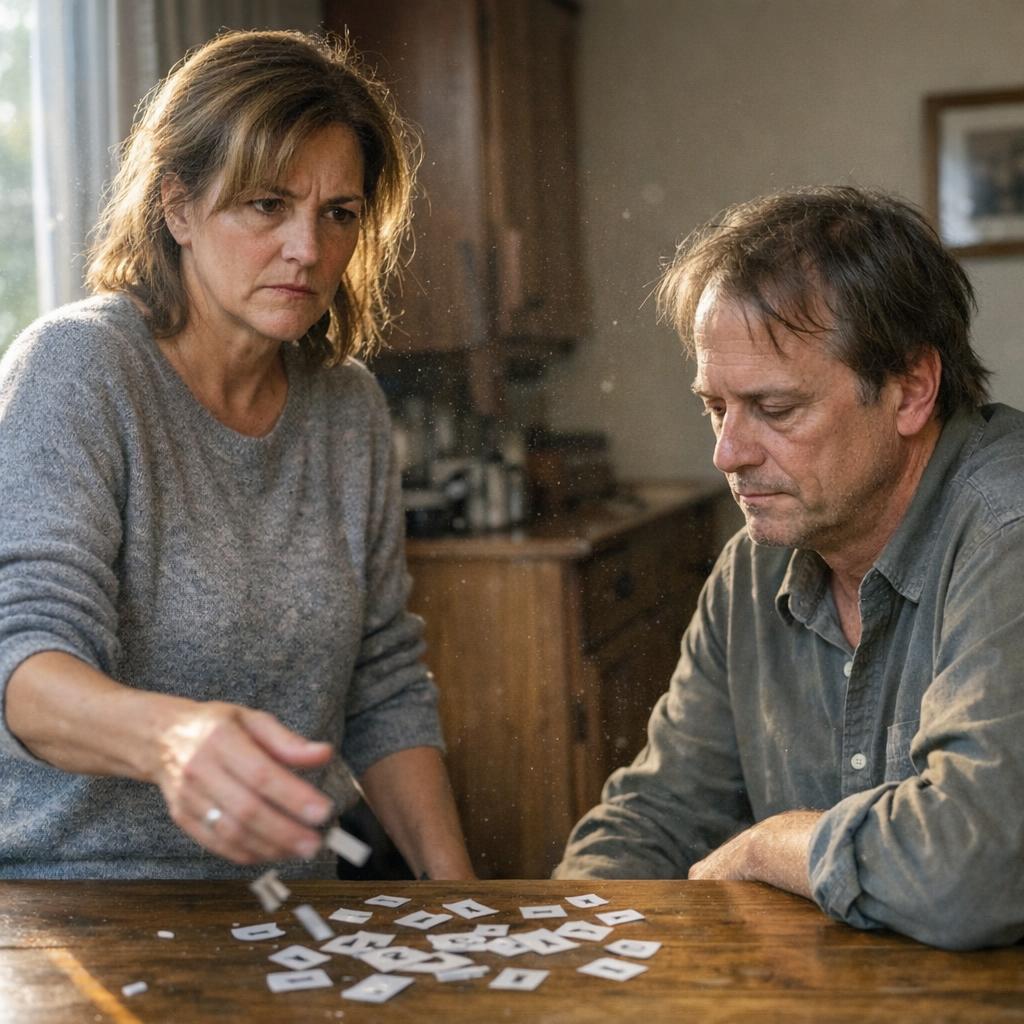 Image by RM AI
The Revelation
The room went deadly silent. Mom's next words came out in a broken whisper that seemed to physically change the air around us. 'I was pregnant before you, Ellie.' Her hands trembled as she spoke. 'Four months along. Then one morning, I woke up bleeding.' Dad's face drained of color—this wasn't part of their shared history; this was something she'd carried alone. 'You never told me,' he said, his voice barely audible. Mom's eyes flashed with decades-old pain. 'I couldn't. You were traveling so much. By the time you got home, I'd already had the procedure.' She looked at me, then back at him. 'After that, I became... obsessed with the idea of being left alone with a baby.' Her confession tumbled out—how that fear had twisted into paranoia when she found the hotel receipt, how that paranoia had hardened into the lie she told me. 'I convinced myself you were as good as dead to us,' she admitted, tears streaming down her face. 'And then I made it real.' I sat there, stunned by the realization that my entire life had been shaped by a grief neither of my parents had properly processed—a ghost sibling I never knew existed, whose loss had somehow led to me losing my father too.
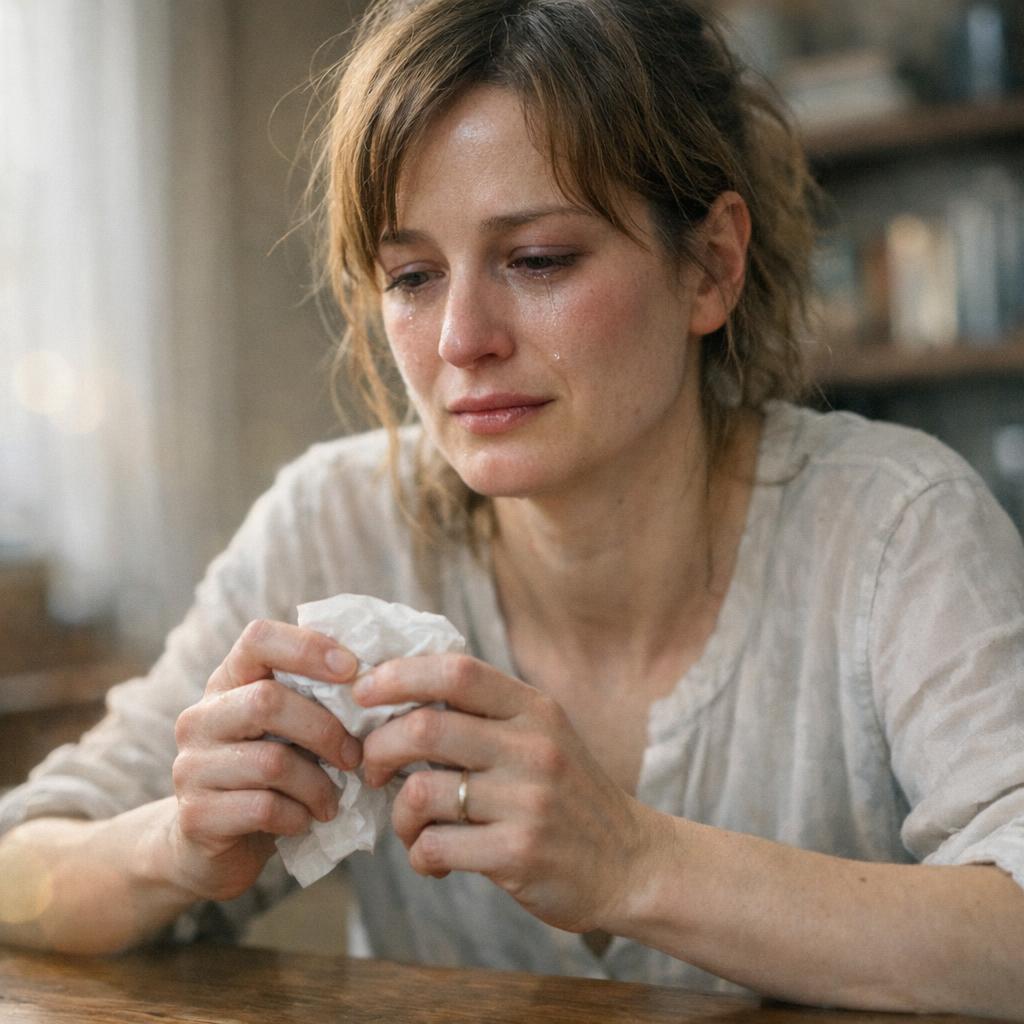 Image by RM AI
The Aftermath
After Mom's bombshell revelation, the three of us sat in a silence so heavy it felt like another person in the room. Dad stared at his hands, his anger dissolving into something more complicated—a mix of grief for what he never knew and understanding of how trauma can warp a person's reality. Mom seemed to physically shrink before my eyes, as if sharing her secret had deflated something that had been keeping her rigid all these years. I felt strangely hollow, like someone had scooped out my insides and replaced them with static. My entire existence—who I thought I was, who I thought my parents were—had been shaped by a loss I never knew about and emotions that existed before I took my first breath. When Mom finally stood to leave, her eyes met mine with a vulnerability I'd never seen before. 'I'm sorry,' she whispered, and for once, I believed her. Dad followed shortly after, both of them agreeing I needed space. As the door closed behind them, I collapsed onto my couch, surrounded by the physical evidence of my fractured origin story—returned letters, old photos, and the lingering echoes of three broken people trying to find their way back to something resembling truth. What I didn't realize then was that this wasn't the end of our story—it was barely the beginning.
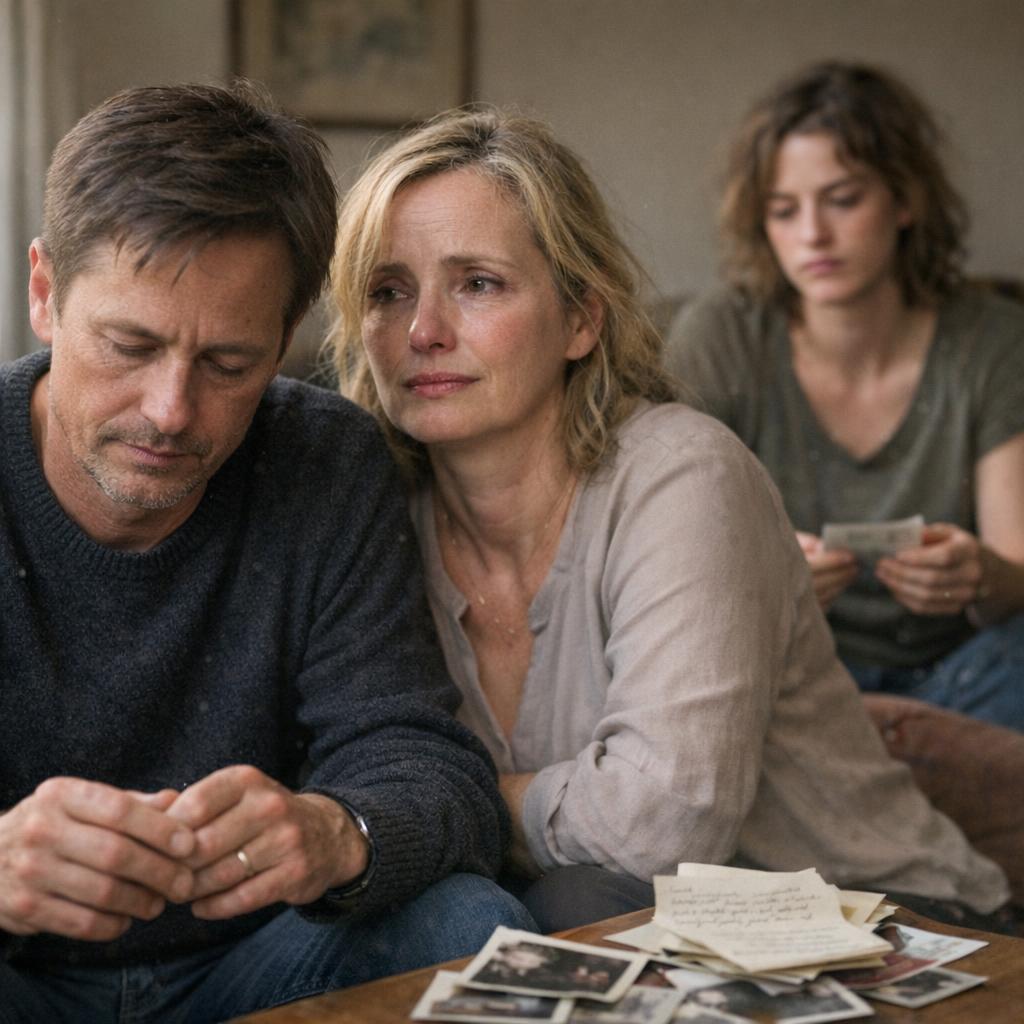 Image by RM AI
The Witness
The morning after the confrontation, I was still in shock. My hands trembled as I poured coffee for Zoe, who'd shown up at my door with pastries and that look friends get when they know you're falling apart. "So your mom basically Thanos-snapped your dad out of existence," she said after I'd recounted everything. "That's next-level toxic." I nodded, too emotionally drained to even laugh at her Marvel reference. "I need someone who was there," I said, scrolling through my contacts. "Someone who knew them both." That's when I remembered Aunt Vivian—Mom's sister who lived in Seattle, who sent thoughtful birthday cards but somehow always had reasons not to visit. The aunt who'd grown increasingly distant as I grew up. The pieces were starting to fit together in a way that made my stomach turn. With shaking fingers, I dialed her number, wondering if she'd been complicit in Mom's lie or just another casualty of it. When she answered, her voice caught slightly, like she'd been waiting for this call for twenty-eight years. "Ellie," she said softly. "I was wondering when you'd find out."
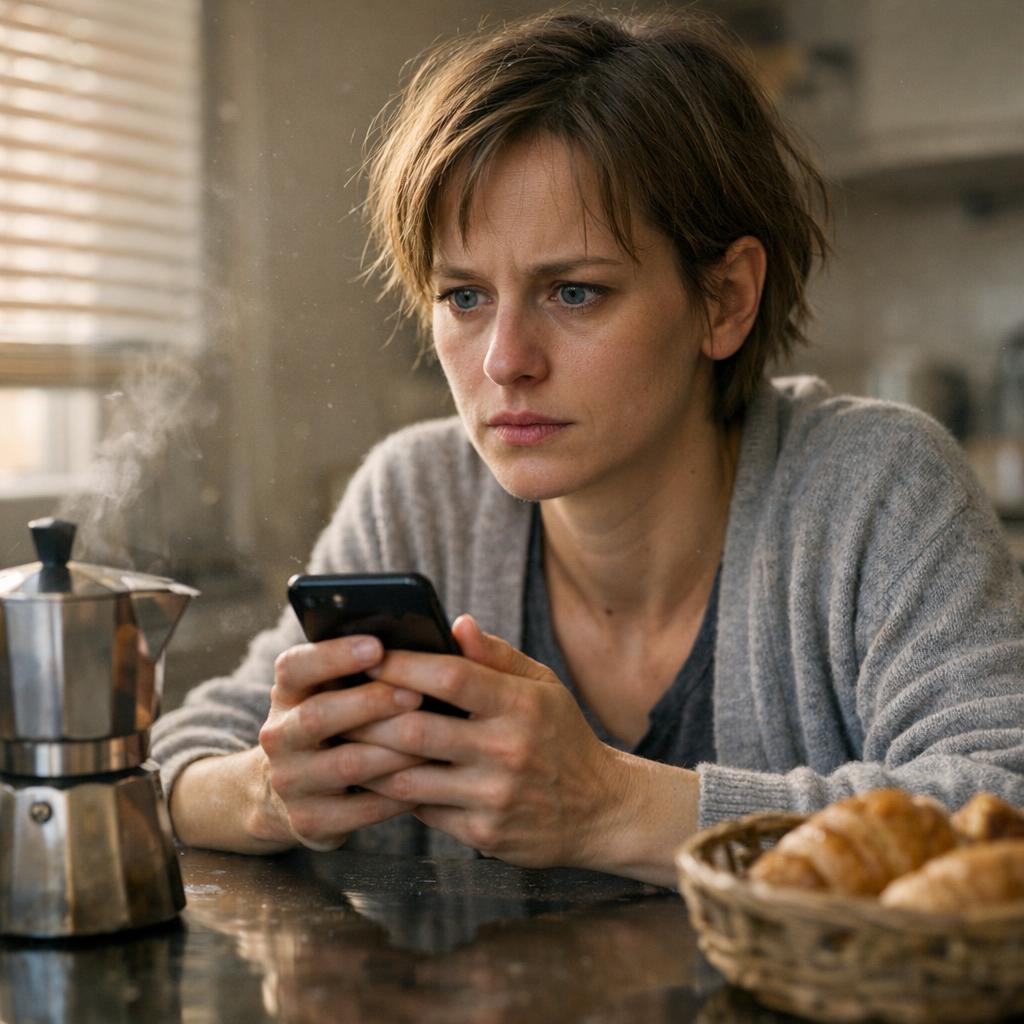 Image by RM AI
The Third Perspective
Aunt Vivian's voice crackled through my phone speaker like a radio station not quite in range. 'I tried to visit more,' she admitted, her sigh heavy with regret. 'Your mom made it... difficult.' As she spoke, I felt like I was watching a 3D movie finally coming into focus—the same events but with depth I'd never seen before. She confirmed much of Dad's story—Mom's absolute conviction of his betrayal despite shaky evidence, her refusal to even consider counseling. But Vivian also painted a picture of my mother I hadn't fully appreciated: how the miscarriage had shattered something fundamental in her, how Dad's long absences and close friendship with Sophia had fed into her deepest fears of abandonment. 'They were both so young,' Vivian said softly. 'So stubborn. But Ellie...' Her voice hardened. 'Telling you he died was unforgivable. I fought with her about it for years.' When I asked why she hadn't told me the truth herself, the silence stretched so long I thought we'd lost connection. 'I was a coward,' she finally whispered. 'Your mother threatened to cut me off completely if I interfered. I chose the easier path—sending birthday cards, staying distant. I told myself someday you'd find out on your own.' She paused. 'I never imagined it would take twenty-eight years.'
 Image by RM AI
The Estrangement
As Vivian's voice trembled through the phone, she revealed the painful truth I'd never known. 'Your mom and I had a massive blowout when you were seven,' she explained. 'I kept pushing her to tell you the truth about your father, that he wasn't dead.' My stomach knotted as she described how Mom had essentially exiled her own sister for threatening the elaborate lie she'd constructed. 'Diana said if I ever told you, she'd cut me off completely—I'd never see you again.' I could hear the years of guilt weighing down each word. 'Those birthday cards, those brief calls... that was all she would allow.' I thought about all those years of distant affection, how Aunt Vivian always seemed to have convenient excuses not to visit. It wasn't disinterest—it was enforced distance. 'I should have tried harder,' she whispered, her voice thick with decades of regret. 'I was a coward.' Before I could process my feelings, she offered to fly out to Boston, to help mediate between all of us. I accepted immediately, feeling like I needed someone—anyone—who understood the full picture. What I didn't realize was that bringing Vivian into this powder keg would force everyone to confront truths none of us were ready to face.
 Image by RM AI
The DNA Results
The email notification pinged while I was still reeling from Vivian's revelations. 'DNA Results Available,' read the subject line, and my heart skipped. I'd almost forgotten I'd sent the test in weeks ago—before my world imploded on that sidewalk. With trembling fingers, I clicked open the attachment, though I already knew what it would say. There it was in clinical black and white: 99.9% probability of paternity. James Mitchell was, without question, my biological father. I stared at the screen, feeling strangely numb. The scientific confirmation of what I already knew emotionally hit differently—like the universe itself was validating my anger. Without thinking, I forwarded the results to Mom with just five words: 'We need to talk.' Her response came so quickly it was like she'd been waiting by her phone: 'I never doubted he was your father. That wasn't why I lied.' I read those words over and over, my brain struggling to process the twisted logic behind them. What kind of person acknowledges a man is your father but tells you he's dead? What kind of mother builds her child's entire identity on a foundation of sand? I printed the results and placed them in the wooden box with the returned letters—another piece of evidence in the case against the woman who raised me. But as I closed the lid, a terrifying thought surfaced: if she hadn't lied about his paternity... what exactly had she been protecting me from?
 Image by RM AI
The Sophia Question
I stared at Sophia's email response on my screen, my heart racing. After twenty-eight years of being a nameless villain in my mother's narrative, this woman was suddenly real—and willing to talk to me. I found myself frantically Googling her, scrolling through her professional headshots at the architecture firm where she was now a partner. She looked polished and confident, nothing like the homewrecker my imagination had conjured. Dad had mentioned her so carefully during our conversations, like stepping around broken glass. What truth was I missing? The next morning, I sat in the café forty minutes early, my leg bouncing nervously under the table as I rehearsed questions in my head. When she walked in—tall, with silver-streaked dark hair and kind eyes—I recognized her immediately from my online stalking. She spotted me too, her face softening with what looked like genuine emotion. "Ellie," she said, approaching my table. "You look so much like him." As she sat down across from me, I realized I was about to hear yet another version of my origin story—one that might finally explain why my mother had gone to such extreme lengths to erase my father from my life.
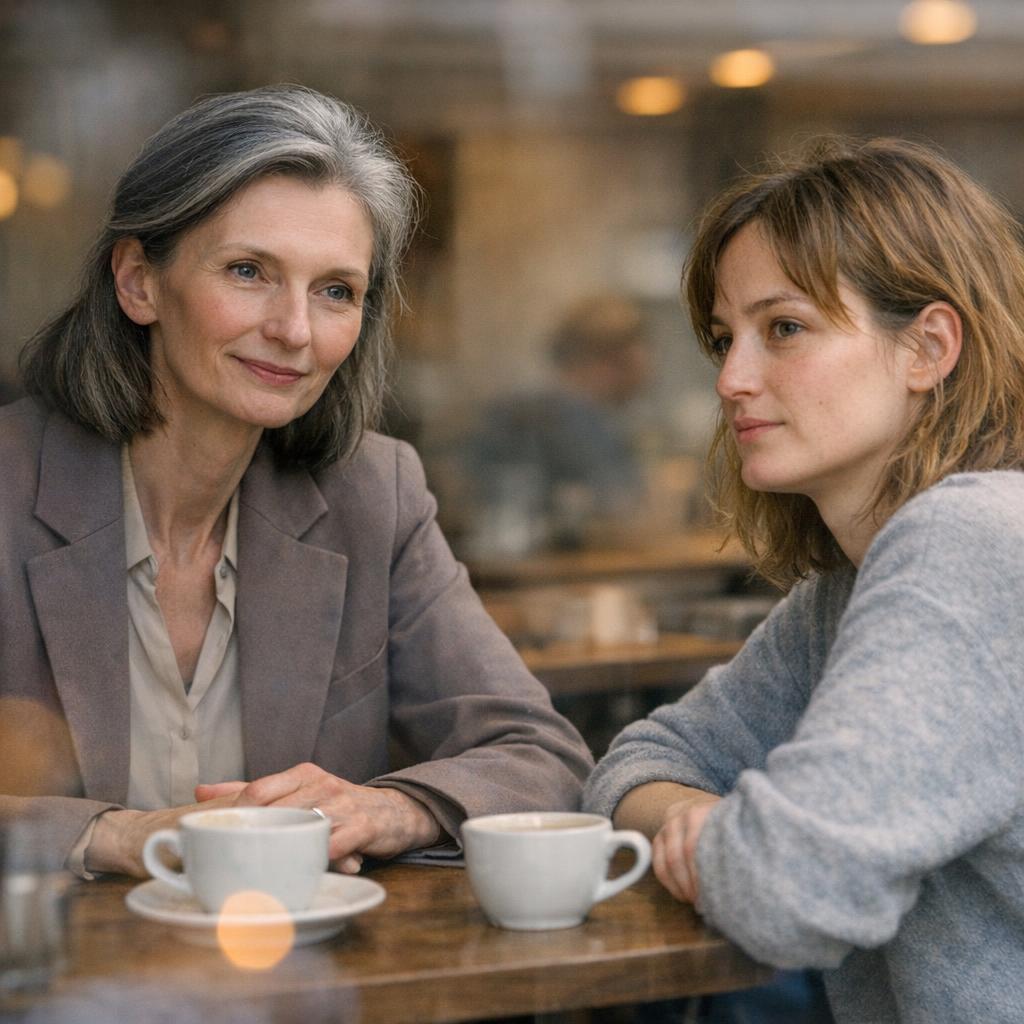 Image by RM AI
The Other Woman
Sophia sat across from me, stirring her latte with a precision that matched her tailored blazer. Nothing about her screamed 'other woman' – she was poised, articulate, and disarmingly honest. 'Your father and I were colleagues, nothing more,' she explained, her voice steady. 'But I'd be lying if I said I didn't have feelings for him.' She described late nights working on projects, professional boundaries that she – not him – had occasionally blurred with lingering glances or unnecessary touches. 'Your mother picked up on my interest immediately,' Sophia admitted, eyes downcast. 'Women always know.' She recounted the night Mom had stormed into their office, finding them working alone. 'I tried explaining that James never reciprocated, never crossed any line, but Catherine was already convinced of what she wanted to see.' Sophia's fingers trembled slightly as she pushed her cup away. 'For twenty-eight years, I've carried this weight – that my behavior somehow contributed to you growing up without a father.' Her eyes met mine, filled with a regret so genuine it made my chest ache. 'I never imagined she'd tell you he died.' I sat there, processing this new piece of the puzzle, wondering how many lives had been destroyed by my mother's inability to trust.
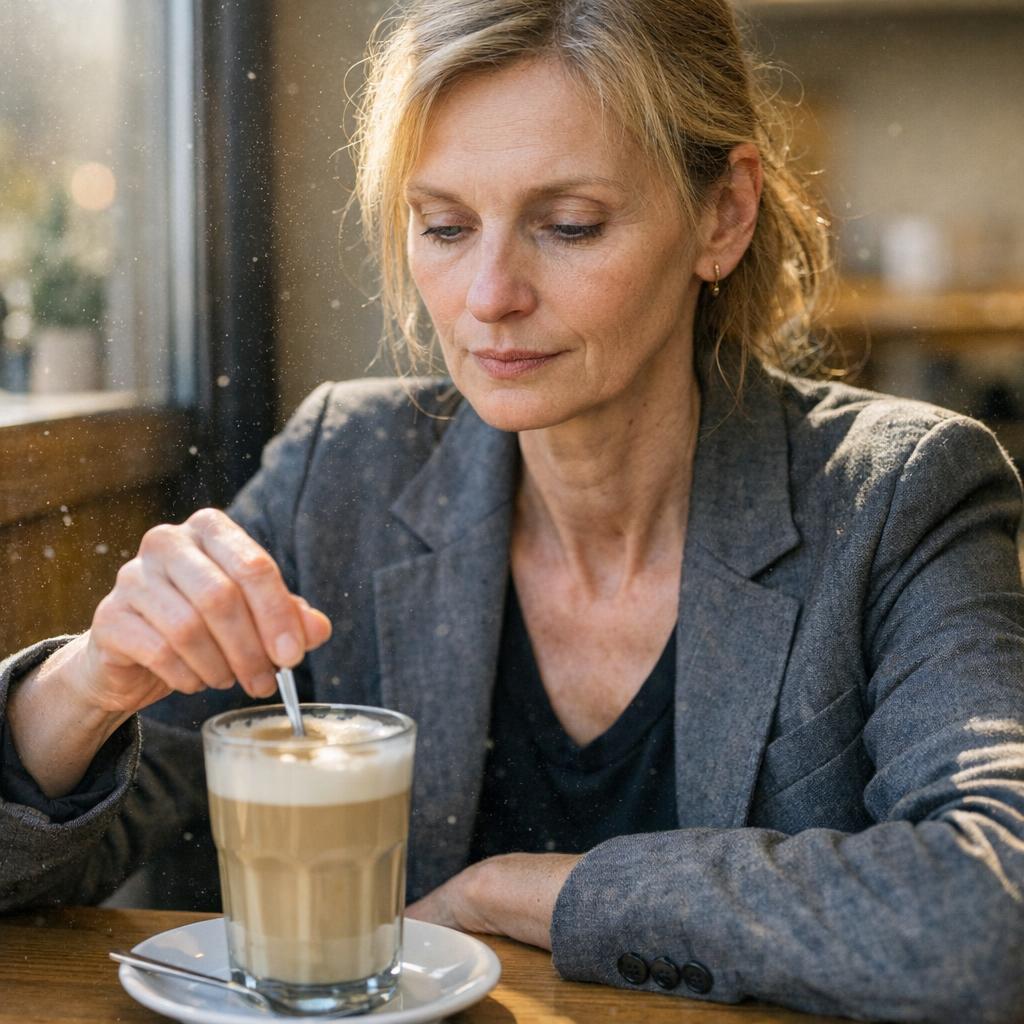 Image by RM AI
The Hotel Receipt
When I mentioned the hotel receipt that had been the final nail in my parents' marriage coffin, Sophia's face transformed. The confident professional woman across from me suddenly looked like she'd seen a ghost. 'The anniversary surprise,' she whispered, her coffee forgotten between us. She explained how Dad had come to her, excited about planning a weekend getaway for their anniversary. He'd asked for her help specifically because Mom checked their shared credit card statements religiously. 'He wanted it to be a complete surprise,' Sophia said, her voice tinged with the weight of unintended consequences. 'I used my corporate card, and he paid me back in cash.' I felt the air leave my lungs as the cruel irony sank in. The very thing that had convinced my mother of his infidelity—the smoking gun she'd referenced for decades—had actually been evidence of his love for her. A romantic gesture twisted by suspicion into the final proof she needed. 'He had champagne delivered to the room,' Sophia continued softly. 'He'd planned everything down to rose petals on the bed.' I sat there, stunned by the cosmic joke of it all—how a single misunderstanding had spiraled into a lie that consumed three decades of our lives. And I couldn't help but wonder what other 'evidence' in my mother's arsenal might actually tell a completely different story than the one she'd convinced herself was true.
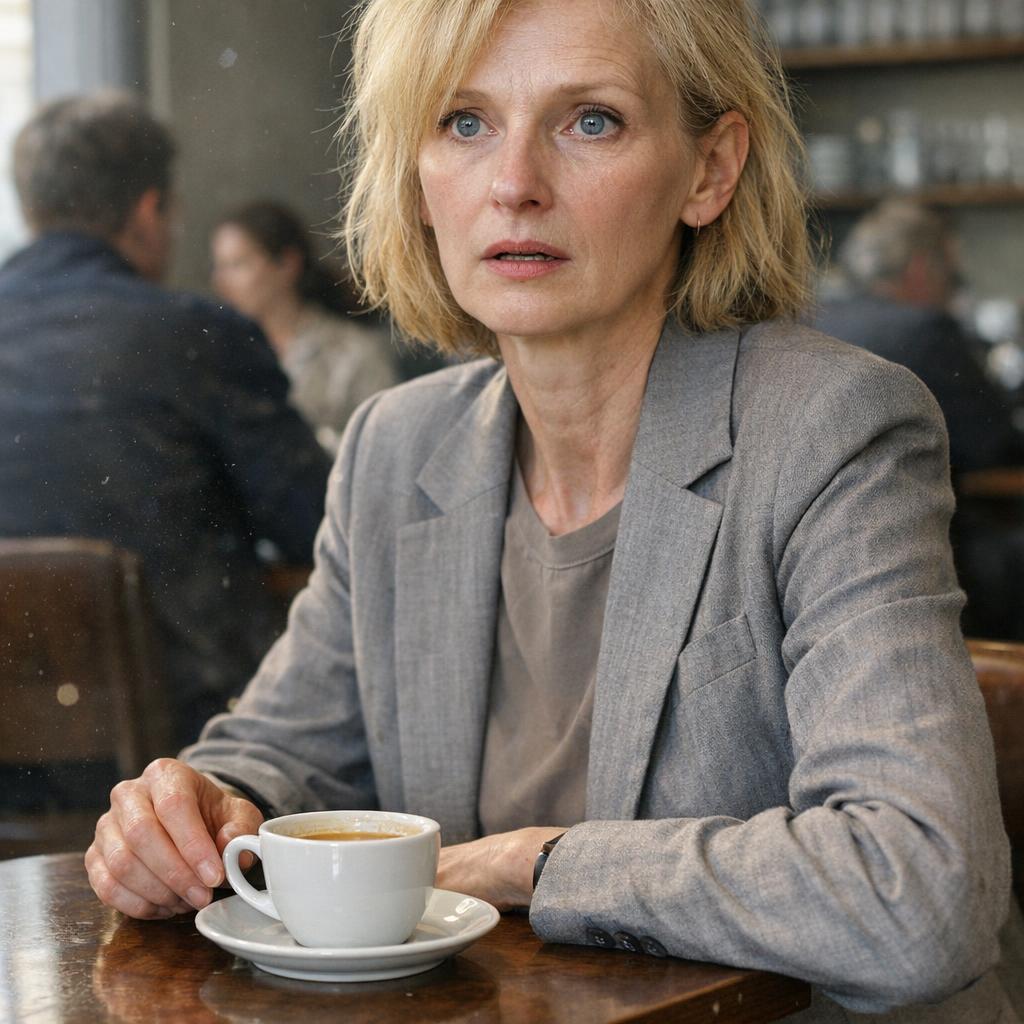 Image by RM AI
The Reunion
Aunt Vivian arrived the next day, her eyes already brimming with tears when I opened the door. She pulled me into a hug so tight it felt like she was trying to squeeze twenty-eight years of missed embraces into one moment. 'Let me look at you,' she said, holding me at arm's length. She looked so much like Mom—same cheekbones, same eyes—but there was a softness to her that Mom had lost somewhere along the way. That night, we spread old photos across my coffee table like archaeological evidence of a family that once existed. 'They were crazy about each other here,' she said, pointing to a faded wedding photo where Dad gazed at Mom like she hung the moon. 'Your mom laughed more back then. Your dad was always making these terrible jokes.' I traced their faces with my finger, trying to reconcile these happy strangers with the broken people I now knew. 'Do you think there's any way forward?' I asked, not specifying whether I meant for them as a couple or just for each of us individually. Vivian's smile was cautious but genuine. 'Healing is always possible, Ellie. But first—' she tapped a photo of baby me cradled between my parents '—everyone has to stop lying about what really happened.'
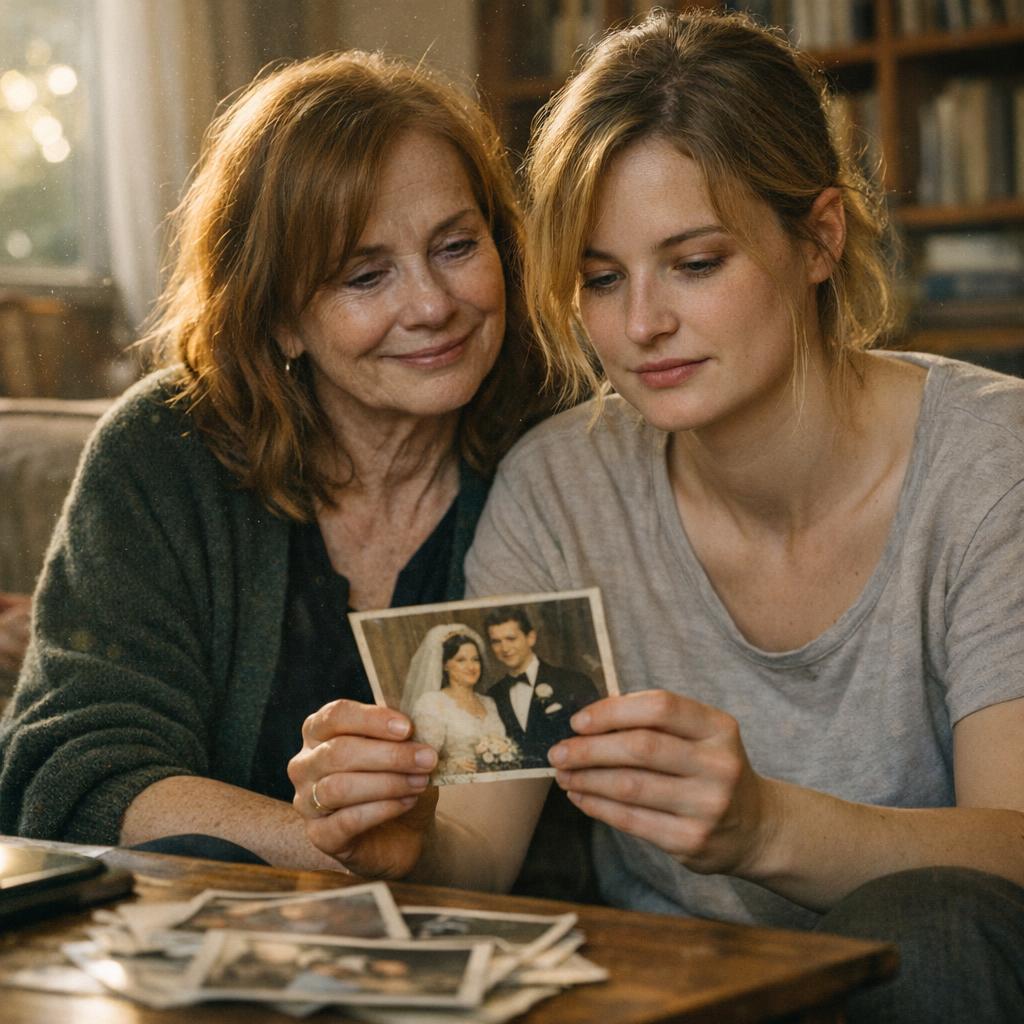 Image by RM AI
The Family Meeting
I spent the entire morning arranging my living room like a courtroom—three chairs facing each other, tissues strategically placed, even a pitcher of water that nobody would touch. Dad arrived first, fifteen minutes early as always, his eyes darting around my apartment like he was memorizing it. When Mom showed up, the temperature in the room seemed to physically drop. Her face went from neutral to ice-cold when she spotted Vivian sitting beside me. 'I didn't know this would be a group ambush,' she said, her hand still on the doorknob like she might bolt. I took a deep breath, feeling my rehearsed speech evaporating under the weight of their combined presence. 'Please sit down,' I managed, my voice steadier than I felt. Once we were all seated in this bizarre family tribunal, I looked at each of them—the father I'd just found, the mother who'd erased him, and the aunt who'd been silenced. 'I need to understand why you both let this happen to me,' I said simply. The words hung in the air like smoke, impossible to wave away. Dad stared at his hands. Mom's jaw tightened. Vivian reached for my hand. And in that moment of excruciating silence, I realized that whatever answers I was about to get would either heal us or break us apart forever.
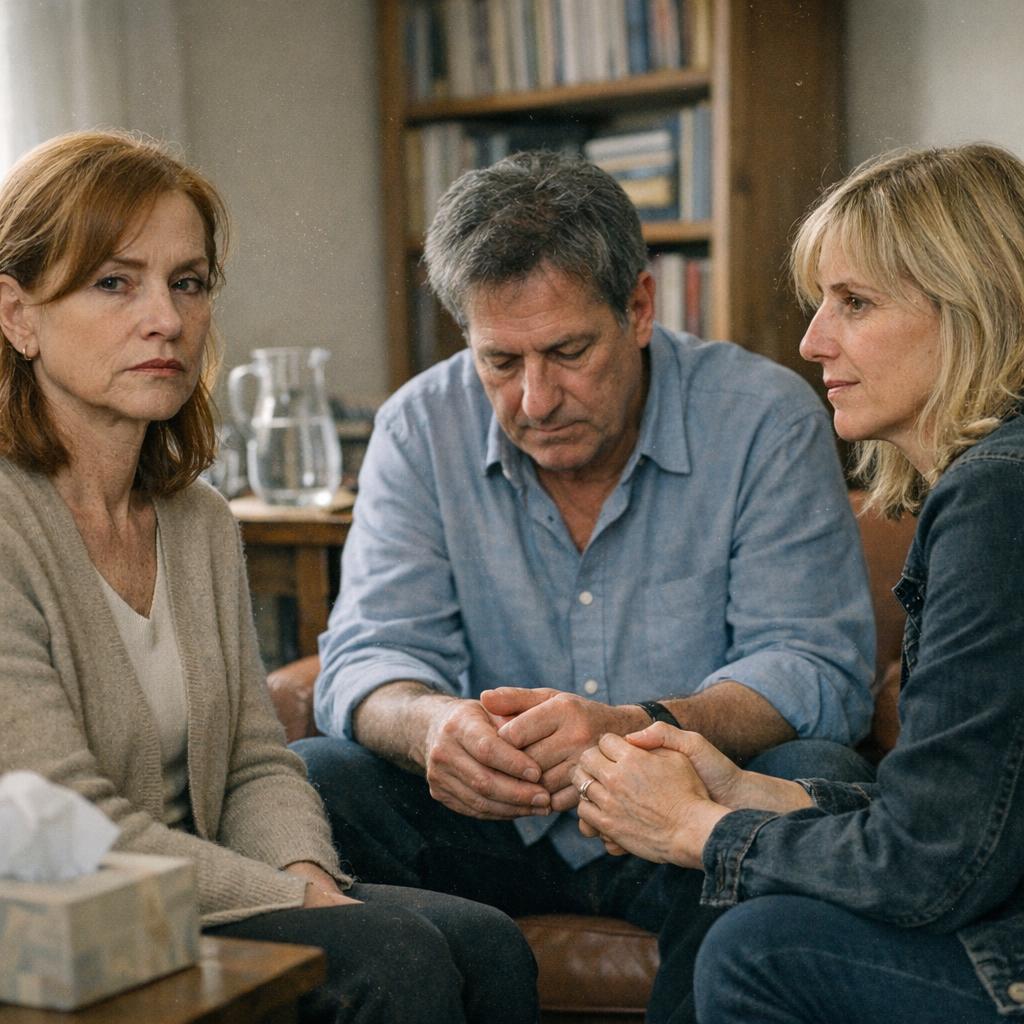 Image by RM AI
The Admissions
The silence that followed my question felt like it lasted a lifetime. Then, like a dam breaking, the truth came flooding out. Mom's voice cracked as she admitted the unthinkable—her lie had started as revenge, a way to hurt Dad when she was drowning in pain and betrayal. 'I told one person you were dead, then another, and suddenly I couldn't take it back without everyone knowing what I'd done.' Her hands trembled as she spoke. Dad, tears streaming down his face, confessed that fear had paralyzed him. 'I convinced myself that barging back into your life would traumatize you more than my absence.' He described the birthday cards returned, the legal threats, the restraining order Mom had gotten. Vivian sat with her head bowed, admitting her own cowardice. 'I chose the path of least resistance. I'm so sorry, Ellie.' I sat there, absorbing their confessions, feeling both white-hot anger and strange relief. These three broken people had shaped my entire reality through their choices—choices made from fear, pain, and pride. As I looked at them, I realized something both terrifying and liberating: I could choose to let their mistakes define me forever, or I could do the one thing none of them had been brave enough to do.
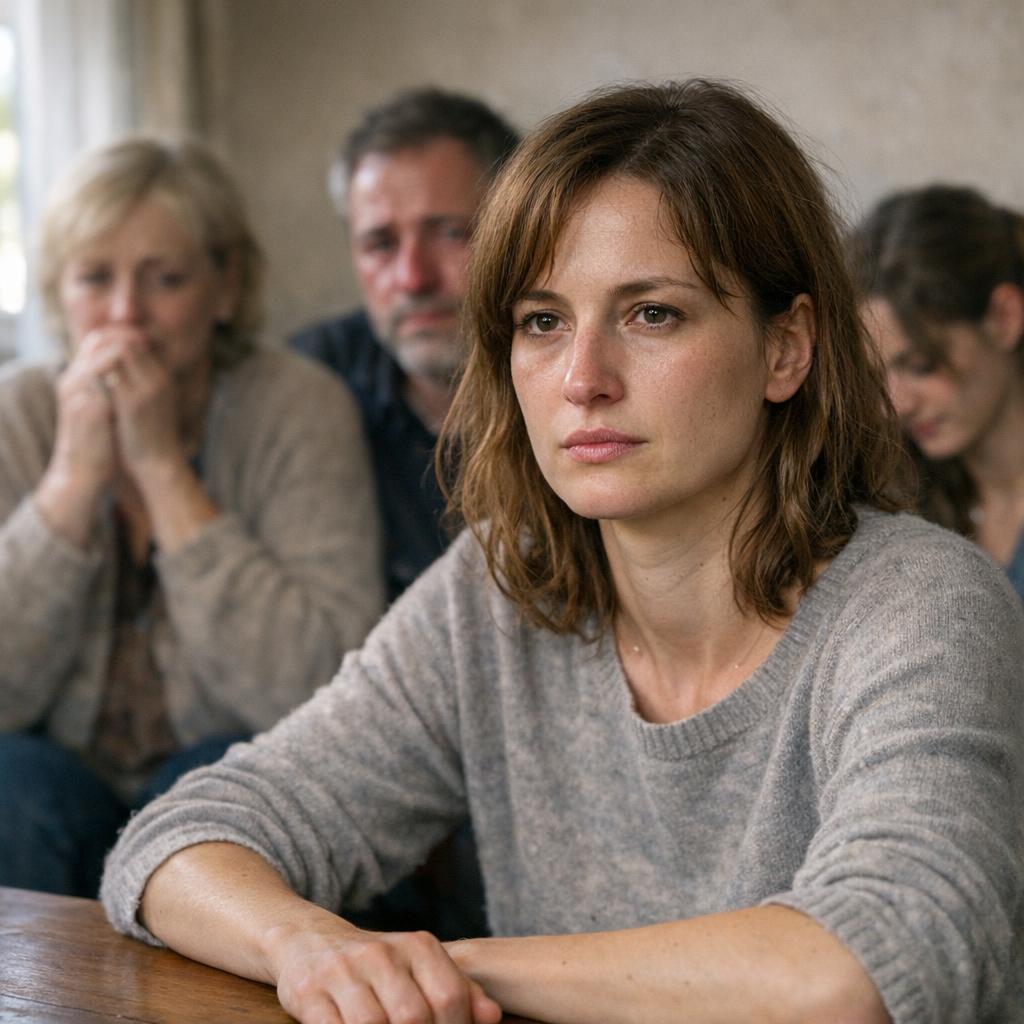 Image by RM AI
The Anniversary Surprise
I watched Mom's face crumble as I explained what Sophia had told me about the hotel receipt. The smoking gun that had justified her twenty-eight years of lies was actually proof of Dad's love. 'It was an anniversary surprise,' I said, my voice barely above a whisper. 'He asked Sophia to book it on her corporate card so you wouldn't see it on the statement. He paid her back in cash.' The color drained from Mom's face as she gripped the armrest. Dad looked up, his eyes wide with vindication that had come decades too late. 'I tried to tell you,' he said quietly, his voice cracking. 'I begged you to listen.' Mom's hands trembled violently as she stared at the floor. 'The champagne... the rose petals...' Dad continued, each detail another nail in the coffin of her certainty. 'I had it all planned.' Mom's shoulders hunched forward like she was physically folding in on herself. 'I didn't know,' she whispered, looking suddenly small and lost. 'I really believed...' Her voice trailed off, the sentence hanging incomplete in the air between them. I watched as the foundation of her entire adult life—her absolute conviction of betrayal—cracked beneath her. The terrible irony wasn't lost on any of us: the very evidence she'd clung to as proof of his infidelity had actually been proof of his devotion. And I couldn't help wondering what else she had gotten catastrophically wrong.
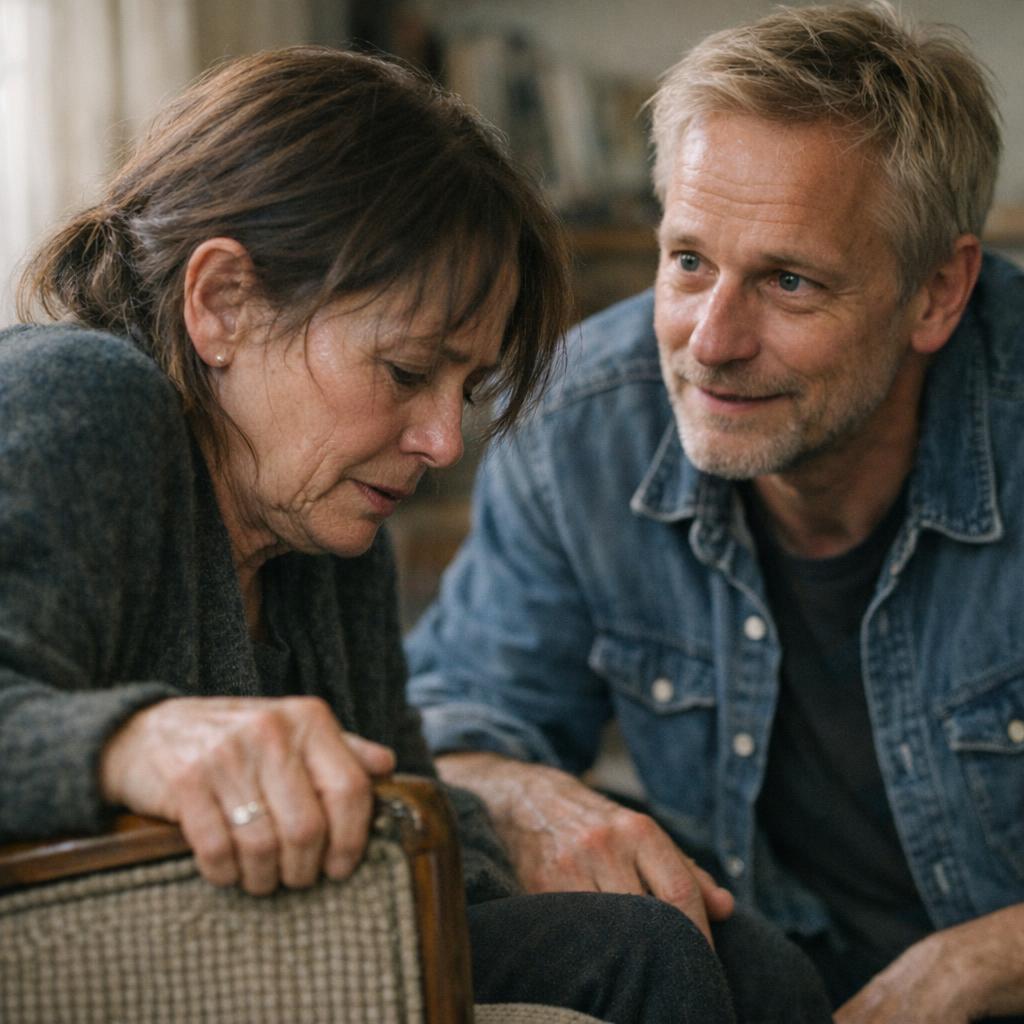 Image by RM AI
The Boundaries
I took a deep breath, my hands still shaking slightly as I looked at the three people who had shaped—and in many ways, broken—my entire life. 'I want relationships with all of you,' I said firmly, 'but we need new ground rules.' Mom's face tightened instantly, that familiar control-is-slipping expression I'd seen a thousand times. Dad just nodded eagerly, like a man who'd been offered water after decades in a desert. 'Complete honesty from now on,' I continued, my voice stronger than I felt. 'No more secrets, no more ultimatums, and you both need to respect that I'm an adult who makes her own decisions.' Vivian sat quietly in the corner, occasionally jumping in when Mom's defensiveness threatened to derail everything. 'Diana,' she'd say gently, 'listen to what Ellie needs, not what you want to give.' The conversation stretched for hours, painful and raw and necessary. Mom struggled visibly with every boundary I set, each one chipping away at the absolute authority she'd maintained for twenty-eight years. Dad accepted everything gratefully, like each word from my mouth was a gift he didn't deserve. By the time they finally left—separately, of course—something had shifted between us. It wasn't forgiveness, not yet. But for the first time, I could see a path forward that didn't require me to choose between truth and family. What I couldn't possibly know was how quickly that fragile peace would be tested.
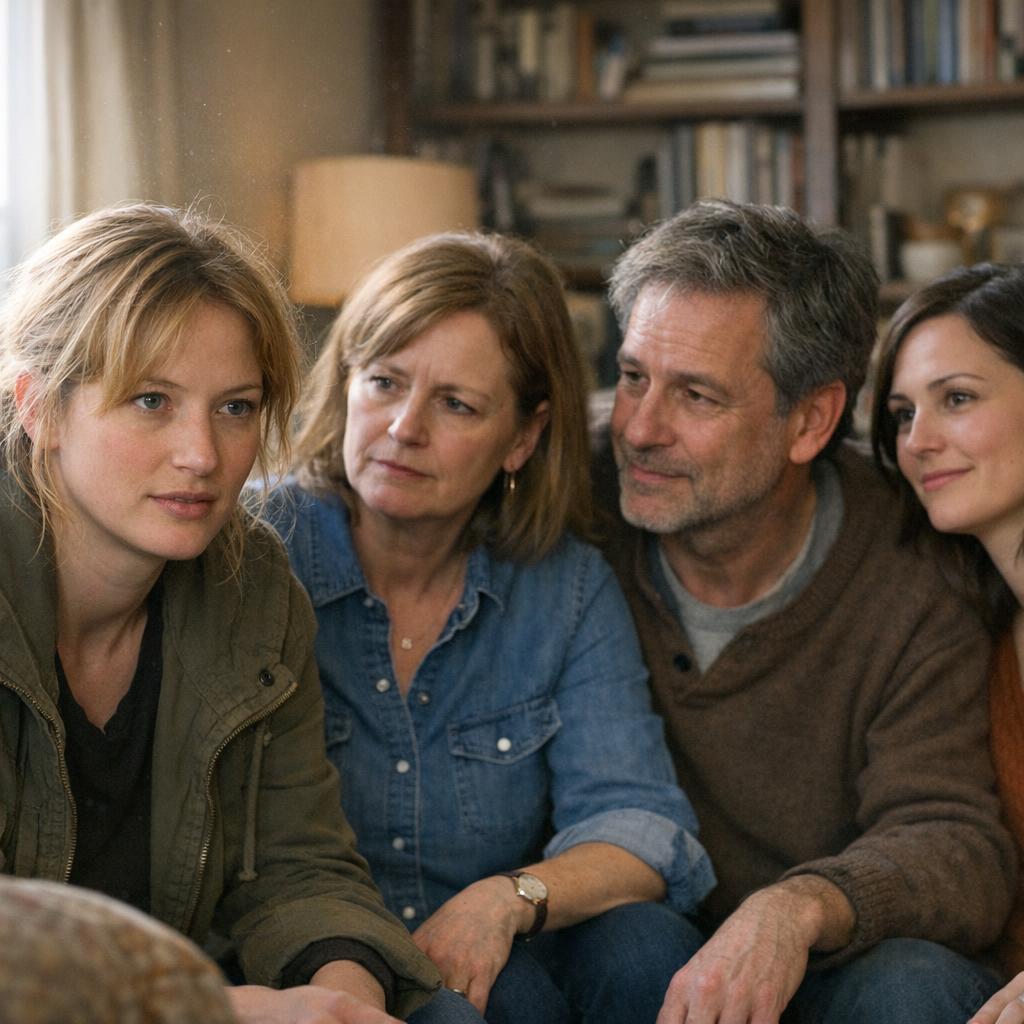 Image by RM AI
The First Steps
The first time I met Dad for coffee, I arrived twenty minutes early and nearly left three times. When he walked in, we both froze like awkward teenagers at a school dance. 'I ordered you black coffee,' I said, remembering from the photos how he always held a mug without cream. His eyes lit up. 'You knew that?' Those Tuesday mornings became sacred—him filling in the blanks of my history, me discovering that my habit of talking with my hands wasn't random but inherited. 'You got that from me,' he'd say, looking both proud and sad. Friday dinners with Mom started as frigid affairs, her spine rigid as she carefully avoided mentioning Dad. But slowly, as weeks passed, I watched her shoulders relax, saw her begin to look at me—really look at me—maybe for the first time. 'I never noticed how you analyze problems exactly like I do,' she said one night, watching me rearrange the salt and pepper shakers to explain my work dilemma. It was strange and beautiful, finding these genetic echoes in myself, these puzzle pieces clicking into place. What terrified me, though, was how quickly I was growing to love them both—and how impossible it seemed that these two people who created me could ever be in the same room without destroying everything we'd built.
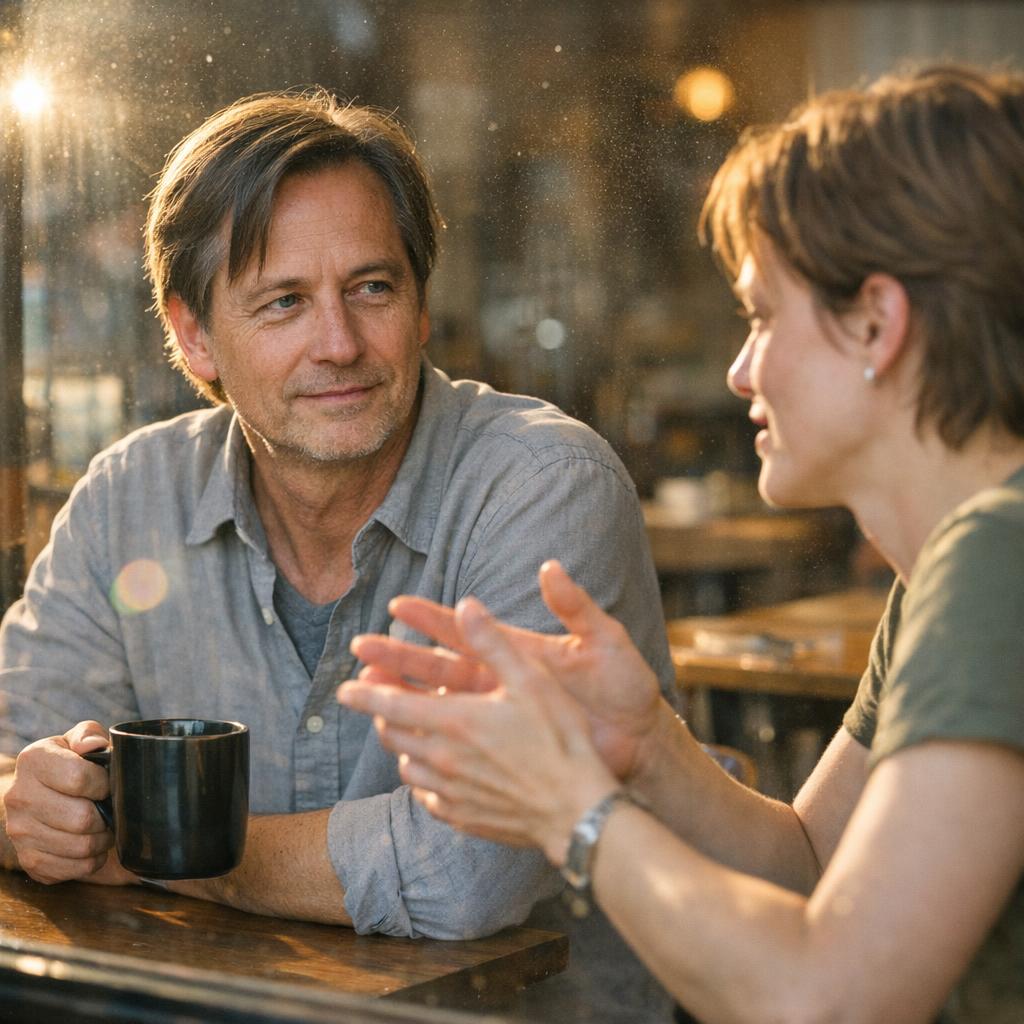 Image by RM AI
The Therapy Sessions
Dr. Novak's office became my sanctuary every Thursday afternoon. Sitting in that overstuffed chair, surrounded by potted plants and gentle lighting, I'd unpack the emotional hurricane that had become my life. 'You're experiencing compound grief,' she explained during our third session, her voice steady as I sobbed into a tissue. 'You're mourning both the father you never had AND the mother you thought you knew.' That hit me like a truck. I wasn't just processing Dad's resurrection from the dead—I was grieving the loss of the mother I'd built my entire identity around. The woman who'd sacrificed everything for me was also the woman who'd orchestrated the greatest lie of my life. Dr. Novak helped me understand that I could hold space for both anger and love, that forgiveness didn't mean erasing accountability. 'Your feelings don't have to make sense to anyone but you,' she reminded me when I confessed feeling guilty for still loving Mom despite everything. The breakthrough came when she asked me to bring photos—one of Dad, one of Mom, and one of myself. Placing them side by side, I saw for the first time how I was literally made of both of them—Dad's expressive hands, Mom's analytical mind. What I couldn't see yet was how these fragile new relationships would survive the bombshell that was about to drop.
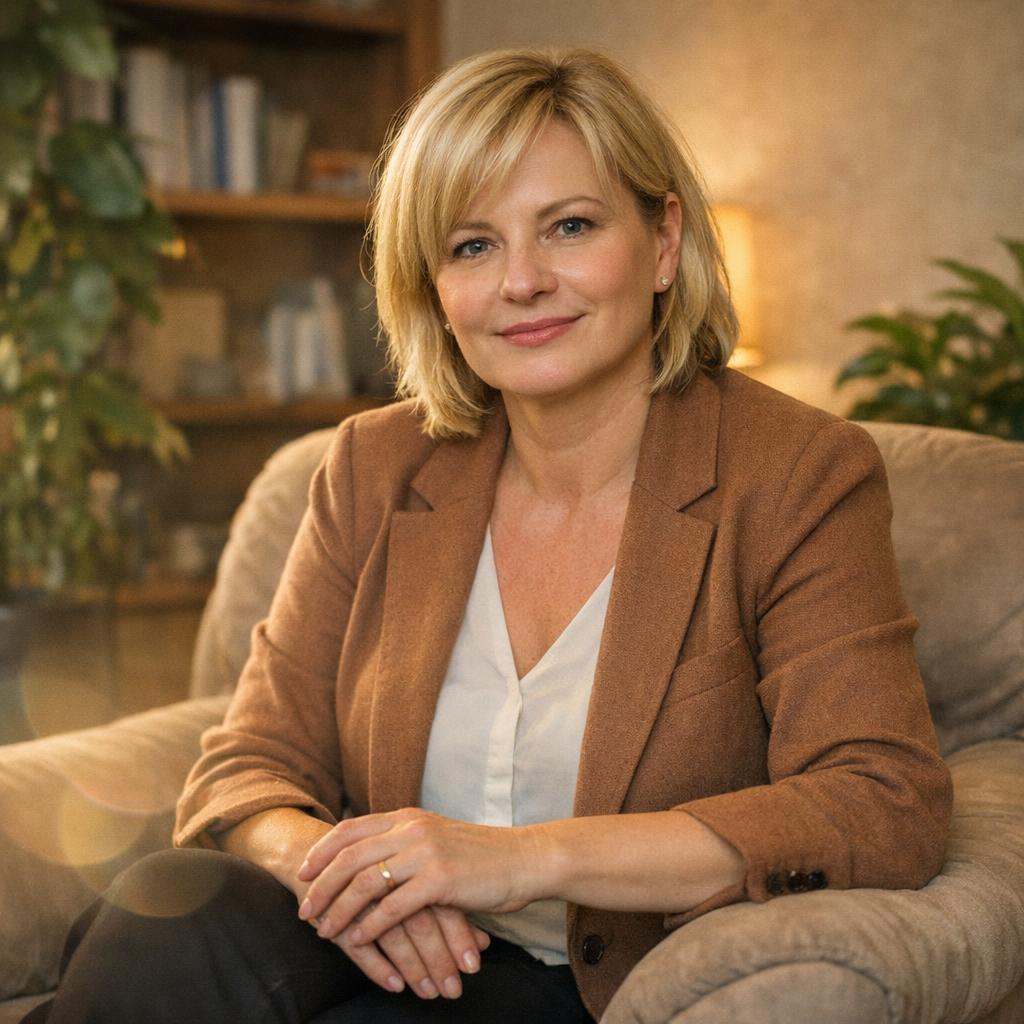 Image by RM AI
The Extended Family
Dad's car pulled up to a modest suburban home with balloons tied to the mailbox. 'They're excited to meet you,' he said, his voice betraying his own nervousness. Walking into that living room felt like stepping into an alternate universe—one where I wasn't an only child but part of something bigger. My uncle Mark grabbed me in a bear hug before I could even say hello. 'You have Grandma Eleanor's eyes, no doubt about it!' he exclaimed, leading me to a wall covered in family photos. There I was—or rather, there was my face, echoed in a woman I'd never met. My grandmother's high cheekbones and slight smile looked back at me from a faded wedding portrait. Cousins I never knew existed showed me childhood photos of Dad, telling stories that filled in blank spaces I hadn't even realized were empty. Later that week, when I told Mom about meeting them, I watched her hands fidget with her coffee mug. 'Are they... nice?' she asked carefully. When I nodded, tears filled her eyes. 'I'm trying,' she whispered, reaching across the table to squeeze my hand. 'I know it's not enough, but I'm really trying.' What she couldn't have known was that her simple acknowledgment meant more to me than all the family photos in the world—and that the real test of her commitment was just around the corner.
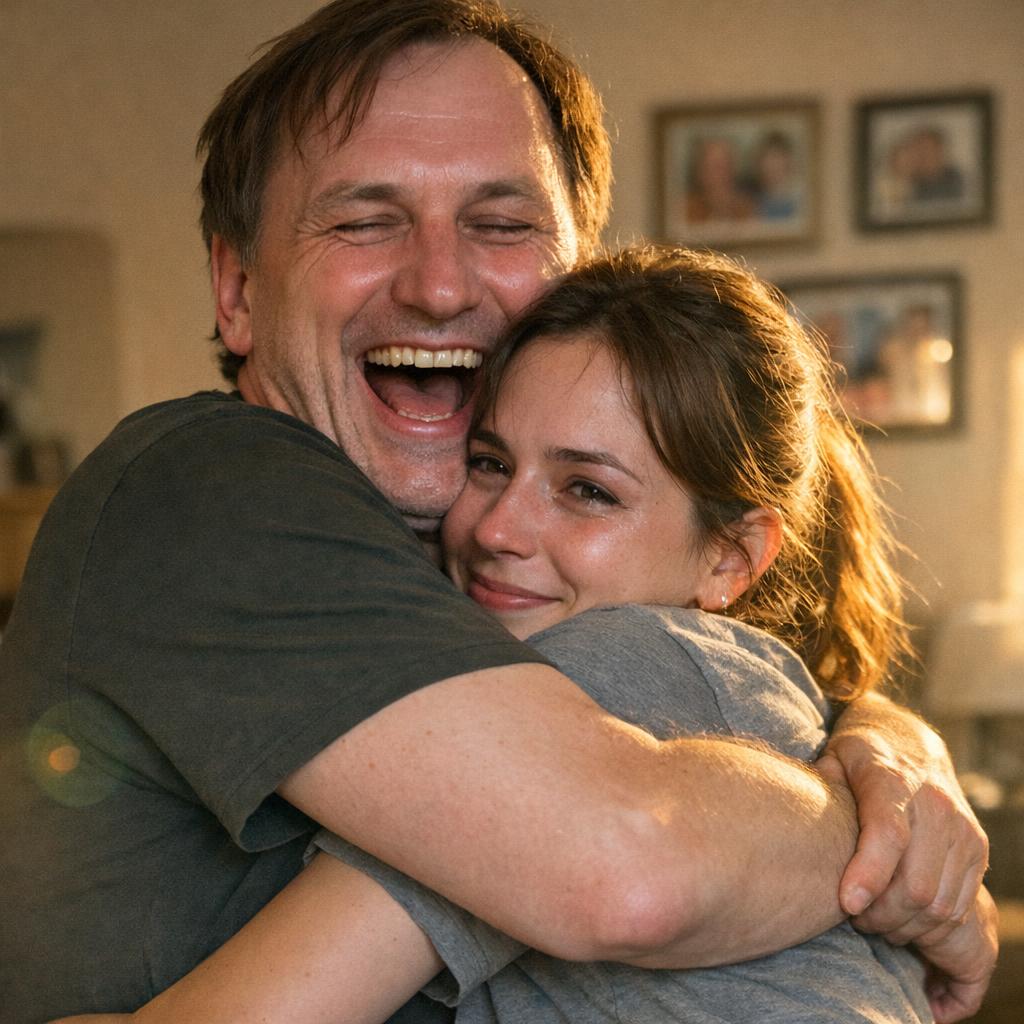 Image by RM AI
The Holiday Dinner
I spent three days cleaning my apartment before Thanksgiving, as if scrubbing baseboards could somehow erase twenty-eight years of family dysfunction. When I texted the invitation to Mom, her response was a single 'I'll think about it' that hung in my messages for two excruciating days before she finally agreed. 'For you,' she added, which we both knew meant 'not for him.' The first thirty minutes were exactly as awkward as you'd expect—Dad bringing flowers nobody knew what to do with, Mom complimenting my decor with the intensity of someone avoiding eye contact with an ex. Vivian, bless her, filled silences with questions about my job while Zoe, my college roommate who'd volunteered as emotional support, kept refilling wine glasses with impressive efficiency. The miracle happened somewhere between turkey and pumpkin pie, when Dad mentioned my third-grade piano recital where I'd frozen halfway through 'Für Elise.' 'You started over three times,' he said, his voice soft with the memory. Mom actually smiled, adding, 'And then played it perfectly the fourth time.' Their eyes met briefly across cranberry sauce, not with romance but with something I hadn't dared hope for—recognition of a shared history that couldn't be erased. I caught Vivian wiping away a tear, and in that moment, I allowed myself to believe that maybe, just maybe, we could build something new from the ruins of what they'd destroyed. What I didn't realize was that the real test would come when Dad pulled out an envelope after dessert.
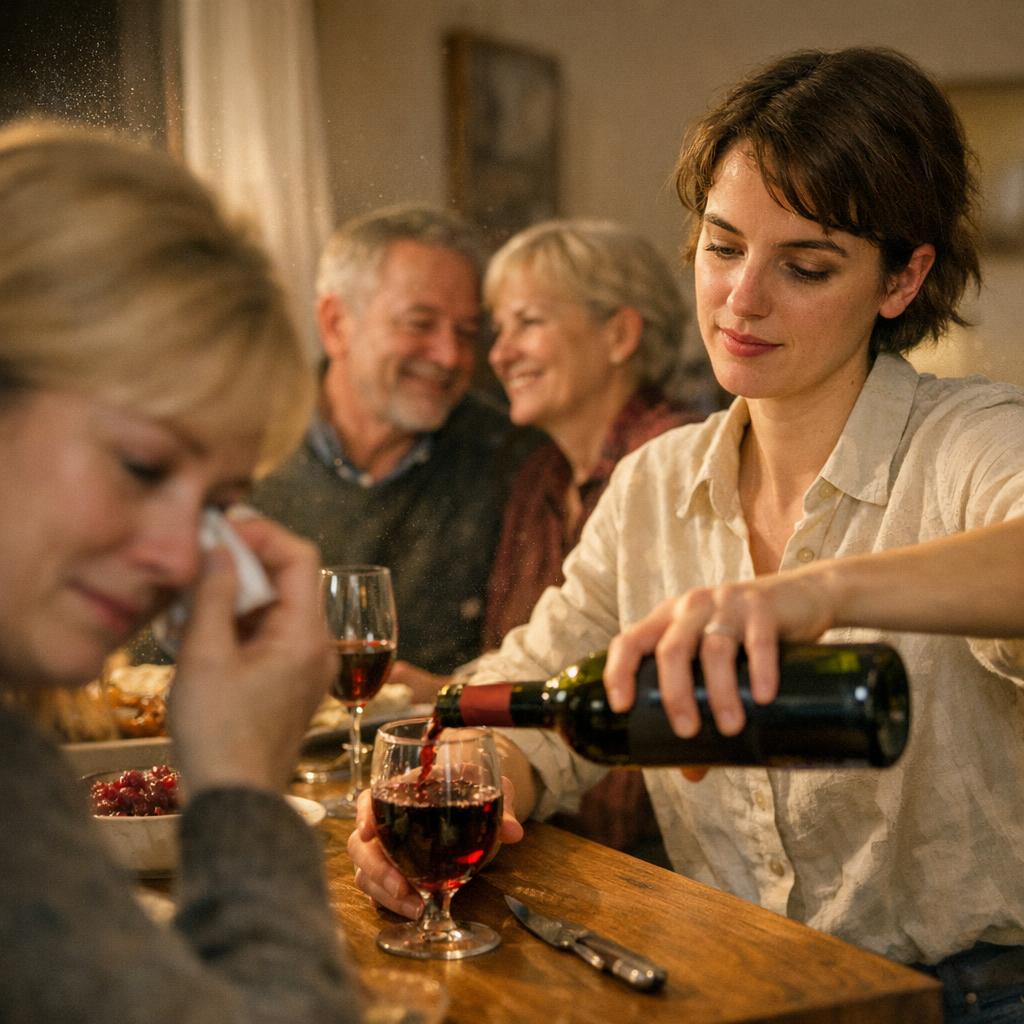 Image by RM AI
The Apology
After everyone had gone home, Mom asked if we could talk privately. I led her to my bedroom, that childhood sanctuary she'd once ruled over, now my adult space filled with choices she hadn't made. She sat on the edge of my bed, hands trembling slightly as she pulled an envelope from her purse. 'I wrote this,' she said, her voice smaller than I'd ever heard it. 'Because I need you to have it in writing.' The letter inside was three pages long, her familiar handwriting covering every inch. 'I can't undo it,' she whispered as I began reading, her voice breaking. 'But I want you to know I understand now what I took from you.' It wasn't a perfect apology—Mom still justified parts of her behavior, still couldn't fully admit that her actions came from jealousy as much as hurt. But there was something raw and honest about seeing her acknowledge, in her own handwriting, how her lie had robbed me of a father, of family, of truth itself. When I looked up, tears were streaming down her face. 'I was so afraid of losing you,' she admitted. 'I never realized I was losing you anyway, just more slowly.' I folded the letter carefully, not yet ready to say I forgave her, but recognizing that this vulnerability—this admission of fault—was something the mother I grew up with would never have allowed herself to show. What I didn't know then was that Dad had been writing a letter of his own.
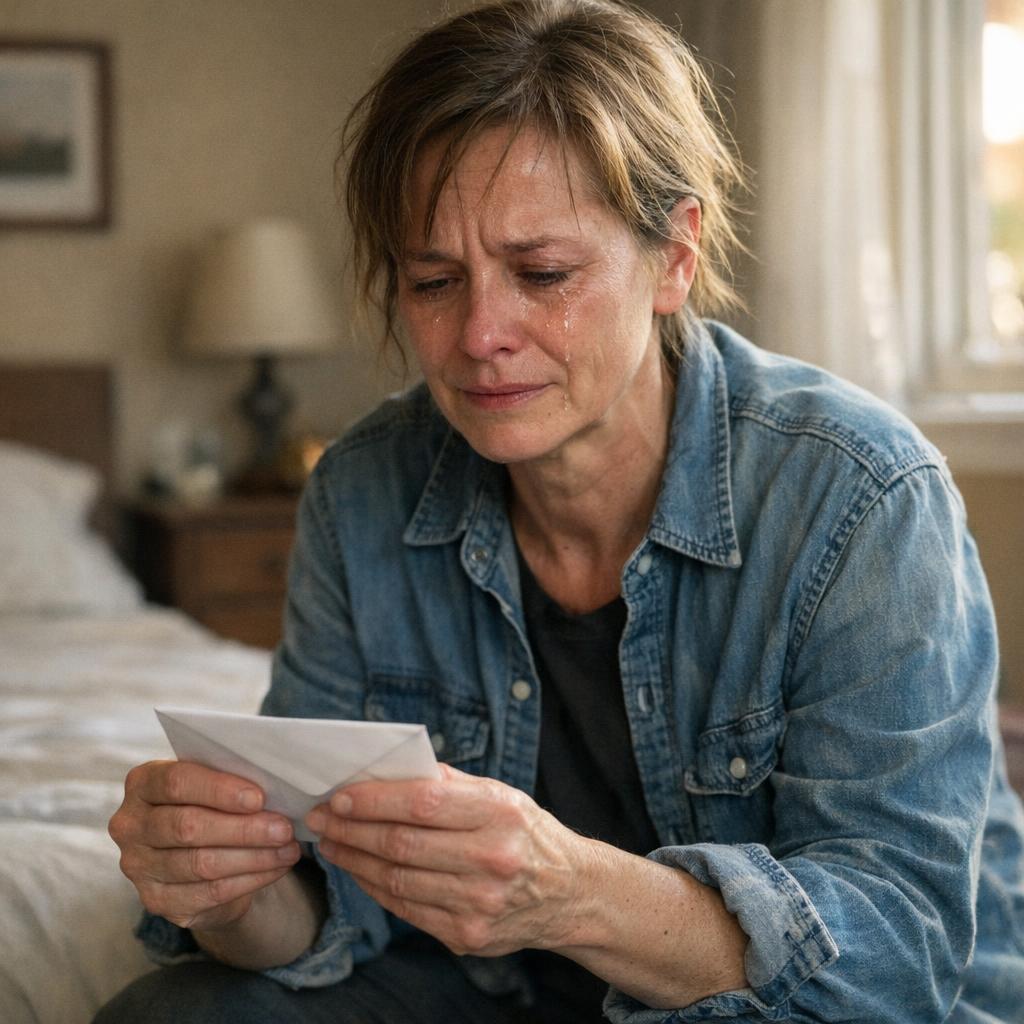 Image by RM AI
The New Reality
It's been exactly one year since that ordinary sidewalk changed everything. Sometimes I still wake up disoriented, wondering if I dreamed the whole thing—the father who wasn't dead, the mother who'd crafted the perfect lie, the family I never knew existed. But then my phone buzzes with Dad's weekly check-in (always Sundays at 7 PM, like clockwork), or Mom stops by with groceries she insists I need, and reality settles back in. The strangest part isn't having a father—it's watching my mother slowly unravel the tight knot she'd been for twenty-eight years. Last week, she actually mentioned Dad without that bitter edge in her voice, just a casual reference to how we both gesture the same way when explaining something. Small victories. I'm learning that healing isn't linear; it's messy and complicated and sometimes we slide backward. Dr. Novak says I'm doing remarkably well, considering. 'Most people,' she told me during our last session, 'would have completely shut down after discovering their entire life narrative was fiction.' But here's the thing about having your foundation ripped away—you get to decide what to build in its place. What I couldn't possibly know then was that the biggest test of our fragile new family was waiting just around the corner.
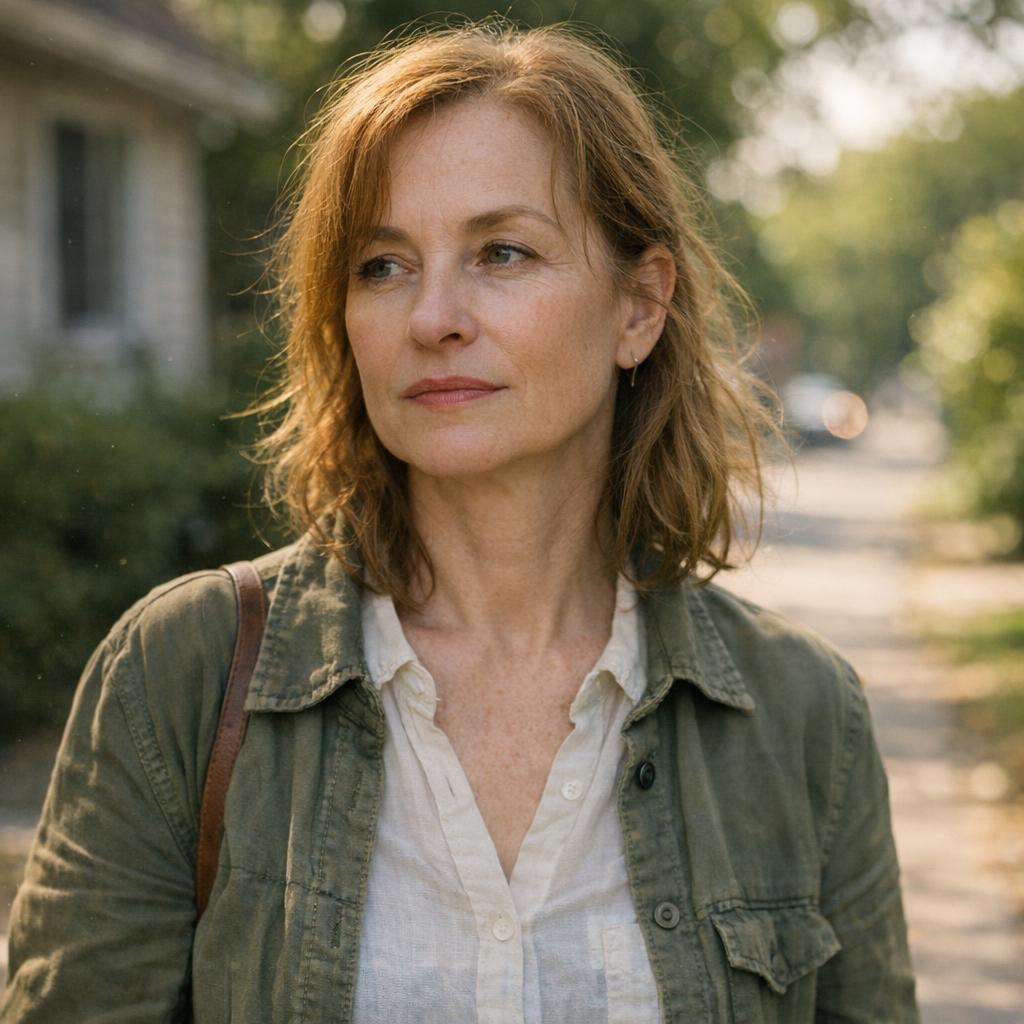 Image by RM AI