I Watched My Younger Coworker Present My Work to Our Biggest Client Until One Question Exposed Everything
I Watched My Younger Coworker Present My Work to Our Biggest Client Until One Question Exposed Everything
The Final Review
I spread the last of the printed slides across my kitchen table just after midnight and told myself I was only doing one final check. That's what I'd said an hour before, too. The coffee had gone cold somewhere around slide thirty-one, and I hadn't bothered to reheat it. Forty-three slides. Six weeks of work laid out under the overhead light — regional customer retention projections, competitive gap analysis, a phased implementation roadmap that I'd rebuilt from scratch after the first draft felt too cautious. I'd pulled numbers from four different data sources and reconciled them by hand because the automated export kept rounding wrong. I'd rewritten the executive summary three times. The recommendations section alone had gone through seven versions before I felt like it actually said something worth saying. I straightened the stack, checked that the page numbers ran clean, and clipped the backup copies together with the kind of care you give something you've earned. The house was quiet. Outside, a car passed slowly down the street, headlights sweeping across the ceiling. I sat back in my chair and let myself feel it — not pride exactly, but something close to it. The solid, tired satisfaction of a thing done right. Six weeks of late nights and skipped evenings had compressed themselves into forty-three slides sitting neatly on my kitchen table, and for the first time in a long while, I felt like it was enough.
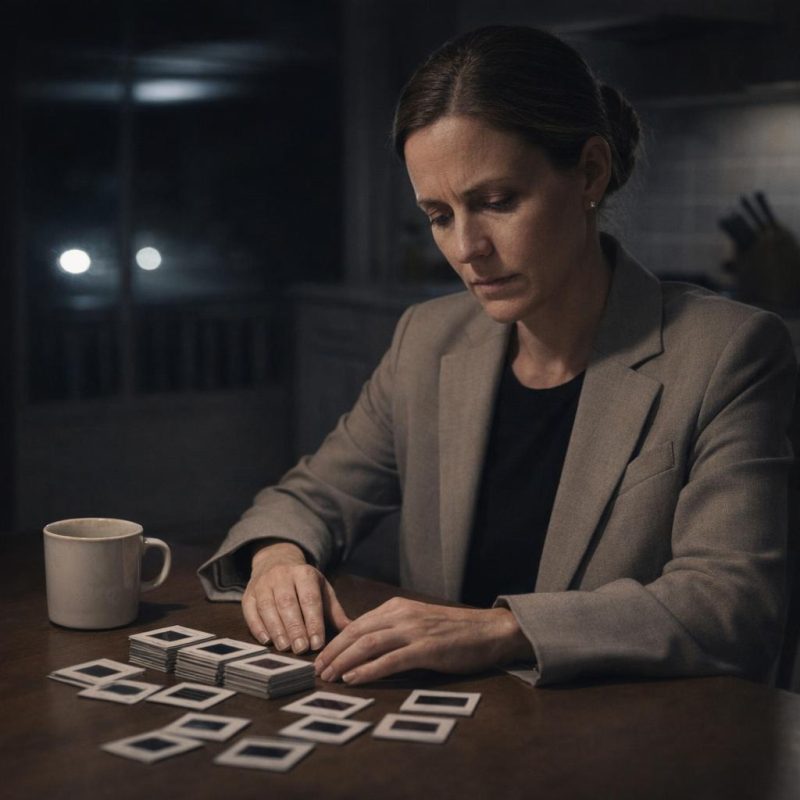 Image by RM AI
The Morning Commute
I loaded the presentation binder and my laptop bag into the back seat with more care than strictly necessary, the way you handle something you've spent weeks building. The morning was gray and cool, the kind of October Tuesday that feels like it means business. Traffic on the 94 was moving, which was its own small mercy. I used the drive the way I always do before a big meeting — running through the opening remarks in my head, thinking about where the clients were likely to push back, rehearsing the transition between the retention data and the implementation timeline so it didn't feel like a gear shift. The regional projections were the strongest part. I knew that section cold. If they asked about the methodology, I was ready. If they wanted to drill into the Southeast numbers specifically, I had the supporting data memorized. Tom had mentioned, almost offhandedly, two weeks ago that the partners were watching this account closely — and that strong performance here could open some doors. I hadn't let myself think about that too directly, but it had been sitting quietly in the back of my mind ever since. I took the downtown exit and followed the familiar route toward the parking structure, checking the dashboard clock. Seven forty-two. The meeting wasn't until nine. I turned into the garage, took the ramp to the third level, and pulled into my usual spot with seventeen minutes to spare.
 Image by RM AI
Missed Dinners
The walk from the parking structure to the building entrance took maybe four minutes, and somewhere in the middle of it my mind drifted back to Thursday night. I'd called my sister Sarah around seven, still at my desk, the retention charts open on one monitor and a half-eaten sandwich on the other side of the keyboard. We'd had dinner plans — a place she'd been wanting to try for weeks. I told her I couldn't make it. Again. There was a pause on her end, the kind that meant she'd already suspected as much, and then she said it was fine, that she understood, that we'd reschedule. She meant it, too. That was the thing about Sarah — she always meant it. She didn't make me feel guilty about it, which somehow made the guilt worse. I'd stayed at my desk until almost eleven that night, reworking the Southeast retention projections until the numbers told a cleaner story. It had been worth it. I believed that. But standing in the cool morning air with my bag over my shoulder and the building entrance ahead of me, I made a quiet promise to myself that after today, after this meeting, I would call her and actually pick a date and keep it. I pushed through the glass door and let the lobby's warmth close around me, still carrying the sound of her voice on the phone — patient and easy, the way it always was.
 Image by RM AI
The Familiar Hallway
The executive floor was quieter than I expected for a morning with a major client on the calendar. A few colleagues were drifting in, coffee cups in hand, exchanging the kind of low, unhurried greetings that happen before the day fully starts. Someone near the copy station gave me a nod. I nodded back and kept moving. I'd been in this building for eleven years, and there was a particular quality to the hallways in the early morning that I'd always liked — the way the overhead lights hadn't fully warmed up yet, the carpet muffling footsteps, the sense of the day still being unwritten. I shifted my bag to my other shoulder and kept my pace steady. The presentation materials were organized exactly the way I wanted them: binder on top, backup USB clipped to the inside pocket, printed leave-behinds rubber-banded by section. I'd thought through every contingency I could imagine. Projector fails — I had the PDF on my phone. Client asks for hard copies — I'd printed twelve sets. Someone challenges the Southeast data — I had the source files on the drive. The hallway curved slightly to the left past the HR suite, and then straightened out again, and there at the far end, maybe sixty feet ahead, was the conference room door, closed and unremarkable, waiting the way important things sometimes do.
 Image by RM AI
The Door Opens
I stopped just outside the conference room door and took a slow breath. This was the part I never quite got used to — the moment right before, when everything was still potential. I'd done hundreds of presentations over the years, and the small flutter in my chest never entirely went away. I didn't mind it anymore. It meant I cared. I shifted my bag, put my hand on the door handle, and pushed it open. The room was not empty. The lights were already up, the projector already running, and the screen at the front of the room already glowing with a slide I recognized immediately — the title slide, the one I'd spent forty minutes getting the font weight exactly right on. And standing in front of it, clicker in hand, running through something under her breath like she was rehearsing, was Brittany. She was dressed sharply, hair done, already in full presentation mode at eight in the morning. She looked up when the door opened. For a half second, something crossed her face — surprise, maybe, or something adjacent to it — and then the practiced smile came up like a shade being drawn. She said good morning like it was the most natural thing in the world. I stood in the doorway holding my binder, looking at my title slide on the screen behind her, and I could not immediately find a single word to say.
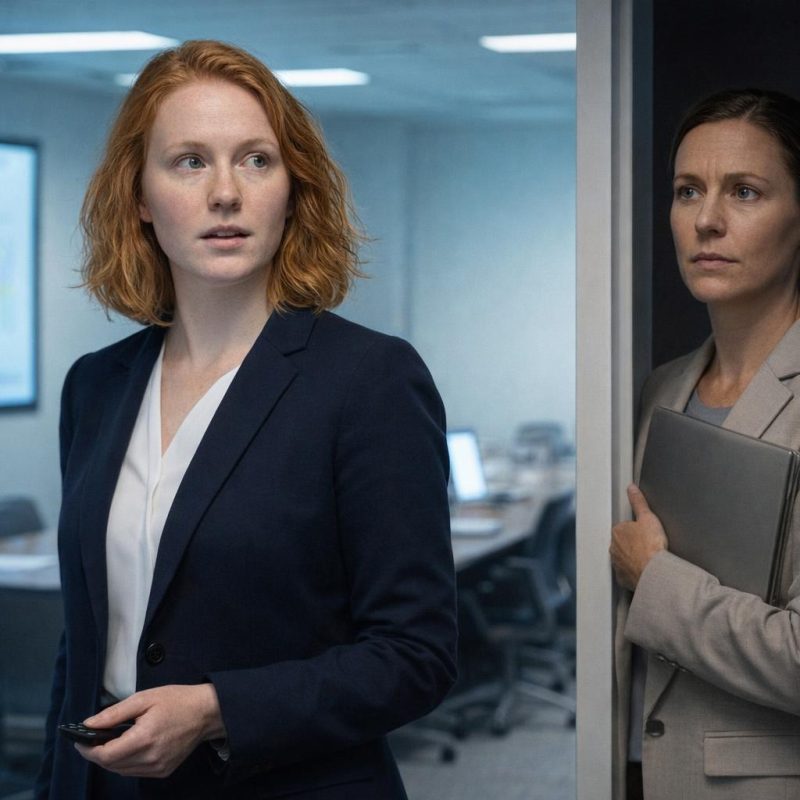 Image by RM AI
The Presentation Begins
I don't know how long I stood there. Long enough that a woman near the window glanced over at me, then back at Brittany. The room had filled while I wasn't paying attention — clients arranged along one side of the conference table, executives on the other, everyone settled in with their coffee and their notepads like the meeting had already begun, because it had. Brittany had moved back to the front of the room and was speaking, her voice carrying the easy confidence of someone who had done this a hundred times. Marianne sat near the center of the table, a legal pad in front of her, pen in hand. Michael was two seats down, nodding at something Brittany had just said. I stepped inside and let the door close behind me. Brittany was walking through the opening strategy section — the one I'd restructured twice because the original sequencing buried the most compelling data point. She used the same framing I'd landed on after the second rewrite. The same transition phrase. The same pause before the retention figure, the one I'd put there deliberately because I knew it would land harder with a beat of silence in front of it. I stood near the back wall with my binder pressed against my chest, listening to the cadence of my own sentences coming out of someone else's mouth.
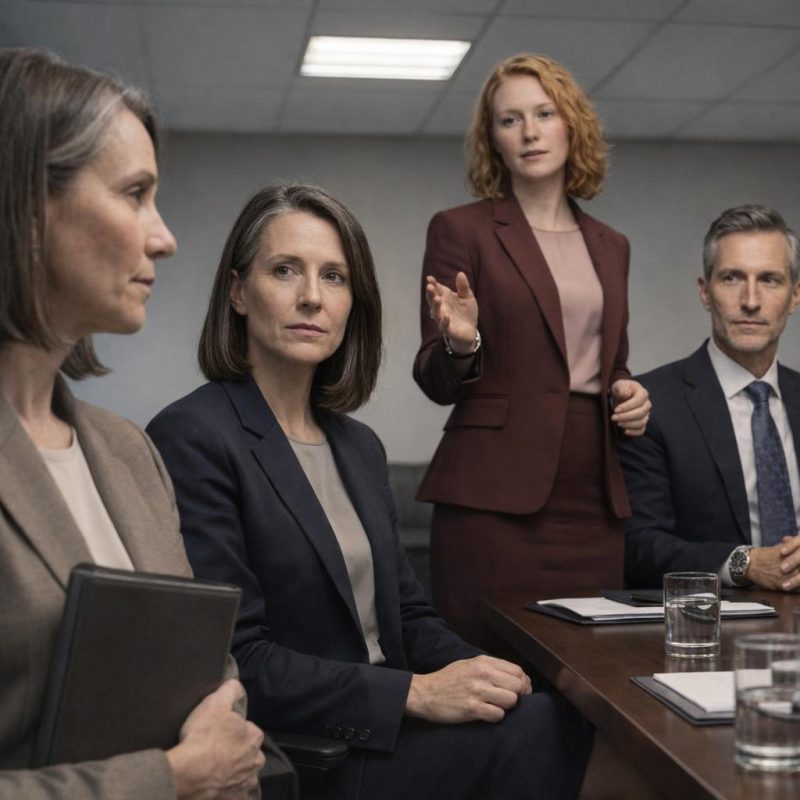 Image by RM AI
The Approving Glances
I made myself move to the side of the room rather than stand there like a piece of furniture. Brittany didn't miss a beat. She advanced to the next slide — the regional retention chart, the one I'd rebuilt three times to get the color coding right — and two of the executives on the far side of the table leaned forward slightly, the way people do when a visual actually lands. Michael nodded again, the slow deliberate nod of someone signaling approval to the room. A man I didn't recognize near the window made a note. Nobody looked at me. Or rather, a couple of people glanced in my direction the way you glance at someone who's come in late to a movie — briefly, without real interest, and then back to the screen. I was background. I was the person who'd carried the coffee in. I'd felt that particular invisibility before in this building, and I'd learned to absorb it without letting it show on my face. I kept my expression neutral and watched Brittany move through the slide with the ease of someone who had lived inside this material. Maybe she had. I didn't know yet what I was looking at. I was still trying to find an explanation that made sense. Then Marianne's pen stopped moving, and her gaze traveled slowly from Brittany across the length of the table until it found me, and it stayed there.
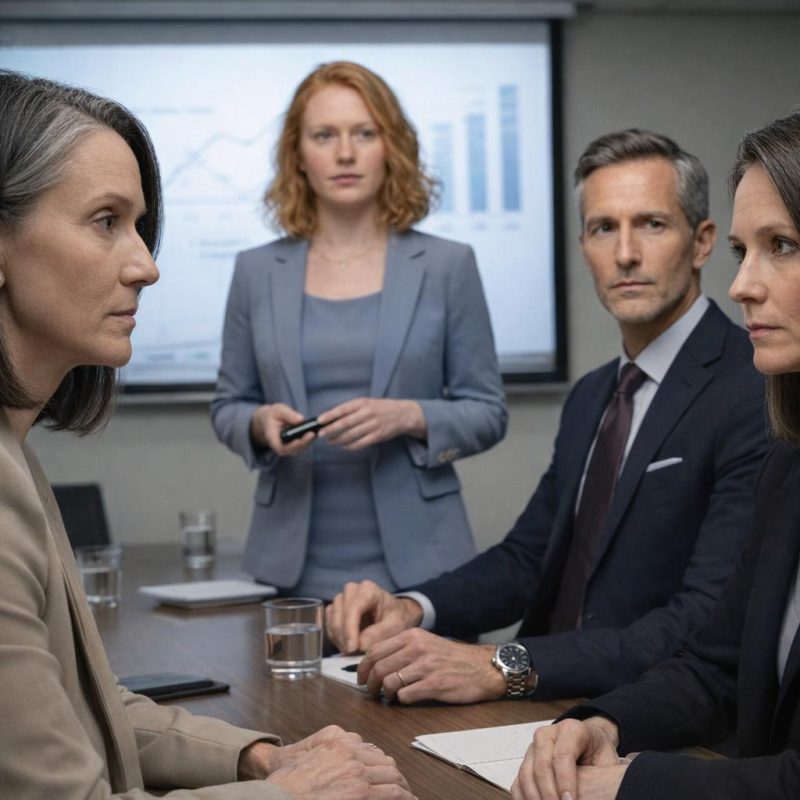 Image by RM AI
The Back Row
I found an empty chair near the back corner and sat down quietly, setting my binder on the table in front of me. Tom was three seats to my left. He glanced over when I sat down — a quick, sideways look — and then turned back toward the front of the room without a word. His jaw was set. He didn't look surprised to see me, which was its own kind of information, though I didn't know what to do with it yet. I told myself to wait. To watch. To not do anything I couldn't take back. Brittany was moving into the implementation section now, the part I'd spent the most time on, the part where I'd had to make actual judgment calls about sequencing and resource allocation rather than just reporting data. She advanced the slide. The chart that came up was mine — I'd built it in a spreadsheet over two evenings, adjusting the timeline three times until the phasing made operational sense. I watched her gesture toward it with the clicker, explaining the rationale in clean, confident sentences. And then she said it. The exact phrase I'd typed at two in the morning, the one that had come to me after I'd given up trying to be elegant and just wrote what I actually meant: *sustainable adoption requires organizational patience, not just organizational change*.
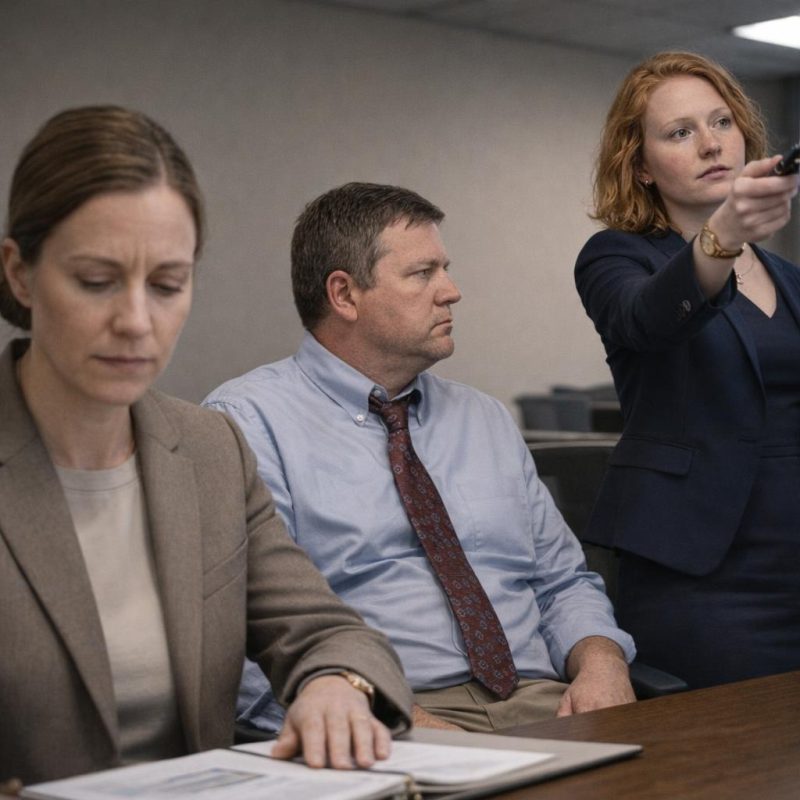 Image by RM AI
Word for Word
I kept my hands flat on the binder in front of me and made myself breathe evenly. Brittany had moved into the customer segmentation section now, and I recognized every word before she finished saying it. There was a phrase in the third bullet — something about behavioral clustering across lifecycle stages — that I'd rewritten four times before landing on that exact construction. I remembered the night I wrote it because I'd skipped dinner with my sister Sarah to finish it, and she'd texted me twice asking if I was okay. Brittany said it without pausing, without any of the hesitation you'd expect from someone working through an idea for the first time. The executives were taking notes. Michael had his pen moving. I watched the room absorbing it all and felt something cold and steady settle in my chest — not panic, not yet, just a kind of grim recognition. The chart she'd displayed three slides back, the one with the phased rollout timeline, I'd spent three nights on that. Three nights adjusting the intervals until the sequencing actually held up under scrutiny. Nobody in that room knew that. Nobody except me. Brittany clicked the remote again, and the slide changed, and there it was — the regional retention model, the most technically complex piece of the entire proposal, the one I'd built variable by variable from raw data nobody else had touched.
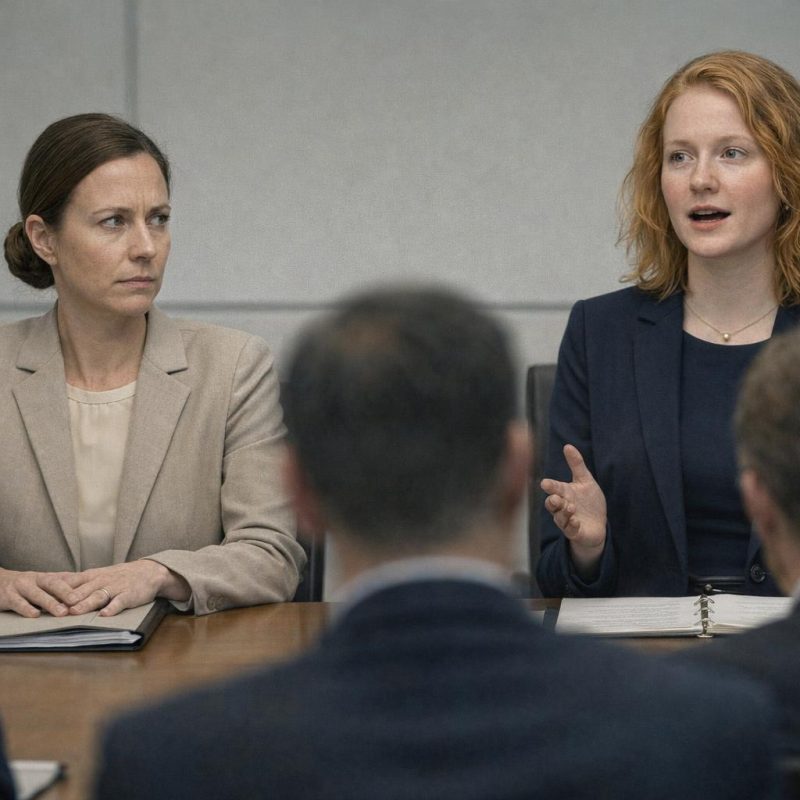 Image by RM AI
The Observer
Brittany was explaining the retention model's underlying logic now, walking through it in broad strokes, and I noticed she was staying close to the slide text rather than elaborating. That was something I filed away without quite knowing why. What I was more aware of, though, was Marianne. She was seated across the table and two chairs down from the head, and she had a legal pad in front of her that she wasn't writing on anymore. At some point during the technical section, her attention had shifted. Not to Brittany — or not only to Brittany. She kept glancing toward the back of the room. Toward me. The first time I caught it, I thought it was coincidence. The second time, I told myself she was probably just scanning the room the way senior people sometimes do in meetings, taking stock of who's present. But then it happened again, and this time she didn't look away immediately. She held it for just a beat longer than felt accidental, her expression careful and unreadable. I didn't move. I didn't change my posture or look away first. I just held her gaze for that half second and then let my eyes drift back to the front of the room like nothing had happened. But something had shifted, even if I couldn't name it yet. The quiet weight of being watched by someone who seemed to be looking for something specific settled over me and stayed.
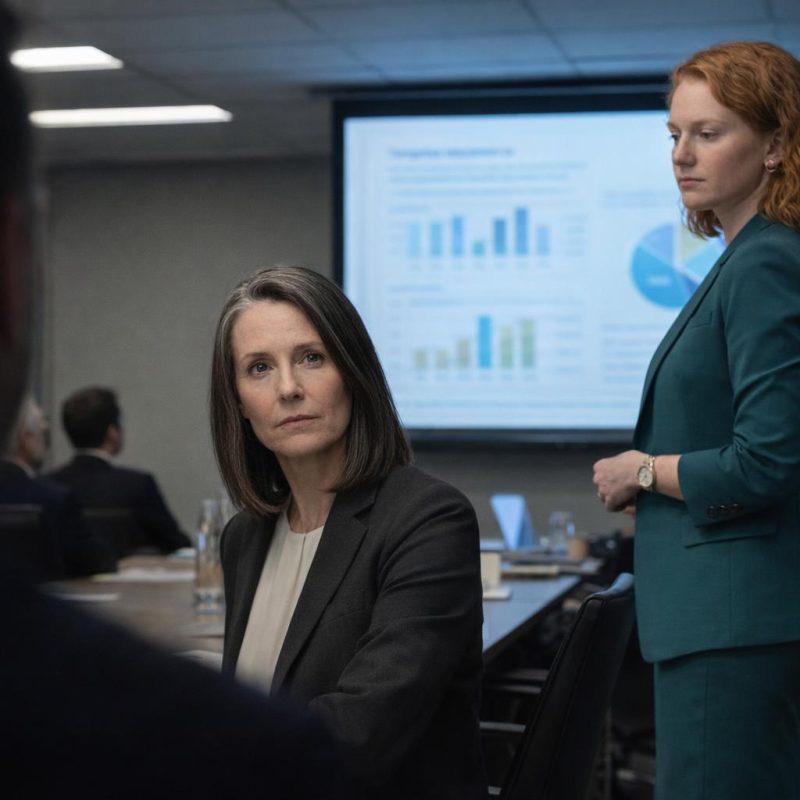 Image by RM AI
The Question
Brittany had just finished walking through the retention model's regional projections when a hand went up across the table. It was one of the clients — a woman in a charcoal blazer who'd been taking careful notes throughout — and her question was direct. She wanted to know how the regional variance calculations accounted for the difference in churn rates between the coastal and interior markets, and whether the model had been stress-tested against the Q3 attrition data they'd shared in the preliminary brief. It was a reasonable question. A good one, actually. I knew the answer without having to think about it because I'd wrestled with exactly that problem during the second week of building the model, and I'd made a specific methodological choice that I could explain in about four sentences. Brittany looked at the slide. She said something about the model being designed to capture regional nuance, which was true but wasn't an answer. Then she said something about the data inputs being calibrated to client-specific parameters, which was also technically true and also not an answer. Her sentences got shorter. There was a pause that stretched a beat too long, and she tried again with something about the variance thresholds being set conservatively to allow for flexibility. The woman in the charcoal blazer nodded slowly, the way people do when they're being polite rather than satisfied. The room had gone very quiet. Brittany's voice had trailed off somewhere in the middle of her last sentence, and the silence that followed sat in the air like something no one wanted to touch.
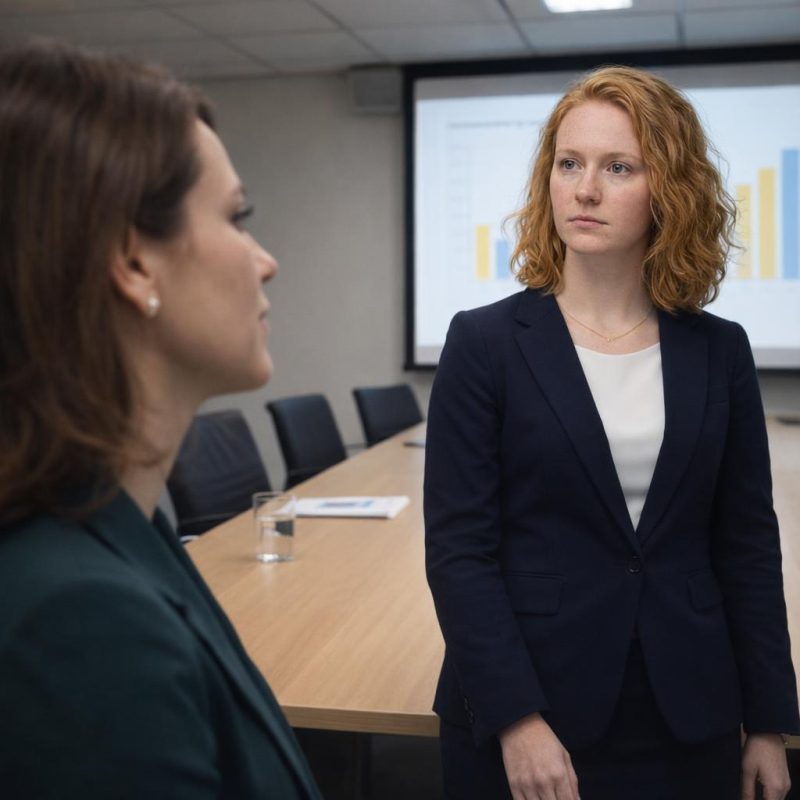 Image by RM AI
The Direct Question
Nobody spoke for a moment. Michael shifted in his seat. Tom had gone very still. Brittany was standing beside the projector with the clicker in her hand, and she looked composed from a distance, but I could see the slight tension in her jaw from where I sat. Then Marianne set her pen down on the legal pad — a small, deliberate sound in the quiet room — and turned. Not toward Brittany. She turned toward the back of the room, toward me, and when her eyes found mine they were steady and direct, the kind of look that doesn't leave room for misreading. She didn't raise her voice. She didn't make a production of it. She just asked, clearly enough for everyone in the room to hear, whether I was the one who had actually written the proposal. Every head in the room turned. I felt it before I fully processed it — that collective shift of attention, a dozen pairs of eyes moving from the front of the room to the back corner where I was sitting with my binder and my flat hands and my careful breathing. Tom's face had gone unreadable. Michael's expression had tightened into something I couldn't quite name. Brittany hadn't moved, but the stillness in her had changed quality entirely. And Marianne was still looking at me, waiting, with a patience that felt like it had been there for a while.
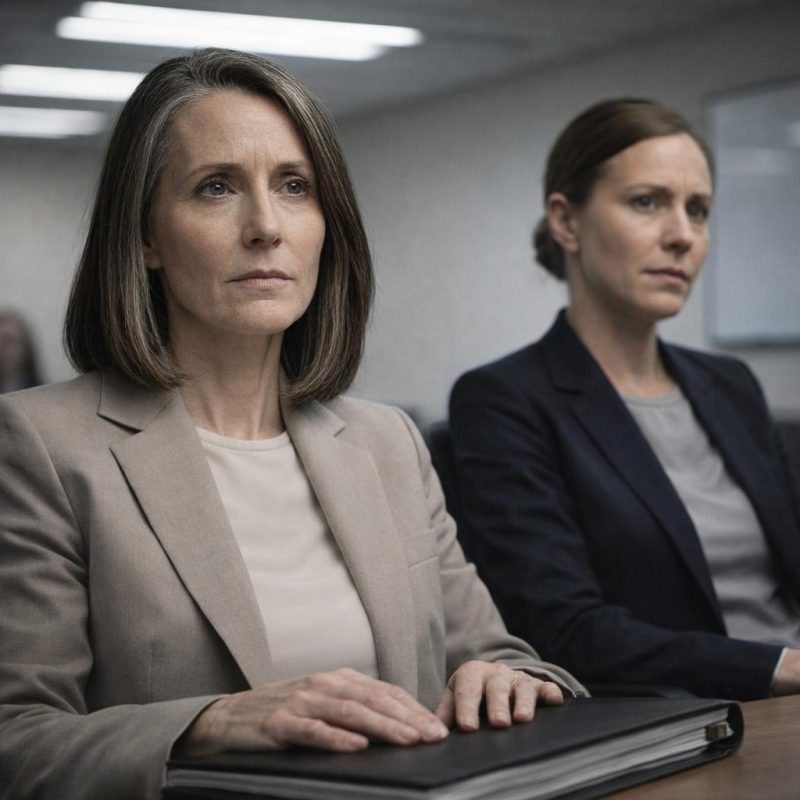 Image by RM AI
The Diplomatic Response
I took a breath and kept my voice even. I said that the proposal had been a team effort, that there had been a number of people involved in pulling it together, and that Brittany had done a lot of work to bring it to this stage. Every word of that was technically defensible. None of it was the whole truth, and I think everyone in the room understood that, including me. Marianne didn't look away. She had the kind of stillness that doesn't require movement to communicate attention — she was simply watching me, the way you watch someone when you're not just listening to what they're saying but also to what they're not saying. I could feel Tom somewhere to my left without looking at him. I could feel the room holding itself in a kind of suspended patience. Brittany hadn't spoken. She was still standing at the front, and I was aware of her the way you're aware of something in your peripheral vision that you're deliberately not turning toward. I'd chosen the diplomatic answer because I didn't know yet what the room would do with a different one, and because I'd spent enough years in corporate settings to know that the first thing you say in a moment like that tends to define everything that comes after. But sitting with the sound of my own careful, measured, thoroughly diplomatic response, I was already aware of how much it had cost me to say so little.
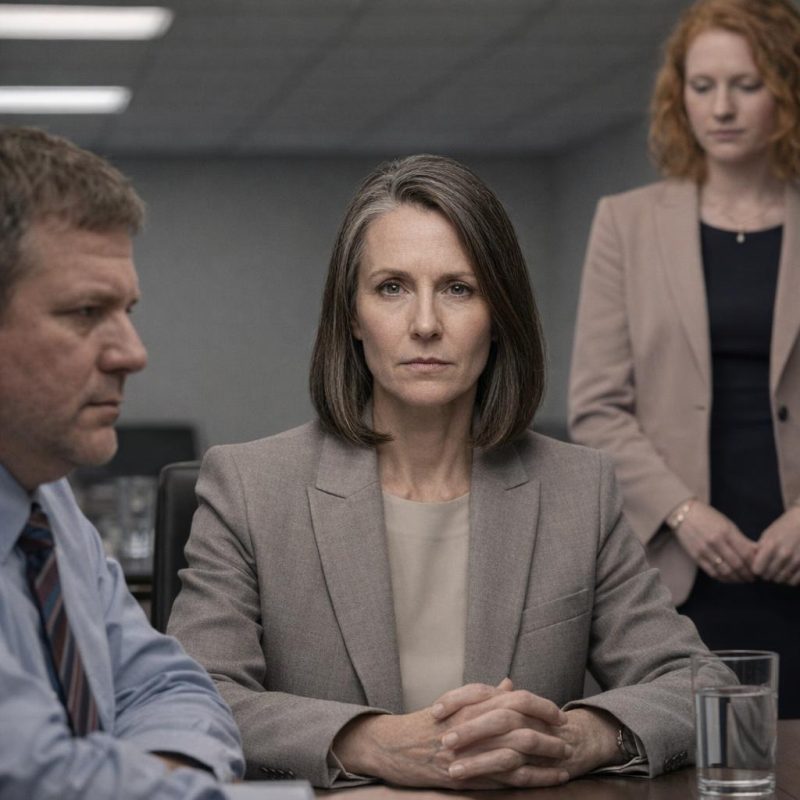 Image by RM AI
The Technical Questions
Marianne let my answer settle for exactly one beat, and then she asked her next question. She wanted to know the specific rationale behind the three-tier segmentation framework — why three tiers rather than four, and how I'd weighted the behavioral indicators against the transactional data. I answered her. I told her that four tiers had been my first instinct too, but that the client's internal reporting structure mapped more cleanly onto three, and that collapsing the middle two segments had actually improved the model's predictive accuracy by reducing noise in the mid-range cohort. She nodded and asked about the regional variance methodology. I explained the decision to use a rolling twelve-month baseline rather than a fixed annual one, and why that mattered for markets with seasonal volatility. She asked about the data sources for the coastal attrition figures. I told her exactly which datasets I'd pulled and why I'd weighted the most recent two quarters more heavily. Each question came cleanly and I answered it the same way — not because I was performing, but because I'd built the thing and the answers were just there, the way answers are when you've actually done the work. Brittany hadn't said a word. She was still standing near the projector, and at some point the other clients had stopped looking at her and started looking at me. There was something almost restful about answering questions about work I knew completely, from the inside out, without having to reach for anything.
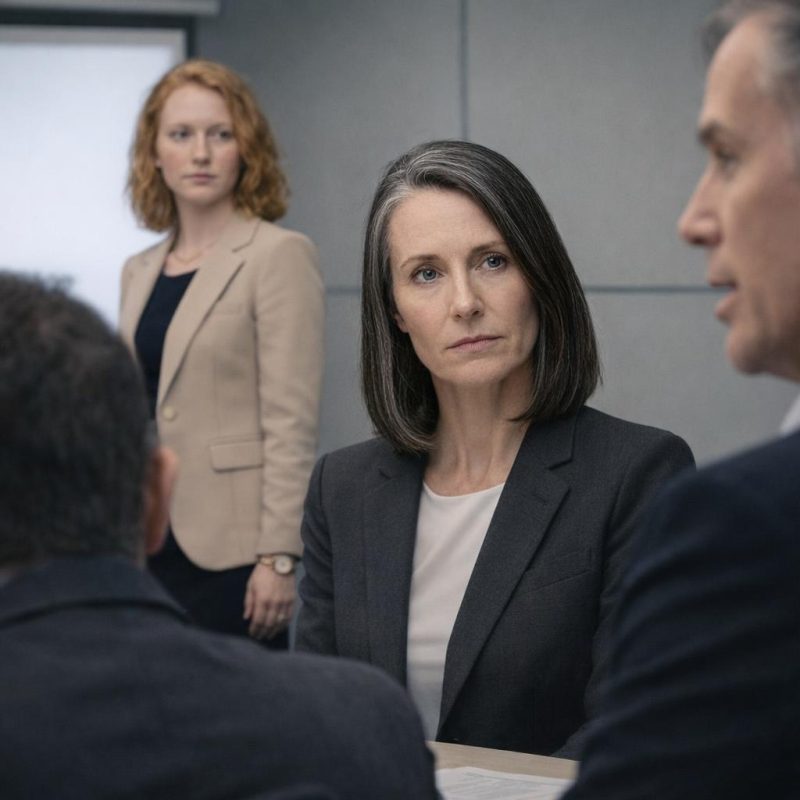 Image by RM AI
The Shift
At some point the meeting stopped being Brittany's presentation and became something else. I'm not sure exactly when it happened — there wasn't a single moment I could point to — but by the time the third client directed a question to me without even glancing toward the front of the room first, the shift had already completed itself. I answered each one. The implementation sequencing question, the one about stakeholder communication cadence, the follow-up about budget phasing in the second quarter — I walked through all of it, and the room followed. Marianne was nodding at intervals, not the polite kind of nodding but the kind that means someone is tracking and confirming. Michael had stopped writing and was watching with an expression I couldn't fully read, something between calculation and discomfort. Tom hadn't moved in several minutes. I was aware of all of it in the background, the way you're aware of weather while you're focused on something else. What I was focused on was answering the questions accurately, because the work deserved that, and because I'd earned the right to speak to it. I felt vindicated and wary in equal measure, which is not a comfortable combination. Then, in the space between one question and the next, I noticed that Brittany had stopped standing. She had moved to the chair beside the projector and sat down in it, the clicker still in her hand, her eyes somewhere near the middle distance.
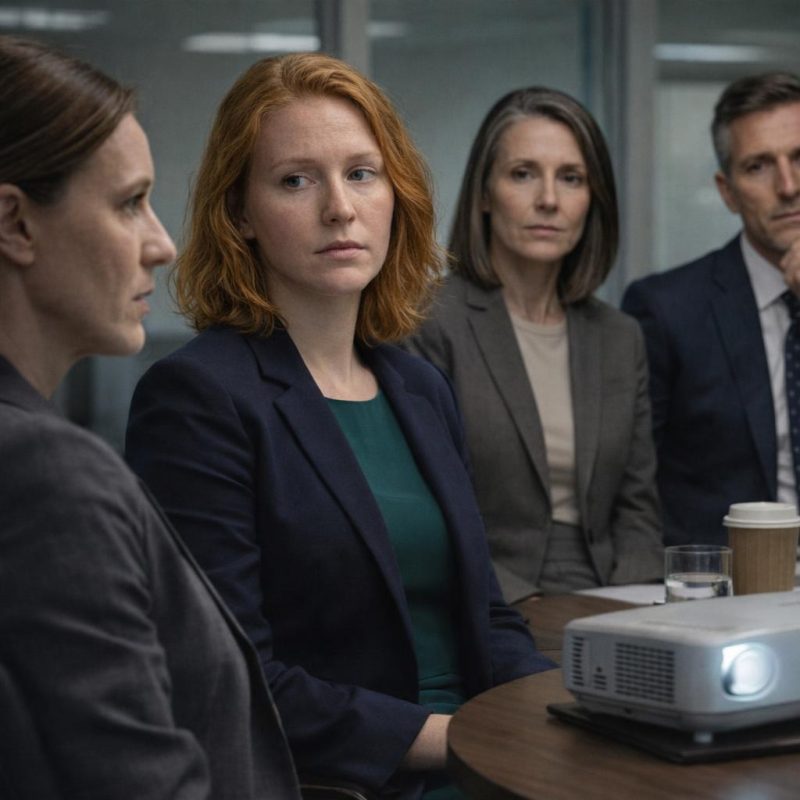 Image by RM AI
The Awkward Ending
Marianne was the one who brought the meeting to a close. She thanked the room generally and then turned to me specifically and said the proposal had given them a great deal to work with, and that she looked forward to continuing the conversation. I thanked her and meant it. There was a round of handshakes, the kind that happen at the end of meetings where something significant has occurred but no one is quite ready to name it yet. The clients gathered their materials and filed out in small clusters, already talking among themselves in low voices. Brittany left quickly. I noticed that — she didn't stop to speak to anyone, didn't linger near the door the way people do when they want to be seen making a graceful exit. She was just gone, the door swinging shut behind her before most people had finished standing up. I stayed at the back of the room and collected my things slowly, giving myself a moment to let the last hour settle. The binder went into my bag. The pen went into my jacket pocket. I straightened up and looked toward the door, ready to leave. Tom was standing beside it, not moving toward the exit, not speaking to anyone. He was watching me with an expression that was flat and unreadable and not remotely friendly, and he showed no sign of stepping aside.
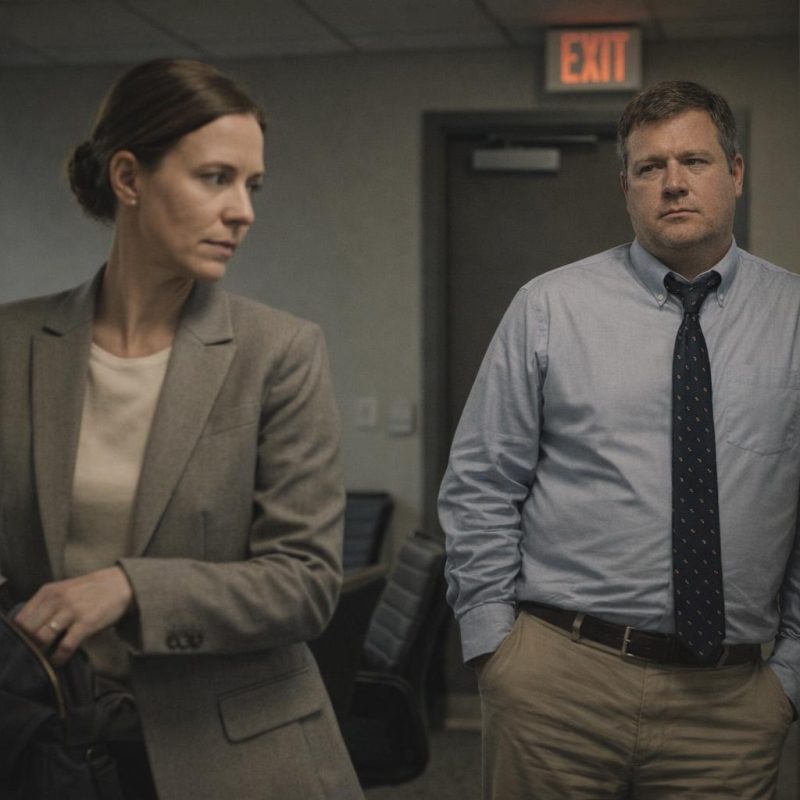 Image by RM AI
The Hallway Conversation
He didn't wait until we were fully out of earshot. Tom steered me toward the far end of the hallway with a hand that barely touched my elbow, and the moment the conference room door was out of sight he turned and started talking in a low, clipped voice that made it clear he wasn't asking. He said there had been a miscommunication about responsibilities. He said these things happen when roles aren't clearly defined upfront. I stood there and listened and felt something tighten in my chest that wasn't quite anger yet, but was getting there fast. He said I should have clarified my involvement before the meeting, that presenting without coordinating with the team created confusion. I asked him, as evenly as I could manage, what exactly I should have clarified, since I had been the one building the presentation for three weeks. He didn't answer that directly. He looked past my shoulder and said that what mattered now was moving forward without making things more complicated than they needed to be. The tightening in my chest moved up into my jaw. I thought about the late nights, the missed dinners with my sister Sarah, the binder I'd carried into that room. He straightened his jacket and said, in a tone that was almost gentle, that I should think about what was best for the team before I decided to take this any further.
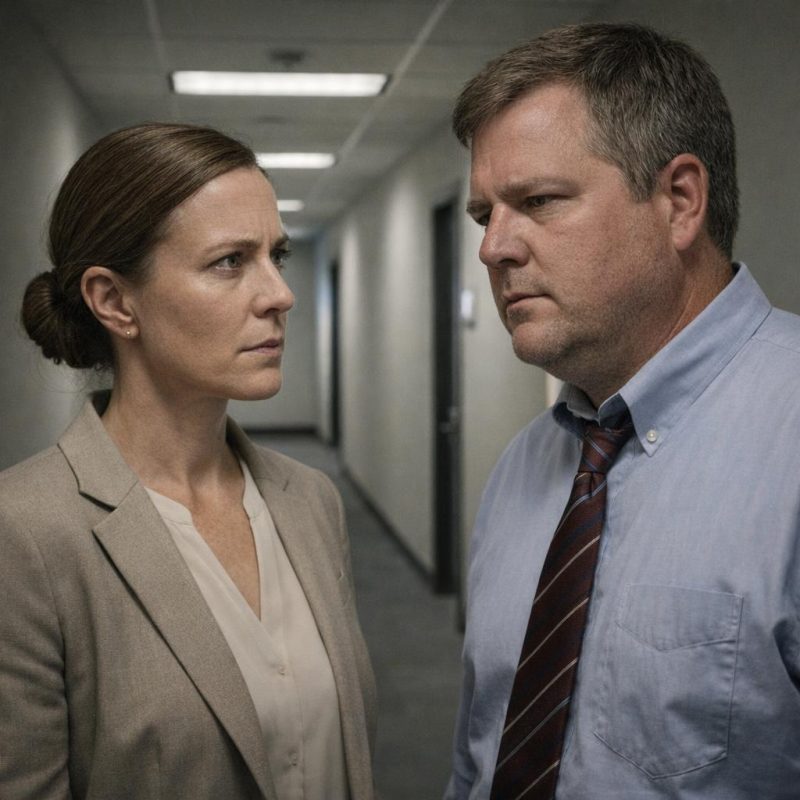 Image by RM AI
The Missing Emails
I went straight back to my desk and opened the shared project folder before I'd even set my bag down. I knew exactly where the emails should have been — the thread where Tom had formally assigned me as lead author on the client proposal, the follow-up where I'd confirmed scope and timeline, the message where I'd submitted the first full draft for review. I'd referenced those emails a dozen times over the past three weeks. I clicked through to the folder. They weren't there. I checked the subfolder. I checked the archive. I searched by date range, then by subject line, then by my own name in the sender field. Nothing. My hands were very still on the keyboard while I did this, which I noticed because they didn't feel still. I pulled up my own sent folder and there they were — my copies, intact, timestamped, exactly as I remembered sending them. But the shared space where the whole team should have been able to see them was empty. I sat back in my chair and looked at the screen for a long moment. I wasn't sure yet what had happened or how. What I did know was that the absence felt wrong in a way that a simple technical glitch didn't quite explain. The folder where my authorship had been documented in writing now held nothing but that blank, indifferent space.
 Image by RM AI
The Late Afternoon
The office thinned out around me the way it always does after five — chairs pushed back, coats pulled on, the low murmur of goodnight conversations drifting toward the elevators. I stayed where I was. I had the presentation slides open on one monitor and the empty shared folder open on the other, and I kept moving my eyes between them like one of them might eventually offer an explanation. Tom's voice kept coming back to me in pieces. Miscommunication. Roles not clearly defined. What's best for the team. I thought about how smoothly he'd said all of it, how practiced it had sounded, and something about that bothered me more than the words themselves. The missing emails bothered me too, in a different way — a quieter, colder way. I couldn't prove anything yet. I didn't have enough to say with any certainty what had happened or why. But I had my sent folder, and I had my memory, and I had the feeling that sitting still and waiting to see how this resolved itself was not a strategy I could afford. The last light clicked off in the far corner of the office. Someone called out a goodbye from near the door and I raised a hand without turning around. In the quiet that followed, something in me stopped feeling uncertain and started feeling focused instead.
 Image by RM AI
The First Search
I started with the archived email folders, the ones most people forget exist after a project closes. I wasn't sure what I was looking for exactly — just something that didn't fit, something that might explain how the shared folder had ended up so clean. I searched by project name, by client name, by date ranges that bracketed the weeks I'd spent building the proposal. Most of what came up was routine — scheduling confirmations, file-sharing notifications, the usual administrative noise. I checked the metadata on the shared presentation file, looking at who had accessed it and when. Brittany's name appeared more recently than I would have expected, given that she'd claimed to have been working on it for weeks. I noted that and kept going. I searched for any communications that referenced the client meeting directly, filtering by recipients to see who had been included in planning conversations I might have missed. That's when I found it — a thread I had never seen before, timestamped six days before the presentation, with Tom's name in the sender field and a recipient list that did not include me anywhere on it.
 Image by RM AI
The Pattern in the Files
I read through the thread twice, slowly. It was six emails long. Tom had initiated it, and the replies came from Michael and Brittany, back and forth, discussing how the client presentation would be handled. My name appeared once, in a context that described me as a resource who had been pulling together background research. Not lead author. Not primary presenter. Background research. I sat with that for a moment. The timestamps told their own story — the first message had been sent on a Tuesday evening, around seven-thirty, which was right around the time I remembered staying late to finish the competitive analysis section. I went back further then, searching for other threads with similar recipient patterns. I found two more, from earlier in the quarter, both involving projects I had contributed to significantly. Both had the same shape — Tom, Michael, sometimes Brittany, conversations about direction and credit and client-facing roles, and my name either absent or reduced to something peripheral. I couldn't say yet what it meant or how far back it went. But the pattern of those omissions sat with me in a way I couldn't easily set aside, like a word you suddenly notice is missing from a sentence you've read a hundred times.
 Image by RM AI
The Quiet Office
I was still at my desk when I noticed Jennifer moving toward me. The office was nearly empty by then — just a few people scattered at distant workstations, nobody paying attention to much of anything. Jennifer walked slowly, the way people do when they're trying not to look like they're walking toward someone on purpose. She glanced toward the far end of the floor before she reached me, then toward the elevator bank, and I watched her do it without making it obvious that I was watching. She stopped beside my desk and said, quietly, that she hoped she wasn't interrupting. I told her she wasn't. She asked if I had a few minutes, and then she paused and looked around again and said maybe somewhere a little more private would be better. There was something careful in the way she held herself — shoulders slightly drawn in, voice kept low even though there was no one close enough to hear. I'd worked alongside Jennifer for two years and I'd always found her steady and conscientious, not someone who sought out drama or manufactured urgency. Whatever she wanted to say, she'd been carrying it for a while before she walked over. I closed my laptop and stood up, and the weight of her careful, deliberate approach stayed with me as we moved toward the empty conference room at the end of the hall.
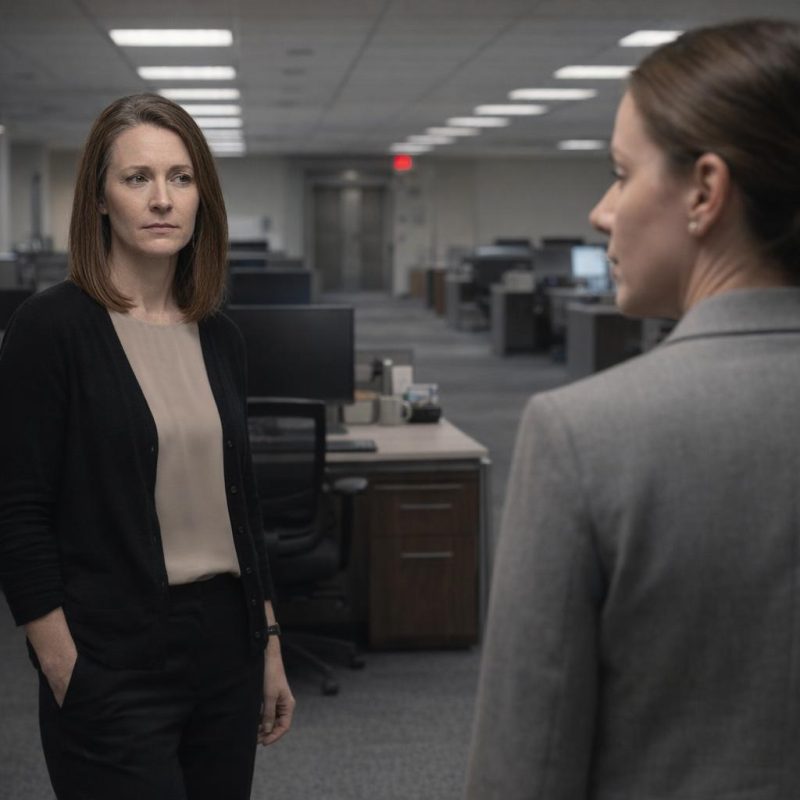 Image by RM AI
The Conference Room Confession
We sat across from each other at the small table in the corner conference room, the blinds half-drawn, the lights on their dim evening setting. Jennifer folded her hands on the table and looked at them for a moment before she started talking. She said it was about a project from about four months ago — a market segmentation analysis she had led for one of the regional accounts. She'd put in six weeks on it, she said, built the framework herself, written the executive summary. About halfway through, Brittany had come to her and asked if she could review the draft materials, said she wanted to understand the methodology so she could support the presentation if questions came up. Jennifer had said yes. She'd thought it was a reasonable request. A few weeks later, Jennifer said, she sat in a meeting and listened to Brittany walk the client through the key recommendations as though she had developed them. Jennifer had said nothing at the time. She'd told herself maybe she was misremembering who had contributed what, maybe she was being oversensitive. But she hadn't misremembered. She knew her own work. She looked up at me then, and I felt the air in the room go very still, because what she had just described — the ask for access, the quiet repositioning, the presentation as though the ideas had always been hers — was the same pattern, almost beat for beat, as what had happened to me.
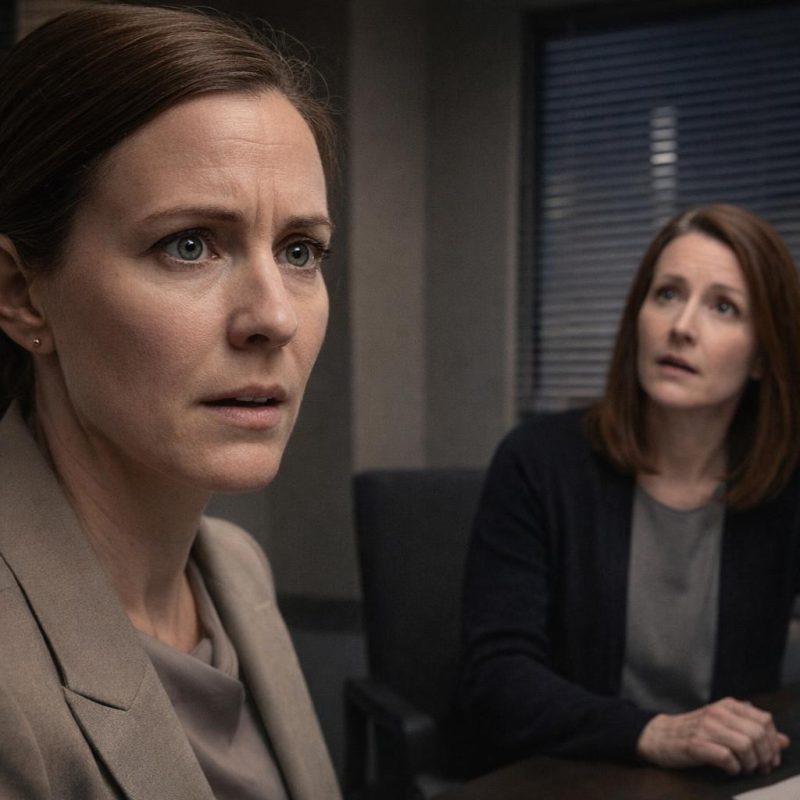 Image by RM AI
The Shared Experience
We talked for another twenty minutes, comparing details the way you do when you're trying to figure out if two separate things are actually the same thing. I told Jennifer how Brittany had come to me about three weeks before the client meeting, said she was feeling swamped, that the workload had gotten away from her. Jennifer went quiet when I said that. I asked her what was wrong and she said that was almost exactly what Brittany had told her — that she was too overwhelmed to contribute properly, that she just needed to get up to speed on what Jennifer had already built. I stopped. Jennifer repeated it again, slower this time, like she was hearing it herself for the first time: too overwhelmed to contribute properly. That was the phrase. Those were the words Brittany had used with me too, nearly verbatim, right down to the apologetic tone and the slight catch of helplessness in her voice. Jennifer and I looked at each other across the table. Neither of us said anything for a moment. I couldn't prove intent. I couldn't say with certainty what it meant that the language matched so closely. But the phrase sat between us on that table like something that had been placed there on purpose, and neither of us could look away from it.
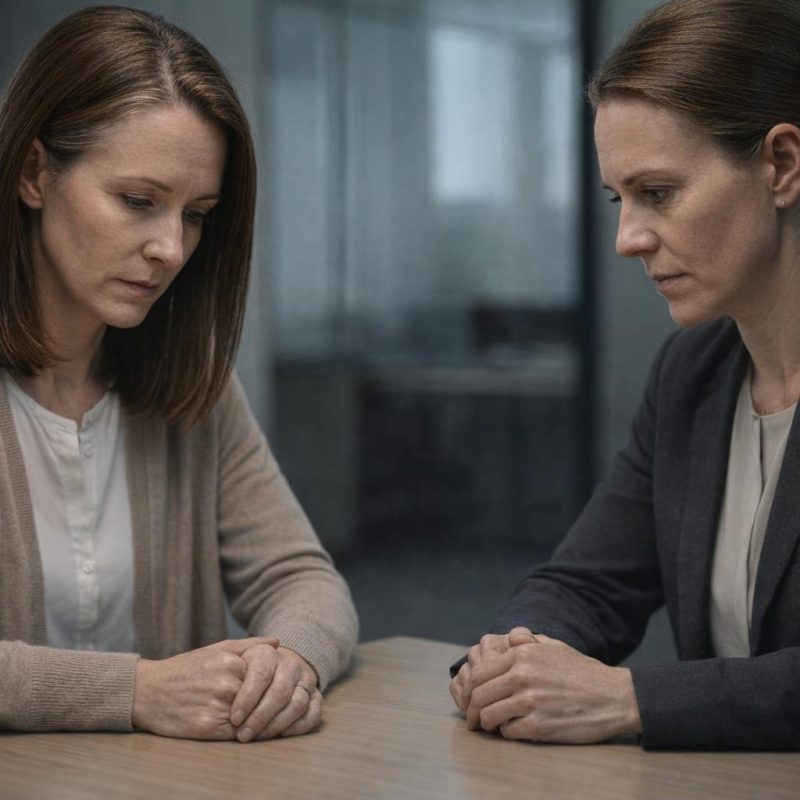 Image by RM AI
The Targeting Pattern
I asked Jennifer if she knew of anyone else — anyone besides the two of us. She was quiet for a moment, turning her coffee cup slowly in both hands. Then she said yes. She mentioned a woman named Carol from the analytics team, and a man named Phil who had been with the company for nearly eighteen years. Both of them had come to Jennifer separately, months apart, with the same kind of story. Work they had built over weeks, absorbed into a project they barely recognized by the time it was presented. I asked Jennifer how old Carol and Phil were. She looked at me steadily. Carol was fifty-six. Phil was sixty-two. I sat back in my chair. I thought about myself at fifty-eight. I thought about Jennifer at fifty-three. Four people, and every single one of us was over fifty. I asked, as carefully as I could, whether she had ever seen Brittany approach anyone younger — any of the associates in their thirties, the newer analysts. Jennifer shook her head slowly. Not once, she said. Not that she had ever seen. I didn't say anything for a moment. I couldn't draw a straight line from what I was seeing to what it meant — not with any certainty. But the four names sat in the air between us, and every one of them belonged to someone who had been doing this work longer than Brittany had been alive.
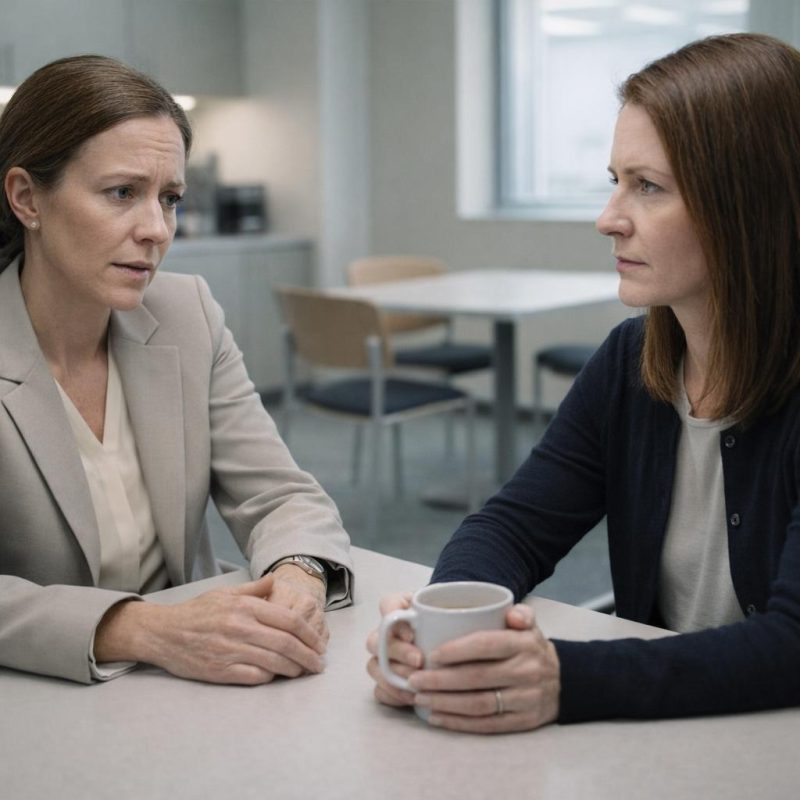 Image by RM AI
The Risk of Speaking
I asked Jennifer why she hadn't reported it. She let out a breath that wasn't quite a laugh. She had reported it, she said. About eight months ago, she had gone to HR with her notes, her drafts, her version of the timeline. She had been careful. She had been thorough. The HR coordinator had listened, nodded, and then explained that in a collaborative work environment, attribution on shared projects could get complicated. Jennifer said the word 'collaborative' like it had left a bad taste. She had pushed back, told them the work wasn't collaborative — that she had built it alone and Brittany had been brought in at the end. They told her that kind of territorial thinking could be a barrier to team cohesion. That was the phrase. Territorial thinking. Jennifer had gone home that night and sat with that phrase for a long time, trying to figure out how her own work had become her attitude problem. I recognized the shape of it immediately. Tom hadn't used those exact words with me, but the architecture was the same — the gentle suggestion that the issue was my perception, not the facts. That speaking up was the problem, not what had happened. Jennifer looked at me across the table and said she had dropped the complaint because she couldn't afford to be seen as difficult. I understood that completely. The weight of it — the familiar, exhausting weight of being told that noticing something wrong made you the problem — settled over the table between us and stayed there.
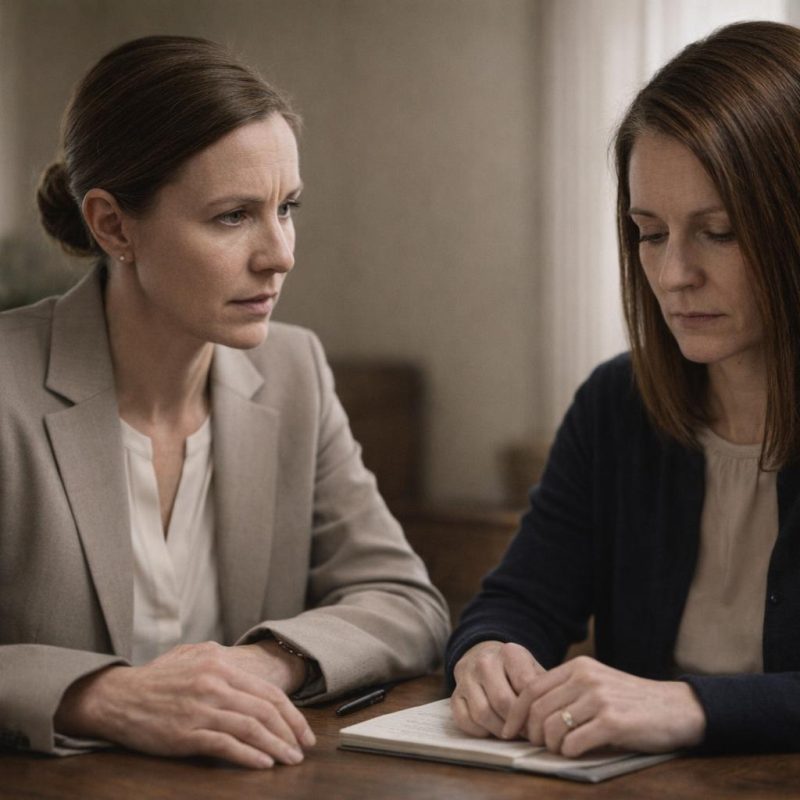 Image by RM AI
The Executive Protection
I asked Jennifer the question that had been sitting at the back of my mind since we started talking: why had management moved so fast to protect Brittany? Not just Tom — Michael too, and others above him. Jennifer had been at the company longer than I had. She had watched more cycles of this than I had. I asked if she had ever seen anyone defended that quickly, that completely, with that little investigation. She thought about it for a moment. She said no, not like that. She said she had always assumed it was because Brittany was young and polished and good at managing up — that management liked her because she made them look good in rooms they cared about. But then she paused. She said there was something else. A few months back, she had been in the copy room when two of the senior directors walked past in the hallway, deep in conversation. She hadn't been trying to listen. She had only caught a few words through the open door. She said one of them had mentioned keeping things quiet for someone's sake — and the other had said something about a board connection. Jennifer hadn't thought much of it at the time. She didn't know whose connection, or what it meant, or whether it had anything to do with Brittany at all. But sitting here now, she said, it kept coming back to her. I felt something shift in my chest. Board connection.
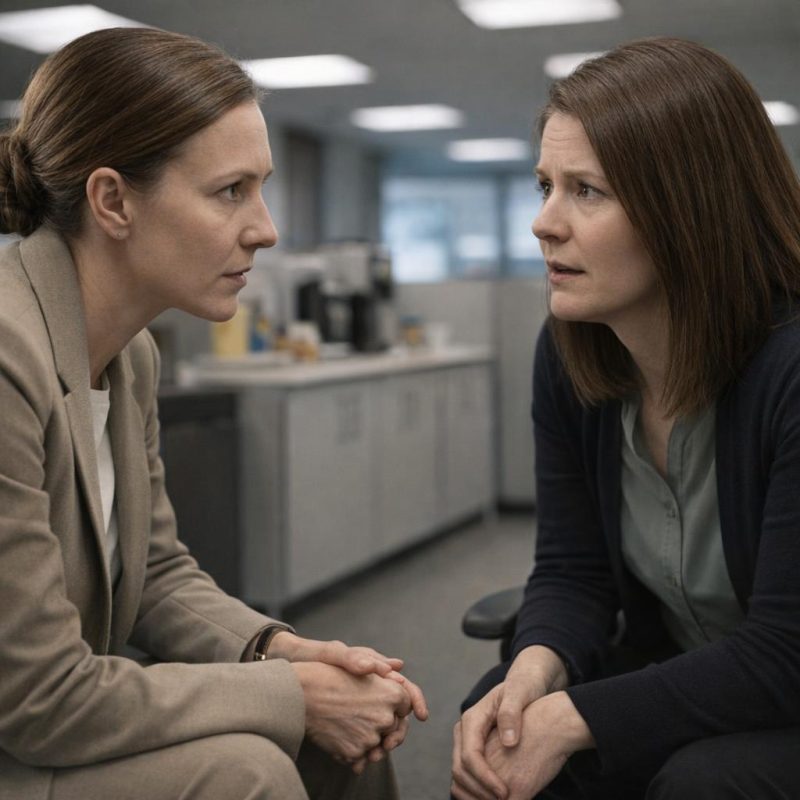 Image by RM AI
The Overheard Conversation
I stayed late that evening finishing up some notes I hadn't gotten to during the day. The floor had mostly emptied out by seven, just the hum of the HVAC and the occasional elevator chime. I was heading toward the elevator when I noticed that the door to one of the senior conference rooms was sitting open a few inches — not wide, just enough that voices carried into the hallway. I recognized Michael's voice first. He had a particular cadence when he was being careful, measured and low, the kind of voice he used when he didn't want to be overheard but also didn't want to seem like he was hiding anything. I slowed without meaning to. I heard him say something about keeping the situation contained, that it wasn't worth the exposure. Another voice — a man I didn't recognize — said something about obligations, about how certain things had been agreed to at a level above their pay grade. Then Michael said a name. Robert Chen. He said it the way you say a name that's supposed to end a conversation, like the name itself was the explanation. The other voice went quieter after that. I heard the word 'board' and then Brittany's name, close together, in the same sentence. I kept walking. I didn't stop. I pressed the elevator button and stood there while the numbers counted down, and the name Robert Chen sat in my head next to Brittany's, the two of them side by side in a way I hadn't put together before.
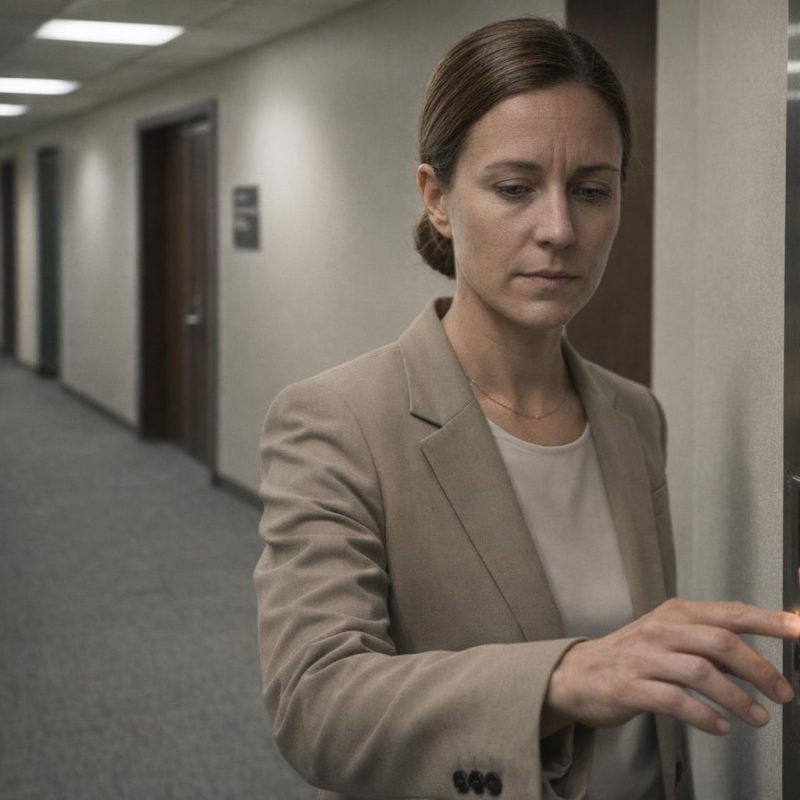 Image by RM AI
The Research Begins
I got home a little after eight and didn't bother with dinner right away. I opened my laptop at the kitchen table and went straight to the company website. The board member directory was public-facing, listed under the corporate governance section — the kind of page most employees never look at. I scrolled through the names until I found him. Robert Chen. Senior board member, appointed six years ago, background in finance and corporate strategy, photograph showing a man in his early sixties with silver hair and a composed expression. I read his biography twice. Then I opened a second tab and pulled up the internal employee directory. I typed in Brittany's last name — the one on her email signature, the one on her office door placard, the one I had seen on every project file she had ever touched. I had never had reason to look at it closely before. I looked at it now. I sat there with both tabs open side by side on the screen, Robert Chen's board profile on the left, Brittany's directory entry on the right, and the surname printed clearly in both: Chen.
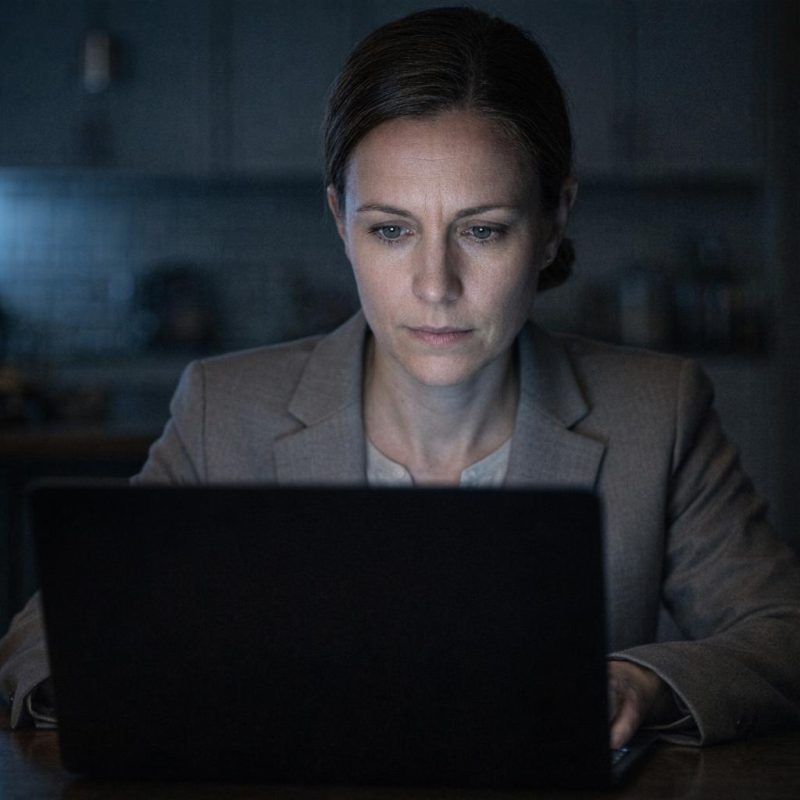 Image by RM AI
The Family Connection
I didn't close the laptop for a long time. I just sat there at the kitchen table with the screen casting light across my hands, turning over what I was looking at. If the connection was what it appeared to be — and I couldn't prove it, not yet, not from a directory listing and an overheard name — then a lot of things that hadn't made sense started to. Tom's discomfort when I pushed back. Michael's speed in closing the conversation down. The way HR had folded Jennifer's complaint into a lesson about teamwork. None of those things had felt like coincidence at the time, but I hadn't had anything to attach them to. Now I had a shape, even if I couldn't see all the edges of it. I thought about what it meant to push back against something that reached that high. I had spent thirty years building a reputation in this industry, and I had done it without anyone's name opening doors for me. I knew how to work hard and how to be patient and how to document things carefully. What I didn't know was how to go up against a board member's influence and come out the other side with my job intact. I sat with that for a while. The kitchen was quiet. The laptop screen dimmed and then went dark, and I didn't reach to wake it.
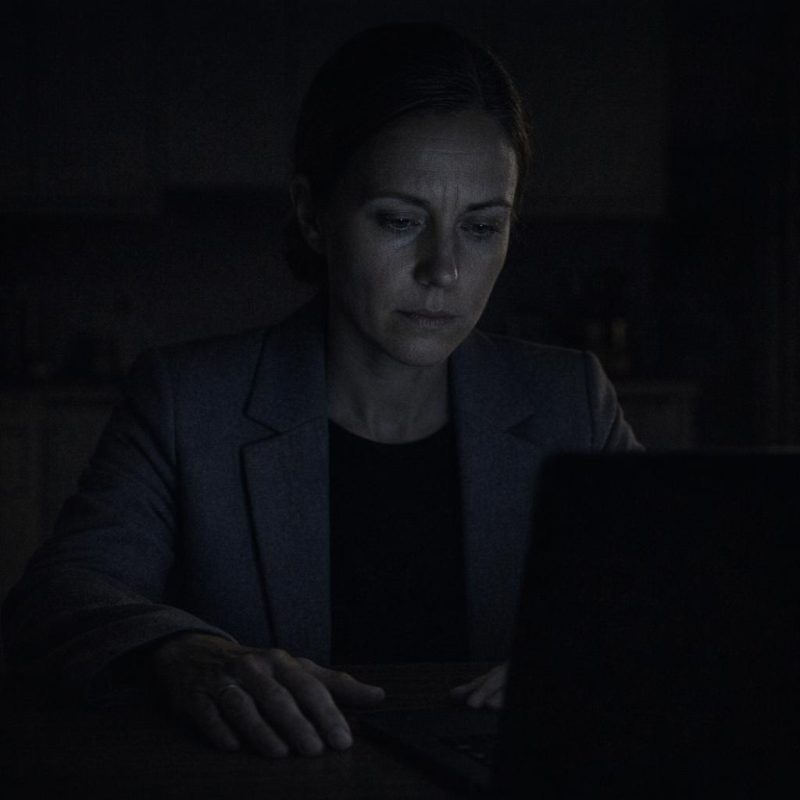 Image by RM AI
The Promotion Timeline
I woke up the next morning with the laptop still on the table where I had left it. I made coffee and sat back down. I wasn't ready to go into the office yet — not until I understood more of what I was dealing with. I went back into the employee directory and pulled up everything it showed about Brittany's employment history. Hire date, title history, department transfers. I had been at the company long enough to know what a normal trajectory looked like for someone at her level. You came in as an analyst or a junior associate, you spent two or three years building a track record, you got one promotion if you were good and patient and visible in the right ways. It took time. It was supposed to take time. Brittany had been hired twenty-six months ago. In that time, according to the directory, she had received three separate title changes — each one a step up, each one coming faster than the last. The first had come after only seven months. I had colleagues who had waited four years for a single promotion and had earned every day of that wait. I sat with my coffee going cold beside me, looking at those dates, and the timeline didn't look like performance. It didn't look like merit. It looked like something else entirely, something I didn't have a clean word for yet, but that I could see plainly in the numbers laid out in front of me.
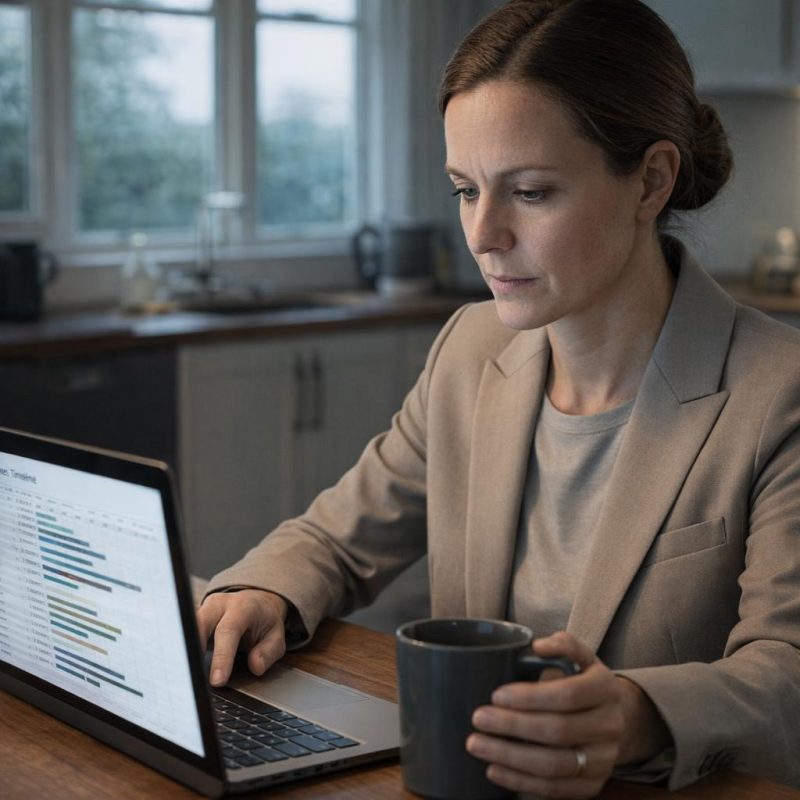 Image by RM AI
The Metadata Evidence
I called in with a vague excuse about working from home and spent the morning at the kitchen table with every project file I had saved going back eighteen months. I had always been careful about keeping my own copies — not out of suspicion, just habit, the kind of professional instinct you develop after enough years of watching things get lost or overwritten. I opened the presentation files first, the ones that had formed the backbone of the client pitch. I right-clicked on the first document and pulled up the properties panel. Author field: my name. Created date: eleven weeks before the client meeting. I went through them one by one, checking each file's metadata the same way. Every original draft showed my name in the author field and a creation date that put it weeks before anyone else had touched it. Then I found the access logs I had exported from the shared drive back when I first started keeping records. I cross-referenced the timestamps. The files had been created by me, saved by me, sitting untouched in the shared folder — and then, six weeks before the presentation, every one of them showed a new access entry. The same date. The same user account. The timestamps showed I had created those files a full forty-three days before Brittany had ever opened them.
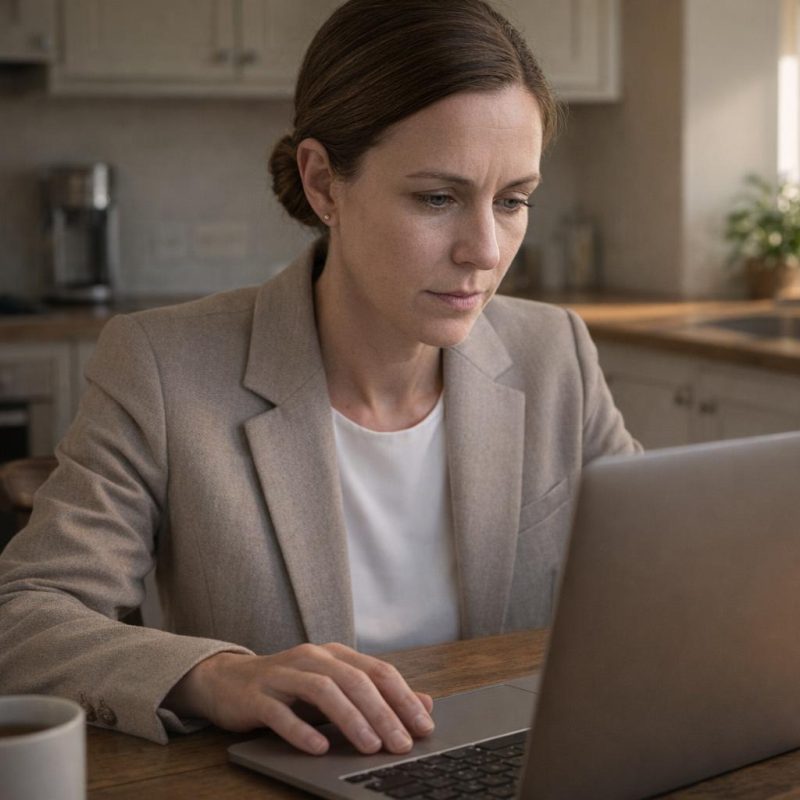 Image by RM AI
The Recovery Process
After the metadata work, I turned to the email recovery system — something I had used exactly once before, years ago, when a project brief got accidentally deleted during a server migration. The company's IT infrastructure had a thirty-day soft-delete window on shared folder contents, but the email archive ran deeper than that, ninety days minimum, sometimes longer depending on the account tier. I submitted the recovery request through the internal portal, flagging the project folder and the date range that covered the full presentation build period. It took about forty minutes. When the results came back, I sat very still for a moment before I started reading. There they were — the authorship assignment emails I had sent at the start of the project, the ones that should have been sitting in the shared folder the whole time. Thread confirmations. Status updates with my name in the sender field and the project title in the subject line. Copies of the original brief I had drafted and distributed. I cross-referenced the recovery log, which showed not just the content of the deleted items but the deletion timestamps. Every one of those emails had been removed from the shared folder within the same narrow window — a four-day span, roughly three weeks before the client presentation. I saved everything to a password-protected folder on my personal drive and printed two hard copies. I sat back in my chair and looked at the stack of pages on the kitchen table, the recovered record of work that had existed and then, quietly, had not.
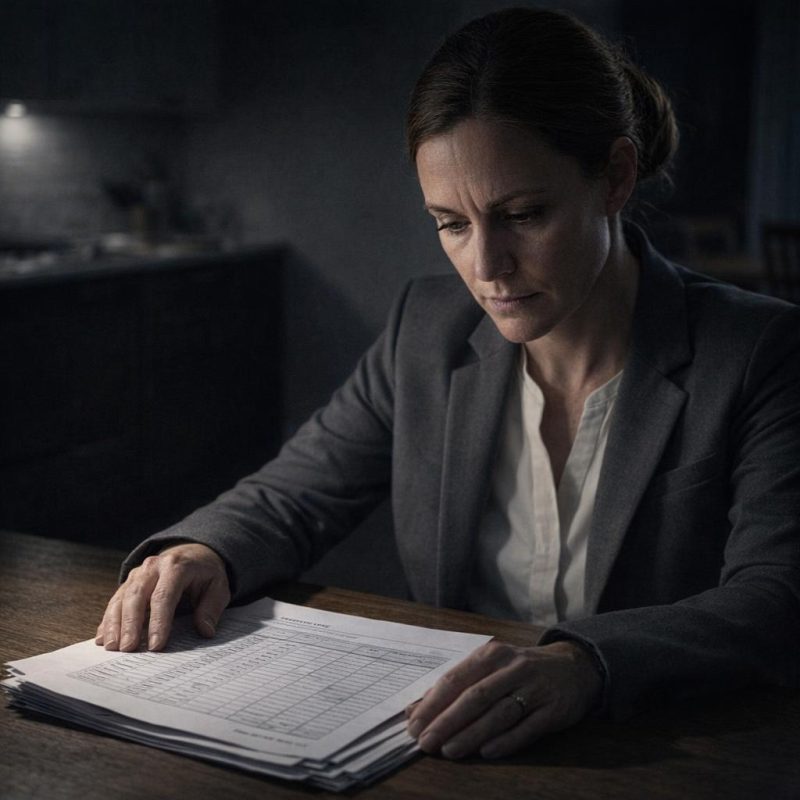 Image by RM AI
The Witness Testimony
Jennifer had given me two names when we spoke — colleagues she said had gone through something similar and walked away from it without filing anything formal. I reached out to both of them carefully, through personal email rather than the company system, keeping the language vague enough that it wouldn't read as anything alarming if it landed in the wrong inbox. One of them, a senior analyst who had transferred to the regional office two years ago, agreed to a video call the same afternoon. The other, a project coordinator I had heard of but never worked with directly, asked for a day to think about it and then called me back the following morning. I listened more than I talked. The analyst described a product launch deck she had built over six weeks that went to a client meeting under someone else's name, with her contributions buried in an appendix and never mentioned aloud. The coordinator's story was quieter but followed the same shape — research compiled over months, a summary document that appeared in a quarterly review with different authorship, her own manager telling her afterward that these things happen and to move on. Neither of them had filed a formal complaint. Both said they had considered it and then thought better of it, for reasons they didn't need to spell out. I added their accounts to my evidence file, dated and detailed. By the time I closed the document that evening, the list of names on the page was longer than I had expected it to be.
 Image by RM AI
The Evidence Timeline
I opened a new document and started building the timeline from scratch, pulling from every file I had assembled over the past several days. I worked chronologically, going back as far as the earliest incident the analyst had described, which put the starting point at just over two years ago. I listed each incident in order — the date, the project name, the person whose work had been affected, the management response when a concern had been raised, and the outcome. I included my own case last, with the full metadata record and the recovered emails attached as supporting documents. What I hadn't expected was how the promotions mapped onto it. Every time I noted a management response that had gone nowhere, there was a corresponding entry a few months later — a title change, a new account assignment, a public acknowledgment in a company-wide email. I added a second column to track those. I wasn't drawing conclusions on the page; I was just recording what the dates showed. When I finally sat back and looked at the full document, two years of incidents laid out in order with names and dates and outcomes, the scope of what I was looking at hit me in a way that the individual pieces hadn't.
 Image by RM AI
The Impossible Choice
I sat with the completed file open on my laptop for a long time without touching the keyboard. I had everything I had set out to gather — the metadata, the recovered emails, the testimony from the two colleagues, the timeline with its two columns running side by side. It was thorough. It was documented. And I had absolutely no idea what to do with it. I thought about Jennifer's experience — the formal complaint she had described, the HR meeting that had gone nowhere, the quiet suggestion afterward that she might be happier in a different role. I thought about the analyst, who had transferred rather than fight. I thought about the coordinator, who had simply absorbed it and kept working. These were not careless people. They were experienced professionals who had looked at the same calculation I was looking at now and decided the math didn't work in their favor. The difference was that my file was more complete than anything they'd had. But complete evidence and a fair hearing were not the same thing, and I knew that better than most. Robert sat on the board. Michael had made his position clear. Tom would fold the moment any pressure came from above. I could take everything I had to HR and watch it disappear into the same process that had swallowed Jennifer's complaint. Or I could close the file, go back to work, and spend whatever years I had left at this company pretending I hadn't seen what I'd seen. Neither option felt like a real choice.
 Image by RM AI
The Witness Protection
I called Jennifer that evening from the kitchen, the evidence folder still open on the table in front of me. She picked up on the second ring, which told me she had been waiting. I walked her through what I had found — the recovered emails, the timeline, the two additional accounts. She was quiet for most of it, asking a few careful questions about the metadata and whether the recovery log would hold up if someone challenged the deletion timestamps. Practical questions. The kind you ask when you're thinking about what comes next rather than what already happened. I told her I was worried about the others — the analyst especially, who had a new position now and a team she was responsible for. If this went formal and the response came down hard, the people who had spoken to me were the most exposed. Jennifer said she understood that. She said she had thought about it herself, more than once, in the two years since her own complaint had gone nowhere. We talked for almost an hour. At the end of it, I still hadn't said out loud what I was going to do, because I genuinely didn't know. There was a pause on the line, and then Jennifer said, quietly and without any pressure in her voice, that she trusted me to make the right call.
 Image by RM AI
The Career Calculation
I didn't sleep much that night. I lay in the dark going over the same ground I had already covered a dozen times, but the quiet made it feel more final somehow, like the decision was closer than it had been during the day. Thirty-two years. That was the number that kept surfacing. Thirty-two years of projects delivered on time, of clients retained, of institutional knowledge accumulated in ways that don't show up on any org chart but that everyone quietly depends on. I had stayed through two recessions, three restructurings, and one acquisition that had left half my department looking for work. I had built something real inside that company, even if the company had lately seemed less interested in acknowledging it. The promotion I had been expecting — the one that should have come eighteen months ago, the one that kept getting deferred with language about timing and organizational priorities — sat at the edge of every calculation I ran. If I filed a formal complaint and it went badly, I wasn't just risking the promotion. I was risking the pension calculation, the health coverage, the professional references that would follow me out the door. I was fifty-eight years old. Starting over was not an abstraction. I stared at the ceiling for a long time, and the weight of thirty-two years pressed down on me in the dark.
 Image by RM AI
The Unexpected Contact
I was at my desk the next morning, earlier than usual, when the email came in. I almost missed it — I had been working through a backlog of routine correspondence, the kind of administrative catch-up that accumulates when you spend several days focused on something else entirely. The sender name stopped me mid-scroll. Marianne. I sat up straighter without meaning to. The message was brief, three sentences, businesslike and to the point. She was in the city through the end of the week and wondered if I might be available for a private lunch to discuss the presentation and the ongoing client relationship. She suggested two possible dates and named a restaurant I recognized as the kind of place where people go when they want to talk without being overheard. I read it twice. I had no way to know what had prompted it or what she actually wanted to discuss — whether this was routine client relationship management or something more specific. The presentation had not gone smoothly, and Marianne had been in the room for all of it. I sat with that uncertainty for a moment, turning the email over in my mind. Then I looked at the subject line again: Confidential Discussion.
 Image by RM AI
The Lunch Preparation
I spent the morning before the lunch going over everything I knew about Marianne's company — their current contracts, the scope of the relationship, the history of the account going back several years. I told myself it was preparation, the kind of background work you do before any client meeting. Mostly I think I was trying to give my hands something to do. I had accepted Marianne's invitation within the hour of receiving it, keeping my reply as neutral as hers had been, and I had spent the two days since then cycling through possible explanations for what she wanted. Maybe it was straightforward — a follow-up on deliverables, a question about the next phase of the project. Maybe she wanted to address the presentation directly, the part that hadn't gone smoothly, and clarify what the client relationship looked like going forward. I had no way to know, and the not-knowing had settled into a low, persistent hum somewhere behind my sternum. I drove to the restaurant she had suggested, found parking half a block away, and stood on the sidewalk for a moment longer than I needed to before going in. The host offered to show me to the table. I followed him through the dining room, past the other lunch crowds, toward the quieter section at the back — and there was Marianne, already seated, her hands folded on the table, watching the entrance.
 Image by RM AI
The Recognition
Marianne didn't waste time on small talk. She waited until the server had taken our orders, folded her hands on the table the same way I'd noticed when I walked in, and said she wanted to be straightforward with me. She told me she had worked indirectly with my team about five years ago — a regional restructuring project, one I barely remembered at first, until she named the client and it came back to me. She said she had reviewed the materials from that engagement and recognized something in the way the analysis was structured. The layering of assumptions, the way the recommendations were sequenced, the specific format of the risk summary — she described it back to me in enough detail that my throat tightened. She said when she saw the proposal Brittany presented, she recognized that same framework immediately. And then Brittany couldn't answer a basic question about the methodology behind it. Marianne said that was all she needed. She wasn't accusatory about it. She was matter-of-fact, the way someone is when they've already done the thinking and just need to say the words out loud. I sat there listening and felt something I hadn't expected — not vindication exactly, not yet, but something quieter than that. Someone had looked at my work, years ago and again last week, and known it was mine. That was enough, for that moment, to just sit with.
 Image by RM AI
The Intentional Questions
I asked her why she hadn't said something during the presentation itself — stopped it, asked to speak with someone else, anything. Marianne picked up her water glass, considered it for a moment, and said it wasn't that simple. She explained that before the meeting, she had talked with two members of her team about what she suspected. They had agreed to ask specific technical questions — detailed ones, the kind that would be easy for the actual author to answer and nearly impossible for someone who had only read the document. She said they weren't trying to embarrass anyone. They were trying to surface the truth in a way that created a clear record. Her company had policies around misrepresentation in client-facing work, she said, and she took them seriously. She also said — and this was the part that stayed with me — that she wanted to give whoever had actually done the work a chance to demonstrate it. She had hoped I might step in. When I didn't, she understood there were probably reasons for that, and she decided to reach out directly instead. I thought about the moment during the presentation when I had stayed quiet, when I had made the choice not to speak. I had felt ashamed of that silence for days. Sitting across from Marianne, I understood that she had seen it differently — not as failure, but as constraint. The care she had put into that room, on my behalf, settled over me like something I hadn't known I was waiting for.
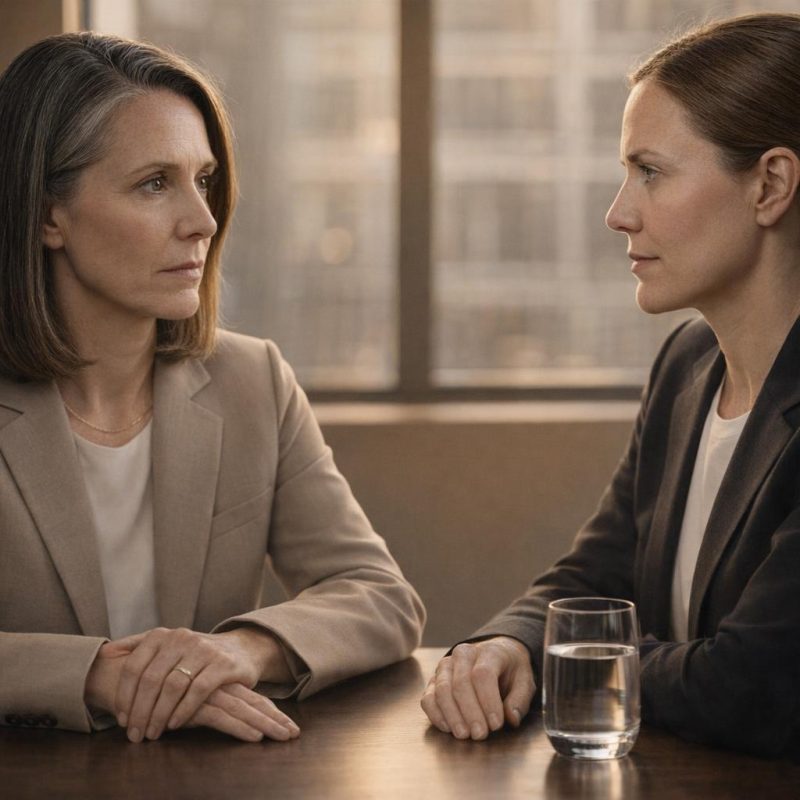 Image by RM AI
The Offer
We had moved on to coffee when Marianne set down her cup and said there was another reason she had wanted to meet. She told me her company was in the middle of planning a significant national expansion — new regional offices, new client relationships, a restructuring of how they delivered consulting services across the country. She said the project needed someone to lead it. Not manage it from the edges, but own it — the strategy, the client relationships, the team. A consulting director role, she called it. She described the scope carefully: multi-year engagement, cross-functional leadership, the kind of work that would require someone who understood both the analytical side and the relationship side of the business. Then she looked at me directly and asked whether I had ever considered leaving my current company. I didn't answer right away. I'm not sure I could have. I had walked into that restaurant expecting to talk about a presentation that had gone sideways, maybe to hear that the client relationship was in jeopardy, maybe to be asked some uncomfortable questions. I had not expected this. The words consulting director sat in the air between us, and I felt the floor shift beneath me in a way I hadn't felt in years.
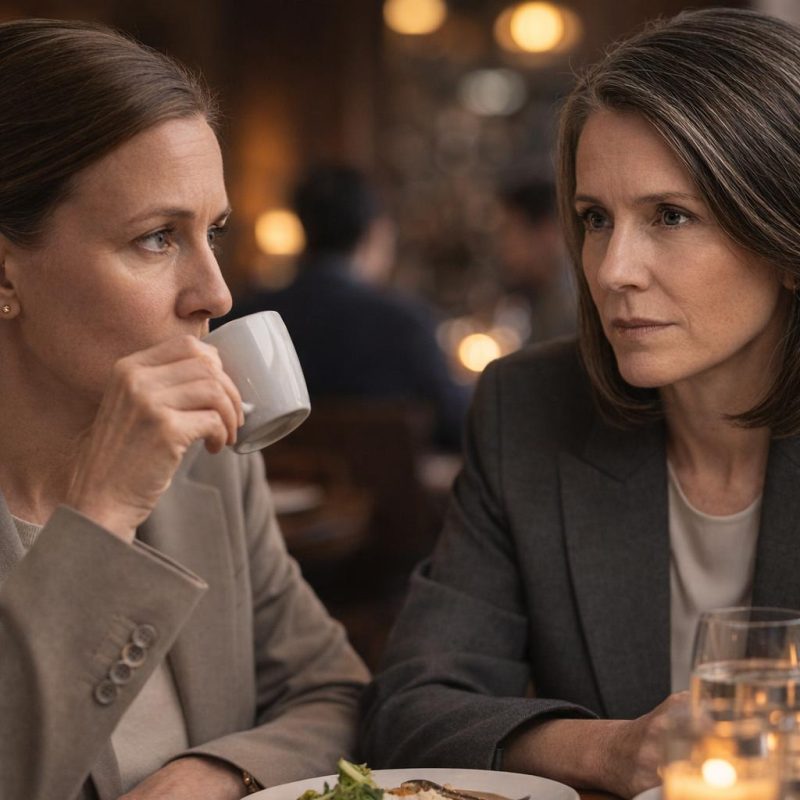 Image by RM AI
The Impossible Decision
Marianne told me I didn't need to answer today. She said it genuinely, without pressure, and I believed her. But the question didn't leave the table just because she'd given me permission to set it aside. I sat there turning it over. Part of me — a part I hadn't heard from in a while — wanted to say yes immediately. To walk away from the whole mess, from Tom's careful silences and the evidence file sitting on my home computer and the memory of standing in that conference room watching someone else take credit for months of my work. Starting somewhere new, somewhere that had already seen what I could do and wanted it — that was not a small thing to be offered. But then I thought about Jennifer. About what she had told me quietly in the break room, the way she had looked over her shoulder before she spoke. I thought about the pattern I had been piecing together, and about the fact that if I left, whoever came next would probably go through the same thing. Marianne watched me think without rushing me. I appreciated that more than I could say. I told her I needed a few days. She nodded and said the position would still be there. I picked up my coffee cup and held it without drinking, feeling the weight of two very different futures sitting on either side of me.
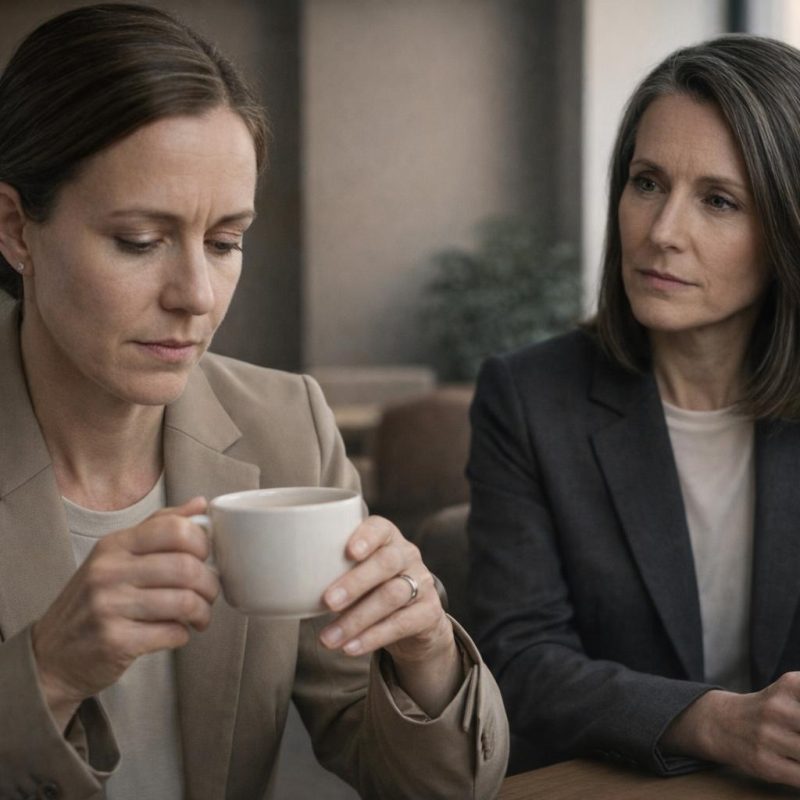 Image by RM AI
The Full Picture
I drove home with the radio off. I needed the quiet. Everything Marianne had told me over the past two hours was still arranging itself, and somewhere on the highway I felt the pieces lock into place in a way they hadn't before. Robert was on the board. Brittany was his niece. That wasn't a coincidence sitting alongside everything else — it was the center of it. The promotions that had come faster than anyone could explain, the way Tom went quiet whenever Brittany's name came up in the wrong context, the way Michael always seemed to be one step ahead of any complaint before it could gain traction. I had been thinking about this as Brittany taking advantage of opportunities. But it wasn't that. Senior employees with strong track records had been paired with her on projects, their work had ended up attached to her name, and each successful outcome had become another rung on a ladder she hadn't built. Jennifer hadn't been careless. I hadn't been careless. We had been useful. I gripped the steering wheel and let that land. The whole structure of it — the board position, the protection from above, the targeted theft from below — it wasn't a series of bad decisions. It was a system, and it had been running long before I ever walked into that conference room.
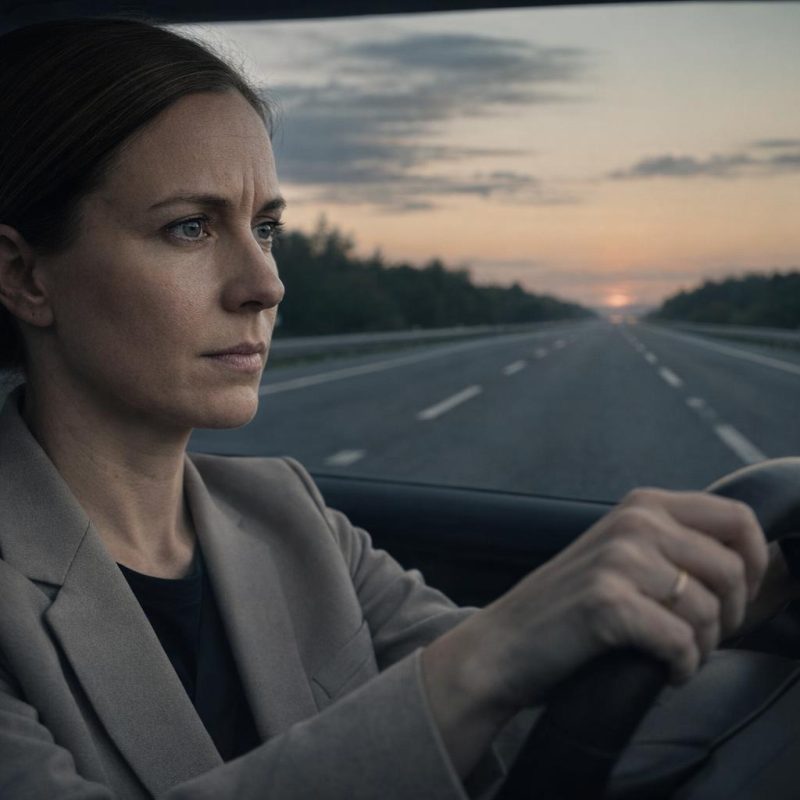 Image by RM AI
The Documentation Continues
I was at my kitchen table by seven that evening with my laptop open and the evidence file pulled up. I had started the file weeks ago as a simple log — dates, emails, document version histories — but it had grown into something more substantial than that. I added a new section at the top. Robert's name, his board position, the length of his tenure. Then Brittany's name beneath it, with the canonical relationship label I had confirmed through the company directory: niece. I documented the timeline of her promotions alongside the project dates, cross-referencing each advancement with the work that had preceded it. The pattern was not subtle once you laid it out in sequence. A successful deliverable would close, Brittany's name would be on the summary report, and within a quarter there would be a title change or a new responsibility added to her profile. I pulled in the emails I had saved from Tom, the ones where he had redirected credit in ways that seemed administrative at the time. I added Michael's name to the executive protection section with the dates of the meetings where complaints had been quietly redirected. I worked steadily for two hours, checking each entry against the source documents I had saved. When I reached the end of the timeline and typed Robert's name into the final column — board-level authorization, implicit — I saved the file and sat back. His name sat at the top of the page, and the whole document finally had a ceiling.
 Image by RM AI
The Quiet Resolve
I didn't close the laptop right away. I sat there and read through the whole file one more time, slowly, the way you read something when you want to be sure you haven't missed anything and also when you're not quite ready to stop looking at it. It was thorough. I knew it was thorough. Every claim had a source attached. Every date was verifiable. I had built the kind of record that didn't depend on anyone believing me — it depended on anyone being willing to look. I thought about what staying silent would mean. Not for me, though that was part of it. I thought about whoever came after me, the next person who would be paired with Brittany on a high-visibility project, who would put in the months of work and then watch it disappear into someone else's biography. I thought about Jennifer's face in the break room, the way she had kept her voice low even though no one was nearby. She had been carrying that for a long time alone. I could leave. Marianne's offer was real and it was good and I would have been foolish not to recognize that. But leaving didn't make the file disappear. It didn't undo what I knew. I closed the laptop and sat in the quiet of my kitchen, and the decision didn't feel like a decision anymore — it felt like something that had already been made, somewhere underneath all the weighing and considering, long before I sat down tonight.
 Image by RM AI
The Tense Days
The office felt different that week, though nothing had visibly changed. Brittany was there every day, moving through the hallways with the same practiced ease, but she stopped making eye contact with me somewhere around Tuesday. It wasn't dramatic — she didn't flinch or change direction when she saw me coming. She just found something else to look at, a phone screen or a passing colleague, and kept moving. Tom watched me during the Tuesday morning meeting in a way that was careful and steady, the kind of watching that tries not to look like watching. He asked me twice about my current project load, both times in a tone that was pleasant and slightly too deliberate. I answered him directly and didn't offer anything extra. I had copies of the evidence file in three places now — my home computer, an external drive in my desk drawer at home, and a cloud folder I had set up the night before. I wasn't waiting for permission to act. I was waiting for the right moment, or for the situation to create one. The client relationship with Marianne's company was still technically unresolved, which meant the presentation and everything around it was still an open question in the building. Every day that passed without a resolution was another day the pressure had nowhere to go. I went through my work, kept my head down, and carried what I knew like something fragile — carefully, with both hands, not setting it down.
 Image by RM AI
The Formal Request
I found out the way I suspected I would — not through a direct conversation, not through Tom calling me into his office, but through an email that landed in my inbox because someone in the executive suite had hit 'forward' without thinking through the full recipient list. The original message was from Marianne's company, addressed to our VP of Client Relations and copied to three other senior names I recognized from the org chart. The language was formal and precise in the way that legal departments write when they want to be taken seriously — it cited their vendor ethics policy by section number, referenced the presentation date, and stated plainly that questions had arisen regarding the authorship and ownership of the proposal materials submitted on behalf of our firm. It requested written clarification within five business days. It was not a complaint, exactly. It was something more structured than that — a documented inquiry that required a documented response, the kind of thing that goes into files and stays there. I read it twice, slowly. The situation had been sitting in a kind of suspended tension for days, and now something had shifted the weight of it. I closed the email, opened it again, and looked at the subject line one more time: 'Formal Inquiry - Project Authorship.'
 Image by RM AI
The Panic Response
By mid-morning, the building had a different quality to it. I couldn't have pointed to anything specific — no one was running in the hallways, no alarms were going off — but there was a tightness in the air near the executive corridor that I'd learned to read over the years. Doors that were usually open were closed. Tom walked past my desk twice without making eye contact, which was notable because Tom always made eye contact when he was trying to seem unbothered. The second time, he had his phone pressed to his ear and his jaw set in a way that suggested the conversation wasn't going well. I saw Michael in the glass-walled conference room near the end of the hall, seated across from two people I recognized from Legal. He had his hands flat on the table and was speaking in the measured, careful cadence of someone choosing every word. I had seen Michael in that room before during routine meetings, and he never sat like that — rigid, deliberate, with none of his usual practiced ease. The client wasn't just a name on a contract. They were the kind of account that appeared in quarterly reports, the kind whose satisfaction was discussed at the board level. And now that account had sent a formal ethics inquiry, and no amount of internal maneuvering was going to make it disappear quietly. I watched Michael's hands press flat against the table again, and understood what I was seeing: the scrambling that comes when power meets accountability.
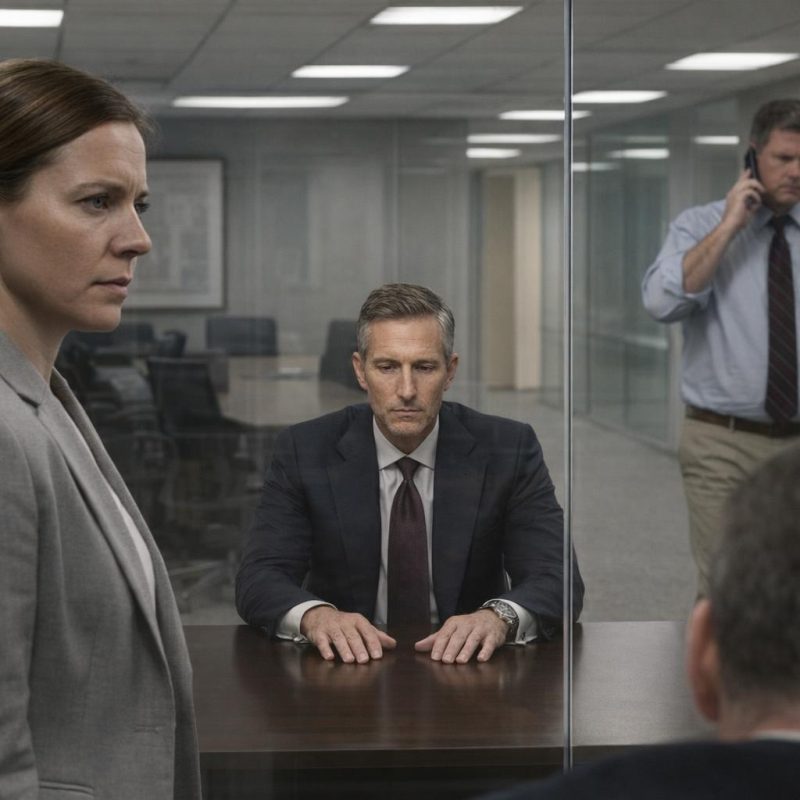 Image by RM AI
The Summons
The calendar invitation arrived at 4:47 in the afternoon, which told me something in itself — that was the kind of hour when people send things they've been debating sending all day. The meeting was scheduled for nine the following morning. The subject line read 'Project Review — Client Inquiry Discussion,' and the attendee list included Tom, Michael, two names from HR I didn't recognize personally but whose titles I knew, and a note that additional participants would be present. I sat with it for a moment before I did anything else. Then I opened my evidence folder and went through everything methodically — the metadata screenshots, the recovered email chain, the version history, the timeline I had built out over the past several weeks. I printed two copies of each document and put them in a manila folder, which I set beside my bag. I wasn't nervous, exactly. There was something steadier than nervousness in what I felt — a kind of settled clarity that comes when you've been carrying something carefully for a long time and you can finally see where you're going to set it down. I had done the work. I had documented everything. Whatever happened in that room tomorrow, I was walking in with the truth in my hands. The folder sat on the edge of my desk, and the night ahead of me felt very quiet.
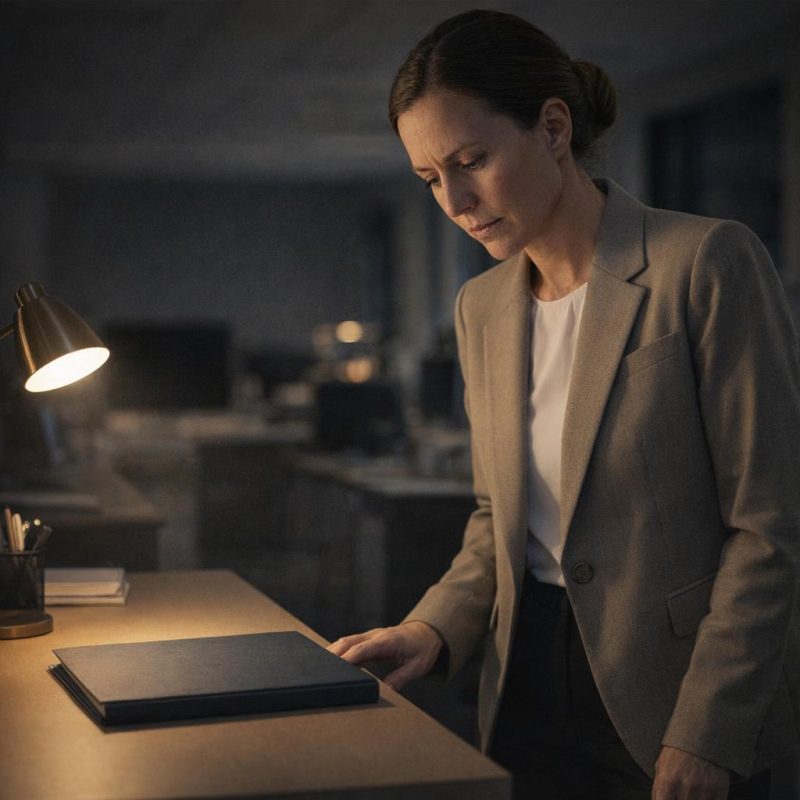 Image by RM AI
The Conference Room
I arrived two minutes early, which meant I was the last one in the room. That told me something too. Brittany was seated near the middle of the table, her posture carefully composed, hands folded in front of her. She was wearing the kind of outfit that reads as serious without being severe — she had thought about what to wear to this meeting, and it showed. Tom sat to her left, and Michael was at the far end, beside a woman I didn't recognize who had a legal pad and a pen already uncapped. Two HR representatives sat across from them, both with folders open. The room went quiet in the particular way rooms do when the person everyone has been waiting for finally walks in. I didn't rush. I set my bag down, pulled out the manila folder, and placed it on the table in front of me before I sat. Nobody said anything about the folder, but I noticed that more than one person looked at it. One of the HR representatives introduced herself and explained that the meeting had been called in response to a formal inquiry from a client regarding the authorship of a proposal submitted by our department. She said it plainly, without editorializing. I looked around the table at the faces arranged there — each one carrying something different, none of them quite meeting my eyes.
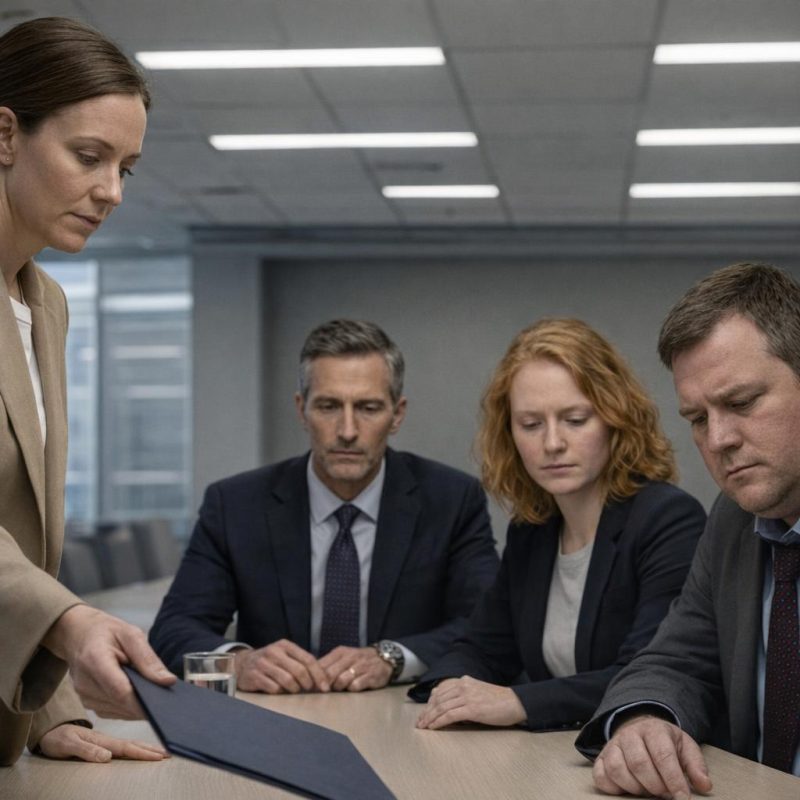 Image by RM AI
The Confusion Narrative
Brittany spoke first, which didn't surprise me. She had a way of filling silence before it could work against her. She said that she wanted to start by acknowledging that there had clearly been some confusion — her word, confusion — about how responsibilities had been divided on the project. She described the proposal as a collaborative effort, said that she and I had worked closely together, and that when the client presentation came up, she had understood it was her role to deliver the materials. She said this with a kind of practiced regret, the tone of someone who is sorry about a misunderstanding rather than sorry about a choice. Tom followed her, explaining that role assignments in the department had not always been clearly documented, and that he took some responsibility for the ambiguity. Michael added that the client-facing component of any project naturally fell to the relationship manager, and that Brittany had been designated in that capacity. It was smooth. It was coordinated. Each piece fit against the next without visible seams. The HR representatives wrote things down. I kept my hands flat on the folder in front of me and didn't interrupt. I had waited this long. I could wait another few minutes. The explanations moved around the table like something rehearsed, and the longer they went on, the more hollow they sounded in the particular silence of a room where the evidence is already sitting on the table.
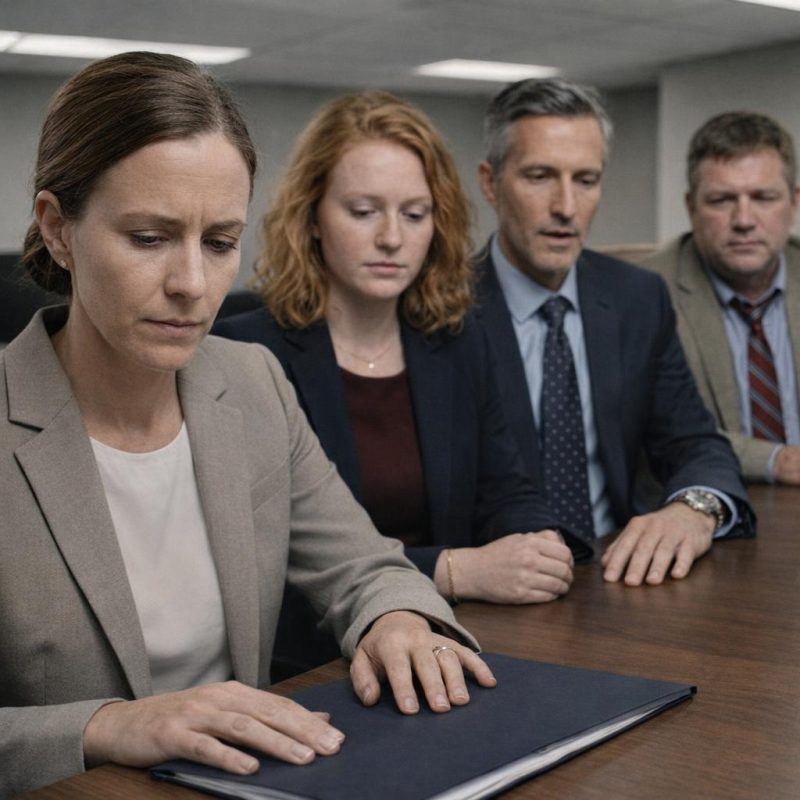 Image by RM AI
The Evidence Presentation
When the HR representative turned to me and asked if I'd like to share my account of the project, I said yes, and I opened the folder. I had organized everything in the order I intended to present it, and I worked through it that way — methodically, without editorializing, letting the documents carry the weight. I started with the version history, which showed the file creation date and my username attached to every major draft. I passed copies across the table and gave everyone a moment to look before I moved to the next item. Then the email chain — the original thread where I had shared the working files, followed by the recovered records showing those files had been removed from the shared folder. I explained each piece briefly and moved on. I didn't raise my voice. I didn't use words like theft or fraud. I didn't need to. The documents said what they said. The HR representatives were leaning forward now, both of them. Tom had stopped writing. Michael's expression had gone very still in the way that faces go still when the mind behind them is working fast. I saved the metadata for last — the embedded authorship data that survived even after the file names had been changed. I slid the final page across the table and watched their faces change as I presented the metadata.
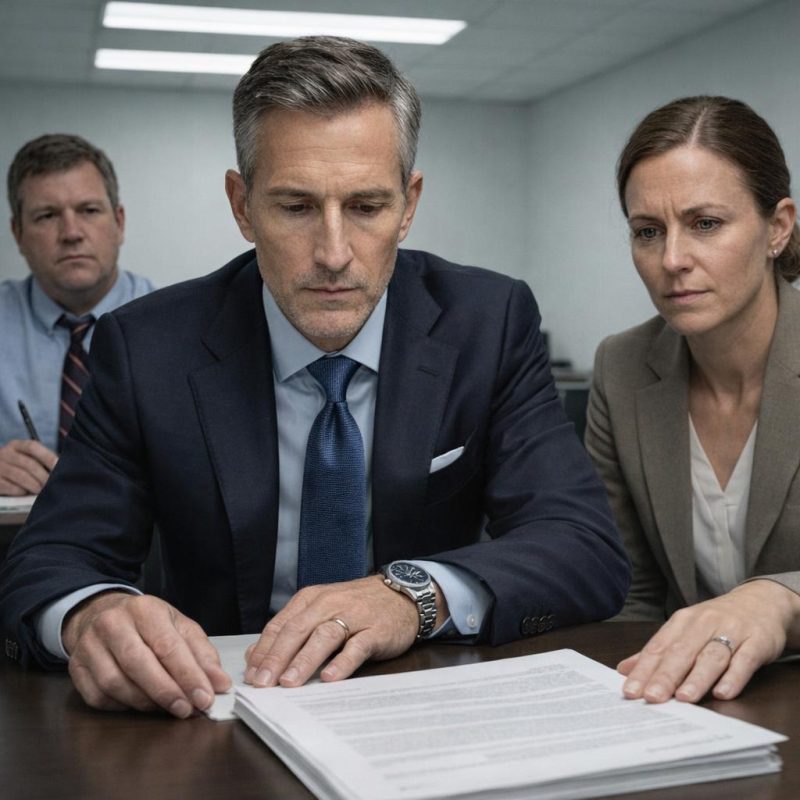 Image by RM AI
The Server Archives
The knock at the conference room door came while the HR representatives were still studying the metadata printout. Greg stepped in, and I hadn't known he was coming — nobody had told me — but the look on his face was the careful, precise expression of someone who has something important and knows it. He introduced himself to the HR team, said he was from IT infrastructure, and explained that he had been asked earlier that week to pull the server archive logs related to the project files in question. He set a printed report on the table and walked through it without preamble. The logs showed every instance of file access, modification, and metadata change tied to the project folder. He pointed to a specific entry — a timestamp from the evening before the client presentation — showing that the files had been accessed from a workstation registered to Brittany's credentials. The authorship metadata had been altered during that session. He said it plainly, in the flat technical language of someone reporting what the system recorded. He said the changes were not the result of a software error or an automatic sync. He answered two questions from HR and then stood quietly while the room absorbed what he had put in front of them. I looked at the report where Greg had set it on the table: the server logs showing exactly when the files were changed.
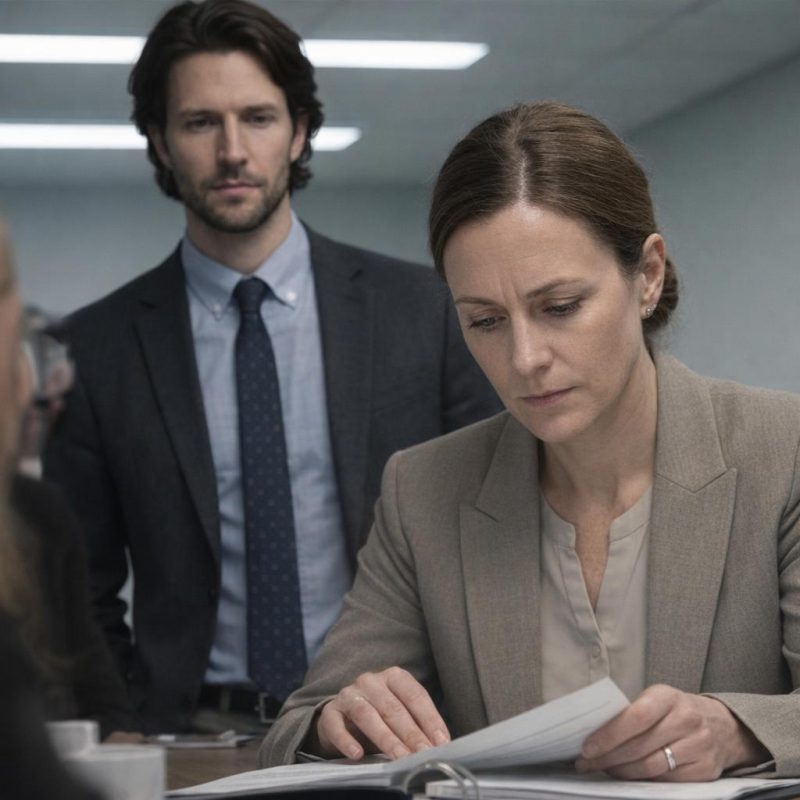 Image by RM AI
The Remote Witness
Nobody had moved to close the meeting when the screen at the end of the conference room lit up. A video call was connecting — I hadn't known that was coming either, and from the way Tom straightened in his chair, I didn't think he had either. Marianne's face appeared on the screen, composed and unhurried, the way someone looks when they have decided exactly what they are going to say before they say it. She greeted the room briefly, identified herself and her title for the HR representatives, and then addressed the executives directly. She said her company had a strict ethics policy governing vendor relationships, and that the policy existed because trust was the foundation of any long-term partnership. She said that when a vendor misrepresented the origin of work product submitted during a competitive proposal process, it raised questions that could not be answered by internal review alone. She said her company was prepared to terminate contract negotiations immediately and permanently if the situation was not met with full and transparent accountability — not managed, not minimized, but addressed. The room was completely silent. Michael's hands were flat on the table again. Tom was looking at the surface in front of him. Brittany had gone very still. Then Marianne said that her company did not do business with organizations that protected employees who committed fraud against their own colleagues, and I heard the words that ended all protection.
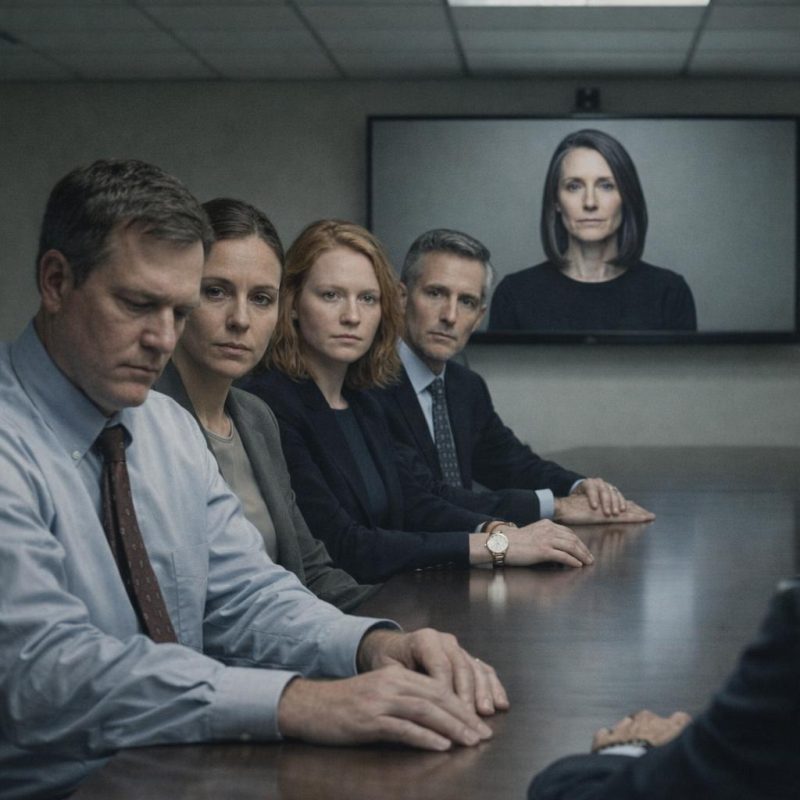 Image by RM AI
The Silence
The silence that followed Marianne's last words was the kind that has weight to it. Not the silence of people thinking — the silence of people understanding that the ground had shifted and there was nothing left to stand on. Michael's hands were still flat on the table. Tom had stopped looking at anything in particular. The HR representatives were leaning in over their documents with a focus they hadn't shown twenty minutes earlier. I watched all of it from my seat and felt something settle in my chest — not satisfaction exactly, not yet, but the particular stillness that comes when you've been waiting a long time for something true to be said out loud. Brittany hadn't moved. She was sitting with her hands in her lap and her eyes fixed on the middle distance, and the practiced composure she'd carried into that room had gone somewhere I couldn't locate. Greg was quiet beside me, but I could feel the steadiness coming off him. Marianne's image on the screen remained composed, unhurried, waiting. Michael glanced at Tom. Tom looked away. That exchange — two seconds, no words — told me everything about where the protection had gone. The board connection, the careful management, the months of deflection: none of it was worth a terminated contract with their largest client. Michael cleared his throat and said they would need a brief recess to confer with HR. Marianne said she would wait. The room began to move again, but Brittany stayed exactly where she was.
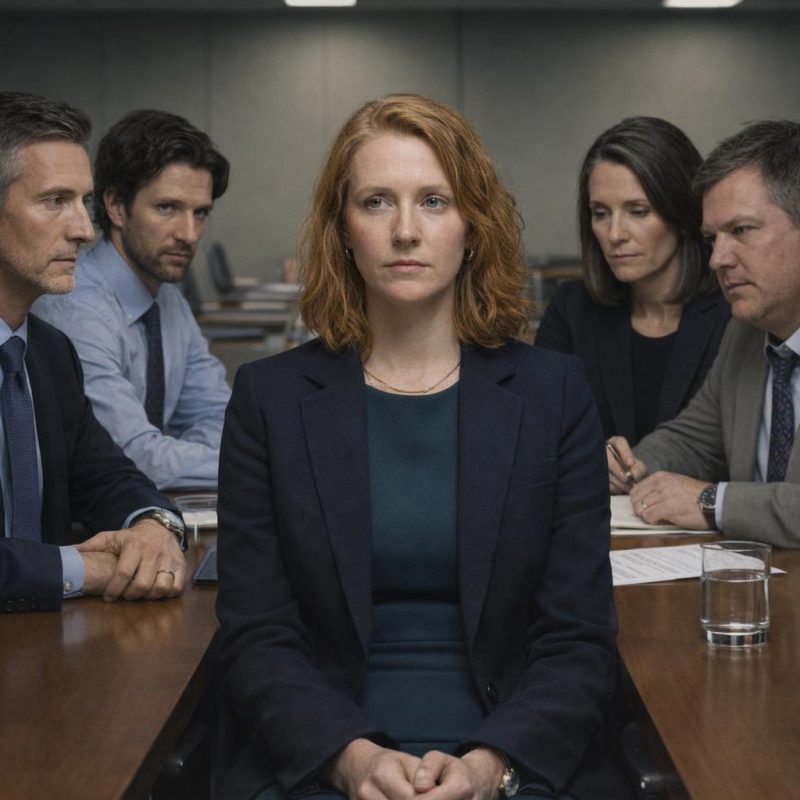 Image by RM AI
The Terminations
The formal notifications came within the week. Brittany's termination was processed quietly, the way these things usually are — a meeting, a box, a badge handed over. Michael's followed two days later, and that one moved through the building faster than any memo I'd seen in years. People talked in low voices near the coffee station and went quiet when certain names came up. I heard about it mostly through Greg, who had a way of delivering information without editorializing that I'd always appreciated. What I hadn't expected was what came after. Jennifer found me in the hallway on a Thursday afternoon, and she looked different than the last time I'd seen her — steadier, like something she'd been carrying had been set down. She told me she'd submitted a formal statement to HR. She said there had been two projects before mine, and she'd stayed quiet because she hadn't believed anyone would listen. She wasn't the only one. By the end of that week, HR had received four additional complaints from colleagues I barely knew, each one describing a pattern that looked a lot like what had happened to me. I sat with that for a long time — the fact that it hadn't started with me and might not have ended with me if nothing had been said. The weight of that wasn't triumphant. It was something quieter, and more serious, and it settled over me like the particular relief of a door finally opening after you've stopped expecting it to.
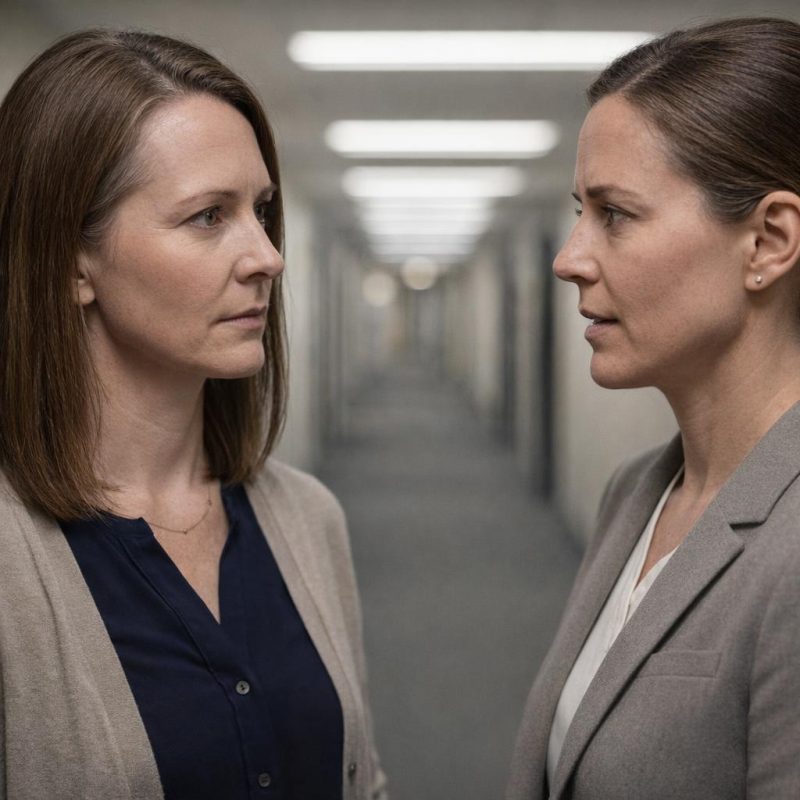 Image by RM AI
The Investigation
The board announced a comprehensive review about ten days after the terminations. The language in the internal memo was careful and corporate, but the scope was not small. They were examining promotion decisions going back two years, vendor relationships, project attribution records, and the role of board-level influence in operational hiring. Robert's name wasn't in the memo, but everyone who had been paying attention knew what the review was actually about. I was interviewed twice — once by HR and once by an outside firm the board had brought in to conduct the independent portion. I answered every question I was asked and brought documentation I'd been keeping since before the presentation. The outside firm's interviewer was thorough in a way that felt different from the internal process, and I left both sessions feeling like the record was finally complete. The company also began a review of every project Brittany had been credited on during her time there, which I understood would take months. New oversight procedures went into effect almost immediately — a dual-attribution sign-off requirement for any client-facing deliverable, which was the kind of policy that should have existed years earlier. I thought about staying. I thought about what it would mean to be part of rebuilding something that had been quietly broken for longer than anyone wanted to admit. I didn't have an answer yet, but for the first time in a long time, the question felt like it belonged to me to answer. The morning light came through my office window and I sat with that for a while.
 Image by RM AI
The Final Choice
Marianne called on a Tuesday morning, and she didn't lead with pleasantries. She said her company was formalizing the offer for the consulting director position and she wanted me to have the full details before I made any decision. She walked me through the scope, the compensation, the team I'd be working with. Then she said something I hadn't expected. She said the presentation had impressed her, but that wasn't what had made the decision easy. She said what she'd watched in that conference room — the way I'd let the record speak without pushing, without performing, without making it about anything other than the work — was the kind of judgment that couldn't be taught and couldn't be faked. She said she'd worked with a lot of people who would have handled it differently, and most of them would have been wrong to. I thought about the morning Brittany had walked into that room and presented my work to the people I'd built it for. I thought about all the late nights, the missed dinners with my sister Sarah, the version of myself that had sat in the back of that room and decided to wait. What Brittany had taken was a file. What she hadn't been able to take was the twenty-eight years of decisions and judgment and quiet, careful work that had produced it — and in the end, that was the only thing that had mattered. I told Marianne yes. She said she was glad, and I believed her. The call ended, and I sat for a moment in the particular stillness of a future that was finally, unmistakably, mine.
 Image by RM AI