My Daughter's Perfect Fiancé Was Researching Our Family History—When I Found Out Why, I Couldn't Sleep
My Daughter's Perfect Fiancé Was Researching Our Family History—When I Found Out Why, I Couldn't Sleep
The Kind of Mother I'm Not
I've never been the kind of mother who hovers. When Nicole got divorced three years ago, I didn't call every day to check on her emotional state or show up at her apartment with casseroles and unsolicited advice. She was thirty-four then, a grown woman who'd already survived a marriage that had slowly drained the light from her eyes. My job, as I saw it, was to be available when she needed me and invisible when she didn't. So when she mentioned she'd started seeing someone new, I kept my questions brief and my tone encouraging. I told myself this was healthy parenting—giving her space to rebuild her life on her own terms. She'd been through enough without her mother analyzing every choice. I genuinely believed she deserved to find happiness again without me scrutinizing whoever helped her get there. For months, our phone calls followed the same comfortable pattern: she'd mention him in passing, I'd make supportive sounds, and we'd move on to safer topics like her work at the hospital or my book club. It felt right, this restraint of mine. I was proud of myself, honestly, for not being that kind of mother. But when Nicole started using words like 'wonderful' and 'steady,' something inside me stirred that I couldn't name.
 Image by RM AI
The First Mention
The phone call came on a Tuesday evening in late April. Nicole's voice had that bright, almost nervous quality I hadn't heard since before her marriage fell apart. She told me his name was Brent, that he worked in estate appraisals, that he'd taken her to a vineyard over the weekend where he'd somehow known exactly which wine she'd prefer. 'He just pays attention, Mom,' she said, and I could hear the smile in her voice. 'Like, really pays attention. Not the way Dan pretended to listen while scrolling through his phone.' I asked the usual questions—how they'd met, how long they'd been dating, whether he treated her well. She said they'd connected through a mutual friend at a gallery opening, that it had been almost four months now, that he was different from anyone she'd dated before. More thoughtful. More present. I wanted those things for her so desperately that I pushed down the small, strange hesitation I felt when she described how interested he was in her family, in her background, in the stories I'd told her growing up. She said he was the first man since her divorce who actually listened, and I told myself that was enough reason to give him a chance.
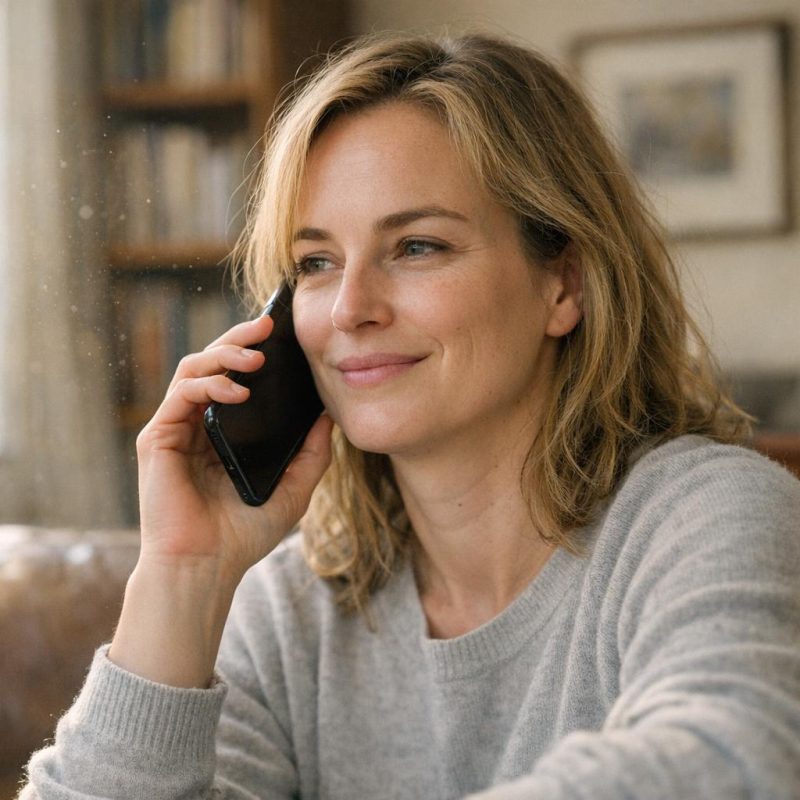 Image by RM AI
Sunday Dinner
Nicole asked if she could bring him to Sunday dinner, and I spent the entire Saturday cleaning my house in a way I hadn't in years. I roasted chicken with herbs from my garden, set the table with the good plates, even put out cloth napkins. When the doorbell rang at exactly six o'clock, I wiped my hands on my apron and opened the door to find a man with neat dark hair and a careful smile holding a bottle of wine that probably cost more than my usual grocery budget. 'Mrs. Ashcroft,' he said, extending his hand. 'I've heard so many wonderful things about you.' His handshake was firm but not aggressive, his eye contact steady but not intense. Everything about him seemed calibrated perfectly. During dinner, he complimented the chicken twice, asked thoughtful questions about my nursing career, and laughed at appropriate moments without ever dominating the conversation. Nicole kept glancing at him with this hopeful expression that made my chest ache. I wanted to like him. I genuinely tried to like him. But there was something in the way he looked around my living room between courses, his gaze pausing on the bookshelves, the photographs, the small antiques I'd collected over the years. He was polite, punctual, and quick to compliment my cooking—so why did I feel like I was being studied?
 Image by RM AI
The Watchful Quality
I kept trying to put my finger on it throughout the meal. It wasn't anything he said—his conversation was perfectly pleasant, almost too pleasant in its lack of rough edges. It wasn't his manners, which were impeccable to the point of being slightly formal for someone in his early forties. Nicole had mentioned he was forty-two, five years older than her, which didn't bother me in itself. What bothered me was something I couldn't articulate, even to myself. While Nicole was in the kitchen getting dessert, Brent stood and walked over to the mantelpiece where I kept my collection of small porcelain boxes. He didn't touch them, but his eyes moved over each one with a kind of focused attention that made me uncomfortable. Then his gaze shifted to the side table, to the bookshelf, to the framed watercolor my mother had painted. It was the quality of his attention that unsettled me. Not rude. Not intrusive. Just intensely observational in a way that felt professional rather than casual. When Nicole returned with the pie, he turned back with that same careful smile, and I wondered if I'd imagined the whole thing. It wasn't rudeness or arrogance—it was the way his eyes moved around my living room, as though cataloging every detail.
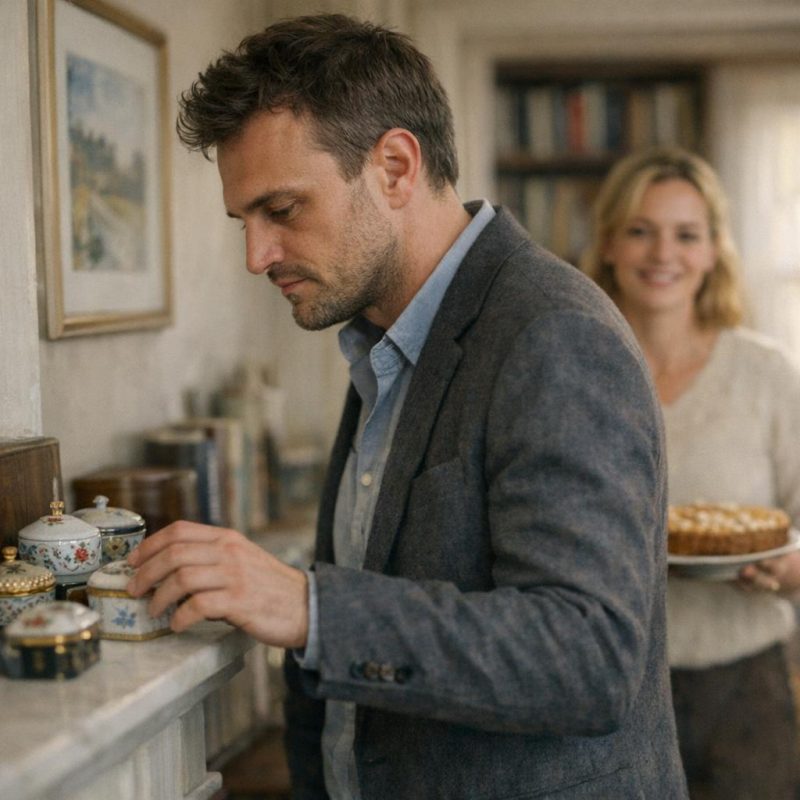 Image by RM AI
Nicole's Defense
After Brent left, Nicole helped me clear the dishes. I could feel her watching me, waiting for my verdict. 'So?' she finally asked, her voice trying for casual but landing on anxious. 'What did you think?' I dried a plate slowly, choosing my words carefully. 'He seems very polite,' I said. She deflated slightly at 'polite,' clearly hoping for something more enthusiastic. 'He was nervous,' she explained, loading forks into the dishwasher. 'He really wanted to make a good impression on you. He knows how much you mean to me.' I nodded, hating the doubt creeping into my thoughts. This was exactly the hovering I'd promised myself I wouldn't do. 'He seems to care about you,' I offered, which was true enough. She brightened at that, launching into a story about how thoughtful he'd been when she had the flu last month. I listened and made the right sounds, but I kept thinking about the way his eyes had lingered on my mother's emerald ring when I'd gestured during dinner. Just a fraction of a second too long. Nothing I could point to as evidence of anything except my own paranoid imagination. I wanted to believe her, but the way he had looked at my mother's ring stayed with me longer than his smile.
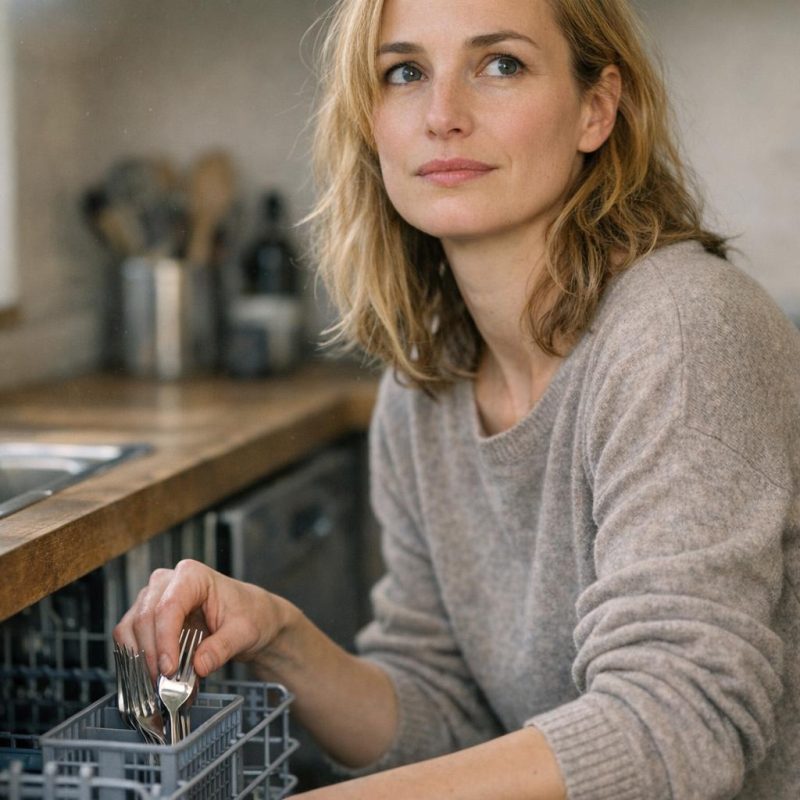 Image by RM AI
Perfect Stories
Over the next few weeks, Sunday dinners became a regular occurrence. Each time, Brent arrived with wine or flowers or once, a book he thought I'd enjoy based on something I'd mentioned in passing. He was attentive in that way, always remembering details. He'd share stories about his work appraising estates, about growing up in Connecticut, about his late parents and his childhood summers. The stories were always well-constructed, with vivid details and satisfying conclusions. There was the one about learning to sail from his father, the one about his mother's antique clock collection, the one about the mentor who'd taught him to recognize authentic pieces from reproductions. They were the kind of anecdotes that should have made him seem more real, more knowable. But instead, they had a polished quality that made me feel like I was listening to someone who'd practiced these stories in a mirror. Nothing ever went unexpectedly. Nothing was awkward or embarrassing or messily human in the way real memories usually are. Nicole hung on every word, clearly delighted by how well we were all getting along. And maybe I was being unfair, looking for problems where none existed. Each story had a neat beginning, middle, and end—nothing messy, nothing revealing, nothing real.
 Image by RM AI
The Chair and the Wine
The gestures continued with clockwork regularity. Every single time Nicole stood up, Brent pulled out her chair. When I brought dishes to the table, he'd leap up to help before I could even set them down. He'd refill water glasses before they were half empty, offer to help with dishes before the meal was finished, and always—always—complimented something specific about the food or the house. It was exhausting to watch, honestly. Not because the gestures themselves were wrong, but because they never varied, never felt spontaneous. It was like he was working from a checklist of 'Things a Good Boyfriend Does.' I caught myself analyzing his every move, which made me feel petty and small. What kind of mother critiques a man for being too polite, too helpful, too attentive to her daughter? Nicole certainly didn't see anything wrong with it. She'd squeeze his hand and give me these grateful looks, clearly thrilled that we were getting along so well. And we were getting along, on the surface. He never said anything objectionable. He never did anything I could point to as a red flag. But watching him felt like watching a performance that never dropped, not even for a moment. It was the kind of chivalry that should have felt warm, but instead it felt like I was watching someone audition for a part.
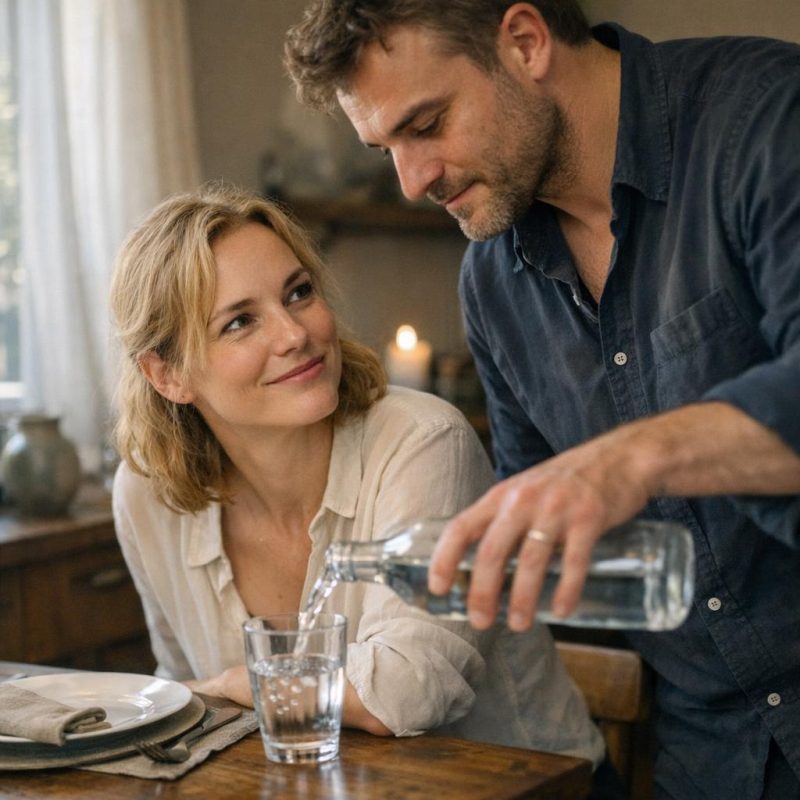 Image by RM AI
The Question About Photographs
It was during the fifth or sixth Sunday dinner when I noticed him standing in front of my wall of family photographs. I'd gone to the kitchen to check on the roast, and when I came back, he was there in the hallway, studying the frames with that same focused attention I'd noticed before. 'Is this your mother?' he asked, pointing to a black-and-white photo from the 1950s. I nodded, and he moved along the wall, asking about each person. My father. My aunt Margaret. My grandmother on my wedding day. His questions were casual, conversational, the kind anyone might ask when looking at family photos. But then he asked about my uncle James, and specifically whether he was still alive. Then about my cousin Patricia. Then about my mother's sister Eleanor. One by one, he was working through the photographs, and each time he'd pause and ask, almost as an afterthought, whether that person was still living. Nicole was setting the table and didn't seem to notice the pattern. I answered his questions because not answering would have seemed strange, but something cold settled in my stomach. He asked which relatives were still living, and the casualness of his tone made the question feel anything but casual.
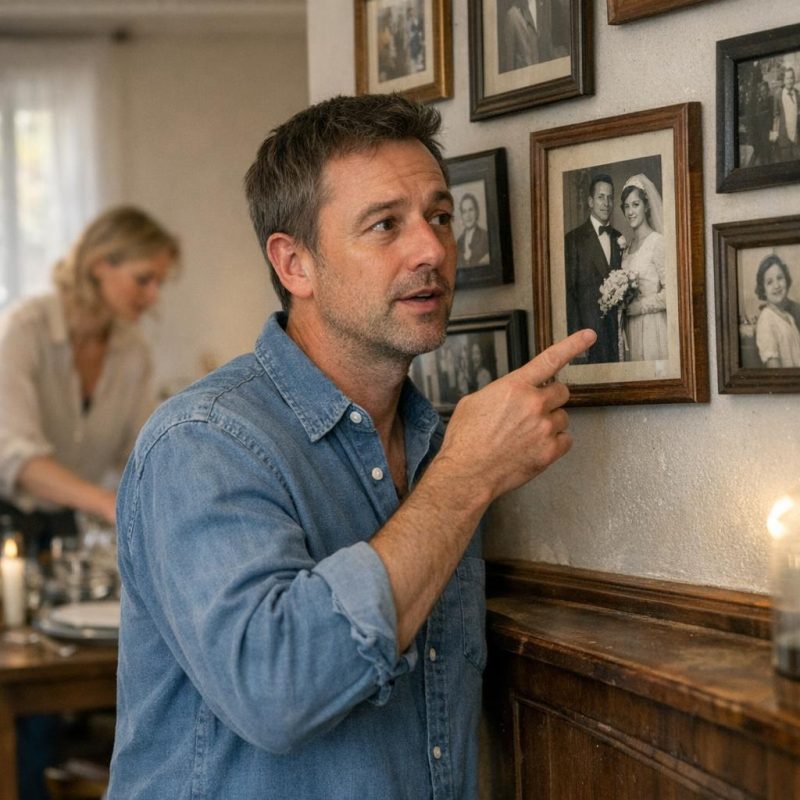 Image by RM AI
Nicole's Happiness
The following Tuesday, Nicole stopped by for coffee. She curled up on my sofa with her hands wrapped around the mug, and her face had this glow I hadn't seen in years. Not since she was a teenager talking about her first crush. She told me about a trip she and Brent were planning, some weekend getaway to a winery in the Hudson Valley. The way she smiled when she said his name made my chest ache. This was what I'd wanted for her. After two years of watching her rebuild herself following that disaster of a divorce, seeing her this happy should have filled me with relief. Instead, I sat there nodding and smiling while my stomach twisted into knots. I kept thinking about him standing in front of those photographs, asking which relatives were still alive. I thought about the careful way he'd moved from frame to frame, like he was taking inventory. But Nicole was glowing. She was actually glowing. And what was I supposed to say? 'Honey, your fiancé asks too many questions about dead relatives'? How could I tell my daughter that her joy made me nervous without sounding like the hovering mother I promised not to be?
 Image by RM AI
The Ring Question
That Sunday, Brent helped me clear the dinner dishes. Nicole had gone to answer her phone in the other room, and it was just the two of us in the kitchen. He was drying a serving platter when he said, almost casually, 'That emerald ring you wear sometimes—it's beautiful.' I thanked him, rinsing suds from a wine glass. Then he asked if it was the piece from Savannah or the one that disappeared after my father died. My hands went still in the dishwater. The ring had two histories, both complicated, both private. One involved my grandmother's jewelry from Georgia that got split up among cousins in the 1970s. The other was a ring that vanished from my father's safe deposit box the week after his funeral in 1998. Family drama we'd never fully resolved. I'd never mentioned either story to Nicole in front of Brent. I'd barely mentioned them to Nicole at all—they were old wounds, family tensions I didn't like to revisit. The water kept running over my frozen hands. He asked if it was the piece from Savannah or the one that disappeared after my father died—and I had never told him either story.
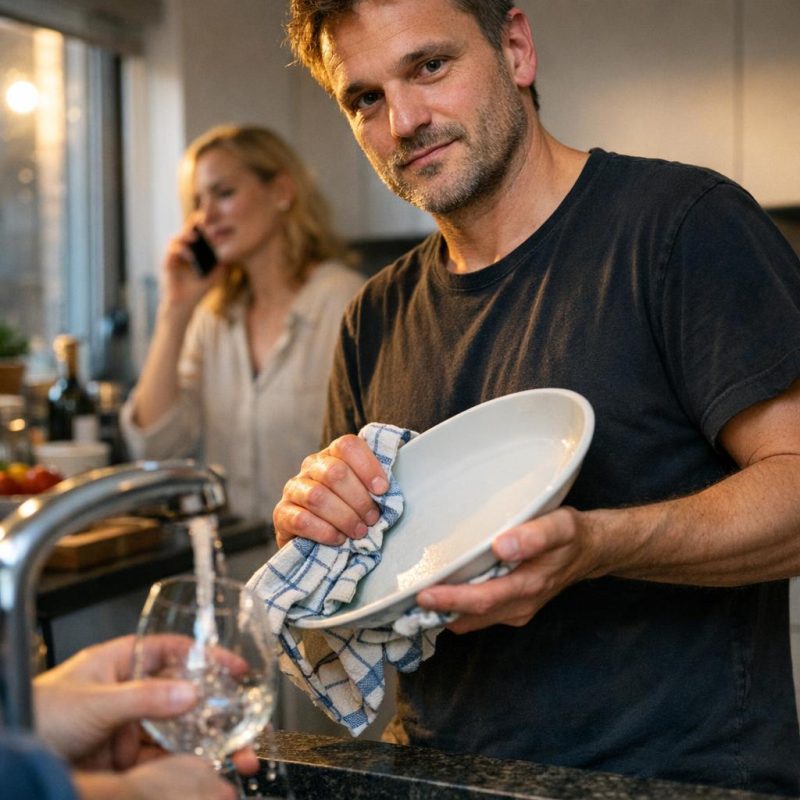 Image by RM AI
The Dropped Plate
The plate nearly slipped from my grip. I caught it with both hands, suds dripping onto the floor, and forced out a laugh that sounded brittle even to my own ears. 'Where did you hear about that?' I asked, trying to keep my voice light. Casual. Like I was just curious and not suddenly terrified. He smiled that easy smile of his and said, 'Nicole must have mentioned it at some point.' But when I turned to look through the doorway where my daughter stood in the dining room, her phone still in her hand, she was staring at both of us with this puzzled expression. 'Mentioned what?' she asked. I watched Brent's face. He didn't miss a beat. 'The family jewelry,' he said smoothly. 'You were telling me about your grandmother's things.' Nicole's eyebrows drew together. 'I don't think I ever—' But Brent was already moving on, asking if I needed help with the rest of the dishes, changing the subject so naturally that Nicole shrugged and went back to her phone. Brent smiled and said Nicole must have mentioned it, but when I looked at my daughter, her face was blank with confusion.
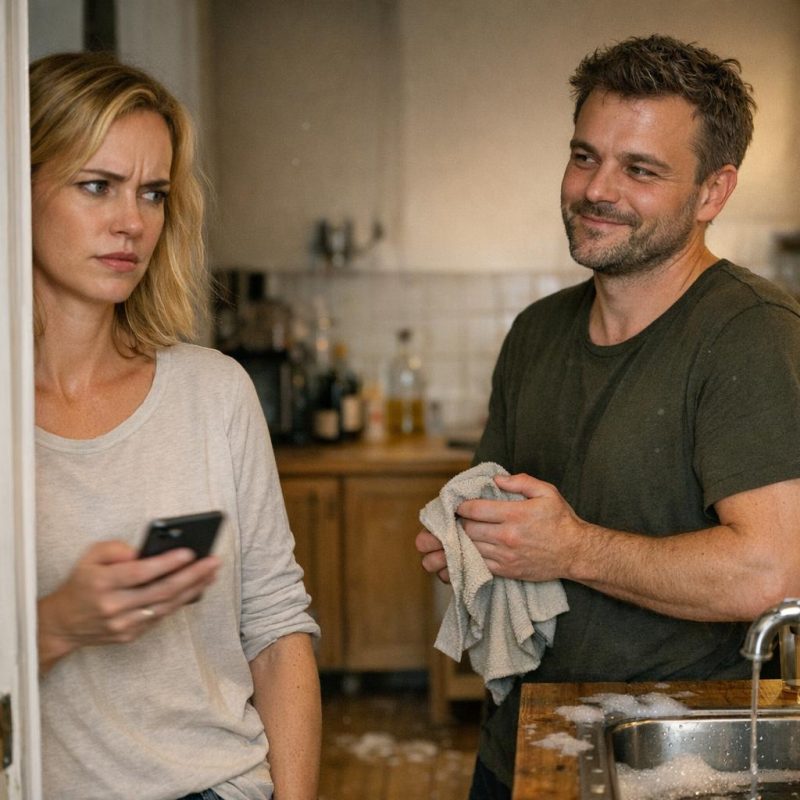 Image by RM AI
The Splinter
That night, I lay in bed staring at the ceiling while Frank snored softly beside me. The digital clock read 2:47 AM. Then 3:12. Then 3:38. I kept replaying the moment in the kitchen, trying to find some reasonable explanation. Maybe Nicole had mentioned the ring and just forgot. People forget conversations all the time. Or maybe I'd posted something about it on Facebook years ago, some throwaway comment about family heirlooms. He could have seen that. There were a dozen innocent explanations. But none of them felt right. The question had been too specific. Too knowing. It lodged in my mind like a splinter under skin—small enough to ignore, sharp enough to make itself known every time I tried to move past it. I told myself I was being paranoid. I told myself I was looking for problems because I was afraid of Nicole getting hurt again. I told myself a lot of things in those dark hours before dawn. I told myself I was overreacting, but the more I tried to forget it, the sharper it became.
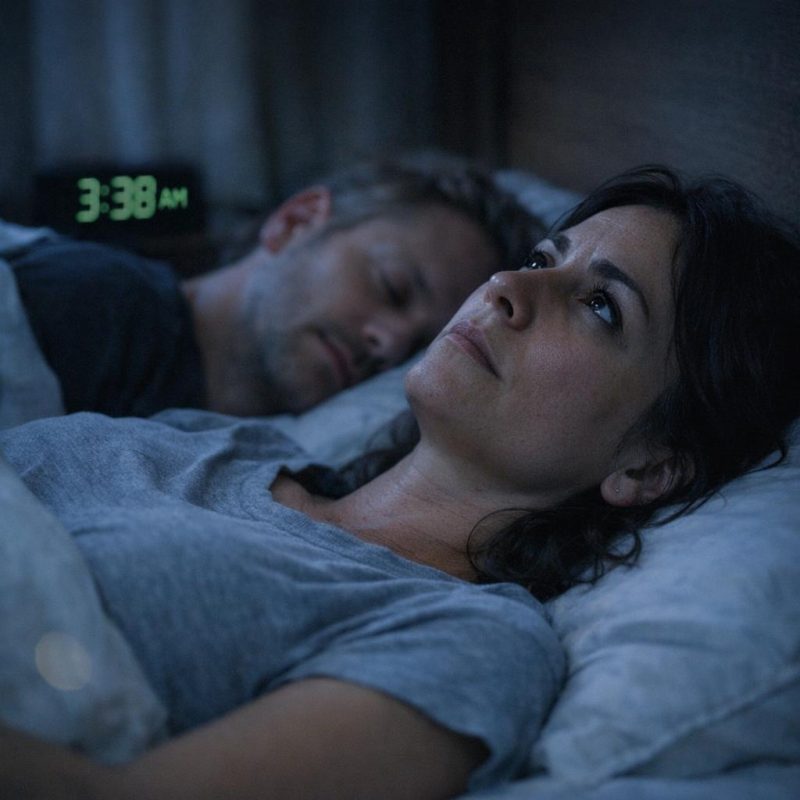 Image by RM AI
Paying Attention
Two weeks later, we hosted a small gathering for Nicole's birthday. Nothing fancy, just family and a few close friends. I made lasagna, Frank grilled vegetables, and everyone crowded into our living room with paper plates and plastic wine cups. I found myself watching Brent throughout the evening. Not obviously—I didn't want anyone to notice—but I tracked his movements the way you might watch a stranger who'd wandered into your home. At one point, I saw him drift away from the conversation near the kitchen and move back toward that hallway. The wall of photographs. He stood there for several minutes, and from my angle near the dining room, I could see his head tilting slightly as he examined each frame. He wasn't just glancing. He was studying them. Reading them. Memorizing them. When he realized I was watching, he turned and gave me that warm, open smile. Waved his wine cup slightly in greeting. Nothing in his expression suggested he'd been caught doing anything unusual. He studied the frames like someone reading labels in a museum, and when he caught me watching, he smiled as if nothing unusual had happened.
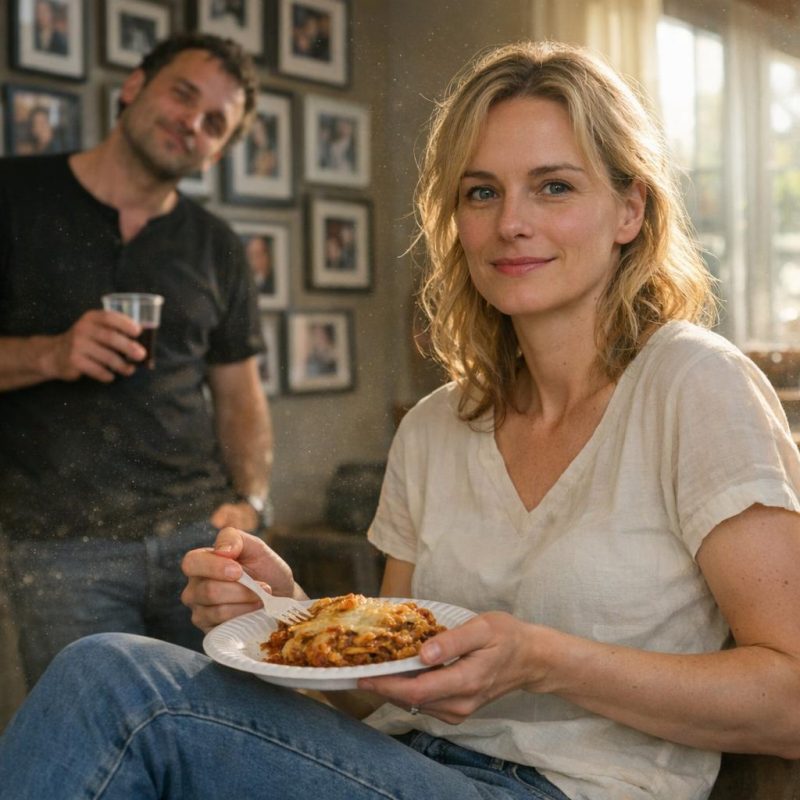 Image by RM AI
Sentimental Versus Practical
A week after the birthday gathering, Brent arrived early to drop off some wine he'd picked up for dinner that evening. Nicole was still at work. It was just the two of us in the living room, and he glanced around at the antique side tables, the inherited china cabinet, my grandmother's writing desk in the corner. 'You have such beautiful things,' he said. 'Do you ever think about which pieces you'd want to pass down?' It was the kind of question that could sound completely innocent. Lots of people talk about inheritance planning. But then he added, 'I mean, which items have sentimental versus practical value?' He said it with a little laugh, like it was just a casual observation. Like he was making conversation. But his eyes stayed on mine, waiting. Not glancing away the way people do with throwaway comments. He wanted an answer. A real one. I felt my shoulders tense. 'Oh, I haven't really thought about it,' I lied. 'Most of it's just old furniture.' His smile didn't waver, but his eyes stayed on mine a beat too long, waiting for an answer I suddenly didn't want to give.
 Image by RM AI
The Genealogy Complaint
Nicole stopped by on a Wednesday afternoon, no particular reason, just to say hello. We sat at the kitchen table drinking iced tea, and she started venting about wedding planning stress. The venue, the caterer, the endless decisions. Then she shifted topics and said, 'Brent's been driving me crazy with this whole genealogy thing.' I set down my glass carefully. 'Genealogy?' She rolled her eyes in that affectionate, exasperated way. 'He's obsessed with those ancestry websites. He keeps asking me about your side of the family—dates, places, full names. I told him I barely remember half that stuff.' She took a sip of tea. 'Last night he wanted to know the exact year your parents got married. I mean, who cares? It's sweet that he's interested, I guess, but it's kind of annoying.' She laughed when she said it. A light, dismissive laugh that said this was just a quirky thing her fiancé did, nothing to worry about. But I didn't laugh. I felt something cold settle in my chest.
 Image by RM AI
The Maiden Name
Nicole was still talking, shifting to complaints about bridesmaid dresses, but I'd stopped listening. My mind had snagged on the genealogy comment and wouldn't let go. 'What kind of information is he looking for?' I asked, trying to sound casually curious. Nicole shrugged. 'Family tree stuff. Birth dates, where people lived. He asked for the exact spelling of your mother's maiden name the other day—wanted to make sure he had it right for some records search he's doing.' She picked at the condensation on her glass. 'I think he's trying to create this whole elaborate family tree as a wedding gift or something. It's sweet, but honestly, I wish he'd just relax about it.' She thought he was being thoughtful. Romantic, even. A fiancé so invested in her family that he wanted to document every branch and leaf of our history. But I was thinking about him standing in front of the photographs, asking which relatives were still alive. I was thinking about the emerald ring and questions he shouldn't have been able to ask. She thought he was trying too hard to connect with the family, but I was starting to think he was connecting to something else entirely.
 Image by RM AI
Property Questions
'Oh, and there was this weird thing,' Nicole said, setting down her glass. 'He asked if our family ever owned property outside of town. Like, way back. Land or houses or whatever.' She laughed a little. 'I told him I had no idea. I mean, how would I even know that?' I kept my expression neutral, but my pulse quickened. Property ownership. That was public record information, the kind of thing you could trace if you knew where to look. 'Did he say why he wanted to know?' I asked. Nicole shrugged again. 'Same thing, I guess. The family tree project. He mentioned something about wanting to know where everyone lived, the full picture.' She rolled her eyes affectionately. 'Honestly, he's more interested in our family history than I am.' I thought about my grandmother's house, the one that had been sold after she died. I thought about my great-aunt Eleanor's property upstate, long gone now. What was he looking for in deeds and ownership records? What could possibly matter about where people had lived decades ago? I nodded and smiled, keeping my voice light, asking Nicole about the wedding venue instead. But inside something colder was taking shape—a suspicion I wasn't ready to name.
 Image by RM AI
The Printer Accident
Two days later, Nicole stopped by to print some work documents. Her printer was acting up, and mine was closer than going to the office. I made her tea while she stood in my home office, cursing at the slow connection. 'Got it,' she called out. 'Thanks, Mom. You're a lifesaver.' She grabbed her pages from the tray, kissed my cheek, and rushed out to make her meeting. I went back to finish my tea, then wandered into the office to turn off the printer. That's when I saw it. One sheet of paper still sitting in the output tray, face-down. Nicole must have grabbed her stack without noticing this one had come through first. I picked it up, intending to call her, assuming it was part of her work presentation. But it wasn't. The header read 'FamilySearch.org Results – Ashcroft Family Tree.' My mother's maiden name was listed three times down the page. My grandmother's name. My great-aunt Eleanor's obituary, dated 1998. The page was dated from a search conducted four months ago. And there, in the top right corner in small gray text, was the account information. It was a search results page with my family's names all over it—and at the top corner was Brent's email address.
 Image by RM AI
Names and Dates
I sat down at my desk, the paper trembling in my hands. This wasn't something Nicole had printed. This had been in Brent's email, somehow synced or forwarded, and had come through when she connected to my printer. My eyes moved down the page, seeing my family laid out like specimens under glass. Eleanor Ashcroft Morrison, died 1998, survived by niece Margaret Ashcroft Hayes. That was my mother. There was a scanned census record from 1940 showing my grandparents' address. A marriage certificate. A property deed transfer from 1952. Someone had clicked on every link, followed every thread. I pulled up my computer and logged into my email, my fingers clumsy on the keys. Brent's name in the search history. I found the forwarded email Nicole must have sent him from my printer settings weeks ago, giving him access to print remotely when he needed it. A courtesy she'd extended without thinking. I clicked through to his recent print jobs. My stomach dropped. There were newspaper clippings, scanned documents, records going back decades—this wasn't casual curiosity.
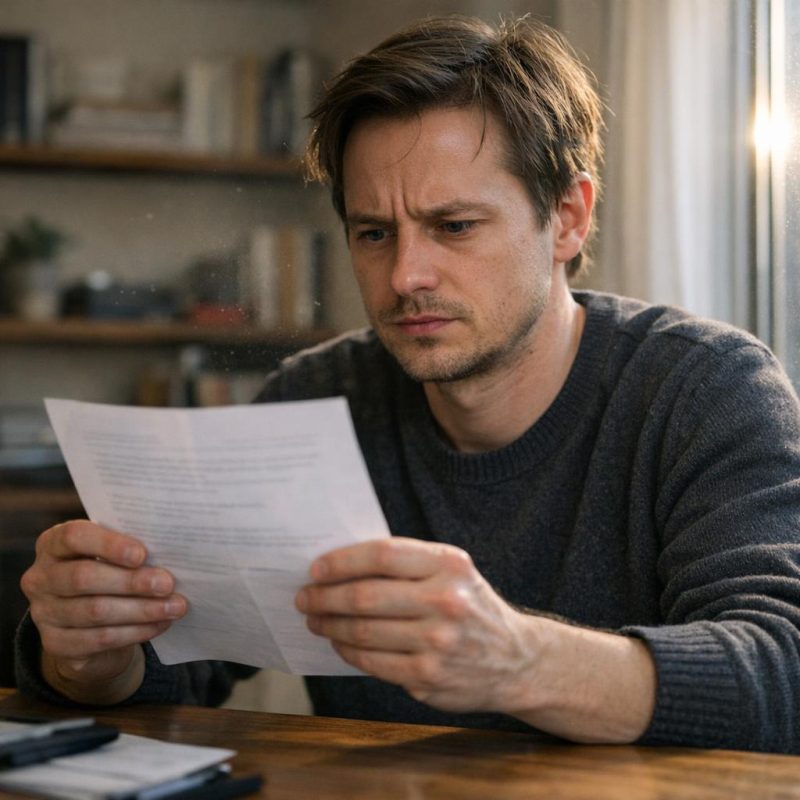 Image by RM AI
The Dates Don't Match
I printed everything I could find in that print history. Page after page came sliding into the tray, and I laid them across my desk like cards in a terrible hand of solitaire. Census records. Birth certificates. Obituaries for relatives I barely remembered. But it was the dates that made my blood go cold. A property records search dated seven months ago. A newspaper archive dive dated eight months back. He'd proposed to Nicole five months ago. They'd met, according to Nicole's version of their love story, about ten months ago at that friend's art gallery opening. But here was a search for my mother's maiden name dated a full year back. Another search, even earlier, for variations of the Ashcroft surname in our county. He'd been researching my family before he ever met my daughter. Or had he met her because of the research? Had he found her because of us? The timeline made me feel sick, like the floor had tilted and I was sliding toward something I couldn't see. He had been researching my family long before he claimed to fall in love with my daughter.
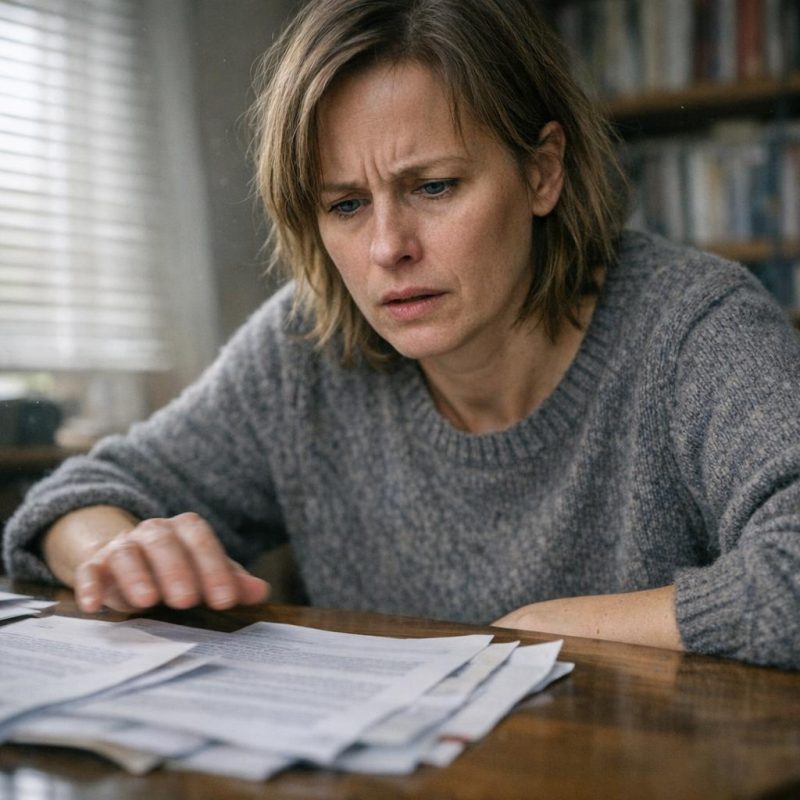 Image by RM AI
Confronting Nicole
I called Nicole and told her to come over immediately. When she arrived, I handed her the printouts without saying a word. I watched her face as she read, saw confusion flicker across her features, then something harder. 'Where did you get these?' she asked. 'From your fiancé's print history. They came through my printer.' Her jaw tightened. 'You went through his documents?' 'They printed to my machine, Nicole. I didn't go through anything. This came to me.' She set the papers down on the table, her hands flat against them like she could press them out of existence. 'So he was researching family history. We talked about this. He wants to make a family tree.' 'Look at the dates,' I said, keeping my voice steady. 'Some of these searches are from before he proposed. Before he even met you, according to what you told me.' Nicole picked up one of the pages, squinting at the timestamp. I saw the moment it registered. Her eyes widened slightly, then narrowed. 'Maybe... maybe he was just interested in genealogy in general. Maybe he found our family while doing his own research.' She said maybe he was just trying to learn family history because he cared, but even as she said it, her voice wavered.
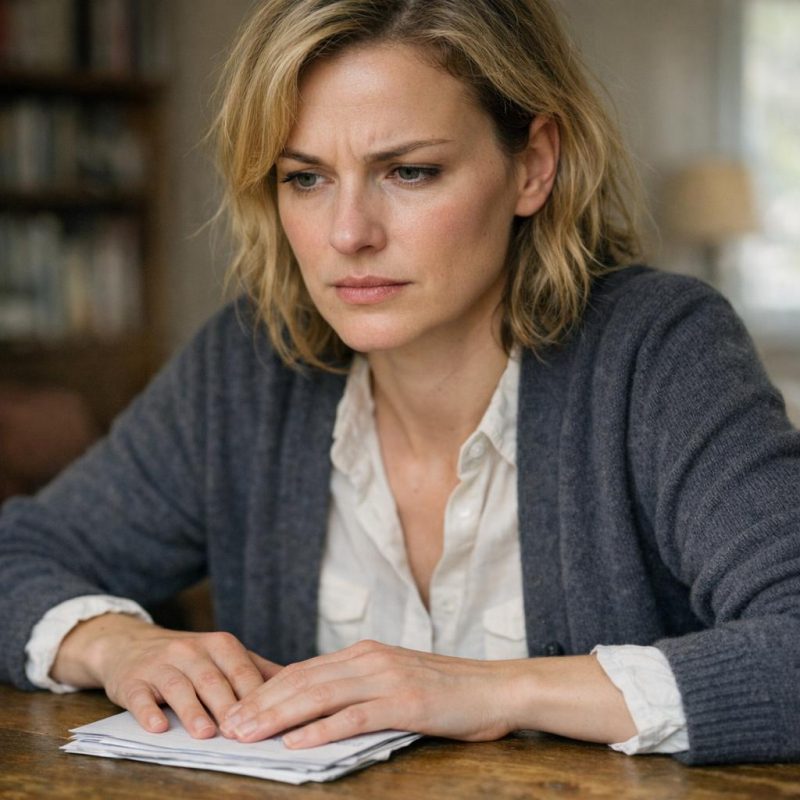 Image by RM AI
The Forced Choice
'Nicole, he was looking up our family before he knew you existed.' My daughter stood up, pacing to the window. 'You don't know that. You're making assumptions.' 'I'm reading dates on search results.' 'So he did some Googling. That doesn't mean—' She spun around. 'What? What are you actually saying, Mom? That he planned to meet me? That's insane.' The anger in her voice was sharp, but underneath it I heard something else. Fear, maybe. Doubt. 'I'm saying something isn't right. I'm saying we should ask him directly about this.' 'We?' Nicole's laugh was bitter. 'You want me to interrogate my fiancé because you found some printouts?' 'I want you to ask him why he was researching your family before he met you.' 'He loves me,' she said, and her voice cracked just slightly. 'He wants to marry me. Why can't you just be happy for me?' It was the question daughters ask when they feel cornered, when they're forced to choose between the person who raised them and the person they've chosen. She said I was seeing shadows where there was only light, but I could tell she was trying to convince herself as much as me.
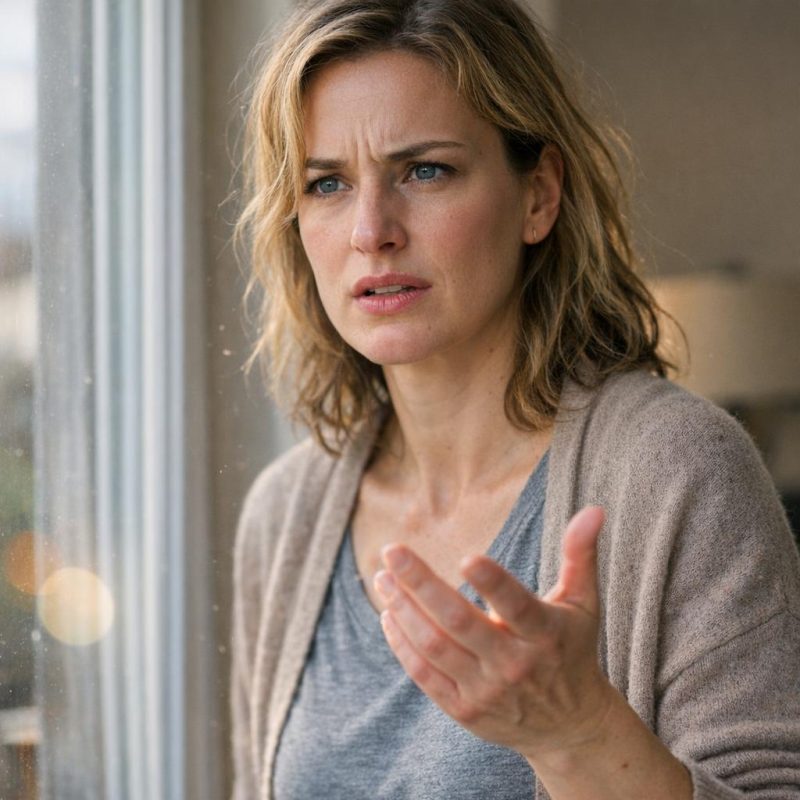 Image by RM AI
The Night of No Sleep
That night, I didn't sleep. I lay in bed staring at the ceiling, turning everything over in my mind like puzzle pieces that wouldn't fit together. The ring. The questions about family members. The genealogy research that predated his relationship with Nicole. What connected them? What was he actually looking for? It wasn't money—our family wasn't wealthy. Nicole had a decent job, but nothing that would make her a target for a con artist. I had my house and my retirement savings, comfortable but hardly a fortune worth scheming over. So what did we have that he wanted? What had he been searching for in all those records, all those documents going back generations? I got up around three in the morning and made tea I didn't drink. I pulled out old photo albums, looking at the faces of relatives who'd passed, wondering if they held some answer I couldn't see. My great-aunt Eleanor, who'd left me her jewelry. My grandmother, who'd lived in that big house on Maple Street. My mother, who'd kept so many family stories to herself. What had Brent found in the public records that made him pursue my daughter? If he wasn't after Nicole's money, and he wasn't after mine, then what had he been searching for all those months?
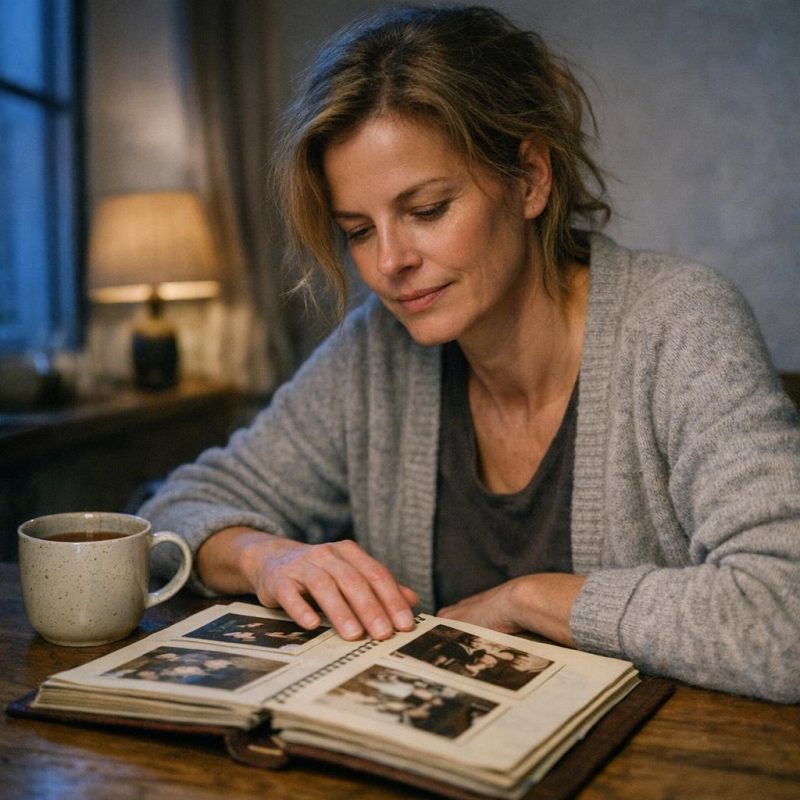 Image by RM AI
Online Search
The next morning, exhausted and running on no sleep, I opened my laptop and started searching. I typed my mother's name into Google. Then my grandmother's. Then variations of our family name paired with our town, our county, our state. I clicked through page after page of results—old newspaper articles, historical society records, property transfers, genealogy forums where strangers had posted family trees. I didn't know what Brent had found, but I could retrace his steps. I could see what he'd seen. My mother's obituary came up, then her parents' marriage announcement from 1945. There was a historical society mention of my great-grandfather's hardware store. A property deed. A mention in a book about local businesses. Nothing seemed significant. Nothing explained why someone would spend months researching my family before engineering a relationship with my daughter. But I kept clicking, kept searching, kept digging through the digital remnants of my family's past. Somewhere in these records was the answer. Somewhere in this history was whatever had made Brent think we were worth the deception. I didn't know what I was looking for, but I knew I'd recognize it when I saw it.
 Image by RM AI
The Society Column
Around three in the afternoon, I found it. I'd been clicking through digitized archives from the local historical society when a scanned society column from 1962 appeared on my screen. The image was grainy, the text faded, but I could make out the words clearly enough. It was a feature about a museum benefit at the old Riverside Hotel—one of those charity galas people used to dress up for back when my mother was young. There was a list of attendees, and near the bottom, a mention of my great-aunt Eleanor. I'd heard stories about her. She'd been wealthy, childless, married to some businessman who'd died young. The column noted that she had 'graciously loaned the Ashcroft emerald' for the evening's display of notable regional treasures. I stared at the phrase. The Ashcroft emerald. I read it again, my pulse quickening. The column described it as 'a stunning example of turn-of-the-century craftsmanship, notable for its clarity and size.' I looked down at my hand, at the ring I'd been wearing for months. The emerald caught the afternoon light streaming through my window, throwing small green reflections across my desk. Ashcroft emerald—two words I had never heard together, describing a ring I'd worn on my hand for years.
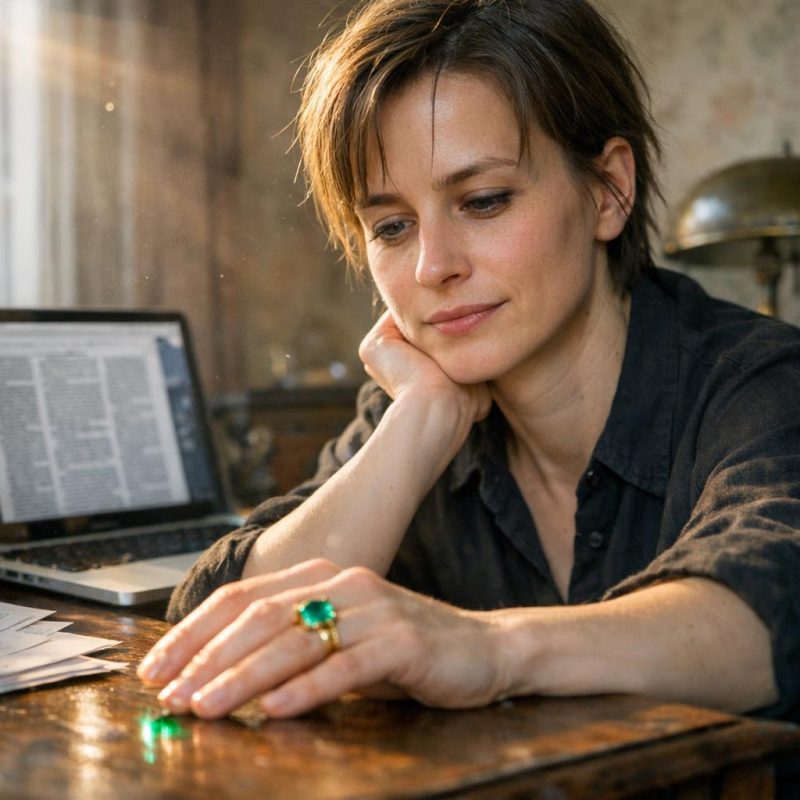 Image by RM AI
The Photograph Caption
I kept searching, my hands trembling slightly on the keyboard. Twenty minutes later, I found a photograph. It was from a 1968 article in a now-defunct regional magazine about prominent families and their heirlooms. The image quality was poor, but I could make out a woman's hand—the caption identified her as Mrs. Eleanor Pritchard, my great-aunt—displaying an emerald ring. The same setting. The same stone. The caption was more detailed than the society column had been. It described the ring's 'remarkable provenance' and mentioned that it had 'attracted interest from collectors and historians of fine jewelry' over the years. Collectors. The word jumped out at me like a flashing sign. I sat back in my chair, feeling something cold settle in my chest. This wasn't just a family heirloom passed down through generations because someone thought it was pretty. This was something people knew about. Something people looked for. Something that had a name and a history that existed completely outside my understanding of it. I'd thought I was wearing my mother's ring, a sentimental piece with personal meaning. But apparently, I'd been walking around with something that had its own Wikipedia entry in the world of antique jewelry. Collectors—the word made my stomach turn, because suddenly everything Brent had done started making a different kind of sense.
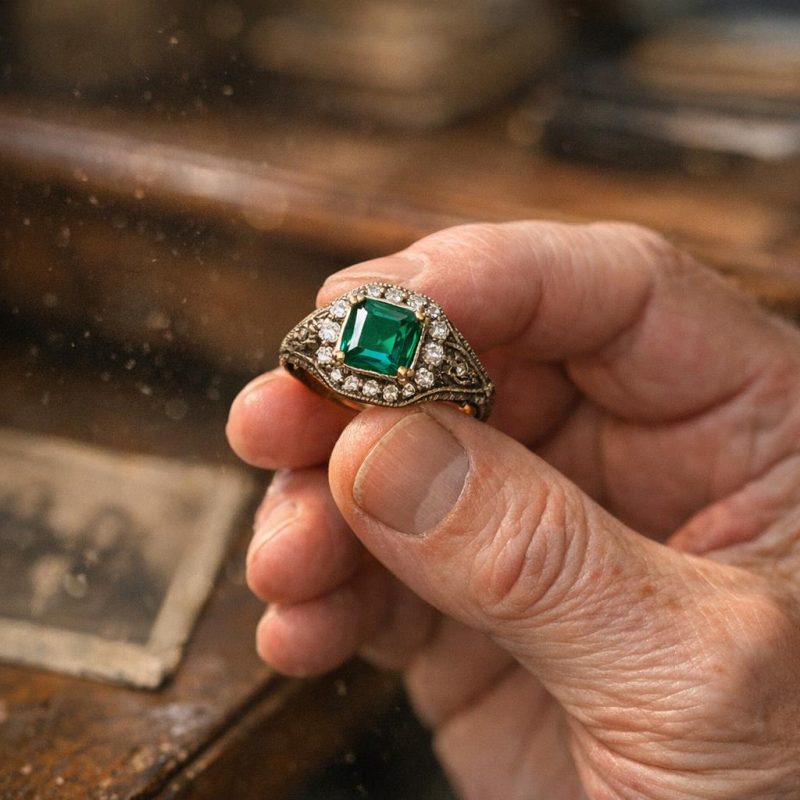 Image by RM AI
The Ring I Thought I Knew
I took the ring off my finger and held it up to the light. It looked exactly the same as it always had—the deep green stone, the delicate gold setting, the small diamonds surrounding the emerald like stars. But everything was different now. I'd worn this ring nearly every day since my mother died, finding comfort in the weight of it, in the way it connected me to her. When I looked at it, I'd seen her hands, her smile, the way she'd twist it absently when she was thinking. I'd seen birthday parties and holiday dinners and the afternoon she'd placed it on my finger and told me it was mine now. That's what this ring had meant to me. That's what I'd thought it was. But now I was holding the Ashcroft emerald, and I didn't know what that meant at all. I didn't know its full history or its value or why collectors would care about it. I didn't know how many people might recognize it or what they'd do to get it. I only knew that somewhere out there, someone had known enough to come looking for it. Someone had traced it through decades of family history until they'd found Nicole. To me it had always been my mother's ring, but to someone else—to Brent—it was something worth hunting.
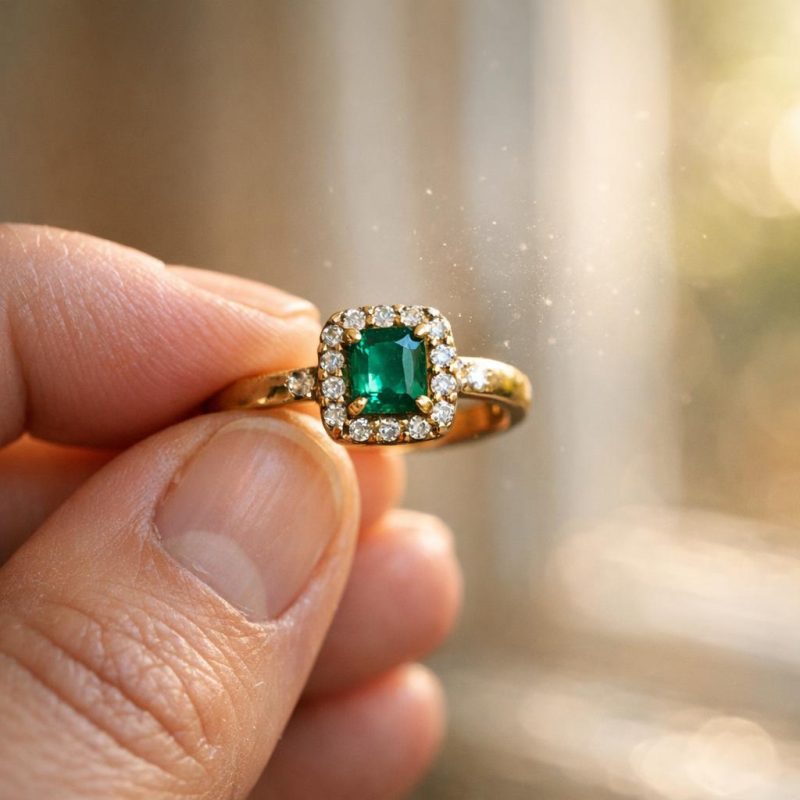 Image by RM AI
Calling Elaine
I needed to talk to someone who understood jewelry, who could tell me what I was really dealing with. That's when I remembered Elaine. My cousin Elaine—we'd grown up together, though we'd drifted apart over the years—had worked at Christie's auction house in New York for nearly two decades before retiring. If anyone could explain what the Ashcroft emerald actually was, it would be her. I found her number and called before I could talk myself out of it. She picked up on the third ring, surprised to hear from me. We exchanged brief pleasantries, and then I cut to the point. 'Elaine, I need to ask you about something. I have a ring—it was my mother's, but it belonged to your aunt Eleanor before that. An emerald ring.' I described it in detail, the setting, the stone, everything I could remember. 'Does that sound familiar to you?' I asked. There was a silence on the line that lasted too long, and when Elaine spoke again, her voice was careful and tight.
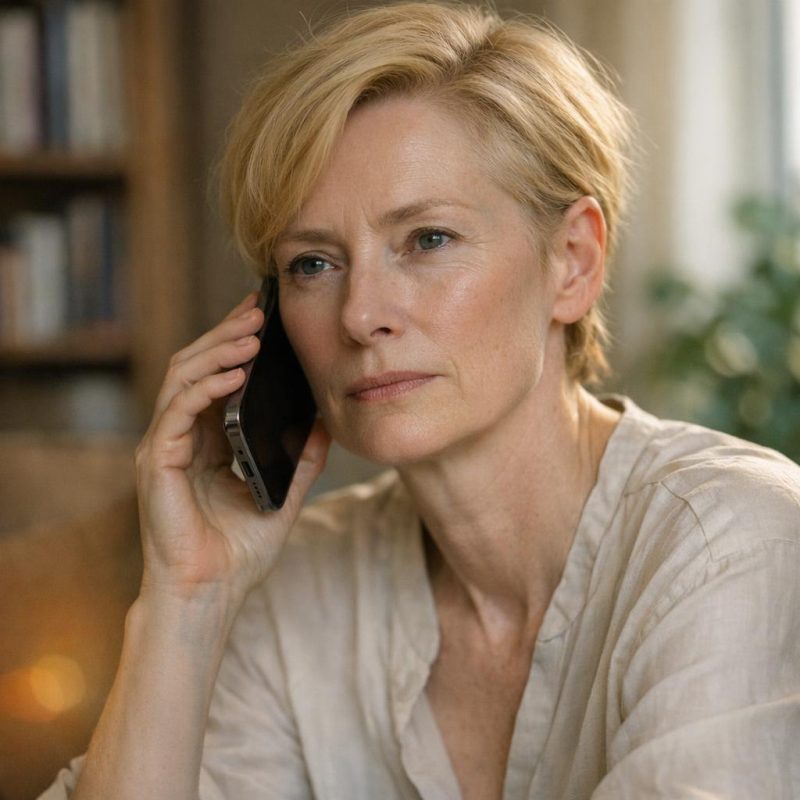 Image by RM AI
The Appraisal Question
'Pamela,' she said slowly, 'have you ever had that ring properly appraised?' I told her no, that I'd never thought about it, that it had always just been a family piece. Another pause. I could hear her breathing, could almost feel her choosing her words. 'When did your mother give it to you?' she asked. I told her after she died, that it had been in her will. 'And you've been wearing it?' Her voice had an edge now, something that sounded almost like alarm. 'Yes,' I said. 'Every day. Why? What's wrong?' I was gripping the phone so hard my knuckles had gone white. The ring sat on my desk in front of me, and I stared at it like it might suddenly transform into something else entirely. 'Elaine, you're scaring me. What is this ring?' She exhaled, a long slow breath that did nothing to calm the racing of my heart. Elaine's next words came slowly, as if she was choosing them with great care: 'Pamela, that ring has a history you need to know about.'
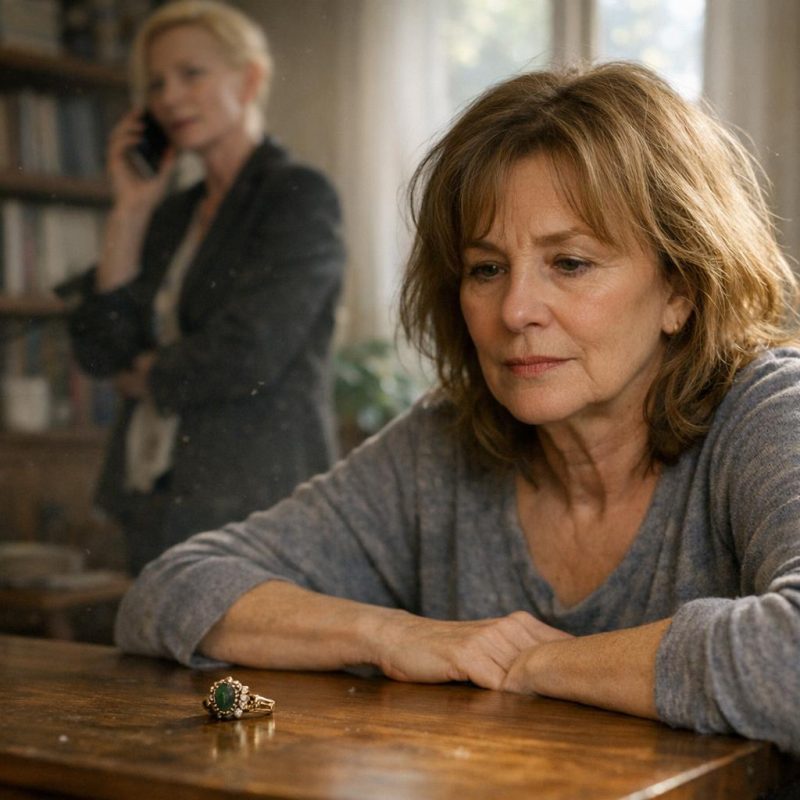 Image by RM AI
The Shipping Family
Elaine explained it all in the calm, professional voice she must have used with clients at Christie's. The Ashcroft emerald had once belonged to the Ashcroft family, who'd made their fortune in shipping in the late 1800s. The ring had been commissioned in 1892 for Catherine Ashcroft, and it was known—actually known—in antique jewelry circles. People who specialized in estate jewelry and historical pieces were aware of it. She described the emerald's exceptional clarity, the quality of the setting, the ring's appearance in several documented collections over the decades. 'It's not Hope Diamond famous,' Elaine said, 'but in certain circles, among people who care about this sort of thing, it has a reputation.' Then she paused. 'Pamela, here's the thing. The ring was rumored to have vanished from a private estate sale in the 1930s. There were some questions about it, some irregularities in the sale records. And then it reappeared years later through what was described as an unpublicized inheritance. Your great-aunt Eleanor somehow acquired it, though I was never entirely clear on the details.' I felt dizzy. She said the ring was rumored to have vanished from a private estate sale in the 1930s before reappearing years later through an unpublicized inheritance.
 Image by RM AI
Famous Enough to Hunt
'So this ring,' I said carefully, 'people in the jewelry world know about it? They could identify it?' Elaine confirmed that yes, anyone with expertise in estate jewelry would likely recognize it from the description alone, and certainly from seeing it in person. 'Pamela, the Ashcroft emerald shows up in reference books. There are photographs of it in archives. It's been written about in articles about turn-of-the-century jewelry.' She hesitated. 'Why are you asking about this now? Has something happened?' I couldn't answer that question yet. Instead, I asked, 'Could someone trace this ring? If they wanted to find it, could they figure out where it ended up?' Another long pause. 'Yes,' Elaine said quietly. 'If someone was determined enough, if they spent enough time researching the family histories, tracing the inheritance lines... yes, Pamela. This ring is famous enough in certain circles that a determined person could spend years trying to trace it.' I sat in silence, the phone pressed to my ear, and finally understood: Brent hadn't found Nicole by accident.
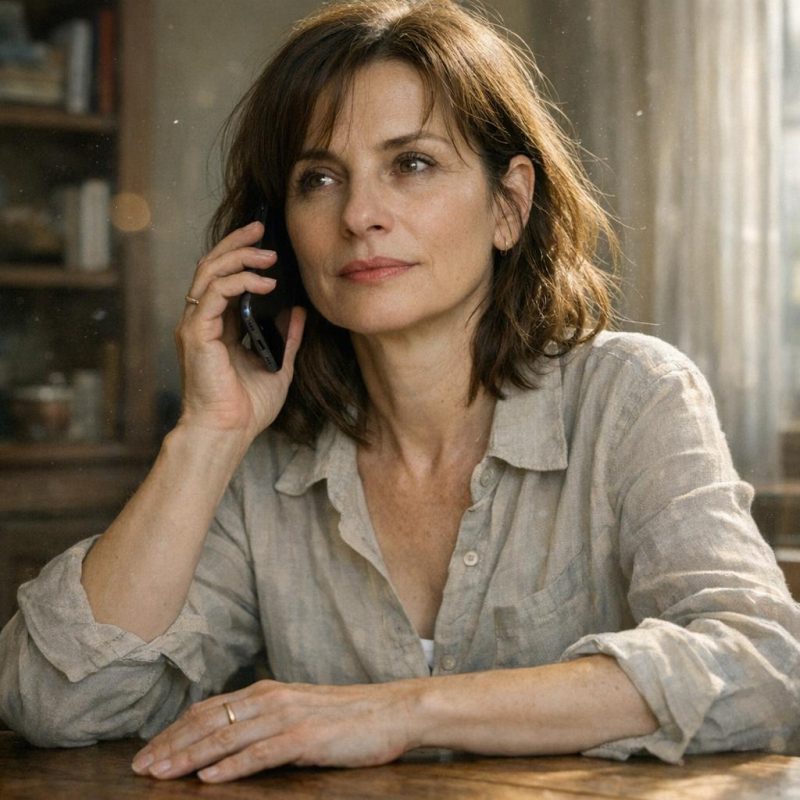 Image by RM AI
Telling Nicole
I called Nicole immediately after hanging up with Elaine. She arrived at my house within the hour, her face pale and drawn. We sat at my kitchen table, the same table where she'd told me about finding Brent's research, and I explained everything Elaine had told me. The Ashcroft emerald. The shipping family. The provenance that made it traceable through historical records. The fact that it was known, documented, something a person could hunt for if they knew where to look. Nicole listened without interrupting, but I watched the color drain from her face as I spoke. Her hands were clasped tightly in front of her, knuckles white. When I finished, she just stared at the ring sitting between us on the table. 'He knew,' she whispered. 'Before he ever met me, he knew about this ring.' I nodded. We sat there in silence for a long moment, both of us looking at the emerald, both of us understanding what it meant. Then Nicole sat down slowly, like her legs had stopped working, and whispered, 'He asked me to move up the wedding date.'
 Image by RM AI
The Insurance Suggestion
Nicole took a shaky breath and said, 'There's something else.' I waited. She twisted her hands together, and I could see she was barely holding herself together. 'A few weeks ago, Brent suggested we all go together to get the family heirlooms properly insured. He said it was important, especially the ring, because insurance companies require professional appraisals for items over a certain value.' She looked at me, her eyes filling with tears. 'He said he wanted to make sure everything was protected for future generations. That it was the responsible thing to do.' I felt my stomach drop. At the time, it would have sounded completely reasonable. Caring, even. The kind of thing a thoughtful son-in-law would suggest. But now, sitting at my kitchen table with the truth spread out between us, it sounded like something else entirely. It sounded like reconnaissance. Like he was trying to establish documentation, to create a paper trail that would give him access or legitimacy. I reached across the table and took Nicole's hand. She was trembling. 'He made it sound so loving,' she whispered. 'Like he was thinking about our future, about protecting what mattered to the family.' We both understood what we were really hearing. He had made it sound reasonable, even caring—but now it sounded like he was building a case for access.
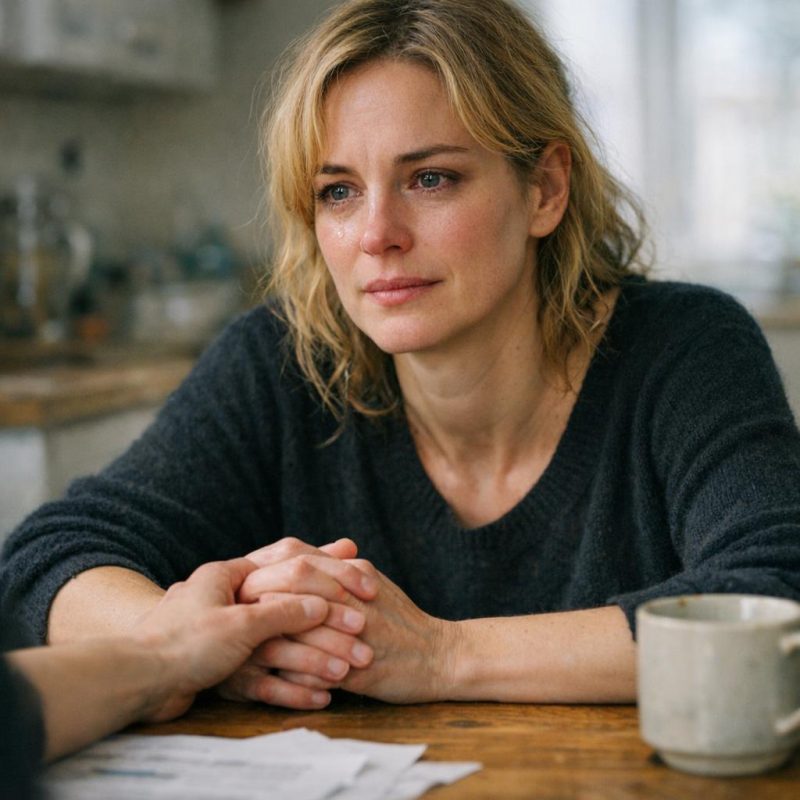 Image by RM AI
The Easiest Path
We sat there in silence for a long time, both of us processing what this meant. The afternoon light was fading through my kitchen windows, casting long shadows across the table where the ring still sat. Nicole stared at it like it was something diseased. I think we were both doing the same mental calculation, tracing back through every moment of their relationship with this new lens. He hadn't stumbled into Nicole's life by accident. He hadn't fallen for her spontaneously at some coffee shop or through mutual friends. He had researched our family, identified the ring, and then positioned himself to meet my daughter. The genealogy research. The family history questions. The insurance suggestion. Even moving up the wedding date. It all fit together now, a pattern we'd been too close to see. 'He wanted legitimacy,' I said quietly. Nicole nodded, her jaw tight. 'The easiest path into the family. Marriage.' The word hung in the air between us, ugly and transactional. I thought about all the times I'd watched him with Nicole, the tenderness I'd observed, the way he'd seemed so genuinely devoted. Had any of it been real? Or had it all been performance, a role he was playing to get what he wanted? Nicole's voice was hollow when she finally spoke again. 'He hadn't wanted me for love, and he hadn't wanted me for money—he wanted me because I was the door to something older and more valuable.'
 Image by RM AI
Planning the Confrontation
I made us tea, more for something to do with my hands than because either of us wanted it. Nicole wrapped her fingers around the mug but didn't drink. 'We need to confront him,' she said. 'I know,' I replied. 'But we have to be smart about it. He's good at this—whatever this is. He's been playing a role for months, maybe longer. If we just accuse him, he'll have an answer ready.' Nicole nodded slowly. She was calmer now, the initial shock giving way to something harder. 'He'll tell us we're wrong. That we're being paranoid or misunderstanding his research.' 'Exactly,' I said. 'So we need to make sure we have everything. Every piece of evidence. Every timeline that doesn't add up. We need to walk in there with proof he can't explain away.' We started making a list. The dates on his genealogy research. The questions he'd asked about family history. The insurance suggestion. The moved-up wedding date. Each item by itself could be explained, but together they formed a picture. Nicole pulled out her phone and started taking notes. 'I want to search his office,' she said quietly. 'At the apartment. He keeps files there.' I looked at her, seeing the determination in her face. 'Are you sure?' She met my eyes. 'I need to know everything. I need to see it all.' Nicole said she wanted to hear him try to explain it, and I agreed—but I also knew we needed proof he couldn't talk his way around.
 Image by RM AI
The Home Office
Nicole called me the next afternoon. Her voice was flat, emotionless in a way that scared me more than tears would have. 'I found it,' she said. 'All of it.' She'd waited until Brent left for work, then gone into his home office—a small second bedroom in their apartment that he'd claimed as his workspace. She'd told me he was usually protective of it, said he needed privacy for his consulting work, but she had a key to the filing cabinet. Inside, she found folders. Not digital files, but printed pages, organized and labeled. Genealogy charts. Newspaper clippings about historical families. Records from ancestry websites. And in the back, a folder labeled simply 'Ashcroft.' Nicole said her hands were shaking so badly she could barely hold the pages. There were printouts of family trees, census records, marriage certificates. Historical society documents about my grandmother's family. Articles about prominent shipping families in the Northeast. Pages and pages of research, all methodically organized, all pointing toward one thing. Toward us. Toward the ring. She photographed everything with her phone before putting it all back exactly as she'd found it. Then she came straight to my house. When she walked through my door, she looked like she'd aged ten years. She set her phone on my kitchen table and pulled up the photos. The dates on the printouts went back months before they ever met, and some pages had my mother's name highlighted in yellow.
 Image by RM AI
The Highlighted Names
We spread out the printed copies on my dining room table, laying them out like evidence at a crime scene. Because that's what it felt like—a crime. Nicole stood with her arms crossed, staring down at the papers, while I went through each one. The research was extensive and meticulous. He'd traced our family back through marriage records, death certificates, census data. There were notes in the margins in Brent's handwriting—dates, locations, connections. I found my grandmother's obituary, printed from a newspaper archive, with certain phrases underlined. 'Survived by daughter Margaret.' That was my mother. There was a family tree chart that showed the maternal line going back four generations, each woman's name carefully written out. And next to my mother's name, in small neat handwriting: 'emerald ring—Ashcroft provenance.' My hands felt cold holding that page. Nicole pointed to another document, her voice tight. 'Look at this one.' It was a printed article about estate jewelry, about how certain pieces maintained value through documented family ownership. Someone had circled a paragraph about emeralds specifically. There were more printouts—auction records for similar period pieces, insurance valuation guidelines, even a forum discussion about tracking down inherited jewelry. Each piece of paper was a glimpse into his process, his planning. He had traced our family tree back four generations, circling names and dates, building a map to the ring.
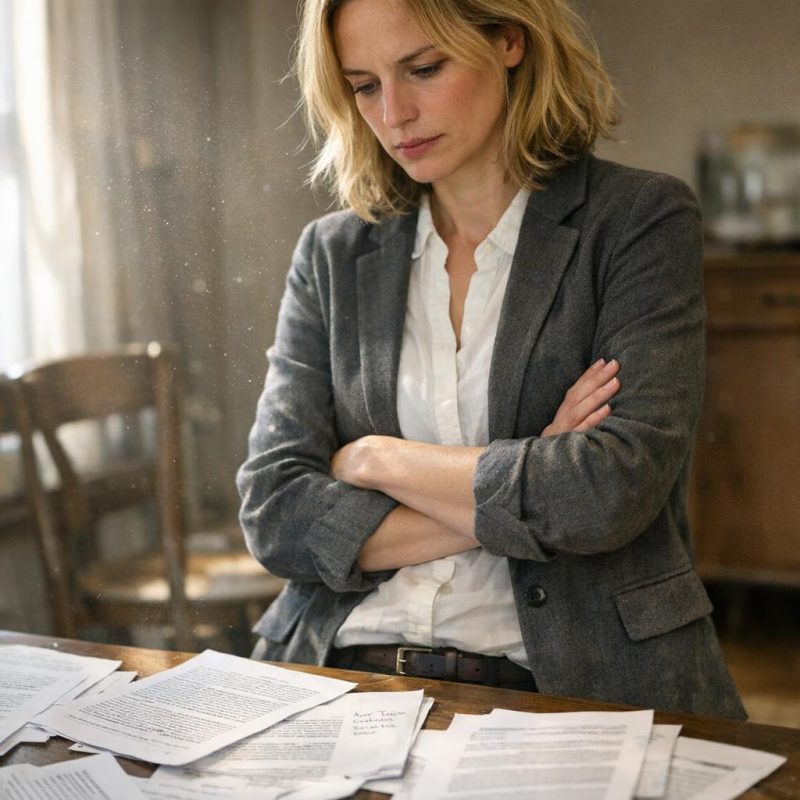 Image by RM AI
Nicole's Tears
Nicole sat down heavily in one of my dining room chairs, still staring at the papers spread across the table. For a long moment, she didn't say anything. Then her face crumpled, and she started crying—not the angry tears from before, but deep, wrenching sobs that shook her whole body. I moved to her immediately, putting my arms around her while she buried her face against my shoulder. 'I loved him,' she choked out between sobs. 'I really loved him, Mom.' My heart broke for her. This wasn't just about discovering deception. It was about mourning the loss of something she'd believed was real. The future she'd imagined. The man she thought she knew. Every moment of tenderness, every laugh, every plan they'd made together—all of it was now suspect, tainted by what we'd discovered. 'How could someone do this?' she asked, pulling back to look at me, her face wet with tears. 'How could someone fake all of that? The way he looked at me, the things he said—was any of it real?' I didn't have an answer. I'd watched them together for months, and I'd seen what looked like genuine love. But now I understood it had been something else entirely. A performance. A long con. I held her tighter, feeling her shake against me. She asked how someone could fake that much tenderness, and I had no answer except to hold her while she sobbed.
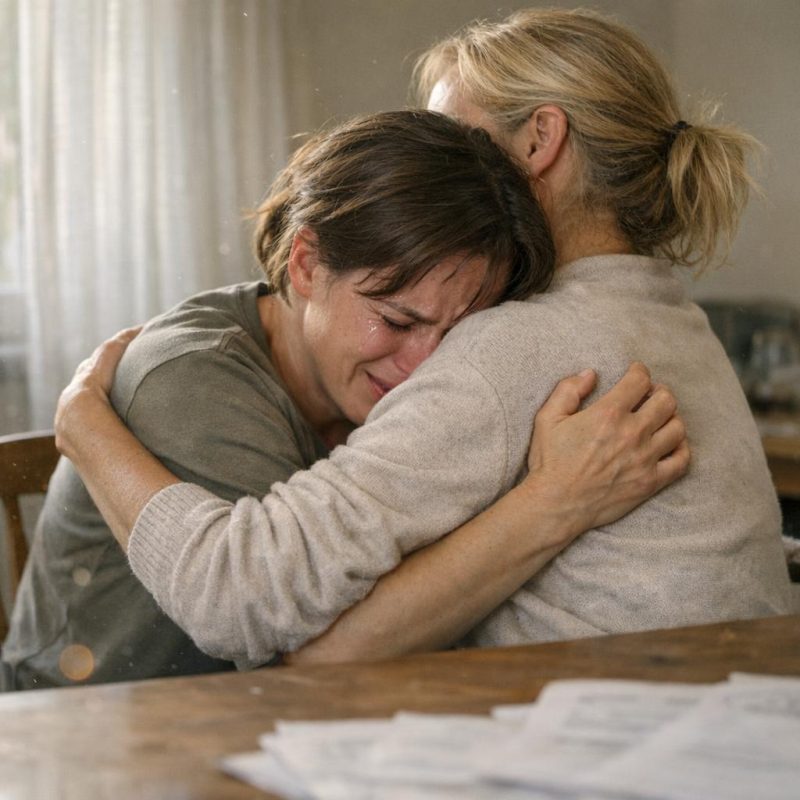 Image by RM AI
Deciding to Confront
After a while, Nicole's tears slowed. She pulled away and wiped her face with the back of her hand, taking deep, steadying breaths. When she looked at me again, something had shifted in her expression. The grief was still there, but underneath it was something harder. 'I need to confront him,' she said, her voice rough but determined. 'I need to hear what he has to say. I need to look him in the eye and hear him try to explain this.' I understood. As much as we knew the truth, as much as the evidence spoke for itself, there was something Nicole needed to hear from him directly. Maybe it was closure. Maybe it was just the need to see his reaction when he realized we knew. 'When?' I asked. 'Soon,' she said. 'I can't keep pretending everything's normal. I can't go home tonight and act like I don't know what he is.' We talked through the logistics. Where to do it, how to approach it, what to say. Nicole wanted it to be somewhere she felt safe, somewhere he couldn't just walk away. 'Here,' I suggested. 'At my house. We can invite him for dinner. He won't suspect anything if it seems like a normal family meal.' Nicole nodded slowly, thinking it through. 'And you'll be there with me?' 'Every second,' I promised. I told her I would be there with her, and that no matter what story he told, we would already know the truth.
 Image by RM AI
The Setup
Nicole called Brent that evening and invited him to dinner at my house for the following night. She kept her voice light, mentioned that I wanted to have a family meal, that it would be nice for the three of us to spend time together. He agreed immediately, said it sounded wonderful. The ease of his acceptance made my skin crawl. We spent the next day preparing, though neither of us had much appetite. I made a pot roast anyway, going through the familiar motions like armor. Nicole arrived an hour before Brent was expected, and we went over everything one more time. The evidence was ready, organized in a folder on my coffee table. We'd decided to start calmly, to give him a chance to be honest. But we both knew what would probably happen. He'd lie. He'd spin some story. He'd try to make us doubt what we'd seen with our own eyes. At seven o'clock exactly, I heard a car in my driveway. Through the window, I watched Brent get out, flowers in hand—a bouquet of white roses, my favorite. He was smiling as he walked up the path, his posture relaxed and confident. Nicole stood next to me, her jaw tight. I squeezed her hand. 'We've got this,' I whispered. She nodded, but I could feel her trembling. When he arrived with flowers and that familiar smile, I felt a chill—because now I could see exactly what he was doing.
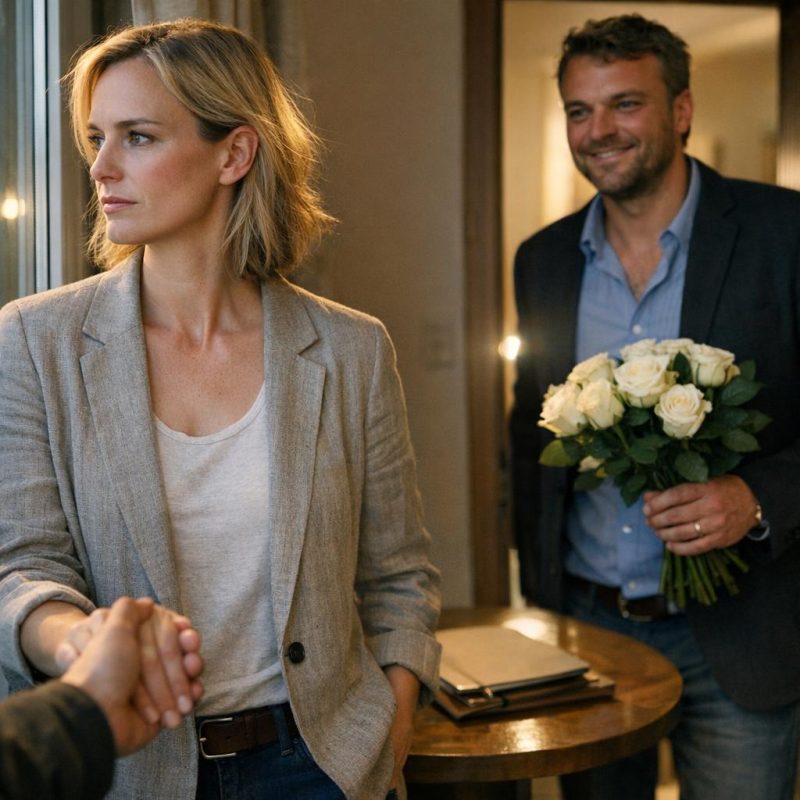 Image by RM AI
The Accusation
I let Brent settle into the living room with his wine before Nicole pulled out the folder. She'd been so anxious beforehand, rehearsing what she'd say, but when the moment came, she was steady. Calm. She placed the printouts on the coffee table—browser history, search records, dates that preceded their first meeting by weeks. 'Brent,' she said quietly, 'I need you to explain something.' He glanced down at the pages, still holding his wine glass. His expression didn't change right away. 'What is this?' he asked, though his voice had already shifted—careful now, measured. Nicole pointed to the highlighted sections. 'These are searches you did about my family. About my grandmother. About the Ashcroft emerald. All before we met.' I watched him closely, looking for surprise or confusion or denial. But there was none of that. He set down the wine glass slowly, like he was buying himself a few seconds. Then he met Nicole's eyes, and I saw something I hadn't expected—not panic, but preparation. He'd thought about this moment, I realized. He'd planned for it. His smile didn't fade immediately—it flickered, like a candle in wind, before he set down his wine and said, 'I was going to tell you.'
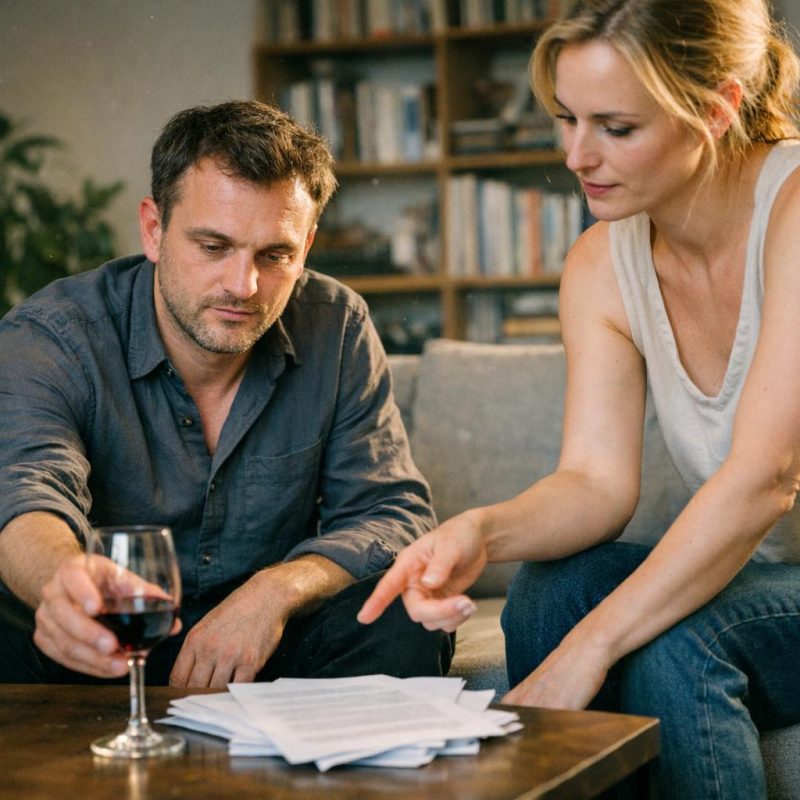 Image by RM AI
The Polished Story
Brent leaned forward, elbows on his knees, hands clasped together. He looked at Nicole with what seemed like genuine emotion—regret, maybe, or sadness. 'My father,' he began, his voice soft, 'spent the last years of his life trying to recover something that was taken from our family. The Ashcroft emerald.' He paused, letting that sink in. 'He believed it rightfully belonged to us, that it had been stolen generations ago. He died two years ago without ever finding it.' Nicole's expression softened slightly, and I felt my stomach clench. He was good at this. Too good. 'When I stumbled across a mention of it in an estate catalog last year,' Brent continued, 'and saw that it had surfaced through your grandmother's estate, I couldn't believe it. I started researching to understand the connection. To see if what my father believed was true.' His eyes stayed locked on Nicole's. 'I wasn't trying to deceive you. I was trying to understand if there was any legitimacy to his claim before I said anything.' The words flowed smoothly, each sentence building on the last. He spoke slowly, carefully, as if the story had been rehearsed—and I started to wonder if that was exactly what it was.
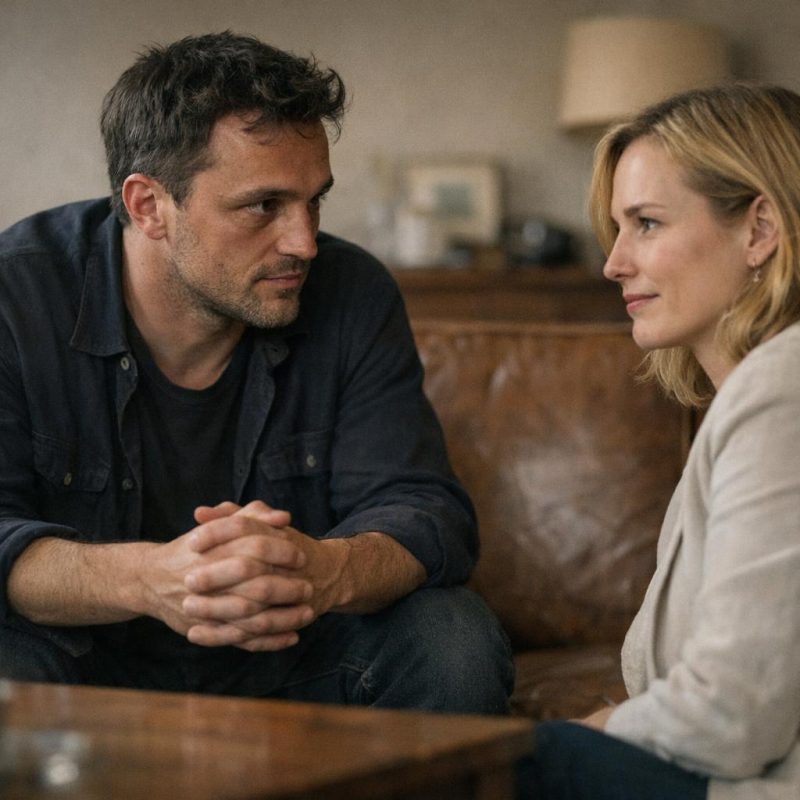 Image by RM AI
The Rightful Owner Claim
Brent reached for Nicole's hand, but she pulled back slightly—not rejecting him entirely, just hesitating. He noticed and withdrew, looking hurt. 'I know this sounds strange,' he said. 'I know the timing looks suspicious. But I need you to understand—when I met you, it wasn't about the ring anymore. It was about you.' Nicole's jaw tightened. 'But you did research me first. You looked up my family before we ever spoke.' He nodded, not denying it. 'Yes. I did. I won't lie about that. I saw your name connected to the estate, and I thought maybe, just maybe, I could find answers about what my father spent his whole life searching for. But then I met you, and everything changed.' His voice cracked slightly, and I couldn't tell if it was genuine or performance. 'The ring belonged to my grandmother,' he continued. 'She lost it under circumstances my father never fully understood. He believed it was stolen or sold without her knowledge. When I realized where it had ended up, I thought I owed it to him to find out the truth.' It was a perfect story—sympathetic, understandable, just complicated enough to feel real. Nicole looked at me, torn between wanting to believe him and knowing something still felt wrong.
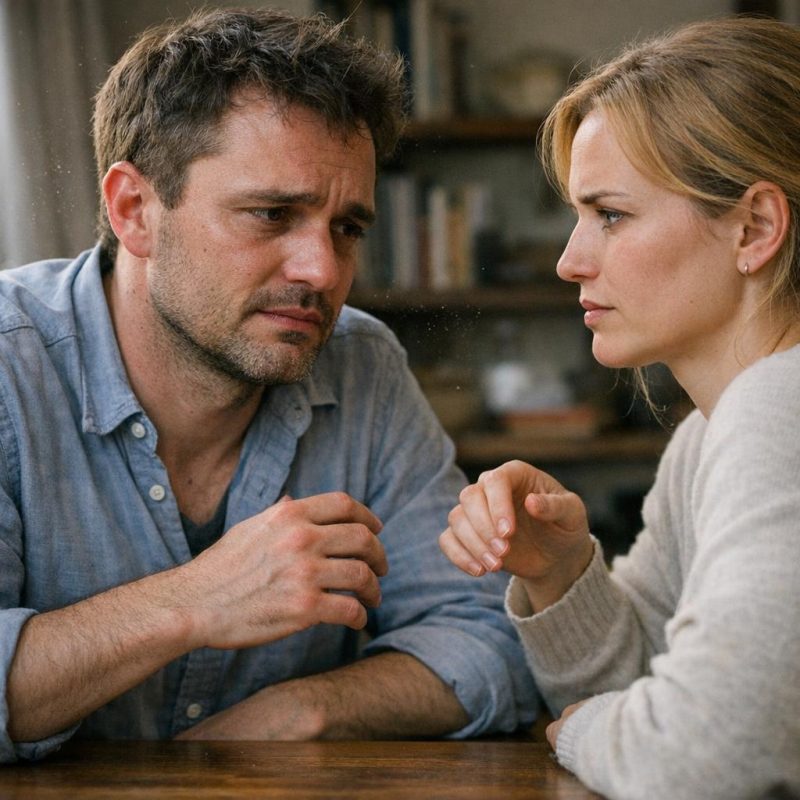 Image by RM AI
The Grandmother's Maiden Name
I finally spoke up. 'What was your grandmother's name?' I asked. Brent turned to me, his expression open, earnest. 'Margaret,' he said. 'Margaret Ashcroft.' I felt Nicole shift beside me. 'Ashcroft was her maiden name?' I pressed. He nodded without hesitation. 'Yes. She married my grandfather, Thomas Bennett, in 1945. The ring had been in the Ashcroft family for generations before that. My father always said it should have stayed with her, that she never would have parted with it willingly.' It was such a specific detail, delivered with such confidence. Nicole seemed to relax slightly, as if the specificity made it more believable. But something nagged at me. The way he'd answered—too quickly, too smoothly, like he'd prepared for exactly that question. 'And your father told you all this?' I asked. Brent met my eyes. 'He talked about it constantly, especially toward the end. It became an obsession for him. He felt like he'd failed her by never recovering it.' The emotion in his voice sounded real. Everything about his delivery sounded real. But I'd spent enough years dealing with people to know that the best liars believe their own stories while they're telling them. Something about the way he said it felt too smooth, too ready, and I made a mental note to check that detail later.
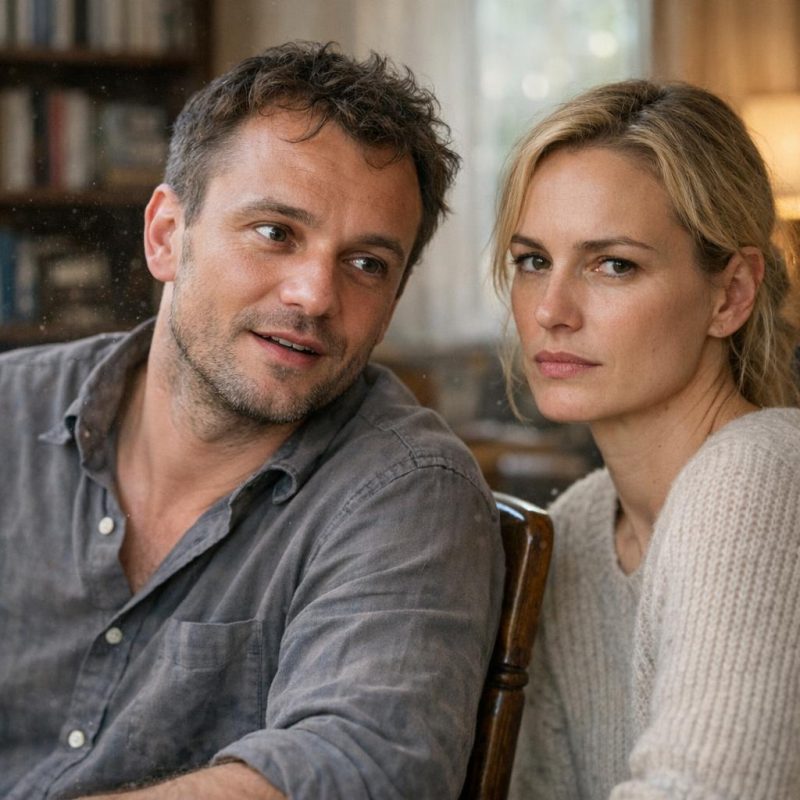 Image by RM AI
Nicole's Hesitation
Nicole was silent for a long moment, staring at the printouts on the table. Then she looked up at Brent, her eyes searching his face. 'So you're saying you cared about the ring, but then you cared about me more?' He nodded emphatically. 'Yes. Exactly that. I know I should have told you sooner. I know I should have been honest from the beginning. But I was afraid you'd think I was crazy, or that I was using you. Which I wasn't.' His voice dropped. 'Nicole, I love you. That's real. Everything between us is real.' I watched my daughter's face, saw the conflict there—the desire to believe him warring with the evidence in front of her. She'd always been someone who wanted to see the best in people, who gave second chances even when she shouldn't. And Brent knew that. I could see it in the way he was looking at her, patient and vulnerable and perfectly calibrated to her weaknesses. 'I don't know,' Nicole whispered. 'I want to believe you.' Brent's expression brightened just slightly, hope creeping into his eyes. She reached for his hand, and I felt panic rising—because if she believed him now, she might never see the truth.
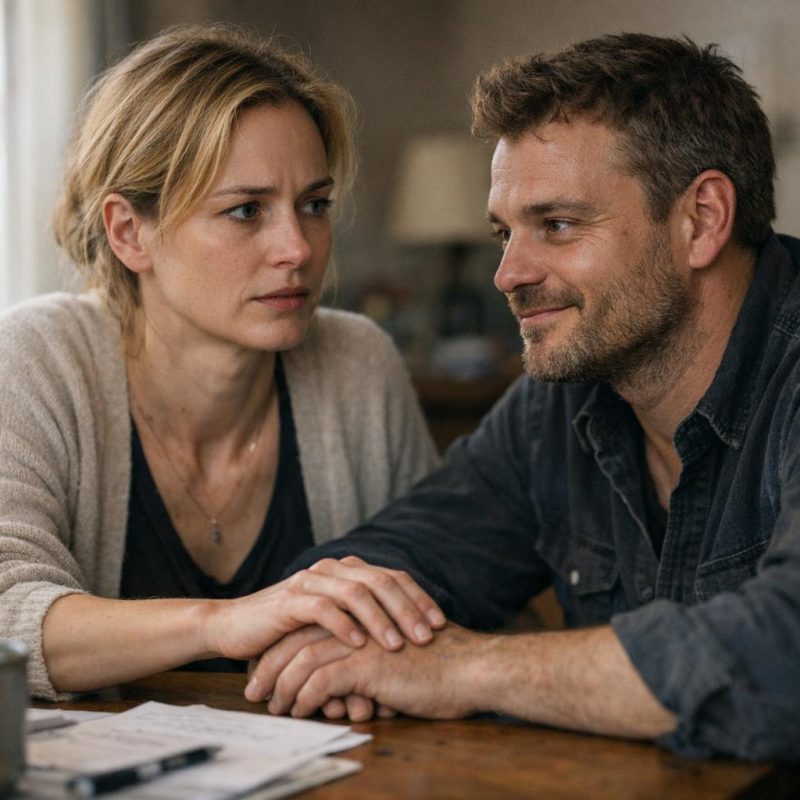 Image by RM AI
Calling Elaine Again
Brent left an hour later, after Nicole told him she needed time to think. She seemed exhausted, emotionally wrung out, and I didn't push. We cleaned up the dinner dishes in silence, and then she went upstairs to lie down. As soon as I heard her bedroom door close, I grabbed my phone and called Elaine. It was late, almost ten o'clock, but she answered on the second ring. 'Pamela? What's wrong?' I didn't waste time. 'I need you to check something for me. Brent claims his grandmother's maiden name was Ashcroft. Margaret Ashcroft, who married a Thomas Bennett in 1945. Can you verify that?' I heard papers rustling on her end, the click of a keyboard. 'Give me a minute.' The silence stretched. I paced my kitchen, my heart hammering. If Brent was telling the truth, if his grandmother really had been an Ashcroft, then maybe his story held up. Maybe I was wrong. Maybe I was being paranoid. 'Pamela,' Elaine said finally, her voice sharp and certain. 'There was a Margaret who married into the Bennett line around that time. But Ashcroft wasn't her maiden name—it was her married name from a first marriage. She was born Margaret Holloway.' My breath caught. Elaine's response was immediate and sharp: 'Ashcroft was a married name in that line, not a maiden name. He's lying.'
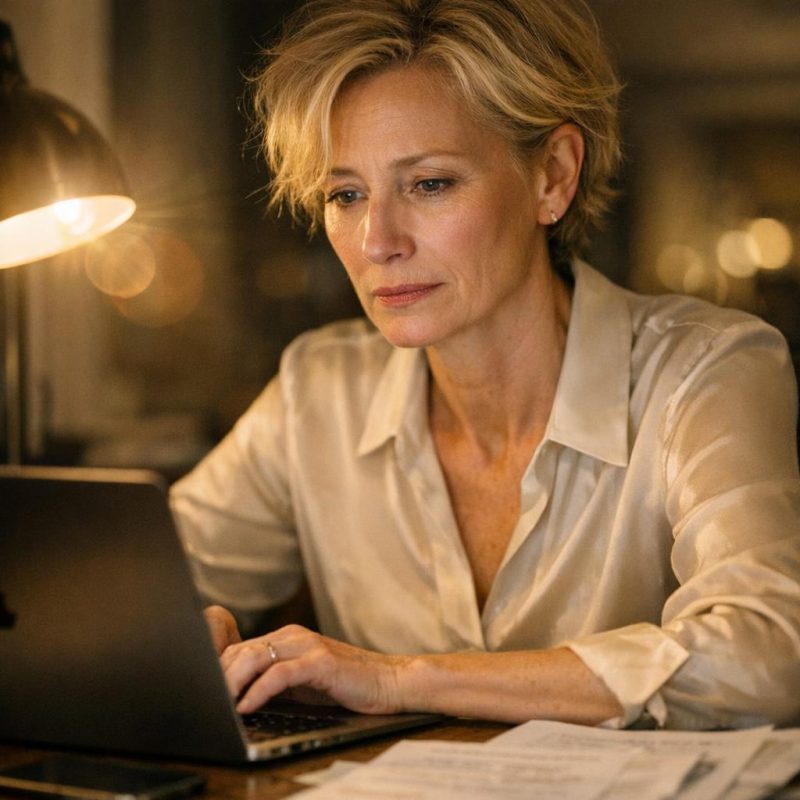 Image by RM AI
The Detail a Liar Would Miss
I went upstairs and knocked softly on Nicole's door. She was awake, lying on her bed staring at the ceiling. 'Come in,' she said quietly. I sat on the edge of her bed and took her hand. 'I called Elaine,' I said. 'I asked her to verify Brent's story about his grandmother.' Nicole sat up slowly, her expression wary. 'And?' I told her what Elaine had found—that Margaret's maiden name was Holloway, not Ashcroft. That Ashcroft had been a married name from a previous marriage, meaning Brent's entire story about his grandmother's rightful ownership was built on a lie. 'He got the detail wrong,' I said. 'If his father had really spent years obsessing over this ring, if Brent had really grown up hearing stories about his grandmother Margaret Ashcroft, he would have known that Ashcroft wasn't her birth name. It's the kind of detail a real family member would never get wrong.' Nicole's face went very still. 'But he said it so confidently,' she whispered. 'He said his father told him.' I squeezed her hand. 'That's what makes him dangerous. He's convincing. But people who are telling the truth don't make mistakes like that. People who construct stories do.' Nicole stared at me, and I watched the last thread of belief snap in her eyes.
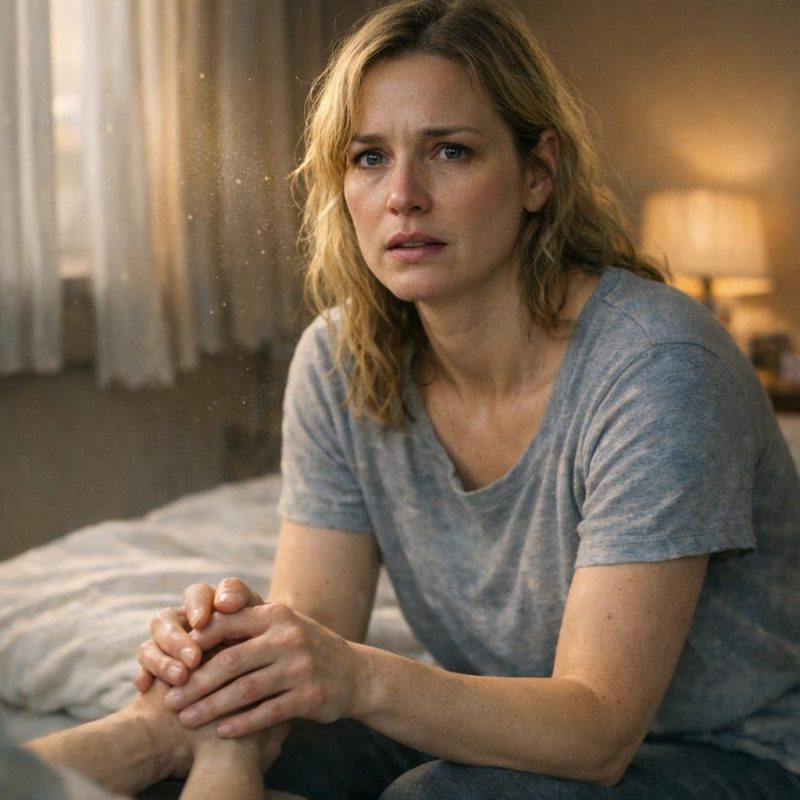 Image by RM AI
The Truth About Brent
We stayed up until after midnight, going through everything again with clear eyes. The timeline made sense now—horribly, perfectly sense. Brent had found mentions of the Ashcroft emerald in estate records, maybe through his work or hobby research. He'd traced it to our family, to Nicole specifically, and then he'd engineered the entire meeting. The gallery opening where they'd 'randomly' met? He'd known she'd be there. The shared interests, the coincidental preferences, the way he'd seemed so perfect for her? All carefully researched, all deliberately constructed. He'd spent months studying our family before he ever said a word to her. 'He wasn't looking for love,' Nicole said, her voice hollow. 'He was looking for access.' I nodded. 'And the engagement would have given him that. As your husband, he'd have a claim to family heirlooms. He could have argued that the ring rightfully belonged to him, or pressured you to sell it, or simply waited until he had legal access to it.' Nicole's hands were shaking. 'I almost married him.' The full picture was clear now, and it was worse than I'd imagined. He wasn't a romantic man awkwardly trying to impress—he was a patient opportunist who studied women the way other people study maps.
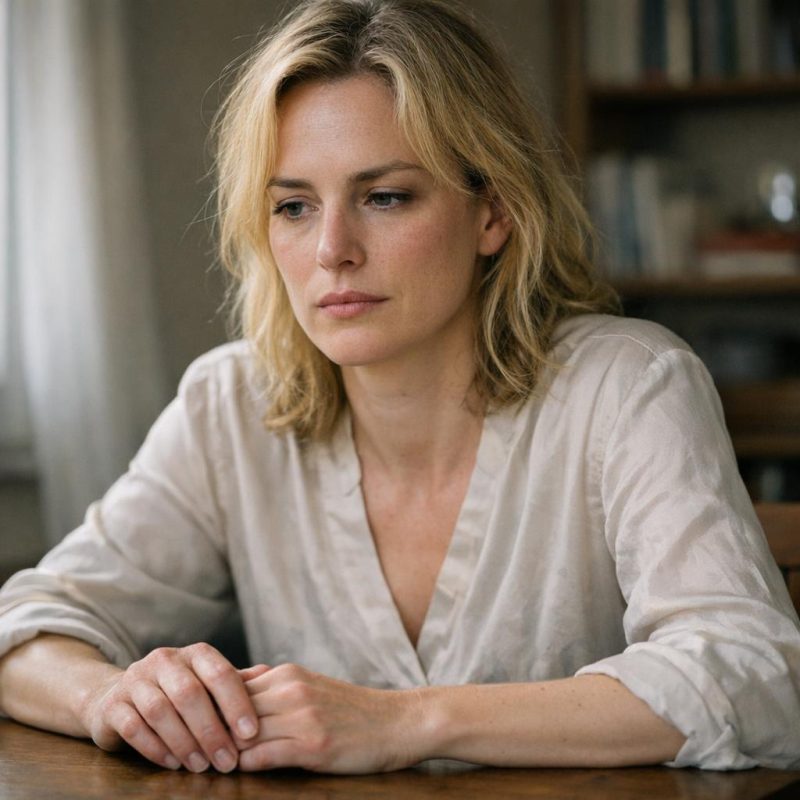 Image by RM AI
Taking It to a Lawyer
First thing Monday morning, we walked into Sarah Chen's office with a folder full of evidence. Sarah was a family law attorney who'd handled my sister's estate, and she had that calm, unshakeable demeanor that made you feel like everything would be okay. We spread it all out on her desk—the timeline, the screenshots from the genealogy forums, the emails about the Ashcroft emerald, everything. She listened without interrupting, making notes in neat handwriting. When we finished, she leaned back in her chair and studied us both. 'This is stalking followed by fraud,' she said flatly. 'The engagement was entered under false pretenses. He specifically targeted Nicole for access to property.' Nicole's voice was small. 'Can he still try to claim the ring?' Sarah's expression hardened. 'He can try. Men like this often attempt to establish claims through gifts, implied promises, or simply by creating confusion about ownership. Has he ever photographed the ring? Handled it?' Nicole nodded, looking sick. 'Several times.' Sarah pulled out a legal pad and started writing. 'Okay. We need to establish clear provenance and secure the ring immediately. I'll draft documentation, but we need to move fast.' She looked up at us, and her voice was urgent. The lawyer listened carefully, then said we needed to move quickly—because men like Brent don't give up when they're this close.
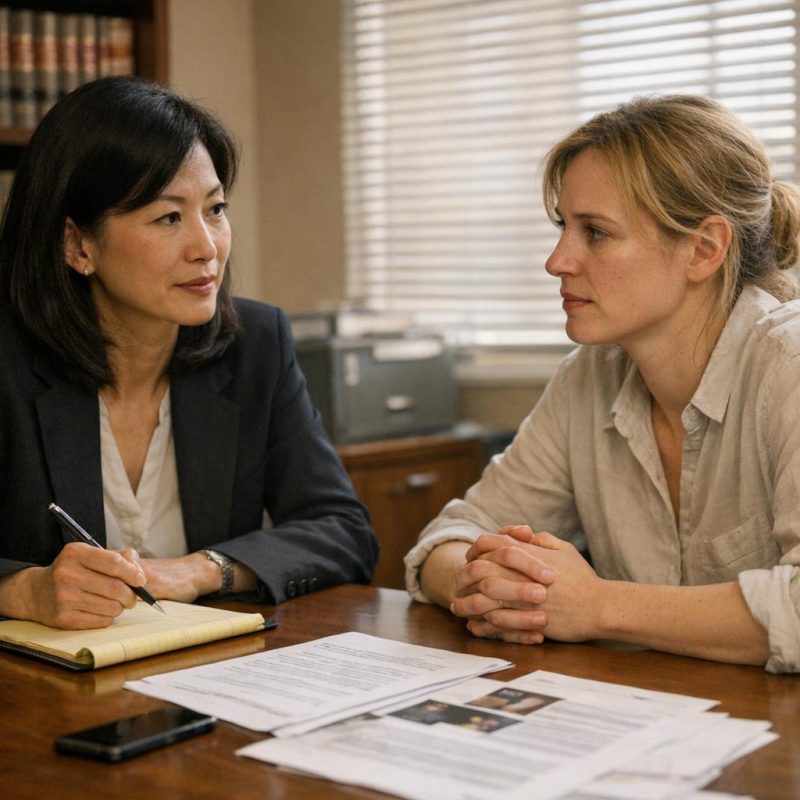 Image by RM AI
The Appraisal
Sarah sent us to a specialist she trusted—an appraiser named Margaret Rothstein who dealt exclusively with estate jewelry and historical pieces. Her office was in an old building downtown, the kind with high ceilings and thick carpet that absorbed sound. Margaret wore white gloves and used a jeweler's loupe that made her eye look enormous. She examined the ring for what felt like hours, consulting reference books, making measurements, taking photographs from every angle. I sat there feeling oddly protective, like I was watching someone examine my mother's bones. Finally, Margaret set the ring down gently on a velvet cloth. 'Victorian era, definitely,' she said. 'The emerald is Colombian, exceptional quality. The setting is original, and the provenance—if you can document the Ashcroft connection—makes this museum-quality.' She started writing numbers. 'The gem alone is worth approximately half a million. With the historical significance and the intact original setting, we're looking at closer to eight hundred thousand, possibly more at auction.' The room tilted slightly. I heard Nicole draw a sharp breath beside me. Eight hundred thousand dollars. The appraiser handed me a document with a number so large it didn't feel real, and suddenly I understood why Brent had been so patient.
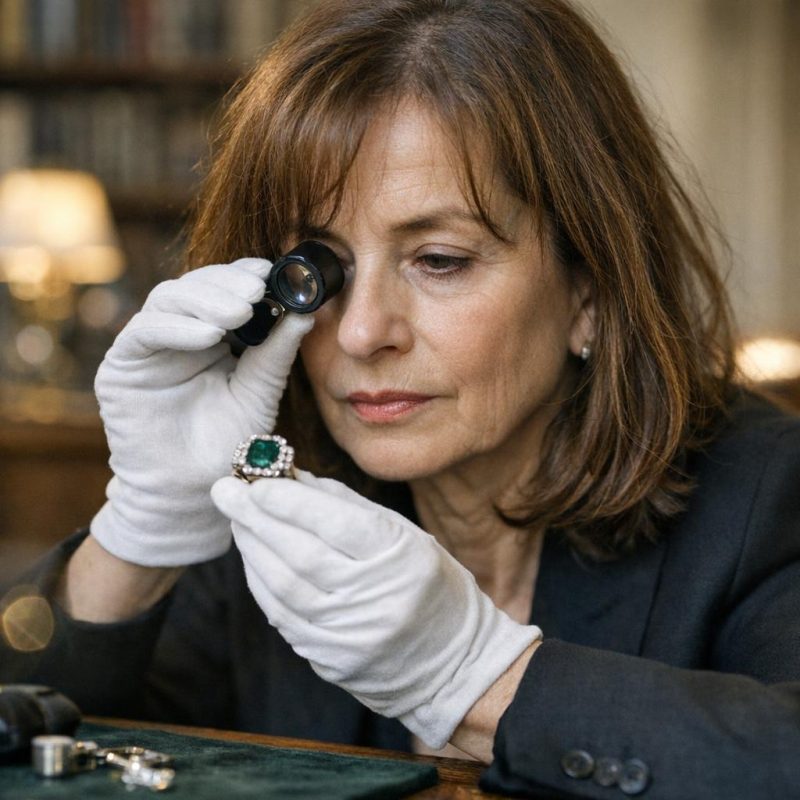 Image by RM AI
The Antique Dealers
Sarah called us back to her office three days later. She had that look lawyers get when they've found something important, something that changes everything. 'I had my investigator do some digging,' she said, sliding a thin folder across the desk. 'Brent contacted two separate antique dealers in the past six months. Both specialize in estate jewelry. Both conversations were about the same thing—how to establish legal chain of possession for a significant emerald piece with unclear family ownership.' Nicole's hand found mine. Sarah continued, her voice steady but grim. 'He asked specifically about scenarios where an heirloom might be jointly owned after marriage, and what documentation would be needed to sell or transfer such a piece. He was doing research, building a case.' She pulled out another document. 'The timeline is revealing. First contact was in February—right after your engagement was announced. Second contact was two weeks ago. He asked about expedited authentication services.' My throat felt tight. 'When was the wedding supposed to be?' Nicole whispered. 'October fifteenth.' Three weeks from now. Sarah nodded slowly, and her expression was dark. He had been preparing to take the ring—legally or otherwise—and the timeline showed he planned to do it right after the wedding.
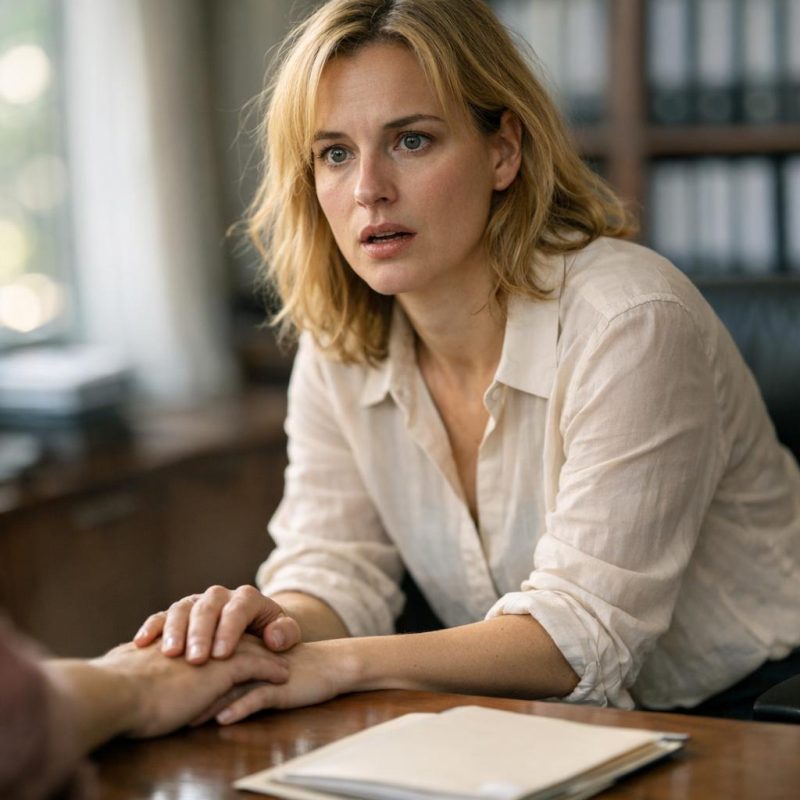 Image by RM AI
Securing the Ring
The vault was in a private facility that looked like a bank but wasn't. Sarah had arranged everything—the secure storage, the documentation, the insurance. I carried the ring in my purse, wrapped in soft cloth, feeling like I was transporting something radioactive. The vault manager was professional and discreet. He didn't ask questions when Sarah presented the paperwork establishing ownership, the appraisal, the photographs documenting every angle. He simply logged everything, assigned a number, placed the ring in a small locked box, and then put that box into a larger vault that required three separate keys to open. I watched the heavy door swing shut with a soft, final click. The ring that my mother had worn, that her mother had worn, that had been in our family for generations—hidden away like stolen treasure. It felt wrong. It felt necessary. I thought about Nicole wearing it at dinner parties, about maybe passing it to a grandchild someday. All those normal dreams felt impossibly far away now. Sarah touched my shoulder. 'It's safe,' she said. I nodded, but safe wasn't the same as right. As the vault door closed, I felt both relief and rage—relief that it was safe, rage that I'd had to hide my own mother's ring.
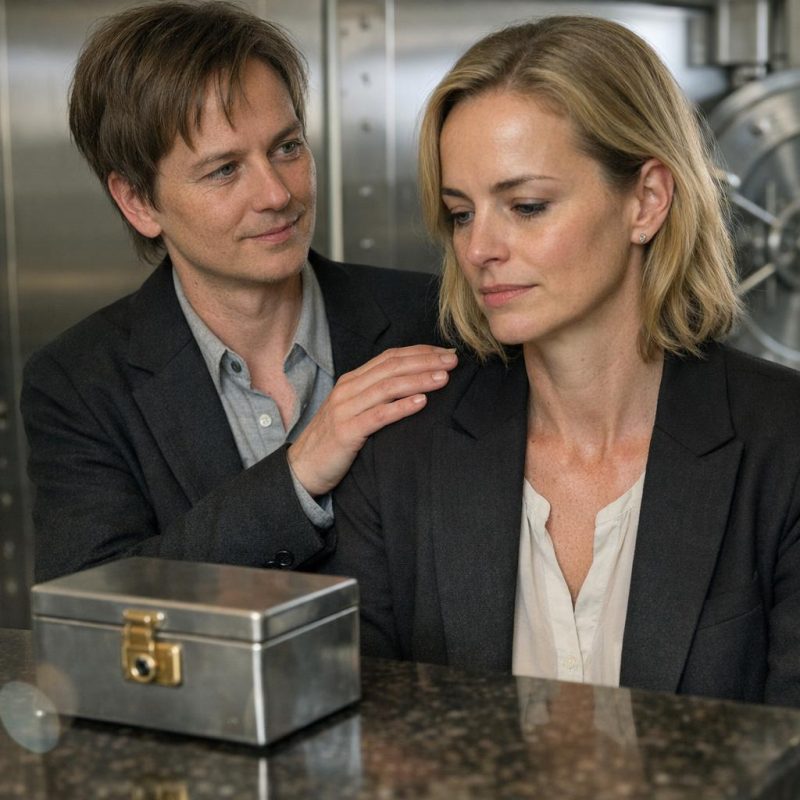 Image by RM AI
Nicole Ends It
Nicole insisted on doing it herself. No lawyers, no mediators, just her and Brent in a public place where he couldn't make a scene. She chose a coffee shop near the university—lots of people, lots of witnesses. I waited in my car across the street, watching through the window. I saw him arrive first, check his watch, smooth his hair. Even from a distance, he looked calm, confident. Then Nicole walked in, and I saw his face light up—that practiced smile, that careful warmth. They sat down. I couldn't hear the words, but I watched her body language. She sat straight, her hands folded on the table. She wasn't crying. She wasn't apologizing. She was simply stating facts. I saw him lean forward, gesturing, trying to engage her. She shook her head. He tried again, his expression shifting to concern, to confusion, to hurt—each emotion carefully calibrated. She removed the engagement ring from her purse—not the emerald, the diamond he'd given her—and placed it on the table between them. His hand reached for hers. She pulled away. He kept talking, kept trying, his face cycling through expressions like he was running through a script. But something was different this time. He tried to argue, tried to explain, tried to make her doubt—but this time, she didn't waver.
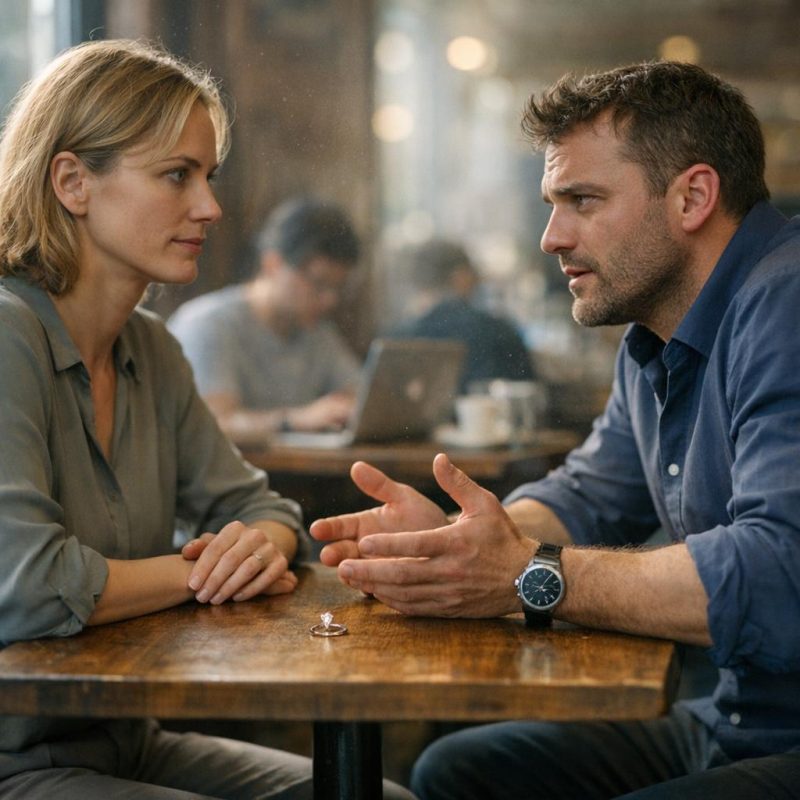 Image by RM AI
Brent's Mask Slips
I'd gone inside by then, sitting at a corner table with a newspaper I wasn't reading. I needed to be close in case Nicole needed backup. Brent was still talking, but his tone had changed—I could hear it from across the room. The gentle reasonableness was gone, replaced by something sharper. 'You're being manipulated,' he said, loud enough that nearby tables glanced over. 'Your mother has poisoned you against me. Can't you see that?' Nicole's voice was quiet but steady. 'I've seen the evidence, Brent. The genealogy forums. The antique dealers. I know why you chose me.' He laughed—actually laughed—but it sounded wrong. 'That's insane. You think I spent months courting you because of some ring? Nicole, listen to yourself.' His hand reached across the table again, and this time his grip on her wrist looked tight. She pulled away, and something in his face shifted. The mask cracked. Just for a second, just a flash, but I saw it. The careful smile vanished. The warm eyes went cold. His jaw clenched and his gaze flickered to me, then back to Nicole, calculating, assessing, recalibrating. For just a moment, I saw something cold and calculating behind his eyes—the real man who had been hiding all along.
 Image by RM AI
The Threat
He recovered quickly, but the damage was done. Nicole had seen it too. She stood up, gathering her purse. Brent stood as well, and his voice dropped low—I barely caught the words. 'The ring has unclear provenance,' he said. 'Family heirlooms become joint property in marriage. I have documentation of my intentions. I have photographs. If you think this is over—' Sarah appeared then, like she'd been waiting outside. She must have been parked nearby too. She walked straight to the table, placed a business card down, and her voice carried clearly through the coffee shop. 'Mr. Hollis, any further contact with my client will constitute harassment. Any legal claim on the ring will be met with a countersuit for fraud and emotional distress. The ring's provenance has been documented and secured. You have no claim, no standing, and no case.' She pulled out another document. 'This is a cease and desist. You've been served.' Brent picked up the paper, his hands surprisingly steady. He read it slowly, and I watched his face as he reached the part about the documented evidence, the appraiser's authentication, the secure vault, the timeline of his own dealer inquiries. Our lawyer had prepared for exactly this move, and when Brent realized he had no legal ground to stand on, his face went blank.
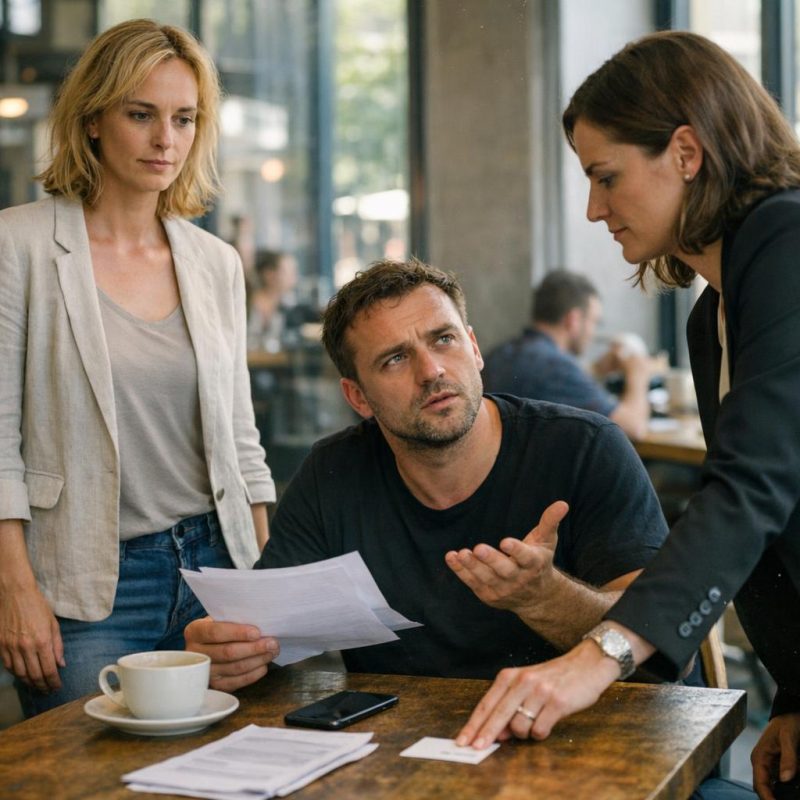 Image by RM AI
The Disappearance
Within a week, he was gone. Not in a dramatic way—no angry confrontations, no threats, no scene. He just stopped existing in our world. Nicole drove past his apartment building and saw the vacancy sign in his window. His phone number disconnected. His social media accounts disappeared, not deleted but deactivated. Sarah's investigator tracked him to a bus station, then lost the trail. 'He bought a ticket for cash,' the investigator reported. 'No forwarding address. No credit card trail after that.' It was like he'd never been here at all. Nicole found his Netflix account was still logged in on her TV—she said it was surreal, seeing his viewing history just end mid-series. He'd been watching a documentary about art forgery. Of course he had been. I thought about him settling somewhere new, maybe already researching another family, another heirloom, another lonely woman who fit his requirements. The whole thing felt incomplete, unfinished. There was no justice, no punishment, no closure. Just absence. Sarah said men like him never stop, they just move on. It wasn't dramatic or explosive—he simply evaporated, like smoke, moving on to the next target.
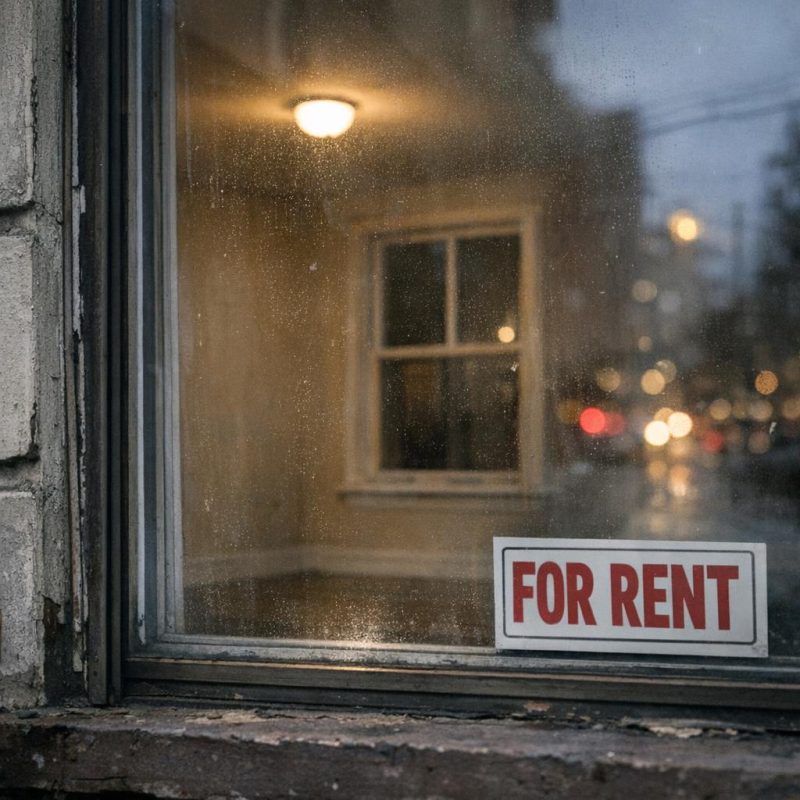 Image by RM AI
The Aftermath
We sat together in my living room for three days after he disappeared. Nicole took time off work—just called in and said she needed a week. We didn't talk much at first. I made tea. She stared out the window. I caught her checking her phone compulsively, then putting it face-down like it had burned her. On the second day, she finally asked if I thought we'd overreacted. 'What if we got it wrong?' she said, and I saw how badly she wanted me to say yes, we'd been paranoid, cruel even. But I couldn't lie to her. I showed her the timeline Sarah had compiled—the dates, the research, the pattern. She read it twice, then set it down carefully like it might explode. We ordered takeout and ate it on the couch, and somewhere around midnight on the third night, she laughed at something stupid on TV. Just a small laugh, startled out of her. I realized it was the first time I'd heard her laugh in weeks. The exhaustion was bone-deep for both of us, but underneath it, I felt something else starting to surface. Gratitude, maybe. That we'd caught it. That we'd survived. That we were sitting here together, still whole. The silence between us wasn't empty—it was full of everything we'd learned, everything we'd lost, and everything we still had.
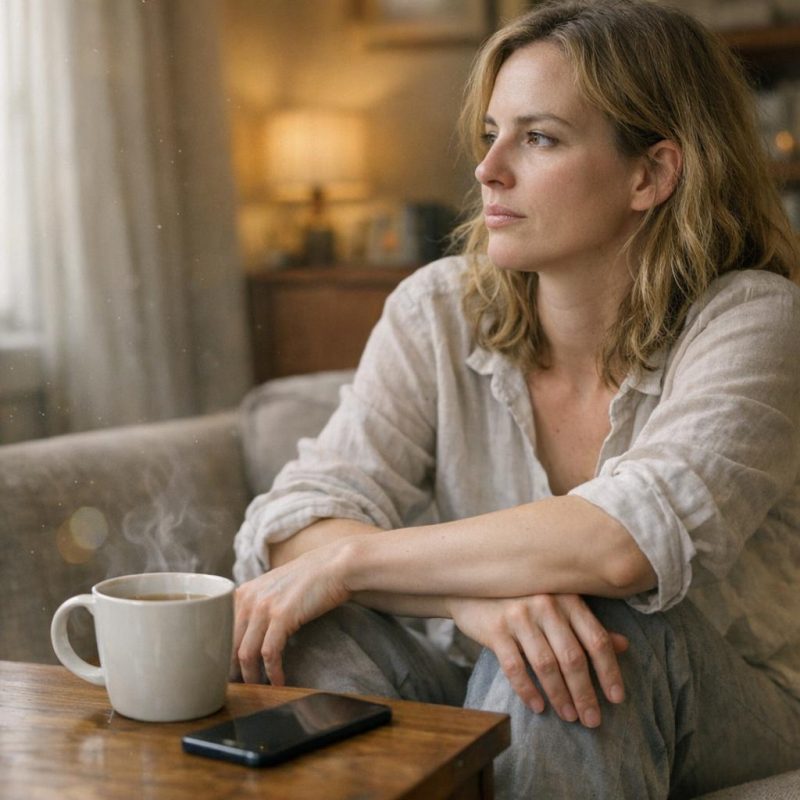 Image by RM AI
Nicole's Grief
On the fourth day, she broke. I was making coffee in the kitchen when I heard it—this raw, gasping sound from the living room. By the time I got there, she was sobbing so hard she couldn't catch her breath. I sat down next to her and pulled her against me, and she cried for hours. Not delicate crying, but the ugly, snotty, hiccupping kind that comes from somewhere deep. She kept saying she felt stupid. 'I believed everything,' she said. 'Every word. I thought he loved me.' I rocked her like I did when she was small and had nightmares. Eventually, she asked me how she was supposed to trust anyone again. How do you open your heart when someone can study you like that, learn your weak spots, weaponize your family history? I didn't have an easy answer. What I told her was this: the con only worked because she was trusting and open and loving—and those aren't weaknesses. He'd researched our family for months, learned our stories, figured out exactly what we valued most. But that kind of calculation isn't love. I held her and told her the truth: a man who studies your family before he studies your heart is not building a future—he's casing a house.
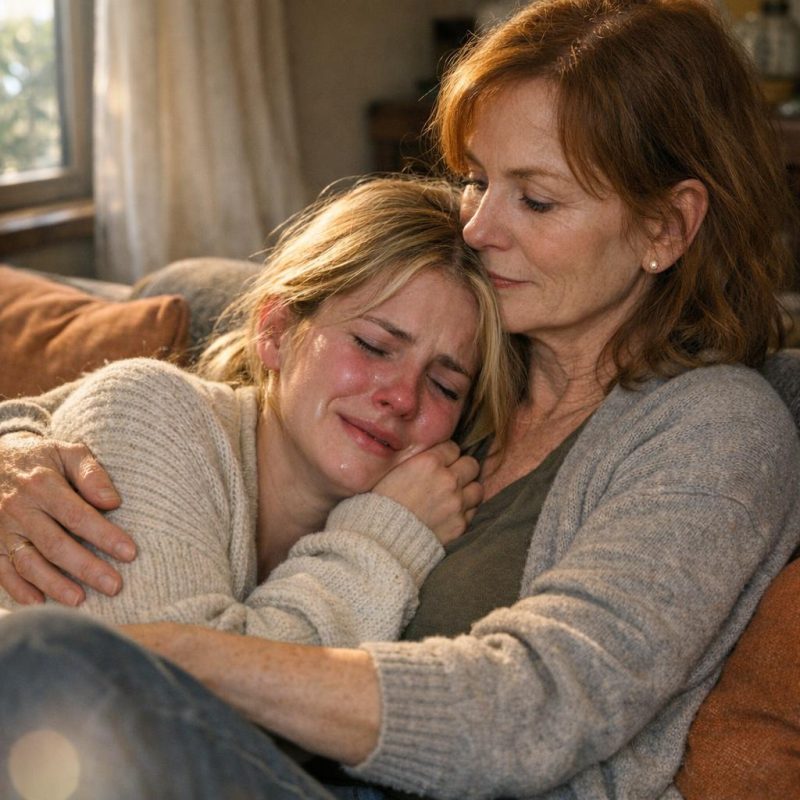 Image by RM AI
The Lesson
Looking back now, I think about what Nicole learned—what we both learned. It wasn't just about James, or even about con artists in general. It was something deeper about how predators operate. They don't break down your door. They knock politely. They bring wine. They ask about your mother's jewelry with just the right amount of reverence. They make you want to show them everything precious, every vulnerability, every family treasure. James had spent months earning that access. The genealogy research wasn't random curiosity—it was reconnaissance. The interest in our family stories wasn't love, it was inventory. He'd figured out what we valued, what we'd preserved, what we'd protect. And then he'd positioned himself as someone who valued those same things, who'd honor them, cherish them. That's the real danger, isn't it? Not the theft itself, but the intimacy that makes theft possible. He'd asked to photograph the ring. To document its history. To be trusted with our stories. We'd practically handed him the keys. Sometimes the thing a dangerous man wants most is not the jewelry itself, but the permission to stand close enough to take it.
 Image by RM AI
The Ring on Her Finger
I wear my mother's emerald ring again now. Not every day—it's still too valuable, too precious for that. But sometimes, when I need to remember. When I slide it onto my finger, I think about everything it represents. My mother's elegance, yes. Our family history, absolutely. But now it also represents something else: survival, vigilance, the hard lesson that love and manipulation can look identical until you know what you're looking for. The ring catches the light the same way it always did. The emerald is still that deep, impossibly green color. Nothing about the object itself has changed. But I've changed. Nicole has changed. We look at beautiful things differently now. We ask different questions when someone shows too much interest, does too much research, moves too fast. Sarah called last week to check in, and I thanked her again. She said something I keep thinking about: 'The best con artists don't want your stuff—they want you to want to give it to them.' I get it now. I really do. The ring is still beautiful, still precious—but now I wear it with my eyes wide open, and that makes all the difference.
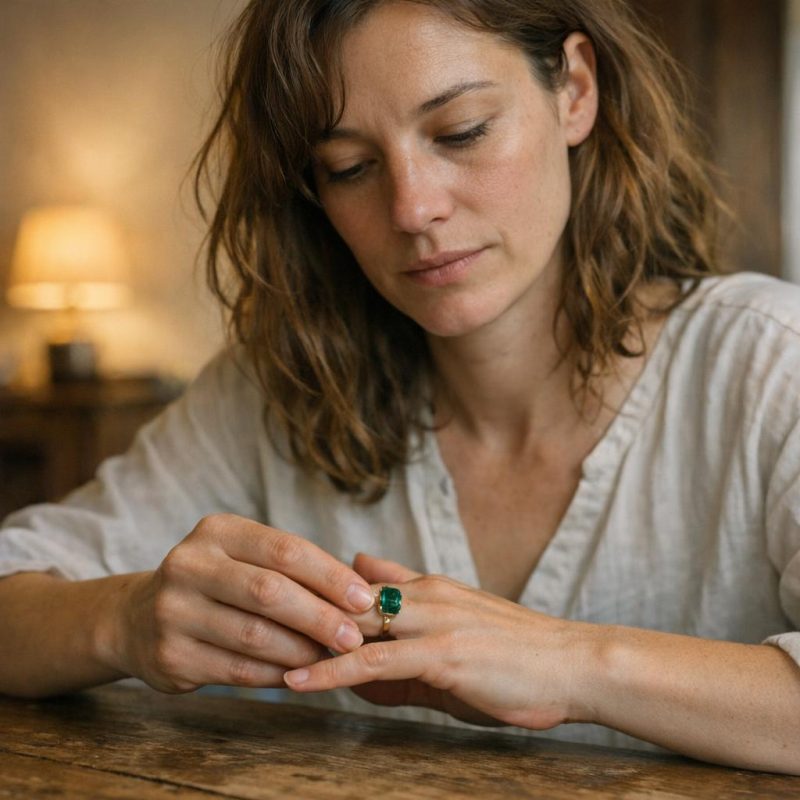 Image by RM AI