Glory Fades Fast When The Money Leaves
Some places don’t just age, they unravel. The crowds thin out, the maintenance budget disappears, and suddenly the grand staircase is wrapped in caution tape while rain finds new ways to enter the building every season. What makes these destinations so haunting is that they were designed for attention: lobbies meant for check-ins and gossip, plazas meant for parades, promenades meant for slow, satisfied strolling. When that purpose drains away, the leftovers feel louder than they should, like a stage after the show where the props are still trying to look useful. Here are 20 places that once pulled people in by the thousands, and now sit in various states of collapse, reclamation, and uneasy afterlife.
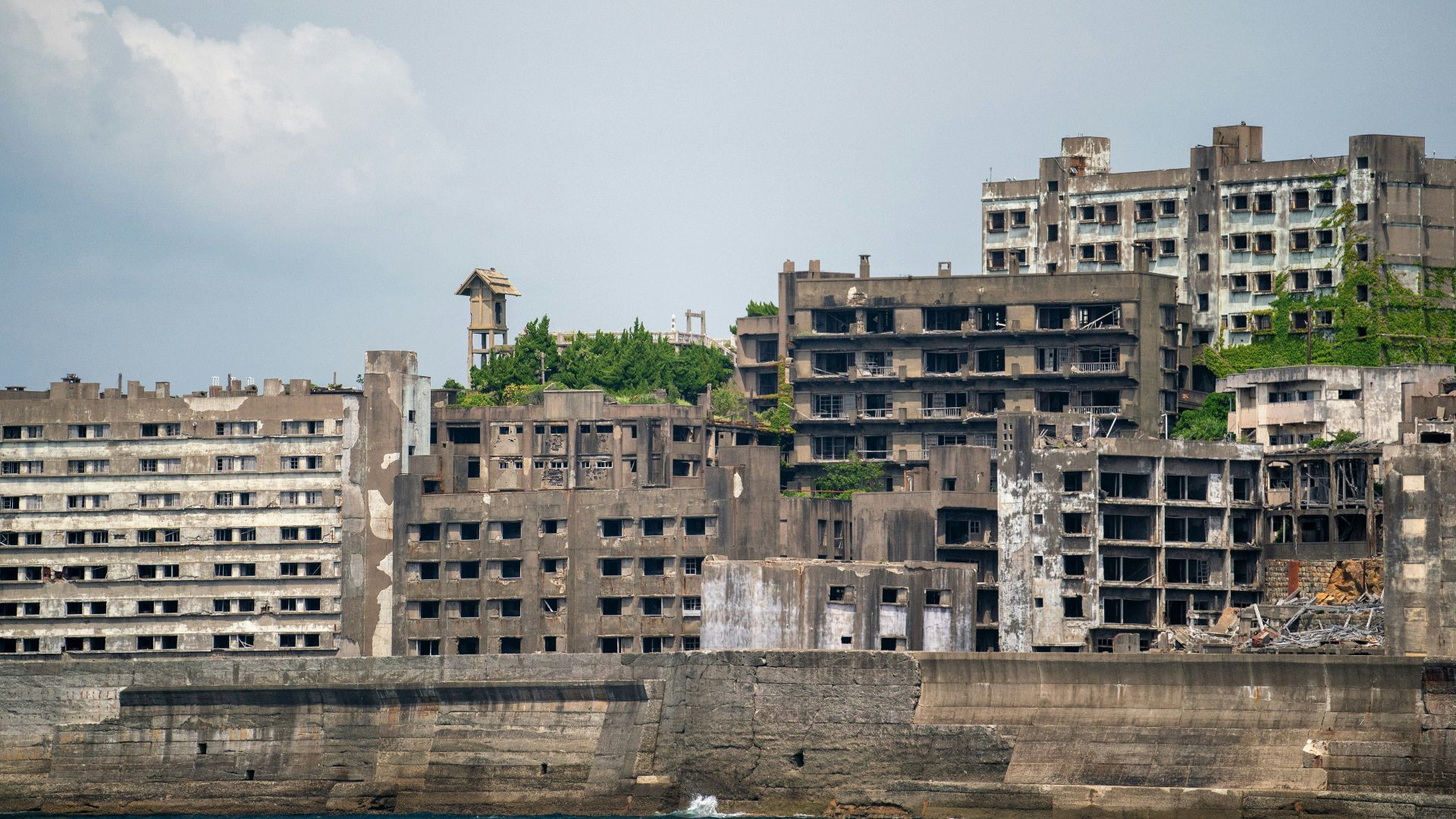
1. Hashima Island, Japan
This dense slab of concrete off Nagasaki once held a tightly packed mining community, with apartment blocks stacked so close the whole island felt like a single building pretending to be a town. After the mine closed, salt air and storms started worrying every edge, turning hallways into wind tunnels and rooms into crumbling shells that can’t be safely lived in anymore.
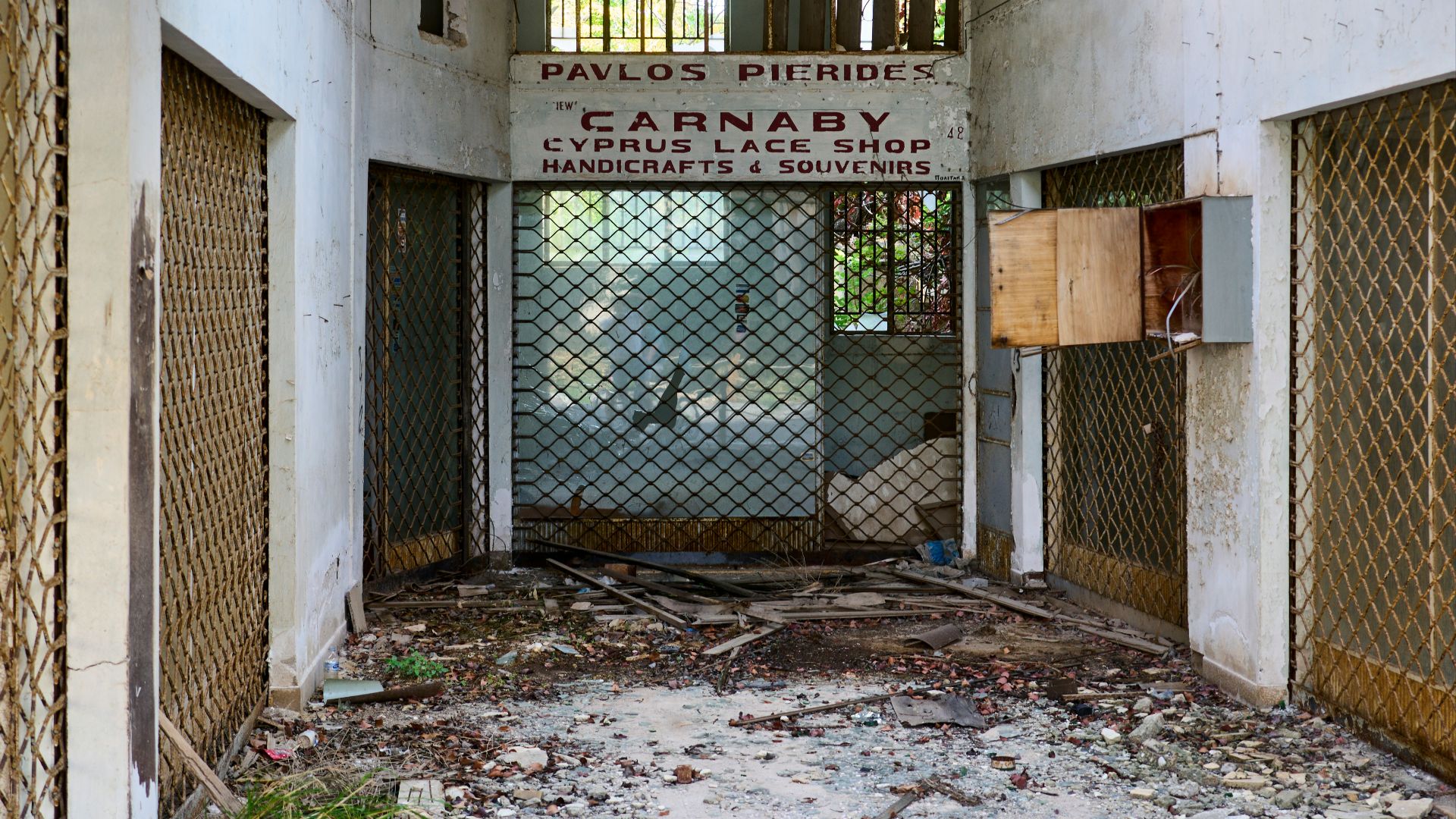
2. Varosha, Cyprus
Varosha was a glossy resort district with beachfront hotels and the kind of vacation energy that makes a place feel permanently young. Then it was sealed off for decades, and the buildings sat there aging in public silence, balconies bleaching out and windows failing one by one as the sea kept doing what the sea does.
 Steffen Lemmerzahl on Unsplash
3. Pripyat, Ukraine
Pripyat was built to serve the Chernobyl plant, so it had that planned-city confidence: wide streets, apartment blocks, schools, and public squares meant for an ordinary future. After the evacuation, nature moved in with blunt efficiency, and the decay became a mix of weather damage, plant growth, and the weight of a place that stopped mid-sentence.
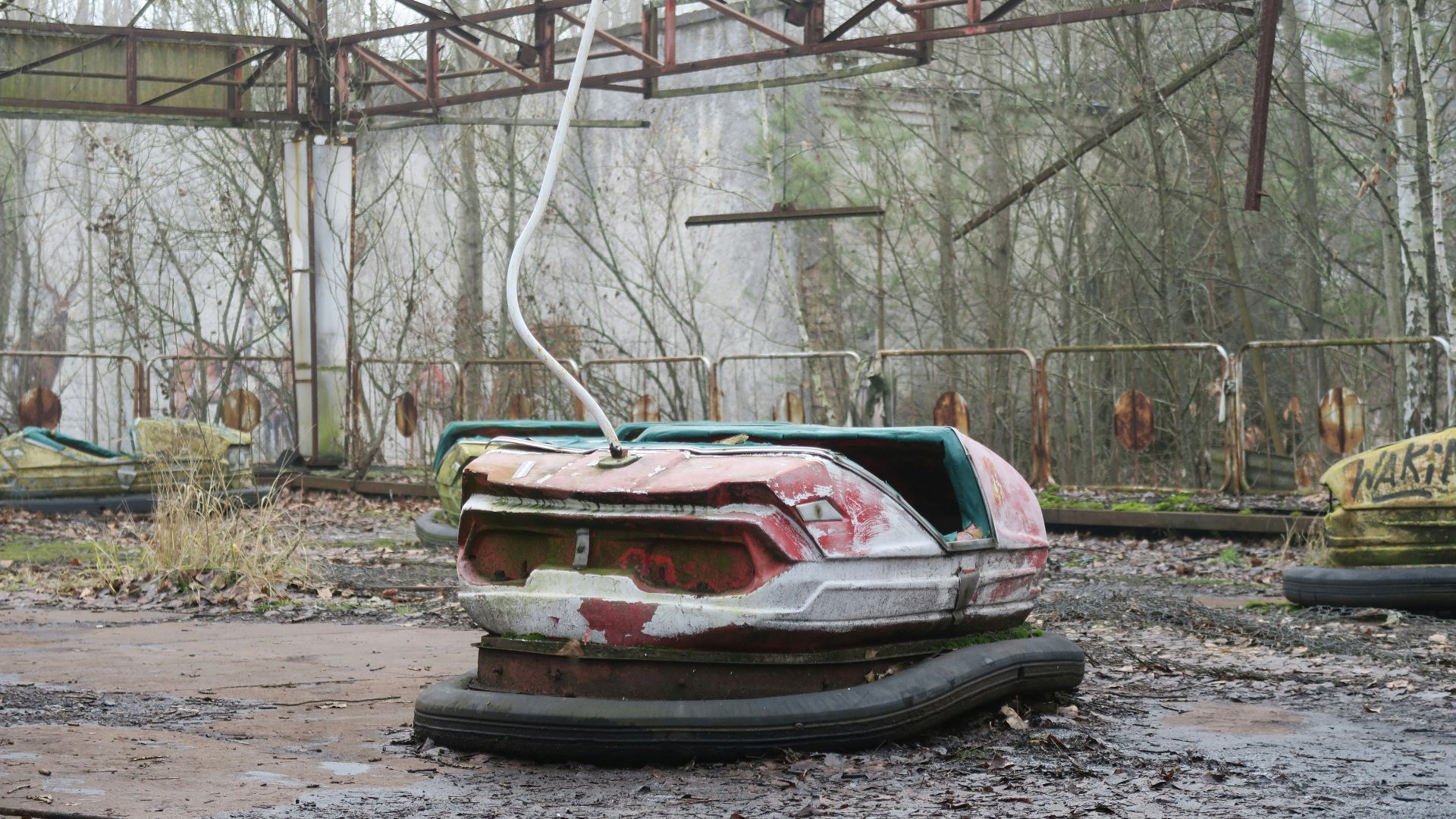 Stephan van de Schootbrugge on Unsplash
4. Buzludzha Monument, Bulgaria
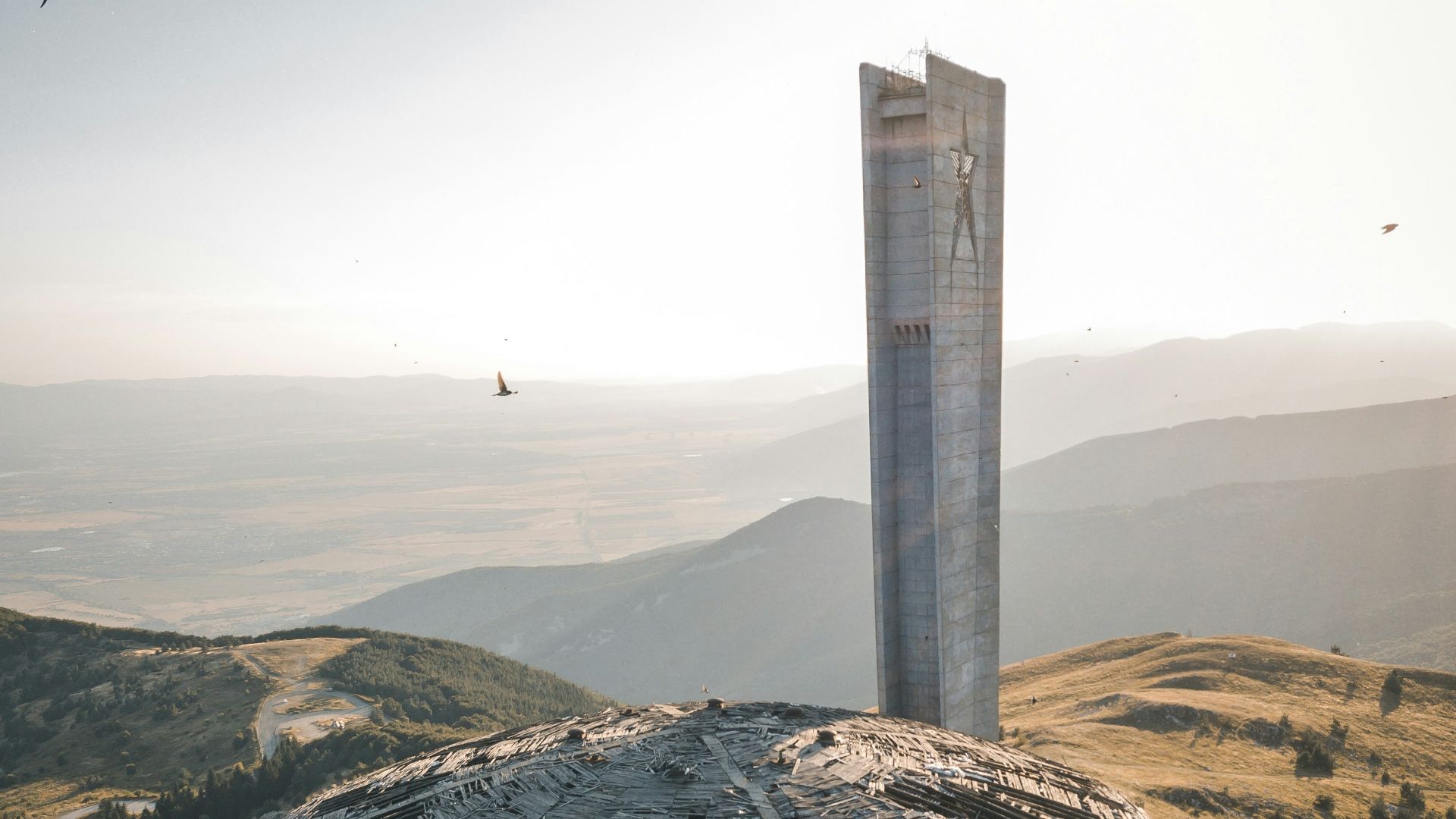
On a mountain ridge, this enormous socialist monument was engineered to look monumental from miles away, like a concrete spaceship that decided to land and stay. After the political era that built it ended, neglect and vandalism took their share, and the interior became a battered gallery of peeling mosaics and exposed rebar.
5. Kolmanskop, Namibia
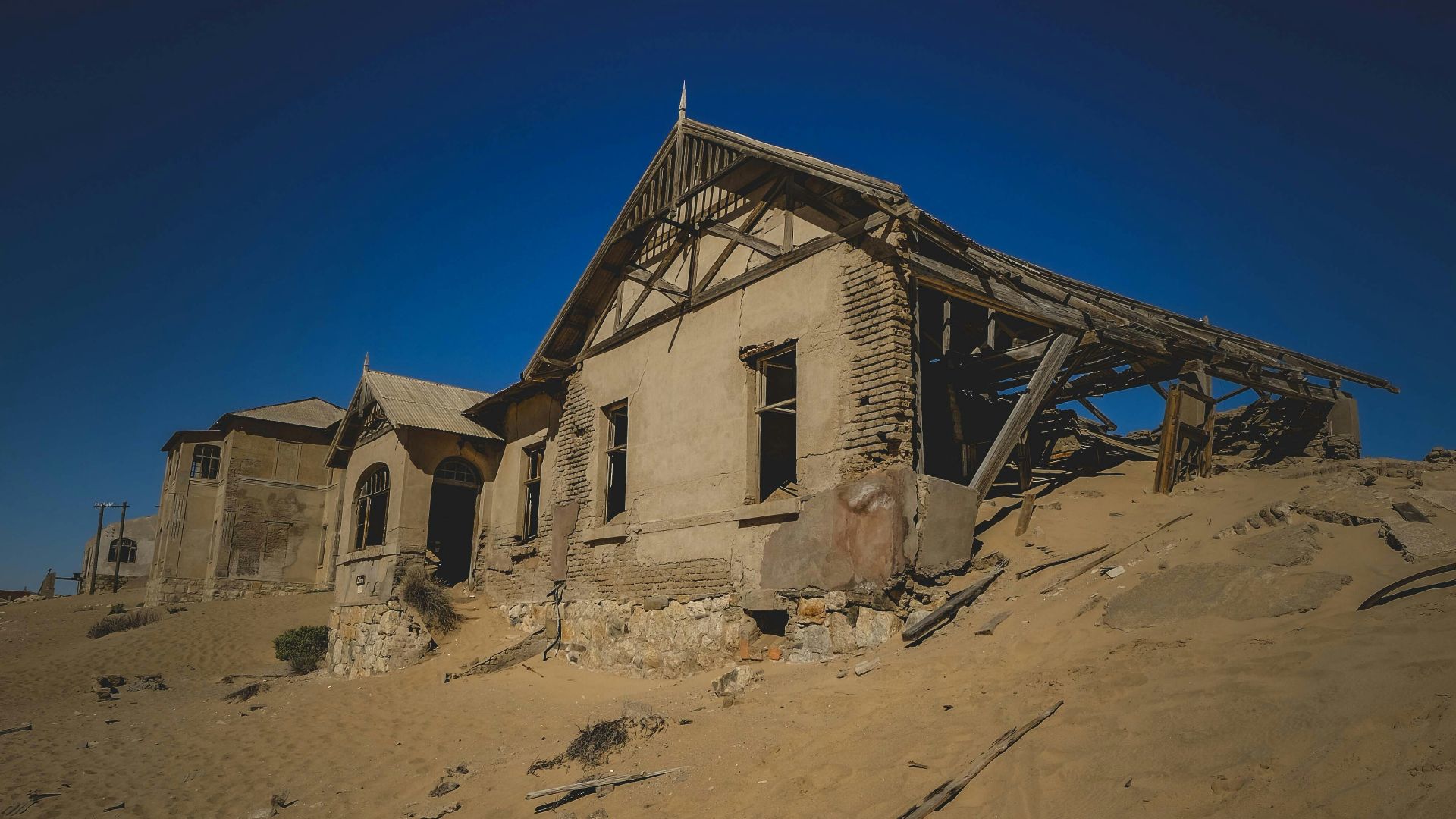
Kolmanskop rose fast on diamond money, with German-style houses plunked into a landscape that never promised to be gentle. When the boom moved on, the desert kept the keys, drifting sand into rooms until the buildings looked like they were being quietly swallowed from the inside out.
6. Pyramiden, Svalbard
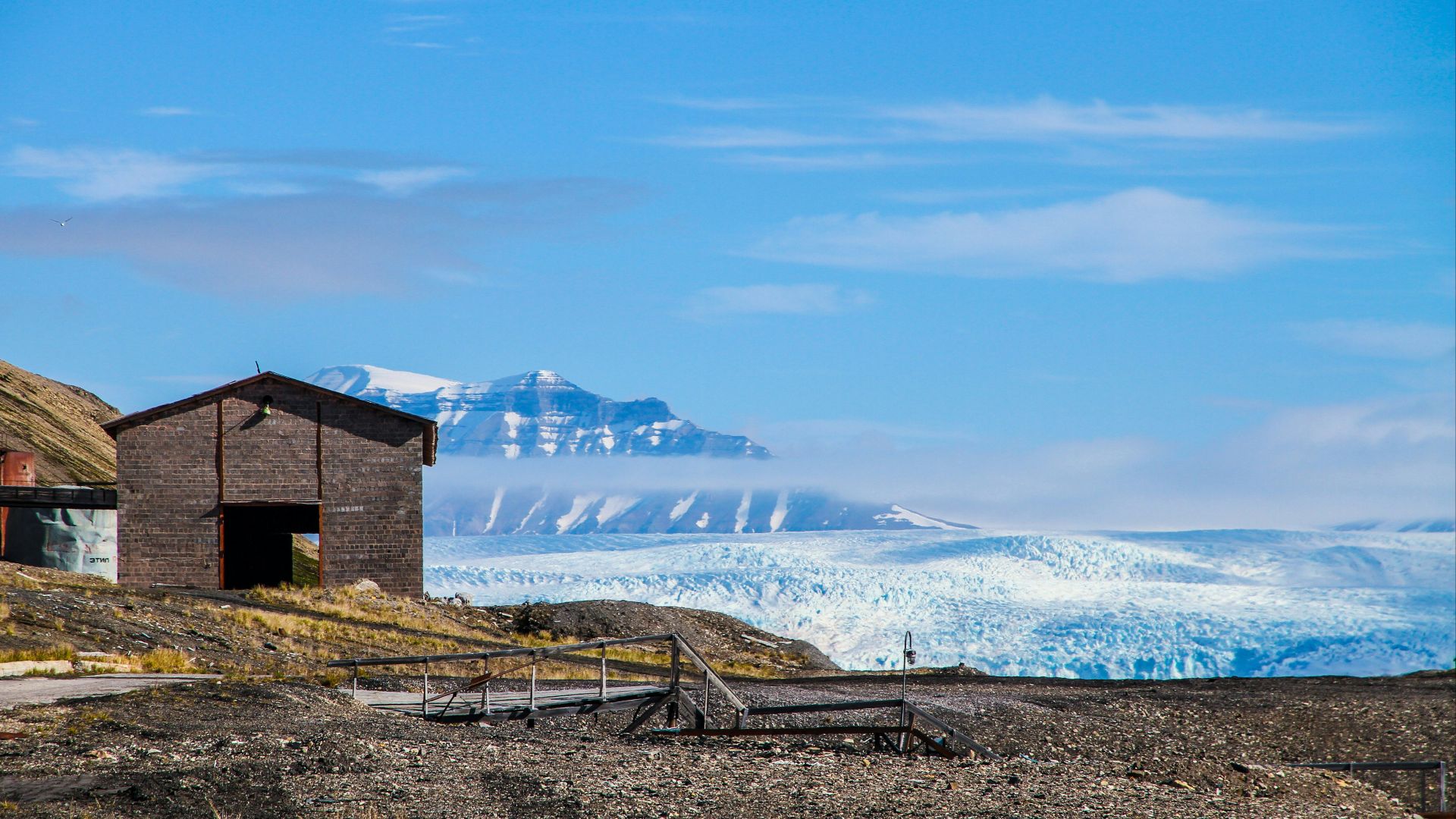
Pyramiden was a Soviet mining settlement in the high Arctic, built with pride and a strange optimism for a place that spends so much time in darkness. When the mine closed, it emptied out, leaving behind cafeterias, gyms, and housing blocks that now creak in the cold, preserved just enough to feel eerie rather than fully erased.
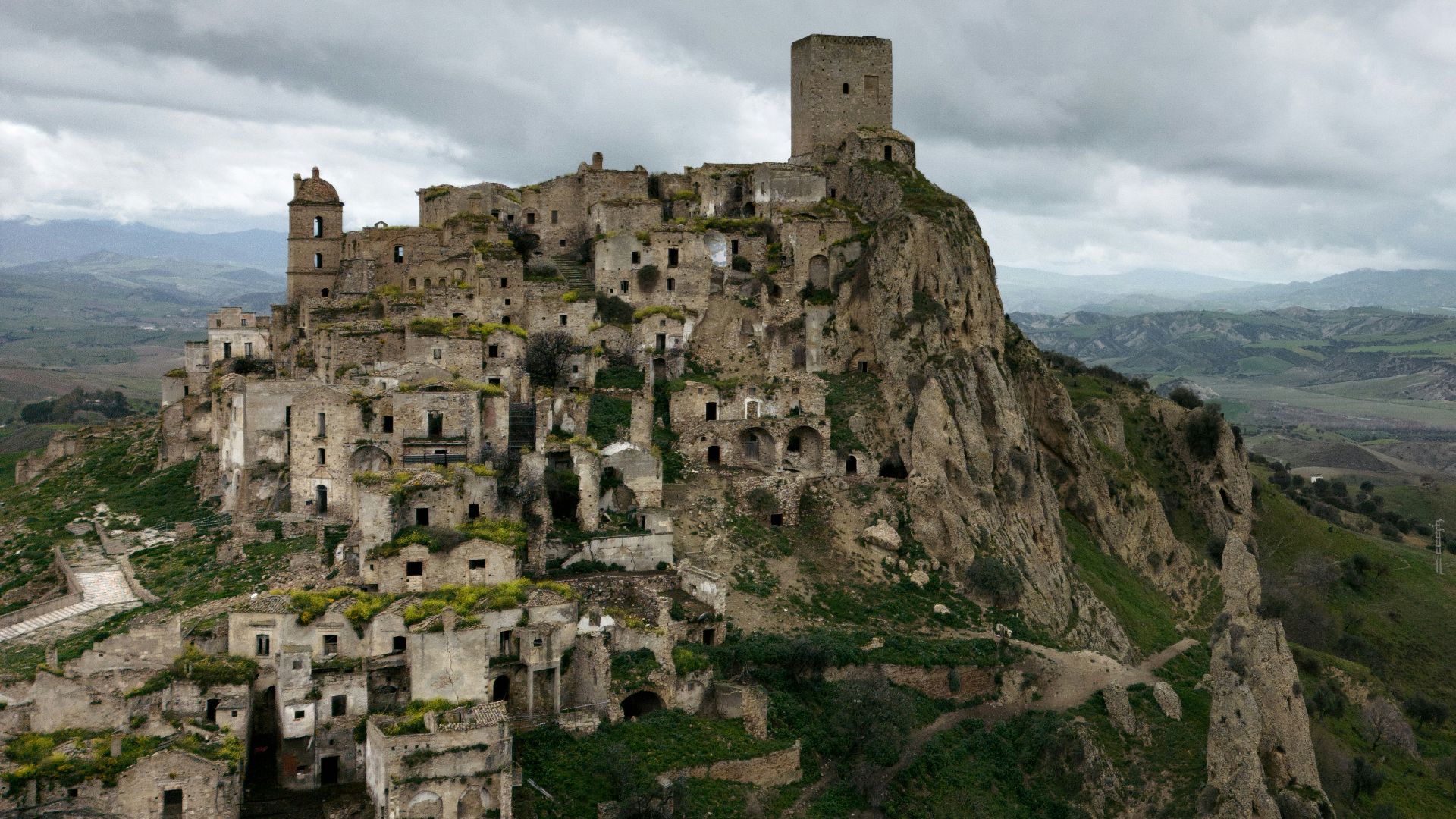
7. Craco, Italy
Craco clings to a hill like it’s trying to out-stare gravity, and for a long time it did, with stone streets and a skyline that still looks cinematic from a distance. Landslides and earthquakes pushed people away over time, and the abandoned core now sits as a fragile shell, stunning to see and risky to inhabit.
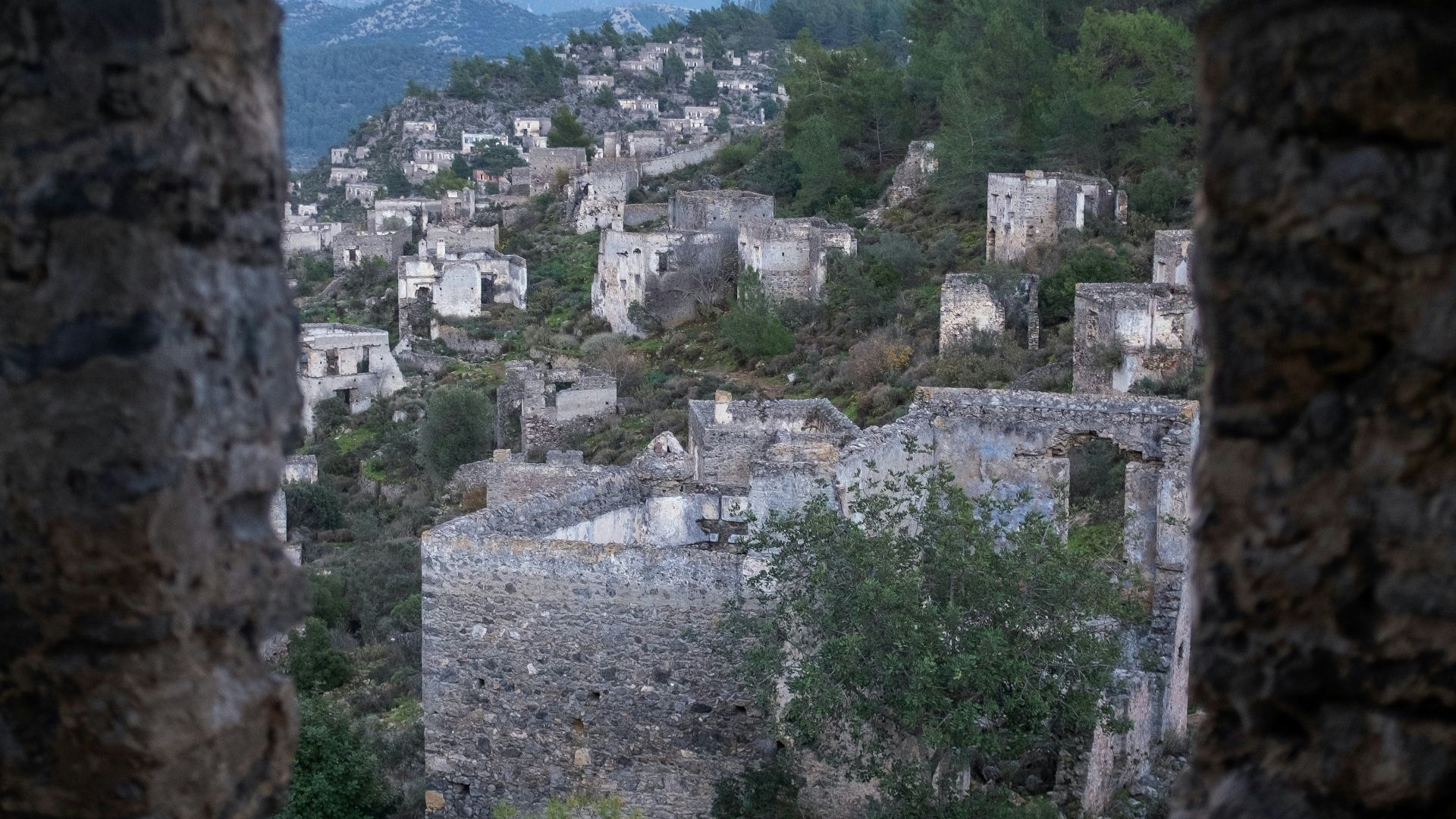
8. Kayaköy, Turkey
Kayaköy’s stone houses and churches sit roofless under a bright sky, arranged like a village that’s waiting for someone to come home. After the population exchange in the early 20th century, it was left behind, and a century of weather has turned it into a quiet grid of empty rooms and echoing doorways.
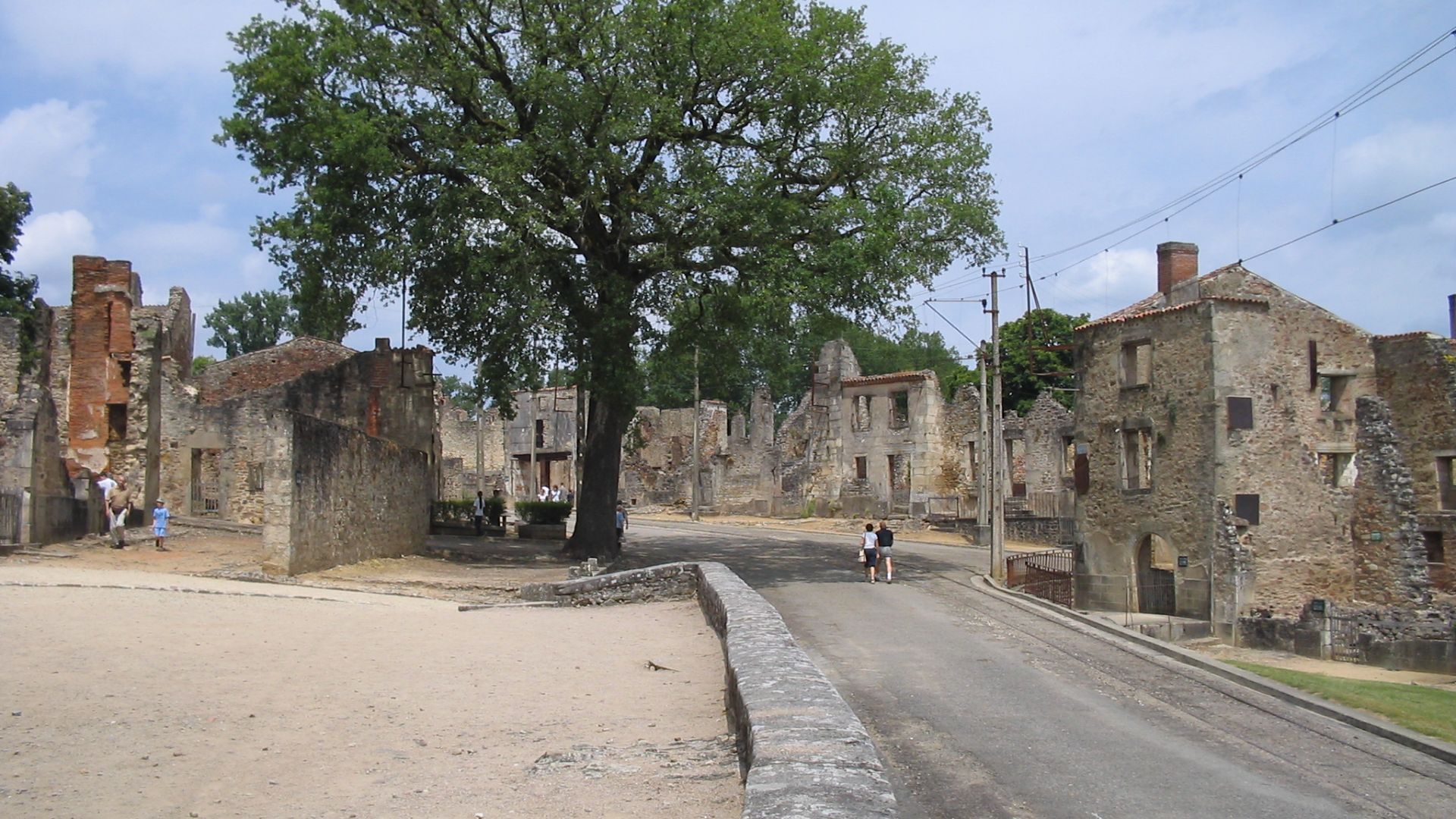
9. Oradour-Sur-Glane, France
This village was destroyed during World War II and preserved as ruins, so the collapse isn’t accidental, it’s part of a decision to keep the evidence visible. Rusting cars, broken masonry, and roofless structures remain where they fell, and time has continued its slow work without anyone trying to make it look tidy.
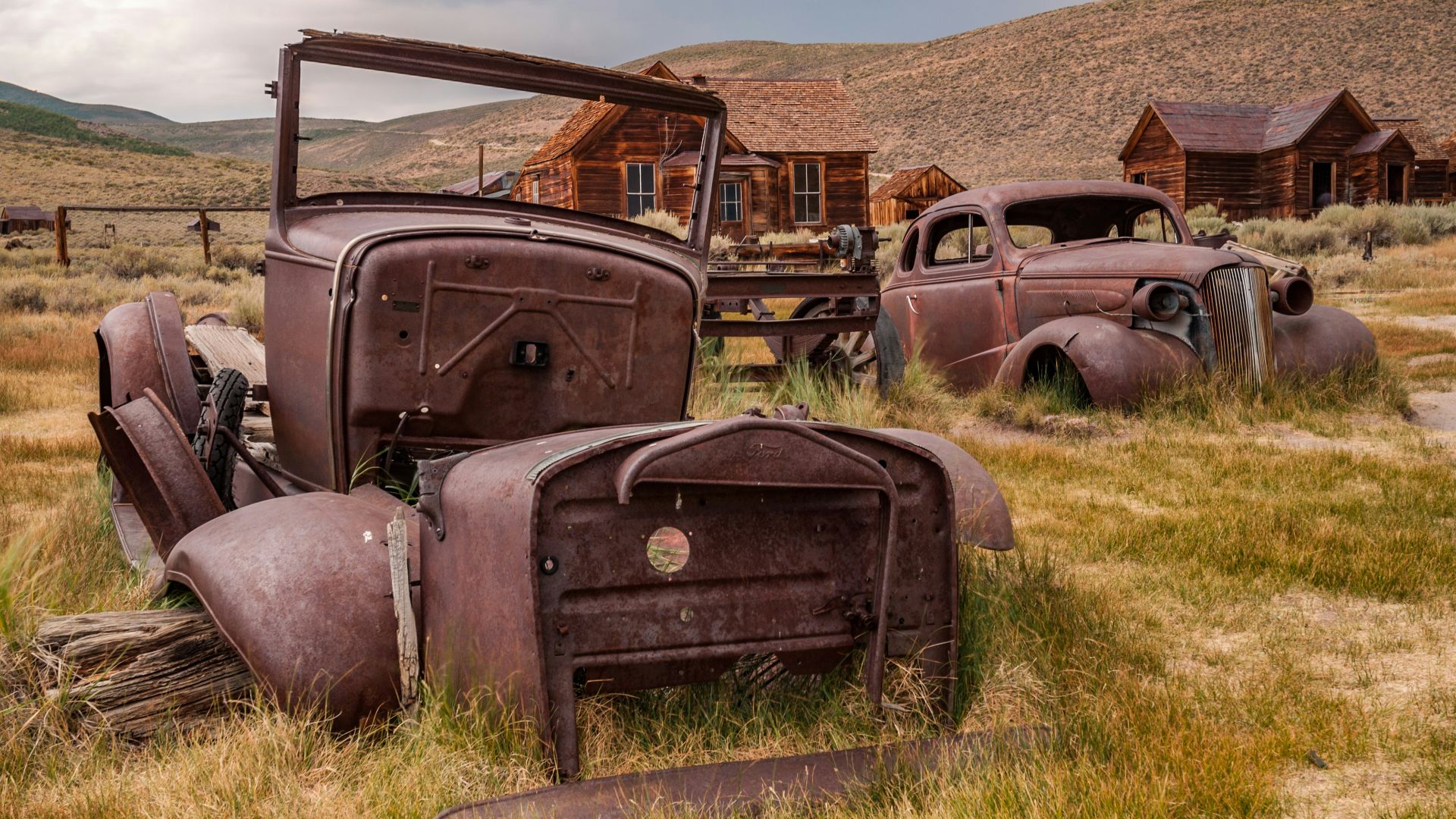
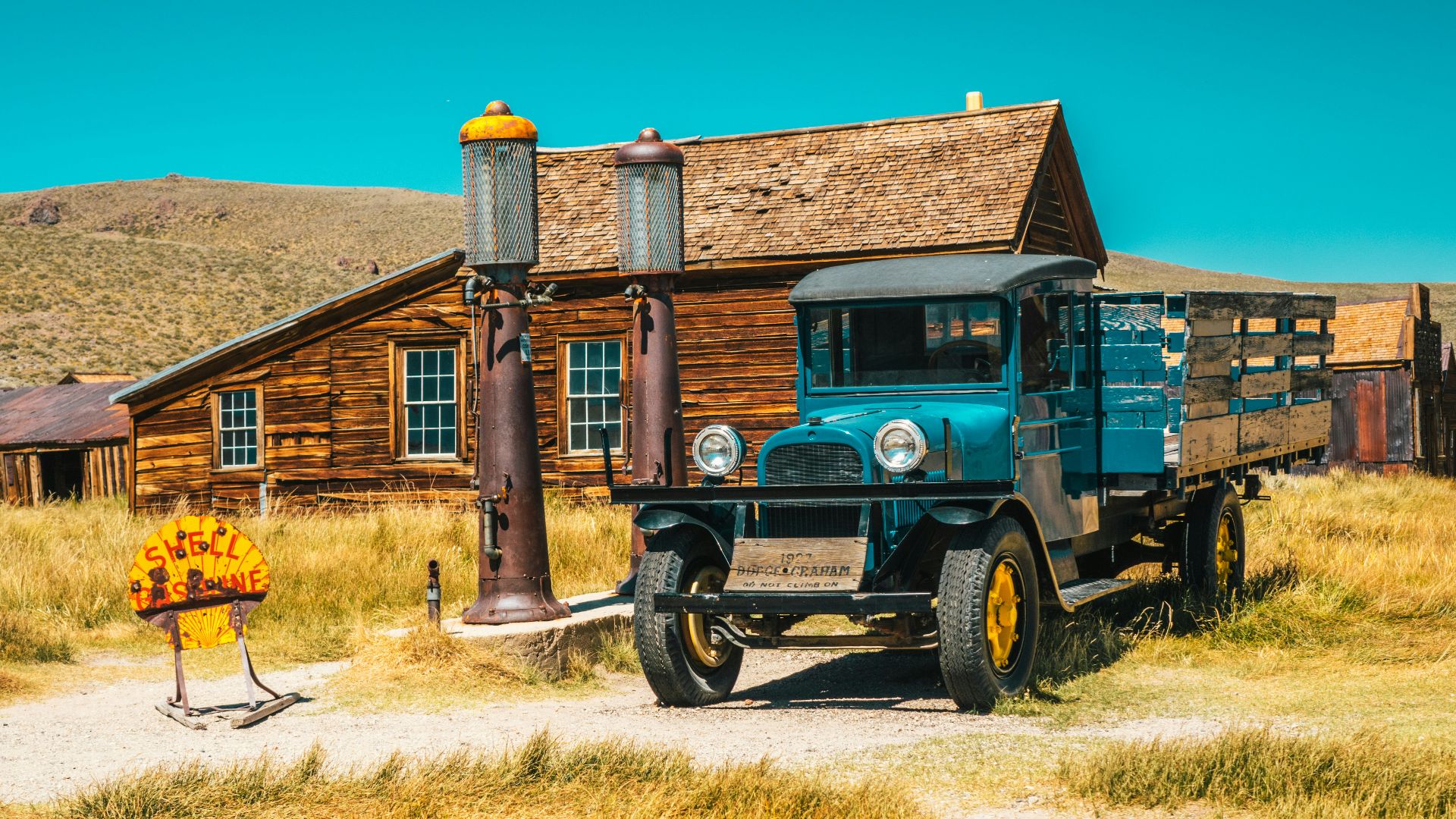
10. Bodie, California
Bodie was once a gold-rush boomtown with saloons, shops, and the kind of fast-built confidence that always assumes more money is coming. Now it’s maintained in “arrested decay,” which means it stays standing, yet it stays weathered, too, with fading paint and sagging frames that feel one hard winter away from surrender.
11. Centralia, Pennsylvania
Centralia didn’t fade because it stopped being interesting, it faded because staying became unsafe, thanks to an underground coal-seam fire that never really quit. The result is a town defined by absence, where empty lots and quiet roads hint at a whole community that had to unbuild itself while the ground stayed hot.
12. Plymouth, Montserrat
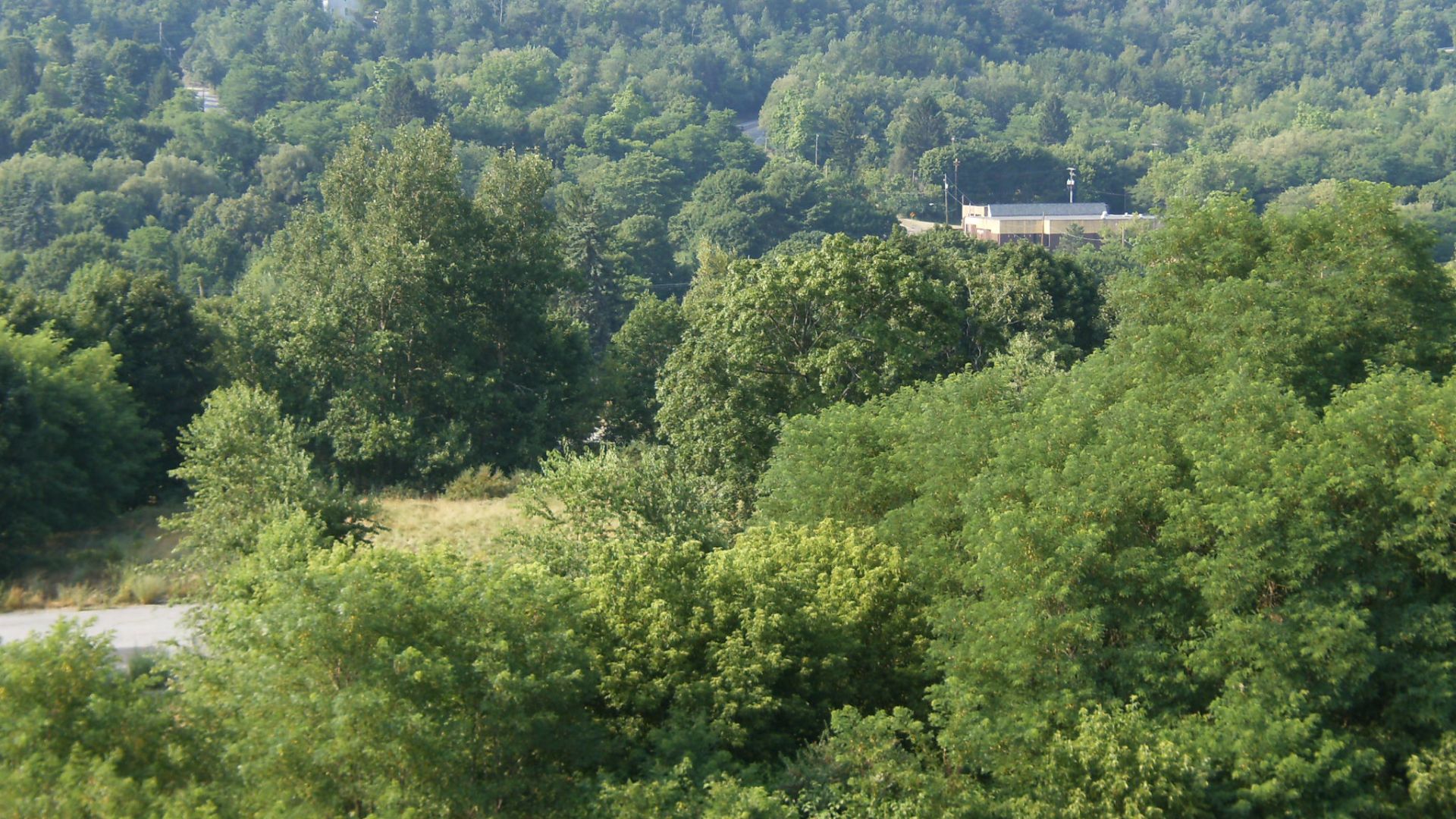
Plymouth was a Caribbean capital with everyday life humming along until the Soufrière Hills volcano changed the entire plan. Ash and flows buried streets and buildings, leaving a city that still exists physically, yet sits inside an exclusion zone, half entombed and shaped by a disaster.
13. Aghdam, Azerbaijan
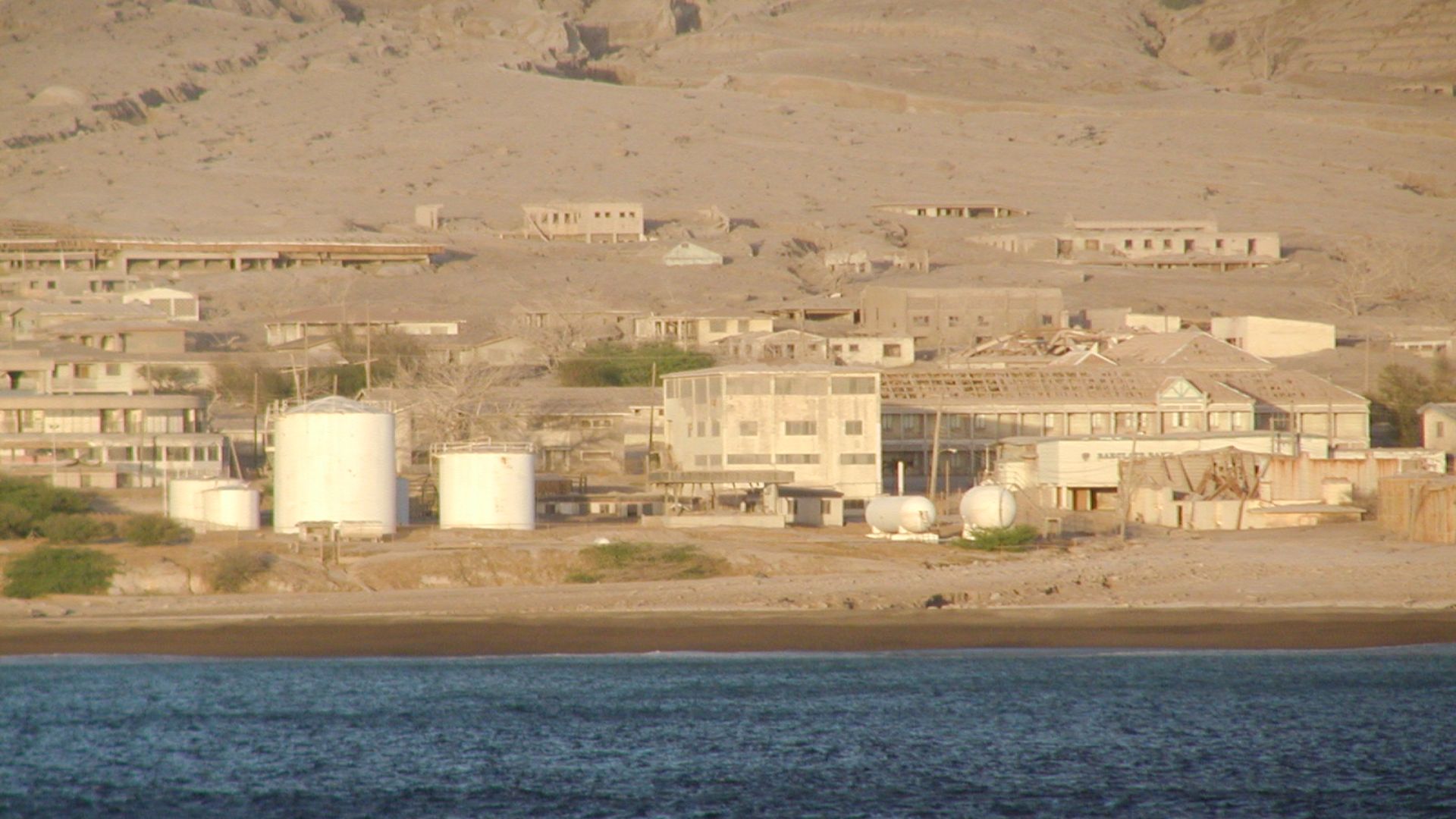
Aghdam became a symbol of urban ruin tied to the Nagorno-Karabakh conflict, with block after block reduced to skeletal remains. Even when politics shift, masonry doesn’t rebuild itself, and the city’s emptiness still feels like a blunt visual lesson in how quickly normal streets can become unrecognizable.
14. Old Belchite, Spain
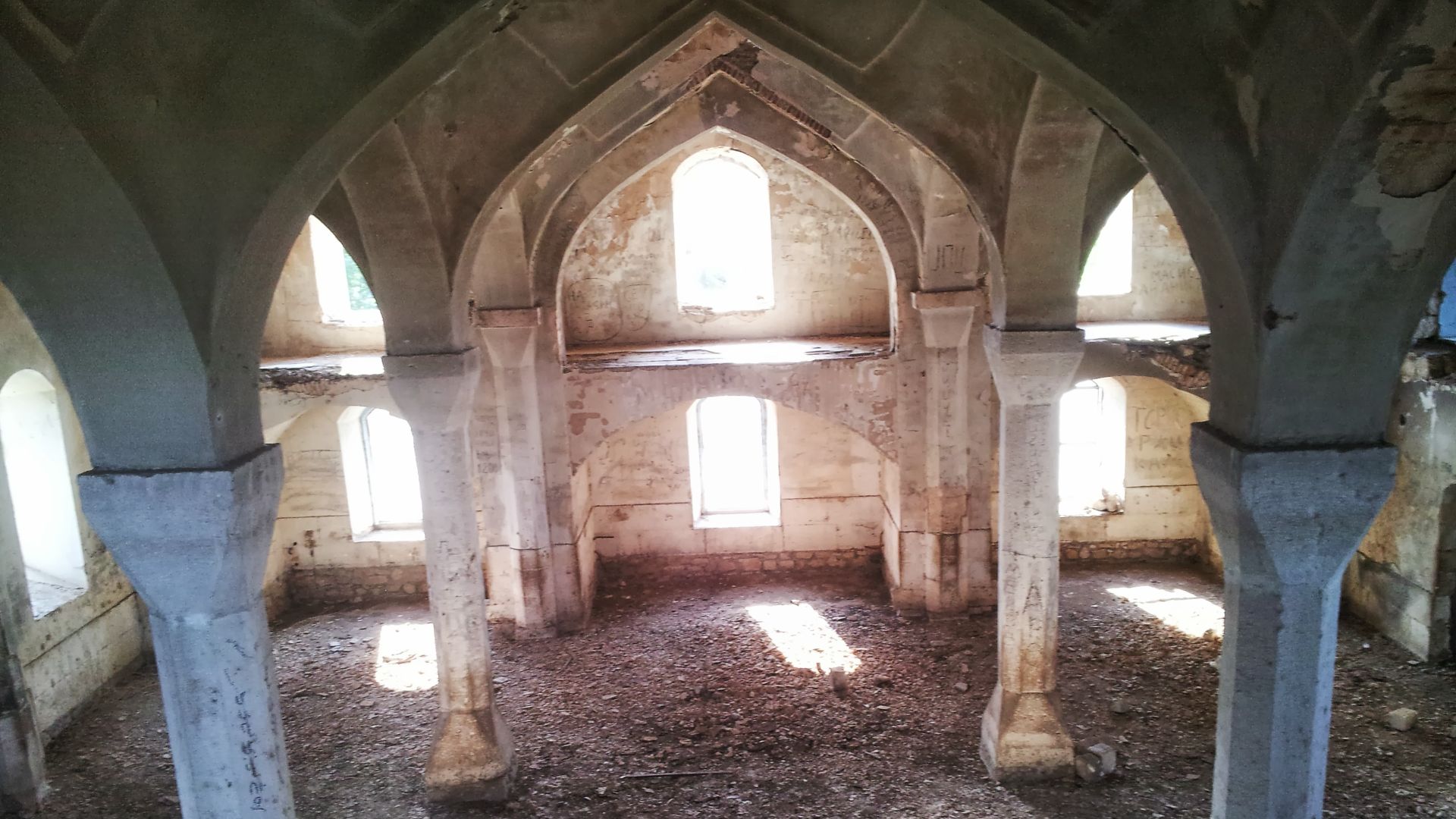
Old Belchite was left in ruins after the Spanish Civil War, while a new town grew nearby, close enough to make the contrast unavoidable. The remaining structures are fragile, and walking through them feels like moving inside a place that was never meant to become a monument, yet ended up one anyway.
15. Six Flags New Orleans, USA
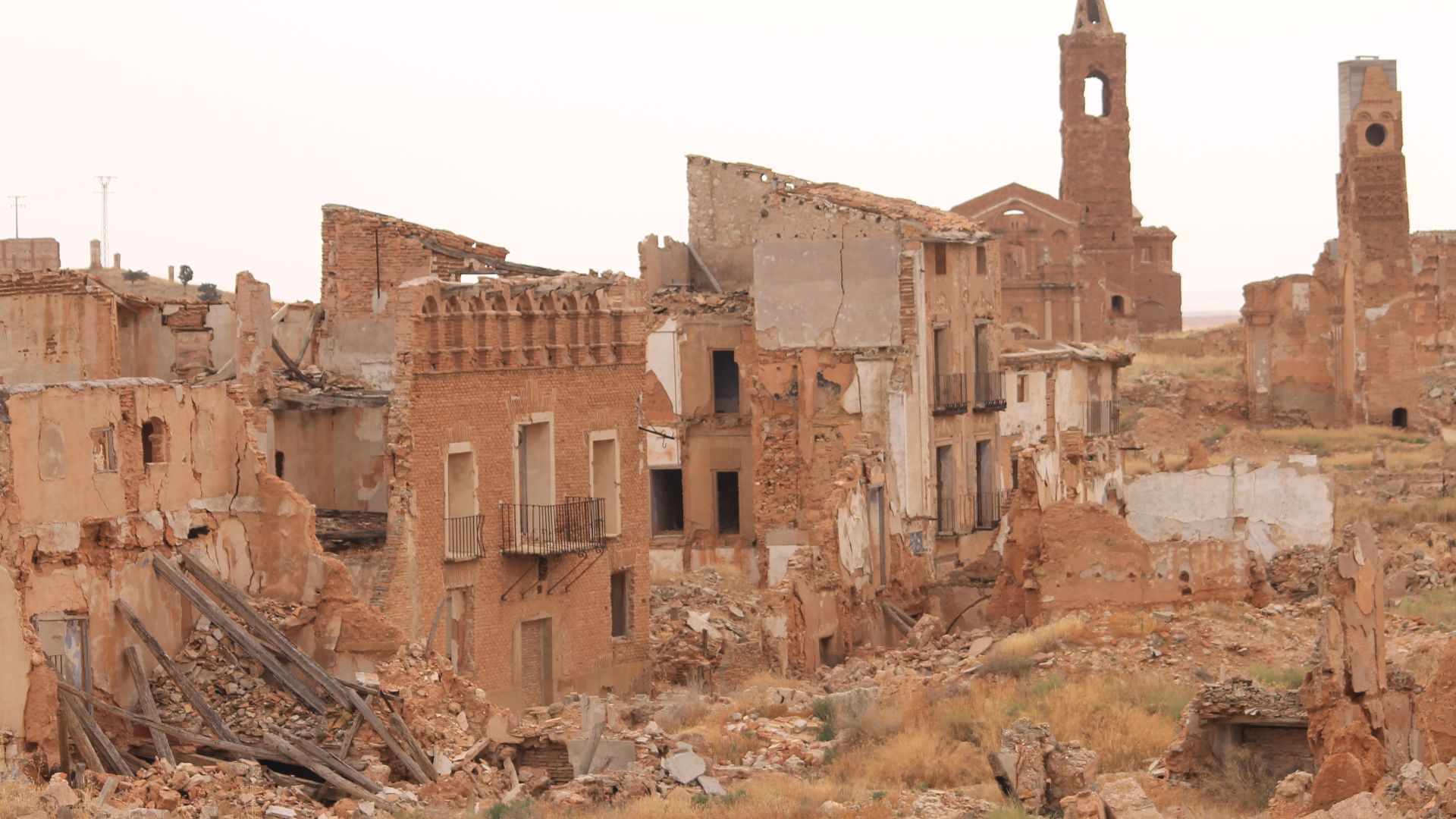
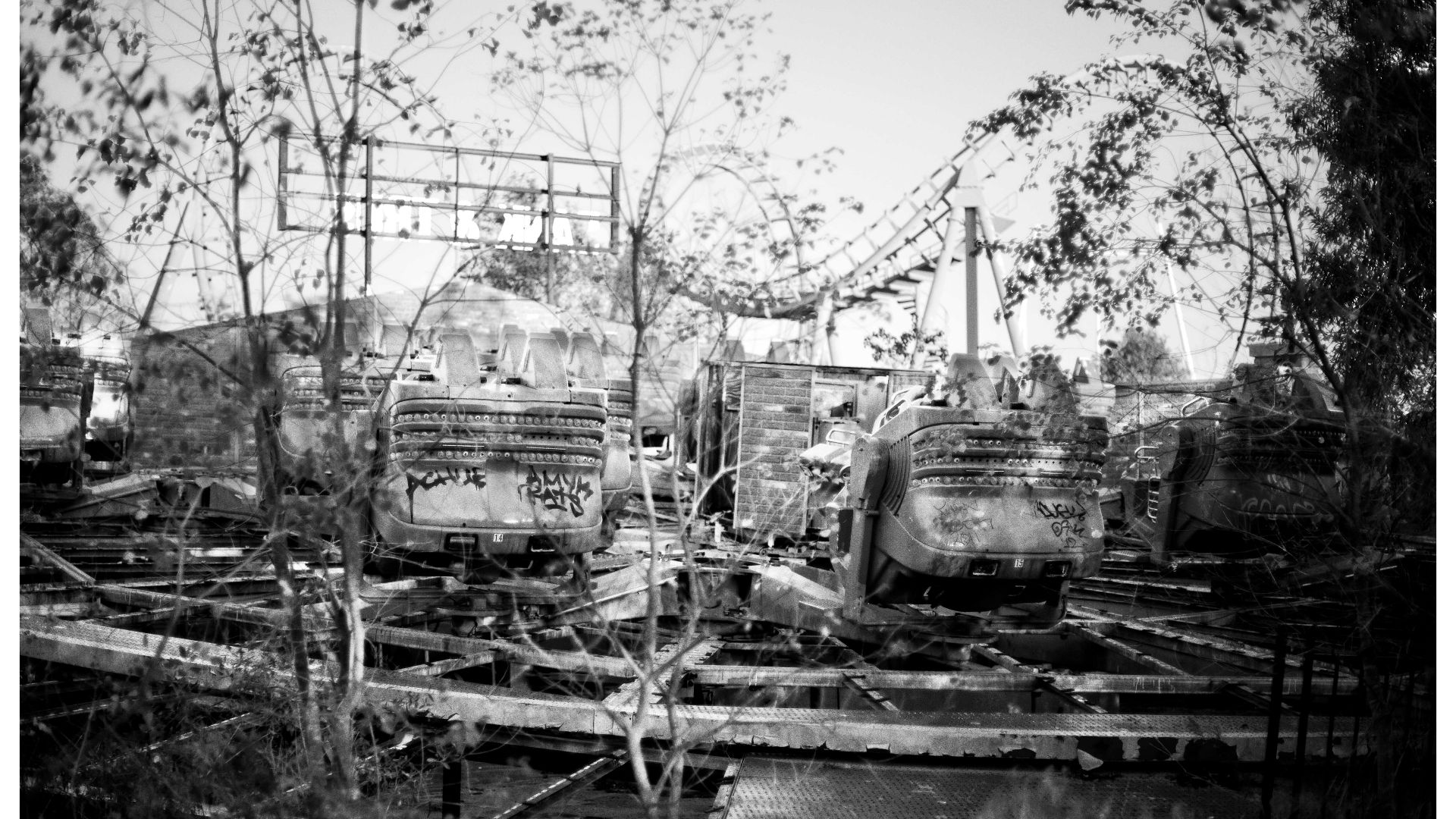
This amusement park never got the chance to become an enduring local classic, and Hurricane Katrina turned it into a flooded, abandoned property with roller coasters rusting in slow motion. Theme parks are built for noise and movement, so when they go still, the silence feels aggressive, like the place is daring you to remember what it was for.
 Erik Jorgensen from Morrison, USA on Wikimedia
16. Beelitz-Heilstätten, Germany
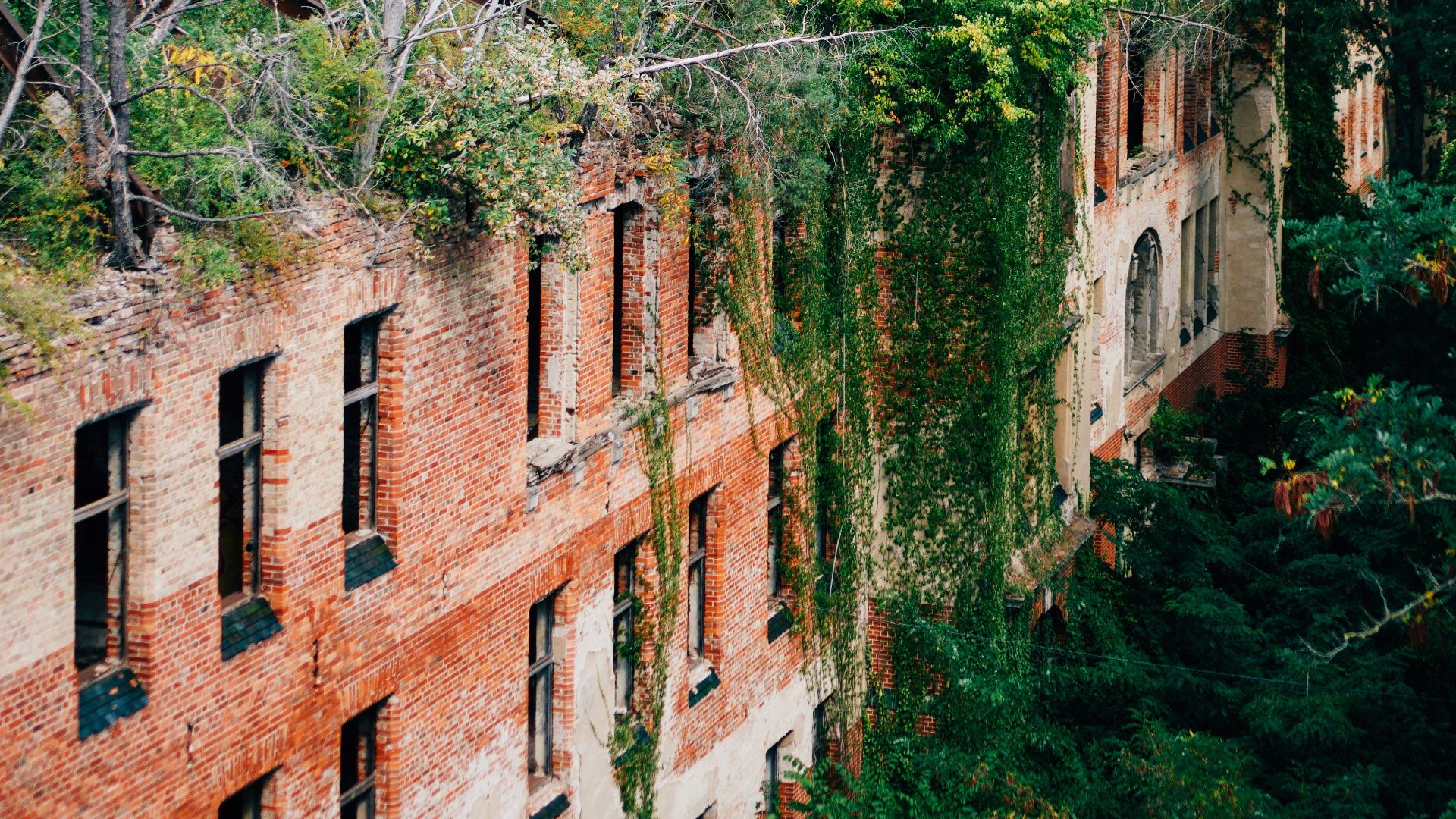
Beelitz-Heilstätten began as a sprawling medical complex, the kind of place where architecture itself tries to look healing and orderly. After large sections fell out of use, nature and time took over, peeling paint, cracking plaster, and turning corridors into that specific abandoned-institution atmosphere that feels too quiet to trust.
17. Kupari Resort, Croatia
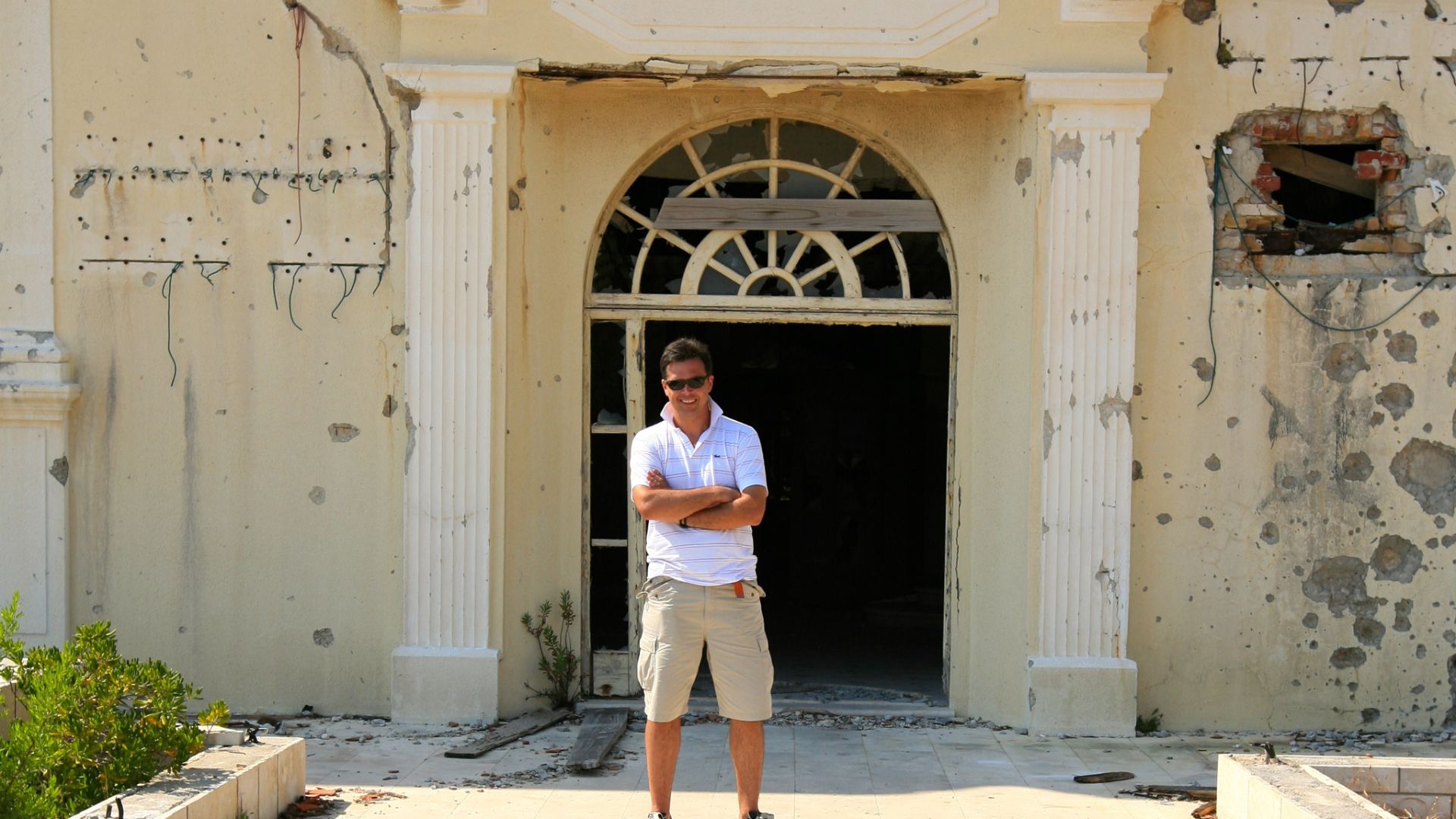
Kupari was once a coastal resort zone with hotels meant to deliver the easy promise of sea air and buffet breakfasts. War damage and years of abandonment left many buildings gutted, their concrete shells facing the Adriatic like tired teeth, beautiful from afar and unsettling once you notice how open the structures really are.
18. The Salton Sea Shoreline, California
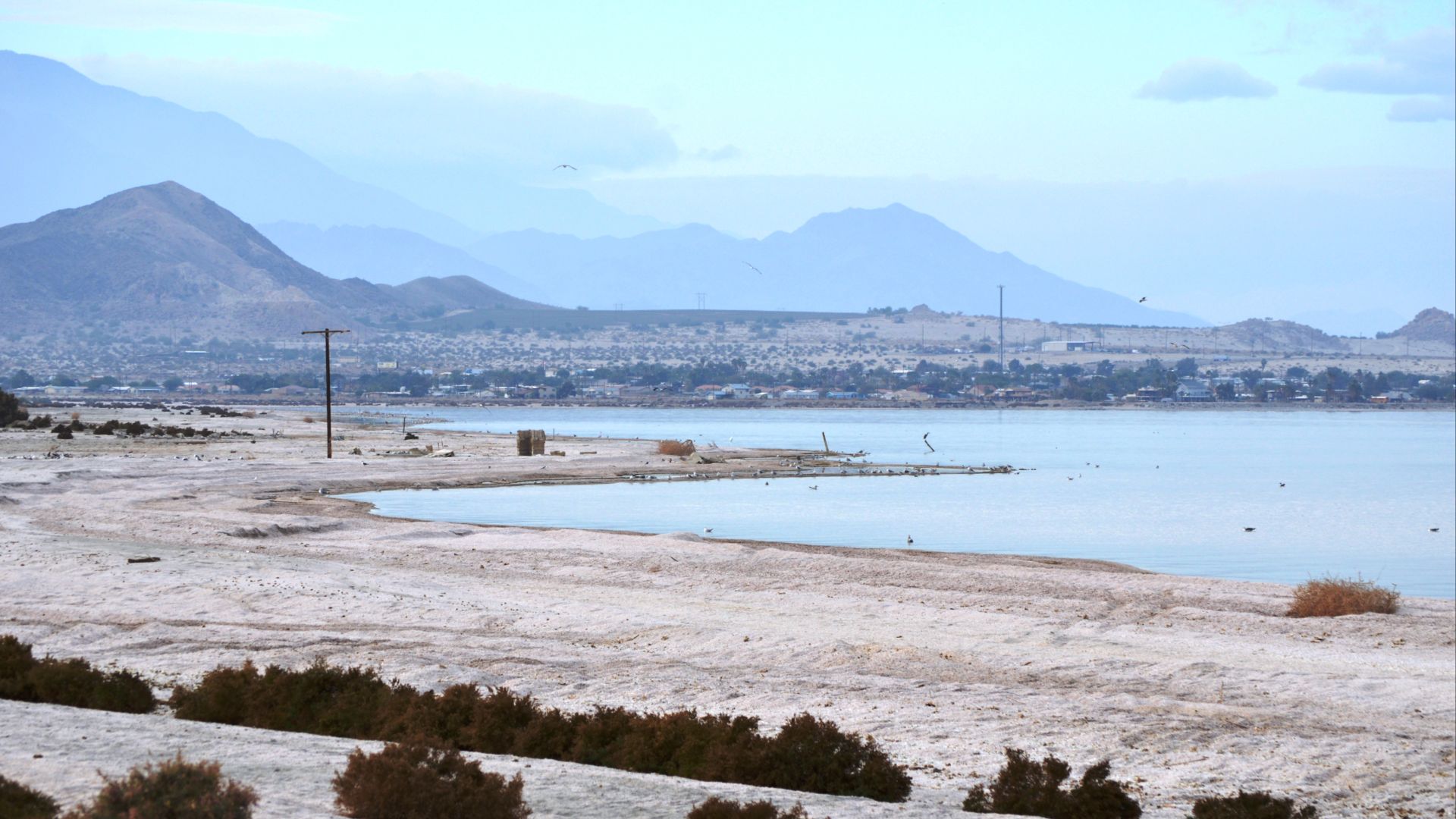
The Salton Sea drew visitors for fishing, boating, and desert weekends that felt like a slightly strange version of the good life. As water issues and ecological problems intensified, many shoreline areas slid into a surreal decay, with abandoned marinas, deteriorating infrastructure, and the kind of brittle, sun-worn emptiness that makes the heat feel sharper.
19. Houtouwan, China
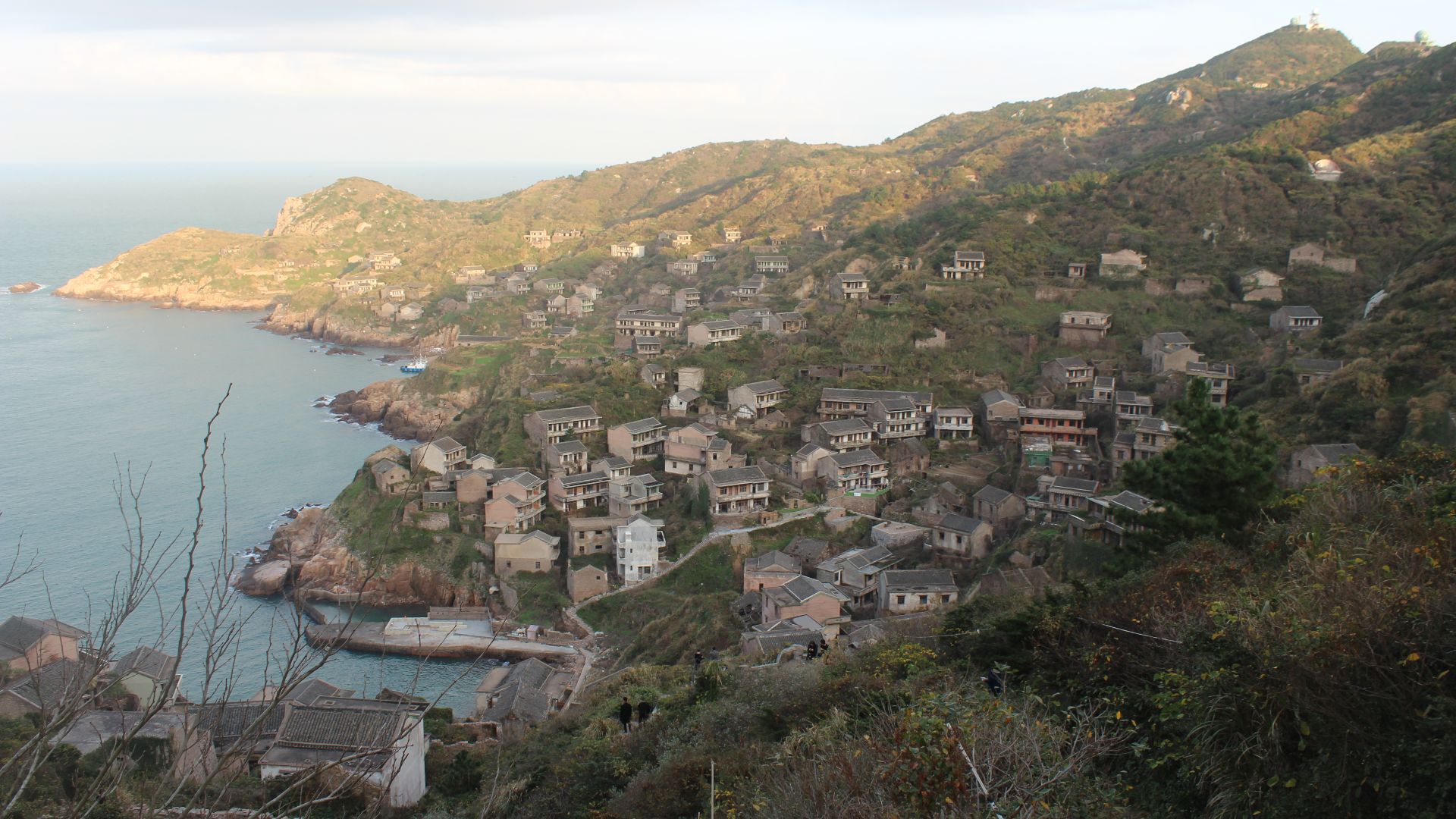
Houtouwan was a fishing village that emptied out over time, and the plants moved in like they’d been waiting for the invitation. Ivy and vines now drape houses and stairways, turning ordinary walls into green curtains, so the decay looks almost gentle until you remember it’s still abandonment underneath the beauty.
20. North Brother Island, New York City
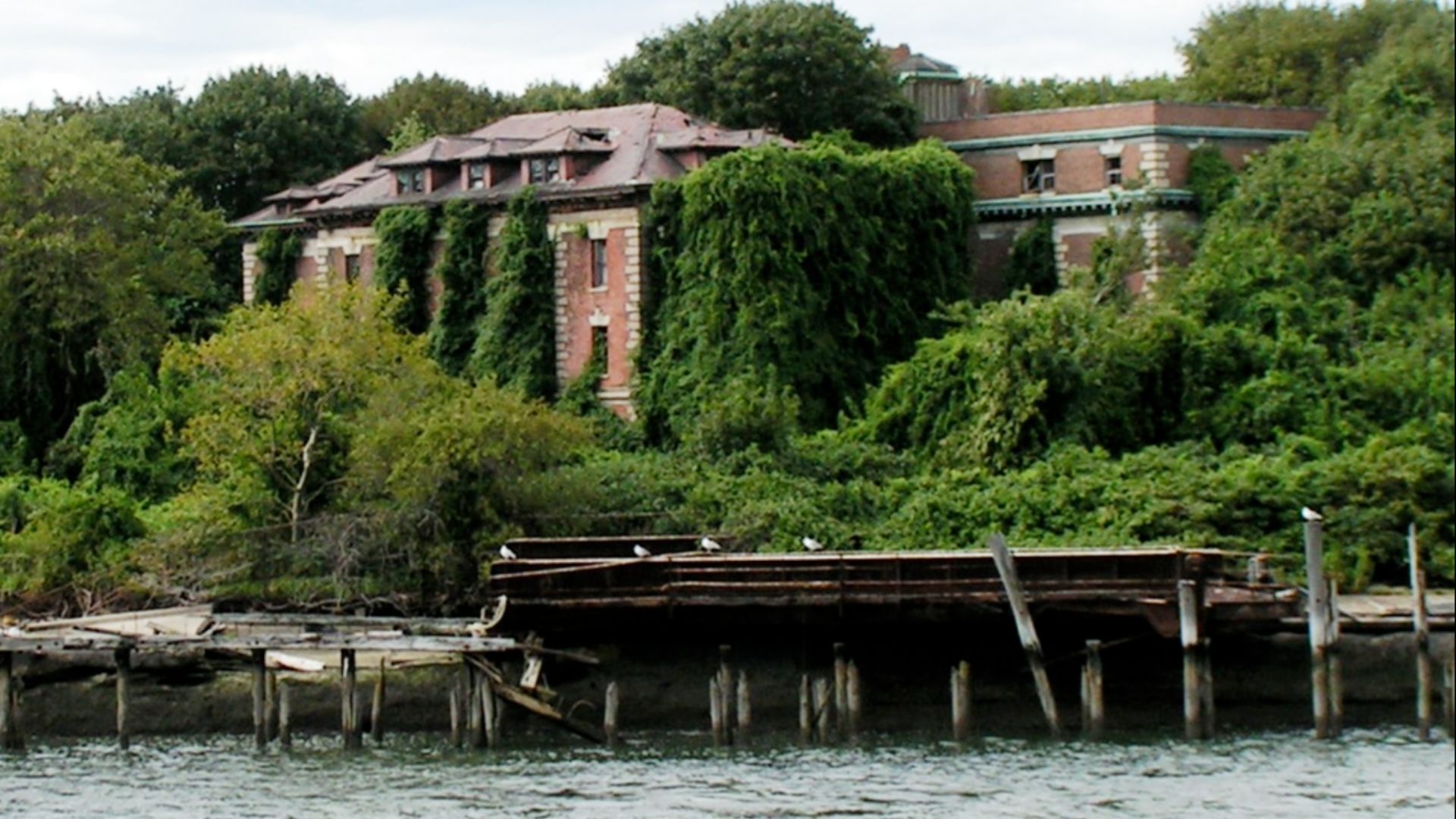
North Brother Island once hosted a hospital complex, including facilities tied to quarantine and public health history, and then it slipped into restricted quiet as the city moved on. The buildings have been left to rot behind fences, with collapsing roofs and overgrowth pressing in, a reminder that even in a skyline-famous city, whole places can simply disappear from daily awareness.
 reivax from Washington, DC, USA on Wikimedia