Ex-Husband's Wife Sent Me A $10K Invoice For "Expenses Caused By Me." I Agreed, But Left Out One Important Detail
Ex-Husband's Wife Sent Me A $10K Invoice For "Expenses Caused By Me." I Agreed, But Left Out One Important Detail
The Invoice
The email arrived on a Tuesday morning while I was drinking coffee and scrolling through work messages on my laptop. Subject line: 'Outstanding Balance – Urgent Attention Required.' I almost deleted it as spam, but then I saw the sender's name: Stephanie Lawson. Mark's new wife. We'd never met, never spoken, never exchanged so much as a text since their wedding announcement popped up on my Facebook feed last year – which I'd promptly hidden because who needs that kind of Tuesday? I'd been divorced from Mark for eighteen months by that point, and I'd worked hard to keep it that way. No awkward coffee catch-ups, no 'closure' conversations, just a clean break and an agreement to pretend the other person had moved to another continent. So seeing her name in my inbox felt like finding a spider in my shoe. I opened it with the kind of dread you reserve for medical test results. The email was three sentences long, polite but cold, with a PDF attachment labeled 'Invoice_ClaireM_2024.pdf.' She wrote that she'd been managing Mark's finances and discovered several 'unresolved expenses' related to me. Each line had a dollar amount, and together they added up to something I couldn't ignore.
 Image by RM AI
Breaking Down the Breakdown
I sat there staring at the screen, waiting for the document to load, half-convinced it would turn out to be a cruel joke or some kind of elaborate phishing scam. But no – it was formatted like a real invoice, complete with line items and subtotals. First charge: '$4,200 – Individual therapy sessions (Mark), addressing post-divorce emotional trauma, January-June 2024.' I actually laughed out loud at that one. Mark had a therapist now? Good for him, truly, but why was I getting billed for it? Next line: '$2,800 – Legal consultation re: potential modification of settlement terms.' That one made my jaw tighten. Were they trying to reopen the divorce? Then came '$1,500 – Couples therapy sessions (Mark and Stephanie), addressing trust issues stemming from previous marriage.' I had to read that twice. She was charging me for their couples counseling because, what, Mark had trust issues she blamed on me? The entitlement was almost impressive. At the bottom sat the real kicker: '$1,500 – Wellness retreat, Costa Rica, February 2024 – recovery and healing.' The vacation line made me set down my coffee – who charges their ex for recovery time?
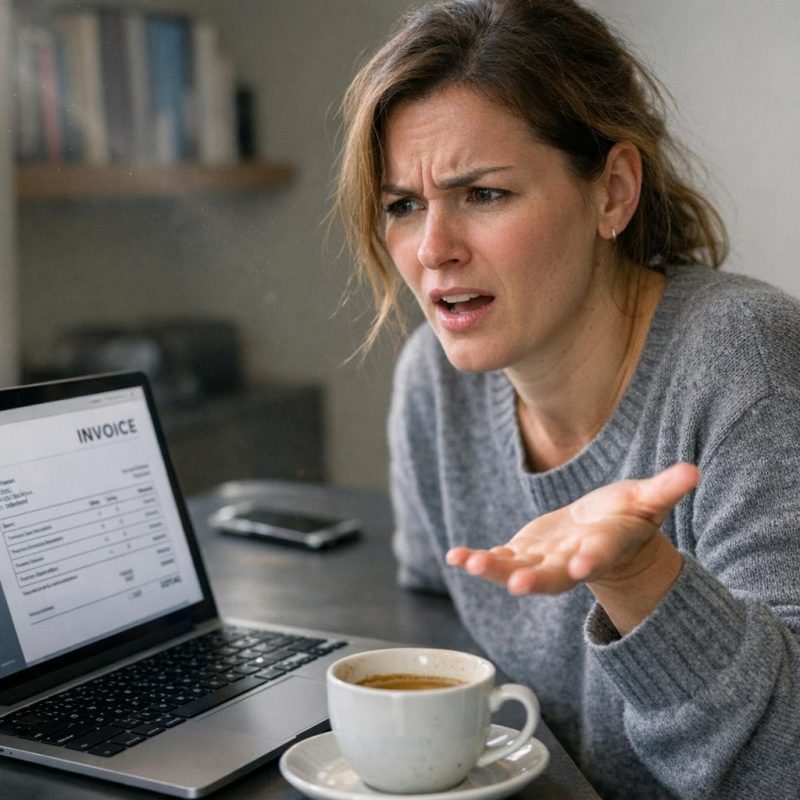 Image by RM AI
Twelve Years in a Folder
I closed the invoice and opened the folder on my desktop labeled 'Archive – Mark.' I'd created it the day our divorce was finalized, dumping in every email, every legal document, every scanned receipt from our twelve-year marriage and its slow, grinding dissolution. It had taken two years to untangle everything – the joint accounts, the condo we'd sold at a loss, the wedding china neither of us wanted but felt obligated to divide anyway. Mark hadn't been cruel during the divorce, just exhausting. He'd questioned every asset split, delayed signing paperwork, requested mediation sessions that went nowhere. His lawyer had been worse, pushing for revisions that added months to the process. By the end, I was so tired I would have signed anything just to be free. When the judge finally stamped the decree, I'd walked out of that courthouse feeling lighter than I had in years. I went fully no-contact the same day – blocked his number, unfriended mutual connections who couldn't resist playing Switzerland, and filed everything away in this digital tomb. I'd promised myself I'd never open that folder again, but here I was, looking for ammunition.
 Image by RM AI
Stephanie's Shadow
I didn't know much about Stephanie, honestly, and I'd preferred it that way. What I did know came in fragments from people who couldn't help themselves – a former coworker who'd seen them at a restaurant, a mutual friend who'd been invited to their small wedding exactly eleven months after my divorce finalized. Apparently, they'd met through some networking event Mark attended for his consulting firm. She worked in marketing or PR, something that involved a lot of social media presence and personal branding. The few photos I'd accidentally glimpsed showed a woman with sharp features and an even sharper smile, always positioned slightly in front of Mark in group shots. People described her as confident, ambitious, maybe a little too interested in Mark's past. One friend, after a few glasses of wine, told me Stephanie had asked her detailed questions about me – what I was like, how the marriage had ended, whether I'd 'really moved on.' That conversation had made me uncomfortable enough to stop asking about them entirely. I figured every divorced person gets replaced eventually, and the new spouse is always curious about the previous model. But now, reading this invoice, I wondered if curiosity had curdled into something else. The word they all used, trying to be diplomatic, was 'intense.'
 Image by RM AI
The First Laugh
I called Rachel before I could talk myself out of it, and she answered on the second ring with her usual 'Please tell me you're calling with gossip.' I didn't even say hello, just launched straight into it: 'Mark's wife sent me a bill for ten thousand dollars.' There was a beat of silence, then a noise that might have been choking on coffee. 'I'm sorry, what?' So I read her the invoice line by line, and by the time I got to the Costa Rica retreat, she was laughing so hard I could hear her gasping for air. 'This cannot be real,' she kept saying. 'This is satire. You're pranking me.' But as the laughter died down, I could hear her mood shift. 'Wait, Claire – is she actually serious? Like, does she expect you to pay this?' I told her I had no idea, that I hadn't responded yet, didn't even know how to respond. Should I ignore it? Reply with a sarcastic emoji? Forward it to a lawyer? Rachel went quiet for longer than I expected, and when she spoke again, her voice had lost all its humor. Rachel went quiet for a beat too long, then asked if I'd replied yet.
 Image by RM AI
The Indemnification Clause
After I hung up with Rachel, I pulled up the actual divorce agreement – all forty-three pages of it. I hadn't looked at this document since the day I signed it, and honestly, I'd never read most of it that carefully to begin with. My lawyer had summarized the important parts, I'd nodded along, and I'd just wanted it done. But now I scrolled through slowly, past the asset division and the retirement account splits, past the section about neither party paying alimony. Then, buried in Section 7, Subsection C, I found something I'd completely forgotten existed. It was labeled 'Indemnification and Hold Harmless Clause.' The language was dense, full of 'whereases' and 'heretofores,' but the core of it was clear: Mark agreed to indemnify me against any claims, expenses, or liabilities arising from the marriage or its dissolution. He'd insisted on including it, actually – his lawyer had drafted it to protect him from any surprise debts I might claim later. But the clause worked both ways. Any financial obligation stemming from our marriage was his responsibility now, not mine. And if someone tried to come after me for marriage-related costs? That was his problem to handle. I'd forgotten about this paragraph entirely – but now it felt like finding a loaded gun I didn't know I owned.
 Image by RM AI
Stephanie's Second Strike
Two days passed, and I'd almost convinced myself the invoice was just some weird power play I could ignore. Then Thursday morning brought a second email from Stephanie, and this one had a different tone entirely. No polite preamble this time, just three short paragraphs. She wrote that she was 'disappointed' I hadn't responded to her 'reasonable request' and that she'd hoped we could 'resolve this the easy way.' The second paragraph mentioned that she'd consulted with an attorney who confirmed she had grounds to pursue the matter in court if necessary. The third paragraph gave me a deadline – seven business days to respond with either payment or a proposed payment plan. The whole thing read like a script someone had copied from a debt collection website, vaguely threatening but nonspecific enough to avoid being actionable. But what got my attention wasn't the escalation – it was the recipient list. She'd CC'd Mark this time, but his name sat there in the header like a stone – no reply, no comment, nothing.
 Image by RM AI
Calling in Counsel
I forwarded both emails to David Chen Friday afternoon with a subject line that just said 'Is this real?' David had handled my divorce with the kind of patient competence that made an unbearable process merely terrible, and I'd kept his contact information filed under 'Emergency Use Only.' He called me back within an hour, which told me everything I needed to know about how seriously he was taking this. We met at his office that evening – he'd stayed late specifically to see me. I brought printouts of everything: both emails, the invoice, and the divorce agreement with Section 7C highlighted in yellow marker. David read through the emails twice without speaking, his expression shifting from puzzled to focused. Then he flipped to the indemnification clause, ran his finger along the text, and sat back in his chair. He asked me a few clarifying questions – had I had any contact with Mark since the divorce, had I incurred any debts in his name, had I ever met Stephanie before. I answered no to all of them. Then David looked at me with the kind of careful attention that made my stomach tighten. David read through the email twice, then asked me a question that made my stomach drop: 'Do you think she knows about the clause?'
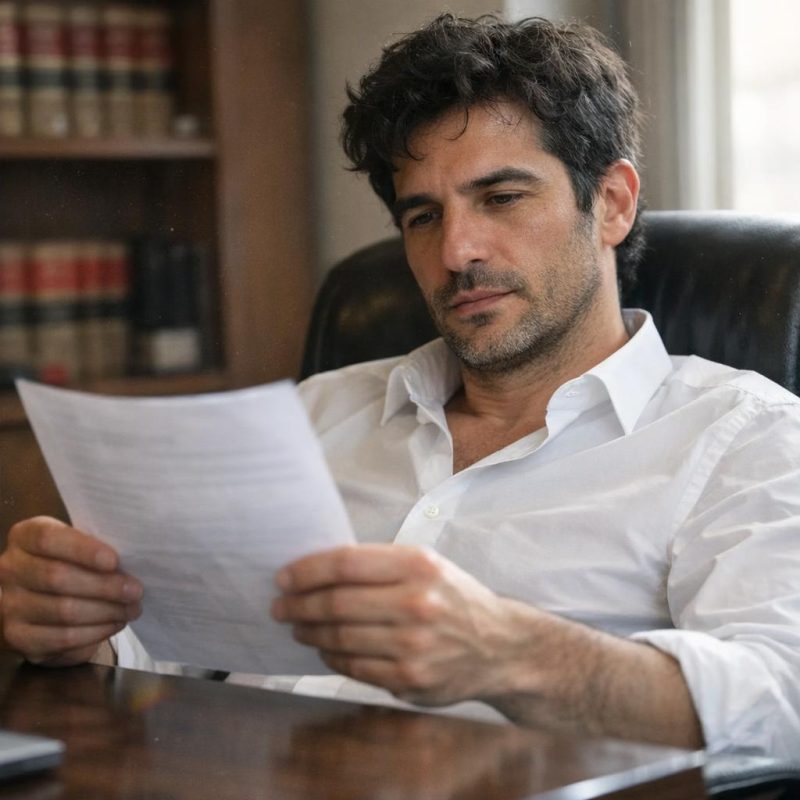 Image by RM AI
The Polite Reply
I drafted my response on Saturday morning at my kitchen table, coffee going cold in the cup beside me. David had suggested I wait forty-eight hours before replying – long enough to seem like I was seriously considering the invoice, short enough not to look like I was avoiding it. I kept the message simple and polite, the kind of cooperative tone you'd use with someone you actually intended to work with in good faith. 'Hi Stephanie, I received your invoice and want to make sure I understand the total correctly. Can you confirm that $10,247.83 is the final amount, and send me your preferred payment method? I want to handle this properly. Best, Claire.' I read it over maybe fifteen times, checking for anything that might tip my hand. David had stressed this part: I needed to seem like I was going to pay. No pushback, no questions about legitimacy, nothing that suggested I had any other plan. Just a reasonable person trying to clarify payment details. I hit send before I could second-guess it, and the waiting began.
 Image by RM AI
Victory Lap
Stephanie's reply came through in less than ten minutes, which told me she'd been monitoring her inbox like a hawk. The speed alone was satisfying – she'd been waiting for me to cave, and now she thought she'd won. Her message was three short paragraphs, each one dripping with barely concealed triumph. 'Claire, Yes, $10,247.83 is correct. Please send payment via Zelle to the email below, or cashier's check if you prefer. I appreciate you taking accountability for this situation. It speaks well of your character. Best, Stephanie.' I actually laughed at that last line. Taking accountability. As if I'd done something wrong by existing before she met my ex-husband. She'd included her Zelle information and a mailing address for checks, everything neatly laid out like she'd had it ready to paste. No mention of payment deadlines, no threats this time – she didn't need them anymore. She thought she'd won. Her satisfaction was so thick in those three short paragraphs that I could practically hear it.
 Image by RM AI
Building the Case
I spent Sunday afternoon pulling together everything David had requested. The divorce decree was in a file box in my closet, exactly where I'd shoved it two years ago after the judge signed off on everything. I made three copies – one for me, one for David, one to send to Mark. Then I printed every email Stephanie had sent me, arranging them chronologically so the escalation pattern was obvious. First contact, second contact with invoice, her smug response to my request for payment details. I printed my sent messages too, showing I'd never engaged with hostility or given her any actual reason to come after me. The most important document went on top: the divorce agreement, with Section 7C highlighted in bright yellow. The indemnification clause. Mark's promise, legally binding, that he would protect me from exactly this kind of thing. I read it three times just to be sure I had the language right. It was clear. Unambiguous. He'd signed it. Each document I printed felt like loading bullets into a chamber I hoped I'd never have to fire.
 Image by RM AI
Office Politics
Monday at work, Jordan caught me staring at my phone during our department meeting. He leaned over during a PowerPoint presentation about Q3 projections and whispered, 'You okay? You've checked your email like six times in the last ten minutes.' I locked my screen and gave him what I hoped was a reassuring smile. 'Just dealing with some personal stuff,' I said. 'Nothing urgent.' That was technically true. The whole thing felt urgent to me, but objectively, nothing required immediate action. Jordan nodded but kept watching me with that concerned-colleague expression that meant he'd ask again later. Sure enough, he found me in the break room around three. 'Seriously, Claire. You seem stressed. Anything I can help with?' I appreciated that he cared enough to follow up, but there was no way I was explaining the whole situation. Not yet. Not while it was still unfolding and I didn't know how it would end. I told him a version of the truth that left out the best parts – I wasn't ready to share those yet.
 Image by RM AI
The Package to Mark
Tuesday evening, I sat down and wrote the email I'd been building toward all week. I kept it short and professional, the kind of message you'd send to someone you had no personal relationship with anymore. Just facts and legal references. 'Mark, I'm forwarding you an invoice I received from Stephanie for expenses she claims are related to your wedding and my alleged interference. Per Section 7C of our divorce agreement, you agreed to indemnify me against any claims, debts, or liabilities arising from your post-divorce relationships. I'm therefore referring this matter to you for payment and resolution. My attorney is copied on this message for documentation purposes. Claire.' I attached everything: Stephanie's emails, the invoice, the highlighted divorce agreement. Then I added both David Chen and Stephanie to the CC line. That part felt important – I wanted her to see it at the same time Mark did, no chance for them to coordinate their response first. I read it over one last time, cursor hovering over the send button. Then I clicked. I CC'd Stephanie and my lawyer, clicked send, and felt something like lightning crack through my chest.
 Image by RM AI
Radio Silence
Nothing happened. I refreshed my inbox every few minutes for the rest of Tuesday evening, expecting something – anger, confusion, pushback, anything. But my phone stayed quiet. Wednesday morning came and went without a response. I checked during my lunch break, during bathroom breaks, the moment I got home from work. Still nothing. David texted me around noon to confirm he'd received the email and that everything looked good on his end. 'Now we wait,' he wrote. Waiting turned out to be worse than I'd anticipated. Every notification made my heart jump, but it was always something mundane – a work email, a spam message, a reminder about my dentist appointment. I kept imagining different scenarios. Maybe Mark was consulting his own lawyer. Maybe he and Stephanie were fighting about it. Maybe they'd decided to ignore me completely and hope I'd just go away. By Wednesday night I was exhausted from the constant vigilance, but I couldn't stop checking. By midnight, the silence felt heavier than any reply could have been.
 Image by RM AI
The Fury
Thursday morning at 6:47 AM, my phone buzzed with a new email. Stephanie. No subject line this time, just three paragraphs of barely controlled fury. 'Claire, I cannot believe you would twist a reasonable request into some kind of legal attack. You KNOW these expenses were caused by your interference, and hiding behind legal technicalities shows exactly the kind of person you are. Mark and I have discussed this, and we both agree you are acting in bad faith.' She went on like that, accusing me of manipulation and dishonesty, claiming I'd 'misrepresented' her invoice as something it wasn't. But here's the thing – she never once mentioned the indemnification clause. She didn't say it was invalid or inapplicable. She just kept insisting I was being unfair and unreasonable, like if she yelled loud enough, the actual legal language would somehow stop mattering. The email ended with a demand: 'I expect you to retract your misrepresentation immediately and honor your original commitment to pay.' She demanded I retract my 'misrepresentation' immediately, but the desperation underneath the anger was impossible to miss.
 Image by RM AI
Mark Breaks
Mark's email arrived Thursday afternoon, separate from Stephanie's morning tirade. The subject line was just my name: 'Claire.' I stared at it for a solid minute before opening it. We hadn't exchanged a single word since the divorce was finalized – everything had gone through lawyers or been left unsaid. His message was short and tired. 'Claire, I understand you're upset, but can we please stop escalating things? This has gotten out of hand. I don't want to fight about this. Can we talk directly, just the two of us, and figure something out? Please.' No defense of Stephanie. No argument about the indemnification clause. No anger at all, really. Just exhaustion. The tone was so different from everything Stephanie had sent – no accusations, no demands, just a kind of defeated pleading that actually made me feel something I hadn't expected. Not sympathy exactly, but not satisfaction either. Something more complicated. It was the first time I'd heard from him in two years, and his voice – even in text – sounded broken.
 Image by RM AI
Highlighted in Yellow
I opened the original agreement and pulled up the indemnification clause. Then I took a screenshot, opened it in markup, and highlighted the relevant section in bright yellow. Not aggressive red, not petty pink – just calm, professional yellow. The kind of highlighting you'd use in a textbook. My response to both Mark and Stephanie was two sentences: 'I'm simply following the agreement Mark insisted upon during our divorce. Please see the attached clause, highlighted for your convenience.' I attached the screenshot and hit send before I could second-guess myself. No emotion. No explanation. Just the facts, presented like I was pointing out a line item on a grocery receipt. The satisfaction was quiet and complete – not because I was hurting them, but because I was finally done explaining myself. Done defending. Done engaging with their mess. After that, I decided silence was my best strategy – let them sit with what they'd created.
 Image by RM AI
David's Approval
David called me the next morning, and I could hear the smile in his voice. 'That was perfect,' he said. 'Clean, factual, impossible to argue with. You didn't give them anything to twist or use against you.' He walked me through the legal position again, emphasizing that the indemnification clause was ironclad. Even if they tried to challenge it, the language was clear and the circumstances fit exactly what it was designed to cover. 'You're completely protected here,' he assured me. 'They don't have a leg to stand on.' I felt a wave of validation wash over me – not just about the clause, but about everything. The divorce, the boundaries I'd set, the person I'd become since. For a moment, I let myself enjoy the certainty of being legally, unquestionably right. Then he added something that made my confidence waver: 'Just be ready – people don't always react logically when they're cornered.'
 Image by RM AI
The Informal Retraction
Stephanie's next email came through her personal account, not the business one she'd used for the invoice. The tone was completely different – conciliatory, almost embarrassed. She claimed the invoice had been 'informal,' just a 'preliminary estimate' that was 'never intended to be legally binding.' She suggested we could 'work something out between us' without involving lawyers or making it a bigger issue than it needed to be. It was fascinating, really, watching her try to rewrite the narrative now that the consequences were clear. The professional letterhead, the itemized charges, the payment terms – all of it suddenly 'informal.' I forwarded it to David without comment. His response came back within an hour, brief and devastating in its simplicity: 'Invoices don't become informal once they're inconvenient. If she didn't intend it to be binding, she shouldn't have issued it on business letterhead with payment terms.'
 Image by RM AI
Mark's Plea
Mark's email arrived late that night, sent only to me. The subject line was just 'Please.' Inside, he asked if I'd be willing to 'just drop it' for everyone's sake. He said Stephanie had made a mistake, that things had gotten out of hand, that continuing this would only hurt everyone involved. 'I know you have every right to enforce this,' he wrote. 'But I'm asking you, as someone you once cared about, to consider letting it go. For everyone's peace of mind.' There was something raw in his words, something that reminded me of the person I'd married before everything fell apart. I sat with that email for an hour, really considering it. Wondering if holding my ground made me vindictive or just strong. Wondering if compassion meant absorbing other people's consequences. Then I opened the agreement one more time, took another screenshot, and highlighted the same clause – this time in red. I sent it back without a word.
 Image by RM AI
Rachel's Warning
Rachel took one look at my face over lunch and said, 'You're winning, but you're not happy about it.' I tried to argue that I was fine, that this was exactly what needed to happen. 'They created this mess,' I said. 'I'm just holding them accountable.' Rachel nodded slowly, picking at her salad. 'I know. And you're absolutely right to do it. But Claire, I've known you a long time, and I can see this is costing you something.' I bristled a little at that. This wasn't supposed to cost me anything – that was the whole point of the indemnification clause. 'I'm protecting myself,' I said. 'That's what I should have done all along.' She reached across the table and squeezed my hand. 'You're right,' Rachel said quietly. 'But being right and being happy aren't always the same thing.'
 Image by RM AI
The Withdrawal Notice
The withdrawal notice arrived via email from Stephanie's business account, formal and cold. It stated that invoice #2847 was being retracted due to 'administrative error' and should be disregarded. No apology. No acknowledgment of what she'd actually done or why she was backing down. Just corporate language that made it sound like a clerical mistake, not a calculated attempt to extract ten thousand dollars from someone she'd never met. I read it three times, waiting to feel the rush of victory I'd expected. Instead, there was just a hollow sort of quiet. I'd won. Completely and definitively. They'd backed down without me paying a single cent, exactly as David had predicted. But there was no satisfaction in their surrender, only the anticlimactic realization that it was over. Just silence, like none of it had ever happened – except I knew it had, and somewhere across town, they were dealing with the aftermath.
 Image by RM AI
The Cost of Winning
I poured myself a glass of wine that night and sat on my balcony, trying to process what I was feeling. Victory, yes. Vindication, absolutely. I'd stood my ground against something absurd and manipulative, and I'd won without compromising or backing down. The indemnification clause had worked exactly as intended, protecting me from consequences that weren't mine to bear. I should have felt triumphant. Instead, I felt tired. Not regretful – I'd do the same thing again in a heartbeat. But there was a heaviness to it, a recognition that even winning extracts a price. I kept thinking about Mark's exhausted emails, about the marriage that had produced such careful legal protections, about the fact that two years after our divorce, we were still locked in combat through proxies and clauses. I'd never paid a cent, but I couldn't shake the feeling that something else had been spent.
 Image by RM AI
Lisa's Call
Lisa's name appeared on my phone three days after the withdrawal notice, and I almost didn't answer. We'd been friendly during my marriage to Mark – not close, but warm enough. After the divorce, we'd drifted like most shared friends do, neither of us quite knowing whose 'side' to be on. 'Hey, Claire,' she said when I picked up. 'I know this is probably weird, but I really need to talk to you about something.' There was an urgency in her voice that made me sit up straighter. 'Is everything okay?' I asked. She hesitated, and I could hear her choosing her words carefully. 'I heard about the invoice,' Lisa said. 'The thing with Stephanie. And I debated whether to reach out, but I think you should know some things.' My chest tightened. 'I heard about the invoice,' Lisa said carefully. 'But there's more you should probably know.'
 Image by RM AI
The Fight They Had
Lisa took a breath, and I could tell she was weighing how much to say. 'Mark didn't know about the invoice,' she said finally. 'Stephanie sent it without telling him. When you forwarded it to him, they had this massive blowup – loud enough that I heard about it through two different people.' I sat back, processing that. Part of me felt vindicated. Another part felt oddly unsettled. 'He was furious,' Lisa continued. 'Not at you. At her. For putting him in that position, for making him look like he was behind it.' She paused, like she was deciding whether to keep going. 'He told me it was about control. That she keeps trying to manage everything about his life, his money, even his past. He said he should've seen it coming.' I frowned. 'What do you mean, should've seen it coming?' Lisa hesitated, and I watched her face shift into something more careful, more uncertain. She glanced down at her coffee cup, then back at me. 'He told me she'd done something like this before.'
 Image by RM AI
Before Stephanie
I leaned forward, every nerve suddenly alert. 'What did he mean, something like this before?' Lisa shifted uncomfortably in her seat, like she regretted opening this door. 'I don't know exactly,' she said. 'He didn't give me details. Just said there'd been... I don't know, situations? Where she'd gone after people financially, tried to settle scores or whatever.' My mind was racing. 'What people? When?' 'I really don't know, Claire. He was vague about it. You know how Mark gets when he doesn't want to talk about something – he'll give you just enough to explain himself but not enough to actually answer anything.' That was true. I'd lived with that evasiveness for years. 'But he said it like it was a pattern,' Lisa added quietly. 'Like he recognized her behavior because he'd seen it before.' The coffee in my cup had gone cold. I stared at it, trying to make sense of what I was hearing. Lisa looked uncomfortable, like she was carrying something she didn't quite want to share. 'I don't know all the details,' she said finally, 'but Mark wasn't her first husband.'
 Image by RM AI
The Uneasy Night
I didn't sleep that night. I lay in bed with the window cracked open, cool air drifting across my face, turning Lisa's words over and over in my mind. Stephanie had been married before. That shouldn't have been shocking – plenty of people have been married more than once. I certainly had. But something about the way Lisa said it, the way it connected to the invoice and Mark's reaction, made my stomach clench. What did her first marriage look like? How did it end? And what exactly had Mark meant when he said she'd done 'something like this before'? I told myself I was reading too much into it, that I was letting my anger at Stephanie cloud my judgment. Maybe her first marriage ended badly and Mark had just heard her side of things. Maybe I was looking for reasons to villainize her because of what she'd done to me. But every time I closed my eyes, I saw that invoice again – so calculated, so specific, so deliberately designed to hurt me. I told myself I was overthinking it, but the next morning I opened my laptop and started searching.
 Image by RM AI
Digital Footprints
Finding information on Stephanie wasn't as hard as I expected. Her social media was locked down, sure, but public records are public for a reason. I started with property records in the county where I knew she'd lived before meeting Mark. Within an hour, I'd found a deed transfer from seven years ago – Stephanie Marie Caldwell to Stephanie Marie Harding. The name change told me what I needed to know. I cross-referenced the address with marriage licenses and found it: Stephanie Harding, married to David Harding, eight and a half years ago. Divorced seven years ago. The marriage had lasted barely eighteen months. I sat back, staring at the screen. It felt invasive, digging through someone's past like this, but I couldn't stop. I told myself I just wanted to understand who I was dealing with, what kind of person sends a $10,000 invoice to their husband's ex-wife. I searched for the divorce decree next, but the details were minimal – just the standard legal dissolution language. The ex-husband's name was buried in a property record, and when I searched for him, the results made my throat tighten.
 Image by RM AI
The Disappeared Man
David Harding existed online the way most people do – until seven years ago. Then he just... stopped. His LinkedIn went dormant. His Facebook account disappeared. There were a few scattered mentions of him in professional contexts from before the divorce, but after that? Nothing. No social media presence, no public photos, no professional updates. It was like he'd decided to become invisible. I know people leave social media all the time. I know plenty of people who've deleted everything for privacy or mental health or just because they're tired of it. But something about the timing felt off. The disappearance lined up almost exactly with his divorce from Stephanie. I kept digging, searching for any trace of him – business registrations, court records, anything. I found one article from a local business journal mentioning his company from nine years ago, but nothing recent. No address, no phone number, no digital footprint at all. It was like he'd scrubbed himself from the internet entirely, or at least tried to. People don't just vanish digitally – not unless they're trying very hard to hide.
 Image by RM AI
Jordan's Advice
I must have looked unhinged at work the next day, because Jordan stopped by my desk mid-morning with that concerned expression he gets. 'You okay?' he asked. 'You seem somewhere else.' I hesitated, then figured I might as well tell him. I gave him the abbreviated version – the invoice, Lisa's revelation about Stephanie's first marriage, the digital ghost of David Harding. Jordan listened without interrupting, which is one of the things I appreciate about him. When I finished, he was quiet for a moment. 'That's... weird,' he admitted. 'But Claire, you need to be careful. This is starting to sound like you're going down a rabbit hole.' 'I'm just looking at public information,' I said, defensive. 'I know. But why? What's the endgame here? You already won. The invoice is gone, Mark dealt with it, you're in the clear.' He wasn't wrong, but I couldn't explain the feeling I had – the sense that there was something bigger here, something I needed to understand. 'Just promise me one thing,' Jordan said. 'Know when to stop digging.'
 Image by RM AI
The Public Records Search
I didn't stop digging. That weekend, I went through the county court records online, searching for anything related to Stephanie's first divorce. It took hours of sifting through case numbers and filing dates, but eventually I found it. The divorce itself was straightforward enough – irreconcilable differences, standard language. But there were other filings attached to the case, motions and disputes that stretched over several months. One motion caught my eye: a dispute over financial settlements. I clicked through, trying to piece together what had happened from the deliberately vague legal language. There were references to 'unfounded financial claims' and 'disputes regarding marital asset distribution.' The tone suggested it hadn't been amicable. The final settlement appeared to have been substantial, though the exact amount wasn't listed. What really stopped me, though, was a motion filed by David Harding's attorney requesting the court seal certain documents related to 'allegations made without factual basis.' The request had been granted. One filing mentioned a settlement dispute over 'unfounded claims' – but the details were sealed.
 Image by RM AI
Rachel's Intervention
Rachel showed up unannounced Sunday afternoon and found me at my kitchen table, surrounded by printed court documents and pages of notes I'd scribbled while searching online. She stood in the doorway, taking it all in, and I could see the concern tighten her face. 'Claire,' she said carefully. 'What are you doing?' I tried to explain – about Stephanie's first marriage, the sealed court documents, David Harding's vanishing act – but even as I said it out loud, I could hear how it sounded. Rachel sat down across from me, moving a stack of papers aside. 'You need to hear this,' she said. 'You're becoming obsessed. This isn't healthy.' 'I'm not obsessed,' I said, but my voice came out sharper than I intended. 'I'm just trying to understand who she is, what she's capable of.' 'Why? Why do you need to understand her? She sent you a bullshit invoice, Mark dealt with it, it's over. You don't owe her any more of your energy.' I wanted to argue, to explain the feeling I couldn't shake, but Rachel just looked at me with this mix of frustration and worry. 'You won, Claire,' Rachel said. 'Why are you still fighting?'
 Image by RM AI
The LinkedIn Profile
Rachel's words kept echoing in my head, but I couldn't stop myself. I found David Harding's LinkedIn profile on Tuesday afternoon – last updated four years ago, professional headshot slightly faded, employment history ending abruptly at a consulting firm in Denver. His profile was sparse, almost abandoned, like he'd walked away from his professional life and never looked back. I stared at the 'message' button for a long time. What was I even supposed to say? 'Hi, I think your ex-wife is trying to scam me too?' But I thought about the sealed court records, about the way Mark had described Stephanie's 'difficult' first marriage, about that $10,000 invoice and the cold calculation behind it. I drafted and deleted four different messages before I settled on something simple: 'My name is Claire, and I'm the ex-wife of your former wife's current husband. I know this sounds strange, but I'd appreciate the chance to ask you a few questions about your experience. No pressure to respond.' Professional. Non-threatening. Vague enough not to trigger alarm bells. I hovered over 'send' for five full minutes before I pressed it, knowing I couldn't take it back.
 Image by RM AI
The Waiting Game
Three days passed with nothing. I checked LinkedIn obsessively – had he seen it? Was there a read receipt on these things? I couldn't remember. Every time my phone buzzed, my stomach jumped, but it was always something mundane. Work emails. A notification about a sale at Target. Rachel texting to ask if I wanted to grab dinner. I started second-guessing everything. Maybe he'd never see the message. Maybe his account was abandoned completely, a digital ghost of his old life. Or worse – maybe he'd seen it and deliberately chosen not to respond, wanting nothing to do with Stephanie or anyone connected to her. I couldn't blame him if that was the case. By Thursday afternoon, I'd convinced myself I'd made a mistake. That I'd crossed a line, that Rachel was right about me being obsessed. I was washing dishes, trying to distract myself, when I heard my phone buzz on the counter. Just another notification, I told myself. Probably spam. But when I glanced at the screen, I felt everything in my chest tighten. Then, on a Thursday evening, my phone lit up with a notification that made everything shift.
 Image by RM AI
The Response
The message was brief. 'I got your note. I'm willing to talk, but not in writing. If you want to know what happened, we should do this over the phone. My number is below. Call anytime after 6pm Mountain Time.' No pleasantries, no explanation. Just an offer and a boundary. I read it three times, parsing every word for subtext. Why not in writing? Was he afraid of leaving a record, or did he just want to control the conversation? Either way, the fact that he'd responded at all felt significant. He could have ignored me. He could have blocked me. Instead, he was inviting me in. I copied his number into my contacts and labeled it simply 'DH.' For the rest of the afternoon, I kept looking at my phone, running through what I might say, how I'd explain why I was reaching out. What questions could I even ask that wouldn't sound completely unhinged? But it was the last line of his message that I kept coming back to, the one that made my skin prickle with something between validation and fear. His message ended with a warning: 'Be careful with her.'
 Image by RM AI
The Phone Call
I called him that night at 6:15. He picked up on the second ring, his voice cautious but not unfriendly. 'Claire?' he asked. We talked for forty minutes. At first, he was guarded, asking me questions to verify who I was, like he needed to be sure this wasn't some kind of trap. But once he decided I was legitimate, the story came out in a controlled rush – the kind of narrative someone's told before, probably to therapists or lawyers, stripped of emotion and reduced to facts. He described a marriage that soured quickly, manufactured grievances, fights over things that made no sense. And then, after the divorce was finalized, the escalation. Letters to his family members accusing him of financial abuse. Demands for compensation for 'emotional damages.' Threats to go public with allegations if he didn't settle. 'It was always just plausible enough,' he said. 'Just real enough that I couldn't completely dismiss it.' His voice was steady, but I could hear the exhaustion underneath. The toll it had taken. 'She sent my mother an invoice too,' he said quietly. 'That's when I knew it wasn't about anger – it was something else.'
 Image by RM AI
The Settlement He Paid
David Harding told me he paid her $15,000 to make it stop. Not because he thought he owed it, but because fighting her was becoming more expensive – in legal fees, in stress, in the damage she was doing to his family. 'She knew exactly what she was asking for,' he said. 'Not enough to make it worth going to court, but enough to hurt. She had it calculated down to the dollar.' He called it extortion, but his lawyer had told him the same thing mine had: without proof of intent, without a clear pattern, it was just an aggressive civil dispute. So he paid. He made her sign an NDA, transferred the money, and walked away. 'I moved to another state,' he said. 'Changed jobs. Started over. I know that sounds extreme, but I needed distance.' His voice was flat, like he was describing something that had happened to someone else. And then he said the thing that made my blood turn cold, the thing I'd been circling around but hadn't wanted to fully acknowledge. 'She knew exactly what she was doing,' he said. 'And I think you were just her newest mark.'
 Image by RM AI
The Legal Gray Zone
I called David Chen the next morning and told him everything. About the LinkedIn message, the phone call, the settlement David Harding had paid. I could hear him taking notes, the soft scratch of pen on paper. When I finished, there was a long pause. 'Is this fraud?' I asked. 'Or extortion? Can we do anything with this?' David sighed, and I already knew the answer before he spoke. 'It depends,' he said carefully. 'What you're describing sounds like a pattern, but proving it legally is complicated. David Harding's settlement probably included an NDA, which means he can't testify or provide documentation without opening himself up to liability. And even if he could, one similar case isn't enough to establish intent. We'd need multiple documented instances, preferably with evidence of planning or coordination.' I felt the frustration rise in my chest. 'So she just gets away with it?' 'Not necessarily,' David said. 'But the law moves slowly on things like this. It's a gray area – she's filing legal claims, not breaking into houses. Unless we can prove she's systematically targeting people...' He trailed off. 'It's manipulative as hell,' David said. 'But unless we can prove a consistent pattern across multiple victims, it's just aggressive civil claims.'
 Image by RM AI
The Second Search
I couldn't let it go. That weekend, I went back through Stephanie's social media with a fine-toothed comb, looking for anything I'd missed before. I scrolled back years, through vacation photos and dinner posts and carefully curated life updates. And that's when I found it – buried in a photo from six years ago, tagged at some charity gala. Stephanie in a black dress, standing beside a man I didn't recognize. The caption said nothing, but he was tagged: Andrew Voss. I clicked on his name, expecting to find another abandoned profile, another dead end. But his account was set to private. No profile picture, no bio, no mutual friends. Just a name. I searched for him on LinkedIn, Facebook, every platform I could think of. Nothing came up – or rather, too much came up. A dozen Andrew Vosses, none of them matching the age or location I'd expect. It was like he'd been erased, or had never existed online at all. But he'd been tagged in that photo. He'd been standing beside her at an event. He'd been someone, once. The name appeared only once, in a tagged photo from six years ago, but when I searched for him, I found nothing at all.
 Image by RM AI
Lisa's Update
Lisa called me Sunday evening, her voice tight with something between concern and gossip. 'I need to tell you something,' she said, 'but you didn't hear it from me.' Apparently, Mark and Stephanie had been fighting constantly for the past two weeks. Loud, ugly fights that their neighbors could hear through the walls. Lisa had run into Mark at a coffee shop downtown, and he looked exhausted – dark circles under his eyes, that haunted expression I remembered from the worst days of our own marriage. He'd told her he was staying with a college friend for a few days, that he and Stephanie 'needed space to work things out.' Lisa didn't press him for details, but she said he seemed shaken in a way she hadn't seen before. 'He wouldn't tell me what they were fighting about,' Lisa said, 'but I got the sense it wasn't just one thing. Like everything was unraveling at once.' I felt a complicated knot of emotions – concern for Mark, despite everything, but also a grim kind of validation. Maybe he was finally seeing what I'd seen. Maybe the mask was slipping. 'He asked me not to tell you this,' Lisa said, 'but I think he's finally realizing what he married into.'
 Image by RM AI
The Private Investigator
I spent three days staring at the name and number Lisa had texted me – a private investigator she'd used once for a business dispute. Every time I opened my phone, there it was, waiting. The fee would be substantial, maybe three thousand just for the preliminary work. I kept asking myself what I actually hoped to find, and whether knowing would change anything. But the more I thought about Stephanie's behavior – the precision of it, the confidence – the more convinced I became that this wasn't amateur hour. People don't just wake up one day and decide to send fraudulent invoices to their husband's ex-wife. They practice. They refine. They learn what works. David had warned me about going down this rabbit hole, about spending money and emotional energy on something that might lead nowhere. But I kept thinking about that complaint Lisa had mentioned in passing, the one someone had supposedly filed and then dropped. If there was a pattern, if there were other people she'd done this to, didn't they deserve to know they weren't alone? Didn't I deserve to know I wasn't crazy for suspecting something bigger? I had the investigator's number saved in my phone for three days before I finally made the call.
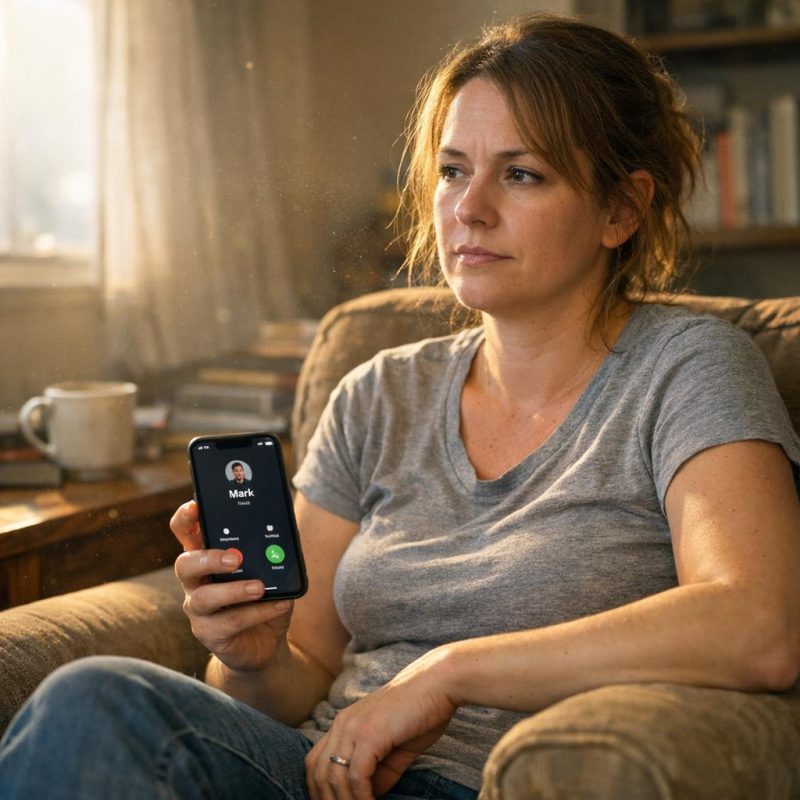 Image by RM AI
The Investigator's Report
The investigator was a woman named Patricia, mid-fifties, with the kind of calm, methodical voice that made you trust she'd done this a thousand times before. She called me back within a week with a preliminary report, and I sat in my car in the grocery store parking lot to take the call, unable to wait until I got home. 'I found two confirmed instances,' Patricia said, 'where Stephanie Richardson used similar tactics in previous relationships. One involved a former business partner, the other was connected to a previous marriage.' My heart was hammering. 'Similar how?' I asked. 'Manufactured documentation for services never rendered,' Patricia said. 'In both cases, she threatened legal action and the targets paid partial settlements to avoid court costs. One was for event planning services, the other for consulting fees.' The details aligned so perfectly with what she'd done to me that I felt lightheaded. 'Did either of them report her?' I asked. Patricia paused, and I heard papers rustling. 'One of them filed a complaint,' the investigator said. 'But it was dropped when she threatened a defamation suit.'
 Image by RM AI
The Complaint That Disappeared
Patricia sent me the complaint that evening, a scanned PDF with some names redacted for privacy. I poured a glass of wine and sat at my kitchen table to read it, and with each paragraph, I felt that eerie sensation of déjà vu you get when someone describes your exact experience in their own words. The complainant – identified only as 'J.M.' – described how Stephanie had produced invoices for marketing consulting services allegedly provided during a business partnership. When J.M. disputed the charges, Stephanie had produced contracts with forged signatures, email trails that seemed legitimate on the surface, and witnesses who later couldn't be verified. The complaint detailed how Stephanie had used legal threats to create pressure, how she'd offered to 'settle' for less than the full amount, how she'd positioned herself as the reasonable party just trying to get paid for honest work. Every tactic was there, laid out in legal language that made it all sound so calculated and practiced. The complaint was dated three years before Stephanie had even met Mark. Reading it felt like looking at a script she'd followed word-for-word, except this version was from three years before she met Mark.
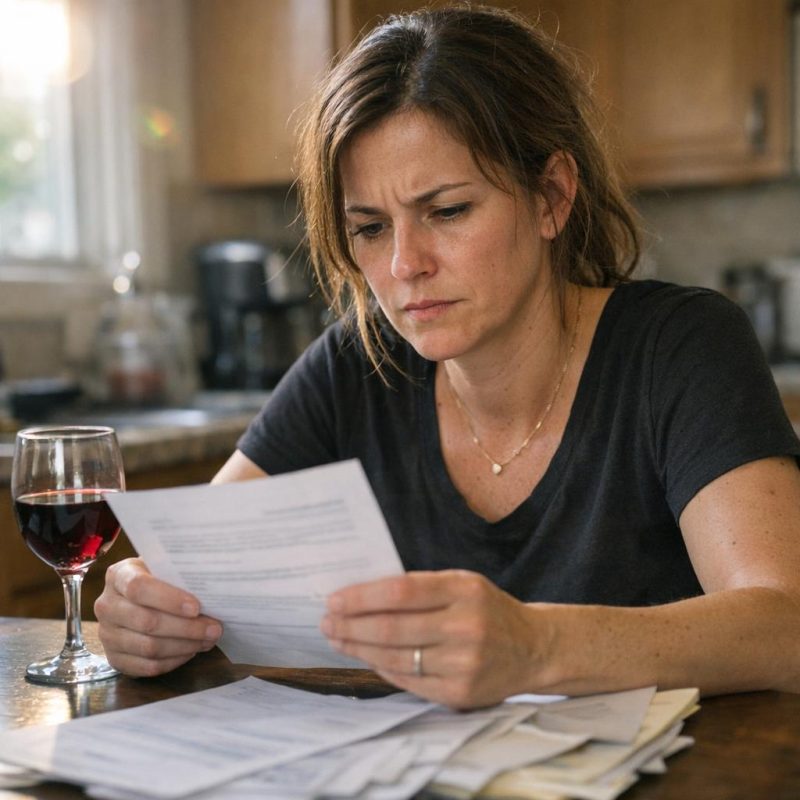 Image by RM AI
The Pattern Revealed
I spent the weekend cross-referencing everything Patricia had found with what I knew about Stephanie's timeline. The business partner complaint was from three years before Mark. The other incident – the one involving a previous marriage – was from five years ago. Patricia had also found two other possible cases that hadn't resulted in formal complaints, just quiet settlements that left paper trails if you knew where to look. I made a spreadsheet, because that's apparently what I do when I'm processing something horrifying. Each case followed the same pattern: manufactured documentation, legal threats, settlement offers that were just low enough to seem cheaper than fighting. Stephanie didn't target strangers or random businesses. She targeted people who were already connected to her through relationships, partnerships, marriages – people who had something to lose by fighting back publicly. Ex-wives. Former business partners. A cousin by marriage who'd inherited family money. She found people with resources and vulnerabilities, then engineered situations where paying her off seemed like the path of least resistance. It wasn't personal – it never had been. I was just the next name on a list she'd been building for years.
 Image by RM AI
The Victims' Club
Patricia had included contact information for J.M. and the other confirmed victim – a woman named Andrea who'd been married to Stephanie's ex-fiancé. I agonized over whether to reach out, whether they'd even want to hear from me, but finally I sent careful, brief emails explaining who I was and what had happened. They both responded within twenty-four hours. We arranged a three-way video call, and it was one of the strangest experiences of my life – sitting there with two complete strangers who'd been through the exact same nightmare. Andrea went first, describing invoices for wedding planning services that Stephanie claimed she'd provided before the engagement ended. J.M.'s story matched mine almost beat for beat, down to the initial friendly overture before the invoice appeared. We compared the language in our documents and found phrases that were nearly identical. 'She offered to settle with me for sixty percent,' Andrea said. 'I was so exhausted by then that I actually considered it.' J.M. had paid thirty-five hundred dollars just to make it stop. We sat in silence for a moment, processing the scale of what we were seeing. 'We should have talked to each other years ago,' one of them said. 'She counts on us being too embarrassed to compare stories.'
 Image by RM AI
David's Dilemma
I brought everything to David on a Tuesday afternoon – Patricia's report, the complaint, transcripts of my conversations with Andrea and J.M., my increasingly elaborate spreadsheet. He spent twenty minutes reviewing it all while I sat across from his desk trying not to fidget. Finally, he looked up, and his expression was serious. 'This is a pattern,' he said. 'No question. What she's doing falls into a legal gray area that makes prosecution difficult, but this documentation shows consistent fraudulent behavior across multiple victims.' I felt a surge of validation. 'So we can stop her,' I said. David held up a hand. 'We can build a case,' he corrected. 'But you need to understand what that means. We're talking about potential civil fraud charges, which require a high burden of proof. You'd need to coordinate with the other victims, compile extensive documentation, possibly hire forensic accountants. We're looking at eighteen months to two years of legal proceedings, and costs that could easily reach fifty thousand dollars or more.' The number hit me like cold water. 'And there's no guarantee of recovery,' David added. 'She might not have assets worth pursuing. The question isn't whether she's guilty,' David said. 'It's whether you want to spend the next two years of your life proving it.'
 Image by RM AI
Mark's Confession
I was still processing David's warning when I got an email from Mark two days later. The subject line was just 'I'm sorry,' and I almost deleted it without reading. But something made me open it – maybe curiosity, maybe the sense that the situation was shifting in ways I didn't fully understand yet. The email was longer than I expected, and more raw. He apologized for not believing me initially, for defending Stephanie when he should have questioned her. He admitted he'd found discrepancies in other things she'd told him, inconsistencies that he'd ignored because he didn't want to confront what they meant. 'I've been going through our files,' he wrote, 'and I found things that made me realize how calculated some of her decisions were. I don't think our marriage was what I thought it was.' I read it twice, looking for the angle, the manipulation, but it just sounded tired and defeated. Then I got to the last paragraph, and my stomach dropped. 'I think I need to tell you something,' he wrote. 'About why she targeted you specifically.'
 Image by RM AI
The Target Selection
We met at a coffee shop near my office, neutral territory where neither of us had history. Mark looked worse than Lisa had described – not just tired, but hollowed out in a way I recognized from my own divorce recovery. He ordered coffee he didn't drink and started talking before I could decide how angry I still was. 'I found files,' he said. 'On her laptop, saved in a folder labeled 'Research.' There were documents about you – your job history, property records, our divorce settlement, even screenshots of your social media from years ago.' I felt something cold settle in my chest. 'She was researching me?' I said. 'Before we even got married,' Mark said. 'I found notes about your financial situation, about your freelance contracts, about legal vulnerabilities. She had pages of information about how you handled conflict, what buttons to push, where you might be susceptible to pressure.' He looked sick saying it. 'I think she knew about your savings from your grandmother's estate. She knew you'd be able to pay but would be reluctant to make it public.' The coffee shop sounds faded into background noise. 'She had a file on you,' Mark said. 'I found it after the invoice thing. It was like she'd been planning this from the beginning.'
 Image by RM AI
Rachel's Support
I met Rachel at our usual coffee place two days after the conversation with Mark, and I couldn't hold it together anymore. The second she asked how I was doing, everything spilled out – not crying exactly, but something rawer than that. 'She researched me,' I kept saying. 'Like I was a target. Like she was studying how to hurt me before we'd even met.' Rachel listened without interrupting, which is one of her superpowers. When I finally ran out of words, she reached across the table and squeezed my hand. 'That's so violating,' she said quietly. 'Not just what she did, but knowing it was all planned.' I nodded, feeling that cold weight in my chest again. 'I keep thinking about all the moments I second-guessed myself, wondering if I was overreacting. And the whole time, she knew exactly what she was doing.' Rachel didn't offer platitudes or try to minimize it. She just sat there with me in the heaviness of it. Then she leaned forward, her expression shifting from sympathy to something sharper. Rachel held my hand across the table and said, 'So what are you going to do about it?'
 Image by RM AI
The Group Decision
I reached out to the others – the woman from the support group, the one who'd messaged me privately, and two more who'd come forward after hearing about Mark's discovery. We met at a conference room one of them had access to, all of us looking slightly shell-shocked at being in the same space. Someone brought coffee. Someone else had printed out timelines. What struck me most was how similar our stories were – not just the invoices and manufactured offenses, but the research, the targeting, the calculated way she'd identified and exploited our specific vulnerabilities. 'She has a type,' one woman said. 'People who'll pay to make problems go away quietly.' We spent three hours comparing notes and documenting everything. By the end, we had a clear pattern spanning five years and multiple states. The decision to file together felt both terrifying and inevitable. A joint complaint would be harder to dismiss, harder for her to claim was just vindictive exes with axes to grind. We all signed the document together, knowing this would either expose her completely or blow up in our faces.
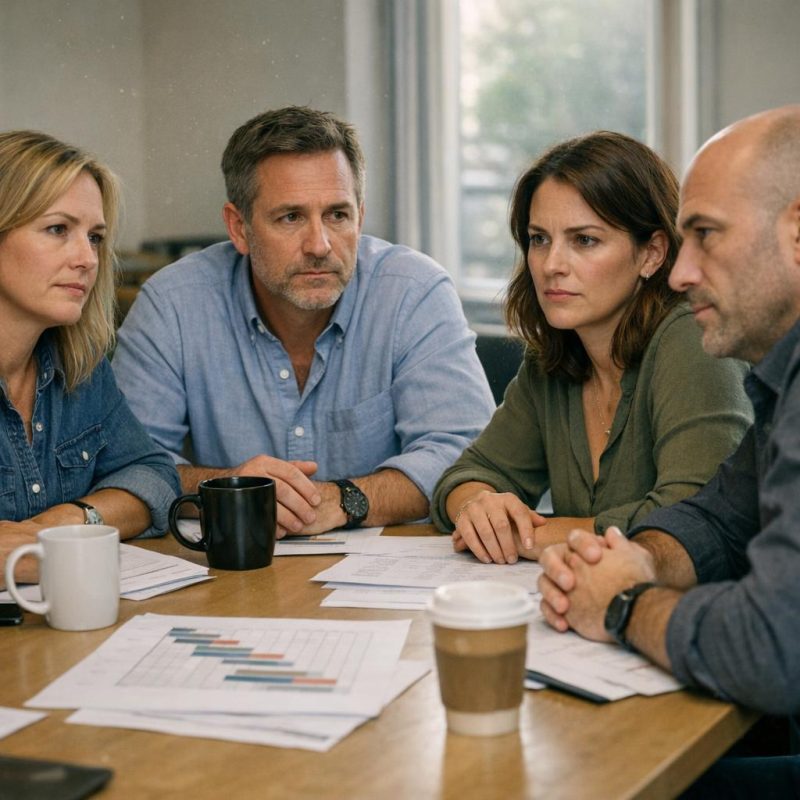 Image by RM AI
 Image by RM AI
The Complaint Filed
David filed the complaint with the state bar association on Tuesday morning, and we submitted copies to the consumer protection division and the attorney general's office. It was remarkably undramatic – just digital forms and PDF attachments laying out the pattern in careful, legal language. I'd expected to feel triumphant or at least relieved, but mostly I felt tired and a little numb. This was real now. No more private conversations or small group meetings. We'd put our names on an official document accusing someone of systematic fraud. I tried to work that afternoon but couldn't focus, checking my phone every few minutes like I was waiting for an explosion. The explosion came faster than I'd anticipated. By four o'clock, every single one of us had received an email from Stephanie's lawyer – not the solo practitioner who'd sent the original cease-and-desist, but someone from a downtown firm with marble lobbies and fifty-dollar words. Within hours of filing, Stephanie's lawyer contacted every single one of us with threats of defamation suits.
 Image by RM AI
The Counterattack
The cease-and-desist letters were impressively aggressive – six pages each, detailing how our 'coordinated campaign of harassment' constituted defamation, intentional infliction of emotional distress, and conspiracy to damage her reputation and business interests. They demanded we withdraw the complaint immediately and issue public apologies, or face litigation that would 'pursue all available remedies including substantial monetary damages.' I felt my hands shake reading it. This was exactly what I'd been afraid of – that she had more resources, better lawyers, that fighting back would just make everything worse. I forwarded it to David, feeling that familiar urge to just make it all go away. He called me twenty minutes later. 'Don't panic,' he said. 'This is actually good for us.' I must have made a disbelieving noise because he laughed. 'I'm serious. Look at how she's responding – immediate, aggressive, threatening multiple lawsuits. It makes her look exactly like what we've accused her of being.' David read through the letter and smiled grimly: 'She just made our case stronger by responding this aggressively.'
 Image by RM AI
Going Public
I wasn't there when Jessica – one of the other complainants – decided to post her story on social media. She called me after she'd already hit publish, sounding both terrified and defiant. 'I couldn't just sit there waiting for her lawyers to silence us,' she said. I understood completely even as my stomach dropped. The post was carefully written, no names mentioned but the pattern clearly described. She talked about being targeted after her divorce, about the manufactured invoice, about discovering she wasn't the only one. She ended it with a question: 'Has this happened to you?' I watched the shares tick upward throughout the afternoon – fifty, then two hundred, then a thousand. The comments section filled with people tagging friends, saying 'didn't something like this happen to your sister?' People started messaging Jessica directly. Then they started messaging me. My phone became unusable, notifications flooding in faster than I could read them. Some were supportive. Some were curious. And some were confessional. By evening, the post had been shared thousands of times, and my phone was flooded with messages from people saying 'This happened to me too.'
 Image by RM AI
The Interview Request
The journalist's email came Wednesday morning, professional and direct. She'd seen Jessica's post and had been researching similar patterns of behavior. Would I be willing to speak on the record about my experience? I forwarded it to David before responding. 'Your call,' he said. 'But it could help. The more public this becomes, the harder it is for her to make it go away quietly.' I agreed to meet her at a café downtown, somewhere public but not too crowded. She was younger than I'd expected, maybe thirty, with a recording app and a notepad covered in careful handwriting. Her questions were smart and specific – not sensationalized, but genuinely trying to understand the pattern. I told her everything, surprised by how matter-of-fact it sounded when I said it out loud to a stranger. She asked about Mark, about the other victims, about what I thought Stephanie's endgame had been. The interview lasted an hour. As we were wrapping up, she tilted her head, considering something. The reporter's final question made me pause: 'Do you think she'll ever stop?'
 Image by RM AI
Stephanie's Collapse
Lisa called me Friday evening, her voice careful in a way that meant she had news I might not want to hear. 'I saw Mark today,' she said. 'He wanted me to tell you – Stephanie hasn't left the house in almost a week. She's not answering calls from anyone except her lawyers.' I felt something complicated twist in my chest. 'And Mark filed for divorce,' Lisa continued. 'Yesterday. He moved out last weekend, staying with his brother.' I should have felt vindicated. Maybe I did, underneath everything else. But mostly I felt tired and a little sad for all of us who'd gotten caught in whatever storm had been raging inside Stephanie. 'He's been talking to some of the other victims,' Lisa said. 'Apologizing, offering to help however he can. He feels terrible about all of it.' I didn't know what to say to that. 'He wanted me to pass something along,' Lisa said, and I could hear her reading from notes. 'He said he can't believe he didn't see it sooner,' Lisa told me. 'And he wanted me to thank you for forcing him to look.'
 Image by RM AI
The Settlement Offer
The settlement offer came through David on Monday morning, formatted on expensive letterhead and professionally vague about motivations. Stephanie's legal team was prepared to offer each complainant a financial settlement – the amount was listed in a separate confidential attachment – in exchange for withdrawing our complaint and signing mutual non-disclosure agreements. No admission of wrongdoing. No acknowledgment that anything inappropriate had occurred. Just money and silence. David forwarded it without comment, waiting for my reaction. I opened the attachment and stared at the number. It was substantial. More than substantial – it was enough to make me think about what I could do with that kind of money, enough to make the whole nightmare feel almost worth it. But the NDA was ironclad. We couldn't discuss the complaint, the settlement, or anything related to Stephanie's behavior. Ever. I thought about the messages still flooding in from Jessica's post, all those people saying 'this happened to me too.' The amount was substantial – enough to make each of us seriously consider it – but the NDA meant she could do this to someone else.
 Image by RM AI
The Choice
We had a video call that evening, all five of us. I thought there might be some debate, some weighing of financial security against principle. But I'd underestimated them. Jessica spoke first: 'If we take this money, she just finds someone else to harass. Someone who won't have a support system like we did.' The others agreed almost immediately. Maya pointed out that the NDA would prevent us from warning anyone else. Rachel mentioned how many people had reached out after Jessica's post, sharing their own experiences with boundary-crossing divorce attorneys. We all knew what those messages meant – this wasn't isolated. It was a pattern. The amount they were offering was genuinely life-changing money, and we were all tired of fighting. But not one person on that call suggested we take it. There was something almost absurd about how quickly we reached consensus, like we'd all independently arrived at the same conclusion. Sometimes the right choice is the expensive one. We sent our response the next morning, and with it went any chance of this ending quietly.
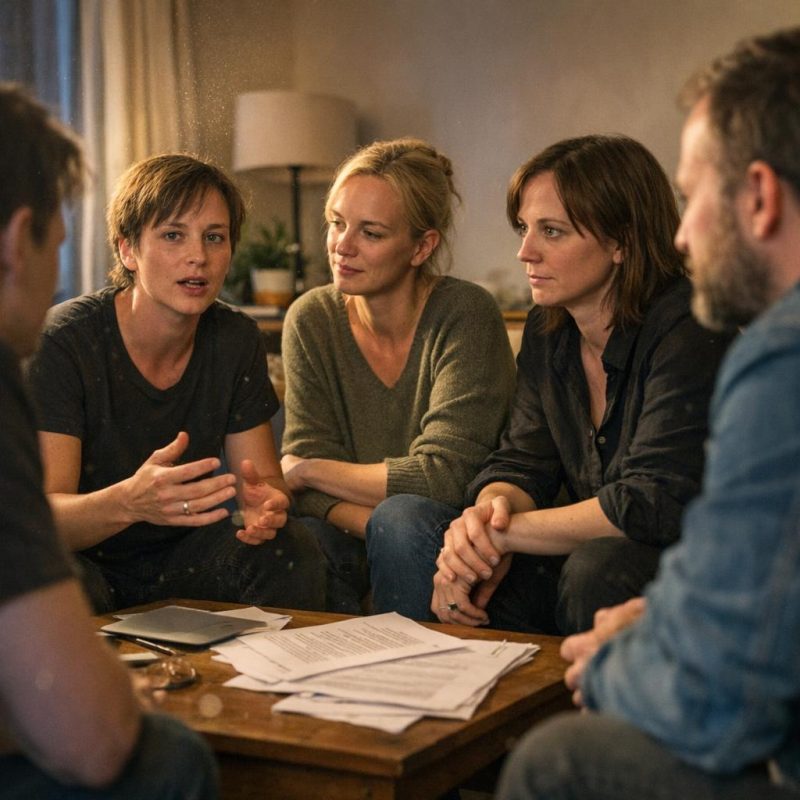 Image by RM AI
The Aftermath
Three months later, I got an email from the state bar's disciplinary board. They were opening a formal investigation into Stephanie's conduct. David had warned me it would be a long process – these things always were – but the investigation itself was a victory. It meant the complaint was substantiated enough to warrant scrutiny. It meant there would be a record. Over the following weeks, a local legal blog picked up the story. They didn't name us complainants, but they named Stephanie, and they outlined the nature of the allegations. Suddenly her pattern of behavior had a public footprint. I didn't feel triumphant reading those articles. Mostly I felt tired, and a little sad that it had taken five separate complaints for anyone to pay attention. But I also felt something like peace. The harassment had stopped completely. The invoices, the texts, the manufactured drama – all of it ended the moment the bar opened their investigation. I never got an apology, and I probably never will – but I got something better: a record that might protect the next person.
 Image by RM AI
Coffee with Mark
Mark asked if we could meet for coffee about a week after the blog posts went up. I almost said no – we'd maintained our polite distance for months, and it had been working fine – but something in his message felt different. Less careful, more human. We met at a place halfway between our apartments, neutral territory. He looked older, or maybe just more honest without the defensive posture he'd carried through most of the divorce. We made small talk for about five minutes before he finally said what he'd come to say. 'I knew something was off with Stephanie,' he admitted, staring into his coffee. 'I kept telling myself it was just her being thorough, being aggressive for my benefit. But I knew.' He explained that he'd confronted her once, months ago, about why she kept contacting me directly. She'd dismissed his concerns, told him he didn't understand legal strategy. And he'd let it drop. 'I'm sorry I didn't protect you from this,' he said. 'Even though we weren't together, I should have known something was wrong.'
 Image by RM AI
Forward
I spent a long time thinking about what I'd say if someone asked me if it was worth it – all the stress, the legal fees, the months of my life consumed by fighting back. The truth is, I didn't do it because I thought I'd win something tangible. I did it because the alternative was living as someone who let herself be silenced. There's a kind of freedom in refusing to be a convenient victim, in deciding that your dignity isn't negotiable even when staying quiet would be easier. The state bar investigation is still ongoing. Stephanie's still practicing law, though I've heard through David that several clients have quietly switched representation. Mark and I have coffee now, occasionally, and it's not painful anymore. We talk about normal things – work, his kids, my consulting projects. The divorce doesn't define us the way it used to. I rebuilt my life piece by piece, and it looks different than I expected, but it's mine. I still have that first email saved in a folder labeled 'Evidence,' but I haven't opened it in months. I don't need to anymore.
 Image by RM AI