Every summer travel season carries a degree of chaos, but the chaos is usually manageable: delayed luggage, overbooked hotels, the occasional strike at a French airport. What's unfolding right now is different in kind. The Strait of Hormuz, a 21-mile-wide bottleneck between Iran and Oman, has been effectively closed to commercial shipping since late February 2026, following joint US-Israel strikes on Iran that killed Supreme Leader Ali Khamenei. The ripple effects are hitting energy markets in ways that will land squarely on anyone who booked a summer holiday and hasn't been paying close enough attention.
The aviation industry runs on jet fuel, and jet fuel runs, in significant part, through that strait. The Strait handles around 20 million barrels of oil per day, representing roughly 20% of global seaborne oil trade. That flow has collapsed. The consequences aren't abstract anymore. They're showing up in airline balance sheets, flight cancellations, and the dwindling inventory at airport fuel depots from Heathrow to Frankfurt, with the summer peak season now weeks away.
The Last Tankers Have Already Left
The geography of this crisis has a predictable sequence, and Europe is the last stop. Shell CEO Wael Sawan warned that Europe would begin feeling the full impact of the Strait closure in April, as the last tanker shipments loaded before the war arrived and existing reserves started to deplete. That moment is essentially here. There are currently no other tankers containing Middle Eastern jet fuel heading toward the UK or mainland Europe, and the last known shipment, a vessel called Yasa Hawk, is now on course toward the UK.
Around 30% of Europe's jet fuel imports normally arrive from the Gulf region, and with the Strait effectively closed, tankers loaded with aviation fuel remain trapped inside the Gulf. Kuwait has emerged as the dominant provider to Europe, at times covering roughly a quarter of European jet imports, with some weeks in 2026 seeing European jet imports originate exclusively from Kuwait. That supply is now locked behind Iranian naval threats and insurance markets that have, for practical purposes, withdrawn from the corridor entirely.
Europe is expected to have enough jet fuel to avoid shortages in April, but that situation could change in May as the conflict continues to rock global energy markets. The window is narrow, and the summer peak hasn't even started. EasyJet CEO Kenton Jarvis put it plainly, saying he was confident for a week or two, probably confident for three weeks, but that nobody was telling him not to worry halfway into May.
What the Airlines Are Actually Saying
Airline executives are not people known for public alarm. The fact that they're now speaking openly about fuel rationing and mass cancellations is itself diagnostic. Jet fuel prices have more than doubled in recent weeks, with global benchmarks hovering around $195 per barrel, compared to $85 to $90 before the US-Israel strikes on Iran began. The Argus US Jet Fuel Index recorded prices of over $4.60 per gallon, nearly double from around $2.50 before the conflict.
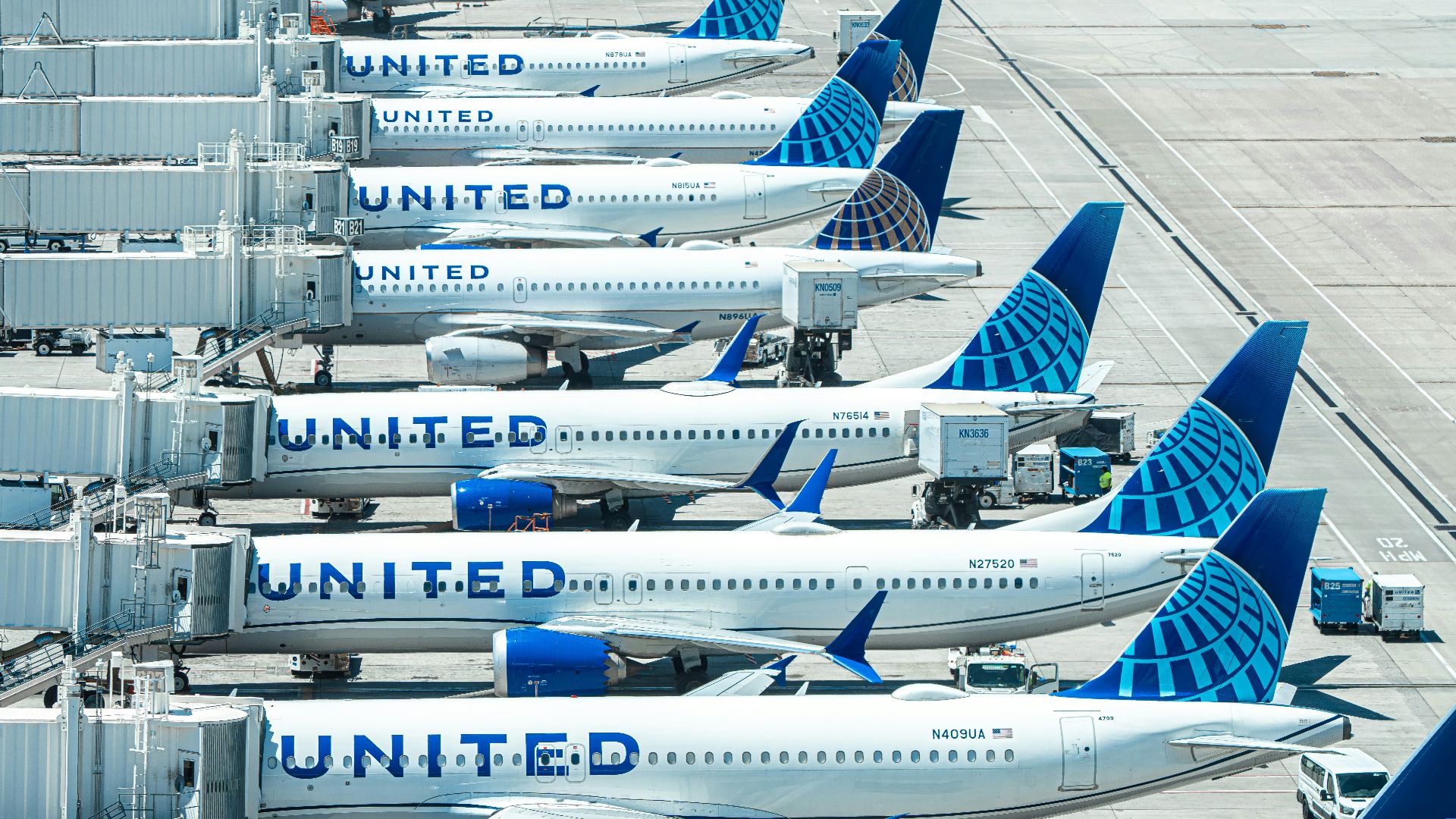
United Airlines recently revealed it would cut 5% of flights during the second and third quarters, with CEO Scott Kirby predicting the airline could face up to $11 billion more in fuel costs each year if the situation doesn't improve. Delta Air Lines has already logged a $400 million charge due to rising fuel prices. These are not hedging costs being quietly absorbed. They are structural losses being passed, at least partially, onto ticket prices and route viability calculations. Jet fuel cost $742 a metric tonne last year but has recently topped $1,710.
The disruption in the Gulf is producing a dual shock for aviation: higher fuel prices and higher fuel consumption per flight, because airspace closures across parts of West Asia have forced airlines to reroute between Asia, Europe, and North America, adding distance and burn to every journey. Airlines are now considering mass cancellations across their networks to avoid aircraft being stranded in foreign countries with no fuel, as the picture at airports in foreign countries is far less clear than at home bases.
What This Means for the Summer You Already Booked
The immediate concern for travelers isn't an industry-wide grounding. It's a slow squeeze that makes some routes uneconomical, some airports fuel-scarce, and some carriers newly vulnerable. The International Air Transport Association warned that European jet fuel security is currently resting on a razor-thin margin of commercial inventory, with suppliers who usually provide months of forward guidance now refusing to guarantee availability beyond the next few days.
Jet fuel and diesel prices have more than doubled since the start of the war because disruption of flows from the Mideast Gulf has jeopardized around 50% of Europe's jet fuel imports and 15 to 20% of its diesel imports. The UK is considered the most exposed major economy in Europe, partly because it has less domestic refining infrastructure than continental neighbors and depends more heavily on imported refined products. Petrol has breached 150p per litre for the first time in nearly two years, and the cost of filling a family car has risen to approximately £80.
Alternative suppliers from China, South Korea, India, and the US remain locked into regional markets, leaving Europe exposed to both soaring prices and the risk of outright jet fuel shortages. The last comparable shock followed the devastation of hurricanes Katrina and Rita in 2005, when surging jet fuel costs triggered a wave of airline bankruptcies. The alternatives that do exist, including the Dangote Refinery in West Africa and rerouted Indian exports, are not anywhere close to replacing what the Gulf normally provides. The math simply doesn't work at the volumes required. The summer of 2026 was supposed to be a record travel year. At this rate, it may be remembered as something else entirely.