My Husband Spent His Retirement at Antique Auctions—Then a Stranger Told Me the Truth
My Husband Spent His Retirement at Antique Auctions—Then a Stranger Told Me the Truth
My Husband Spent His Retirement at Antique Auctions—Then a Stranger Told Me the Truth
The First Auction
Frank's last day at work was a Tuesday in March, and he came home carrying a sheet cake from the office and a card signed by people whose names I barely recognized. Forty-two years at the same company. I'd made a pot roast and opened a bottle of wine we'd been saving, and we sat at the kitchen table talking about what came next. He said he wanted to sleep in, maybe do some woodworking, maybe nothing at all for a while. I told him that sounded perfect. But the first two weeks of retirement, I watched him drift through the house like he'd misplaced something and couldn't remember what it was. He reorganized the garage twice. He watched more television than he'd watched in the previous decade combined. I started to worry, quietly, the way you do after thirty-eight years of marriage when you know better than to say it out loud. Then one Saturday morning he saw a small notice in the back of the local paper about an auction barn twenty minutes outside of town. He came home that afternoon carrying a brass mantel clock wrapped in a dish towel, talking faster than he'd talked in months. He set it on the kitchen counter and told me what it had cost and what he thought it might be worth someday, and I honestly didn't care about either number. What I cared about was the look on his face — that particular brightness I hadn't seen in longer than I wanted to admit.
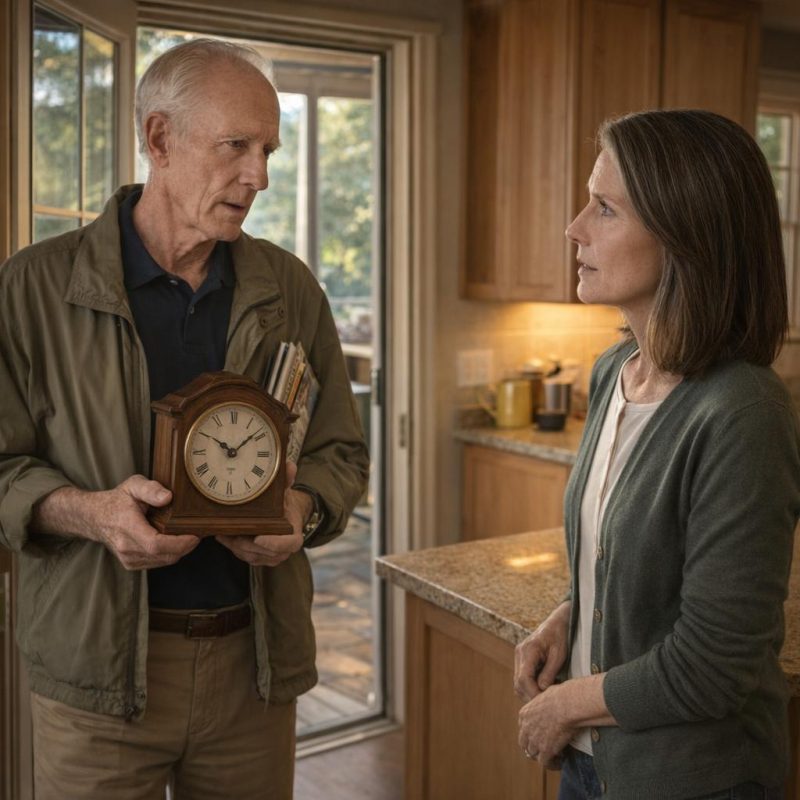 Image by RM AI
The Collection Begins
After that first auction, Frank went back the following Saturday. And the one after that. Within two weeks he'd attended three sales, and our garage was starting to look like the back room of an antique shop. There were framed photographs of strangers — serious-faced families from the early 1900s, a woman in a hat I actually thought was quite beautiful — propped against the wall next to a small writing desk with a broken hinge that Frank swore he could fix himself. He probably could. He's always been good with his hands when he puts his mind to it. Every piece came with a story about potential. That clock could fetch twice what he paid. The photographs were undervalued, people didn't appreciate vernacular photography anymore. The desk was solid walnut, you couldn't find joinery like that in anything made after 1960. I helped him arrange things so we could still get both cars in, which required a kind of spatial reasoning I hadn't needed since the kids were small and we were packing for road trips. It was fine. It was more than fine, honestly — it gave him something to talk about over dinner, something to look forward to on Thursday when he'd start checking the listings for the weekend. I just hadn't quite anticipated how quickly a two-car garage could become a one-car garage, and then, by the end of that second week, something closer to no-car garage at all.
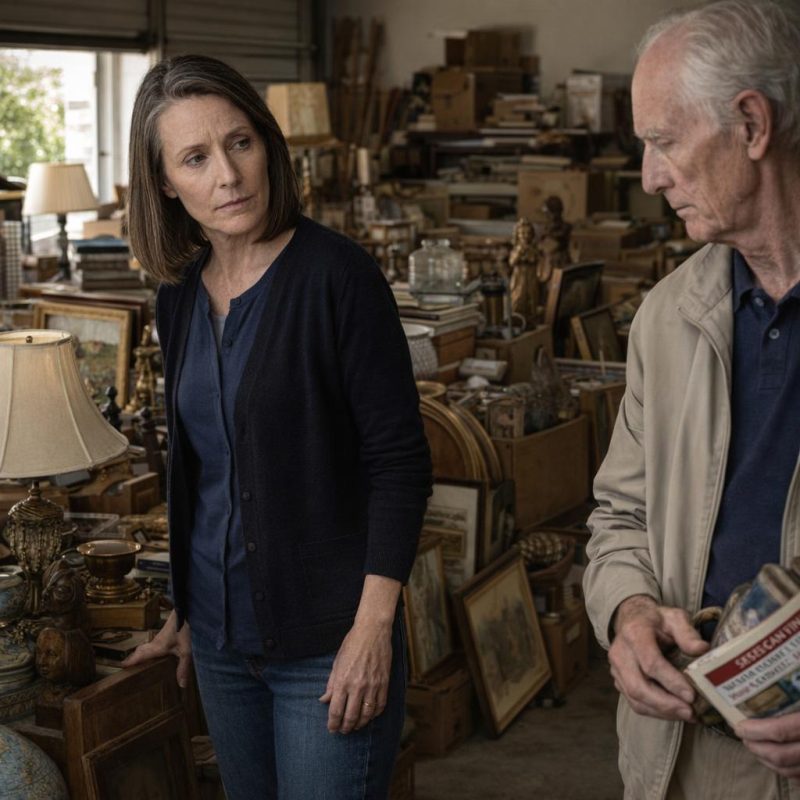 Image by RM AI
Saturday Routine
I started going with him most Saturdays, which surprised me a little because I'd assumed I would find it tedious. I did not find it tedious. There's a particular kind of people-watching available at a rural auction barn that you simply cannot get anywhere else. Dealers who've been doing this for forty years and can spot a reproduction from across the room. Couples who come for the social event and leave with a butter churn they have absolutely no use for. Young people hunting for mid-century furniture with the focused intensity of surgeons. I liked the coffee, which was always terrible and always free, and I liked the folding chairs and the way the auctioneer's voice had a rhythm to it that was almost musical once you stopped trying to follow the numbers. Frank would drift toward the front where the serious bidders stood, and I'd find a spot near the back or the refreshment table and just watch. One Saturday he bid hard on a cabinet — a nice piece, dark wood, good bones — and lost it to a dealer who outpaced him by fifty dollars. He came back to me looking genuinely disappointed, and I handed him a cup of that terrible coffee and told him there'd be another one. He laughed, and we drove home talking about the cabinet and the dealer who'd taken it and what Frank would have done with it anyway. By the time we pulled into the driveway, the afternoon had settled into something easy and companionable, the kind of Saturday that doesn't ask anything of you.
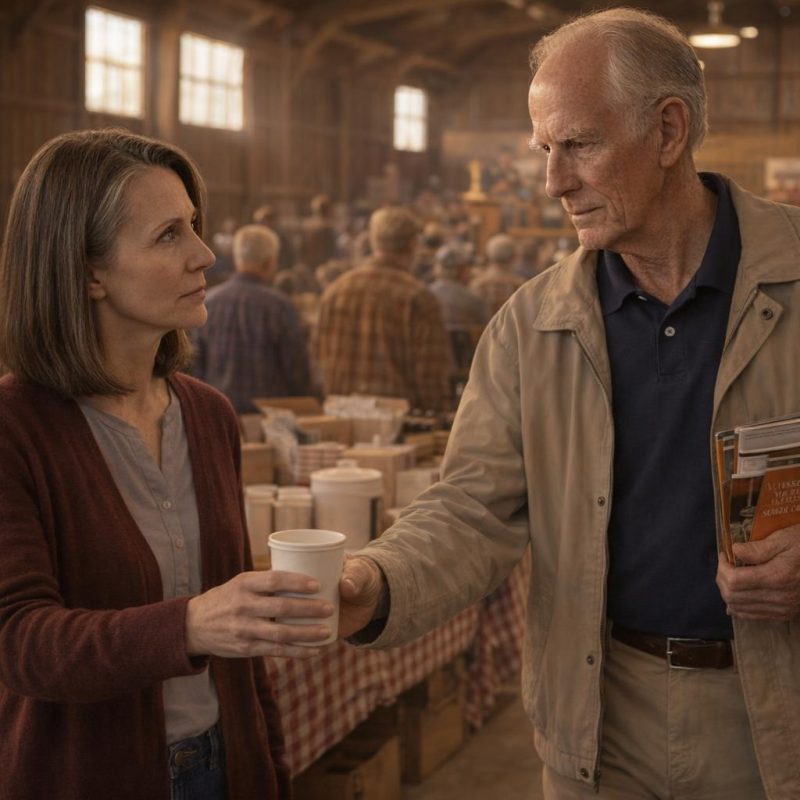 Image by RM AI
The Enthusiast
Frank started doing research. That was the part I hadn't expected. He'd come home with something — a set of old woodworking tools in a canvas roll, a tin advertising sign, a small oil lamp — and within an hour he'd be at the kitchen table with his laptop, reading about makers' marks and regional manufacturing histories and the difference between hand-cut and machine-cut dovetails. He'd explain things to me over dinner with the enthusiasm of someone who'd just discovered a subject that had been waiting for him his whole life. One evening he spent twenty minutes telling me about a particular furniture maker from the 1880s whose work had been largely forgotten, and I sat there listening and thinking that I hadn't heard him talk like this since the early years of our marriage, when everything was still new and he had opinions about everything and wanted to share all of them. He showed me details I would have walked right past — the way a drawer was fitted, the grain pattern on a tabletop, the small stamp on the back of a frame that told you where and when it had been made. I didn't retain most of it, but I retained the feeling of sitting across from him while he talked, his hands moving to illustrate some point about craftsmanship, his face lit up in a way that made him look, just briefly, like the man I'd married thirty-eight years ago.
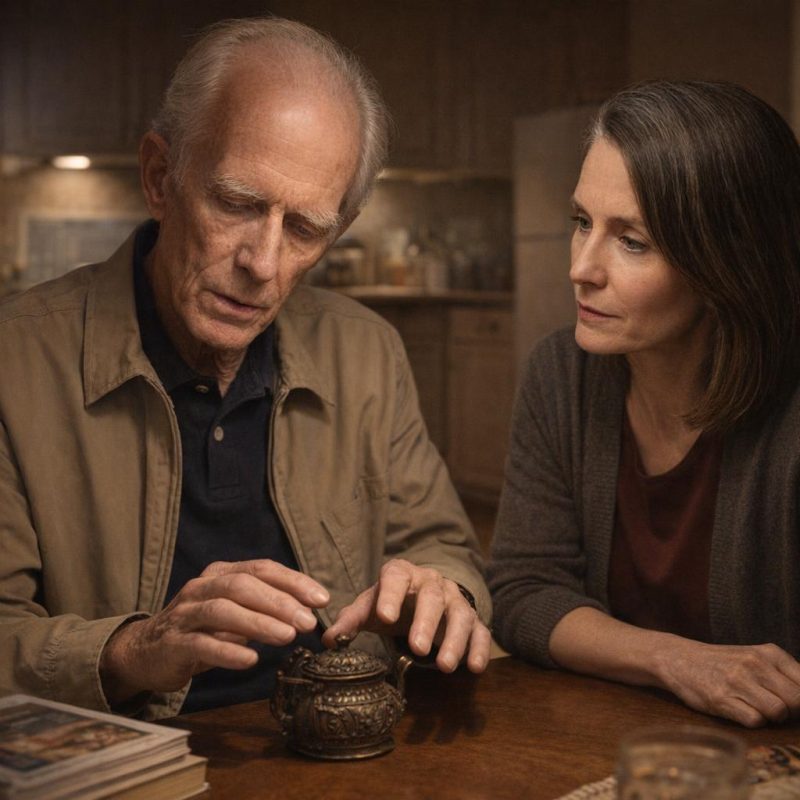 Image by RM AI
Weekend Ritual
By autumn the auction schedule had become the shape of our week. Frank checked the listings every Thursday evening without fail, sitting at the kitchen table with the local paper and his laptop open side by side, circling sales and cross-referencing them with estate notices he'd found online. I adjusted my own plans around it without really thinking about it — if a friend suggested Saturday lunch, I'd say we might have something on and check with Frank first. We skipped my cousin's birthday gathering in October because there was an estate sale two counties over that Frank had been tracking for weeks. I told my cousin we had a prior commitment, which was technically true. The estate sale turned out to be a disappointment — mostly mid-century furniture in poor condition and a lot of costume jewelry — but Frank was philosophical about it on the drive home, which I appreciated. He'd subscribed to three different auction house mailing lists by then, and the envelopes arrived in batches, glossy catalogs with photographs of upcoming lots. I'd started using them as bookmarks. One evening I went to write a dentist appointment on the kitchen calendar and had to search for an empty square. Frank had filled in auction dates through the following spring — some in pen, some in pencil, a few with small stars next to them that I assumed indicated particular interest.
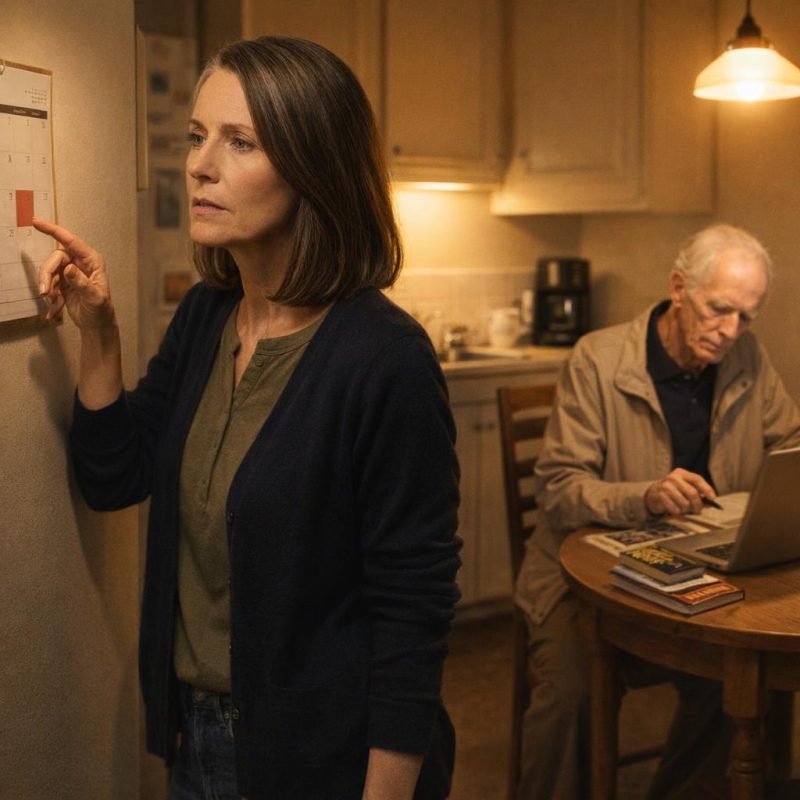 Image by RM AI
The Stranger's Question
The auction barn that Saturday was out past the county line, a converted dairy operation with high ceilings and the particular smell of old wood and dust that I'd come to associate with these places. Frank spotted a cabinet near the front of the sale floor almost immediately and went to examine it up close, which left me near the refreshment table with a paper cup of coffee and nothing pressing to do. A woman about my age came to stand beside me — practical shoes, reading glasses pushed up on her head, the look of someone who'd been coming to these sales for years. She introduced herself as Marilyn and asked if I was with the man who'd been looking at the cabinet. I said yes, that was my husband. She smiled and said he had a good eye, that she'd seen him at a few of these. We talked for a few minutes about nothing in particular, the way you do with strangers at events like this, and then she tilted her head slightly and asked how long we'd been married. There was something almost wistful in the way she asked it, though I couldn't have said why. I told her thirty-eight years.
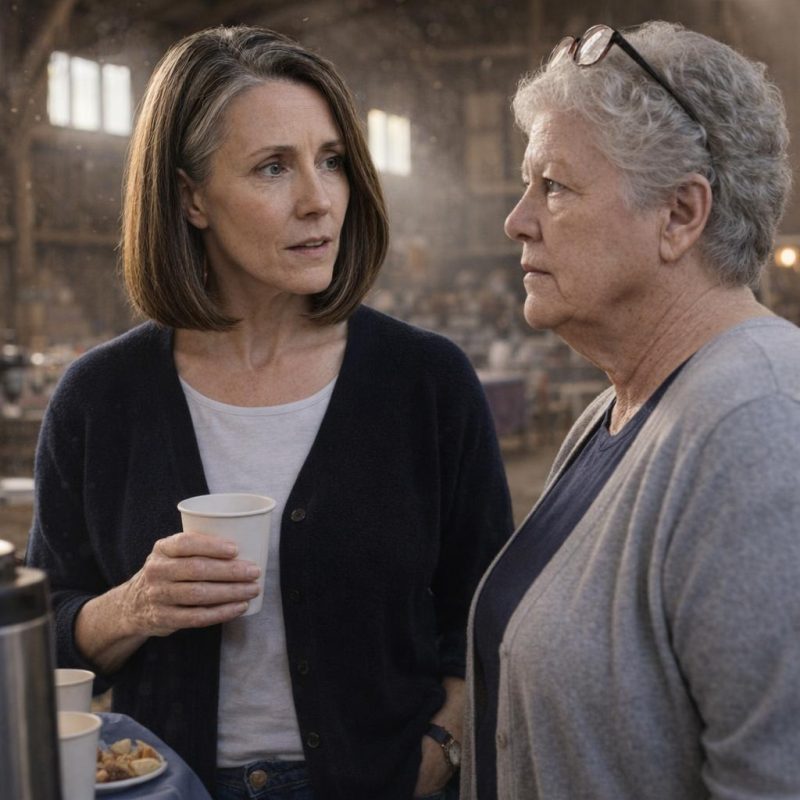 Image by RM AI
Not the Woman
Marilyn went very still for a moment. Not the polite pause of someone doing mental arithmetic, but something different — a kind of recalibration, like she'd said something she needed to take back. She looked at me, then past me toward where Frank was standing near the front of the room, and then back at me. She said, quietly and with what seemed like genuine discomfort, that she was sorry, she must have gotten confused. I asked what she meant. She shook her head a little and said that Frank talked about someone — that she'd heard him mention a woman over the years, at different sales, and she'd assumed — she stopped herself there. I asked her to finish the sentence. She said she'd just assumed I was someone else. That the woman Frank talked about wasn't me. Her eyes went to Frank again, and whatever she saw there made her straighten up and take a small step back. She said she was sorry, that she'd clearly misunderstood something, and before I could ask another question she picked up her coffee cup and walked away toward the far end of the room, moving quickly enough that following her would have looked deliberate.
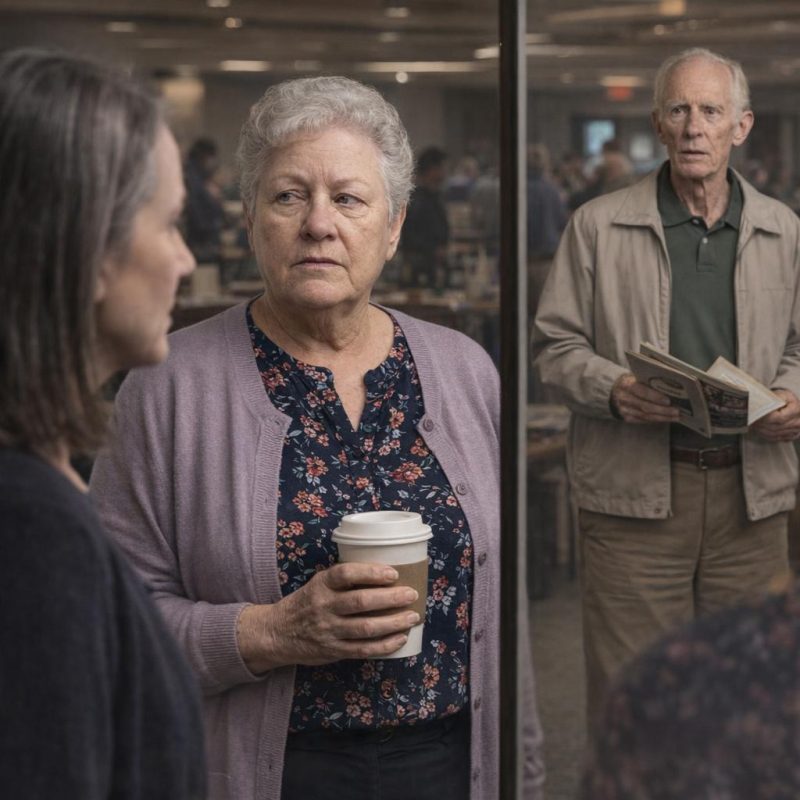 Image by RM AI
The Name Clara
Frank came back twenty minutes later, pleased with himself, having won the cabinet for less than he'd expected. He was already talking about where it might go and what it might need in terms of refinishing, and I nodded in what I hoped were the right places. I couldn't stop turning the conversation over in my mind. Marilyn had said Frank talked about a woman. Not me — someone else. She'd heard it at different sales, over the years, which meant it wasn't a single offhand comment. At some point during the rest of the auction I heard Frank mention a name to the man helping him load the cabinet — just in passing, the way you'd reference anyone, a quick sentence I only half caught. But I caught the name. Clara. I didn't know anyone named Clara. Frank had never mentioned anyone named Clara. I watched him secure the cabinet in the truck bed, checking the straps with the careful attention he gave to things he valued, and I tried to remember if I'd ever heard that name from him before and came up empty every time. The drive home was forty minutes. Frank talked most of the way about the cabinet and the sale and a tool chest he'd seen that he wished he'd bid on. I looked out the passenger window and let his voice wash over me, and the name sat in the back of my mind like something I'd stepped on in the dark and couldn't quite identify.
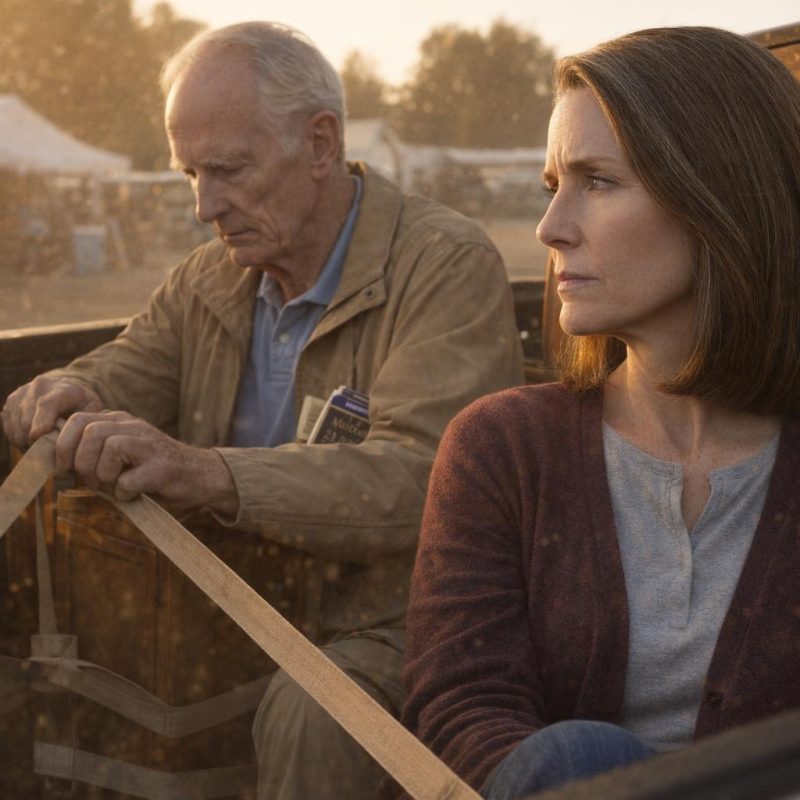 Image by RM AI
The Laughed-Off Explanation
I waited until we'd unloaded the cabinet and Frank had washed up and poured himself a glass of water before I said anything. I'd been rehearsing it the whole drive home, trying to find a way to bring it up that didn't sound accusatory, and I still hadn't found one. So I just said it plainly — that a woman at the auction had come up to me thinking I was someone Frank had talked about, and that she seemed genuinely surprised when she realized I was his wife. Frank looked at me for a second, then laughed. Not a big laugh, but the kind that's meant to signal that something is obviously a misunderstanding. He said the auction circuit was full of people who half-listened to conversations and filled in the gaps themselves, and that whoever she was, she'd probably mixed him up with someone else entirely. It sounded reasonable. I told him she'd mentioned a name — Clara. He shrugged and said he didn't know anyone named Clara, that it didn't ring a bell at all. He said it the way you'd say you'd never been to Portugal — easy, offhand, no hesitation. I nodded and let it go, because what else was I going to do. I had no evidence, no follow-up, nothing but a stranger's confused expression and a name I'd never heard before. Frank went back to talking about the cabinet. I stood at the kitchen counter and listened, and the explanation sat in my chest like something that fit the space but wasn't quite the right shape.
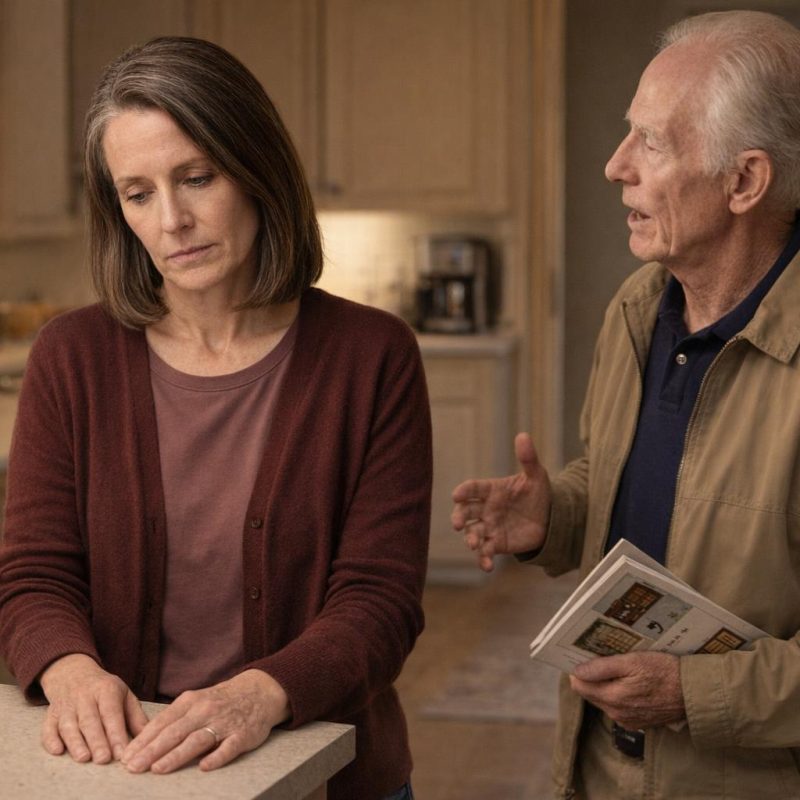 Image by RM AI
The Anxious Tell
I brought it up again the next morning, which I hadn't planned to do. Frank was making coffee, and I was sitting at the kitchen table with my own cup, and it just came out — I said I'd been thinking about what that woman had said, and that it still seemed strange to me that she'd been so certain. Frank repeated the same explanation from the night before, almost word for word. Mistaken identity, half-heard conversations, people at auctions who got things mixed up. His voice had a quality to it that I couldn't quite name — not irritated, not defensive, just slightly compressed, like he was keeping it carefully level. He didn't look at me while he said it. He was facing the counter, fussing with the coffee maker, adjusting things that didn't need adjusting. I asked again about the name Clara, just to see what he'd do. He said the same thing — didn't know anyone by that name, couldn't imagine where it had come from. Then he said he thought he'd left a tool in the truck and he should go check, which was the kind of exit that's too convenient to be accidental but too ordinary to call out. I stayed at the table and watched him set his mug down before he left the room. He lifted the coffee pot to refill his cup first, and I noticed his hand wasn't quite steady as he poured.
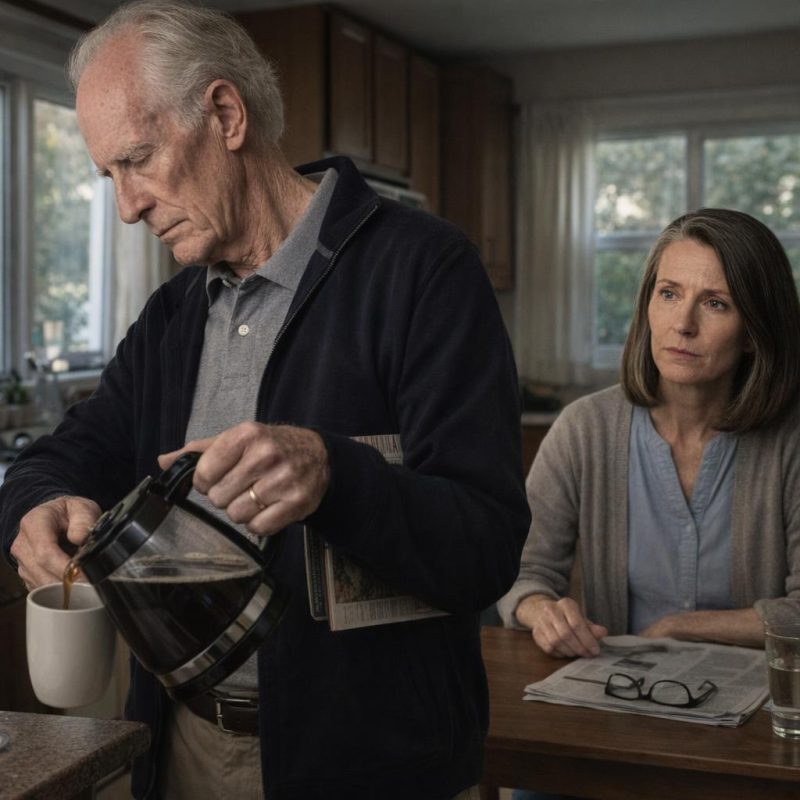 Image by RM AI
Closer Attention
After that morning, I made a decision without really announcing it to myself. I stopped asking questions and started watching instead. It felt more useful, and honestly, it felt safer — like I was giving myself time to figure out what I was actually looking at before I said another word. The next auction Frank mentioned, I told him I'd come along. He seemed pleased, the way he always did when I showed interest in his hobby, and I felt a small pang of something I didn't examine too closely. We drove out on a Saturday morning to an estate sale about forty minutes away, and I spent the first hour doing what I usually did — browsing tables, looking at linens and old kitchenware — but this time I kept one eye on Frank. I watched who approached him and who he sought out. I noticed which conversations ran long and which ones were just a quick nod and a handshake. I paid attention to the way people said his name, whether it came out easy and familiar or polite and new. Frank moved through the room the way he always did, comfortable and unhurried, and he didn't seem to notice that I was paying any particular attention. I wasn't sure yet what I was looking for. But I'd decided I was going to keep looking until I found it, or until I convinced myself there was nothing to find. Either way, I needed to know.
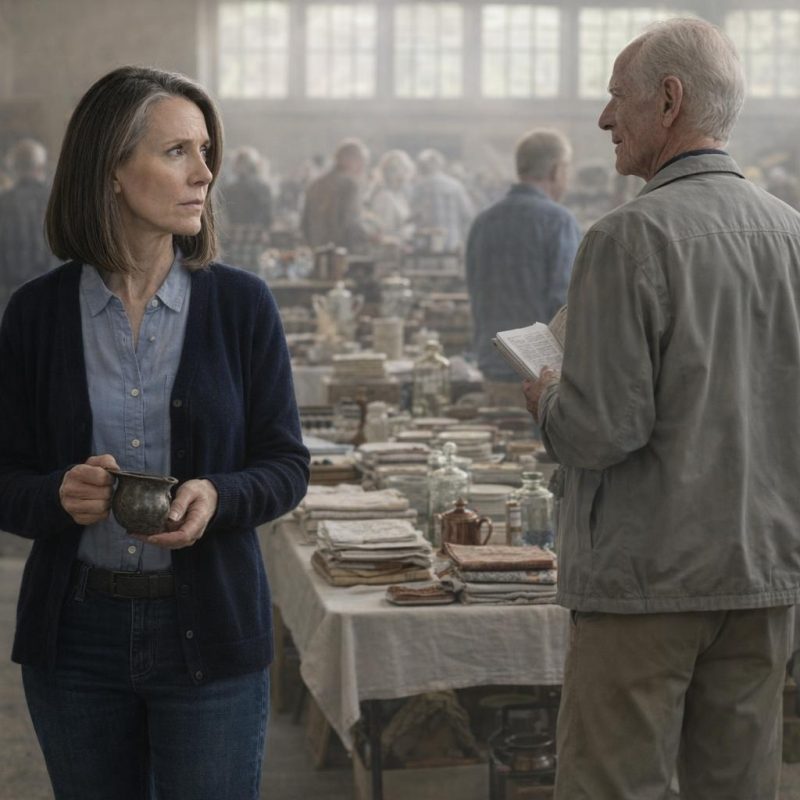 Image by RM AI
The Warm Greetings
The estate sale the following weekend was busier, held in a large house out past the county line, and I had more room to observe without being obvious about it. What struck me first was the greetings. Not just friendly nods from people who recognized a familiar face, but the kind of warm, unhurried hellos that take a minute to complete — a hand on the arm, a question about something specific, a shared laugh about something I wasn't part of. A man in his seventies with a careful, measured way of speaking shook Frank's hand and held it a beat longer than a casual acquaintance would. Frank introduced him to me as Harold, an antique dealer he'd gotten to know through the circuit. Harold was gracious and said something kind about Frank's eye for furniture. I smiled and said something appropriate. But I was doing the math in my head. Frank had only been attending these sales since he retired, which was three years ago. Three years wasn't nothing, but it wasn't enough to explain the way Harold looked at him — the way you look at someone whose history you know, whose habits you've watched settle in over time. I thought about the other people I'd seen greet him that morning, the easy shorthand of their conversations, and I couldn't make the timeline add up to what I was seeing in front of me.
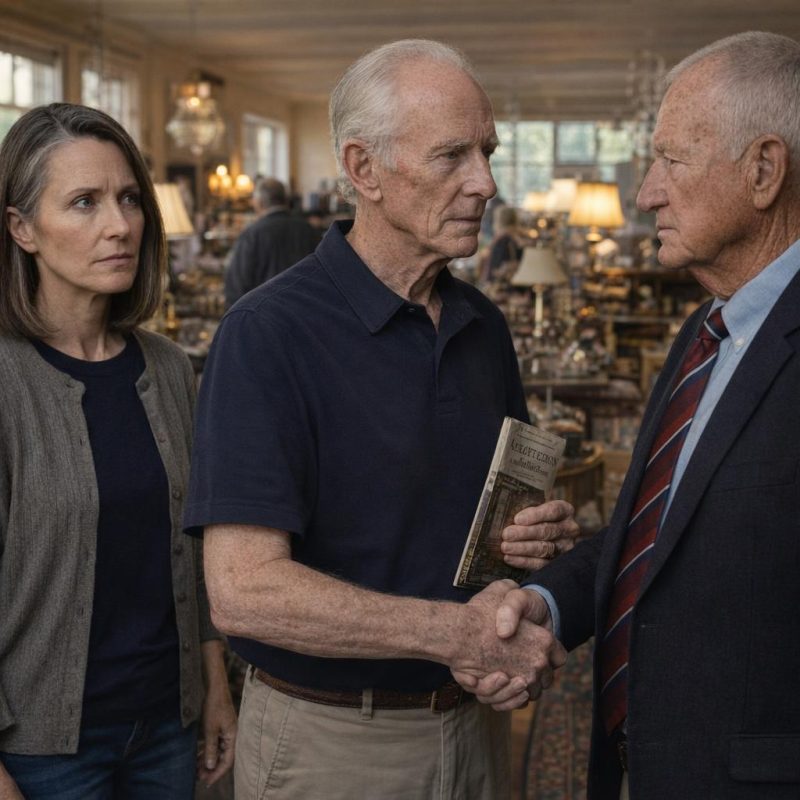 Image by RM AI
The Shared Stories
By the third auction I attended with fresh eyes, I started noticing something else. People didn't just know Frank — they knew his stories. A woman near the furniture section mentioned a clock he'd apparently had repaired, laughing about some detail of the process that I'd never heard. A man by the door referenced an auction from what sounded like two winters ago, something about a bidding war over a writing desk, and Frank grinned and filled in the punchline like they'd told it together before. I stood slightly apart and listened, and I had the distinct feeling of being a tourist in a country where everyone else spoke the language. These weren't just acquaintances who recognized him — they were people who had collected pieces of him, little anecdotes and shared moments, and filed them away the way you do with someone who matters to you. Frank had never told me the clock story. He'd never mentioned the writing desk. I didn't know if that meant anything on its own — couples don't share every detail of every hobby — but the accumulation of it sat uneasily with me. I drifted toward the back of the room, pretending to look at a shelf of old glassware, when I caught a fragment of conversation from two men nearby, one of them saying Frank had told him about a find so unusual he'd driven three hours to verify it himself.
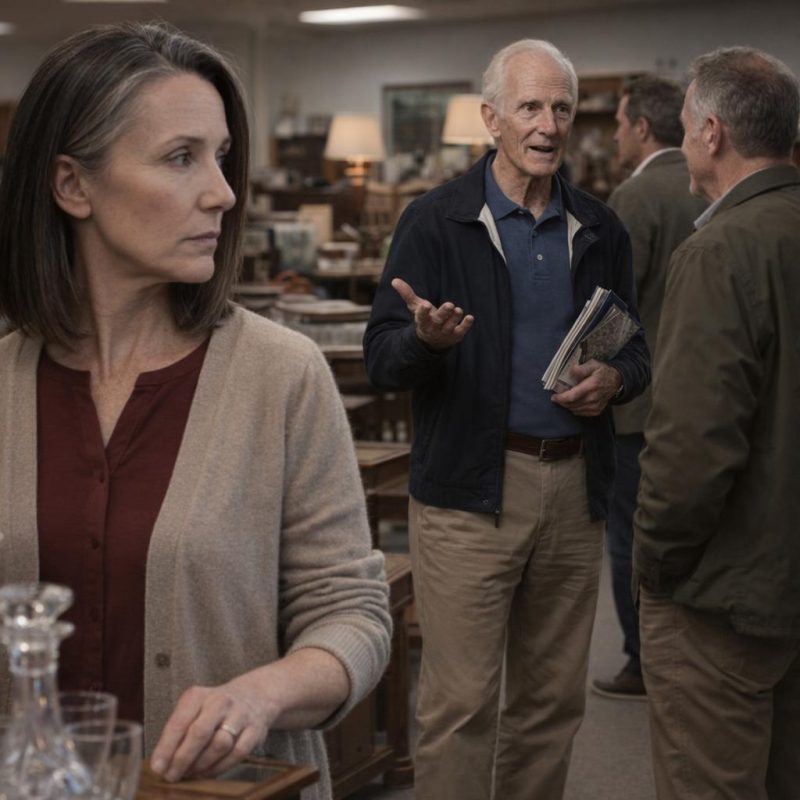 Image by RM AI
Clara's Name Again
I started positioning myself more deliberately after that — close enough to hear, far enough not to seem like I was listening. It wasn't something I was proud of, but I told myself it was just paying attention, which is something I'd always been good at. At a sale the following Saturday, I was standing near a cluster of regulars while Frank was across the room examining a sideboard. Two of them were talking about a particular style of writing furniture, something about inlaid desks and the regional variations, and one of them mentioned that Frank had a real feeling for that period — said he'd talked about it at length at a sale last spring. The other one nodded and said something about how Frank had described a whole collection he'd seen once, pieces that had been kept together for decades. And then, in the middle of that perfectly ordinary conversation, one of them said the name. Clara. Just like that, dropped in naturally, the way you'd reference anyone — said Frank had come across the collection through her, that she'd had an eye for that particular style. My attention went sharp and still. Frank was still across the room, his back to us, running his hand along the edge of the sideboard. He hadn't heard, or if he had, he gave no sign of it. But I had heard it, and it wasn't the first time, and it wasn't from someone who'd confused him with anyone else.
 Image by RM AI
The Brushed-Aside Questions
I asked him about it on the drive home. I kept my voice even and said I'd overheard someone mention a woman named Clara in connection with a furniture collection he'd apparently described. Frank was quiet for a moment, then said the name sounded vaguely familiar, maybe someone who'd come up in conversation at one of the sales. I asked which sale. He said he couldn't remember exactly. I asked what she collected. He said he wasn't sure he was thinking of the right person. Each answer arrived just a little too slowly, and each one left just enough room to be technically plausible while telling me nothing at all. I tried again that evening, after dinner, when the house was quiet and there was nowhere easy to redirect. I asked him directly — who was Clara, and why did multiple people at the auctions seem to know her name in connection with his. Frank said he honestly couldn't place her clearly, that names came up all the time in that world, that he might have mentioned someone he'd heard about secondhand without even registering it. Then he stood up from the table and said he wanted to take another look at the sideboard he'd brought home, see if the drawer runners needed work. I watched him cross the room, and without glancing back, he crouched down in front of the sideboard and ran his thumb along the drawer edge, his shoulders turned fully away from me.
 Image by RM AI
Still Searching
Frank went to the hardware store on a Tuesday afternoon, and I found myself in the garage without having planned to be there. I told myself I was just tidying — there were boxes from his recent purchases stacked near the workbench, and it seemed reasonable to sort through them. I opened a few without finding anything interesting, just packing paper and the occasional bubble wrap. Then I pulled open the small drawer of a writing desk Frank had brought home a few weeks earlier, the one he'd said needed cleaning up before he decided what to do with it. An old auction catalog slid forward when I opened the drawer, the kind printed on cheap paper with photographs that had gone slightly gray with age. I flipped through it without much intention, looking at the listings, the lot numbers, the descriptions of furniture I didn't know the names for. And then I saw it — a note in the margin, written in the small, slanted handwriting I'd been reading for thirty-eight years. I knew every loop and angle of it. I stood there in the garage with the catalog open in my hands, reading the words Frank had written in the margin of a page he'd apparently never expected anyone else to see, and the afternoon light came through the small window above the workbench and fell across the paper, and I didn't move for a long time.
 Image by RM AI
Curiosity to Concern
I slid the catalog back into the drawer before I heard Frank's truck in the driveway. My hands were steadier than I expected, which surprised me. I set a box of packing paper on top of the writing desk, just to give myself something to point to if he asked what I'd been doing, and then I walked inside and started dinner like nothing had happened. But something had happened. The phrase he'd written in that margin — I kept turning it over in my mind all through the meal, all through the dishes, all through the evening news. Frank sat in his chair and watched television and laughed at something, and I sat across from him and smiled when I was supposed to and thought about those words. He'd written about still searching for her, and the handwriting was so familiar it almost made it worse — thirty-eight years of grocery lists and birthday cards and notes left on the counter, and now this. I didn't sleep well. Saturday was the day he usually went to the auction barn out on Route 9. I told him Friday evening that I had plans with my sister, which was a lie I'm not particularly proud of. He said that was fine, have a good time. He didn't ask which sister. By Saturday morning I'd made up my mind: I needed to see this world of his for myself, without him standing next to me explaining everything.
 Image by RM AI
Alone at the Auction
The auction barn was bigger than I'd pictured — a converted agricultural building with folding tables running the length of it and the smell of old wood and dust hanging in the air. I paid the entry fee at a folding table near the door, and the woman behind it glanced at my name on the registration card and looked up at me with an expression I couldn't quite read. Not unfriendly. Just — surprised. I moved inside and started walking the rows, looking at the furniture and the boxes of miscellaneous items the way I imagined Frank did every week. A man with a white beard and a dealer's badge stopped sorting through a box of hardware and looked at me twice. When I introduced myself and mentioned Frank's name, his eyebrows went up in a way that seemed involuntary. He recovered quickly and shook my hand and said something polite about Frank being a good customer. But the look had been there. I kept moving through the crowd, watching people, trying to understand what Frank found so absorbing about this place. It wasn't unpleasant, exactly. There was a kind of focused energy to it, everyone hunting for something specific. But I couldn't shake the feeling that the surprised looks meant something I hadn't accounted for. By the time I'd made one full circuit of the building, I'd collected three of those reactions — that small pause, that flicker of recalibration — and I didn't know what to do with any of them. The weight of those looks stayed with me long after I'd moved on.
 Image by RM AI
The Assumption
I found Harold near the back of the barn, behind a table of small decorative pieces — clocks and candlesticks and a few framed prints. I'd seen his name on a business card Frank had left on the kitchen counter months ago, and I recognized him from the description Frank had given once: elderly, careful, the kind of man who chose his words the way other people chose furniture. He recognized Frank's name immediately when I mentioned it, and his expression did the same thing the others had done — that small, recalibrating pause. I asked if he knew Frank well. He said he'd seen him regularly for several years. Then I asked, as directly as I could manage, whether Frank had ever talked about a woman. Harold set down the clock he'd been holding and looked at me for a moment. He said yes, Frank had mentioned a woman over the years. He said it carefully, the way you say something when you're not sure how much the other person already knows. He described her as someone connected to a collection Frank was trying to locate — antiques with some kind of historical significance, he said. He spoke slowly, watching my face, and I could see him working out the shape of the situation as he talked. And then it became clear to me, from the way he was choosing his words, from the careful distance he was keeping — Harold had assumed this woman was Frank's wife. He had assumed she was me. The floor felt slightly unsteady under my feet, though I hadn't moved.
 Image by RM AI
The Changed Life
Harold apologized almost immediately, which told me everything about how badly he'd misread the situation. He said he was sorry, that he hadn't meant to cause any confusion, that he'd simply assumed — and then he stopped himself and looked genuinely uncomfortable. I told him not to apologize, that I was just trying to understand. He nodded slowly and seemed to decide that honesty was the kindest option available to him. He said Frank had spoken about this woman with a great deal of respect. Not casually, not the way you mention an old colleague in passing. He said Frank talked about her the way people talk about someone who mattered. He mentioned that Frank had brought her up over several years, always in connection with the antiques, always with the same quality of — he searched for the word — reverence, he said finally. I asked him what her name was. Harold picked up the clock again, turned it over in his hands once, and set it back down. He said Frank had called her Clara. He said Frank had told him, more than once, that Clara had changed his life.
 Image by RM AI
The Woman Connected to Antiques
I asked Harold to tell me what Frank had said about the antiques, and he did, carefully, the way he seemed to do everything. Frank had talked about a specific collection — furniture and documents and a few other pieces — that had belonged to Clara's family. Harold said Frank described them as historically significant, though he admitted he didn't know the full details of why. What he did know was that Frank had been looking for individual pieces at auctions for some time, trying to locate things that had been sold off and scattered. I asked how long Frank had been talking about this. Harold thought about it. He said at least four or five years that he could account for, maybe longer. He said Frank had been coming to auctions in this area well before Harold had started seeing him regularly, so the timeline might stretch back further than that. I stood there doing the arithmetic quietly. Four or five years put this well before Frank's retirement. He hadn't picked up this obsession when he stopped working — he'd been carrying it for years before that, and retirement had just given him more time to pursue it. I thanked Harold and stepped away from his table, and I stood for a moment between two rows of furniture with people moving around me on both sides. The search had been going on longer than I'd thought, and the weight of that settled over me like something I couldn't put down.
 Image by RM AI
The Second Confrontation
I waited until after dinner to bring it up. Frank was rinsing his plate at the sink when I said Harold's name, and I watched his shoulders go still for just a moment before he turned around. I told him I'd gone to the auction barn on Saturday. I told him what Harold had said — about Clara, about the collection, about the years of conversation. Frank dried his hands on the dish towel and sat down at the kitchen table, and he looked tired in a way that seemed less like the end of a long day and more like the end of a long effort. He said Clara was someone he'd known before we met. He said it quietly, without looking for a reaction. I asked him why he'd never mentioned her in thirty-eight years, and he said it was a long time ago, that it hadn't seemed relevant. He called her an old acquaintance, and the word felt too small for everything Harold had described. I didn't say that. I asked what had happened to her, and he said she was gone, that she'd passed away, that it was a long time ago. He said it the way people say things they've said to themselves many times before — smoothed down, worn with repetition. I sat across from him at the table and looked at my husband of thirty-eight years and felt the distance between what he was telling me and what I suspected he wasn't. The hollow space where a fuller answer should have been sat between us, and neither of us moved to fill it.
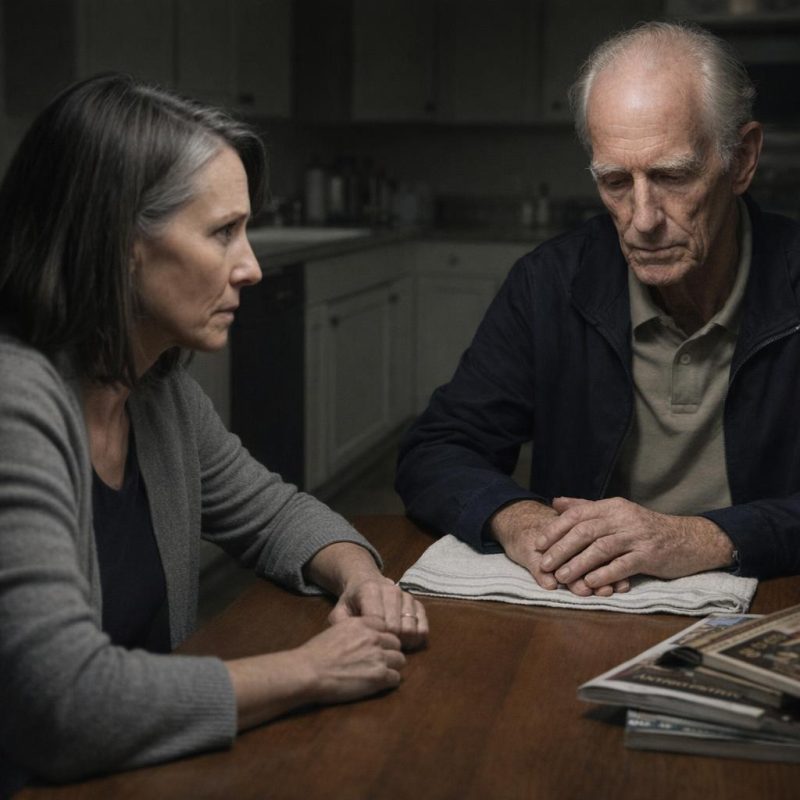 Image by RM AI
The Dispersed Collection
He talked more after a while, once the silence had stretched long enough that filling it seemed easier than holding it. He said Clara's family had owned a collection of antiques — furniture, documents, a few other pieces — that had been significant in ways he described as historical. He said when she died, the family had sold everything off, dispersed it, and the pieces had gone in different directions. He said he'd been trying to locate some of them over the years, attending auctions, following leads, because he felt some obligation to the family's memory. He used that phrase — obligation to the family's memory — and it had the quality of something he'd thought about carefully. He said it wasn't about money, that the pieces had value beyond what they'd fetch at auction. I asked him when Clara had died, and he looked at the table for a moment before he answered. He said it had been decades ago. He said she'd died long before we were married. I sat with that. Decades ago. Before our marriage. Something about the shape of it left me uneasy, though I couldn't have said precisely what. And then Frank said it again, more quietly, as though saying it a second time might settle the matter: she died decades ago.
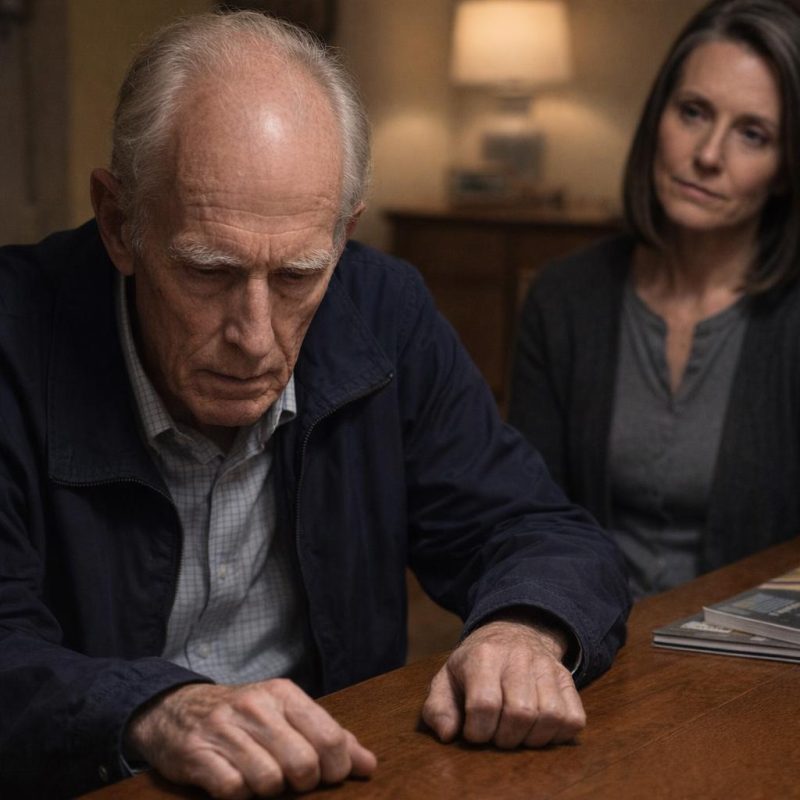 Image by RM AI
The Unanswered Question
His explanation covered most of the questions I'd started with. The collection, the auctions, the sense of obligation — it all held together in a way that was almost convincing. Almost. What it didn't cover was Harold. It didn't cover the other dealers with their surprised looks and their careful words. Frank hadn't just been attending auctions quietly and keeping to himself — he'd been talking. For years, apparently, to multiple people, about Clara, about the search, in enough detail that Harold had built up a picture of her over several years of conversation. I asked Frank about that directly. I said that Harold hadn't just known her name — he'd known things about her, about what she'd meant, about the collection. I asked why Frank had shared so much with people he barely knew. Frank was quiet for a moment. Then he said people at auctions like stories, that it was just conversation, the kind of thing you say to pass the time. I looked at him across the kitchen table. He was looking somewhere past my left shoulder. I asked him again — not why he'd gone to the auctions, not why he cared about the collection, but why he'd spent years telling near-strangers about a woman who had supposedly been a brief acquaintance from before our marriage. Frank's jaw tightened. He said he didn't know what else I wanted him to say. I told him I wanted him to answer the question I'd actually asked.
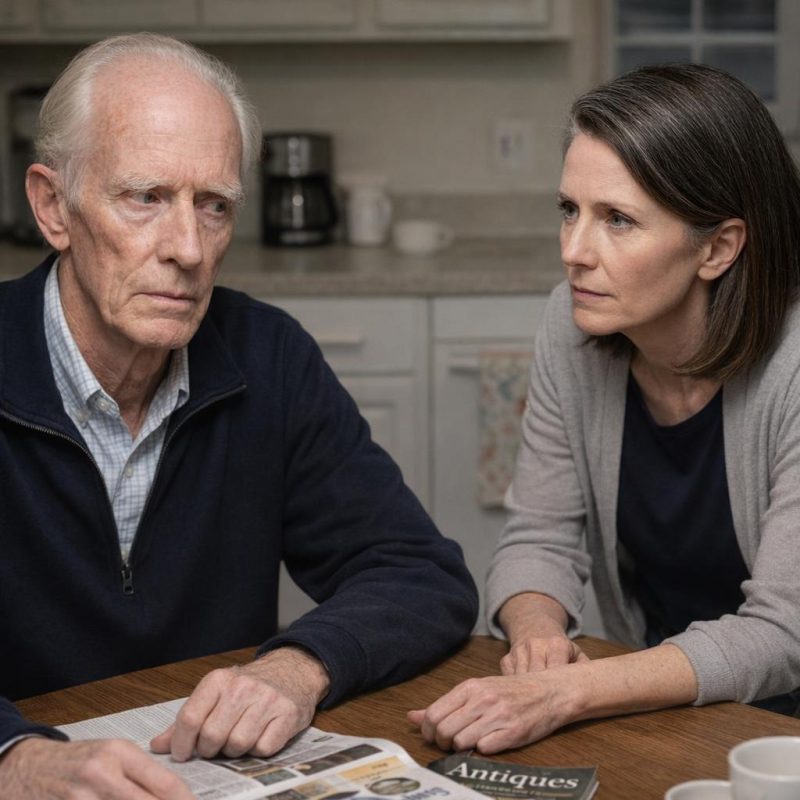 Image by RM AI
The Research Begins
Frank left for an auction the following Saturday morning, same as always — travel mug in hand, keys jingling, a little too eager to get out the door. I waited until his car turned off the street. Then I sat down at the kitchen table with my laptop and a second cup of coffee and told myself I was just going to look. That was all. Just look. I typed in Clara's full name first, the way Frank had said it. Nothing useful came back — too common a name. So I added the county. Then the state. Then I tried pairing it with local historical society records, because that's what Frank had said she was interested in. I worked through it methodically, the way I used to approach anything that needed sorting out. Census records. Property records. Old newspaper archives. I found three women with that name in the right general region, and I started narrowing by age, working from what Frank had told me — that she'd been a few years older than him, that she'd grown up here. Two of the three dropped away quickly. The third kept appearing. She showed up in a historical society newsletter from years back. She showed up in a library archive index. And then, on the fourth page of results, something else appeared. I clicked on it before I'd fully registered what it was.
 Image by RM AI
The Recent Death
It was an obituary. Short, plainly written, the kind that local papers run without much ceremony. Clara Morrison, age sixty-eight, passed away three years ago. I read it twice, slowly, the way you read something when you're hoping the words will rearrange themselves into something different. They didn't. Three years ago. Not decades ago, the way Frank had let me believe — the vague, distant past he'd always implied when he mentioned her, as if she were part of a chapter that had closed long before our life together began. She had been alive for almost our entire marriage. She had been alive while Frank and I raised our kids, while we argued about the kitchen renovation, while we sat across from each other at this same table for thirty-eight years. I set my coffee cup down. The obituary said she was a local historian. It said she was dedicated to her community. It said she was preceded in death by her parents and survived by no immediate family. I sat with that for a moment — the careful, formal language of it, the way it listed what she'd left behind and what she hadn't. Frank had told me she was gone. He had never once said she was gone as of three years ago. That was a different kind of gone entirely, and the distinction sat in my chest like something with weight.
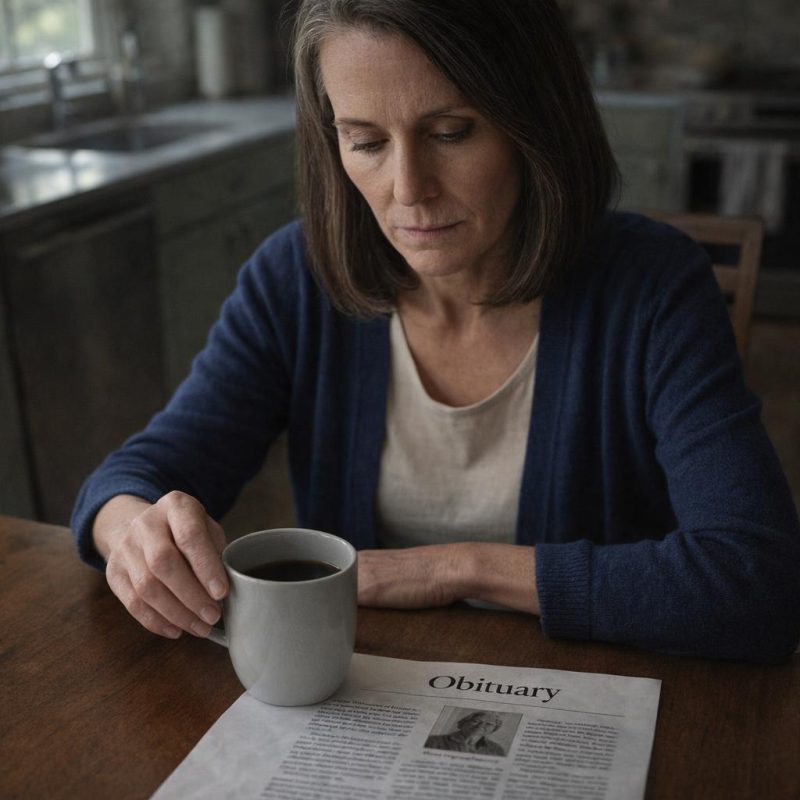 Image by RM AI
Never Married
I kept reading. I pulled up census records, old directory listings, anything I could find attached to her name. The picture that came together was consistent across all of it. Clara Morrison had lived alone. Every record I found showed a single-occupant household, the same address for over two decades, no co-residents listed at any point. I searched for marriage records and found nothing. Not a license, not an announcement, not even a name change anywhere in the documents. She had never married. I sat back and thought about that. Frank had described her as someone from his past, a brief acquaintance, a woman he'd known before me. He'd made her sound like a footnote. But footnotes don't live alone for thirty years pursuing something with enough dedication that strangers at auction houses know their name. I thought about what Harold had said, about the picture Frank had built up over years of conversation. I thought about Marilyn's face when she'd said she'd assumed I was someone else. Clara had never had a husband, never had children, and from everything I could find, she'd spent most of her adult life focused on her research. I didn't know what that meant in relation to Frank. I didn't know what any of it meant, exactly. I just kept adding things to a list in my head that had no answers attached to it yet.
 Image by RM AI
The Trail to Thomas
I went back to the auction house records I'd found earlier — the ones that had Clara's name in the comment threads of an online archive a local house had posted. Most of the names attached to those comments meant nothing to me. But one of them appeared twice, and the second time it included a short note about Clara's passing that sounded personal. Thomas Eldridge. I searched for him the same way I'd searched for her — methodically, starting broad and narrowing down. He wasn't hard to find. He had a listed phone number, which felt almost quaint. I sat with my hand on my phone for a few minutes before I called. When he answered, I told him my name and explained that my husband had known Clara Morrison, and that I was trying to understand more about her work. There was a pause on his end. Then he said he was sorry, that he hadn't realized Frank was married. He said it carefully, like he was choosing his words, and I told him not to worry about it. He sounded surprised but not unkind, and when I asked if he'd be willing to talk, he said yes without much hesitation. We agreed on a coffee shop near his side of town. The next afternoon, I drove there alone, without telling Frank where I was going.
 Image by RM AI
Clara's Obsession
Thomas was already there when I arrived — a man in his early seventies with a quiet, unhurried way about him, the kind of person who seems like they've spent a lot of time listening. He stood up when he saw me come in, which I appreciated. We ordered coffee and he didn't waste time with small talk. He said Clara was one of the most focused people he'd ever known. Brilliant, he said, and he meant it — not as a compliment you offer about the dead out of politeness, but as a plain statement of fact. He said she had been researching local history for as long as he'd known her, which was most of her adult life. She attended auctions regularly, he said, but not the way most people did. She wasn't there to browse. She had a list of things she was trying to track down, particular items she thought might be connected to something she'd been piecing together for years. He said she believed certain pieces held information — that they mattered beyond what they appeared to be on the surface. I asked him what kind of information. He paused, wrapping both hands around his coffee cup. He said it was a family mystery, something that had gone unresolved for generations, and that Clara had made it her life's work to find the answer. I thought about Frank at his auctions, his careful bids, his vague explanations. The search, it turned out, had always been hers first.
 Image by RM AI
The Missing Inheritance
Thomas took his time explaining it, and I got the sense he'd told parts of this story before but never quite all of it in one sitting. Generations back, he said, a significant inheritance had disappeared. Not stolen outright, or at least not in any way that could be proven — it had simply vanished from the record, the way things sometimes did when families fractured and estates got divided up without proper documentation. Clara had a theory about what had happened to the evidence — where it had gone, who it might have belonged to. She thought it hadn't been destroyed. She thought it had ended up tucked inside ordinary household items, the kind of things that move from estate to estate without drawing much attention. She spent years going through auction houses looking for pieces that matched what she'd read about in old records. Thomas said she never treated it like a hobby. He said she treated it like an obligation. I looked at my coffee and thought about the scope of that — decades of searching, auction after auction, for objects that looked ordinary to everyone else. The patience of it was almost hard to imagine.
 Image by RM AI
Frank's Role
I waited until there was a natural pause in the conversation, and then I asked Thomas directly if he'd known Frank. He nodded, unsurprised by the question. He said Frank had helped Clara with her research for a period of time — years back, he thought, though he wasn't certain exactly when. Frank was good at finding things in records, Thomas said. Old documents, property filings, that kind of thing. Clara had appreciated that. Thomas said they'd worked together on the research for a while, going through archives, cross-referencing what she'd found at auctions with historical documents. He spoke about it matter-of-factly, like it was simply part of Clara's story rather than anything remarkable. I asked if he knew why they'd stopped working together. He shook his head. He said he didn't know the details of that — Clara hadn't talked much about her personal arrangements, and he hadn't asked. He said she was private about some things, even with people she trusted. I nodded and thanked him, and I kept my expression as neutral as I could manage. Inside, something had shifted. Frank hadn't just known Clara in passing. He had sat with her in archives and helped her search through records, and he had never once mentioned any of it.
 Image by RM AI
The Reframing
I drove home slowly, turning it over. I thought about every auction Frank had attended since he retired — the early Saturday mornings, the specific items he'd come home with, the way he'd sometimes pass on things that seemed perfectly nice and then spend real money on something that looked, to me, like an unremarkable old box or a plain piece of furniture. I'd assumed it was taste. I'd assumed it was the particular enthusiasm of a new collector finding his eye. But sitting with what Thomas had told me, the pattern looked different. The purchases that had seemed random no longer seemed random. Every piece he'd brought home — the ones he handled carefully and catalogued in that notebook he kept — each one had been chosen with some purpose I hadn't been able to see. I thought about the items stacked in our spare room. I asked Thomas, before I left, whether Clara had ever found what she was looking for. He was quiet for a moment. Then he said he honestly didn't know — that toward the end, she'd seemed closer, but he couldn't say more than that. I pulled into our driveway and sat in the car. Through the front window I could see the lamp on in the living room, and on the shelf beside it, the small wooden chest Frank had brought home from an auction four months ago.
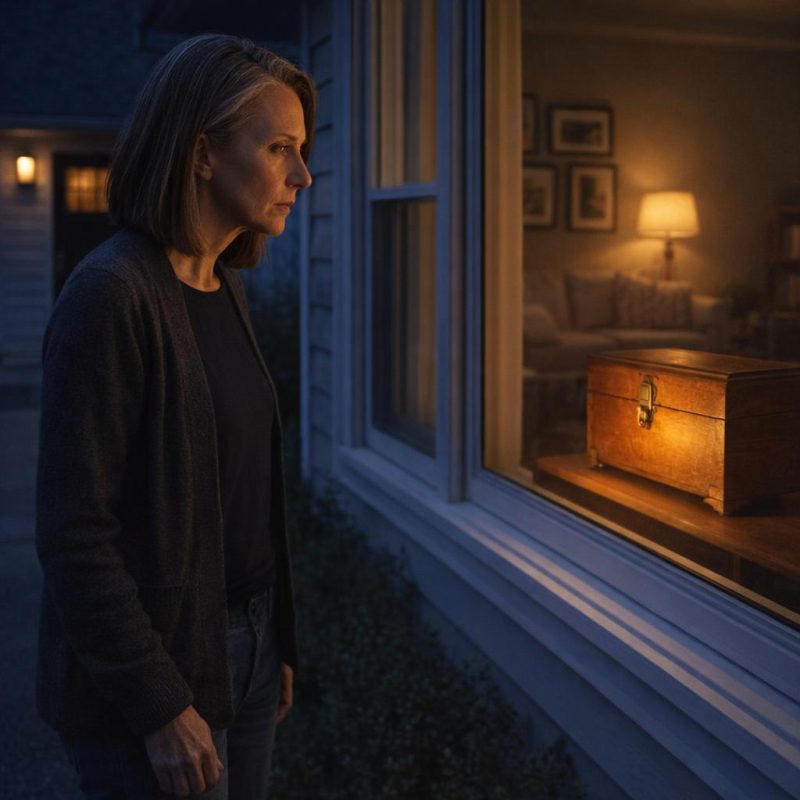 Image by RM AI
The Third Confrontation
I was sitting at the kitchen table when Frank's headlights swept across the wall. I'd been there for an hour, not reading, not doing anything useful — just waiting. I heard his key in the lock, heard him set his bag down in the hallway the way he always did, and I let him get as far as the kitchen doorway before I said it. I told him I'd spoken with Thomas. Just that. Nothing else. The change in his face was immediate — not guilt exactly, but something that looked like a door swinging open that he'd kept shut for a long time. He didn't ask me which Thomas. He pulled out the chair across from me and sat down slowly, and he asked what Thomas had told me. I walked him through it — the historical society, Clara's name, the research, the years of it. I kept my voice even. I wasn't angry yet, or maybe I was past the kind of anger that needs to be loud. Frank listened with his hands flat on the table, and when I finished he was quiet for a moment. Then he said yes. He said Clara had been his friend, that they'd worked together on something, that it was a long time ago. He said it like a man who'd been carrying something heavy and had finally been given permission to set it down, and I watched his face as he admitted it — that she had been his research partner.
 Image by RM AI
The Historical Research
He started at the beginning, which I appreciated. He said he'd met Clara at a historical society meeting — this was years before he and I ever crossed paths, back when he was in his late twenties and had just moved to the area for work. He'd gone to the meeting on a whim, the way you do when you're new somewhere and looking for something to fill a Saturday. Clara was already a fixture there. He said she had a way of talking about old records and property maps that made them sound like detective work, and he got pulled in. They started meeting at the library on weekends, going through county archives together, following threads that Clara had already been pulling at for months before he arrived. He said she was the one with the real instinct for it — she could look at a transfer document from 1887 and spot something that didn't line up, something that would take him another hour to even see. He helped where he could. He was good at the physical part of it, he said — tracking down which collections held what, driving out to courthouses in small towns, carrying boxes. Clara was the mind of it. He said they worked together for the better part of two years. I sat across from him and listened without interrupting, and somewhere in the middle of it I stopped thinking about what I didn't know and started trying to picture the two of them — young, absorbed, bent over some table covered in old paper — and the picture came together more easily than I expected.
 Image by RM AI
The Clues
Frank spread his hands on the table like he was smoothing out an invisible map. He said the core of it was a family — a wealthy one, by the standards of the time — whose estate had essentially vanished between one generation and the next. The records showed property, livestock, household goods, all of it substantial. But by the time the children came of age, there was almost nothing left to inherit. The official story was debt, bad investments, the usual explanations. Clara didn't buy it. She'd found discrepancies in the property transfer records — sales that didn't match the family's own accounts, dates that were off, buyers who appeared once and never again. Her theory was that someone in the family had moved things deliberately, converted assets into objects, and sold them off quietly through estate sales over a period of years. Not to hide from creditors, but to keep the value out of the wrong hands within the family itself. The proof, she thought, was still out there — scattered across the region in attics and back rooms and auction lots, in pieces of furniture and household items that looked like nothing special. She and Frank had made a list. Types of pieces, approximate dates, the kinds of markings or features to look for. He said it had felt, at the time, like the most interesting puzzle he'd ever encountered. Sitting there listening to him, I could understand why. The scope of what they'd been chasing together settled over me like something with real weight.
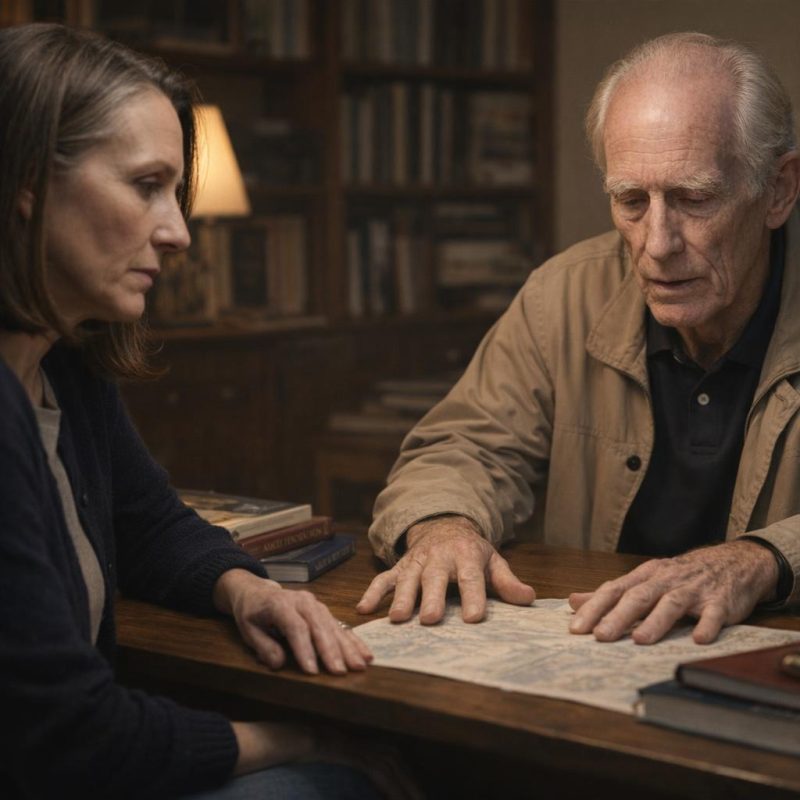 Image by RM AI
Clara's Obsession Deepens
Frank said Clara changed as the search went on. Not in a bad way, he was careful to say — she just got more focused. More singular. She started spending every free hour on it, pulling in sources he hadn't even known existed, writing to historical societies in other counties, tracking auction records going back decades. He had a job, responsibilities, a life that kept pulling him in other directions. He said they didn't have a falling out or anything dramatic like that — they just gradually saw each other less. A few months would go by, then a few more. He said he thought about the mystery sometimes, the way you think about an unfinished book you left on a shelf. When he happened to see an auction listing that matched something on their old list, he'd go. Just to look, he said. Just out of curiosity. He said it lightly, the way you'd describe a minor habit, and I let him finish before I asked the question that had been sitting in my throat the whole time. I asked him when exactly they'd lost touch. He looked at the table for a moment, then back at me, and said it had been gradual — that there wasn't really a specific point he could name.
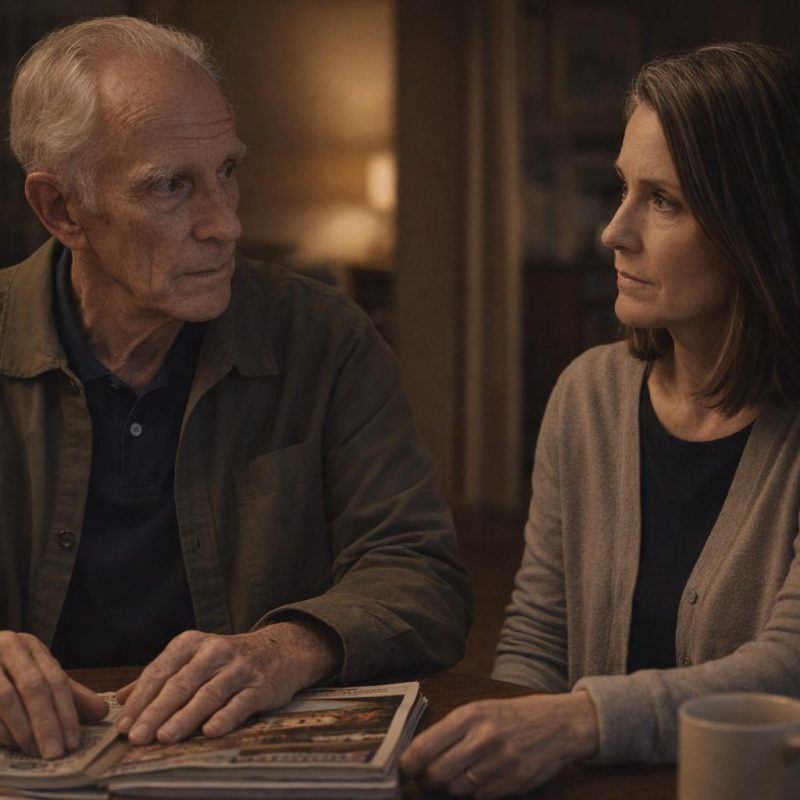 Image by RM AI
The Incomplete Explanation
I asked him why he'd never mentioned any of it to me. Not Clara, not the research, not the auctions being anything more than a retirement hobby. He said he hadn't thought it mattered — that it was old history, something from before we'd met, and it hadn't seemed relevant. I pointed out, as calmly as I could, that he'd been going to auctions every few weeks for the better part of two years and spending real money on specific items for reasons he'd never explained. He said it was just a hobby. He said it the way people say things when they know the word doesn't quite fit but they're hoping you won't press on it. I asked him whether he'd ever found anything — any of the pieces from their list, anything that seemed significant. He paused. It wasn't a long pause, maybe two seconds, but I've been married to this man for thirty-eight years and I know the difference between him thinking and him deciding what to say. He said no. He said he hadn't found anything that amounted to much. Then he changed the subject, asked if I wanted tea, got up before I answered. I stayed at the table and watched him move around the kitchen, and the pause sat with me — small and quiet and impossible to shake.
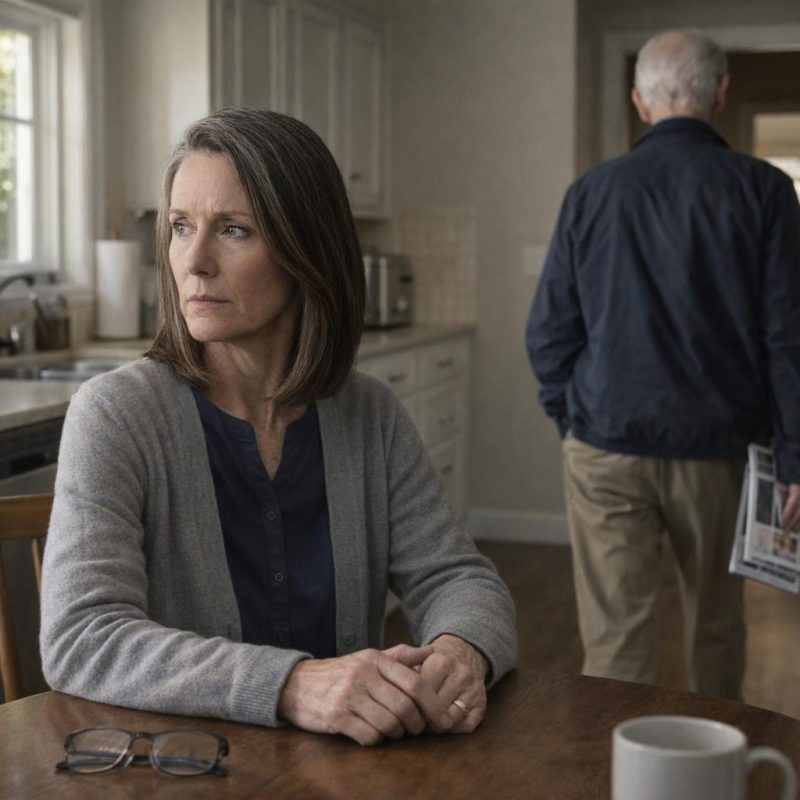 Image by RM AI
The Sorting
Frank left for an auction the following Saturday, same as always — out the door by seven-thirty with his thermos and his reading glasses and that particular look of mild excitement he got on auction mornings. I waited until his car turned off the street. Then I went to the garage. He kept his purchases on a set of metal shelving units along the back wall, the larger pieces on the floor in front of them, each one tagged with a small slip of paper in his handwriting — the date, the auction house, what he'd paid. I started at the left end and worked my way right. I lifted drawers out and checked the undersides. I ran my hands along the backs of frames. I tilted chairs and looked at the joints. I opened every door, every lid, every panel that would move. Most of it was exactly what it looked like — old furniture, worn and ordinary, the kind of things that accumulate in houses over generations and end up in auction lots because nobody knows quite what else to do with them. A small cabinet with a warped door. A mirror with a foxed glass. A set of wooden boxes that held nothing but the smell of old cedar. I worked through the whole collection slowly, and by the time I reached the last shelf I hadn't found anything that explained what Frank was looking for, but I hadn't stopped looking either. The garage was quiet around me, and the methodical work of it felt like the only thing I could do.
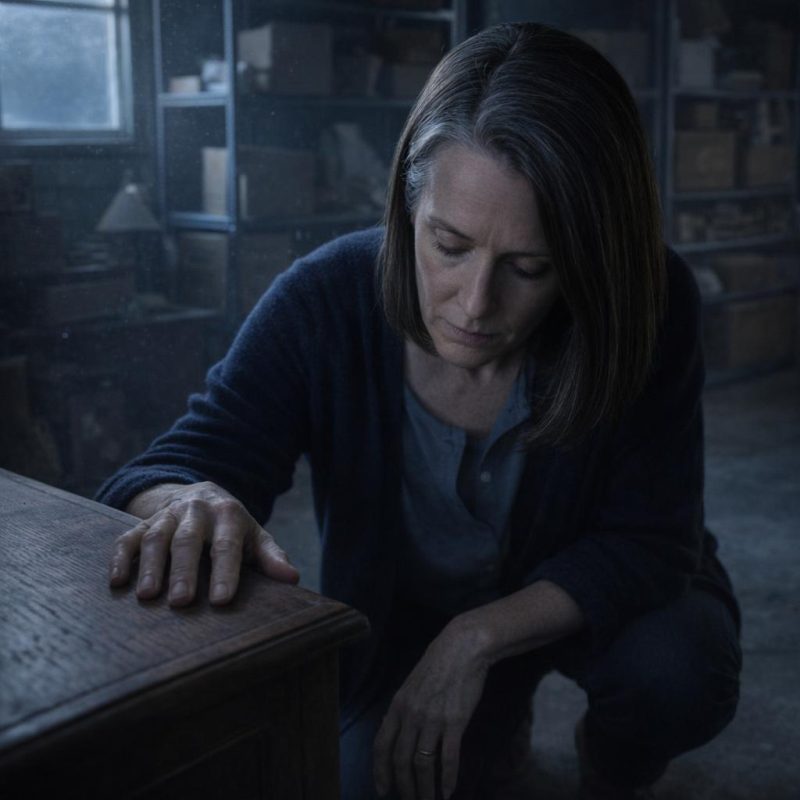 Image by RM AI
The Writing Desk
I almost missed the writing desk. It was tucked behind a blanket chest near the side door, small enough that I'd walked past it twice without really registering it. Frank's tag said he'd bought it six weeks ago. It was a pretty thing — slant-front, dark wood, the kind of piece that would have sat in a parlor and held correspondence and maybe a few small valuables. I lifted the front panel and looked at the interior. There were the usual small cubbyholes, a shallow central drawer, two narrow side compartments. I measured it with my eye the way I'd been doing all morning — exterior against interior — and something didn't add up. The left side of the interior was shallower than it should have been. I pressed on the back panel of the left compartment. Nothing. I pressed along the side. Nothing. Then I ran my thumb along the bottom edge of the compartment, feeling for a seam, and found a slight ridge I wouldn't have noticed if I hadn't been looking for exactly that kind of thing. I pressed down on one end of it. There was a soft click, and a narrow panel swung inward. Behind it was a space about the size of a shoebox, and inside that space, tied with a length of faded string, was a bundle of letters.
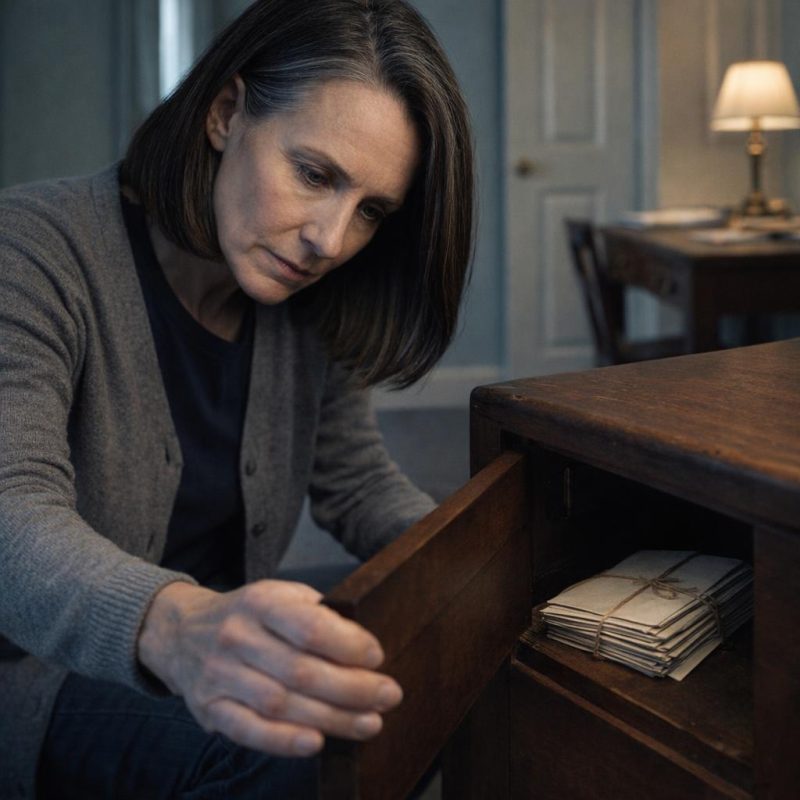 Image by RM AI
Clara's Letters
My hands were not steady when I lifted them out. The paper was old — cream-colored, slightly stiff at the edges, the kind that had been stored carefully and had held up because of it. I carried the bundle to the workbench near the window where the light was better and set it down. I worked the string loose slowly, not wanting to tear anything. The top letter was folded in thirds. I opened it. The handwriting was small and precise, the letters formed with the kind of careful attention that belongs to someone who thinks before they write. It was addressed to Frank — his full name, no surname, just Frank, at the top of the page. I turned to the bottom of the letter, where the signature was. One name, written in the same careful hand. Clara. I sat down on the garage floor without entirely meaning to, the letter open across my knees. The date at the top was from several years ago. I went back to the first line and began to read, and the first words she had written were: *I don't know how much time I have left, so I'll say the important thing first.*
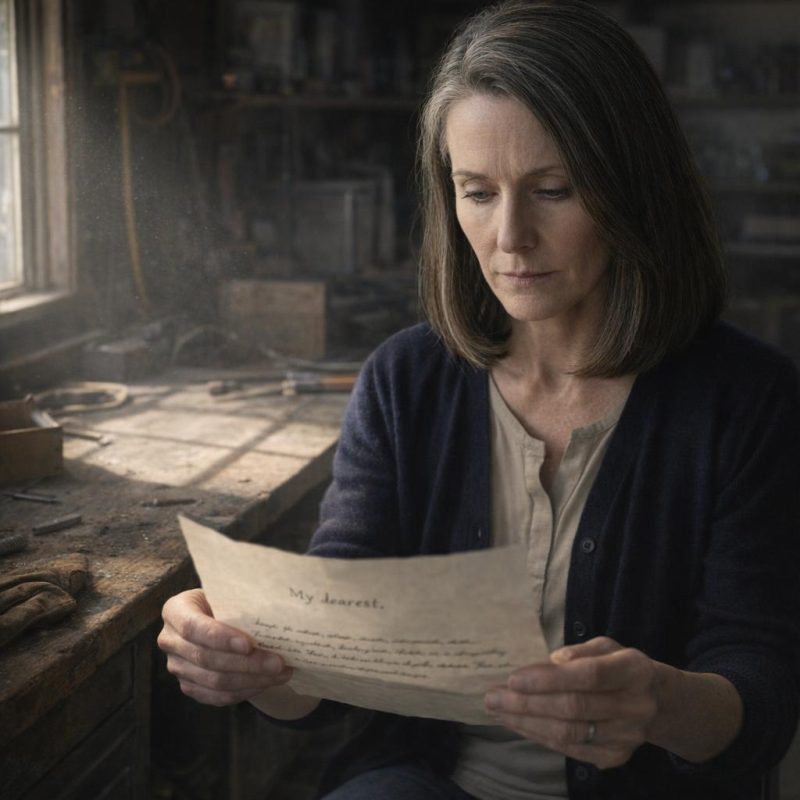 Image by RM AI
The Partnership Revealed
I read the first letter twice before I let myself breathe. Clara's handwriting was small and controlled, the kind that doesn't waste space, and her words were the same way — precise, purposeful, no room for sentiment that hadn't earned its place. She wrote about a deed registry she and Frank had tracked down in a county archive three states away. She wrote about a gap in the property records from the 1880s that she'd been trying to close for eleven years. She wrote about Frank's patience with microfilm readers and his talent for spotting inconsistencies in old ledger entries. There was nothing in it that made my chest tighten the way I'd expected. I set that letter down and picked up the next one. Same tone. She was reporting progress, asking Frank to check a specific courthouse index, thanking him for a photograph he'd sent of a surveyor's map. The third letter was longer, and somewhere in the middle of it she wrote, *You are the only person I've found who takes this as seriously as I do, and I am grateful for that every single day.* I sat with that sentence for a moment. It wasn't the gratitude of a woman in love. It was the gratitude of someone who had spent years being dismissed, finally finding a person who didn't dismiss her. I set the letters in my lap and looked at the garage wall without really seeing it. The fear I'd carried in from the house — the one with the ugly shape I hadn't wanted to name — had gone quiet somewhere between the second and third letter.
 Image by RM AI
The Final Discovery
I worked through the rest of the bundle methodically, the way you do when you're not sure what you're looking for but you'll know it when you find it. Most of the letters followed the same pattern — research updates, questions about specific records, occasional frustration when a lead went cold. Then I found one near the bottom of the stack, the paper slightly different from the others, a little thinner, the handwriting not quite as controlled. The date at the top was three years ago. I checked it twice. Frank had told me Clara passed away two and a half years back, which meant this letter had been written only months before she died. I could feel that in the writing itself — there was a tremor in it, not dramatic, just the small unevenness of someone whose hands weren't entirely cooperating anymore. But the words were sharp. She wrote that she had finally found what she'd been looking for. Not a clue, not a promising lead — the thing itself. She described going through a private collection that had been donated to a historical society in a small town she named, and finding, tucked inside a surveyor's ledger from 1887, a set of documents she had been tracing for the better part of two decades. She wrote: *I am shaking as I write this, Frank. I have it. I finally have the proof.* I read that sentence three times, and each time it landed differently.
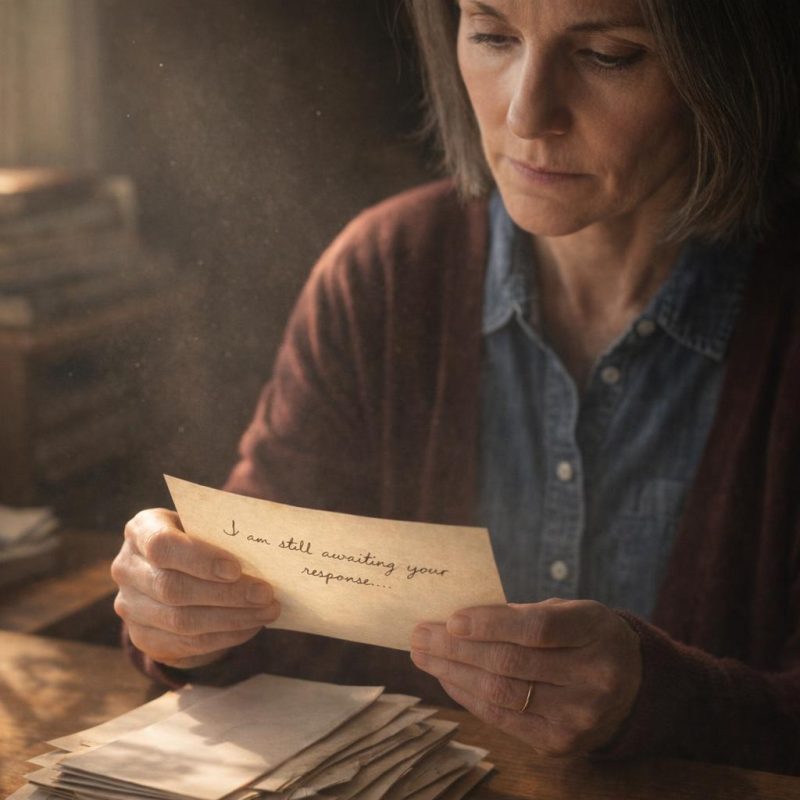 Image by RM AI
Not Money or Jewels
I kept reading. Clara's letter went on for four pages, and she didn't waste a single line of them. She explained what the documents actually were, and I'll admit I'd been half-expecting something cinematic — a treasure map, a cache of jewelry, a hidden will leaving a fortune to some forgotten heir. What she described was nothing like that, and somehow it was more startling. The documents were legal instruments. Deeds, transfer records, a surveyor's plat, and a set of affidavits — all dating from the 1880s, all pertaining to a single large tract of land in a rural county that had since been absorbed into a much larger parcel. Clara wrote that the land had changed hands in a transaction she believed was fraudulent, and that these documents were the original proof of ownership for the family that had been displaced. She estimated the tract at somewhere between four and six hundred acres. She wrote that the historical significance alone was considerable — this was a documented case of land fraud from the Reconstruction era, the kind that historians had theorized about for decades without hard evidence. But she also wrote, carefully and without drama, that depending on how the current title chain read, the documents might carry legal weight that went well beyond the historical. I set the letter down on the workbench. Four to six hundred acres. I thought about Frank spending his retirement haunting auction houses and county fairs, and I thought about what he must have been looking for every single time.
 Image by RM AI
The Wrongful Transfer
Clara's letter named the family. She'd traced them carefully — the original grantees, the parents who had worked that land, the children who had grown up on it and then lost it before they were old enough to fully understand what losing it meant. The transfer had happened in 1883. She described it plainly: a legal instrument that looked legitimate on its face but rested on a forged signature and a county clerk who had been paid to look the other way. The family had protested at the time. There were records of that too — petitions filed, a letter to a state official that went unanswered, a notice in a local newspaper that Clara had found on microfilm. None of it had mattered. The land passed to a new owner within the year, and within a generation the original family had scattered, and the story had gone quiet the way those stories do when the people telling them run out of energy and options. Clara wrote that subsequent owners had subdivided and sold portions over the decades, but that the core parcel — the original homestead acreage — had passed through only three sets of hands since 1883 and was currently held by a land trust. She believed the documents she'd found could reopen the question of that title. I sat in the garage with the letter across my knees and thought about a family filing petitions that no one answered, and a county clerk who had been paid to look away, and Clara spending twenty years making sure it didn't stay quiet forever.
 Image by RM AI
The Truth About Frank
There was one more letter at the very bottom of the bundle. It was the shortest of all of them — just a single page, and the handwriting was the most unsteady I'd seen. The date was six weeks before Frank had told me Clara passed. She wrote that she was running out of time and she knew it, and she didn't spend any words pretending otherwise. She described where she believed the documents were being held — a specific historical society, a specific collection, a specific box number she had noted before her health made travel impossible. She wrote that she had not been able to retrieve them herself and that she didn't know if she ever would. Then she wrote: *Frank, you are the only person I would trust with this. You know what it means. If I don't finish it, I hope you will.* I sat very still on the garage floor. I read that sentence again. And then I understood — not as a suspicion, not as a guess, but as a plain and simple fact — that Frank had not been chasing a lost love or a secret life or anything I had let myself imagine in the worst hours of the past few weeks. He had been going to auction houses and county fairs and historical societies every weekend because a dying friend had asked him to finish something she couldn't, and he had said yes, and he had kept saying yes, quietly, alone, for two and a half years. I looked down at Clara's last letter in my hands.
 Image by RM AI
Why He Never Told Me
I sat there long enough that the light through the garage window shifted. I wasn't angry. I'd expected to be — I'd been bracing for it, actually, the way you brace for a wave you can see coming — but it didn't arrive. What came instead was something quieter and harder to name. I kept thinking about Frank trying to explain this over dinner some ordinary evening. *I have a friend who died, and she spent twenty years trying to prove a land fraud from the 1880s, and she asked me to finish it, and I think I can find the documents if I keep looking.* I could hear exactly how that would have sounded. I could hear myself asking careful questions and watching his face and wondering, privately, whether this was grief talking or something else. He would have known that too. He knew me well enough to know it. So he'd carried it by himself — the auction catalogs, the county records, the weekends away — and he'd told me it was a hobby, which wasn't entirely a lie, just a version of the truth small enough to fit through a door without explanation. I thought about him driving home from those trips alone, whatever he'd found or hadn't found sitting with him in the cab of the truck, no one to tell it to. Thirty-eight years of marriage, and he'd felt he had to carry this one thing in silence. The garage was very still around me, and that stillness had a weight to it I hadn't expected.
 Image by RM AI
The Decision to Help
I put the letters back in order, the way I'd found them, and retied the string the way it had been tied. I was careful about it. I slid the bundle back into the compartment and pressed the panel until it sat flush again. I stood there with my hand flat against the wood for a moment, thinking. I could wait for Frank to come to me. I could let him find his own way to the conversation, the way I'd been waiting for weeks already, and maybe he would get there eventually and maybe he wouldn't. Or I could walk into the house, make dinner, and pretend I hadn't found anything at all, and we could go on the way we'd been going, which was not a way I wanted to go on. Neither of those felt right. What felt right was simpler than either of them: I knew what Frank had been doing, and I knew why, and I wanted to help him finish it. Clara had spent twenty years on this. Frank had spent two and a half more. I didn't know anything about land records or 1880s deed registries, but I knew how to find things, and I knew how to be stubborn, and I figured that was probably most of what the job required. I was still working out exactly what I was going to say when I heard the sound of Frank's truck turning into the driveway.
 Image by RM AI
Joining the Quest
He came through the side door and stopped when he saw me standing by the desk. I hadn't moved from the spot. He looked at my face, then at the desk, and something shifted in his expression — a kind of bracing, the way a person looks when they've been waiting a long time for something to finally arrive. I said, "I found the compartment." He didn't say anything. I reached over and pressed the panel, and it swung open, and I took out the bundle of letters and set them on the workbench between us. "I read them," I said. "All of them." Frank looked at the letters for a long moment. When he looked back up at me his eyes were tired in a way I recognized — the tiredness of someone who has been holding something heavy for too long. I told him I understood what he'd been doing. I told him I understood why he hadn't explained it. I said I wasn't there to argue about any of that. What I wanted, I told him, was to help him find what Clara had described in that last letter — the collection, the box number, the documents she hadn't been able to retrieve herself. I said we could do it together if he'd let me. Frank was quiet for a moment. Then he said, "Yes." Just that one word. But the way his face changed when he said it — the relief that moved through it, slow and unmistakable — settled into the space between us like something that had needed to be there for a long time.
 Image by RM AI
Studying the Clues
That night, Frank went out to the workshop and came back with a cardboard box I'd never seen before — the kind of box that looks like it's been moved a dozen times without ever being opened. He set it on the kitchen table and lifted the lid, and inside were Clara's notes. Not just the letters from the compartment, but pages and pages of research — photocopies, handwritten timelines, index cards with references cross-checked in red ink. I made a pot of coffee and we spread everything out across the table. Clara had been meticulous in a way that made my old teacher's heart ache a little. She'd traced a specific family estate through three generations of probate records, and at the end of the trail she'd written a single line in capital letters: THE COLLECTION WAS NOT DISPERSED. IT WAS STORED. Frank pulled up the auction listings he'd been tracking on his laptop and turned the screen toward me. There was an estate sale scheduled for the following Saturday — a property that matched Clara's descriptions so closely it felt less like coincidence and more like the research had simply been waiting for us to catch up to it. We sat there for a long time after that, going through the catalog page by page, Frank reading lot numbers aloud while I cross-referenced Clara's notes. The coffee went cold. Neither of us noticed. The kitchen light held us in its small warm circle, and the work between us felt steady and purposeful and right.
 Image by RM AI
The Target Item
Frank had kept Clara's physical description of the chest folded separately from the rest of the notes, tucked inside a plain envelope with her initials on the front. He smoothed it open on the table between us. She'd been precise about it — walnut construction, brass corner fittings in a particular quatrefoil pattern, a slightly recessed base that didn't match the proportions of the body. She'd noted the dimensions in centimeters, which told me she'd measured something she'd actually seen, or at least a photograph of it. She believed the chest had come from the original family estate before the collection was split up, and that whoever had it last hadn't known what they were sitting on. I took the auction catalog and started going through it methodically, lot by lot. Most of it was furniture and household goods — the ordinary accumulation of a long life. And then I stopped. Lot 47. The listing described it as a nineteenth-century storage chest in walnut with brass hardware, good condition, minor wear consistent with age. The photograph was small and a little blurry, the way auction photos often are, but the corner fittings caught the light in a way that made the quatrefoil pattern unmistakable. I looked up at Frank. He was already looking at me. Neither of us said anything for a moment. Then I turned the catalog around and set it in front of him, my finger on Lot 47.
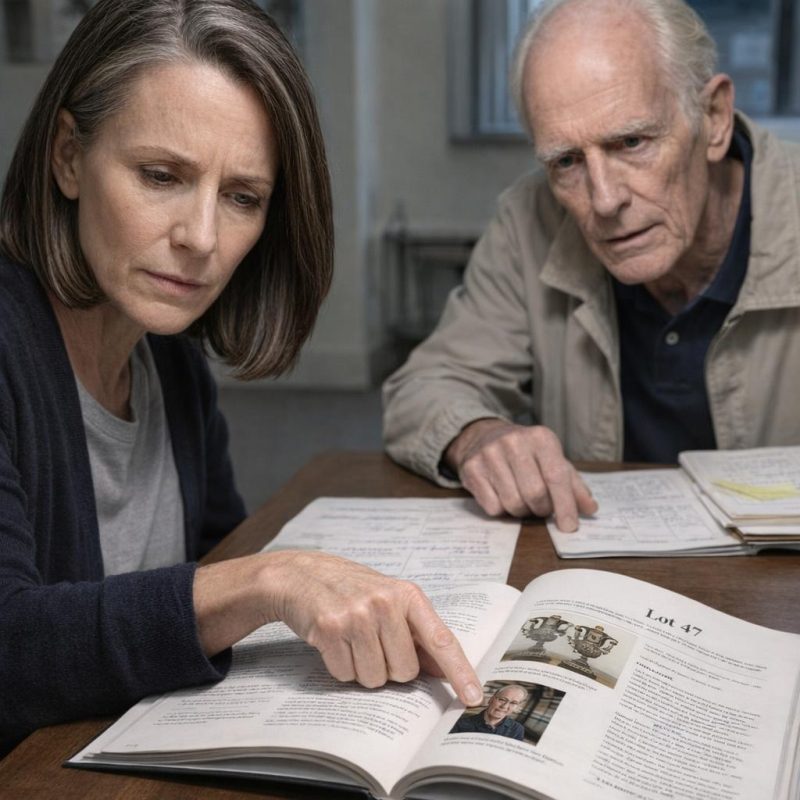 Image by RM AI
Auction Day
We got to the auction barn forty minutes before the doors opened, which meant we stood in the parking lot in the early morning cold with a thermos of coffee and a catalog Frank had already marked up in pencil. By the time they let us in, the room was filling fast — dealers with the practiced look of people who do this every weekend, a few private collectors, some folks who'd clearly just come to see what turned up. We registered at the front table and got our bidding numbers, and Frank folded his into his shirt pocket like it was something fragile. We found seats near the middle, close enough to see the lots clearly but not so close that we'd feel conspicuous. The auctioneer was a heavyset man with a microphone clipped to his collar and the kind of voice that could carry across a field. He moved through the early lots at a steady clip — a set of dining chairs, a sideboard, two boxes of miscellaneous glassware. Frank kept the catalog open on his knee and checked it every few minutes even though we both knew exactly where Lot 47 fell. I watched him tap his finger against the page each time, a small unconscious rhythm. The room was warm and smelled of old wood and dust and coffee from a folding table near the door. The auctioneer's voice rolled on, lot after lot, and the number 47 sat between us like something we were both trying not to look at directly.
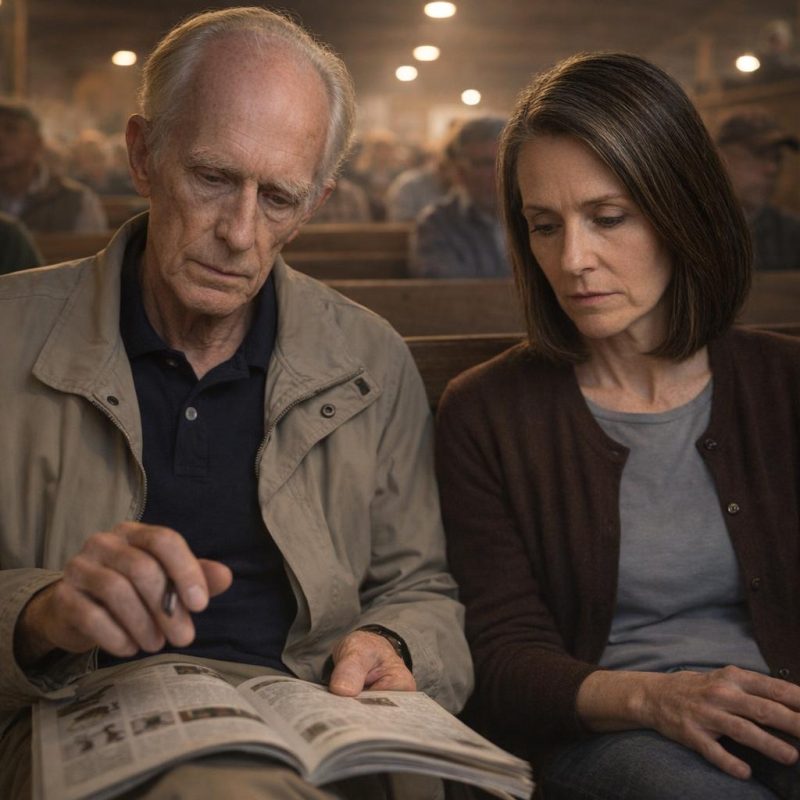 Image by RM AI
The Chest Appears
The auctioneer announced Lot 47 with the same flat efficiency he'd used for everything else — just a number and a brief description, storage chest, walnut, brass fittings, nineteenth century, good condition. Two workers in canvas aprons carried it out from the side room and set it on the low platform at the front of the room. I heard Frank pull in a slow breath beside me. The chest was exactly as Clara had described it. The walnut had darkened with age to a deep reddish brown, and the brass corner fittings caught the overhead lights in a way the catalog photograph hadn't done justice to. The quatrefoil pattern was clear from where we sat — four small lobes pressed into each fitting, worn smooth at the edges but unmistakable. The proportions were slightly off in the way Clara had noted, the base sitting a fraction too deep for the height of the body. A few people in the room leaned forward. A dealer two rows ahead of us shifted in his seat and uncapped his pen. The auctioneer described the hardware and the general condition, mentioned that the interior lining was intact, and said it would make a fine piece for a study or a library. He said it like it was just a chest. Frank's hand found my arm and gripped it once, briefly, and then let go. The auctioneer lifted his gavel and the chest sat there under the lights, waiting.
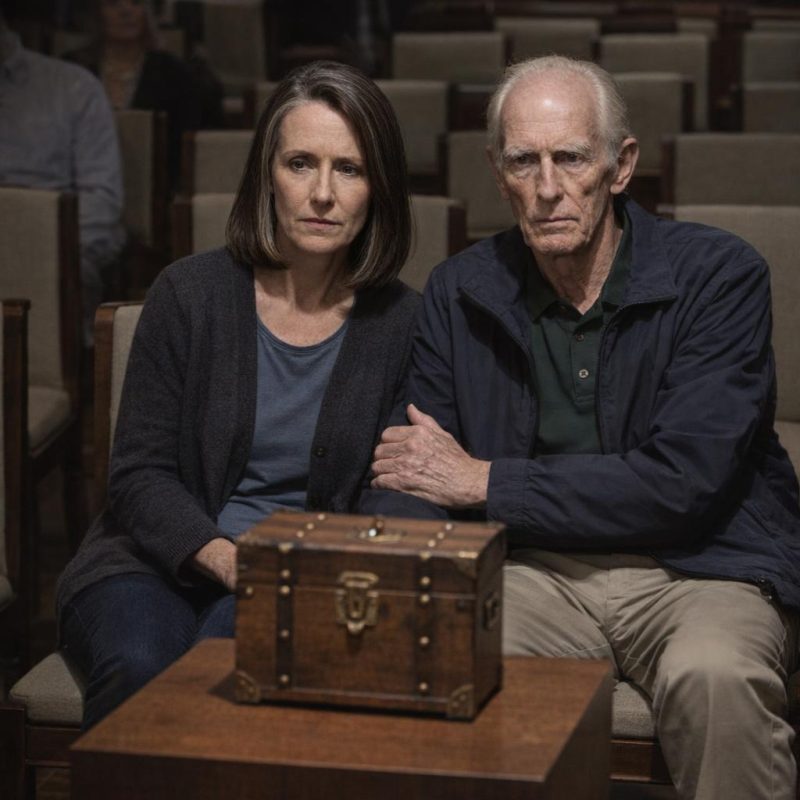 Image by RM AI
The Bidding War
Frank raised his number the moment the auctioneer opened at fifty dollars, and a hand went up almost simultaneously from a woman near the front — a dealer type, unhurried, like she had all morning. Seventy-five. Frank countered without hesitating. The man in the back row, the one who'd been watching the chest since it came out, came in at a hundred. Frank bid one-twenty-five. I kept my eyes moving between the other bidders, trying to read who was serious and who was testing the water. The woman near the front dropped out at one-fifty with a small shake of her head, the kind that means it's not worth the trouble. That left Frank and the man in the back. Two hundred. Two-fifty. I could feel Frank's focus beside me, steady and absolute, the way he gets when something matters to him completely. Three hundred. The man in the back didn't hesitate either, and I started doing the arithmetic in my head, thinking about what we'd agreed we could reasonably spend and where that number sat relative to where the bidding was going. Three-fifty. Four hundred. Frank raised his number again at four-fifty without looking at me, and I didn't say anything, because there was nothing to say. The man in the back came back at five hundred, and the room had gone quiet in the way auction rooms do when everyone else has stopped and the real contest is down to two people and a number that keeps climbing.
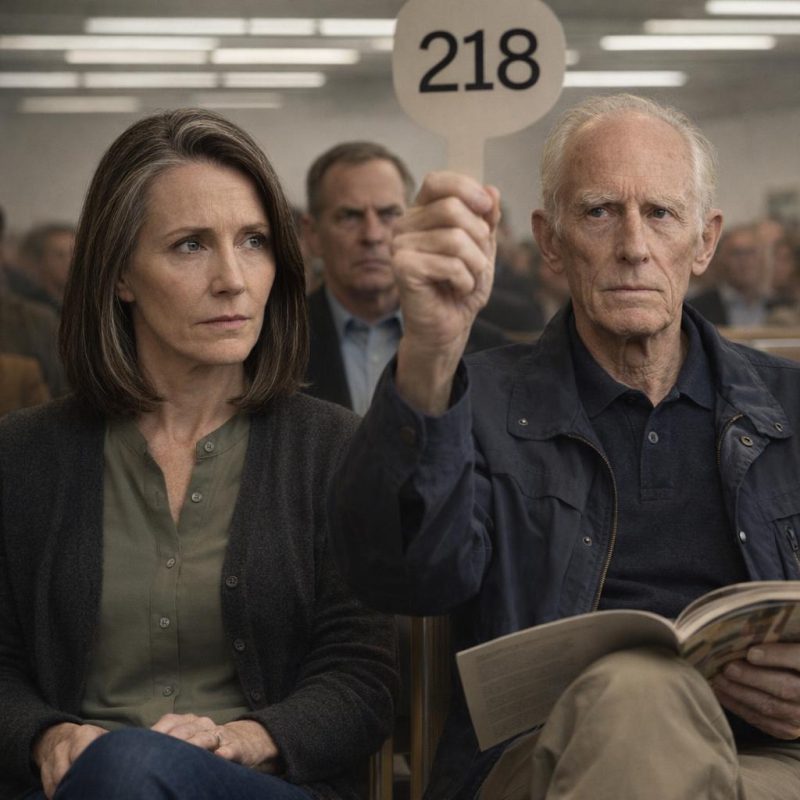 Image by RM AI
The Final Bid
Five hundred on the floor, the auctioneer said, looking between Frank and the man in the back row. The man raised his number. Five-twenty-five. Frank raised his without a pause. Five-fifty. I was holding the edge of my seat with both hands and I didn't realize it until I felt the vinyl biting into my palms. The auctioneer looked to the back row. The man in the back held his pen loosely, tapping it once against his catalog, and then he set it down on his knee and gave a small, definitive shake of his head. The auctioneer looked back at Frank. He raised his gavel and began the count — going once, his voice unhurried, the room absolutely still — going twice — and I stopped breathing somewhere in that pause, the whole morning narrowing down to the chest sitting under the lights and Frank's number in the air and the sound of the gavel coming down — sold.
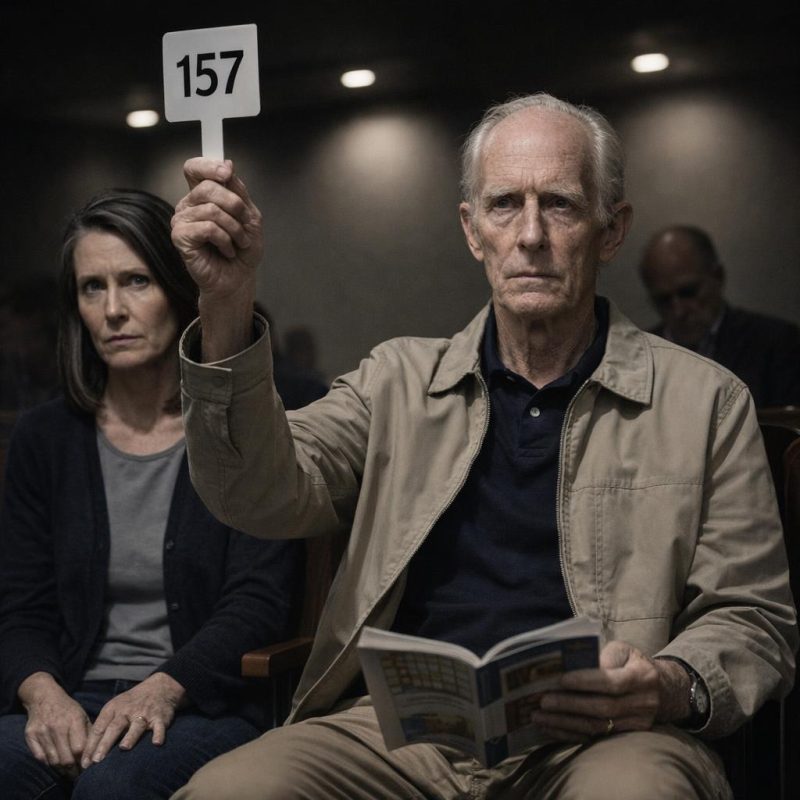 Image by RM AI
Taking Possession
Frank paid at the cashier's table while I waited with the chest, one hand resting on the lid without quite meaning to. It was heavier than it looked — solid walnut will do that — and when Frank came back and we lifted it together I felt the weight shift slightly, a small internal movement that made us both go still for a second and look at each other. We carried it out to the truck carefully, one of us on each end, and Frank lowered the tailgate and we slid it in and he latched the gate behind it. Standing in the parking lot, I said we could find a quiet corner of the lot and just take a quick look. Frank shook his head. He said he wanted to do it right, at home, with Clara's notes in front of them and enough time to be careful. I knew he was right. I also knew the drive home was going to feel very long. It did. We barely spoke. The chest rode in the truck bed behind us, and I was aware of it the whole way — the way you're aware of something you've been looking for without knowing it, something that has been waiting in the dark for longer than you've been searching. Frank kept both hands on the wheel. The afternoon light came through the windshield flat and golden, and the weight of what we were carrying home settled over us both, quiet and immense.
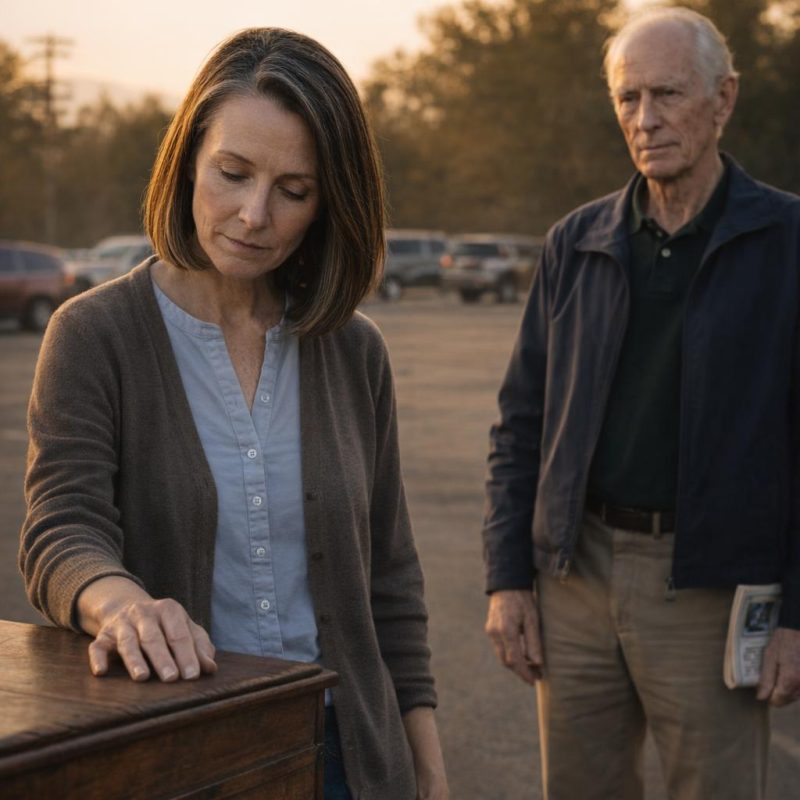 Image by RM AI
The Hidden Compartment
We carried the chest into the garage and set it on Frank's workbench under the good light. He went inside and came back with Clara's notes — the specific page she'd written about the compartment, the one with the small diagram in the margin showing the panel location and the direction of pressure needed to release it. He read it twice, then crouched down and ran his fingers along the base of the chest, feeling for the seam she'd described. I stood back and let him work. His hands were steady but I could see the effort that steadiness was costing him. He pressed on the lower left panel, firm and slightly inward the way the notes specified, and there was a soft mechanical click — the kind of sound that is very small and very final at the same time. A section of the base swung outward on a hidden hinge. Frank reached inside and lifted out a leather document case, dark with age, the strap still buckled. His hands were shaking now and he didn't try to hide it. He set the case on the workbench and looked at me, and I looked at him, and neither of us spoke. He unbuckled the strap and folded back the cover, and inside were documents — pages of them, dense with handwriting, edges browned but intact, exactly where Clara had believed they would be. The garage was very quiet around us, and the only sound was the soft movement of old paper as Frank lifted the first page into the light.
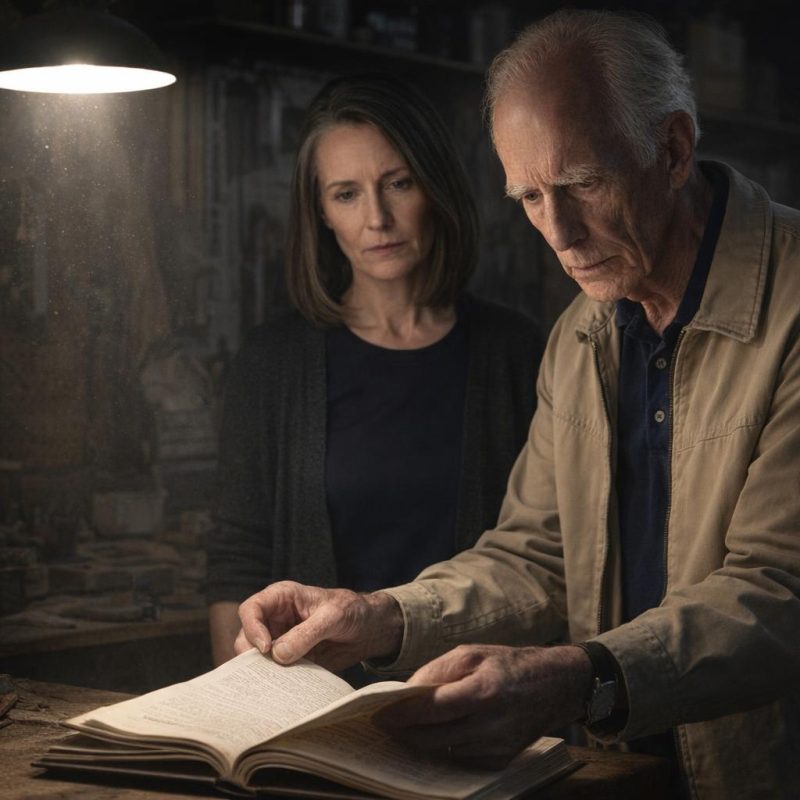 Image by RM AI
Proof of Ownership
Frank unfolded the first document with the kind of care you'd use on something you already knew was irreplaceable. The paper was thick and cream-colored, browned at the edges but holding together, and the ink was still dark enough to read without straining. It was a deed. Dated 1882. He held it under the workbench light and I leaned in beside him, and we read it together — the names of the original family, the legal description of the land, the signatures of the witnesses, all of it precise and official in the way that only documents from that era managed to be. There were more papers beneath it. A second deed. A transfer document with different names, dated eleven years later. Then a packet of letters, folded small, the handwriting cramped and urgent. Frank read one aloud in a low voice and stopped halfway through. The letter described the arrangement in plain terms — money changing hands, a family pressured to sign, a transfer that was dressed up as legal but wasn't. Clara had found the correspondence that proved the deception, and she'd kept it with the deeds so the whole story would be in one place. Frank set the letter down carefully. I picked up the original deed again and read the names at the top — the family who had owned that land before anyone took it from them.
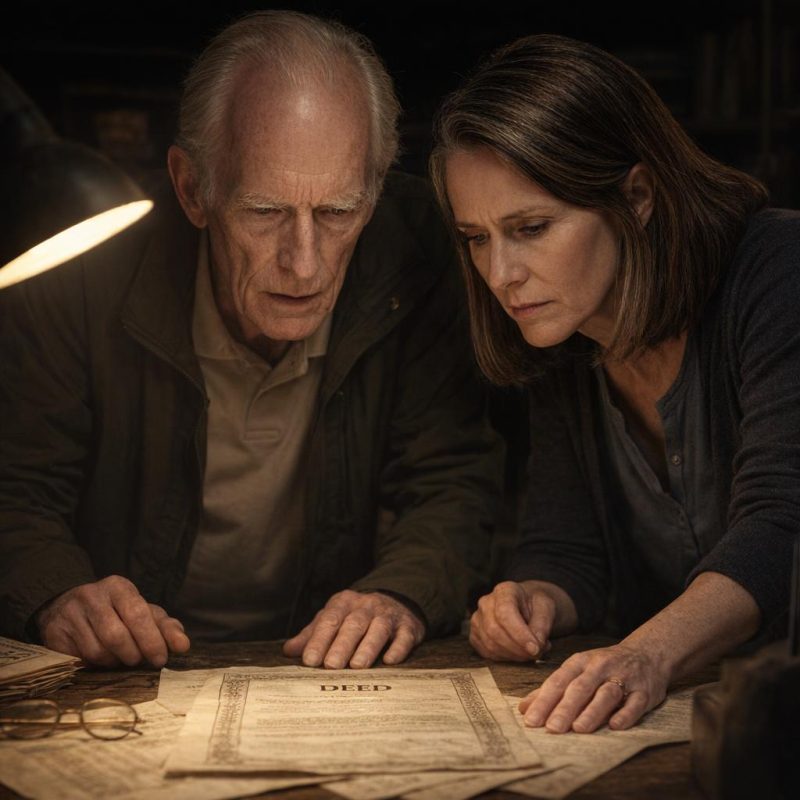 Image by RM AI
The Aftermath
Frank called the historian he knew — a man named Gerald who ran the county historical society and had helped him track auction provenance before. Gerald came out the next morning, looked at the documents for about forty-five minutes without saying much, and then sat back and told us they were genuine. He said it quietly, like he understood the weight of it. Within a week, Gerald had contacted two attorneys who specialized in historical land claims, and they'd reached out to a genealogist who'd already been looking for descendants of the original family. It moved faster than I expected. There were phone calls, then visits, then a preservation specialist who came with archival sleeves and flat storage boxes and spent an afternoon carefully housing each document. Frank hovered nearby the whole time, watching the papers get handled by people who knew what they were doing, and I could see the relief in him — the relief of something fragile finally being held by the right hands. I made coffee and answered questions when I could and mostly stayed out of the way. The documents went to a climate-controlled facility for formal authentication. The attorneys began their work. The genealogist found three families with documented ties to the original deed holders. I stood in our kitchen one evening after everyone had gone and thought about Clara spending decades on this alone, and the house was quiet around me in a way that felt earned.
 Image by RM AI
The Settlement
The settlement took four months to finalize. The current landowners, to their credit, didn't fight it — their attorneys reviewed the documents, consulted their own historians, and agreed that the transfer had been fraudulent. Three families received compensation. The original deed and all supporting documents were donated to the state historical society, where Gerald told us they'd be part of a permanent exhibit. Frank and I drove out to see the land one afternoon, just the two of us, and stood at the edge of it without saying much. It was ordinary-looking land — fields, a tree line, a low hill in the distance — but it didn't feel ordinary anymore. When we got home, I was going through the last of Clara's papers, the ones we'd set aside during the legal process, and I found an envelope I hadn't opened. It was sealed, with Frank's name on the front in Clara's handwriting. He was in the other room. I opened it anyway — I think he would have wanted me to — and inside was a single folded page. Clara had written it sometime in the last year of her life. She talked about the research, about what she hoped would happen, and then near the end she wrote about Frank. She said she had told no one else about the chest or the compartment or what she believed was inside it, because there was only one person she had ever trusted completely to see it through.
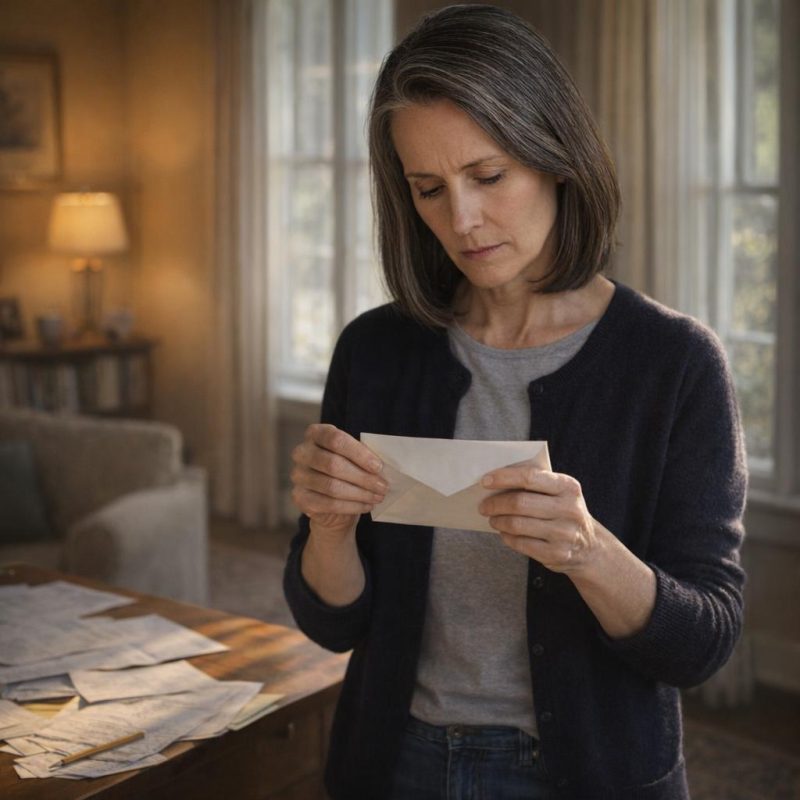 Image by RM AI
The Truth About Clara
I thought about Marilyn a lot in the weeks after that — the woman who had walked up to me at the auction and said Frank's name like she was delivering news I needed to hear. She'd heard his stories about Clara and drawn the conclusion that anyone might draw: a man that devoted to finding something for someone had to be in love with her. It was an easy mistake. Frank had spent years attending auctions, asking questions, following leads, keeping Clara's research alive after she was gone. From the outside, it probably looked like grief for a lost love. I understood now that it was something else entirely — it was a promise kept, quietly and without any expectation of recognition, to a friend who had trusted him with the most important work of her life. I asked Frank about it one evening, directly, the way I'd learned to ask him things. He said Clara had been one of the most remarkable people he'd ever known, and that when she got sick and realized she wasn't going to finish it herself, she'd made him swear he would. He said he hadn't told me because he hadn't known how to explain it without it sounding like more than it was. I believed him. I'd believed him for a while by then, but hearing him say it out loud settled something in me that had been sitting at an angle for months. We agreed to cut back on the auctions. The search was over, and what was left was just us.
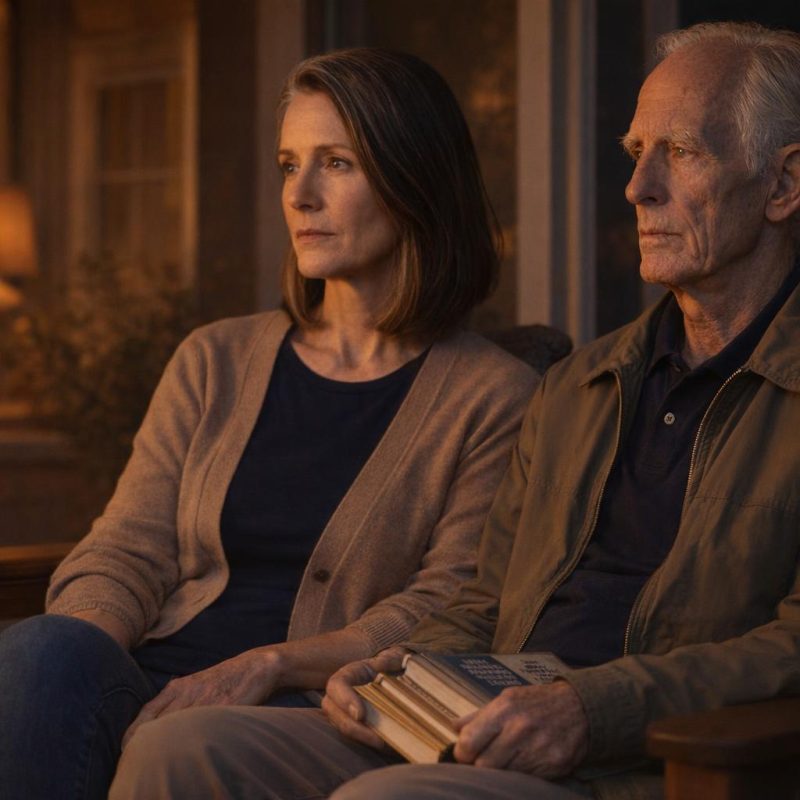 Image by RM AI