My Mother-in-Law Insisted In Staying With Us For The Holidays But What We Saw On The Nanny Cam Made Us Kick Her Out
My Mother-in-Law Insisted In Staying With Us For The Holidays But What We Saw On The Nanny Cam Made Us Kick Her Out
The Dreaded Announcement
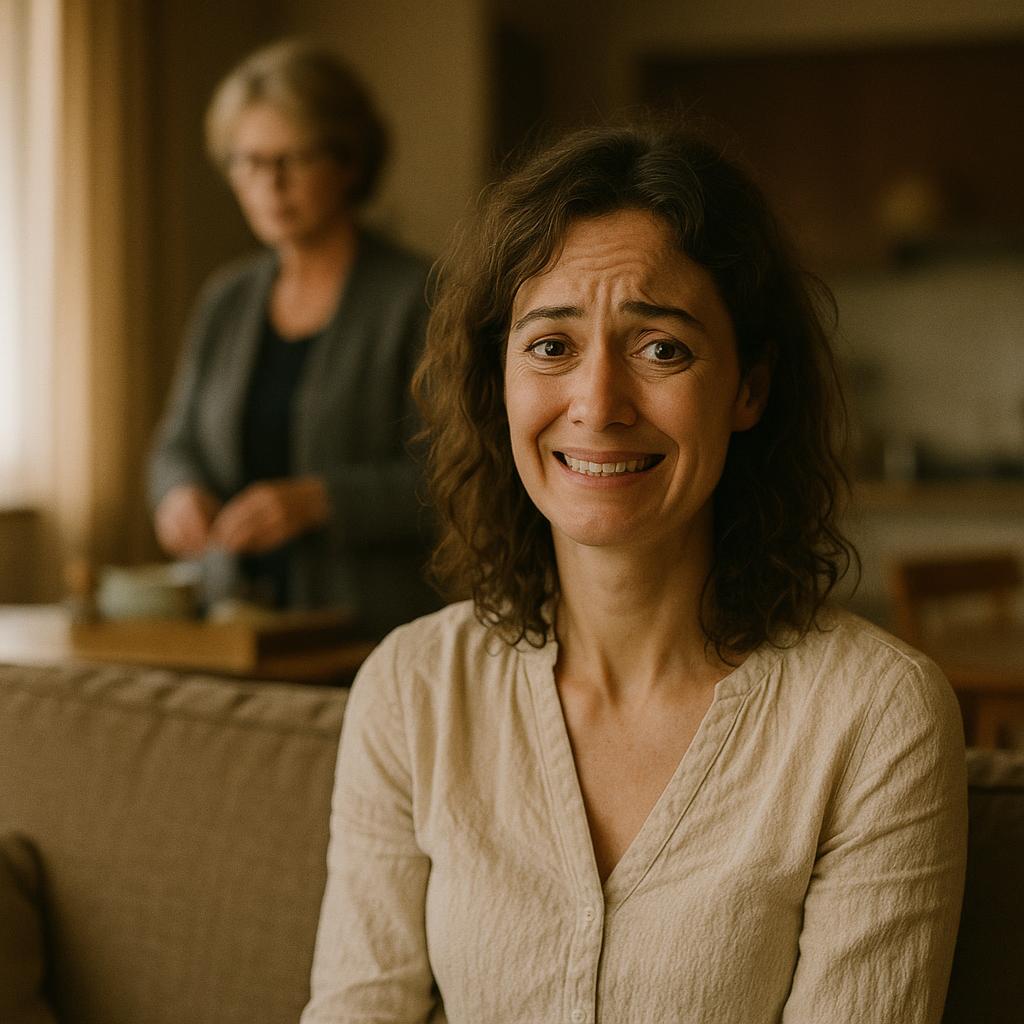
When Mark announced that his mother wanted to spend the holidays with us, I swear my soul left my body for a solid five seconds. 'Of course, that would be lovely,' I heard myself say, smiling like I'd just won the mother-in-law lottery instead of the booby prize. I'm Sarah, 34, and after eight years of marriage, I've perfected the art of the fake enthusiasm smile. Linda isn't your garden-variety difficult mother-in-law – she's an Olympic-level meddler with a PhD in passive-aggressive comments. She doesn't just criticize; she 'suggests improvements' to everything from how I fold laundry to how I parent our six-year-old daughter, Sophie. Mark, bless his oblivious heart, never notices. 'Mom's just trying to help,' he always says, completely missing how she rearranges our kitchen cabinets or adds ingredients to meals I'm cooking without asking. Now she was coming for a WEEK. Seven days. 168 hours of Linda's 'helpful suggestions' and thinly veiled criticisms. I took a deep breath and reminded myself that I'm a grown woman who manages a team of twelve at work. Surely I could handle one sixty-something woman with boundary issues for seven days. But as I marked the dates on our calendar, I couldn't shake the feeling that this visit was going to be different – and not in a good way.
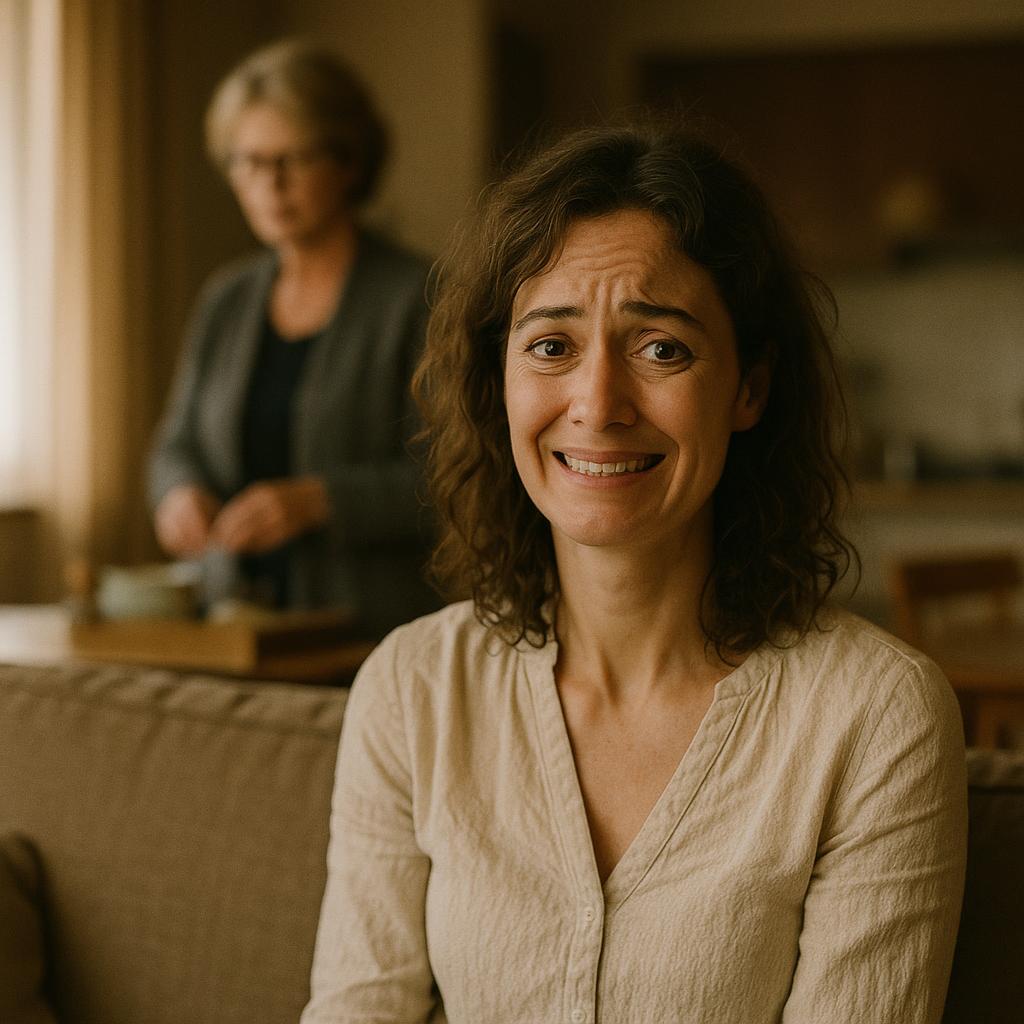 Image by RM AI
The Reluctant Agreement
Mark kept insisting it would only be for a week. 'She'll behave this time, I promise,' he said, giving me that hopeful puppy-dog look that still works after all these years. I wanted to believe him, but history wasn't exactly on our side. Last Easter, Linda reorganized our entire pantry while I was in the shower. The Christmas before that, she 'fixed' the turkey I'd been marinating for two days because it 'needed her special touch.' And don't get me started on how she corrects Sophie's table manners while ignoring her own grandson's ketchup-covered face. But what could I say? 'Sorry, I'd rather get a root canal than host your mother for the holidays'? So I nodded and agreed, mentally preparing myself for seven days of biting my tongue until it bled. 'It'll be fine,' I told myself, scrolling through meditation apps on my phone. 'I'm a grown woman. I can handle this.' Besides, saying no would just confirm what Linda probably already thought—that I was the grinchy daughter-in-law trying to keep her from her precious son and granddaughter. As I helped Mark clear out the guest room, I couldn't shake this weird feeling in my gut that this visit was going to be different from all the others. And not in the 'Christmas miracle' kind of way.
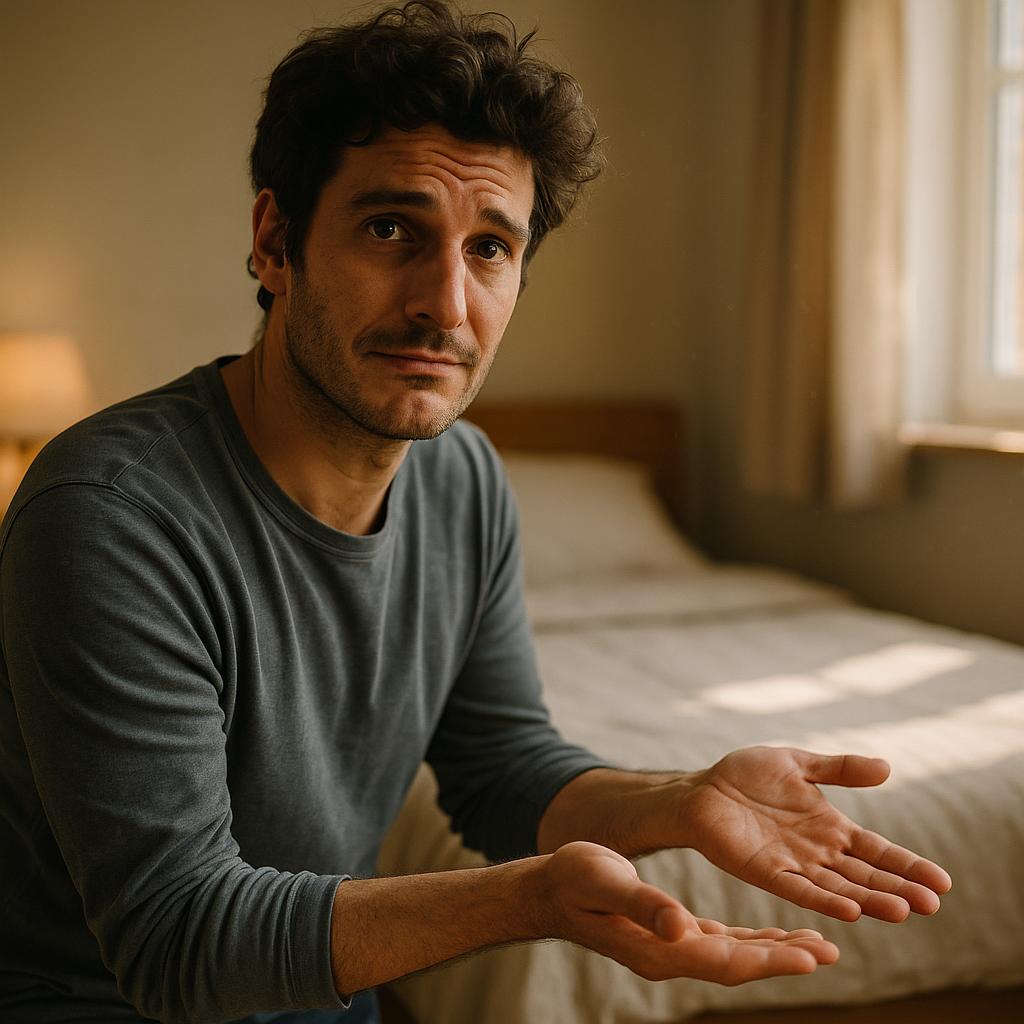 Image by RM AI
The Grand Arrival
Linda arrived exactly at noon on December 23rd, as if she'd timed it to interrupt our lunch. I watched from the kitchen window as Mark helped her drag two massive suitcases up our driveway—enough luggage for a month, not a week. 'Here we go,' I muttered, wiping my sweaty palms on my jeans before plastering on my best welcome smile. The moment she stepped through our front door, the air in our home physically changed—like someone had cranked up the pressure cooker. 'My baby!' she exclaimed, throwing her arms around Mark and holding him in a bear hug that lasted a solid thirty seconds. When she finally released him, she turned to me with a smile that didn't quite reach her eyes. 'Sarah,' she said flatly, giving my shoulder the kind of pat you'd give a neighbor's dog you're not sure about. Not a hug. Not even a proper handshake. Just... a pat. Like I was the friendly UPS driver instead of her son's wife of eight years. 'I hope you don't mind, but I brought my special Christmas tablecloth,' she announced, already digging through her bag. 'The one you used last year was... interesting.' And there it was—not even five minutes in, and the passive-aggressive comments had begun. I caught Mark's eye, silently pleading for backup, but he was already carrying her bags upstairs, oblivious to the ice age that had just descended upon our living room. What I didn't realize then was that the shoulder pat was going to be the warmest interaction we'd have all week.
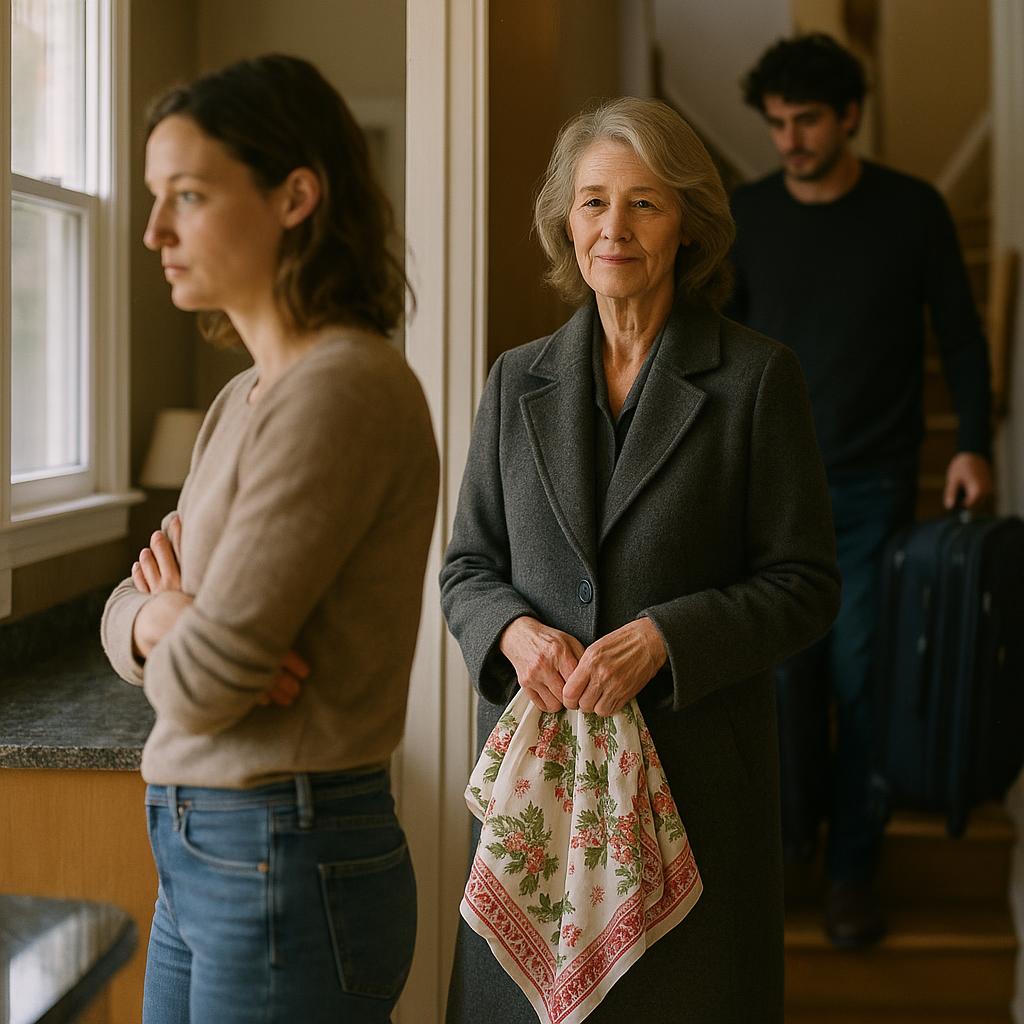 Image by RM AI
The First Signs of Trouble
The first few days with Linda were exactly what I'd expected – a masterclass in passive-aggressive behavior wrapped in holiday cheer. She unpacked her infamous fruitcake (the one that's so dense it could double as a doorstop) and placed it center stage on my carefully arranged dessert table. 'I brought this because I wasn't sure what you'd have prepared,' she announced, eyeing my homemade cookies with suspicion. When I decorated the tree with the ornaments Mark and I had collected over our years together, she sighed dramatically. 'It's... eclectic, dear. In our family, we always had a color theme.' But the moment that really made my blood boil came when she cornered Sophie in the kitchen while I was preparing dinner. 'Let Grandma show you how to make REAL Christmas cookies,' she stage-whispered, loud enough for me to hear. 'Mommy doesn't know how to make them the right way.' I caught Mark's eye across the room, silently pleading for intervention. He just shrugged and mouthed, 'She doesn't mean it like that.' But something felt different this time – there was an edge to Linda's behavior that went beyond her usual meddling. And then I started noticing things going missing around the house.
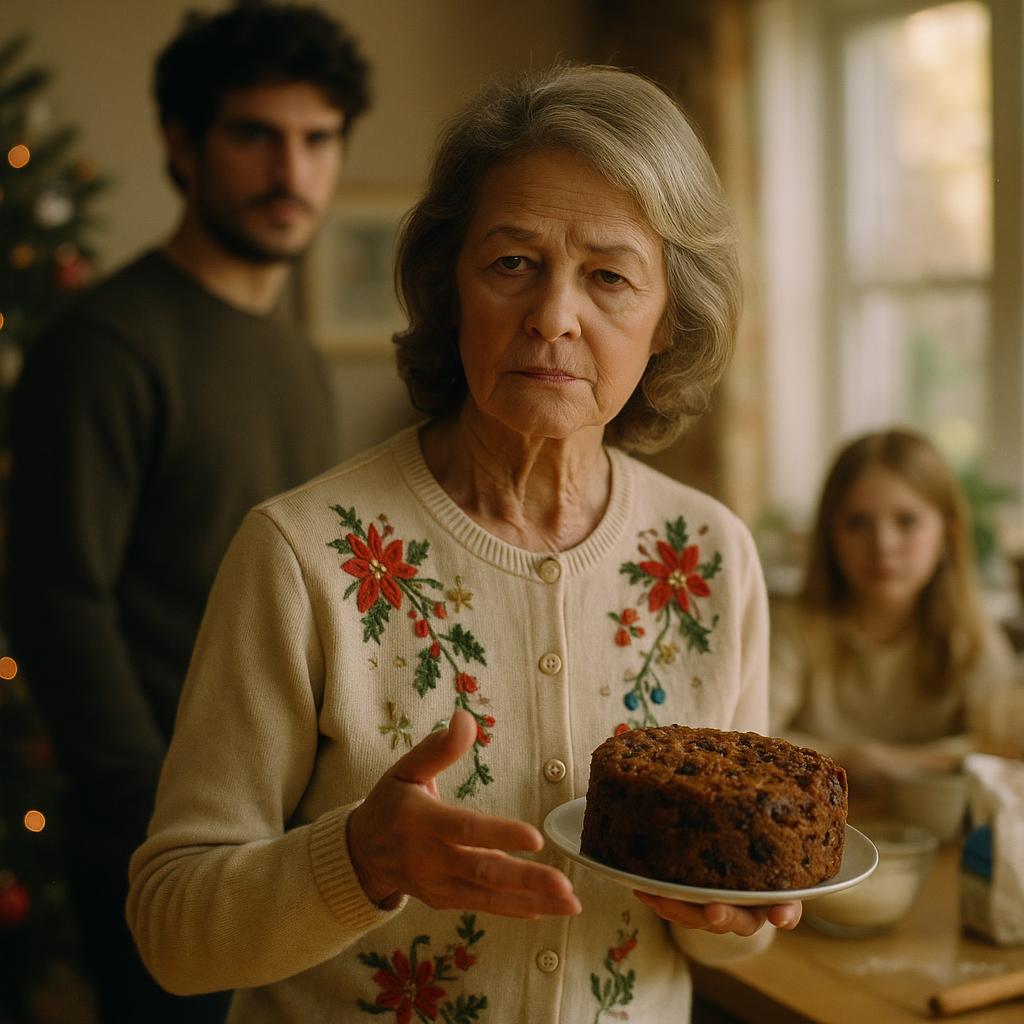 Image by RM AI
Small Mysteries
By day three of Linda's visit, I started noticing odd things happening around the house. I'd pour myself a glass of wine to help survive another evening of Linda's 'helpful suggestions,' only to return from the bathroom to find it mysteriously empty. 'Did you finish my wine?' I asked her once, and she looked at me like I'd accused her of grand theft. 'I don't touch that stuff,' she sniffed, though I swore I caught a whiff of my favorite Cabernet on her breath. Then there were the hushed conversations between her and Sophie that would abruptly stop whenever I entered a room. 'Just grandmother-granddaughter secrets,' Linda would say with a smile that didn't quite reach her eyes. One morning, I came downstairs to find snack wrappers scattered across the couch and the TV still warm, though Linda swore she'd been in bed since 9 PM. 'Maybe you forgot to turn it off,' she suggested, raising an eyebrow as if questioning my sanity. I knew I hadn't. Mark thought I was being paranoid, but something felt deeply wrong. It was like living with a ghost who rearranged things when you weren't looking – except this ghost wore floral perfume and criticized my pot roast. What really sent chills down my spine, though, was when Sophie started avoiding eye contact with me and clinging to my side whenever Linda wasn't around.
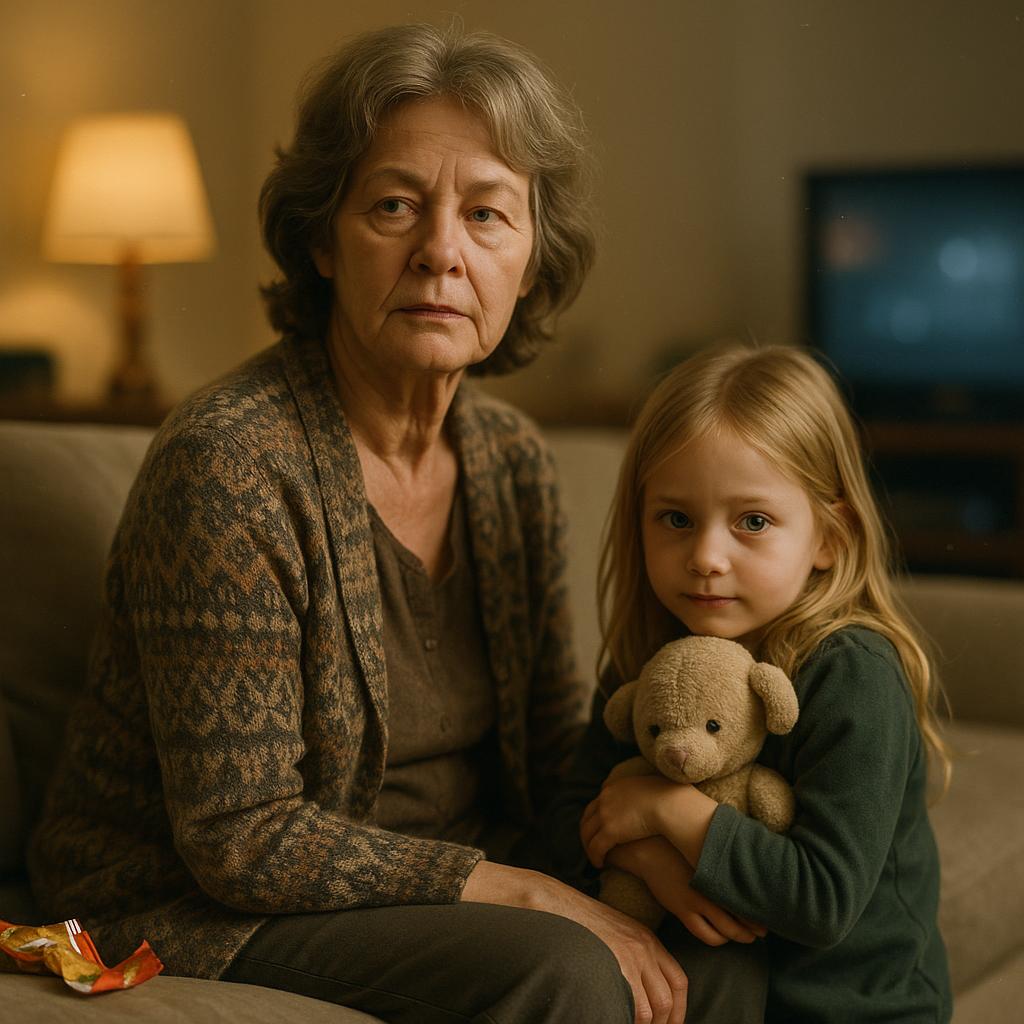 Image by RM AI
Sophie's Secret
Two days after Christmas, I noticed something was seriously wrong with Sophie. My normally chatty, energetic six-year-old had become a shadow of herself – quiet, withdrawn, and practically glued to my hip whenever Linda wasn't around. When she thought I wasn't looking, I'd catch her staring at her grandmother with these wide, anxious eyes. That evening, while giving her a bath, I gently asked what was bothering her. Sophie froze, her little hands stopping mid-splash. 'I can't tell you,' she whispered, her bottom lip trembling. 'Grandma told me not to tell.' My stomach twisted into a knot. I kept my voice calm despite the alarm bells ringing in my head. 'Honey, you can always tell Mommy anything. No matter what.' Sophie looked up at me, tears welling in her eyes. 'She'll be mad,' she whispered so quietly I barely heard it. 'She says you're not a good mommy and...' She stopped herself, looking terrified. I wrapped her in a towel, my mind racing. What exactly had Linda been telling my daughter behind closed doors? And more importantly – what was she planning that Sophie was so afraid to reveal?
 Image by RM AI
Raising the Alarm
That night, after Sophie was finally asleep, I cornered Mark in our bedroom. 'We need to talk about your mother,' I said, my voice barely above a whisper. I told him everything – Sophie's fear, the missing items, the strange behavior. For once, Mark didn't immediately jump to Linda's defense. 'I've noticed it too,' he admitted, running his hand through his hair. 'She's been... different this visit.' He mentioned how she'd been disappearing into the guest room for hours, claiming to be 'resting,' but every time we walked past, we could hear faint talking or sometimes even laughing. 'At first I thought she was on the phone,' he said, 'but when I asked who she was talking to, she got defensive.' I could see the conflict in his eyes – the little boy who loved his mom battling with the husband who needed to protect his family. 'Mark, I'm genuinely worried,' I said, squeezing his hand. 'This isn't just her usual boundary-crossing. Something feels wrong.' He nodded slowly, the reality sinking in. 'Let's give it another day,' he suggested, though I could tell he was stalling. 'If things don't improve, we'll confront her together.' What neither of us realized was that we already had all the evidence we needed, silently recording in our living room.
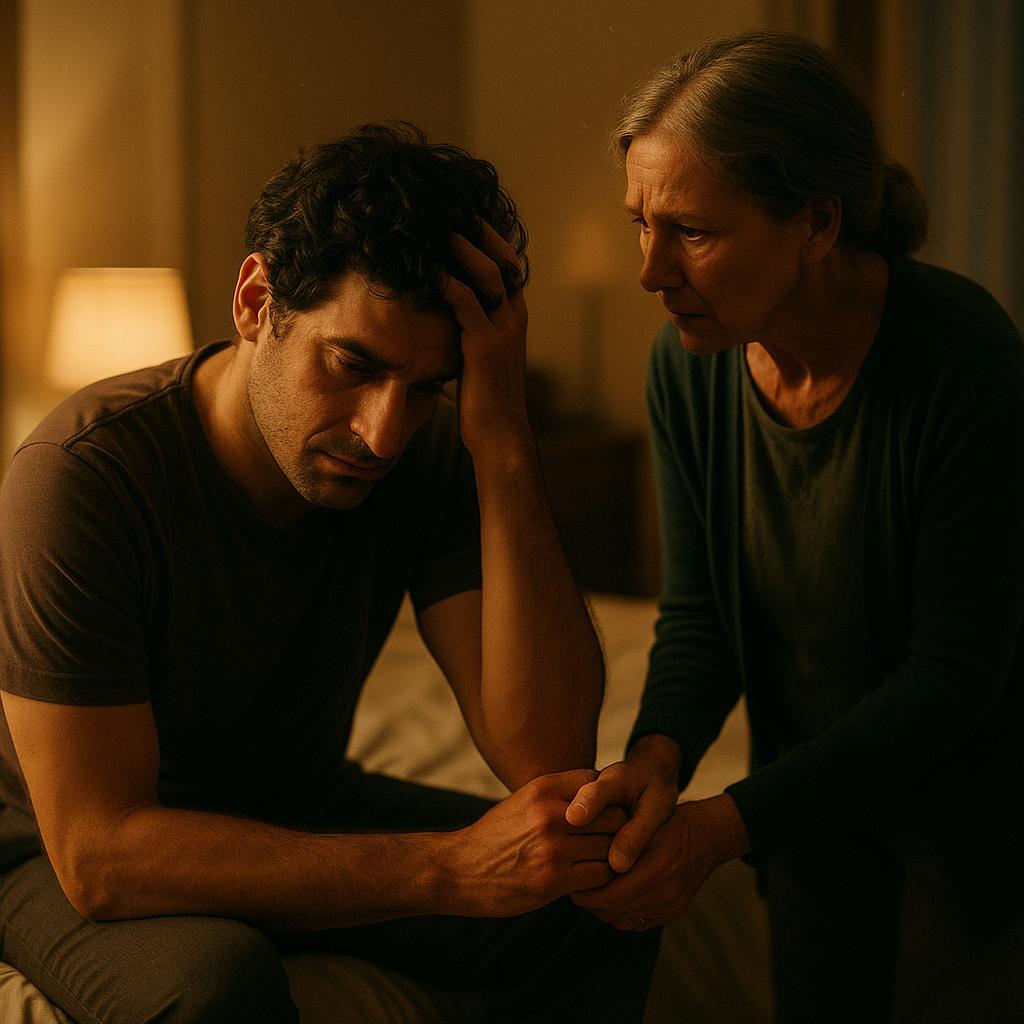 Image by RM AI
The Forgotten Nanny Cam
The next morning, after a restless night of wondering what Linda was really up to, I had a sudden revelation while watching Mark and Sophie head out to the park. The nanny cam! How could I have forgotten? We'd installed it in the living room months ago to keep an eye on Sophie during playtime, and I'd completely forgotten it was still running. My heart raced as I grabbed my laptop and settled onto our bed, hands trembling slightly as I pulled up the app. Part of me felt guilty for essentially spying on my mother-in-law, but the other part—the part that saw the fear in my daughter's eyes—needed answers. I scrolled back through the footage, starting from the day Linda arrived. At first, everything seemed normal: Linda reading magazines, watching TV, wrapping presents. But then I noticed a pattern emerging. Every night, after Mark and I went to bed, she'd wait about thirty minutes before sneaking downstairs. My stomach tightened as I clicked on one of the nighttime clips. What I saw next made my blood run cold.
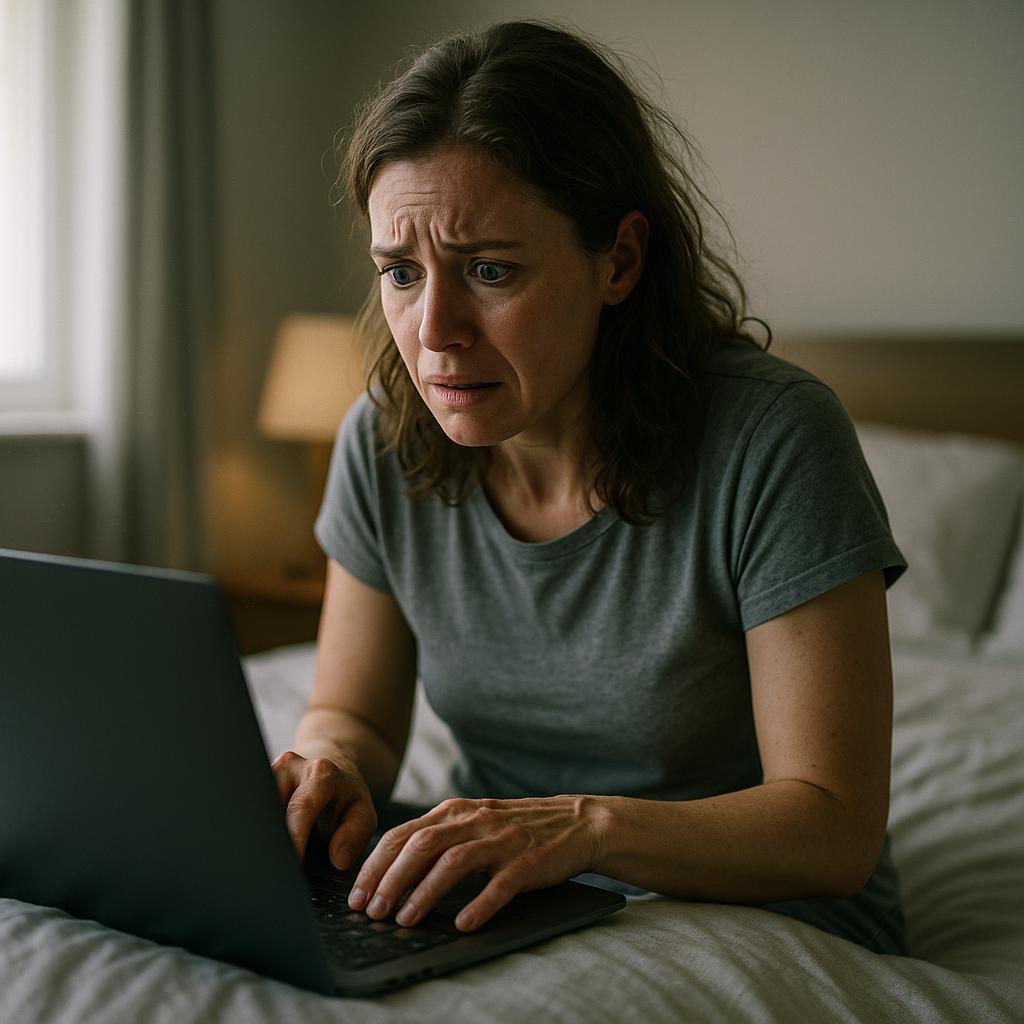 Image by RM AI
The Footage Reveals
I sat cross-legged on our bed, laptop balanced precariously on my knees, as I scrolled through days of nanny cam footage. My finger hovered over the trackpad, heart pounding with each click. At first, everything seemed painfully normal – Linda flipping through magazines, rearranging my carefully placed decorations, or watching those Hallmark Christmas movies she loves. But around the third night of recordings, I noticed something that made the hair on my arms stand up. Every single night, like clockwork, she'd wait exactly 30 minutes after we went upstairs before creeping down to the kitchen. Sometimes she'd stand in the center of the room, whispering to herself – her lips moving rapidly as if having an intense conversation with an invisible person. Other times, she'd methodically open every drawer in our kitchen, examining the contents before carefully putting everything back exactly as she found it. In one particularly disturbing clip, she pulled out a small notebook and appeared to be writing something down while glancing repeatedly at our family photos. I fast-forwarded through hours of footage, my unease growing with each new clip. But nothing prepared me for what I saw next – footage from 1:30 AM three nights ago that made my stomach drop to the floor.
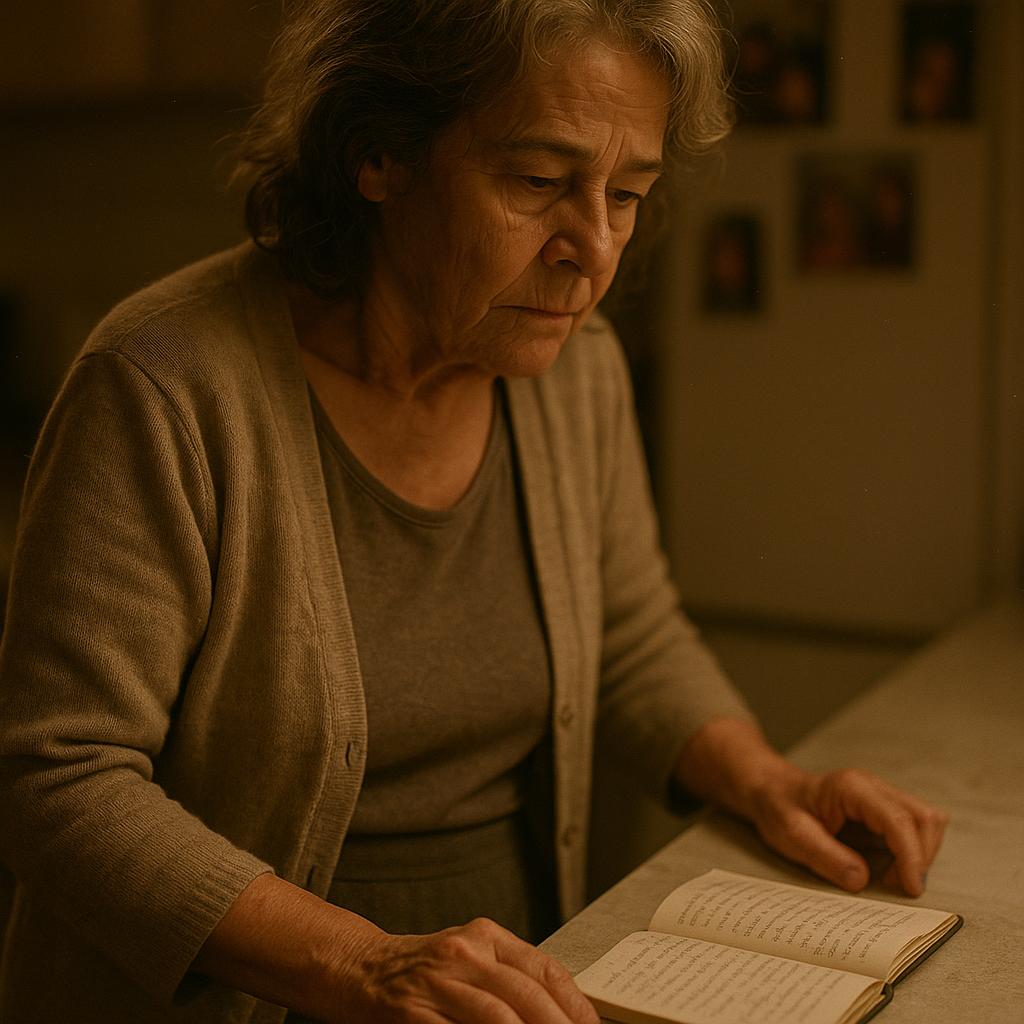 Image by RM AI
The Purse Incident
I stared at my laptop screen in horror, my hand frozen over the trackpad. There was Linda, tiptoeing into our living room at 1:30 AM like some kind of geriatric cat burglar. She glanced around furtively before making a beeline for my purse on the side table. My stomach clenched as I watched her methodically remove my wallet, open it, and examine my driver's license with an intensity that sent chills down my spine. 'Teaching her a lesson,' she muttered, her voice barely audible on the recording. 'This house should have been mine.' The words hung in the air like a threat. What did she mean? This wasn't our confusion or forgetfulness—the expression on her face was pure, calculated satisfaction. She continued rifling through my credit cards, loyalty cards, even the folded receipt from Target I'd stuffed in there last week. I felt violated, watching this woman—my husband's mother—pawing through my personal belongings in the dead of night. But what terrified me most wasn't the invasion of privacy; it was the realization that the sweet, if annoying, mother-in-law act was exactly that: an act. And underneath it was something much darker than I could have imagined.
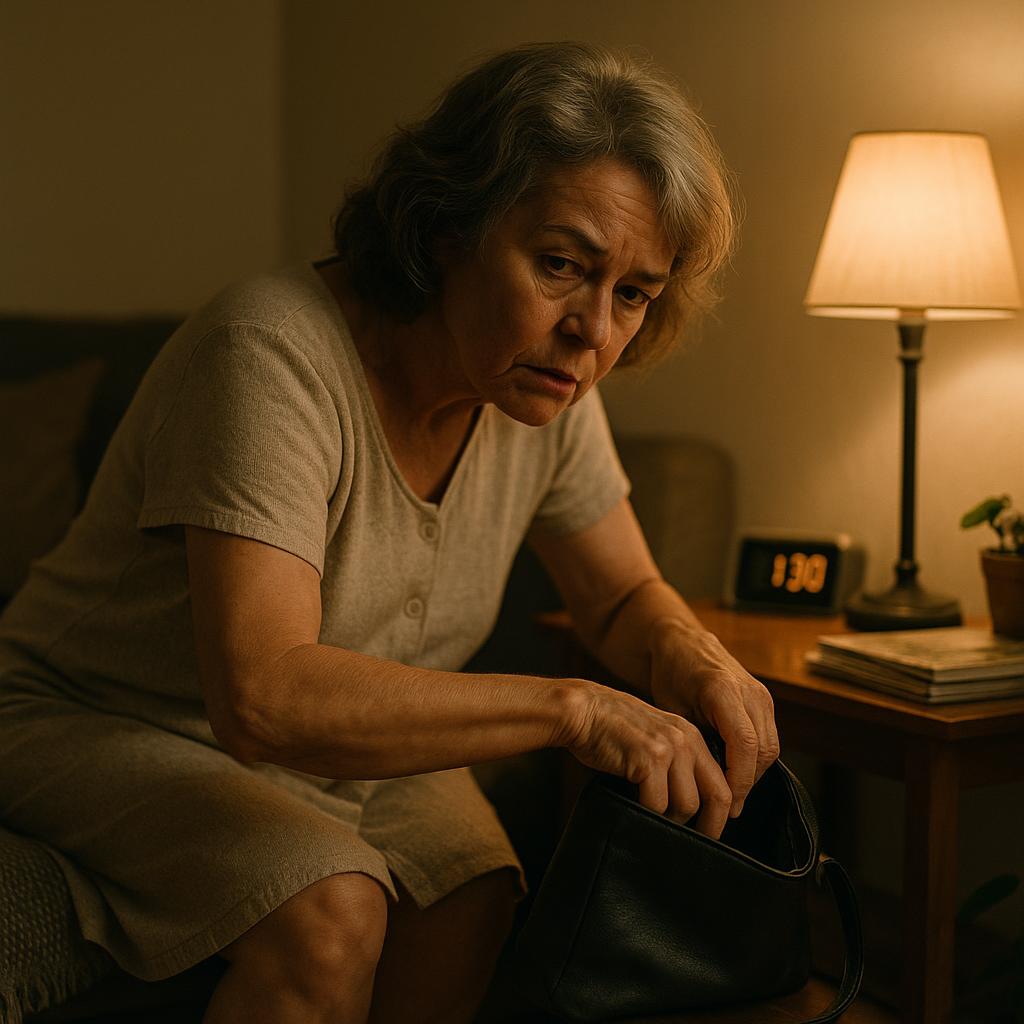 Image by RM AI
Disturbing Discoveries
I couldn't tear my eyes away from the screen as more disturbing clips played out before me. In one video, Linda crept downstairs at 2 AM, unplugged our Wi-Fi router, and actually smiled—SMILED—when our smart lights flickered out. Was she deliberately trying to make us think our house was malfunctioning? But the clip that sent ice through my veins showed her in our kitchen, pouring something from a small vial into a mug. She carried it upstairs with this eerie determination on her face and placed it right next to my side of the bed. She was hovering there, watching me sleep, when suddenly Mark stirred. The way she froze, like a predator caught in headlights, before quickly retreating... I felt physically sick. This wasn't just snooping or being nosy—this was calculated. Methodical. What was in that mug? And what would have happened if Mark hadn't moved? My fingers trembled as I fast-forwarded through more footage, each clip more unsettling than the last. The woman on my screen wasn't the annoying but harmless mother-in-law I thought I knew. She was someone—or something—else entirely.
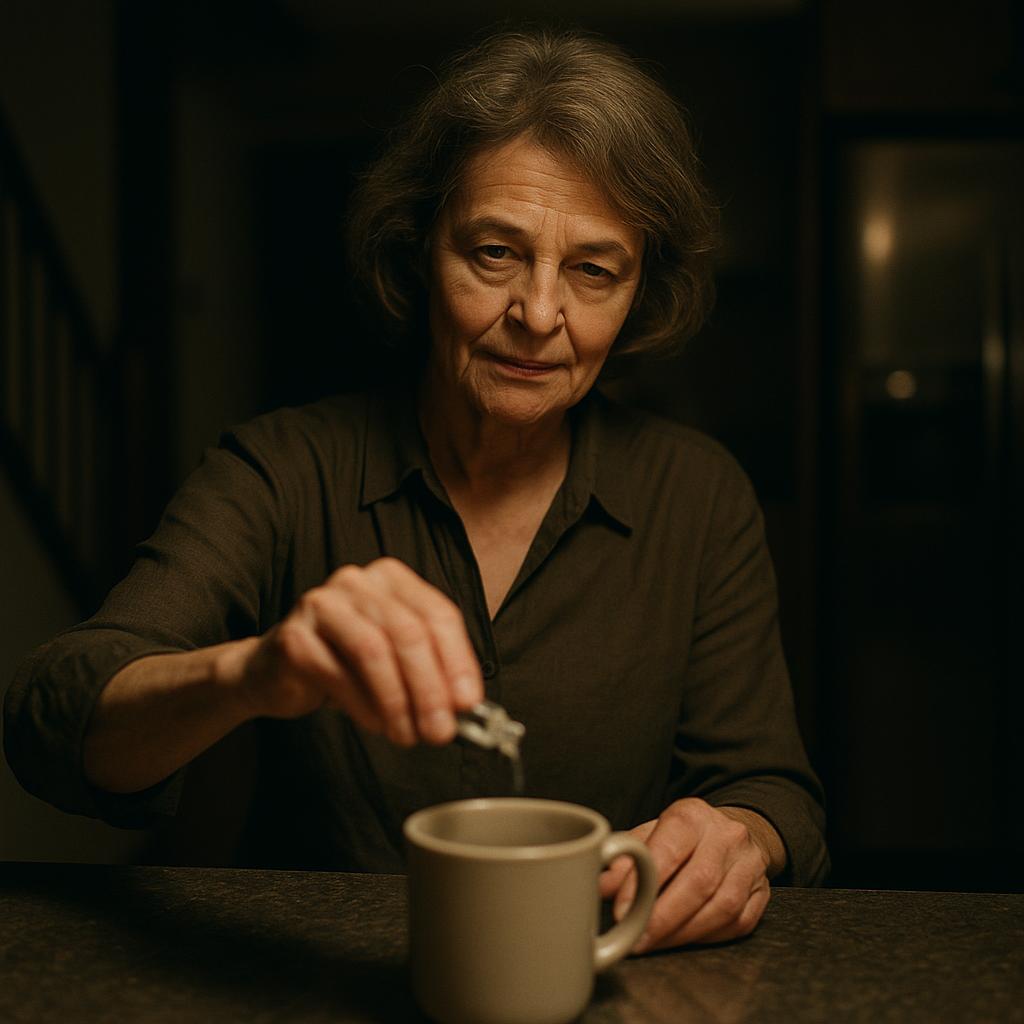 Image by RM AI
Showing Mark the Truth
I heard the front door open and Sophie's laughter floating through the house. Taking a deep breath, I closed the laptop and went downstairs. 'Mark, can I talk to you for a second?' I asked, my voice shakier than I intended. Once Sophie was settled with her coloring books, I led him upstairs and reopened the laptop. 'You need to see this,' I said, pressing play on the first clip. Mark's expression shifted from confusion to disbelief as he watched his mother rifling through my purse in the dead of night. 'What the hell?' he whispered. When we got to the clip of her muttering about 'teaching me a lesson,' his face hardened. 'This is insane,' he muttered, running his hand through his hair. 'She's completely lost it.' I showed him more footage—the unplugged router, the mysterious mug. With each clip, the color drained further from his face. 'I thought you were exaggerating,' he admitted, squeezing my hand. 'I'm so sorry.' For the first time since Linda arrived, I felt validated. This wasn't just in my head. The woman downstairs wasn't just an annoying mother-in-law—she was potentially dangerous. 'What do we do now?' I asked, the weight of the situation settling between us like a physical presence. Neither of us realized that the worst was yet to come.
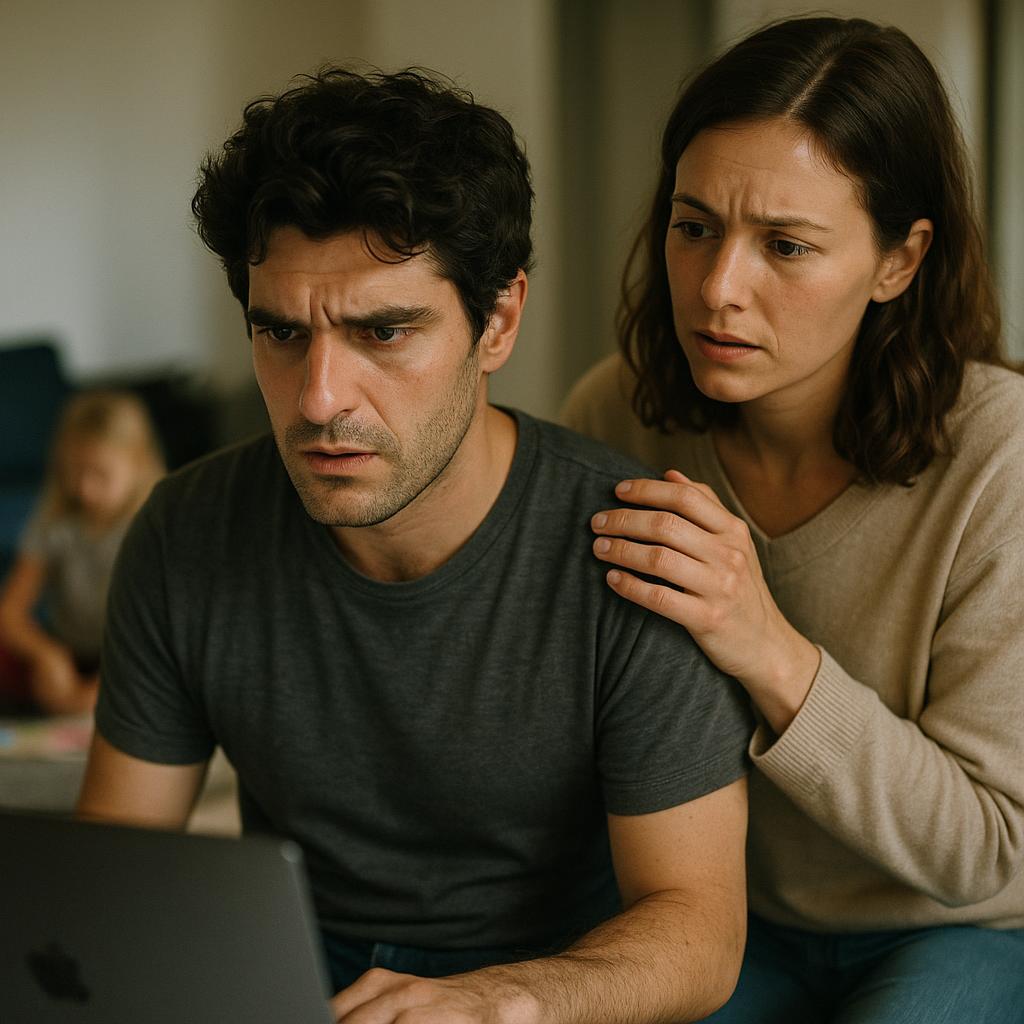 Image by RM AI
The Stakeout Plan
Mark wanted to confront his mother immediately. 'We need to end this now,' he insisted, pacing our bedroom like a caged animal. But something in me needed more—needed to see her bizarre behavior with my own eyes. 'Wait,' I said, grabbing his arm. 'Let me catch her in the act tonight.' He looked at me like I'd lost my mind. 'Are you serious? After what we just saw?' I nodded, my resolve strengthening. 'I need to know exactly what we're dealing with here.' We devised a simple plan: I'd announce I was turning in early with a 'headache,' but instead of sleeping, I'd wait and listen. Mark would come up later as usual but stay alert. 'If anything feels wrong—anything at all—text me and I'll be there in seconds,' he promised, his face etched with worry. As I headed downstairs to set our trap, I caught a glimpse of Linda in the kitchen, humming to herself while arranging cookies on a plate. She looked up and smiled sweetly at me, and I forced myself to smile back, wondering how someone could look so normal on the outside while harboring such darkness within. What I didn't know then was that tonight's stakeout would reveal something far more disturbing than anything we'd seen on camera.
 Image by RM AI
Midnight Surveillance
I waited until 11:30 PM to put my plan into action, announcing I had a migraine and needed to turn in early. Linda's sympathetic frown didn't reach her eyes as she suggested some herbal tea that 'always works for her.' I declined and headed upstairs, heart pounding. Instead of sleeping, I sat in the darkness of our bedroom, door cracked open just enough to hear downstairs. The house creaked and settled around me as I waited. At exactly 1:07 AM (I checked my phone), I heard it – the soft padding of slippered feet on our hardwood floors. I crept to the staircase, barely breathing, and peered down through the railings. Linda was in the kitchen again, opening and closing cabinets with purpose, muttering to herself in that unsettling way. Then she did something that made my blood freeze. She walked over to the baby monitor we still kept in the kitchen and picked it up. 'You think you can replace me?' she hissed into it, her voice venomous. 'You think you're the perfect wife?' She let out a cold laugh that sounded nothing like the woman who'd been baking cookies with Sophie earlier. 'Let's see how perfect you are when he realizes what you've been hiding.' I didn't even know what that meant – I wasn't hiding anything! – but the malice in her voice sent shivers down my spine. I'd seen enough. This wasn't just a difficult mother-in-law; this was something far more sinister.
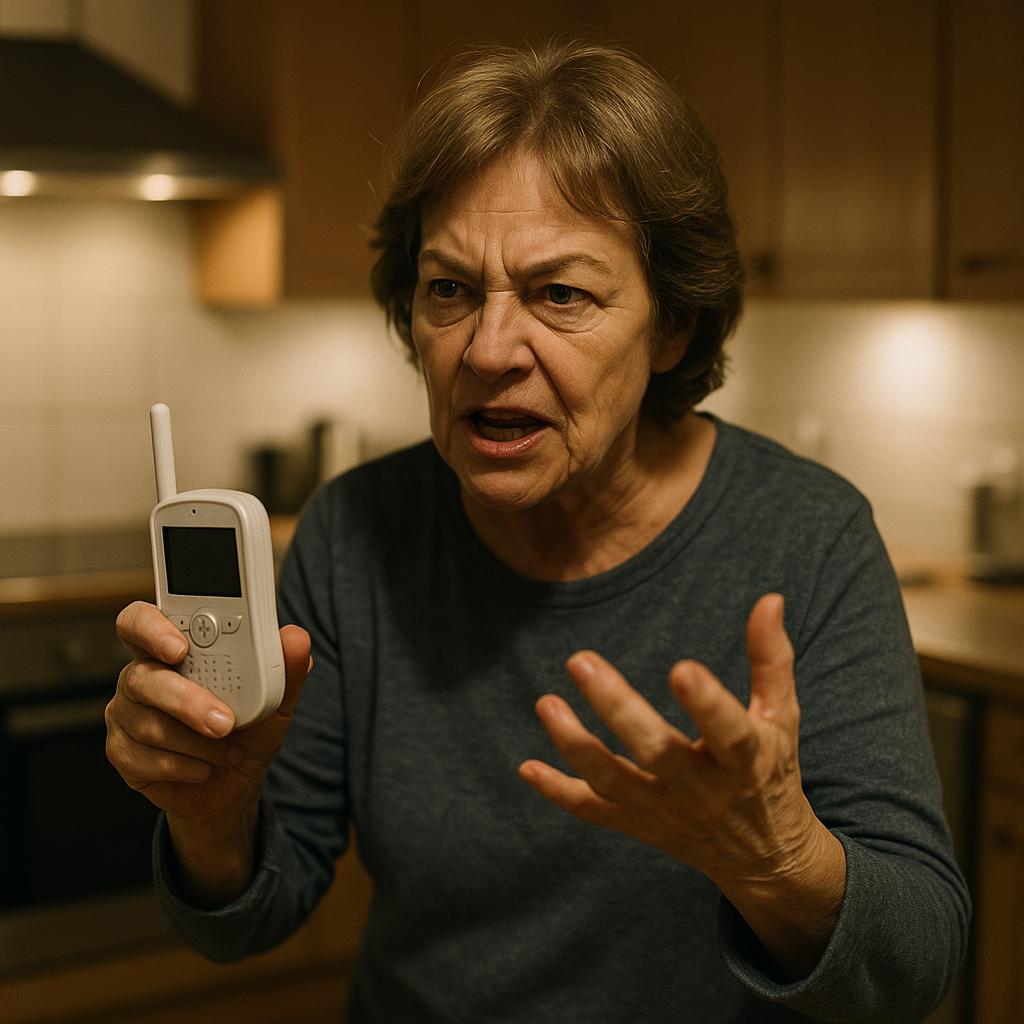 Image by RM AI
The Confrontation
I slipped back to our bedroom and shook Mark awake, my hands trembling. 'We're ending this now,' I whispered, recounting what I'd just witnessed. We barely slept, both of us lying rigid in bed, listening for any sound of Linda moving around the house. The next morning, after Sophie was safely occupied with her new Christmas toys, we asked Linda to join us in the kitchen. Mark's face was stone-cold serious as he placed my laptop on the table and turned it toward his mother. 'We need to talk about this,' he said, playing the footage of her midnight wanderings. I watched her face carefully – the initial blank stare, the slight widening of her eyes as recognition dawned, and then something that chilled me to my core: a slow, calculated smile spreading across her lips. 'You shouldn't have been spying on me,' she said, her voice eerily calm. No denial. No explanation. Just that statement, delivered like a threat. The woman sitting across from us wasn't the mother-in-law who baked cookies and criticized my housekeeping. This was someone else entirely – someone with cold eyes and a smile that didn't reach them. Mark's hand found mine under the table and squeezed tight. We both knew there was no going back from this moment.
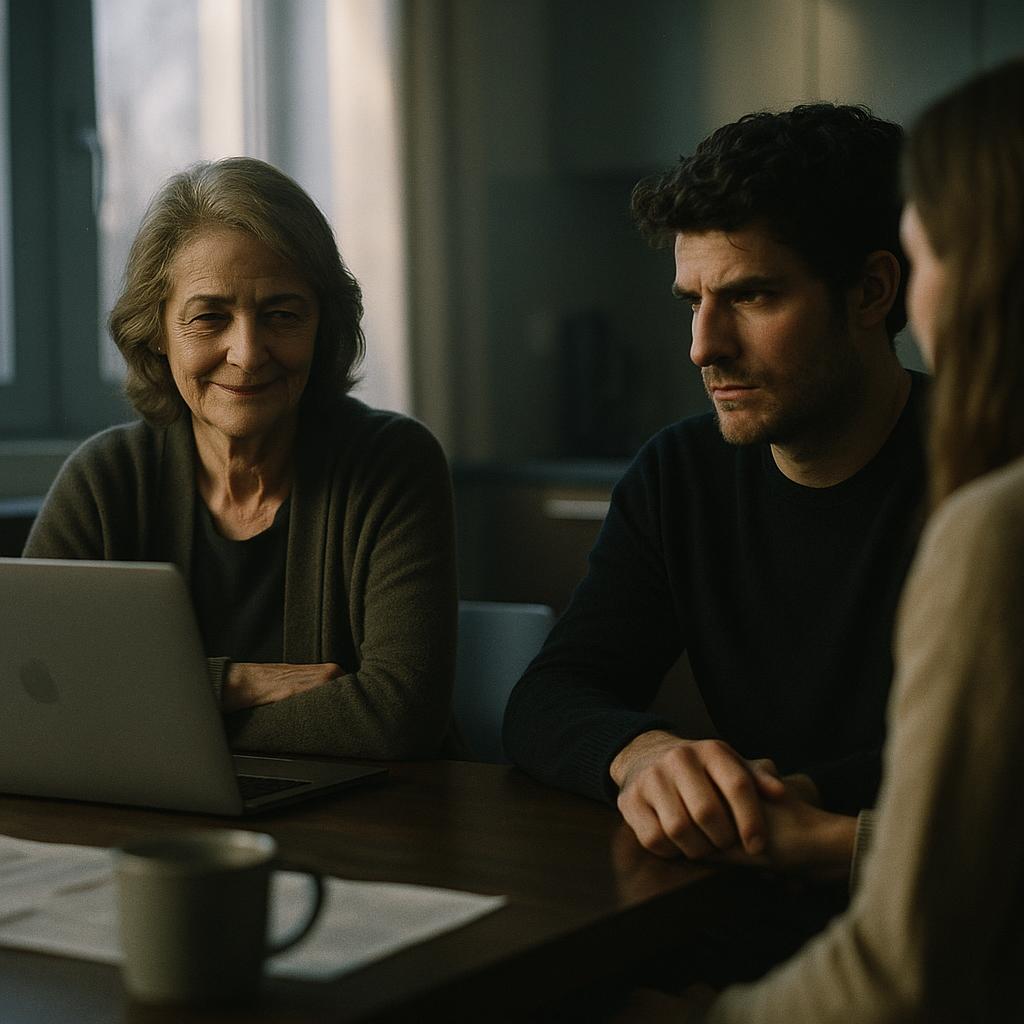 Image by RM AI
The Tearful Departure
"Pack your things," Mark told his mother, his voice firm but pained. The transformation that came over Linda was immediate and unsettling. Gone was the calculating woman from the nanny cam footage, replaced by a sobbing, desperate figure. "You don't understand what you're doing," she wailed, mascara streaming down her cheeks. "I was only trying to protect you!" When Mark demanded to know what exactly she was protecting us from, she just shook her head frantically. "There are things you don't know about her," she whispered, glancing at me with those cold eyes that contradicted her tears. I stood my ground, arms crossed, as she packed her suitcases with trembling hands. The performance was Oscar-worthy—the quivering lip, the pleading looks, the occasional dramatic pause to see if we were softening. We weren't. By noon, Mark was loading her luggage into her car while I watched from the doorway, Sophie clinging to my leg. As Linda climbed into the driver's seat, she turned to us one last time. "You'll regret this," she said, her voice suddenly steady and ice-cold. The words hung in the air like a curse as she drove away. The house felt instantly lighter, but I couldn't shake the chill her parting words had left behind. What exactly did she think I was hiding?
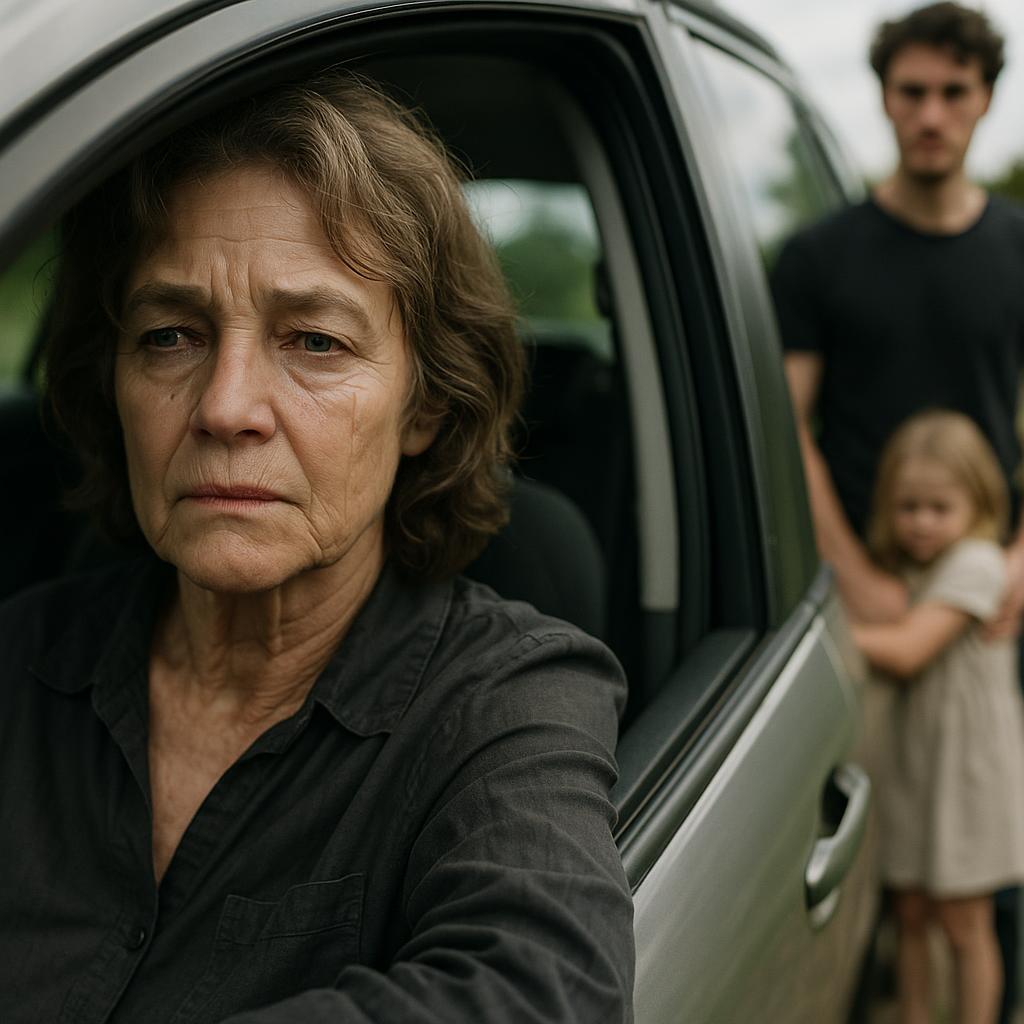 Image by RM AI
The Aftermath
The moment Linda's car disappeared down our street, it felt like someone had lifted a fifty-pound weight off my chest. I could breathe again. That night, I went into full security mode – changing every password, rekeying all the locks, and ordering a new nanny cam system with cloud storage that only Mark and I could access. I even went through the house with sage I bought from that new-age shop downtown (don't judge – desperate times call for desperate measures). Sophie gradually returned to her bubbly self, though whenever we gently asked what Grandma had told her, she'd just shake her head and say, "It was a secret." The way her little eyes would dart around the room afterward made my stomach twist. Mark called his aunt every few days for updates, and apparently, Linda was telling everyone we'd "overreacted to a little midnight snacking." Classic gaslighting. Two weeks after she left, I was folding laundry when Sophie came up to me with her favorite stuffed bunny clutched to her chest. "Mommy," she whispered, "Grandma said you weren't my real mommy. That you were pretending." I froze, the half-folded shirt slipping from my fingers as Sophie's words sank in.
 Image by RM AI
The Aunt's Call
A week after Linda's dramatic exit, Mark's phone rang during dinner. The moment I saw his aunt's name flash on the screen, my stomach tightened. Mark stepped into the hallway, but I could still hear fragments of the conversation—his voice dropping to a whisper, then rising with disbelief. When he returned, his face had gone pale. "She showed up at Aunt Carol's doorstep at 6 AM," he said, collapsing into his chair. "Ranting about having 'proof' that you're hiding something terrible from me." Apparently, Linda had been pacing Carol's living room for hours, clutching a folder of 'evidence' and insisting I wasn't who I claimed to be. The truly disturbing part? According to Carol, Linda had been exhibiting paranoid behavior for months—imagining conspiracies, keeping strange notes, calling family members with bizarre accusations. "Nobody realized how bad it had gotten," Mark said, rubbing his temples. "They all thought she was just being... you know, Linda." I felt a chill run through me. All those nights she spent whispering to herself, writing in that notebook while staring at our family photos—it wasn't just spite. It was something much darker brewing inside her mind. But nothing could have prepared us for what arrived in our mailbox the next morning.
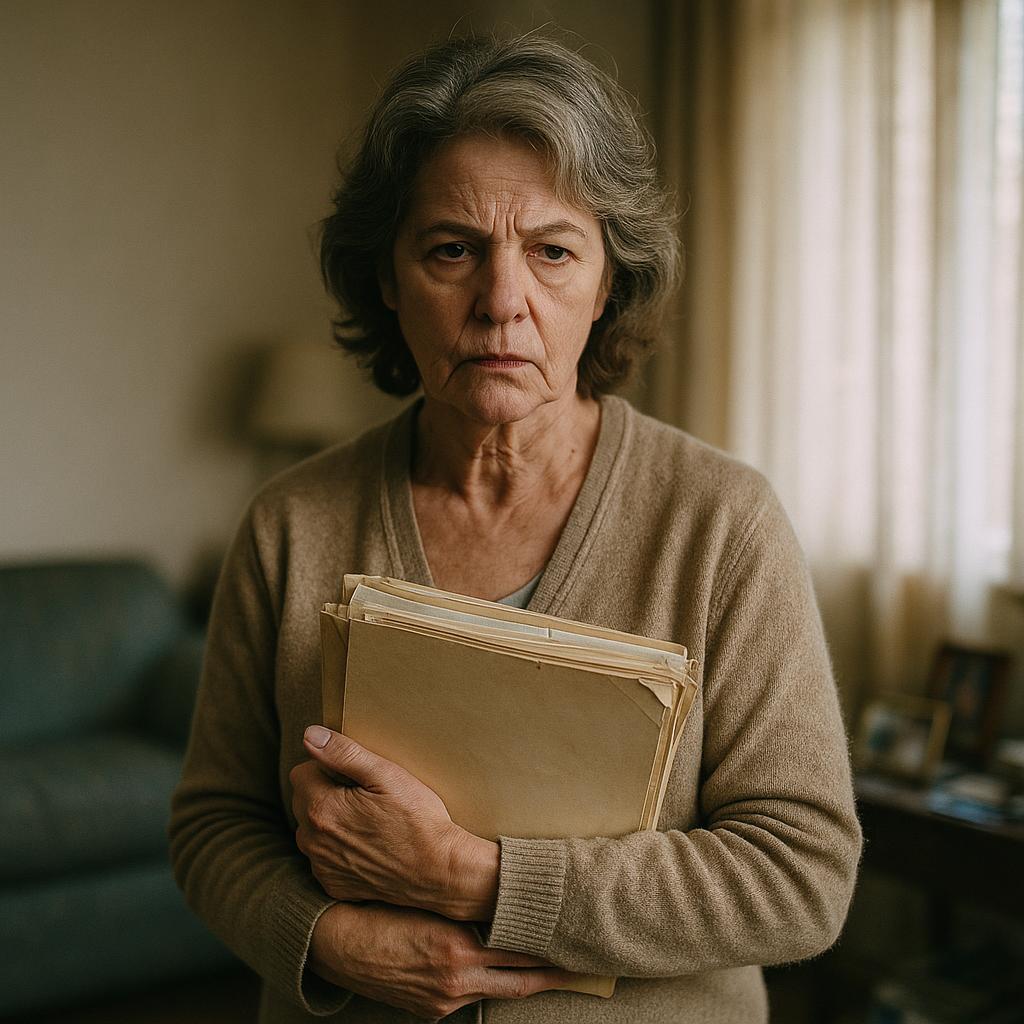 Image by RM AI
The Final Footage
It's been three weeks since Linda left, and the silence from her end has been both a relief and strangely unsettling. Mark checks in with his aunt every few days, but the reports are always the same – Linda refuses to see any doctors and insists we're the ones who need help. Last night, after Sophie was tucked in bed, Mark and I finally worked up the courage to watch the last clip on the nanny cam – the one from 5 AM on the morning we confronted her. I wish we hadn't. There she was, standing at the foot of our bed, just... watching us sleep. The soft glow from the hallway night light cast eerie shadows across her face as she stood perfectly still, hands clasped in front of her like some Victorian ghost. But it was her expression that haunts me – this serene, almost pleased smile spreading across her lips as her eyes darted between Mark and me. She stood there for nearly seven minutes, occasionally whispering something too quiet for the camera to pick up. Just before she left, she reached out as if to touch Mark's foot, then pulled back and nodded to herself, like she'd come to some decision. I've changed the locks twice since then, but sometimes, when I'm alone in the house, I swear I can feel someone watching me through the windows.
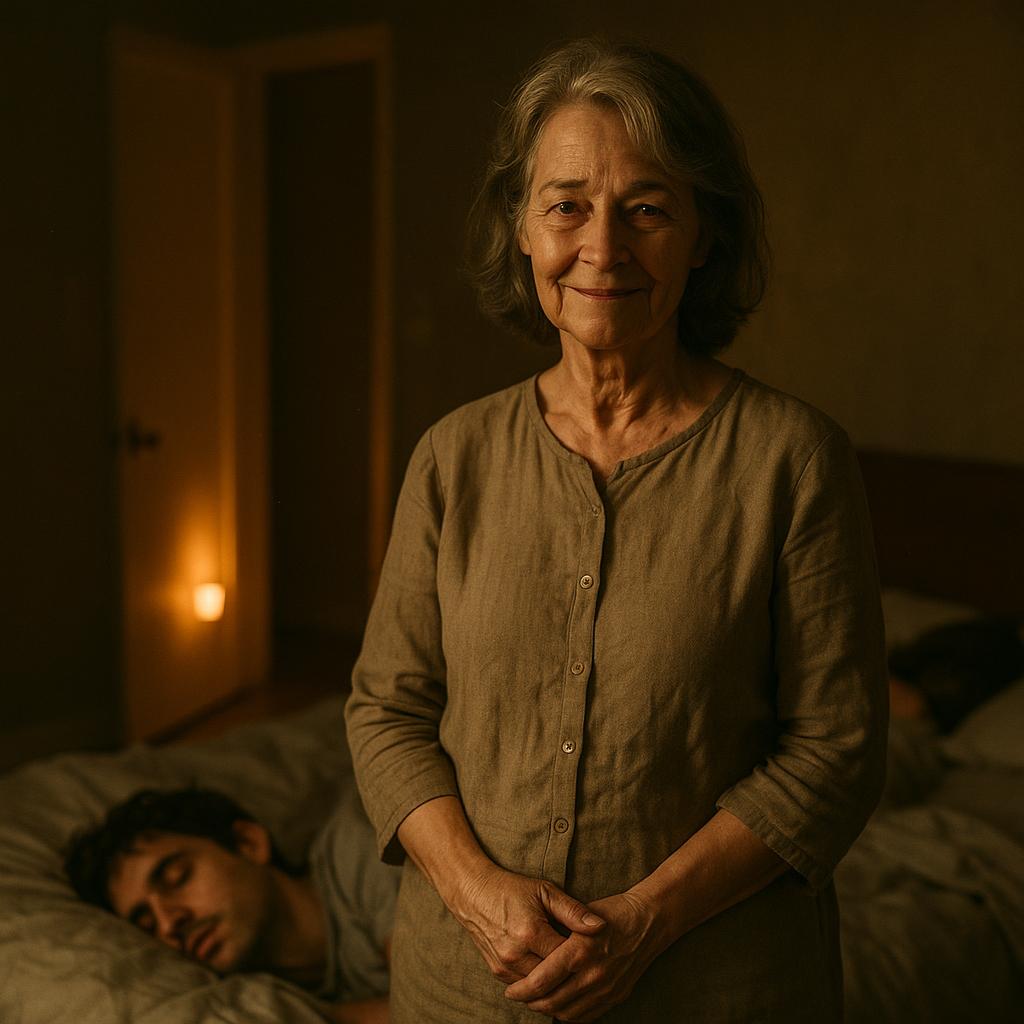 Image by RM AI
The Mysterious Package
The doorbell rang on a rainy Tuesday afternoon, two weeks after Linda's dramatic exit. The UPS driver was already halfway down our driveway by the time I opened the door. A plain brown package sat on our welcome mat, addressed to Mark with no return address—just a postmark from Linda's hometown. My stomach immediately knotted. 'Mark?' I called, my voice higher than intended. He appeared from his home office, frowning at the package as I handed it to him. We exchanged a look before he carefully sliced through the tape. Inside was a photo album bound in faded blue leather. As Mark flipped through it, his face drained of color. It was filled with old family photos—Mark as a child with his father, teenage Mark at fishing trips, college graduation—but every single photo that included me had been defaced. My face was scratched out with what looked like a knife, leaving jagged paper wounds where I should have been. Some photos had red X's drawn over me. But what made my blood run cold was the handwritten note tucked into the final page: 'Remember who your real family is.' Mark's hands were shaking as he closed the album. 'She's not going to stop, is she?' he whispered. I didn't answer because we both knew the truth—this wasn't just a parting shot. This was a declaration of war.
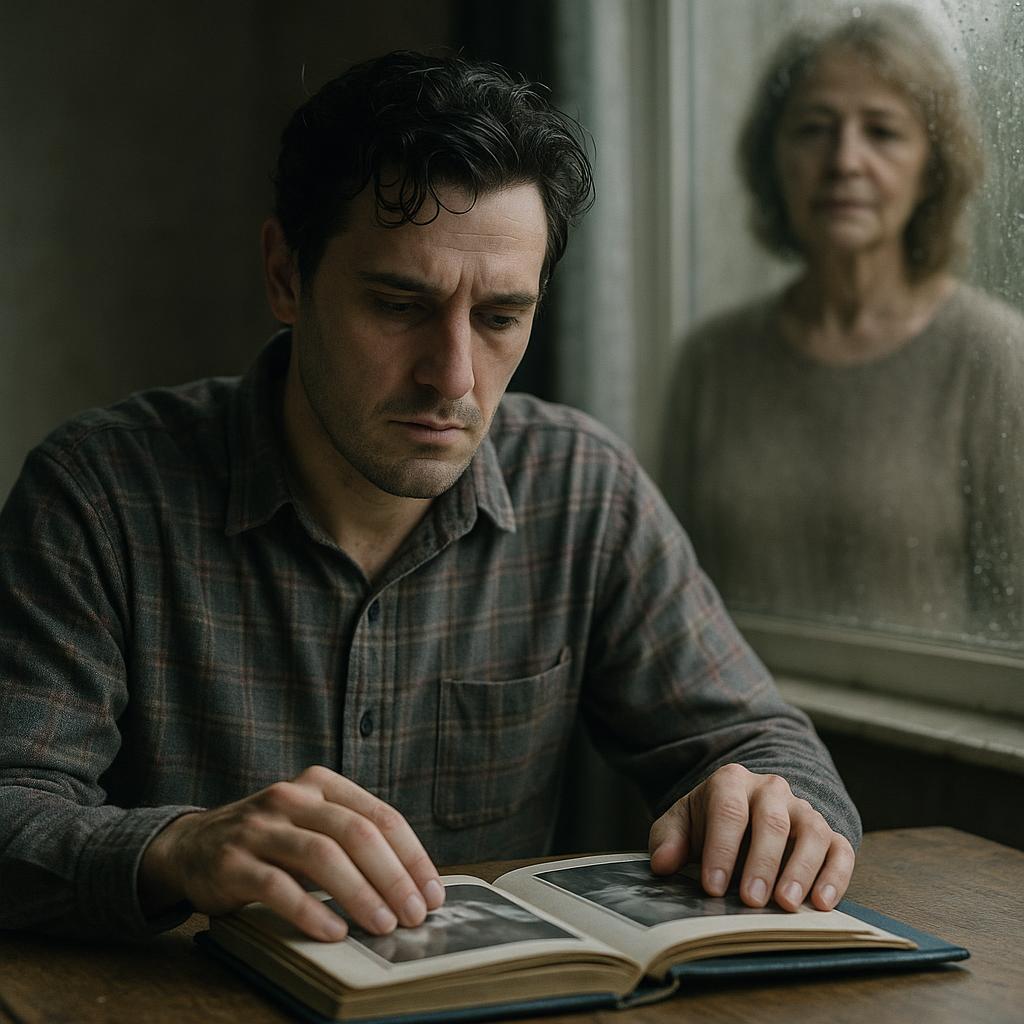 Image by RM AI
Sophie's Nightmares
Three nights after Linda left, Sophie's screams jolted me awake at 2 AM. I rushed to her room to find her sobbing, clutching her stuffed bunny so tightly I thought she might tear it. "Is Grandma coming back?" she whimpered, her little face streaked with tears. This became our new normal—night terrors that left her exhausted and clingy during the day. After the fifth consecutive night, I sat on the edge of her bed and gently asked what Grandma had told her. Sophie's bottom lip trembled as she finally confessed: "Grandma said you're not my real mommy. She said you're pretending and trying to steal Daddy away." My heart shattered into a million pieces. When I told Mark later that night, his face contorted with a rage I'd never seen before. "She told our six-year-old WHAT?" he hissed, pacing our bedroom like a caged animal. "This isn't just crossing a line—this is psychological abuse." As he pulled out his phone to call his aunt, I sat frozen, wondering what other poison Linda had whispered into our daughter's ear during those secret conversations behind closed doors. And worse—what might she still be planning to do?
 Image by RM AI
The Missing Medication
The day after I changed all the locks, I decided to tackle the bathroom cabinet—another space Linda had "reorganized" during her stay. As I sorted through bottles and boxes, something felt off. My prescription anxiety medication was missing. I distinctly remembered having nearly a full bottle before Christmas—I'd refilled it in early December. "Mark?" I called, my voice echoing against the bathroom tiles. When he appeared in the doorway, I held up the empty medication slot. "My Ativan is gone." Mark frowned, leaning against the doorframe. "Maybe you took more during... you know, everything?" He gestured vaguely, meaning the holiday stress. I shook my head firmly. "No. I barely touched it." Then it hit me—the nanny cam footage we hadn't fully reviewed. I rushed to my laptop and scrolled through the bathroom hallway clips. There it was: Linda slipping into our bathroom at 2 AM, staying for seven minutes, then emerging with something clutched in her palm. My stomach dropped as the pieces clicked together. Those nights I'd felt unusually groggy after drinking tea she'd prepared... the mornings I'd woken disoriented... Was she medicating me without my knowledge? Or worse—was she taking my medication herself?
 Image by RM AI
The Neighbor's Account
I was loading the dishwasher yesterday when the doorbell rang. There stood Mrs. Patel from next door, holding a plate of her famous cardamom cookies. 'I thought you might need these after all that holiday drama,' she said with a sympathetic smile. As I invited her in for tea, she casually dropped a bombshell that made my skin crawl. 'You know, your mother-in-law is quite the night owl,' she remarked, stirring honey into her cup. 'I was up with my insomnia during her visit and saw her walking around your backyard at 3 AM. Flashlight and everything!' My cup froze halfway to my lips. Mrs. Patel continued, oblivious to my horror. 'When I called out to ask if everything was alright, she said she was "checking the security" of your house. So thoughtful!' I managed a weak smile and thanked her for the cookies, my mind racing. Security checks? At 3 AM? In the RAIN? I waited until Mrs. Patel left before calling Mark at work. This wasn't just midnight kitchen raids anymore—Linda had been prowling outside our house in the middle of the night. What exactly had she been looking for out there? And more importantly, what might she have left behind?
 Image by RM AI
The Family History
Last night, after Sophie finally fell asleep without nightmares, Mark and I sat on the porch with glasses of wine. 'There's something I should have told you years ago,' he said, his voice heavy with regret. What followed was like watching puzzle pieces fall into place. Apparently, after Mark's father died ten years ago, Linda's behavior shifted dramatically. 'She became... possessive,' he explained, staring into his glass. 'Any woman I dated became the enemy.' He told me about his ex, Melissa, who'd eventually left him after Linda 'accidentally' spilled red wine on her white dress at a family dinner, then replaced her heart medication with sugar pills 'as a joke.' I nearly choked on my wine. 'Why didn't you tell me this before we got married?' I demanded. Mark's eyes filled with tears. 'Because she seemed better with you. I thought she'd finally accepted someone.' He rubbed his face tiredly. 'My aunt tried to get her to see someone after Dad died, but Linda insisted everyone else was the problem.' I sat in stunned silence, processing this revelation. All those 'quirky mother-in-law' moments I'd endured weren't just annoying habits—they were warning signs I'd been trained to ignore. And now I couldn't help but wonder: what else had Mark kept from me about his mother's dangerous history?
 Image by RM AI
The Strange Emails
I was clearing out my email inbox on Thursday morning when I noticed something odd in my spam folder—five unread messages from an address I didn't recognize: [email protected]. My finger hovered over the delete button, but something made me click instead. The subject line of the first email read: 'I KNOW WHAT YOU'RE DOING.' My heart started racing as I opened it. 'Mark deserves to know about your little meetings with HIM,' the message began. 'Did you think nobody would notice?' Each email grew increasingly unhinged, filled with accusations about an affair that didn't exist and threats to 'expose my true nature' to Mark. What chilled me most wasn't the accusations themselves—it was the writing style. The way she used ALL CAPS for emphasis, those peculiar double exclamation marks, even that phrase she always used—'mark my words.' This wasn't some random spam. This was Linda, creating yet another way to torment me. I forwarded everything to Mark with shaking hands, adding only: 'She's not stopping.' Within minutes, my phone rang. 'I'm coming home,' Mark said, his voice tight with anger. 'And I'm calling a lawyer today.' As I hung up, a new email notification appeared on my screen—this one with an attachment labeled 'PROOF.jpg.'
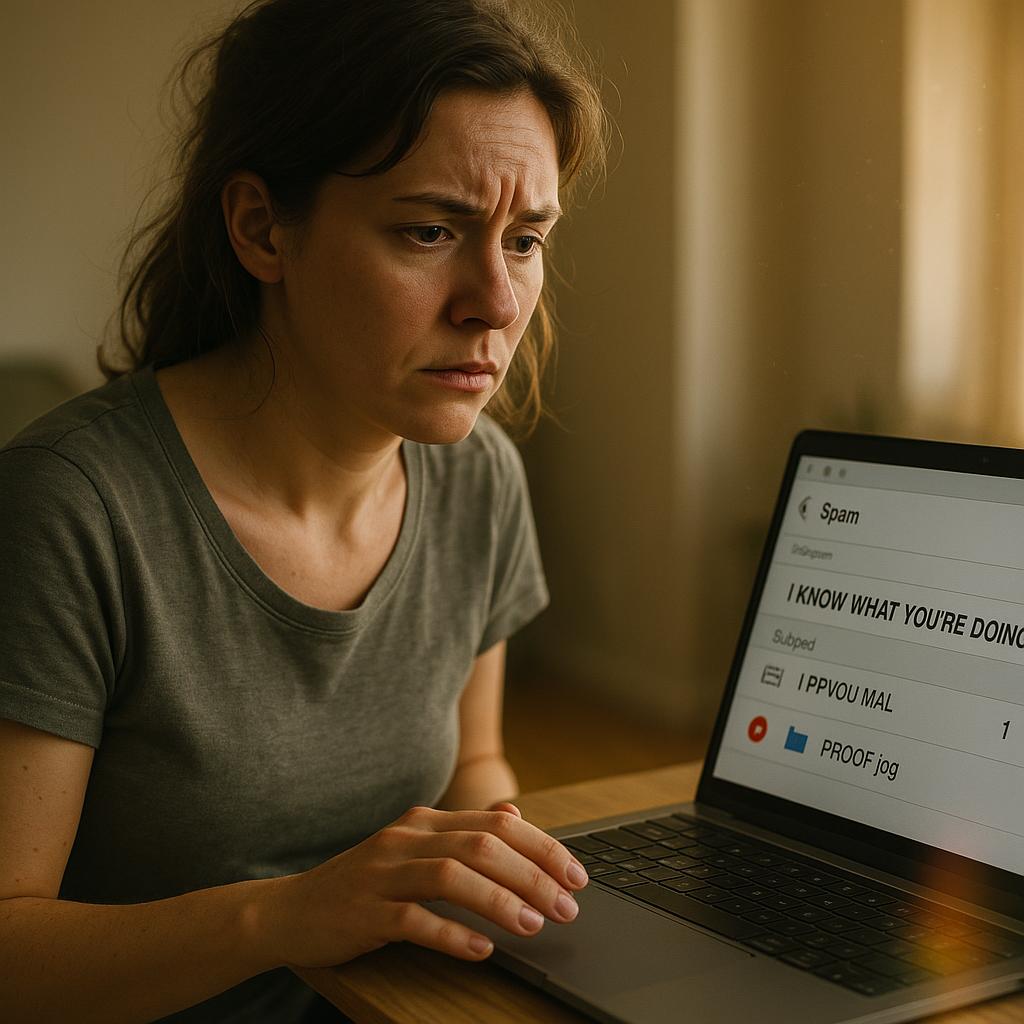 Image by RM AI
The Family Meeting
Mark set up the video call with his aunt Judith and uncle Robert for Sunday evening, after Sophie was in bed. I sat beside him on the couch, clutching a mug of tea that had long gone cold. 'She's getting worse,' Aunt Judith said, her face pixelated but her concern crystal clear. 'Last week she told your cousin Emily that your wife has been secretly meeting with your father's old business partner to claim his inheritance.' I nearly choked. Mark's father had left everything to Linda years ago—there was no inheritance to claim. Uncle Robert, usually the quiet one, leaned into the camera. 'She's keeping a journal of "evidence" against you,' he told me directly. 'Timestamps of when you leave the house, phone calls you make.' The chill that ran through me made my teeth chatter. Mark squeezed my hand so hard it hurt. 'We've tried to get her to see Dr. Levine,' Judith continued, 'but she insists there's nothing wrong with her—that we're all part of some conspiracy.' As the call ended, Mark and I sat in stunned silence. 'We need to do something,' he finally whispered. 'Before she does.' What terrified me most wasn't just Linda's delusions—it was the realization that in her mind, I wasn't just an inconvenience anymore. I was the enemy who needed to be eliminated.
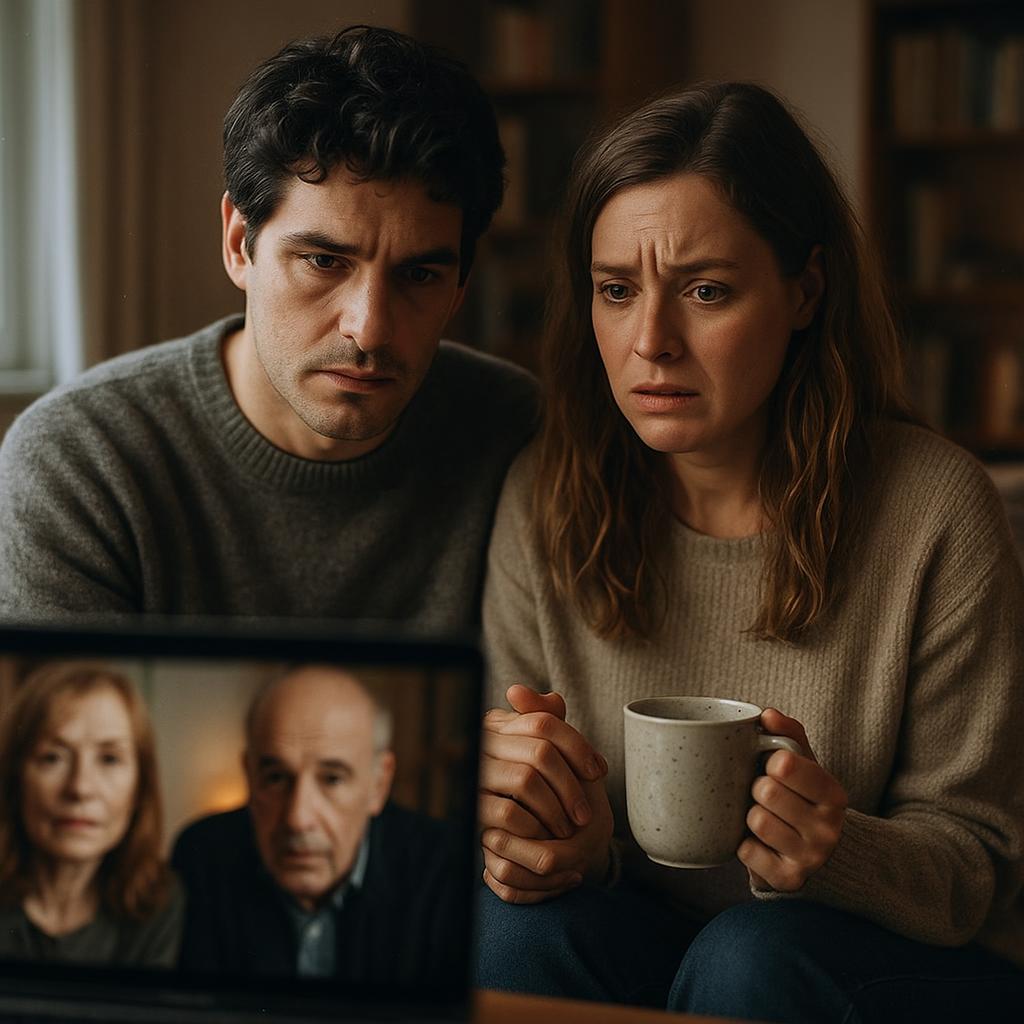 Image by RM AI
The School Incident
I was in the middle of a work call when my phone buzzed with the school's number. My heart immediately sank – those mid-day school calls are never good news. "Mrs. Wilson? This is Heather from Oakridge Elementary," the voice said, tension evident. "There's been an incident." Apparently, a woman claiming to be Sophie's grandmother had tried to pick her up, insisting there was a 'family emergency.' When the front desk asked for ID and checked the approved pickup list, the woman became increasingly agitated, demanding they release Sophie immediately. The description was unmistakable – Linda. My hands were shaking so badly I could barely hold the phone as Heather explained how the woman had stormed out when they mentioned calling me to verify. "We were about to call security," she added. I thanked her through a tight throat, then immediately called Mark, who left work immediately. That afternoon, we sat with the principal and head of security, implementing enhanced protocols – password systems, photo verification, the works. As we walked to our car afterward, Mark's face was ashen. "She tried to take our daughter, Jen," he whispered. "What would have happened if they'd let her?" That night, I lay awake wondering the same thing, because the most terrifying part wasn't just that Linda had tried to take Sophie – it was that she'd been watching us long enough to know exactly when and where our daughter could be found.
 Image by RM AI
The Police Report
The morning after the school incident, Mark and I walked into the police station, both running on caffeine and fear. The officer who took our statement—a woman with kind eyes and a no-nonsense demeanor—listened patiently as we detailed Linda's escalating behavior. "So she tried to take your daughter from school, sent threatening emails, defaced family photos, and was caught prowling around your property at night," she summarized, typing everything into her computer. When I mentioned the missing medication, her fingers paused over the keyboard. "That's concerning," she said quietly. But then came the part that made my stomach drop: "Unfortunately, without explicit threats of violence or actual physical harm, our options are limited." She explained that we could file for a restraining order, but without "clear and present danger," it might not be granted. Mark's knuckles turned white as he gripped the edge of her desk. "So we just wait until she hurts someone?" The officer slid a pamphlet across the table. "Document everything. Install more cameras. Save every email, every voicemail." We left with a case number and a hollow feeling in my chest. That night, as we installed the new security cameras we'd rush-ordered, I couldn't shake the thought that we were preparing for a siege—and the enemy was family.
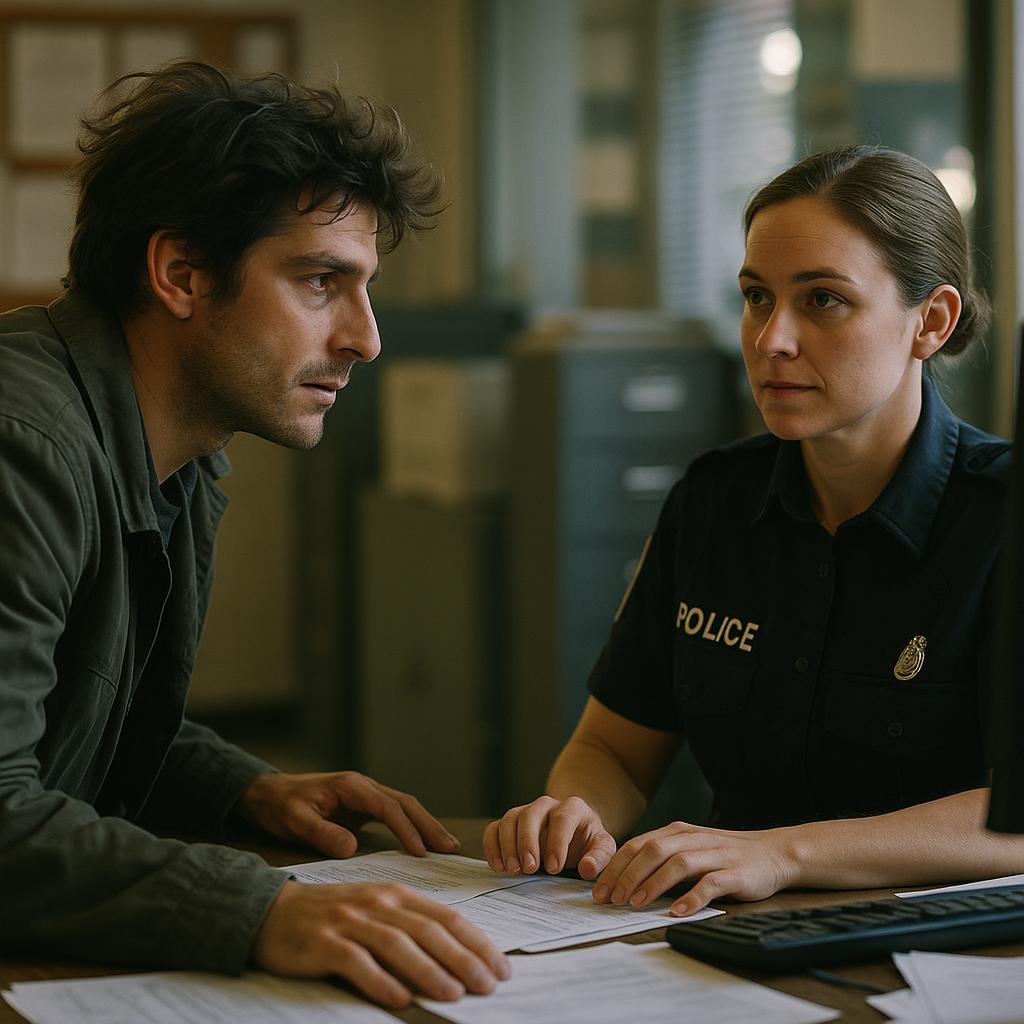 Image by RM AI
The Unexpected Visitor
The house was eerily quiet this Tuesday afternoon when the doorbell rang. I froze, halfway through folding laundry, my heart immediately racing. Through the peephole, I saw Elaine – Linda's longtime friend who'd barely spoken two words to me at our wedding three years ago. 'Jennifer? It's Elaine Prescott,' she called out, her voice honey-sweet but somehow off. 'I just want to talk about Linda. I'm worried about her.' Something in her stance – the way she kept glancing over her shoulder, how her purse was clutched too tightly against her chest – sent alarm bells ringing. 'I'm sorry, Elaine, but I can't open the door right now,' I replied, trying to keep my voice steady. 'Mark isn't home.' She pressed closer to the door. 'Oh, I know he's at work. Linda mentioned his schedule.' The casual way she dropped this information made my skin crawl. How did Linda know Mark's current work schedule? 'Please, just five minutes,' Elaine insisted, her friendly tone slipping just enough to reveal something harder underneath. 'Linda's been saying such... concerning things. I thought you should know.' I remained silent, watching her through the peephole as she slipped a folded piece of paper under the door. 'My number,' she explained with a tight smile. 'Call me when you're ready to hear the truth.' As her footsteps retreated down our walkway, I picked up the paper with trembling fingers – and found not just a phone number, but a message: 'She's watching your house. I can prove it.'
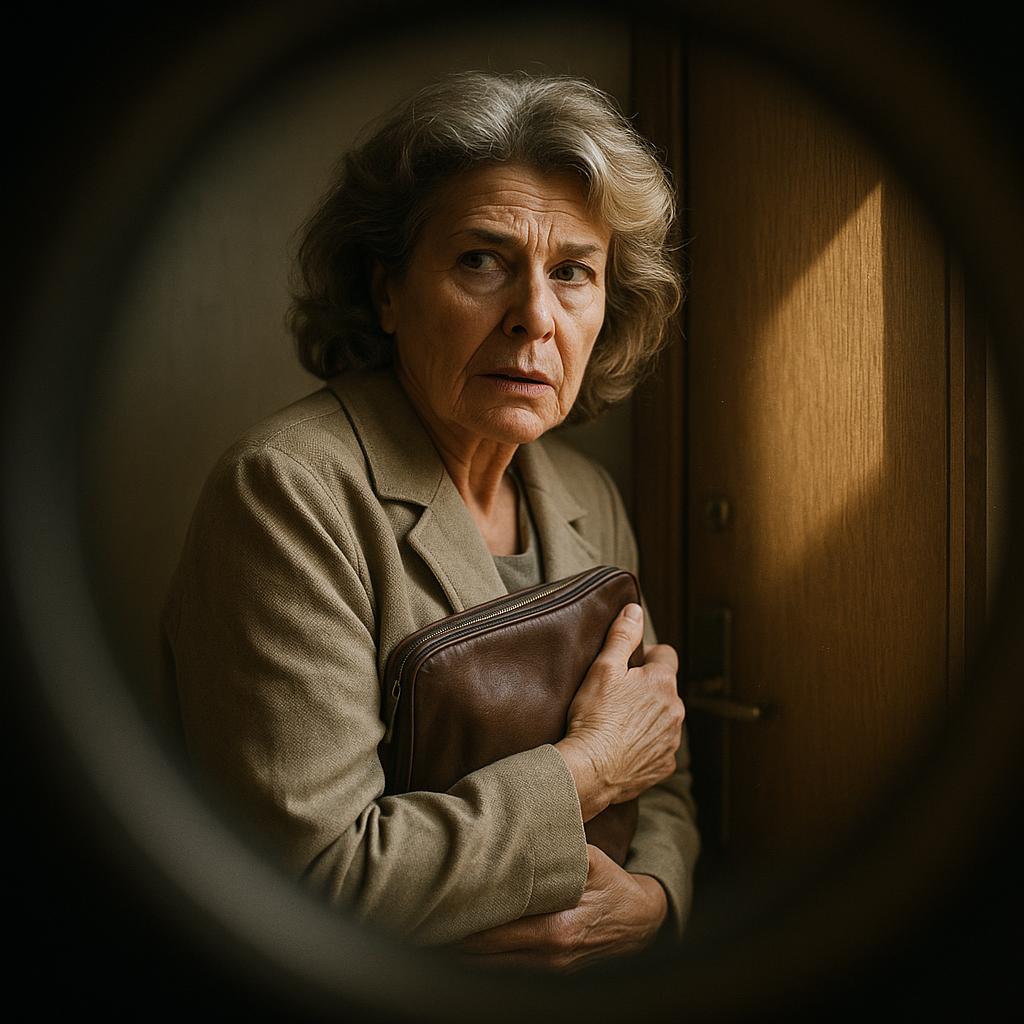 Image by RM AI
The Disturbing Revelation
I finally agreed to meet Elaine at a coffee shop two days later, away from our house where Linda might be watching. Her hands trembled as she slid a manila folder across the table. "I've been Linda's friend for thirty years," she said, her voice barely above a whisper. "But this past year... she's not the same person." What Elaine revealed next made my blood run cold. Linda had been exhibiting alarming behavior for over a year—forgetting her own birthday, accusing neighbors of installing cameras in her flowerpots, and developing elaborate theories about Mark's coworkers plotting against her. "She keeps this," Elaine said, opening the folder to reveal newspaper clippings of family tragedies—house fires, poisonings, accidents—all meticulously annotated in Linda's handwriting. But what made me nearly spill my latte was the journal. Page after page of "evidence" against me: times I left the house, conversations Linda claimed to have overheard, and bizarre connections drawn between random events. "She's convinced you're trying to kill Mark for his non-existent inheritance," Elaine explained, her eyes filled with genuine fear. "I'm telling you this because last week, she asked me where she could buy untraceable sleeping pills."
 Image by RM AI
The Medical Possibility
After Elaine left, I sat at my kitchen table, staring at the folder she'd given me, my mind racing. Something about Linda's behavior patterns nagged at me—this wasn't just mean-spirited meddling. I started Googling her symptoms: paranoia, delusions, personality changes, fixations. Page after page of medical websites pointed to the same possibilities: early-onset dementia with paranoid features, frontotemporal dementia, or even untreated schizophrenia. My stomach knotted as I scrolled through symptom lists that read like a biography of Linda's recent behavior. I called Mark immediately, my voice shaking. "I think your mom might be seriously ill," I told him, explaining what I'd found. "This might not be malice—it could be her brain literally changing." Mark was silent for so long I thought we'd lost connection. "My dad's sister had dementia," he finally said, his voice hollow. "It started with paranoia too." We agreed he would contact her primary doctor, though we both knew the challenge ahead—Linda would never voluntarily seek help for an illness she couldn't recognize she had. As I hung up, a chill ran through me. If this was a medical condition, Linda wasn't just dangerous—she was also a victim. And that made everything so much more complicated, because how do you protect yourself from someone who's both a threat and desperately in need of help?
 Image by RM AI
The Midnight Call
The shrill ring of our phone at 2 AM jolted me awake like an electric shock. Mark fumbled for the receiver while I blinked at the glowing red numbers on our bedside clock. His face drained of color as he listened. "It's Aunt Judith," he whispered, putting the call on speaker. "Mom's gone." Judith's voice trembled as she explained finding Linda's bed empty and a handwritten note on the kitchen counter: 'I have to save Mark from that woman before it's too late.' The police were already treating it as a missing person case, but those words made my blood run cold. Mark and I threw on clothes and spent the rest of the night making frantic calls—to hospitals, to Linda's few friends, even to the 24-hour diner where she used to take Mark as a child. By sunrise, we'd checked every place we could think of, our voices hoarse, our eyes burning with exhaustion. "She could be anywhere by now," Mark said, staring blankly at his phone. I didn't say what we were both thinking: that 'anywhere' might be on her way to our house, with who knows what intentions. As the first light of dawn crept through our windows, I double-checked every lock and set the security system, wondering if it would be enough to keep us safe from a woman who believed she was on a mission to save her son.
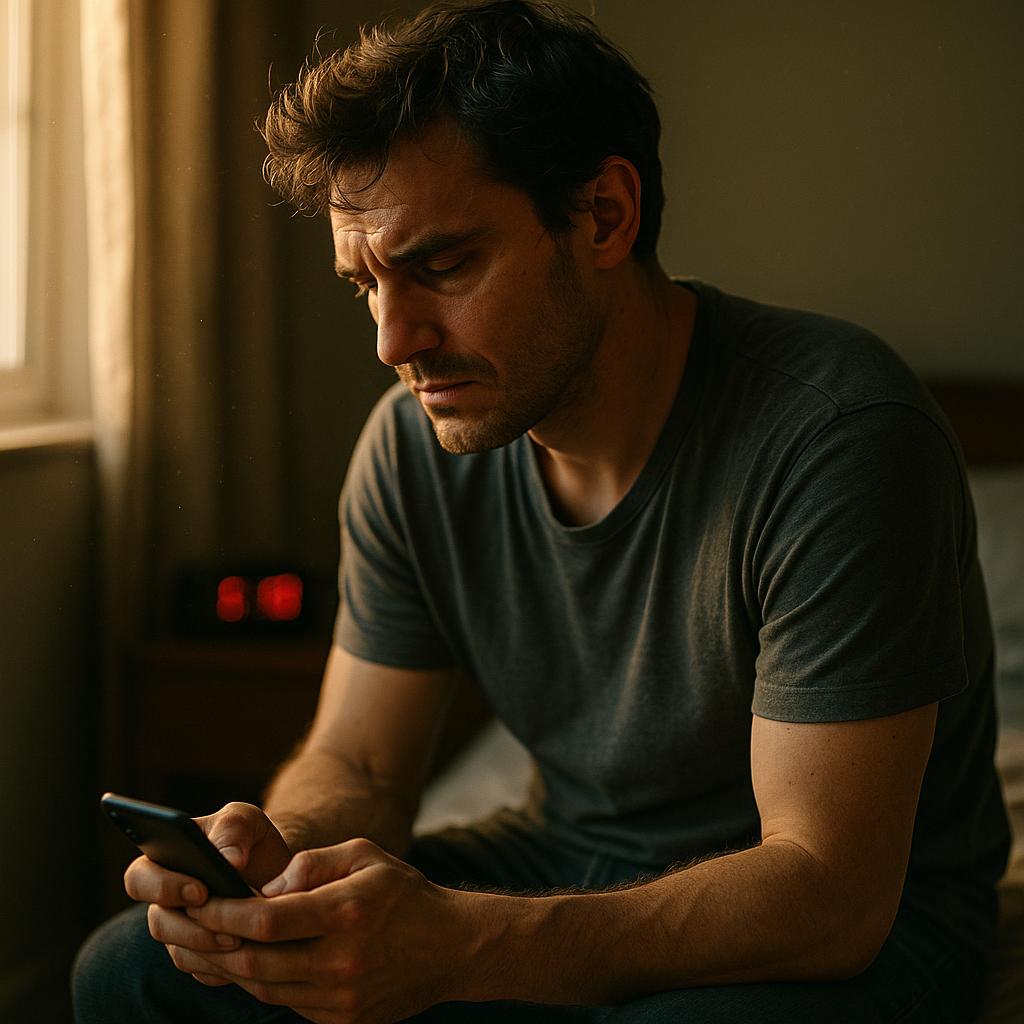 Image by RM AI
The Security Alert
I was scrolling through Instagram at 4 AM—insomnia had become my new normal since Linda disappeared—when both our phones erupted with alerts. The security app flashed red: MOTION DETECTED - BACKYARD. My stomach dropped as Mark bolted upright beside me. We huddled over his phone, watching the night-vision footage in horror. A hunched figure was moving deliberately toward our garden shed, pausing occasionally as if listening for something. "That's her," Mark whispered, his voice cracking. "That's my mother." I was already halfway to Sophie's room, my heart hammering against my ribs. "I'm calling 911," Mark called after me, his fingers trembling as he dialed. I scooped our daughter from her bed, still warm with sleep, and locked us in our bedroom closet. "Mommy, what's happening?" Sophie mumbled, rubbing her eyes. I held her close, listening to Mark's urgent whispers to the dispatcher downstairs. Through the closet slats, I could see our bedroom window—and the garden shed directly beyond it. The security light suddenly flooded the yard, and for just a second, I caught a glimpse of Linda's face looking up toward our house. But what chilled me to the bone wasn't her presence—it was what she was carrying: something long and metallic that glinted in the security light before she quickly retreated into the shadows.
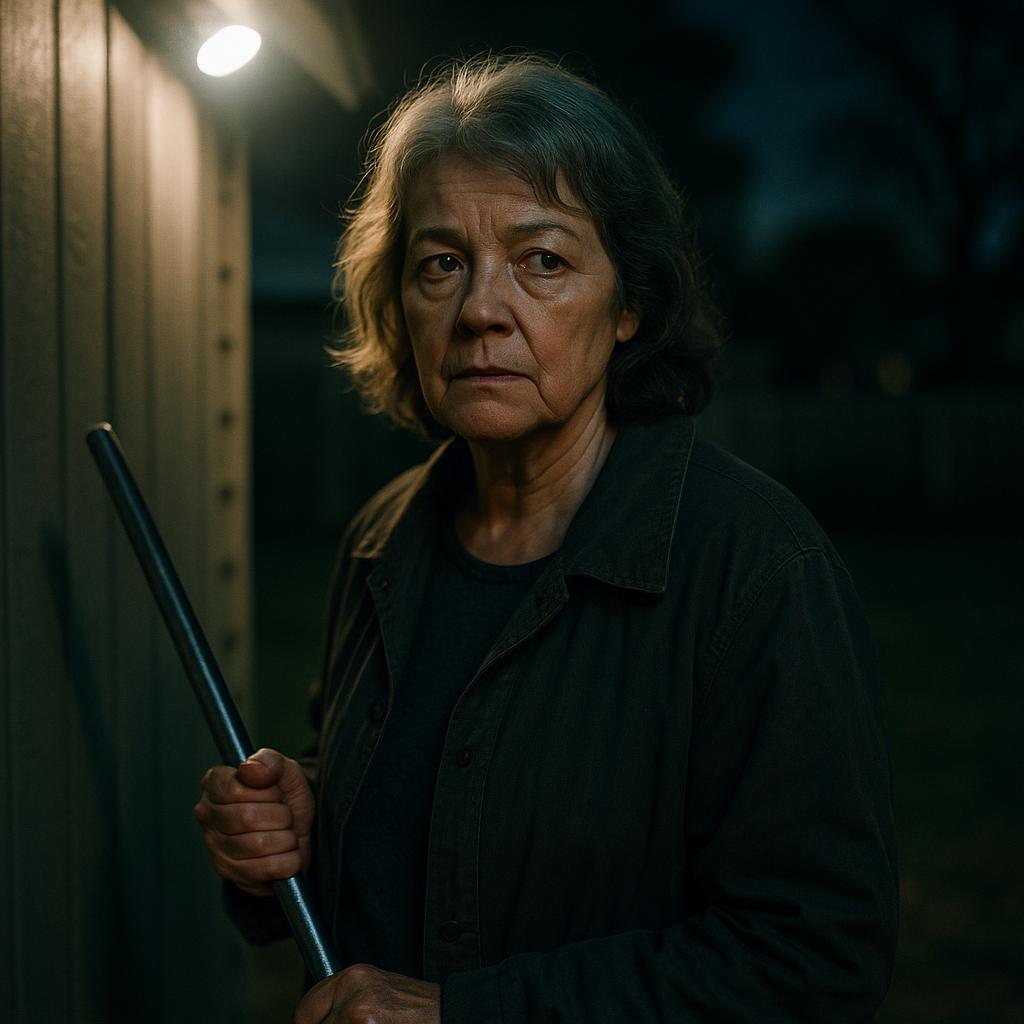 Image by RM AI
The Garden Shed
The police arrived within minutes, their flashlights cutting through the darkness as they searched our property. I stood in the doorway, Sophie half-asleep against my shoulder, watching them comb through bushes and check behind trees. "We don't see anyone, ma'am," one officer finally reported. But when they opened the garden shed, their expressions changed. Inside, they found a tote bag that made my skin crawl – Linda's prescription bottles (most still full), yellowed photos of Mark's father, and a leather-bound journal. The officer flipped through it while his partner bagged everything as evidence. "You might want to see this," he said quietly to Mark, showing him a page. I peered over his shoulder and felt my stomach drop. Page after page of rambling entries about "the imposter" who had "taken Jennifer's place" and how Linda needed to "save Mark from her evil influence." The officers promised increased patrols in our neighborhood, but their reassurances felt hollow as they drove away with Linda's belongings. "She thinks I'm not... me," I whispered to Mark after they left. "That I've been replaced." What terrified me most wasn't just that Linda was still out there somewhere – it was that in her mind, she wasn't trying to harm her family. She genuinely believed she was saving it.
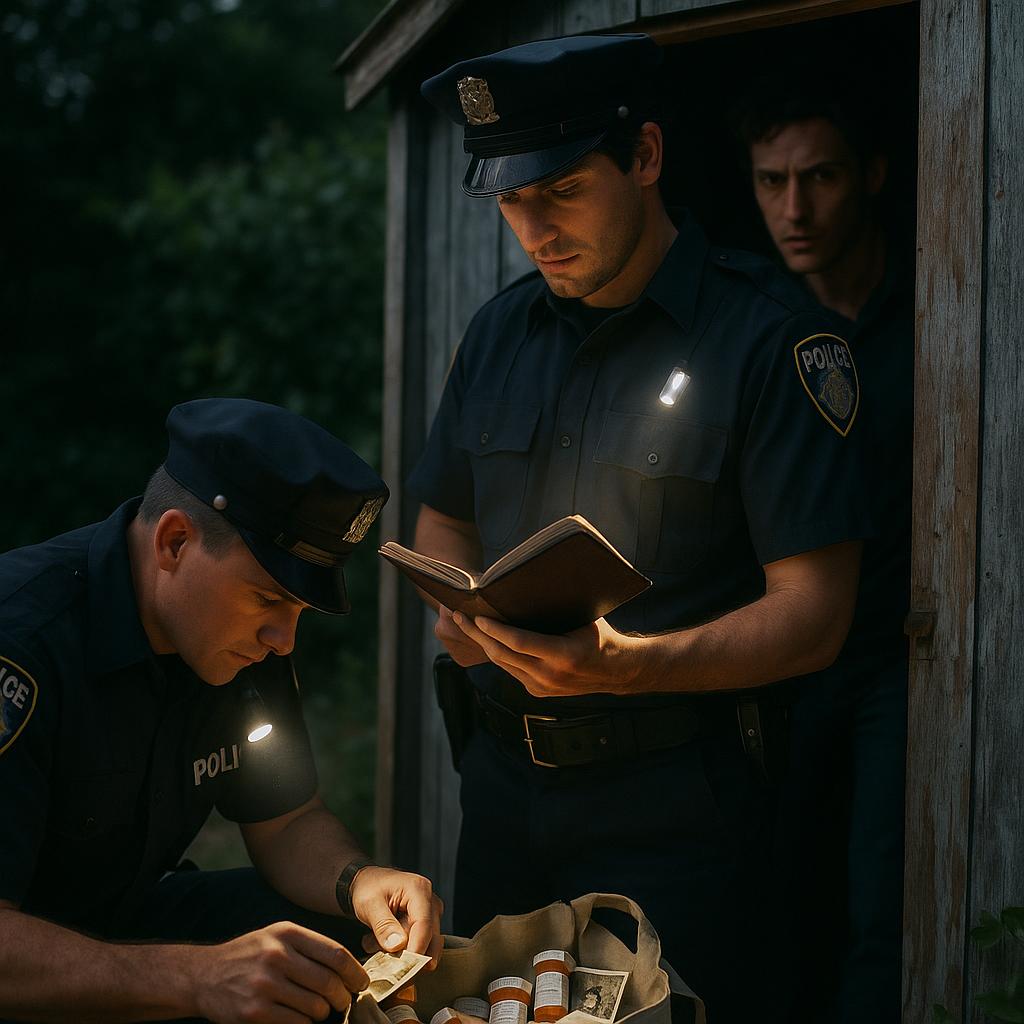 Image by RM AI
The Doctor's Insight
Mark finally called Linda's doctor yesterday, using the medical release form she'd signed years ago. Dr. Patel hesitated at first, citing patient confidentiality, but when Mark explained the situation—the school incident, the midnight prowling, the disturbing journal—his tone changed completely. "I've been trying to reach your mother for months," he admitted, his voice heavy with concern. "She's missed her last four appointments." The doctor confirmed what we'd begun to suspect: Linda had been diagnosed with early-stage frontotemporal dementia nearly a year ago. He'd prescribed medication to help manage her anxiety and cognitive symptoms, but based on her behavior, he doubted she was taking it regularly. "Without consistent treatment, her paranoid delusions will likely intensify," Dr. Patel warned. "The brain changes can cause fixations on specific people—often those closest to the patient." My stomach knotted as he continued, explaining how patients sometimes become convinced that loved ones have been replaced by imposters—exactly what Linda's journal suggested about me. "Mr. Wilson," the doctor said before hanging up, his voice dropping to almost a whisper, "I need to be very clear: in her current state, your mother genuinely believes she's protecting you. And that makes her unpredictable... and potentially dangerous."
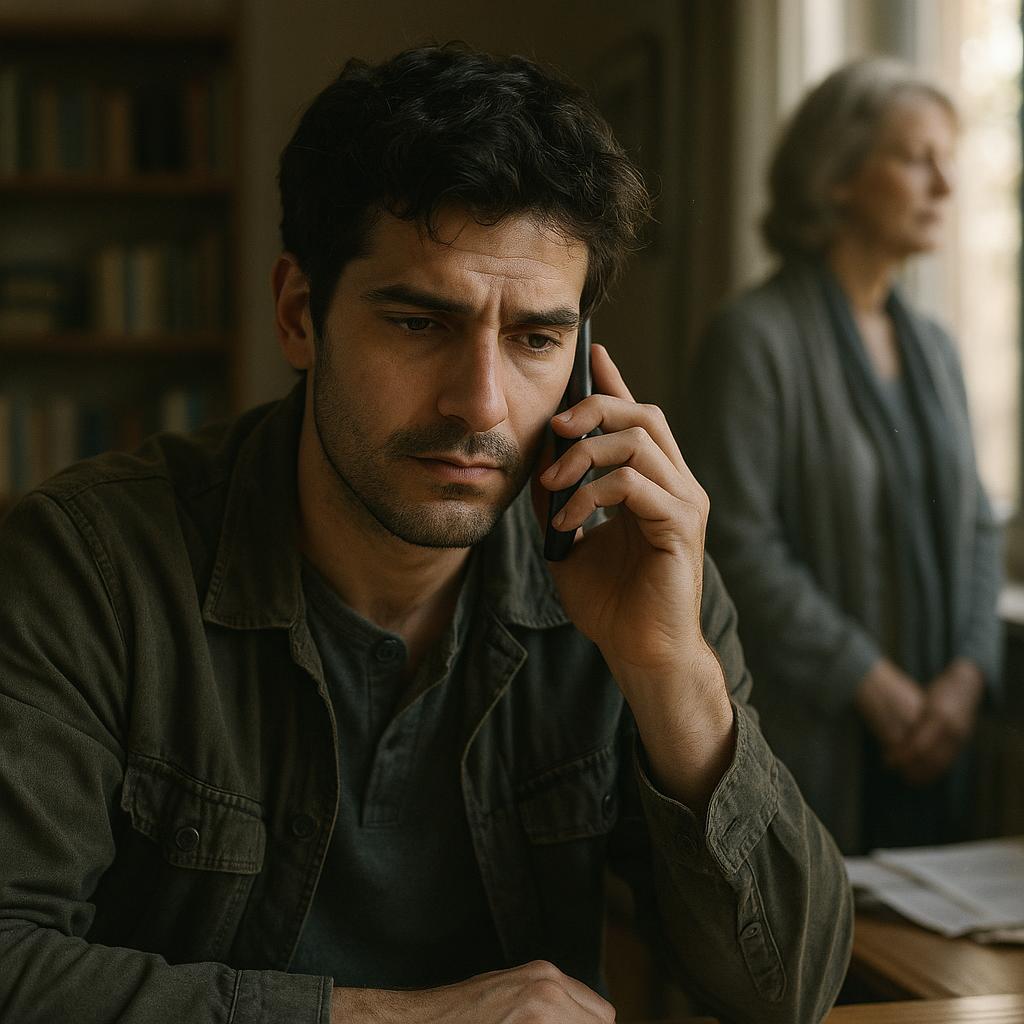 Image by RM AI
The Found Footage
I was organizing Sophie's playroom yesterday when I found it—a small black USB drive wedged behind her dollhouse furniture. I didn't recognize it as ours, and Sophie claimed she'd never seen it before. Curiosity got the better of me. When I plugged it into my laptop, my blood ran cold. There were dozens of videos, all recorded during Linda's holiday stay. She'd hidden cameras throughout our house—capturing private conversations between Mark and me, Sophie playing alone, and most disturbingly, footage of us sleeping. But what broke my heart was a video of Linda sitting with Sophie in her bedroom, whispering terrible lies: "Your mommy doesn't really love daddy like I did. She's only pretending." Sophie looked confused as Linda continued, "That's why I need your help, sweetheart. We need to protect daddy from her." I watched in horror as my mother-in-law methodically poisoned my daughter against me, frame by frame. My hands shook so badly I could barely text Mark: "Come home now. Found something you need to see." As I waited, I couldn't stop thinking about how Linda had been grooming Sophie right under our noses—and what else might be on this drive that I hadn't discovered yet.
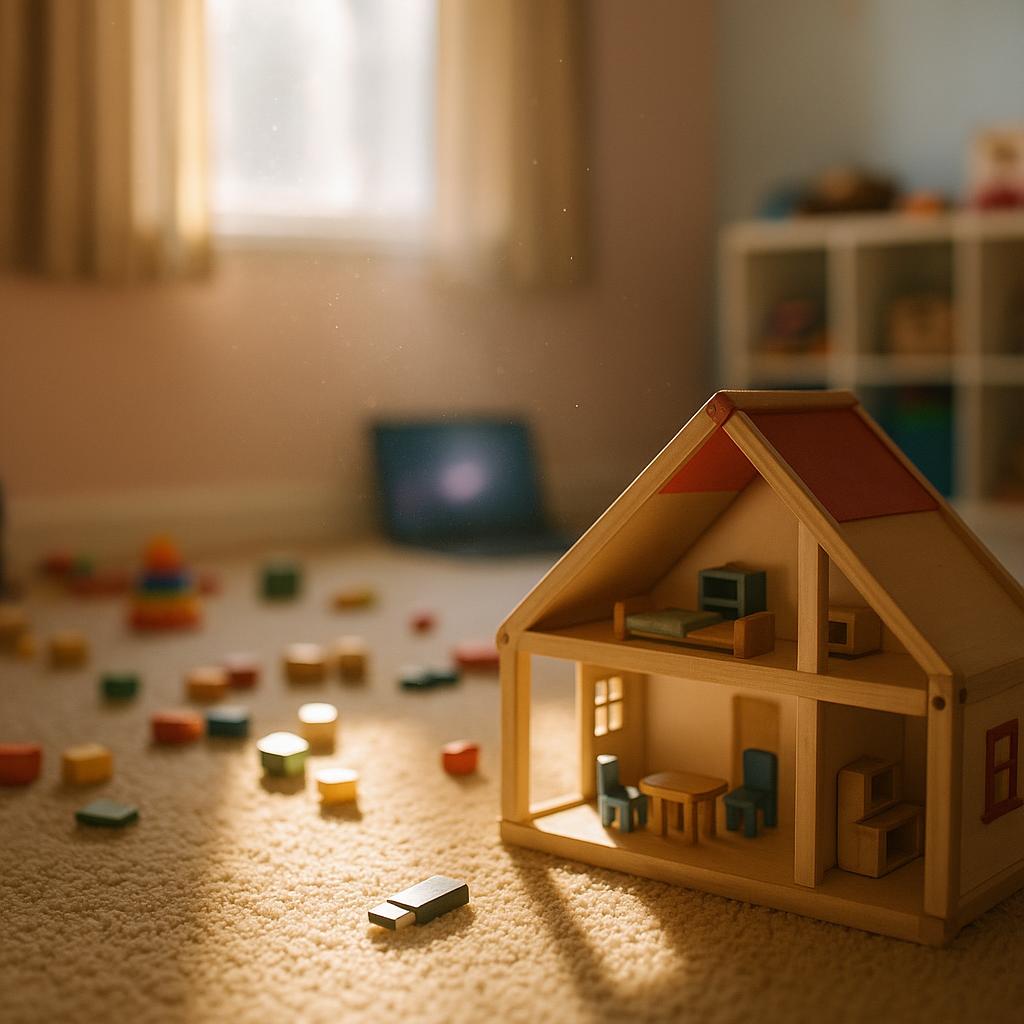 Image by RM AI
The Hospital Call
The phone rang at 11:43 PM. Mark answered while I held my breath, expecting the worst. His face transformed from tension to shock as he listened. 'She's where?' he asked, reaching for a pen. A hospital sixty miles away had Linda. Apparently, she'd been wandering through Westfield Mall, frantically telling strangers she needed to 'save her son from the imposter.' When security approached, she became hysterical, screaming that 'they' were trying to stop her mission. The panic attack that followed was severe enough that paramedics were called. 'She kept insisting someone had replaced her daughter-in-law,' the nurse explained to Mark. 'She's been admitted for psychiatric evaluation.' I felt a confusing mix of relief and dread wash over me. Linda was finally somewhere safe—somewhere she couldn't hurt us or herself. But the weight of what this meant settled heavily on my shoulders as I watched Mark scribble down details, his hand shaking. 'We'll come first thing tomorrow,' he told the nurse, his voice cracking. After he hung up, we sat in silence, the ticking of our kitchen clock suddenly deafening. 'She really believes it,' I whispered. 'She really thinks I'm not... me.' What neither of us wanted to say out loud was the question hanging between us: if Linda truly couldn't distinguish reality from delusion anymore, what would happen when we arrived at the hospital tomorrow?
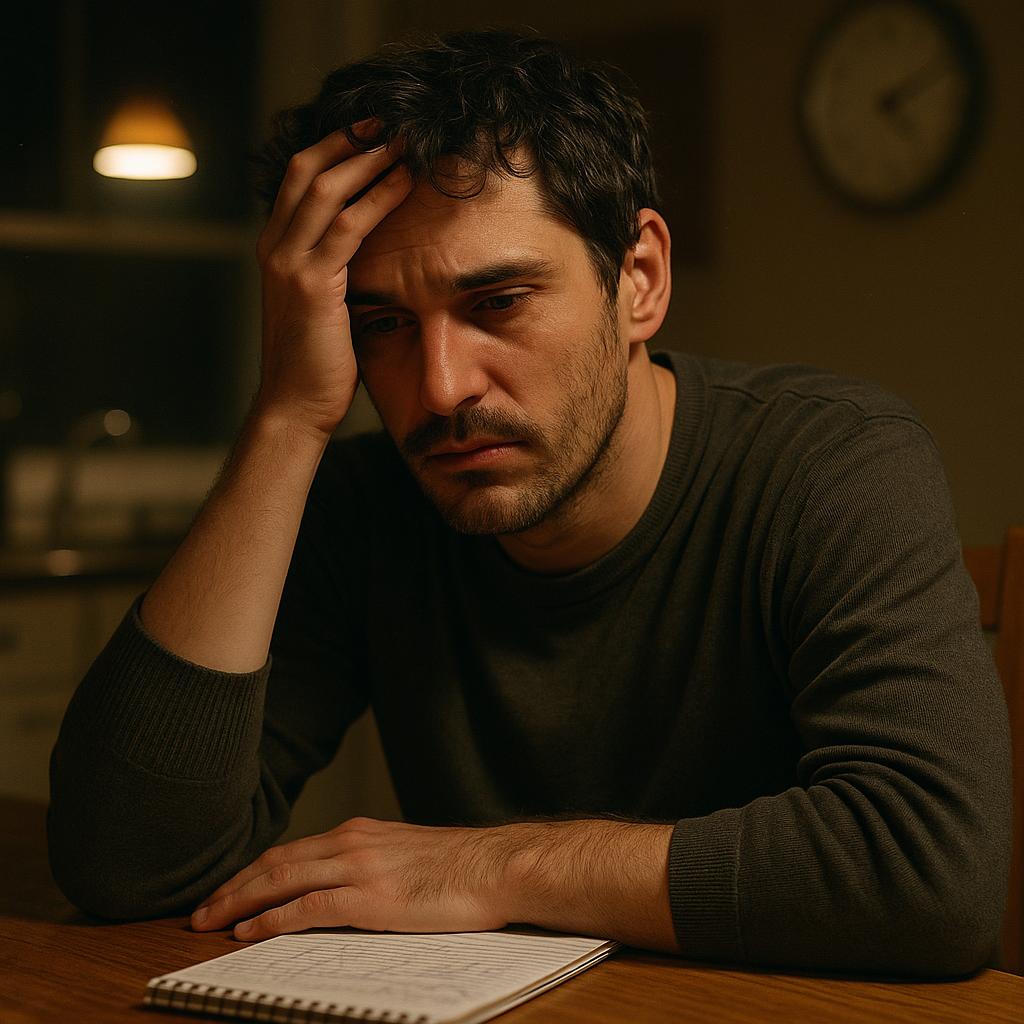 Image by RM AI
The Hospital Visit
The drive to the hospital felt like the longest sixty miles of my life. We'd arranged for Sophie to stay with her best friend's family—I couldn't bear the thought of her seeing her grandmother in this state. The hospital corridors seemed endless as a nurse led us to the psychiatric ward, the antiseptic smell burning my nostrils. When we finally entered Linda's room, my heart sank. She was sitting up in bed, staring vacantly at the wall, her once-meticulously styled hair now wild and unkempt. 'Mom?' Mark said softly, approaching her bedside. She turned slowly, her eyes lighting up for a moment before clouding with confusion. 'You look like my Mark,' she whispered, 'but they keep sending imposters.' Throughout our visit, she drifted in and out of lucidity—one minute recognizing Mark and asking about Sophie, the next accusing the nurses of being 'in on it.' Then came the moment that still haunts me. During a brief window of clarity, she grabbed my wrist with surprising strength, pulled me close, and whispered, 'I know what you did. I found the proof.' Before I could respond, her eyes rolled back and the nurse rushed in with sedation. Later, in the hallway, the neurologist recommended a comprehensive evaluation, his expression grave as he mentioned 'rapid progression.' On the drive home, Mark and I barely spoke, both wrestling with the same unspoken question: what exactly did Linda think she had found?
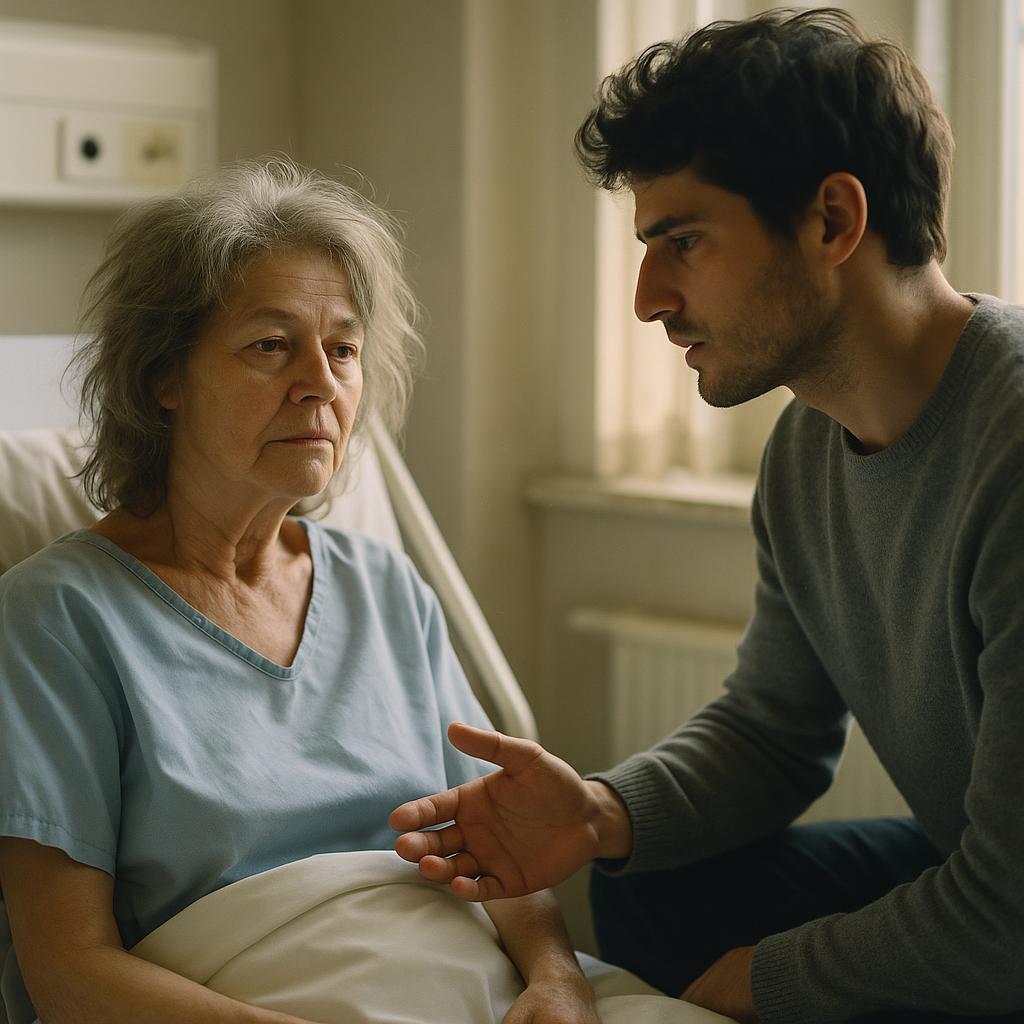 Image by RM AI
The Diagnosis
The neurologist's office felt too small for the weight of the news we were about to receive. Dr. Sharma sat across from us, Linda's brain scans illuminated on the screen behind him. 'It's frontotemporal dementia,' he explained, his voice gentle but clinical. 'The disease is attacking the frontal and temporal lobes of Linda's brain—areas responsible for personality, behavior, and emotional processing.' He pointed to darkened areas on the scan that meant nothing to me but apparently explained everything. 'Her fixation on you, Jennifer, isn't personal. The disease has created a delusion that her brain now accepts as reality.' Mark gripped my hand so tightly it hurt, his face a mask of confusion and grief. 'So she's not... she didn't mean to...' he struggled to find words. 'No,' Dr. Sharma confirmed. 'This isn't your mother making conscious choices. The paranoia, the surveillance, the accusations—these are symptoms, not deliberate actions.' On the drive home, Mark stared silently out the window. 'I've been so angry at her,' he finally whispered. 'How do you forgive someone when it wasn't really them in the first place?' I didn't have an answer. But as we pulled into our driveway, my phone buzzed with a text from the hospital: Linda was asking for me—only me—and she claimed to remember everything.
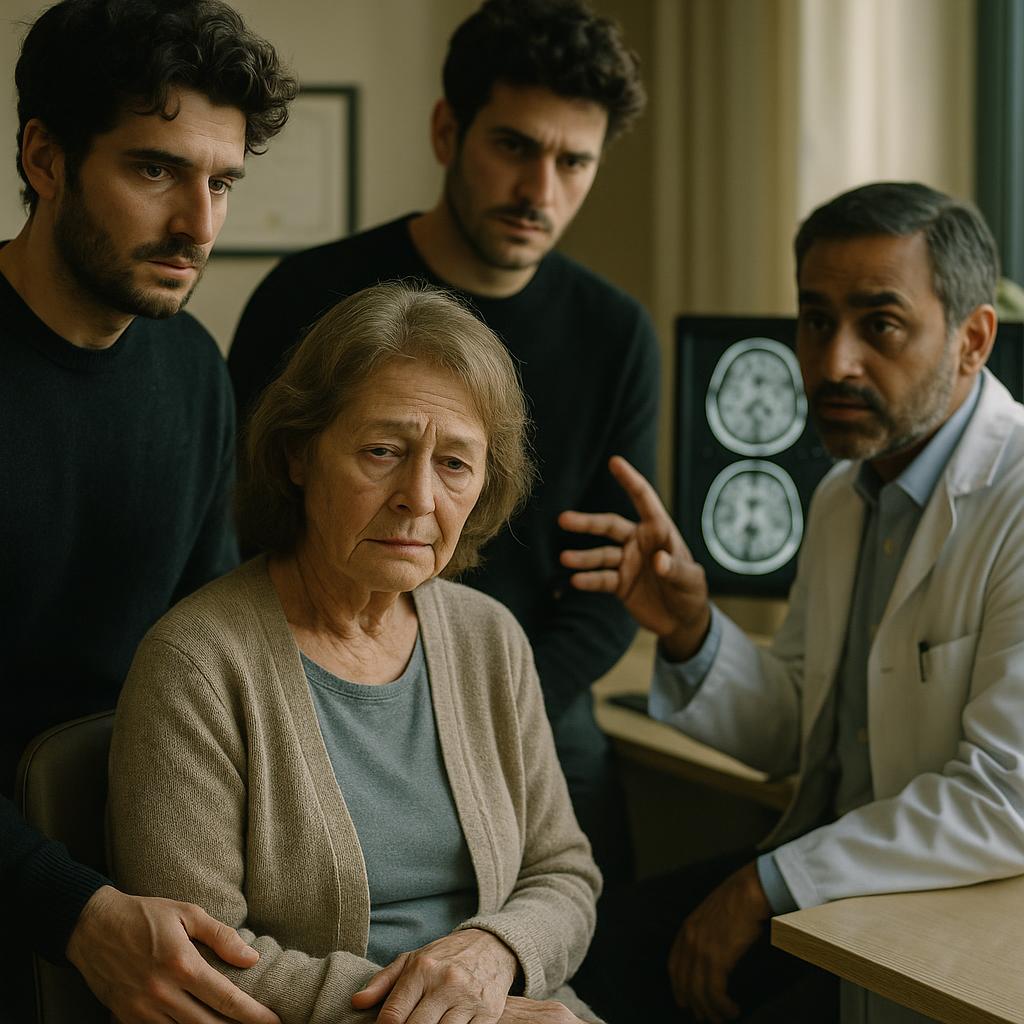 Image by RM AI
The Difficult Decision
The hospital cafeteria felt like neutral ground as Mark and I sat across from Dr. Sharma, discussing Linda's future. "The specialized memory care facility in Ridgeview has an excellent program for frontotemporal dementia patients," he explained, sliding a glossy brochure toward us. "They have 24-hour supervision and staff trained specifically for cases like your mother's." I watched Mark's face crumple slightly as he flipped through the pages of what would likely become his mother's new home. "I should have noticed sooner," he whispered, his voice catching. "All those times I thought she was just being difficult..." I reached for his hand across the table. "We both missed it," I said, though part of me still tensed at the memory of Linda standing over our bed that night. The truth was complicated – I was terrified of her, yet heartbroken for her. Dr. Sharma explained that Linda's condition would progressively worsen, her paranoia potentially becoming more dangerous without proper care. "Take some time to think about it," he advised, "but not too much time." On the drive home, Mark stared silently at the road ahead. "Whatever you decide, I'm with you," I told him, meaning it despite everything. What I didn't tell him was that earlier, when I'd stepped out to use the restroom, Linda had grabbed my arm and whispered something that made my blood run cold: "I remember where I hid it, and soon everyone will know the truth."
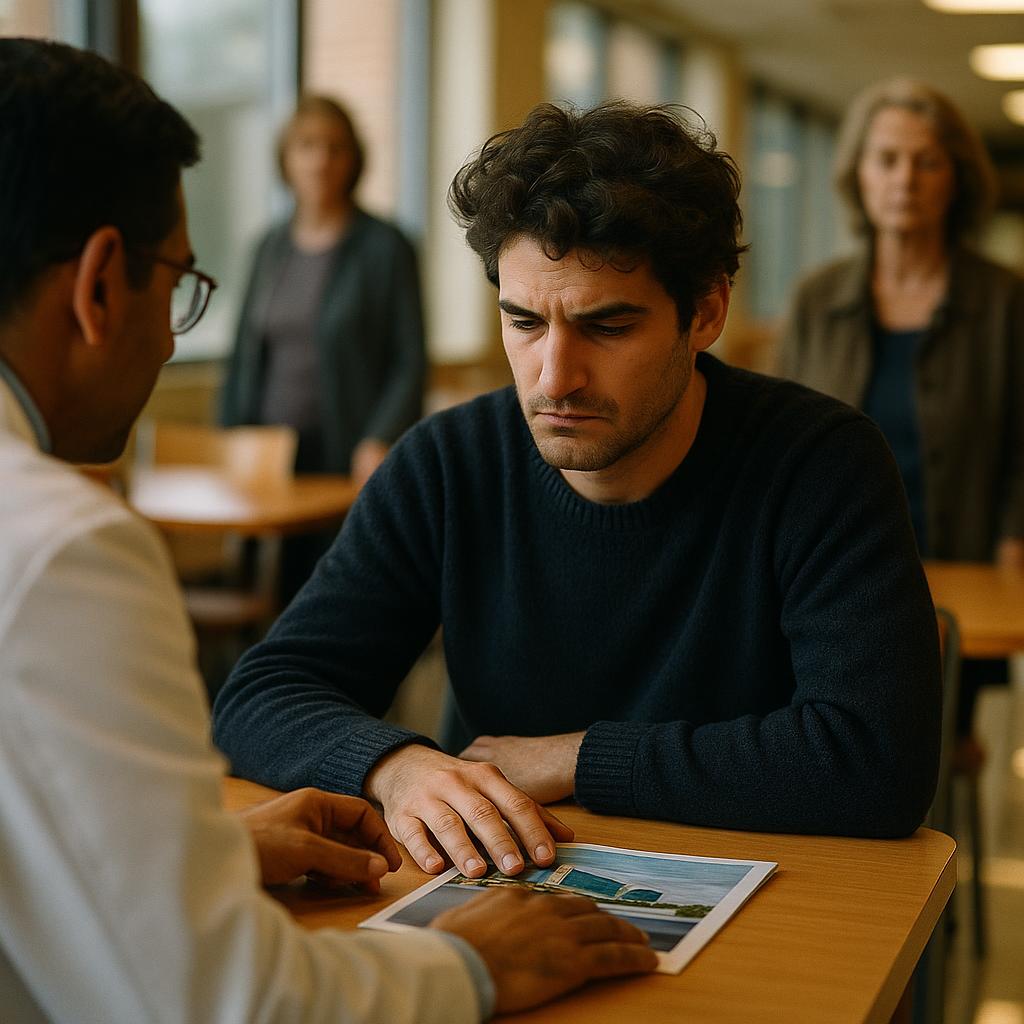 Image by RM AI
The Family Conference
Mark set up the Zoom call for Sunday afternoon, sending calendar invites to everyone like this was some corporate meeting instead of a family crisis. I sat beside him at our kitchen table, watching the little boxes populate one by one—his aunt Judith, cousins from both coasts, even his father's brother who we barely spoke to. "We need to make a decision about Mom's care," Mark began, his voice steadier than I expected. The debate erupted almost immediately. His cousin Steve insisted Linda could live with him in Oregon, while Aunt Judith argued forcefully for the memory care facility. "She needs professionals, not good intentions," she said, adjusting her reading glasses. I stayed quiet, feeling like an intruder in this family discussion. Then Judith dropped a bombshell that made me sit up straight. "Jennifer isn't the first person she's fixated on," she said, silencing the group. "Last Thanksgiving, she was convinced my husband Tom was an impostor who'd 'replaced' the real Tom. She even called the police on him." One by one, other relatives shared similar stories—paranoid accusations, strange midnight calls, Linda's certainty that various family members had been "replaced." As I listened, the weight on my shoulders lightened slightly. It wasn't personal. It never had been. But when Mark's uncle leaned toward his camera and whispered, "There's something else you should know about your mother's past," I felt that familiar chill return to my spine.
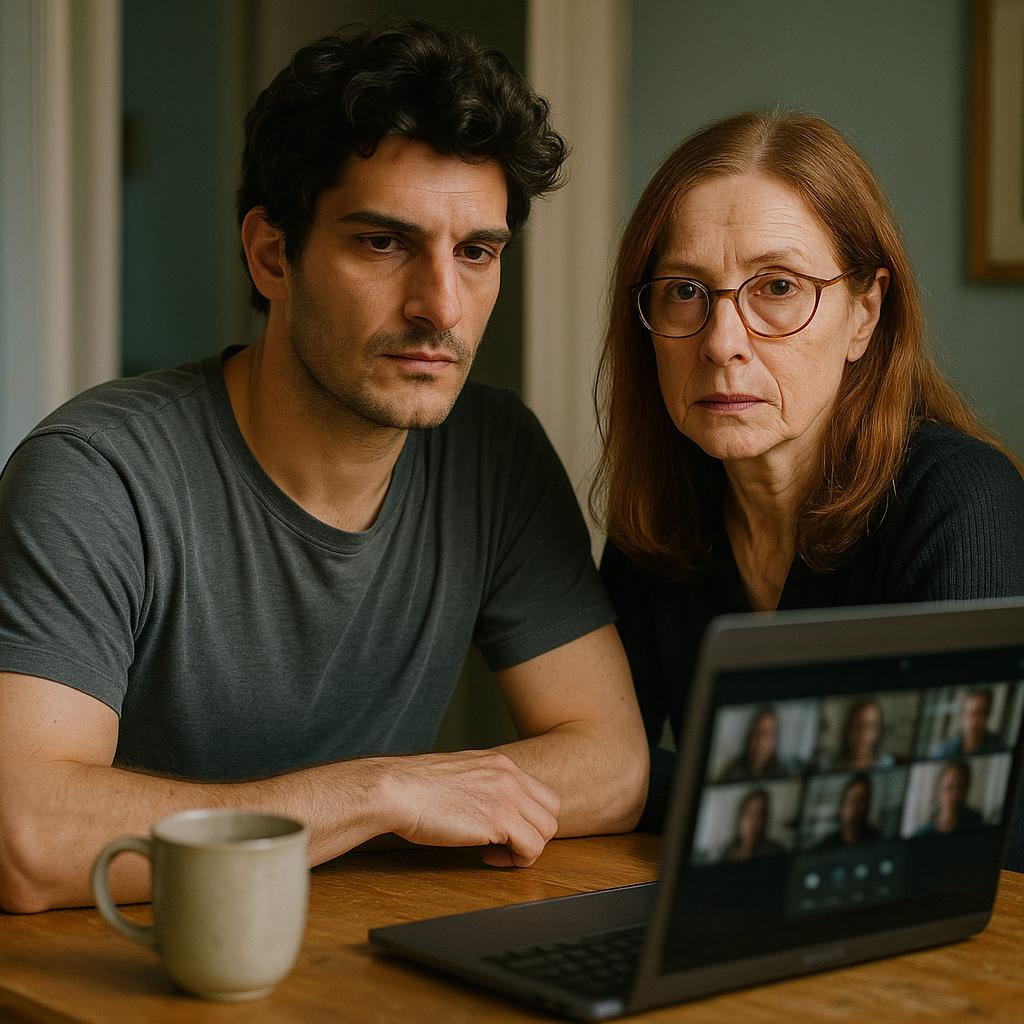 Image by RM AI
The Care Facility
Ridgeview Memory Care Center looked more like a high-end retirement community than a medical facility, with its manicured gardens and cheerful lobby. But the reality of why we were there hit hard when the intake coordinator, Ms. Winters, pulled us aside during Linda's admission. "We found this while cataloging her personal items," she said, sliding a small leather-bound notebook across her desk. My stomach dropped as Mark flipped through pages filled with rambling entries about me—how I was an "imposter" who had "infiltrated" their family, and detailed plans to "rescue" Sophie from my influence. Some pages contained bizarre "evidence" of my supposed deception, like how I folded towels differently than "the real Jennifer" would. Ms. Winters must have seen the horror on my face. "This type of paranoid ideation is extremely common with frontotemporal dementia," she assured us, her voice gentle but matter-of-fact. "We'll incorporate this into her treatment plan." As we left Linda's new room—her sitting blankly by the window, already seeming to forget we were there—Mark squeezed my hand. "We're doing the right thing," he whispered. I nodded, but couldn't shake the chill that ran through me when I'd glimpsed one particular page in that notebook, where Linda had written in bold letters: "I know where the real Jennifer is."
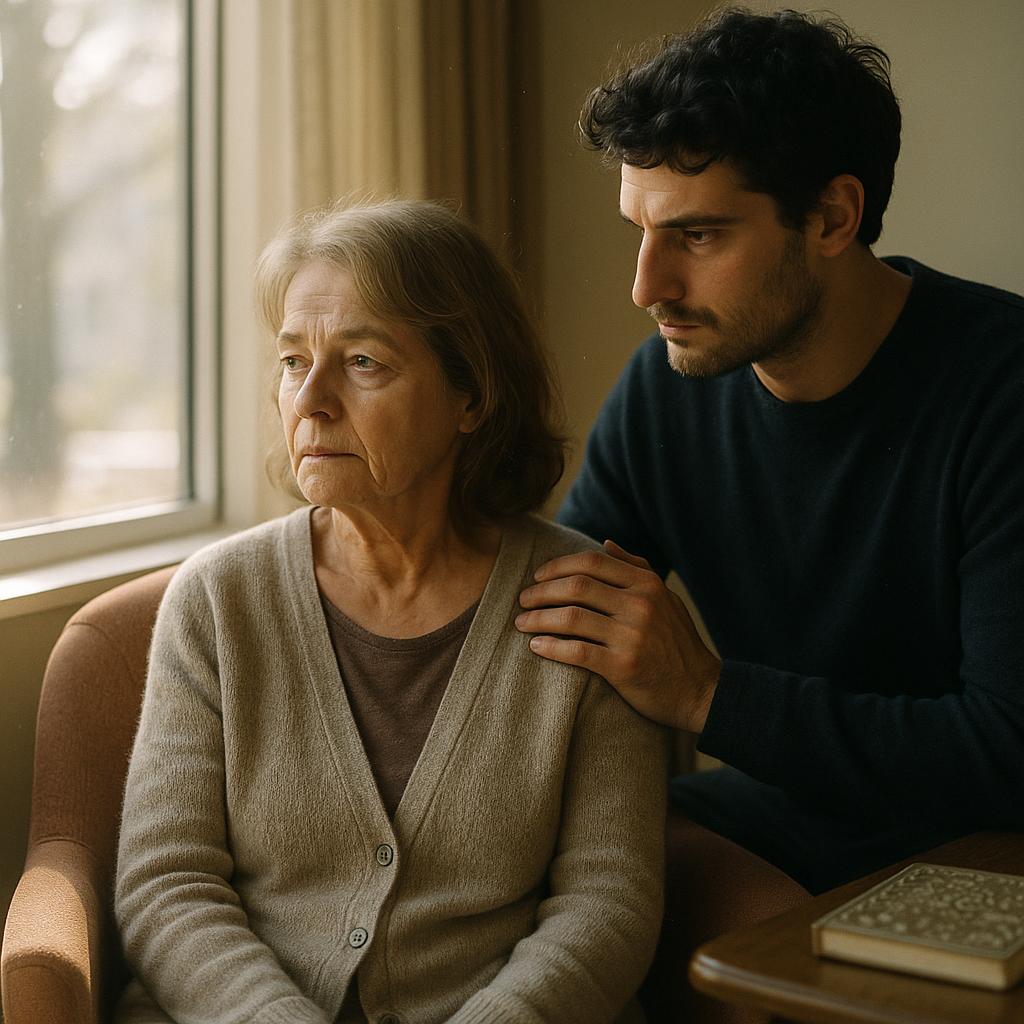 Image by RM AI
The Therapy Session
Dr. Levine's office felt like neutral territory—somewhere we could finally unpack the emotional hurricane Linda had unleashed on our lives. Mark sat beside me on the plush gray couch, our knees almost touching but not quite. "I keep replaying everything in my head," I admitted, my voice smaller than I wanted it to be. "One minute I'm terrified of her, remembering her standing over our bed... and the next I'm overwhelmed with guilt because she's sick, not evil." Dr. Levine nodded, her expression warm but professional. Mark stared at his hands. "I should have protected you both better," he said, his voice cracking. "She's my mother. I should have seen the signs." When he finally looked up, his eyes were glassy. "Every time Sophie asks when Grandma is coming home, it breaks me all over again." Dr. Levine leaned forward slightly. "What you're both experiencing is a form of complicated grief," she explained. "You're mourning someone who's still physically here but fundamentally changed." She helped us understand that my fear and Mark's guilt could coexist—both were valid responses to an impossible situation. As we left her office, holding hands for the first time in weeks, my phone buzzed with a text from Ridgeview: Linda was having a good day and had asked specifically if Sophie could visit. What they didn't know was that we'd found another hidden camera in Sophie's teddy bear just that morning.
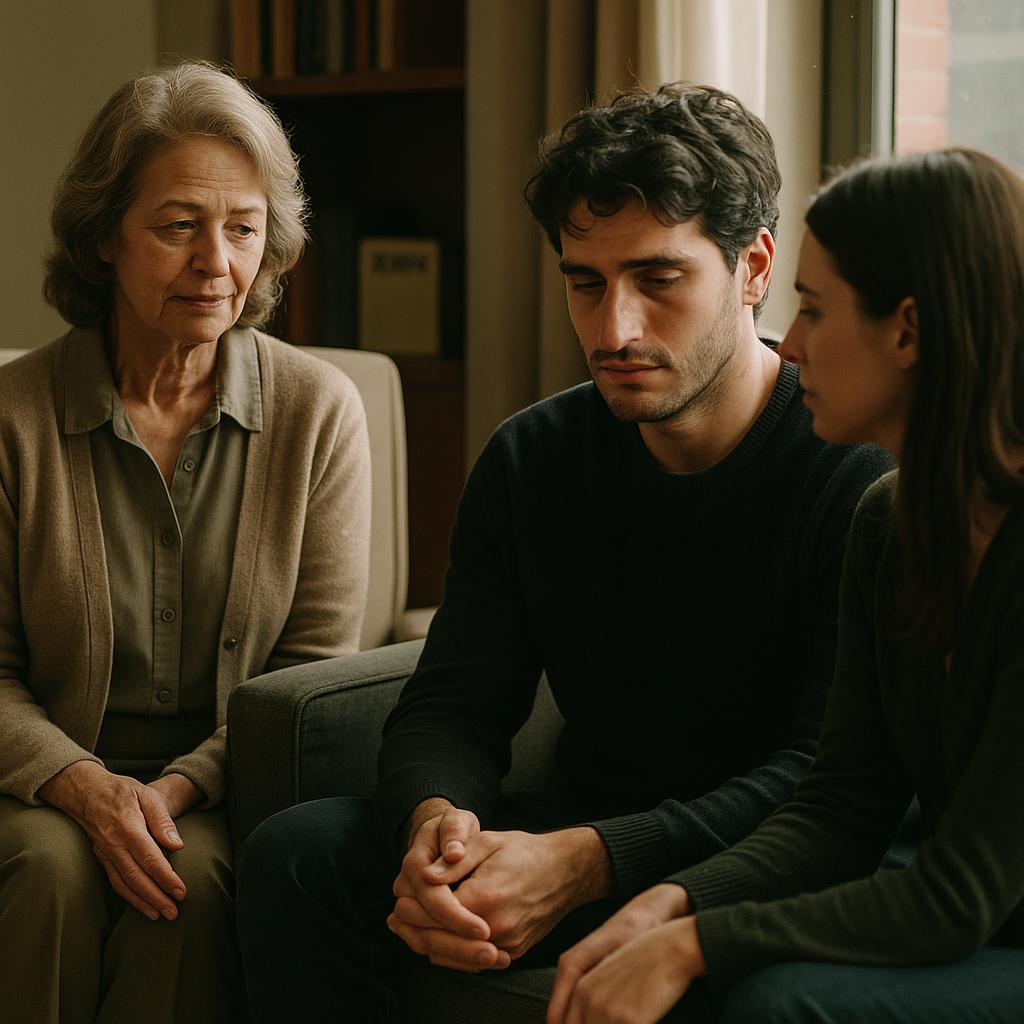 Image by RM AI
Sophie's Questions
Sophie's questions started innocently enough. "Is Grandma's brain like a computer with a virus?" she asked one night during bedtime. Mark and I exchanged glances, unprepared for this conversation. How do you explain to a six-year-old that her grandmother believes her mother is an imposter? "Something like that, sweetheart," Mark said, sitting on the edge of her bed. "Grandma's brain is sick, and sometimes it makes her think things that aren't real." Sophie's face scrunched up in concentration. "Like when she told me you weren't really my mommy?" My heart shattered. I hadn't realized Linda had said that directly to her. "Exactly," I managed, keeping my voice steady. "That's why she needs special doctors to help her." The questions kept coming over the following days—each one like a tiny dagger. "Will I get sick like Grandma?" "Can we fix her brain?" "Does she still love me?" We answered as honestly as we could, emphasizing that none of this was Sophie's fault. But last night, she asked something that stopped us cold: "Mommy, if Grandma's brain is making up stories... how do we know what else she made up about you?"
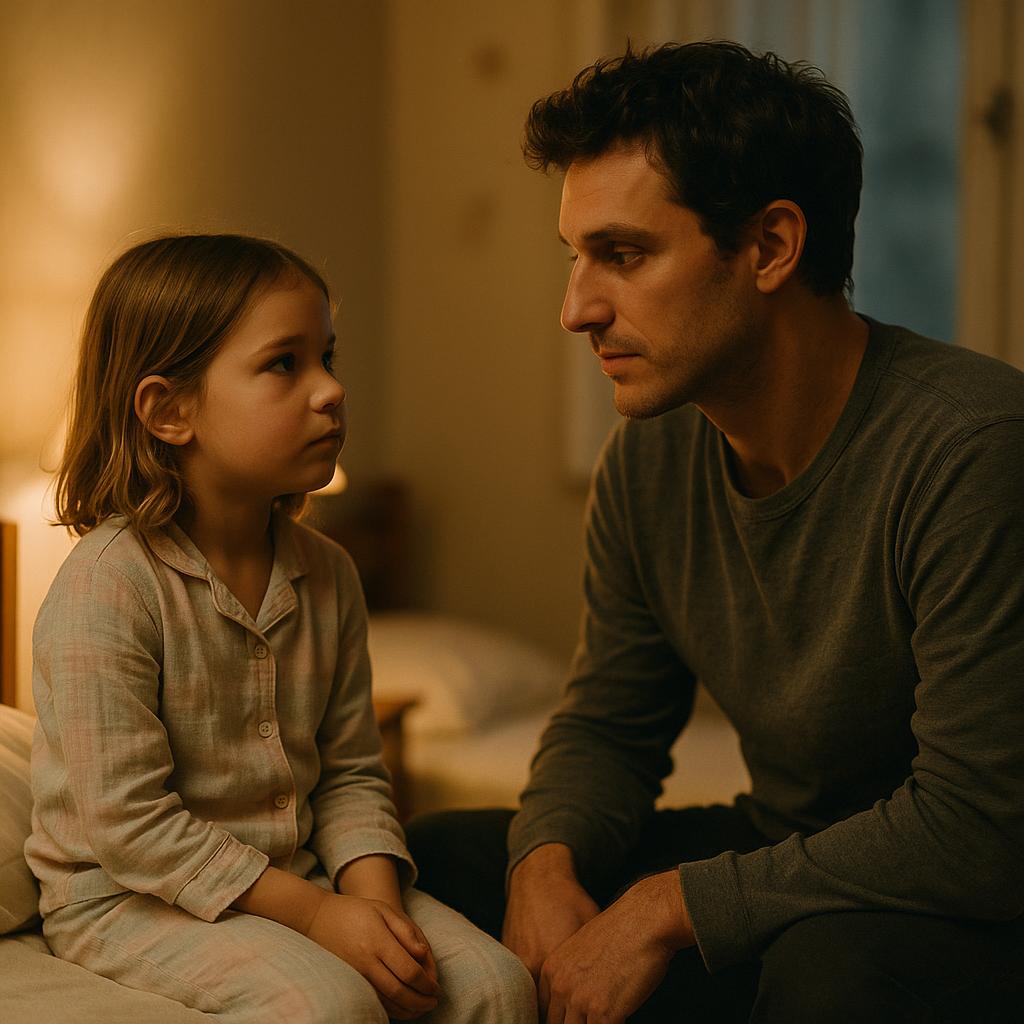 Image by RM AI
The Unexpected Improvement
The drive to Ridgeview felt different this time. Instead of dread weighing down my shoulders, I felt a cautious flicker of hope. Dr. Sharma had called yesterday with unexpected news: Linda was responding well to her medication regimen. When we arrived, I barely recognized the woman sitting calmly in the sunlit common room. Her hair was neatly combed, her clothes matched, and her eyes—those eyes that had once burned with paranoid suspicion—seemed clearer. 'Mark!' she exclaimed, her face lighting up when she saw her son. Then she turned to me, hesitating. 'Jennifer,' she said, not quite warm but not accusatory either. The facility's neurologist explained that with consistent medication and structured routine, some patients experience periods of remarkable clarity. 'Don't get your hopes too high,' he cautioned us privately. 'These improvements are often temporary with frontotemporal dementia. The disease will continue to progress.' Still, watching Linda chat with Mark about mundane things—the facility's garden, the weather, even asking about Sophie without that edge of suspicion—felt like witnessing a small miracle. As we were leaving, she touched my arm gently. 'I'm sorry,' she whispered, her eyes momentarily lucid. 'Sometimes I get confused about... things.' Before I could respond, that familiar vacant look returned, and I wondered if she even remembered what she was apologizing for—or if somewhere in her fractured mind, she still believed I was hiding something terrible.
 Image by RM AI
The Apology
The nurse led me to Linda's room, saying she'd been asking for me—just me—all morning. I found her sitting by the window, sunlight illuminating her face in a way that made her look almost like her old self. 'Jennifer,' she said, her voice steadier than I'd heard in months. 'Please sit.' I perched cautiously on the edge of the chair beside her, my body tense with uncertainty. 'I need to tell you something while my mind is... here.' She tapped her temple with a trembling finger. 'I know something's wrong with me. I've been... watching myself do terrible things, like I'm trapped behind glass, screaming to stop but no one can hear me.' Tears welled in her eyes. 'Those cameras, the things I said to Sophie—that wasn't me. Or it was, but not the me I want to be.' I felt my chest tighten as she reached for my hand. Her grip was surprisingly strong, anchored in this rare moment of clarity. 'I'm so sorry for what I put you through,' she whispered. 'You're exactly who Mark and Sophie need.' Before I could respond, she squeezed my hand and leaned closer. 'Take care of my boy,' she said, her voice suddenly urgent. 'And Jennifer? The box in the attic—you need to find it before I forget again.'
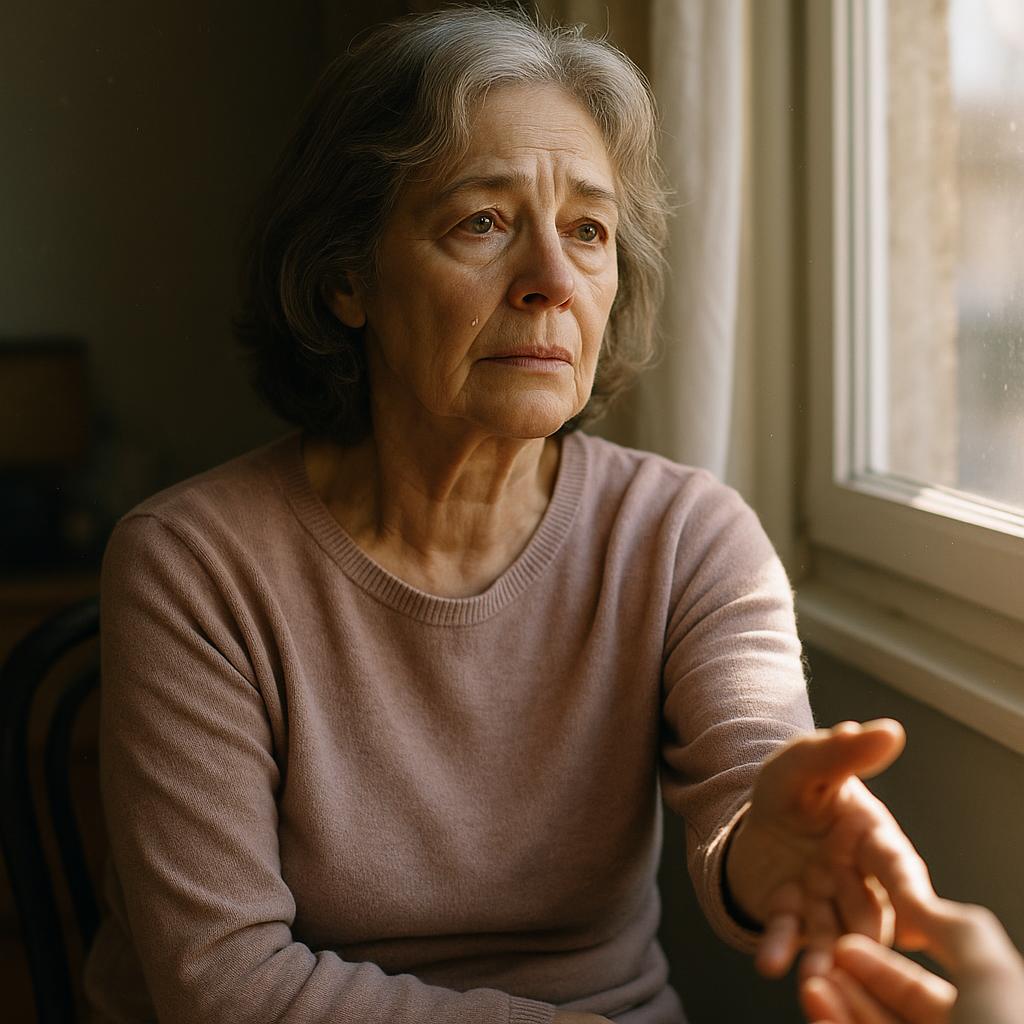 Image by RM AI
The Relapse
Linda's improvement was like a beautiful mirage that vanished as quickly as it appeared. Just two weeks after that heartfelt apology, my phone lit up with Ridgeview's number. My stomach dropped before I even answered. "Mrs. Thompson, I'm afraid there's been a significant change in Linda's condition," the nurse explained, her voice carefully neutral. Linda had woken up disoriented and convinced she was being held against her will. She'd tried to "escape" three times, once making it all the way to the parking lot before staff intervened. When Mark and I arranged a video call that evening, the woman on screen was unrecognizable from the one who'd squeezed my hand and apologized. "Where's my son?" she demanded, eyes wild with panic despite Mark being right there on camera. "That's not Mark! What have you done with him?" But it was her reaction to seeing me that truly broke my heart. She physically recoiled, pointing at the screen and screaming, "She's the one! The impostor! She's stolen everything!" The facility director gently ended the call as Linda became increasingly agitated. Later, Dr. Sharma explained they were adjusting her medication again, but his expression told me what he couldn't say aloud – we'd witnessed a temporary plateau, not recovery. That night, I couldn't sleep, Linda's words echoing in my mind: "The box in the attic – you need to find it before I forget again." What if that moment of clarity had been our last chance?
 Image by RM AI
The Support Group
Mark came home from his first support group meeting with red-rimmed eyes but a lighter expression than I'd seen in weeks. 'You wouldn't believe how many people are going through exactly what we are,' he said, collapsing onto the couch beside me. The community center downtown hosted weekly meetings for families affected by frontotemporal dementia. Mark described sitting in a circle of strangers who quickly became allies in a battle none of them had chosen. 'This guy Tom—his mother became convinced his wife was poisoning her food. Installed cameras in their house too.' Mark's voice cracked. 'He said the hardest part was accepting that his mom wasn't being malicious—her brain was literally rewiring itself.' For the first time since Linda's diagnosis, I watched my husband talk about his mother without that crushing weight of guilt. 'The group leader said something that hit me hard,' he continued, taking my hand. 'He said we're not just losing them once—we're losing them over and over, in new ways each time.' That night, Mark slept through until morning—no nightmares, no checking his phone for messages from Ridgeview. It was progress, however small. But as I drifted off beside him, I couldn't stop thinking about that box in the attic Linda had mentioned during her moment of clarity—and what secrets it might contain.
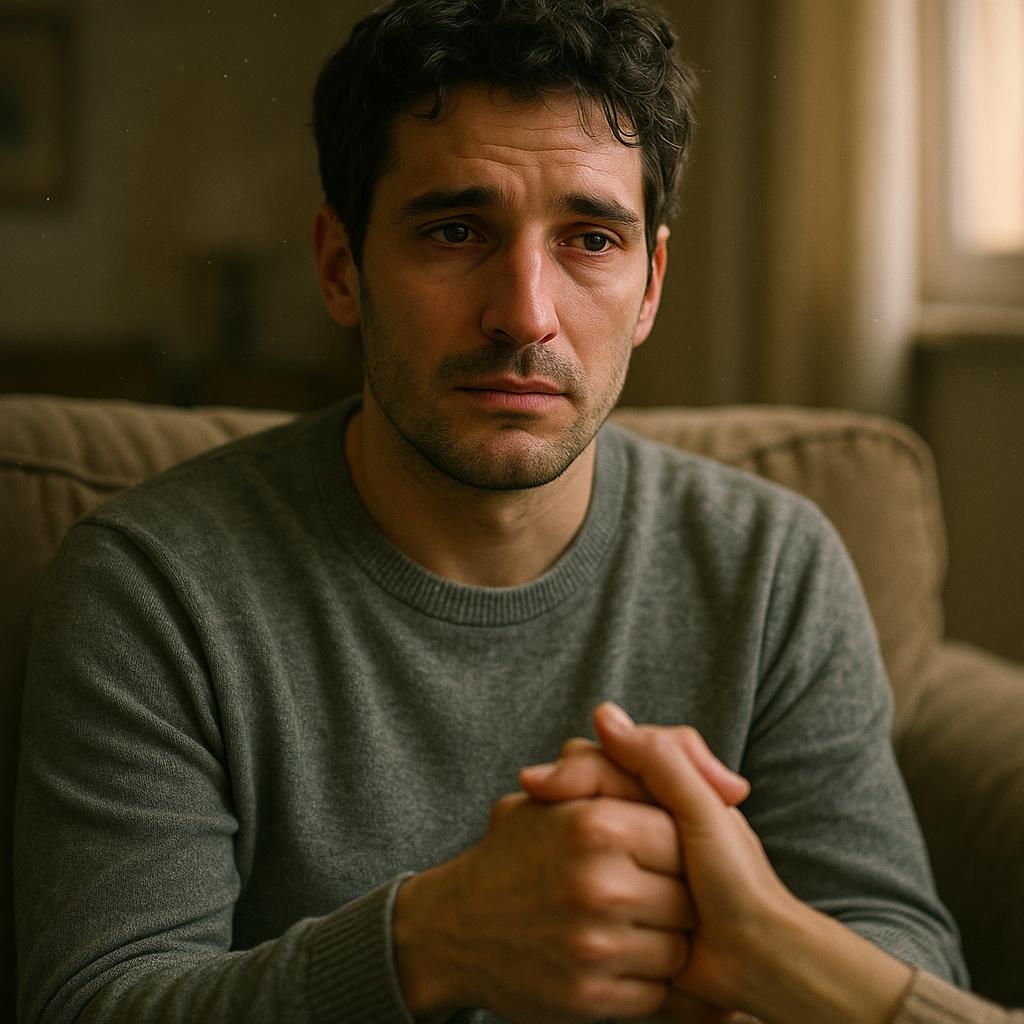 Image by RM AI
The Hidden Letter
Spring cleaning wasn't my idea of a fun Saturday, but with everything going on with Linda, I needed the distraction. I was sorting through Mark's old college textbooks when a yellowed envelope slipped out from between the pages of his economics textbook. My first instinct was to just put it back, but Linda's handwriting on the front made me pause. It was addressed to Mark, dated just three weeks after his father's sudden death. I hesitated, knowing I shouldn't read it, but something told me it was important. The letter inside revealed a Linda I'd never known – vulnerable, scared, and deeply human. 'My dearest Mark,' it began, 'I don't know how to be in this world without your father. The thought of being alone terrifies me more than anything.' Her words were raw with grief and fear of abandonment. 'Sometimes I worry that once you start your own family, there won't be room for me anymore.' Reading those words, I felt a chill. Was this the seed that her illness had twisted and distorted into those paranoid delusions about me? The woman who wrote this letter wasn't the monster who stood over our bed that night – she was just a frightened woman afraid of being forgotten. I carefully refolded the letter, wondering if showing it to Mark would help him understand what might have been happening in his mother's mind all along.
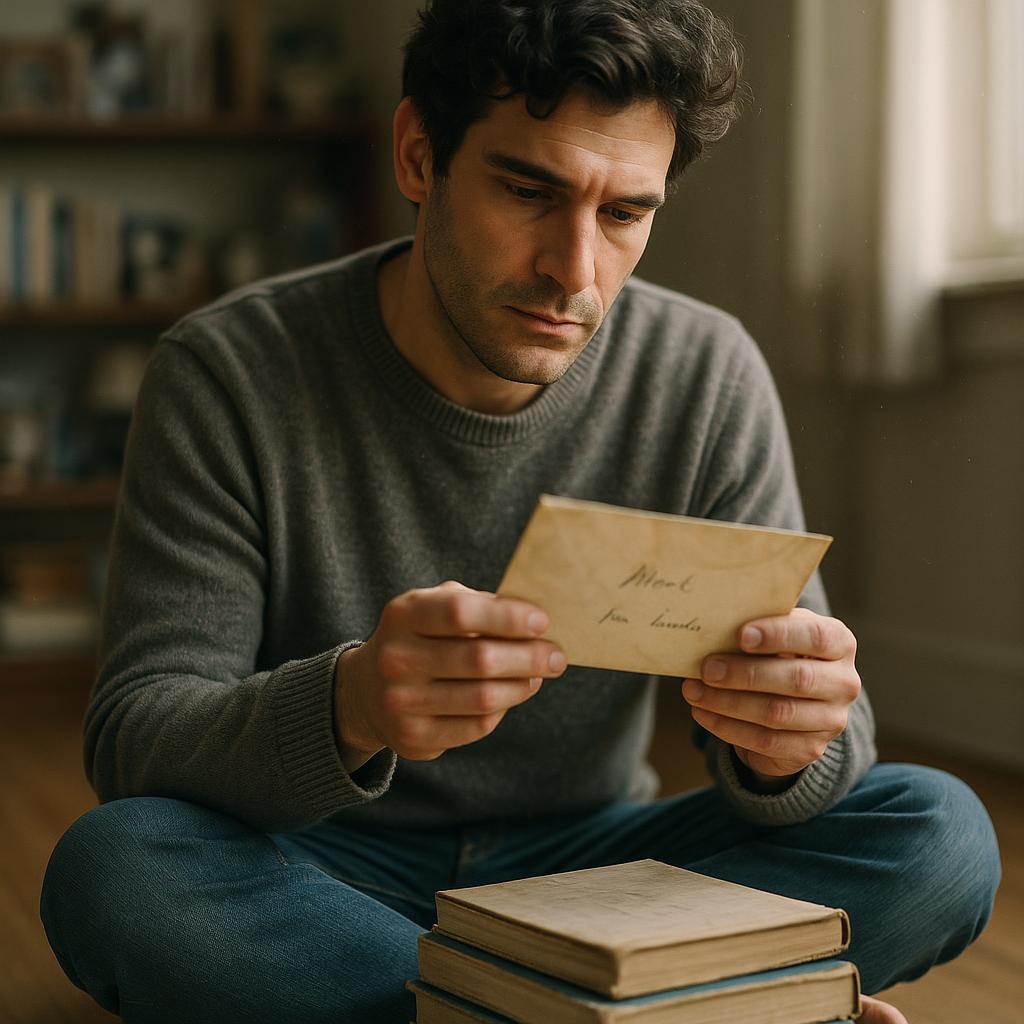 Image by RM AI
The Research Project
Dr. Keller's office was filled with medical journals and framed diplomas that seemed to watch us as we considered his proposal. 'We're conducting a groundbreaking study on frontotemporal dementia patients with paranoid features,' he explained, sliding a consent form across his desk. 'Linda's case is particularly valuable because we have documented evidence of her behavior progression.' I felt Mark tense beside me. The idea of turning his mother's illness into a research subject felt uncomfortable, yet necessary. 'Would this help other families?' I asked, thinking about all those people in Mark's support group, fighting the same invisible enemy. Dr. Keller nodded earnestly. 'Absolutely. The paranoid features Linda exhibits—the cameras, the accusations, the fixations—they're still poorly understood.' I thought about those terrifying nights, her standing over our bed, the notebook filled with conspiracies about me. Part of me wanted to run from anything that would make me relive those memories. But another part knew that if our nightmare could prevent someone else's, how could I refuse? 'We'll need access to your home videos, the nanny cam footage, and regular interviews with both of you,' Dr. Keller continued. 'It's a significant commitment.' Mark squeezed my hand as we exchanged glances. 'We'll do it,' I said, my voice steadier than I felt. What I didn't tell them was that I had finally found the courage to look for that box in the attic Linda had mentioned—and what I discovered inside made me question everything I thought I knew about her condition.
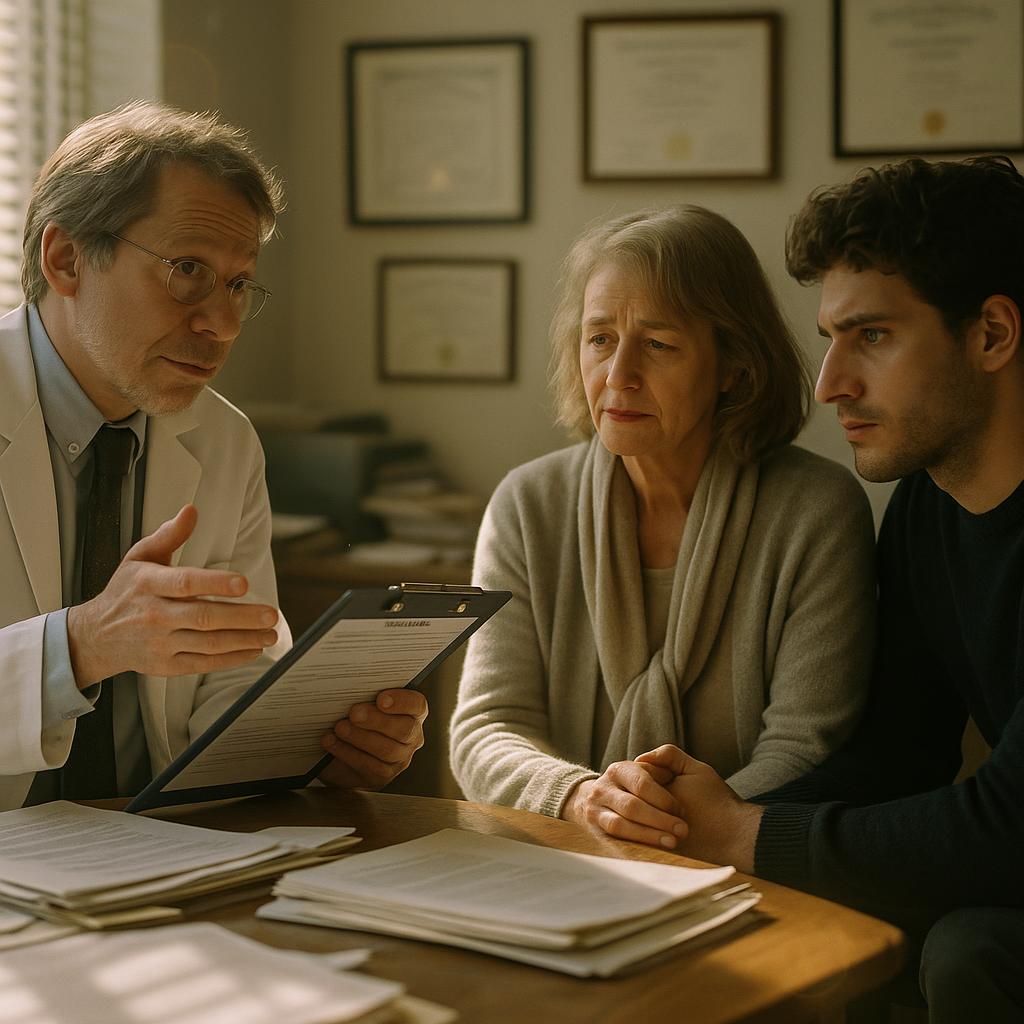 Image by RM AI
The Breakthrough Moment
I sat in Dr. Levine's office yesterday, tissues crumpled in my fist, when something inside me finally broke open. 'I'm so angry at her,' I admitted, the words burning my throat. 'But then I feel guilty for being angry at someone who's sick.' Dr. Levine leaned forward, her eyes kind but unflinching. 'Jennifer, you're not angry at Linda. You're angry at the disease that took her from all of you.' Something about the way she said it—so simple, so obvious—made everything shift. I'd been carrying this rage like it was mine to bear, directing it at a woman who was as much a victim as we were. The Linda who stood over our bed wasn't the same Linda who wrote that heartbreaking letter to Mark after his father died. The woman who installed cameras wasn't the same one who taught Sophie to make paper snowflakes last Christmas. 'The disease wears her face,' Dr. Levine continued, 'but it isn't her.' On the drive home, I cried—not the desperate, angry tears I'd grown used to, but something cleaner, like rain washing away months of built-up grime. This realization doesn't erase what happened. The trauma is still real. The fear still visits me at night. But for the first time since this nightmare began, I can see Linda and her illness as separate entities. What I never expected was how this breakthrough would prepare me for what we found in that mysterious box from the attic.
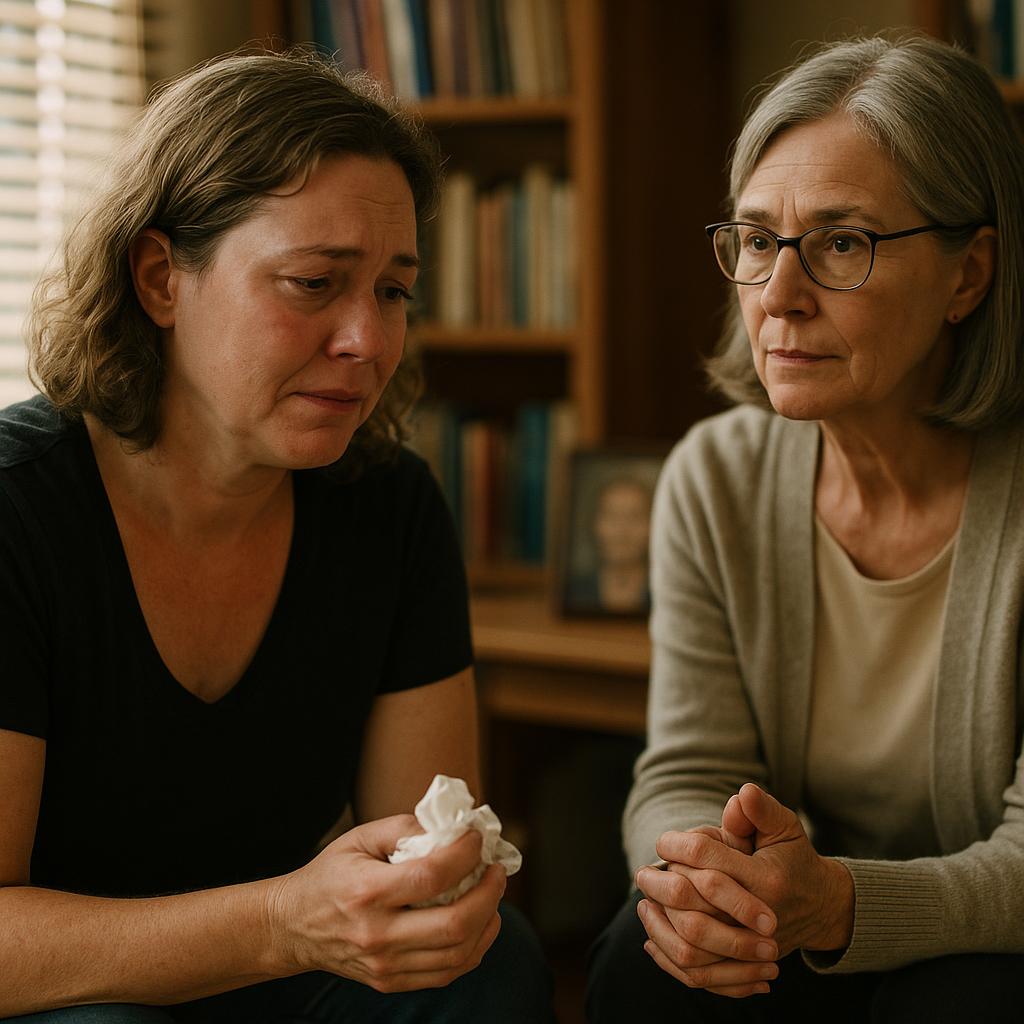 Image by RM AI
The Family Visit
Six months into Linda's diagnosis, we decided it was time for Sophie to visit her grandmother at Ridgeview. The drive there was tense—Sophie bouncing with excitement in the backseat while Mark and I exchanged nervous glances. We'd spent weeks preparing her: 'Grandma's brain is still sick, sweetie. She might not remember your name or she might say things that sound strange.' Sophie nodded solemnly, clutching the handmade card she'd created. When we arrived, I felt that familiar knot in my stomach as we signed in at the front desk. But to our surprise, Linda was having one of her good days. She sat in the sunroom, hair neatly combed, wearing the blue cardigan Mark had brought her last month. 'Sophie!' she exclaimed, arms outstretched. My daughter ran to her, and for a moment, everything felt normal. Linda remembered details about Sophie's school and even asked about her dance recital. But I didn't miss how her eyes hardened whenever they landed on me, or how she'd pull Sophie closer, as if protecting her. 'You look just like your daddy when he was little,' she told Sophie, deliberately excluding me from the family resemblance. Still, watching them color together, I counted it as a win. It wasn't until we were leaving that Linda grabbed my wrist and whispered, 'I know what you did with the things in that box.'
Image by RM AI
The Holiday Dilemma
The holidays were approaching again, and the weight of decision-making felt heavier than all the Christmas decorations combined. 'What do we do about Mom?' Mark asked one night, staring into his mug of hot chocolate like it might contain the answers we needed. I understood his conflict—last Christmas had been the beginning of our nightmare, but excluding Linda felt cruel. 'The facility says they can set up the community room for us,' I offered cautiously. 'We could bring some decorations, make it feel special.' Mark nodded, but I could see the worry lines deepening around his eyes. 'What if being around all of us triggers something? What if she has an episode in front of Sophie?' After several late-night discussions and one tearful call with Dr. Sharma, we landed on a compromise: two celebrations. A smaller, controlled visit at Ridgeview with minimal stimulation, followed by our main family Christmas at home. 'It's the best we can do,' Mark said, sounding more like he was trying to convince himself than me. I agreed, but as I wrapped Linda's gift—a soft cardigan in her favorite shade of blue—I couldn't shake the feeling that the box from the attic was somehow connected to her fixation on Christmas, and what she believed I had 'stolen' from her family traditions.
 Image by RM AI
The Facility Christmas
Ridgeview's community room looked like Christmas had exploded inside it – tinsel draped across every surface, a modest tree in the corner, and holiday music playing softly in the background. The staff had clearly gone all out. When we arrived with our armful of presents, Linda's face lit up in a way I hadn't seen in months. "You came," she whispered, as if she couldn't quite believe it. For nearly two hours, everything felt almost normal. Linda sat beside Sophie, helping her unwrap gifts with steady hands, laughing at her excitement. She'd even made Mark a card – a watercolor snowscape that showed her artistic abilities remained untouched by the disease ravaging her mind. "Look how she shaded the trees," Mark whispered to me, his voice thick with emotion. "Mom always could paint." The magic lasted until it was time to leave. Linda's smile faltered as she watched us gather our things. "Why can't I come home with you?" she asked, her voice suddenly small and confused. "It's Christmas." Mark knelt beside her chair, taking her hands in his. "Mom, remember we talked about this? You need to stay here where the doctors can help you." I watched her face crumple, then rebuild itself with that eerie blankness that meant she was slipping away again. "She knows," Linda said, pointing at me. "She knows why you won't let me come home."
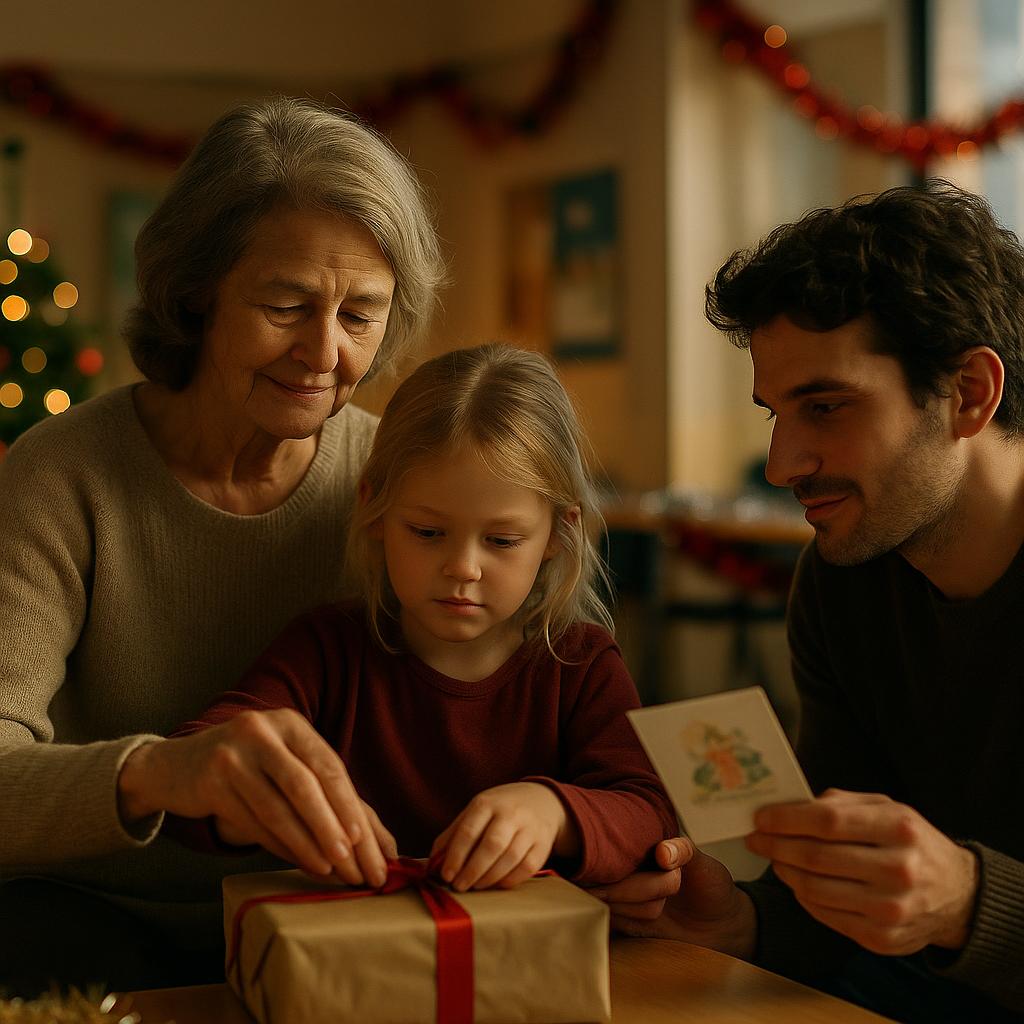 Image by RM AI
The Home Christmas
Our home Christmas felt strangely peaceful this year. The absence of Linda's critical comments and hovering presence left a silence that was both sad and relieving. I was arranging presents under the tree when Sophie tugged at my sleeve. "Mom, can we make Grandma's fruitcake today?" I nearly dropped the gift I was holding. That brick-like dessert that nobody actually ate? Mark overheard and burst out laughing at my expression. "It's not about the cake," he explained, wrapping an arm around my shoulders. "Remember how she'd make us all wear those ridiculous chef hats while mixing? Sophie misses the tradition, not the actual fruitcake." Something warm unfurled in my chest as I realized we could honor Linda without reliving the trauma. We spent the afternoon in a flour-dusted kitchen, wearing paper towel chef hats, following Linda's recipe card with its faded handwriting. Sophie giggled as Mark dramatically narrated each step like a cooking show host. For a few hours, we remembered the Linda before the illness – the woman who created silly traditions and brought joy, not fear. As we slid the pan into the oven, I caught Mark wiping his eyes. "She's still here in the good parts," he whispered. Later that night, after Sophie went to bed, I finally gathered the courage to tell Mark what I'd found in that mysterious box from the attic.
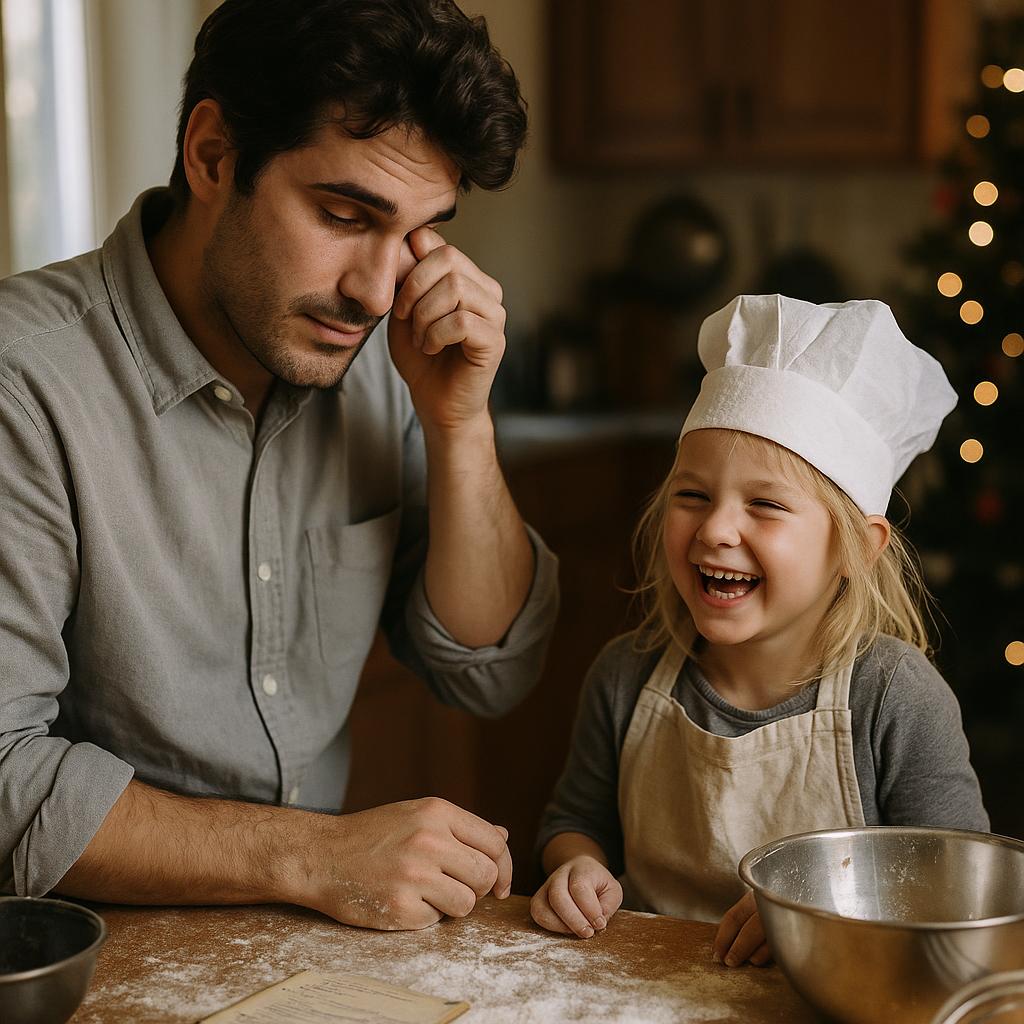 Image by RM AI
The New Year's Reflection
Mark and I sat on our back porch watching the first sunrise of the new year, coffee mugs warming our hands against the January chill. "It's weird," he said quietly, "but I feel both relieved and guilty about Mom's diagnosis." I nodded, understanding completely. The past year had been a rollercoaster—from that terrifying Christmas visit that started it all to the doctors finally putting a name to Linda's increasingly bizarre behavior: frontotemporal dementia. The diagnosis explained so much—the paranoia, the cameras, the whispered accusations—but knowing the cause didn't erase the trauma. "I keep thinking about what Dr. Sharma said," I replied, watching the steam rise from my mug. "That we need to separate the disease from the person." Mark reached for my hand, his eyes reflecting the soft morning light. "I'm trying, but it's hard when the disease wears my mother's face." We'd spent hours discussing how to move forward—how to maintain compassion for Linda while protecting our family, especially Sophie. This would be our reality for years to come: balancing visits to Ridgeview with maintaining boundaries, cherishing the good days while preparing for the bad. As the sun climbed higher, casting long shadows across our yard, I couldn't help wondering if the contents of that mysterious attic box might hold the key to understanding Linda's fixation on me—and whether revealing what I'd found would heal our family or tear it apart completely.
 Image by RM AI
The Memory Book
The memory book was Mark's idea. 'It might help her remember who she really is,' he said one evening, spreading old photo albums across our dining table. We spent hours sorting through decades of Linda's life—her college graduation, Mark's childhood birthdays, her painting classes. I found myself lingering over photos of Linda before I knew her, struck by her carefree smile and bright eyes. The memory care specialist at Ridgeview had suggested this project, explaining how visual cues can sometimes anchor patients to their authentic selves. 'The disease steals their present,' she told us, 'but sometimes we can help them reconnect with their past.' What surprised me most was how therapeutic it became for me. As I wrote captions beneath each photo—'Linda winning first prize at the county fair art show, 1985' or 'Teaching Mark to ride a bike at Lakeside Park'—I found myself documenting the woman she truly was, not the frightening figure who had stood over our bed that night. 'You're really good at this,' Mark said, watching me carefully letter each page. I didn't tell him that each caption felt like a small act of forgiveness, a way of separating Linda from her illness. What I never expected was how Linda would react when we finally brought the completed book to Ridgeview—or what she would whisper to me when Mark stepped out of the room.
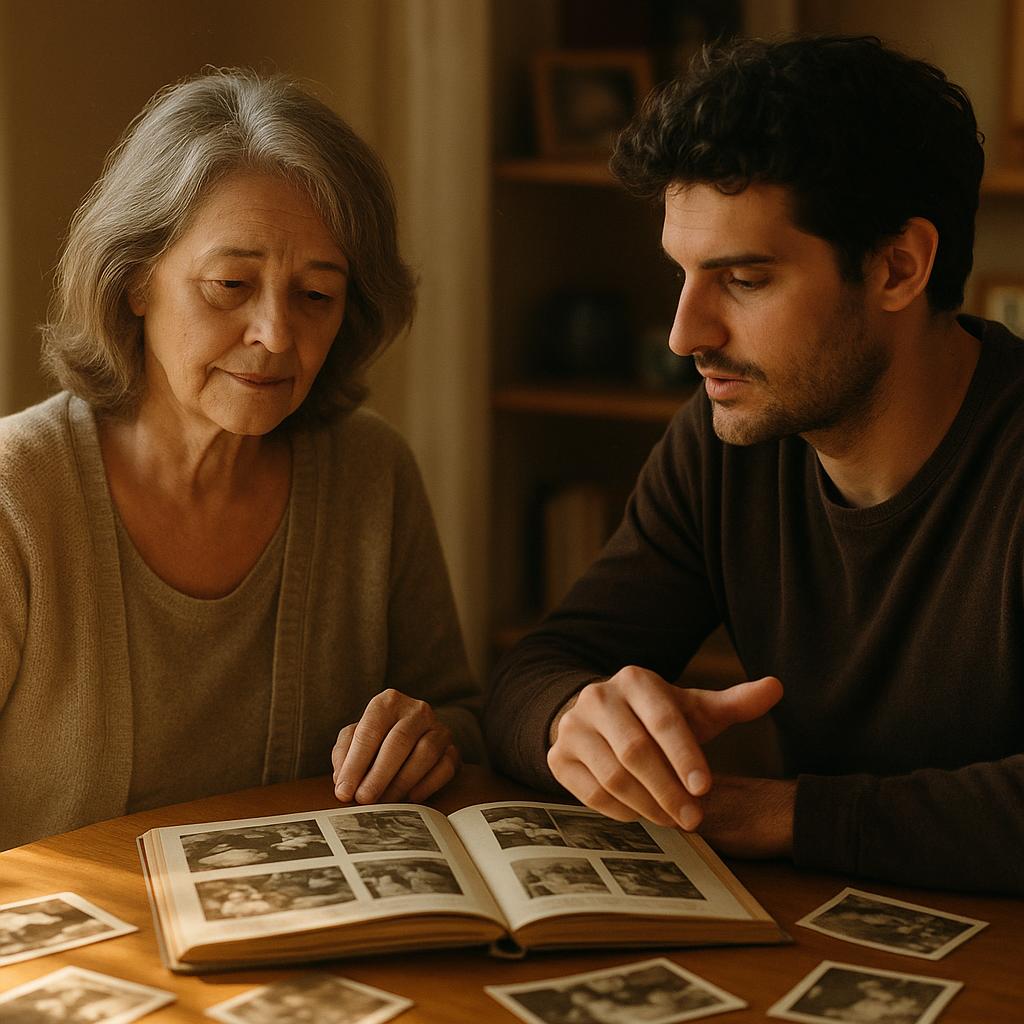 Image by RM AI
The Unexpected Connection
Yesterday's visit to Ridgeview felt different from the moment I walked in. Linda was sitting by the window, sunlight catching the silver in her hair as she flipped through a magazine. When I placed the memory book in her lap, she didn't immediately push it away like she usually did. Instead, her fingers traced the leather binding with curious familiarity. We sat together, turning pages in silence until we reached their wedding day—Linda radiant in lace, her husband beaming beside her. 'You looked so beautiful,' I said softly. She stared at the photo for what felt like minutes, then slowly raised her eyes to mine. 'Jennifer,' she said, my name falling from her lips without a trace of the suspicion or venom I'd grown accustomed to. Just my name, spoken with recognition. My breath caught in my throat. Mark, who'd been arranging flowers across the room, froze mid-motion. For that brief moment, the fog lifted, and I saw *her*—not the disease, but Linda herself looking back at me. She patted my hand gently before turning the page, the connection already fading like morning mist. But it had happened. For thirteen precious seconds, we existed together without the shadow of her illness between us. What I couldn't have known then was how this fleeting moment of clarity would lead us to the truth about that mysterious box in the attic.
 Image by RM AI
The Family Legacy
The genetic counselor's office felt too bright, too sterile for the weight of the conversation we were having. 'While frontotemporal dementia isn't always hereditary,' Dr. Keller explained, sliding a pamphlet across his desk, 'certain genetic mutations can increase risk.' Mark's hand found mine under the table, squeezing so hard it almost hurt. I understood his fear – was this ticking time bomb in his DNA too? Would Sophie someday stand over someone's bed, whispering to herself? 'The testing process is straightforward,' Dr. Keller continued, his voice gentle but clinical. 'A blood sample, a few weeks' wait.' That night, Mark and I sat on our back porch, the decision weighing on us like a physical presence. 'I need to know,' he finally said, his voice breaking. 'For Sophie's sake.' I nodded, thinking about how Linda's illness had been misdiagnosed for so long because it presented as paranoia rather than the memory loss people associate with dementia. 'Whatever the results,' I told him, 'we're going to use what we've learned. No family should go through what we did, thinking their loved one has just become... cruel.' What I didn't tell Mark was that I'd already found something in Linda's medical history – something that might explain why she'd focused her paranoia specifically on me.
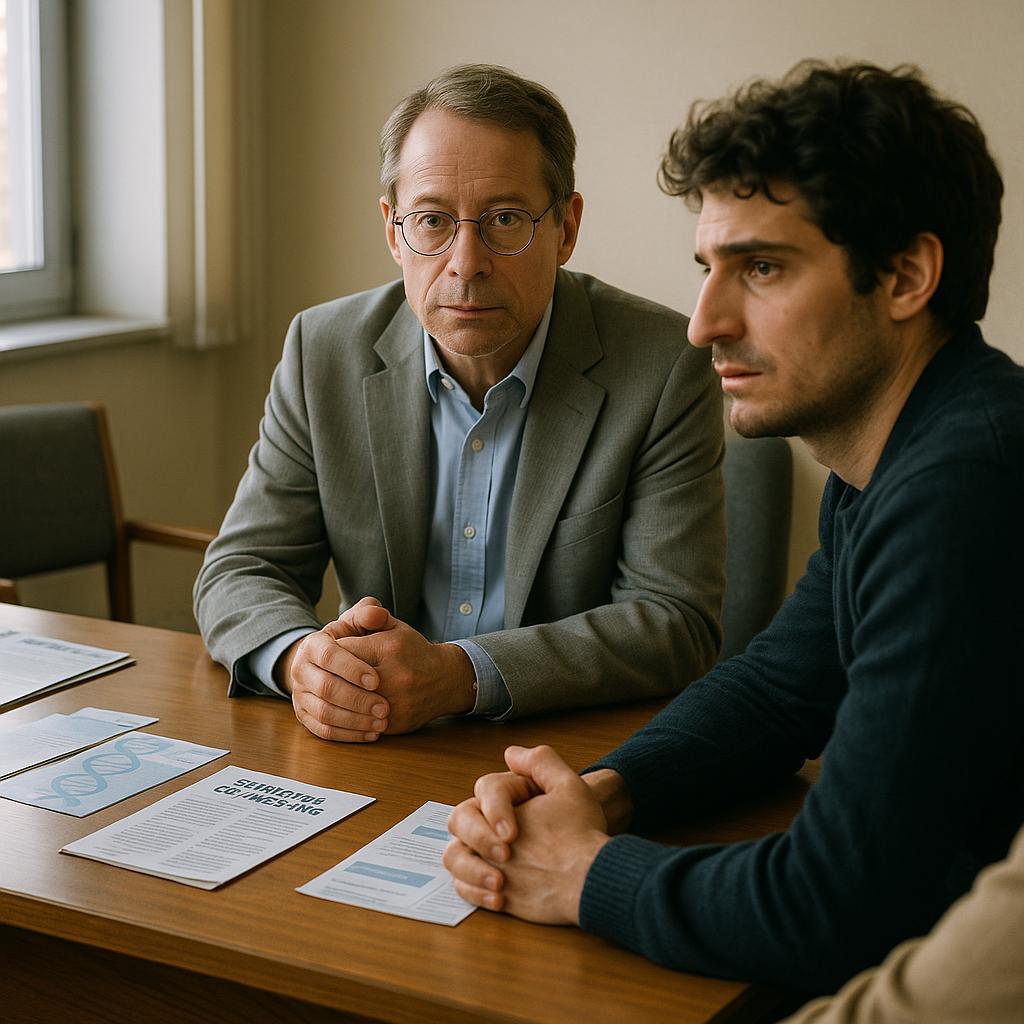 Image by RM AI
The Next Holiday Season
It's been exactly one year since that Christmas when Linda stood over our bed, smiling in that way that still occasionally haunts my dreams. But what a difference twelve months can make. The nanny cam that once captured her paranoid midnight wanderings now records Sophie dancing to holiday music in our living room, with a framed photo of Linda—from before the disease took hold—watching over us from the mantel. When Sophie asked if we could visit Grandma on Christmas Eve, I didn't feel that familiar knot of dread in my stomach. Instead, I found myself nodding without hesitation. "I think that's a wonderful idea, sweetie," I told her, and meant it. Mark looked at me with such gratitude that I almost cried. Understanding that Linda's behavior wasn't malicious but the result of her illness has been liberating. We've created new traditions this year—including making that ridiculous fruitcake that nobody eats but everyone enjoys baking together. Sometimes I catch myself looking at Linda's photo and wondering if somewhere inside that facility, behind the confusion and paranoia, she knows we're carrying her traditions forward. What I never expected was how the contents of that mysterious box from the attic would transform our holiday preparations this year.
 Image by RM AI