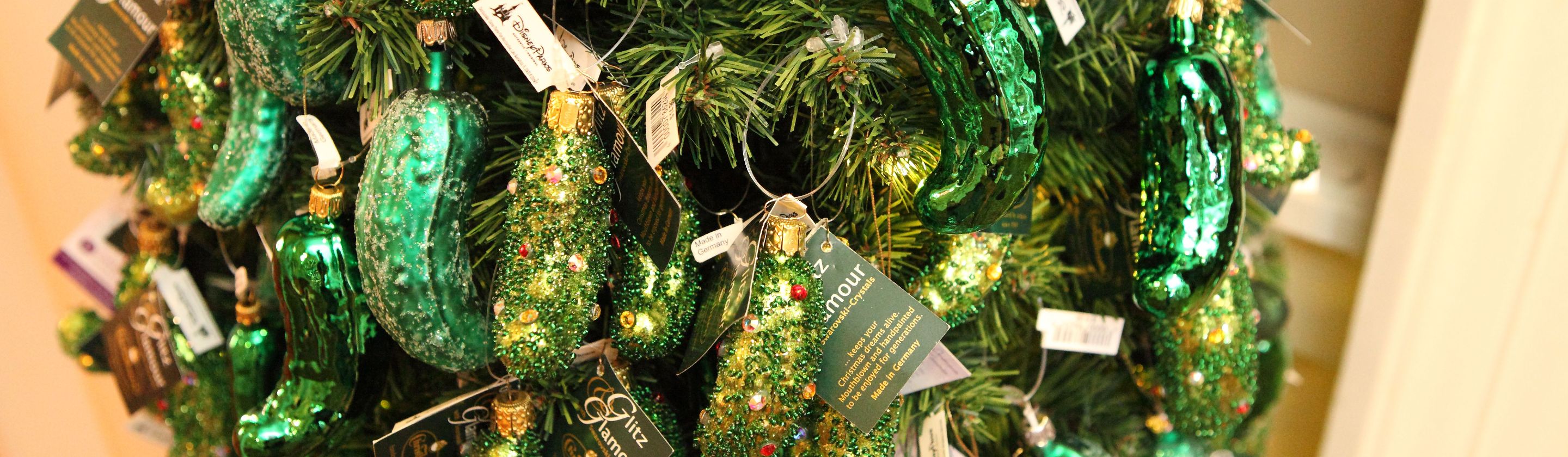
Christmas morning arrives, the tree is glowing, presents are piled underneath, and your entire family is frantically searching through pine needles looking for...a pickle ornament?
Welcome to one of America's strangest holiday traditions. As bonkers as it sounds, this fascinating Christmas tradition somehow exists in millions of homes while remaining completely unknown to millions of others. If you're wondering how this all works and what it's about, then you've come to the right place. Join us as we take a closer look at the Christmas pickle.
The Hunt For The Hidden Pickle
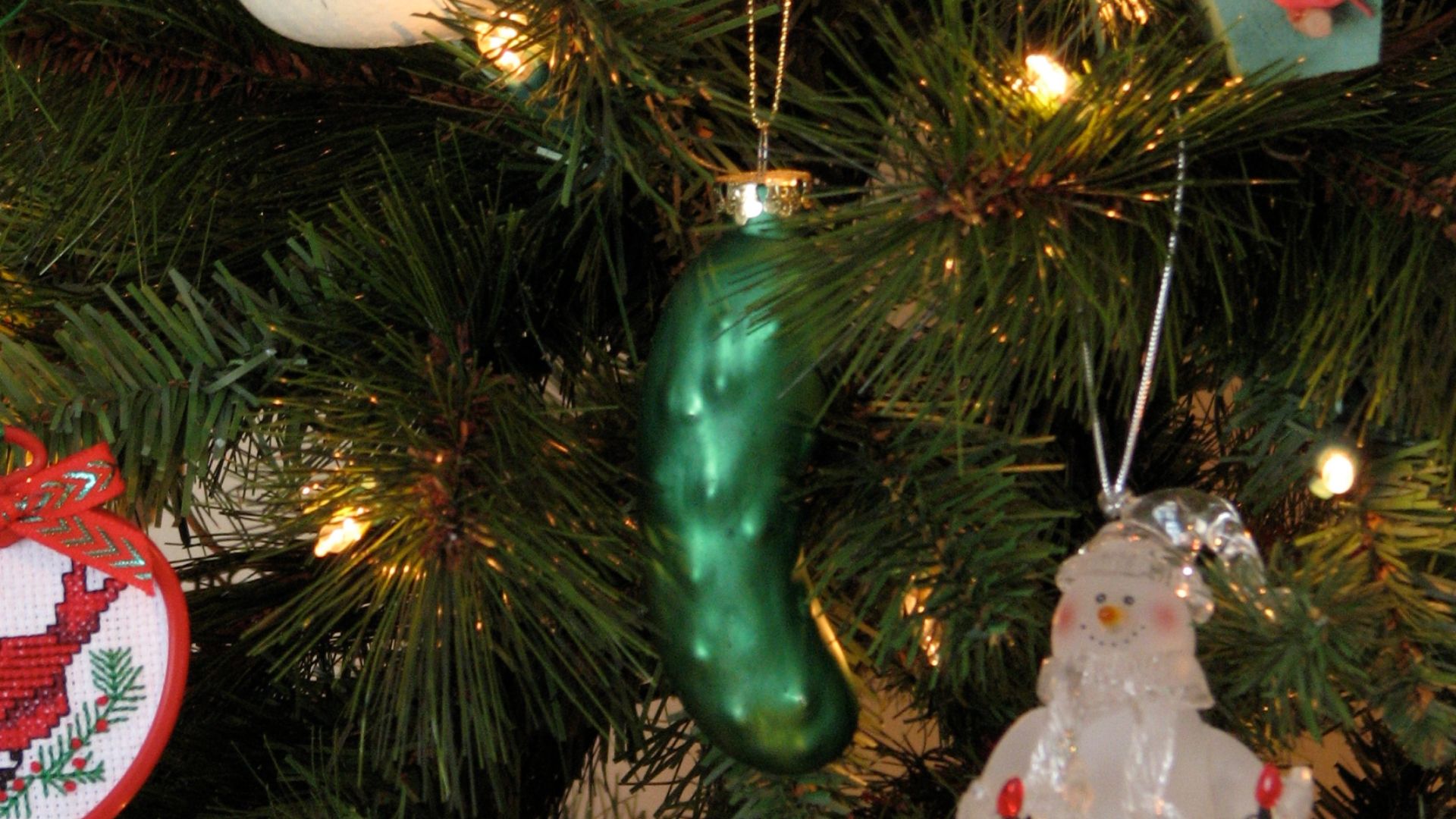 Mira Mechtley from Denver on Wikimedia
The Christmas Pickle tradition is delightfully simple yet bizarrely specific. Somewhere on Christmas Eve, someone in the family hides a pickle-shaped glass ornament deep within the branches of the Christmas tree. The pickle is typically green and bumpy, blending perfectly into the evergreen needles, making it genuinely challenging to spot.
Come Christmas morning, before any presents are opened, the children, and often competitive adults, scour every inch of the tree searching for this briny little treasure. The first person to spot the pickle wins a special prize, opens the first present, or receives an extra gift.
The tradition has a peculiar charm to it. Unlike the obvious spectacle of a tree topper or the glittering appeal of tinsel, the pickle demands genuine attention. Kids develop strategies, adults accidentally-on-purpose block certain sections of the tree, and everyone experiences that triumphant moment of discovery.
The "German" Origin That Isn't Actually German
Here's where things get wonderfully weird. Many American families who practice this tradition firmly believe it's an old German custom brought over by immigrants. Retailers sell these ornaments with tags explaining the ancient Teutonic roots. There's even a popular story about a German-American Civil War soldier named John Lower who was starving in a prison camp and begged for a pickle, which miraculously saved his life and inspired the tradition.
Plot twist: Germans have largely no idea what you're talking about. If you ask someone in Germany about the Weihnachtsgurke tradition, you'll mostly get confused looks. German Christmas markets don't prominently feature pickle ornaments, German children aren't searching for pickles, and German grandmothers aren't passing down pickle-hiding techniques through generations.
The tradition appears to be almost entirely an American invention, possibly created by German glass ornament makers in the late 1800s as a clever marketing ploy to sell more decorations to nostalgic German-American families.
Why Americans Embraced The Pickle
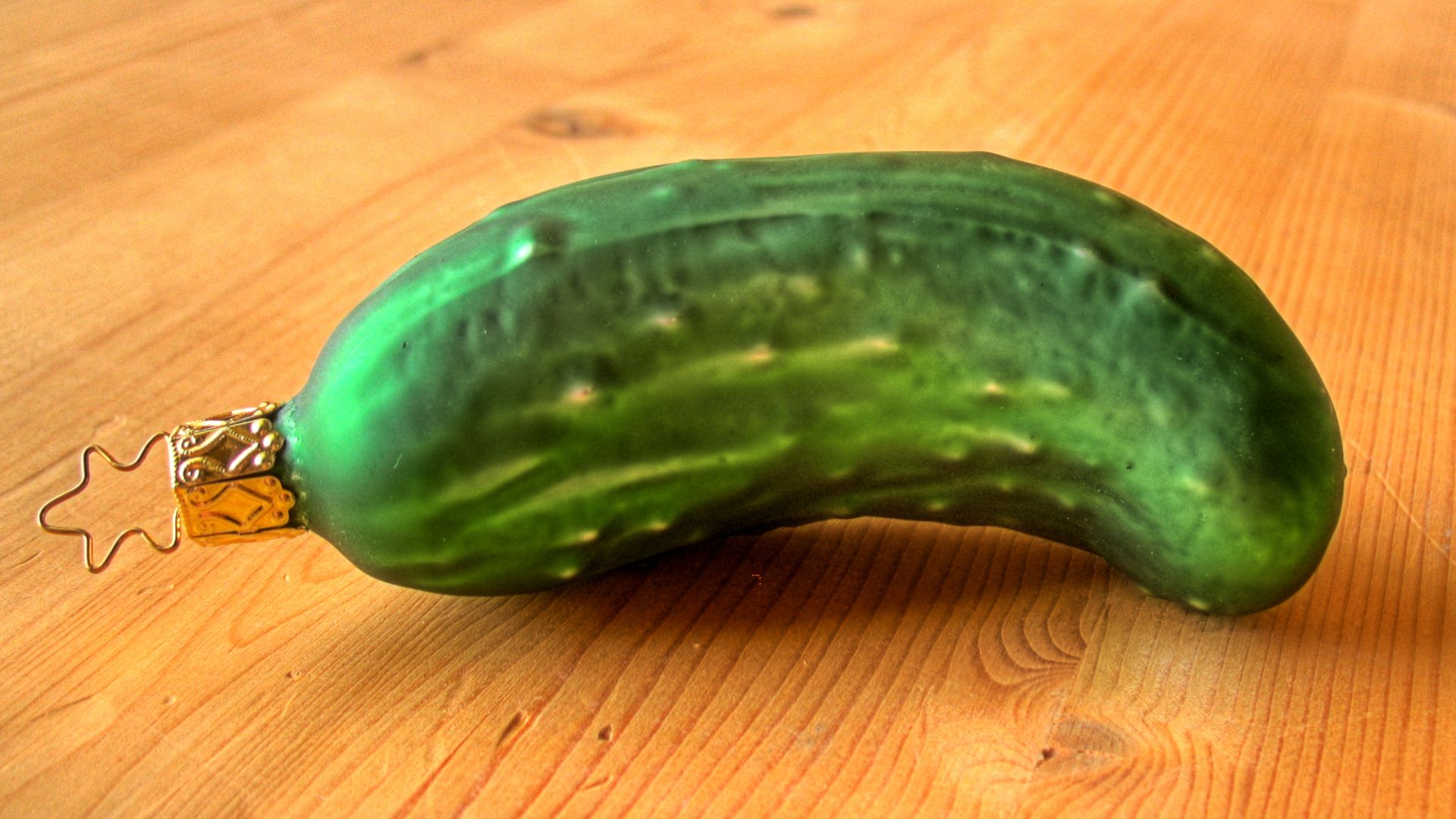 Christbaumschmuck der Firma Inge-Glas, Neustadt bei Coburg, Deutschland on Wikimedia
The pickle tradition has thrived in America precisely because it's quirky, harmless, and participatory. It doesn't require elaborate preparation, expensive materials, or religious observance. You literally just need one pickle ornament and a sense of humor. The tradition also fills a specific niche—it gives families something to do together on Christmas morning besides the sometimes awkward, sometimes frenzied present exchange.
Whether the tradition is authentically German or brilliantly fabricated doesn't really matter to the families who've adopted it. The Christmas Pickle has become genuinely American by being weird, inclusive, and entirely optional. You either know about it and love it, or you've never heard of it and think it sounds absolutely ridiculous. Both reactions are completely valid.