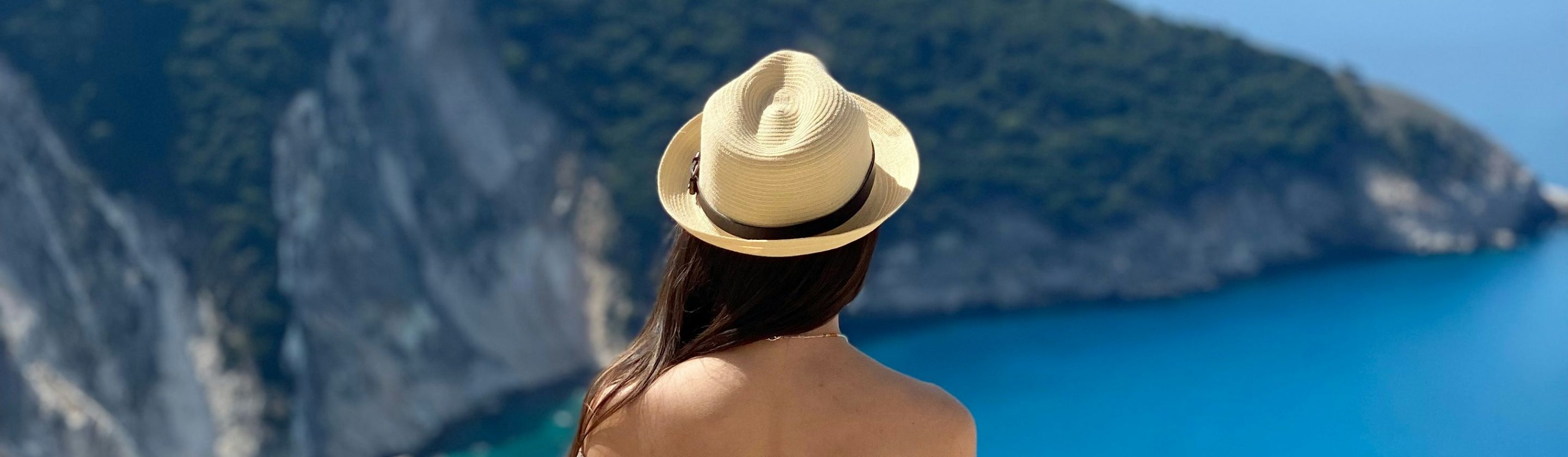

There is a pecking order among people who travel, and almost nobody admits to being at the bottom of it. Ask a hundred people on vacation whether they consider themselves a tourist, and most will reach for a different word. They are travelers, explorers, wanderers, or at the very least, just someone passing through who really tried to find the local spots. The label of tourist has become something to avoid, a mark of shallowness, of following a crowd, of not quite getting it. The sociology of travel has studied this phenomenon for decades without resolving it, largely because the status game behind it has no clean solution.
The terms tourism and tourist are sometimes used pejoratively, to imply a shallow interest in the cultures or locations visited, while traveler is often used as a sign of distinction, and the sociology of tourism has studied the cultural values underpinning these distinctions and their implications for class relations. That last part is the crux of it. The hierarchy has always been less about how you travel and more about who gets to define the right way to do it.
The Traveler vs. Tourist Divide Is a Class Distinction in Disguise
The intellectual scaffolding for the traveler versus tourist argument was erected decades ago. American historian Daniel J. Boorstin laid out his case in his 1962 book The Image, where he argued that the modern tourist had become passive, preferring the pre-packaged and the comfortable over any genuine encounter with a foreign place. For Boorstin, the virtuous traveler is one who plans for herself, who is willing to endure hardship and discomfort, and who dives headfirst into a genuinely adventurous experience, while modern-day tourists are shallow, unbothered by whether their experiences are authentic or not. This framing was seductive and, not coincidentally, flattering to the kind of person who read academic criticism of tourism while planning their next trip abroad.
Sociologist Dean MacCannell pushed back, and his rebuttal cuts straight to the class dynamics underneath the debate. MacCannell repudiated Boorstin's analysis, saying that it reflects a typical upper-class view that other people are tourists while I am a traveler, and that class, privilege, and status may play an important role in the way that some people like to elevate themselves as travelers while scoffing at tourists. The ability to travel slowly, without an itinerary, and in ways that signal cultural sensitivity has always required money and time. A two-week family holiday with a tight schedule and carefully pre-booked hotels isn't a failure of imagination. For most people, it's the only option.
A backpacker who slums it in hostels and hangs out mainly with other backpackers is in no way more of a free-spirited and open-minded traveler than the person who stays in an expensive hotel, and some people who may seem stereotypically like tourists may actually engage more with local people and be more interested in local culture than those who like to flaunt a traveler persona. The distinction is usually vain and almost entirely self-serving. Everyone in a foreign city is an outsider. The locals can't tell the difference, and they rarely care.
Social Media Reshuffled the Deck and Made Things Stranger
The rise of Instagram in the early 2010s didn't dissolve the tourist hierarchy so much as it created a new tier at the very bottom of it. Instagram tourism has been characterized as a superficial consumption of, rather than sincere interest in, a place, with those engaging in it described as people coming to get a photo of the photos they've seen. This gave the self-identified travelers a fresh villain and a genuine point. The person who queues for forty-five minutes at a viewpoint to recreate a specific shot they saved on their phone represents something new in the history of tourism, a form of travel organized almost entirely around proof of presence rather than presence itself.
The scale of what social media did to specific places is measurable. It was in 2013, right when Instagram began to attain widespread usage, that visitor numbers to Santorini started to sharply increase, reaching a total of 3.4 million tourists in 2023, and the island has since been widely hailed as Greece's Instagram Island with 8 million posts tagged with the location on the platform. The entire carrying capacity of a small island was outpaced by the combined ambition of millions of people who wanted the same photograph.
What social media also did was collapse the carefully maintained fiction that the traveler is somehow invisible. The result is a rapid homogenization of travel experiences, where millions of people flock to the same social media hotspots, driven by the desire to capture that perfect photo. The backpacker and the package tourist are now photographing the same cliff at the same hour. The only difference is who carries a better camera and who feels worse about it afterward.
The Locals Have Decided the Whole Spectrum Is the Problem
From the perspective of a resident watching their neighborhood absorb another summer of record arrivals, the internal hierarchy that travelers maintain among themselves is entirely invisible. Over the course of 2024, 94 million tourists visited Spain, compared to its 48 million population, and residents believe that overtourism contributed to a reduced quality of life and increased cost of living. The backpacker staying in the cheapest hostel and the luxury tourist in the hotel both push up rents, strain public services, and replace grocery stores with souvenir shops simply by existing in sufficient numbers.
On July 23, 2024, 11,000 tourists disembarked from cruise ships on Santorini, an island home to only 20,000 people, prompting the municipality to post a warning for residents to remain indoors. The distinction between a culturally sensitive traveler and a day-tripper off a cruise ship mattered very little to a resident told to stay home so that the streets could be handed over to visitors.
The graffiti that has appeared on walls across southern Europe, reading "Tourist Go Home," doesn't make any exceptions for the traveler who learned a few phrases in the local language and avoided the chain restaurants. What has emerged is a new and uncomfortable reality for anyone who travels: the hierarchy you've built in your own head about what kind of visitor you are, and how much you respect the places you visit, is mostly invisible to the people whose city you're standing in. They see the volume, not the intention. The question of whether you consider yourself a tourist is, in the end, less important than what happens to a place when enough of everyone shows up at once.