Pack your bags for Japan or Morocco, and you might assume that knowing English will carry you through. After all, we've spent decades being told that English is the universal language of travel. The reality check comes when you're standing in a Tokyo train station at rush hour, or haggling in a Marrakech souk, and suddenly that confidence evaporates. Despite pulling millions of tourists each year, some of the world's most visited destinations remain stubbornly resistant to English.
Japan Ranks 92nd Globally for English Proficiency
Japan sits at 92nd out of 116 countries for English skills, which should tell you everything you need to know. The country welcomed record numbers of visitors in 2024, and most of them arrived assuming they'd manage fine with English and a few downloaded apps. They managed, sure. Survived is probably the more accurate word.
Only a tiny fraction of Japanese people are actually fluent in English, even in major cities. Most can read basic phrases, but the cultural fear of making mistakes runs deep. So deep that many Japanese people who understand English will still avoid using it, worried about losing face.
The infrastructure tries to compensate. Train stations in Tokyo and Osaka have bilingual signage, and hotels in tourist areas employ English-speaking staff. But venture fifteen minutes outside Shibuya or Kyoto's temple district, and that safety net disappears fast.
South Korea's Moderate English Skills Hide Regional Gaps
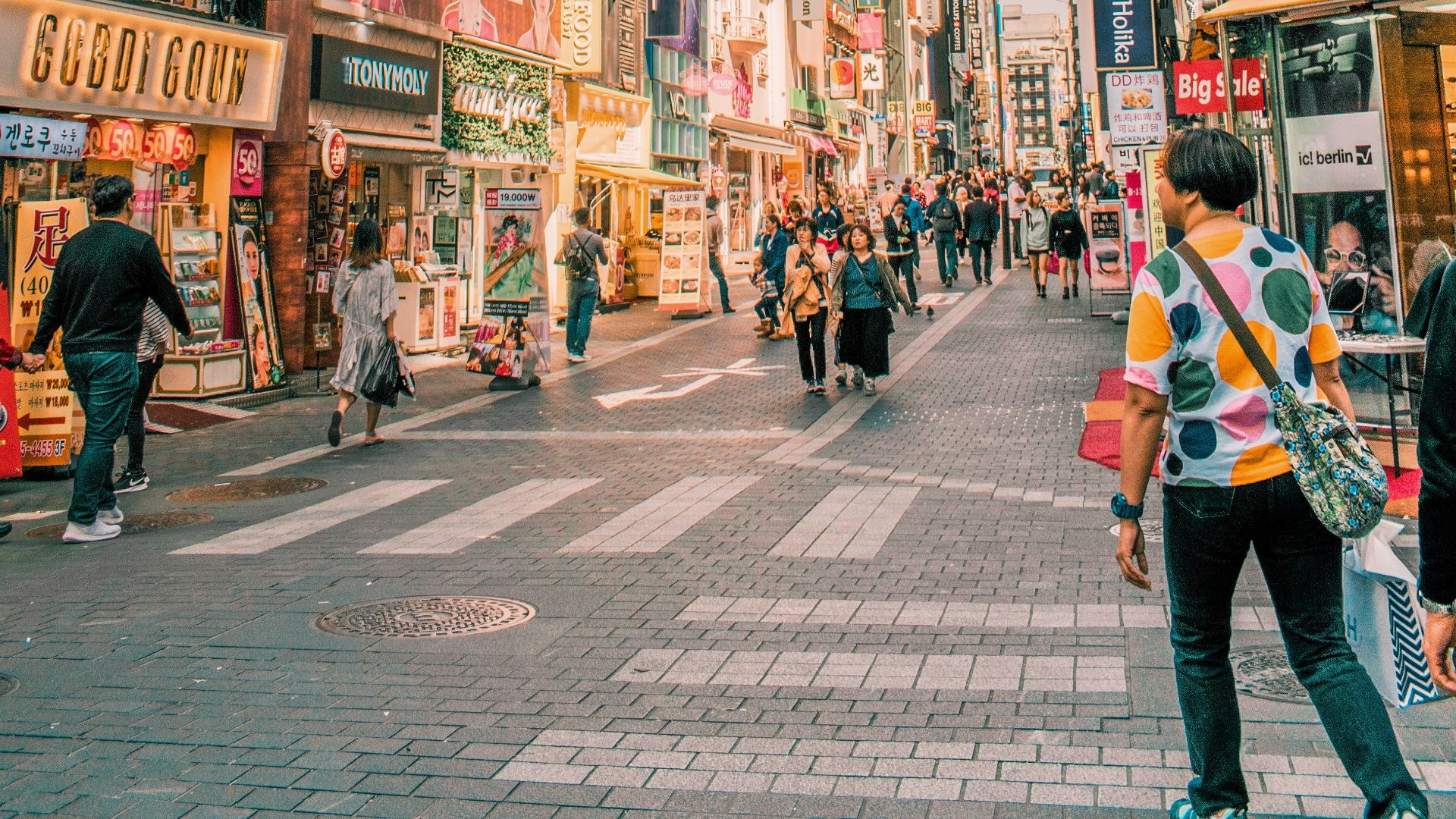
South Korea scored 525 points on the English Proficiency Index in 2023, corresponding to moderate proficiency. Seoul does better, with the highest English proficiency in the country. Walk through Gangnam or Hongdae and you'll find plenty of young people who can hold a conversation.
Outside Seoul is an entirely different story, however. Busan introduced bilingual street signs specifically to help tourists navigate, which tells you how necessary they felt it was. The gap between what you experience in the capital versus smaller cities gets pretty stark.
The interesting thing about South Korea is that younger people are often quite enthusiastic about practicing their English with foreigners. Coffee shops in university districts become informal language exchange zones. The challenge is you never quite know if the person you're asking for directions will respond in fluent English or stare at you blankly.
France Keeps Dropping in English Rankings
France used to rank in the high proficiency category back in 2021. This year France scored just 524 points and ranks 49th globally, the lowest of all Northern European nations. For a country that welcomed over 100 million visitors in 2024—more than any other nation on Earth—that's remarkable. The tourism infrastructure exists, clearly, but the linguistic infrastructure is in short supply.
Parisians under 40 generally speak enough English to help tourists. Hotels, museums, and major restaurants all have English-speaking staff. It's when you leave the capital that things get tricky. Even large cities like Lyon, Marseille, and Toulouse show significantly lower English proficiency. If you venture into the rural areas, you'll either need French or exceptional pantomiming skills.
Morocco Speaks Everything Except English

Morocco's official languages are Arabic and Amazigh, but virtually every Moroccan speaks French too. Spanish dominates in the north and south. While English is growing among young people in cities, it’s still not reliably spoken, especially outside Marrakech, Casablanca, and Fes.
Walk into a riad in the medina, and the owner probably speaks four languages: Arabic, Darija (Moroccan Arabic), French, maybe some Amazigh. Sadly, English simply isn’t part of the roster. Tourism workers in major attractions have started learning English because so many visitors need it now.
The linguistic situation reflects Morocco's colonial history. At least half the country's population speaks French, a legacy of French rule from 1912 to 1956. Spanish influence remains strong in Tangier and Tetouan, a legacy from Spain's time as protectorate in those regions.
China's 1.3 Billion People Include Only 10 Million English Speakers
Only about 10 million out of China's 1.3 billion people speak English. That's less than 1%. For a country investing heavily in tourism infrastructure and hoping to attract more international visitors, it's a staggering gap.
Major cities like Beijing and Shanghai have made efforts with signs in airports and train stations including English. Five-star hotels staff English-speaking concierges, and tourist sites like the Great Wall or Forbidden City offer English audio guides. The moment you need to actually communicate with a regular person, though, you're basically out of luck.
China presents a unique challenge because the language barrier isn't just spoken. The writing system uses characters completely unrelated to the Latin alphabet. Because of this, you can't sound out words or make educated guesses. Translation apps become essential survival tools, assuming you have internet access—which, as a foreigner in China, isn't always guaranteed.