The Creak in the Night
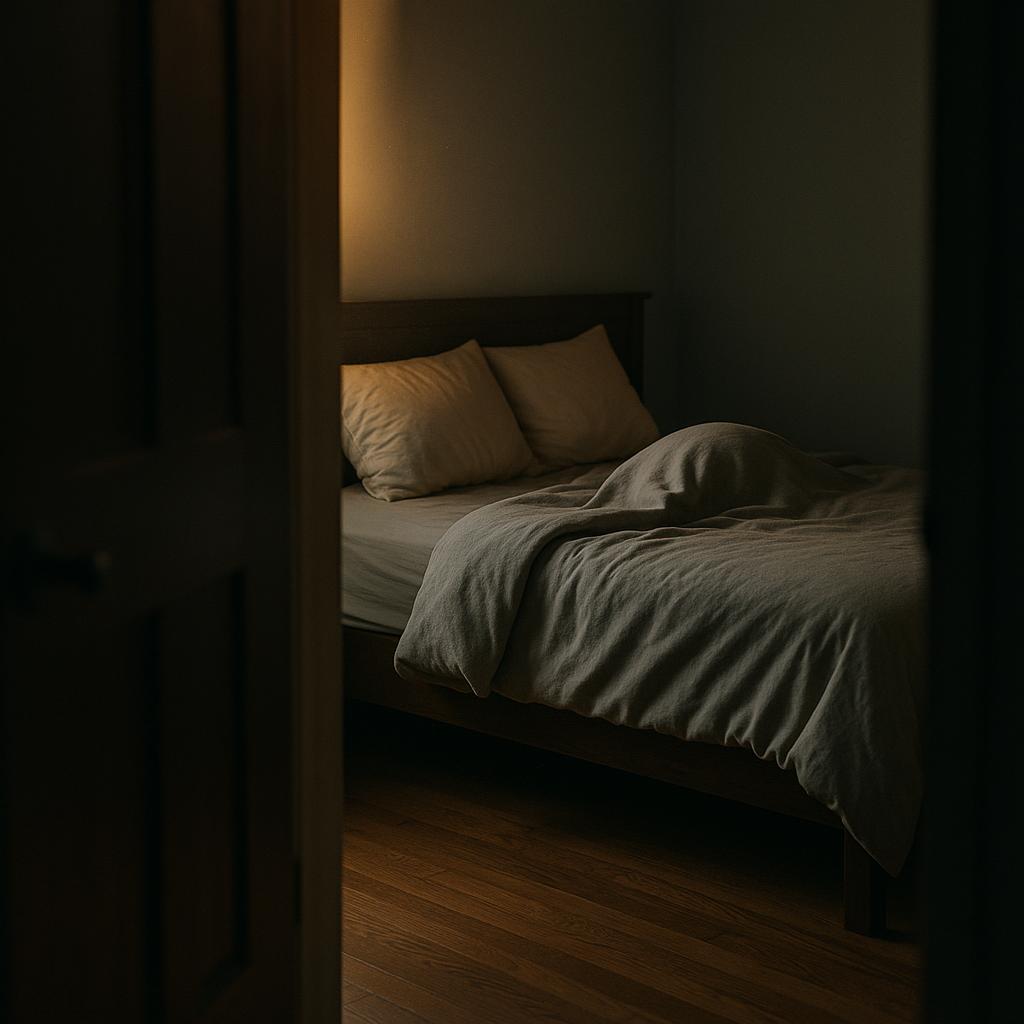
I never thought I'd be the kind of parent who stayed awake at night wondering where their child was. Yet here I am at 2:17 AM, heart pounding, ears straining to make sense of that unmistakable creak from our front door. I must be dreaming, right? Emma has always been my golden child – the teenager who does her homework without being asked, who texts me updates when she's out with friends, who has never given me a single reason to doubt her. We have the kind of mother-daughter relationship that makes other parents roll their eyes with envy. "She tells me everything," I've bragged more times than I can count. I grab my phone with trembling fingers and check our shared location app – a safety measure we both agreed on, not because of trust issues but because it makes us both feel secure. According to the glowing screen, Emma is exactly where she should be: in her bedroom, just down the hall. I slide out of bed, my bare feet silent against the cool hardwood floor as I make my way to her room. Gently pushing open her door, I peer inside. There's definitely a body-shaped lump under her covers, pillows arranged in what now seems like an obvious decoy. My stomach drops as I realize my perfect daughter has been lying to me, and I have absolutely no idea where she really is or what she's doing out there in the middle of the night.
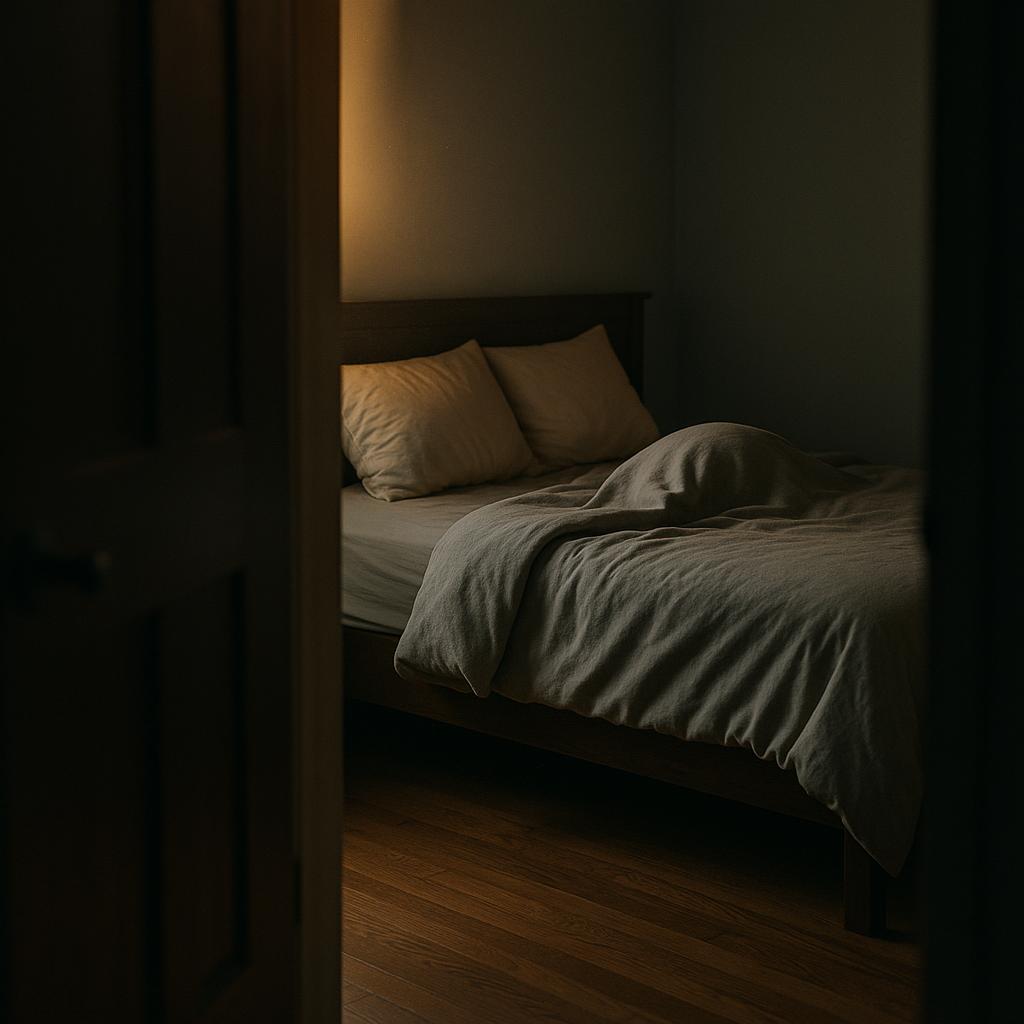 Image by RM AI
The Pillow Decoy
I push Emma's door open with a gentle touch, holding my breath as it swings inward. The soft glow of her nightlight reveals what I already suspect – a masterfully crafted decoy. Pillows arranged under her comforter create the perfect illusion of a sleeping teenager, right down to the tuft of blonde hair (actually her winter scarf) peeking out from beneath the covers. I've seen this trick in countless movies, but never expected to find it in my own home, executed by my straight-A student. My mind spirals with worst-case scenarios – is she meeting friends for some reckless adventure? A secret boyfriend? Something worse? I check her dresser and notice her emergency cash is gone. The window is unlocked but closed – her exit route was clearly through our front door. I stand frozen, torn between racing outside to find her and waiting here to confront her when she returns. The digital clock on her nightstand blinks 2:23 AM, each minute stretching like an hour as I imagine my daughter somewhere in the darkness, doing who knows what. The perfect parent-daughter relationship I've bragged about for years suddenly feels like a façade as fragile as the pillow arrangement before me. What else has she been hiding?
 Image by RM AI
The Shadow in the Street
I grab my jacket and slip my feet into the first shoes I find – my gardening clogs, of all things. So much for stealth mode. The front door makes that same betraying creak as I ease it shut behind me, and I wonder how many times Emma has perfected this escape. The street is unnervingly quiet, bathed in that sickly orange glow that makes everything look like a crime scene waiting to happen. And there she is – my daughter, the stranger – half a block ahead, moving with purpose. She's dressed in dark clothes, head down like she's on some covert mission. My heart is doing gymnastics in my chest as I begin to follow her, staying far enough back that she won't spot me. I've never tailed anyone before; everything I know about surveillance comes from binge-watching crime shows on Netflix. I duck behind parked cars when she glances back, feeling ridiculous and terrified all at once. What kind of mother spies on her own child? The kind whose perfect daughter sneaks out at 2 AM, apparently. With each step, the distance between the Emma I thought I knew and this shadow moving through the night grows wider. Where is she going? And more importantly, who is she meeting?
 Image by RM AI
The Wrong Direction
Emma turns left at the corner, and my heart sinks. She's heading away from her school, away from where any of her friends live. This is all wrong. My mind races through terrible possibilities – is she meeting some sketchy older guy she met online? Getting involved with drugs? Has my honor roll daughter been living a double life this whole time? I follow at a distance, my ridiculous gardening clogs making soft clacking sounds against the pavement. We pass through quiet neighborhoods where normal families are sleeping peacefully, completely unaware that I'm living through every parent's worst nightmare just feet from their front doors. Block after block, we move deeper into parts of town I barely recognize in daylight, let alone at this ungodly hour. The houses get smaller, the yards less maintained. Twenty minutes into this surreal journey, and I'm starting to wonder if I should call for backup – her father? The police? My sister who always warned me I was too lenient? Emma checks her phone, the blue light illuminating her face momentarily, and picks up her pace. Whatever's drawing my daughter to this part of town at 2:40 AM can't possibly be good, and I'm terrified of what I'm about to discover.
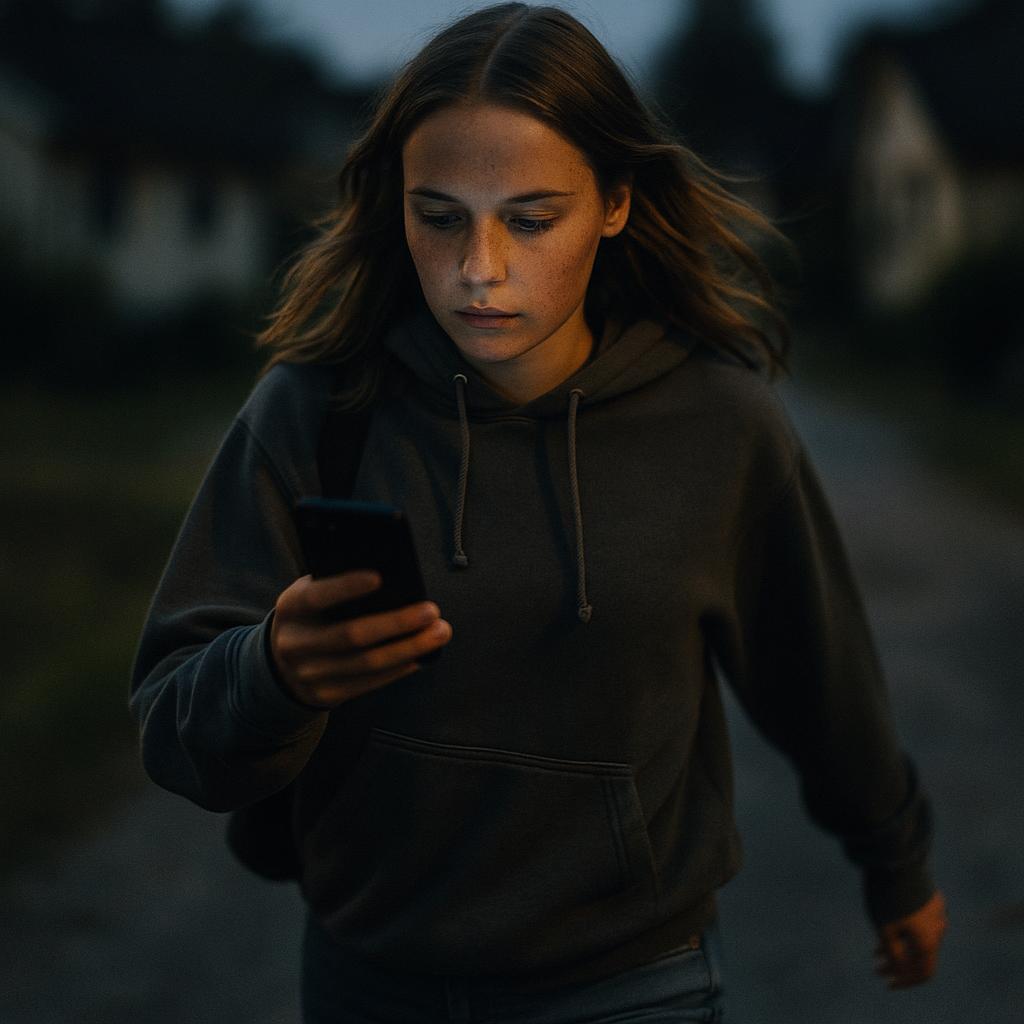 Image by RM AI
The Edge of Town
Finally, Emma stops in front of an old apartment building that looks like it should have been condemned years ago. We're in that part of town where I always lock my car doors when driving through – the kind of neighborhood real estate agents euphemistically call "up and coming" even though it's been "coming up" for decades. The building's facade is a patchwork of peeling paint and exposed brick, with several windows covered in cardboard instead of curtains. I duck behind a rusty sedan as Emma glances nervously over her shoulder, her eyes scanning the empty street. My heart is hammering so loudly I'm sure she'll hear it, but she doesn't. Instead, she slips through a side door that doesn't quite close properly, disappearing into the darkness beyond. I wait, counting to thirty, debating what to do. Call the police? Her father? Storm in there myself? None of these options seem right, but neither does letting my sixteen-year-old daughter vanish into what looks like a crack den at 3 AM. I take a deep breath, straighten my jacket, and approach the building. Whatever Emma's gotten herself into, I'm about to find out – and I'm terrified of what's waiting on the other side of that door.
 Image by RM AI
The Stairwell
I push through the side door, wincing as it groans shut behind me. The smell hits me immediately – a nauseating cocktail of mildew, cigarette smoke, and something else I can't quite identify but definitely don't want to. My eyes adjust to the dim lighting as I strain to hear Emma's footsteps echoing somewhere above me. The stairwell stretches upward like something from a horror movie – flickering lights, graffiti-covered walls, and dear God, is that a used needle in the corner? Every maternal instinct is screaming at me to grab my daughter and run, while another part of me wants to ground her until she's thirty. I begin climbing, trying to keep my footsteps silent on the concrete stairs. One floor, two floors, my mind racing with each step. Is she meeting a drug dealer? Has she joined some kind of gang? Is she being trafficked? (I've watched way too many Dateline specials, I know). I pause on the third-floor landing to catch my breath – apparently midnight detective work requires better cardio than I possess. That's when I hear a door open and close above me. Fourth floor. I stand frozen, unsure whether to confront her now or see this mystery through to its conclusion. Whatever's happening in this building, I'm about to discover just how little I actually know about my perfect daughter.
 Image by RM AI
The Fourth Floor
I stand in that dingy hallway, my heart pounding so hard I swear it's echoing off the peeling wallpaper. The fourth floor. My daughter is behind one of these doors, and I have absolutely no idea what I'll find when I finally confront her. Should I knock? Call her? Call the police? None of these options seem right, but doing nothing isn't an option either. My fingers tremble as I pull out my phone, scrolling to my ex-husband's number. Three years divorced, but Emma is still our shared responsibility, especially in whatever crisis this is turning out to be. Just as I'm about to hit 'call,' I hear the apartment door creak open again. I freeze, then instinctively press myself into a shadowy alcove near the stairwell. My breath catches in my throat as I wait, every muscle tense. The sound of footsteps approaches – not just Emma's familiar gait, but something else. Something unexpected. I peer around the edge of my hiding spot, and what I see makes my entire world shift on its axis. Because my perfect, straight-A, supposedly predictable daughter isn't alone, and what she's carrying in her arms is about to change everything I thought I knew about her.
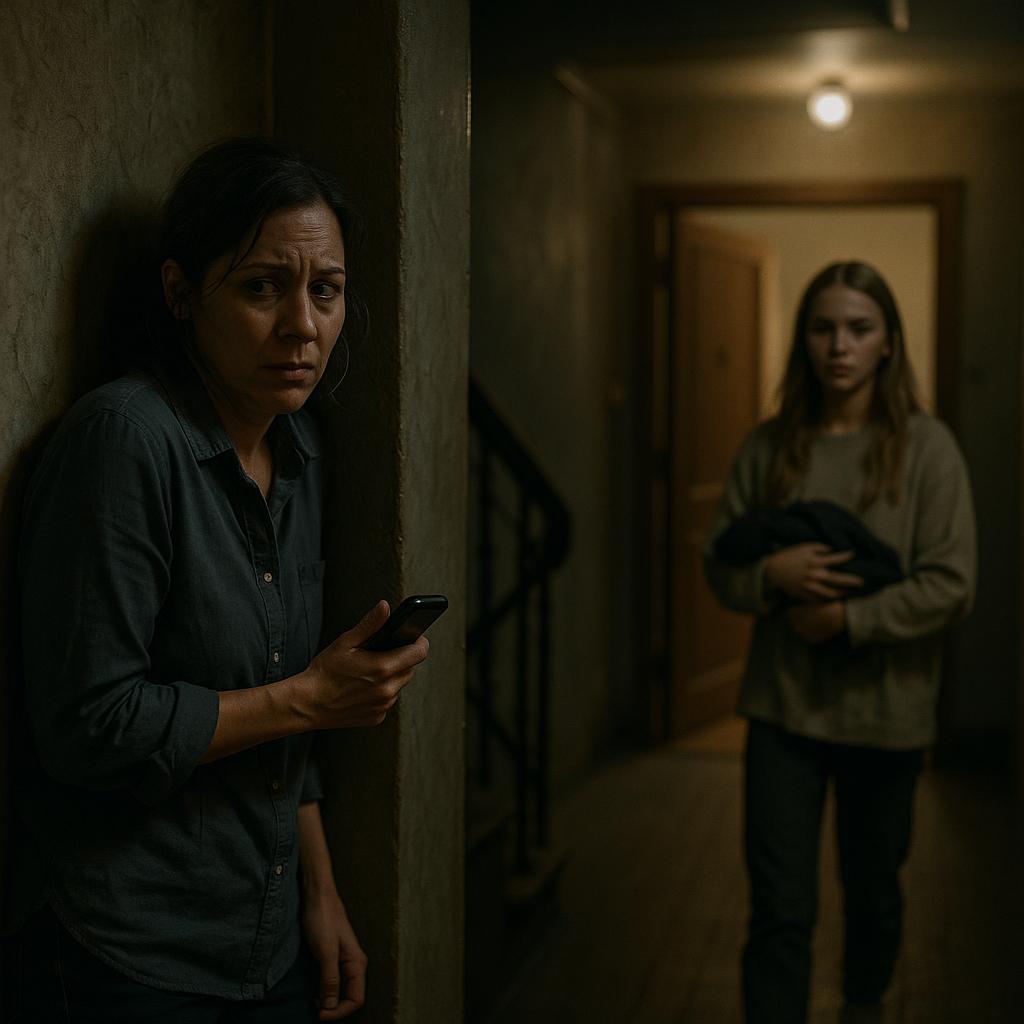 Image by RM AI
The Child in Her Arms
I stand frozen in the shadows, my breath caught in my throat as Emma emerges from the apartment. But she's not alone. Cradled in her arms is a small child, maybe three or four years old, with tousled hair and tear-stained cheeks. The little girl is crying softly, her tiny fingers clutching Emma's jacket. "It's okay, sweetie," my daughter whispers, her voice so tender it makes my heart ache. "We're just going to get you some milk and then you'll feel so much better. I promise I'll stay with you until you fall asleep." Emma rocks the child gently, with a practiced motion that tells me this isn't the first time she's done this. My mind struggles to process what I'm seeing. This is what my daughter has been sneaking out for? Not parties, not boys, not trouble—but this? I watch as she presses a gentle kiss to the child's forehead, whispering more soothing words I can't quite hear. All those worst-case scenarios I'd been imagining suddenly evaporate, replaced by a thousand new questions. Who is this child? Why is my daughter caring for her in the middle of the night? And what kind of situation have I just stumbled into that could make my perfect, responsible Emma feel she needed to keep this secret from me?
The Convenience Store
I follow them at a distance, my gardening clogs now feeling like lead weights on my feet. The convenience store's fluorescent lights cast an unflattering glow on everything as I watch through the smudged windows, feeling like the world's worst spy. Emma moves through the aisles with purpose, grabbing children's medicine, a carton of milk, and a package of crackers. The little girl clings to her like a koala, her tiny head resting on my daughter's shoulder. I notice how Emma checks the price of each item before putting it in her basket, mentally calculating as she goes. At the register, she pulls out her wallet – the one I gave her for her birthday last year – and counts out bills carefully. That's money from her library job, cash I thought she was saving for college textbooks or maybe that concert she mentioned wanting to attend. Instead, she's spending it on medicine for a child I've never seen before. The tenderness in her movements as she helps the little girl drink from the milk carton outside the store makes my throat tighten. Who is this mature young woman, and how did she become so compassionate without me even noticing? As they turn to head back toward the apartment building, I realize I'm witnessing a side of my daughter I never knew existed – and I'm not sure whether to feel heartbroken that she kept this secret or incredibly proud of the person she's become when no one was watching.
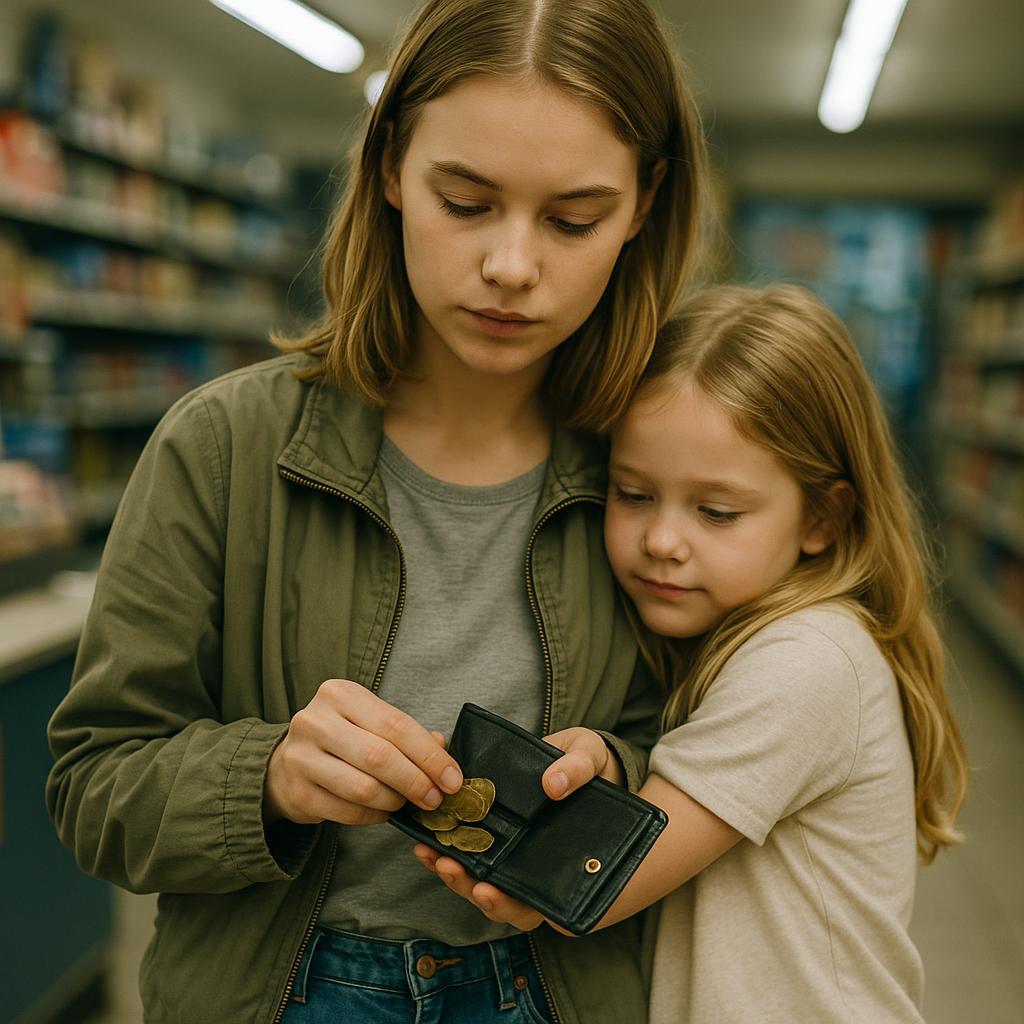 Image by RM AI
The Confrontation
I stand in that dingy hallway for twenty minutes, my mind racing with questions. When Emma finally emerges from the apartment alone, she freezes mid-step, her eyes widening as they lock with mine. The look on her face is something I'll never forget – fear, shame, and defiance all battling for dominance. She opens her mouth, probably preparing some elaborate explanation, but I simply hold up my hand. "Not here," I say quietly, my voice steadier than I feel. "At home." She nods, shoulders slumping with what might be relief or resignation. The walk back is excruciating in its silence, our footsteps on the pavement the only sound between us. I glance at her profile in the streetlight – this daughter I thought I knew completely – and realize there's an entire world inside her I've never glimpsed. The weight of unasked questions hangs between us like a physical thing. What kind of mother am I that my child couldn't tell me about this? What kind of daughter is she to carry such a burden alone? By the time we reach our front door, the sky is beginning to lighten with pre-dawn gray, and I know that whatever Emma tells me next will change our relationship forever.
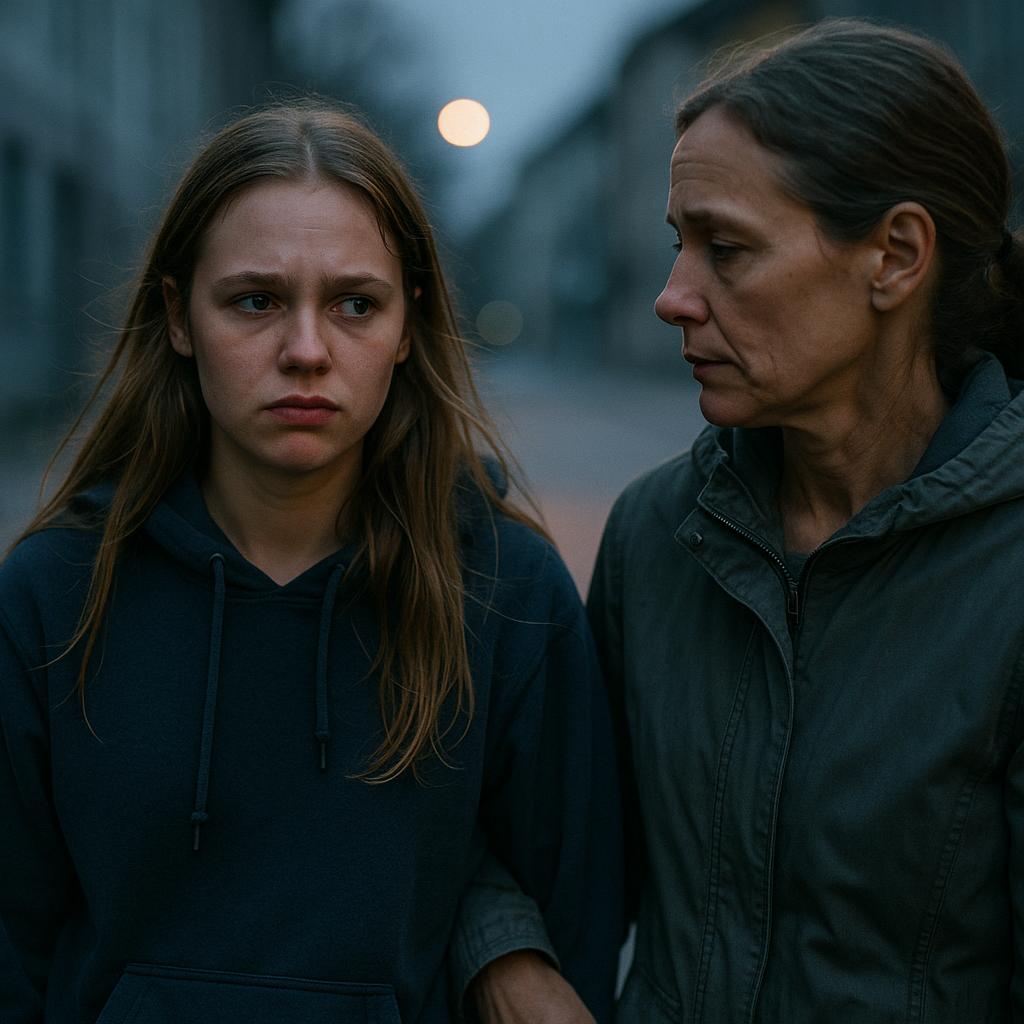 Image by RM AI
The Kitchen Table Confession
Our kitchen feels different at 4 AM – too bright, too quiet, too honest. I set two mugs of chamomile tea on the table, neither of which we'll touch. Emma sits across from me, her fingers tracing the wood grain patterns, avoiding my eyes. When she finally speaks, her voice is steady despite the slight tremor in her hands. "Her name is Sarah," she begins. "I met her at the library three months ago." The story unfolds like a movie I never wanted to see – a young single mother working three jobs, two small children with no one to watch them, an apartment where the heat works only half the time. "She was trying to read job training manuals while her daughter was coughing so badly, Mom," Emma says, finally looking up at me. "No one was helping them." My daughter explains how she started small – babysitting during night shifts, bringing over medicine when the kids were sick, using her library paycheck to buy groceries and diapers. She hadn't told me because she feared I'd make her stop, that I'd say it was too dangerous or inappropriate. As she speaks, I see not my little girl but a young woman with a moral compass so strong it led her out our door at 2 AM to help strangers when the rest of the world was sleeping. And I wonder, with a mixture of pride and heartbreak, what it says about our society that my teenage daughter felt she needed to become someone's secret guardian angel.
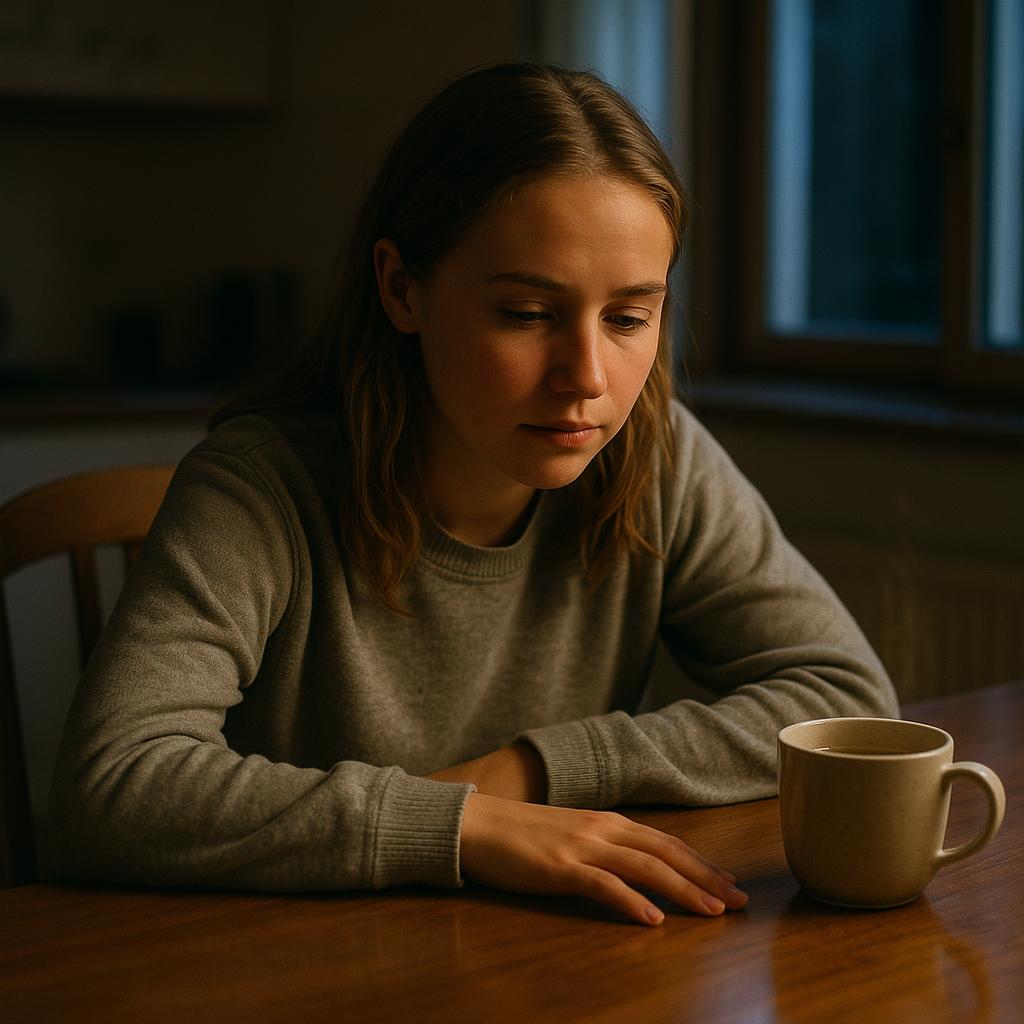 Image by RM AI
The Weight of Secrets
As Emma's story unfolds across our kitchen table, I feel my heart breaking in ways I never imagined possible. Not because she lied—though the deception stings—but because my sixteen-year-old has been carrying the weight of another family's survival on her young shoulders. "I couldn't tell you," she whispers, eyes downcast. "I was afraid you'd make me stop." The words hit me like a physical blow. What kind of mother have I been that my daughter couldn't share this with me? That she felt she needed to sneak around like a criminal to do something so fundamentally good? I reach across the table and take her hand, noticing the chipped nail polish and slight calluses that weren't there months ago. "I'm proud of you," I tell her, my voice cracking. "But you shouldn't have to do this alone." Emma looks up, surprised, as if expecting punishment rather than understanding. In the soft kitchen light, I see both the child I've raised and the woman she's becoming—compassionate, brave, and carrying burdens far beyond her years. What breaks my heart most isn't that she kept secrets, but that in our comfortable home, just miles away from where children go to bed hungry and sick, my daughter was the only one who saw clearly enough to act.
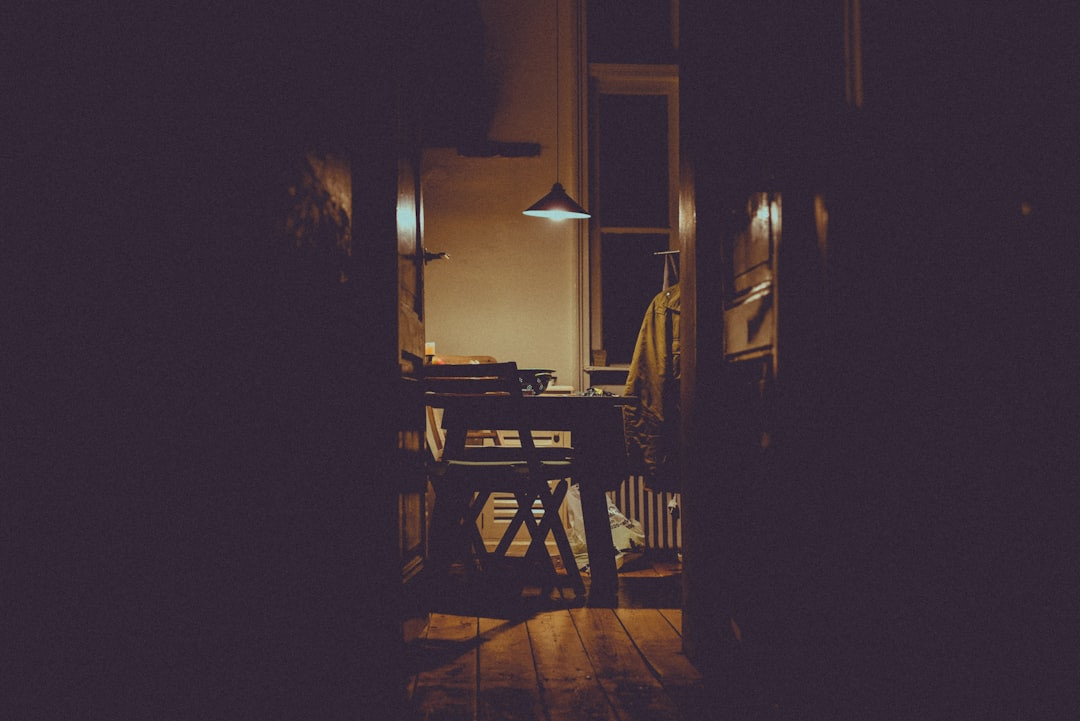
The Morning After
I didn't sleep a wink after our kitchen table confession. My mind kept replaying Emma's words, imagining Sarah's struggles and those children's faces. When morning finally arrived, I'd made exactly zero decisions about what to do next. Emma shuffled into the kitchen around 9 AM, her hair pulled into a messy bun, dark circles shadowing her eyes. She looked like she was walking to her own execution, shoulders hunched as if bracing for the punishment she clearly expected. Instead, I pushed a plate of pancakes toward her and asked, "Tell me more about Sarah. How old are her kids?" The look of pure relief that washed over my daughter's face nearly broke me. As she described Sarah's four-year-old daughter Lily (the one I'd seen) and eighteen-month-old son Ethan, I realized how much thought she'd put into helping this family—bringing age-appropriate books from the library, researching affordable nutrition options online. My sixteen-year-old had essentially become a part-time social worker while I remained blissfully unaware in our comfortable suburban bubble. I was simultaneously bursting with pride and sick with worry. How could I support Emma's compassion while ensuring she wasn't putting herself in danger? And more importantly, how could I help Sarah without destroying her dignity or making Emma feel I was taking over her mission?
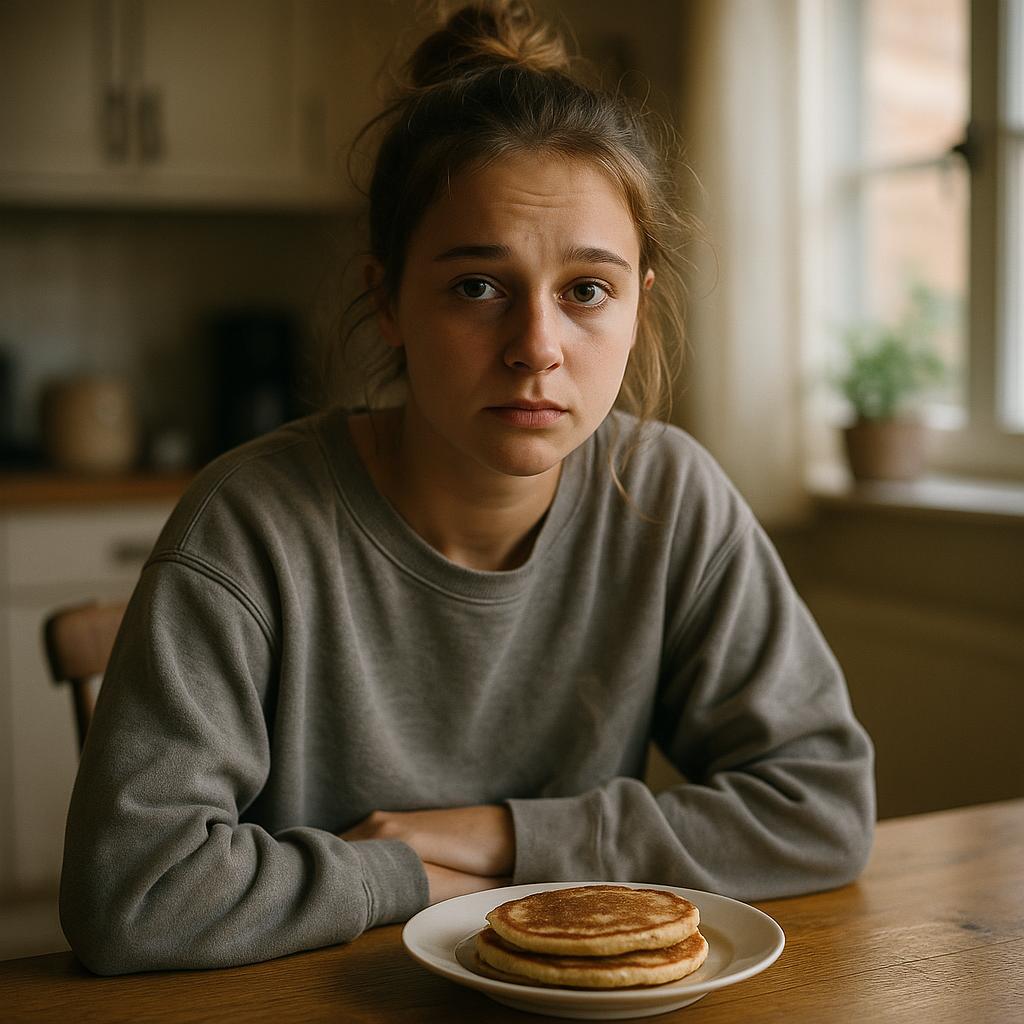 Image by RM AI
The Full Story
Over pancakes the next morning, Emma's story unfolds in greater detail, and my heart sinks further with each revelation. Sarah isn't just struggling—she's drowning. At 23, she's raising four-year-old Lily and six-month-old Max entirely alone, working back-to-back shifts as a night cleaner and daytime laundromat attendant just to keep a roof over their heads. "Mom, she has no choice," Emma explains, her voice cracking as she pushes syrup around her plate. "Sometimes Lily has to watch Max while Sarah works. A four-year-old watching a baby!" Emma discovered them by accident at the library one afternoon—Lily sitting cross-legged on the floor with Max in her lap, waiting hours for their mother's shift to end. "Lily was trying to read to him from a picture book, holding it upside down," Emma whispers. "She told me she was 'the big girl' now." I watch my daughter's face as she speaks, seeing the weight of responsibility in her eyes that no teenager should carry. But what strikes me most is how Emma doesn't see her actions as extraordinary—to her, helping was simply the only option when the system had failed this family so completely. And I'm left wondering how many other Sarahs and Lilys are out there, invisible to everyone except my remarkable daughter.
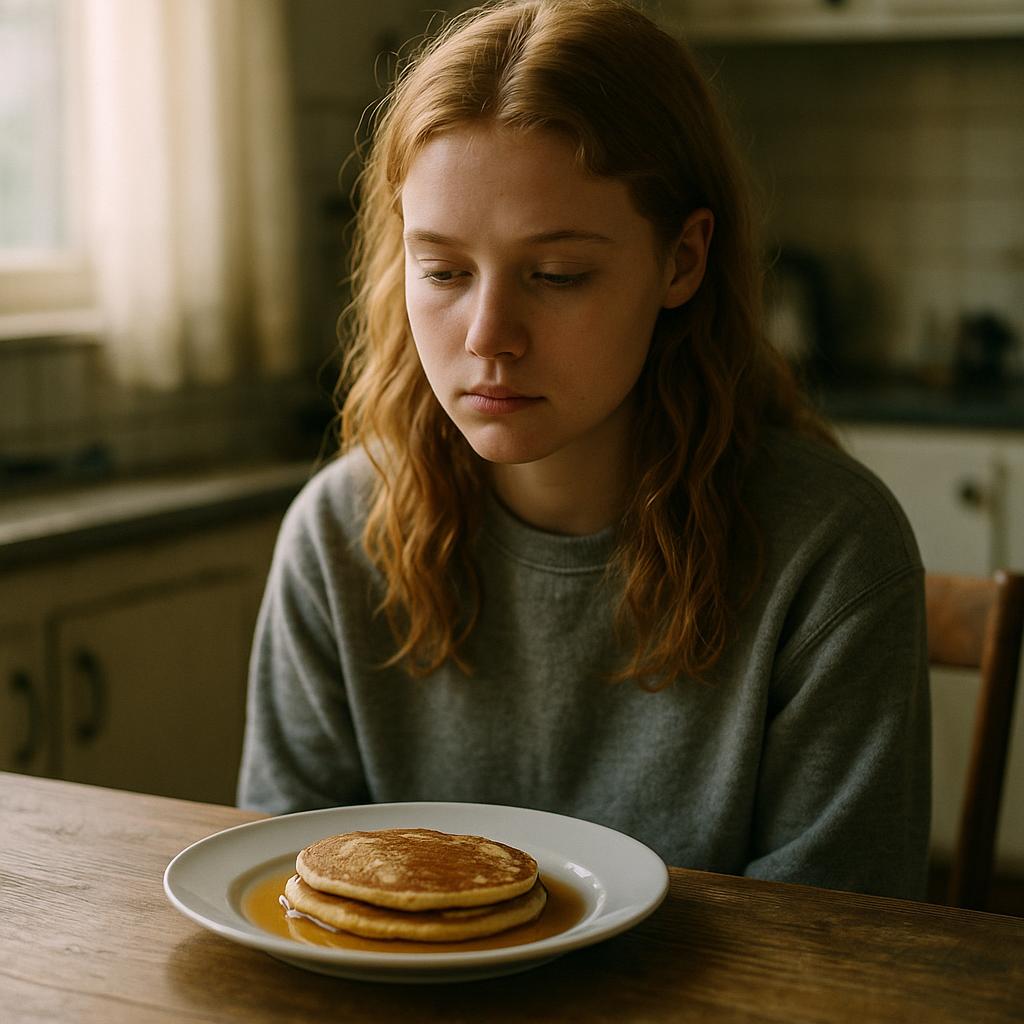 Image by RM AI
The Library Connection
The next day, Emma asked if I wanted to see where it all began. We drove to the library where she works part-time, a place I'd dropped her off countless times without ever really going inside. "This is where I first saw them," she said, leading me to a sunny corner filled with tiny chairs and well-loved picture books. I watched as Emma waved to a little girl who was carefully returning a book to a low shelf. The child's face lit up when she spotted my daughter. "That's Lily," Emma whispered. "Sarah brings her here when she can." Mrs. Patel, Emma's supervisor, approached me with a warm smile while Emma helped Lily pick out a new book. "Your daughter is extraordinary," she told me, her voice low. "Did you know she started a weekend reading program for children whose parents work multiple jobs? She noticed they were here alone for hours." I nodded as if I'd known all along, shame burning in my chest. How had I missed this entire dimension of my daughter's life? I'd been so certain we shared everything important, yet here was evidence of a whole world she'd built without me. Mrs. Patel continued praising Emma's community initiatives while I struggled to reconcile the teenager who sometimes forgot to put her dishes in the dishwasher with this compassionate young woman everyone else seemed to know better than I did.
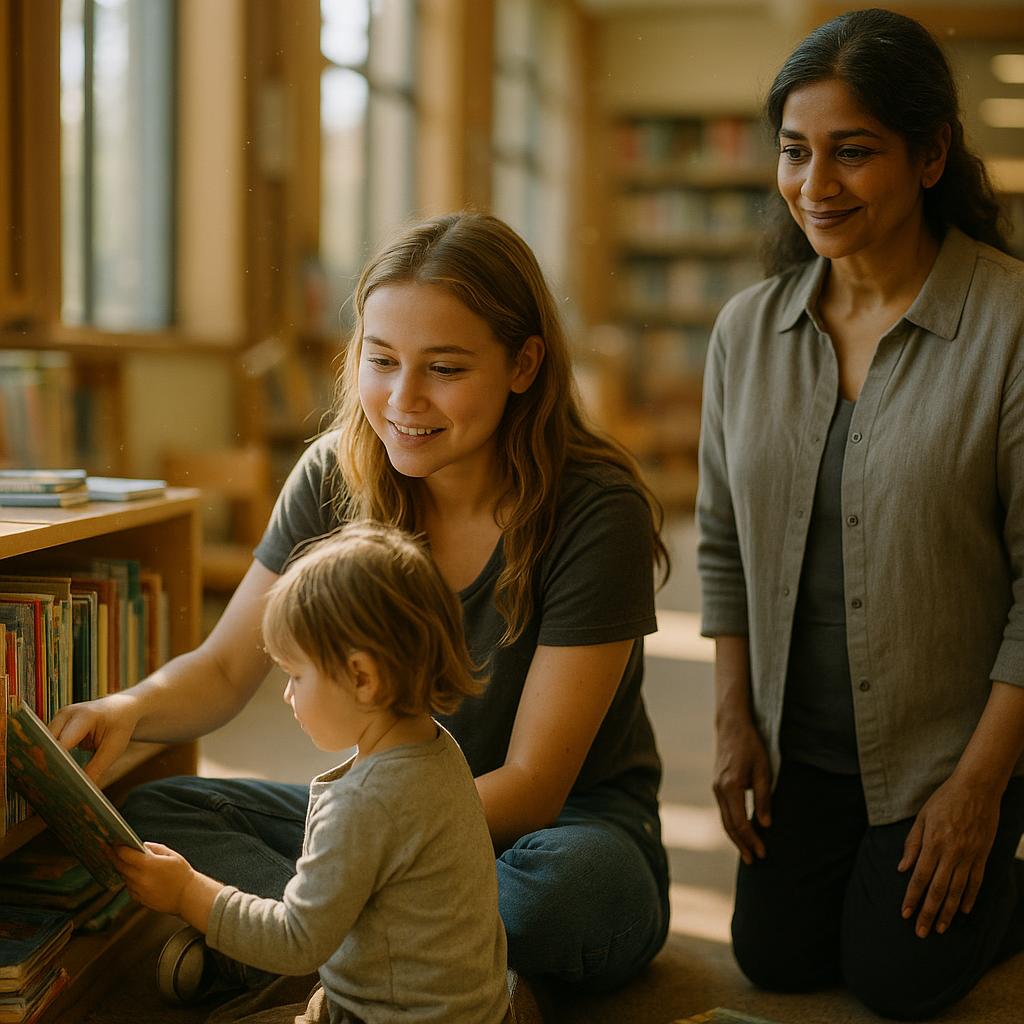 Image by RM AI
The Decision
After a sleepless night filled with worry and pride in equal measure, I made a decision. No more midnight missions for my teenage daughter. "We need to meet Sarah properly," I told Emma over breakfast the next morning. Her fork clattered against her plate, eyes widening with alarm. "Mom, no! You don't understand. She'll think I betrayed her trust. She might think we're judging her or worse—that we'll report her to social services." The fear in Emma's voice made me pause. I reached across the table and took her hand. "Honey, I'm not looking to make things worse. I just want to help—the right way, the safe way." Emma pulled her hand away, shaking her head. "You always think you know the best way to fix everything." Her words stung, but maybe she had a point. Had I ever given her reason to believe I wouldn't support someone struggling? Had my comfortable suburban values somehow taught her that I'd judge a young mother doing her best in impossible circumstances? As Emma stormed off to her room, I sat alone with my cooling coffee, wondering when exactly my daughter had started seeing me as part of the problem rather than part of the solution.
 Image by RM AI
The First Visit
After three days of tense negotiations, Emma finally agreed to introduce me to Sarah, but with conditions. "We're not showing up empty-handed," she insisted, her tone leaving no room for argument. So there we were, pushing a cart through the grocery store at 10 AM on Saturday, filling it with practical items—diapers, wipes, non-perishable foods, and children's Tylenol. Emma moved through the aisles with the efficiency of someone who'd done this before, checking prices and calculating totals in her head. "Sarah won't accept charity," she explained, selecting the store brand pasta. "But she'll take help if it feels like friendship." I added a few children's books to our cart, earning a small smile of approval from my daughter. The drive to the apartment building felt different in daylight—somehow both less threatening and more depressing. Peeling paint, broken windows patched with cardboard, a playground with equipment so rusted it looked dangerous. I parked and stared up at the building, trying to imagine raising children here. Emma grabbed two bags and headed toward the entrance with the confidence of someone who belonged, while I followed with the rest, my heart pounding with equal parts anxiety and shame. What would I say to this young mother who my teenage daughter had been secretly helping for months? And what would she think of me when she realized I'd had no idea what my own child had been doing all this time?

Meeting Sarah
Sarah opens the door with baby Max balanced on her hip, dark circles under her eyes telling the story of countless sleepless nights. The moment she sees Emma, her exhausted face transforms with a genuine smile that makes her look years younger. Then her eyes land on me, and that smile vanishes, replaced by unmistakable fear. I recognize that look—it's the expression of someone who's been judged too many times before. The apartment surprises me—it's tiny, maybe 600 square feet total, but spotlessly clean. Every surface gleams with the effort of someone determined to create dignity in difficult circumstances. Children's artwork brightens the walls, taped carefully at perfect intervals like a gallery exhibition. Before I can say anything, Lily—the little girl I'd seen in Emma's arms that night—comes barreling from a back room with a squeal of pure joy. "Emma! Emma!" She wraps herself around my daughter's legs like Emma is Santa Claus and the tooth fairy rolled into one. The way my daughter immediately crouches down to hug her back, whispering something that makes Lily giggle, tells me everything about the relationship they've built. Sarah shifts uncomfortably, bouncing Max slightly as she looks between Emma and me, clearly wondering if I'm about to destroy the fragile support system my daughter has created.
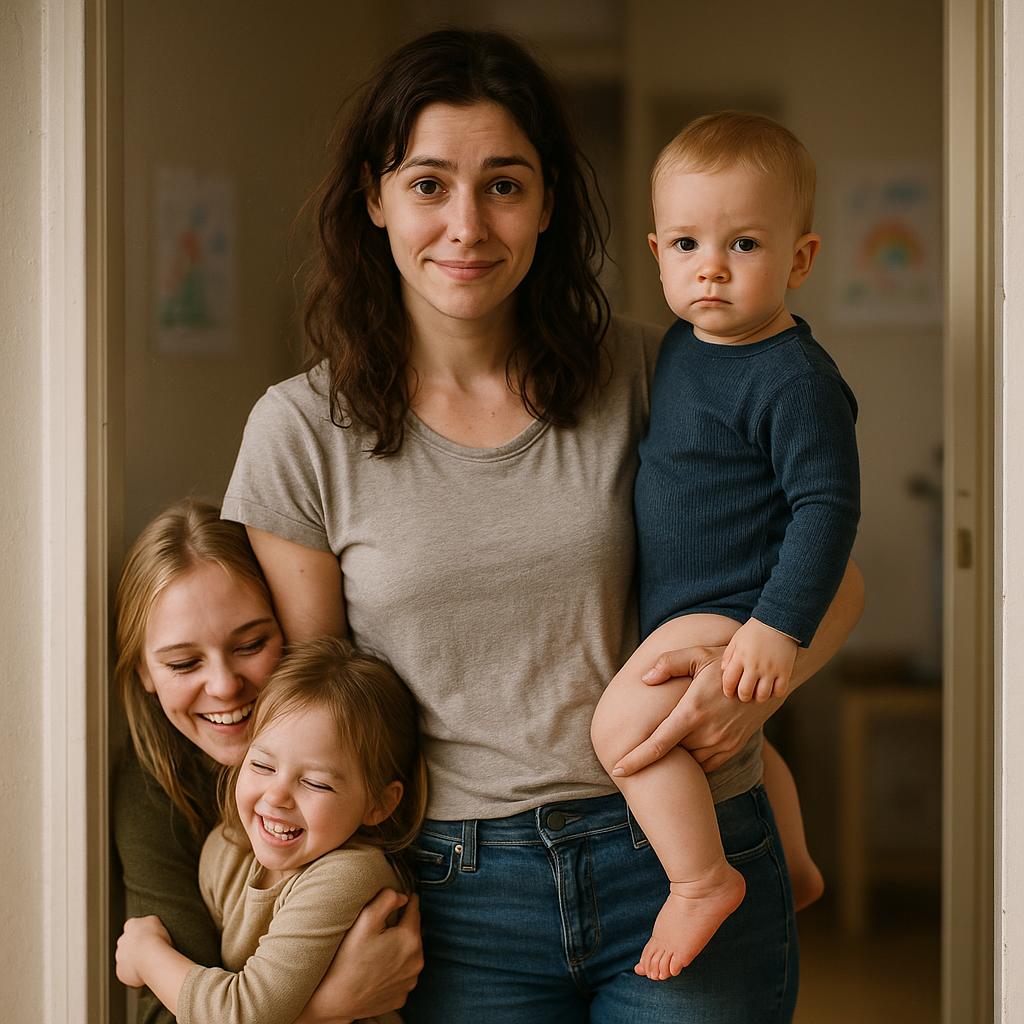 Image by RM AI
Sarah's Story
We sit at Sarah's small kitchen table, the surface wiped clean but worn from years of use. She cradles a chipped mug of instant coffee between her hands like it's keeping her anchored to this moment. "I left two years ago," she begins, her voice barely above a whisper. "Lily's father..." She trails off, glancing toward the bedroom where Emma is reading to her daughter. "I grabbed Lily and what we could carry in one bag. That was it." As Sarah's story unfolds, I feel a familiar ache in my chest. She's been working as a night cleaner and daytime laundromat attendant, sleeping maybe four hours between shifts. When she mentions Max's father disappearing before his birth, her eyes harden momentarily. "Sometimes I have to leave them alone," she admits, tears threatening. "If social services found out..." I reach across the table instinctively, my hand covering hers. The raw fear in her eyes mirrors what I felt after my divorce – that terrifying sensation of free-falling with no safety net. The difference is, I had resources, family, options. Sarah has been fighting this battle completely alone – or at least she was, until my daughter found her. Looking at this young woman across from me, I realize with startling clarity that the line between her circumstances and mine was thinner than I'd ever acknowledged.
 Image by RM AI
The Promise
Standing in Sarah's cramped kitchen, I hear myself making a promise that surprises even me. "I know someone at the community resource center," I tell her, my voice steadier than I feel. "And there's a subsidized childcare program that doesn't ask too many questions." Sarah's eyes meet mine, a flicker of hope quickly replaced by the practiced skepticism of someone who's heard empty promises before. "People say they'll help all the time," she says quietly, bouncing Max on her hip. "Then they disappear." I feel Emma's hand slip into mine, squeezing gently. When I glance at her, the look of pure admiration in her eyes nearly breaks me – it's been years since my daughter has looked at me that way. "We're not disappearing," I say firmly, looking back at Sarah. "Emma found you, but now you've got both of us." As we gather our things to leave, I wonder if I've just made a promise I can't keep. The system is designed to be difficult to navigate, especially for someone in Sarah's position. But watching my daughter kneel to hug Lily goodbye, I know I'll move heaven and earth to make this work. Because the truth is, I'm not just doing this for Sarah and her children – I'm doing it to be the mother my daughter thought I was all along.
The Research Night
That night, Emma and I sat at our kitchen table, laptops open, mugs of tea growing cold beside us as we dove into the labyrinth of social services. What started as hopeful research quickly turned into a frustrating maze of dead ends. "Look at this," Emma said, turning her screen toward me. "This childcare program has a two-year waiting list." I nodded grimly, scrolling through another housing assistance application that required documentation Sarah probably didn't have. The stark contrast between our comfortable home and Sarah's daily struggle hit me like a physical blow. Here we were, annoyed by complicated websites and bureaucratic language, while Sarah was probably putting her children to bed hungry tonight. "This is ridiculous," Emma muttered, slamming her laptop closed after three hours of searching. "The system is designed to keep people like Sarah trapped." I reached over and squeezed her hand, seeing the same fire in her eyes that had driven her to sneak out at night to help a stranger. "We'll figure it out," I promised, though I wasn't entirely sure how. What I didn't tell Emma was that I'd already emailed my divorce lawyer, asking if he knew anyone who specialized in social services advocacy. Because if there's one thing I'd learned from watching my daughter these past few days, it's that sometimes you have to work outside the system to change it.
 Image by RM AI
The Call to Dad
I stared at my phone for a full five minutes before finally hitting Mark's number. We hadn't had a real conversation in months—just terse texts about Emma's schedule and the occasional email about school expenses. When he answered, his voice had that professional edge he always used with clients. "Janet? Is everything okay with Emma?" The concern in his voice reminded me of when we were still a family. I took a deep breath and explained everything—the midnight following, Sarah's situation, the children, and our frustrating research session. The silence on the other end made my stomach clench. Then, to my complete surprise, Mark's voice softened. "I know some people at legal aid who specialize in cases like this. They could help with housing applications, benefits, maybe even find Sarah better employment options." I turned to see Emma standing in the doorway, arms crossed, her expression a complicated mix of hope and suspicion. She'd never fully forgiven her father for leaving, but I could see in her eyes that same calculating look she gets when solving a difficult math problem—weighing the potential help against the emotional cost of letting her dad back into our carefully reconstructed lives. What none of us realized then was how completely Sarah's situation would transform not just her family, but ours too.
 Image by RM AI
The School Day After
Emma trudged through the door after school, dropping her backpack with a thud that matched her mood. One look at her face told me something was wrong beyond the usual teenage drama. "Zoe knows," she blurted out before I could ask. "Not everything, but enough." She collapsed onto a kitchen chair, explaining how her best friend had cornered her in the bathroom after noticing her bloodshot eyes and constant yawning. "She thinks we should do a donation drive at school. Make posters, get the student council involved." Emma's voice cracked with frustration. "I tried to explain that Sarah doesn't want to be someone's charity project, but Zoe doesn't get it." I placed a mug of hot chocolate in front of her, remembering how isolating secrets can be at sixteen. Emma had been carrying this burden alone, unable to share even with her closest friends. "She said I was being selfish for not letting others help," Emma whispered, tears welling up. "Am I?" I sat beside her, realizing with a pang that in trying to protect Sarah's dignity, my daughter had cut herself off from her own support system. The question hanging between us was impossible: how do you help someone without turning their struggle into a spectacle?
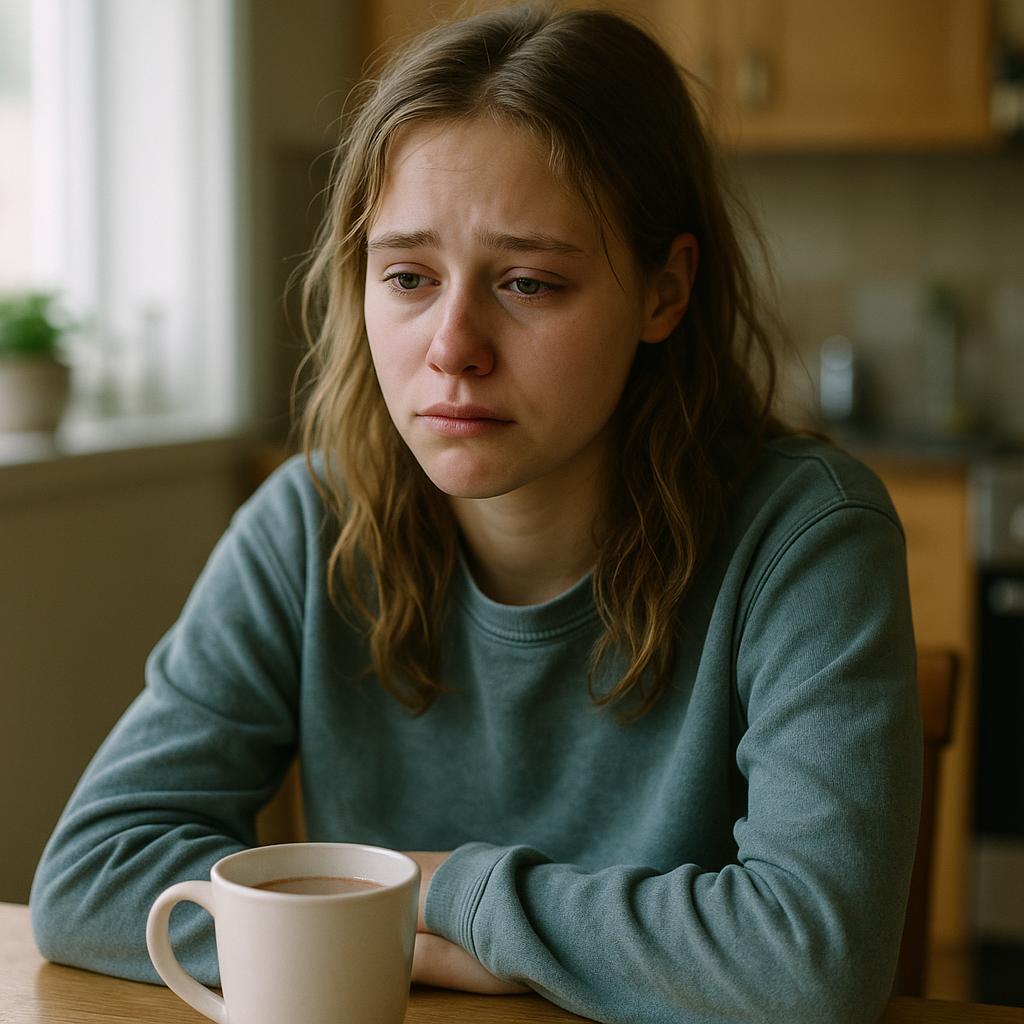 Image by RM AI
The Unexpected Visitor
The doorbell rang at 7:30 PM on a Tuesday, that awkward time when dinner's over but it's too early for pajamas. I opened the door to find Mark—my ex-husband—standing there with a leather portfolio and a woman I didn't recognize. "Janet, this is Diane. She specializes in housing law." No hello, no warning text—just Mark in problem-solving mode, exactly like the old days. Emma appeared behind me, her expression guarded yet curious. "Dad?" The three of us settled in the living room, where Mark spread out pamphlets and printouts across the coffee table like battle plans. "I've found three programs Sarah might qualify for," he explained, his lawyer voice softening when he mentioned the children. I watched Emma's face as she observed us working together—her parents, who once couldn't discuss visitation schedules without tension, now finishing each other's sentences about childcare vouchers and rental assistance. When Mark's hand accidentally brushed mine as we reached for the same document, I caught Emma studying us with an expression I couldn't quite read—like she was seeing a ghost of something she'd long forgotten was possible. What none of us realized then was how this unexpected alliance would reopen doors we'd all assumed were permanently closed.
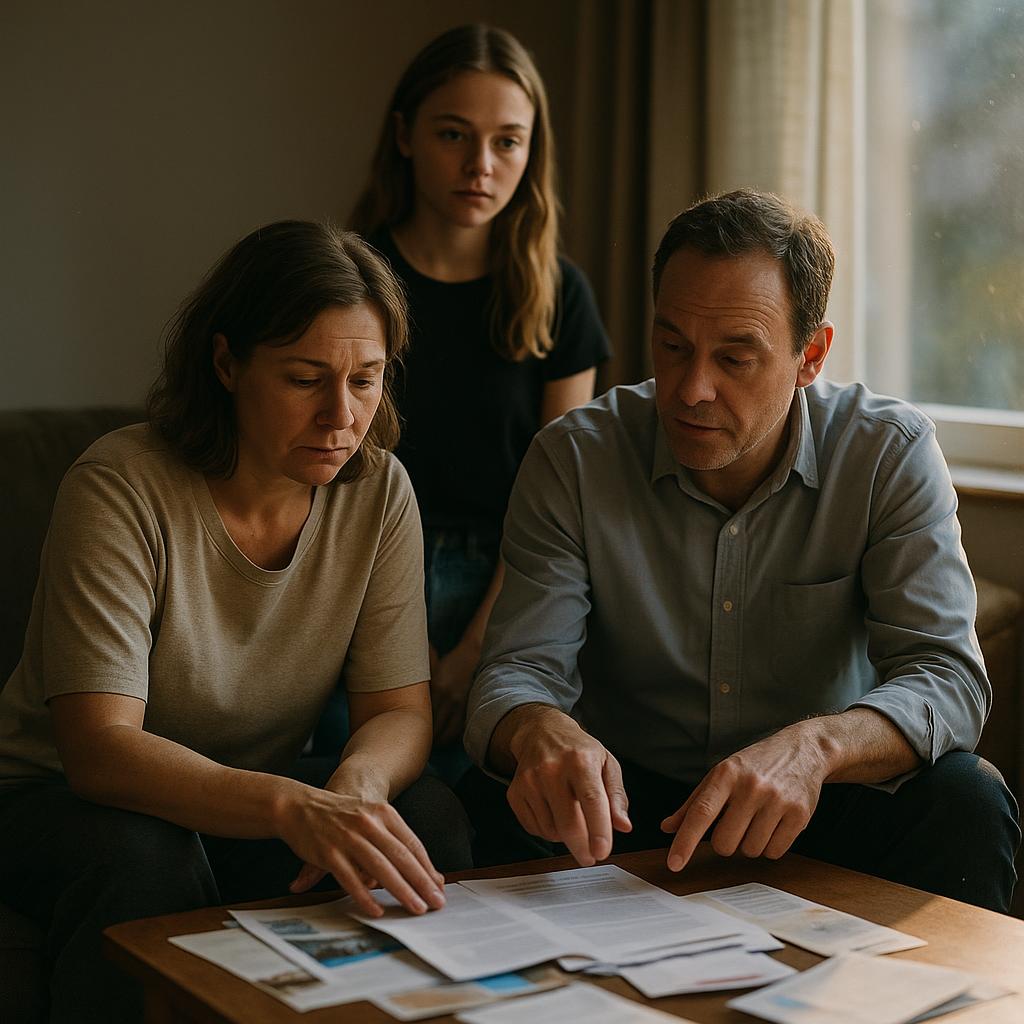 Image by RM AI
The Babysitting Solution
I created a color-coded calendar on my kitchen wall—a proper babysitting schedule that didn't involve my teenage daughter sneaking out like a cat burglar. Emma would cover Tuesday afternoons and Saturday mornings; I'd take Thursday nights and every other Sunday. "You're sure about this?" Emma asked, eyeing me suspiciously as I wrote my name in the slots for Sarah's overnight shifts. Truth be told, I wasn't sure at all. I hadn't pulled an all-nighter since college, and the thought of managing two small children while everyone else was sleeping made my stomach knot with anxiety. But the alternative—knowing those babies might be alone—was worse. When I mentioned our arrangement to Claire over coffee the next day, her perfectly penciled eyebrows shot up in alarm. "Janet, you're not running a charity," she said, stirring her latte with unnecessary force. "This woman needs to figure out her own childcare situation. What if she takes advantage of you?" Her words hung between us like a bad smell. I'd known Claire for fifteen years, but suddenly I was seeing her through Emma's eyes—comfortable, judgmental, unable to imagine a world where sometimes good people need help through no fault of their own. "I'm not a charity," I agreed, gathering my purse. "I'm a neighbor." Walking away from that coffee shop, I wondered if I was being hopelessly naive or if, just maybe, my daughter had been right about me all along.
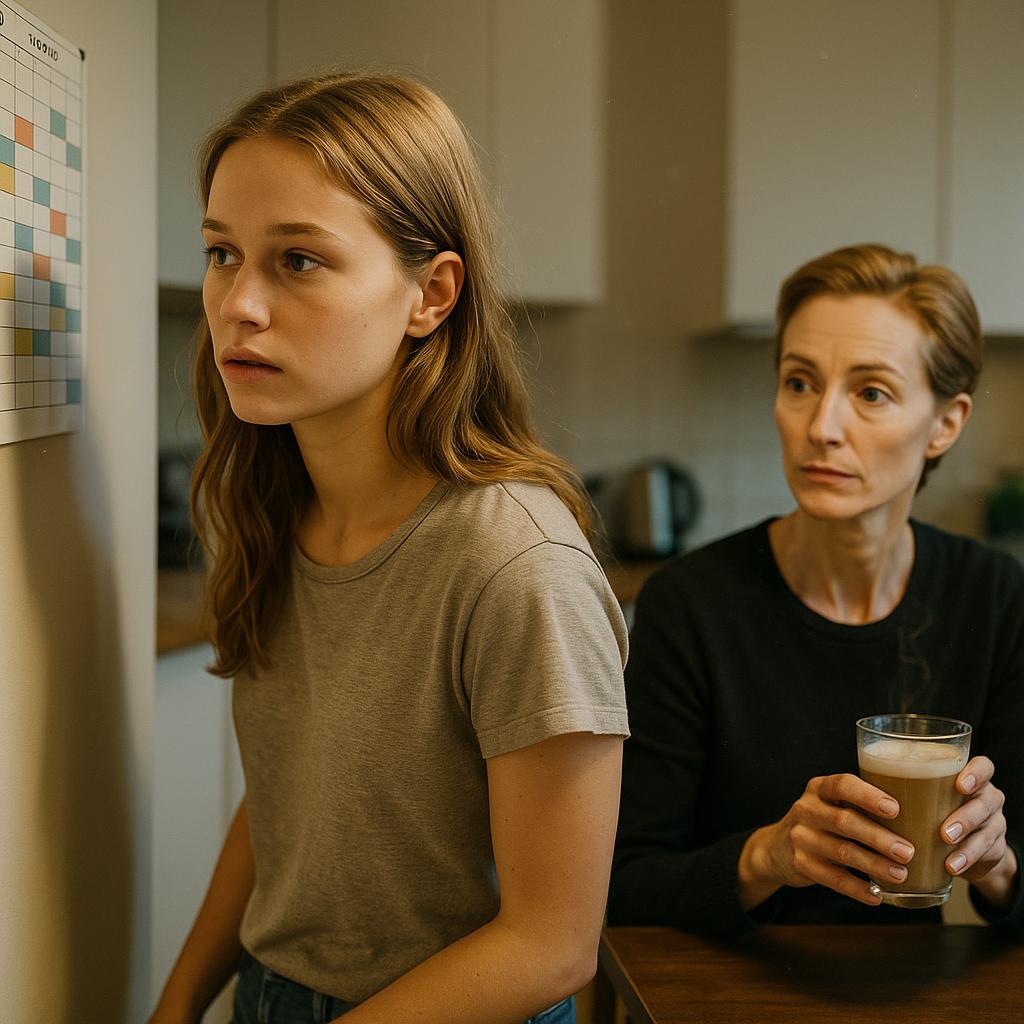 Image by RM AI
The First Night Shift
I never imagined I'd spend my Thursday night in a stranger's apartment, responsible for two children I barely knew. The building seemed to transform after dark – creaks and groans I hadn't noticed during daytime visits now echoed through the thin walls like whispers. From somewhere down the hall, a couple's argument filtered through, punctuated by occasional slammed doors. I sat rigid on Sarah's worn couch, jumping at every unfamiliar sound. Around 2 AM, Lily's cries pierced the darkness. I rushed to her tiny bedroom, finding her tangled in sheets, tears streaming down her face. "I want Mommy," she sobbed, her little body trembling. As I gathered her into my arms, rocking her gently the way I used to rock Emma, I felt the weight of her fear. This wasn't just a typical childhood nightmare – this was a child whose entire sense of security had been fractured. "Your mommy is working hard to take care of you," I whispered, stroking her hair. "And I'm here until she comes back." Lily's eventual return to sleep felt like a small victory, but as I sat in the darkness of that apartment, listening to Max's steady breathing from his crib and the symphony of poverty surrounding us, I couldn't help but wonder how many other children in this building were lying awake right now, afraid and waiting for someone who couldn't be there.
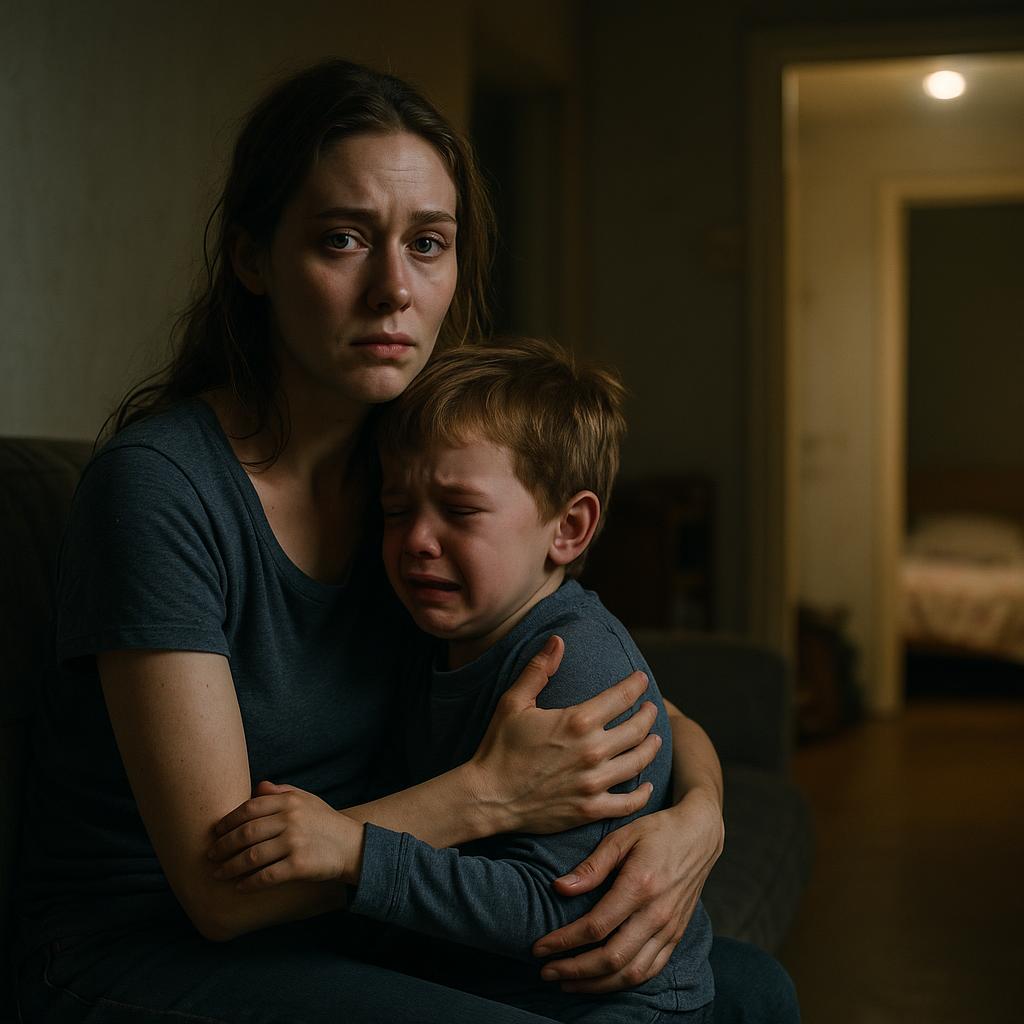 Image by RM AI
The Neighbor's Warning
I was fumbling with my keys, ready to leave Sarah's building, when a gravelly voice called out behind me. "You're the new one, aren't you?" I turned to find a tiny woman with steel-gray hair and eyes that had clearly seen everything. She introduced herself as Mrs. Kowalski from 3B, then glanced around conspiratorially before leaning closer. "Be careful with that family in 4C," she warned, her voice dropping to a whisper. "Greenberg's looking for any excuse." When I asked who Greenberg was, her face hardened. "Building manager. Real piece of work. He's been trying to get Sarah out for months—says her kids make too much noise." My stomach dropped as Mrs. Kowalski explained that increased visitor traffic might give him the ammunition he needed. "He counts visitors," she said, tapping her temple. "Keeps track of everything. Says it's against the lease to run a 'business' from the apartments." I thanked her and walked to my car in a daze, the weight of this new complication settling heavily on my shoulders. In trying to help Sarah, we might actually be putting her at greater risk. How do you help someone when the very act of showing up could cost them everything?
 Image by RM AI
The Building Manager
I returned to Sarah's building the next day, armed with a casserole and my 'cousin visiting from out of town' story. As I approached the entrance, I spotted a middle-aged man in a stained white shirt examining a leaking pipe in the hallway. Water pooled beneath it, adding to the building's pervasive smell of mildew. "Excuse me," I said, stepping carefully around the puddle. "I'm looking for apartment 4C. I'm Sarah's cousin." Mr. Vasquez—according to the faded name tag pinned to his chest—straightened up slowly, his eyes narrowing as they traveled from my designer handbag to my freshly highlighted hair. "Cousin, huh?" he said, not bothering to hide his disbelief. "Funny, she never mentioned family before." The way he emphasized 'family' made my skin crawl. "These problem tenants with kids," he continued, tightening a valve with unnecessary force, "always bringing noise complaints. Disturbing the peace." His thinly veiled threat hung in the air between us. I clutched my casserole dish tighter, forcing a smile that didn't reach my eyes. "Well, family shows up when they're needed," I replied, my voice steadier than I felt. Walking away, I could feel his suspicious gaze burning into my back. I'd come here thinking I was being helpful, but now I realized I might be making things worse. What if this man was just waiting for an excuse to evict Sarah and her children?
 Image by RM AI
The School Project
Emma burst through the front door, waving a paper with her teacher's comments scrawled in red ink. "Mom, Mr. Bennett loved my project proposal!" she announced, dropping her backpack on the kitchen counter. I scanned the paper—'Housing Insecurity and Child Welfare'—and felt a complicated mix of pride and anxiety twist in my stomach. "I'm using anonymous quotes from Sarah," Emma explained, pulling out her notebook filled with careful observations. "Mr. Bennett says it's powerful because it's real." I nodded, studying my daughter's face, alight with purpose. This wasn't just a school assignment to her; it was personal now. "Honey, I'm proud of you, but..." I hesitated, choosing my words carefully. "We need to make sure Sarah is comfortable with this. Even anonymous stories can be recognized." Emma's expression fell slightly. "But how can people understand if they don't hear real stories?" she asked. I didn't have a simple answer. The line between advocacy and exploitation was razor-thin, and my sixteen-year-old was walking it with more grace than most adults I knew. What neither of us realized then was how this school project would eventually reach someone with the power to actually change Sarah's situation—and not necessarily for the better.
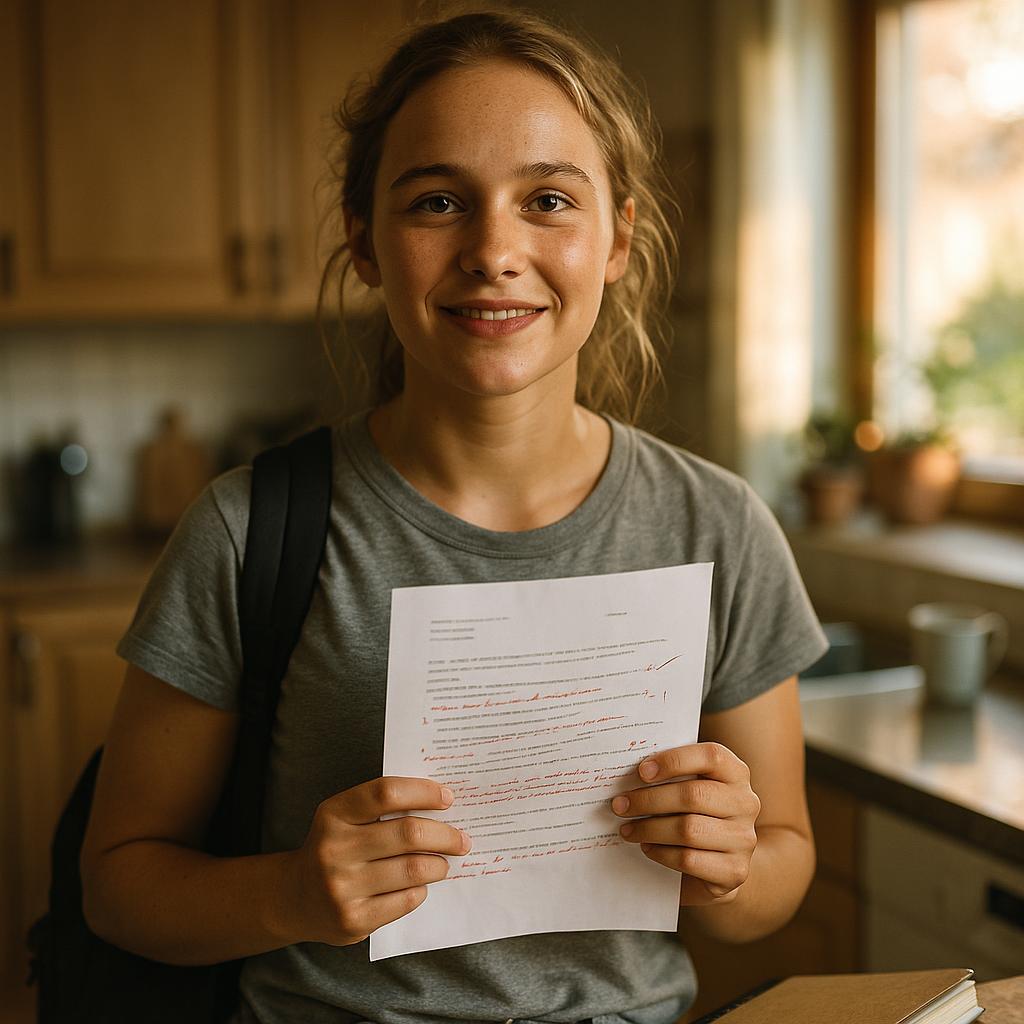 Image by RM AI
The Family Dinner
I spent all day cleaning the house, as if Sarah might judge me for a stray sock when she was just grateful for a night off from cooking. When they arrived, Emma immediately took Lily by the hand, showing her around our home like a miniature tour guide. "And this is where we keep ALL the ice cream," she announced, opening our freezer with dramatic flair. Meanwhile, Sarah perched on the edge of our couch, cradling Max and looking like she might bolt at any moment. I noticed her eyes lingering on the family photos that lined our hallway—Emma's school pictures, our vacation to the Grand Canyon, even one from before the divorce when we were still a complete family unit. The naked longing in her expression made my throat tight. "Your home is beautiful," she said quietly, and I heard what she didn't say: that this kind of stability was something her children might never know. The gulf between our lives felt impossible to bridge with just a lasagna and some garlic bread. When Emma suggested we eat in the dining room—a space we normally only used for Thanksgiving—I caught Sarah's slight flinch. What had started as a well-intentioned gesture suddenly felt like we were highlighting everything she couldn't provide. What none of us expected was who would show up halfway through dinner, turning an already awkward evening into something none of us would ever forget.
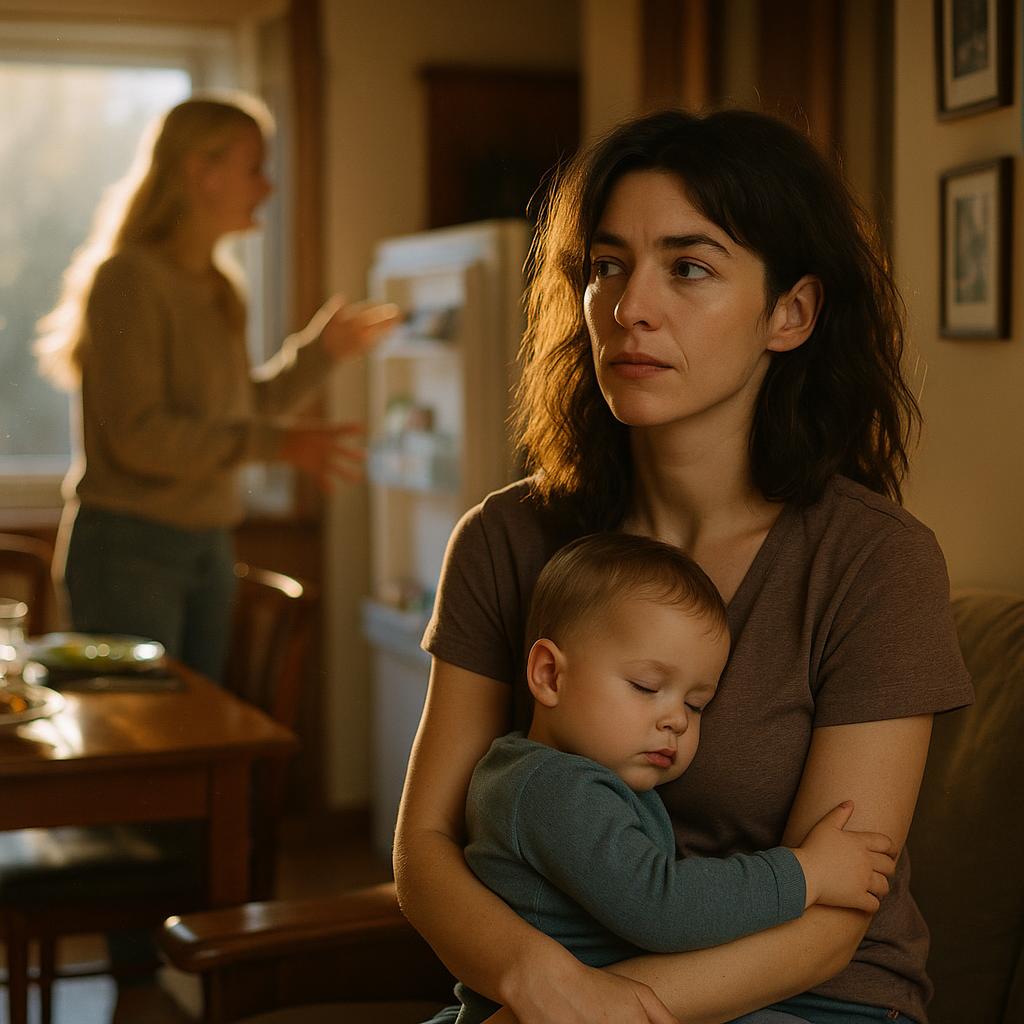 Image by RM AI
The Job Opportunity
Over dinner, between Lily's giggles and Max's occasional babbling, I casually mentioned the administrative opening at my marketing firm. "It's entry-level but comes with benefits and regular nine-to-five hours," I explained, watching Sarah's expression transform. For a split second, hope illuminated her face like I'd just offered her the moon. Then reality crashed back in. "I don't have the qualifications," she said softly, pushing food around her plate. "My resume has more gaps than content." I leaned forward, surprising myself with my own intensity. "I could help with your resume. I could even be a reference." The words tumbled out before I'd fully considered their implications. Emma's fork paused midway to her mouth, her eyes darting between us. I recognized that look—the same one she'd given me when I'd promised her a puppy during the divorce, a well-intentioned gesture that I couldn't actually fulfill. "Mom," she said carefully, "you've only known Sarah for a few weeks." She was right, of course. What did I really know about Sarah's work ethic or skills? Was I willing to stake my professional reputation on a woman whose children I'd babysat a handful of times? But looking at Sarah's worn hands and the careful way she cut Lily's food into perfect bite-sized pieces, I made my decision. What I didn't realize was how quickly this impulsive offer would come back to haunt all of us.

The Resume Session
I cleared the dining room table, spreading out resume templates and sample cover letters like battle plans. When Sarah arrived with both kids in tow, I noticed how she straightened her thrift-store blouse before sitting down. "I haven't done this in years," she admitted, pulling a folded paper from her purse—her old resume, printed on yellowing paper. As Emma led the children to the living room, Sarah began sharing pieces of her past. "I was halfway through nursing school when I got pregnant with Lily," she said quietly, her fingers tracing the education section we'd need to update. I watched her explain medical terminology with surprising precision, her eyes lighting up when discussing patient care protocols. This wasn't just a struggling single mom—this was a woman with intelligence and ambition who'd been derailed by circumstance. The sound of children's laughter floated in from the next room, a jarring counterpoint to our conversation about survival wages and employment gaps. "You know," I said, watching her confidently reorganize the skills section, "nursing programs have part-time options now." The look that flashed across her face—a mixture of longing and impossibility—made me realize how many assumptions I'd been making about what Sarah wanted versus what she needed. What I didn't know then was that the resume we were building would lead to something neither of us could have anticipated.
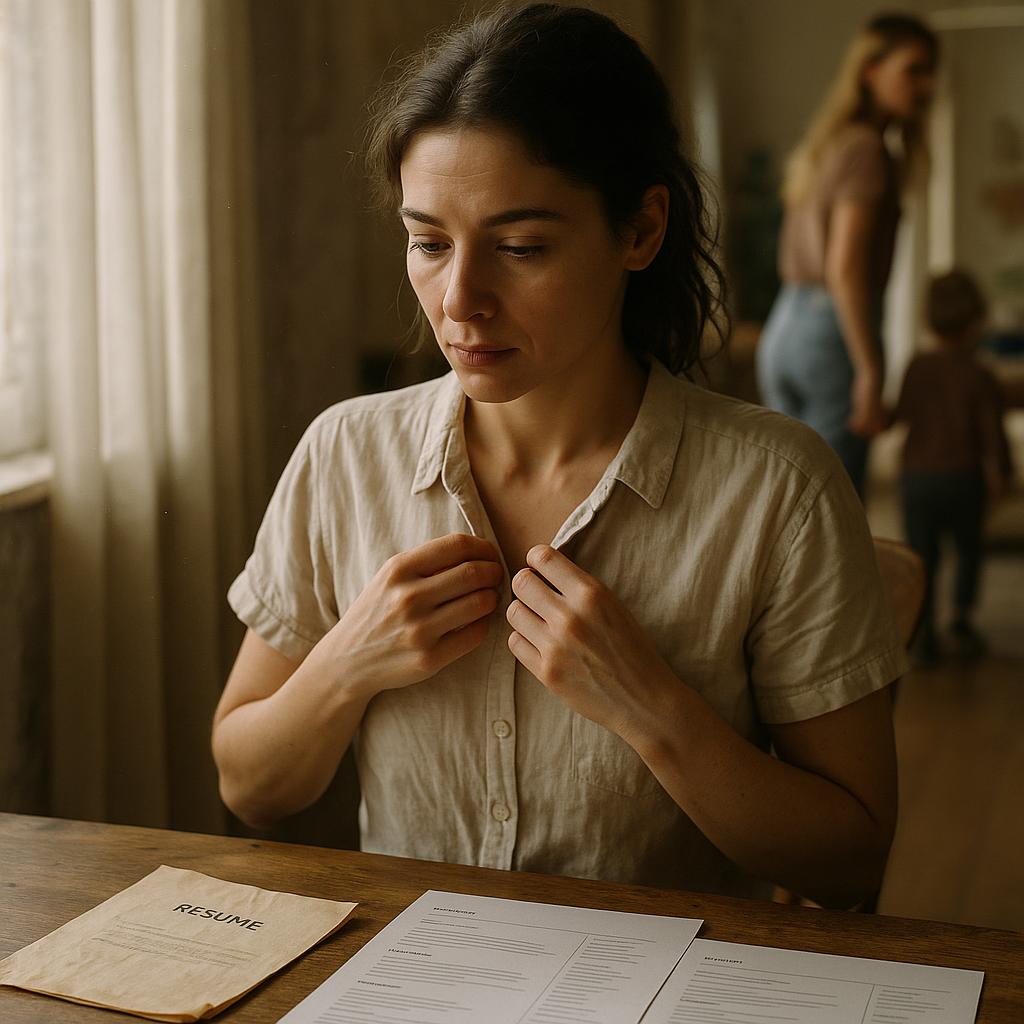 Image by RM AI
The Office Politics
I sat across from Diane in her glass-walled office, watching her perfectly manicured nails tap against Sarah's resume. "Interesting candidate," she said, her tone suggesting the opposite. "But I'm concerned about cultural fit." I felt my cheeks flush. "She's incredibly hardworking," I countered, "and has experience with medical terminology." Diane's smile tightened. "Janet, you know how client-facing we are. Presentation matters." The implication hung in the air like a bad smell. I'd never noticed this side of Diane before—or maybe I'd just been part of the problem, too comfortable in my privilege to see it. "She's raising two kids alone while working multiple jobs," I said, my voice steadier than I felt. "That shows more dedication than half our team." Diane's eyebrows shot up, clearly surprised by my pushback. Walking to my car afterward, I replayed the conversation, wondering if I'd just put my own job at risk. Fifteen years at this company, and suddenly I was seeing it—and myself—through new eyes. What would Emma think if she knew I'd sat through conversations like this before without speaking up? What would Sarah think if she knew the real reason she might not get this opportunity had nothing to do with her qualifications?
 Image by RM AI
The Unexpected Ally
I was gathering my things to leave for the day when James from accounting stopped by my desk. He'd never been more than a friendly face in the break room, someone I exchanged weather small talk with while waiting for the coffee to brew. "I heard you're going to bat for someone for the admin position," he said, leaning against my cubicle wall. I tensed, wondering if office gossip had already painted me as the bleeding heart trying to hire a charity case. But then James smiled. "I think it's great." He glanced around before lowering his voice. "My mom was a single parent too. We ended up in foster care for a while when she couldn't make ends meet." The revelation stunned me—James with his pressed shirts and easy confidence, the guy who organized the fantasy football league and brought homemade cold brew to meetings. "Someone gave my mom a chance once," he continued. "Changed our whole lives." As he walked away, I sat there processing this new information. How many others in this office carried hidden histories of struggle beneath their professional veneers? How many times had I made assumptions about my coworkers based on who they appeared to be now, never considering the paths they'd traveled to get here? What I didn't realize then was that James wouldn't just be an unexpected ally—he'd become the key to unlocking a door I couldn't open alone.
 Image by RM AI
The Interview Preparation
The email from HR arrived on a Tuesday afternoon—Sarah had landed an interview. I called her immediately, and the tremor in her voice betrayed both excitement and terror. "I don't have anything to wear," she whispered, as if speaking the words too loudly might jinx the opportunity. That Saturday, Emma and I transformed our living room into Interview Prep Central. While Emma coached Sarah through potential questions ("Tell me about a time you handled a difficult situation..."), I raided my closet for professional attire. When Sarah emerged from our bathroom wearing my navy blazer and a pencil skirt we'd hemmed the night before, I actually gasped. Gone was the hunched posture and downcast eyes. The woman standing before us stood tall, shoulders back, chin lifted. "Is it too much?" she asked, smoothing the blazer with nervous hands. Emma shook her head, eyes wide. "Mom, she looks like she could be YOUR boss." For a fleeting moment, I caught Sarah studying her reflection, really seeing herself—not as the exhausted woman who cleaned hotel rooms and delivered food, but as someone who belonged in a corporate office, making decisions instead of beds. What none of us realized was that the real challenge wouldn't be the interview itself, but what would happen if she actually got the job.
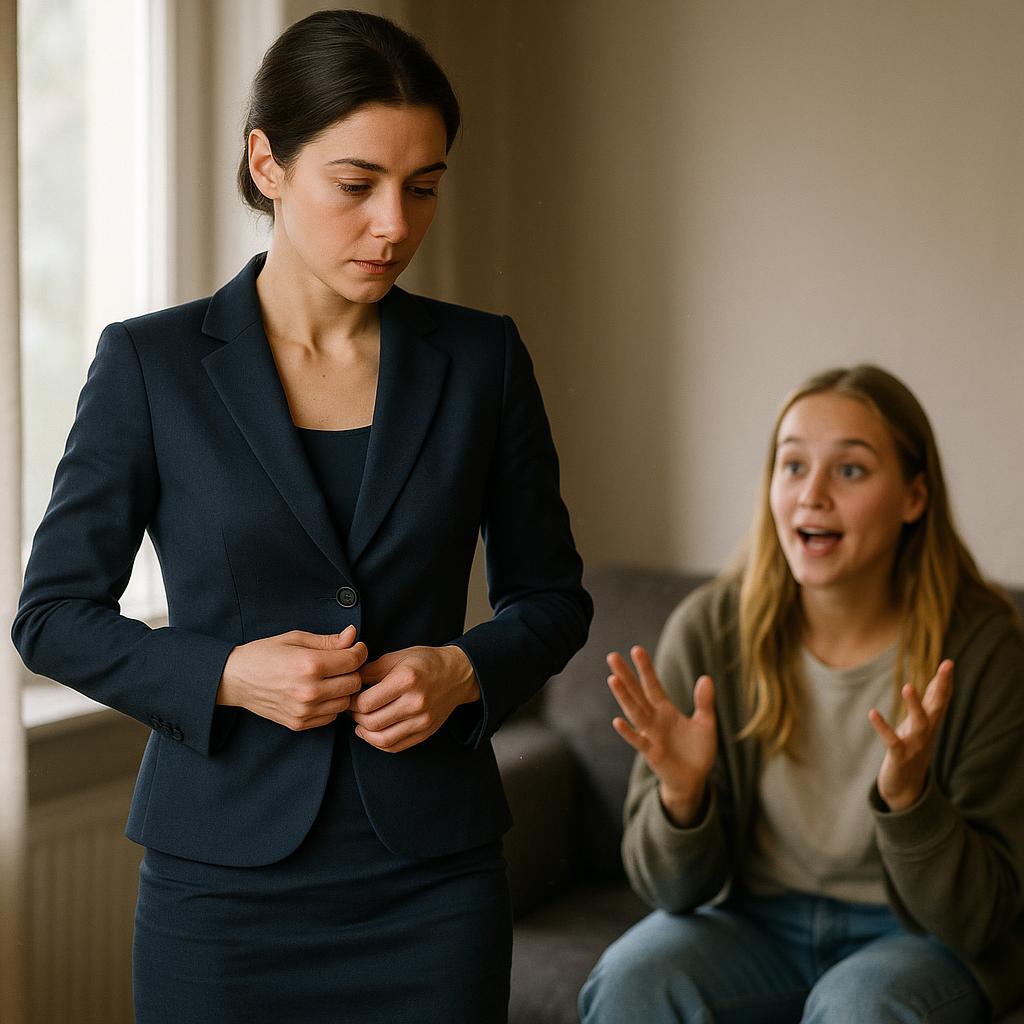 Image by RM AI
The Childcare Crisis
The morning of Sarah's interview arrived with the kind of chaos that only Murphy's Law could orchestrate. My phone rang at 6:17 AM, Sarah's voice cracking as she explained that her neighbor—the only childcare option she could afford—had been rushed to the hospital with chest pains. "I have to cancel," she said, defeat heavy in her voice. "There's no one else." Without even consulting Emma, I heard myself say, "I'll watch them." The silence on the other end spoke volumes. When I called my boss to request a personal day, Diane's disapproval radiated through the phone like a cold front. "Today of all days, Janet? The Westbrook presentation is this afternoon." For the first time in fifteen years, I didn't scramble to accommodate work over everything else. "It's an emergency," I said simply, and hung up before she could respond. When Sarah arrived at our doorstep, both kids in tow, the gratitude and worry battling on her face made me certain I'd made the right choice. "I don't know how to thank you," she whispered, handing me Max's diaper bag with trembling hands. What I didn't realize then was that this one act of solidarity would set in motion a chain of events that would change all of our lives forever.
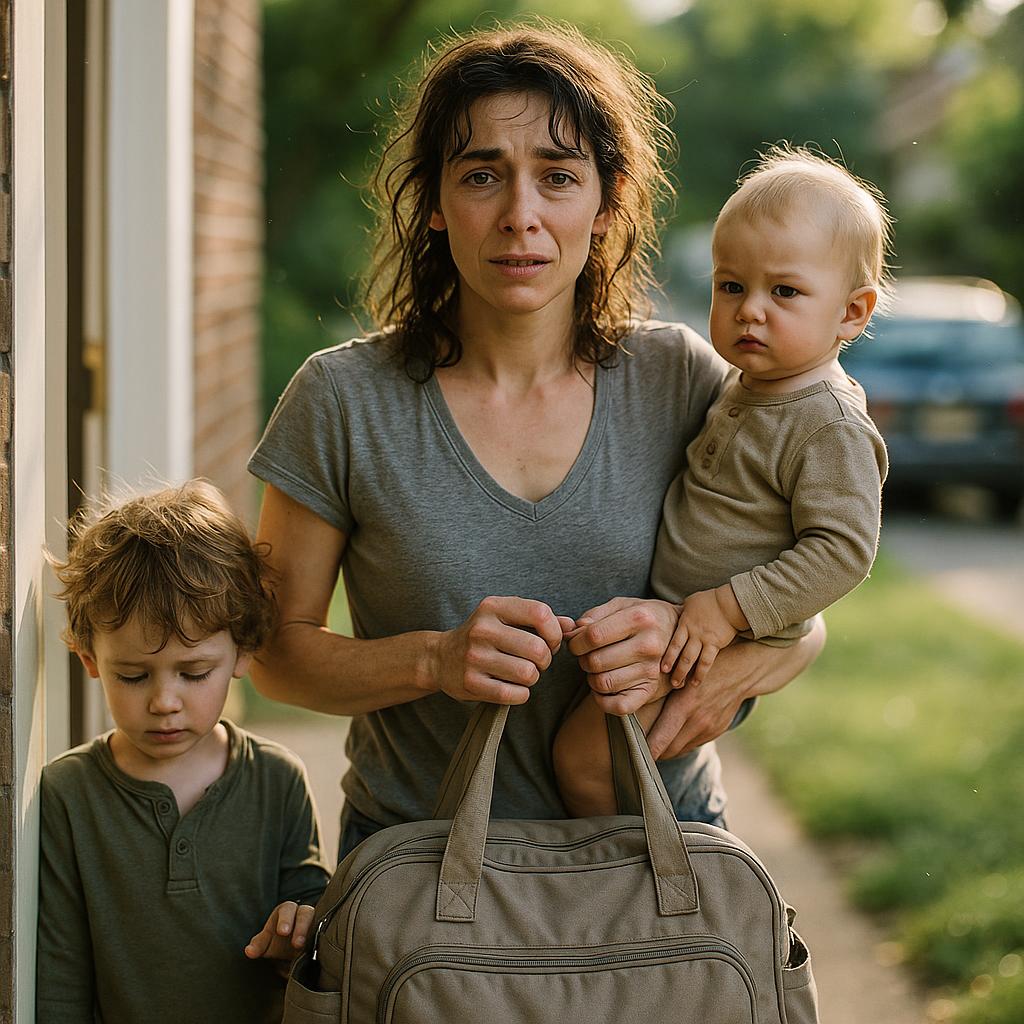 Image by RM AI
The Day with Lily
I'd forgotten how exhausting small children can be. By noon, I was already reaching for my third cup of coffee while Lily explored every corner of our house with the determined curiosity of a tiny detective. Max was easier—mostly content to babble and nap in alternating shifts. But there was something about Lily that kept catching me off guard. When I went to brush her tangled hair after lunch, she flinched away from my hand so quickly it made my stomach drop. The instinct was unmistakable—a child who'd learned to expect pain. 'Sorry, Emma's mommy,' she whispered, immediately relaxing when she realized I wasn't angry. That phrase—'Emma's mommy'—she used it all day, like a title she'd carefully memorized. By mid-afternoon, she was following me around the kitchen, asking questions about everything I did. 'Why do you have so many spoons?' 'Is that picture from when Emma was little like me?' Each innocent question revealed the gaps in her experience, the normal things she found extraordinary. When Sarah texted that the interview went well, I felt a complicated relief. Looking at Lily carefully arranging Emma's childhood stuffed animals in a perfect circle on our living room floor, I wondered what other invisible wounds this little girl was carrying that none of us could see.
 Image by RM AI
The Interview Results
Sarah burst through my front door with a smile I hadn't seen before—hopeful, proud, almost giddy. 'I think I nailed it,' she whispered, as if saying it too loudly might jinx everything. The kids were napping, exhausted from a day of play, so we celebrated quietly with bowls of mint chocolate chip ice cream at my kitchen island. 'The hiring manager said my experience with medical terminology was impressive,' she said, licking her spoon with childlike delight. Just as she was describing the panel interview, the doorbell rang. My ex-husband Mark stood there, holding Emma's biology textbook. 'She texted me in a panic about her homework,' he explained, then froze when he spotted Sarah. The introduction was awkward—Mark's eyes darting between us, clearly trying to piece together this unexpected scenario. But something shifted when Sarah mentioned her landlord troubles. Mark, ever the attorney, straightened his posture. 'Actually, there's a legal aid clinic that specializes in tenant rights,' he offered, pulling out his phone to find the contact information. I caught Emma watching from the hallway, her expression unreadable as she observed her father, her mother, and this woman who had somehow become important to us all standing in our kitchen exchanging phone numbers and resources. In that moment, I realized our carefully separated post-divorce worlds were colliding in ways none of us could have anticipated—and I wasn't sure if that was wonderful or terrifying.
 Image by RM AI
The Eviction Notice
My phone rang at 11:43 PM, and Sarah's voice came through in broken sobs. 'They're kicking us out,' she managed between gasps. 'The landlord says Lily is too loud and disturbing other tenants.' My stomach dropped as she explained the eviction notice had been slipped under her door that evening—suspiciously timed right after she'd mentioned her job interview at my company. I called Mark the next morning, swallowing my pride for Sarah's sake. He arrived at my house with his reading glasses and legal pad, examining the notice while Sarah sat across from him, shoulders hunched. 'This doesn't meet legal requirements,' he said, circling sections with his pen. 'No proper notice period, vague complaints, no documentation of prior warnings.' He looked up at Sarah with the confident expression I once found comforting in our marriage. 'We can fight this.' But Sarah's face had gone pale. 'I can't risk making him angry,' she whispered. 'He knows people. What if he tells other landlords not to rent to me?' The fear in her eyes made my chest ache. This wasn't just about an apartment—it was about having nowhere to go, about her children potentially sleeping in their car. What terrified me most wasn't just Sarah's precarious situation, but how quickly any of us could end up there with just a few strokes of bad luck.
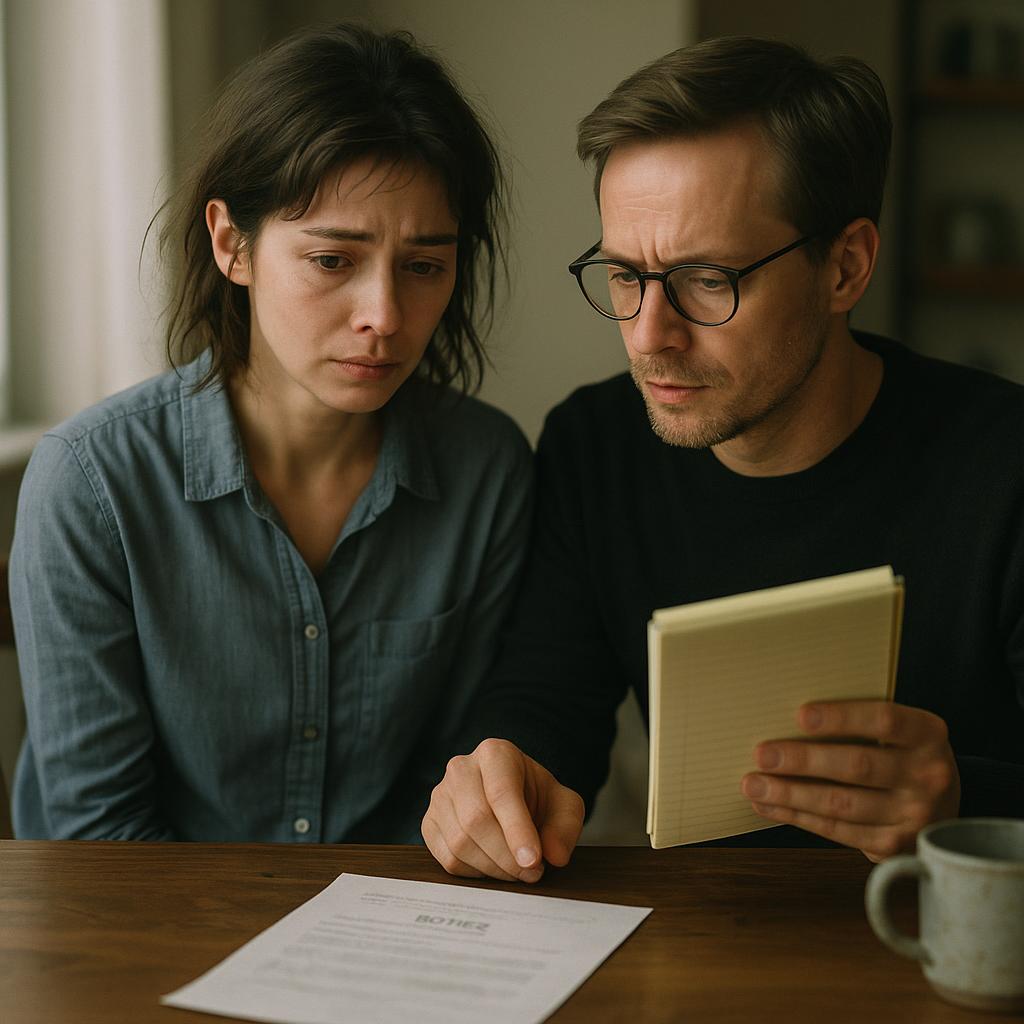 Image by RM AI
The Confrontation with Mr. Vasquez
I never imagined I'd be standing in a dingy hallway with my ex-husband and a woman I barely knew a month ago, facing down a landlord who looked like he'd stepped straight out of a bad 90s movie about slumlords. Mr. Vasquez's arms were crossed so tightly across his chest I wondered if he was trying to physically hold back his contempt. "Other tenants have complained," he insisted, not quite meeting Sarah's eyes. "The little girl runs too much. Makes noise at night." Mark, slipping effortlessly into lawyer mode, calmly pointed out the three separate legal violations in the eviction notice. I watched Mr. Vasquez's face darken with each point. "Look," he finally snapped, "if it's not noise, I can find other reasons. There's always reasons." The threat hung in the air like cigarette smoke. Outside, Sarah's hands were shaking, but not from fear. "Fifteen years," she whispered, her voice tight with rage. "Fifteen years I've paid rent on time, fixed things myself, never complained." It was the first time I'd seen her anger break through her careful mask of gratitude and composure. Standing there in that crumbling parking lot, I realized something that made my blood run cold: Mr. Vasquez wasn't just trying to evict Sarah because of noise complaints – he'd somehow found out about her potential new job, and he was terrified of losing his power over her.
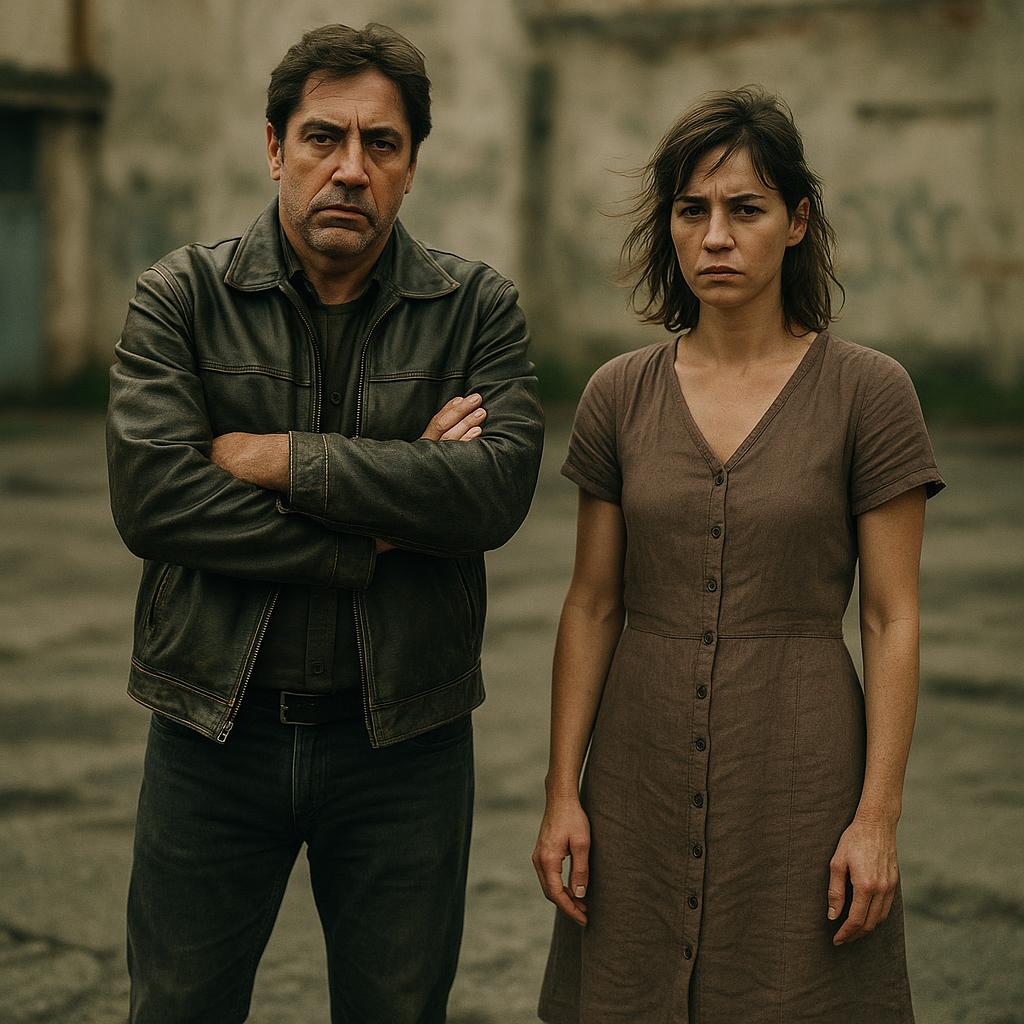 Image by RM AI
The Job Offer
The call came on Thursday afternoon. I was in the middle of a meeting when my phone lit up with Sarah's number. I excused myself, heart pounding as I stepped into the hallway. "I got it," she said, her voice trembling. "Not the exact position—it's more clerical than administrative—but it has benefits, Janet. Real health insurance." I could hear the disbelief in her voice, like someone who'd won a lottery they never expected to enter. It wasn't until later, over celebratory pizza at my kitchen table, that reality started creeping in. "I don't start for two weeks," Sarah said quietly, watching Lily arrange pepperoni into smiley faces. "And the first paycheck won't come until..." She trailed off, the math clearly not working in her head. Emma, who'd been unusually quiet, suddenly spoke up. "They could stay here, Mom. Just until things stabilize." The words hung in the air between us. I found myself nodding before I'd fully processed what this meant—sharing my space, my routine, my carefully constructed post-divorce life. "We have the room," I heard myself say. "It makes sense." When Mark called that evening, his voice carried that familiar tone—the one that reminded me we used to make these kinds of decisions together. "You've invited a family to live with you?" he asked, incredulity stretching each syllable. What I couldn't explain to him—what I was only beginning to understand myself—was that somewhere along the way, Sarah and her children had stopped being a cause and had somehow become family.
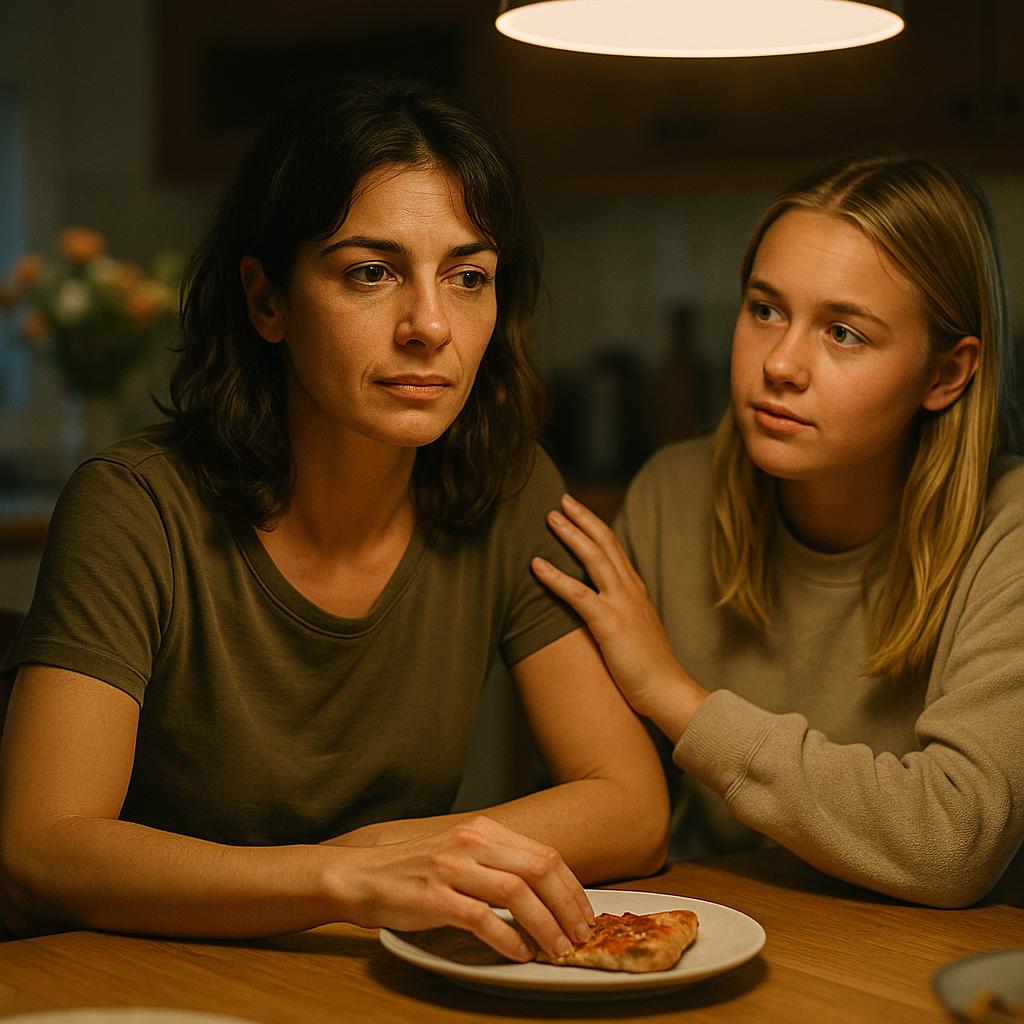 Image by RM AI
The Temporary Arrangement
The first night of our new living arrangement felt like a bizarre social experiment. I made up the guest room with fresh sheets, squeezing Max's portable crib between the bed and window, while Emma hovered in the doorway with an expression I couldn't quite read. "Do you think they'll be comfortable?" she asked, rearranging the pillows for the third time. That night, I lay awake listening to the unfamiliar symphony of sounds—Max's soft baby snores through the wall, Lily's occasional murmurs, the creak of unfamiliar footsteps when Sarah got up to check on them. Our morning routines collided spectacularly; Sarah apologized profusely when Lily accidentally used Emma's toothbrush, while I burned the toast trying to figure out how many people needed breakfast. "I'm so sorry we're disrupting everything," Sarah whispered as we bumped into each other in the hallway. I smiled and said it was fine, but privately wondered if I'd made a catastrophic mistake or the most important decision of my life. The bathroom schedule alone was going to require military precision. What I didn't anticipate was how quickly the sound of Max's giggles would become the thing I listened for each morning, or how watching Emma teach Lily to braid hair would make my heart feel like it might burst open with something I couldn't quite name.
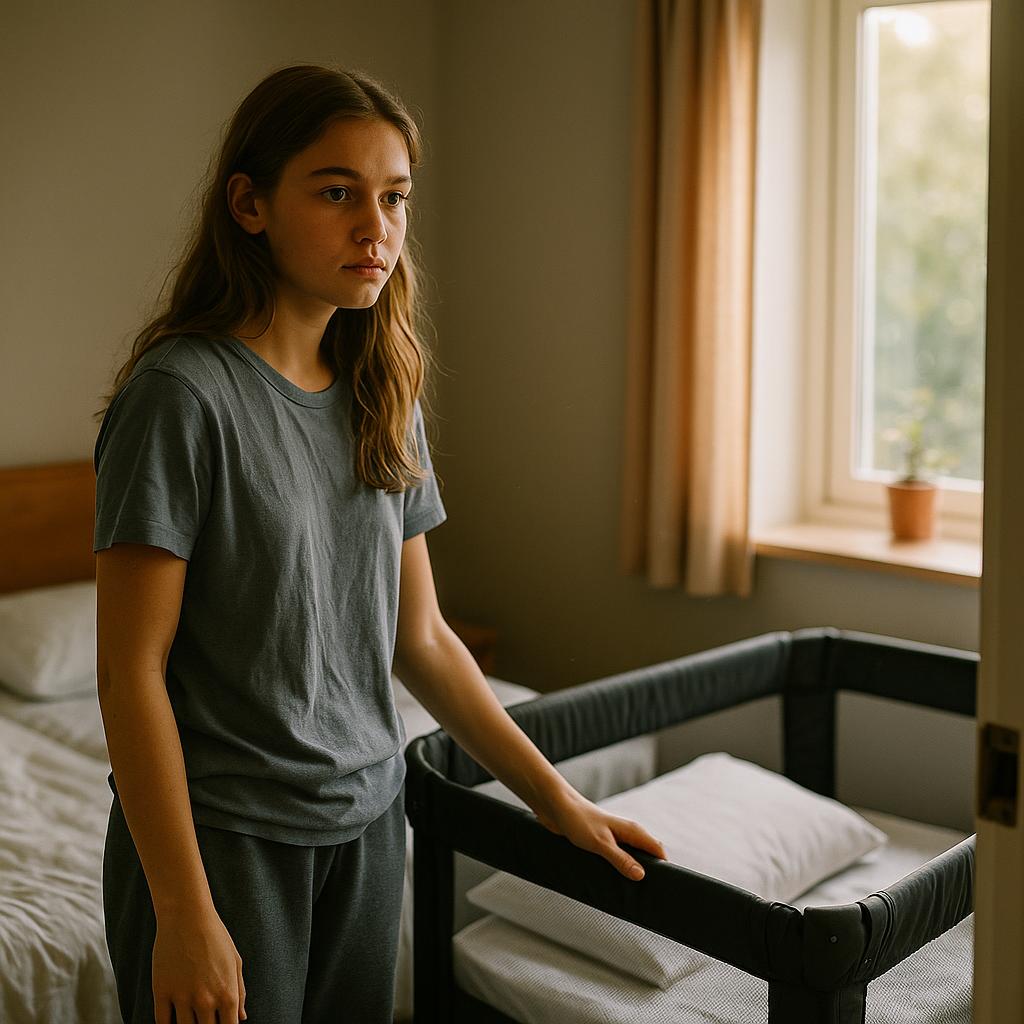 Image by RM AI
The Morning Routine
I never thought I'd miss the chaos of a full house until it happened by accident. By day five of our temporary arrangement, we'd developed a morning choreography that somehow worked. Sarah was always up first—I'd find her in the kitchen at 6 AM, quietly preparing breakfast for everyone as her way of saying thank you. "You don't have to do this," I'd insist, but she'd just smile and continue whisking eggs. Emma, typically a zombie before 8 AM, now bounded out of bed to help Lily pick out clothes and brush her teeth. "Mom, can Lily use my sparkly headband today?" she'd call down the hallway. The bathroom schedule had evolved from disaster to merely complicated, with everyone rotating through in shifts. Max's high chair became the command center of the kitchen, his chubby hands reaching for everything while we all ducked and weaved around each other. What struck me most was how Sarah maintained this careful politeness—always cleaning up instantly, never leaving a trace, as if trying to be invisible in our space. "We'll be out of your hair soon," she'd say occasionally, and something in my chest would tighten. I'd gotten used to the sound of Lily's giggles echoing through the house, to Max's drooly smiles greeting me in the morning. I'd forgotten how lonely our perfectly organized life had become after Mark left. What terrified me wasn't the chaos—it was how quickly it would end when Sarah found her footing.
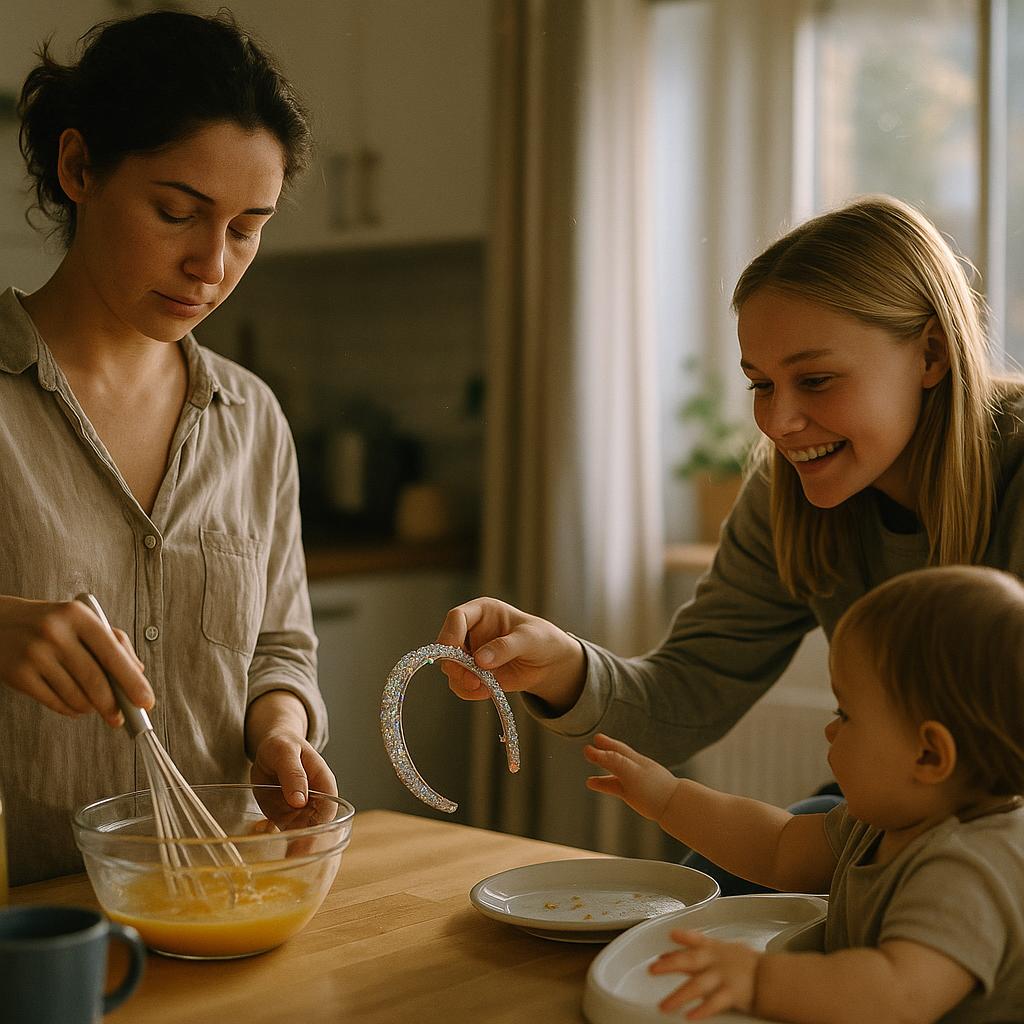 Image by RM AI
The Neighborhood Gossip
The doorbell rang just as I was helping Lily put together a puzzle on the coffee table. Heather from across the street stood on my porch, clutching a plate of cookies that I knew was just an excuse. Her eyes darted past me, scanning my living room where Max's playpen and scattered toys had transformed my once-pristine space. "I noticed an unfamiliar car in the driveway," she said, voice dripping with faux concern. "Just wanted to make sure everything was okay." I invited her in, watching her catalog every detail—the sippy cups on the counter, the children's backpacks by the stairs. When Sarah emerged from the kitchen, Heather's eyebrows shot up so high they nearly disappeared into her hairline. The questions came rapid-fire, each one more intrusive than the last, wrapped in that suburban politeness that makes judgment sound like care. "So she's... staying with you? Both children? How... charitable." After she finally left, I stood fuming in the kitchen, scrubbing a pot with unnecessary force. What bothered me most wasn't Heather's nosiness—it was the uncomfortable realization that six months ago, I might have been just like her, making assumptions about someone else's situation from my comfortable perch of privilege. Emma appeared beside me, quietly taking the pot from my hands. "Now you get why I didn't tell you at first," she said softly. The truth of her words hit me like a physical blow, making me wonder what other blind spots I'd been carrying all these years.
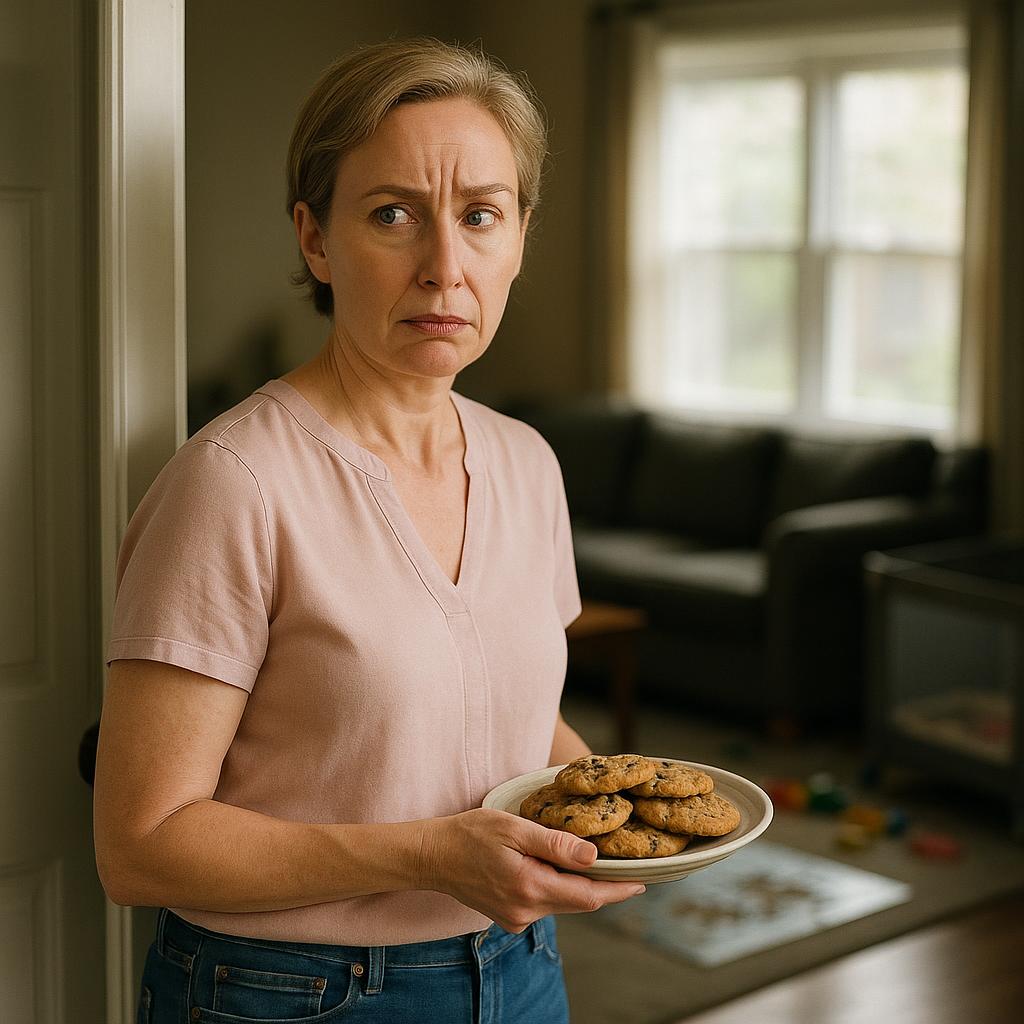 Image by RM AI
The First Day of Work
The morning of Sarah's first day felt like sending a child off to school—except we were all going in different directions. I laid out my second-best blazer on Sarah's bed the night before, along with a silk blouse I rarely wore because it required dry cleaning. 'I can't take your clothes,' she protested, but I waved away her objections. Our carefully orchestrated childcare plan unfolded like a military operation: Emma took Lily to preschool before her first period, I dropped Max at the company daycare (ignoring the raised eyebrows when I explained he wasn't mine), and Mark—surprisingly committed to our makeshift village—agreed to pick up Lily after school. Walking Sarah through the office, I caught the subtle shifts in how people spoke to her versus me—the slightly slower explanations, the condescending smiles, the assumption she wouldn't understand industry terms. In the elevator between floors, when it was just the two of us, Sarah's professional mask slipped for just a moment. 'I can do this. I have to do this,' she whispered, more to herself than to me. What she didn't know was that I was silently making a list of every person who'd treated her differently, wondering how I'd never noticed this invisible social hierarchy that had been right in front of me all along.
 Image by RM AI
The School Project Presentation
I sat in the back row of Emma's social studies classroom, trying to blend in with the other parents who'd come for presentation day. When Emma took her place at the front, I noticed a new confidence in her posture that hadn't been there before. 'Housing insecurity affects 2.5 million children in America,' she began, her voice steady. 'But it's not just statistics—it's real families making impossible choices every day.' As she clicked through her slides showing eviction rates and childcare costs, I realized she was translating Sarah's struggles into academic language without ever betraying her privacy. The room fell silent when she challenged her classmates: 'The family living in their car might have parents who work full-time. The child who comes to school hungry might live on your street.' I watched the faces of these privileged teenagers as understanding dawned. When Mr. Bennett announced her perfect score and mentioned a citywide advocacy competition, Emma's eyes found mine across the room. In that moment, I saw my daughter not just as the teenager who'd been sneaking out to help a struggling family, but as the young woman who was going to change systems that I'd spent my whole life accepting as unchangeable. What terrified me wasn't her growing up—it was realizing how much I still had to learn from her.
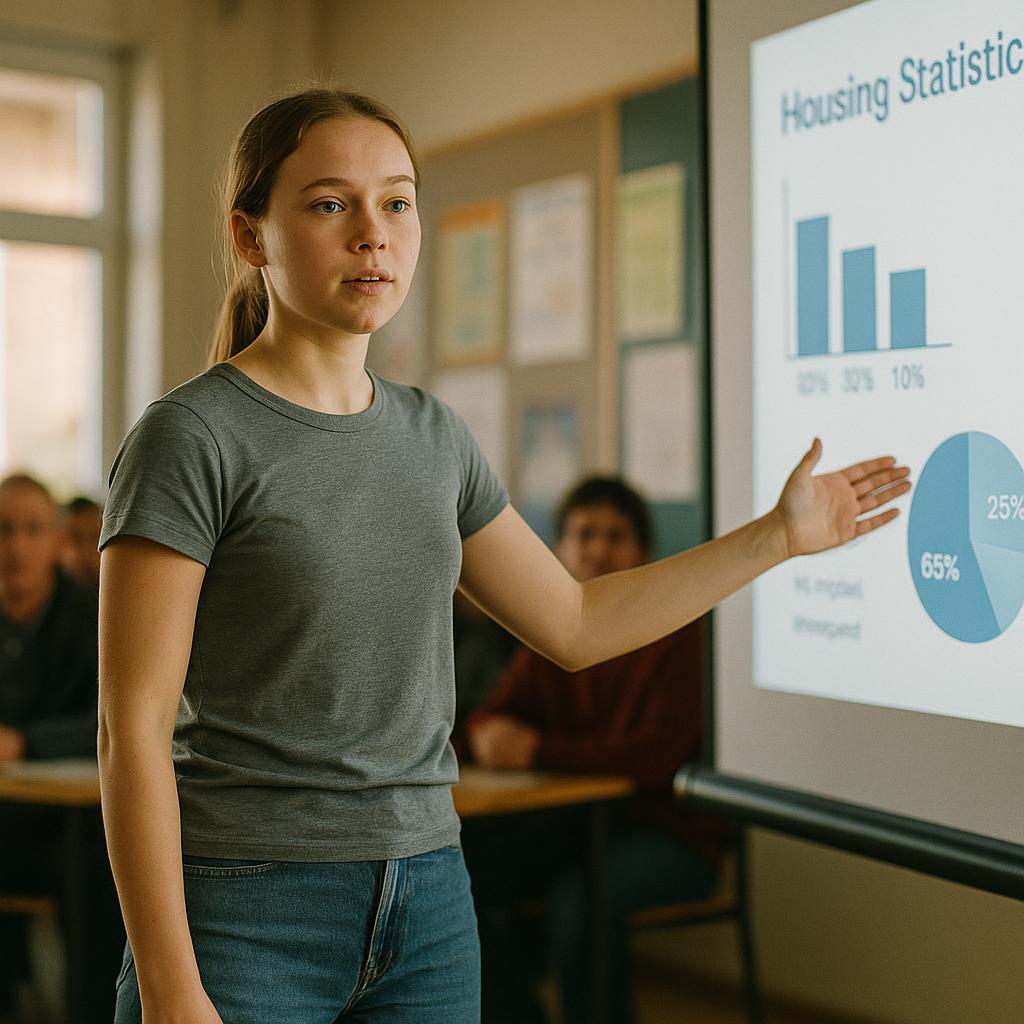 Image by RM AI
The Apartment Search
Sarah's first paycheck arrived with all the fanfare of a lottery win in our household. Lily made a construction paper card with 'Congrats Mommy' written in wobbly letters, and Emma baked celebratory cupcakes. But the excitement faded quickly when we started apartment hunting. I'd naively thought that with steady income, doors would magically open. Instead, we faced an impossible equation: safe neighborhoods with rents that consumed 70% of Sarah's income, or affordable places in areas where I wouldn't let my daughter walk alone. After our fifth disappointing viewing—a ground-floor unit with suspicious black mold creeping up the bathroom wall—Sarah and I sat in my car in silence. 'Maybe I should just go back to Mr. Vasquez's building,' she finally whispered. Then something broke in her. The careful composure she'd maintained crumbled as tears streamed down her face. 'I'm sorry,' she said, frantically wiping her cheeks. 'I just thought... I thought I could finally give them something better.' She turned away, embarrassed by what she called her 'weakness.' I reached for her hand, my throat tight with emotion, suddenly understanding that the real housing crisis wasn't just about buildings and rent—it was about mothers sitting in cars, apologizing for wanting their children to be safe.
 Image by RM AI
The Unexpected Solution
Mark called me on a Tuesday evening, his voice carrying that tone he used to get when he'd won a difficult case. 'I think I found something for Sarah,' he said, explaining that a client of his law firm owned several apartment buildings and had a two-bedroom unit available in Cedar Heights—a decent neighborhood with good schools. The rent was significantly below market value, which seemed too good to be true until Mark revealed the catch: it needed major repairs and wouldn't be ready for at least six weeks. When I told Sarah, she sat at my kitchen table, hands wrapped around a mug of tea, eyes wide with disbelief. 'That's... that's perfect,' she whispered, then immediately backpedaled. 'But I can't impose on you for that much longer. We've already taken over your life.' Emma, who'd been pretending not to eavesdrop from the living room, appeared in the doorway. We exchanged a glance—one of those wordless mother-daughter communications that had become more frequent lately. 'Our home is yours for as long as you need it,' I said firmly, surprised by how much I meant it. The relief that washed over Sarah's face was accompanied by something I hadn't seen before—the beginning of real trust, not just gratitude. What I didn't tell her was how much I'd come to need their chaos in my too-quiet house, or how I was already dreading the day they'd leave.
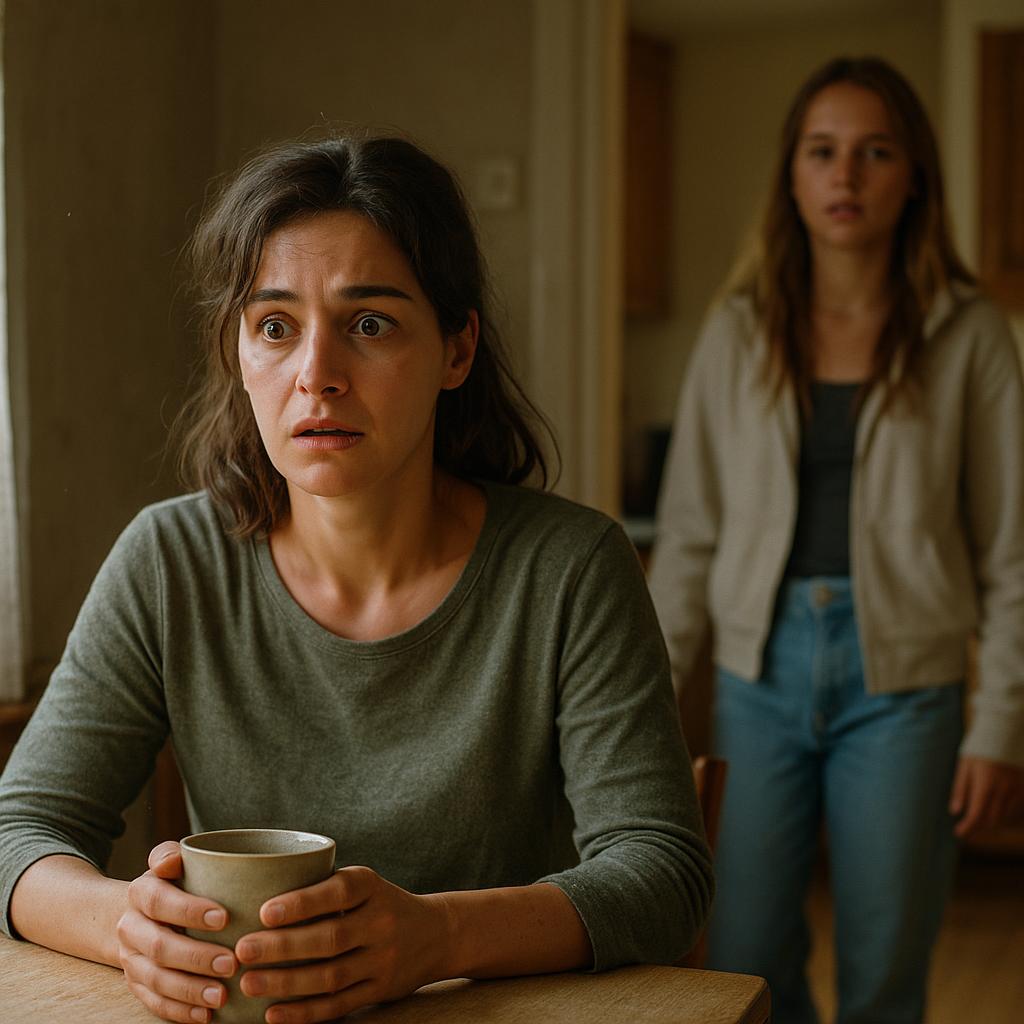 Image by RM AI
The Birthday Party
I never thought I'd be planning a five-year-old's birthday party in my living room, but here we were, hanging streamers while Sarah watched nervously from the kitchen. 'This is too much,' she kept saying, her voice tight with that familiar mix of gratitude and discomfort. 'Lily would've been happy with just a cupcake.' Emma, now the party-planning expert, rolled her eyes at me behind Sarah's back. 'It's not too much,' she insisted, carefully arranging the dollar-store party hats she'd bought with her own money. 'It's exactly enough.' When Mark arrived, I almost didn't recognize him – my usually polished ex-husband was wheeling in a slightly scratched purple bicycle with training wheels, a giant bow taped awkwardly to the handlebars. 'Found it at a yard sale,' he explained quietly. 'Just needed some new brakes and a little love.' The look on Lily's face when she saw that bike – pure, unfiltered joy – made something shift inside me. This wasn't charity anymore; this was family. Later, as Emma helped Lily practice riding on our driveway, I overheard a conversation that stopped me in my tracks. 'Are you my sister now?' Lily asked, her small hand gripping Emma's. The thoughtful pause before my daughter answered felt like the space between heartbeats. What terrified me wasn't how quickly our lives had intertwined – it was wondering if they could ever untangle without breaking.
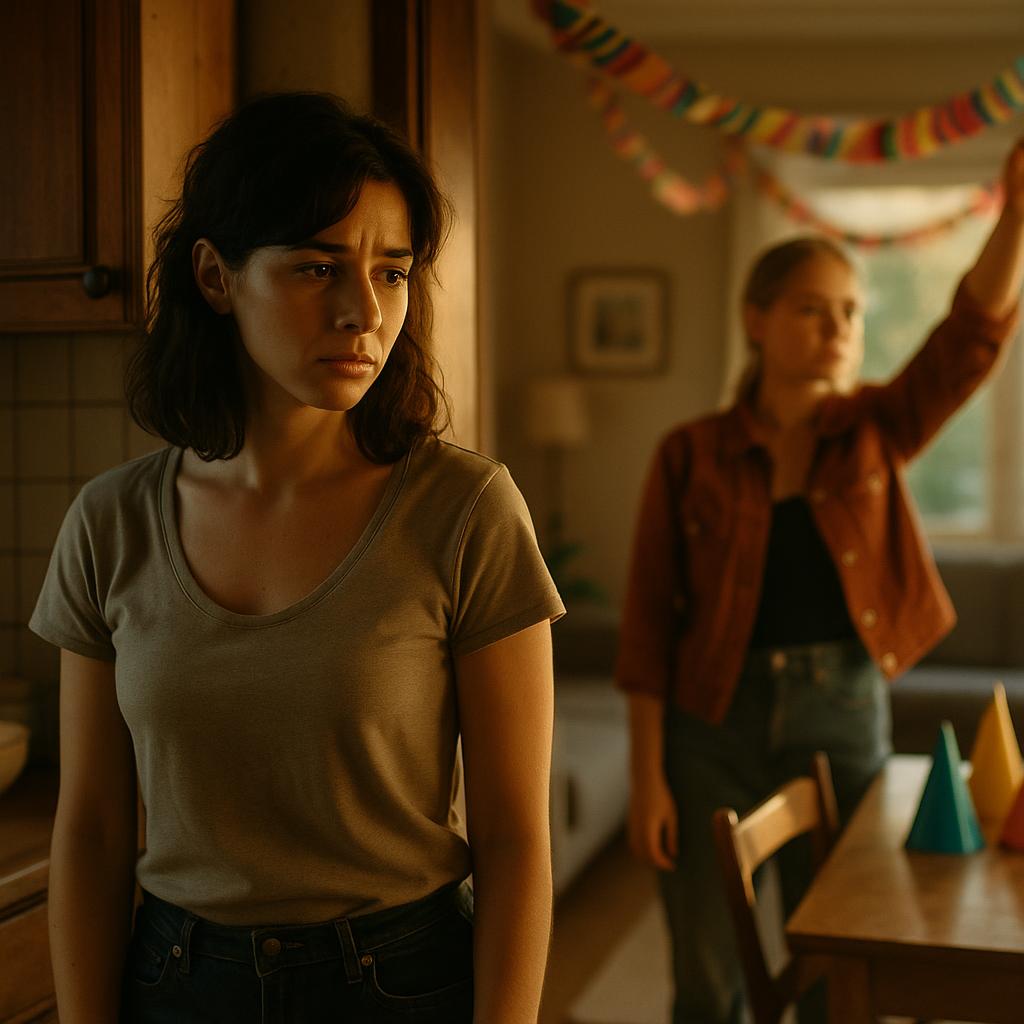 Image by RM AI
The Late Night Conversation
I found Sarah sitting at my kitchen table at 2:17 AM—the exact time I'd once caught Emma sneaking out. The cosmic irony wasn't lost on me. She jumped when I appeared, quickly wiping away tears. "Sorry," she whispered, "I couldn't sleep." I made us both tea, the midnight ritual of exhausted mothers everywhere. "Sometimes I feel like I'm playing dress-up," Sarah confessed, staring into her mug. "In your clothes, in that office, even being a mom. Like everyone can see I don't belong." Her words hit me like a physical blow. "God, I was sleepwalking before all this," I admitted. "Nice house, decent job, completely disconnected from anything real." We laughed about how it took my teenage daughter's midnight missions to wake me up. "You know what's funny?" Sarah said, her voice steadier now. "Everyone thinks you're helping me, but you're really saving me." I shook my head. "No, Emma saved us both." We sat in comfortable silence, two mothers united by circumstance and a teenager who saw what we couldn't. What terrified me wasn't the vulnerability of this moment—it was realizing how close I'd come to never experiencing it at all.
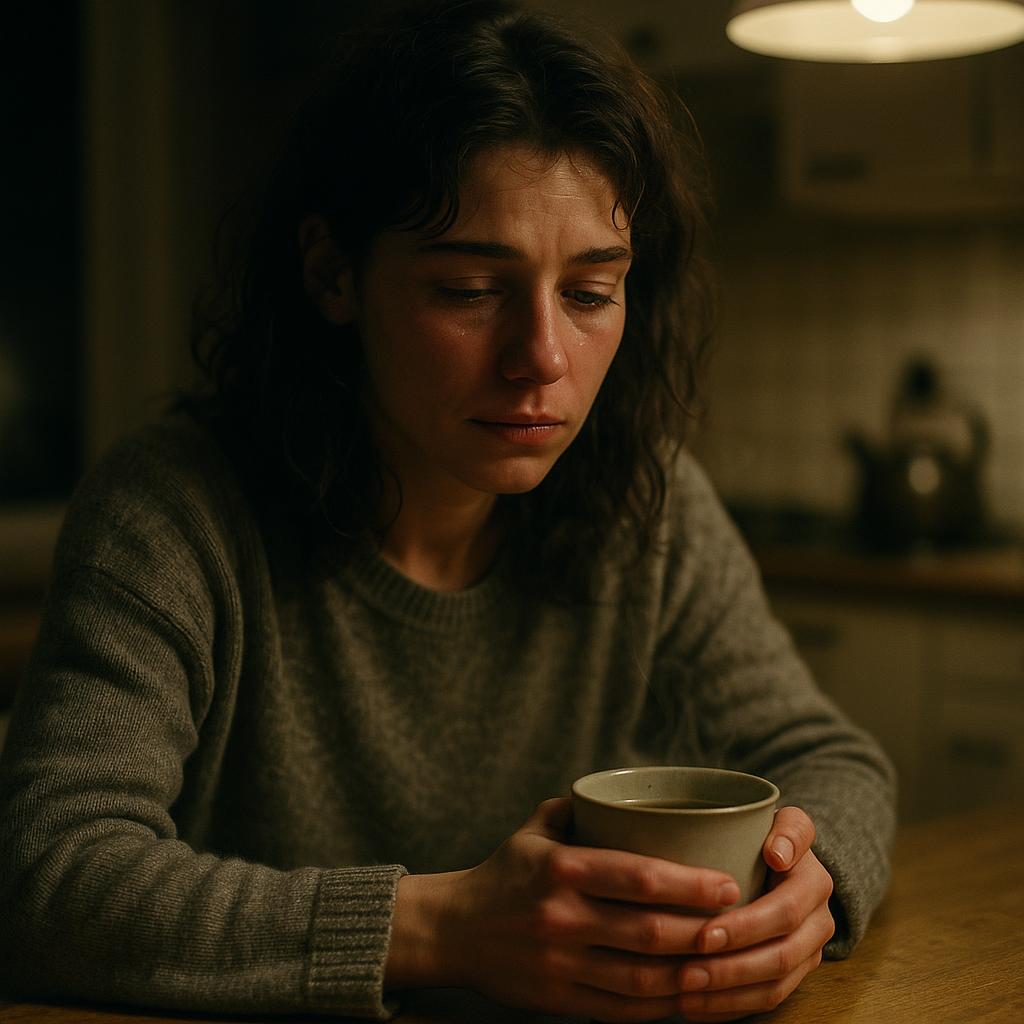 Image by RM AI
The School Incident
Emma slammed the front door when she came home from school, something she never did. I found her in her room, face flushed and eyes red. 'What happened?' I asked, sitting beside her on the bed. She told me how she'd overheard a group of popular kids in the cafeteria making jokes about 'welfare queens' and 'charity cases.' 'They were talking about Sarah, Mom. They didn't say her name, but I knew.' Emma's voice cracked as she described standing up, hands shaking, and telling them they had no idea what they were talking about. 'I've never seen such ugly looks on people's faces,' she whispered. We talked about privilege—how it creates invisible walls between people who've never had to worry and those who worry constantly. What broke my heart wasn't just Emma's pain but realizing how many times I'd been on the wrong side of that wall. Later that evening, I overheard Sarah in Emma's doorway. 'Thank you,' she said softly, 'for seeing me as a whole person, not just a problem.' The quiet dignity in her voice made me freeze in the hallway, suddenly aware that I was witnessing something profound—a moment when my daughter's moral compass had pointed truer than mine ever had.
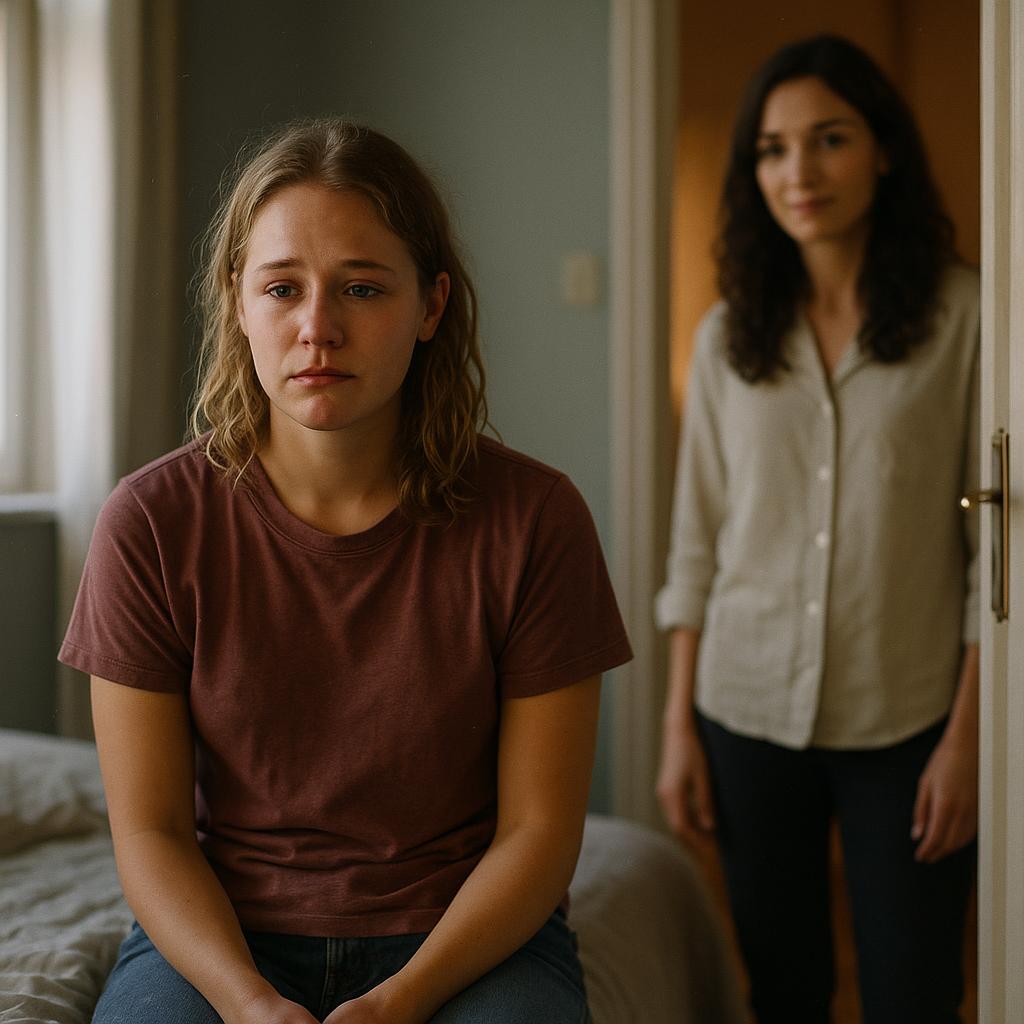 Image by RM AI
The Apartment Progress
Mark pulled up to the apartment building with a proud smile I hadn't seen since our wedding day. 'Wait until you see what they've done,' he said, leading our little parade up the stairs. The transformation took my breath away—walls that had once been stained and cracked now gleamed with fresh paint, old carpet replaced with laminate flooring that actually looked like real wood. Sarah moved through each room like someone in a dream, her fingertips trailing along countertops and windowsills. The children's bedroom had been painted a soft blue, with built-in shelves along one wall. When she reached that room, Sarah finally broke her silence. 'I never thought I'd be able to give them this,' she whispered, her voice catching. I noticed Emma discreetly wiping away tears. On the drive home, Sarah sat quietly in the passenger seat before suddenly asking about setting up a savings account. 'I need to learn how to build something that lasts,' she explained, her voice steady with new determination. I nodded, remembering how I'd taken financial security for granted until my divorce forced me to rebuild. What struck me most wasn't just the physical transformation of the apartment, but the transformation happening in all of us—how walls and floors weren't the only things being repaired in this unexpected journey we'd stumbled into together.
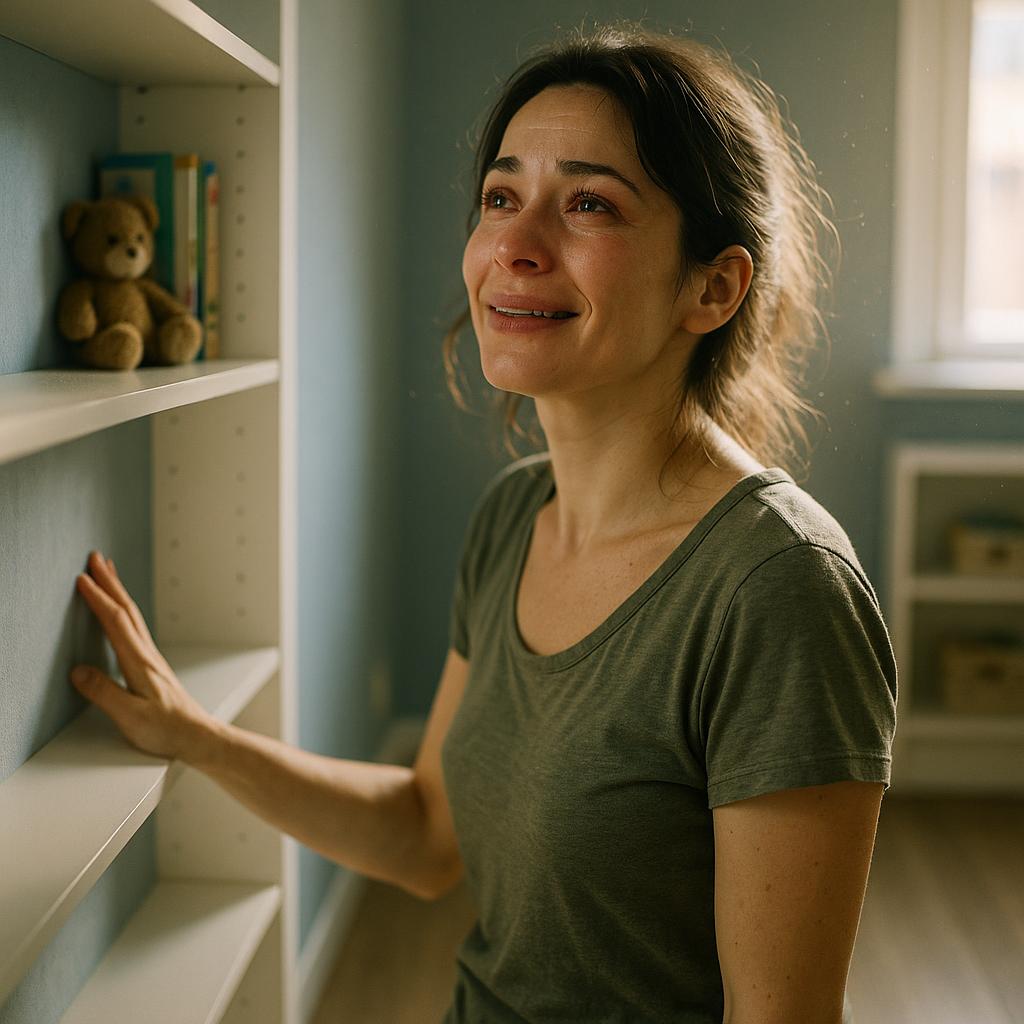 Image by RM AI
The Promotion Conversation
I was sorting through quarterly reports in my office when Diane, my boss, knocked on my door frame. 'Got a minute?' she asked, settling into the chair across from me without waiting for an answer. 'I wanted to talk about Sarah.' My stomach dropped—had something gone wrong? Instead, Diane smiled. 'She's exceptional. Her attention to detail, her problem-solving... I'm thinking of moving her into the Henderson account team.' Pride swelled in my chest, quickly followed by an uncomfortable realization about the tangled web we'd created: I'd recommended Sarah, she lived in my home, and now I was indirectly involved in her career advancement. That evening, as we cleaned up after dinner, I mentioned the conversation. Sarah froze, dish towel in hand. 'That's... wow,' she whispered, then her brow furrowed. 'But won't people think it's favoritism? Because of you?' We sat at the kitchen table long after the kids were in bed, navigating the delicate balance between mentorship and overstepping. 'I don't want special treatment,' she insisted, 'but I also can't afford to turn down opportunities.' I nodded, suddenly aware that our temporary living arrangement had created professional complications neither of us had anticipated. What terrified me wasn't the complexity—it was realizing how much her success had become tied to mine, and what would happen when those ties eventually had to break.
 Image by RM AI
The College Essay
I found Emma at the kitchen table, surrounded by college brochures and her laptop, chewing nervously on her pen cap. 'Mom, can you read this?' she asked, sliding her computer toward me. It was her college application essay, but instead of highlighting her 4.0 GPA or debate team victories, she'd written about her midnight missions to help Sarah's family and what she'd learned about systemic inequality. My heart raced as I read—her words were raw, powerful, and potentially controversial for more conservative admissions committees. 'Emma, this is beautiful, but...' I hesitated, hating myself for what I was about to say. 'Are you sure this is the essay you want to submit? Some schools might prefer something more... traditional.' She took back her laptop, her expression a mix of disappointment and resolve. 'If they don't want the real me, then I don't want them,' she said simply. 'I'd rather go to a college that values what I actually care about.' I nodded, swallowing the lump in my throat. When did my daughter become braver than me? What terrified me wasn't that her authenticity might cost her opportunities—it was realizing how many times in my own life I'd chosen the safe path over the right one.
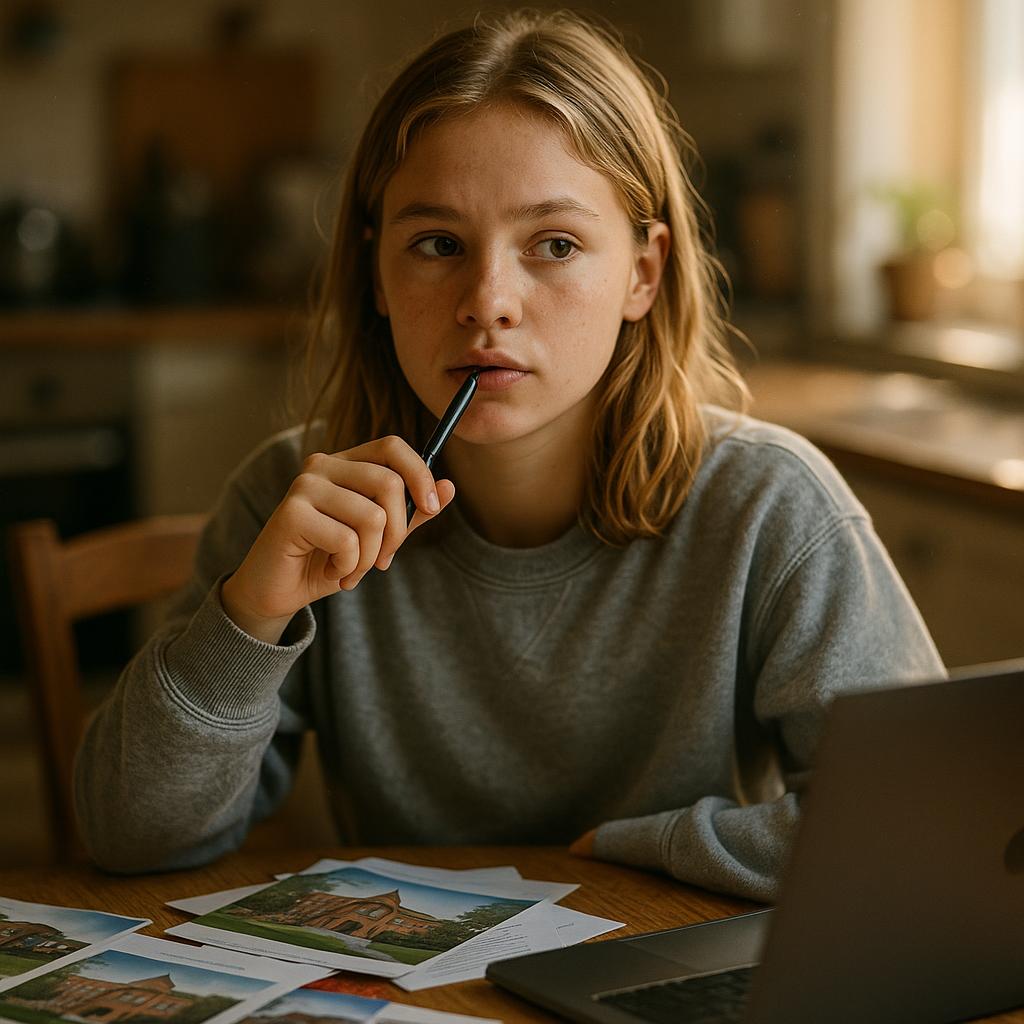 Image by RM AI
The Moving Day Preparations
The apartment was finally ready, and watching Sarah pack her meager belongings into cardboard boxes felt like witnessing the end of a chapter I wasn't ready to close. Six weeks had stretched into nearly three months, and somehow this temporary arrangement had transformed all of us. Emma spent Saturday afternoon helping Lily organize her toys, deciding which stuffed animals deserved prime real estate in the moving boxes. I found Sarah standing motionless in our kitchen, her eyes tracing the outline of the refrigerator covered in Lily's artwork, the chipped mug she'd claimed as her own, the window above the sink where she'd watch the sunrise during her early shifts. 'I'm being weird, aren't I?' she said when she caught me watching. 'I just want to remember everything about this place.' Her voice cracked slightly. 'It's the first home where I ever felt safe.' I nodded, unable to speak past the lump in my throat. What terrified me wasn't just the empty bedroom we'd soon face or the quiet mornings without Max's giggles—it was realizing that in trying to save this family, they had somehow saved mine, and I had no idea how to thank them for that gift.
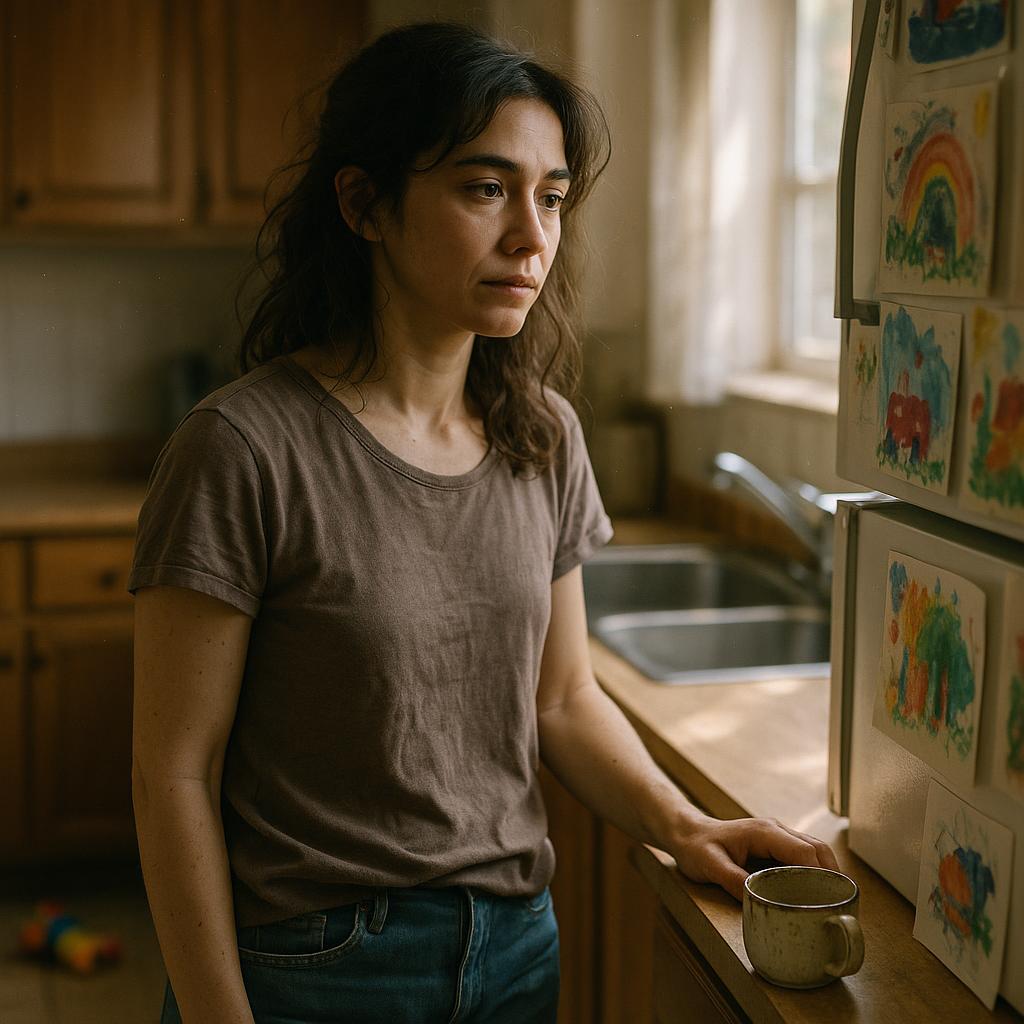 Image by RM AI
The Empty Guest Room
I never thought I'd miss the chaos. Standing in the doorway of our empty guest room, I run my fingers along the wall where we'd marked Max's height with pencil lines. The room feels hollow now, like someone scooped out its heart. It's been three days since Sarah and the kids moved into their new apartment, and our house has that eerie quiet that makes me jump at every creak and settle. Emma's been holed up in her room more, her door closed where it used to stay open so Lily could wander in and out. Last night, I actually caught myself setting out five plates for dinner before remembering. Five plates. When did they become so woven into the fabric of our lives? I find myself listening for phantom sounds – Lily's princess songs in the bathroom, Max's little feet padding down the hallway at dawn, Sarah's soft humming while she folded laundry. I keep thinking about that night I followed Emma, how terrified I was, how certain that something terrible was happening. I had no idea that decision would reshape all our lives. The irony isn't lost on me – I was so afraid of what Emma was hiding, but what she revealed wasn't darkness at all. It was a light I didn't know I needed. Now I'm standing in an empty room wondering if that light went with them, or if they somehow left a piece of it behind.
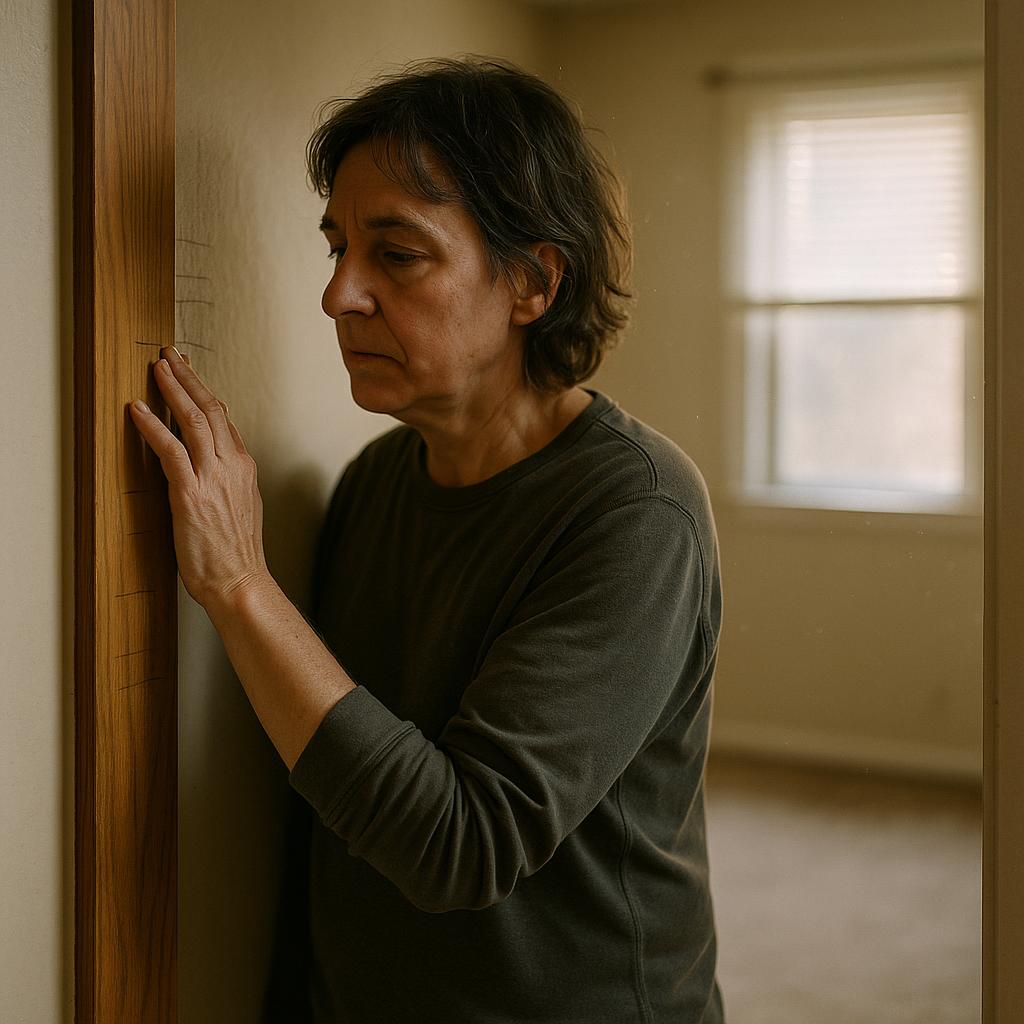 Image by RM AI
The New Routine
I never imagined our lives would fall into such a beautiful rhythm after Sarah and the kids moved out. What started as an emergency rescue mission has transformed into something that feels remarkably like family. Every Sunday, our dining room fills with laughter as Sarah brings her famous apple crumble and Mark—yes, my ex-husband—arrives with bottles of sparkling cider for the kids and wine for the adults. The initial awkwardness between Mark and Sarah has melted away, replaced by conversations about everything from local politics to parenting struggles. Our weekday routine now includes me picking up Lily from preschool on Tuesdays and Thursdays, those precious moments in the car when she tells me elaborate stories about her imaginary friends becoming the highlight of my week. Sarah and I meet for lunch near our offices every Wednesday, our conversations deeper now that we're not just surviving crisis mode. Last night, as we all sprawled across the living room after dinner—Emma helping Max with a puzzle, Mark and Sarah debating the merits of different coffee brands—Emma looked up with a thoughtful expression. "We've become a weird kind of extended family, haven't we?" she said. The words settled over us like a comfortable blanket, and I realized she was right. What terrifies me now isn't the chaos of our intertwined lives—it's wondering if I could ever go back to the way things were before.
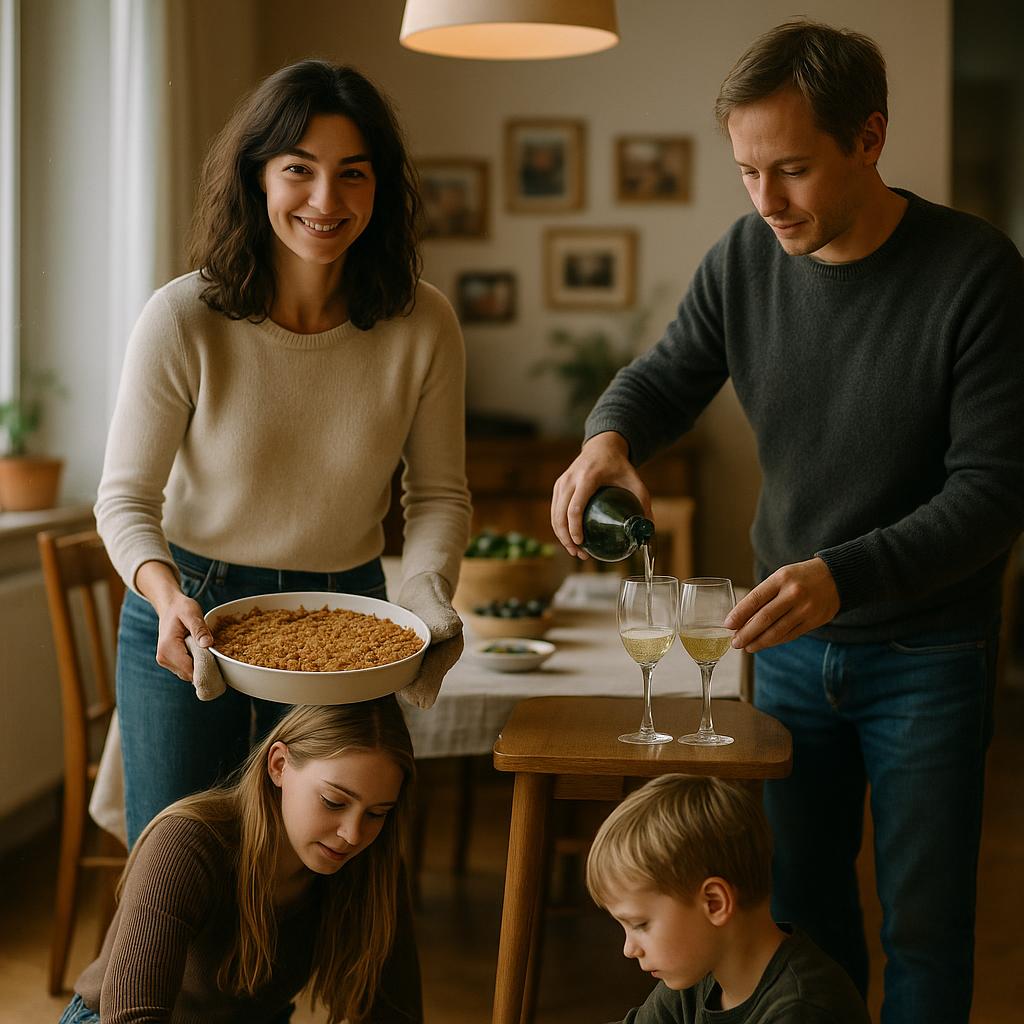 Image by RM AI
The Community Project
I never expected Emma's midnight missions to evolve into something that would impact our entire community. Last week, she unveiled 'Midnight Bridges' at the community center—a program connecting struggling families with resources and volunteers. 'It's not charity,' she explained to me, her eyes bright with purpose. 'It's community.' What moved me most was watching her recruit classmates—including some of the same kids who'd made those cruel 'welfare queen' comments months ago. She didn't shame them; she educated them through direct involvement. At their first information session, Sarah stood at the podium, her hands trembling slightly but her voice steady. 'Six months ago, I was working three jobs and still couldn't keep the lights on,' she said. 'Today, I'm helping design a program that will ensure no other parent has to choose between medicine and rent.' The room was silent when she finished—that rare, profound silence that happens when people's perspectives shift in real time. Later, as Emma and her team handed out sign-up sheets, I noticed how naturally she'd stepped into this leadership role. My daughter had found her purpose through what began as a secret act of compassion, and watching her now—confident, purposeful, unafraid—I realized something that both terrified and exhilarated me: Emma wasn't just changing other people's lives; she was showing me how to change my own.
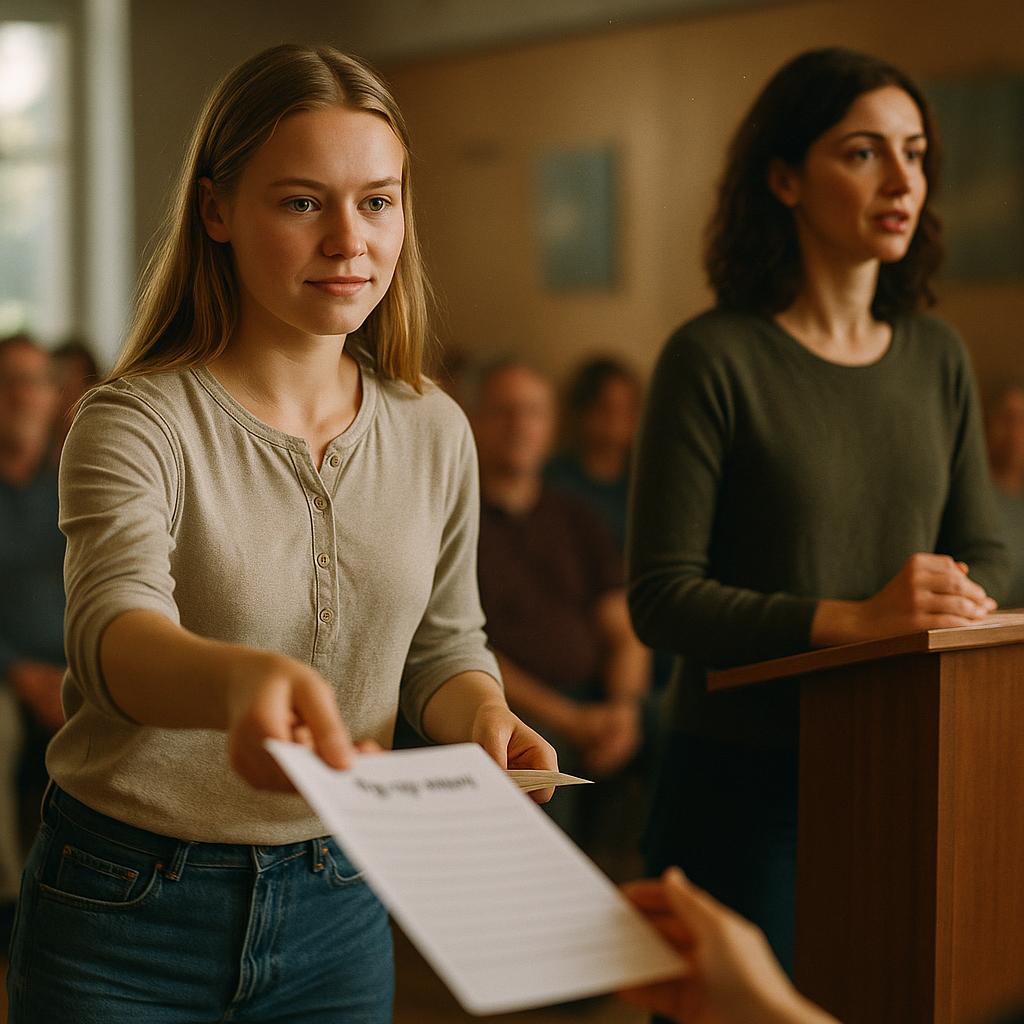 Image by RM AI
The College Acceptance
I never thought a single envelope could hold so much weight. When Emma burst through the front door waving that thick acceptance packet from Berkeley, her face lit with a joy I hadn't seen since she was a little girl, I knew everything had changed. 'They loved my essay, Mom!' she exclaimed, thrusting a personalized note from the admissions committee that specifically mentioned her community work with Midnight Bridges. What struck me most wasn't just her achievement, but who she called first—Sarah. Before telling her father, before posting on social media, she'd called Sarah, her voice cracking with emotion. That evening, our house overflowed with two families that had somehow become one. Mark arrived with champagne for the adults and sparkling cider for the kids, his pride in Emma evident in every glance. As laughter and conversation filled our home, I caught Sarah watching Emma from across the room. Her expression was complex—pride mingled with gratitude, and something that looked remarkably like awe. 'She changed my life,' Sarah whispered when I sat beside her. 'And now she's going to change the world.' What terrified me wasn't Emma leaving for college in a few months—it was realizing how profoundly one midnight discovery had altered the trajectory of all our lives, and wondering what would have happened if I'd never followed her that night.
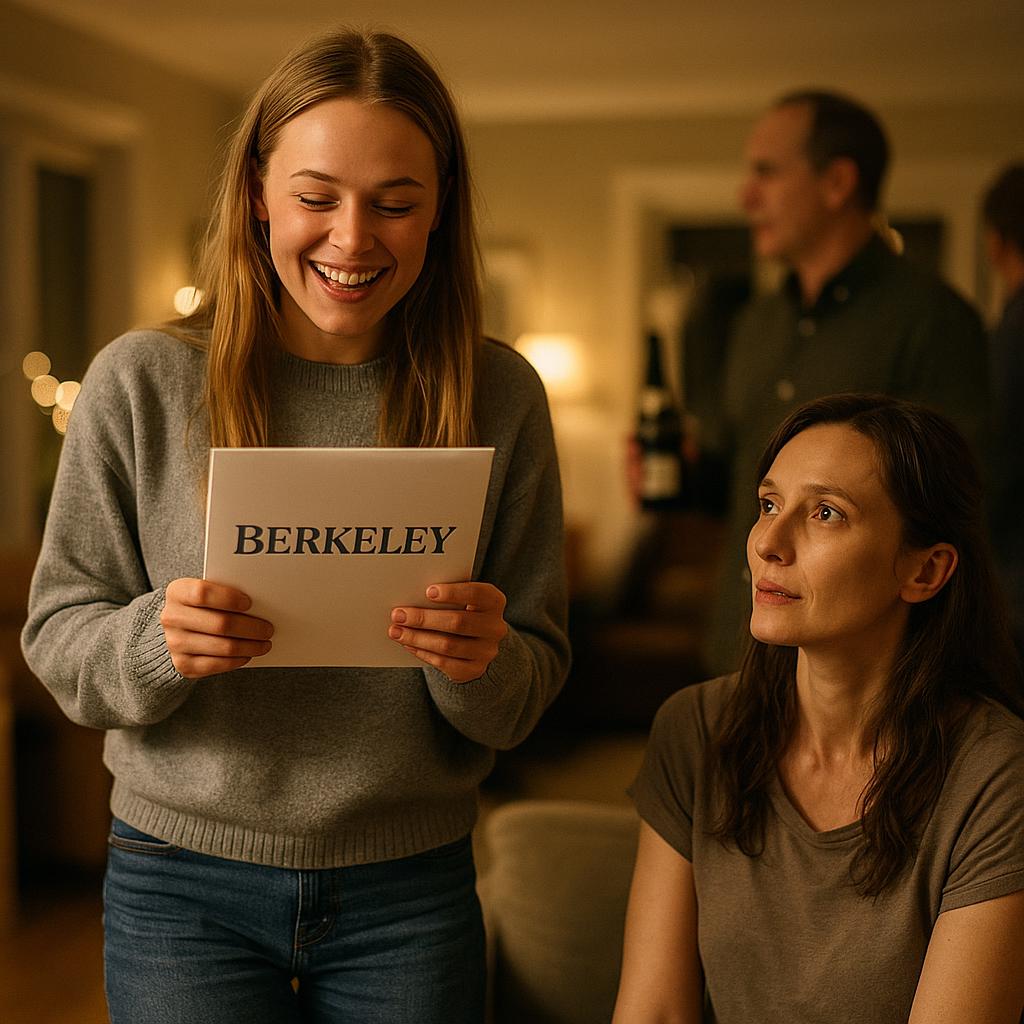 Image by RM AI
The 2:17 AM Reflection
I found myself wide awake at exactly 2:17 AM, one year to the day since I'd heard that fateful creak of our front door. The digital clock's red numbers seemed to mock me with their precision. I slipped out of bed and padded down the hallway to Emma's room, gently pushing open her door just as I had that night. This time, though, my daughter was actually there, sleeping peacefully, her college acceptance letter still pinned proudly to her bulletin board. Back downstairs, I made myself tea in the kitchen where Sarah had once confessed she'd never felt safe before staying with us. So much had changed. Sarah had been promoted again and started taking online nursing classes—finally pursuing the dream she'd mentioned during late-night conversations at this very table. Our Sunday dinners continued, two families bound not by crisis but by choice. Sitting there in the quiet darkness, I realized something profound: we spend so much time worrying about raising our children right, about being good parents, about teaching them important lessons. But sometimes, the most important parenting moments aren't about what we teach them at all—they're about what our children teach us when we're brave enough to follow where they lead. And as I sipped my tea at 2:17 AM, I wondered what other midnight lessons were still waiting to be learned.
 Image by RM AI