My Family Ghosted Me After My Divorce — Then I Discovered the Horrifying Reason Why
The Day My Mother Stopped Answering
I remember exactly where I was when I realized something was wrong. I was sitting in my new apartment—technically it wasn't even new anymore, three weeks had passed since the divorce papers were finalized—and I was feeling something I hadn't felt in years: relief. Mark was finally out of my life. No more checking my phone location. No more explaining why I smiled at the barista. No more walking on eggshells in my own marriage. I called my mom to tell her I'd found a job opening I was excited about, something I actually wanted to pursue now that I could make my own decisions again. The phone rang. And rang. And rang. She didn't pick up. My mother, who answered her phone before the second ring every single time I called, who'd once driven forty minutes in a snowstorm because I'd called twice in a row, didn't answer. I told myself she was in the shower, or at the grocery store, or her phone was charging in another room. I left a cheerful voicemail. Then I called my sister Emily. Voicemail. I called my dad. Voicemail. By the end of that week, no one in my family was speaking to me at all.
 Image by RM AI
Left on Read
I tried to stay calm about it. Families get busy, right? People have their own lives. I kept telling myself there was a reasonable explanation, even though that sick feeling in my stomach kept growing. So I sent Emily a text—something light and normal, the kind of message I'd sent her a hundred times before. 'Hey sis! Coffee this week? I miss your face and I have SO much to tell you about the new place. When are you free?' I watched those three dots appear immediately. Read. The receipt showed up right away, which meant she'd opened it the second it came through. I stared at my phone for twenty minutes. Nothing. An hour passed. Still nothing. I tried to distract myself with unpacking, but I kept checking. The next morning, I couldn't take it anymore. I called her directly. The phone rang twice, then suddenly cut to voicemail—you know that specific sound when someone actively declines your call? Two minutes later, my phone buzzed with a text from Emily: 'Not a good time.'
 Image by RM AI
The Door Closes
I'm not proud of what I did next, but I was desperate. I got in my car and drove to my mother's house without calling first. We'd always had that kind of relationship where I could just show up, you know? I'd done it hundreds of times. Let myself in, raid her fridge, flop on the couch and tell her about my day. I pulled into the driveway and saw her car, so I knew she was home. I knocked on the door, my heart pounding. After what felt like forever, I heard footsteps. The door opened. My mother stood there, and I swear to you, the look on her face was something I'd never seen directed at me in my entire life. Disgust. Actual disgust, mixed with something like pity. 'Mom?' I said. My voice came out small and confused. She stood in the doorway, not moving aside to let me in, not smiling, not reaching out to hug me like she normally would. I opened my mouth to ask what was wrong, to demand an explanation, to beg for some clarity. Before I could say a word, she told me she wasn't ready to talk and closed the door in my face.
 Image by RM AI
The Silent Birthday
I threw myself into trying to maintain normalcy. Jason's birthday was coming up in mid-October, and I clung to that like a lifeline. We'd always made a big deal about birthdays in our family. I spent hours picking out the perfect gift—a first edition of a book he'd mentioned wanting years ago, something I'd been hunting for on eBay for weeks. I wrote him a long message, the kind of heartfelt brother-sister stuff we'd always shared, telling him how proud I was of him, how much I loved him. I shipped the package with tracking, watched it get delivered, saw the 'received' notification pop up. Then... nothing. No text. No call. Not even a brief 'thanks.' I kept checking my phone obsessively, making excuses for him. He's busy with work. He'll respond tomorrow. Maybe the gift got lost and the tracking was wrong. Days turned into a week, then two weeks. Then one night, scrolling through Instagram before bed, I saw them. Photos from Jason's birthday party. My entire family gathered at my parents' house, smiling, laughing, celebrating. Two weeks later, I saw photos on social media of his birthday party—a party I was never invited to.
 Image by RM AI
Sunday Dinner Without Me
The Sunday dinners were what finally broke me. Every Sunday for fifteen years—FIFTEEN YEARS—we'd gathered at my parents' house at six o'clock. Through college, through my wedding, through every high and low, that dinner was sacred. My mother always made pot roast. My father carved the meat. We went around the table sharing our weeks. It was the one constant in my life, the thing I could always count on. And suddenly, I realized I hadn't been invited in over a month. At first I'd been too wrapped up in the divorce and moving to notice, but now the silence was deafening. Every Sunday evening, I sat alone in my apartment, imagining them all together without me. I finally worked up the courage to email my father. I kept it simple, tried not to sound accusatory: 'Dad, I noticed I haven't been invited to Sunday dinner lately. Is everything okay? Did I do something wrong?' I refreshed my inbox compulsively for hours. When his response finally came, I clicked it so fast I almost dropped my phone. One line. That's all he wrote: 'You know why.'
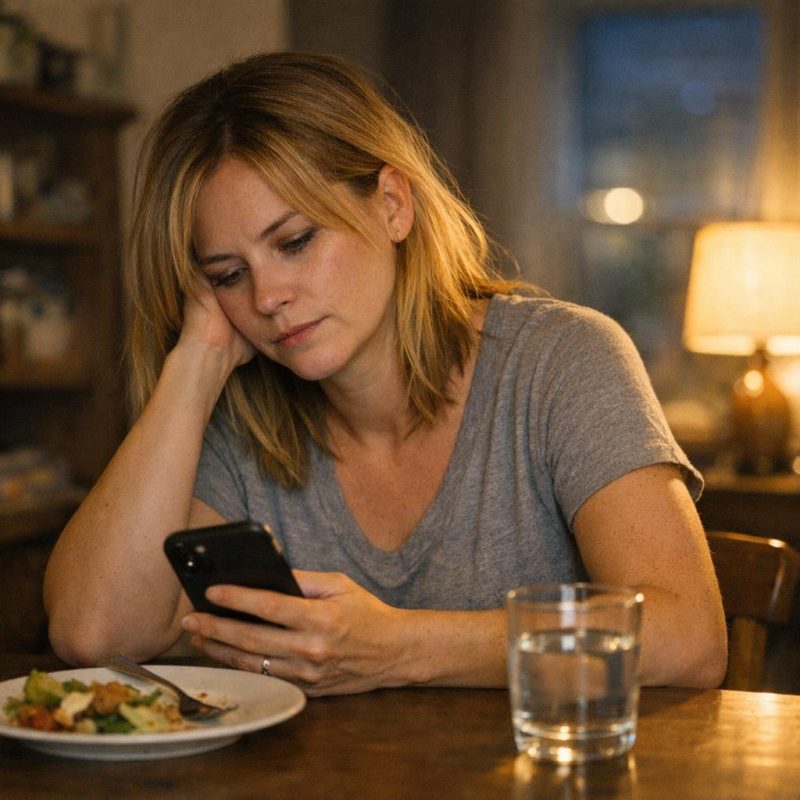 Image by RM AI
The Spiral Begins
I didn't sleep for three nights after that. I lay in bed with my eyes wide open, replaying every conversation, every family gathering, every interaction from the past year. What had I done? What had I said? Did I offend someone at Christmas? Was I rude at Easter dinner? Did I forget someone's birthday before Jason's? I went through my text history, my call logs, my social media posts. I analyzed every word, every tone, every facial expression I could remember. Maybe I'd complained too much about Mark? Maybe they thought I should have tried harder to save my marriage? Maybe leaving him made me the bad guy somehow? I made lists. Actual lists on paper, trying to identify the moment everything went wrong. I wrote down every possible transgression, from major to minor, trying to find the thing that would make my entire family turn against me. The problem was, I couldn't find it. I searched and searched and found nothing that warranted this level of rejection. And that terrified me more than anything.
 Image by RM AI
Extended Family Goes Dark
In desperation, I started reaching out to extended family members. My aunt Rachel had always been like a second mother to me. My uncle Tom had taught me to ride a bike. Surely someone would talk to me, would explain what was happening, would be on my side. I called my aunt Rachel first. She actually answered, which felt like a miracle, but her voice was strained and uncomfortable. 'Sarah, honey,' she said, and I could hear her choosing her words carefully. I asked her what was going on, why everyone was shutting me out. There was this long, painful silence. 'I don't really know all the details,' she finally said, which was obviously a lie. 'But your mother is very upset.' I pressed her, begged her to tell me what I'd supposedly done. Another silence. 'I love you, Sarah. You know I do. But I can't be caught in the middle of all this.' She wasn't the only one. I called four other relatives. Every single one of them gave me some version of the same response. They'd been briefed. They'd been told to stay away. My aunt Rachel told me she loved me but couldn't be caught in the middle of 'all this.'
 Image by RM AI
The Empty Inbox
I developed this compulsive habit of checking my email every fifteen minutes. I know it sounds pathetic, but I kept hoping I'd find something—an explanation, an invitation, even an angry message telling me what I'd done wrong. Anything would have been better than the silence. Our family had this group chat, the kind every family has now, where we shared memes and made plans and checked in on each other. I scrolled back through months of messages, looking for clues. The chat had been active every single day for years. Random photos of my nephew, Dad's jokes that weren't funny but we all laughed anyway, Mom sharing recipes. But now? Nothing. Complete radio silence for days. I typed out messages and deleted them, too afraid to send them and be ignored again. Then one Tuesday afternoon, I went to send a message anyway—just a simple 'I miss you guys'—and noticed something weird. The group chat looked different. I clicked on the info button to check who was in it. That's when I saw it. I'd been removed from the chat entirely.
 Image by RM AI
Thanksgiving Without an Invitation
Thanksgiving approached, and for the first time in my life, I had nowhere to go. Every year since I was born, we'd gathered at my parents' house—the same table, the same chairs, the same ritual of going around saying what we were grateful for. This year, my phone stayed silent. No invitation came. I kept checking, even though I knew by then that none would arrive. On Thanksgiving morning, I woke up to Instagram stories of my sister's perfectly styled tablescape, my nephew in a tiny pilgrim hat, my dad carving the turkey. They were all together. Right there on my screen, smiling and laughing and celebrating without me. I ordered Chinese takeout because that felt appropriately pathetic, and I sat on my couch in pajamas trying not to scroll through social media. But I did scroll. I couldn't help it. Every photo was a knife twisting deeper. My mom had even posted a family photo with the caption 'Grateful for my loved ones today.' I counted the faces in the picture. Everyone was there except me. I spent the day alone in my apartment, eating takeout and trying not to check social media—but failing miserably at both.
 Image by RM AI
The First Call From Mark
Mark called me out of the blue three days after Thanksgiving, his voice gentle and concerned, asking if I was okay because he'd heard my family was upset with me. I almost dropped my phone when I saw his name on the screen. We'd barely spoken since the divorce was finalized, just a few terse emails about splitting our belongings. But now he sounded different. Softer. 'Sarah, I know this is weird,' he said, 'but I ran into your cousin Jessica, and she mentioned something was going on with your family. Are you okay?' I should have been suspicious. I should have wondered why he cared. But you have to understand—I'd been living in complete isolation for months. No one had asked if I was okay. No one had reached out. My own family had erased me from their lives, and here was Mark, my ex-husband, the person I'd thought I'd never speak to again, actually giving a damn. I told him I was fine, which was obviously a lie. He didn't push, just said, 'Well, if you need to talk, I'm here.' For the first time in months, someone seemed to care, and I was pathetically grateful.
 Image by RM AI
Seeking Professional Help
I finally made an appointment with a therapist, Dr. Chen, and broke down within the first ten minutes. I'd found her online, chosen her because she had good reviews and could see me quickly. Her office was calm and professional, decorated in soft grays and blues, with a box of tissues strategically placed on the table between us. She asked me to tell her what brought me in, and I just started talking. Everything poured out—the silent treatment, the group chat removal, the complete abandonment by every person I'd grown up with. I cried so hard I couldn't breathe properly. Dr. Chen handed me tissues and waited patiently until I could speak again. She listened to everything without judgment, taking notes occasionally, nodding in understanding. When I finished, she leaned forward slightly. 'Sarah,' she said gently, 'I know this might sound simple, but have you directly asked your family what you did? Have you confronted them face-to-face or even over the phone to ask for an explanation?' I stared at her. The question felt obvious, but somehow I hadn't done it. I'd sent casual texts, sure, but I'd never directly demanded answers. She asked me a simple question that shattered me: 'Have you asked your family directly what you did?'
 Image by RM AI
The Email That Bounced
Following Dr. Chen's advice, I wrote a long, vulnerable email to my entire family begging for an explanation. It took me three hours to write. I poured my heart into it, explaining how confused and hurt I was, apologizing for whatever I'd done wrong even though I didn't know what it was, begging them to just talk to me. I told them I loved them. I told them I was falling apart. I read it over ten times before finally, hands shaking, I hit send. The email went to everyone—my parents, my sister, both brothers, my aunt, my uncle, even my cousins. I sent it to all of them at once, thinking that surely someone would respond. Someone would take pity on me. I watched my inbox obsessively for the next hour, refreshing every thirty seconds. Then my email program made a noise I'd never heard before. A bounce-back notification. Then another. Then another. They started flooding in, one after another, all with the same message: delivery failed, address rejected. My stomach dropped as I counted them. Every single email bounced back—they'd all blocked me.
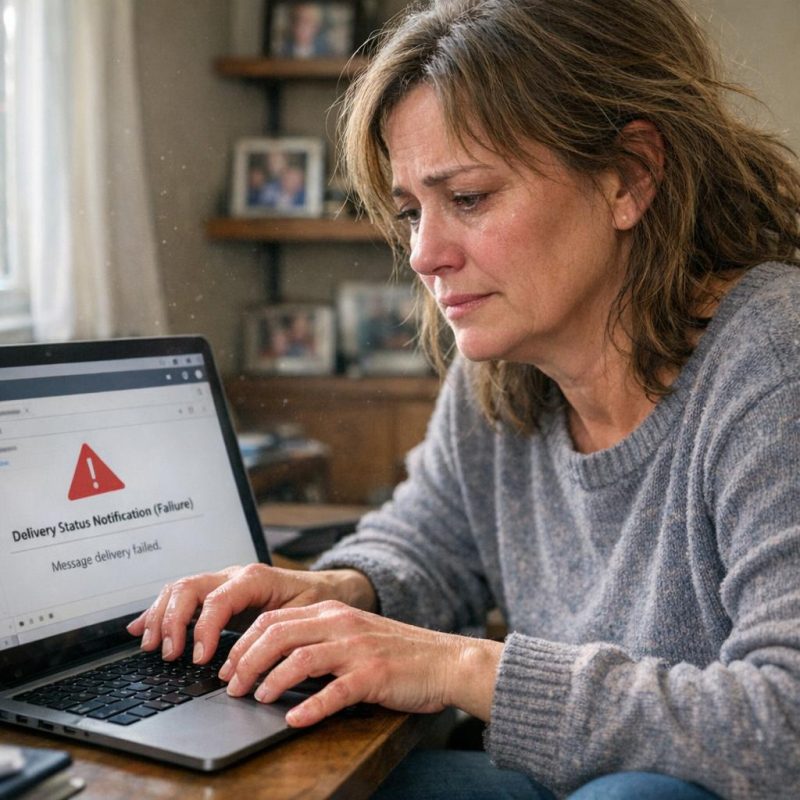 Image by RM AI
Phone Numbers Changed
I tried calling each family member, only to discover they'd all changed their numbers without telling me. I started with my mom because she'd always been the most reasonable one. The automated message told me the number was no longer in service. Okay, maybe she'd switched carriers. I called my dad. Same message. My sister. Same message. I went through my entire contact list, calling every family member I had numbers for, and got the same automated response every single time. My hands were shaking so badly I could barely hold my phone. This wasn't a coincidence. People don't all change their numbers at the same time unless they're coordinating it. Unless they're deliberately trying to cut someone out. I thought about driving to their houses, showing up on their doorsteps and demanding answers. But something stopped me. What if they called the police? What if they'd told each other I was dangerous or unstable? What if showing up uninvited would just confirm whatever lies they'd been told about me? I was being systematically erased from their lives, and I had no idea why.
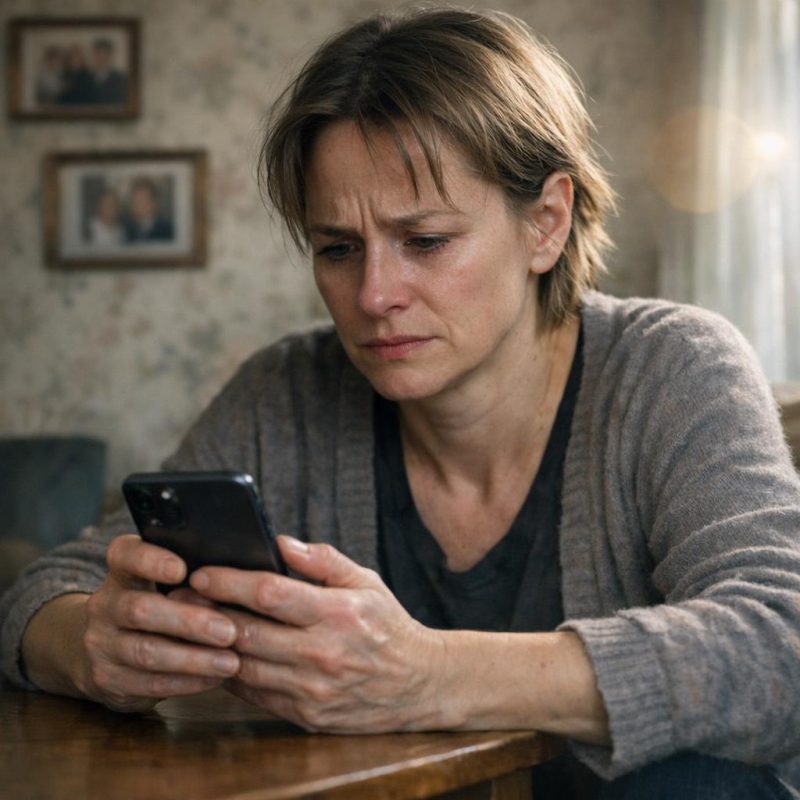 Image by RM AI
The Weight of Silence
I stopped eating regularly, stopped showering some days, and let my apartment fall into disarray. Depression doesn't look like it does in movies, where people dramatically cry in the bathtub. It looks like wearing the same shirt for five days because changing it requires energy you don't have. It looks like staring at a bowl of cereal for twenty minutes because the act of lifting the spoon feels impossible. My apartment became a reflection of my mental state—dishes piled in the sink, mail unopened on the counter, laundry in heaps on the floor. I stopped going to work regularly, calling in sick so often my boss finally suggested I take a leave of absence. During my next session with Dr. Chen, I must have looked worse than I thought because her expression changed. She put down her notepad and looked at me with real concern. 'Sarah,' she said carefully, 'I need to ask you something important. Have you been having any thoughts of hurting yourself?' The question hung in the air between us. Dr. Chen started asking me if I was having thoughts of hurting myself.
 Image by RM AI
Mark's Shoulder to Cry On
Mark called again, and I confessed everything—the isolation, the silence, my crumbling mental state. It was late at night, and I was in bed staring at the ceiling when my phone rang. I wouldn't have answered for anyone else, but I was so desperate for human connection that I picked up on the second ring. 'Hey,' he said, and his voice sounded genuinely worried. 'I've been thinking about you. How are things going?' Something about the darkness and the loneliness and the fact that he was literally the only person who'd shown any concern for me in months—it all broke something open. I told him everything. About the therapy, about the blocked emails and changed numbers, about how I wasn't eating or sleeping properly. About how I sometimes wondered if I'd be better off just disappearing entirely. There was a long silence on the other end. Then Mark said, 'Sarah, I can't stand hearing you like this. Will you meet me for coffee? I want to help. I know things ended badly between us, but I still care about what happens to you.' He offered to meet for coffee, saying he wanted to help because he 'still cared about me.'
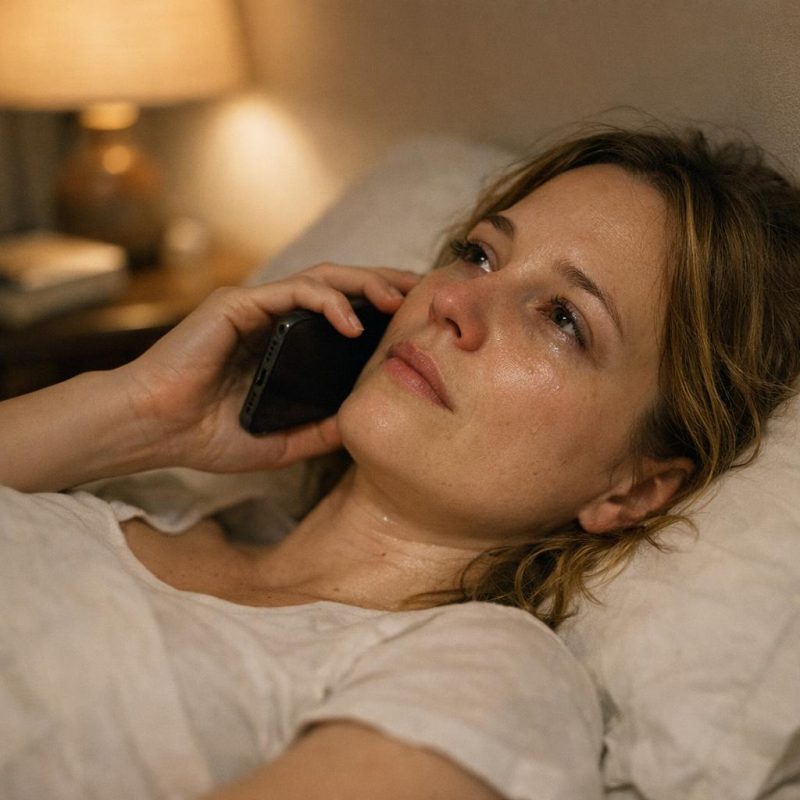 Image by RM AI
The Coffee Meeting I Almost Had
I sat in the coffee shop parking lot, keys in my hand, about to meet Mark. We'd agreed to meet at a Starbucks halfway between our apartments at two o'clock on a Saturday. I'd actually showered for the first time in days. I'd put on clean clothes and even a little makeup. I drove there feeling this pathetic flutter of hope in my chest—maybe Mark could help me figure this out, maybe he'd heard something about my family through mutual friends, maybe I wasn't as alone as I thought. I pulled into a parking space with a clear view of the entrance and turned off my engine. My phone said 1:58. Mark would be here any minute. I grabbed my purse and reached for the door handle. But then something stopped me. I can't even explain what it was—not a thought exactly, more like a physical sensation. A tightening in my chest. A voice in my head that whispered 'No. Don't.' I sat there, hand frozen on the door handle, and suddenly I was terrified. Not of Mark exactly, but of something I couldn't name. Something in my gut screamed at me to drive away, and for once, I listened.
 Image by RM AI
The Unanswered Question
I started the engine and drove straight out of that parking lot. My hands were shaking so hard I had to pull over two blocks away. Mark texted me twenty minutes later: 'Where are you? I'm here.' I stared at that message for ten minutes and couldn't make myself respond. What would I even say? 'Sorry, I had a panic attack and fled like a crazy person'? Three days later, I was sitting in Dr. Chen's office trying to explain what had happened. 'I don't know why I left,' I told her, my voice cracking. 'Mark was trying to help me. He was the only person who even answered my calls.' Dr. Chen leaned forward in her chair, and I'll never forget what she said: 'Sarah, that wasn't a panic attack. That was your survival instinct.' She explained that our bodies sometimes know things before our conscious minds catch up. That the fear I'd felt wasn't irrational—it was a signal. I wanted to believe her, but all I could think about was that I'd just pushed away the one person who'd shown me any kindness in months. I wondered if I'd just lost the only person who still cared about me.
 Image by RM AI
The Grocery Store Encounter
Six months had passed since the silence began. Six months of unanswered calls and ignored texts. I'd stopped leaving the house except for necessities. That Tuesday afternoon, I was shuffling through the produce section of Safeway in sweatpants and unwashed hair when I saw her—Elena, my cousin David's wife. We'd been close once, had done girls' nights and holiday cookie exchanges. She was examining avocados, and the moment our eyes met, her face went white. I watched her abandon her cart and literally speed-walk toward the cereal aisle. Something in me snapped. I wasn't going to let this happen again. I followed her, my heart pounding, weaving past other shoppers. She kept glancing back, walking faster. By the time I reached her near the organic pasta, I was practically running. 'Elena, please,' I called out, loud enough that other people turned to look. She stopped, trapped between me and an endcap of marinara sauce. I could feel tears streaming down my face as I grabbed her arm. 'Just tell me what I did,' I begged, my voice breaking. 'Please, just tell me what I did wrong.'
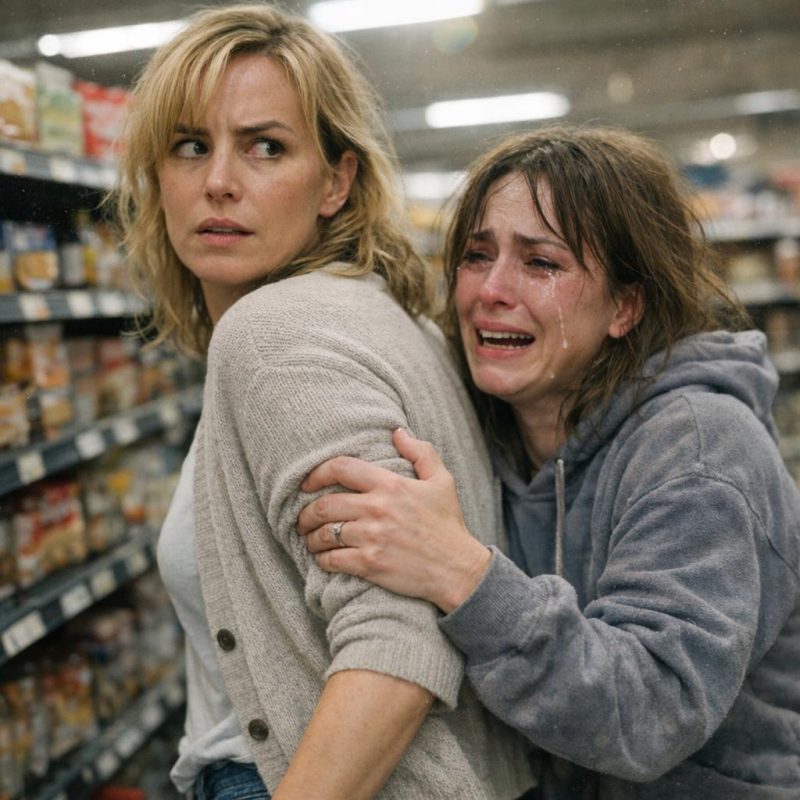 Image by RM AI
The First Crack in the Wall
Elena's eyes darted around the aisle, checking to see who might be watching us. An older woman pushed her cart past slowly, clearly listening. Elena waited until she was gone, then leaned in close enough that I could smell her floral perfume. 'We saw the emails, Sarah,' she whispered, her voice tight with discomfort. My brain stuttered. 'What emails?' I asked. She shook her head slightly, like she'd already said too much. 'The ones you sent,' she said, even quieter now. 'Everyone saw them.' I felt like I was having an out-of-body experience. My mouth went dry. 'Elena, I don't know what you're talking about. What emails? To who?' She glanced over her shoulder again, visibly nervous. 'I can't do this here,' she said. 'I shouldn't even be talking to you.' But she didn't pull away when I tightened my grip on her sleeve. 'Please,' I said again. 'I need to understand. What did these emails say?' She bit her lip, clearly wrestling with herself. 'Just... terrible things,' she finally whispered. 'About all of us.' I had absolutely no idea what emails she was talking about.
 Image by RM AI
The Accusations Begin
Elena kept her voice barely above a whisper. 'It wasn't just what you said about everyone,' she continued, still not looking directly at me. 'It was the money, Sarah. What you did to your father.' The grocery store felt like it was tilting. 'Money? What money?' My voice came out louder than I intended, and Elena flinched. 'His retirement fund,' she said quickly. 'The transfers. The accounts. How could you do that to him?' I felt like the floor had dropped out from under me. My father's retirement fund? I'd never touched it, never even had access to it. 'I didn't—Elena, I swear to God, I have no idea what you're talking about.' She finally looked at me, and I saw something flicker in her eyes. Doubt, maybe. Or pity. 'There were also recordings,' she said, and her voice got even quieter. 'Audio files where you said... Sarah, you said horrible things about your mother. About all of them. Things I can't even repeat.' The world narrowed to a tunnel. My vision blurred at the edges. I knew with absolute certainty that I'd never said anything like that.
 Image by RM AI
Begging for Proof
I didn't let go of Elena's arm. We stood there in that grocery store aisle for what felt like hours but was probably closer to one. People walked past us, grabbed their pasta, moved on with their normal lives while mine crumbled around me. 'Please,' I kept saying. 'Please show me. Let me see what everyone's seen.' Elena kept shaking her head, kept saying she couldn't, that the family would never forgive her if they found out she'd talked to me. 'How can I defend myself if I don't even know what I'm accused of?' I asked, my voice raw from crying. 'Elena, please. You know me. You've known me for ten years. Do you really think I'd steal from my own father?' I watched something shift in her expression. She pulled out her phone, then hesitated. 'If I show you,' she said carefully, 'you can never tell anyone it was me. Not your therapist, not a lawyer, no one. David would divorce me if he knew.' I nodded frantically. 'I promise. I swear. Just please, let me see.' She finally agreed to send me screenshots, but only if I promised not to tell anyone she'd helped me.
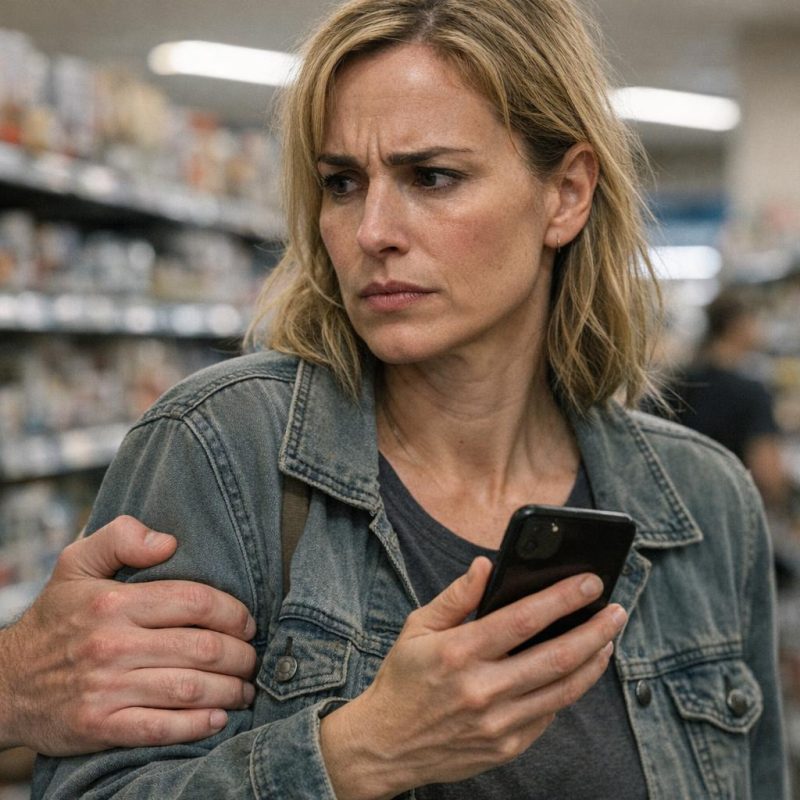 Image by RM AI
The Screenshots Arrive
The screenshots came through around midnight. I'd been sitting on my couch in the dark, phone in my hand, jumping every time the screen lit up with a spam notification. Then: three text messages from Elena's number in rapid succession. No words, just image files. I opened the first one with shaking hands. It was an email, supposedly from my account, sent to my brother eighteen months ago. The subject line read 'Re: Dad's retirement planning.' I read it three times, my heart hammering. The email detailed specific transactions—transfers from my father's retirement account to various online gambling sites. It referenced conversations I'd supposedly had with my dad about 'borrowing' money. The signature at the bottom was mine, complete with the little dash and smiley face I always added. The writing style was me. The casual tone, the way I structured sentences, even a joke I would have made. I opened the second screenshot. Another email, this one to my sister, discussing how I planned to pay the money back 'once my luck turned around.' I stared at my phone screen until my eyes burned. The forgeries were sophisticated—they had my email signature, my writing style, everything.
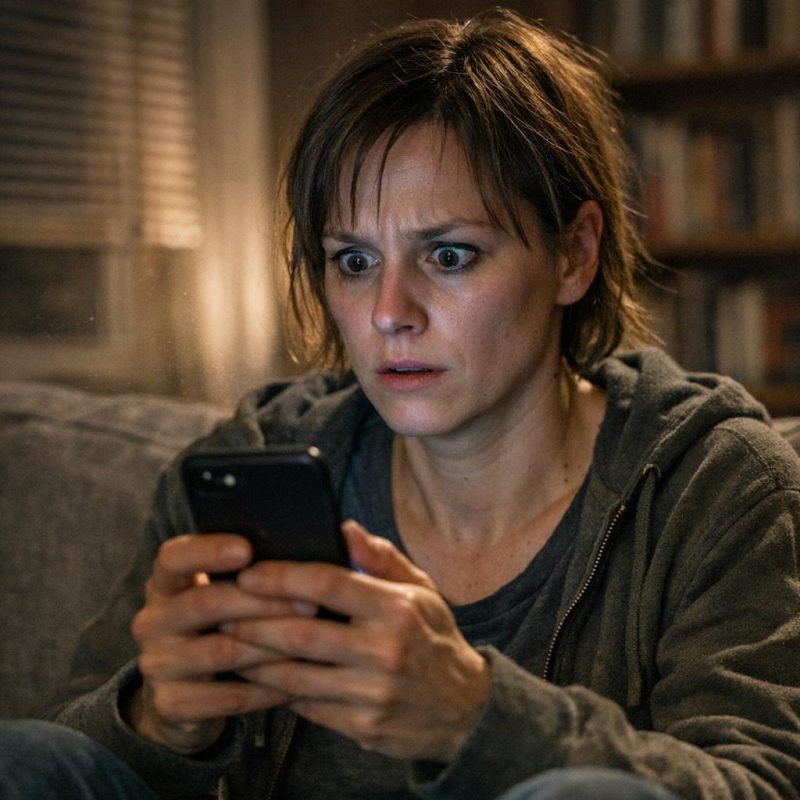 Image by RM AI
The Audio Files
The next text from Elena contained two audio files. My hands were trembling so badly I could barely press play on the first one. At first, there was just silence, then what sounded like me on a phone call. 'Mom's such a narcissist,' my voice said, crystal clear. 'She's always made everything about her. I'm honestly relieved I don't have to deal with her anymore.' I dropped my phone like it had burned me. That was my voice. My cadence, my slight upward inflection at the end of sentences, even my breathing patterns. I made myself play the second file. This one was worse. 'My voice' ranted for three full minutes about how my family had always held me back, how I'd faked loving them for years, how I was glad the divorce gave me an excuse to cut them all off. I played them both again. And again. By the fourth time, I started to wonder if I'd actually said these things. Maybe during the divorce, when I was so medicated and exhausted? Could I have had conversations I didn't remember? The voice sounded exactly like me, and I genuinely started to question my own sanity.
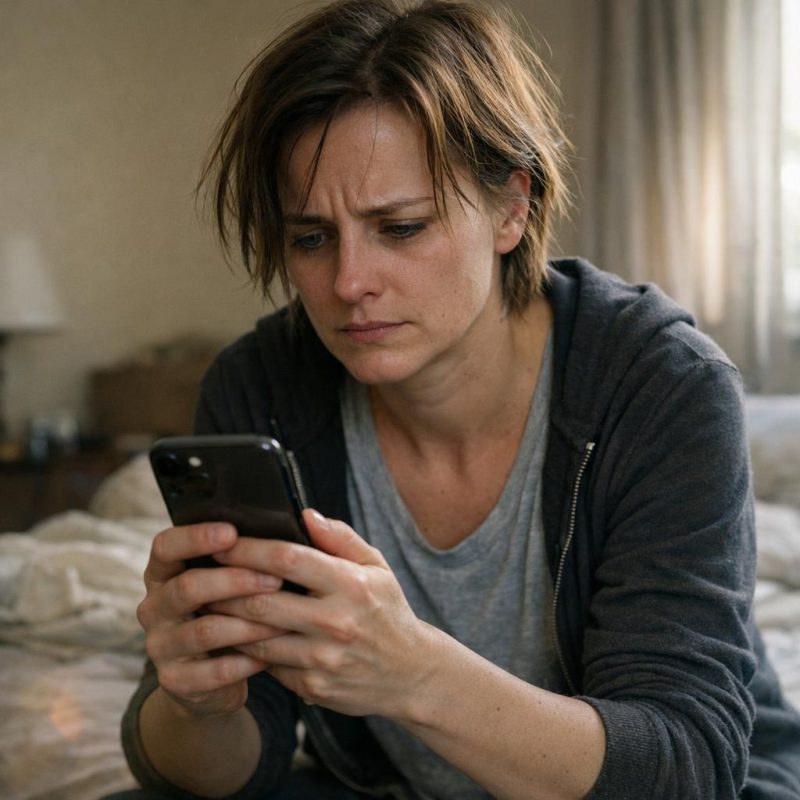 Image by RM AI
The Gambling Addiction I Never Had
I spent the rest of the night going through every screenshot Elena had sent. The emails laid out a whole story I'd never lived. According to them, I'd been secretly gambling online for two years. I'd started small—fifty dollars here, a hundred there—but it had spiraled. The emails referenced specific poker sites and sports betting apps I'd never heard of. One message to my father, dated eight months before my divorce, allegedly confessed that I'd taken 'just a little' from his retirement account, promising to pay it back within weeks. But then there were more emails showing more 'loans,' each one more desperate than the last. By the time I added it all up, the forged paper trail claimed I'd stolen over forty thousand dollars from my father's retirement fund. Forty thousand dollars. To feed a secret gambling addiction. I'd never gambled in my life—I'd never even bought a lottery ticket. But when I opened the final screenshots, I saw bank statements that looked absolutely real, showing transfers from an account in my father's name to various online gaming platforms. The dates, the transaction IDs, the routing numbers—everything looked legitimate. I'd never gambled in my life, but somehow the bank statements looked completely real.
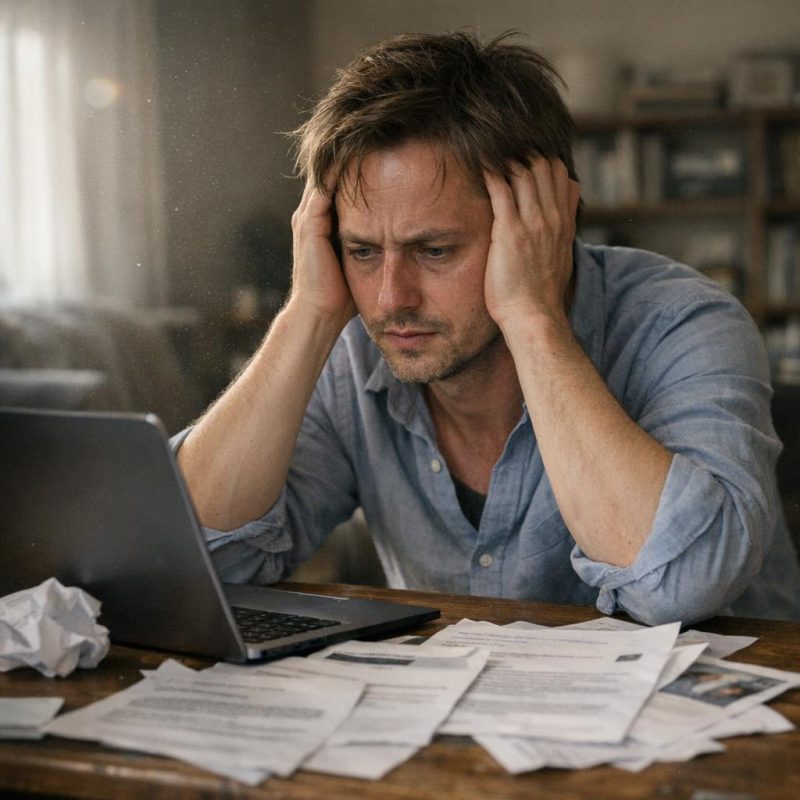 Image by RM AI
Mark the Hero
Elena's next message dropped a bomb I wasn't expecting. She told me that Mark had been the one to originally discover the 'theft'—that he'd approached my father privately, devastated and ashamed on my behalf. He'd presented the evidence with tears in his eyes, she said, explaining that he'd tried to help me with my 'problem' but I'd refused treatment. He'd painted himself as the loyal husband who'd exhausted every option before finally, reluctantly, bringing the truth to my family. My hands started shaking as I read her words. Mark had positioned himself as the hero of this nightmare, the good guy trying to save everyone from my supposed destructiveness. He'd apparently spent hours with my father, walking him through the bank statements, the emails, everything. And here's what really made my stomach turn—according to my family's version of events, Mark had even covered some of the gambling losses himself to protect my reputation. He'd supposedly paid back nearly ten thousand dollars of the money I'd 'stolen,' just to keep the family from being hurt worse. I sat there staring at my phone, and for the first time, a very different picture started forming in my mind.
 Image by RM AI
The Timeline Doesn't Add Up
I went back through Elena's screenshots with fresh eyes, and that's when I noticed something I'd been too devastated to catch before. The dates on these emails—the ones supposedly sent from me to my father—they were all from during my marriage to Mark. Some dated back two and a half years. But I'd never seen a single one of these messages before last night. If I'd really sent desperate confessions to my dad about stealing his retirement money, wouldn't I remember writing them? Wouldn't there have been conversations, confrontations, anything? The timeline made no sense. My father had received these emails while Mark and I were still living together, while we were still married, and yet he'd never once mentioned them to me. Not a word. Not a concerned phone call. Nothing until after the divorce was finalized. I pulled up my actual sent folder from my email account, going back three years, searching for anything remotely similar to what these screenshots showed. There was nothing. Birthday messages to Dad. Links to articles he might like. Normal daughter-to-father stuff. Something didn't add up, and for the first time since this nightmare began, I felt a spark of anger instead of despair.
 Image by RM AI
My Bank Statements Tell the Truth
I spent the next four hours pulling every financial document I could find. Bank statements going back three years, credit card records, receipts I'd saved for taxes—everything. I spread them across my kitchen table like I was building a legal case, because honestly, that's exactly what I was doing. I went through each month systematically, highlighting every single transaction, cross-referencing account numbers and dates. And you know what I found? Absolutely nothing that matched their accusations. Not one charge to a gambling site. Not one transfer to my father's retirement account. Not one suspicious withdrawal that couldn't be explained by normal life expenses—groceries, gas, rent, the gym membership I never used. My actual financial history was boring and responsible and completely, utterly innocent. The contrast between these real statements and the forged ones Elena had sent me was staggering. I had proof, real documented proof, that I hadn't done any of this. But that realization came with a horrifying question I didn't know how to answer: I had proof I was innocent, but I didn't know how to explain the forgeries that had destroyed my life.
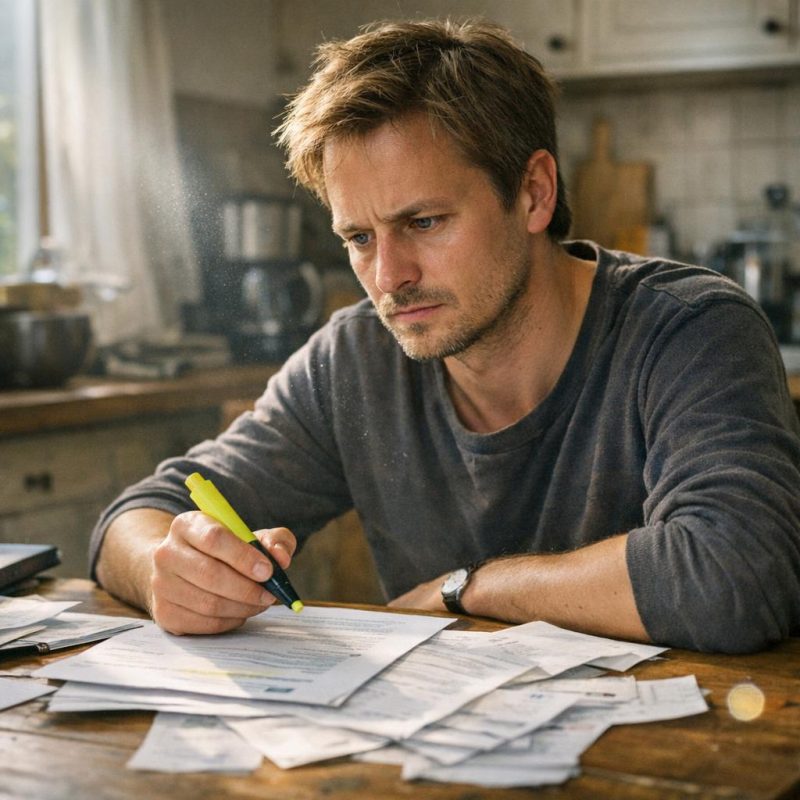 Image by RM AI
The Metadata Mystery
I looked at the email screenshots Elena had sent me more carefully, zooming in, examining every detail. That's when I realized something crucial—the metadata had been completely stripped from these files. When you normally screenshot or forward an email, there's information embedded in the image: timestamps, IP addresses, routing data. But these images Elena had sent me were clean. Too clean. Someone had deliberately removed that information before these emails reached my family. I tried reverse-image searching them, checking properties, anything that might give me technical proof they were fabricated. Nothing. The screenshots themselves were useless as evidence without the underlying data. I needed the actual, original emails with full headers intact. I needed to see the source code, the routing information, everything that would prove where these messages really came from. But those originals were in my family's email accounts, and I had no way to access them. My father had blocked me. My sister wouldn't take my calls. Even my aunt had cut me off completely. I sat there staring at my laptop screen, feeling like I was looking at the answer through frosted glass. I needed the original emails to prove they were fake, but how could I get them from my family when they'd completely shut me out?
 Image by RM AI
Enlisting Elena's Help
I called Elena back, my heart pounding so hard I could hear it in my ears. When she answered, I didn't waste time with small talk. I asked her straight out if she could forward me the original emails her husband had received—not screenshots, but the actual forwarded messages with all the headers and technical data intact. The silence on the other end of the line stretched so long I thought she'd hung up. Then I heard her breathing, quick and nervous. 'Sarah, if anyone finds out I'm helping you...' Her voice was barely above a whisper. I understood what she was risking. Elena was married into this family. She had kids who loved their grandfather. If my father found out she was feeding me information, she'd be cut off just like I was. I promised her I'd protect her involvement no matter what, that I'd never reveal where I got the emails, that I'd find another explanation if anyone asked. Another long pause. I could picture her in her kitchen, probably looking over her shoulder to make sure her husband wasn't nearby. Finally, she let out a shaky breath. 'Okay,' she said. 'I'll send them tonight. But Sarah... be careful.' She was terrified, but after that long, agonizing pause, she agreed to help me.
 Image by RM AI
The Originals Arrive
The email from Elena arrived at 11:47 PM, and I was still awake, refreshing my inbox obsessively. She'd forwarded three of the original messages her husband had received from my father, who'd apparently sent them around as proof of my betrayal. My hands were actually trembling as I opened the first one. I expanded the header information, looking at the technical details most people never bother to check. And there it was. The sending address looked almost exactly like my email—same name, same format—but when I looked closer, there was a tiny, nearly invisible difference. My real email was [email protected]. The email that had sent these messages was [email protected]. Two S's instead of one. That's it. That's all it took. Someone had created a nearly identical email account, so close that nobody would notice unless they were specifically looking for it. My father had seen an email from 'sarah.morrison' confessing to theft and gambling, and he'd never thought to check the actual address character by character. Why would he? It looked like it came from his daughter. I sat back in my chair, my whole body going cold. Someone had created a nearly identical email account to frame me, and they'd done it so carefully that my own family never suspected a thing.
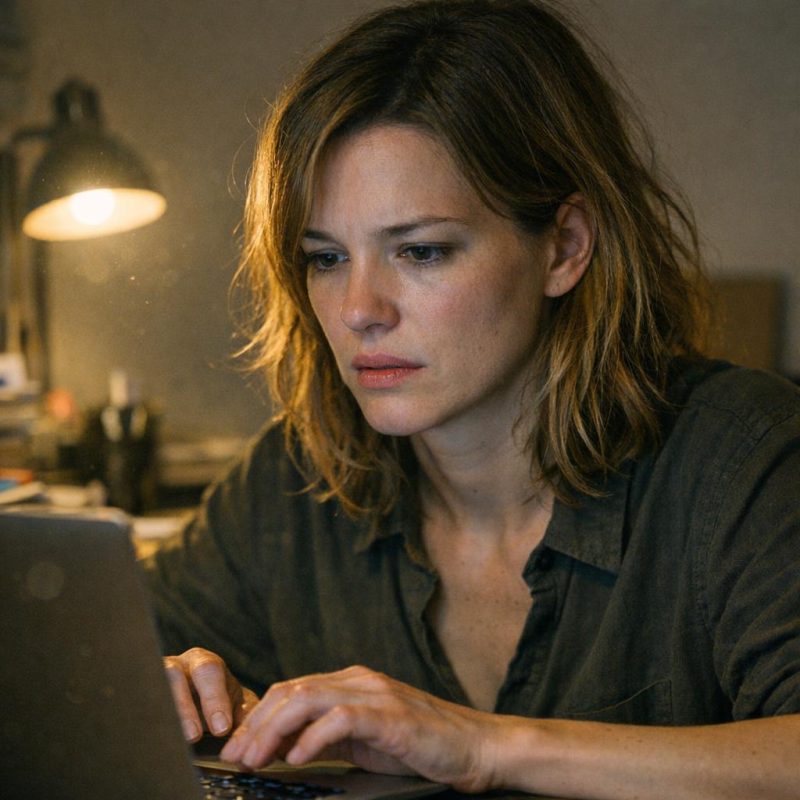 Image by RM AI
Voice Cloning Technology
I couldn't stop thinking about those audio messages my family had mentioned—the voicemails where I'd supposedly admitted everything in my own voice. If someone could fake emails that convincingly, could they fake audio too? I started researching, falling down a rabbit hole of articles about AI voice synthesis and deepfakes. What I found made my blood run cold. There's software now, easily accessible software, that can clone someone's voice with frightening accuracy. You just need a few minutes of clean audio samples—recordings of the person talking—and the AI can learn their speech patterns, their inflections, everything. It can generate new audio of them saying anything you want. I read article after article about fraud cases, about scams, about how this technology was being weaponized. Some programs claimed they only needed sixty seconds of audio to create a convincing clone. Sixty seconds. And then it hit me like a freight train. Mark had hours and hours of recordings of me from our marriage. Videos from vacations. Voice memos I'd sent him when we were dating. Old voicemails saved on his phone. He'd had unlimited access to my voice, more than enough to train any AI system. Mark had hours of recordings of me from our marriage, and he'd known exactly how to use them.
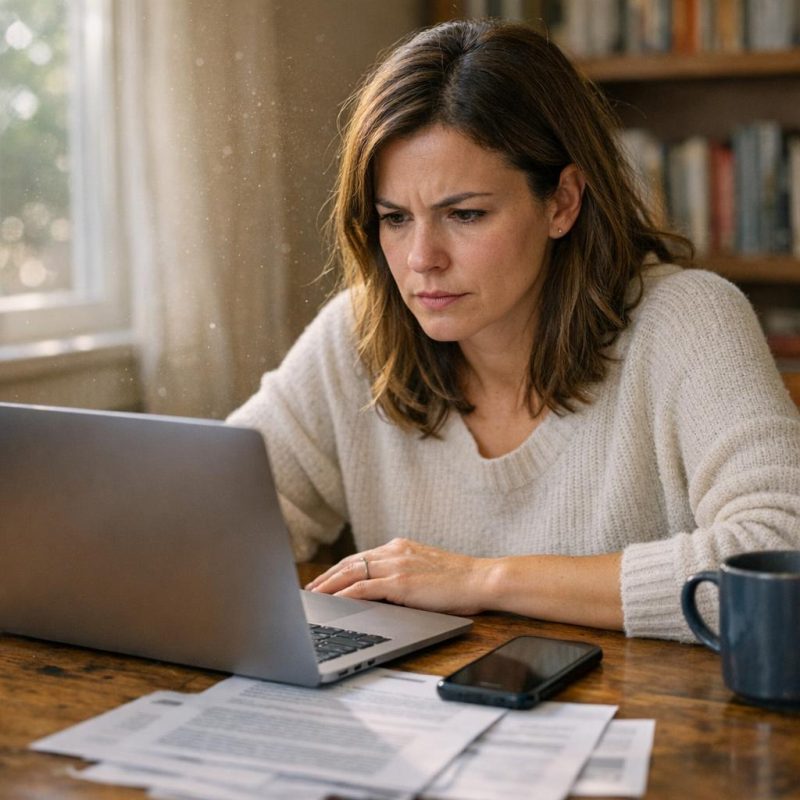 Image by RM AI
The Pattern Emerges
I grabbed a notebook and started making a timeline of everything Mark had done since I'd asked for the divorce. Every interaction, every 'coincidence,' every moment that had seemed like concern or support. When I laid it all out chronologically, a pattern emerged that I'd been too devastated to see before. He'd called me the day after my father stopped speaking to me—not to ask why, but to check if I was 'okay.' He'd invited me to lunch right before my job interview, the one that had been mysteriously canceled. He'd texted me the morning my sister was supposed to visit, just a casual 'thinking of you' message, perfectly timed to when she would have been backing out. Every sympathetic call had come right after another disaster. Every offer of help had appeared exactly when I was at my lowest point. I'd thought it was kindness, that he was proving himself to be a good friend even after our marriage ended. But now, looking at this timeline with fresh eyes, nothing felt random anymore. The timing was too perfect, too precise. He'd always known exactly when to reach out, exactly what to say, exactly how to position himself as my only remaining support. Every sympathetic call, every 'coincidence'—it all felt too deliberate now, like I was looking at a carefully orchestrated performance I'd been too broken to recognize.
 Image by RM AI
Reaching Out to Dr. Chen
I hadn't seen Dr. Chen in months—couldn't afford it after the divorce settlement ran thin. But I scraped together enough for one session and showed up with my laptop, my notebooks, everything. I spread it all out on her office floor like a conspiracy theorist, half-expecting her to think I'd lost it completely. The timeline of Mark's calls. The forged emails my sister had printed. The bank statements showing transactions I never made. My hands shook as I walked her through each piece, each perfectly timed 'coincidence,' each moment where Mark had appeared right after another relationship imploded. She listened without interrupting, her expression growing more serious with each detail. When I finished, I waited for her to tell me I was being paranoid, that grief does strange things to perception. Instead, she set down her pen and looked at me with an intensity I'd never seen from her before. 'Sarah,' she said carefully, 'this sounds like a systematic campaign of harassment.'
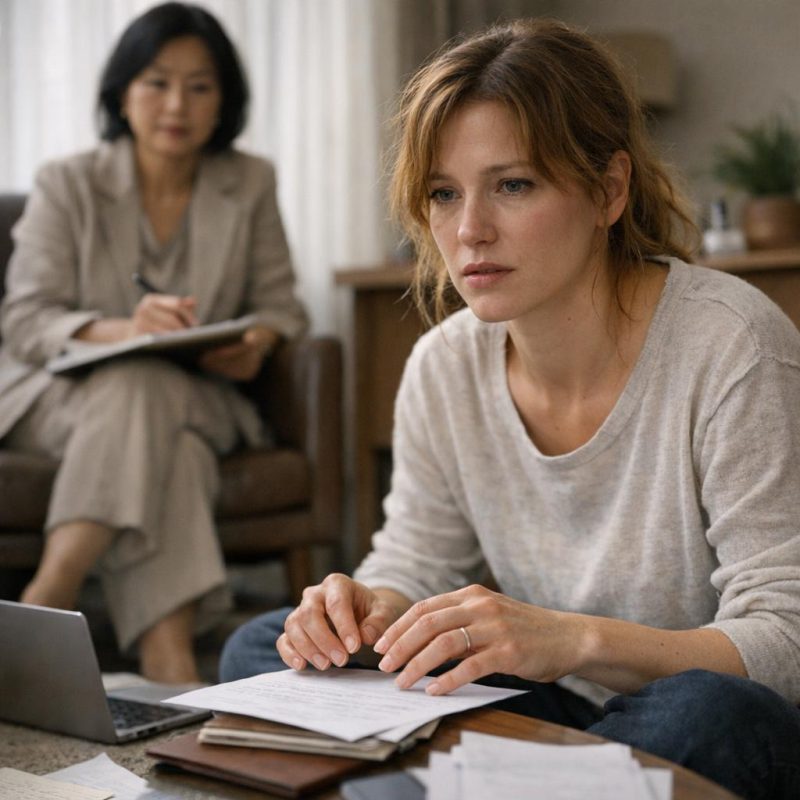 Image by RM AI
The Legal Path Forward
Dr. Chen was firm about what came next. She didn't want me confronting Mark or my family—not yet, not without protection. 'If this is what I think it is,' she said, 'you need documentation, witnesses, legal leverage. Going in emotional will only make you look unstable.' It was the first time someone had treated this situation like something real, something actionable, not just my imagination or lingering divorce bitterness. She recommended I consult with an attorney before taking any further steps, someone who specialized in harassment or fraud cases. I left her office feeling strangely lighter, like I'd been carrying this weight alone and someone had finally helped me set it down, even just for a moment. But I also left with a knot of anxiety in my stomach. I had no idea if what Mark did was even illegal, no clue what laws he might have broken or if I had any recourse at all. I had no idea if what Mark did was even illegal, but I was determined to find out.
 Image by RM AI
Meeting Rebecca
Rebecca Martinez came highly recommended by Dr. Chen—she'd worked on several cases involving digital fraud and defamation. Her office was modest but professional, walls lined with legal texts and framed case victories. I'd brought copies of everything: the forged emails, the bank statements, screenshots of Mark's perfectly timed messages. She reviewed each document methodically, making notes in a leather portfolio, her expression unreadable. The silence stretched so long I started second-guessing myself again—maybe this wasn't as bad as I thought, maybe I was overreacting after all. Then she looked up and removed her reading glasses. 'How long did you say this has been going on?' she asked. 'Six months,' I told her. 'Since the divorce was finalized.' She nodded slowly, tapping her pen against the portfolio. 'And your ex-husband had access to your email, your banking information, during the marriage?' 'Yeah, we shared everything.' Rebecca leaned back in her chair, and I saw something like respect mixed with concern cross her face. 'This is one of the most sophisticated cases of personal sabotage I've ever seen.'
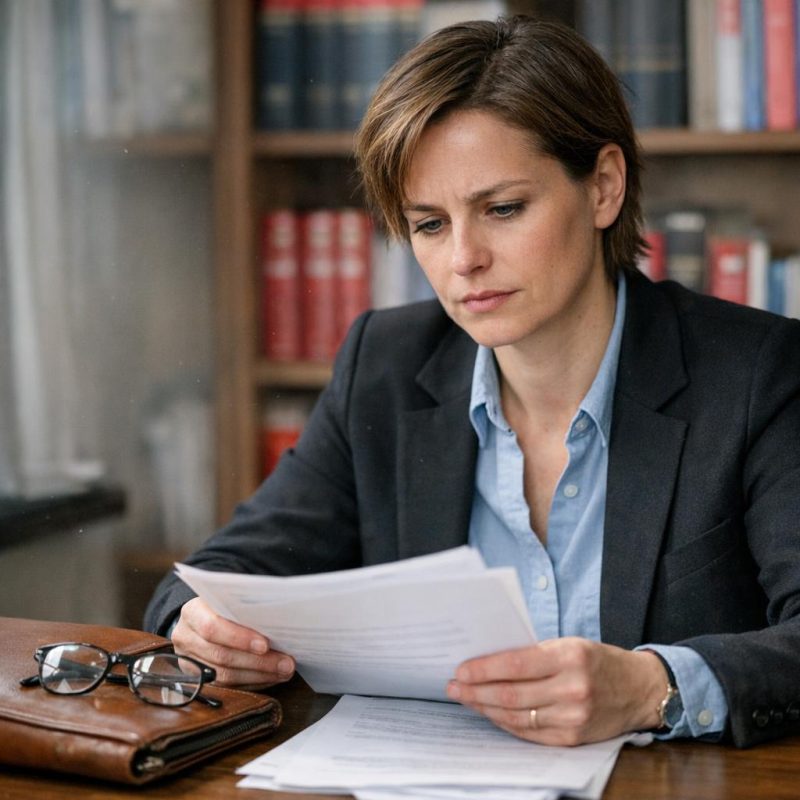 Image by RM AI
Building the Case
Rebecca's assessment was both validating and terrifying. Yes, what Mark had done was illegal—potentially multiple crimes, actually. Fraud. Identity theft. Harassment. Defamation. But here's the problem: I needed proof he'd created the forgeries. 'Right now, we have evidence that someone fabricated documents and impersonated you,' Rebecca explained. 'What we don't have is a clear line connecting that evidence to Mark.' It wasn't enough that the timing was suspicious, or that he'd had opportunity and motive. Courts needed documentation, digital trails, forensic proof. 'Anyone could have done this,' she said, playing devil's advocate. 'An ex-colleague, a disgruntled friend, even a random hacker. We need to prove it was him specifically.' The burden of proof felt crushing. I'd thought finding the forged emails was the hard part, but apparently that was just the beginning. Rebecca pulled up something on her computer, then turned the screen toward me. 'I work with several digital forensics experts who specialize in tracing this kind of fraud,' she said. 'They can examine the metadata, track IP addresses, find digital fingerprints. She recommended hiring a digital forensics expert to trace the fabricated evidence back to its source.'
 Image by RM AI
The Cost of Justice
I asked Rebecca for the cost estimate, already knowing it would hurt. When she told me, my stomach dropped. Digital forensics wasn't cheap—we were talking thousands of dollars just for the initial analysis, potentially more if the case got complicated. I'd already spent most of my divorce settlement on therapy sessions, on catching up with bills after losing my job, on basic survival during those dark months when I couldn't function. My savings account, once healthy, had dwindled to almost nothing. I sat in my car outside Rebecca's office for twenty minutes, staring at my bank app, doing math that didn't work no matter how I arranged it. This could wipe me out completely. If the forensics expert found nothing, or if we couldn't prove Mark's involvement, I'd have spent my last financial cushion on a legal dead end. But what was the alternative? Let him get away with destroying my entire life? Let my family keep believing I was some unstable liar? I transferred money from savings to checking, watching the balance drop to nearly zero. Then I called Rebecca back. I liquidated my savings account and told Rebecca to hire the best person she could find.
 Image by RM AI
Mark Calls Again
Three days after I'd hired Rebecca, my phone rang. Mark's name appeared on the screen, and my first instinct was to let it go to voicemail like always. But something stopped me—maybe it was the timing, the way he always seemed to know when I was at a turning point. Rebecca's words echoed in my head: 'Document everything.' I opened the voice recorder app on my phone, hit record, then answered. 'Hey Sarah, just checking in,' Mark said, his voice warm and concerned in that practiced way I now recognized. 'I know things have been tough. I wanted to see how you're holding up.' How many times had I fallen for this routine? How many times had I poured my heart out to him, grateful someone still cared? 'I'm managing,' I said carefully, keeping my voice neutral. He pushed a little—asked about my job search, whether I'd heard from my family, if I needed anything. Every question felt like he was fishing for information, checking the damage, making sure his work was holding. I gave him nothing concrete, just vague reassurances that I was 'working through things.' This time, I recorded the call.
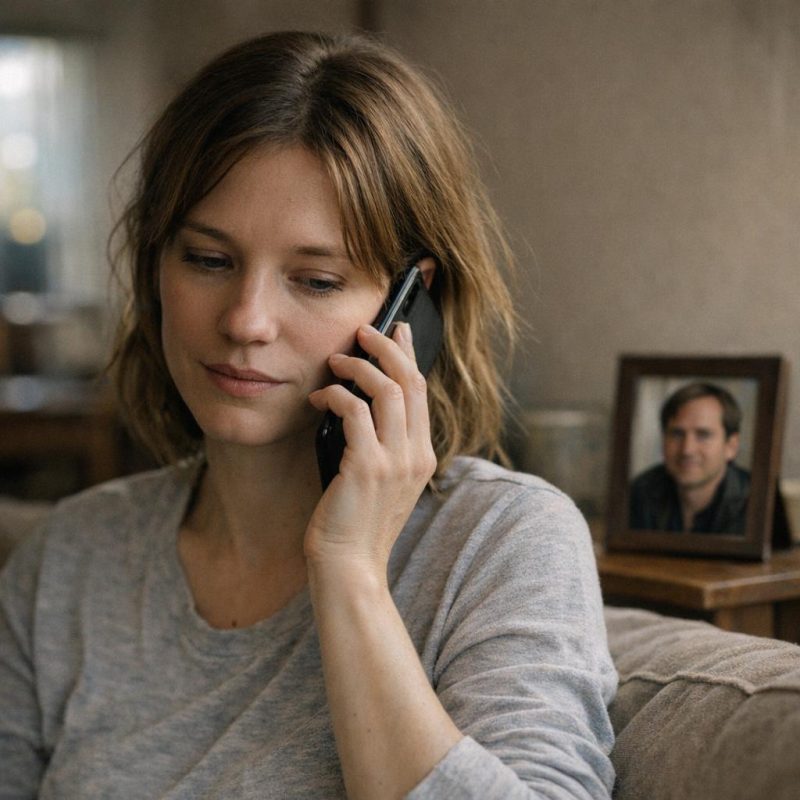 Image by RM AI
Enter Marcus
Rebecca scheduled a meeting with Marcus Chen—no relation to my therapist, just one of those coincidences. He was younger than I'd expected, maybe early forties, with the slightly rumpled look of someone who spends more time with computers than people. His credentials were impressive though: he'd testified in federal fraud cases, worked with law enforcement on cybercrime investigations, the whole deal. I'd brought my laptop, external hard drives, anything that might contain relevant data. Marcus set up his own equipment on Rebecca's conference table, connecting cables and opening software I didn't recognize. 'Walk me through what you found,' he said, and I explained about the forged emails, the bank statements, the systematically fabricated evidence. He pulled up the documents Rebecca had sent him, examining them on his screen with the kind of focus surgeons probably use. The silence stretched for maybe five minutes—felt like an hour—while he scrolled and zoomed and made small thoughtful sounds. Then he looked up at me with absolute certainty in his eyes. 'I can find who made these.'
 Image by RM AI
The Digital Breadcrumbs
Marcus launched into an explanation that was half fascinating, half overwhelming. Every digital document contains metadata—hidden information about when it was created, what device made it, sometimes even what software was used. Even when someone tries to scrub that data, traces remain. 'It's like fingerprints,' he said. 'You can wipe down a surface, but forensic techniques can still detect what was there.' He could analyze the email headers, track the IP addresses they originated from, examine the digital signatures embedded in document files. If Mark had created these forgeries, there would be evidence—in his computer's cache, in cloud backup logs, in the digital breadcrumbs people don't even realize they leave. But here was the catch: Marcus needed access to the original sources. My old devices, sure, but also the emails as they existed on my family members' accounts. My sister's laptop. My father's email server. He needed to examine the files in their original context, not just the printouts and screenshots I'd collected. 'Can you get your family to cooperate?' he asked. That was the problem, wasn't it? They still thought I was the liar. He requested access to my old devices and my family's permission to examine the original emails on their accounts.
 Image by RM AI
The Impossible Ask
So here's the catch that nearly broke me: to prove my innocence, I needed the cooperation of the very people who thought I was a monster. Rebecca sat across from me in her office, tapping her pen against her legal pad, explaining the options. We could try reaching out informally—a phone call, an email, some gentle ask for access to their email accounts and devices. But after seven months of silence? After they'd already made up their minds about me? She didn't think that would work. The other option was a formal legal demand letter. Official letterhead, attorney signature, the whole intimidating package. It would explain that I was pursuing legal action and that forensic evidence existed proving the communications were fabricated. It would request—politely but firmly—their cooperation in allowing Marcus to examine the original emails on their devices. 'It's a gamble,' Rebecca warned me. 'It could scare them into taking you seriously. Or it could make them feel cornered and attacked, and they'll refuse on principle.' I stared at her, feeling the weight of it. This could be the thing that finally brought them to the table. Or it could slam the door shut forever, adding 'sued her own family' to the list of reasons they hated me. Rebecca suggested we send a formal legal letter demanding access, which could either open the door or slam it shut forever.
 Image by RM AI
The Letter Goes Out
Rebecca sent the letter on a Tuesday morning. I know because I watched her do it, standing in her office like I needed to witness this moment with my own eyes. She'd addressed it to both my parents—the heads of the family, the decision-makers. The letter was three pages long, professionally worded but firm. It outlined my intent to pursue defamation claims, explained that forensic analysis had revealed fabricated evidence, and formally requested their cooperation in examining the original digital files. It was terrifying to send. I kept imagining my mother opening the envelope, reading the first paragraph, then calling Jason to tell him I was now threatening legal action. That I'd gone from horrible daughter to actual adversary. But what choice did I have? Marcus needed access to those original emails, and this was the only way. Rebecca said we should expect a response within a week. Three days passed with absolutely nothing. No phone calls, no emails, not even an angry text telling me to go to hell. Just silence—the same silence I'd endured for seven months, except now it felt different. Heavier. Like I'd played my final card and it had simply disappeared into a void. I checked my phone obsessively, convinced I'd somehow missed a notification. Three days passed with no response, and I thought I'd lost them forever.
 Image by RM AI
My Father's Call
On day four, my phone rang while I was staring blankly at my laptop, pretending to work. I glanced at the screen without thinking, then froze completely. 'Dad' it said. His name, right there, glowing on my phone for the first time in seven months. My hands started shaking so badly I nearly dropped it. For a second I couldn't move, couldn't breathe, couldn't decide if I should answer or let it go to voicemail. What if he was calling to tell me never to contact them again? What if the letter had made everything worse? But I couldn't not answer. I swiped to accept the call and pressed the phone to my ear, my heart hammering so hard I could barely hear. 'Hello?' My voice came out small and uncertain. There was a pause—just a beat, but it felt like an eternity. Then I heard my father's voice, and God, it was like hearing a ghost. Familiar but distant, the voice that used to tell me bedtime stories and help me with math homework, except now it carried none of that warmth. His voice was cold when he said, 'You have one chance to explain yourself, Sarah. One.'
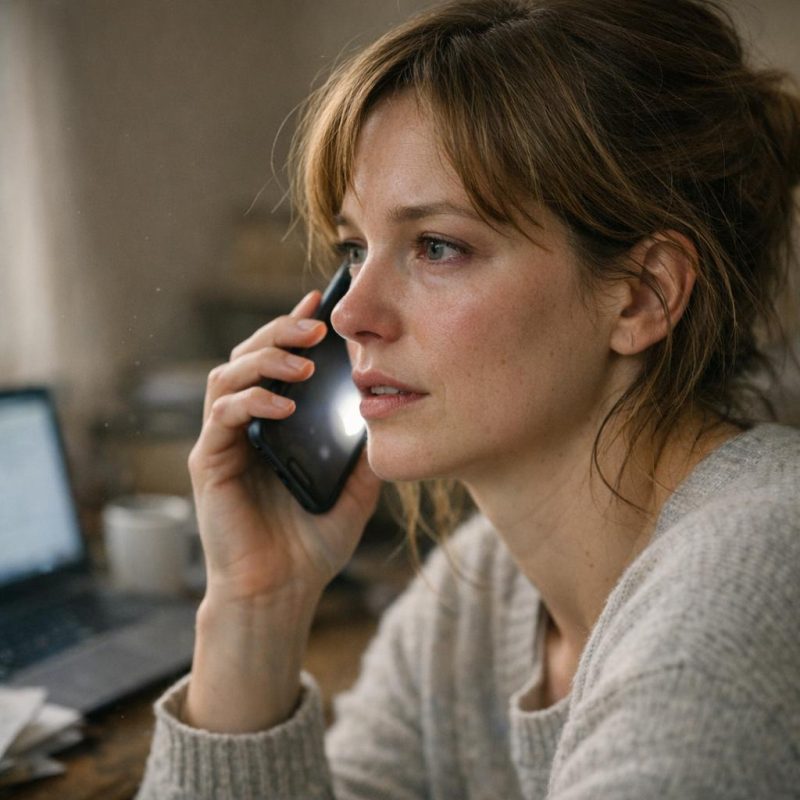 Image by RM AI
The Family Meeting
I didn't waste time with pleasantries or apologies. I couldn't afford to. I told my father I needed to see everyone—him, Mom, Emily, Jason—all together in one room. Not to argue, not to beg for forgiveness, but to present actual evidence. Physical, technical, irrefutable proof that I'd been set up. That the emails they'd seen, the audio recordings they'd heard, the texts they thought I'd sent—none of it was real. 'I'm not asking you to believe me,' I said, my voice steadier than I felt. 'I'm asking you to look at what a forensic expert has found. Let me bring evidence, not just words.' There was a long silence on the other end. I could hear him breathing, could imagine him in his study, weighing whether this was worth his time. Whether I was worth his time. Finally, he spoke. 'Fine. Saturday afternoon at the house. Two o'clock. You get one hour, Sarah. You bring whoever you need to bring, show us what you need to show us.' His tone was pure ice. 'But if this is more manipulation, if you're lying to us again, I will never speak to you again. Do you understand me? Never.' He agreed, but warned me that if I was lying, he'd never speak to me again.
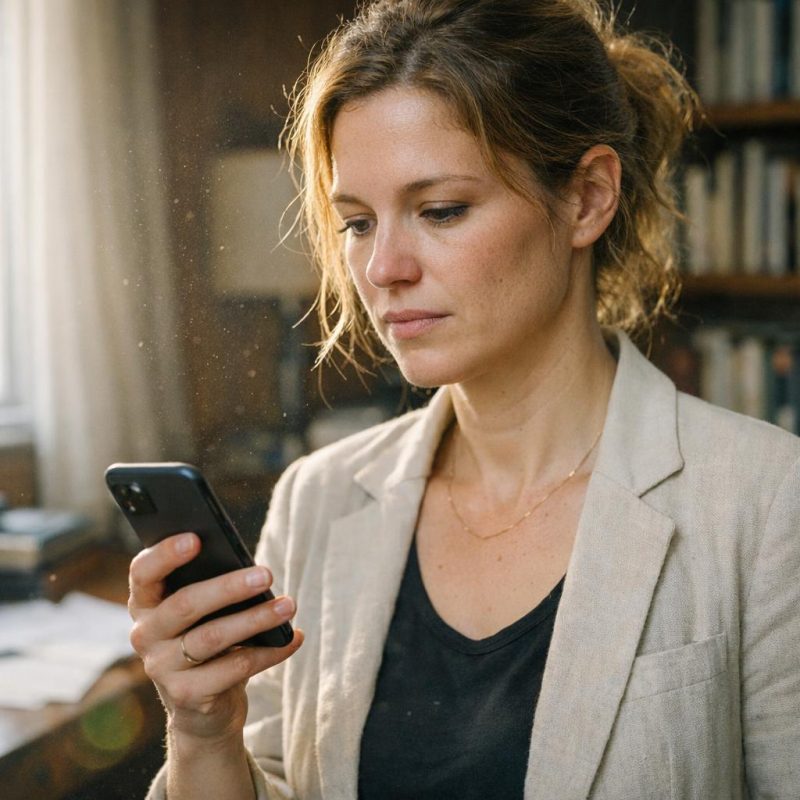 Image by RM AI
Preparing for Battle
Marcus and Rebecca essentially moved into war-room mode. We had four days until the meeting, and they spent every waking hour preparing a presentation that would walk my family through the evidence methodically, irrefutably. Marcus created a slideshow with technical breakdowns that even non-experts could understand: highlighted email headers showing spoofed addresses, side-by-side comparisons of metadata signatures, timelines showing when files were actually created versus when they were supposedly sent. Rebecca helped organize the narrative flow, making sure we led with the most damning evidence and built from there. She coached me on how to present myself—calm, factual, not defensive. 'Let the evidence speak,' she kept saying. 'Don't get emotional, don't attack Mark directly, just show them what the data proves.' Easier said than done when your entire family thinks you're a sociopath. I practiced my opening statement maybe fifty times. Standing in front of my bathroom mirror, sitting at my kitchen table, pacing my apartment at two in the morning when I couldn't sleep. I needed to sound credible, sincere, strong but not aggressive. Every word mattered. Every inflection. I practiced my opening statement until my voice was hoarse, knowing I might only get minutes before they shut me down.
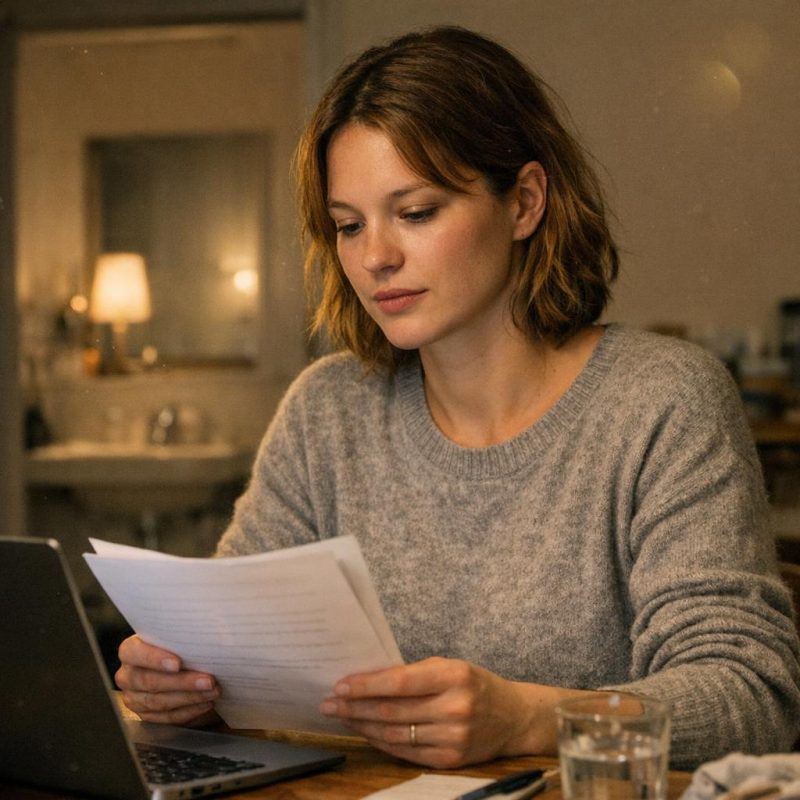 Image by RM AI
The Day of Reckoning
Walking through my parents' front door felt surreal in a way I can't fully describe. This was the house I grew up in, where I'd celebrated every birthday and Christmas, where I'd cried about middle school drama and college stress. Now I was entering it like a stranger—worse, like an enemy being granted temporary access. Marcus and Rebecca flanked me, carrying a laptop and folders of printed evidence. Professional armor. My father opened the door without a word, his face carved from stone. He led us to the living room, where everyone was already gathered and waiting. My mother sat on the couch, her hands folded in her lap, staring at the coffee table like it was the most fascinating thing in the world. She wouldn't look at me. Not even a glance. Emily was perched on the arm of a chair, her expression guarded and hostile. Jason stood near the fireplace with his arms crossed, radiating anger. This was my family. The people who were supposed to love me unconditionally. And every single one of them looked at me—if they looked at me at all—like I was something diseased. Like I'd crawled out from under a rock to waste their Saturday afternoon. The hatred in their eyes was palpable, and my mother wouldn't even look at me.
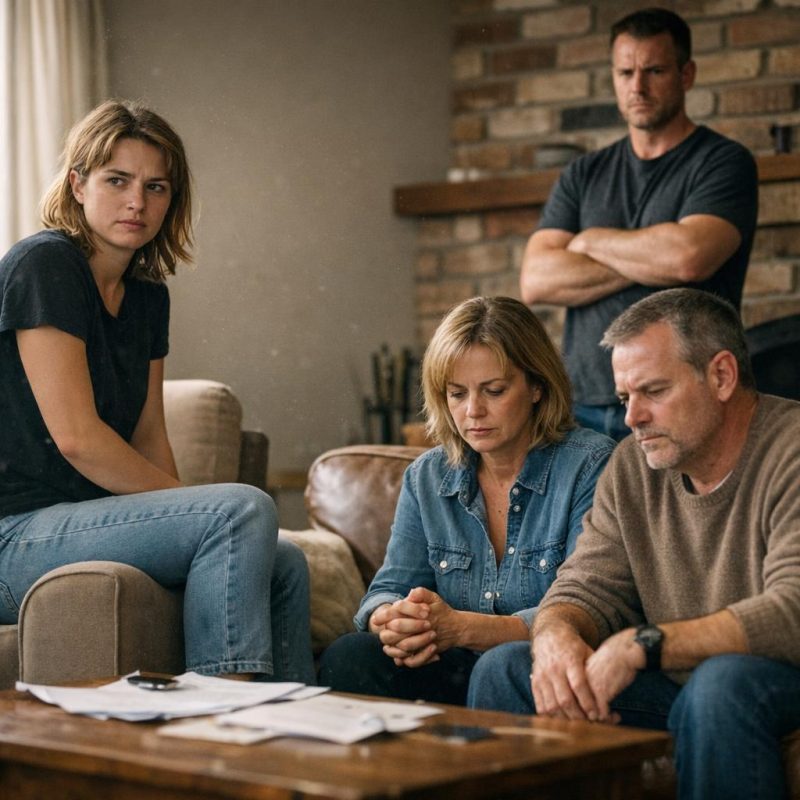 Image by RM AI
The Evidence Unfolds
Marcus set up his laptop on the coffee table with quiet efficiency, connecting it to a small portable screen he'd brought. Rebecca sat beside me, her presence a reminder that I wasn't alone in this, even if it felt that way. I gave my opening statement—brief, direct, asking only that they look at the evidence with open minds. Then Marcus took over. He walked them through it step by step, starting with the email headers. He showed them how the address that appeared to be mine was actually a spoofed domain, off by a single character. He explained metadata signatures, how every digital file carries invisible markers of its creation. He pulled up the supposed audio recording of me insulting my mother, then displayed the waveform analysis showing cut-and-paste edits, spliced syllables, AI-generated speech patterns. It was meticulous, thorough, devastating. I watched my family's faces as Marcus spoke. Emily's hostility began shifting to confusion. Jason uncrossed his arms. Even my mother glanced up from the coffee table, her brow furrowed. They were starting to understand. The communications were fake. But then my father spoke, his voice still hard, still skeptical. 'This doesn't prove who made them, just that they're fake.'
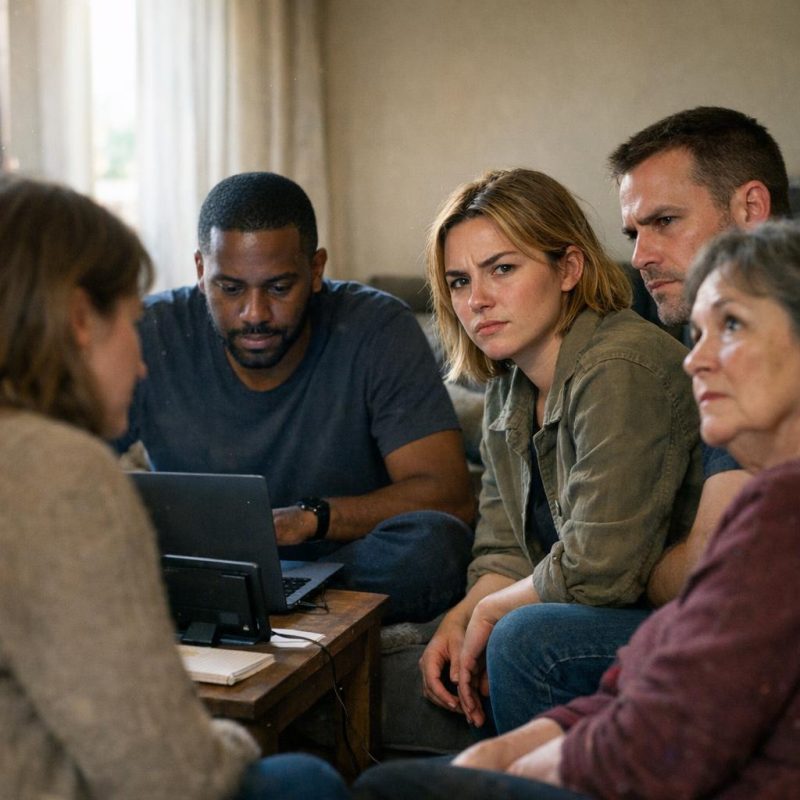 Image by RM AI
The Truth Revealed
Marcus nodded like he'd been expecting that exact question. 'You're right,' he said calmly. 'Which is why I traced the source.' He pulled up a new screen—dense with IP addresses, device identifiers, software registration logs. He explained each piece methodically: the emails had originated from an IP address registered to Mark's home network. The audio editing software used to fabricate the recordings had been purchased on Mark's credit card three months before the divorce was finalized. The metadata embedded in the forged documents matched the digital signature of Mark's personal laptop. Every single piece of fabricated evidence—the emails, the audio files, the fake text screenshots—traced directly back to devices Mark owned and controlled. Marcus even showed cloud backup logs that timestamped when Mark had created the files, weeks or even months before he'd sent them to my family. It was ironclad. Irrefutable. I watched the realization wash over my family's faces like a wave. The color drained from Emily's cheeks. Jason's jaw went slack. My mother finally looked at me—really looked at me—and I saw horror dawning in her eyes. The room fell silent as the truth settled over them: Mark had orchestrated everything, systematically destroying my relationship with my family as revenge for leaving him.
 Image by RM AI
The Unraveling
The silence that followed Marcus's presentation lasted maybe ten seconds, but it felt like hours. Then my mother made this sound—this broken, gasping sob—and covered her face with both hands. My father went absolutely pale, like someone had drained the blood from his body. He gripped the table edge, knuckles white. Emily stood up so fast her chair tipped backward, and she just ran from the room. I heard her footsteps pounding down the hallway, heard a door slam. Jason sat frozen, staring at the laptop screen like he could will the information to be different if he just looked hard enough. 'Sarah,' my mother managed between sobs. 'Sarah, I...' She couldn't finish. My father kept shaking his head, this tiny repetitive motion, like his brain was refusing to process what his eyes had just seen. Rebecca quietly closed her folder, giving them space to feel the full weight of it. And me? I just sat there, watching my family's world collapse the same way mine had seven months ago. They had spent seven months hating me for crimes I never committed, and there was no taking that back.
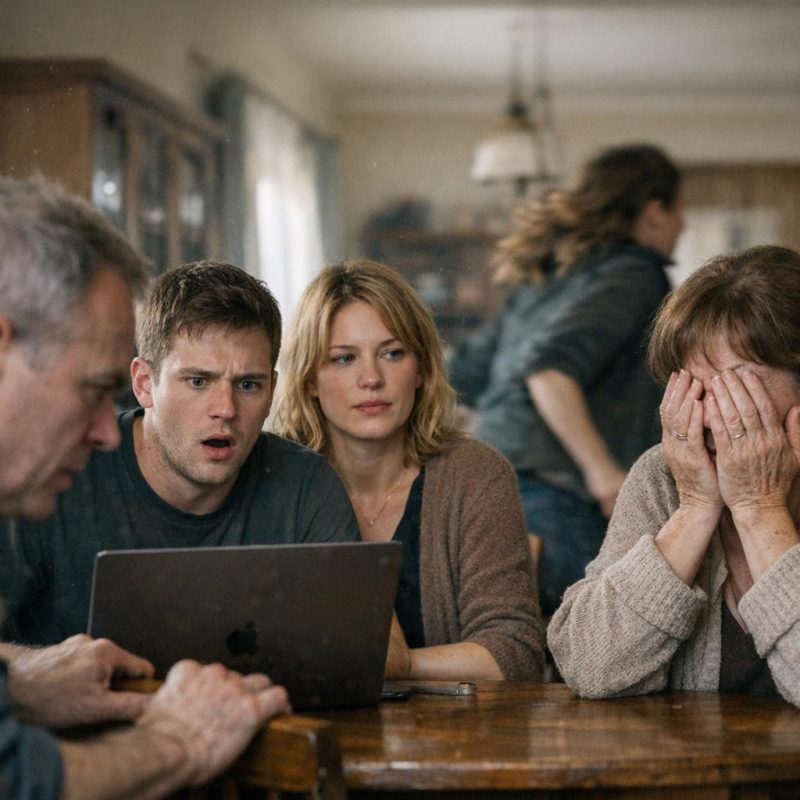 Image by RM AI
The Apologies Begin
My father tried first. He reached across the table toward me, his hand trembling, and when he spoke his voice cracked right down the middle. 'Sarah, I'm so sorry. I'm so... God, I don't even know how to...' He couldn't finish the sentence. Tears were running down his face, and I'd never seen my father cry before. Not once in thirty-six years. My mother was saying my name over and over, like a prayer or a plea. Jason finally looked at me, and I saw genuine anguish in his expression. But here's the thing—I couldn't do it. I couldn't just accept their apologies and move on like the past seven months hadn't happened. 'I needed you,' I said quietly. My voice sounded flat even to my own ears. 'I needed you, and you threw me away like garbage. You didn't even question it. You just... believed him.' My father tried to speak again, tried to explain, but I held up my hand. I wasn't being cruel. I just genuinely wasn't ready to hear it yet. Seven months of silence couldn't be erased with sorry.
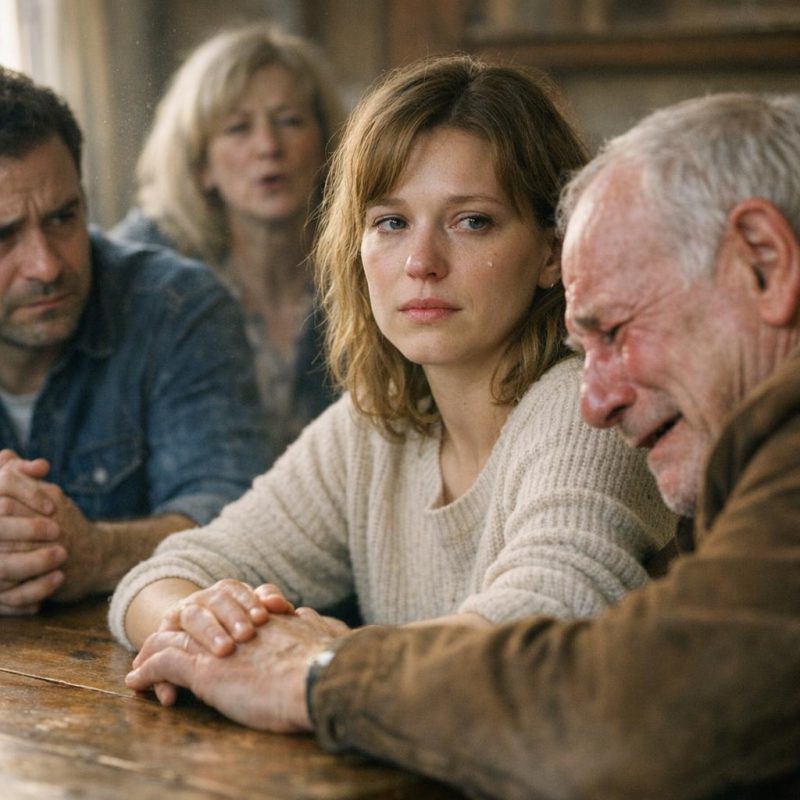 Image by RM AI
Confronting Mark
I left my family sitting in that conference room and walked out with Rebecca. She drove me back to her office, and we spent the next two hours mapping out our strategy. 'We have enough evidence for both criminal and civil action,' she said, spreading documents across her desk. 'Fraud, identity theft, harassment, defamation—take your pick. I want to move immediately before Mark can destroy anything else.' She pulled up criminal statutes on her computer, showing me precedents, similar cases, likely outcomes. Her confidence was contagious. For the first time in months, I felt like I had actual power instead of just pain. 'The police will want to interview you,' Rebecca continued. 'We'll file the report tomorrow, get the ball rolling on criminal charges. Simultaneously, we'll prepare the civil suit for damages.' She paused, studying my face. 'How do you want to handle Mark directly? Some clients prefer to let law enforcement do all the contact.' I shook my head immediately. After everything he'd done, after the methodical way he'd dismantled my entire life, I needed more than legal documents and court dates. I wanted him to know I knew—I wanted to see his face when his scheme collapsed.
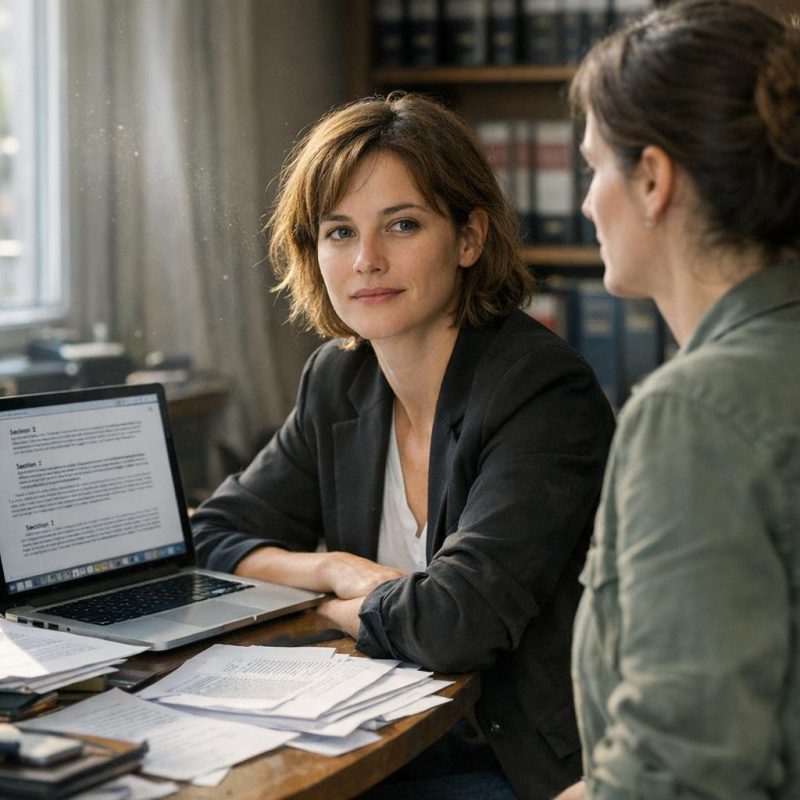 Image by RM AI
The Police Report
The next morning, Rebecca and I walked into the police station together. She'd prepared a complete dossier—Marcus's forensic report, the fabricated emails, the audio analysis, the IP address traces, the credit card receipts for the editing software, everything. We sat in a small interview room with Detective Chen, who listened to our account and methodically reviewed each piece of evidence. She asked clarifying questions, took detailed notes, photographed every document. The whole process took almost three hours. When we finished, Detective Chen sat back and looked at me with something like sympathy. 'I'm sorry this happened to you,' she said. Then she tapped the folder. 'But this? This is as slam-dunk as cases get.' Rebecca helped me file formal reports for fraud, identity theft, and criminal harassment. We documented every forged email, every fabricated recording, every lie Mark had told my family. Detective Chen explained the investigation process, the likely timeline, what I should expect next. She seemed genuinely angry on my behalf, which somehow made it more real. As we left the station, Rebecca squeezed my shoulder. 'It's official now,' she said. The detective assigned to my case looked at the evidence and said, 'This is slam-dunk.'
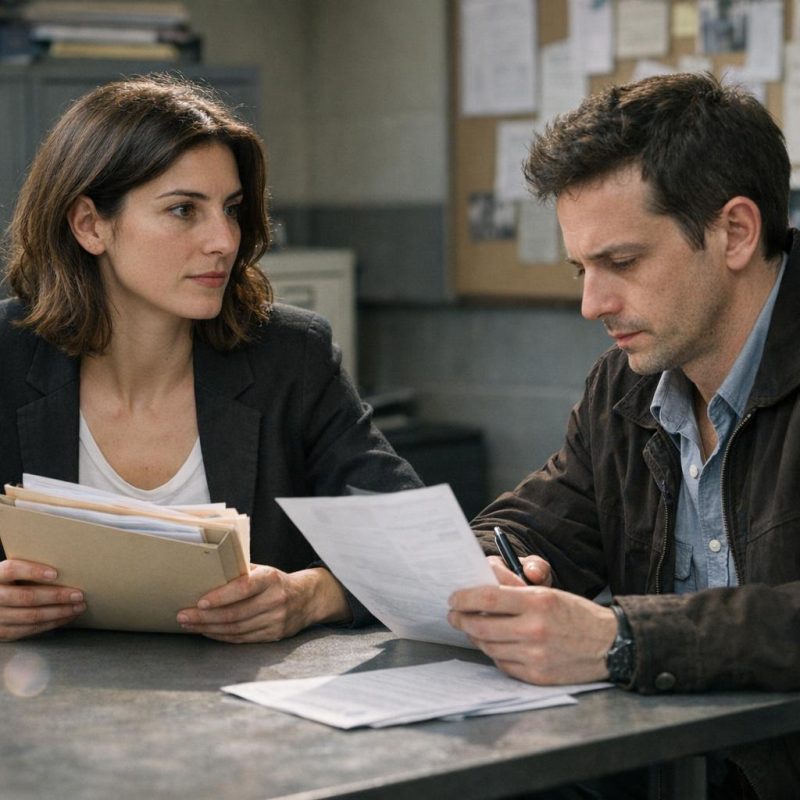 Image by RM AI
Mark is Confronted
Three days later, Detective Chen called. 'We're executing the warrant this morning,' she said. 'You don't have to be there, but if you want to be...' I was in my car fifteen minutes later. I parked across the street from Mark's house—that house I'd once shared with him, that house I'd fled in the middle of the night. Two police cars were already in the driveway. I watched through my windshield as Detective Chen rang the doorbell, as Mark answered looking confused and annoyed, as she presented the warrant. His expression changed so fast. Confusion to shock to anger. He argued—I could see him gesturing, getting agitated—but Detective Chen just pointed to the warrant. Officers walked past him into the house. They were in there for maybe forty-five minutes. When they emerged, they were carrying boxes—his laptop, his desktop computer, his phones, external hard drives, everything. Mark followed them out, still arguing, still trying to assert control. Then he saw me. I was standing on the sidewalk now, arms crossed, just watching. Our eyes met across the distance, and I saw his whole face change. For the first time in our entire relationship, I saw fear in his eyes instead of control.
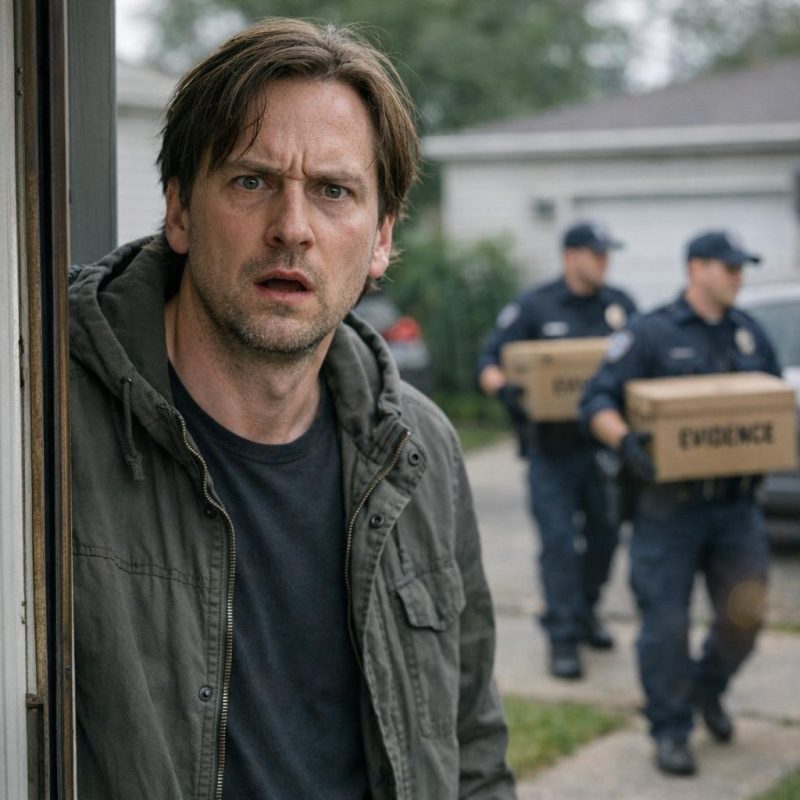 Image by RM AI
The Civil Suit
The criminal charges were just the beginning. Rebecca had been clear about that from the start. 'Criminal prosecution punishes him,' she'd explained. 'But it doesn't compensate you for what you lost.' So two days after the police seized Mark's devices, Rebecca filed a comprehensive civil defamation suit. She documented everything—the destroyed family relationships, the seven months of isolation and anguish, the therapy costs, the damage to my reputation, even the professional opportunities I'd missed while drowning in depression. She calculated damages that made my head spin. 'We're going for the maximum,' she said firmly. 'He tried to destroy your life. There should be consequences for that.' Then something unexpected happened. My mother called Rebecca directly and asked how the family could help. Rebecca conferenced me in. 'We want to testify,' my mother said, her voice thick with emotion. 'We want to tell the court what we did to Sarah because of his lies. We want to describe the pain we caused.' My father got on the line too. 'Whatever it takes,' he said. 'We'll do whatever it takes.' My family offered to testify on my behalf, describing the pain they'd caused me based on his lies.
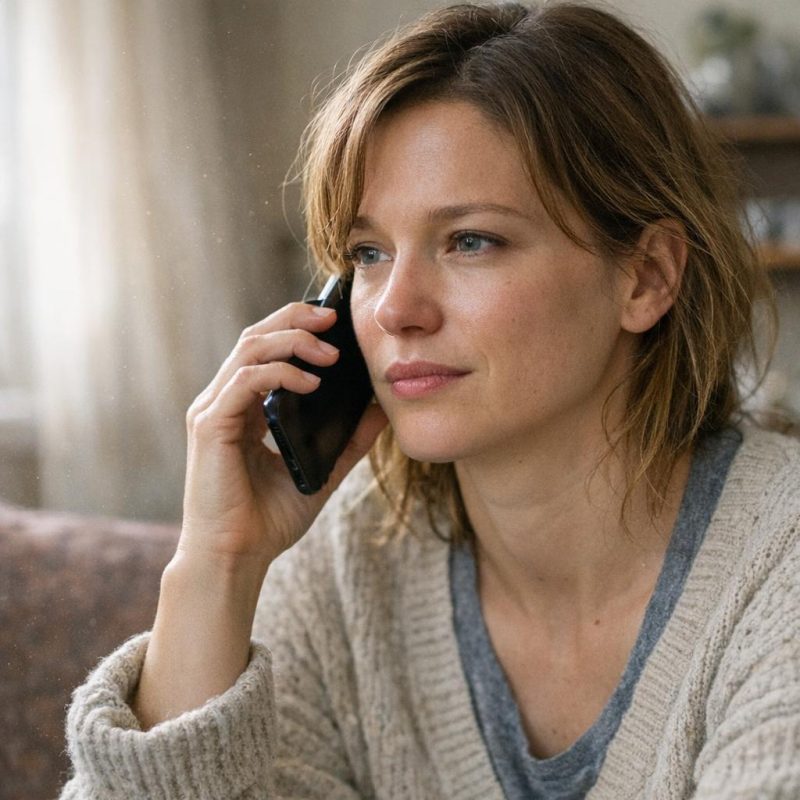 Image by RM AI
Mark's Defense Crumbles
Mark hired an attorney—a good one, apparently, because Rebecca recognized the name and called him 'formidable.' But even formidable attorneys can't defend against ironclad evidence. Mark's lawyer tried every angle. He claimed the evidence was circumstantial, that anyone could have accessed Mark's network, that the timestamps could have been manipulated, that there were alternative explanations for everything. Rebecca demolished each argument systematically, with Marcus on standby to refute every technical challenge. Marcus's forensic report was bulletproof—pages and pages of metadata, device signatures, cloud backup logs, software licenses tied directly to Mark's credit card. There was literally no wiggle room. I wasn't present for most of the legal maneuvering—it happened through court filings and attorney communications—but Rebecca kept me updated after each development. Mark's defense was crumbling in real-time. 'His attorney knows he can't win this,' Rebecca told me during one of our calls. 'The evidence is just too strong.' Then came the call I'd been hoping for. 'Mark's lawyer just contacted me,' Rebecca said, and I could hear the satisfaction in her voice. Within two weeks, Mark's lawyer recommended he take a plea deal.
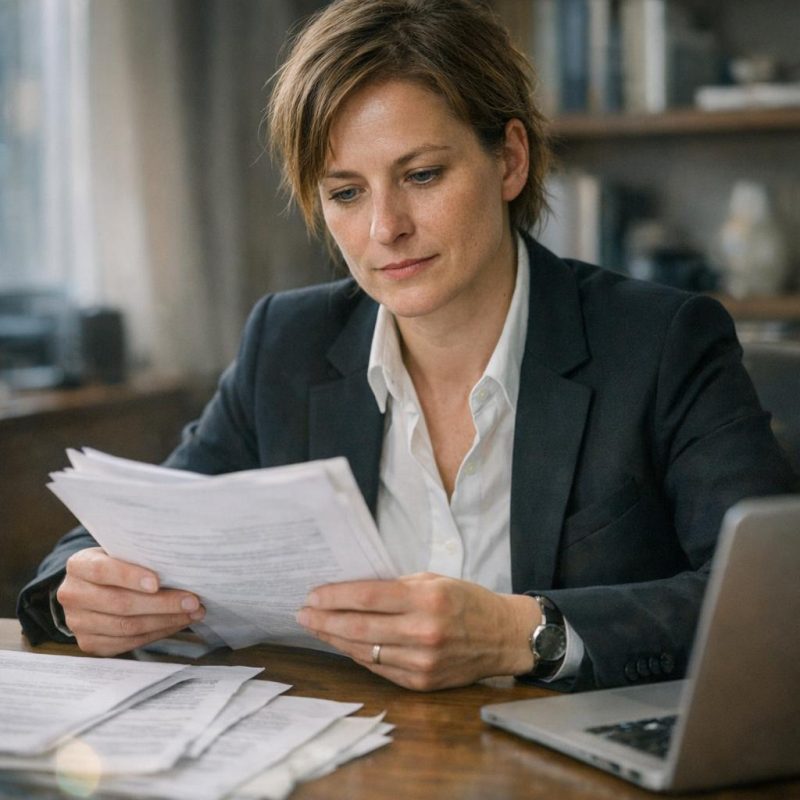 Image by RM AI
The Plea
The plea hearing was scheduled for a Wednesday morning. Rebecca asked if I wanted to attend. 'You don't have to,' she said gently. 'Some clients prefer not to.' But I'd come this far. I needed to see it through. The courtroom was smaller than I expected, less dramatic than what you see on TV. Mark sat at the defense table with his attorney, and he looked diminished somehow—smaller, older, defeated. He didn't look at me when I walked in, but I saw his shoulders tense. The judge reviewed the plea agreement. Mark pled guilty to fraud and harassment in exchange for a reduced sentence, supervised probation, and mandatory restitution. The judge asked him directly if he understood what he was admitting to. Mark's voice was barely audible when he answered. Then came the part I'd been waiting for. The judge required him to allocate—to describe in his own words what he'd done. Standing there in open court, Mark had to admit to forging emails, fabricating audio recordings, creating fake text message screenshots, and deliberately sending them to my family with the intent to destroy my relationships. Every lie. Every forgery. Every manipulation. He had to stand in court and admit to every lie, every forgery, every manipulation—and I was there to hear it.
 Image by RM AI
The Sentence
The judge took off his glasses and looked directly at Mark. I held my breath. 'Mr. Hartwell,' he began, 'your actions were calculated, systematic, and caused profound harm to multiple people. You didn't just commit fraud—you weaponized trust and family bonds to inflict maximum emotional damage.' The courtroom was completely silent. 'I'm sentencing you to eighteen months in prison, followed by five years of supervised probation.' My hands were shaking in my lap. 'During that probation period, you are barred from any contact, direct or indirect, with Ms. Anderson or any member of her family. Violation of this order will result in immediate incarceration for the remainder of your probationary period.' The judge continued outlining the restitution payments, the mandatory counseling, all of it. But I was focused on Mark's face as it sank in—he was actually going to prison. The bailiff approached to take him into custody. Mark stood slowly, his hands going behind his back for the cuffs. Then, just before the bailiff led him away, he turned and looked directly at me one last time. I met his gaze and held it, refusing to be the one who looked away first.
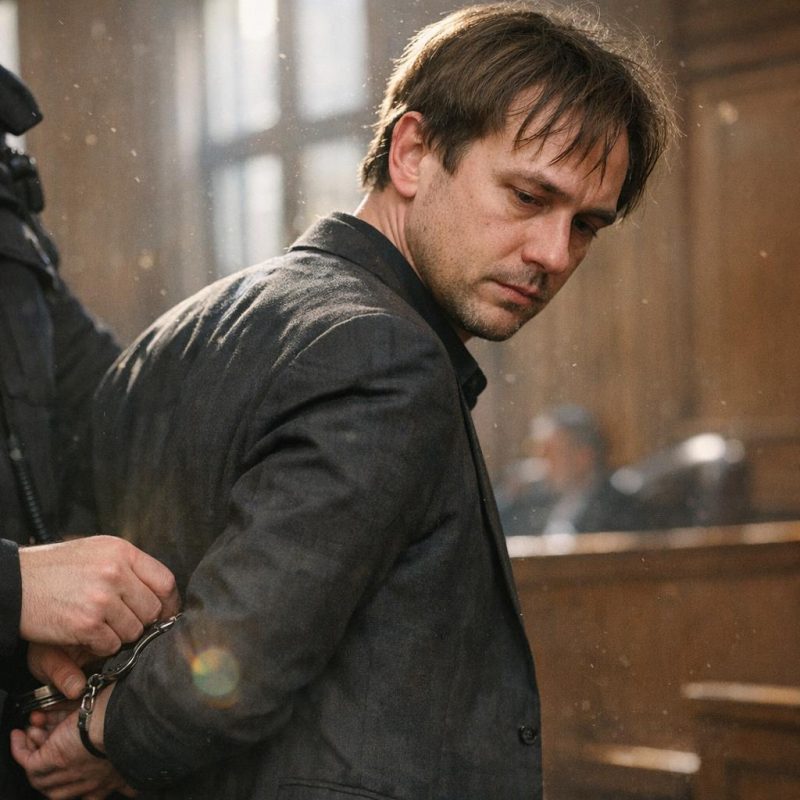 Image by RM AI
Rebuilding With My Family
Rebecca had recommended a family therapist who specialized in trauma and rebuilding trust. The first session was excruciating. We all sat in that small office, and nobody knew where to start. Dr. Morrison didn't let us off easy—she made us talk about the specifics, the moments when my family had believed the forged evidence over my own words. My father broke down when describing how he'd refused to listen to me that day at their house. Jason admitted he'd been too quick to judge, too eager to believe I'd become someone unrecognizable. Emily said she'd felt caught in the middle, wanting to believe me but feeling overwhelmed by what seemed like proof. My mother was the quietest for the first few sessions. But eventually, she spoke up during our fourth meeting, and what she said hit harder than anything else. 'We should have trusted you more than we trusted evidence,' she said quietly, tears streaming down her face. 'Evidence can be faked. You're our daughter. That should have mattered more.' I didn't have words for how much I'd needed to hear that. But I also knew one conversation wouldn't fix everything. We had months of work ahead of us, and the damage Mark had caused would leave permanent scars on all of us.
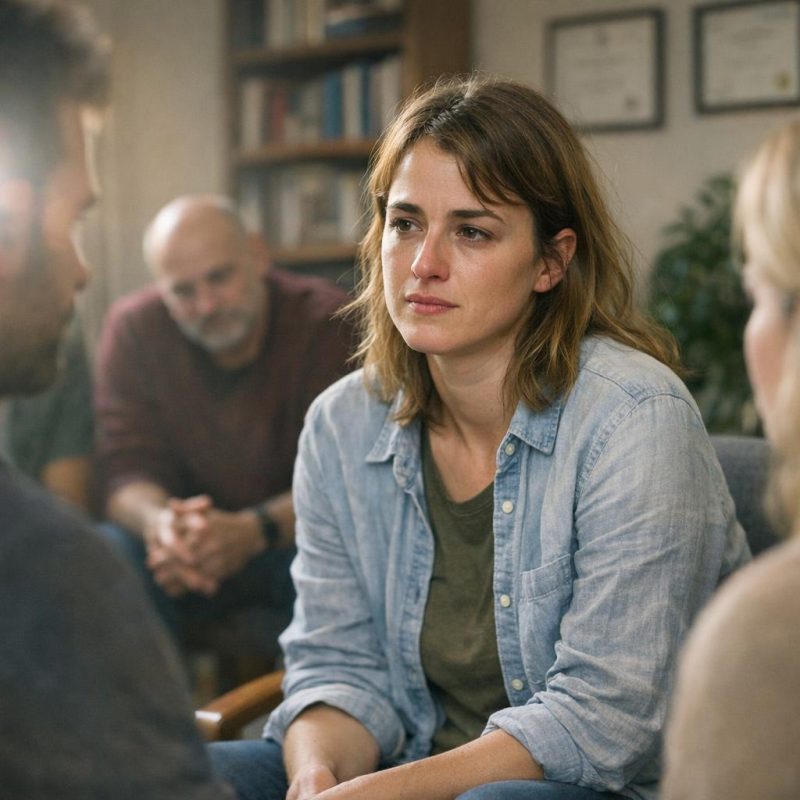 Image by RM AI
Moving Forward
It took six months before I went back to a Sunday dinner at my parents' house. I sat in my car outside for ten minutes before I could make myself go in. When I finally walked through that door, everyone was already there—setting the table, just like old times. But it wasn't old times, and we all knew it. The conversation was careful at first, everyone watching their words. Nobody brought up Mark or the trial unless I did. My father asked about my work. Jason told a story about his kids. Emily talked about a vacation she was planning. On the surface, it looked like we'd gone back to normal. But there was something different underneath now—a wariness, a recognition of how fragile these bonds actually were. We'd all learned that family wasn't unbreakable just because it was family. Trust, once shattered, doesn't grow back the same way. It grows back differently—maybe stronger in some ways, but definitely more cautious. As I drove home that night, I caught myself thinking about how I'd never fully trust the same way again. And honestly? Maybe that wasn't entirely a bad thing.
 Image by RM AI
Finding My Voice
Looking back now, I barely recognize the woman I was three years ago. She was someone who questioned her own reality when everyone around her insisted she was wrong. She was someone who apologized for things she didn't do, who tried to prove her innocence without the tools to fight back. I'm not that person anymore. I'm someone who learned to document everything, to trust my instincts, to fight even when the odds seemed impossible. I'm someone who knows what gaslighting looks like, who can spot manipulation tactics, who understands that some people will exploit your goodness without remorse. Mark took so much from me—years of my life, relationships with people I loved, my sense of safety. But he didn't take my voice. In the end, I found it again. I stood in that courtroom and I refused to be silenced. I'm sharing this story now because I know I'm not the only one who's been through something like this. If you're reading this and something feels familiar—if someone in your life is isolating you, rewriting history, making you doubt your own memory—please trust that instinct. Document everything. Find people who believe you. And fight back. Because if my story helps even one person recognize the signs of this kind of abuse, then maybe something good came from all that pain.
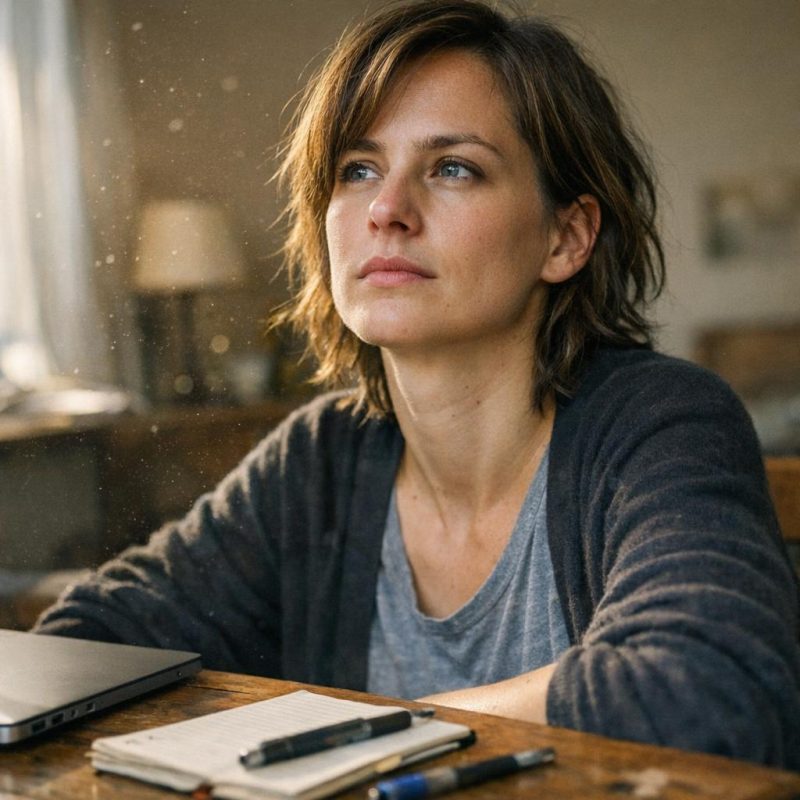 Image by RM AI