The Slow Business Excuse
Rick called me into his office on a Thursday afternoon, right before the lunch rush. I wiped espresso grounds off my hands and followed him back, wondering if maybe he was finally going to acknowledge how I'd been covering weekend opens without complaint for six months straight. Instead, he sat behind his cluttered desk, clasped his hands together, and told me business had been slow. Really slow. He needed to cut back hours across the board, he said, and unfortunately that meant reducing me from thirty-five hours a week to eighteen. I felt my stomach drop, but I kept my expression neutral. Eighteen hours wouldn't even cover my rent, let alone utilities and groceries. I wanted to ask why now, why me specifically, but the words stuck in my throat. He was watching me carefully, almost like he expected me to argue or get upset. So I did what I always did at work—I swallowed the disappointment, straightened my shoulders, and nodded like it was totally reasonable. I forced a smile and thanked him, not knowing this was just the beginning.
 Image by RM AI
Four Years of Loyalty
I'd been at the café for nearly four years by that point. Four years of opening shifts in the dark, memorizing regular customers' orders, training new hires who'd quit within weeks, and picking up the slack when other people called out. I knew that espresso machine better than I knew my own car. I could work a Saturday morning rush solo if I had to, pulling shots and steaming milk and ringing up orders without missing a beat. Over time, I'd absorbed responsibilities that should've come with a raise or at least a better title—inventory tracking, vendor communication, even helping Rick reconcile the weekly cash deposits when he couldn't be bothered. But none of that ever translated into recognition or more money. I was just Jordan, the reliable one, the one who showed up and did the work. When Rick cut my hours, I convinced myself it made sense from a business perspective. Cafés have slow seasons. Winter's always rough. Maybe sales really were down and he had no choice. I told myself it was temporary, that things would bounce back after the slow season.
 Image by RM AI
Rick's Surface Charm
Rick had been our manager for about two years, transferred in from another location after our previous manager retired. At first, he seemed fine—professional enough, kept things running smoothly, didn't micromanage too much. But over time, I noticed things. Small things. The way he'd stand just a little too close when talking to the younger female staff. How his eyes would linger when you bent down to restock the pastry case. He had this habit of complimenting appearances in a way that felt off, like telling Cassie her new jeans 'really worked' for her, or mentioning how I looked 'so much better' when I wore my hair down. Cassie and I had compared notes once during a slow afternoon, speaking in careful half-sentences, both of us trying to articulate the discomfort without sounding dramatic. We agreed he was weird, but never anything you could point to and say 'that crosses a line.' He never touched anyone inappropriately or said anything explicitly sexual. Nothing he did was blatant enough to explode over—just enough to make you uncomfortable.
 Image by RM AI
The Late-Night Texts
One thing that always bothered me was Rick's texting habits. He had all our phone numbers for scheduling purposes, which made sense, but he'd use them at the strangest times. I'd get texts at ten or eleven at night asking if I could cover a shift two weeks out, or whether I remembered if we'd ordered extra oat milk that month. Questions that could absolutely wait until morning, or better yet, could've been asked during one of our actual shifts together. Once he texted me at midnight asking if I was 'still awake' and then following up with a question about restocking procedures. The message felt invasive, like he was testing to see if I'd respond, checking if I was available to him outside work hours. I know Madison got them too, later on, and so did Cassie. We'd mention it to each other in passing—'Did Rick text you at like 1 AM?'—but none of us ever made a formal complaint. What would we even say? He was just asking work questions. Most of us brushed it off—we needed the job.
 Image by RM AI
Accepting the Cut
After the meeting with Rick, I went home and stared at my bank account for a solid twenty minutes. Eighteen hours a week at my current wage meant I'd be bringing home maybe eleven hundred a month before taxes. My rent alone was nine-fifty. I pulled out my laptop and opened a new spreadsheet, color-coding expenses and trying to figure out what I could cut. Maybe I could cancel my streaming subscriptions, start buying the cheapest groceries, skip my friend's birthday dinner next month. I'd been saving up for a certification program that might help me move into a better career, but that was obviously off the table now. The anxiety sat heavy in my chest, but I forced myself to think practically. This was temporary. Seasonal slump. Rick had said business was slow, and that made sense—we'd definitely had fewer customers lately. Once spring hit and the weather improved, tourists would come back, sales would pick up, and my hours would return to normal. I made a new budget spreadsheet and told myself I could make it work.
 Image by RM AI
Madison Walks In
Madison started on a Tuesday morning, and I knew something was off the moment she walked through the door. She was young—maybe twenty-one—with long blonde hair and the kind of bright, eager smile that made her look like she'd never had a bad day in her life. Rick introduced her to the team during our pre-shift meeting, explaining she'd be joining us part-time to help with the recent staffing challenges. Staffing challenges. I bit the inside of my cheek to keep from reacting. We didn't have staffing challenges; we had him cutting everyone's hours. What really struck me, though, was that Madison had zero café experience. She told us cheerfully she'd worked retail before, mostly folding clothes, and thought making coffee seemed 'super fun.' Meanwhile, I'd been there four years and just had my hours slashed in half. Rick assigned me to train her on the register, walking her through the basics while he reorganized the pastry display—a task that absolutely didn't need doing. Except he wasn't really reorganizing. Rick hovered nearby the entire shift, watching her every move.
 Image by RM AI
Training the Replacement
Training Madison should have been straightforward—ring up orders, process payments, smile at customers—but Rick kept interrupting. Every ten minutes he'd drift over and ask how she was doing, if she had questions, whether she needed anything. When she successfully completed her first transaction, he actually said 'See? You're a natural' like she'd just performed surgery. Meanwhile, I'd been running this register flawlessly for years and couldn't remember the last time he'd complimented my work. Madison was sweet, I'll give her that. She listened carefully to my instructions and thanked me repeatedly for being patient. But she was slow, fumbling with the touch screen and apologizing every time she had to ask me to repeat something. During a lull, Rick came over and told me Madison was 'picking things up remarkably fast,' which was baffling considering she'd just spent five minutes trying to figure out how to void an item. Madison didn't seem to notice the strangeness of his attention. She smiled brightly and said she just loved the vibe here—and Rick beamed like a proud parent.
 Image by RM AI
The New Schedule
The new schedule went up Friday afternoon, pinned to the corkboard in the back room like always. I checked it during my break, scanning for my name among the grid of shifts and employee codes. My stomach dropped when I found it. Two shifts. Two weekday shifts, Tuesday and Thursday, four hours each. Eight hours total for the entire week. I looked again, certain I'd misread, but the numbers didn't change. Then I found Madison's name, highlighted in Rick's annoyingly neat handwriting. Monday, Wednesday, Friday, Saturday, Sunday. Six-hour shifts, some eight-hour shifts. I counted twice to make sure. Thirty hours. She'd been here less than a week and had thirty hours while I was down to eight. I traced the schedule with my finger, matching my old Monday and weekend slots to her new assignments, seeing my carefully built routine dismantled and redistributed. The realization hit me like cold water. My old hours were now hers.
 Image by RM AI
Counting the Hours
I stood there in the back room for what felt like forever, just staring at that schedule. Eight hours. My rent was $985. Utilities another $120. Phone bill, $65. Car insurance, $140. I did the math in my head, then did it again on my phone's calculator like somehow the numbers would change. Minimum wage times eight hours, minus taxes — I'd be lucky to clear ninety dollars for the week. Ninety dollars. I'd been picking up shifts consistently for two years, building toward a promotion Rick had hinted at last fall, making myself indispensable. Or so I thought. The break room suddenly felt too small, the fluorescent lights too bright. My hands were shaking when I pulled out my phone and opened my banking app, scrolling through automatic payments scheduled for the next two weeks. Rent was due in eleven days. I had $340 in checking and maybe $200 in savings I'd been building back up after my car repair last month. The numbers didn't work no matter how I arranged them. I couldn't pay my rent on this — not even close.
 Image by RM AI
Fresh Energy
I found Rick in his office twenty minutes later, after I'd calmed down enough to speak without my voice shaking. He was doing inventory counts on his laptop, looking relaxed, like he hadn't just gutted my income. 'Hey, Rick,' I said, keeping my tone even. 'Can I talk to you about the schedule?' He glanced up, barely interested. 'What about it?' I took a breath. 'You said business was slow, that we needed to cut labor costs. But then we hired Madison. I'm just trying to understand how that makes sense.' I kept my voice professional, reasonable, like I was asking a genuine question and not trying to keep from screaming. He leaned back in his chair, hands behind his head. 'Different situation,' he said. 'Madison brings something new to the team. We needed that.' I waited for him to explain what that meant, what I was apparently lacking. He didn't. He just watched me with this casual indifference, like I was wasting his time. He shrugged and said we needed fresh energy — like I was stale bread.
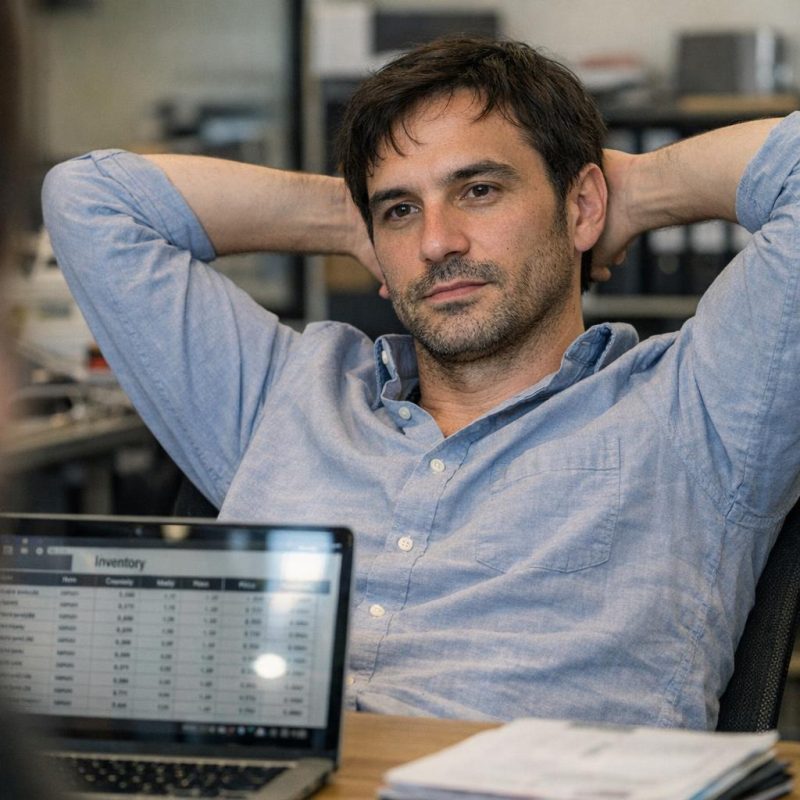 Image by RM AI
Mixing Things Up
I stood there for a second, processing what he'd just said. Fresh energy. 'I've been here two years,' I told him, still keeping it together. 'My performance reviews have always been good. I show up on time, I cover shifts when people call out, I train new employees.' I could hear the edge creeping into my voice but I couldn't stop it. Rick tilted his head slightly, like he was considering my words but not really listening. 'Yeah, exactly,' he said. 'You've been here a long time. Sometimes it's good to mix things up, you know? Bring in new perspectives.' New perspectives. I'd been managing the morning inventory system he couldn't figure out. I'd reorganized the stock room last summer when nobody else wanted to. I'd stayed late more times than I could count. And now I was being told I was old news. I nodded slowly, not trusting myself to respond right away. It wasn't what he said — it was how he said it, like I was a piece of furniture he was bored of.
 Image by RM AI
You Can Quit
I tried one more time. 'Rick, I can't pay my bills on eight hours a week. I need more shifts.' My voice was steady but there was desperation underneath it that I hated him hearing. He looked at me for a long moment, and I saw something shift in his expression — not sympathy, but something colder. Calculation, maybe. He leaned back further in his chair, completely relaxed, completely in control. 'Look, Jordan,' he said, and his tone had changed. It was almost friendly now, which somehow made it worse. 'Nobody's forcing you to stay. If the schedule doesn't work for you, you can quit. Find something that fits better.' The words hung in the air between us. You can quit. Not 'let me see what I can do' or 'give me a week to adjust things.' Just quit. Like it was that simple. Like two years meant nothing. I felt my face go hot, then cold. My hands clenched at my sides but I kept them there, kept my expression neutral. Something in me went cold — that's what he expected me to do.
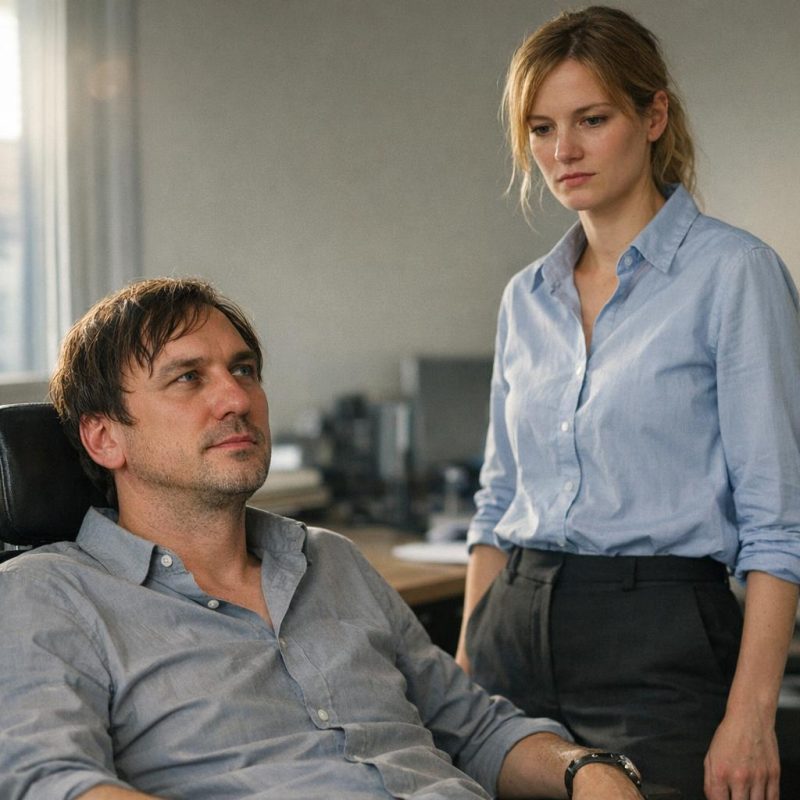 Image by RM AI
The Back Room Conversations
I left his office and went straight to my car, too angry to go back inside for the rest of my shift. Sitting in the parking lot, I thought about all the conversations I'd had in that back room over the past two years. Whispered complaints during breaks, rolled eyes when Rick said something that made us uncomfortable. Sarah mentioning the text he'd sent her at midnight about 'checking in.' Elena talking about how he always seemed to stand too close when she was restocking the bottom shelves. Cassie showing me a message where he'd commented on her outfit in a way that felt off. Little things we'd each experienced, each dismissed on our own because what were we supposed to do? He was the manager. We needed the job. And nothing he did was quite bad enough to report, or at least that's what we told ourselves. We'd complain to each other, feel validated, then go back to work and pretend everything was fine. We'd vented and moved on because none of us felt safe escalating it.
 Image by RM AI
Cassie's Message
I remembered the day Cassie had shown me her phone, about eight months ago. We'd been folding clearance shirts in the back, and she'd gotten quiet in that way that meant something was bothering her. 'Look at this,' she'd said, angling her screen toward me. It was a text from Rick, sent on a Sunday evening when the store was closed. The message said something about how the jeans she'd worn on Saturday 'really worked for her' and maybe she should wear them more often. I'd read it twice, feeling my stomach turn. 'That's weird, right?' Cassie had asked, and I'd nodded because yes, it was definitely weird. Your manager shouldn't be texting you about your body on a Sunday night. But she'd laughed it off, said he was probably just trying to be nice, and I hadn't pushed it. She'd laughed it off at the time, but her smile hadn't reached her eyes.
 Image by RM AI
Elena's Advancement Opportunity
Then there was Elena. She'd mentioned it casually one afternoon, maybe six months ago, while we were both on register duty during a slow period. Rick had asked her if she wanted to grab drinks after work to 'talk about advancement opportunities' and 'get to know the team better.' She'd been excited at first, thinking maybe he was finally going to promote her to shift lead like she'd been hoping. But something about the way he'd phrased it felt off to her — why drinks instead of a meeting during work hours? Why just the two of them? She'd politely declined, said she had plans. The next week when the schedule went up, her hours had dropped from twenty-five to fifteen. She'd been confused, asked Rick about it, and he'd said the same thing he'd told me today. Business was slow. Labor costs needed to come down. Nothing personal. She'd never connected it to turning down his invitation, or if she had, she'd never said so out loud. When Elena declined, her hours dropped the next week — just like mine did now.
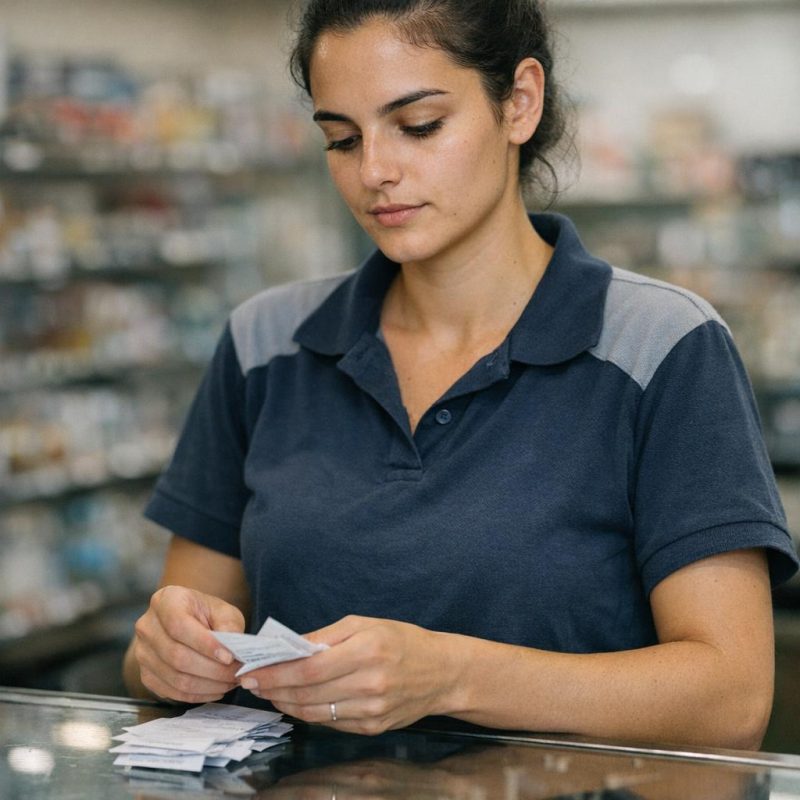 Image by RM AI
Not Just Me
Sitting in my car, the pieces were starting to come together in a way that made me feel sick. The texts. The too-close standing. The drinks invitations. The hour cuts that followed certain responses. Madison getting hired and immediately given my shifts — young, new, probably easy to impress, definitely not someone who'd seen Rick's patterns yet. I didn't have emails or documentation or anything concrete. Just memories of conversations, that feeling in your gut when something's wrong but you can't quite articulate why. Just the knowledge that this had happened before, to other women, and we'd all dealt with it separately, quietly, thinking we were alone. But I wasn't certain. Maybe I was reading into things. Maybe Elena's hours had dropped for legitimate reasons. Maybe Cassie's text really was just awkward friendliness. Maybe I was just bitter about losing shifts and looking for someone to blame. I sat there feeling this awful combination of anger and doubt, knowing something was wrong but unable to prove it. It wasn't just about business — but I still couldn't prove it.
 Image by RM AI
Madison's Perfect Shift
The Saturday morning rush was brutal, the kind where the line stretches out the door and every drink order seems to have five modifications. I was running the register while Madison handled bar, and I watched her fumble through it with this growing sense of unreality. She put oat milk in a drink that clearly said almond on the ticket. She forgot to charge someone for their extra shot. She handed a hot latte to a customer who'd ordered iced and looked genuinely confused when they pointed it out. Rick was right there the whole time, leaning against the counter in that casual way he had, watching her work. Every time she made a mistake, he'd jump in with this warm, reassuring voice. 'Don't worry about it.' 'Happens to everyone.' 'You're doing great for your second week.' I'd been written up for smaller errors during my training. Cassie had been pulled aside for a 'coaching conversation' after mixing up two drinks on her first solo rush. But Madison? She rang up three orders wrong, but Rick just smiled and said everyone makes mistakes when they're learning.
 Image by RM AI
The Espresso Machine Test
The espresso machine started making that grinding sound halfway through the rush, the one that means the group head is jammed and you've got maybe thirty seconds before it completely locks up. I was already moving, grabbing the portafilter tool and dropping to my knees beside the machine while Madison stepped back looking panicked. I could feel the heat from the steam wand on my face as I loosened the pressure valve, cleared the buildup, and ran a quick flush cycle. The whole thing took maybe three minutes. The line kept moving. Nobody's drinks got delayed more than necessary. When I stood up, Rick was there telling Madison not to worry about learning maintenance yet, that 'we had people for that.' People. Like I was the janitor instead of the person who'd been keeping this temperamental piece of equipment running for three years. He didn't even look at me. Just kept talking to Madison about how overwhelming all the technical stuff must seem. I wiped my hands on my apron and went back to the register, feeling invisible. I'd been fixing that machine for three years, and he'd never once praised me for it.
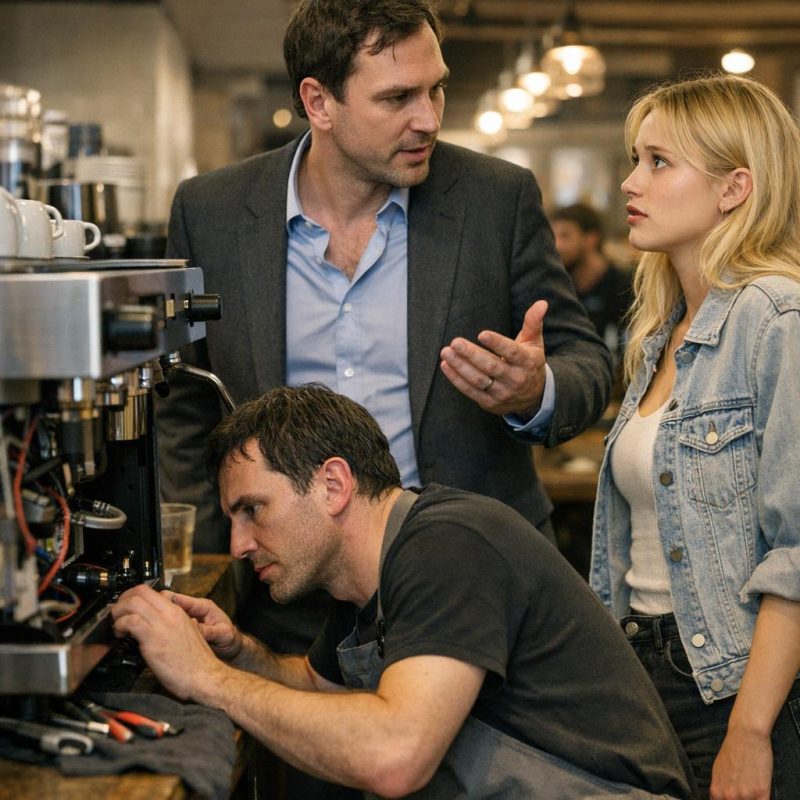 Image by RM AI
The Night Shift Alone
Friday night closing shifts used to be a two-person job. Used to be someone on register and someone handling the late-evening crowd that wandered in for decaf lattes and pastries before heading home. Now it was just me, alone in the café at 8 PM with a line of six people and all the closing tasks staring me down. I made drinks, ran the register, cleared tables, and tried to start the breakdown process in between customers. The last person left at 8:47. I locked the door and stood there for a second, looking at the disaster around me. Every table needed wiping. The espresso machine needed a full clean. The floors needed sweeping and mopping. The pastry case needed emptying and sanitizing. The register needed counting. I was making $12.50 an hour for this. I checked my phone while wiping down tables and saw Madison had posted a photo from earlier — some latte art she'd made, captioned 'loving my new job!' The schedule was pinned by the register. Madison had Saturday and Sunday mornings — the best tip days — and she'd been here two weeks.
 Image by RM AI
Trevor's Observation
Trevor had been coming in every Tuesday and Thursday morning for as long as I'd worked there, always ordered the same thing — medium americano, room for cream. He was one of those regulars who actually talked to you like a person, asked about your day, remembered details from previous conversations. That Tuesday, he came in during a slow period, and I had his drink started before he even reached the counter. 'Where's your partner in crime?' he asked while I pulled the shots. I assumed he meant Cassie until he clarified: 'The weekend girl. Madison, right? I'm used to seeing you on Saturdays.' Something about the way he said it made my face burn. Like the change was so obvious that even customers had noticed. Like my demotion was visible to everyone. 'Schedule changed,' I said, keeping my voice neutral. 'How come?' he asked, and I could tell he genuinely didn't understand. 'You're always here on weekends.' I didn't have an answer that didn't sound bitter, so I just said management decisions.
 Image by RM AI
The Decision to Document
I sat in my car after that closing shift, exhausted and angry and finally, finally clear about what I needed to do. The doubt was still there — that voice asking if I was overreacting, if I was just bitter about hours and shifts and seeing patterns that didn't exist. But Trevor's question had crystallized something for me. This wasn't just in my head. The favoritism was visible. The schedule changes were documented. The pattern was real even if I couldn't yet prove the reason behind it. So I needed to start building that proof. Carefully. Methodically. The way you'd approach any problem that required evidence instead of emotion. I opened a new note on my phone and started listing names. Cassie — still working here, had mentioned uncomfortable texts. Elena — quit after hours were cut, might talk to me. Madison — new, probably hadn't experienced anything yet. And then I started listing questions. Dates. Timelines. Who'd left and when. Who'd been hired to replace them. What the schedule looked like before and after. If I was going to fight this, I needed more than suspicion — I needed evidence.
 Image by RM AI
Cassie After Closing
I waited until after closing the next night, when it was just me and Cassie doing the final cleanup. We'd worked together long enough that silence between us was comfortable, but this silence felt heavy with the question I'd been rehearsing in my head all shift. I was wiping down the espresso machine when I finally said it: 'Can I ask you something? About Rick?' Cassie stopped sweeping and looked at me, and I saw something flicker across her face. Recognition, maybe. Or dread. 'Did he ever make you uncomfortable?' I asked. 'Like, in a way you couldn't quite explain, but it felt wrong?' The pause that followed felt endless. She leaned the broom against the wall and crossed her arms, and I watched her decide whether to trust me. Finally, she nodded. Just a small movement, but definitive. 'The texts,' she said quietly. 'And the comments about what I wore. And the way he'd stand too close and act like I was imagining it if I stepped back.' My heart was pounding. 'Did you keep any of them?' I asked. 'The texts?' She looked at me for a long moment, then asked if I still had the screenshots, and I said yes.
 Image by RM AI
The Screenshots
We sat in the back office after locking up, Cassie's phone between us on the desk. She scrolled through her message thread with Rick, and I felt sick watching the timestamps. Most were from late at night, sent after shifts or on days off. 'You looked really nice today.' 'That dress is very flattering on you.' 'You should wear your hair down more often.' Individually, they could pass as friendly. But together, in sequence, they painted a picture. Especially the ones where he asked if she wanted to grab drinks sometime, just casual, no pressure. She showed me her responses too — always polite, always brief, always deflecting. Then she scrolled to the schedule changes that followed. Her hours had dropped from thirty to eighteen the week after she'd declined drinks for the third time. 'I should've said something then,' Cassie said quietly. 'But I needed this job, and I thought maybe I was overreacting.' I took photos of every screenshot with my phone, making sure the timestamps were visible. There were over a dozen messages, all late at night, all carefully worded to sound friendly but feel wrong.
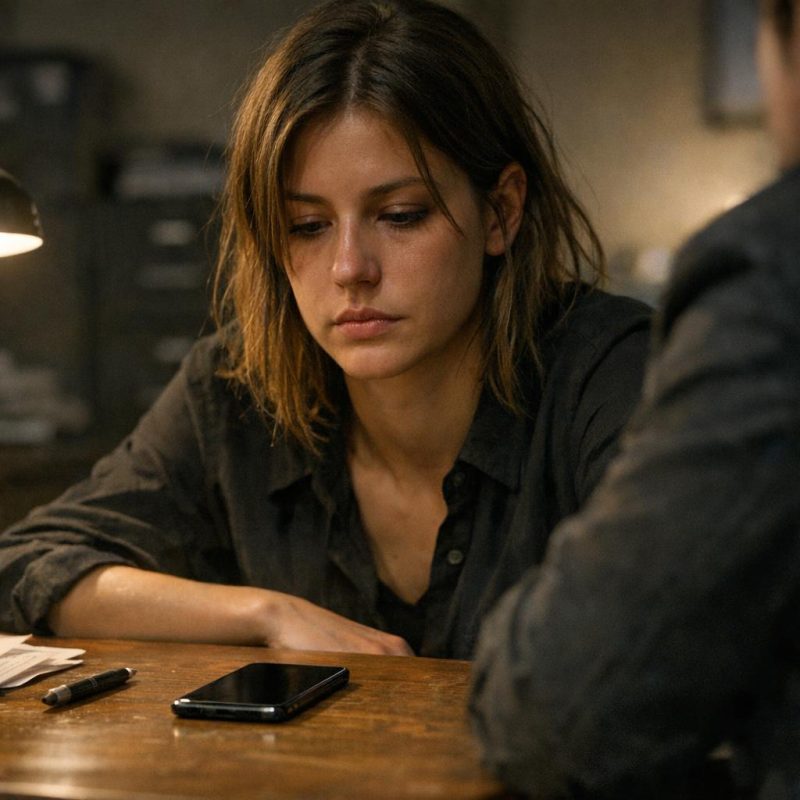 Image by RM AI
Elena's Email
Elena took two days to respond to my message, and when she finally called, I could hear the hesitation in her voice. We'd been friendly when she worked at the café, but not close, and asking her to revisit why she'd left felt invasive. But she listened while I explained what was happening with my hours, with Madison, with the pattern I was starting to see. And then she said, 'I knew someone would eventually notice.' She sent me the email thread that night — Rick's invitation to drinks, her polite decline, his follow-up suggesting they 'discuss her development opportunities.' Three weeks later, her schedule had been cut to twelve hours. She'd quit shortly after. But the email wasn't what made my hands shake. It was what she said next: 'You should talk to Sarah, and Monica, and Jess. They all left within the past year. Same pattern — hours cut, pushed out, replaced by someone younger.' I sat there staring at my phone, at the growing list of names. This wasn't just about me. It wasn't even just about Elena and Cassie. She also mentioned three other women who'd left in the past year — all after their hours were cut.
 Image by RM AI
The List of Names
I pulled out a notebook and started writing down names. Elena, Cassie, Sarah, Monica, Jess. Each one had been on my team or someone I'd worked alongside at some point. Each one had left within the past two years. I reached out to Sarah first, then Monica, and by the end of the week, I'd heard back from both. Sarah sent me a screenshot of her final schedule — eight hours total before she quit. Monica told me about the 'informal chat' Rick had suggested over coffee, and how her refusal was followed by suddenly being scheduled for all the worst shifts. Jess didn't respond, but I found an old group message where she'd mentioned feeling 'pushed out' before disappearing from the café entirely. I added their details to a document I'd started keeping, timestamps and patterns laid out as cleanly as I could manage. My hands felt cold as I typed. This wasn't paranoia. This wasn't me being oversensitive or reading too much into schedule changes. Seven names — and those were just the ones I knew about.
 Image by RM AI
Madison's Oblivious Chatter
Madison was restocking cups during our Tuesday shift when she started talking about Rick. 'He's been so helpful lately,' she said, smiling as she lined the lids up in neat rows. 'He gave me tips on how to handle difficult customers, and he said I have a real talent for hospitality.' I nodded, wiping down the espresso machine, trying not to let my jaw tighten. She went on about how he'd complimented her work ethic, how he'd suggested she might be management material eventually. She was glowing. Genuinely excited. And I realized with a sinking feeling that she had no idea what was happening. She didn't know about the women who'd left. She didn't know about the pattern. She didn't know that her growing schedule was built on hours carved away from mine and others like me. I wanted to warn her, but what would I even say? That she was being used as a replacement without realizing it? That kindness from Rick came with conditions she hadn't seen yet? She had no idea what position she'd been put in — or what mine was costing me.
 Image by RM AI
The Rehearsal
I stood in front of my bathroom mirror that night, rehearsing what I'd say. 'I've documented a pattern of behavior that I believe constitutes workplace discrimination.' Too formal. 'You've been cutting my hours to push me out, and I have proof.' Too aggressive. I needed something that was firm but professional, something that showed I wasn't going to be dismissed but also wasn't going to explode. I tried again. 'I'd like to discuss the recent changes to my schedule, and I have information that I think is relevant to that conversation.' Better. Calmer. I went over it a dozen times, imagining his reactions, his deflections, the ways he might try to turn it around. I pictured myself staying composed, not raising my voice, not letting him see how angry I actually was. Anger wouldn't help me here. Anger would give him an excuse to paint me as difficult, emotional, unreasonable. I needed to be the opposite of that. I needed to be so calm it unsettled him. I couldn't let emotion derail this — I needed to stay calm and clear.
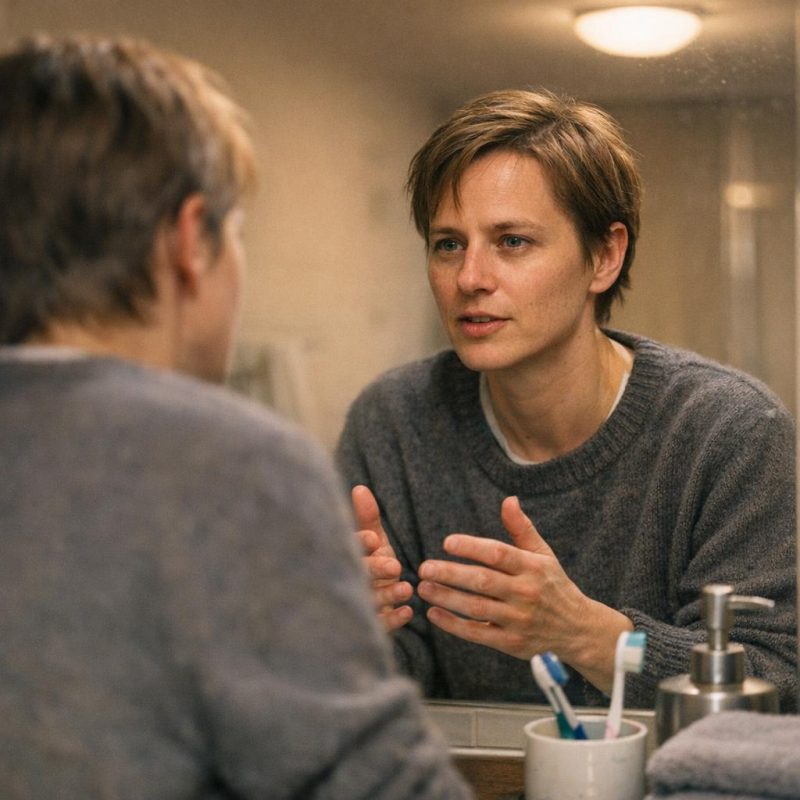 Image by RM AI
Requesting the Meeting
I found Rick in the back office on Wednesday afternoon, updating the schedule on his laptop. 'Can we talk?' I asked, keeping my voice steady. He glanced up, and I saw the brief flicker of irritation before he smoothed it into something neutral. 'About what?' 'My schedule. I'd like to have another meeting to discuss it.' He leaned back in his chair, arms crossed. 'Jordan, I already explained the situation. We're overstaffed, and I had to make adjustments. There's not much else to say.' I didn't move. 'I understand that's your position. But I have some things I'd like to discuss, and I think it's worth taking the time.' His jaw tightened slightly, and for a moment I thought he might refuse outright. Then he exhaled through his nose and pulled up his calendar. 'Fine. Tomorrow at three. But I don't know what you think is going to change.' I nodded. 'I appreciate it.' He sighed and said he'd already explained the situation, but fine — tomorrow at three.
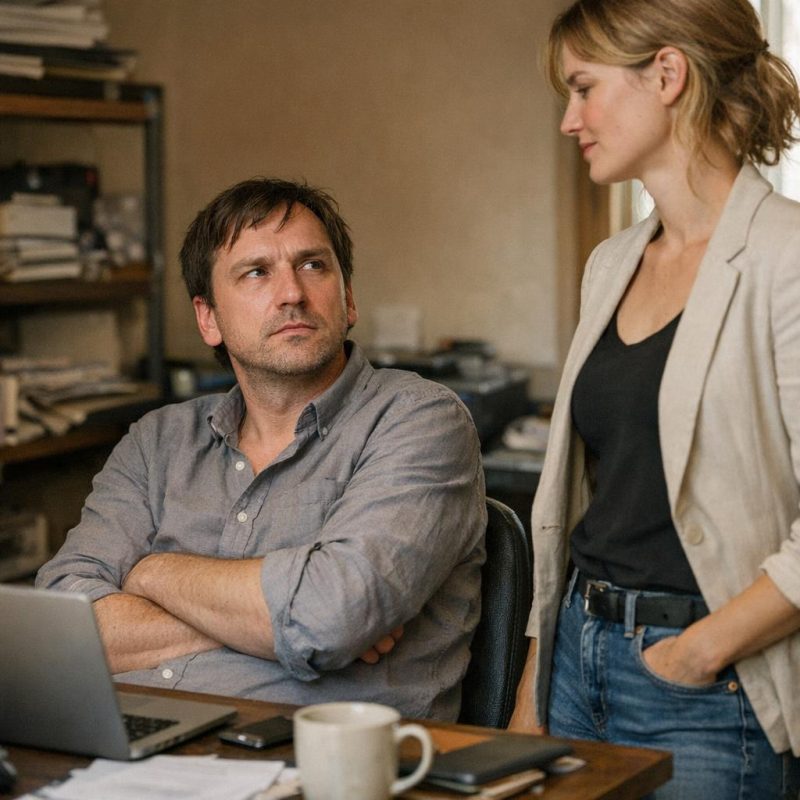 Image by RM AI
The Night Before
I didn't sleep that night. I lay in bed staring at the ceiling, running through every possible version of how the meeting might go. I'd printed out the screenshots, organized them in a folder along with my notes about the other women who'd left. Everything was timestamped, labeled, as clear as I could make it. But knowing I had the evidence didn't stop my heart from racing every time I pictured walking into that office. What if he denied it all? What if he threatened me? What if he fired me on the spot and I had no recourse because I couldn't prove intent, only pattern? I rolled over and checked my phone. Two in the morning. I thought about backing out, about just accepting the reduced hours and finding something else. It would be easier. Safer. But then I thought about Elena, about Cassie, about all the others who'd left without saying anything. About Madison, who didn't even know what she was part of. I couldn't do that. Either this would change everything, or I'd be looking for a new job by Friday.
 Image by RM AI
The Second Meeting Begins
I walked into Rick's office at exactly three o'clock. He was sitting behind his desk, the same posture as last time — arms folded, expression neutral but edging toward impatient. I closed the door behind me and sat down without waiting for an invitation. 'Thanks for meeting with me,' I said. My voice sounded steadier than I felt. 'I've been thinking about what you said last time. About maybe finding a better fit elsewhere.' His eyebrows lifted slightly, and I saw the shift in his posture. A little more relaxed. A little more satisfied. 'And?' he asked. I set my bag on the floor, carefully, deliberately. 'I wanted to talk to you about that suggestion before making any decisions.' He nodded, leaning back in his chair like he'd already won. Like this was going exactly the way he'd planned. 'I think that's smart, Jordan. Sometimes these things just don't work out, and that's okay. No hard feelings.' He leaned back in his chair, already smug, and asked if I'd made a decision.
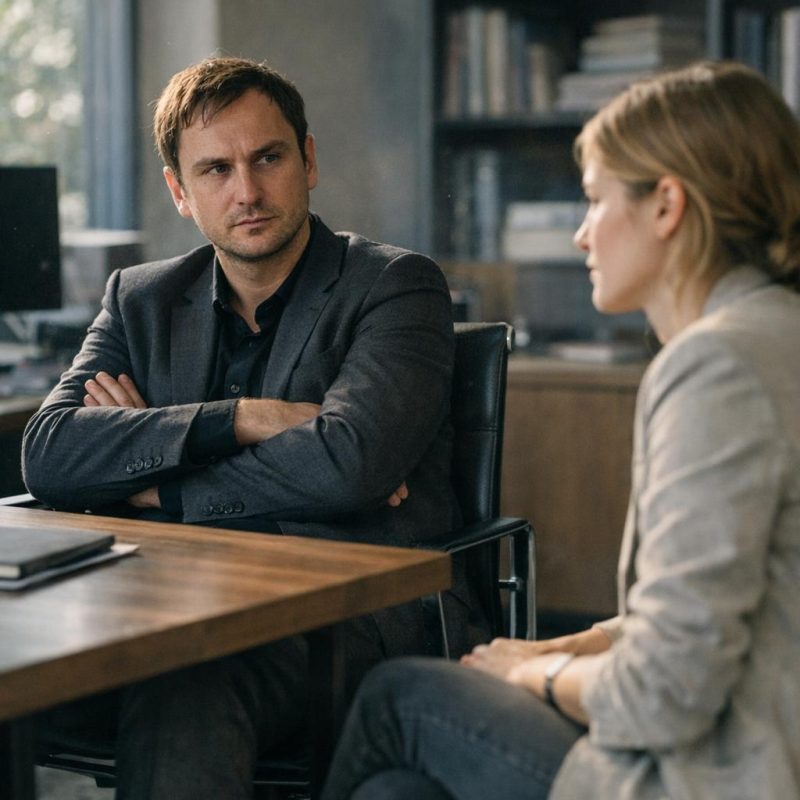 Image by RM AI
I Don't Want to Quit
I looked at him directly, keeping my expression calm. 'I don't want to quit,' I said. 'What I want is for my hours to be restored to what they were before the cuts. Twenty-eight to thirty hours a week, the schedule I had for over a year.' The smugness faltered, just slightly. He straightened in his chair. 'Jordan, we've been over this. The business needs have changed. I can't just—' 'I'm not asking you to create new hours,' I said. 'I'm asking you to give me back the hours I had before they were reassigned to someone else.' His mouth tightened. 'That's not how scheduling works. I have to make decisions based on what's best for the team and the café, not individual preferences.' 'I understand,' I said. 'But I think there's more to discuss here than just business needs.' He stared at me for a moment, and I could see him trying to figure out where I was going with this. He gave a short laugh and said that's not how it works.
 Image by RM AI
The Phone Across the Desk
I reached into my bag and pulled out my phone. I'd already opened the screenshots before walking in, the messages from Cassie queued up and ready. I slid the phone across the desk toward him, face up, so he could see exactly what I was showing him. 'I think you should look at this,' I said quietly. He glanced down at the screen, and I watched his face. The confidence didn't disappear immediately — it drained slowly, like someone had opened a valve. His eyes moved over the messages, the timestamps, Cassie's name at the top. I saw his throat move as he swallowed. The silence stretched out, and I didn't fill it. I just sat there, hands folded in my lap, waiting. He didn't pick up the phone. He didn't touch it. He just stared at the screen, and I could see him calculating, trying to figure out what I had and what I didn't, what this meant and how much danger he was in. His smile faded as his eyes moved over the screen.
 Image by RM AI
Several Coworkers
I let him look at the messages for a few more seconds before I said anything else. Then I pulled the phone back and set it face-down on my lap. 'I've spoken to several coworkers,' I said, keeping my voice steady. 'Not just Cassie. I have copies of messages, emails, documented incidents. Patterns of behavior.' I watched his face carefully as I said it. He didn't interrupt, didn't argue. He just sat there, hands still on the desk, fingers spread like he was bracing himself. I could see the shift happening in real time — the realization that this wasn't just one person making noise, that this was bigger than he'd anticipated. 'I'm not the only one who's noticed how schedules change,' I continued. 'How certain people get more attention than others. How you manage differently depending on who you're talking to.' His expression hardened, but he still didn't speak. The silence in that office felt heavy, like the air before a storm. I didn't raise my voice. I didn't need to. His jaw tightened, and I could see him calculating his next move.
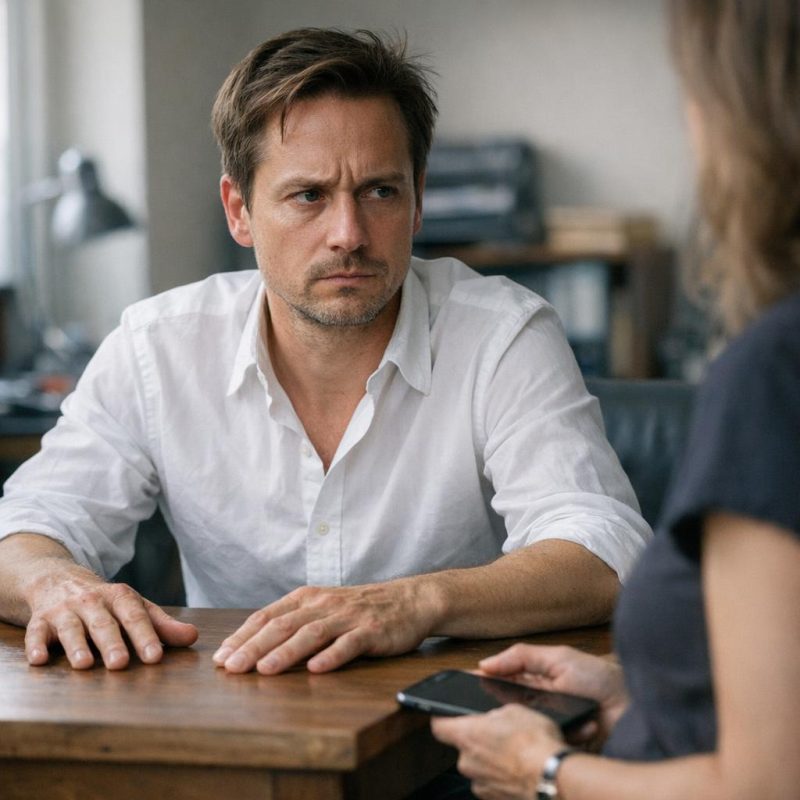 Image by RM AI
Are You Threatening Me?
He leaned back in his chair, arms crossing over his chest. 'Are you threatening me?' he asked, and his tone had shifted completely — no more condescension, no more dismissiveness. It was defensive now, almost sharp. I shook my head slowly. 'No,' I said. 'I'm not threatening you. I'm asking for fairness.' He let out a short breath through his nose, something between a laugh and a scoff. 'Fairness,' he repeated, like the word tasted bitter. 'Right.' I didn't let him derail me. 'If my hours were cut for performance reasons, show me the documentation. Show me the write-ups, the warnings, the coaching sessions. Show me where I failed to meet expectations.' He stared at me, and I stared right back. 'Because if you can't show me that,' I continued, 'then cutting my hours while bringing in someone new to replace me starts to look like something else entirely.' His mouth opened slightly, then closed again. I could see him weighing his options, trying to figure out how to respond without digging himself deeper. I said I was asking for fairness — if my hours were cut for performance, show me the documentation.
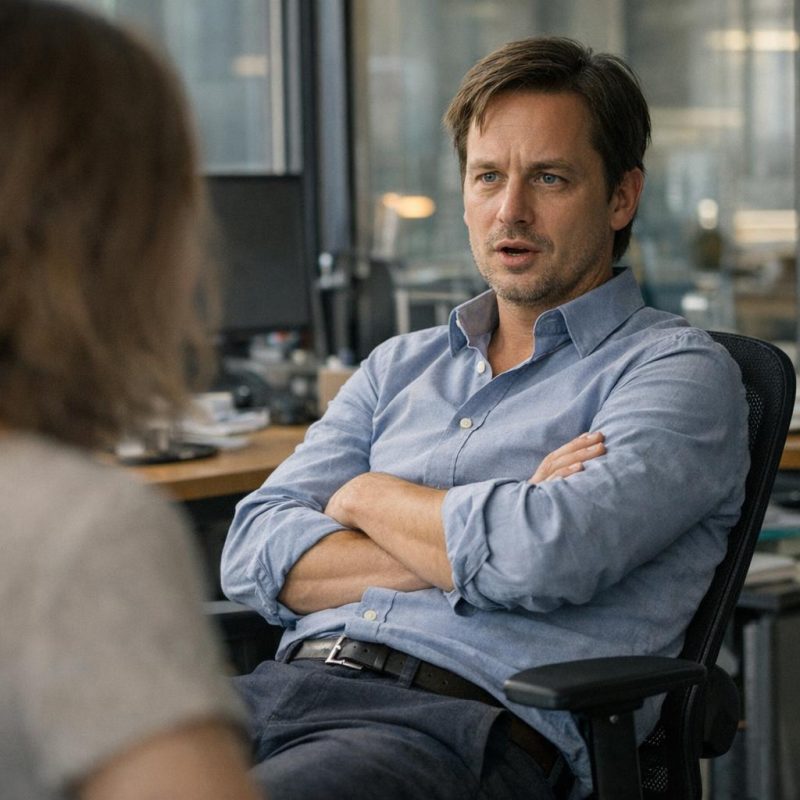 Image by RM AI
Corporate HR Mention
I shifted slightly in my chair, keeping my hands folded. 'I'm prepared to escalate this to corporate HR if I need to,' I said quietly. 'I have Amanda's direct contact information.' That got his attention. Amanda was the regional HR coordinator, the person who handled formal complaints and investigations. She wasn't local, which meant she wasn't under Rick's influence. He knew that. His eyes flicked away from mine for just a second, then back. 'I'd rather not go that route,' I added. 'I'd rather handle this here, between us. But if you're not willing to work with me, then I don't really have another option.' The room felt smaller suddenly, like the walls had moved in a few inches. Rick's hands were flat on the desk now, fingers drumming lightly against the wood. He was thinking, processing, trying to figure out if I was bluffing. I wasn't. I had Amanda's email saved in my drafts folder, a message half-written and ready to send if this conversation didn't go the way I needed it to. He stared at the phone longer than he needed to, and I could see the wheels turning.
 Image by RM AI
Blowing It Out of Proportion
He exhaled slowly and shook his head, a small, tight movement. 'You're blowing this out of proportion,' he muttered, more to himself than to me. It was the kind of thing people say when they're trying to convince themselves they're still in control. I didn't react immediately. I just let the words hang there for a moment, let him hear how hollow they sounded. Then I leaned forward slightly, my voice calm and even. 'Maybe,' I said. 'Or maybe this has been out of proportion for a while, and I'm just the first person who decided to say something about it.' His jaw clenched again, and I could see the muscle twitching near his temple. He didn't like that. He didn't like being challenged, didn't like having his authority questioned. But he also didn't have a good response. He looked down at his desk, at the papers scattered there, like he might find an answer somewhere in the mess. He didn't. I sat back and waited. The ball was in his court now, and we both knew it. I replied quietly: Maybe — or maybe this has been out of proportion for a while.
 Image by RM AI
Schedules Are Flexible
The silence stretched out between us, long and uncomfortable. Finally, he cleared his throat and shifted in his chair. 'Schedules are flexible,' he said, his voice flat. 'I can revisit yours. See what I can do.' It wasn't an apology. It wasn't even an acknowledgment that he'd done anything wrong. But it was a concession, and that was more than I'd expected to get. I nodded slowly. 'That would be good,' I said. Then I paused, just long enough to let him think the conversation was over, before adding, 'Because if this goes higher, it won't just be about my hours.' He looked up at me sharply, and I held his gaze. 'It'll be about patterns. About other people. About how things have been run here for a while.' I stood up then, smoothing my hands over my jeans. I didn't wait for him to dismiss me. I just picked up my bag and headed for the door. As I reached for the handle, I glanced back at him. He was staring at his desk again, jaw tight, hands clenched. I told him that would be good — because if this goes higher, it won't just be about my hours.
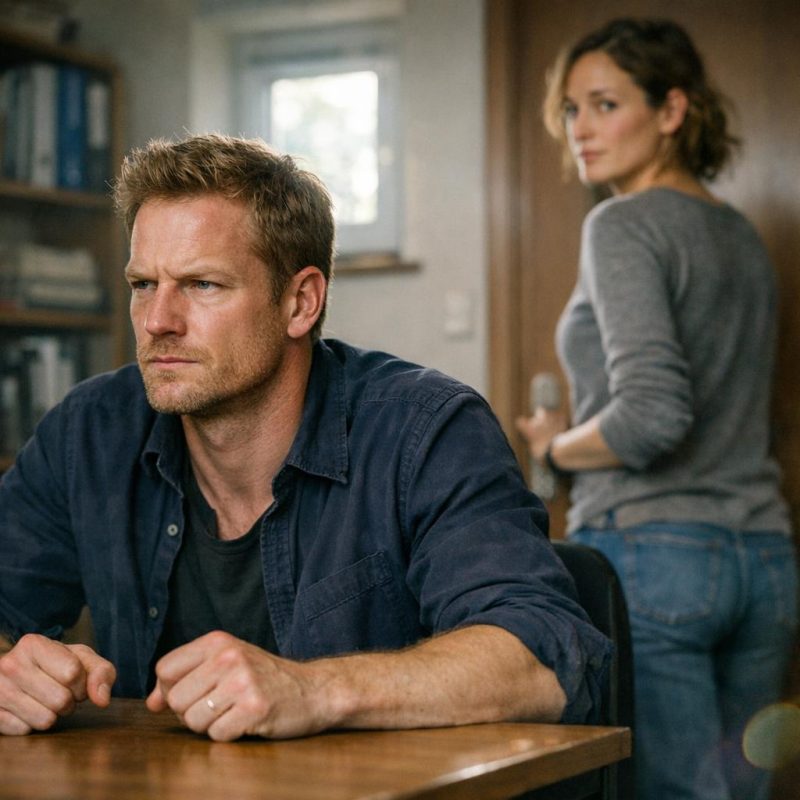 Image by RM AI
The New Schedule Posted
Two days later, the new schedule was posted in the back hallway near the break room. I almost didn't look at it right away — I'd been bracing myself for disappointment, for another round of reduced shifts and passive-aggressive scheduling. But when I finally walked over and scanned the rows of names and time blocks, I saw it: my name, back at 35 hours. Five full shifts, including two weekend closes. It was almost exactly what I'd been working before Madison was hired. I felt a strange mix of relief and suspicion settle in my chest. It had worked. The confrontation, the evidence, the threat of escalation — it had actually worked. But when I looked further down the schedule, I saw Madison's name listed with just two shifts, both short training blocks in the middle of the week. She'd gone from nearly full-time to barely part-time in the span of one schedule change. I glanced across the café and saw Rick near the espresso machine, talking to one of the morning crew. When he turned slightly and saw me looking, he immediately looked away. Rick avoided eye contact with me completely that day.
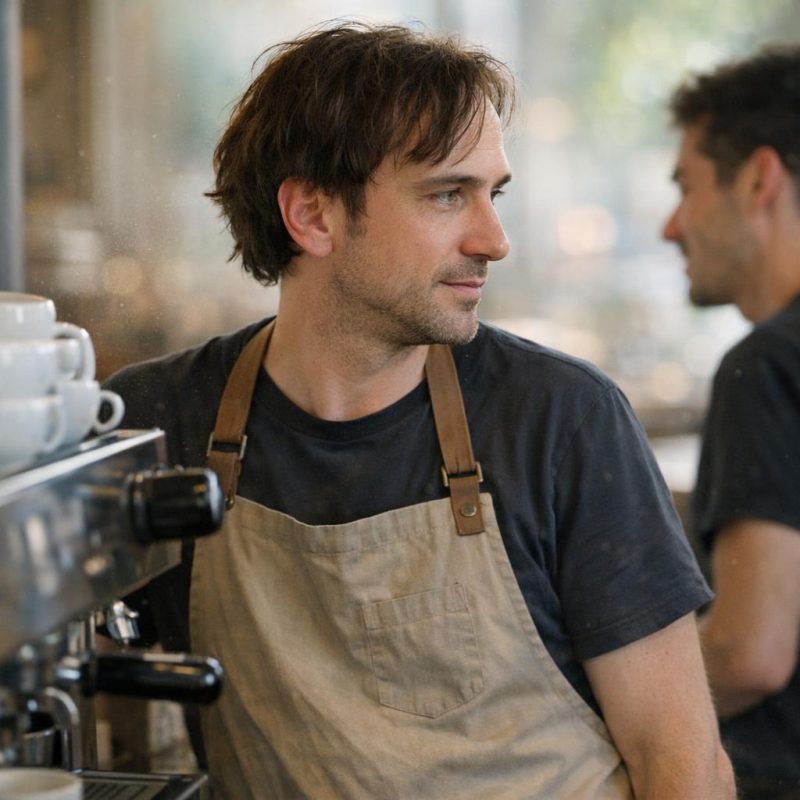 Image by RM AI
The Shift in Atmosphere
Over the next week, something shifted in the café. It was subtle at first, the kind of change you don't notice until you step back and realize how different things feel. Rick stopped hovering around the younger staff during closing shifts. He stopped lingering near Madison when she was working, stopped finding excuses to check in on her every twenty minutes. Cassie mentioned one morning that the late-night texts had stopped too — no more 'Hey, can you pick up a shift tomorrow?' messages at eleven pm. It was like he'd flipped a switch and suddenly remembered how to be a normal, professional manager. I should have felt good about it. I should have felt like I'd accomplished something, like I'd actually made a difference. And part of me did. But there was another part, quieter and more cautious, that kept circling back to the same question: why had he given in so easily? Why hadn't he fought harder, pushed back more, tried to call my bluff? It felt like a victory — but something about his sudden compliance made me uneasy.
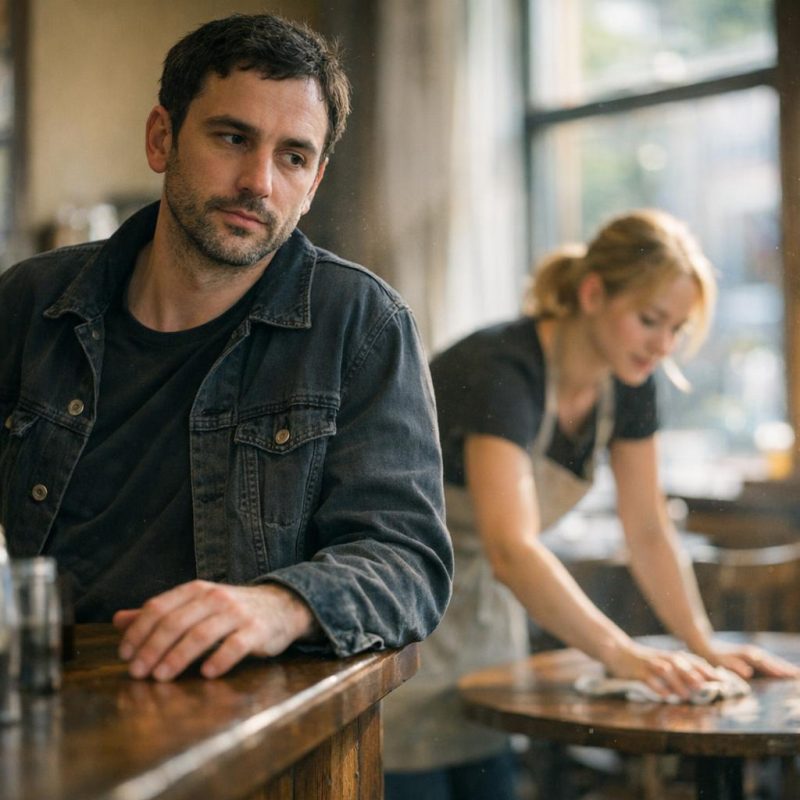 Image by RM AI
Ben's Unexpected Visit
It was a Thursday afternoon when Ben showed up. Ben was the district manager, the guy who oversaw five or six locations in the area and only appeared when something was seriously wrong or when corporate needed him to do a site check. I was restocking pastries in the display case when I saw him walk in, clipboard in hand, expression unreadable. He didn't stop to chat with anyone. He just headed straight for Rick's office, knocked once, and went inside. The door closed behind him. I glanced at Cassie, who was wiping down the espresso machine. She raised her eyebrows at me, a silent *what's that about?* I shrugged, but I felt my stomach tighten. Ben stayed in there for almost thirty minutes. I tried to focus on my work, tried not to stare at the closed office door, but I couldn't help it. When Ben finally came out, his face was neutral, professional. He nodded at me as he passed, said something generic like 'Keep up the good work,' and left. I couldn't hear what they were saying, but Rick looked stressed when Ben left.
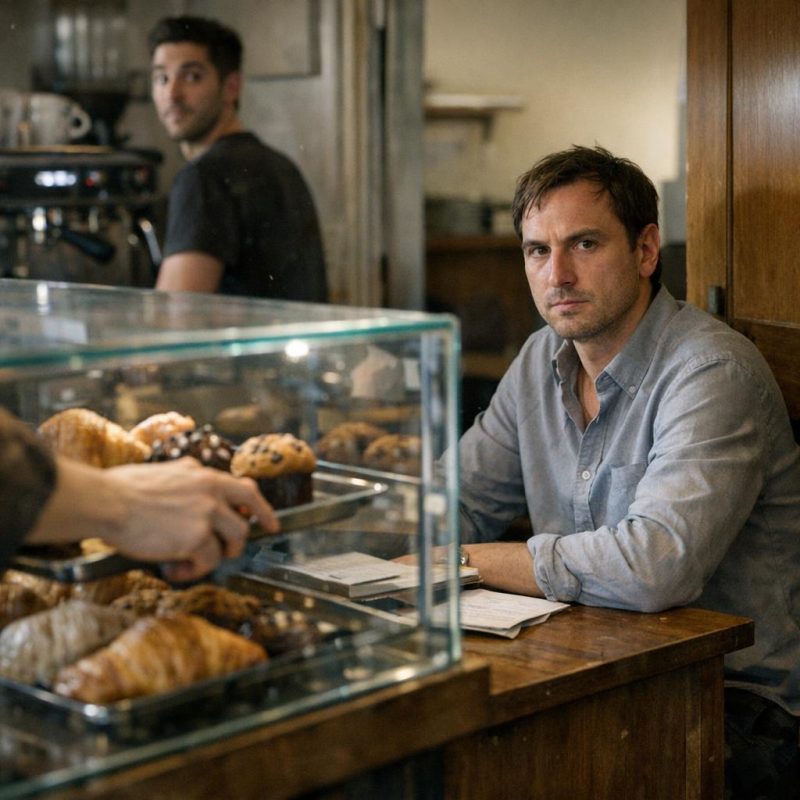 Image by RM AI
Corporate HR Routine Review
Two days after Ben left, I got a company-wide email. It was from corporate HR, sent to staff at multiple locations, announcing a 'routine review of management practices and workplace culture.' They were conducting interviews at several stores over the next few weeks, collecting feedback about scheduling, communication, and overall work environment. The email was bland, professional, the kind of thing you'd usually ignore or skim past. But I read it three times, my heart pounding a little faster each time. Our location was listed. So were two others in the district. The timing felt deliberate, but I couldn't be sure. I wanted to believe my confrontation with Ben had triggered something, that someone had actually listened. But I also knew corporate rarely moved this fast unless multiple complaints had piled up. Maybe someone else had finally spoken up about Rick. Maybe there were other voices I didn't know about, people who'd filed reports or called the hotline. Or maybe Rick had realized what was coming and was already panicking, trying to get ahead of it. I sat at my kitchen table that night, laptop open, staring at the email. I didn't know who triggered it — maybe someone else had finally spoken up, or maybe Rick was panicking.
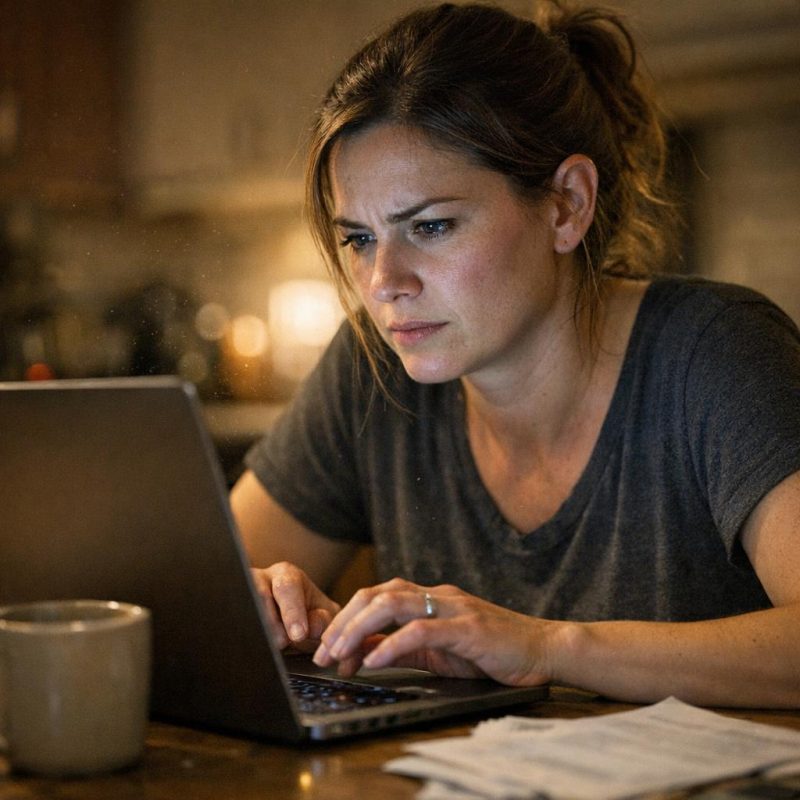 Image by RM AI
Rick's Careful Behavior
The change in Rick happened almost overnight. Suddenly, he was excessively professional. Every shift swap got documented with a formal email. Every staff meeting had an agenda sent out in advance, with minutes typed up and distributed afterward. He started cc'ing corporate on the most mundane things — ordering supplies, confirming schedule changes, even acknowledging when someone called in sick. It was like he'd transformed into a model manager, the kind who followed every policy to the letter. At first, I thought maybe the threat of the review had scared him straight. Maybe he was actually trying to do better. But then I noticed the pattern. He'd send me emails about things we'd already discussed in person, rephrasing conversations in ways that made him sound reasonable and me sound difficult. 'Per our discussion, I reminded Jordan about the dress code policy today. She seemed frustrated but agreed to comply.' I'd never been out of dress code. He was rewriting reality in real time, creating a paper trail that painted him as patient and professional. Every interaction felt staged now, like he was performing for an invisible audience. He was being too careful now — like someone trying to build a paper trail.
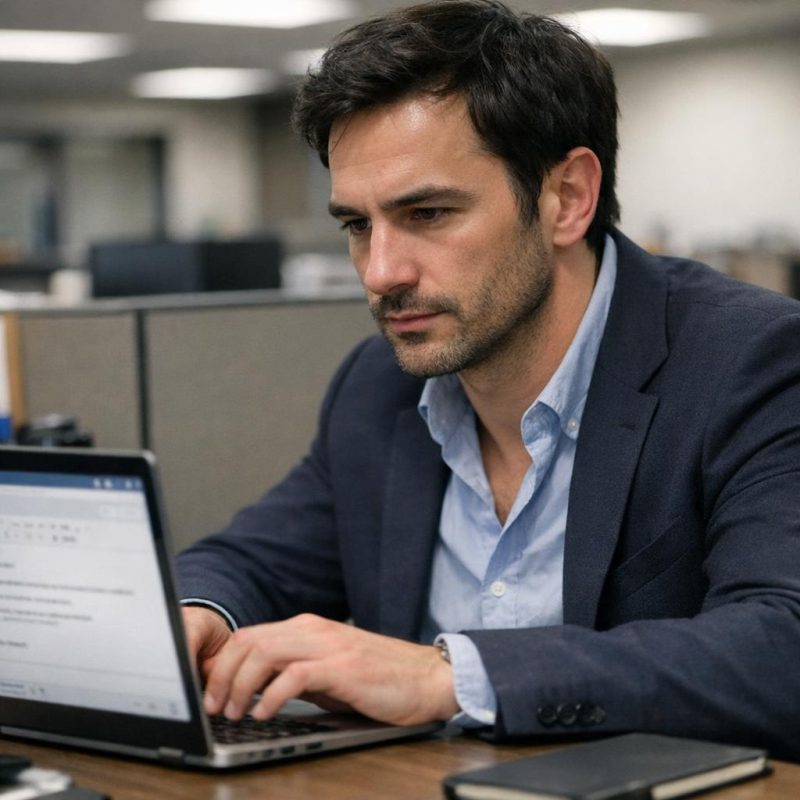 Image by RM AI
Madison's Sudden Defensiveness
I caught Madison during her break, sitting outside on the bench by the dumpster where people went to vape or scroll through their phones. I'd been meaning to check in with her, see how things were going since the corporate review was announced. I kept it casual. 'Hey, how are you doing? Everything okay with your shifts and stuff?' She looked up at me, and something shifted in her expression. She sat up straighter, almost defensive. 'Yeah, everything's fine. Rick's been really professional with me, actually. He's always respectful, always asks if I'm comfortable with my schedule. I don't have any complaints.' The words came out too fast, too rehearsed. I hadn't even mentioned Rick by name. I just stood there, not sure what to say. 'That's... good. I'm glad.' She nodded, then looked back at her phone, clearly done with the conversation. I walked back inside feeling unsettled. Madison and I weren't close, but we'd always been friendly. This felt different. Colder. Like she'd been told what to say if anyone asked. Her reaction was too quick, too rehearsed — like she'd been coached on what to say.
 Image by RM AI
Cassie's Worry
Cassie grabbed my arm during the afternoon rush, her grip tight enough that I almost spilled the drink I was making. 'Can we talk? Like, now?' We ducked into the back room, and she looked genuinely scared. Her voice dropped to a whisper. 'Rick came up to me yesterday. Super casual, super friendly. He asked how I was doing, if I was happy working here, all that stuff. Then he asked about the statement I gave to HR. Not directly, but like... he kept saying things like, 'I hope everyone's being honest in these reviews' and 'Sometimes people exaggerate things when they're stressed.' It felt like he was trying to figure out what I said, or maybe get me to doubt myself.' I felt my stomach drop. 'What did you tell him?' 'Nothing. I just said the review was confidential and I needed to get back to work. But Jordan, it felt like pressure. Like he was reminding me that he's still my boss, that he can still make things difficult.' She looked at me, her eyes wide and worried. She asked if I thought he was trying to find out what we'd said — and I didn't have a good answer.
 Image by RM AI
The Anonymous Email
The email came from an address I didn't recognize — a generic Gmail account with a string of random numbers. No subject line. I almost deleted it as spam, but something made me open it. The message was short, just a few sentences. 'You need to know that Rick has been collecting statements from other staff members about your attitude and job performance. He's been asking people if you seem difficult to work with or if you've complained a lot. I thought you should be warned. Be careful.' That was it. No signature, no explanation. I read it three times, my hands shaking. Someone had gone out of their way to warn me anonymously, which meant they were scared to come forward. Which meant Rick had them scared. I thought about Madison's defensive reaction, Cassie's story about Rick probing her. Now this. He wasn't just defending himself against the corporate review. He was actively building a case against me, gathering evidence to paint me as the problem. I sat there staring at my screen, feeling like the walls were closing in. Someone was trying to warn me — but I didn't know who, or what Rick was planning.
 Image by RM AI
Trevor's Strange Encounter
Trevor came in on his day off to grab a coffee, and I could tell immediately that something was bothering him. He lingered by the counter after I handed him his drink, glancing around like he wanted to make sure no one else was listening. 'Hey, I need to tell you something. Rick came up to me the other day. He was asking about you.' My stomach tightened. 'What do you mean?' 'He made it sound casual, like he was just checking in. But he asked specific things. Like, have I noticed you seeming stressed lately? Have you ever been short with customers? Do you seem overwhelmed by the job?' Trevor looked uncomfortable. 'I told him you were fine, that you're one of the best people here. But it felt weird, you know? Like he was fishing for something.' I nodded slowly, trying to keep my expression neutral even though I felt like I'd been punched. Rick was going to people outside the store now, people who barely worked with me, trying to collect anything he could use. Rick was fishing for ammunition — trying to paint me as unstable.
 Image by RM AI
The Pattern Becomes Clear
I spent that night going over everything in my head, trying to make sense of the pattern. Rick's sudden shift to excessive documentation right after Ben's visit. The way he'd started cc'ing corporate on every tiny interaction, rephrasing conversations to make himself look good. Madison's defensive reaction, like she'd been prepped on what to say. Cassie's report that Rick had been subtly pressuring her about her HR statement. The anonymous email warning me he was collecting evidence against me. Trevor's story about Rick asking leading questions about my mental state. It all fit together in a way that made my skin crawl. This wasn't panic. This wasn't someone scrambling to cover his tracks. This was calculated. Rick knew exactly what he was doing. He'd probably done it before. He was turning the situation around, making himself look like the victim of a difficult employee, building a narrative where I was the problem. It began to look like he'd done this before, like he knew exactly how to turn victims into villains.
 Image by RM AI
The Insurance Files
Amanda from corporate HR called my cell phone directly, which was unusual enough that I almost didn't answer. Her voice was careful, professional, but there was an edge to it. 'Jordan, I need to tell you something off the record. We've been reviewing Rick's personnel files as part of the investigation. We found something disturbing.' She paused. 'Rick has been keeping detailed documentation on multiple female employees over the past three years. Not official files — personal ones. He documents interactions in ways that create false narratives, building 'insurance' against potential complaints. He deliberately engages in behavior that crosses lines, then if someone complains, he produces his version of events that makes them look unstable or vindictive.' I couldn't breathe. 'He's done this before?' 'Multiple times. We think he's been provoking complaints intentionally, then using his documentation to discredit the people who speak up. He wanted you to escalate, Jordan. He was counting on it.' I felt like the floor had dropped out from under me. Rick's carelessness wasn't incompetence — it was bait to provoke complaints he could then discredit.
 Image by RM AI
The Fabricated Narratives
Amanda's voice got quieter, more deliberate. 'Jordan, I need you to understand how sophisticated these files are. In Rick's version, you're a problem employee with declining performance who became hostile after receiving legitimate coaching. He documented every conversation with you, but twisted the context. He wrote that you made inappropriate comments about customers, that you argued with him repeatedly, that you became vindictive after he started documenting your performance issues. He has notes claiming you sent aggressive texts, that you made false accusations to damage his reputation, that you tried to turn other staff against him.' My hands were shaking. I could barely hold the phone. 'But that's not what happened. None of that—' 'I know,' Amanda said. 'But his documentation is convincing. Dates, times, witness names. If you hadn't kept your own records, if you hadn't documented everything the way you did, his version would be the official story. You'd be the one facing termination.' The apartment walls felt like they were closing in. Every text, every comment, every hover — it was all designed to create a story where we looked like liars.
 Image by RM AI
The Previous Victims
Amanda wasn't done. 'We pulled personnel files for everyone who left in the past two years. Jordan, we found similar documentation for seven different women. Seven. Each one has Rick's notes painting them as difficult, unstable, or vindictive. Performance issues that conveniently started after he began managing them. Complaints about his behavior that he spun as retaliation for legitimate discipline. One woman he documented as emotionally volatile after she cried during a conversation about scheduling. Another he described as insubordinate for questioning a policy. He built identical narratives for all of them.' I thought about the rapid turnover, the women who'd quit without explanation. They weren't weak. They weren't running away from a hard job. They were escaping a trap they didn't even know they'd walked into. 'Did any of them file complaints?' I asked. 'Three did. Internal complaints that went nowhere because Rick's documentation made them look unreliable. The others just left.' My chest felt tight. I'd thought I was so careful, so strategic. But I'd just been following a script he'd written dozens of times before. He'd been doing this systematically, and we'd all played right into his script.
 Image by RM AI
The Legal Consultation
There was a long pause on Amanda's end. When she spoke again, her tone had shifted entirely — less ally, more corporate representative. 'Jordan, I need to be transparent with you about where this is going. Corporate is consulting with our legal team about the implications of Rick's files. The concern isn't just his behavior. It's that these files exist, that they document a pattern, and that the company took no action despite multiple complaints. If this becomes litigation, we're looking at potential liability for negligence, hostile work environment, constructive dismissal for the employees who quit.' I felt cold. 'You're saying the company knew?' 'We're saying the documentation creates that appearance. Whether complaints were properly investigated, whether Rick's managers were aware of the pattern, whether corporate had adequate oversight — these are questions we can't answer favorably right now.' It clicked into place. They weren't just worried about Rick's behavior. They were worried about what his files proved about the company's failure to stop him. This wasn't just about firing him anymore — this was about covering up years of systematic harassment.
 Image by RM AI
The Formal Investigation
The announcement came three days later. Corporate launched a formal investigation and placed Rick on immediate administrative leave pending the outcome. I was working an afternoon shift when Ben called the café to let Rick know. I watched from behind the espresso machine as Rick took the call in the back office, his face visible through the window. His expression went from confused to angry to carefully blank in about thirty seconds. He came out, grabbed his jacket from the hook by the door, and avoided eye contact with everyone. Ben had driven over to handle the transition, standing near the counter with his manager face on — professional, neutral, revealing nothing. Rick walked past me without a word. No smirk, no comment, no parting shot. The other staff kept working, pretending not to notice, but the entire café felt like it was holding its breath. Madison was stocking cups with shaking hands. Cassie caught my eye from across the room, her expression somewhere between vindicated and scared. He left the café that afternoon without looking at anyone, his confident smile finally gone.
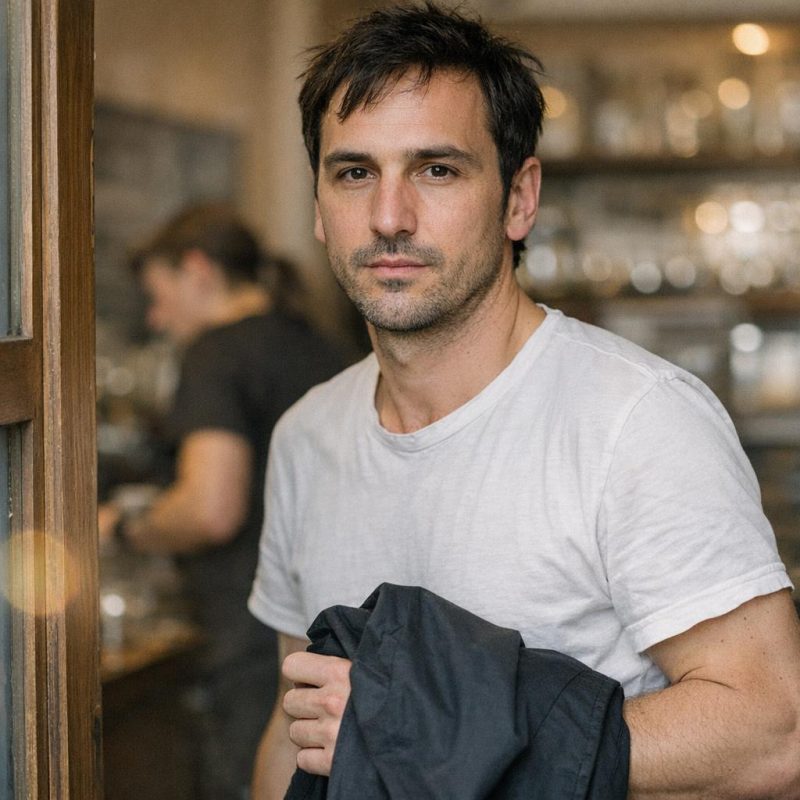 Image by RM AI
The Staff Meeting
Ben called a staff meeting the next morning before opening. All of us crammed into the back room — me, Madison, Cassie, and the other baristas and kitchen staff. Ben stood near the door, his posture stiff, his voice carefully measured. 'I need to inform you that Rick is currently under investigation by corporate HR. He's on administrative leave and will not be returning to this location during the investigation. I can't discuss the details, but I want to make it clear that if HR reaches out to any of you, you should cooperate fully and honestly. There will be no retaliation for participating in the investigation.' He looked around the room. 'Questions should be directed to HR, not to me. I know this is unsettling, but we need to maintain normal operations.' The reactions were all over the place. Some of the staff looked relieved, like a weight had been lifted. Others looked confused, clearly out of the loop about whatever had been happening. Cassie's face was carefully neutral, but I could see the tension in her shoulders. And Madison — Madison looked like her world was collapsing. Some staff looked relieved, some looked confused, and Madison looked like her world was collapsing.
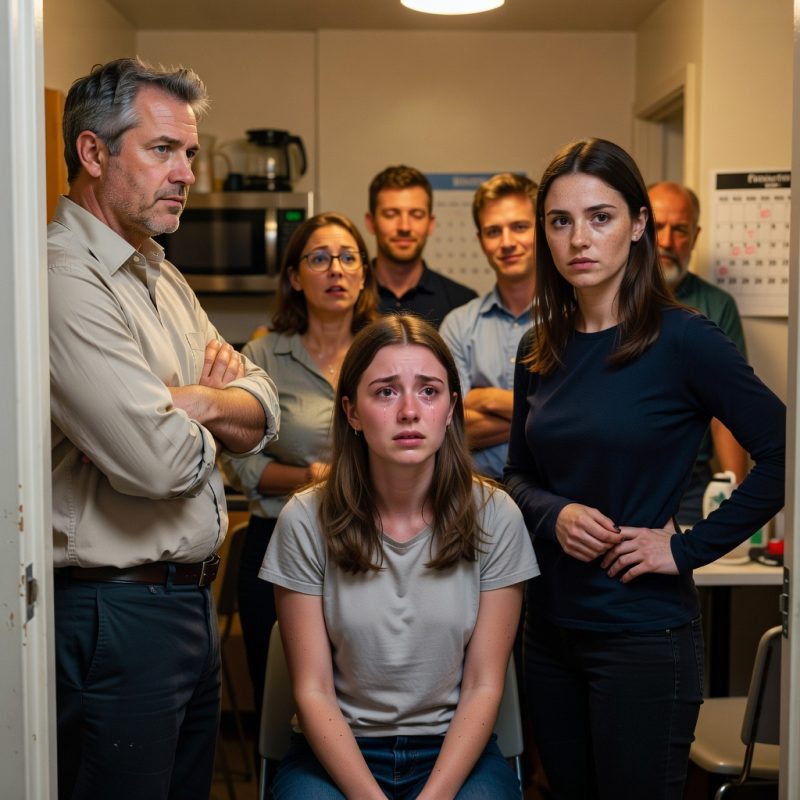 Image by RM AI
Madison's Realization
Madison found me during my break, sitting at the back table near the storage room. Her eyes were red, her voice shaky. 'Jordan, I need to know something. Is the investigation about me? Did I — did I cause you to lose your hours? Is this my fault?' She looked so young, so devastated. I put down my phone and faced her directly. 'Madison, no. This isn't about you. It's about Rick.' 'But he cut your hours after I talked to him about the training session. I told him you were being weird, and then everything got worse for you. I thought — I thought I was helping, but I made things worse.' Her voice broke. 'You didn't make anything worse. Rick manipulated you. He asked you questions designed to get specific answers, then used what you said to justify what he was already planning to do. You were a tool he used, not the problem.' She wiped her eyes. 'I feel so stupid.' 'You're not stupid. He's been doing this to people for years. He's good at it.' I meant it. She'd been manipulated by someone with practice. I told her she wasn't the problem — she was just another tool he used.
 Image by RM AI
The Testimony
The formal testimony happened in a conference room at the district office. Amanda was there along with another HR investigator I didn't recognize and someone from legal. They had printed copies of my documentation — every photo, every text screenshot, every timeline entry. I walked them through it all. The schedule changes, the hovering, the comments, the way he'd positioned himself behind me, the meeting where he'd told me to quit. They asked clarifying questions, requested specific dates, cross-referenced my timeline with Rick's personnel files. The legal representative took notes the entire time, her expression unreadable. It took almost three hours. When we finished, Amanda walked me to the parking lot. 'Jordan, I need you to understand something. Your evidence is the key to unraveling his entire system. Without your documentation, we'd just have his word against yours, and his files are convincing. You're the first person who kept records detailed enough to counter his narrative. But that also means you're going to be the primary witness if this escalates further. Are you prepared for that?' I thought about the seven women who'd left, the complaints that went nowhere. 'Yes,' I said. They told me my evidence was the key to unraveling his entire system — but it also meant I'd be the primary witness.
 Image by RM AI
Rick's Resignation
Amanda called me five days later. 'Rick submitted his resignation this morning. Corporate accepted it. He's gone.' I felt like I'd been punched. 'What? They're just letting him leave?' 'It's complicated. If we continued the investigation and terminated him, he could challenge it, drag it out, potentially sue. By accepting his resignation, we avoid that risk. He also signed an agreement that he won't pursue legal action against the company.' 'But what about accountability? What about what he did to all those women?' Amanda's voice was careful. 'Jordan, I understand your frustration. But from a legal standpoint, this is the cleanest outcome. He's gone, he can't hurt anyone else here, and the company avoids prolonged litigation.' 'So he just walks away? Moves to another café, another group of employees, and does it all again?' 'We can't control what he does elsewhere. We can only control our response here.' I wanted to scream. After everything — the documentation, the testimony, the formal investigation — he was escaping. No consequences, no public accountability, just a resignation and a severance package. He was escaping accountability, disappearing before the full weight of what he'd done could land on him.
 Image by RM AI
The Policy Changes
Two weeks after Rick's resignation, Amanda called with an update I hadn't expected. 'Corporate is implementing new policies,' she said. 'Mandatory anti-harassment training for all managers, quarterly check-ins with staff, and a direct reporting hotline that bypasses local management entirely.' They were also requiring all café locations to post visible signage about employee rights and creating a third-party system for anonymous complaints. The changes would roll out across every location in the district within sixty days. Part of me felt vindicated — this was proof that my documentation, my complaint, my fight had meant something beyond just my own café. They were acknowledging the system had failed. But another part of me couldn't stop thinking about all the women who'd left before these policies existed, who'd suffered through Rick's harassment with no support, no structure, no way to be heard. These changes were good. They'd help future employees. They might prevent another Rick from getting away with what he'd done for so long. I was grateful for that. But gratitude felt complicated when I thought about Melissa, about Sara, about everyone who'd quit or been pushed out before anyone took action. It was something — but it didn't erase what had already happened to so many of us.
 Image by RM AI
The New Manager
The new manager arrived three weeks later. Her name was Christine, and the difference was immediate. She introduced herself to each of us individually, asked about our experiences, our concerns, what we needed to feel supported. No forced smiles, no invasive questions about our personal lives, no comments about our appearances. Just professionalism. She reviewed the schedule and asked if anyone had availability issues. She reorganized the storage system we'd complained about for months. She actually listened when we spoke. During her first week, she held a staff meeting where she laid out clear expectations — for herself and for us. 'I want this to be a place where you feel respected and safe,' she said simply. 'If I'm falling short of that, I need you to tell me.' It felt almost surreal after everything with Rick. People started volunteering for shifts again. The tension that had lived in my shoulders for months began to ease. Conversations in the break room became lighter. I noticed Maya laughing with another barista, something I hadn't seen her do in forever. The café started feeling like a workplace again instead of a battlefield. The atmosphere slowly began to shift — people smiled more, stayed later, felt safe again.
 Image by RM AI
Reaching Out to Others
I spent a Saturday afternoon tracking down contact information for the women who'd left. Melissa had blocked me on social media, but I found her through a mutual friend. Sara's number was still in my phone. Elena — the woman who'd trained me and quit six months into my employment — took some searching, but I eventually found her on LinkedIn. I crafted a careful message explaining what had happened: Rick's resignation, the investigation, the new policies. Then I offered something I hoped might matter. 'If you ever want to file your own complaint, or if there's anything I can do to support you in that, I have documentation and I'm willing to provide testimony.' I sent it to each of them, then waited. Melissa never responded. Sara thanked me but said she'd moved on and didn't want to revisit it. But Elena called me two days later. 'I've been carrying this for three years,' she said, her voice shaking. 'I thought I was the only one. I thought it was my fault.' We talked for over an hour. She was considering filing a complaint with the state labor board. I told her I'd support whatever she decided. Some were ready to fight, others just wanted to move on — and I respected both choices.
 Image by RM AI
He Thought I Was Replaceable
Looking back now, I think about that conversation in Rick's office when he cut my hours and told me I wasn't 'the right fit anymore.' He thought he was showing me my place. He thought he could make me small, desperate, willing to accept whatever scraps he offered just to survive. He thought I was disposable — another young woman he could push around, another employee who'd quietly disappear rather than cause problems. He built his little kingdom on that assumption, on the idea that he was untouchable and we were all replaceable. But here's what he didn't count on: I wasn't just going to vanish. I documented everything. I found allies. I fought back. And while he was busy trying to make me feel worthless, I was building a case that would end his career at that company. He wanted me gone, wanted to erase me like I'd never mattered. Instead, he's the one who had to resign, who had to sign agreements, who had to leave while I stayed. He thought I was replaceable, that he could swap me out for someone more compliant, someone who wouldn't challenge him. Turns out, so was he.
 Image by RM AI