My Son's Girlfriend Kept Criticizing My Cooking Until I Served Her a Meal She'd Never Forget
My Son's Girlfriend Kept Criticizing My Cooking Until I Served Her a Meal She'd Never Forget
The Heart of the Home
My kitchen has always been the heart of our home. For thirty-two years, I've stood at this same counter, chopping vegetables and stirring pots while Tom reads the paper at the table and our son Michael sprawls in the chair by the window. Sunday dinners were sacred in our house—pot roast in winter, grilled chicken in summer, always with sides that took hours to prepare. I'd learned to cook from my mother, who'd learned from hers, and every recipe carried the weight of all those Sunday afternoons, all those conversations that happened while hands were busy and guards were down. That particular evening, I'd made Tom's favorite meatloaf with the caramelized onions he loved, and Michael had shown up hungry like always, filling his plate twice before I'd even sat down. We talked about his work at the engineering firm, about Tom's upcoming retirement plans, about nothing and everything the way families do. Then Michael set down his fork and cleared his throat in that way that meant something important was coming. He'd been dating someone for six months, he said, and he wanted us to meet her next Sunday.
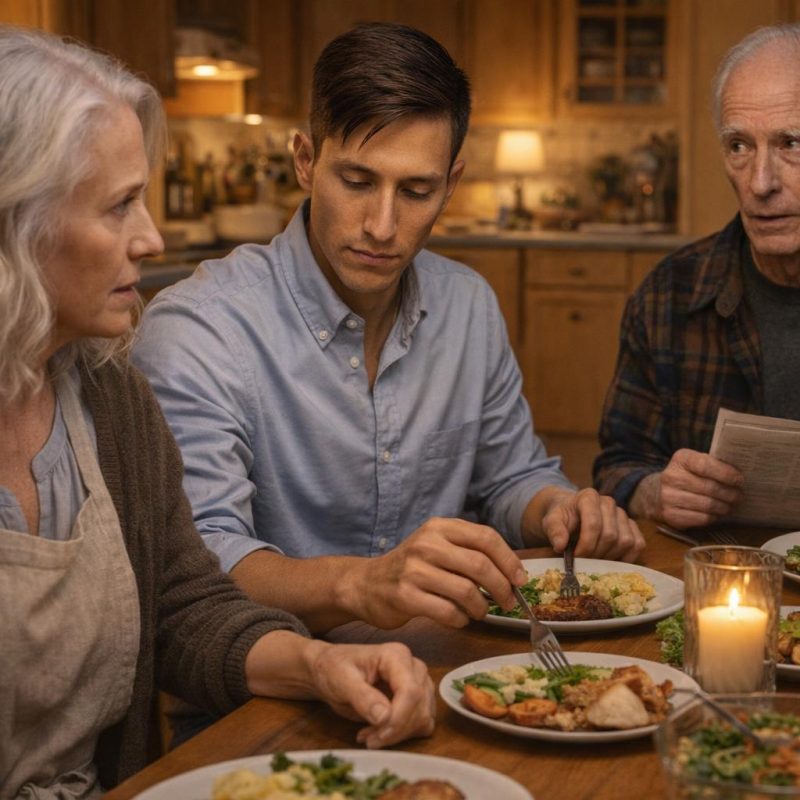 Image by RM AI
First Impressions
Michael arrived exactly on time, which wasn't like him, and the woman beside him was stunning in that polished way that made me suddenly aware of my flour-dusted apron. Brittany had dark hair pulled back in a sleek ponytail and wore a cream sweater that probably cost more than my entire outfit. She smiled warmly when Michael introduced us, and her handshake was firm and confident. I'd made my roast chicken with herb potatoes and green beans—the meal that had never failed me at family gatherings, the one that always drew compliments. Tom asked about her work in marketing, and she answered with the kind of easy charm that comes from giving presentations for a living. Michael kept glancing at her with this proud expression I'd never seen before, like he'd won something. The conversation flowed smoothly through how they'd met at a conference, her recent promotion, his stories about her that made her laugh. I watched her take in our dining room with its mismatched chairs and the wallpaper I'd been meaning to update for years. Everyone praised the chicken as they always did, and I felt that familiar warmth of feeding people I cared about. Then Brittany set down her fork with a thoughtful expression that made the room go quiet.
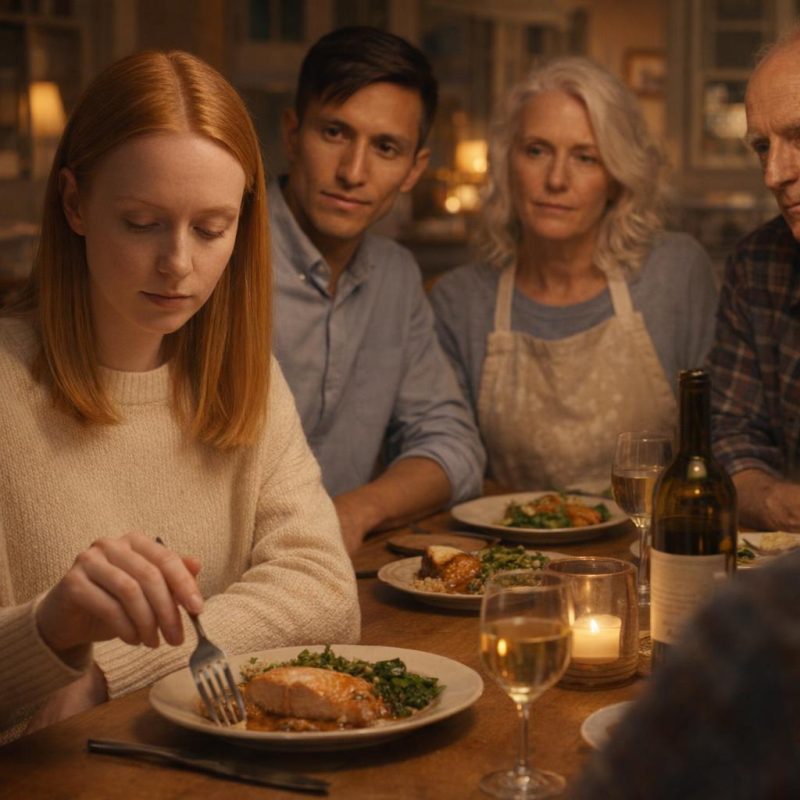 Image by RM AI
A Small Comment
She tilted her head slightly and said the chicken was lovely, really, but perhaps just a touch dry—she preferred her poultry with a bit more moisture, that was all. Her tone was gentle, almost apologetic, like she was doing me a favor by sharing her preference. Michael jumped in immediately, asking Tom about the baseball game, and the moment passed so quickly I almost wondered if I'd imagined the sting. My daughter Rachel had arrived late from her shift at the hospital, still in scrubs, and I watched her eyes move between Brittany and me as she caught up on what she'd missed. I told Brittany I'd keep that in mind, smiling the way you do when someone offers unsolicited advice, and served the apple pie I'd baked that morning. Tom gave me a brief glance across the table, one of those married-couple looks that says a thousand things without words, but I shook my head slightly. Everyone had different tastes, I reminded myself. Some people liked their chicken falling off the bone, others preferred it firmer. It was just a preference, nothing personal. But later, after they'd all gone home and I was washing dishes, I kept replaying her tone in my head.
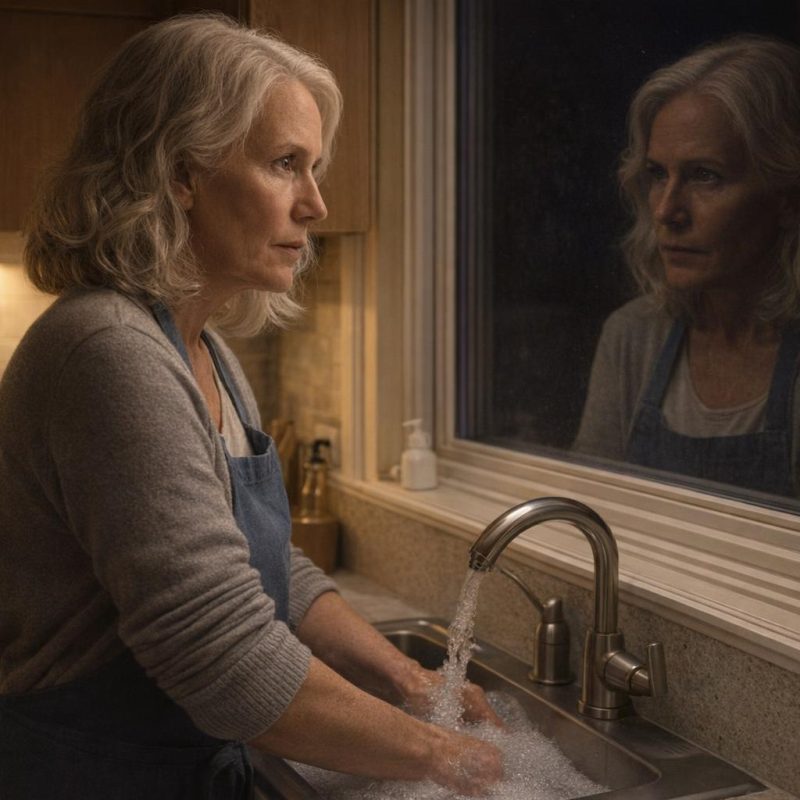 Image by RM AI
Different Tastes
Two weeks later, I made homemade pasta carbonara from scratch, the way my mother had taught me, with the eggs and cheese creating that silky sauce Tom always said was better than any restaurant. I'd spent the afternoon getting the consistency perfect, timing everything so the pasta would be hot enough to cook the eggs without scrambling them. Brittany arrived with Michael carrying a bottle of wine that probably cost more than our usual grocery budget, and she complimented the table setting before we'd even sat down. The first few bites went smoothly, everyone twirling their forks and making appreciative sounds. Then Brittany paused, took a sip of water, and mentioned that the carbonara tasted quite salty to her—she usually preferred lighter seasoning in cream sauces, found it let the other flavors come through better. Before I could respond, Michael tasted his pasta again, really concentrating this time, and nodded slowly. "You know, it is a bit salty," he said, looking at me with this apologetic expression. I explained that traditional carbonara used Pecorino Romano, which was naturally salty, but my voice sounded defensive even to my own ears. Tom kept eating without commenting, his silence somehow louder than words. Michael agreed with her before I could even finish explaining.
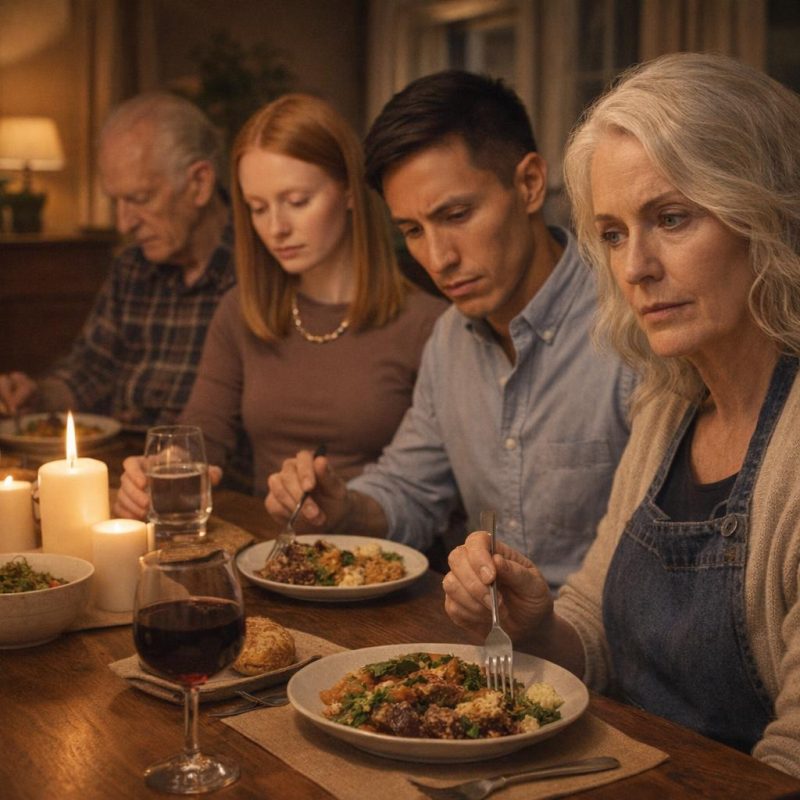 Image by RM AI
Between Us
That night, after Michael and Brittany left, I found Tom in the living room pretending to watch television. I sat down beside him and asked straight out what he thought about Brittany's comments on the food. He muted the TV and took his time answering, which meant he was choosing his words carefully. Maybe she was just nervous, he suggested, trying to contribute to the conversation in the only way she knew how. Some people didn't grow up with home cooking, he reminded me, and maybe she was used to restaurant food or something. His words were reassuring, but his eyes kept sliding away from mine, and I knew that look. I asked if I was being too sensitive, if I was overreacting to simple preferences. Tom said everyone had different tastes, that it probably didn't mean anything, but his shoulders were tense in a way that contradicted his casual tone. We agreed to give it more time, to not make assumptions based on a couple of dinners. He squeezed my hand and went back to his show, but I noticed he'd lost interest in whatever was playing. His body language suggested mild discomfort despite his diplomatic words, and that bothered me more than Brittany's comments had.
 Image by RM AI
Third Time
The third dinner, I'd made a garden salad with homemade vinaigrette and a roast with all the trimmings, plus the apple pie that had won second place at the county fair three years running. Rachel joined us again, and I was grateful for her presence, for another woman at the table who understood the work that went into these meals. Brittany complimented my dishes before tasting them, which should have felt nice but somehow made me brace for what was coming. Sure enough, after her first bite of salad, she mentioned the dressing was a bit too acidic for her taste—maybe a touch more oil next time? Rachel's eyebrows rose slightly, but she didn't say anything. Later, when I brought out the pie, Brittany took a small slice and suggested it could be less sweet, that she'd been trying to cut back on sugar anyway. Michael stayed quiet during both observations, studying his plate like it held the answers to questions he didn't want to ask. I found myself mentally counting—that was five comments across three dinners, or was it six? Tom cleared the plates without meeting my eyes, and I caught myself mentally preparing for her next critique before she'd even finished her coffee.
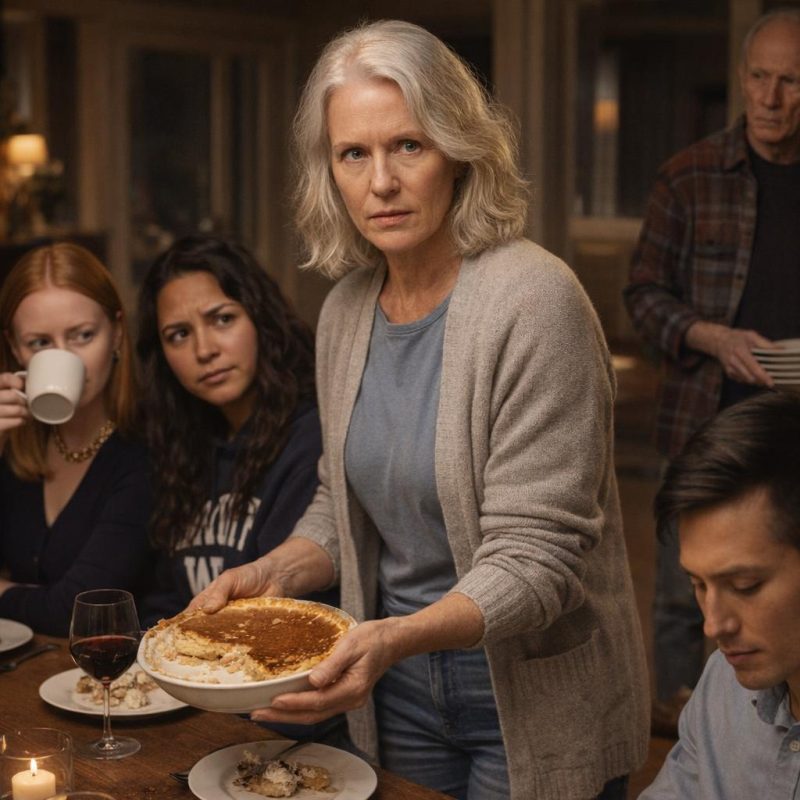 Image by RM AI
Adjustments
I spent the next week researching techniques for perfectly moist roasted chicken. I watched videos, read articles, adjusted my recipe based on everything Brittany had said about moisture levels and cooking times. Tom found me in the kitchen with a meat thermometer and three different recipes spread across the counter, and he asked what I was doing. Testing, I told him, making sure the next dinner would be exactly right. He watched as I carefully monitored the temperature, basting every fifteen minutes, pulling the chicken out at the precise moment the thermometer hit one hundred sixty-five degrees. The kitchen smelled amazing, and when I sliced into the breast, the meat was tender and juicy, exactly what Brittany had described wanting. I felt this small surge of pride, like I'd passed some kind of exam I hadn't known I was taking. Tom squeezed my shoulder and said it looked perfect, but there was something sad in his voice that I didn't want to examine too closely. I plated a piece for each of us to try, and it was genuinely the best chicken I'd ever made. Maybe this would help, I thought, maybe if I just adjusted to her preferences, the comments would stop and we could all relax.
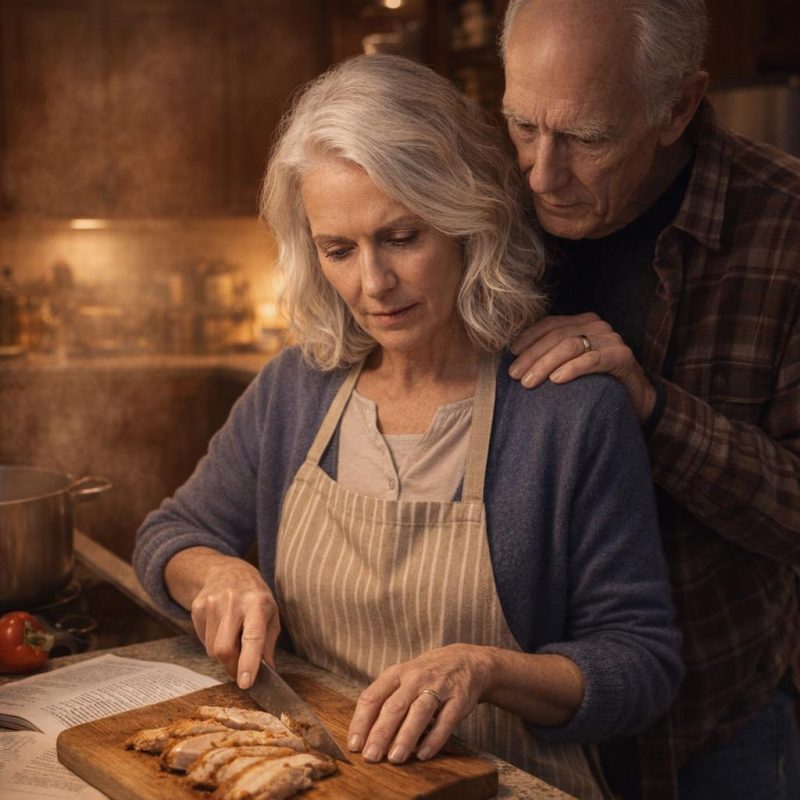 Image by RM AI
Outside Perspective
I called my sister Susan on Thursday afternoon, when I knew she'd be home from her shift at the library. I started by asking about her week, her kids, anything to delay the real reason I'd called. Finally, she asked what was wrong, and I found myself describing the dinners with Brittany, but even as I talked, I was downplaying everything. I called them preferences, suggestions, just different tastes. Susan listened without interrupting, which was unusual for her, and when I finished, she asked specific questions. What exactly had Brittany said? How had she said it? How many times had this happened now? I tried to remember, listing them out loud—the dry chicken, the salty pasta, the acidic dressing, the sweet pie, and there were others I was forgetting. Susan asked if this was typical behavior for someone meeting their boyfriend's family, and I realized I had no idea what was normal anymore. Was I being oversensitive? Was this just how younger people communicated? Susan wondered aloud if most people offered this much feedback, and I admitted I wasn't sure. The conversation ended without any clear conclusions, but as I hung up, Susan's question echoed in my head: how many times had this happened? I realized I'd actually lost count.
 Image by RM AI
The Adjusted Menu
I served the chicken on Friday night, the one I'd adjusted based on Brittany's feedback from weeks ago. I'd followed her suggestions exactly—lower temperature, different timing, the works. Michael arrived first and immediately complimented how good everything smelled. Tom nodded his agreement as he helped me bring dishes to the table. When Brittany walked in, I found myself watching her face more closely than I wanted to admit, searching for some sign of approval before she'd even tasted anything. I explained I'd tried a different approach with the recipe, keeping my voice casual even though my hands felt tense. She smiled and thanked me for being so receptive to feedback. We all sat down, and I passed the platter around. Michael took his first bite and said it was delicious. Tom agreed. I waited, fork in hand, as Brittany cut a small piece and tasted it. Then another bite. Then a third. She took three bites, then paused to dab her mouth with her napkin.
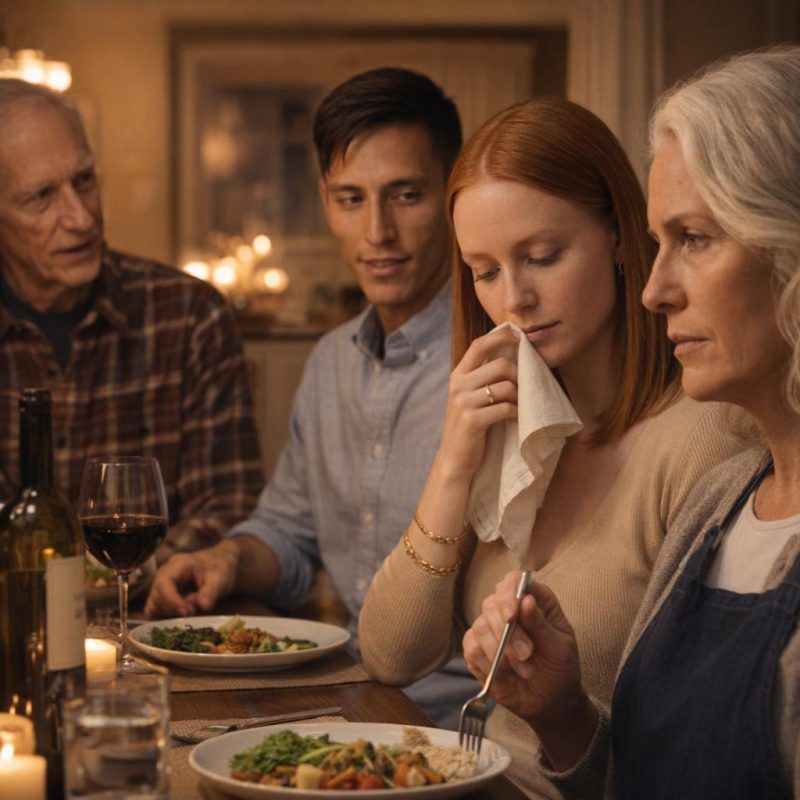 Image by RM AI
Never Enough
Brittany set down her fork and said the chicken was definitely better than last time. I felt something lift in my chest—finally, I'd gotten it right. But then she tilted her head slightly and added that it could probably use a different herb blend, maybe something with more depth. She mentioned rosemary, or possibly thyme, though she'd have to think about which would work better. Michael immediately thanked me for taking Brittany's advice so seriously, saying it showed how much I cared. I smiled and said I was happy to try new things. Rachel had texted earlier that she couldn't make it tonight, something about a work deadline. Tom helped clear the table after dinner, moving quietly between the kitchen and dining room. I stayed at the sink longer than necessary, washing each dish with careful attention. The water ran hot over my hands as I scrubbed the roasting pan. I stood there that night, washing dishes and wondering what I'd expected.
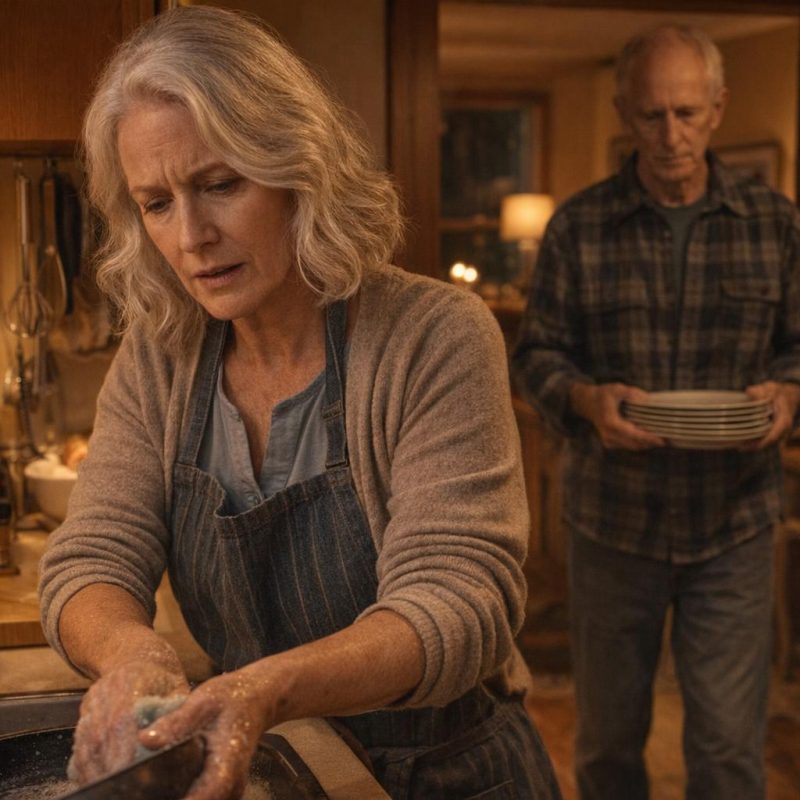 Image by RM AI
Mental Replay
Saturday morning, I sat at the kitchen table with my coffee, mentally walking through every dinner we'd had with Brittany. The dry chicken. The salty pasta. The acidic dressing. The too-sweet pie. The improved-but-still-wrong chicken from last night. I tried to find some logic in what she'd said, some through-line that would help me understand her preferences. The comments jumped between different aspects—temperature, seasoning, texture, flavor balance. Nothing connected. I wondered if I was being unfair, focusing only on the negative moments and forgetting the positive ones. But when I tried to remember a meal she'd enjoyed without qualification, I came up empty. Tom found me staring into my coffee cup, the liquid gone cold. He asked if I was okay, and I said I was fine, just thinking. He squeezed my shoulder and went to get ready for his day. The comments didn't follow any pattern I could identify—except that there was always a comment.
 Image by RM AI
Direct Approach
I called Brittany on Tuesday afternoon, before our next planned dinner. I told her I wanted to make something she'd really enjoy, and asked what kinds of dishes she liked best. She sounded pleased that I'd reached out. She said she loved both simple, clean flavors and complex, layered ones. She preferred light meals but also appreciated rich, indulgent dishes when they were done well. I grabbed a notepad and started writing things down. She mentioned liking traditional preparations but also being excited by creative twists. I could hear Michael in the background, his voice muffled. I asked a few more questions, trying to narrow things down, but each answer seemed to expand rather than focus her preferences. She was articulate and thoughtful, taking time to explain her perspective on different cooking styles. When we hung up, I looked at my notes—two full pages of careful handwriting. Her answer covered so many different preferences that I left the conversation more confused than when I'd started.
 Image by RM AI
Contradictions
I spread my notes across the kitchen table that evening, reading through everything Brittany had told me. Simple but complex. Light but rich. Traditional but creative. I read each line again, slower this time. Tom came in and asked what I was working on. I explained I was trying to plan the next menu based on Brittany's preferences. He read over my shoulder, his finger tracing down the page. He stopped and pointed out that she'd said she preferred minimal seasoning in one sentence and bold flavors in another. I looked where he was pointing. He was right. I flipped back through my other notes, the ones from previous conversations. The contradictions were everywhere once I started looking for them. My stomach twisted in a way I couldn't quite explain. Tom asked if I wanted him to talk to Michael about it. I said no, it was fine, I was probably overthinking things. But something felt off, and I couldn't articulate what it was.
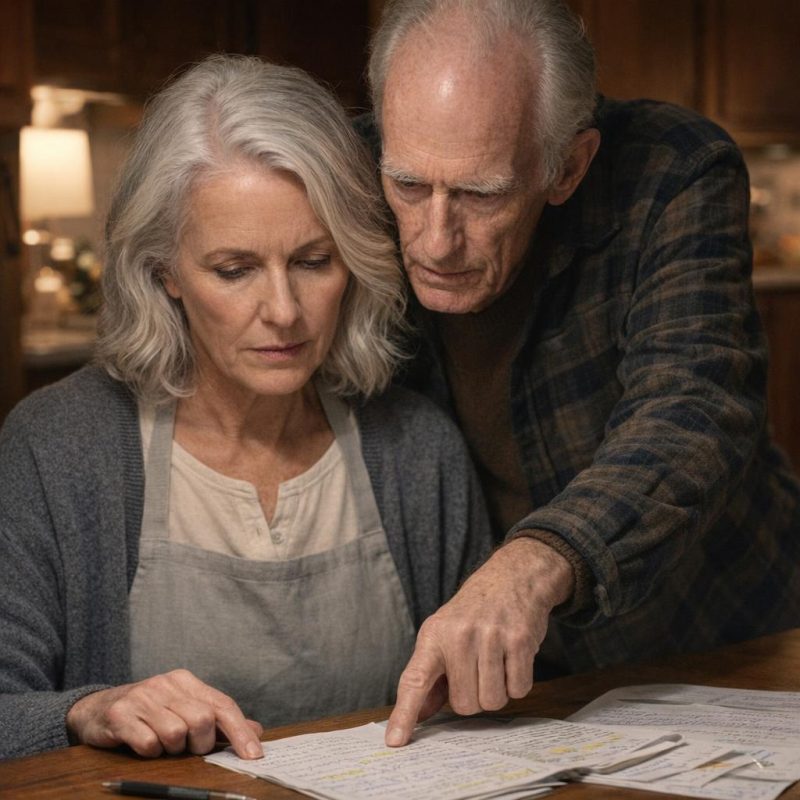 Image by RM AI
Taking Sides
Michael stopped by on Thursday to drop off something he'd borrowed. I mentioned, carefully, that I was having trouble understanding what Brittany preferred because some of her suggestions seemed to contradict each other. Before I'd even finished my sentence, Michael jumped in to explain what she'd meant. I tried to clarify that I wasn't criticizing her, just confused about how to proceed. He cut me off again, saying Brittany had really sophisticated taste and sometimes that was hard for people to understand. Tom was sitting at the counter, and I saw his jaw tighten. I started to say that wasn't what I meant, but Michael was already explaining how Brittany had studied culinary trends and knew what she was talking about. His voice had an edge I wasn't used to hearing. Tom asked if Michael wanted to stay for coffee, but he said he needed to get back. After he left, Tom and I sat in silence for a long moment. I realized Michael was no longer hearing my words—he was protecting her from them.
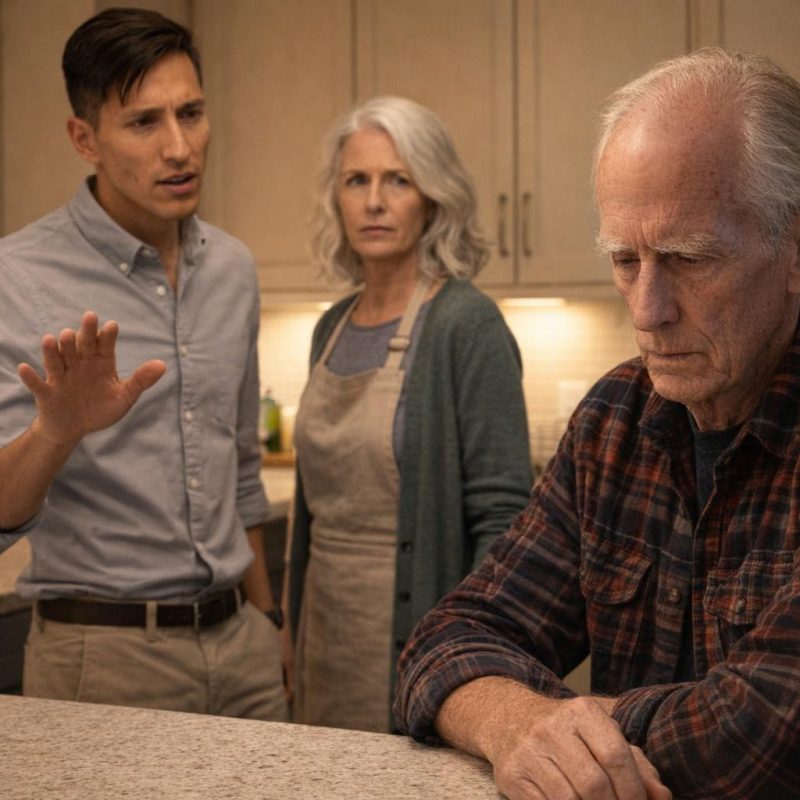 Image by RM AI
Self-Doubt
I stood in my kitchen on Saturday morning, surrounded by the cookbooks I'd collected over thirty years. The ones with worn spines and stained pages, recipes I'd made so many times I barely needed to look at them anymore. I pulled out my mother's handwritten recipe cards, the ones I'd learned from when I was first married. I opened the binder where I kept family favorites—Tom's birthday dinner, Michael's childhood requests, the dishes people asked me to bring to gatherings. I looked at them and wondered if I'd been fooling myself all this time. Maybe my cooking had gotten stale without me noticing. Maybe I'd been coasting on old successes while the world moved on. I thought about signing up for a cooking class, learning new techniques. The kitchen felt different somehow, less comfortable than it used to be. I closed the cookbooks and put them back on the shelf without choosing anything for dinner. The recipes hadn't changed, but somehow I had.
 Image by RM AI
Holiday Gathering
Thanksgiving morning arrived with the house full of family—my aunt and uncle, Tom's brother and his wife, cousins I hadn't seen since summer. I'd been cooking since dawn, and the turkey had turned out perfectly. But as I set the table, I felt my shoulders tense every time I glanced at the clock. Brittany and Michael arrived just before dinner, and she looked beautiful as always. She greeted everyone warmly, complimenting the decorations and asking thoughtful questions about people's lives. Rachel stayed close to me in the kitchen, helping with last-minute preparations. When we finally sat down, my uncle carved the turkey and everyone started passing dishes. The compliments came from all sides—my aunt raved about the stuffing, Tom's brother said the potatoes were the best he'd ever had. I watched as Brittany took a bite of turkey and smiled. She turned to my aunt and said it was absolutely delicious, perfectly seasoned and moist. Then she turned to me with a gentle smile that made my chest tighten.
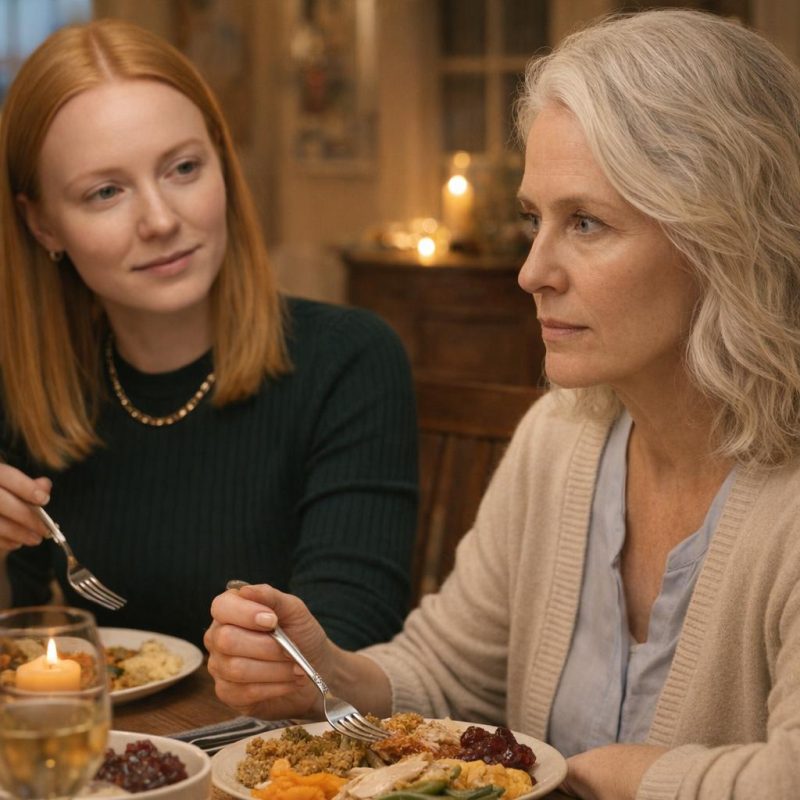 Image by RM AI
Public Critique
I was starting to relax when Brittany turned to my cousin Sarah and said the stuffing was interesting but could use more sage, her voice carrying across the table in that clear, helpful tone she always used. The words hung in the air for a beat too long. I felt my fork freeze halfway to my mouth as conversations faltered around us—my uncle stopped mid-sentence, Tom's brother glanced down at his plate. Heat crept up my neck and into my face. I'd made that stuffing the same way for fifteen years, using my grandmother's recipe that everyone always loved. Michael kept eating like nothing had happened, not even looking up. Under the table, Tom's hand found mine and squeezed, his thumb rubbing small circles against my palm. Across from me, Rachel's expression darkened, her eyes fixed on Brittany with an intensity that made me want to change the subject. I forced a smile and reached for the cranberry sauce, pretending I hadn't noticed the way the room had shifted. The conversations around us faltered for just a moment before resuming.
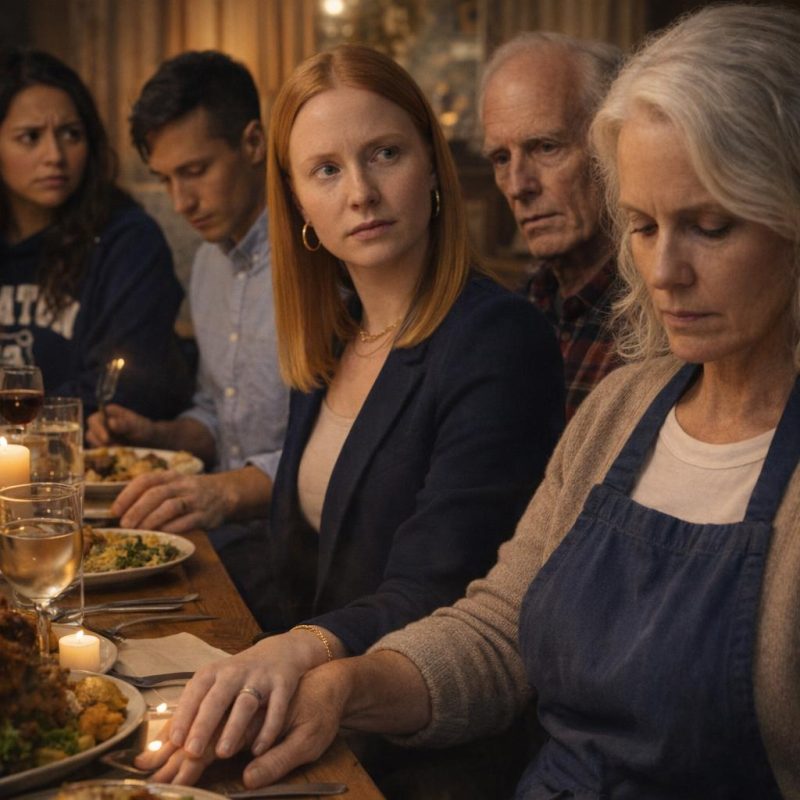 Image by RM AI
Witnesses
Rachel followed me into the kitchen when I went to get more rolls, closing the door behind her with a quiet click. She leaned against the counter and asked how long the comments had been happening, her voice low and direct. I busied myself arranging rolls in a basket, trying to wave it off—Brittany was just particular about food, that's all. Rachel crossed her arms and started listing things she'd personally witnessed: the chicken comment at the barbecue, something about underseasoned vegetables at the last dinner, today's stuffing critique. Her memory was sharper than mine, and hearing it all laid out like that made my chest tighten. I set down the basket and admitted it had been going on for months, maybe since the second or third time they'd come over. Rachel's jaw clenched, and I could see anger flashing in her eyes—not at me, but for me. That distinction mattered more than I expected. I opened my mouth to say it wasn't a big deal, but the words wouldn't come.
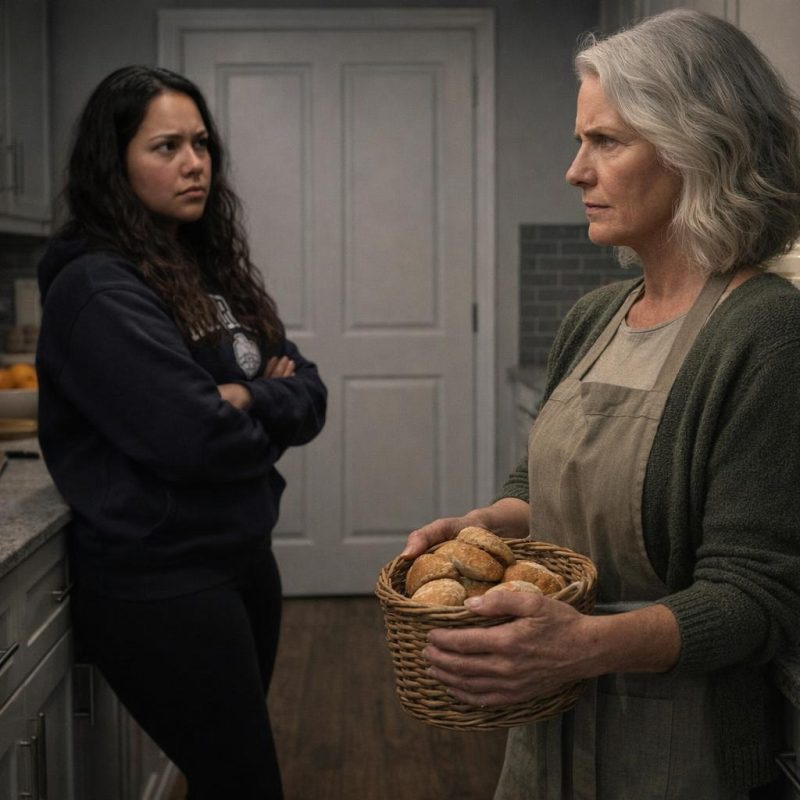 Image by RM AI
Am I Overreacting?
I lay awake that night cataloging my reactions, trying to determine if I was the problem. Maybe I was too sensitive about my cooking. Maybe Brittany was just trying to be helpful and I was reading malice into innocent suggestions. The ceiling fan turned slow circles above me while I replayed every comment, every expression, every moment I'd felt that twist in my stomach. Was I jealous of her relationship with Michael? Was I one of those mothers who couldn't let go? Tom's breathing was steady and even beside me, and I envied how easily sleep came to him. I thought about apologizing to Brittany, about pulling her aside and clearing the air. But then I remembered Rachel's face in the kitchen, the way she'd been angry on my behalf without me having to explain. I wondered if maybe my reactions weren't the problem after all. The uncertainty felt worse than the comments themselves, this constant second-guessing that left me exhausted. Tom's breathing was steady beside me, but I couldn't shake the feeling that I was losing something I couldn't name.
 Image by RM AI
Walking on Eggshells
I served pot roast at the next Sunday dinner, and the anxiety had started before they even arrived. I'd checked the meat temperature three times, tasted the gravy twice, adjusted the seasoning until I couldn't tell anymore if it was right. When we sat down, Brittany cut into her portion and began what felt like a formal evaluation—the meat was slightly overdone in the center, the texture could be more tender, the seasoning balance leaned too heavily on the rosemary. She went through each element methodically, her tone pleasant and educational, like she was teaching a cooking class. Michael nodded along with several of her points, adding that he'd noticed the same thing about the rosemary. Tom's jaw tightened visibly, the muscle jumping near his ear the way it did when he was holding back words. I smiled and thanked her for the feedback, but inside I felt hollowed out. By the time I brought out dessert, my shoulders ached from tension I hadn't realized I was carrying. When she finished speaking, I realized I'd been holding my breath.
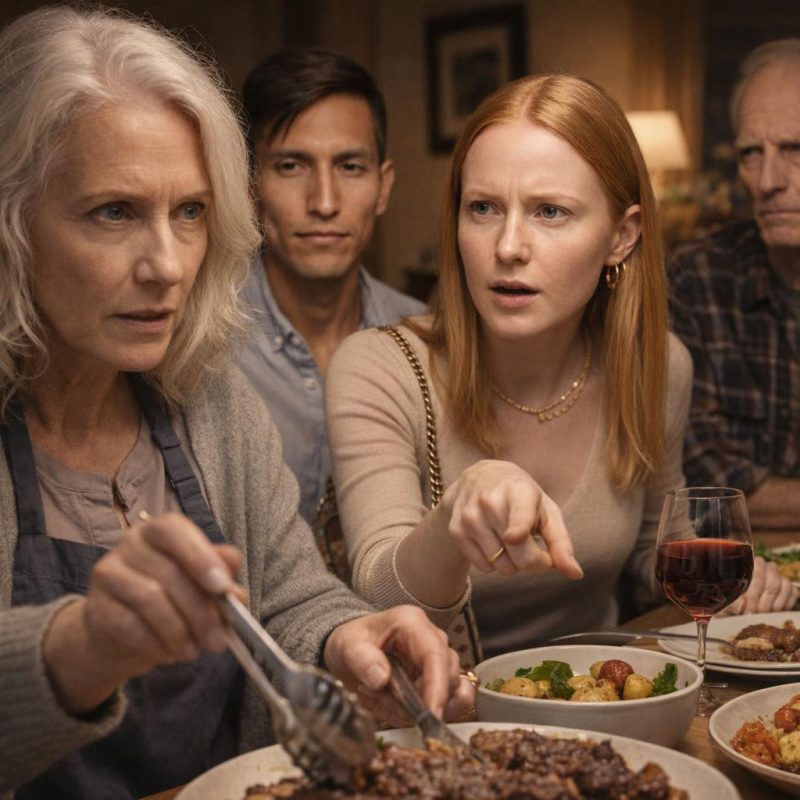 Image by RM AI
The Common Thread
I was loading the dishwasher after they left when something clicked into place. I turned to Tom and said I'd noticed something—Brittany only critiqued dishes I had made, never what anyone else brought to our gatherings. He looked up from wiping down the counter, and I could see recognition in his eyes before I even finished explaining. Rachel's potato salad at the barbecue had gotten enthusiastic compliments. The store-bought pies my aunt brought to Thanksgiving went unmentioned. Even the rolls Tom picked up from the bakery last week received praise. But everything I made—the chicken, the vegetables, the stuffing, tonight's pot roast—got analyzed and found wanting. Tom set down the dishcloth and confirmed he'd noticed the same pattern, had been noticing it for weeks. We stood there in the quiet kitchen, and I felt something shift in my understanding. The distinction seemed too consistent to be coincidence, but I didn't know what it meant.
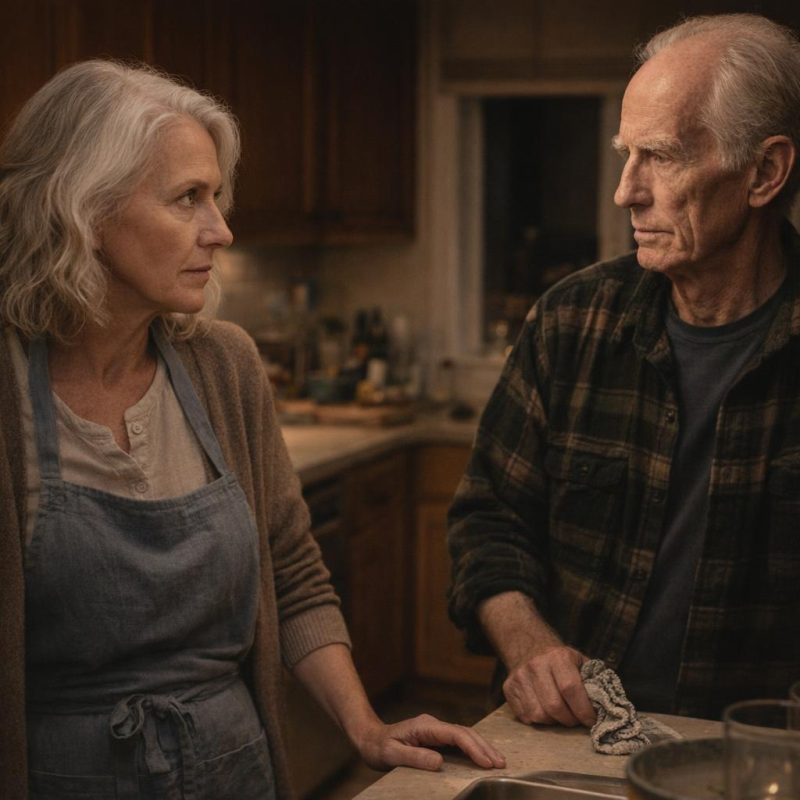 Image by RM AI
Choosing Sides
The conversation about Christmas scheduling came up the following week, and I suggested we keep our traditional afternoon dinner so Tom's parents could join us before heading to his sister's. Michael shook his head and said evening would work better this year, his tone more definitive than I was used to hearing from him. I started to explain why afternoon had always worked for everyone, but Brittany sat quietly beside him, her posture attentive, her eyes on his face. Michael glanced at her before responding, and she gave the smallest nod—barely perceptible, but I caught it. He turned back to me and said they'd really prefer evening, speaking with a certainty that seemed to come from somewhere outside himself. Tom shifted in his seat, looking uncomfortable but staying silent. The discussion ended there, decided without really being discussed. I watched my son defer to someone he'd known for months over the mother who'd raised him.
 Image by RM AI
New Traditions
Brittany brought up Easter while we were all having coffee, suggesting we might try a different approach this year—maybe a brunch instead of our traditional dinner, perhaps some lighter dishes. She spoke with the casual confidence of someone who'd been part of these traditions for decades rather than months. Michael jumped in immediately, saying that sounded great, that it would be nice to shake things up. I hadn't even opened my mouth to respond. Rachel's head snapped up from her phone, her expression shifting to something between alarm and anger. I felt Tom's hand find mine under the table again, that gesture that had become our silent language. Brittany continued talking about fresh ideas and new perspectives, framing herself as someone bringing innovation to our family gatherings. The changes were being agreed upon around me, decisions made about traditions I'd built and maintained for thirty years. Michael agreed before I could respond, and I felt something precious slipping away.
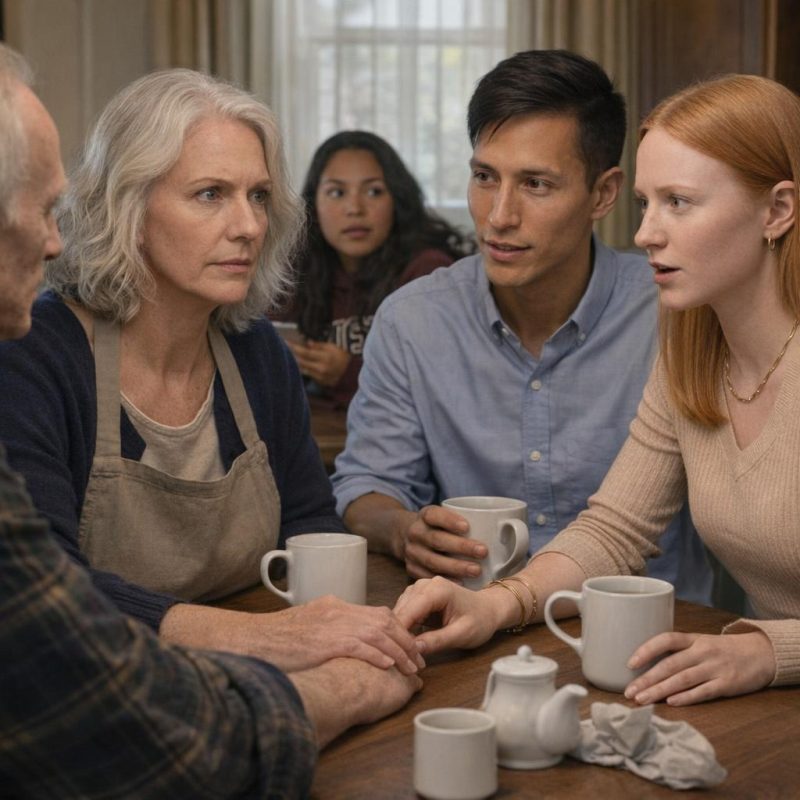 Image by RM AI
Seeing It Too
Rachel pulled me aside after dinner, her hand firm on my elbow as she guided me into the kitchen. She closed the door and said she'd been keeping track of Brittany's comments since Thanksgiving, her voice low and urgent. I started to ask what she meant, but she was already pulling out her phone, scrolling to her notes app. The list was organized by date, each entry documenting what Brittany had said and who'd been present. November twenty-third, the stuffing comment in front of the whole family. December second, the pot roast critique. December ninth, a comment about my green beans being mushy that I'd almost forgotten. The documentation went back four months, capturing things I'd tried to brush off or convince myself I'd imagined. I felt validated and disturbed in equal measure, relieved that I wasn't crazy but unsettled by the evidence laid out so clearly. Rachel's face was tight with concern as she asked what we were going to do about Michael. We stood there staring at the list, agreeing something was wrong but unable to name exactly what. She had a list on her phone, and it was longer than I'd realized.
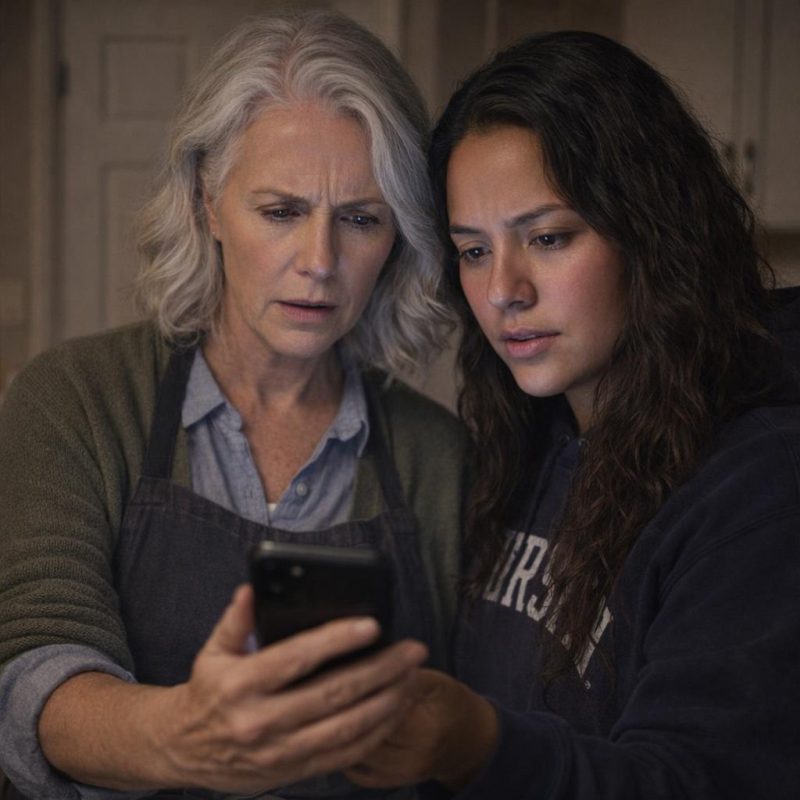 Image by RM AI
Connecting Points
I spread everything across the dining table that night—my own notes, Rachel's phone screenshots printed out, receipts with dates scribbled on them. Tom pulled up a chair beside me without saying anything, just sat there while I arranged the comments in chronological order. The first few months had been almost manageable. One comment per visit, sometimes two. The stuffing at Thanksgiving. A remark about the pot roast in early December. But as I laid them out, the progression became impossible to ignore. January had brought three comments in a single dinner. February, four. The most recent gathering had included six separate critiques, each one more detailed than the last. Tom leaned forward, his finger tracing the timeline I'd created. The comments hadn't just increased in frequency—they'd grown more specific, more technical, like someone building expertise. I sat back and stared at the pattern we'd documented, trying to understand what it meant. Tom asked what I thought would come next, and I didn't have an answer. We stayed at that table for another hour, looking at the evidence spread before us, both of us seeing the escalation clearly but neither of us understanding why it was happening.
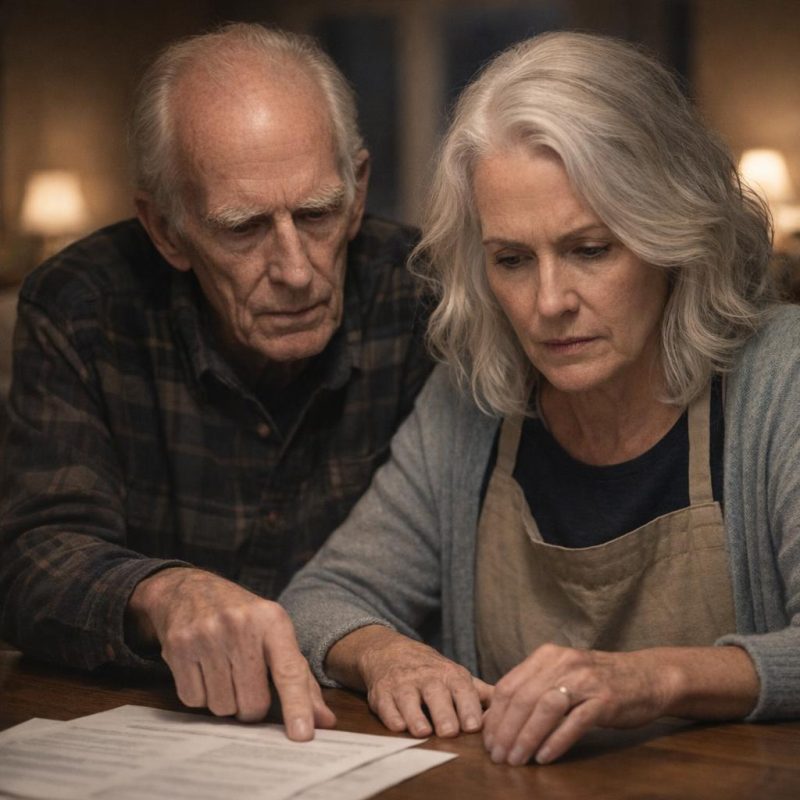 Image by RM AI
Beyond Food
I called Susan the next morning and told her everything—the timeline, the escalation, the way the comments had evolved. She listened without interrupting, asking only a few questions about specific incidents. When I finished, she was quiet for a moment before saying this reminded her of something she'd encountered before, though she couldn't quite remember where. Her voice carried that tone she used when she was working through a problem, careful and measured. Then she asked if Brittany commented on anything else I did, not just the cooking. I paused, trying to think back through our interactions. Susan pressed the point—had there been remarks about how I decorated, how I organized things, how I spent my time? I admitted I'd been so focused on the food criticism that I hadn't paid attention to much else. Susan told me to start watching for comments about my other contributions, anything beyond the meals. She said people who behaved this way rarely limited themselves to one area. I felt something shift in my understanding, realizing I'd been looking at too narrow a picture. Susan's concern came through clearly, but she didn't claim to know exactly what was happening.
 Image by RM AI
Watching Patterns
The next family gathering, I watched Brittany move through the room like I was studying a documentary. She laughed easily with Rachel, asking about her new job and remembering details from previous conversations. When Michael's cousins arrived, she greeted them warmly, complimenting their outfits and making them feel included. Her body language was open, relaxed, genuinely engaged. Then she turned to speak with me, and something changed. The warmth didn't disappear exactly, but it became surface-level, polite without depth. Our conversation stayed on safe topics—weather, traffic, nothing substantial. With Tom, she maintained even more distance. She answered his questions but didn't ask any of her own, positioning herself physically farther from him than from anyone else in the room. I watched Michael move between these interactions, completely unaware that his girlfriend treated his parents differently than everyone else. He saw her charm with his sister and cousins, probably assumed she was the same with us. I couldn't figure out why Tom and I were the exceptions. She was friendly with everyone except Tom and me.
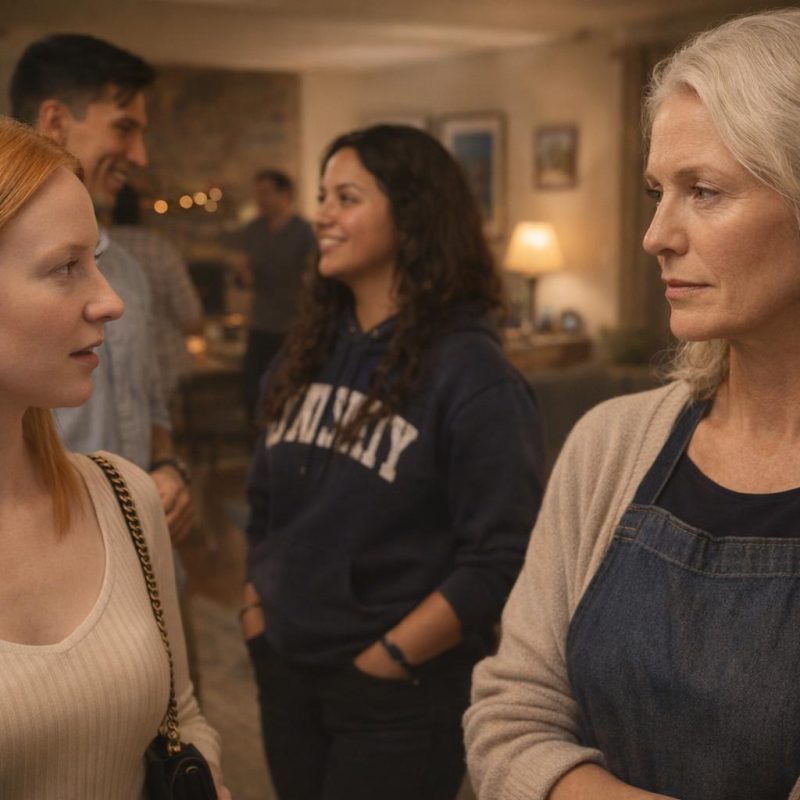 Image by RM AI
Broader Scope
Brittany walked through our living room during their next visit, her eyes scanning the space like she was taking inventory. She paused near the bookshelf and mentioned that the arrangement felt a bit dated, suggesting a more modern approach might open up the room better. Michael immediately agreed, saying he'd always thought the furniture could be positioned more efficiently. She continued through the space, pointing out how the curtains blocked natural light and how the color scheme felt heavy for the size of the room. Each comment came wrapped in the same helpful tone she used for my cooking—friendly suggestions, offered with a smile. Tom's jaw tightened beside me, but he didn't say anything. I stood there realizing that the critique had never been limited to my meals. She was evaluating everything—my decorating choices, my furniture placement, the way I'd arranged our home over twenty-three years. The living room I'd carefully put together, the space where we'd raised our kids and hosted countless gatherings, was being assessed and found wanting. It wasn't just my cooking she had opinions about—it was everything I'd built.
 Image by RM AI
Growing Distance
Michael called on Thursday to cancel Sunday dinner, his voice carrying that apologetic tone I'd heard twice before in recent weeks. He said they had plans that came up, something about a work event Brittany needed to attend. The explanation sounded smooth, prepared, like he'd practiced it before dialing. I asked when we might see him next, trying to keep my voice light. There was a pause, then he said he'd have to check with Brittany's schedule and get back to me. Not 'our schedule' or 'let me look at my calendar'—he needed to check with her first. I heard how his language had shifted over the past months, how his availability had become contingent on someone else's approval. Tom must have seen something in my face because he took the phone from my hand and suggested a specific date three weeks out, his tone firmer than usual. Michael said he'd ask Brittany and let us know. After Tom hung up, we sat in the kitchen not saying anything. This was the third cancellation in a row, and I couldn't remember the last time we'd had a full Sunday dinner with our son. When I asked when we'd see him next, he said he'd have to check with Brittany.
 Image by RM AI
Taking Charge
The email arrived on a Tuesday afternoon with the subject line 'Michael's Birthday Celebration!' I opened it expecting a message from my son, maybe asking what we should do this year. Instead, Brittany had sent a formal invitation to a party she'd organized—at our house. The date was set, the menu was planned, activities were outlined in bullet points. She'd included a note at the bottom asking us to confirm our attendance, like we were guests rather than hosts. I read it three times, trying to understand how this had happened. Tom found me still staring at the screen twenty minutes later, the cursor blinking in the reply field. She'd chosen the decorations, selected the food, even specified what time people should arrive. Our home had become a venue she'd booked, and somehow I was supposed to respond with a polite RSVP. Tom read over my shoulder, his hand tightening on the back of my chair. I'd hosted Michael's birthday every year of his life—the themes, the cakes, the traditions we'd built together. Now I was receiving an invitation like a distant relative being included out of obligation. I received the invitation to my son's party at my own home like a guest rather than the host.
 Image by RM AI
Replacement
The birthday party unfolded exactly as Brittany had planned it, and none of it felt familiar. The cake I usually made was replaced with a trendy dessert she'd ordered from a bakery downtown—layers of something with edible flowers on top. The games we'd played since Michael was six weren't mentioned. Instead, Brittany had organized activities I didn't recognize, directing people through them with practiced efficiency. She moved through our house like an event coordinator, making sure everything happened on schedule. Michael seemed happy, laughing at the right moments, thanking guests as they arrived. Rachel kept catching my eye from across the room, her expression tight with something between confusion and concern. I stayed in the kitchen mostly, watching through the doorway as traditions I'd maintained for twenty-eight years were simply absent, replaced with choices someone else had made. Tom positioned himself near me, not saying much but staying close. When it came time to sing, Michael hugged Brittany first, thanking her for making his day so special. I stood there holding a stack of plates I'd gotten out of habit, feeling like a caterer in my own home. Michael thanked Brittany for making his day special, and I stood in my own kitchen feeling invisible.
 Image by RM AI
Breaking Point
Tom closed the door after the last guest left and turned to me with an expression I'd rarely seen on his face. He said we needed to talk about what was happening, his voice carrying an edge that made me stop clearing plates. We sat at the kitchen table, the remnants of a party that hadn't felt like ours still scattered around us. He told me he was worried about losing our son, the words coming out carefully like he'd been holding them for weeks. I looked at him and realized I'd been carrying the same fear, just hadn't said it out loud. Tom mentioned how much had changed in the past six months—the cancelled dinners, the deference to Brittany's schedule, the way Michael seemed to need her approval before making decisions. I pulled out my phone and showed him the documented observations, the timeline Rachel and I had created. He studied it quietly, then admitted he didn't know how to address any of this without pushing Michael further away. We sat there in the kitchen we'd shared for over two decades, surrounded by evidence of our son's birthday but feeling his absence more than his presence. He told me he was worried about losing our son, and I realized I'd been worried about the same thing.
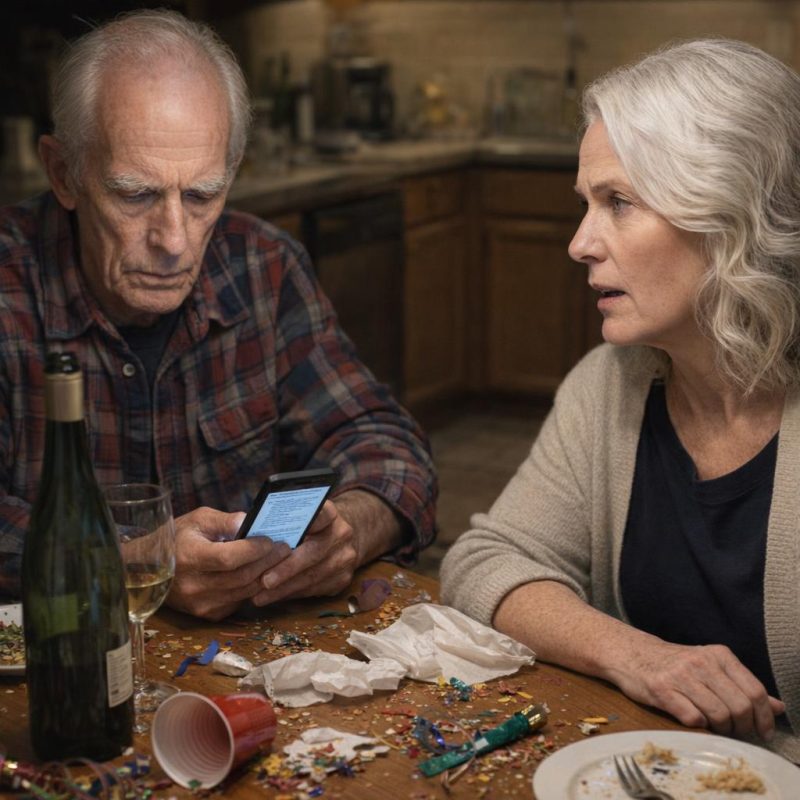 Image by RM AI
Closer Observation
I started watching Brittany differently after that conversation with Tom. Not obviously—I didn't stare or follow her around—but I paid attention to the timing of things. We had a family gathering the following weekend, just a casual Sunday lunch, and I made mental notes throughout the afternoon. When Michael was in the living room with us, Brittany mentioned that my green beans seemed a bit overcooked. When he went outside to help Tom with something in the garage, she and I were alone in the kitchen for maybe ten minutes, and she chatted pleasantly about her work week without a single comment about the food. Michael came back inside, and within five minutes she was suggesting I might try a different seasoning blend next time. I caught Tom's eye across the room and saw that he'd noticed it too. Later, when we were cleaning up, he confirmed he'd been tracking the same thing. Every critical comment, every suggestion for improvement, happened when our son was within earshot. When it was just us, or just Tom and me, the criticism disappeared entirely. I couldn't say why that mattered yet, but it felt significant in a way I couldn't quite articulate. The comments always came when Michael was present but not when she and I were alone.
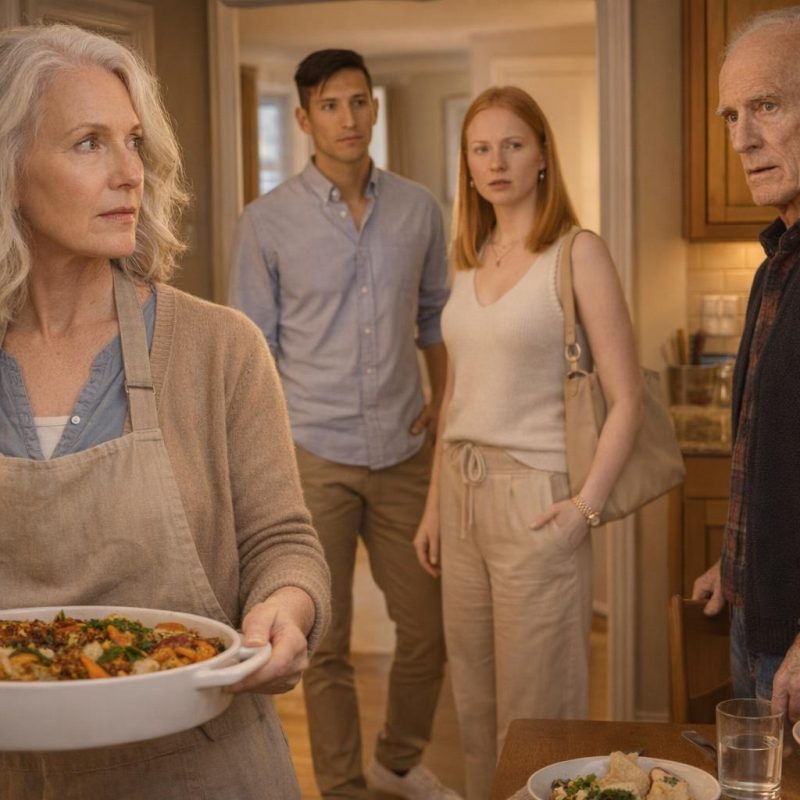 Image by RM AI
Testing Boundaries
The following week, Brittany called to ask what I was planning for dinner on Friday. I told her the menu, and she suggested I might want to swap out the roasted potatoes for something lighter, maybe a quinoa salad. I took a breath and said, as gently as I could, that I'd be keeping the planned menu. There was a pause on the line. When she responded, her voice was just as pleasant as before, but I could hear something underneath it that hadn't been there a moment earlier. She said of course, whatever I thought was best. We finished the call normally enough, but I felt like I'd just done something I couldn't take back. Friday came, and when they arrived, Brittany greeted me with her usual warmth. But when I mentioned the potatoes were almost ready, something flickered in her eyes—just for a second, just long enough for me to see it—before her smile returned. Michael immediately stepped in, saying he was sure everything would be delicious and maybe we could try Brittany's quinoa idea another time. Tom was watching from the doorway, and I knew he'd seen it too. Her smile didn't change, but something shifted in her eyes before Michael stepped in to mediate.
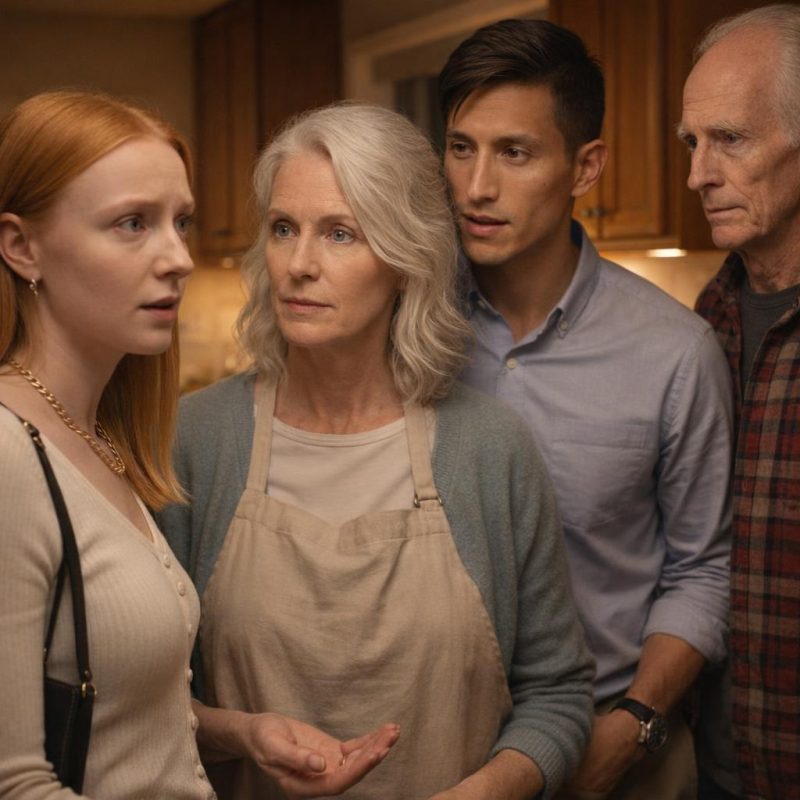 Image by RM AI
The Response
Brittany recovered smoothly, complimenting the table setting and asking if she could help with anything. But for the rest of the evening, I noticed something I hadn't quite seen before. Every time Michael made a comment—about the weather, about a movie they'd seen, about his work project—Brittany echoed it with enthusiasm. She agreed with him more than usual, positioned herself closer to him, touched his arm when she spoke. Rachel had joined us for dinner, and I saw her watching the same dynamic I was. When Michael said the potatoes turned out great, Brittany immediately added that they were perfectly seasoned. When he mentioned being tired from his week, she talked about how hard he'd been working. It wasn't that she'd never been supportive before, but the frequency felt different, more concentrated. Tom caught my attention during dessert and raised his eyebrows slightly. I wondered if this was a conscious response to my small boundary or just instinct, some automatic adjustment I'd triggered without meaning to. The evening ended pleasantly enough, but I had more questions than when it started. I watched her work, and for the first time, I saw the pattern as something more than accident.
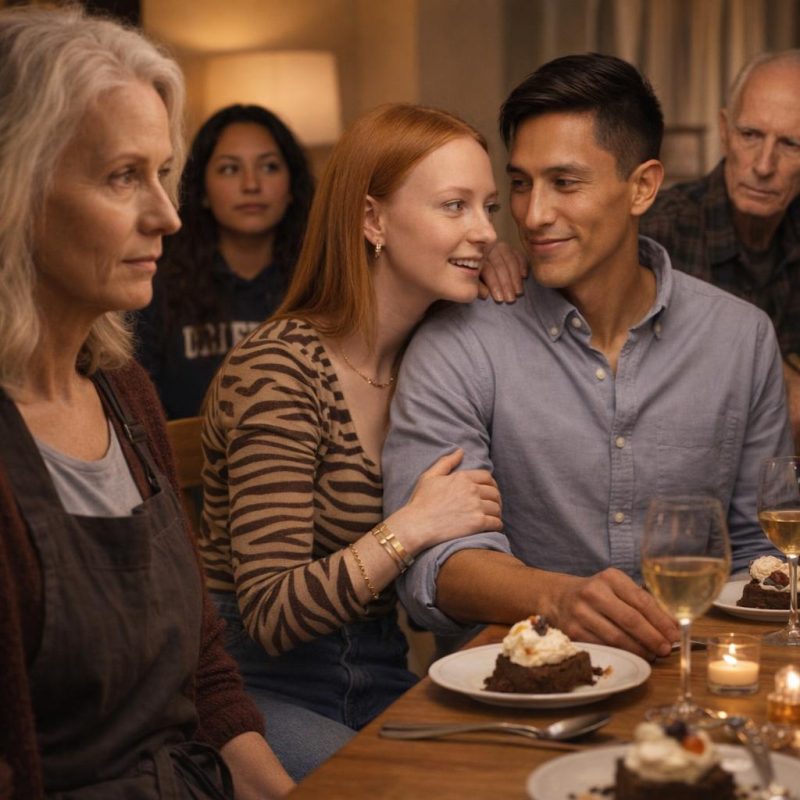 Image by RM AI
Strategic Planning
I spent the next few evenings thinking about what to do. Reacting in the moment hadn't gotten me anywhere—I'd either stayed silent and felt worse, or I'd pushed back gently and watched the situation shift in ways I didn't fully understand. Tom found me at the kitchen table one night, making notes on a pad of paper. He asked what I was working on, and I told him I wanted to try something different. I'd been responding to things as they happened, but maybe I needed to create a situation where the truth could emerge more clearly. He sat down across from me and asked what I had in mind. I said I wanted to host one more dinner, but this time I wanted to plan it carefully, think through what I was trying to learn. He listened without interrupting, the way he always did when I was working something out. I explained that I wasn't trying to trap anyone or create drama—I just wanted to understand what was really happening in these interactions. Tom asked what I hoped to accomplish, and I admitted I wasn't entirely sure yet. But doing nothing felt worse than trying. Tom asked what I was thinking, and I told him I wanted to host one more dinner.
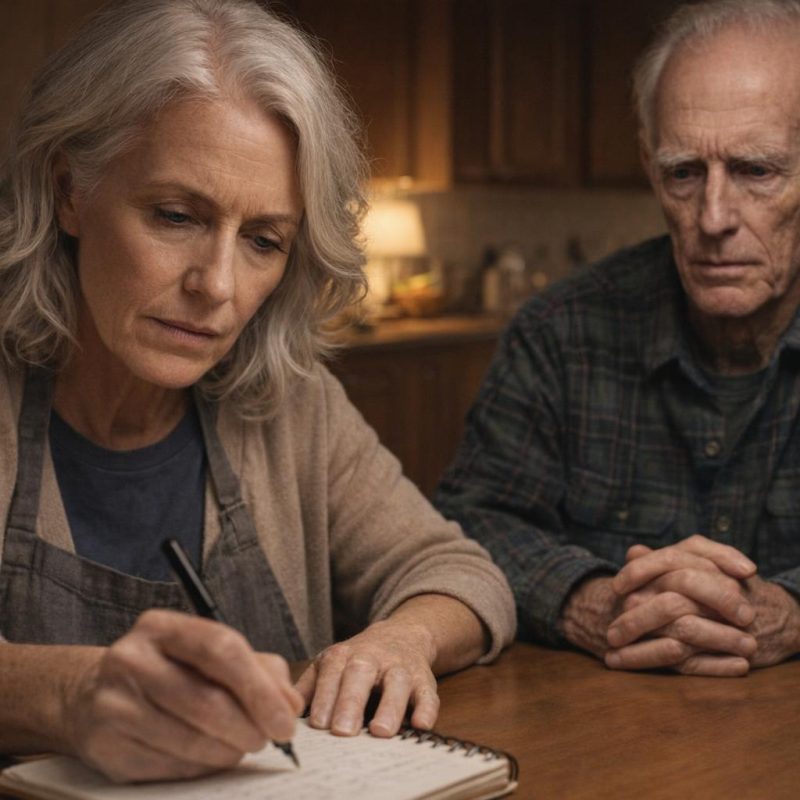 Image by RM AI
Shared Strategy
We talked for over an hour that night, Tom and I, going through what this dinner might look like. I told him I wanted to create space for honest reactions, for whatever was true to show itself without me forcing anything. He asked how he could support that, and I appreciated that he was asking rather than taking over. I shared my uncertainty—I didn't know what would happen, didn't know if I'd learn anything useful, didn't even know if I was reading the situation correctly. Tom reminded me that I'd always had good instincts about people, that I shouldn't doubt myself now. We discussed who should be there, whether to keep it small or include Rachel. I felt the knot in my chest loosening as we talked, the isolation I'd been carrying for months easing just from having him fully engaged in this with me. He said he trusted me to handle it however I thought best, that he'd follow my lead. I realized how much I'd needed to hear that, how much his confidence steadied my own. He said he trusted me to handle it however I thought best, and I felt less alone than I had in months.
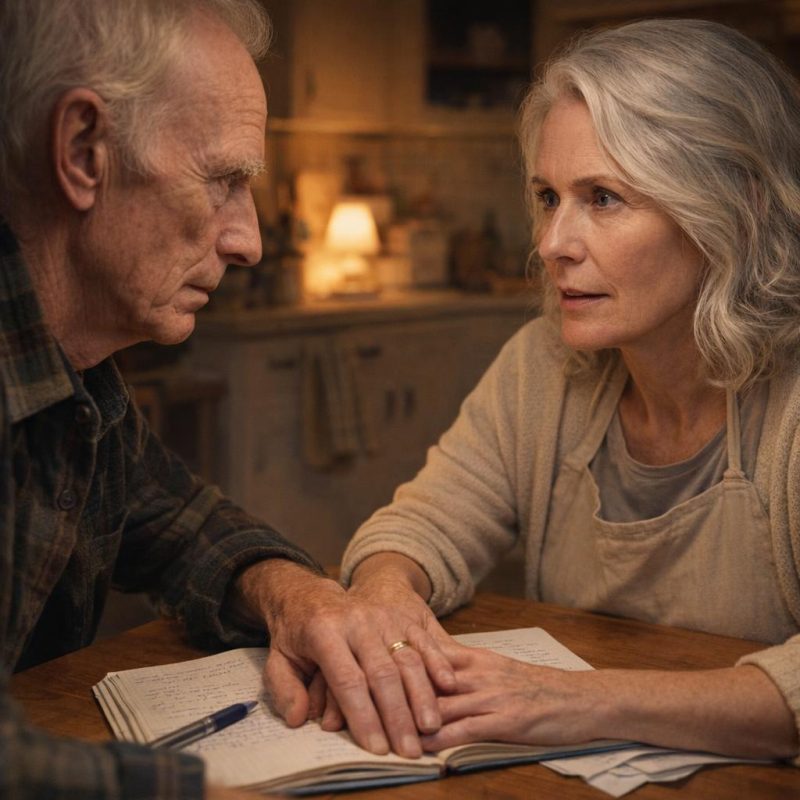 Image by RM AI
Intentional Preparation
I started planning the dinner the next morning, but this time felt different from all the other meals I'd prepared over the past months. I wasn't thinking about what might impress Brittany or avoid her criticism. Instead, I thought about what would create clarity, what would invite genuine reactions. Tom and I discussed the guest list over coffee—just the four of us, we decided, to keep things focused. I considered which dishes might naturally invite comment, which ones I knew well enough to prepare without anxiety clouding my judgment. Tom offered thoughts on timing, on how to structure the evening so it didn't feel forced. I wrote out a preliminary menu, crossed things out, rewrote it. He watched me work with that quiet attention he'd always had, not interfering but present. I felt focused in a way I hadn't in a long time, purposeful rather than defensive. The preparation felt different from previous gatherings, less about performance and more about creating space for truth. This wasn't about impressing anyone—it was about creating a space where nothing could hide.
 Image by RM AI
Meaningful Choices
I chose the roast chicken I'd been making since Michael was a child, the one I could prepare in my sleep. The recipe came from my mother, and I'd made it hundreds of times—for birthdays, for Sunday dinners, for the ordinary weeknights that made up a family's life. I added the green beans my grandmother used to make, the ones I'd learned by watching her hands rather than following a written recipe. For the potatoes, I picked the version Tom had always loved, the one I'd perfected over our years together. Each dish on the menu carried weight, held memories of successful meals and grateful faces. I wrote it all out with steady hands, feeling something shift inside me as I did. These weren't recipes I'd chosen to prove anything—they were the food I knew best, the cooking that had defined me before I'd started second-guessing every choice. I realized how much I'd let slip away over these months, how much of myself I'd allowed to become uncertain. Each item on the menu was a reminder of who I'd been before the doubts crept in.
 Image by RM AI
Mental Rehearsal
I knew the food was only part of it. I needed to be ready for the conversations that might happen, the questions I might need to ask. So I started practicing, feeling slightly ridiculous but doing it anyway. I stood in the kitchen and said things out loud, testing different phrasings. "I've noticed something and I'm curious about it." "Can you help me understand why..." "I'd like to talk about what's been happening." Tom came in while I was rehearsing and didn't laugh, just listened and offered feedback. He suggested I soften one question, pointed out where another might sound accusatory. I tried again, adjusting my tone, finding words that invited explanation rather than putting anyone on the defensive. We went through various scenarios, different ways the evening might unfold. Tom reminded me that I couldn't script everything, that I'd need to trust my instincts when the moment actually came. I felt nervous but also more prepared than I had for any of the previous encounters. The words felt strange in my mouth, but I knew I needed to be ready when the moment came.
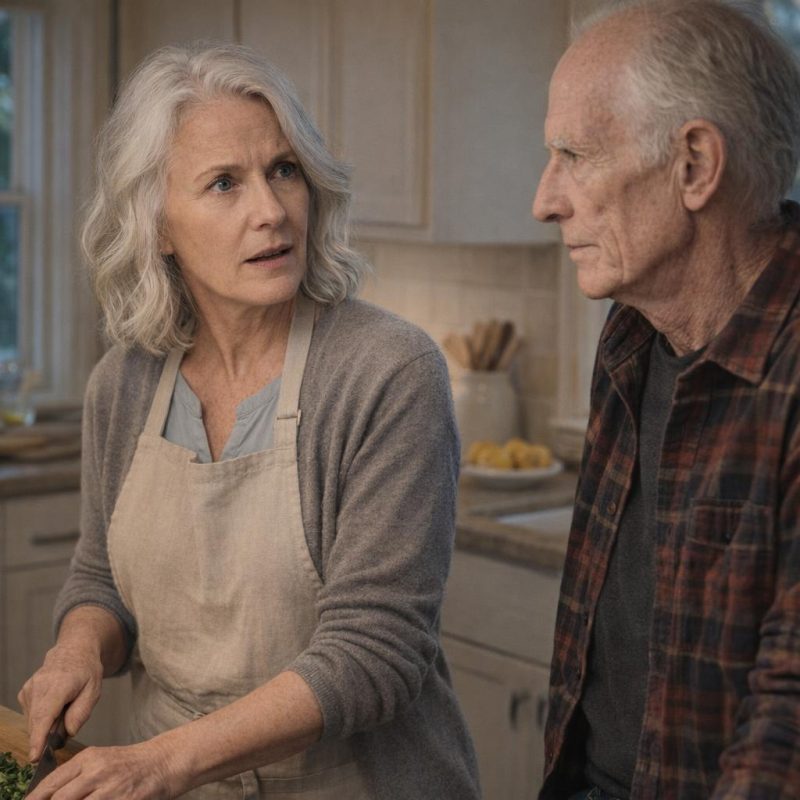 Image by RM AI
The Invitation
I sat at the kitchen table with my phone, typing and deleting messages for what felt like an hour. The invitation needed to sound normal, casual even—just another family dinner. Nothing that would make anyone suspicious or give away what I'd been planning. I finally settled on something simple: would everyone be free next Saturday evening for dinner? Tom read it over my shoulder and nodded his approval. I sent it to Rachel first, then took a breath before composing a separate message to Michael. Same words, same casual tone, but my hand shook slightly as I hit send. The responses came back quickly. Rachel replied with a thumbs up and "wouldn't miss it." Then my phone buzzed with Michael's text: "Sounds great Mom! Brittany and I will definitely be there. She's been asking when we'd get together again." I stared at that last sentence, feeling something twist in my chest. Tom squeezed my shoulder as I set the phone down. The dinner was set for the following weekend, and I felt my heart beat a little faster.
 Image by RM AI
The Day Arrives
The alarm went off at five in the morning, but I was already awake. I'd been lying there in the dark, running through everything in my mind—the menu, the timing, the questions I might need to ask. Tom stirred beside me as I slipped out of bed and headed downstairs. The kitchen was quiet and cool, and I turned on just the small light over the stove before pulling out ingredients. My hands moved through familiar motions: chopping vegetables, seasoning the roast, preparing the bruschetta topping. Each task required focus, and I was grateful for that. The house gradually filled with the smell of garlic and herbs, bread baking, chicken roasting. Tom came down around eight and started setting the table without being asked, arranging plates and glasses with careful attention. He kept glancing at me, and I knew he was worried. By late afternoon, everything was ready. The food was prepared, the table was set, and I stood in the middle of the kitchen feeling the weight of what was about to happen. Tom found me there and asked if I was ready, and I told him I didn't know yet.
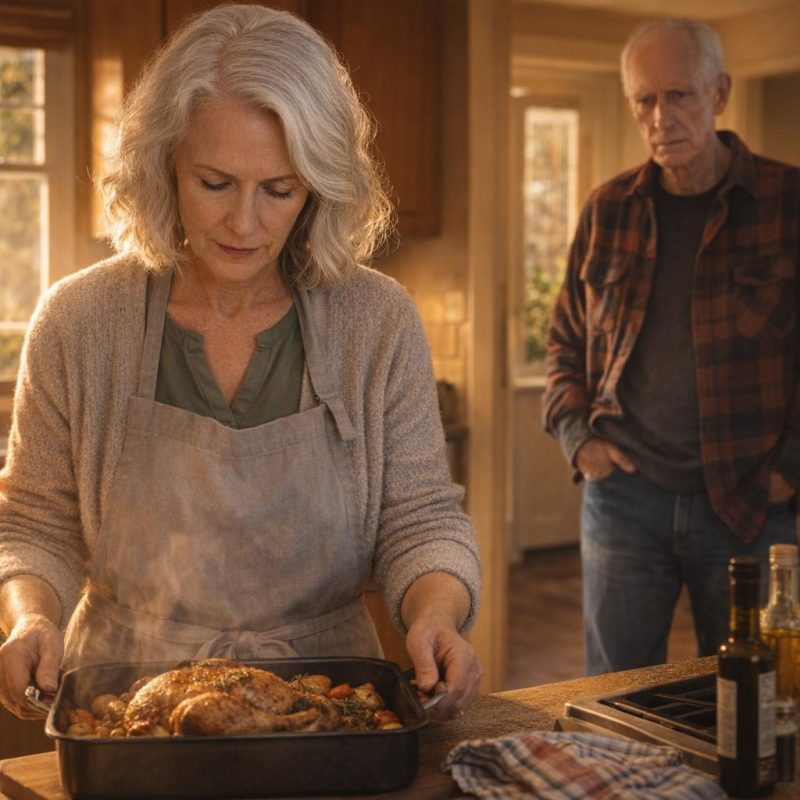 Image by RM AI
Gathering
Rachel arrived first, right at six o'clock. She hugged me at the door and when she pulled back, her eyes searched my face with a question I couldn't quite answer yet. Tom took her coat and she followed me into the kitchen, where she leaned against the counter and watched me check on the food. We didn't talk much, but I felt her presence as a kind of anchor. The doorbell rang again twenty minutes later. I heard Tom greeting Michael in the hallway, their voices warm and easy. Then I heard her voice too—Brittany's practiced, pleasant tone commenting on the wreath I'd hung on the door. I wiped my hands on a towel and walked out to meet them. Michael hugged me, and Brittany smiled that smile of hers, the one that never quite reached her eyes. She complimented the living room arrangement, mentioned how cozy everything looked. Everyone gathered near the fireplace, making small talk about traffic and weather and work. I watched the interactions carefully, noting how Brittany touched Michael's arm, how Rachel's gaze kept drifting to me. The mood was pleasant enough, but I felt undercurrents running beneath every word. Brittany stepped through the door with her usual smile, and I felt myself grow still.
 Image by RM AI
First Course
I called everyone to the table and they settled into their seats with the comfortable familiarity of family dinners past. Tom sat at one end, I took the other, and Michael and Brittany sat together on one side with Rachel across from them. I brought out the appetizers I'd spent the morning preparing—bruschetta with tomatoes from the farmers market, the basil from my own garden. Conversation flowed easily at first. Rachel asked Michael about a project at work, Tom mentioned something he'd read in the news. I watched as everyone took their first bites, saw the small nods of appreciation. Then Brittany picked up a piece of bruschetta, examined it for a moment, and took a careful bite. Her expression shifted into something I recognized immediately—that evaluating look, head tilted slightly, eyes focused somewhere in the middle distance. Michael glanced at her, and I saw the expectation in his face. Rachel's fork paused halfway to her mouth. The room seemed to hold its breath. She opened her mouth to comment, and I felt as though I were standing at the edge of something I couldn't take back.
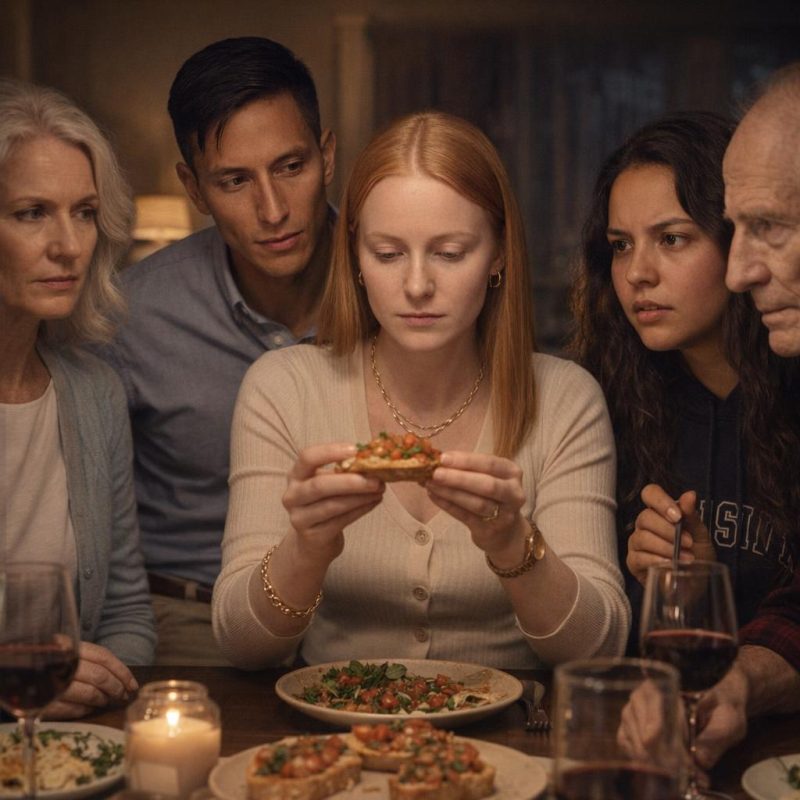 Image by RM AI
The Truth Emerges
Brittany set down her bruschetta and dabbed her mouth with her napkin. "The flavors are nice, Linda, but I think it could use a bit more basil. And maybe a touch less garlic?" Her voice carried that same helpful, instructive tone I'd heard so many times before. But this time, as I listened to her words, something clicked into place with absolute clarity. It wasn't about the basil. It had never been about the basil, or the garlic, or any of the dozens of other suggestions she'd made over the past months. Every single comment had been directed at something I'd made, something I'd chosen, something that represented my place in this family. She'd never criticized the restaurant meals or the dishes other people brought. Only mine. And each time I'd adjusted to accommodate her, each time I'd changed a recipe or altered my approach, I'd been ceding ground. The food had been a proxy for something much larger—she was systematically dismantling my role, testing how much influence she could claim, how much of my family's attention and deference she could redirect to herself. I looked at Brittany with new eyes and realized she was staking a claim on my family, one dismissive comment at a time.
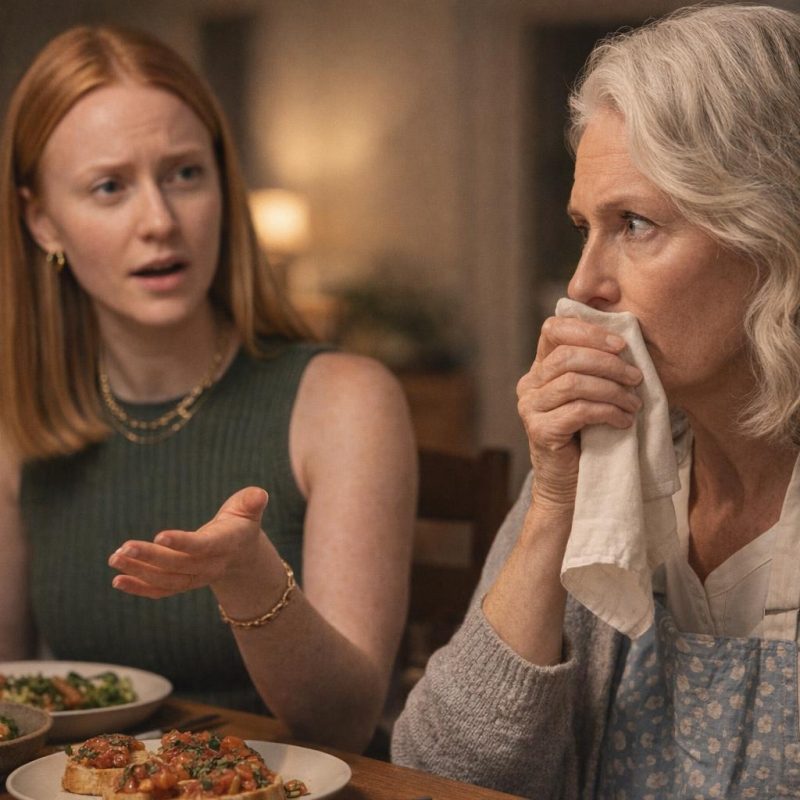 Image by RM AI
The First Question
I set down my own fork and looked directly at Brittany. "What exactly about the seasoning do you find lacking?" My voice was calm, genuinely curious. The question hung in the air for a moment. Brittany's confident smile flickered—just for a second, so brief I might have imagined it—before she recovered. "Well, as I mentioned, the basil ratio could be adjusted. It's a bit understated for my taste." I nodded slowly. "Can you describe what ratio you think would work better? I used about two tablespoons of fresh basil for the amount of tomatoes I prepared." Tom had stopped eating entirely now, his attention fixed on the exchange. Michael shifted in his seat, his eyes moving between Brittany and me with a confused expression. Rachel watched intently, her fork still in her hand but forgotten. Brittany paused, seeming to consider her answer. "I suppose... maybe three tablespoons? It's really about achieving the right balance with the other herbs." Her response was vague, lacking the specificity of someone who actually knew what they were talking about. Her confident smile flickered for just a moment before she began to answer.
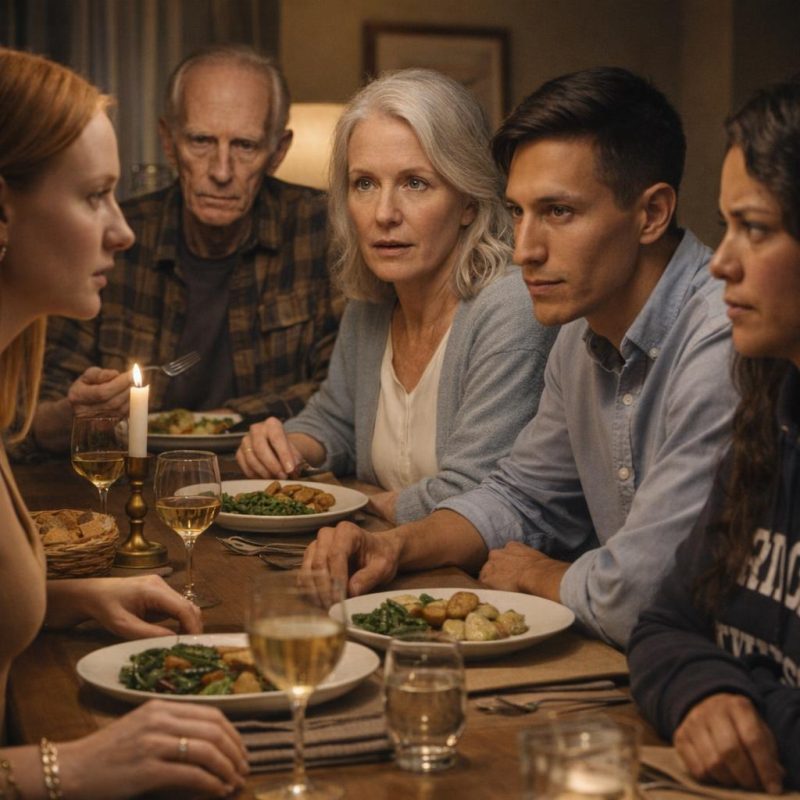 Image by RM AI
Doubling Down
I brought out the main course—roast chicken with herbs, roasted vegetables, a grain salad I'd perfected over years of making it. Tom and Rachel both complimented the presentation immediately. Michael said it looked amazing. I served everyone and we began eating. The chicken was tender, the seasoning exactly as I'd intended it. For a few minutes, there was just the sound of silverware and appreciative murmurs. Then Brittany cut a piece of chicken, tasted it thoughtfully, and set down her fork. "The chicken is cooked well, but I think the roasting method could be improved. A different temperature or technique might bring out more flavor." Her voice carried that same confident authority it always had, as though she were simply stating facts. But I didn't feel the usual tightness in my chest. Instead, I felt oddly calm. I looked at her and nodded thoughtfully. "Tell me more about that. What method would you suggest?" Michael's uncomfortable shifting became more pronounced. Tom continued eating quietly, but I could feel his attention on every word. Rachel's expression showed something like recognition. I nodded thoughtfully and asked her to tell me more.
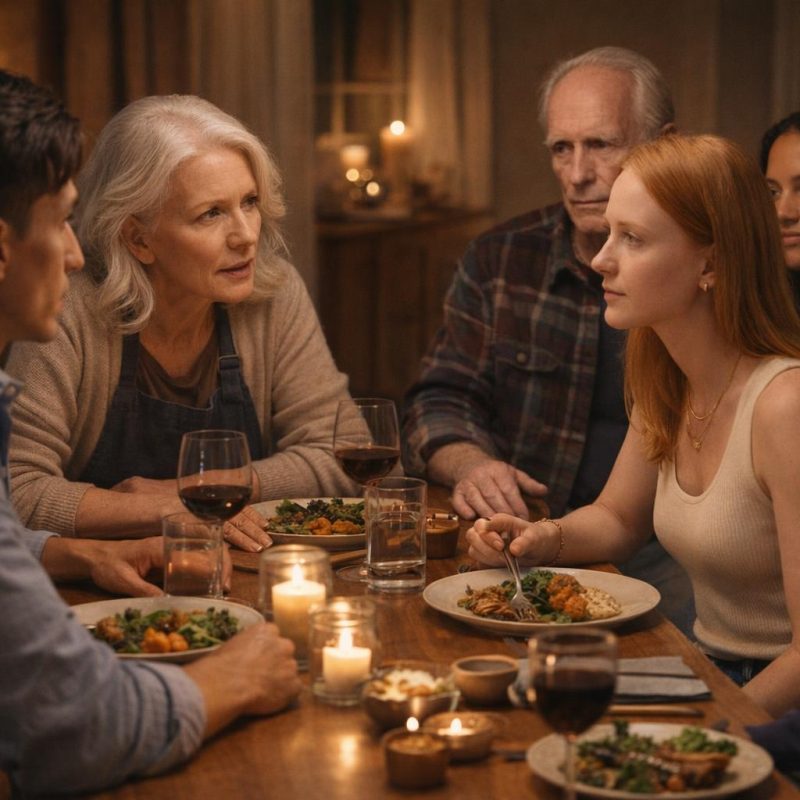 Image by RM AI
Specifics
Brittany began explaining something about lower temperatures and longer cooking times, but I gently interrupted. "That's interesting, because last month when we had dinner at Michael's apartment, you mentioned you preferred chicken cooked at higher heat for a shorter time. You said it kept the meat from drying out." I kept my tone curious, not accusatory. "How does this meal compare to what you said you preferred then?" The table went very quiet. Brittany's fork hovered over her plate. "I... well, it depends on the preparation method, obviously. Different approaches work for different recipes." Her voice had lost some of its certainty. "Of course," I said. "But you'd mentioned that high-heat method was your general preference for chicken. Has that changed?" Rachel's eyebrows rose slightly. Michael looked genuinely confused now, his gaze fixed on Brittany as though seeing something for the first time. Tom took a sip of water, his expression neutral but his eyes sharp. Brittany's answer came more slowly this time, and I noticed her hand tightening around her fork. The atmosphere at the table had shifted, grown heavier. She began to answer, and I could see the first cracks forming in her certainty.
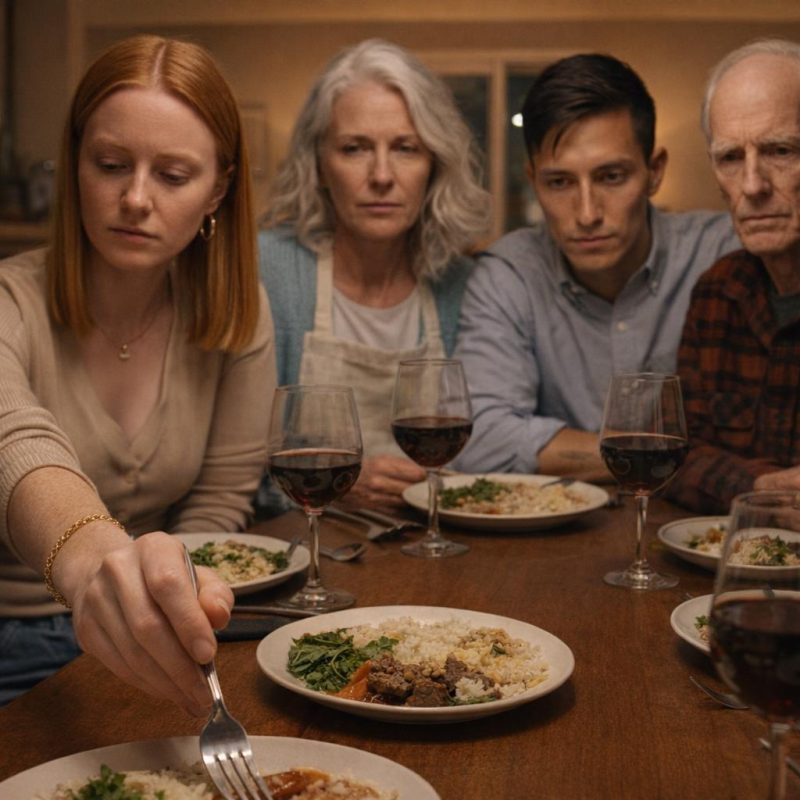 Image by RM AI
Shifting Attention
Brittany kept talking, her explanations growing more elaborate with each question. I watched Rachel lean forward slightly, her eyes tracking every word. Tom had gone completely still beside me, the kind of quiet that meant he was paying very close attention. "So what you're saying," Rachel said carefully, "is that you prefer both high-heat and low-heat methods depending on the recipe?" Her tone was genuinely curious, not confrontational. Brittany nodded quickly. "Exactly. It's all about context." Rachel glanced at me, then back at Brittany. "But at Michael's birthday dinner, you said Mom's roasted vegetables were overcooked because she used too low a temperature. Tonight you said the chicken needed lower heat. I'm just trying to understand the principle you're working from." The words hung there, polite but pointed. Brittany's mouth opened, closed, then opened again. Her hands moved as she spoke, gesturing more than usual. "Well, vegetables and chicken are completely different, obviously. The cellular structure—" Tom cleared his throat softly. Michael had stopped eating entirely now, his fork resting on his plate. He was looking at Brittany with an expression I hadn't seen before—something between confusion and concern.
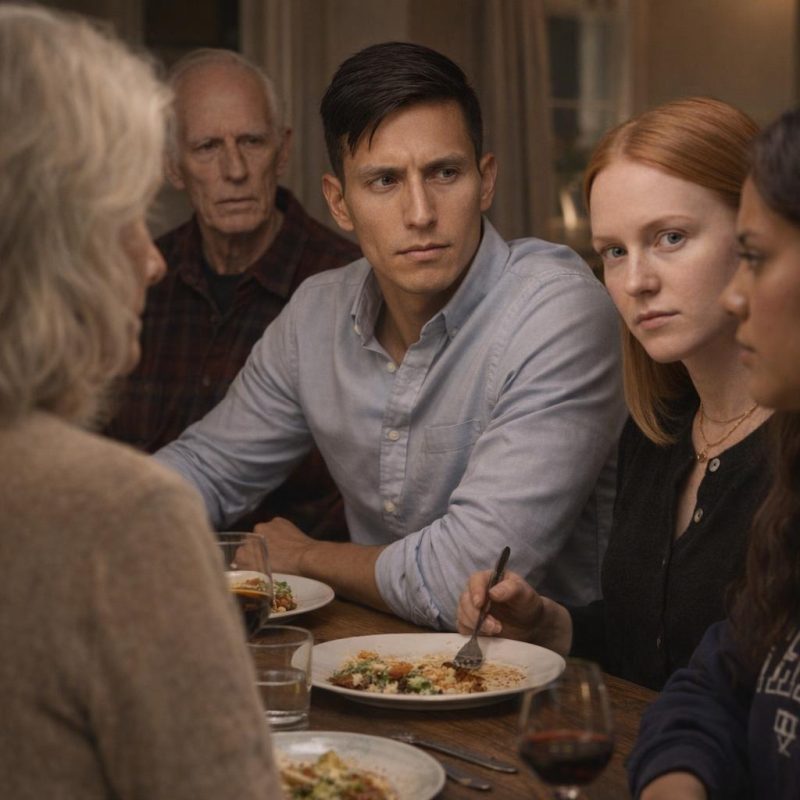 Image by RM AI
Unraveling
I asked about something specific she'd said at Easter dinner, keeping my voice gentle. "You mentioned then that you always cook your proteins at 425 degrees because anything lower makes them rubbery. Do you remember that?" Brittany nodded before she could stop herself. "Yes, but that's for—" She paused, seeming to realize the trap. "That's my general approach, but tonight's chicken was different because of the marinade and the—" "But you just said lower temperatures were better for chicken," Rachel said quietly. "A few minutes ago." Brittany's face flushed slightly. "I meant for this specific preparation. The marinade changes everything. When you have acidic components, you need to adjust your heat levels to account for the way the proteins break down differently, and the moisture content affects—" She was still talking when she contradicted herself again, saying something about preferring higher heat for marinated meats. Michael's brow furrowed deeply. Tom reached for his water glass but didn't drink. The explanation kept going, growing more tangled, until Brittany stopped mid-sentence and looked around the table as if seeing the room clearly for the first time.
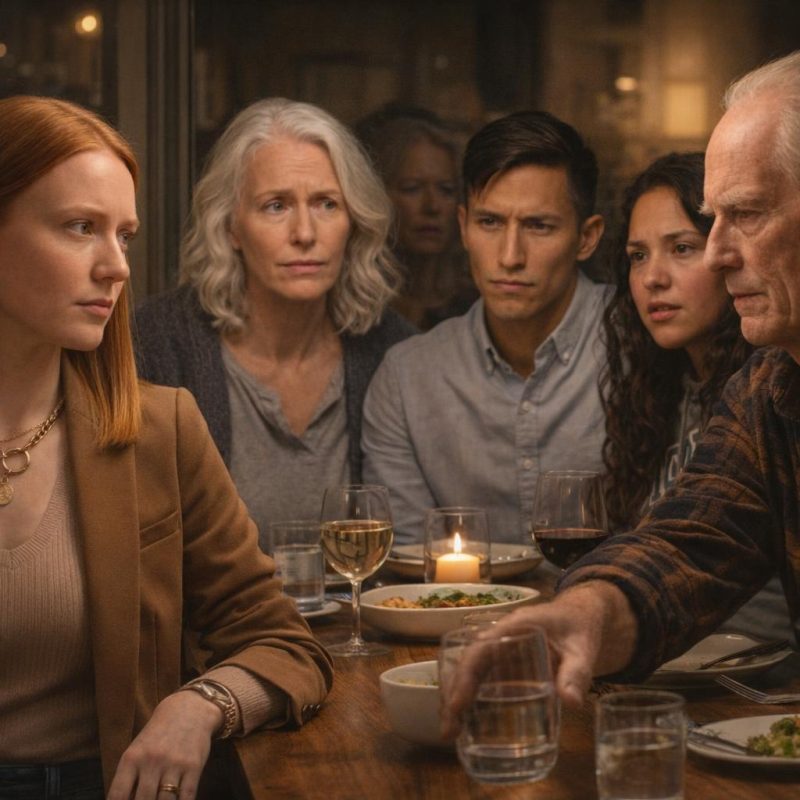 Image by RM AI
The Space for Truth
The silence stretched for a moment before I spoke. "Brittany, I'm trying to understand something." I kept my voice calm, almost gentle. "Over the past several months, you've offered a lot of feedback about my cooking. But your preferences seem to change depending on the situation. Tonight you've said things that directly contradict what you told us at previous dinners." I paused, letting that settle. "I'm just wondering why that is." The question hung in the air like smoke. Everyone at the table seemed to hold their breath. Brittany opened her mouth, but no words came out immediately. She looked at Michael, then at me, then down at her plate. "I... that's not... you're misremembering what I said before." Her voice had lost its usual confidence. "I don't think I am," I said quietly. "Rachel and Tom remember too." Rachel nodded. Tom remained silent but his expression confirmed it. The pause stretched longer. I didn't fill it with explanations or softening words. I just waited, giving her space to answer honestly if she chose to. Brittany's face flushed red, and for the first time all evening, she had no ready answer.
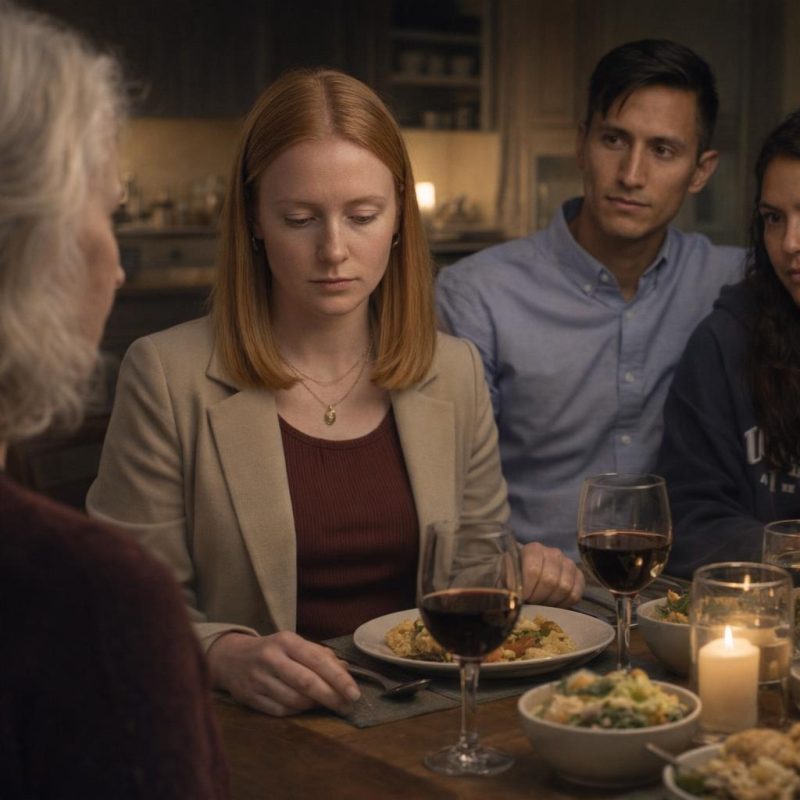 Image by RM AI
Crumbling Facade
"This is ridiculous," Brittany said suddenly, her voice rising. "You're twisting everything I've said. You've been hostile to me from the beginning, and now you're trying to make me look bad in front of everyone." Her hand gestured sharply across the table. "I've been nothing but helpful, trying to share what I know about cooking, and this is how you treat me?" The defensiveness in her tone was so different from her usual measured delivery that Michael actually flinched. I kept my voice level. "I'm not twisting anything. I'm asking about specific things you said, at specific dinners. If I'm misremembering, you can correct me." Rachel leaned forward. "Mom has every right to understand why you've been criticizing her cooking for months, Brittany. Especially when your reasons keep changing." Brittany turned to Michael, her eyes wide. "Are you going to let them attack me like this?" Michael hesitated. His mouth opened but he didn't speak right away. I watched his hand, which had been resting near Brittany's on the table, slowly pull back toward his own plate. Brittany noticed immediately, her gaze dropping to where his hand had been, and something essential shifted between them.
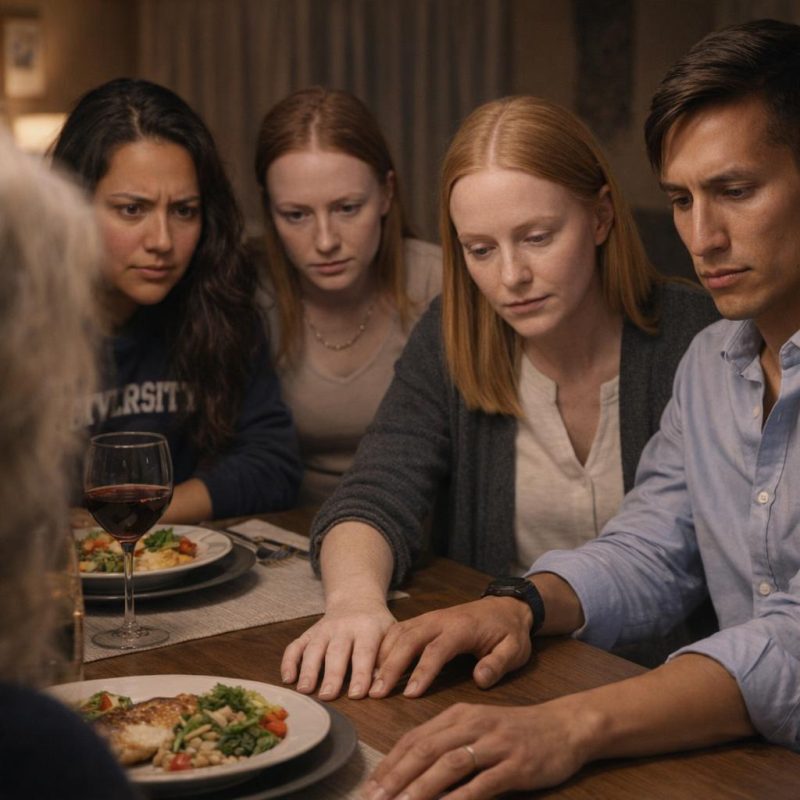 Image by RM AI
The Weight of Silence
No one spoke. The silence felt heavy, like something physical pressing down on all of us. I could hear the clock ticking in the hallway, the faint hum of the refrigerator. Brittany shifted in her chair, then shifted again. Her perfect posture had collapsed slightly, her shoulders curving inward. Michael stared at his plate, his jaw working like he was trying to find words that wouldn't come. Rachel watched Brittany with an expression I couldn't quite read—not angry, exactly, but clear-eyed in a way that seemed new. Tom's hand found mine under the table, his fingers warm and steady. He squeezed gently, a silent acknowledgment of everything that had just happened. Brittany looked around the table as if searching for an ally, someone who would break the uncomfortable quiet and redirect the conversation to safer ground. But no one did. The truth of the evening sat there with us, visible now in a way it hadn't been before. All the months of comments and corrections, all the careful criticisms, had been laid bare. Brittany pushed back her chair with a scraping sound that made everyone jump slightly, and I knew the moment had arrived.
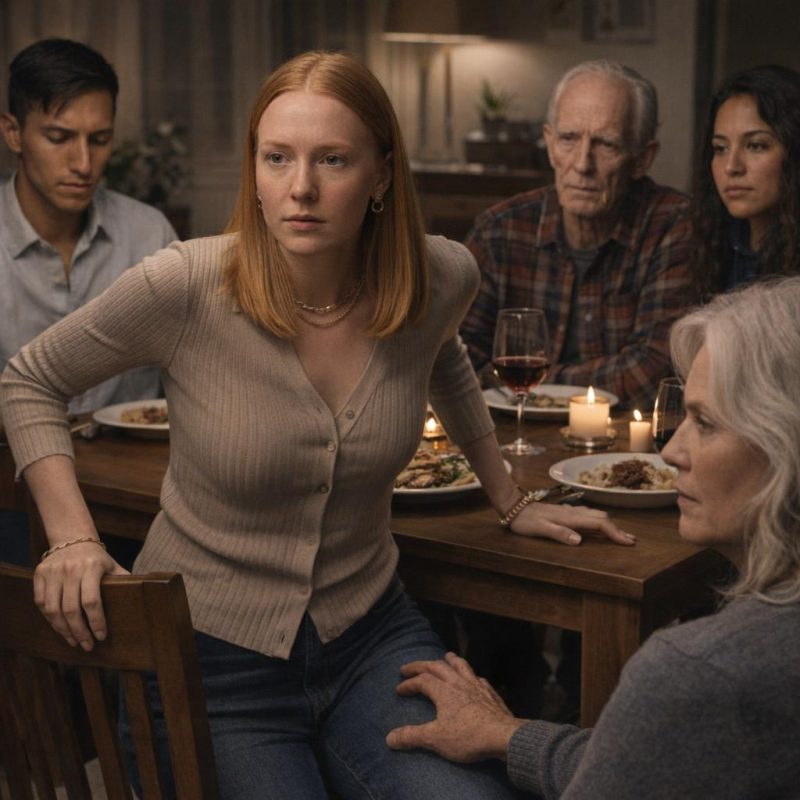 Image by RM AI
Eyes Opening
Michael's head came up slowly. He looked at Brittany like he was seeing her for the first time, really seeing her. His eyes moved across her face, searching for something. I watched him piece it together—not just tonight's contradictions, but all the other dinners, all the small comments that had accumulated over months. The way she'd corrected my techniques, questioned my choices, offered unsolicited advice with that practiced smile. His expression shifted from confusion to something deeper, something that looked like recognition mixed with hurt. He glanced at me, then at Tom, then at Rachel. "All those dinners," he said quietly, almost to himself. "Every single time." His voice carried a weight I hadn't heard before. Brittany reached for his arm but he didn't seem to notice. He was somewhere else now, replaying conversations in his mind, seeing patterns he'd missed or chosen not to see. The realization was written clearly across his face—not just that Brittany had been unkind, but that he'd defended her, had asked his own family to be more understanding, had made excuses. He turned to me, and his voice cracked slightly. "Mom," he said, in a tone I hadn't heard since he was a boy asking for help.
 Image by RM AI
Exit
"I'm not feeling well," Brittany announced abruptly, standing so quickly her napkin fell to the floor. "I think I need to go home." Her voice was tight, controlled in a way that felt brittle. "I'm getting a headache." Michael started to push back his chair, the automatic response of someone preparing to leave with their girlfriend. But he stopped halfway, his hands gripping the table edge. Brittany grabbed her purse from where it hung on her chair. "I'll just call a car. You don't need to—" "Brittany," Michael said, but she was already moving toward the hallway. "I really need to go. The air in here is—I just need air." She didn't look at anyone as she walked past. No goodbye, no thank you for dinner, no acknowledgment of the meal I'd spent hours preparing. Tom and Rachel stayed perfectly still. I kept my hands folded in my lap, maintaining the same calm I'd held all evening. We heard the front door open, then close. Through the window, I could see her standing on the sidewalk, phone already pressed to her ear. Michael remained in his chair, staring at the empty doorway where she'd disappeared.
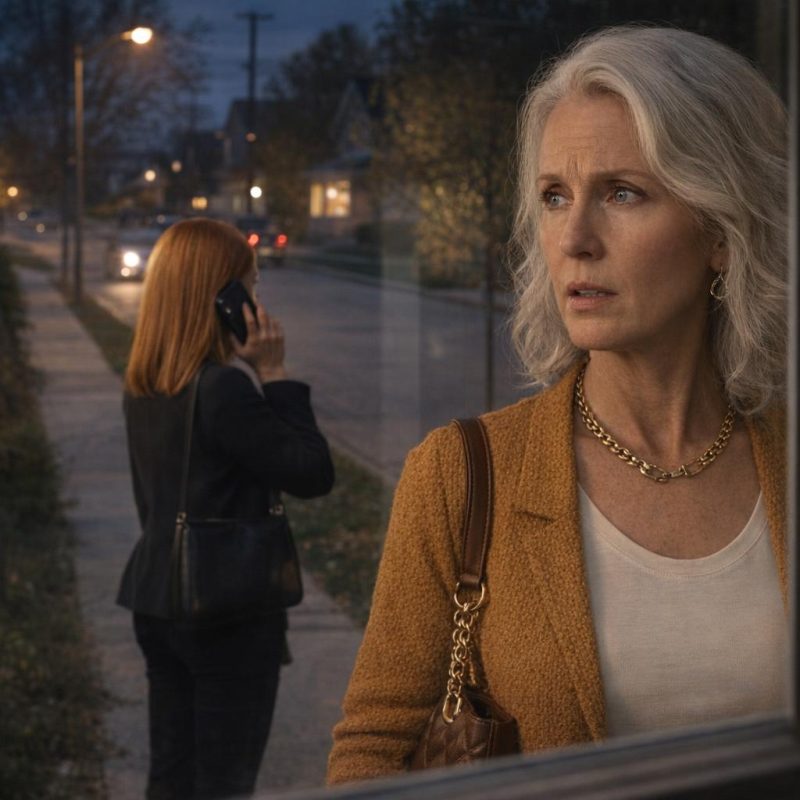 Image by RM AI
After
We sat in the quiet for what felt like a long time. The dinner plates were still on the table, food barely touched. Finally, Rachel spoke. "Michael, are you okay?" Her voice was gentle, concerned in a way that made my chest tighten. He shook his head slowly. "I don't... I defended her. To you guys. Multiple times." His voice was rough. "I told you Mom was being too sensitive. I said you were overreacting, Rachel." Tom moved his chair closer to mine, his presence solid and reassuring. Michael looked up at me, his eyes red-rimmed. "She's been doing this for months, hasn't she? And I just... I didn't see it. Or I didn't want to see it." Rachel reached across the table toward her brother. "She was really good at making it sound reasonable. Like she was just trying to help." "But Mom knew," Michael said. "You knew, didn't you?" I nodded slowly. "I knew something wasn't right. But I needed you to see it too." He dropped his head into his hands. When he looked up again, his face was anguished. "Can you ever forgive me for not seeing it sooner?"
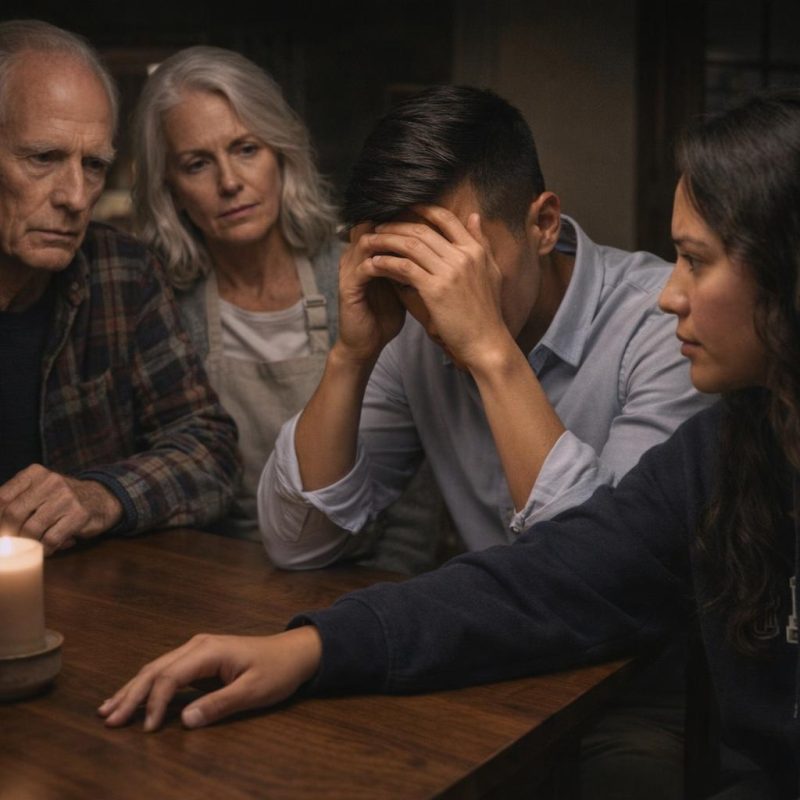 Image by RM AI
Private Reckoning
I gave him space for about twenty minutes before I walked down the hallway to his old bedroom. The door was half-open, and I could see him sitting on the edge of the bed where he'd slept through high school, his shoulders hunched forward. I knocked softly on the doorframe. He didn't look up, just nodded slightly. I stepped inside and sat down beside him, close enough that our shoulders almost touched. The room still had his old posters on the walls, a bookshelf filled with paperbacks he'd loved as a teenager. We sat there in silence for a while. Finally, he spoke. "She made fun of your pot roast once when we were driving home. I laughed." His voice cracked. "I actually laughed, Mom." I didn't say anything, just listened. "And the time you made that beautiful cake for my birthday last year? She told me later it was too sweet, that you probably used a box mix." He turned to look at me then, his face twisted with guilt. "I didn't defend you. I just... I changed the subject." I reached over and took his hand. He looked up at me with tears streaming down his face and asked how he had missed it for so long.
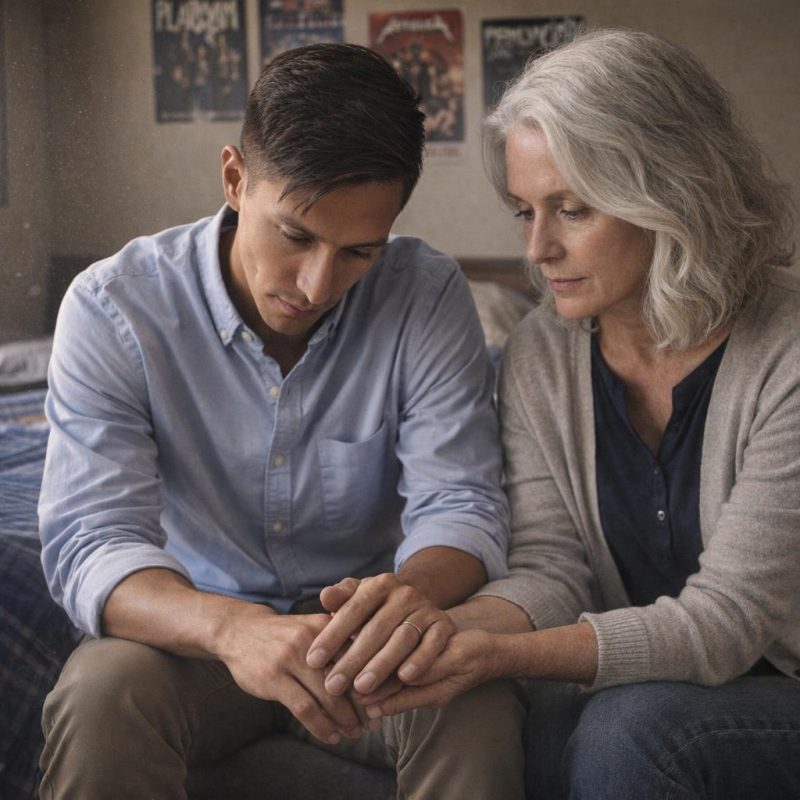 Image by RM AI
Morning Light
Tom and I were up before dawn the next morning. Neither of us had slept well. I found him already in the kitchen, coffee brewing, when I came downstairs. He poured me a cup without asking, added the cream the way I liked it. We sat at the table together, the house quiet around us. "How are you feeling?" he asked. I wrapped my hands around the warm mug and thought about it. "Relieved," I said finally. "But also sad for Michael. He's really hurting." Tom nodded slowly. "He needed to see it himself. You knew that." We talked through everything that had happened the night before—Brittany's reaction, Michael's devastation, Rachel's quiet support. Tom reached across the table and covered my hand with his. "I'm proud of you," he said. "The way you handled this whole thing. You never lost yourself, even when it would have been easier to just give in." Something loosened in my chest when he said that. For months, I'd doubted myself, wondered if I was being too sensitive or too stubborn. But sitting there with Tom in the early morning light, I finally felt like myself again.
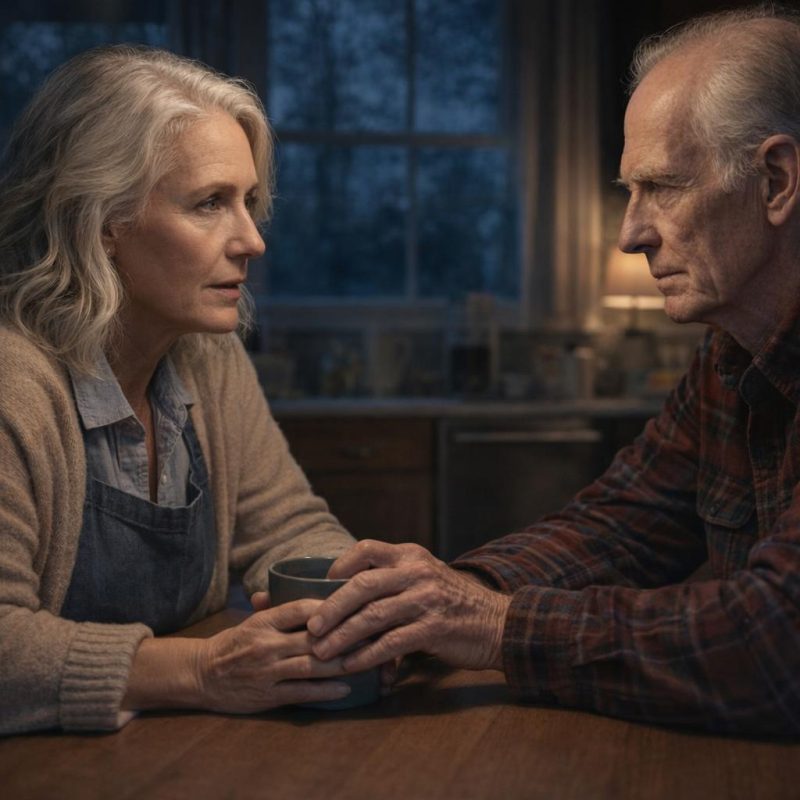 Image by RM AI
Reaching Out
My phone rang that afternoon while I was folding laundry. Michael's name appeared on the screen. I answered, and his voice came through, steadier than it had been the night before but still heavy with emotion. "Mom, I need to say this properly. I'm so sorry." He took a breath. "I should have listened to you. I should have seen what was happening." I sat down on the edge of the bed, the laundry forgotten. "I know, sweetheart." "Brittany's been texting me," he continued. "I haven't responded. I don't know what I'd even say to her." We talked for almost an hour. He told me about other moments he was remembering now, things Brittany had said that he'd dismissed or rationalized. I listened without interrupting, letting him process it all out loud. Finally, he asked the question I'd been waiting for. "Can we fix this? Us, I mean. Our relationship?" "Michael," I said, "my love for you never changed. Not once." His voice broke with relief. "Can I come to Sunday dinner? Just like before?" I smiled, tears in my own eyes now. I told him there would always be a place for him at my table.
 Image by RM AI
The Heart Remains
Sunday afternoon, I stood in my kitchen preparing dinner. Tom was beside me, chopping vegetables the way he always did, and everything felt right again. I'd made pot roast—the same recipe I'd been making for twenty years, the one I'd always loved. No modifications, no second-guessing. Just the food I knew how to make well. As I worked, I thought about what I'd learned these past months. There was a difference between being accommodating and losing yourself. Between being kind and allowing someone to diminish you. I'd spent so long trying to make everyone comfortable that I'd forgotten my own comfort mattered too. Tom caught my eye and smiled, and I smiled back. The table was set with my grandmother's dishes. The roast was in the oven, filling the house with that familiar, wonderful smell. Rachel had texted that she was on her way. Michael had called to say he'd be there in twenty minutes. I looked around my kitchen—my space, my home, my table—and felt a peace I hadn't experienced in months. The table was set, the food was ready, and my family was on their way—and that was enough.
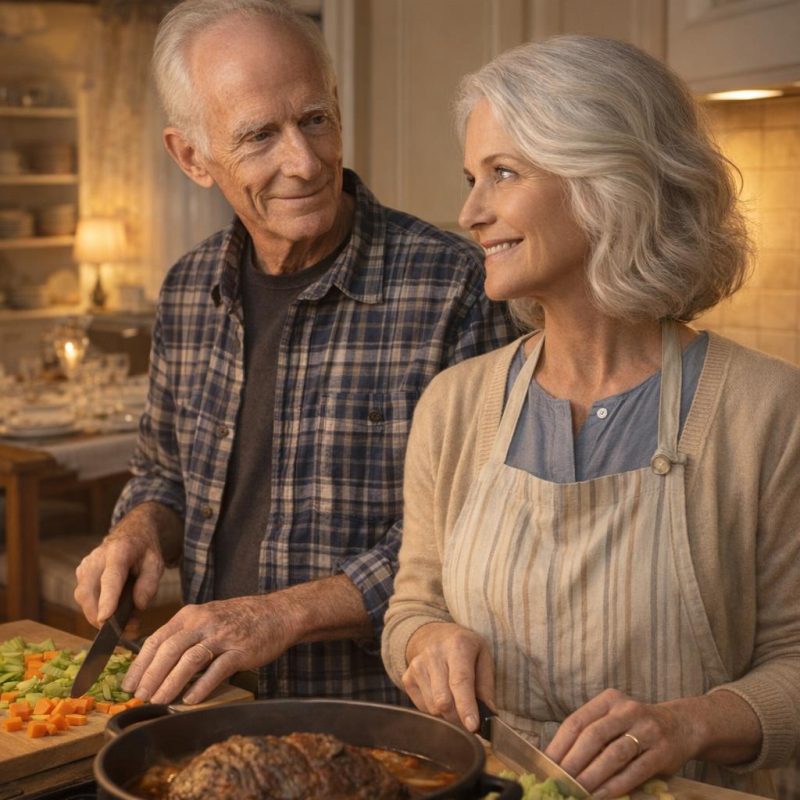 Image by RM AI