The Morning After
I walked into the office that Tuesday morning expecting maybe a few congratulations, maybe some awkward high-fives from the people who didn't know me that well. The promotion announcement had gone out the day before—one of those company-wide emails with my name in bold and a title I'd been working toward for three years. I'd practiced looking gracious in the bathroom mirror before I left my apartment, which probably sounds ridiculous, but I wanted to get it right. Mark was already at his desk when I arrived, his back to me, his monitor glowing with what looked like a spreadsheet. He turned when I set my bag down, and for a second I thought he might actually say something normal. Instead, he gave me this tight smile and said, 'Well, look at you. Moving up in the world.' His tone was light, almost friendly, but there was something underneath it that made my stomach turn. It wasn't quite congratulations and it wasn't quite an insult—it lived somewhere in the space between. I smiled back, but I already knew something he didn't—HR had been quietly reviewing files for weeks.
 Image by RM AI
The History
Mark and I had worked in the same department for nearly five years, which sounds like a long time to be around someone, and it is. When I first started, he was the one who showed me where the supply closet was, how to log into the project management system, which coffee machine on the third floor actually worked. He wasn't warm exactly, but he wasn't cold either—he was just there, occupying his space with the kind of quiet authority that made you think twice before asking him for help a second time. Over the years, I learned that Mark had a very specific way of seeing the office: it was his territory, and everyone else was either a visitor or a threat. He never said that out loud, of course. But you could see it in the way he'd tense up when someone new joined the team, or how he'd redirect conversations if they veered too close to his projects. I didn't take it personally at first—some people are just like that. For years, I played along—it was easier than challenging someone who treated his territory like a fortress.
 Image by RM AI
Quiet Reputation
The promotion didn't come out of nowhere, even if Mark seemed to think it did. I'd spent three years doing the kind of work that doesn't make noise but gets noticed anyway—the projects that come in messy and leave clean, the client calls that could've gone sideways but didn't, the quarterly reports that actually made sense when leadership read them. I wasn't the person who sent update emails every five minutes or scheduled meetings to talk about scheduling meetings. I just did the work, documented it properly, and made sure the people who needed to know something actually knew it. Lisa, my supervisor, had told me six months earlier that I was being considered for the next opening, but she'd said it in that careful way managers do when they don't want to promise anything. I didn't tell anyone. I didn't update my LinkedIn or start dressing differently or do whatever people think you're supposed to do when you want to move up. I didn't campaign for it—I just did the kind of work that made it obvious I was ready.
 Image by RM AI
The Email
The announcement email hit inboxes at 9:47 AM. I know because I watched Mark's screen from across the row, saw the Outlook notification pop up in the corner, watched him click it open. His posture changed immediately—shoulders pulling back, spine going rigid in that way bodies do when they're trying to stay in control. He read it once, then scrolled back to the top and read it again, slower this time, like he was looking for a typo or a mistake or some kind of punchline that would make it make sense to him. I pretended to be focused on my own screen, but I was watching him in my peripheral vision, cataloging every micro-expression. He didn't look angry exactly. He looked like someone who'd just been told the rules of a game had changed halfway through and nobody had bothered to tell him. His jaw was doing that thing jaws do when someone's grinding their teeth without realizing it. He stood up, walked past my desk without looking at me, and went straight to the kitchen.
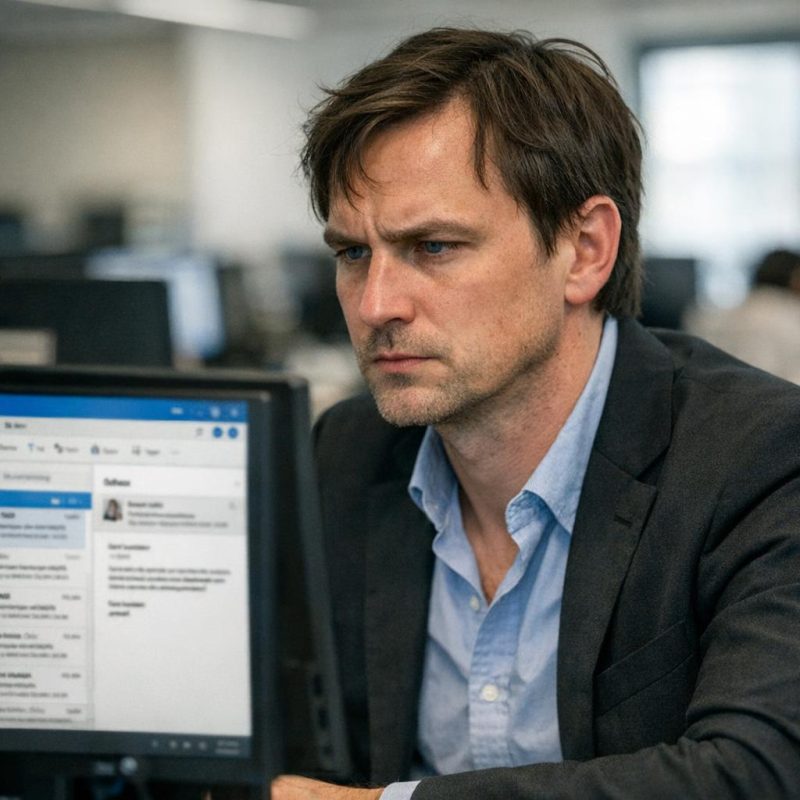 Image by RM AI
The Audience
Mark came back ten minutes later with a fresh coffee and a performance. That's the only way I can describe it—he turned his reaction into a show for anyone who was paying attention. Jamie, the new analyst who'd started three months earlier, was at the printer near Mark's desk when he sat back down. Mark said something I couldn't quite hear, but Jamie laughed in that uncomfortable way people do when they don't know if a joke is actually a joke. Then Mark's voice got just a little louder. 'Crazy how fast things change around here, right?' he said, leaning back in his chair like he was settling in for a casual conversation. Jamie nodded, eyes darting toward me for half a second before looking away. Over the next hour, Mark kept it up—little comments timed perfectly for maximum audience. When Lisa called me into a conference room for what turned out to be a quick onboarding conversation about my new responsibilities, I walked past Mark's desk on my way there. 'Must be nice,' he said when I got pulled into a leadership meeting, and I felt the room shift.
 Image by RM AI
The Claim
By Wednesday, Mark had refined his narrative. I started hearing it in pieces—comments he made to Jamie by the coffee machine, things he said during team check-ins when he thought I wasn't listening. The story went like this: he'd trained me when I first started, showed me the ropes, gave me guidance on the systems and clients and unwritten rules that nobody else would've explained. And sure, some of that was technically true in the narrowest possible sense. But the way Mark told it, you'd think I'd arrived at the company as a blank slate and he'd personally molded me into someone competent. He never said he deserved the promotion instead of me—he was too smart for that. But he didn't have to. The implication was clear: my success was his creation, and wasn't it interesting that nobody seemed to remember that? Jamie was at his desk when Mark said it the loudest, voice carrying across the half-empty office during the afternoon lull. 'I basically taught her everything,' he said loud enough for the row behind him to hear, and I felt my jaw tighten.
 Image by RM AI
The Real Training
That night, I sat in my apartment and thought about what Mark's 'training' had actually looked like. The truth was, Mark had shown me where the coffee machine was and how to file expense reports, and then he'd spent the next four and a half years treating me like a convenient solution to problems he didn't want to deal with. When a client called with a complex data request, Mark would forward it to me with a two-word email: 'Can you?' When a project ran into trouble, he'd loop me in at the last possible second and then take credit for the fix in the post-mortem meeting. I'd learned early on to keep my own records—detailed notes, saved emails, project logs with timestamps that showed who did what and when. It wasn't because I was naturally paranoid or obsessive. It was because I'd watched Mark rewrite history in real time once too often, watched him describe a project's success as his own effort when I'd done eighty percent of the work. Mark hadn't trained me—he'd trained me to document everything so he couldn't rewrite history.
 Image by RM AI
The Team Chat
Thursday morning, Mark took his performance digital. The team chat pinged around 10 AM with a message from him, posted in the channel everyone used for general updates and occasional banter. 'Big congrats to our rising stars,' he wrote, followed by a clapping hands emoji and a message that felt like it had been workshopped for maximum deniability. 'Management is really making some bold decisions lately. Exciting times ahead!' There was a smiley face at the end, which somehow made it worse. I stared at my screen, reading it three times to make sure I wasn't misinterpreting the tone. I wasn't. It was the kind of message that could be screenshot and shown to HR without looking like anything at all, but everyone who read it understood exactly what he meant. The chat went quiet for a full two minutes—nobody replied, nobody reacted with an emoji, nobody played along. Priya, who usually responded to everything, just kept typing in a different window. People noticed—not because they agreed, but because nobody wanted to be recruited into his jealousy.
 Image by RM AI
The Interruption
Friday afternoon, Lisa called a planning meeting to discuss project timelines for the next quarter. I'd been asked to present the workflow adjustments I'd been drafting, the ones that would technically fall under my new role once it became official. I was maybe two minutes into explaining the phased rollout when Mark cut in. 'So what she means,' he said, leaning forward with this helpful expression plastered across his face, 'is that we're reallocating resources based on capacity gaps, right? Just to clarify for everyone.' I blinked. That was literally what I'd just said. Word for word, almost. I glanced at Lisa, who was watching Mark with this unreadable expression, and then at Priya, who had stopped taking notes and was just staring at her laptop. 'Yes,' I said slowly. 'That's what I was explaining.' Mark nodded like he'd done everyone a favor, like I'd been speaking a foreign language and he'd graciously translated. He sat back, folding his arms, looking satisfied. The room went quiet, and I realized he wasn't helping—he was performing.
 Image by RM AI
The Age Card
Monday brought a new angle. Mark caught up with me and Jamie near the break room, all casual energy, and started talking about the upcoming changes. 'It's great that they're investing in fresh perspectives,' he said, nodding toward me like I was an intern being praised for good attendance. 'New energy, you know? Sometimes that matters more than years in the trenches.' Jamie looked uncomfortable, shifting his weight, and I just stood there holding my coffee. I'd been with the company for six years. Mark had been there for nine. It wasn't like I'd walked in yesterday with a business degree and a dream. But he was framing it that way, like I was some bright-eyed newcomer who'd impressed someone in a hallway and lucked into a title. 'Experience comes in different forms,' I said evenly, refusing to take the bait. He smiled, that thin, knowing smile. 'Of course, of course. I'm just saying, it's a learning curve for anyone, right?' He was trying to make me feel young and unqualified, even though we'd started only three years apart.
 Image by RM AI
The Coffee Machine Confrontation
Tuesday morning, I found myself at the coffee machine at the same time as Mark, which felt less like coincidence and more like he'd been waiting. He poured his cup slowly, watching the steam rise, and then turned to me with this thoughtful look. 'You know,' he said, 'promotions are interesting. Sometimes it's not about what you know—it's about playing the game right. Timing. Optics.' I felt my jaw tighten, but I kept my voice calm. 'I think it's about consistent work and results, actually.' He laughed softly, shaking his head like I was naive. 'Sure, that too. But let's be real—there's always a game.' I set my cup down on the counter and looked at him directly. 'If you have concerns, Mark, you can bring them to our supervisor.' The words came out measured, professional, final. His smile shifted, turning condescending, patronizing in a way that made my skin crawl. 'No concerns,' he said lightly. 'Just advice.' But we both knew what it was.
 Image by RM AI
The Warning
He didn't leave it there. As I turned to walk away, he leaned in slightly, lowering his voice like he was sharing something important. 'Just be careful,' he said. 'Titles come with expectations. People watch how you handle pressure. It can get overwhelming fast if you're not ready.' His tone was all concern, all friendly caution, but his eyes were cold. I felt this prickle of unease run down my spine, not because I believed him, but because I finally understood what he was doing. He wasn't offering advice. He was trying to plant doubt, trying to make me second-guess myself before I'd even officially started. It was psychological, deliberate, calculated. 'I appreciate your concern,' I said, keeping my voice neutral, 'but I'm confident I can manage.' He shrugged, still wearing that smile, and walked away like he'd just done me a favor. I realized he wasn't warning me—he was trying to make me doubt myself before I even started.
 Image by RM AI
The Decision to Wait
I spent the rest of Tuesday thinking about how to respond, whether to escalate, whether to defend myself more openly in meetings or push back harder in conversations. And then I realized—I didn't need to. I didn't need to engage in his petty campaign or justify myself in front of colleagues who already knew my work. Because I knew something Mark didn't. HR had been involved for weeks. Not just in the promotion process, but in something else entirely, something that had started months ago and had been running quietly in the background while Mark assumed he was untouchable. I didn't know exactly what they'd found or what conclusions they'd drawn, but I knew they'd been reviewing something. So instead of fighting back, I decided to wait. To let him keep talking, keep performing, keep digging whatever hole he was digging. I didn't need to win a petty war of comments—HR had been reviewing something for weeks.
 Image by RM AI
The Report
It had been back in February, maybe early March. I'd noticed something off in our department's project logs—timestamps that didn't match up, submissions marked complete when I knew for a fact certain tasks were still in progress, work credited to people who'd been out of the office or working on entirely different projects. At the time, I didn't think much of it beyond 'this seems wrong,' so I filed a report with HR. Not dramatic, not accusatory, just a quiet flag: something doesn't add up here, and I think it's worth looking into. Carla from HR had followed up with a few questions—when did I notice this, did I have examples, had anyone else mentioned inconsistencies—and I'd answered as best I could. Then it went silent. I assumed they'd reviewed it, found some clerical error or system glitch, and moved on. I'd almost forgotten about it entirely until now, until I started connecting the timing. I'd flagged it quietly, not accusing anyone, just noting something was wrong with our department's submissions.
 Image by RM AI
The Quiet Investigation
Looking back, I remembered Carla reaching out again in late spring, asking if I'd noticed any other anomalies, if there were specific projects I could point to. I'd given her what I had—nothing concrete, just observations—and then the questions stopped. I figured they'd hit a dead end or decided it wasn't worth pursuing. But now, sitting at my desk on Tuesday afternoon, I started wondering if the silence hadn't been dismissal—if it had been them working quietly, pulling logs, cross-referencing submissions, piecing together something bigger than a few mismatched timestamps. The timing was strange, wasn't it? I'd filed the report months ago, and then during my promotion review process, HR had spent longer than usual verifying my work history. At the time, I thought it was just thoroughness. Now I wasn't so sure. At the time, I thought they'd dismissed it—now I wondered if they'd just been digging deeper.
 Image by RM AI
Day Four
Wednesday morning, Mark's calendar pinged. I saw it because we shared the same team view, the one that showed meeting blocks without details unless you were invited. A new entry appeared in his schedule: one hour, Thursday afternoon, with Lisa and Carla from HR. Not a casual chat, not a quick check-in. A formal meeting, blocked out in his calendar like an appointment he couldn't miss. I watched him notice it, saw the flicker of confusion cross his face before he smoothed it over. By lunch, he was joking about it near Priya's desk. 'Maybe they're finally giving me that overdue promotion,' he said, laughing a little too loudly. Nobody laughed with him. Priya just nodded politely and went back to her screen. I didn't say anything, didn't react, didn't offer any insight. I just watched him try to play it off like it was nothing, like he wasn't worried. Not a casual chat—a calendar invite with HR on it, and Mark tried to joke about finally getting his promotion.
 Image by RM AI
The Wait
The hour dragged. I sat at my desk, forcing myself to focus on quarterly reports, but I kept glancing at the clock. Mark's meeting had started at two, and by two-thirty, the office had this weird tension to it. People were working quietly, but it felt performative, like everyone was pretending not to notice the elephant that had just been led into the conference room. Priya walked past my desk twice, both times glancing toward the hallway where the HR office sat. Jamie stood by the printer longer than necessary, staring at nothing. Nobody asked me anything. Nobody said a word about it. But you could feel it—this collective awareness that something significant was happening behind that closed door. I typed, deleted sentences, retyped them. My coffee went cold. The meeting stretched past the hour mark. Still no sign of Mark. The office felt different, like everyone could sense something had shifted but nobody knew what.
 Image by RM AI
The Return
When Mark finally came back, I knew immediately that something had changed. His face was pale, almost gray, and his jaw was clenched so tight I could see the muscle twitching. He walked straight to his desk without looking at anyone, not even a glance toward Priya or Jamie. No jokes. No commentary. He sat down, stared at his monitor, and didn't move. I watched him from the corner of my vision, careful not to make it obvious. His hands were flat on the desk, fingers spread like he was trying to ground himself. Priya noticed too—I saw her eyes flick toward him, then back to her screen, her expression carefully neutral. The Mark who'd spent four days making passive-aggressive comments, who'd hovered behind me with thinly veiled contempt, who'd performed his frustration like a one-man show—that Mark was gone. He didn't make comments, didn't hover, didn't perform—for the first time in days, Mark was silent.
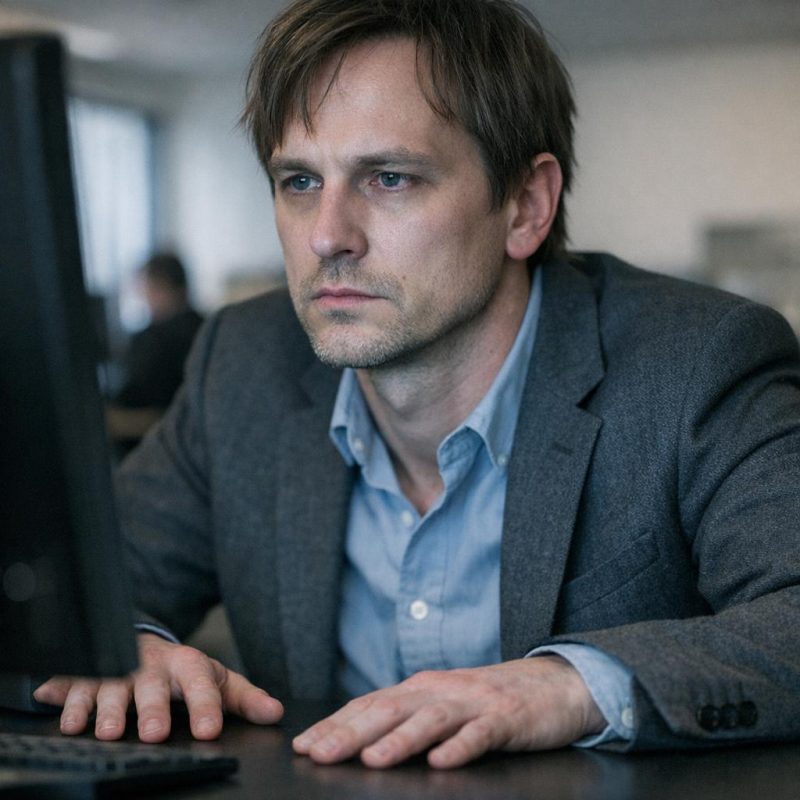 Image by RM AI
The Silence After
The silence continued. All afternoon, Mark kept his head down, answering emails in clipped, minimal responses when people messaged him. He left at exactly five without saying goodbye to anyone. The next morning, he came in late, avoided the break room, and barely acknowledged anyone who spoke to him. When someone asked him a work question, he answered in monosyllables and turned back to his screen. No eye contact. No banter. The guy who'd never met a conversation he couldn't dominate suddenly had nothing to say. I watched it all unfold with this strange mix of feelings I couldn't quite name. Part of me felt vindicated—whatever had happened in that meeting, it had clearly rattled him. But another part of me felt uneasy. I didn't know what HR had said to him. I didn't know what he knew or didn't know. All I could see was the change. The man who'd spent four days making me feel small now couldn't look anyone in the eye.
 Image by RM AI
My Turn
Friday afternoon, my own calendar pinged. I stared at the notification for a solid ten seconds before opening it. Meeting request: Monday, nine a.m. Lisa and Carla from HR. One hour. My stomach did this complicated flip. This wasn't routine. You don't get called into an hour-long meeting with your supervisor and HR unless something significant is about to be discussed. I sat back in my chair, trying to process what this meant. Mark still hadn't looked at me all day. He was three desks away, typing something with the focused intensity of someone trying very hard to seem normal. Did he know I was being called in too? I doubted it. His calendar entry had probably looked just like this—formal, vague, unavoidable. I closed the notification and went back to work, but my mind was already racing ahead to Monday morning. I knew it wouldn't be about my promotion—that had already happened—this was about what Mark didn't know was coming.
 Image by RM AI
The HR Office
Monday morning I walked into the HR office at exactly nine. Lisa was already there, sitting in one of those neutral-toned chairs that offices buy in bulk. Carla sat across from her, a closed folder on the table between them. They both smiled when I came in, professional and polite, but there was something in the air—something careful and deliberate. I sat down, folded my hands in my lap, tried to look calm even though my heart was doing double-time. 'Thanks for coming in,' Carla said, her voice steady and measured. 'We wanted to speak with you about a few things.' Lisa nodded but didn't add anything. The folder stayed closed. I waited. The office was too quiet, that kind of soundproofed silence that makes every breath feel loud. They weren't rushing. They weren't nervous. They were just... ready. Ready to say something that mattered. Their calm professionalism made my skin prickle—they were about to tell me something I'd only suspected.
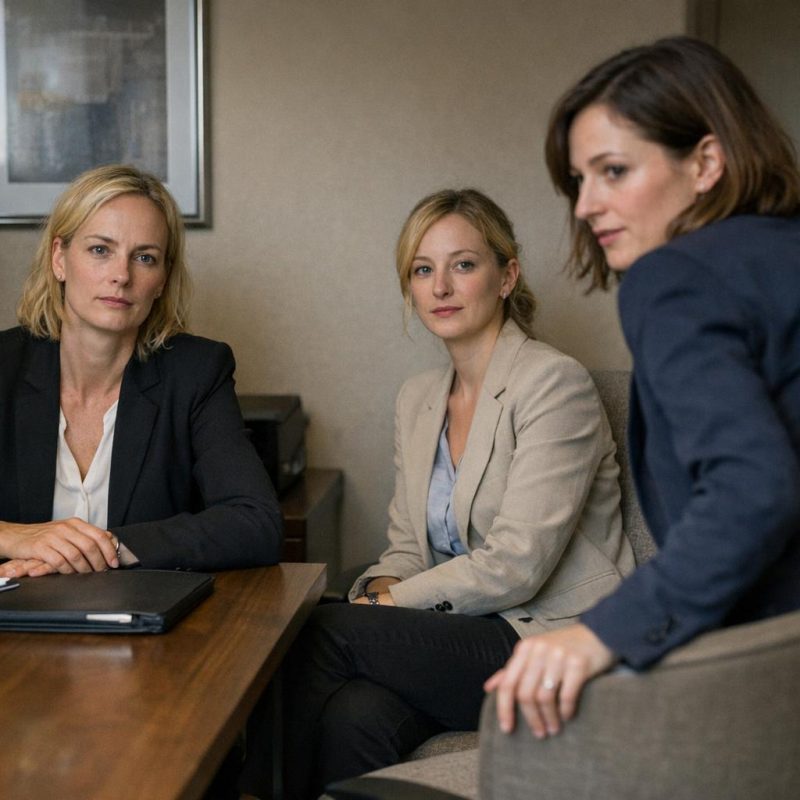 Image by RM AI
The Questions
Carla opened the folder, but she didn't look at it much. Instead, she asked me about work history—old projects I'd completed, timelines I remembered, specific deliverables I'd submitted. She asked about shared drives and file permissions, about who had access to what. Lisa chimed in occasionally, asking me to clarify dates or confirm names. It felt routine at first, almost boring, like a standard process review. But then I started noticing the questions were pointed. They weren't asking me what I thought or felt. They were asking me to confirm details they already seemed to know. 'Did you submit the Q3 analysis in August or September?' 'Was this document originally created by you or revised from someone else's template?' 'Who had edit access to this project folder?' I answered everything honestly, carefully, aware that every word mattered even though I didn't fully understand why. They were confirming details, not asking for new information—they already knew what they needed.
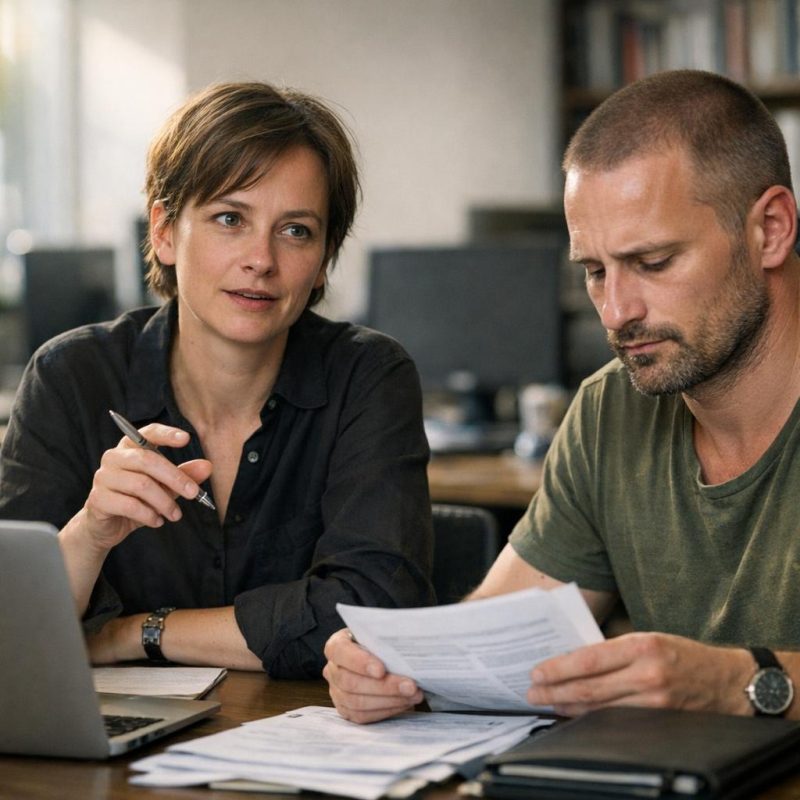 Image by RM AI
The Statement
Carla glanced at Lisa, then back at me. Her expression didn't change, but something shifted in the air. 'We completed our review of Mark's work history,' she said, her tone careful and measured. My pulse jumped. I felt my hands tighten in my lap, but I forced myself to stay still, to keep my face neutral. This was it. This was the moment where everything I'd suspected, everything I'd quietly documented and worried over, was about to be confirmed or dismissed. Lisa leaned forward slightly, her eyes steady on mine. 'We wanted to speak with you because your name came up multiple times during our investigation.' Investigation. The word landed heavy. Mark hadn't just been reprimanded for being a jerk or told to tone down his attitude. They'd investigated him. Formally. Thoroughly. And I was somehow part of it. My heart hammered—this wasn't about my promotion at all, and Mark had no idea what was about to happen.
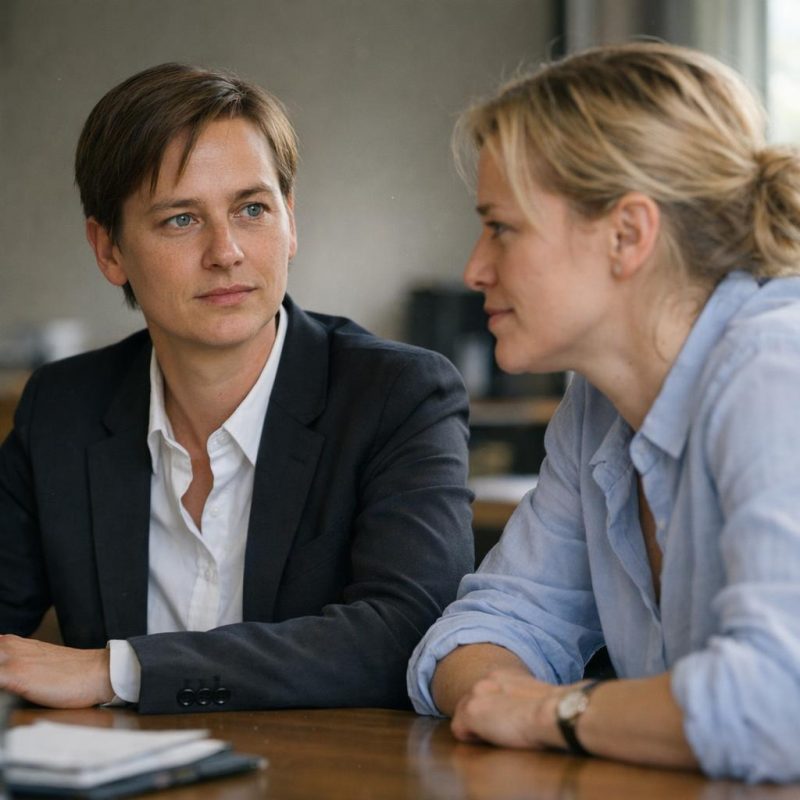 Image by RM AI
The Core Issues
Carla flipped a page in the folder. 'We found discrepancies,' she said, and the word hung there like a stone dropping into water. 'Discrepancies in work attribution, in submission timestamps, in project logs and final credit documentation.' She paused, letting that sink in. 'Some of the work attributed to Mark in our systems didn't match the original file metadata. Dates didn't align. Author names had been changed after initial submission.' Lisa nodded. 'We cross-referenced everything with shared drive logs and email records. There were patterns—systematic patterns—that raised significant concerns.' I sat very still, my mind racing. Systematic. That meant it wasn't just one mistake, one moment of poor judgment. It was ongoing. Deliberate. Years, maybe. And they'd found it. They were choosing their words carefully, but the message was clear: Mark had been falsifying records.
 Image by RM AI
The Documentation
Carla turned her laptop toward me. 'We'd like to show you some of what we found,' she said, and I leaned in. The screen showed a spreadsheet with dates, file names, and authorship records. Two columns side by side—one labeled 'Original Submission' and another labeled 'Final Credit.' I scanned the rows, trying to make sense of the data. Then I saw my name. Several times. In the 'Original Submission' column, with timestamps showing when I'd uploaded files to the shared drive. But in the 'Final Credit' column, those same files listed Mark. My quarterly report from last spring. The client presentation deck I'd built in July. The process improvement proposal I'd submitted in September. All credited to him in the final records. My stomach twisted. Lisa leaned forward. 'These are just a few examples,' she said quietly. 'There are more.' I stared at the screen, at my work—work I'd stayed late to finish, work I'd been proud of—attributed to someone else. Some of the work he'd claimed was mine, and I'd never known he was taking credit for it.
 Image by RM AI
How Far Back
I looked up at Carla. 'How long?' My voice came out steady, but my hands were shaking. 'How long has this been happening?' She exchanged a glance with Lisa before answering. 'Our review traced the pattern back approximately three years,' she said. 'That's as far as we've confirmed definitively, though we're still examining earlier records.' Three years. I'd been at the company for three and a half. I felt the air leave my lungs. Almost my entire time here, Mark had been doing this. Every project we'd worked on together, every collaboration, every time he'd asked to 'review' my work before submission—it hadn't been mentorship or teamwork. It had been theft. Lisa must have seen something in my face because she spoke up. 'We know this is a lot to process,' she said. 'Take your time.' But there wasn't enough time in the world to process what they were telling me. Three years—almost from the day I started, Mark had been stealing credit and covering his tracks.
 Image by RM AI
The Others
Carla closed the laptop slightly, giving me space to breathe. Then she said something that made my head snap up. 'You weren't the only one affected by this pattern,' she said carefully. 'We've identified at least four other employees whose work was similarly misattributed over the past several years.' Four others. I sat back in my chair, processing that. Mark hadn't just targeted me—he'd been doing this systematically, to multiple people. Some of them probably didn't work here anymore. They might have left thinking they weren't good enough, that their contributions didn't matter. Lisa nodded. 'What made this case conclusive was the quality of documentation you maintained,' she said. 'Your version control, your timestamped emails, your project notes. They created an audit trail that allowed us to verify the discrepancies.' So my obsessive record-keeping—the habit Mark had mocked as paranoid—had been the thing that finally exposed him. I wasn't his only target—I was just the one who documented everything so well they could prove it.
 Image by RM AI
Why Now
'Why now?' I asked. The question had been building since I'd sat down. 'Why did this review happen now?' Lisa shifted in her seat. 'Promotion reviews require verification of all significant work contributions,' she explained. 'It's standard procedure, but it's thorough. When we began verifying the projects you'd listed in your promotion packet, we started noticing inconsistencies. Small things at first—dates that didn't quite match, files that showed different creation times than what was officially recorded.' Carla picked up the thread. 'Once we identified a pattern, we expanded the review to include all collaborative work between you and Mark, then broader team projects. That's when the scope became clear.' So it was the promotion. The thing Mark had been so angry about, the thing that had triggered his jealousy and his outburst—it had also been his undoing. If I hadn't applied, if I hadn't documented everything so carefully for my application, this might have continued indefinitely. My promotion hadn't just exposed Mark's jealousy—it had exposed his entire system.
 Image by RM AI
What Happens Next
'What happens now?' I asked. The question felt hollow, but I needed to know. Carla folded her hands on the table. 'We've placed Mark on administrative leave effective immediately while we complete our investigation,' she said. 'We're still reviewing records, confirming timelines, and determining the full scope of the misconduct. Once that's complete, we'll determine appropriate disciplinary action.' Administrative leave. I knew what that meant. It was the corporate buffer zone, the holding pattern they put someone in while they built an airtight case for termination. You didn't come back from administrative leave for something like this. Lisa added, 'This process may take a few more weeks. We want to be thorough.' I nodded. Thorough was good. Thorough meant they were taking it seriously, that there would be consequences. But it also meant this wasn't over yet. Mark was gone from the office, but the investigation would continue, and I'd have to live with the knowledge of what he'd done while everyone else remained in the dark. Administrative leave—the corporate phrase for 'we're building the case to fire you.'
 Image by RM AI
The Confidentiality Request
Carla leaned forward slightly. 'We need to ask that you maintain confidentiality about the details of this investigation,' she said. 'For legal and privacy reasons, we can't discuss the specifics with the broader team until the review is complete and any actions are finalized.' I understood immediately. This was standard—they couldn't have rumors flying around, couldn't risk compromising the investigation or opening themselves up to lawsuits. 'Of course,' I said. 'I won't say anything.' Lisa looked relieved. 'People will notice Mark's absence,' she acknowledged. 'If anyone asks you directly, you can simply say you don't have information to share. Direct them to me or to HR.' I nodded. That I could do. I wasn't interested in gossip anyway. This wasn't about revenge or public humiliation—it was about documentation, about proof, about making sure what he'd done was formally recognized and addressed. Let HR handle it through proper channels. I could keep quiet about the details, but Mark's empty desk would tell its own story.
 Image by RM AI
The Empty Desk
I walked back to my desk in a daze, Carla's words still echoing in my head. The office looked the same as always—same fluorescent lights, same hum of keyboards and low conversations. But when I passed Mark's desk, I stopped. It was empty. Not just empty of Mark, but empty in that conspicuous way that makes people notice. His monitor was dark. His chair was pushed in. The little stress ball he always kept by his keyboard was gone. I could feel eyes on me as I settled back at my own desk. Priya glanced over from across the aisle, her expression curious but cautious. Jamie, the newer guy, looked from Mark's desk to me and then quickly back to his screen. Nobody said anything directly. Nobody asked where Mark was or why his desk looked like that. But the questions hung in the air anyway, thick and obvious. I opened my laptop and tried to focus on my work. Nobody asked me directly, but I could feel their curiosity like a physical weight.
 Image by RM AI
The Whispers
By mid-afternoon, the whispers had started. I didn't participate, but I heard fragments as I moved through the office. At the coffee station, two people from accounting speculated that Mark had quit. 'Probably got a better offer,' one said. 'He was always ambitious.' Near the printers, I overheard someone suggest he'd been fired. 'Maybe he finally pissed off the wrong person,' they said, half-joking. Priya caught my eye once, a question in her expression, but I just shook my head slightly. I wasn't going to feed the rumor mill. Jamie looked stressed every time he glanced at Mark's empty desk, like he was worried he might be next. The theories ranged from mundane to dramatic, but none of them came close to the truth. Nobody imagined systematic fraud. Nobody suspected years of stolen credit. They were guessing at office drama, at personality conflicts, at corporate reshuffling. Let them wonder—the truth was worse than anything they were imagining.
 Image by RM AI
Priya's Question
Priya cornered me in the file room around three-thirty, closing the door behind her. We'd worked together long enough that she could read my silences. 'I know you know something,' she said, keeping her voice low. I looked up from the drawer I'd been pretending to search through. 'About Mark?' I said, buying time. She nodded, her arms crossed, waiting. I'd been dreading this conversation. Priya was observant, and she'd clearly noticed I wasn't participating in the speculation. I could have lied, but that wasn't the relationship we had. 'It's serious,' I said finally. 'That's all I can say right now.' Her expression shifted immediately—concern replacing curiosity. 'How serious?' she asked. I weighed my words carefully, knowing I couldn't violate what little trust HR had placed in me but also wanting to prepare her for what was coming. The truth was going to come out eventually anyway. 'HR is handling something,' I said, and watched Priya's eyes widen with understanding.
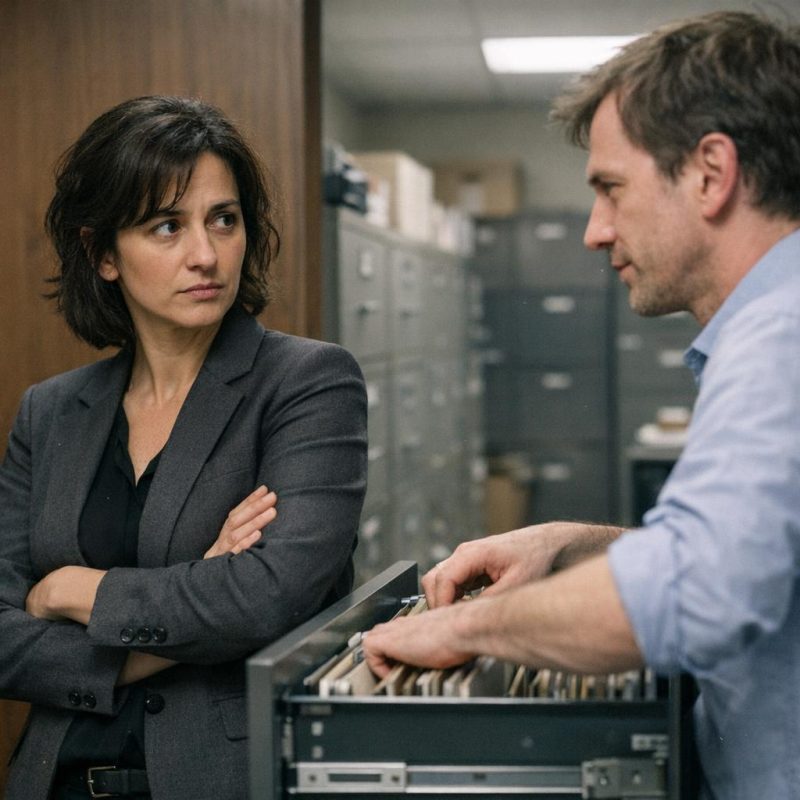 Image by RM AI
The Work Redistribution
Lisa called a team meeting the next morning to redistribute Mark's active projects. I sat near the back, watching as she went through the list. She assigned the Henderson report to Tom, who looked confused. 'Wait, I already wrote most of that,' he said slowly. Lisa checked her notes. 'According to our records, Mark was the lead on this one.' Tom shook his head. 'He added a conclusion paragraph, maybe. But I did the research and the analysis.' The same thing happened with the next three assignments. Elena recognized her work on the Brightwood pitch. Priya identified her data models in what was supposedly Mark's forecasting project. Each time, Lisa's expression grew more grim as she made notes. The pattern was becoming impossible to ignore. Jamie sat quietly, but I could see him processing everything with increasing clarity. Mark hadn't just stolen from me—he'd been running this scam on half the team. As assignments were handed back to their real authors, the full scope of Mark's deception became visible to everyone.
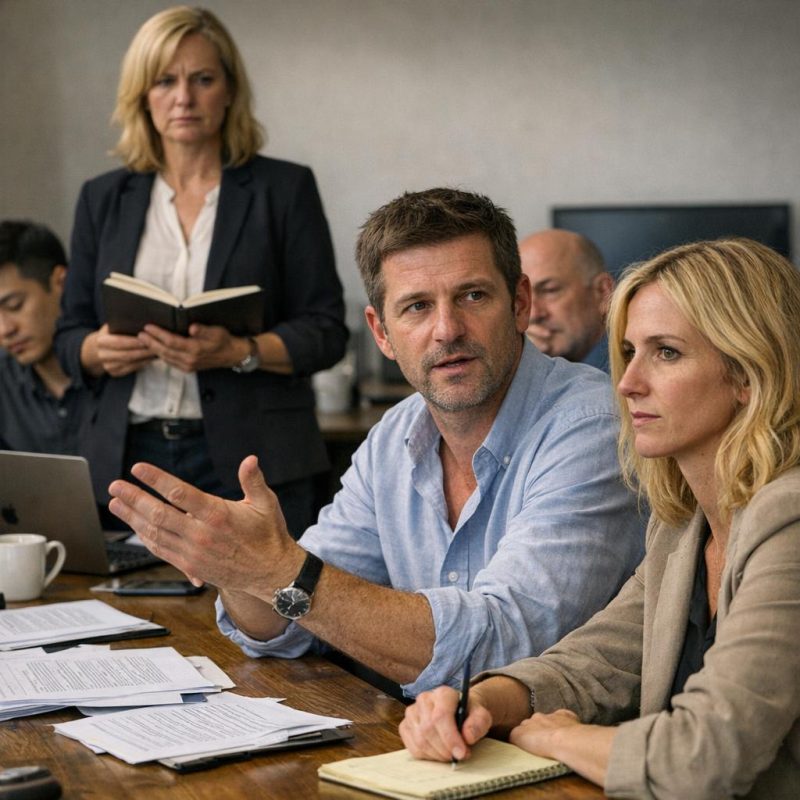 Image by RM AI
Jamie's Realization
Jamie appeared at my desk during lunch, looking like he needed to tell someone something he'd been holding in. 'Can I ask you something?' he said, glancing around to make sure we were relatively alone. I nodded, pushing my keyboard aside. 'The presentation I worked on in January—the client retention one?' He paused, gathering courage. 'Mark presented it to the executive team and never mentioned my name. When I asked him about it, he said I was still learning and it would be better for the client relationship if they saw a senior team member taking the lead.' I felt my jaw tighten. That presentation had been brilliant, and I'd assumed it was Mark's work. 'Did you create the slides?' I asked. Jamie nodded. 'All of them. He gave me the topic and told me to run with it. I thought maybe that's just how things worked here, you know? Like an apprenticeship.' The rationalization in his voice made my chest hurt. 'He told me that's how mentoring works here,' Jamie said quietly, and I felt rage on his behalf.
 Image by RM AI
The Pattern Becomes Clear
By the end of the day, something had shifted in the office. People were comparing notes openly now, clustering in small groups and sharing stories. Priya told me about a budget analysis Mark had supposedly done overnight that turned out to be her spreadsheet with his name swapped in. Jamie mentioned a training manual. Tom brought up at least four reports. Even people from other departments stopped by, asking if we'd heard anything official, because they were starting to remember suspicious situations too. The pattern was so clear now that I couldn't believe we'd all missed it for so long. But we'd been too busy actually doing our work to notice that Mark was busy taking credit for it. He'd targeted people strategically—new employees like Jamie who didn't know better, people like me who were focused on the work itself rather than the politics, anyone who was unlikely to make a scene or challenge him publicly. He'd built his entire reputation on work he didn't do, and we'd all been too busy working to notice.
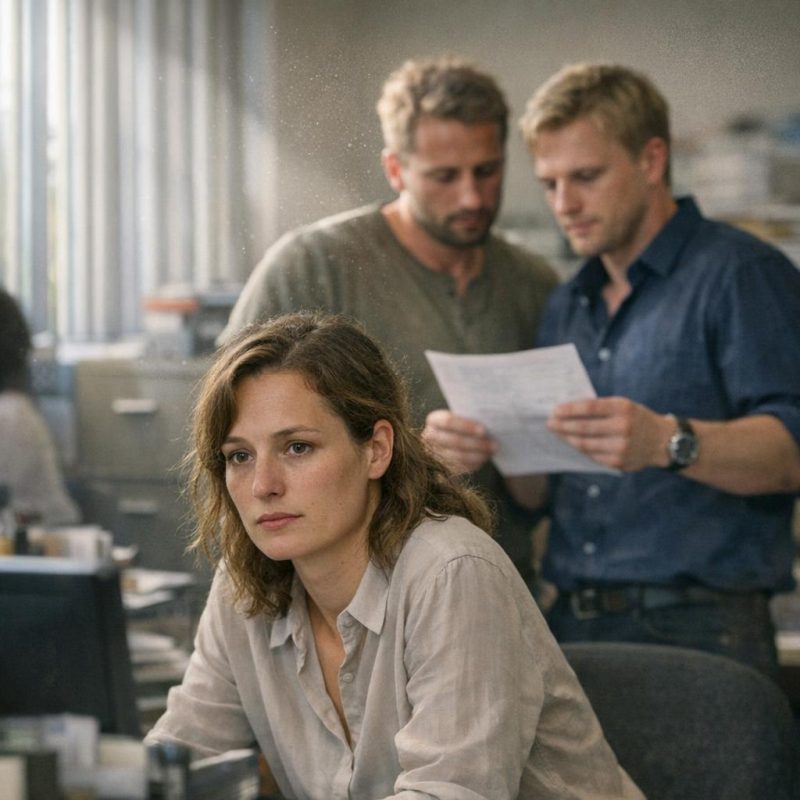 Image by RM AI
The Formal Interview
Carla called me back to her office three days later. This time, the setup was different—more formal, more official. She had a recorder on the desk and asked if I consented to the interview being documented. I did. She walked me through specific incidents, asking for dates, details, and any supporting documentation I could remember. I told her about the Reynolds project, about the proposal I'd written that Mark submitted as his own. I mentioned the times I'd seen him take credit in meetings for ideas other people had voiced. She asked about my interactions with him, whether he'd ever acknowledged using others' work, whether I'd reported anything before. The questions were precise, legal, building a case brick by brick. I answered everything as accurately as I could, watching her take meticulous notes between my responses. Every example I gave, every document I referenced—it was all building toward something irreversible.
 Image by RM AI
The Email History
Carla pulled up her laptop and turned it toward me. 'I need you to look at these email chains,' she said. They were messages from Mark, forwarding work to the executive team and to Lisa. Each one had the same pattern: someone else's original work, sent to Mark, then forwarded up the chain with minor formatting changes and Mark's name in the from line. In one, Jamie's presentation had been forwarded with a new title slide. In another, Priya's analysis was sent with two paragraphs of introduction that Mark had written. He'd barely changed anything—just enough to claim he'd 'compiled' or 'refined' or 'finalized' the work. The timestamps showed how quickly he'd turned them around, sometimes within minutes. No time for actual review or contribution, just a quick pass-through to establish ownership. Carla scrolled through dozens of examples, each one more damning than the last. The documentation was irrefutable, a digital paper trail that showed exactly what he'd been doing. He'd been so careful, so systematic—but digital records don't lie the way people can.
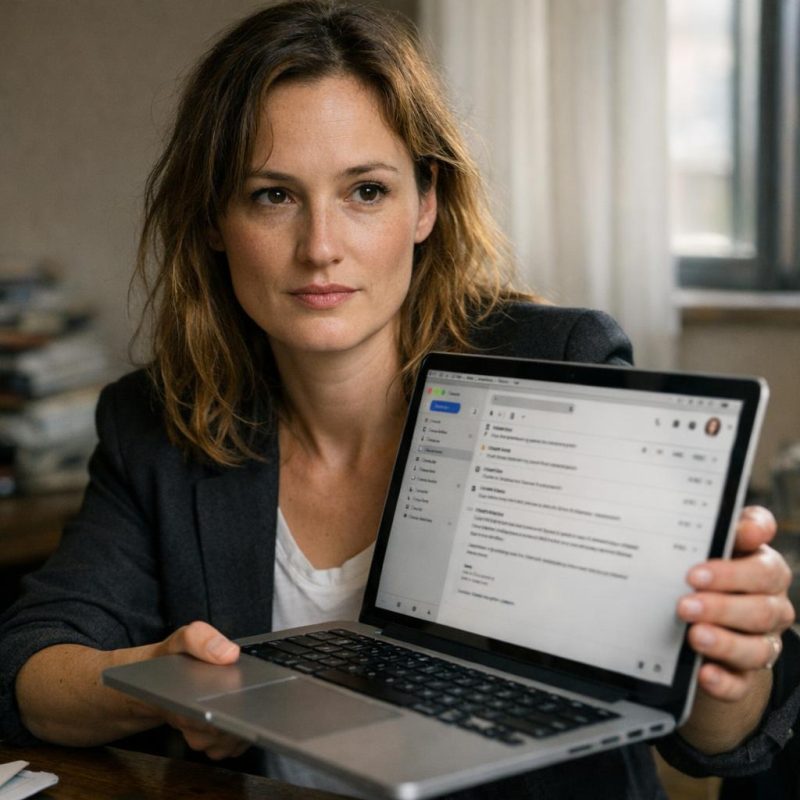 Image by RM AI
The Timeline Analysis
Carla pulled out a printed timeline next, color-coded and detailed. 'We cross-referenced Mark's submissions with his time-off records and his building access card,' she said, sliding it across the desk. The discrepancies were stunning. He'd submitted a complete project proposal on a Tuesday when his access card showed he was out of the office all day. He'd sent a final report from his work email during a week when he was supposedly on vacation in Portugal—his own Instagram posts proved it. Another submission came in at two in the morning, but the metadata showed the file had been created three days earlier by someone else. The pattern repeated over and over, his confidence growing with each successful theft. He hadn't even bothered to hide it well after a while, probably assuming nobody would ever check. The boldness of it was almost breathtaking—he'd just kept escalating, testing how much he could get away with. He'd submitted work from home while he was supposedly in another country—it was almost impressive how bold he'd been.
 Image by RM AI
The Financial Impact
Lisa joined the meeting at Carla's request, her expression grave. 'I need you both to understand the scope of what we've uncovered,' Carla said. She explained that Mark's false work records had directly influenced performance evaluations for the past four years. His inflated productivity numbers had justified bonuses he didn't deserve and promotions he hadn't earned. Meanwhile, the actual creators of that work had received lower ratings because their documented output appeared smaller. Jamie's last review had noted 'lack of initiative.' Priya had been passed over for a senior position because her numbers looked weaker in comparison. The financial impact was significant—tens of thousands in misdirected bonuses, salary increases based on fraudulent performance, opportunities given to Mark that should have gone to others. Carla showed us a spreadsheet that attempted to quantify the damage. It wasn't just about credit or ego. He'd stolen more than credit—he'd stolen opportunities, money, and years of other people's careers.
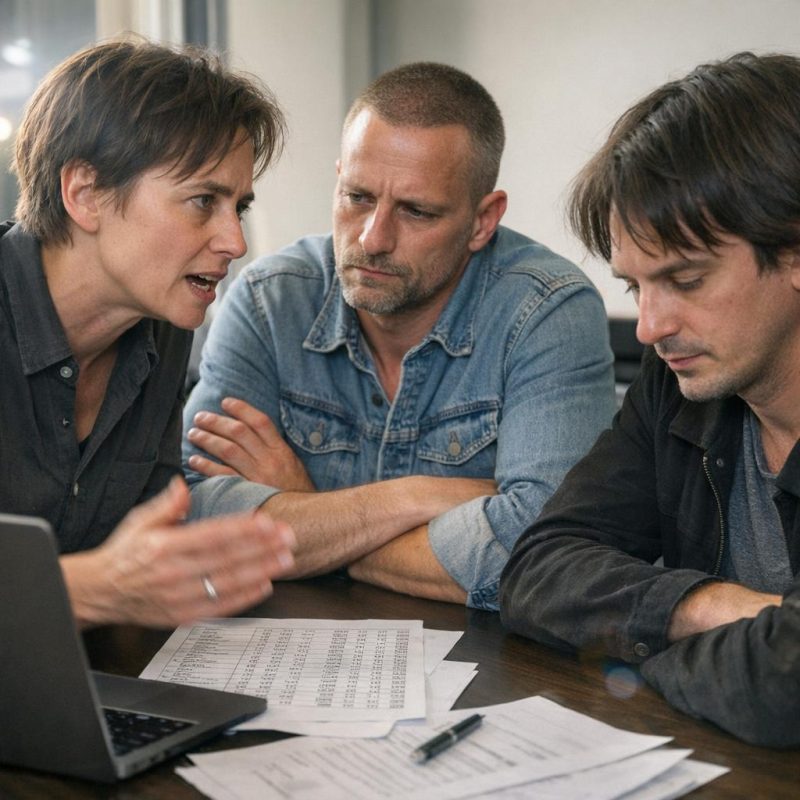 Image by RM AI
The Other Victims' Testimony
Carla leaned back in her chair and let out a breath I'd rarely heard from someone in HR. 'You should know something,' she said. 'You're not the only person we've interviewed.' She explained that over the past two weeks, they'd systematically contacted everyone who'd worked closely with Mark over the years. They'd spoken to former team members who'd transferred to other departments. They'd tracked down people who'd left the company entirely. Six of us in total had given testimony, and when Carla described the pattern, my chest tightened with this strange combination of validation and sadness. Every single story followed the same structure—Mark would collaborate on something, offer to 'handle the documentation,' then the credit would somehow shift entirely to him in the final records. We'd all noticed discrepancies. We'd all felt that nagging sense that something wasn't right. But none of us had compared notes because we'd assumed it was just us, just our perception, just professional paranoia. 'Why didn't anyone say anything before?' I asked. Carla's expression was knowing. 'Because he was careful. He made each of you feel isolated.' There were at least six of us, and every story followed the same pattern—we just hadn't compared notes before.
 Image by RM AI
The Legal Review
Carla's tone shifted during our next conversation, became more formal in a way that made my stomach drop. 'I need to inform you that we've escalated this to our legal department,' she said. The company's legal team was now reviewing everything—not just for internal disciplinary action, but to determine whether this crossed the line into criminal fraud or if civil action should be pursued. She mentioned terms like 'embezzlement of intellectual property' and 'falsification of business records.' I'd been thinking of this as workplace misconduct, maybe grounds for termination, but hearing those words made it real in a different way. 'Criminal charges?' I asked. 'It's a possibility we're exploring,' Carla said carefully. 'The financial impact is significant, and there are legal precedents for this type of systematic fraud.' She couldn't give me details about what the lawyers were discussing, but the fact that lawyers were discussing it at all changed the entire scope of what was happening. I left that meeting feeling like I'd stepped into something much larger than I'd anticipated. This wasn't just an HR matter anymore—Mark's fraud might be heading to court.
 Image by RM AI
Mark's Response
A few days later, Carla called me in again. 'I want to update you on Mark's response to the investigation,' she said, and I could hear the careful neutrality in her voice that HR people use when they're professionally disgusted but can't say so. Mark had denied everything. According to Carla, he'd claimed the documentation discrepancies were innocent mistakes—clerical errors, misunderstandings about project scope, confusion about who'd done what on collaborative work. He'd suggested that maybe the timestamps were wrong due to system glitches. He'd even implied that some of us might be misremembering our own contributions. Carla didn't editorialize, but she didn't need to. The evidence was overwhelming—six people with matching stories, hard data from email logs and file histories, financial records showing bonuses tied to work he demonstrably hadn't done. His defense was tissue-thin, the kind of performance that might have worked in a one-on-one conversation where charm could fill the gaps, but crumbled under actual scrutiny. I almost felt something like pity, except I remembered Jamie's face when he'd talked about feeling incompetent. He was still lying, still performing—but this time there was too much evidence for anyone to believe him.
 Image by RM AI
The Waiting Period
Carla told me the investigation would take another two weeks to complete. They needed time for the legal review, for final documentation, for whatever formal processes had to happen before they could make a final determination about Mark's employment and potential legal action. 'I know waiting is difficult,' she said, 'but we need to be thorough.' I understood, but understanding didn't make it easier. I returned to my regular work, sat at my desk, attended meetings, responded to emails—all the normal rhythms of the job I'd been promoted into. But there was this constant background hum of tension, like waiting for test results you know will be significant. I'd catch myself checking my phone for updates that wouldn't come. I'd lose focus mid-task, thinking about what Mark might be doing during his continued leave, whether he was already looking for another job or actually believed his denials would work. Priya asked me once if I'd heard anything, and I had to say no, not yet, soon. The office felt suspended in this strange liminal space. Two weeks felt like an eternity when I knew Mark was sitting somewhere trying to craft a defense for the indefensible.
 Image by RM AI
The Office Without Mark
What I hadn't expected was how different the office would feel without Mark there. It took me a few days to even notice it—that absence of tension I'd gotten so used to I'd stopped registering it as abnormal. Priya and I were working on a project timeline one afternoon, and she just openly shared an idea she'd been developing, no hedging, no careful attribution. Jamie contributed a solution to a problem without that anxious look he used to get, like he was worried someone would claim he was overstepping. People collaborated in meetings without that weird undercurrent of competition. Someone would propose something, someone else would build on it, and the credit just existed naturally in the conversation without anyone needing to stake their claim or get defensive. 'Is it just me,' Jamie said one day, 'or is everything just... easier?' It wasn't just him. We'd all been working around Mark's constant need for validation and control, making ourselves smaller, protecting our contributions, keeping our best ideas close until we could document them properly. We'd normalized it. People collaborated more freely, shared credit openly—we'd all been working around his ego for so long we'd forgotten what normal felt like.
 Image by RM AI
The Call from Legal
The call came from a number I didn't recognize—the company's legal department, a lawyer named David who introduced himself with professional courtesy and got straight to the point. 'We're reviewing the investigation into Mark's conduct,' he said, 'and we want to know if you would be willing to testify if this matter goes to court.' He explained that they were still determining whether to pursue legal action, but they needed to know which witnesses would be available and willing to give formal testimony under oath. 'It could be a civil case or potentially criminal charges,' he said. 'Either way, your account of the events would be significant.' He gave me time to think about it, said I could consult with my own lawyer if I wanted, that there was no pressure. But I already knew my answer. I'd spent years staying quiet, being professional, taking the high road, not making waves. I'd documented everything and kept my head down and done my work with careful integrity, and it had taken me this long to realize that silence hadn't protected me—it had protected him. 'I'll testify,' I said. I didn't hesitate—after years of staying quiet and professional, I was ready to speak on the record.
 Image by RM AI
The Final Evidence
Carla reached out one more time before the investigation officially closed. 'I need to confirm something with you,' she said. 'The report you filed several months ago about inconsistent timestamps on a project—do you remember that?' Of course I remembered. It had seemed like such a small thing at the time, just a minor discrepancy I'd noticed while reviewing archived files for a client presentation. I'd mentioned it to Lisa almost casually, thinking it was worth documenting but not urgent. 'That report was the catalyst for this entire investigation,' Carla said. 'When Lisa forwarded it to me, I started looking at other projects Mark had worked on, and the pattern became clear.' She explained that my observation had been the first concrete evidence, the thing that had given them justification to dig deeper. Everything else—the six testimonies, the financial analysis, the legal review—had spiraled out from that one quiet report I'd filed and mostly forgotten about. I'd thought I was just doing my job, maintaining accurate records, being thorough. I hadn't realized I was lighting a fuse. My quiet report about inconsistent timestamps had unraveled years of fraud—I'd been the first domino without realizing it.
 Image by RM AI
The Full Truth
When Carla called me in for the final meeting, Lisa was already there, and their faces told me this was the conclusion. 'We've completed the investigation,' Carla said, and then she laid it out—the complete picture I'd only been seeing pieces of for weeks. Mark had been systematically submitting work under other people's names for years. He would access shared project files, change the author metadata, alter timestamps to make it look like he'd done the work. He'd edited project logs after deadlines to reassign tasks to himself. He'd taken credit for entire initiatives he'd never touched, letting other people do the work while he handled the 'presentation' and 'documentation' that would make it his in the official records. It wasn't opportunistic—it was methodical. Carla showed me examples, side-by-side comparisons of original files and doctored records, email chains that contradicted his reports, a timeline that mapped years of systematic theft. 'His whole career here was built on this,' Lisa said quietly. And suddenly every strange interaction with Mark reframed itself—his nervousness around my promotion, his odd comments, the way he'd tried to undermine me publicly. The coworker who'd mocked my promotion hadn't been jealous—he'd been terrified I'd expose the fraud he'd built his entire career on.
 Image by RM AI
The Reframing
I sat there after Carla and Lisa left, and my brain started replaying every weird interaction I'd ever had with Mark like some kind of awful highlight reel. That time he'd insisted on 'reviewing' my work before it went to clients—he'd been checking if I'd noticed discrepancies in the records. When he'd offered to 'train' me on the project management system, he'd actually been making sure I used it his way, the way that wouldn't flag his alterations. His territorial behavior around certain files wasn't about being possessive or controlling—it was about keeping people away from evidence. Every time he'd publicly questioned someone's contribution to a project, he'd been deflecting attention from his own fabricated involvement. That aggressive mockery when I got promoted? That wasn't wounded ego. That was a man watching his entire fraudulent infrastructure start to crack. His nervousness around new hires suddenly made sense—fresh eyes might notice inconsistencies he'd spent years covering up. Even his habit of volunteering for 'documentation duty' had been strategic, giving him access to edit the official record. Every moment I'd interpreted as ego or jealousy had actually been him guarding the evidence of his crimes.
 Image by RM AI
The Promotion Connection
Lisa must have seen the look on my face because she spoke up again. 'The promotion is what started this, you know,' she said. 'Management positions require background verification of past projects. Standard procedure—we review their project contributions, cross-reference with team records, validate their experience.' I felt something click into place. My promotion hadn't just bruised Mark's ego—it had triggered an automatic audit process. Someone in HR would have pulled my work history, cross-referenced project files, compared timelines. And that's when they would have started noticing the inconsistencies, the metadata discrepancies, the altered records. 'He knew that,' Lisa continued. 'The moment you got promoted, he knew someone would be reviewing the same systems he'd been manipulating. Your competence wasn't the threat—your verification process was.' I almost laughed at the irony. All those comments about my qualifications, all that public skepticism about whether I deserved the promotion—he hadn't been mocking my qualifications. He'd been panicking that someone competent was about to take a position that would require reviewing past work records.
 Image by RM AI
The Decision
Carla's voice took on a formal tone, the kind you use when something is officially official. 'As of this morning, Mark's employment has been terminated for cause, effective immediately,' she said, and I watched her lay a folder on the table between us. 'The evidence of systematic fraud, falsification of records, and misrepresentation of work product constitutes gross misconduct. He was escorted from the building at nine AM.' Lisa nodded, her expression somewhere between relief and exhaustion. 'Legal is reviewing everything now,' Carla continued. 'There may be civil action depending on what else they find. He signed an NDA years ago that covered proprietary work—work he claimed as his own but didn't actually do. That's a contract violation at minimum.' I sat there trying to process that this was actually over, that the investigation had a conclusion, that there were actual consequences. Part of me had worried it would all get swept under the rug somehow, written off as a misunderstanding or a gray area. But this was definitive. It was over for him—years of theft, lies, and stolen credit had finally caught up.
 Image by RM AI
The Official Announcement
The email hit everyone's inbox around two PM. Subject line: 'Personnel and Project Update.' It was brief and corporate—Mark was no longer with the company, certain projects were under administrative review, some work assignments would be audited and potentially reassigned to reflect actual contributions. That was it. No explanation, no details, just the facts presented in that neutral HR language that could mean anything. But I watched the department react in real time. Priya read it at her desk and immediately looked over at me with raised eyebrows that said everything. Jamie saw it in the break room and actually said 'Oh shit' out loud before catching himself. By the end of the day, everyone who'd been quietly comparing notes, everyone who'd ever felt undermined by Mark or doubted their own work because of his comments—they all understood. The email circulated through our floor like wildfire, and you could feel the mood shift. No one said much directly, but there were meaningful glances, quiet conversations by the coffee machine. The email didn't explain why, but everyone who'd been comparing notes knew exactly what it meant.
 Image by RM AI
The Apology
Lisa asked me to stay after the team meeting the next day, and when everyone else filed out, she closed the door. She looked tired in a way I hadn't seen before, like someone who'd been carrying something heavy and finally put it down. 'I owe you an apology,' she said, and I wasn't expecting that. 'We should have caught this years ago. Management relied on self-reported productivity metrics, on project summaries that Mark himself wrote. We trusted the documentation without verifying it against the actual work.' She sat on the edge of the desk, less supervisor and more just... human. 'You came to me with concerns, with questions, with actual evidence, and you did it professionally even when it would have been easier to just let it go. You did what we should have done years ago.' I didn't know what to say to that. Part of me wanted to agree, to point out all the red flags that had been missed. But mostly I just felt relieved that someone in authority was actually acknowledging it. 'You did what we should have done years ago,' she said, and I realized I'd saved more than my own reputation.
 Image by RM AI
The Recalculation
Carla called another meeting two days later, but this time there were three other people from the department with me—people whose work had been tangled up in Mark's fabrications. 'We're conducting a comprehensive review of performance evaluations going back five years,' she explained, opening a spreadsheet that made my head hurt just looking at it. 'Any project where Mark claimed primary contribution is being re-examined. We're cross-referencing actual file creation, edit histories, email correspondence, meeting notes—anything that shows who actually did the work.' She looked at each of us in turn. 'Where we can establish that credit was misattributed, we'll be correcting the record. That means updated performance reviews, revised contribution assessments, and yes—potentially adjusted compensation for work that was improperly credited.' One of my coworkers actually teared up. Another just nodded slowly, like he'd been waiting years to hear those words. I felt something unknot in my chest that I hadn't even realized was there. Some of us were about to get recognition we'd earned years ago—and some might get compensation too.
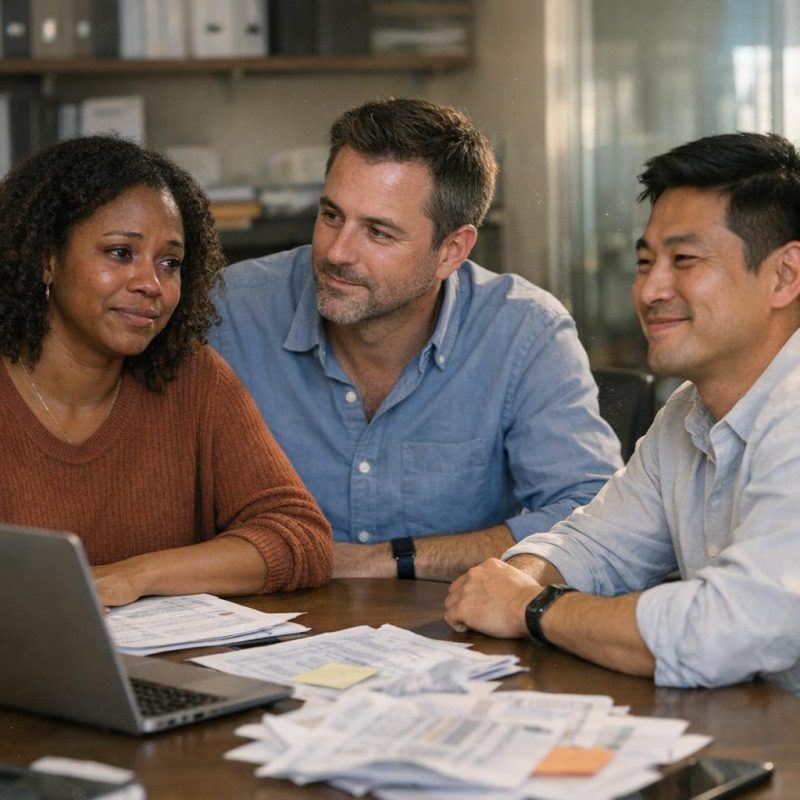 Image by RM AI
The Team Meeting
Lisa called an all-hands team meeting on Friday, and you could feel the nervous energy in the room. Everyone knew something was coming, some kind of official response to the Mark situation beyond the sterile email we'd gotten days before. She didn't waste time. 'I want to acknowledge what happened,' she said. 'Someone in this department systematically took credit for other people's work for years, and our processes didn't catch it. That's on management, and I'm sorry.' You could have heard a pin drop. 'Going forward, we're implementing new verification protocols. Peer review requirements for project documentation. Quarterly contribution audits. Mandatory metadata preservation on all shared files. Multiple sign-offs on performance evaluations.' Priya asked about anonymous reporting channels, and Lisa nodded. 'Already in development. You'll be able to raise concerns without fear of retaliation.' Jamie chimed in with suggestions about timestamp verification, and suddenly the whole room was engaged, contributing ideas, helping build something better. We weren't just moving past Mark—we were building a system that would never let someone like him thrive again.
 Image by RM AI
Jamie's Thanks
Jamie caught me by the elevators at the end of the day, and he looked like he'd been working up the courage to say something. 'Hey, can I just—thank you,' he said, and there was something raw in his voice that made me stop. 'I know you don't know this, but I was about to quit. Like, I'd drafted the resignation email and everything.' I stared at him. He was good at his work, genuinely talented. 'Mark kept telling me my contributions were 'minimal,' that I wasn't picking things up fast enough, that maybe I wasn't cut out for this kind of work,' Jamie continued. 'And I believed him. I thought I was failing, that I was the problem. I was going to leave before they fired me.' He looked at me with this expression of profound relief mixed with residual anger. 'Then all this came out, and I pulled my actual project files and compared them to what Mark had reported. Turns out I'd been doing fine—better than fine. He'd just been gaslighting me to keep me insecure.' 'You didn't just save your career,' he said, 'you saved mine before it even started.'
 Image by RM AI
The Final Confrontation That Never Happened
Here's the thing nobody tells you about these workplace situations—we all expect a dramatic showdown. I kept waiting for that movie moment where I'd confront Mark directly, where I'd lay out everything he'd done and watch him squirm. It never happened. I never confronted him. I never sent him a pointed email. I never even looked him in the eye during those final days before his termination. I just kept showing up, doing my work, documenting everything, and staying relentlessly professional. People asked me later if I felt cheated out of that confrontation, like I'd missed my chance to really tell him what I thought. But here's what I realized: I didn't need that moment. The truth did all the work I could have done with a thousand angry words. I didn't have to defend myself because my work defended itself. I didn't have to prove Mark was a fraud because his own trail of lies proved it for him. The system—when you give it actual evidence instead of emotions—can work. Not always, not perfectly, but this time it did. Sometimes the best revenge isn't a moment of satisfaction—it's building a career so solid that the truth becomes inevitable.
 Image by RM AI
New Beginning
The first real team meeting I led in my new role happened about two weeks after everything settled. I walked in with my notes, my agenda, my nerves mostly under control. Priya was already there, looking at me with this quiet encouragement. Jamie sat near the front, laptop open, ready to contribute. I started talking through our quarterly objectives, and something felt different. People were listening—not performing attention, actually listening. They asked real questions. They offered suggestions without that undercurrent of doubt. Nobody interrupted to explain my own points back to me. Nobody questioned whether I understood the technical aspects. When I delegated tasks, people nodded and took notes without that flicker of hesitation I'd gotten so used to seeing. Priya caught my eye at one point and smiled, just slightly, and I realized what had shifted. They weren't respecting the title. They were respecting me. The work I'd been doing all along, the competence I'd been demonstrating while Mark took credit—it had always been visible to some people. Now everyone could see it. This was what earned respect looked like—not stolen, not performed, just real.
 Image by RM AI
The Legal Outcome
I heard about the legal outcome through official channels about four months later. Mark had settled a civil case with our company and, it turned out, with two of his former employers as well. The details were confidential, but the fact of the settlement wasn't. He'd agreed to financial penalties and signed agreements that basically admitted to fraudulent work practices and misrepresentation of contributions. There was never a criminal trial—these things rarely go that route. White-collar misconduct like this usually gets handled through civil courts and settlements. But the industry is small, and word travels. His LinkedIn went quiet. His name disappeared from professional circles. Someone told me he'd moved to a different city, was working in an entirely different field. I didn't feel triumphant hearing that. Maybe I should have, but mostly I felt nothing. He'd made his choices, and those choices had consequences that would follow him regardless of how far he moved or what he renamed himself on paper. He didn't go to prison, but his professional reputation was destroyed—in our industry, that might be worse.
 Image by RM AI
What I Learned
Looking back now, I understand why I survived this and Mark didn't. It wasn't luck. It wasn't because I'm somehow morally superior or smarter. It was because every time I had a choice between taking a shortcut and doing the actual work, I did the work. Every time I could have exaggerated my contributions or diminished someone else's, I documented the truth instead. Every time I felt frustrated or angry or ready to explode, I stayed professional and let my results speak. That's not some feel-good lesson about karma—it's practical. Your reputation is built on what you can prove, and you can only prove what you actually did. Mark built his career on borrowed credibility and stolen work, and that's a foundation that crumbles the moment someone looks closely. Mine was built on files, emails, code commits, client feedback, and measurable results. When the scrutiny came, I had something real to stand on. He had nothing but excuses and misdirection. I'm not perfect, and I don't always get it right, but I learned this much: some people move up by pushing others down—but the ones who build their success on real work are the only ones who get to keep it.
 Image by RM AI