I Gave My Daughter Everything to Buy Her Dream Home — Then I Heard What She Really Thought of Me
I Gave My Daughter Everything to Buy Her Dream Home — Then I Heard What She Really Thought of Me
The Empty House
The silence was what got to me most. Six months after Richard's funeral, I still caught myself listening for his footsteps in the hallway, the sound of his newspaper rustling in the den, the way he'd hum while making his morning coffee. Our house—the one we'd bought when Chloe was just a toddler—suddenly felt like a museum of a life that used to be mine. I'd walk from room to room some mornings, just to create sound, to feel like I was accomplishing something. The guest bedrooms we'd kept ready for visiting grandchildren sat pristine and unused. Chloe and Mark lived two hours away, busy with their jobs and the kids' schedules. I understood, of course. I'd been that age once, juggling everything. But understanding didn't make the quiet any easier. My teacher friends from the district had their own families, their own routines. Richard had been my companion, my anchor, my daily conversation for forty years. Without him, I was floating. The phone rang, and when I saw Chloe's name on the screen, I felt something I hadn't felt in months—hope.
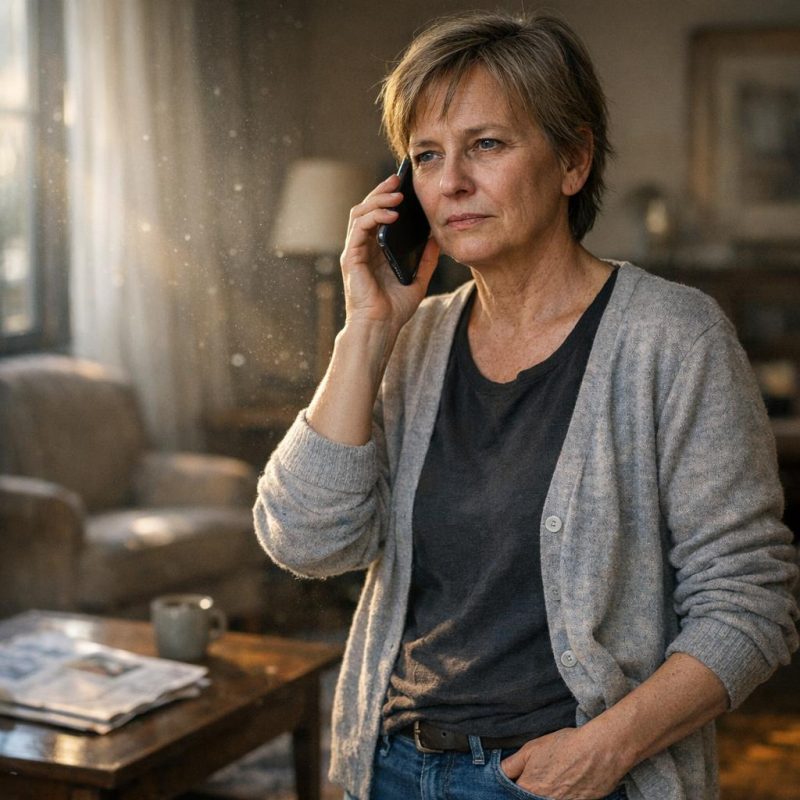 Image by RM AI
A Daughter's Plea
Chloe sat across from me at the kitchen table, looking more worn down than I'd seen her in years. She'd always been so put-together, so capable, but that afternoon she kept twisting her wedding ring around her finger, a nervous habit from childhood. 'Mom, I don't know how to say this,' she started, her voice catching. She explained that their rental lease was ending, that the landlord was selling. They'd been looking at houses for months, but everything in a decent school district was beyond their reach. Mark's architecture firm was doing well, but not well enough. 'Emma starts second grade this fall, and the only places we can afford...' She trailed off, wiping her eyes. 'Mom, I'm scared. The neighborhoods we can actually buy in, they're not safe. There was a break-in two blocks from one house we looked at.' I reached across and squeezed her hand, my heart breaking. I'd spent my whole life protecting her, and here she was, trying to protect my grandchildren. As Chloe left, she turned back with red-rimmed eyes and said, 'Mom, you're the only one who can help us.'
 Image by RM AI
The Family Meeting
Mark came by the following Saturday, and I'll admit I was surprised when he pulled out a leather portfolio from his messenger bag. I'd always liked Mark—he was thoughtful, creative, genuine in a way that put me at ease. 'Linda, I wanted to show you something before we even discuss the financial side,' he said, spreading architectural sketches across my dining table. The house was beautiful. Traditional but not stuffy, with a big backyard and windows that let in light. Then he pulled out another sheet. 'We designed this with you in mind,' he explained. There, rendered in careful detail, was an in-law suite with its own entrance through a garden patio. A bedroom, a sitting room with built-in bookshelves, a small kitchenette. 'You'd be right next to the kids' playroom,' Chloe added, pointing. 'We could have breakfast together. You could be part of their lives every single day.' I stared at those drawings and saw myself reading to Emma and Oliver, heard their laughter through connecting doors. Mark spread the house plans across my dining table, and there it was—my own private suite with a garden entrance, right next to the grandchildren's playroom.
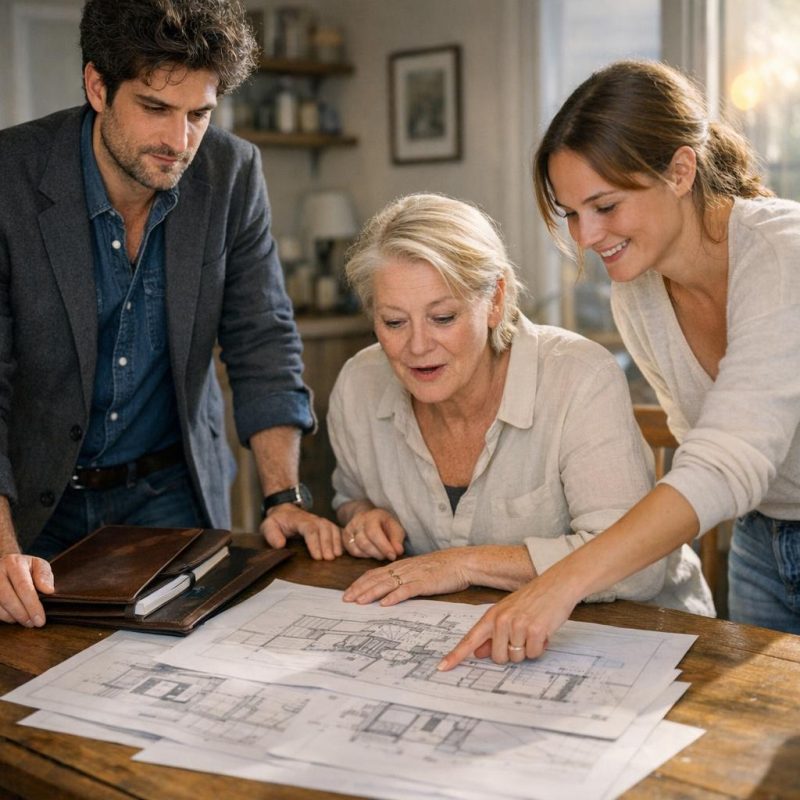 Image by RM AI
The Numbers
That night, I sat at Richard's old desk with a calculator and a notepad, doing what I'd always done when facing big decisions—I looked at the numbers. Our house, in this market, would sell for approximately seven hundred and fifty thousand. After paying off the small remaining mortgage and closing costs, I'd walk away with just over seven hundred thousand. The house Chloe and Mark wanted was listed at six hundred and eighty thousand. If I contributed sixty percent of the down payment—roughly four hundred thousand—they could afford the monthly mortgage with their combined income. That would leave me with three hundred thousand to invest. At a conservative four percent return, I'd have twelve thousand annually, plus my pension and Social Security. It wasn't lavish, but it was enough. More importantly, I'd have family. Daily contact with my grandchildren. Shared meals. Conversation. Purpose. I ran the numbers three times, checking my math the way I used to check students' work. I stared at the numbers on my notepad—it was tight, but it would work, and I would have family around me again.
 Image by RM AI
Meeting the Grandchildren
Chloe brought Emma and Oliver over on a Sunday afternoon, and watching them run through my too-large backyard made everything feel right. Emma, always the careful one, picked dandelions and arranged them in patterns on the patio. Oliver just ran in circles, arms spread like an airplane, giggling that pure laugh that only small children have. 'Grandma, is this going to be our new yard?' Emma asked, looking up at me with those serious brown eyes. I crouched down beside her. 'Maybe, sweetheart. Would you like that?' She nodded enthusiastically. Oliver abandoned his airplane game and crashed into both of us, wrapping his small arms around my neck. After lunch, I read to them on the sofa—the same sofa where I'd read to Chloe decades ago. Oliver's head grew heavy against my shoulder, his breathing evening out into sleep. Emma snuggled closer, following along with the pictures. This was what I'd been missing. This warmth, this purpose, this feeling of being needed. Oliver climbed into my lap and whispered, 'Grandma, will you read to me every night when we live together?'
 Image by RM AI
The Lawyer's Office
The lawyer's office smelled like leather and old books, which I found oddly comforting. Chloe and Mark sat on either side of me as Mr. Patterson went through the mortgage documents. When we reached the section about the deed, I cleared my throat. 'I need to be listed as a co-owner,' I said firmly. I'd spent two nights researching property law, and I knew my rights. 'Given that my contribution represents roughly sixty percent of the down payment, I believe that's appropriate.' I expected pushback, maybe some discussion, but Chloe just nodded. 'Of course, Mom. That's only fair.' Mark agreed immediately. 'Absolutely. We wouldn't have it any other way.' Mr. Patterson made notes on his legal pad, explaining that we'd all be listed on the deed with specific ownership percentages. He walked us through contingencies, refinancing clauses, what would happen if—God forbid—something happened to one of us. It all felt very proper, very secure. The lawyer looked up from the documents and asked if I was certain, and I nodded—after all, this was my family.
 Image by RM AI
Saying Goodbye
The moving truck looked enormous parked in front of the house where I'd raised Chloe, where Richard and I had celebrated anniversaries and holidays, where we'd built a life. The movers were efficient and professional, but watching them carry out furniture felt like watching my history being dismantled piece by piece. I'd already moved most of my things to a storage unit—Mark and Chloe's house wouldn't be ready for another two months, so I was temporarily staying with Margaret. The new owners, a young couple with a baby, had been so excited during the walkthrough. I was happy for them. Really, I was. But standing in the empty living room, I felt Richard's absence all over again. He'd painted these walls. He'd built those shelves. We'd slow-danced in this space on our thirtieth anniversary. I walked through each room one final time, my footsteps echoing. The movers were loading the last boxes when I stepped outside. I locked the door for the last time and thought about Richard—he would have wanted me to be with family, wouldn't he?
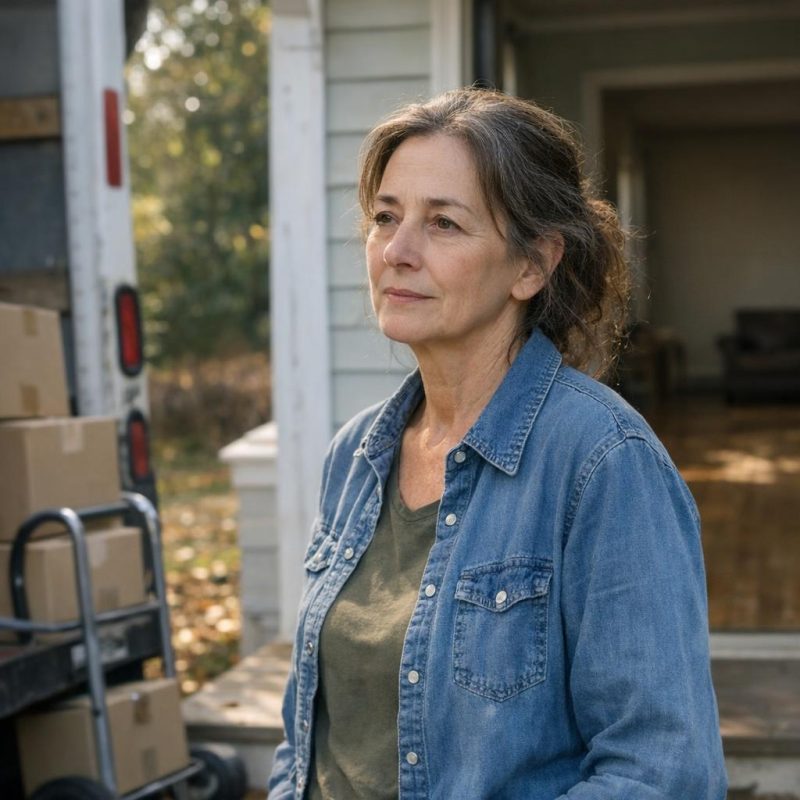 Image by RM AI
Coffee with Margaret
Margaret had been my closest friend since we'd started teaching together thirty years ago, so I wasn't surprised when she brought up concerns over coffee at her kitchen table. 'Linda, I just want to make sure you've thought this through,' she said carefully. 'That's your security you're putting into their house.' I bristled a little. 'It's not just their house. I'm on the deed. And besides, they're family.' Margaret nodded, stirring her coffee. 'I know, honey. I'm not saying they have bad intentions. I'm just saying things change. People change. You're giving up your independence.' I explained the in-law suite, the legal protections, the fact that I'd still have money of my own. 'This isn't some impulsive decision,' I told her. 'I've done the math. I've thought it through. And frankly, I can't stand being alone anymore.' My voice cracked on that last part, surprising us both. Margaret reached across the table and took my hand. 'I understand. I do. Just promise me you'll call if anything feels wrong,' she said quietly. But I couldn't imagine what could possibly go wrong.
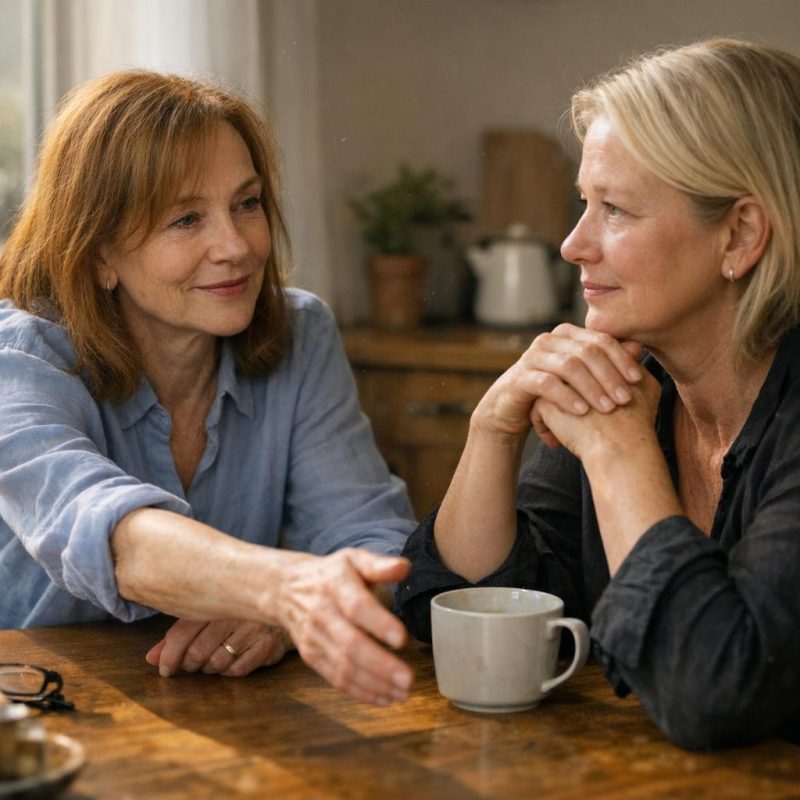 Image by RM AI
The Basement Room
Moving day finally arrived, and I felt a flutter of excitement as the last box came through the door. Chloe had been vague about which room would be mine, saying she wanted to 'show me in person.' I followed her through the kitchen, past the living room, expecting her to lead me upstairs or perhaps to a bright addition I hadn't noticed during our walkthrough. Instead, she opened a door I'd assumed was a closet and started down a narrow staircase. The temperature dropped with each step. 'Here we are!' she said brightly, flipping on a bare bulb that illuminated concrete walls, exposed pipes running along the ceiling, and a small window near the ceiling caked with dirt. The 'bedroom' held a bare mattress on the floor. The 'bathroom' was a utility sink and a toilet behind a shower curtain. This wasn't a suite. This wasn't even finished. My throat tightened, but I kept my face neutral—years of classroom management had taught me how to hide shock. 'I know it's not perfect,' Chloe said quickly, already backing toward the stairs. I stood in the cold basement, surrounded by exposed pipes and concrete walls, and Chloe said, 'Don't worry, Mom, we'll fix it up soon.'
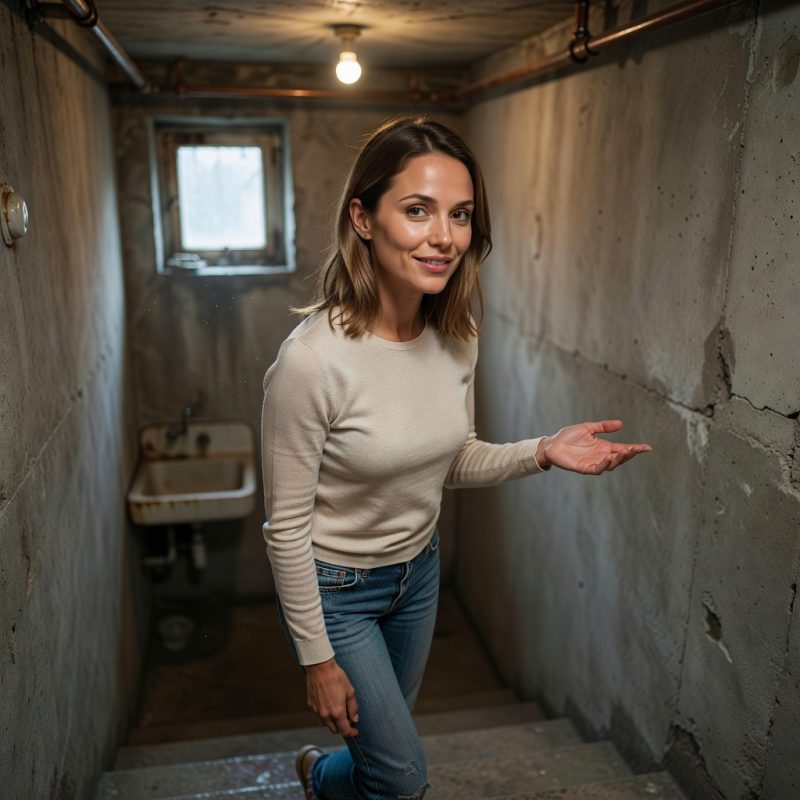 Image by RM AI
The First Morning
I woke to silence in the basement—no natural light to tell me the time. My phone said 7:15. Upstairs, I found the kitchen empty except for a note propped against the coffee maker in Chloe's neat handwriting: 'Mom—had to leave early. Kids need breakfast and lunch packed for camp. Please pick them up at 3. Dinner at 6 would be great. Chicken is in the fridge. Thanks!' No signature, no 'love you,' no acknowledgment that this was my first full day in my new home. I heard small footsteps overhead—Emma and Oliver were awake. I'd imagined we'd all have breakfast together this first morning, that Chloe would walk me through the routines, that we'd ease into whatever arrangement we'd settle on. Instead, I was already alone with expectations I hadn't agreed to. But what was I supposed to do? Let my grandchildren go hungry? Leave them stranded at camp? I was a teacher for thirty-five years. Caring for children was instinctive. Still, something felt off about the assumption, the lack of asking. I reread the note three times, searching for the 'please' or 'if you don't mind' that never came.
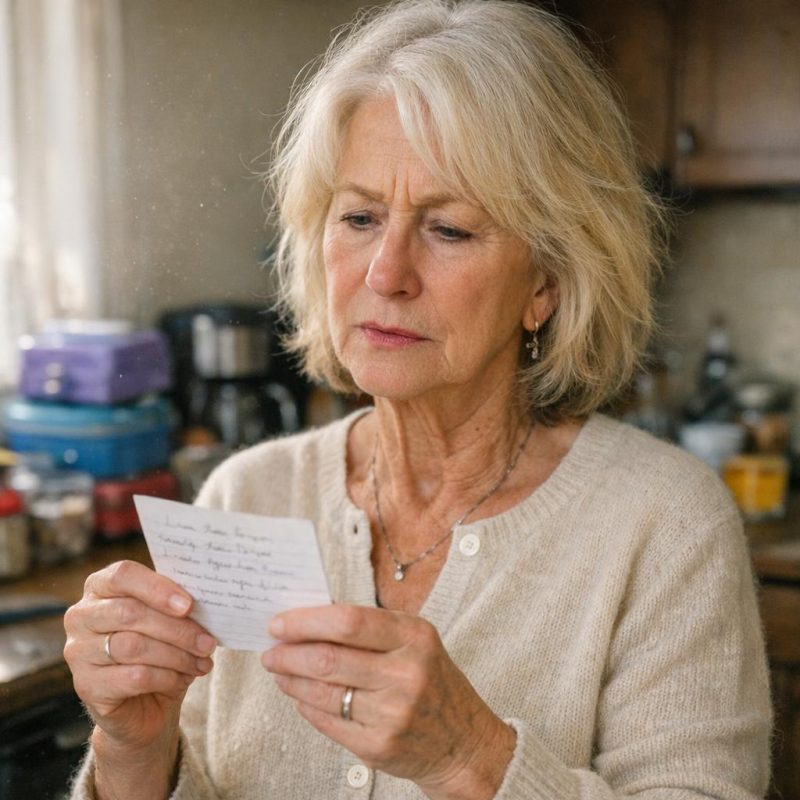 Image by RM AI
Settling In
The week developed a rhythm I hadn't chosen but couldn't seem to break. I woke to notes. I made breakfast. I packed lunches with the crusts cut off the way Emma liked. I drove to camp pickups and played referee during sibling squabbles. I planned dinners around everyone's preferences—Mark didn't eat onions, Chloe was 'trying to avoid carbs,' Oliver would only eat pasta if it had butter, nothing else. By the time they got home, I'd already tidied the main floor, folded laundry, wiped down counters. 'Thanks, Mom,' Chloe would say absently, scrolling through her phone while Mark went straight to the shower. We'd eat together, but the conversation revolved around their work stress, their friends, their plans. When I tried to share something—a funny moment with Oliver, a question about the neighborhood—the topic would shift within minutes. I told myself this was normal, that we were all adjusting, that once things settled we'd find time to really connect. But by Friday, I realized I hadn't spent a single quiet moment with Chloe, just the two of us, since I'd moved in.
 Image by RM AI
The Grocery Bill
I was putting away groceries I'd picked up—milk, bread, the specific yogurt Emma would eat—when Mark came into the kitchen holding the receipt I'd left on the counter. 'Hey, Linda,' he said, his tone casual but his eyes sharp. 'We should probably talk about how we're splitting household expenses.' I blinked at him. 'Splitting expenses?' 'Yeah, you know. Groceries, utilities, that kind of thing. We'll need you to chip in your share.' I felt heat rise in my face. I'd funded sixty percent of this house. I'd handed over two hundred thousand dollars. And now I was being asked to split the grocery bill? 'I thought... I mean, I already contributed to the house,' I said carefully. Mark shrugged. 'Sure, but we all live here. We all eat. It's only fair, right?' He pulled out his phone and showed me a spreadsheet—my 'portion' calculated down to the dollar. 'I'm not trying to be a jerk, but we all need to pull our weight around here,' he said, and something in his voice made my stomach tighten.
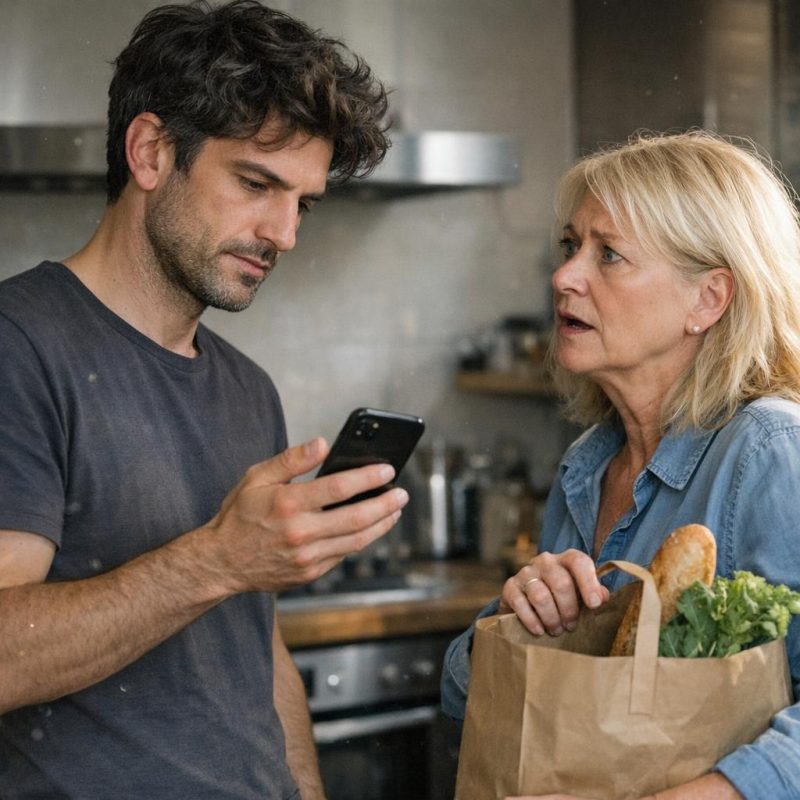 Image by RM AI
Emma's Birthday Party
Emma's seventh birthday fell on a Saturday, and I'd spent all week planning. I baked the cake—vanilla with strawberry filling, Emma's favorite. I blew up balloons, strung streamers, set up games in the backyard. I made individual goodie bags with the little unicorn erasers Emma loved. That morning, I was up at six arranging fruit trays while Chloe slept in. When the parents started arriving, Chloe emerged in a lovely sundress, fresh makeup, all smiles. 'Welcome! So glad you could make it!' she said, playing hostess while I shuttled out pizza and refilled juice boxes. I didn't mind helping—it was Emma's day—but something stung when I heard conversations through the window. 'You've outdone yourself, Chloe,' one mother said. 'Where do you find the time?' I watched my daughter laugh, radiant in the afternoon sun. 'Oh, you know how it is. I just want everything perfect for her.' No mention of who'd been up since dawn. No acknowledgment when I carried out the cake I'd spent hours decorating. As I scraped frosting off plates in the kitchen, I heard Chloe tell another mother, 'Yes, I planned everything myself—it's exhausting but so worth it.'
 Image by RM AI
The Broken Promise
Three weeks in the basement had taken a toll. My back ached from the mattress on the floor. The dampness had triggered a cough I couldn't shake. I caught Chloe alone one evening while Mark took the kids for ice cream, and I tried to keep my voice light. 'Honey, I was wondering if we could talk about the timeline for finishing the basement? Just so I know what to expect.' Her expression shifted immediately—jaw tight, eyes flashing. 'Seriously, Mom? We just moved in. We're still unpacking.' 'I know, I just thought—' 'We have other priorities,' she cut me off. 'The master bathroom needs work. The fence needs replacing. We can't do everything at once.' I felt my cheeks burn. 'I'm not asking you to do everything. I'm just asking about the space I was promised.' Wrong thing to say. Her voice went cold. 'Promised? You make it sound like some kind of contract. I thought you wanted to help us, to be part of our family.' 'I do want that. I just—' Chloe sighed and said, 'Mom, can you please stop being so selfish? We have other priorities right now.'
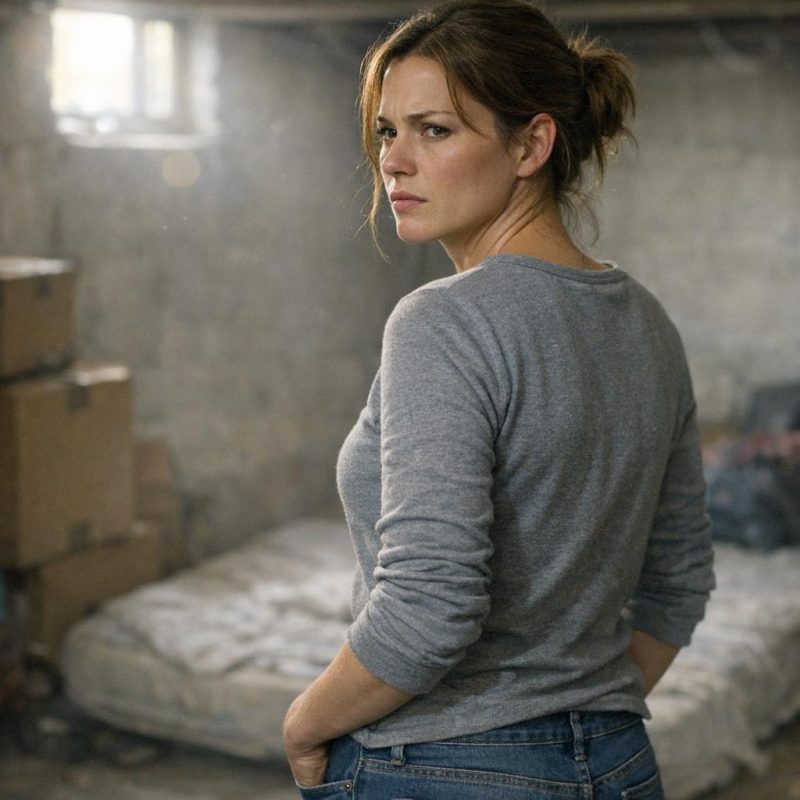 Image by RM AI
The Wine Delivery
The doorbell rang while I was folding laundry in the basement—my unofficial domain now. I climbed the stairs and opened the door to a delivery man holding two wooden cases. 'Wine delivery for Henderson,' he said. I signed for it, confused. These weren't grocery store bottles—these were the heavy cases that came from specialty shops. After he left, I glanced at the invoice tucked into the top case. Three hundred seventeen dollars. For wine. I stood there in the quiet house, the paper trembling slightly in my hand. This was the same week Mark had shown me his spreadsheet, calculating my share of the grocery bill down to the yogurt cups. The same month Chloe claimed they couldn't afford to finish the basement because money was 'tight.' I thought back to all those conversations about their struggles—how they'd never be able to save for a house, how they were drowning in rent, how they needed my help to get started. I stared at the invoice—three hundred dollars for wine—and wondered how people who couldn't afford a house down payment could afford this.
 Image by RM AI
The Unsent Text
That night, lying on the basement mattress, I pulled out my phone and opened a text to Margaret. My thumbs hovered over the screen. 'Hi Margaret. I hope you're well. I wanted to tell you...' Tell her what? That I'd made a mistake? That my daughter was treating me like an employee rather than her mother? That I'd given up my independence and my security for a basement room and a grocery bill? The shame was overwhelming. Margaret had warned me. She'd been gentle about it, careful, but she'd warned me. And I'd dismissed her concerns, so confident in my decision, so sure that family was everything. How could I admit I'd been wrong? How could I tell her that the woman who'd taught critical thinking for thirty-five years had failed to think critically about the most important decision of her life? I typed: 'Things aren't quite what I expected.' Then I deleted it. Typed: 'I think I need to talk.' Deleted that too. My finger hovered over the send button, but I couldn't bring myself to type the words 'I think I was wrong.'
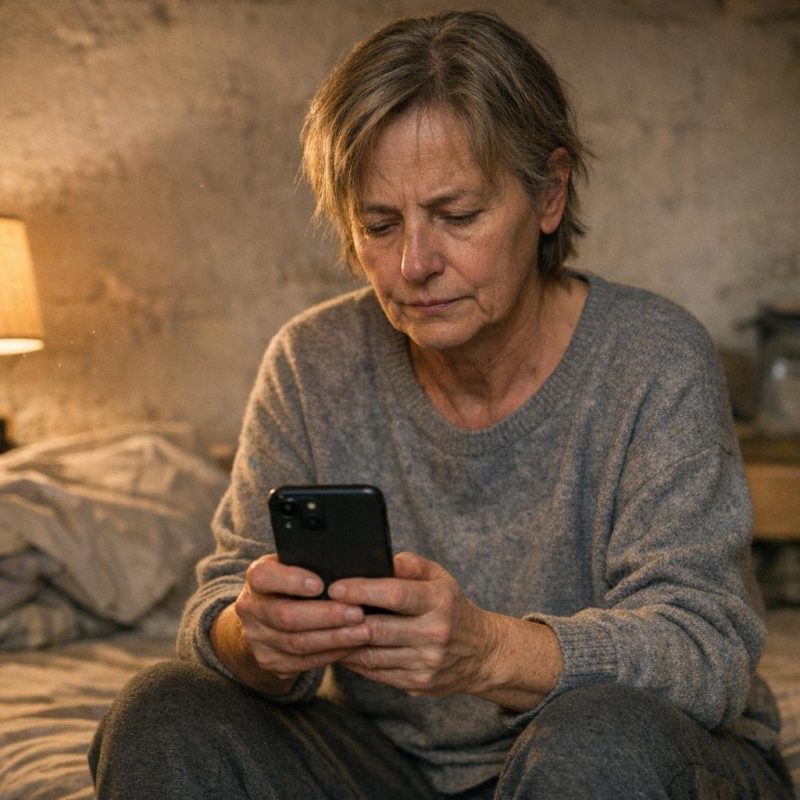 Image by RM AI
Laundry Day
The laundry had become my domain. Every Monday, I hauled basket after basket up from the basement, sorted colors from whites, delicates from regular wash. Mark's dress shirts alone took an hour—the kind that needed special detergent, careful temperatures, immediate hanging to avoid wrinkles. I found myself reading the labels: Tom Ford, Ermenegildo Zegna, brands I'd never heard of before. Each shirt cost more than I used to spend on a week's groceries. Chloe's yoga clothes came next, those expensive moisture-wicking things that couldn't go in the dryer. Then the kids' stuff—Emma's school uniforms, Oliver's dinosaur pajamas. I didn't mind doing the children's laundry. That felt grandmotherly, loving. But standing there pressing Mark's collar just so, making sure the creases were crisp for his client meetings, I felt something shift in my chest. The basement window reflected my image back at me—a woman bent over an ironing board, gray hair pulled back in a practical ponytail, hands that had once graded essays now smoothing expensive fabric. As I folded Mark's shirts with the designer labels, I caught my reflection in the basement window—when had I become invisible?
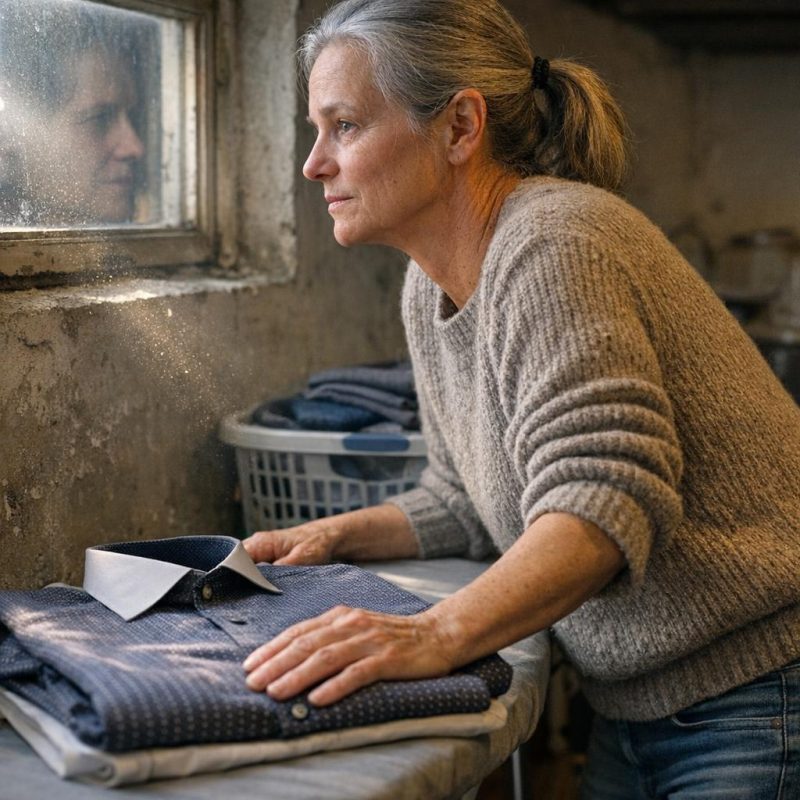 Image by RM AI
The Sick Day
The cold hit me hard on a Tuesday night. I woke up Wednesday morning with that awful chest-deep cough, the kind where breathing hurts. My head felt stuffed with cotton, and getting out of bed took genuine effort. I managed to text Chloe: 'Not feeling well. Might need a sick day.' She appeared in my doorway within five minutes, still in her silk robe. 'How not well?' she asked, arms crossed. I tried to sit up, triggered another coughing fit. 'I think it's just a bad cold, but I don't want to give it to the kids.' Her face tightened. 'Mom, I have three showings today. Mark has that conference in Seattle.' 'I'm sorry,' I said, my voice raspy. 'Maybe just today? I could probably—' 'This is really inconvenient,' she interrupted. 'Do you know how hard it is to find last-minute childcare?' Not 'Are you okay?' Not 'Can I get you anything?' Just the logistics of her disrupted schedule. She stood there for another moment, tapping her phone screen, probably texting her backup babysitter list. Then Chloe stood in my doorway and said, 'Mom, I really need you to power through this—I have an important meeting tomorrow.'
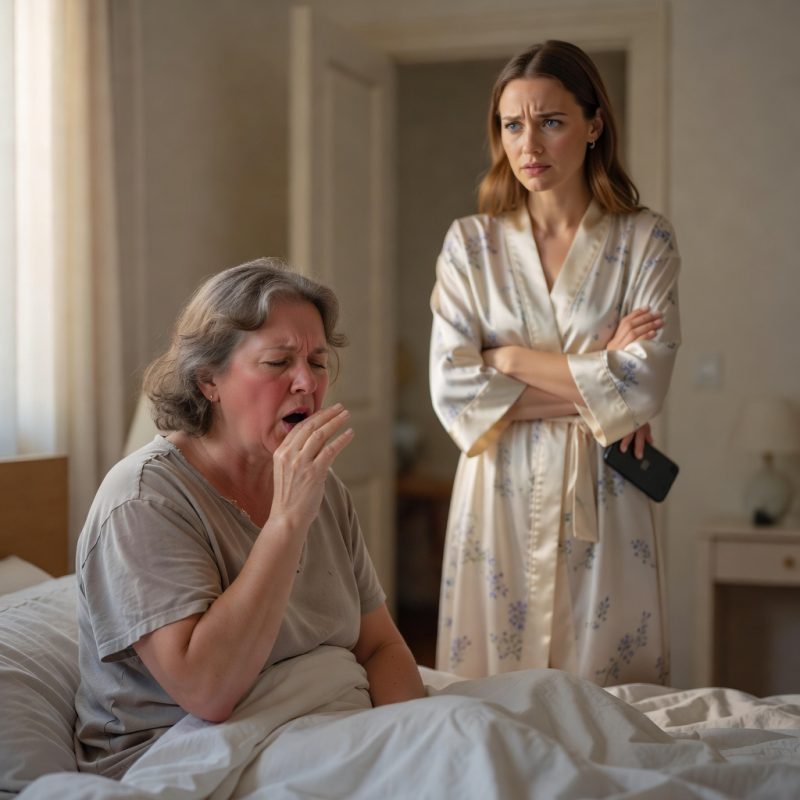 Image by RM AI
Oliver's Question
I was reading to Oliver on the living room couch when he looked up at me with those big curious eyes. 'Grandma, how come you sleep in the basement?' he asked. My breath caught. 'Well, that's where my room is, sweetheart.' 'But the guest room is empty,' he said, perfectly logical in the way only a four-year-old can be. 'Emma showed me. It has a big bed and everything. And windows.' 'Oliver, that's enough,' Chloe appeared from the kitchen, voice sharp. 'Grandma likes the basement. Don't you, Mom?' Oliver looked between us, confused by the sudden tension. 'But it's dark down there. And there's no—' 'Oliver, go wash your hands for snack time,' Chloe said firmly. He scrambled off the couch, and I saw something flash across her face. Embarrassment, maybe. Or guilt. She wouldn't meet my eyes. 'He doesn't understand,' she said quickly. 'Kids say things.' 'He makes a good point, though,' I said softly. She grabbed her purse from the counter, suddenly in a rush to leave. I watched Chloe's face flush as she hurried Oliver away, and I wondered what explanation she would give him later.
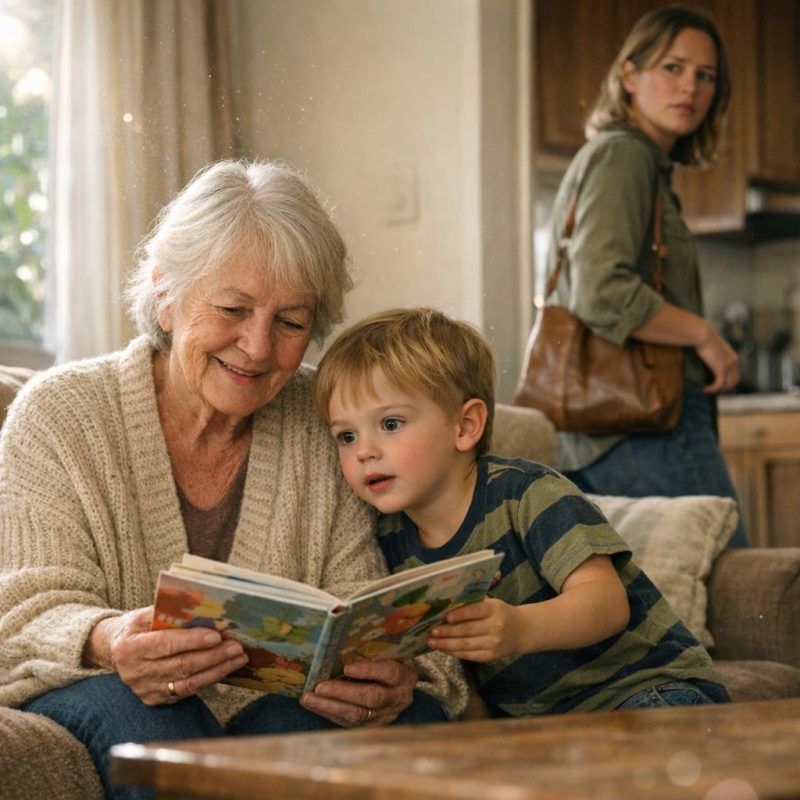 Image by RM AI
The Dinner Party
They were hosting eight people for dinner—Mark's colleagues and their wives. Chloe handed me a menu two days in advance: beef Wellington, roasted vegetables, some complicated French dessert. 'Can you handle this?' she asked. I could. I'd been cooking for decades. What I didn't expect was the instruction to stay in the kitchen. 'We just think it'll flow better,' Chloe explained, not quite looking at me. 'You know, so you can focus on timing everything perfectly.' The night of the party, I worked in the kitchen for hours. I could hear laughter from the dining room, the clink of wine glasses, animated conversation. I plated each course carefully, handed them through the door to Chloe, then retreated back to my station. I ate standing up at the counter, a plate of leftovers while they enjoyed the meal I'd prepared. Mark's voice carried from the dining room, expansive with wine and success. 'We've finally achieved the lifestyle we always dreamed of,' he said, and there was a murmur of approval. I stood there with my hand on the kitchen door, dish towel over my shoulder. Through the kitchen door, I heard Mark tell his guests, 'We finally achieved the lifestyle we always dreamed of,' and I wondered if that included a live-in servant.
 Image by RM AI
The Locked Door
I'd gone upstairs looking for a book I'd left in the sitting room. The door was closed, which was unusual. When I tried the handle, it didn't turn. Locked. I stood there confused, tried it again. 'Linda?' Mark appeared at the top of the stairs. 'Oh, were you trying to get in there?' 'I left a book—' 'We've been meaning to mention this,' he said, walking toward me with that calm, reasonable expression. 'Chloe and I decided we need some private spaces in the house. Just for us. The sitting room, the office, our bedroom wing obviously.' 'Private spaces,' I repeated. 'Right. You understand. Everyone needs boundaries, space to decompress. You have your basement area.' My basement area. The house I'd paid for—more than half of it, actually. The house I'd liquidated my retirement to purchase. And now I was being told which rooms I could enter. 'I just wanted my book,' I said quietly. He smiled, that patient smile. 'Just ask next time and we'll grab it for you. We're not trying to be difficult.' But they were. They were marking territory, drawing lines. Mark said, 'We need our private spaces, Linda,' and I realized I was living in a home I had purchased but didn't belong in.
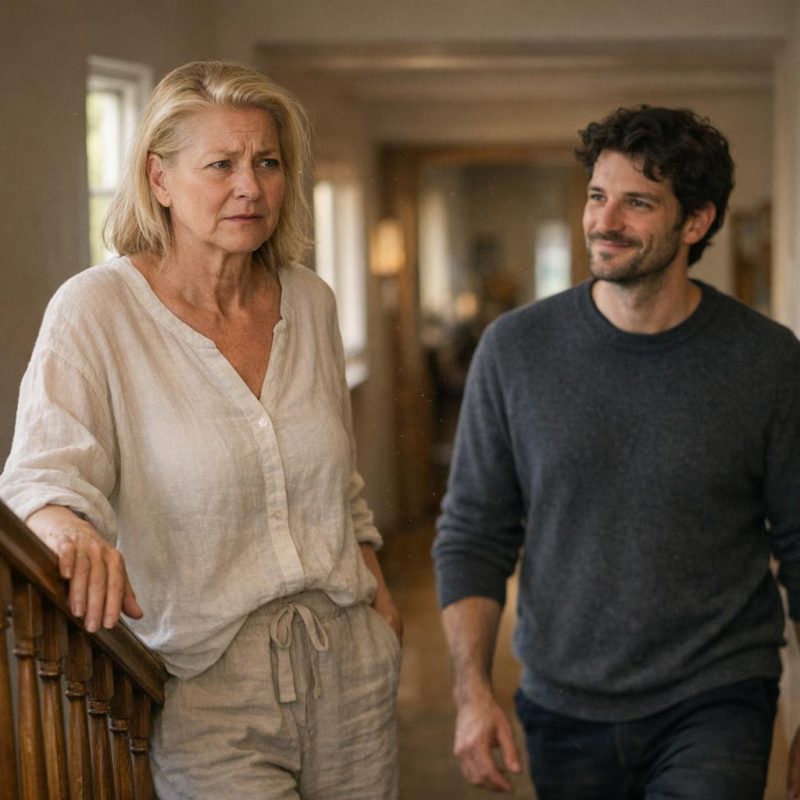 Image by RM AI
Margaret's Visit
Margaret had been texting for weeks, asking to visit. I'd put her off with vague excuses until she finally just told me she was coming Saturday afternoon. I met her at the front door before she could ring the bell, hoping we could go out for coffee. 'I want to see where you're living,' she said firmly. So I took her down to the basement. I watched her face as she took it in—the narrow bed, the plastic storage bins, the tiny window near the ceiling. She walked slowly around the space, not saying anything at first. Touched the thin curtain I'd hung for privacy. Looked at the clothes rod where my wardrobe hung in a sad little row. 'Linda,' she finally said. 'This is a basement.' 'It's fine. It's comfortable enough.' 'You gave them how much money?' 'Margaret, please.' 'And they put you in the basement?' Her voice was rising. 'They have a guest room upstairs,' I said quickly. 'They just need the space for—' 'For what? Linda, listen to yourself.' I couldn't meet her eyes. Upstairs, I heard footsteps. Chloe would be down soon, find some reason to interrupt. Margaret looked around the basement and whispered, 'Linda, this isn't right,' but I still couldn't admit it out loud.
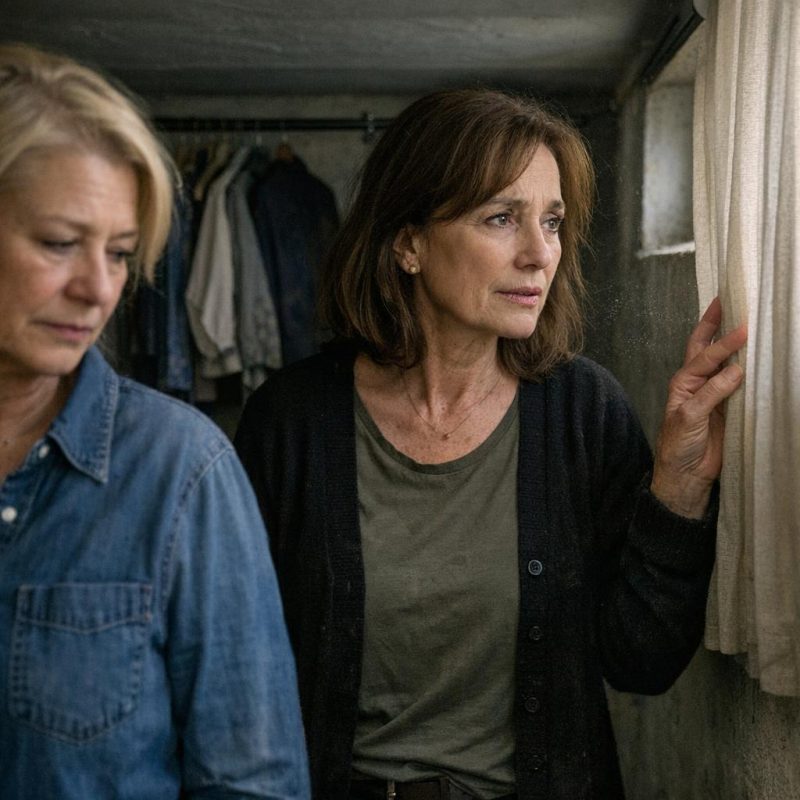 Image by RM AI
The Boundary Attempt
I'd been rehearsing it for days. Just one afternoon a week. That's all I wanted. My old book club met Wednesday afternoons at the library, and I missed it desperately—the discussions, the friendship, the feeling of being Linda the person instead of Linda the helper. I found Chloe in the kitchen after breakfast. 'I wanted to talk to you about something.' She looked up from her phone. 'What's up?' 'My book club meets on Wednesday afternoons, and I was thinking I could—' 'You want time off?' Her tone shifted immediately. 'Just Wednesday afternoons. A few hours. I could still do morning pickup and—' 'Mom.' She set her phone down hard on the counter. 'Do you know what we're paying for childcare on your days off already? It's astronomical.' 'I didn't realize I had set days off,' I said carefully. 'You don't. That's kind of the point.' Her face was flushing now. 'We took you in. We gave you a home. And now you want to make demands?' 'It's just a few hours—' 'No.' The word was flat, final. She picked up her coffee cup, hands shaking slightly. Chloe's face twisted and she said, 'After everything we've done for you, you're going to be selfish now?'
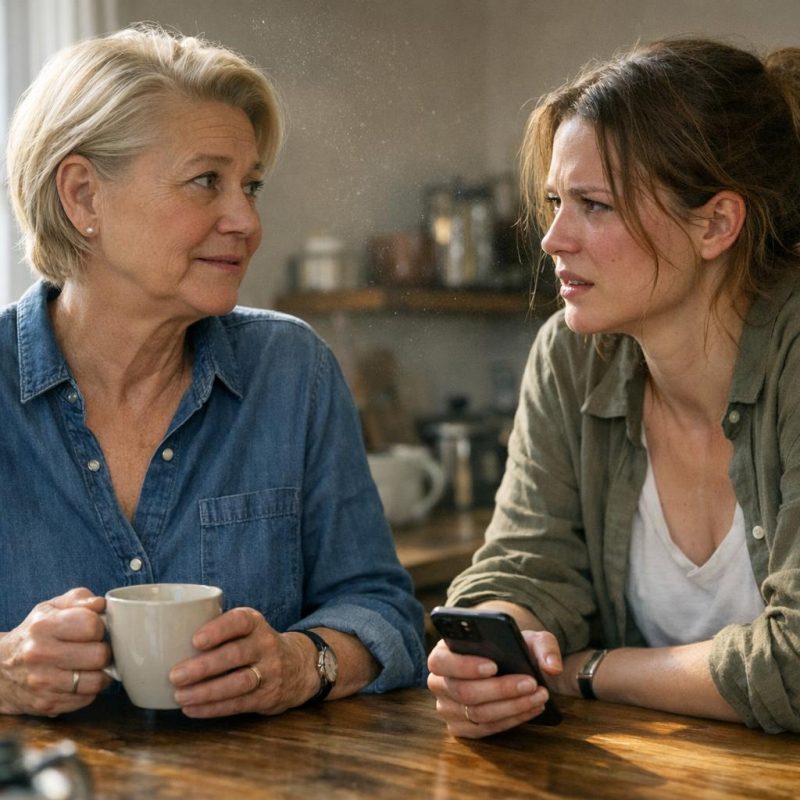 Image by RM AI
The Family Photo
The photographer arrived at ten. I'd heard Chloe on the phone booking it—'We want to capture the family in our new home, really showcase the space.' She'd been planning outfits for days. Everyone was dressed in coordinated neutrals: cream, soft gray, navy. They looked like they'd stepped out of a Pottery Barn catalog. I came upstairs when I heard the doorbell, thinking maybe I should change out of my jeans. 'Mom, you can just stay downstairs,' Chloe said, adjusting Emma's collar. 'We're doing immediate family only today.' Immediate family. The words hit like a slap. 'Oh,' I managed. 'We'll do extended family photos another time,' she added breezily, but we both knew that wasn't true. I retreated to the basement, but I couldn't help it—I positioned myself by the window well where I could see the front porch. Mark lifted Oliver onto his shoulders. Emma stood between her parents, grinning. The photographer moved them around, capturing every angle of the beautiful house, the happy family, their perfect life. Click, click, click. I watched from the basement window as they posed on the porch of the house I had bought, and I wasn't in a single frame.
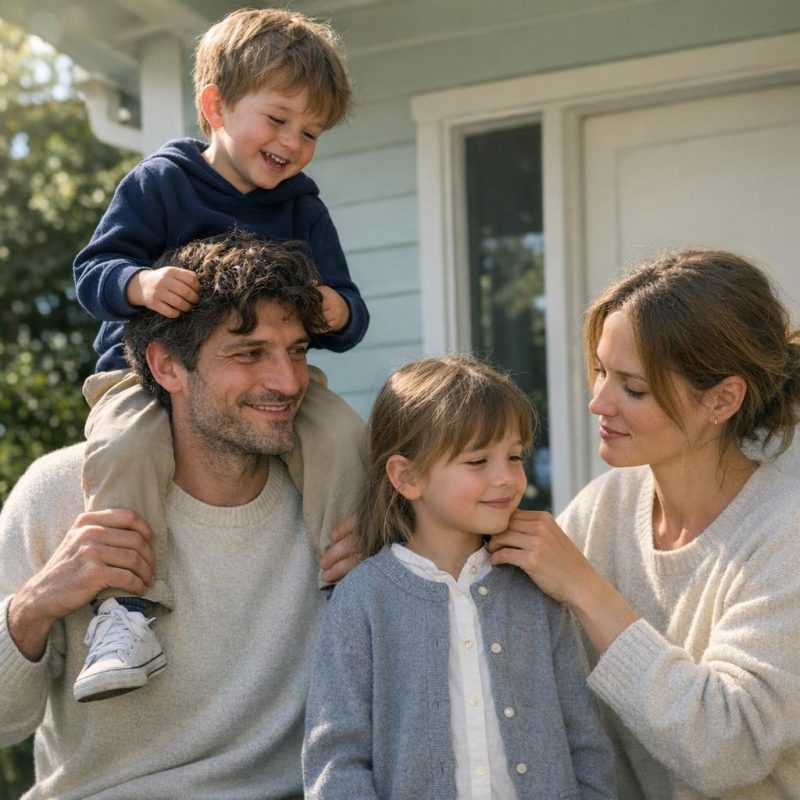 Image by RM AI
The Vacation Discussion
They were at the kitchen island with their laptops open when I came upstairs to make tea. 'Babe, what about the Turks and Caicos package?' Mark said, scrolling. 'Five-star resort, all-inclusive.' Chloe leaned over to look. 'That's only twelve thousand for the week. We should do it—the kids would love it.' I stood at the kettle, listening to them plan an extravagant vacation as casually as I used to plan a trip to Target. 'We'd need someone to watch the house, though,' Mark added. 'And the dog.' 'Mom can do it,' Chloe said without looking up. Just like that. Not 'Should we invite Mom?' Not 'Maybe we could all go somewhere together.' Just 'Mom can do it.' 'Perfect,' Mark said. 'Someone responsible needs to be here anyway.' I poured my tea with shaking hands. The cost of their vacation was more than I'd spent on myself in two years. They had just committed to spending twelve thousand dollars on a week at the beach while I slept in a basement with a leaking ceiling. And it never occurred to either of them to include me because somewhere along the way, I had stopped being family. Mark said, 'Someone responsible needs to be here,' and I realized they never even considered inviting me.
 Image by RM AI
Emma's Confidence
Emma found me in the basement the next afternoon, carrying her stuffed rabbit. 'Grandma, are you sad?' she asked, climbing onto the futon beside me. 'No, sweetie. Why would I be sad?' She studied me with those serious eyes. 'Because you can't come on vacation with us. I told Mommy I wanted you to come to the beach too.' My heart squeezed. 'That's very sweet of you, Emma.' 'But Mommy said you can't. She said you need to stay home and work.' Work. I lived in their basement rent-free and they told their daughter I needed to stay home and work. 'She said you're too busy,' Emma continued, petting her rabbit's ears. 'Too busy taking care of the house and stuff. I wish you weren't so busy, Grandma.' I pulled her close, breathing in the strawberry scent of her shampoo. They were rewriting the narrative, making my exclusion seem like my choice, my limitation. Emma would grow up thinking I was too busy for her, too consumed with responsibilities to join family trips. She'd never know I was never invited. Emma hugged me and said, 'Don't be sad, Grandma—they said you're too busy to come anyway,' and my heart cracked further.
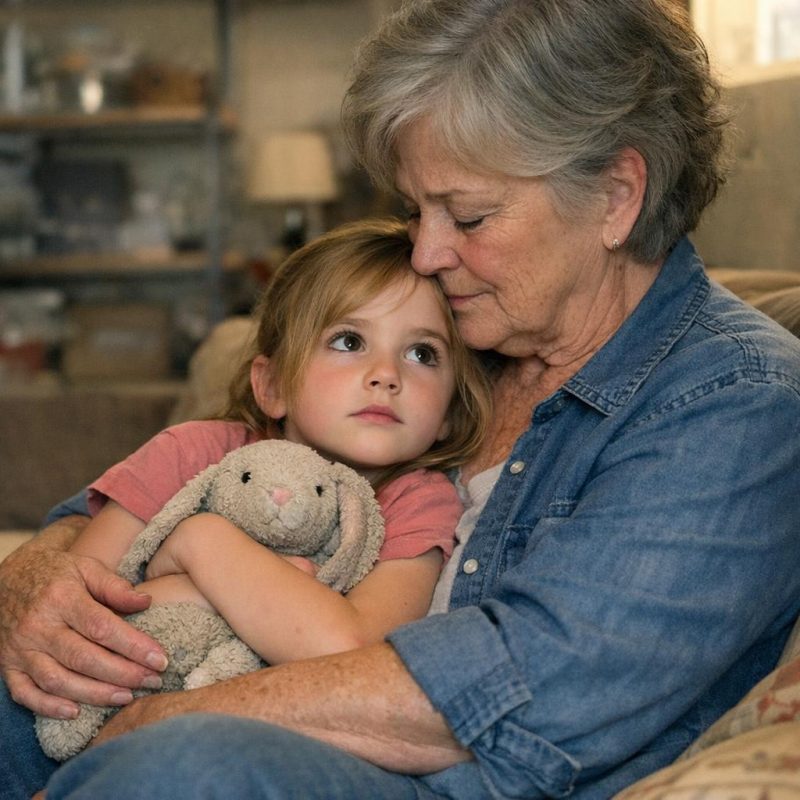 Image by RM AI
The Bathroom Renovation
The construction crew arrived Monday morning at seven. I heard the heavy boots upstairs, the sound of tools being unloaded. When I ventured up for coffee, the master bathroom had been gutted. 'Heated marble floors,' the contractor told Mark, showing him samples. 'Rainfall shower, custom vanity, the works. Beautiful choices.' I looked at the invoice sitting on the counter—thirty-eight thousand dollars. They were spending thirty-eight thousand dollars on a bathroom renovation. I thought about the crack in my basement ceiling that had appeared after the first heavy rain, the water stain that spread a little more each storm. I'd mentioned it twice. Both times Chloe had said, 'We'll get to it.' The crew worked for days. I listened from below as they installed luxury fixtures above my head while moisture slowly damaged the space I lived in. They chose imported tile. They upgraded the lighting. They added a towel warmer. Meanwhile, my basement had a space heater that barely worked and that persistent leak they kept forgetting about. The contrast was impossible to ignore anymore. I watched them install heated floors in the master bath and thought about the crack in my basement ceiling that had been leaking since day one.
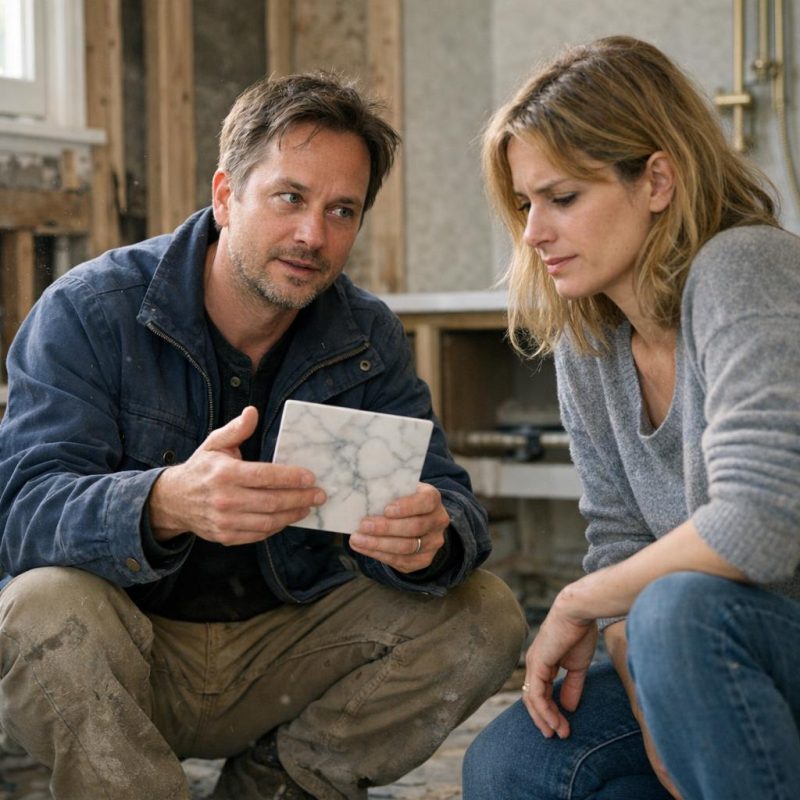 Image by RM AI
The Suffocating Comment
I asked them Thursday evening, keeping my voice light and hopeful. 'I was thinking maybe this weekend we could have a family game night? I could make my lasagna, we could play with Emma and Oliver—' Chloe's face hardened immediately. 'Mom, seriously?' 'I just thought it might be nice—' 'You're being suffocating,' she snapped. Mark looked up from his phone but didn't intervene. 'Every time we turn around, you want something. Family time, game night, Sunday dinners. It's exhausting.' I felt the blood drain from my face. 'I only suggested—' 'You're being needy,' she continued. 'We have our own lives, our own routines. You can't just insert yourself into everything.' The words hung in the air between us. Needy. Suffocating. For wanting to spend time with my grandchildren. For suggesting one evening together. 'Mom, you need to understand your place here,' Chloe said, her voice cold and clear. And there it was. My place. Not my home, not my family, not my life. My place. I was the help who lived downstairs, the hired grandmother who needed to remember her role. Chloe said, 'Mom, you need to understand your place here,' and I finally heard what she had been saying all along.
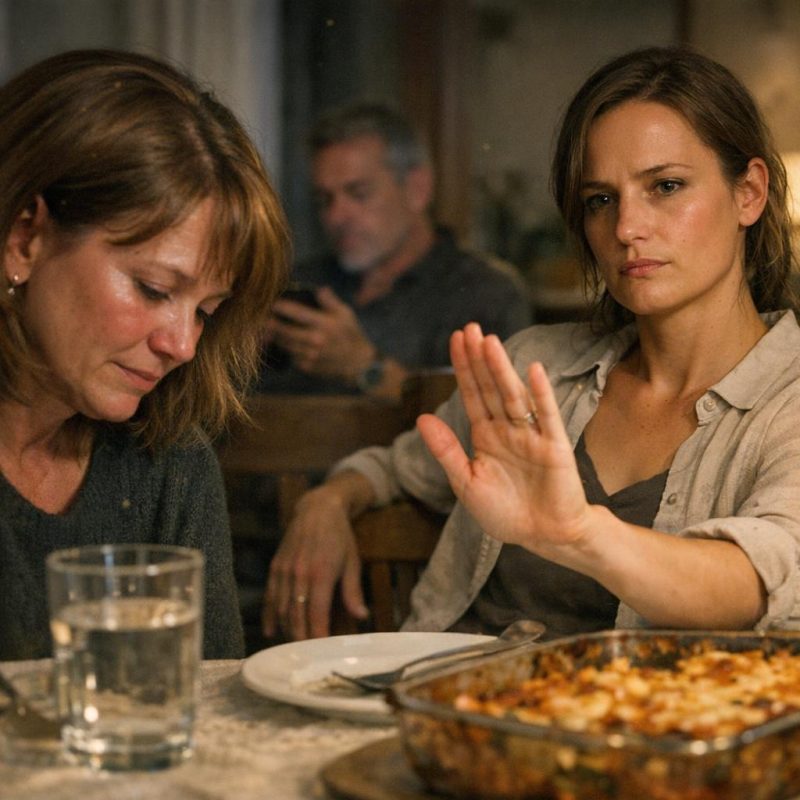 Image by RM AI
The Late Night
I couldn't sleep that night. I lay on the futon staring at the ceiling, listening to them move around upstairs in the house I'd bought. Every footstep felt like a reminder. Every sound reinforced the truth I'd been avoiding. This wasn't temporary. This wasn't a rough adjustment period. This was the reality they had planned all along. I replayed the months in my mind with new clarity. The way they'd appealed to my emotions—'it would mean so much to have you close.' The promises they'd made—'you'll be part of everything.' The gratitude that had evaporated within weeks. I had given them everything—my savings, my independence, my life—and they had given me a basement room and a list of chores. They called me suffocating when I wanted family time. They excluded me from photos, from vacations, from their lives. They spent thousands on luxuries while my space remained broken and forgotten. I was sixty-four years old and I was living like an unwanted guest in a home I'd purchased. The realization settled over me like a weight. I stared at the ceiling and admitted what I had been avoiding for months—this wasn't family, this was servitude.
 Image by RM AI
The Records Review
Friday morning, I pulled out the folder I kept in my dresser drawer. The deed. The closing documents. The wire transfer receipts. Everything carefully filed, everything documented. I spread them across the futon and read through each page. There it was in black and white: I owned sixty percent of this house. My name on the deed. My money that had made it possible. Four hundred and twenty thousand dollars I had contributed. Chloe and Mark had put in two hundred and eighty thousand. The math was simple, undeniable. I had majority ownership. Somehow I'd let myself forget that. I'd let them treat me like I was living here as a charity case, like they'd graciously given me a place to stay. But that wasn't the truth at all. This was my house more than theirs. I had more legal claim to every room, every renovation, every decision than they did. My hands steadied as I organized the documents. My teacher's mind, trained by decades of managing unruly students and difficult parents, began to calculate. I wasn't helpless. I wasn't powerless. I had options they'd been counting on me never to remember. As I read the legal documents, I felt something I hadn't felt in months—power.
 Image by RM AI
Margaret's Lunch
I met Margaret at the bistro we used to frequent, before I'd moved into Chloe's basement and stopped having a life. She took one look at my face and ordered us both wine. 'Tell me the truth,' she said. 'All of it.' So I did. I told her about the basement room, the broken promises, the photo shoot that excluded me, the vacation I wasn't invited on. I told her about being called suffocating for wanting to see my grandchildren. I told her about the thirty-eight thousand dollar bathroom renovation while my ceiling leaked. Margaret's expression grew darker with each revelation. 'Linda,' she said when I finished. 'You know what this is, don't you?' 'I'm starting to,' I admitted. 'They're exploiting you. They took your money and now they're treating you like staff.' She reached across the table and gripped my hand. 'You taught for forty years. You dealt with manipulative parents, with entitled students, with administrators who tried to push you around. You never backed down from a bully in your classroom.' I felt something shift inside me, something that had been dormant. 'You're right,' I said quietly. Margaret said, 'You taught for forty years, Linda—you know how to deal with bullies,' and something inside me hardened.
 Image by RM AI
The Observation Phase
I started watching them differently after that lunch. Not as a mother watches a daughter. As a teacher observes a problem student. Analytically. Objectively. I bought a small notebook and began documenting everything. Tuesday: Chloe asked me to drive across town to pick up her dry cleaning. Didn't offer gas money. Wednesday: Mark left a list of yard work on the basement stairs with a note saying 'whenever you get a chance.' Thursday: Chloe mentioned they were having friends over Saturday and suggested I 'make myself scarce' for the evening. Friday: Overheard them discussing upgrading their master bedroom furniture. Another five thousand at least. I wrote it all down. Every request that treated me like an employee. Every expense that showed their priorities. Every broken promise about repairs to my space. I documented the pattern the way I used to document a student's behavioral issues—dates, incidents, context. The evidence mounted. I watched Chloe interact with Emma and saw the careful conditioning, training my granddaughter to see me as separate, lesser. I watched Mark's casual entitlement, the way he'd claimed the best of everything while relegating me to the forgotten spaces. I started keeping notes in a journal—dates, requests, broken promises—and watched my daughter as if she were a stranger.
 Image by RM AI
The School Friend Encounter
I ran into Margaret Chen at the grocery store on Tuesday afternoon. We'd taught together for fifteen years before I retired, and she pulled me into a hug near the produce section. 'Linda! I've been meaning to reach out,' she said, beaming. 'I saw Chloe's posts about their beautiful new home. Such gorgeous photos. You must be so proud.' I smiled and nodded, loading apples into my cart with careful precision. Margaret continued, scrolling through her phone. 'She's been posting constantly. The kitchen, the backyard, those stunning hardwood floors. She wrote this whole caption about hard work and following your dreams.' My hand froze on a Honeycrisp. 'Did she mention anything else?' I asked carefully. Margaret looked up, confused. 'About what? Just about how blessed they are and how they saved for years to make it happen. Such an inspiration for young families, honestly.' She squeezed my arm. 'You must be so proud to see them doing so well on their own.' I smiled through the complete erasure of my existence, through the rewriting of history that turned my retirement fund into their 'hard work,' and said something appropriate about being very proud indeed.
 Image by RM AI
The Lucky Comment
Thursday dinner was pot roast, and I'd made it because Chloe had left a note on the kitchen counter requesting it. We sat around their dining table—the one they'd bought for two thousand dollars while my basement room still had water stains on the ceiling. Mark was talking about his golf game, how he'd finally broken ninety. Chloe was pouring wine into their expensive crystal glasses. Emma was at a friend's house. The conversation turned to housing prices in the neighborhood, how values were climbing. 'We got in at exactly the right time,' Mark said, cutting into his meat. Then he looked at me with this magnanimous expression, like he was bestowing a gift. 'You know, Linda, you're really lucky we were willing to take you in. Not everyone would do that for their aging parent.' He said it casually, the way you'd comment on the weather. Chloe nodded, swirling her wine. 'It's true. A lot of people wouldn't have the space or the patience.' I felt something lodge in my throat, sharp and hot. The pot roast turned to sawdust in my mouth. I set down my fork with exaggerated care and said absolutely nothing, but inside, something snapped cleanly in two.
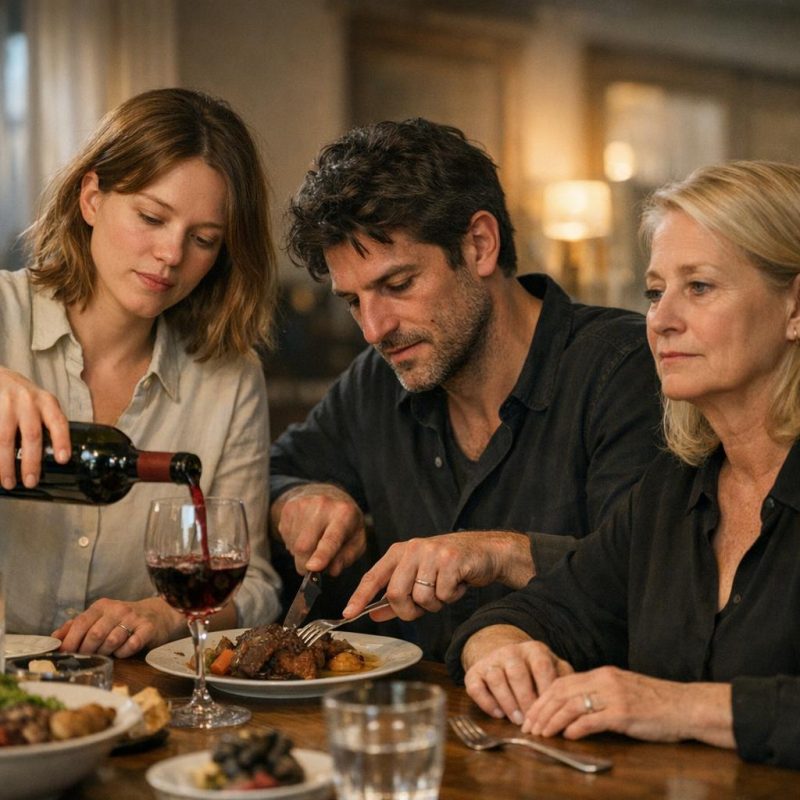 Image by RM AI
The Unfinished Renovation
Saturday morning, I found Chloe in the kitchen and decided to try one more time. I kept my voice level and reasonable. 'Honey, I wanted to talk about the basement space again. The dehumidifier issue is getting worse, and I was thinking we could get someone in to look at—' She didn't even let me finish. She whirled around from the coffee maker, her face tight with irritation. 'Mom, seriously? We just paid for Emma's summer camp and the landscaping. Do you have any idea how expensive it is to maintain a house this size?' I stood there, stunned. 'I contributed to this house,' I said quietly. 'I gave you everything.' Her laugh was sharp and brittle. 'You live here rent-free. Do you know what that's worth? Most people your age would be grateful for free housing.' She crossed her arms. 'Maybe if you contributed more around here—actually helped with expenses instead of just existing—we could afford to fix up your space.' The words hung between us like poison gas. I felt something fundamental shift inside me, the last thread of maternal obligation snapping with an audible finality. My daughter had just erased my sacrifice completely and accused me of being a freeloader in the house I'd bought.
 Image by RM AI
The Dinner Out
Monday evening, Chloe announced her plans while I was making tea. 'I'm having some friends over Wednesday night. Wine and appetizers, you know how it is.' She didn't look at me, just scrolled through her phone. 'So you'll probably want to make yourself scarce. Head down to your room early, maybe watch something on your laptop with headphones.' Not an invitation. Not even a polite suggestion. A dismissal. 'Of course,' I said, measuring my words. 'I wouldn't want to intrude.' She glanced up then, and for a moment, I thought I saw something flicker in her expression—guilt, maybe, or awareness. But then it was gone. 'It's not that we don't want you there, Mom. It's just... you wouldn't really fit in with this crowd. They're younger, and the conversation gets kind of...' She waved her hand vaguely. 'You'd be bored.' I nodded and carried my tea toward the basement stairs. Behind me, I heard her phone ring and her voice brighten. 'Hey, Sarah! Yes, Wednesday's still on. Oh, it's going to be such a fun night.' As I descended into my damp little room, I felt something sharpen inside me—not hurt anymore, but strategy. I decided to stay very, very aware.
 Image by RM AI
The Voices on the Patio
Wednesday night, I heard them gathering on the patio around seven. Laughter filtered down through the basement window, the kind of bright, performative joy that comes with the first glass of wine. I sat in the dimness of my room and listened. Chloe's voice carried easily, animated and confident. I could hear at least three other women, maybe four. They were talking about renovations, about vacation plans, about children and schools. Normal conversation. Then someone said something I couldn't quite catch, and there was a burst of laughter. Chloe's voice rose above it. 'You have to know how to play the game, that's all I'm saying.' The words were casual, but something in her tone made me straighten. More laughter. Another woman's voice, lower, asking something. Chloe responded, but I couldn't make out the words from where I sat. I moved closer to the window, my heart suddenly beating faster. The conversation had shifted somehow. The energy had changed. I heard fragments: 'strategy,' 'worked perfectly,' and then, clear as a bell, one friend's voice said, 'You're so smart, Chloe,' and my daughter's laugh rang out—high and pleased with herself.
 Image by RM AI
In the Kitchen
I made my decision in seconds. I crept up the basement stairs with the careful silence I'd learned in forty years of catching students cheating. The kitchen was dark, and I kept it that way. The patio was just beyond the sliding glass doors, separated from the kitchen by maybe fifteen feet and a screen. In the darkness, I was invisible. They couldn't see me through the reflection on the glass, especially not with the patio lights illuminating them. I pressed myself against the wall near the doorway and listened. The wine was flowing freely now. I could hear it in their voices, that subtle loosening that comes with the second or third glass. Chloe's laugh had gotten louder, less controlled. She was in her element, holding court with her friends. Someone asked about her mother-in-law, and Chloe made a dismissive sound. 'Oh, Mark's mom is fine. She lives in Florida and minds her own business.' Another woman said something about mothers generally, and the conversation shifted. Then Chloe's voice came through clearly, and I stood frozen in the dark kitchen as she said, 'You have to understand the psychology of it,' and my blood went cold.
 Image by RM AI
The Casual Cruelty
I didn't move. I barely breathed. One of the friends was laughing. 'But is it hard, though? Having her here all the time?' Chloe sighed dramatically. 'You have no idea. She's so demanding. Like, constantly wanting things fixed, wanting attention, wanting to be included in everything. It's exhausting.' Someone murmured sympathy. Another voice asked about privacy. 'Exactly,' Chloe said. 'We have zero privacy. She's always there, always underfoot. Mark is so patient about it, but I can tell it wears on him.' My fingernails dug into my palms. I was demanding. I was the problem. Me, who'd given her everything and asked only for a dry room and basic dignity. There was a pause, and then another friend's voice, quieter, more cautious: 'But she helped you buy the house, right? I thought you mentioned that once.' The question hung in the air. I held my breath, pressing harder against the wall in the darkness. This was it. This was the moment my daughter would acknowledge the truth, would admit to her friends what she'd never properly acknowledged to me. I waited for Chloe's answer with every muscle in my body tensed.
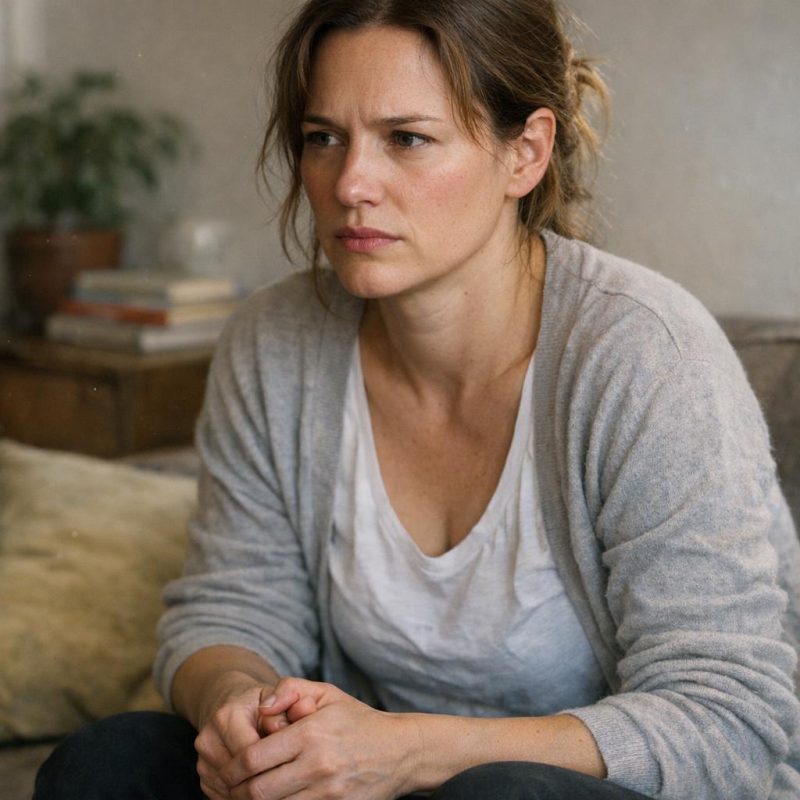 Image by RM AI
The Refinance Mention
There was a beat of silence. Then Chloe's voice, careful now, modulated. 'She helped, sure. But it's not like she gave us the whole house or anything. She contributed what she could, and we're grateful, but we're also carrying all the actual responsibility. The mortgage is in our name. The maintenance, the taxes, everything falls on us.' Someone made a sympathetic noise. Chloe continued, her voice warming to the topic. 'And honestly? Once the house appreciates enough for us to refinance—which our financial advisor says should be in another year or two—we'll have a lot more flexibility with our living situation.' I felt my heart slam against my ribs. Flexibility. What a careful, neutral word. Another friend asked, 'What do you mean by flexibility?' and I pressed closer to the doorway, straining to hear. Chloe's voice dropped then, shifting from her public voice to something more intimate, more conspiratorial. The other women leaned in—I could hear the scrape of chairs on the patio stones, the rustle of movement as they drew closer together. Whatever she was about to say, it was something she didn't want overheard. Her voice became a whisper, and I held my breath in the darkness.
 Image by RM AI
The Assisted Living Hint
One of the women—I think it was Melissa—let out a sigh. 'I totally get the space thing. We just moved my mother-in-law into assisted living last month, and honestly? It's been such a relief for everyone. She has her independence, we have ours, and we can actually enjoy our visits with her instead of constantly managing her needs.' I heard the shift of ice in glasses, the murmur of agreement. My hands were trembling now, gripping the edge of the counter. Chloe's response came after just a beat too long—measured, carefully casual. 'How's she adjusting to it?' she asked, and there was something in her voice I'd never heard before. Interest. Not the polite kind you use when someone's talking about their vacation. Real interest. Melissa launched into a description of the facility, the activities, the meal plans. I could barely focus on her words. All I could hear was the subtext, the pattern forming in the darkness around me. Chloe asked two more questions, specific ones about costs and amenities, her voice maintaining that careful neutrality. Then she said, 'You know, that might actually be a better fit for everyone involved,' and I pressed my hand against the wall to steady myself.
 Image by RM AI
The Timeline Discussion
Another voice chimed in—Sarah, maybe. 'The timing worked out perfectly for you guys, right? With the market and everything?' Chloe made a thoughtful sound. 'Yeah, our advisor says we're looking at another solid year of appreciation before we refinance. Market conditions are pretty favorable right now, especially in this neighborhood.' My breath came shallow and quick. They were talking about refinancing like it was a given, like it was already planned. 'And you're comfortable waiting that long?' someone asked. I heard Chloe shift in her chair, imagined her leaning back with that confident posture she got when discussing finances. 'We've budgeted for it. It's actually better for us tax-wise to wait anyway. We just need things to stay... stable... until then.' Stable. That word landed like a stone in my chest. What did she need to stay stable? The house? The mortgage? Me? The fragments I'd been collecting all evening started arranging themselves into a shape I didn't want to see. A timeline. A plan. An endpoint. Chloe said, 'Probably another six months, maybe a year,' and I wondered what she was counting down to.
 Image by RM AI
The Tension in the Dark
I stood frozen in the dark kitchen, one hand still pressed against the wall, the other clutching the counter edge so hard my knuckles ached. My heart hammered against my ribs in a rhythm that seemed too loud, too obvious. Surely they could hear it out there on the patio. The conversation had paused—someone was refilling wine glasses, the sound of liquid splashing into crystal carrying through the open door. I should move. I should go upstairs, close my bedroom door, pretend I'd heard nothing. But my feet wouldn't obey. Every nerve in my body screamed that something terrible was coming, that the next words I heard would confirm what I'd been trying not to understand. The ice in someone's glass clinked. A lighter flicked. The ordinary sounds of a summer evening among friends, except my entire world was tilting on its axis. Chloe's voice came again, lower now, more intimate. I could picture them all leaning in, the way women do when the real conversation is about to start. Then I heard the words that would change everything: 'Remember when I said we played the retirement card?'
 Image by RM AI
The Budget Conversation
Chloe's voice took on a storytelling quality, comfortable and confiding. 'So Mark and I had been budgeting for years, right? Trying to figure out how we could possibly afford something in this neighborhood without being house-poor. We ran the numbers every which way—bigger down payment, longer mortgage term, cutting back on everything. Nothing worked. The houses we wanted were just out of reach, and we weren't getting any younger.' I felt bile rise in my throat. This wasn't spontaneous. This wasn't them graciously accepting help I'd offered. She continued, 'We'd actually given up for a while. Started looking at smaller places in less desirable areas. Then one day Mark said something like, 'What if we didn't have to do this alone?' And it just... clicked.' The casual way she said it made my stomach turn. Like a light bulb moment. Like a brilliant solution to a math problem. Not like she was talking about using her mother. A friend said, 'So when did you realize your mom was the answer?' and Chloe laughed.
 Image by RM AI
The Pretense
That laugh. I'd heard it a thousand times—at birthday parties, during phone calls, across dinner tables. But I'd never heard this particular note in it before. Triumphant. 'It took some finessing,' Chloe said. 'We couldn't just ask for money outright. But Mom had been talking about retirement, about wanting to spend more time with family, about how her apartment felt empty. So we just... connected the dots for her, you know? Presented it as this beautiful multigenerational living situation. Everyone together under one roof, sharing expenses, me cooking her favorite meals.' Her voice was warm as she recounted this, almost nostalgic. 'The key was making her feel needed. Like she was gaining something, not just giving us her life savings. We spent months laying the groundwork, talking about how lonely we were in our small place, how we wished we saw her more.' My vision blurred. I thought of all those dinners, those conversations about family and togetherness. I'd thought we were connecting. Reconnecting. She'd been working me. One friend said, 'That's brilliant, honestly,' and another added, 'So what's the exit strategy?'
 Image by RM AI
The Investment Description
Chloe's tone shifted to something more business-like, professional almost. 'Here's the thing—her contribution was basically an investment, right? We couldn't have gotten this house without it, but once we refinance, we'll have access to all that beautiful equity. The house has already appreciated nearly fifteen percent since we bought it. In another year, we're looking at probably twenty, maybe twenty-five percent.' Someone whistled low. Chloe continued, warming to her topic. 'So we cash out that equity, pay off some other debts, maybe invest in a rental property. The return on Mom's contribution ends up being substantial for us. She just doesn't realize she's not going to see any of it.' The casualness of it. The cold calculation. I waited for someone to object, to point out how cruel this sounded. Instead, I heard murmurs of admiration, someone saying 'smart.' A friend laughed and said, 'So she's basically your golden ticket?' and I waited for Chloe to correct her.
 Image by RM AI
The Laughter
Chloe laughed again, that same triumphant note I'd heard before. 'I mean, yeah. Pretty much.' No hesitation. No shame. Just agreement. 'We just need to manage the situation a bit longer. Keep things comfortable, keep her happy, make sure she doesn't start asking questions about finances or getting any ideas about moving out. The last thing we need is her wanting her money back before we can refinance.' My daughter was talking about managing me. Like I was a problem to be handled. A resource to be exploited. I felt something crack inside my chest, something that had been holding my heart in place for sixty-four years. 'It sounds calculating when I say it out loud,' Chloe admitted, and for half a second I thought—maybe. Maybe she'll recognize what she's doing. 'But it's really just strategic thinking. We're taking care of our future, and in the meantime, she has a nice place to live. It's not like we're being cruel.' Someone asked, 'So assisted living then?' and Chloe said, 'As soon as the timing is right.'
 Image by RM AI
The Retirement Card
The confirmation landed with brutal clarity. 'Exactly,' Chloe said. 'Once we refinance and have the equity freed up, we'll help her transition somewhere more appropriate for her age. Present it as being for her own good—better medical support, more activities with people her own age, less isolation. She'll probably resist at first, but we'll make it work.' Another voice, curious: 'Won't she be upset about the money?' Chloe scoffed. 'What's she going to do? She gave it freely. It's not like we forced her. And honestly, at her age, what does she need it for anyway? We're the ones with decades of life ahead of us, careers to build, maybe another kid. She's retired. She had her turn.' The words kept coming, each one a hammer blow. She described how they'd 'played the retirement card,' how they'd deliberately cultivated my loneliness, my desire for family connection, my fear of aging alone. How they'd seen me not as a person, not as her mother, but as an untapped resource. A golden ticket. An investment to be managed and then discarded. I stood in the dark kitchen and understood with perfect, terrible clarity—my daughter had never wanted me, only my money.
 Image by RM AI
The Silent Return
I walked back down the stairs to my basement room with perfect, measured steps. My hands didn't shake. My breath came steady and even. The fog that had clouded my thinking for months—maybe years—had lifted completely, leaving everything sharp and clear as broken glass. I closed the door behind me, sat on the edge of the narrow bed, and looked around at the space they'd given me: the damp corner, the dusty boxes, the single window at ground level where I could watch feet walk past. This was what they thought I deserved. This was what they'd planned for me all along. I thought about forty years standing in front of classrooms, teaching children about consequences, about integrity, about the difference between kindness and exploitation. I'd taught Romeo and Juliet dozens of times, always emphasizing that tragic endings stem from poor choices, that actions have weight. I'd spent my entire career believing that lesson mattered. That people could learn. That wisdom meant something. Now it was time to find out if I'd been teaching the truth, or just pretty lies. I sat on my basement bed and thought about forty years of teaching children the difference between right and wrong—it was time for my final lesson.
 Image by RM AI
The Sleepless Night
Sleep didn't come. I lay in the dark basement room watching the rectangle of window above me shift from black to deep blue to pale gray as the night hours crawled past. But my mind wasn't restless—it was working with the focused precision I'd always brought to lesson planning. Every detail fell into place. I remembered the paperwork I'd reviewed before the purchase, the mortgage documents where my name appeared first, the ownership percentage clearly stated: sixty percent mine, forty percent theirs. I remembered the lawyer explaining that as majority owner, I had certain rights. At the time, I'd dismissed it as irrelevant—we were family, after all. Family didn't sue each other. Family didn't force sales. But Chloe and Mark had taught me something valuable in that dark kitchen: we weren't family anymore. We were adversaries. And in any contest, you use the tools you have. I thought through the steps methodically, the way I'd once planned semester curricula. Document everything. Seek legal counsel. Understand my options. Act decisively. The teacher in me, the part that had maintained classroom discipline for four decades, knew exactly how to handle this. As dawn broke through my basement window, I reached for my phone and searched for real estate lawyers.
 Image by RM AI
The Consultation
Mr. Andrew Chen's office occupied the third floor of a building downtown, all clean lines and quiet professionalism. I'd made the appointment for Tuesday morning, when Chloe and Mark would be safely at work and the children at school. He listened without interruption as I explained everything—the money, the basement room, the overheard conversation. When I finished, he studied the ownership documents I'd brought, his expression neutral but thorough. 'Mrs. Larsen,' he said finally, 'as sixty percent owner, you have the legal right to petition for partition and sale. The court will force the sale of the property, the proceeds will be divided according to ownership percentage, and the co-ownership will be dissolved.' The words hung in the air like a verdict. 'How long?' I asked. 'With their behavior documented and your majority stake? Three to four months, possibly less.' He explained the process—the filing, the court order, the inevitable sale. My hands gripped the armrests of the leather chair. This was real. This was actually possible. I could end this. The lawyer looked at me over his glasses and said, 'You can do this, but are you prepared for the consequences?'
 Image by RM AI
The Decision
'Yes,' I said, and the word came out stronger than I'd expected. Mr. Chen slid the retainer agreement across his desk, and I signed it with the same hand that had graded thousands of essays, that had signed Chloe's report cards, that had held her as a baby. My signature looked steady on the page. We discussed timeline and strategy—he'd file the petition immediately, have them served within forty-eight hours. 'They'll be shocked,' he warned. 'Angry. They may try to negotiate, to guilt you into withdrawing.' I thought about Chloe's voice in the dark kitchen, describing me as a burden, an investment to be managed and discarded. 'I won't withdraw,' I said. 'Good.' He made notes on a yellow legal pad. 'Do you have somewhere to stay? These situations can become... uncomfortable.' 'I have a friend.' 'I'd recommend leaving before they're served. It's not required, but it's often easier.' I nodded, feeling something strange and unfamiliar rising in my chest—not quite hope, but something adjacent to it. Self-respect, maybe. Dignity. Mr. Chen said the papers would be served tomorrow evening, and I realized I needed to be ready to stand my ground.
 Image by RM AI
The Preparation
I called Margaret from my car in the parking garage, my voice echoing off concrete. 'I need a place to stay,' I said. 'Starting tomorrow.' There was a brief pause, then: 'What happened?' I told her everything—the overheard conversation, the lawyer, the partition filing. She didn't interrupt, didn't gasp or exclaim. When I finished, she simply said, 'I have the guest room ready. Stay as long as you need.' That afternoon, while Chloe was at work and the children at school, I packed methodically. Not everything—I didn't want to signal my intentions—just the essentials. Clothes, toiletries, my laptop, the photo albums I'd brought from my old house. My teaching awards, still in their boxes. The jewelry Michael had given me over the years. I worked efficiently, without sentiment, channeling every bit of professional composure I'd ever needed to maintain order in a chaotic classroom. By evening, two suitcases stood ready in my closet, hidden behind winter coats. My important documents were already in my car. I ate dinner with the family, played with Emma and Oliver, answered Chloe's distracted questions about my day with careful normalcy. Margaret said, 'I'm proud of you, Linda,' and I realized I was proud of myself too.
 Image by RM AI
The Fancy Dinner
Wednesday evening, Chloe appeared in the kitchen doorway wearing the black dress I'd never seen before, Mark in a suit behind her. 'We're going to Marchand,' she announced—the French restaurant downtown where entrées started at sixty dollars. 'Mark's firm is celebrating a big win.' She checked her reflection in the microwave door, adjusting an earring. I noticed she was wearing the diamond studs I'd given her for her thirtieth birthday. The irony was so sharp it nearly made me laugh. They were celebrating with my money, wearing my gifts, about to return home to my house. And they had absolutely no idea what was waiting for them. 'Will you be okay with the kids?' Mark asked, already halfway to the door. 'Emma has homework—make sure she finishes it.' As if I were the babysitter, not the grandmother. Not the woman who owned sixty percent of the roof over their heads. 'I'll manage,' I said, my voice perfectly pleasant. Chloe grabbed her purse—Gucci, purchased two weeks after we'd closed on the house. 'Don't wait up—we'll be late,' Mark said, and I thought, 'I won't be here at all.'
 Image by RM AI
The Papers
The doorbell rang at seven-thirty, exactly when Mr. Chen said it would. Through the front window, I saw the process server on the porch, a woman in her fifties with a clipboard and professional demeanor. I opened the door. 'Linda Larsen?' 'That's me.' She handed me a manila envelope. 'You've been served. There are copies for Chloe Larsen and Mark Peterson as well.' She extended two more envelopes. I accepted them, signed her form, and she left without ceremony. The whole transaction took less than two minutes. I stood in the hallway holding the papers that would end everything. Inside were the court documents, the petition for partition and sale, the legal declaration of my majority ownership and right to dissolve the co-tenancy. I opened the envelope and read through them one more time, making sure everything was correct, feeling the weight of what I'd set in motion. Then I walked to the kitchen table and laid out Chloe's and Mark's copies side by side, positioned exactly where they'd sit for breakfast tomorrow. Where they'd see them the moment they walked in tonight. On top, I placed a note I'd written that afternoon, my teacher's handwriting still clear after all these years: 'Since I'm such a burden, I won't stay another night.'
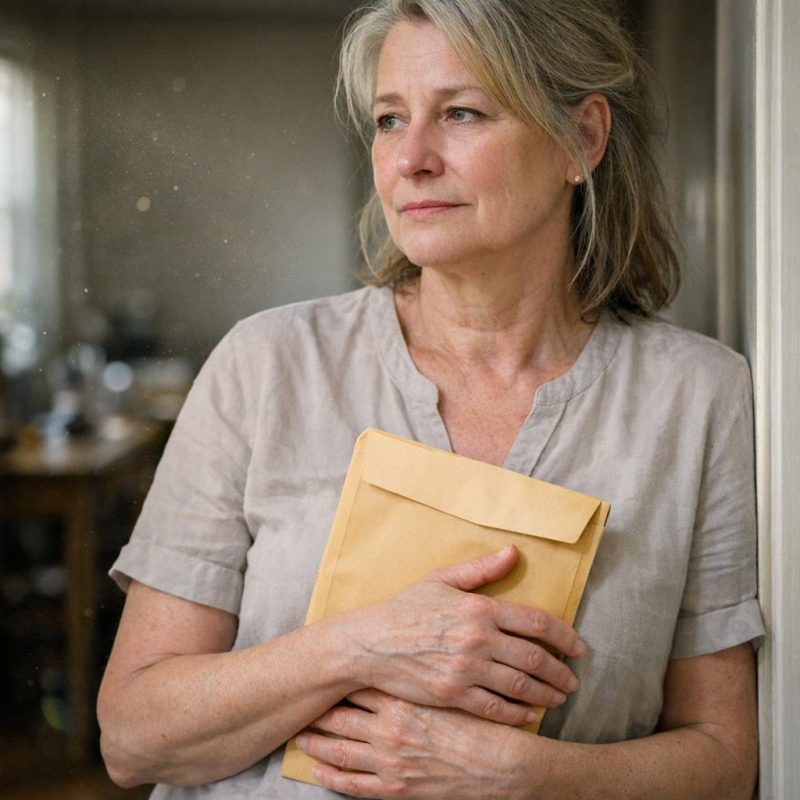 Image by RM AI
The Departure
I climbed the stairs to the children's room one last time. Emma was already asleep, her math homework completed and placed in her backpack like I'd taught her. Oliver's nightlight cast soft shadows across his face, his stuffed elephant tucked under one arm. I stood in the doorway, memorizing them. This wasn't goodbye forever—just goodbye to this version of our relationship, the one built on exploitation and lies. When they were older, maybe they'd understand. Maybe not. I kissed each of them on the forehead, whispered 'I love you,' and closed the door. Downstairs, I did one final check—papers on the table, note visible, lights off except the porch lamp. My suitcases were already in my car. I'd texted Margaret twenty minutes ago: 'On my way.' Now I stood in the foyer of the house I'd paid for, looking at the chandelier I'd chosen, the paint color Chloe had insisted on, the life I'd tried so hard to be part of. My phone showed 8:47 PM. They'd be home by ten, walk in laughing about wine and expensive food, and find their world fundamentally changed. As Margaret's car pulled away, I looked back at the house and felt something I hadn't expected—freedom.
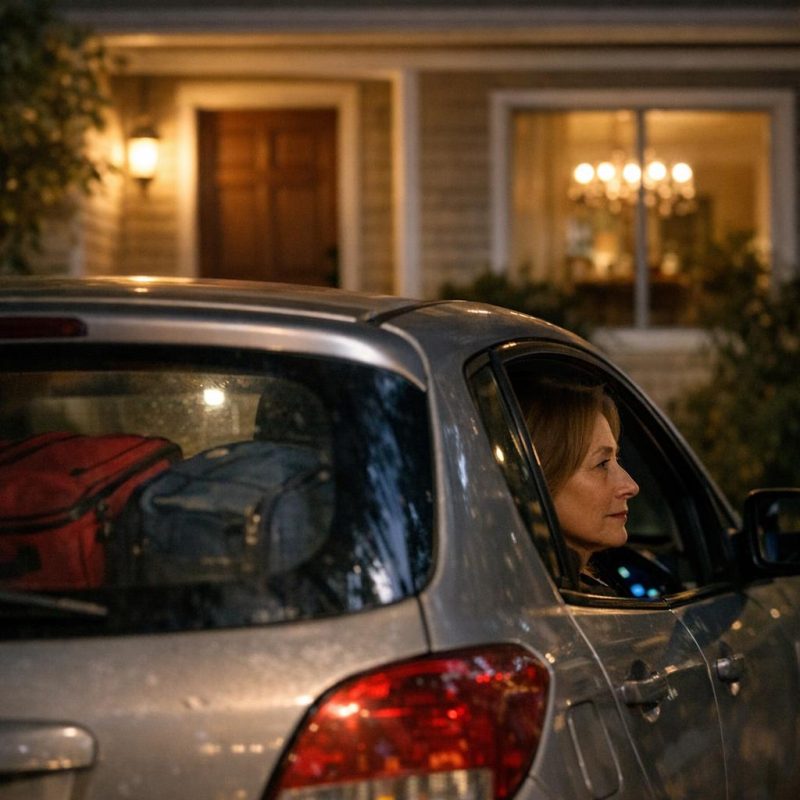 Image by RM AI
The Discovery
My phone started buzzing around 10:15 PM. I was already at Margaret's, sitting in her cozy guest room with a cup of tea, when the notifications started flooding in. Seventeen missed calls. Twenty-three text messages. I watched the screen light up again and again, Chloe's name flashing like a distress signal. Margaret glanced at me from the doorway. 'You okay?' I nodded, surprisingly calm. The texts were frantic—'Mom where are you,' 'What have you done,' 'Call me NOW.' Then Mark's name appeared. His messages were different, calculated even in panic: 'Linda, let's discuss this rationally.' Then: 'You don't understand what you've done.' But I did understand. Perfectly. The voicemails started piling up. I listened to the first one on speaker so Margaret could hear. Chloe's voice was shaking, tears evident. 'Mom, please, this is insane. We can talk about this. We can work something out. You can't just—' I deleted it. The next one started: 'Mom, please, we can fix this,' but I deleted it without listening to the rest.
 Image by RM AI
The Negotiation Attempt
They showed up at Margaret's house two days later. I'd been expecting it, honestly. Margaret answered the door and called up to me, her voice neutral: 'Linda, you have visitors.' I came downstairs to find them in the foyer, looking like they hadn't slept. Chloe's eyes were red and puffy. Mark wore the same clothes I'd seen him in at the grocery store weeks ago. 'Mom, please,' Chloe started, reaching for my hand. I stepped back. 'We made mistakes, okay? We should have been more grateful. We should have included you more. But this—this legal action—it's going to destroy us.' Mark jumped in, all business suddenly. 'We'll pay you back. Monthly installments. We'll put it in writing.' I looked at them both, these people who'd calculated my worth down to free babysitting and lawn care. 'You had writing,' I said quietly. 'A deed with my name on it. You planned to remove it.' Mark's face went pale. 'We'll lose everything,' he said. I felt nothing but a strange, cold clarity. 'Yes, you will—just as you planned for me.'
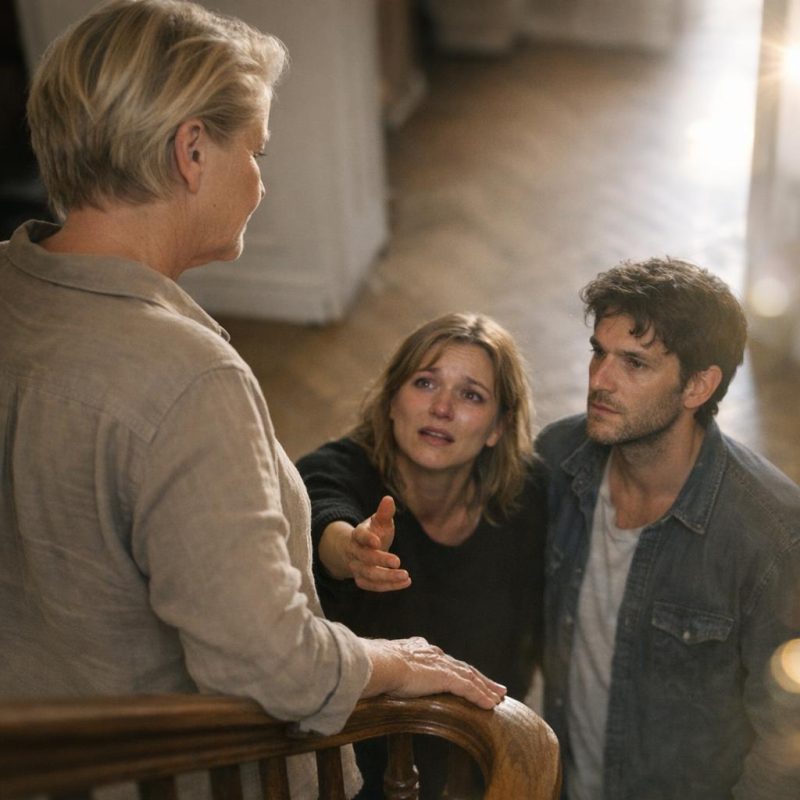 Image by RM AI
The Sale and Settlement
The house sold in forty-three days. The market was good, and the lawyer I'd hired—Gloria's recommendation, sharp as a tack—made sure everything went exactly by the book. Sixty percent of the sale price landed in my account on a Tuesday morning in March. I sat in Margaret's kitchen watching the numbers appear on my banking app, and I actually laughed. It wasn't joy, exactly. More like relief so profound it bubbled up as something close to happiness. The beach condo I'd found was a third of what that house had cost. Two bedrooms, southern exposure, a balcony overlooking the water. No yard to maintain. No extra bedrooms for ungrateful children to claim. I moved in on a Saturday, just me and the movers Margaret had helped me hire. My furniture from the apartment fit perfectly. That first night, I stood on the balcony with a glass of wine, listening to the waves, and realized something fundamental had shifted. No one needed me to sacrifice anymore. No one was taking inventory of my usefulness. As I unpacked in my new condo with its ocean view, I realized the only person I needed to take care of was myself.
 Image by RM AI
The Final Lesson
Six months later, I'm still here, still waking up to the sound of seagulls and the smell of salt air. Chloe texted twice in the first month, then stopped. I heard through Margaret's daughter that they'd moved to a rental apartment across town, that Mark's business was struggling, that they'd had to pull Emma from her expensive private school. I felt a twinge—just a twinge—of sympathy. But then I remembered that voicemail, that casual cruelty, the years of being useful rather than loved. The grandchildren, I miss. But I also know that the version of me they knew—the one who said yes to everything, who gave until there was nothing left—that version wasn't healthy for any of us. Margaret says I look ten years younger. I've started painting again, something I gave up when I was raising Chloe. I take long walks on the beach and have coffee with new friends who don't need anything from me except company. And sometimes, I sit on my balcony watching the sunset and think about the hardest lesson I ever taught—that even mothers have limits, and sometimes saying no is the most loving thing you can do.
 Image by RM AI