Too Old
Daniel called me into his office on a Tuesday afternoon, three months after he'd been hired as my new boss. I'd been with the company nineteen years—since back when we had one office and twelve employees. Daniel had a corner office and a standing desk. He smiled like we were about to have a friendly chat. 'Sharon, I want to talk about your role going forward,' he said, tapping his pen against a leather portfolio. I sat down, thinking maybe this was finally the promotion conversation I'd been quietly expecting. Instead, he leaned back and said something about 'fresh perspectives' and 'evolving skill sets.' Then he said it. 'I'm just wondering if you might be too old for this role.' Not 'overqualified.' Not 'ready for new challenges.' Too old. I watched his face, waiting for the joke, the correction, something. But he just kept that same pleasant expression, like he'd commented on the weather. My hands stayed folded in my lap. My voice stayed level when I asked what specifically concerned him. He waved vaguely at 'adaptability' and 'digital fluency.' I nodded. I smiled. I said I'd think about what he said. And in that moment, sitting across from Daniel's casual smile, I felt something inside me go very still.
 Image by RM AI
The Architecture of Invisible Work
That night, I couldn't sleep. I kept thinking about what I actually do all day—not the official job description, but the real work. Like how I know that Invoice #4721 from Berkshire Supply always lists the wrong account code, so I fix it before it hits the system. Or how the quarterly reports pull from Database A, but you need to cross-reference Database C or the regional numbers skew high by 23%. Nobody taught me this stuff. I learned it by being there when the systems were built, when shortcuts were created, when Carol from IT said 'just remember to always...' before she retired eight years ago. I know which vendors will negotiate and which ones won't budge. I know that Marcus needs his data reports by Thursday morning, not Friday, because of his weekly call schedule. I know the password to the archive server is still 'Milestone2019' because nobody ever updated it after the merger. I thought about Jennifer, the new hire, confidently presenting last month, completely unaware her numbers were missing an entire subsidiary. I'd fixed it quietly, the way I always do. I'd spent nineteen years making sure nothing went wrong, and now I wondered what would happen if I just... stopped.
 Image by RM AI
Marcus Doesn't Say Much
Marcus found me in the break room the next morning. He's sixty-two, been here even longer than me, and lately he'd been coming in earlier, staying later—like he was trying to prove something. We stood there with our coffee, not really talking, until he said, 'Daniel try to reshape your role yet?' I glanced at him. His expression was carefully neutral. 'He mentioned I might be too old for it,' I said quietly. Marcus exhaled through his nose, a sound that wasn't quite a laugh. 'Yeah. I got 'tenured out of relevance' last month. That was his exact phrase.' We watched through the glass as Daniel walked past with Jennifer and two other new hires, all of them laughing about something. None of them looked our way. 'They're bringing in consultants next month,' Marcus added. 'Efficiency experts.' He said it the way you'd say 'termites.' I'd seen this pattern before at other companies—friends who'd suddenly been 'restructured' out after decades of service. I just never thought it would happen here. 'They always think they can reinvent the wheel,' he said quietly. 'Until they need someone who remembers why it's round.'
 Image by RM AI
The First Meeting I Wasn't Invited To
The meeting was scheduled for 2 PM on Thursday—the quarterly planning session I'd attended for the last seven years. I had my notes ready, my laptop charged. At 1:55, I walked toward the conference room and found the door already closed. Through the glass wall, I could see Daniel at the head of the table. Jennifer was there with her laptop open. So were the two new account managers and someone from the consultant team. They were already deep in discussion, gesturing at a projection screen showing the system architecture—my system architecture, the one I'd helped design in 2016. I stood there for a moment, checking my calendar again. The meeting was definitely today. Definitely 2 PM. My name just wasn't on the invite anymore. Daniel glanced up once, saw me, and his eyes slid past like I was part of the furniture. No wave. No beckoning me in. No apologetic 'we'll catch you up later.' Jennifer was presenting something, pointing confidently at data flows she'd probably learned about three weeks ago. I could see from where I stood that she had the client retention metrics pulling from the wrong fiscal year. Nobody in that room would know. I stood outside the conference room, watching through the glass as they made decisions about systems I'd built, and no one even noticed I wasn't there.
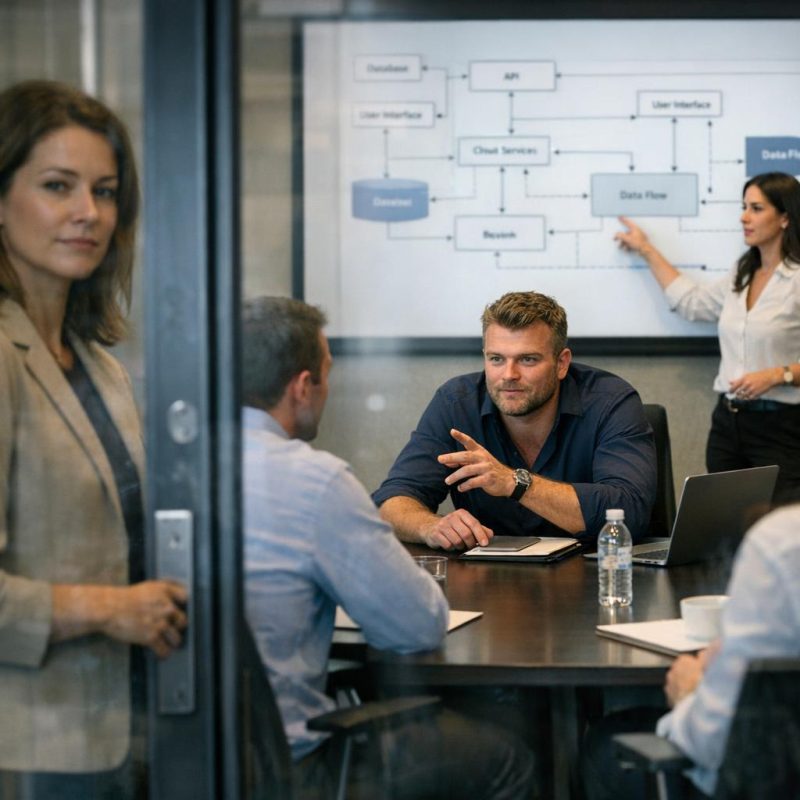 Image by RM AI
Jennifer Asks a Quick Question
Jennifer appeared at my desk the next morning with her laptop and that eager smile young professionals have when they think they're being efficient. 'Hey Sharon, quick question—the Dennison account keeps showing a reconciliation error and I can't figure out why?' I glanced at her screen. It took me about three seconds to spot the problem. 'Dennison switched to net-60 terms in March,' I said. 'But their profile in the system still shows net-30, so the aging report flags them as overdue when they're actually current. You have to manually adjust in the backend.' Her eyes widened slightly. 'Oh. Is that... documented anywhere?' I almost laughed. 'No. Jim from Sales mentioned it in a hallway conversation six months ago. I just remembered.' She scribbled a note. 'Got it. Thanks so much!' Then she paused. 'Is there, like, a list of these things somewhere?' I looked at her—twenty-nine, probably, with her pristine blazer and her confidence that everything important must be written down somewhere. 'Not really,' I said. 'It's just... institutional knowledge.' She nodded like she understood, but I could see she didn't. She walked away with the answer, and I realized she had no idea how much she didn't know.
 Image by RM AI
Dashboard Metrics Don't Lie (Except When They Do)
The all-hands meeting the following week was Daniel's show. He had slides. He had charts with upward-trending arrows. 'Our client retention rate has improved 8% quarter-over-quarter,' he announced, clicking to a dashboard that looked impressive if you didn't know what you were looking at. I sat in the back row, watching. The data was pulling from the CRM, which only tracked active contracts. It didn't account for the clients who'd quietly moved to month-to-month terms—a precursor to leaving that I'd seen play out a dozen times. It also wasn't catching the Hoffman account, which showed as 'retained' but had actually given notice last week. That notice was in an email thread Daniel wasn't copied on. I knew because I was. Out of habit, I'd started to raise my hand, then slowly lowered it. What was I going to do? Correct him in front of everyone? Explain the gap between his shiny dashboard and reality? He'd probably thank me with that pleasant smile and say we'd 'take it offline.' Jennifer was nodding enthusiastically in the front row. Marcus caught my eye from across the room, one eyebrow slightly raised. I watched him point to numbers that told half the story and wondered how long it would take for the other half to catch up.
 Image by RM AI
The Silence Gets Louder
I started noticing the pattern in early October. First it was Diane from Accounting—fifty-three, twenty-one years with the company. She took a 'voluntary separation package.' Then Robert Chen, who'd run logistics since before we had multiple warehouses. He was fifty-six. 'Pursuing other opportunities,' the announcement said. Then Angela from Client Services, who was fifty-one and had personally salvaged the Meridian account three times. Her position was 'eliminated,' but they posted a nearly identical job listing two weeks later with 'digital native' in the requirements. I mentioned it to Marcus over coffee. 'You seeing this too?' he asked quietly. I nodded. We stood there doing the math. Three people in six weeks. All replaced within a month by someone at least twenty years younger and, I'd heard through the grapevine, making about 30% less. Nobody was calling it what it was. HR sent cheerful emails about 'refreshing our talent base' and 'building tomorrow's team.' Daniel gave a lunch-and-learn about 'embracing generational diversity.' I looked around at who was left from the old guard. Not many. Three people in six weeks, all over fifty, all replaced by someone younger and cheaper, and nobody was saying a word.
 Image by RM AI
Robert's Non-Answer
I finally went to Robert Hutchins, the VP I'd worked with since 2009. We'd been through two mergers and a near-bankruptcy together. If anyone would listen, it would be him. I kept it professional, measured. I mentioned the departures, the pattern, the institutional knowledge we were losing. 'I'm concerned we're making decisions that might hurt us long-term,' I said carefully. Robert nodded, his expression sympathetic. He did that thing where he leaned back in his chair and steepled his fingers like he was really considering what I'd said. 'I hear you, Sharon. Transitions are always difficult. But the company needs to evolve.' I pressed a little. 'Are we evolving, or are we just replacing experience with cost savings?' He smiled, but it didn't reach his eyes. 'The board is very focused on operational efficiency right now. Daniel was brought in specifically to modernize our processes.' There it was. Daniel wasn't going rogue—he was doing exactly what he'd been hired to do. 'So there's no concern about losing people who've been here...?' 'Change is never easy, Sharon,' he said, and I knew right then that no one was coming to fix this.
 Image by RM AI
The Decision I Didn't Know I Was Making
I was reviewing the quarterly reconciliation report on a Thursday evening when I realized I was the only one left on the floor. Again. The document had errors—nothing massive, but the kind of inconsistencies that compound into real problems if they make it to the executive summary. I'd fixed this exact issue dozens of times over the years, usually without anyone knowing there'd been a problem in the first place. My hand hovered over the keyboard, ready to start the corrections that would take me another hour, maybe ninety minutes. Then I stopped. This wasn't actually my report anymore. Daniel had reassigned it to Jennifer's team three months ago as part of his restructuring. I was just copying myself on emails out of habit, watching from the periphery of work that used to be mine. The voice in my head that always said 'but someone needs to catch this' went quiet. I saved the document exactly as it was, attached it to an email with a polite 'please review,' and sent it off to Jennifer. I turned off my computer at exactly five o'clock and walked out, and for the first time in nineteen years, I didn't look back.
 Image by RM AI
The First Crack
The vendor payment went through on Tuesday. I saw it in the transaction log during my morning routine—I still checked the reports even though they weren't technically mine to monitor anymore. The amount was wrong, off by about eight percent because someone had used last quarter's rate sheet instead of the updated contract terms. It's the kind of mistake that happens when you don't know which version of a document is current, when you haven't been around long enough to remember that this particular vendor renegotiates every January. The old me would have caught it during the approval chain, would have sent a quick message to accounting with the correct figures. The old me would have saved everyone the headache. I looked at the entry for a long moment, then I navigated away from the screen and opened my actual assigned work. My heart was beating a little faster than normal, but my hands were steady. No one else noticed the error, at least not yet. The payment would show up on next month's reconciliation, and by then it would be a whole thing—calls with the vendor, internal emails, someone having to explain what happened. It was a small mistake, the kind I used to fix before it became a problem, and I watched it sail right through.
 Image by RM AI
Daniel's Confidence
Daniel scheduled the team meeting for Monday morning, his usual slot for what he called 'momentum check-ins.' He stood at the front of the conference room with his laptop connected to the big screen, cycling through slides filled with upward-trending arrows and positive percentages. 'Processing times down by twelve percent,' he announced, clicking to the next chart. 'Client onboarding streamlined by fifteen days on average.' Jennifer nodded enthusiastically from her seat near the front. I sat in my usual spot by the window, three chairs down from where I used to sit when these meetings felt like they included me. The numbers on Daniel's slides weren't wrong, exactly. They just didn't show the whole picture. They didn't capture the vendor payment error that was going to surface in two weeks, or the client email Jennifer had misread, or the institutional knowledge walking out the door every time someone from the old guard left. 'We're seeing real results from the restructuring,' Daniel continued, his voice confident. 'The team is adapting well, efficiency metrics are strong across the board.' I took a sip of my coffee and said nothing. He talked about momentum and results, and I said nothing, because what was building wasn't in any of his dashboards yet.
 Image by RM AI
Pamela from Accounting
Pamela found me in the break room on a Wednesday afternoon, holding two cups of coffee like she'd planned this. 'Got a minute?' she asked, and I recognized the careful tone. We'd worked together since 2007, back when the company was half this size and everyone knew everyone's extension by heart. We sat at the small table by the window, the one no one uses because it wobbles. 'Things feel different lately,' she said quietly, not quite meeting my eyes. 'I've noticed.' She stirred her coffee even though she takes it black. 'People keep asking me to explain things that used to just... work. The month-end close took an extra three days last cycle.' I nodded. I'd seen the delay in the reports. 'Did anyone ask why?' 'Daniel sent an email about process documentation,' Pamela said. 'Like writing down eighteen years of muscle memory will somehow transfer what we know.' Her laugh was brief and bitter. We sat in silence for a moment, both of us understanding what we weren't quite saying out loud. 'I keep waiting for someone to ask why the numbers are taking longer,' Pamela said. 'But everyone's too busy talking about efficiency.'
 Image by RM AI
The Email That Should Have Been Caught
The email from Riverside Logistics came through at 2:47 PM on a Friday. I saw it because Jennifer had cc'd me—probably just out of habit, since I wasn't officially on the account anymore. The client was confirming the delivery schedule for next quarter, and buried in the third paragraph was a reference to 'the adjusted terms we discussed.' I read it twice, then checked the account notes. There was nothing about adjusted terms in our records. This was classic Riverside—they'd mention something in passing during a casual call, then reference it later like it had been formally agreed upon. I'd dealt with their procurement team for six years. You had to confirm everything in writing immediately, or they'd leverage the ambiguity later during billing. Jennifer responded within twenty minutes: 'Thanks for confirming! We're all set on our end. Looking forward to a great quarter.' She'd added a smiley face. Professional and enthusiastic and completely missing the trap that had just been set. I could have replied-all, could have mentioned that we needed written clarification on those 'adjusted terms' before confirming anything. Instead, I filed the email in my reference folder and went back to my assigned tasks. Jennifer forwarded it with a cheerful 'handled!'—and I knew it wasn't handled at all.
 Image by RM AI
 Image by RM AI
The System Glitch That Isn't a Glitch
Kyle's frustrated sigh carried across the open office floor for the third time that morning. I could see him from my desk, hunched over his keyboard, clicking aggressively with his mouse. The inventory system had frozen again—that thing it does when you try to run a custom report without clearing the cache first. It's not actually a glitch. It's just how the software works, a quirk that everyone who'd been here more than two years knew how to handle. I'd never written it down because it seemed too small, too obvious. Until it wasn't. Kyle picked up his phone, probably calling IT, who would tell him to reboot because they didn't know the workaround either. Five minutes later, his screen went black as his computer restarted. I opened my email and started drafting a response to a routine inquiry. The knowledge sat in my head, simple and available: click Tools, clear cache, refresh before running custom reports. Thirty seconds, and his problem would be solved. But he hadn't asked me. Daniel's restructuring had made it clear that Kyle reported to Jennifer now, and Jennifer was supposed to be training him on systems. I heard his computer chime back to life, watched him log in and open the inventory system again. He rebooted his computer for the third time that morning, and I turned back to my own screen.
 Image by RM AI
Kyle's Frustration
Kyle appeared at my desk just before lunch on Thursday, looking like he'd been building up courage. 'Sharon, sorry to bother you,' he started. 'Do you have a second?' I minimized my email. 'What's up?' 'The inventory system keeps freezing when I try to run the quarterly movement report. I asked Daniel about it yesterday, and he said to figure it out, that problem-solving was part of my development.' Kyle's expression was carefully neutral, but I caught the frustration underneath. 'IT just keeps telling me to reboot, but it happens every single time.' I recognized the moment for what it was—not just a technical question, but a younger employee starting to realize that 'figuring it out' wasn't the same as having someone teach you what they knew. 'Open the system,' I said. He pulled up a chair, and I walked him through it: Tools menu, clear cache, refresh before running any custom report. His fingers followed my instructions, and the report loaded instantly. 'That's it?' he asked. 'That's it. The system doesn't handle cached data well for custom queries. Been that way since the 2019 upgrade.' Kyle stared at his screen, then at me. I showed him the workaround in thirty seconds, and the look on his face told me he was starting to understand something.
 Image by RM AI
The Invoice That Doesn't Match
The Riverside situation detonated on a Tuesday morning. I was reviewing routine correspondence when I heard Jennifer's voice rise slightly in pitch on a phone call. 'Yes, I understand you're frustrated, but if we could just...' She was using her customer-service voice, the one that meant someone was upset. Twenty minutes later, Daniel's assistant appeared at my desk. Her name was Sophie, and she looked stressed. 'Sharon, do you know anything about the Riverside Logistics account? There's some kind of billing dispute, and they're saying we agreed to terms that aren't in the contract.' I pulled up my reference folder, found the email from three weeks ago, the one Jennifer had marked 'handled.' 'What does the account file show?' I asked. 'That's the problem—the file doesn't have anything about modified terms. But the client is insisting we confirmed them.' Sophie's eyes were pleading. 'Daniel wants to know what happened.' I forwarded her the email chain, showing exactly what had been sent and when. 'This is everything I have in the records,' I said. 'Jennifer confirmed the schedule, but there's no documentation of any terms discussion prior to that.' My voice was helpful, factual, and completely unhelpful. Daniel's assistant came to my desk asking if I knew anything about the Riverside account, and I told her exactly what was in the file—nothing more.
 Image by RM AI
Marcus Retires
Marcus announced his retirement on a Wednesday, effective in two weeks. He'd been with the company longer than I had, nearly twenty-three years, and they offered him an early package that was generous enough he couldn't refuse. We went to lunch on his last Friday, just Marcus, Pamela, and me—the old guard, as we'd started calling ourselves, though only privately. He looked lighter somehow, like a weight had lifted. 'I'm getting out while the getting's good,' he said, cutting into his steak. 'This place isn't what it was.' Pamela nodded, but I felt a tightness in my chest. Marcus had always been the one who remembered how things worked, who could trace problems back to their sources. 'You'll be fine,' he told me, reaching across the table to squeeze my hand. 'You know your worth.' But his eyes said something else. They said I should watch my back. When we were walking back to the office, he pulled me aside. 'They don't know what they have until it's gone,' he said at his goodbye lunch. 'Make sure they figure it out before you leave.'
 Image by RM AI
The Meeting Where Everything Goes Wrong
The client meeting was scheduled for two o'clock, a presentation for Meridian Industries, one of our mid-tier accounts. Daniel had prepared the slides himself, with Jennifer feeding him data. I wasn't involved, though I'd built the relationship with Meridian over six years. I sat in the back of the conference room, notebook open, officially there to take notes if needed. Daniel started strong, confident as always. Then he referenced Q2 numbers that I knew were actually from Q1. Small thing. The client's representative, a woman named Linda, tilted her head slightly. Then Jennifer pulled up a slide showing projected savings that didn't account for the rate increase I'd negotiated last month—the one I'd documented but never formally announced since it wasn't my job anymore. Linda's expression shifted from attentive to confused. 'I'm sorry,' she interrupted, 'but those numbers don't match what Sharon told me last month.' Daniel smiled, recovered smoothly, said he'd verify after the meeting. But two more slides had similar issues—small errors that compounded into a narrative that didn't hold together. I sat in the back of the room, watching the client's face change, and Daniel kept talking like he didn't see it.
 Image by RM AI
Jennifer Comes to My Desk Again
Jennifer appeared at my desk twenty minutes after the Meridian meeting ended. Her face had lost its usual composed expression, and I could see a muscle working in her jaw. 'Sharon,' she said, her voice tight, 'do you have a minute?' I gestured to the chair beside my desk. She sat on the edge of it, like she might need to leave quickly. 'The Meridian numbers—I need to understand what went wrong. Daniel said you handled their account previously.' I pulled up my files, showed her the rate adjustment email from four weeks ago. 'This was copied to the account distribution list,' I said. 'It should have been in the project folder.' Her eyes scanned the screen, and I watched her realize the information had been available all along. 'Could you help me put together a correction?' she asked. 'Just a quick look at what needs to be fixed?' I considered this. I could solve it in ten minutes. I could map out every discrepancy and hand her a polished solution. Instead, I forwarded her my reference files and talked her through the basic structure. Enough to prevent complete disaster. Not enough to save her from the work. She asked if I could 'just take a quick look,' and for the first time, I saw fear behind her confidence.
 Image by RM AI
The Vendor Who Only Talks to Me
The call from Henderson Supply came through Jennifer's line first. I heard her answer, heard her voice shift into professional problem-solving mode, then heard it falter. She appeared at my desk five minutes later. 'Sharon, George Henderson is asking for you specifically. He won't discuss the spring contract terms with me.' George had been our primary supplier contact for fifteen years. I'd worked with him through two company mergers and a supply chain crisis in 2015. I picked up the phone. 'George, it's Sharon.' His voice warmed immediately. 'There you are. I've been trying to understand these new terms your colleague is proposing, but frankly, they don't make sense given our history. What's going on over there?' I explained the transition, kept it vague and professional. 'I see,' he said slowly. 'Well, no disrespect to the young lady, but the numbers she's quoting aren't what we discussed last quarter. You and I had an understanding.' Jennifer was watching me, her notepad ready. I could feel her trying to learn by observation. George continued, his tone shifting slightly. 'No disrespect to the young lady,' he said, 'but I've dealt with you for fifteen years. Is there a problem I should know about?'
 Image by RM AI
Daniel Notices
Daniel came to my desk on a Thursday afternoon, casual but deliberate. He leaned against the partition, arms crossed, like we were just having a friendly chat. 'Sharon, quick question. Have you changed anything about how you process vendor communications?' I looked up from my screen. 'No, everything's the same on my end.' He nodded slowly, and I could see him working through something in his mind. 'It's just that we're getting feedback from a few suppliers that things feel different. Henderson, for one. And the logistics company from last month.' I kept my expression neutral. 'I'm not handling those accounts anymore, so I wouldn't know what's changed in the process.' It was completely true. 'Right, right,' he said. 'But you haven't noticed anything unusual? Nothing that might explain why we're hitting these bumps?' I considered my answer carefully. 'The processes are all documented. If something's not working, it might be worth reviewing the procedure files.' My voice was helpful, factual. He stood there for another moment, and I could see him trying to figure out what question he actually wanted to ask. He asked if things had 'changed in my process,' and I told him they hadn't—which was completely true.
 Image by RM AI
The Report That Doesn't Reconcile
The quarterly reconciliation report was due Friday. I'd produced it for seventeen years, always submitted by Thursday afternoon. This quarter, it was Jennifer's responsibility, with Kyle assisting. I watched them throughout the week, heads bent over their monitors, Post-it notes accumulating on their desks. By Thursday, they were still working. The report required pulling data from three different systems, cross-referencing manual adjustments I'd tracked in a separate log, and accounting for timing differences that weren't obvious in the raw numbers. I'd built that knowledge over nearly two decades. Jennifer came to my desk once, asked where certain adjustment figures came from, and I directed her to the relevant folders. I didn't explain the underlying logic, the pattern recognition that made the process efficient. By Thursday evening, they were both still there, and I could hear the frustration in their voices as they tried to make the numbers align. Friday morning, they arrived early, looking exhausted. I came in at my regular time, worked on my assigned tasks, and at five o'clock, I logged off. They were still at their desks, Jennifer on the phone with accounting, Kyle frantically typing. They stayed until eight that night, and I went home at five, because it wasn't my report anymore.
 Image by RM AI
Robert Asks Me to Lunch
Robert's assistant called Tuesday morning. 'Robert would like to take you to lunch today if you're available. He suggested Bistro Laurent.' That was the upscale French place where they took important clients. I accepted. We sat by the window, and Robert spent the first ten minutes on pleasantries—his daughter's college search, the weather, office renovations. Then he set down his fork and looked at me directly. 'Sharon, I wanted to touch base. Get your perspective on how things are going.' I sipped my water. 'Things are fine. Staying busy.' He smiled, but it didn't reach his eyes. 'I've been hearing some feedback from clients. And Daniel mentioned a few process adjustments that have been challenging.' I waited. 'You've been here a long time,' he continued. 'You know how these transitions can be. Sometimes there's information that doesn't make it into the documentation.' He was asking me to fix this. To make it easy for them. I cut into my salmon. 'The documentation is quite thorough. I've made sure everything is properly filed.' Robert nodded slowly. 'Things seem a little bumpy lately,' he said carefully. 'Any insights on what might smooth things out?'
 Image by RM AI
Pamela Warns Me
Pamela found me in the break room the next afternoon. She glanced around to make sure we were alone, then poured herself coffee she didn't seem to want. 'I was in a meeting this morning,' she said quietly. 'Budget planning with Robert and the department heads.' I waited, sensing she had more to say. 'Your name came up. Multiple times.' She wasn't looking at me, focused instead on stirring cream into her cup. 'In what context?' I asked. She hesitated. 'They're noticing things. Delays, client concerns, vendor issues. And they're starting to connect it to the restructuring.' I felt something shift in my chest, but I kept my voice even. 'I'm still doing my job.' 'I know,' Pamela said quickly. 'That's what's interesting. They're not saying you're doing anything wrong. They're realizing how much you were doing that they didn't see.' She finally met my eyes. 'Daniel's name came up too. Robert asked some pointed questions about workflow efficiency.' I processed this information carefully. 'Is this a good thing or a bad thing?' Pamela shook her head. 'I honestly don't know. But you should be aware.' 'Your name keeps coming up,' Pamela said quietly. 'But not the way it used to.'
 Image by RM AI
The Client Complaint That Goes Upward
The email came through on Friday afternoon, cc'd to half the company. Our biggest client—the pharmaceutical account that brought in nearly thirty percent of our quarterly revenue—was formally escalating their concerns about project delays and communication breakdowns. They'd listed specific failures by date: the vendor coordination issue from two weeks ago, the scheduling conflict Jennifer had created, three separate instances where Daniel had provided contradictory information. What made my stomach tighten wasn't the complaint itself. It was the line near the end: 'We have concerns about the recent changes to your team structure and whether your organization can continue to meet our needs.' They weren't just unhappy. They were questioning whether to stay. I watched the email thread explode in real time. Daniel sent an immediate response that somehow made things worse—too defensive, missing the actual concerns. Jennifer tried to clarify and only highlighted how little she understood about the account history. By four-thirty, Robert had sent a single message: 'Emergency meeting, Monday, 9 AM. Conference room B. Mandatory attendance.' Robert called an emergency meeting for Monday morning, and Jennifer looked like she might cry.
 Image by RM AI
The Emergency Meeting
The conference room felt smaller than usual on Monday. Robert sat at the head of the table, his expression unreadable. Daniel had arrived early, his laptop open with what looked like hastily prepared notes. Jennifer kept her eyes down. Kyle fidgeted with his pen. I took my usual seat along the side, the one I'd occupied in countless meetings over nineteen years, and waited. Robert started without pleasantries. 'Walk me through what happened,' he said, looking at Daniel. What followed was fascinating in the worst way. Daniel explained the timeline but couldn't explain the why. He talked about resource allocation without understanding the relationships. He mentioned process improvements that had actually created the bottlenecks. Every answer he gave spawned two more questions he couldn't address. I watched him realize, in real time, that he was describing systems he'd never actually understood. Jennifer tried to help but only reinforced the gaps. The silence stretched. Robert's patience was clearly thinning. Then he looked around the table and asked, 'Does anyone have a clear picture of what's actually happening?'—and every eye turned to me.
 Image by RM AI
What I Said in That Room
I took a breath before I spoke. 'The pharmaceutical account has three key contacts,' I said. 'Each with different approval processes and communication preferences. For five years, I maintained individual relationships with all three, which meant I could coordinate internally before issues became contradictions.' I watched Robert lean forward slightly. 'When my responsibilities were redistributed, those relationships were split between Jennifer and Daniel. Neither of them had the full context, so the client started getting inconsistent information.' I pulled up the vendor coordination failure on my laptop. 'This delay happened because the vendor relationship—which I'd built over eight years—got reassigned to Kyle, who didn't know their scheduling constraints or our historical payment terms.' I wasn't angry. I wasn't vindictive. I was just precise. 'The efficiency improvements Daniel implemented removed the buffer time I'd built into the workflow specifically for this client's revision patterns.' Kyle had gone very still. Jennifer was staring at her hands. 'It's not that anyone did anything wrong,' I continued. 'It's that the work was separated from the knowledge of how to do it.' I walked them through it, piece by piece, and watched Daniel's face change as he realized what he'd dismantled.
 Image by RM AI
The Silence After
The meeting ended without resolution, just Robert saying he needed to think and Daniel looking like he'd aged five years in an hour. I walked back to my desk through an office that felt different somehow. People glanced at me and then away. No one spoke. I didn't know if they'd been told what happened in that conference room or if they'd just sensed the shift in air pressure. My phone stayed quiet. My email brought only routine requests. Around two, Jennifer walked past my desk without making eye contact, her face blotchy like she'd been crying in the bathroom. Kyle went home early with a headache. Daniel stayed in his office with the door closed, and through the glass wall, I could see him on call after call, probably trying to manage the client situation I'd just exposed. I finished my work. I organized my files. I prepared tomorrow's tasks with the same careful attention I always did. But underneath that routine, my mind was racing through possibilities I couldn't control. Had I just demonstrated my value or proven I was willing to embarrass management? Had I helped or hurt myself? No one said anything to me the rest of the day, and I didn't know if I'd just saved my job or ended it.
 Image by RM AI
Daniel's Request
Daniel appeared at my desk Tuesday morning, and everything about him was different. His posture, his tone, the careful way he asked if I had a minute to talk. We went to the small conference room, the one without glass walls. He didn't sit immediately. 'That meeting yesterday,' he started, then stopped. 'I didn't understand the scope of what you were handling.' I waited. 'I thought I was streamlining,' he continued. 'Making things more efficient. Distributing workload more evenly.' He finally sat down, and I saw something I hadn't expected: genuine uncertainty. 'I need help,' he said simply. 'Not just with this client crisis. With understanding how things actually work here.' The request hung between us. A month ago, I would have jumped at the chance to be needed again. But I'd learned something in the weeks since my responsibilities were stripped away. I'd learned that my knowledge had value, that my silence had power, and that helping wasn't the same as being respected. He asked if I had time to walk him through 'everything'—not just the crisis, but how things actually worked—and I told him I'd think about it.
 Image by RM AI
What Pamela Tells Me
Pamela caught me Wednesday afternoon in the parking lot, clearly by design rather than chance. 'Walk with me,' she said, and we headed toward the far end where fewer people parked. She'd been in another budget meeting, she explained. Robert and the executive team, talking about departmental restructuring. 'Your name came up,' she said, and my stomach tightened. 'In a different way than before.' She told me they'd discussed the client situation, Daniel's request for additional training resources, and what she called 'knowledge retention concerns.' That phrase felt clinical, but I understood what it meant. They'd realized what they almost lost. 'There's talk about role redefinition,' Pamela continued. 'Creating some kind of senior specialist position, maybe a consulting structure.' She paused at her car. 'I don't know details yet. This is all preliminary discussion.' The April wind picked up, scattering cherry blossoms across the asphalt. I thought about nineteen years of being undervalued, weeks of being sidelined, and one meeting where everything had suddenly shifted. 'They're talking about retention packages,' Pamela said. 'For people they can't afford to lose.'
 Image by RM AI
Jennifer's Apology
Jennifer came to my desk Thursday morning, before most people had arrived. She stood there awkwardly until I looked up, then asked if we could talk. We went to the break room. She poured coffee she didn't drink, and I recognized my own nervous habits reflected back at me. 'I want to apologize,' she said finally. 'I thought I was ready for these responsibilities. I thought I understood what the work involved.' She wrapped her hands around the cup. 'But I didn't know about the relationships, the history, all the context you carried. I just saw tasks and thought I could execute them.' I'd been angry at Jennifer, at her assumption that youth and energy could replace experience. But looking at her now, I saw someone who'd been set up to fail as much as I'd been set up to be replaced. 'Daniel told me this was a promotion opportunity,' she continued. 'He never told me I was taking over your work. Not exactly. And when things started going wrong, I was too proud to ask for help.' Her voice cracked slightly. 'I didn't know what I didn't know,' Jennifer said quietly. 'And I'm sorry I made it harder for you.'
 Image by RM AI
The Training Daniel Didn't Want
I met with Daniel Friday afternoon, in his office this time. He'd prepared questions, but they were the wrong questions—too surface-level, too focused on immediate crisis management. So I started from the beginning. I showed him the vendor database I'd built, with notes on each relationship: communication preferences, payment histories, personal details that mattered. I walked through the client management system I'd developed over years, the informal workflow that kept projects moving smoothly. I explained the seasonal patterns in our industry that affected timing, the personality dynamics between different departments, the institutional knowledge that existed nowhere but in my head. He took notes frantically at first, then stopped, overwhelmed. I showed him the coordination required for a single client deliverable: seven internal touchpoints, three external relationships, historical context spanning five years. 'This is just one account,' I said. He looked at the documentation spread across his desk, then at me. The confidence he'd arrived with months ago had evaporated completely. After two hours, he leaned back and said, 'How long would it take to replace you?'—and I saw in his face that he already knew the answer.
 Image by RM AI
Kyle Asks If He Can Learn
Kyle appeared in my doorway Monday morning, hesitant in a way I hadn't seen from him before. He wasn't holding a crisis this time. 'Do you have a minute?' he asked. I nodded, and he came in, closing the door behind him. 'I wanted to ask you something,' he said, sitting down without the usual millennial confidence. 'I know things have been... complicated. But I've been watching how you work, how you've been training Daniel, and I realized I don't actually understand most of what keeps this place running.' He leaned forward, earnest. 'Would you be willing to teach me? Not just the system—I can figure out software. But the relationships, the patterns, how you know what to do when.' I studied him for a moment. This wasn't the kid who'd struggled with basic vendor protocols six months ago. This was someone who'd recognized his own limitations. 'I don't want to just know the workarounds,' he said. 'I want to understand why things work the way they do.'
 Image by RM AI
The Offer
Robert called me into his office Wednesday afternoon. His assistant had scheduled it formally, which meant something official was coming. When I arrived, he had a folder on his desk—the kind HR uses for offer letters. 'Sharon,' he said, 'I think we both know we need to address what's happened over the past few months.' He opened the folder. 'We've created a new senior role: Director of Client Relations and Institutional Knowledge.' I kept my face neutral. 'It comes with appropriate compensation, your own budget, and direct oversight of client management systems.' He listed the salary—twenty percent above what I'd been making. 'You'd have final say on vendor relationships and training protocols. Daniel would consult with you on all major decisions.' I watched him lay out the details, this formal recognition of what I'd been doing all along. The old Sharon would have felt grateful. The current Sharon noticed he was nervous. He slid the paper across the desk—title, salary, everything I'd been doing unofficially made official—and waited for my answer.
 Image by RM AI
What I Didn't Say Yes To
I looked at the offer letter for a long moment, then back at Robert. 'I need some time to consider this,' I said. His eyebrows went up. He'd clearly expected immediate acceptance, probably relief, maybe even gratitude. 'Time?' he repeated. 'Sharon, this is a significant offer. It recognizes everything you've contributed.' I nodded slowly. 'It does. And I appreciate that you've put this together.' I pushed the paper back slightly, not refusing it, just creating space. 'But this is a major decision about the next phase of my career. I'd like to think it through properly.' He looked genuinely surprised, maybe even a little concerned. The power dynamic had shifted so completely that he couldn't quite calibrate his response. 'Of course,' he said carefully. 'Take the time you need. But I hope you know we're serious about this. About making things right.' I stood up. 'I've been here nineteen years,' I said. 'A few more days to think about the next chapter won't hurt.'
 Image by RM AI
Pamela's Question
I met Pamela for coffee that evening at the place near her house. She'd heard through the office grapevine that I'd had a meeting with Robert, and she wanted details. I told her about the offer—the title, the salary, the formal recognition. She listened, stirring her cappuccino, her expression unreadable. 'That's good,' she said finally. 'They're finally acknowledging what you're worth.' I nodded. 'It is good.' She looked at me directly. 'So why don't you sound happy about it?' I opened my mouth, then closed it. That was the question, wasn't it? The offer was everything I should want. 'I don't know,' I admitted. 'Six months ago, I would have been thrilled. Now I just feel... I don't know what I feel.' Pamela set down her cup. 'Maybe the question isn't whether it's a good offer. Maybe the question is what you actually want.' She let that sit between us. 'After everything they put you through,' Pamela said, 'do you even want to stay?'
 Image by RM AI
The Second Vendor Call
The call came Thursday afternoon from Michael Chen, a vendor I'd worked with for nearly a decade. But this wasn't about a project. 'Sharon, I hope this isn't inappropriate,' he started, 'but I've been hearing things through the industry. About changes at your company.' I waited, curious. 'My firm is expanding our client services division. We need someone who understands relationship management, someone with institutional knowledge and the ability to build systems from the ground up.' He paused. 'I immediately thought of you. The position would be VP level, fully remote option, and honestly, the salary would reflect what someone with your expertise should have been making all along.' I sat back in my chair, genuinely surprised. This wasn't pity or charity—Michael ran a successful consultancy and didn't make sentimental business decisions. 'I don't know what to say,' I told him. 'Say you'll think about it,' he replied. 'You've made my life easier for a decade,' he said. 'I'd like to return the favor—if you're interested.'
 Image by RM AI
What Jennifer Asks Me
Jennifer knocked on my door Friday morning, and I could tell from her expression she wanted to talk about something beyond immediate work. 'Can I ask your advice about something?' she said, closing the door. I gestured to the chair. She sat down, choosing her words carefully. 'I've been thinking about my career path here. Watching everything that's happened, how things changed, how you handled it.' She looked at me directly. 'I'm trying to figure out how to navigate this place long-term. When to speak up, when to document things, when to just let something go.' This wasn't about vendor protocols or system access anymore. 'And I guess I'm wondering about bigger things too,' she continued. 'Like how you know if a place values you, or if you're just useful until you're not.' I recognized myself in her questions—the younger version who'd been so certain loyalty would be rewarded. 'How do you know when to fight and when to walk away?' she asked, and I realized she was learning something I'd just figured out myself.
 Image by RM AI
Daniel's Almost-Apology
Daniel stopped by my office late Friday, after most people had left. He stood in the doorway for a moment before coming in, and I could see he'd been working up to this conversation. 'Do you have a minute?' he asked. I nodded. He sat down, and for once, he didn't have an agenda or a list of questions. 'I wanted to talk to you about these past few months,' he started, then stopped. He was choosing his words carefully, maybe too carefully. 'When I took this position, I came in with assumptions. About efficiency, about modernization, about what needed to change.' He looked at me. 'I didn't see the full picture when I started,' he said carefully. 'I see it now.' It wasn't quite an apology. It was as close as someone like Daniel could probably get—an acknowledgment of error without the vulnerability of actually saying 'I was wrong.' I could have pushed for more, but I recognized this for what it was: the limit of his emotional range, offered genuinely.
 Image by RM AI
The Weekend I Made My Decision
I spent the weekend alone, deliberately away from my phone and email. Saturday I walked through the park near my house, letting my mind work through everything. The offer from Robert. The possibility with Michael's firm. Kyle asking to learn. Jennifer seeking guidance. Daniel's almost-apology. I'd spent nineteen years reacting—to demands, to crises, to other people's decisions about my value. Even my malicious compliance had been a reaction, strategic but still responsive to what they'd done to me. Sunday morning, I made coffee and sat in my kitchen as sunlight came through the window. I thought about what Pamela had asked: what did I actually want? Not what would feel like winning, not what would prove a point, not what would be safe or loyal or expected. What did I want for the next chapter of my career, of my life? The answer came quietly, without drama. I sat with my coffee on Sunday morning and realized that for the first time in nineteen years, I was choosing—not just responding.
 Image by RM AI
Monday Morning
I walked into the office Monday morning with a clarity I hadn't felt in months. Not the sharp energy of anger or the cold satisfaction of watching things fall apart. Just calm, focused certainty about what I needed to do next. I stopped by Robert's office first, before I could second-guess myself. He was reading something on his screen, and when he looked up, I could see he was trying to read my expression. 'Do you have a few minutes this afternoon?' I asked. 'I'd like to meet with you and Daniel together.' Something shifted in his face—surprise, maybe concern. 'Of course. Is everything alright?' 'Everything's fine,' I said, and meant it. 'I just need to discuss some things with both of you. Around two?' He nodded slowly, already reaching for his phone to coordinate. 'I'll make it happen.' I thanked him and walked back to my desk, aware that people were watching me with that same cautious curiosity they'd had for weeks now. But I wasn't performing anymore, wasn't strategizing my next move in some elaborate chess game. I was simply deciding what I wanted and asking for it. I scheduled it for that afternoon, and the waiting felt different this time—like I was the one in control.
 Image by RM AI
What I Told Them
They were both already there when I arrived at the conference room, sitting on the same side of the table like they'd coordinated it. I took the seat across from them and opened the folder I'd prepared over the weekend. 'I appreciate you both meeting with me,' I started, keeping my voice level. 'I've had time to think about everything that's happened and what I want going forward.' Daniel shifted slightly, but Robert stayed perfectly still, listening. 'If I'm going to stay, I need three things. First, a formal role with actual authority—not advisory, not transitional. Decision-making power over operations, with direct reports.' I paused, letting that land. 'Second, market-rate compensation that reflects my experience and what I bring to this company. And third, acknowledgment of what went wrong and a commitment that it won't happen again.' Robert nodded slowly, writing something down. Daniel's jaw was tight, but he didn't interrupt. 'These aren't demands,' I continued. 'They're conditions. I've had another offer, one I'm seriously considering. But I wanted to have this conversation first because I've built something here that matters to me. I just need to know it matters to you too.' I watched them process it: respect, authority, and acknowledgment weren't negotiable anymore—they were the baseline.
 Image by RM AI
The Counteroffer
Robert asked for twenty minutes to make some calls. I waited in my office, answering emails like it was any other Monday, though my hands were steadier than I expected. When they called me back, Robert had a document open on his laptop and Daniel looked like he'd been having a very uncomfortable conversation. 'We've put together a proposal,' Robert said, sliding a printed summary across the table. The title alone made my pulse quicken: Senior Director of Operations. I scanned the details—direct oversight of three departments, budget authority, strategic planning input. Then I saw the compensation figure and had to read it twice. It was thirty percent higher than my current salary, fifteen percent more than I'd even planned to ask for. 'We've also included a formal apology in writing,' Robert continued, 'and a commitment to review our transition processes with HR to ensure this situation doesn't happen again.' Daniel was watching me with something that might have been respect or might have been resentment—I didn't particularly care which. 'This reflects what you're worth to us,' Robert said quietly. 'What you've always been worth.' He added another fifteen percent to the salary and said, 'We can't afford to lose you'—and this time, I knew he meant it.
 Image by RM AI
The Document I Found
I took the proposal home that night, telling them I needed a day to review everything. It was generous—more than generous, really. Everything I'd asked for and then some. I should have felt triumphant. Instead, I felt unsettled in a way I couldn't quite name. Tuesday morning, I was going through the supplementary documents they'd included—organizational charts, budget projections, the new reporting structure. That's when I found it, tucked between two budget spreadsheets like someone had accidentally included it in the packet. An internal memo from corporate, marked 'confidential leadership review.' The subject line read 'Workforce Optimization Initiative.' I almost skipped past it, then saw the date. Eleven months ago. Three months before Daniel had been hired. I started reading, and my coffee went cold in my hand. The memo outlined a systematic review of 'high-cost personnel' across all departments, focusing on employees with tenures over fifteen years and salaries in the top quartile. There were names listed in categories: 'retain,' 'transition,' 'monitor.' It was dated three months before Daniel arrived, and my name was on a list—not for promotion, but for 'phased transition.'
 Image by RM AI
Pamela Confirms It
I couldn't sit with it alone. I called Pamela during lunch and asked if she had time for coffee. We met at the place across the street, and I showed her the memo on my phone—I'd photographed it before the implications fully hit me. She read it in silence, her expression going carefully neutral in that way that meant she was processing something significant. 'Have you seen anything like this?' I asked. She was quiet for a long moment, then nodded slowly. 'Last year, corporate brought in efficiency consultants. They had access to all our financial systems, personnel records, everything.' She stirred her coffee without drinking it. 'About six months ago, I started noticing patterns in the severance packages we were processing. Early retirement offers, restructuring buyouts. All people over fifty, all with higher salaries.' My hands felt cold. 'How many?' 'At least a dozen that I've processed personally,' Pamela said. 'And I only see what comes through accounting. There could be more handled through other channels.' She looked at me directly. 'They've been doing this across departments,' Pamela said quietly. 'Older employees, higher salaries—there's a pattern.'
 Image by RM AI
The Question I Had to Ask
I asked Robert for a private meeting Wednesday morning. Just the two of us, no Daniel. He seemed relieved, probably thinking I was ready to accept their offer. Instead, I put my phone on the table between us with the photo of the memo pulled up. 'I need you to explain this,' I said. He looked at the screen, and I watched the color drain slightly from his face. 'Where did you get this?' 'Does it matter?' I asked. 'It's real, isn't it? This review happened. These lists were made. And my name was on one.' Robert sat back in his chair, and for a moment he looked older than I'd ever seen him. 'Sharon, the business climate has been challenging. Corporate mandated cost reviews across all divisions.' 'That's not what I asked,' I said. 'I asked if this is real.' He exhaled slowly. 'Yes. There was a workforce analysis. But it was preliminary, just data gathering.' 'My name was marked for phased transition three months before Daniel was hired,' I said. 'That's not data gathering. That's a plan.' He didn't deny it—he just said, 'That was before we understood the full impact'—and I knew there was more he wasn't saying.
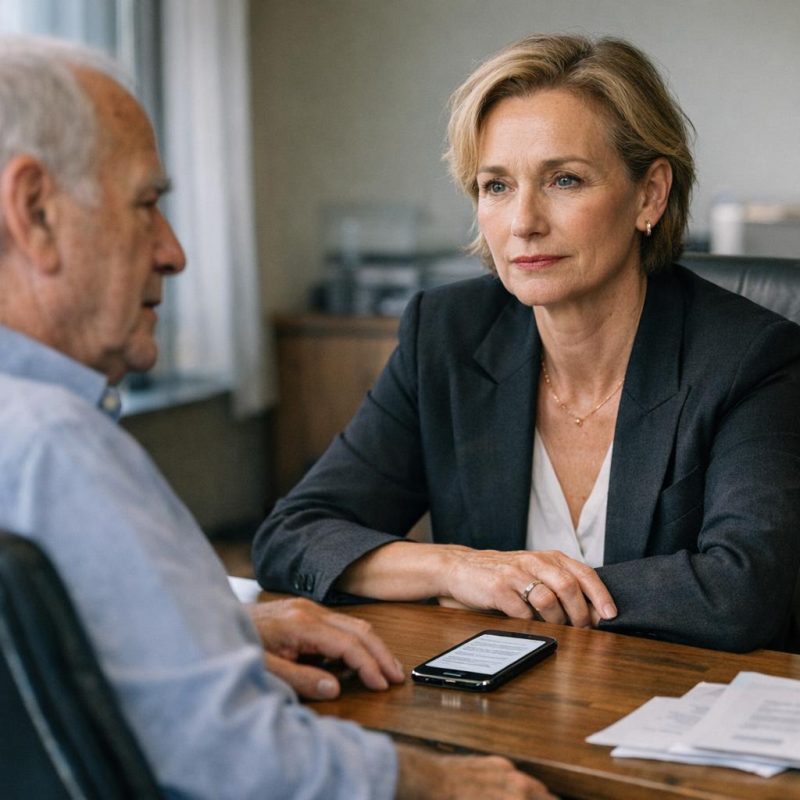 Image by RM AI
What Marcus Told Me Before He Left
I couldn't stop thinking about Marcus after that conversation. He'd retired last year—or at least, that's what we'd all called it. There'd been a party, cake in the break room, the usual speeches about his contributions. But I remembered something now, a moment at the end of the afternoon when most people had drifted back to their desks. I'd been gathering up paper plates when Marcus had pulled me aside. His expression had been strange—not celebratory, not quite bitter, just knowing. 'You've been here almost as long as I have,' he'd said. 'If things start feeling off, trust your instincts.' I'd thought he was just being nostalgic, maybe a little melancholy about leaving. But then he'd added something that hadn't made sense at the time: 'Ask to see the consultant reports from last year. The real ones, not the summaries they show in leadership meetings.' I'd nodded, not really understanding, and then someone else had called him over for a photo. I'd forgotten about it until now, filed it away as just something people say when they're retiring. He'd said, 'Ask to see the consultant reports from last year'—and suddenly I knew exactly what I was looking for.
 Image by RM AI
The Consultant Report
It took me two days to get my hands on it. I couldn't ask Robert directly, and HR would have questions I didn't want to answer. But Pamela knew someone in strategic planning who owed her a favor, and by Friday afternoon, I had a PDF in my encrypted email folder. The consultant firm's full report, not the sanitized executive summary. I read it that night at my kitchen table, and with every page, the picture became clearer and uglier. The consultants had analyzed workforce demographics across every division. They'd identified employees by age bracket, tenure, and salary, then calculated potential savings from systematic replacement. Not layoffs—that would be too obvious, too legally risky. Instead, they recommended creating conditions that would encourage voluntary departures: restructuring roles, bringing in younger managers, shifting responsibilities, making the work environment subtly inhospitable. They'd even provided scripts for performance conversations designed to make people feel obsolete without saying anything actionable. The whole thing was there in black and white: target employees by salary bracket and tenure, create justification for transition, minimize legal exposure—and Daniel had been brought in specifically to execute it.
 Image by RM AI
The Choice That Wasn't What I Expected
I sat with that report for three days, reading it over and over, and something shifted in me that I hadn't expected. This wasn't just about me anymore. The consultant firm had identified forty-seven employees across six divisions—people with decades of institutional knowledge, people who'd mentored half the workforce, people who'd been loyal when the company struggled. They'd turned human beings into line items in a cost-cutting strategy, and Daniel was just the hatchet man they'd hired to make it look natural. Robert had signed off on it. HR had facilitated it. And I had documentation proving all of it. The enhanced severance offer sat in my inbox, generous enough to make my next chapter comfortable. I could take it, sign the NDA, walk away clean. No one would blame me. But I kept thinking about Marcus, about the others who'd already been pushed out, about the people still on that list who didn't know what was coming. I could take the enhanced offer and pretend I didn't know, or I could do something that might change things for everyone who came after me.
 Image by RM AI
Pamela's Story
Pamela came to my house on Sunday afternoon. We sat in my living room with the consultant report spread across the coffee table, and she traced her finger down page twelve. 'There I am,' she said quietly. 'Target for Q4.' Her name was highlighted in the same yellow as mine had been. She'd known for two weeks, she told me—someone in strategic planning had tipped her off. That's how she'd known where to get the full report. 'I've been watching this happen for eighteen months,' she said. 'Tom in operations, Sandra in client services, Marcus. They create impossible situations and wait for you to quit, or they document minor issues until they have cause.' I asked her why she hadn't said anything. 'Because I've seen what happens to people who fight,' she said. Her voice was flat, exhausted. 'Three people fought it. Two took settlements. One sued and it destroyed her.'
 Image by RM AI
The Meeting I Called
I sent the meeting request Tuesday morning: Robert, Daniel, and Julia from HR. Subject line: 'Performance Review Follow-Up—Urgent.' They probably thought I was coming to negotiate my exit. Robert's assistant confirmed for Thursday at two, conference room C. I arrived five minutes early with my leather portfolio and the printed consultant report inside. They were already there, coffee cups and notepads arranged, Daniel sitting back with that familiar expression of controlled patience. Robert started with pleasantries about hoping we could find a mutually beneficial resolution. Julia had her standard HR smile ready. I let them talk for maybe thirty seconds. Then I opened my portfolio, pulled out the report, and slid it across the table. 'I think we should discuss this instead,' I said. The title page was face-up: 'Workforce Optimization Strategy—Confidential.' I watched Daniel's eyes go sharp, Robert's face drain of color, Julia reach for the document with a hand that wasn't quite steady. I laid the consultant report on the table between us and watched three faces realize simultaneously that everything had changed.
 Image by RM AI
What Robert Tried to Offer
Robert recovered first—he always did. Within ten minutes, Julia had left to 'consult with legal,' and when she returned, the tone had completely shifted. No more talk about performance gaps or restructuring needs. Instead, Robert positioned himself as reasonable, measured, concerned about 'mutual interests.' They couldn't have unauthorized documents circulating, he explained. There were proprietary considerations, competitive sensitivities. If I was willing to return all copies and sign a comprehensive agreement, they were prepared to offer a separation package that reflected my years of service. Julia slid a printed term sheet across the table. I scanned the numbers once, then again, because surely I'd misread. Eighteen months' salary, full benefits continuation, retirement account matching accelerated. Plus a consulting retainer for 'institutional knowledge transfer' that doubled the whole amount. The number was staggering—enough to retire comfortably—but it came with an NDA that would silence everything I'd learned.
 Image by RM AI
Jennifer's Inadvertent Testimony
I asked for time to consider the offer, and Robert gave me until Monday. I spent Friday trying to think clearly, but my phone kept interrupting. The last call came from Jennifer at four-thirty. She asked if we could meet for coffee, said it was important. We sat in the same café where I'd met Pamela weeks earlier, and Jennifer looked nervous, her hands wrapped around her cup. 'I heard you had a meeting with Robert and Daniel,' she said. 'I don't know what it was about, but I need to show you something.' She pulled out her phone and opened a notes app—months of dated entries documenting problems, contradictory directions, processes that made no sense. She'd been tracking every confusion, every inefficiency, trying to figure out where she was going wrong. 'Nothing worked the way they said it should,' she explained. 'The client databases didn't match the billing system. The protocols contradicted the workflow charts. I kept notes because I didn't understand why things were so broken. I thought I was the problem.'
 Image by RM AI
Kyle's Question
Kyle caught me in the parking lot Monday morning, right before I had to give Robert my answer. He looked uncomfortable, shifting his messenger bag from shoulder to shoulder. 'Can I ask you something?' he said. 'About Marcus.' I waited. 'People are saying he didn't really quit. That the company pushed him out because of his age. Is that true?' I could have deflected. Should have, probably. But I was so tired of the careful non-answers, the corporate double-speak, the pretending everything was normal. 'Yes,' I told him. 'It's true.' I watched his face change as I explained the consultant report, the target list, the systematic strategy to replace experienced employees with cheaper alternatives. He listened without interrupting, and when I finished, his expression was somewhere between shock and anger. 'They can't do that,' he said—and I told him they already had, to dozens of people, unless someone stopped it.
 Image by RM AI
The Email I Sent
I drafted the email in my car in the parking garage, sitting in the dim fluorescent light with my laptop balanced on the steering wheel. The board's general counsel address was public information—I'd checked the company website. I attached the consultant report, Jennifer's documentation, the emails I'd saved showing the performance review inconsistencies. My cover letter was three paragraphs: what I'd discovered, what it meant, and a formal complaint of age discrimination affecting multiple employees across multiple divisions. I included my contact information and stated I was declining the settlement offer. My hands were shaking when I moved the cursor to 'send.' This wasn't like the surgical precision of my work, where I could control outcomes through careful planning. This was jumping off a cliff and hoping there was water below. But I thought about Marcus, about Pamela's name on that list, about Kyle's face when he realized what the company had done. I hit send at 11:47 PM, and there was no taking it back—but for the first time in months, I felt like I could breathe.
 Image by RM AI
The Response
The board's response came faster than I expected. By Wednesday afternoon, I received an official letter via courier: the company was launching an immediate investigation into my allegations, retaining outside counsel to ensure objectivity, and placing me on paid administrative leave effective immediately. I was to return my building access card and laptop but retain all documentation related to my complaint. I was assured this was standard protocol to 'protect all parties from potential retaliation.' Julia from HR called Thursday to arrange the logistics, her voice professionally neutral, carefully scripted. Then Robert called me personally Friday evening. Not from his office—I could hear traffic in the background, like he was in his car. 'The board takes these matters very seriously, Sharon,' he said. 'You're being protected from retaliation.' But his tone was different from every other conversation we'd had, tighter and more careful, and I understood what he wasn't saying. Robert called me personally to say I was being 'protected from retaliation,' but his voice told me I'd just made powerful people very uncomfortable.
 Image by RM AI
What Pamela Tells Me the Board Found
Pamela met me at the coffee shop near my house, not the one by the office. She looked tired but satisfied, the way you do after a marathon you've actually finished. 'They found everything,' she said, sliding into the booth across from me. 'All of it. The lists, the meeting notes, the emails coordinating between departments.' She pulled out her phone, scrolled through something, then put it face-down on the table like she couldn't quite believe what she'd seen. The investigation had uncovered not just Daniel's department, but HR, operations, even finance—a coordinated effort across five different managers to systematically identify and push out employees over fifty. Thirty-seven people total on those lists. Thirty-seven careers they'd planned to quietly dismantle. Some had already left, accepting buyouts or 'mutual separations' without knowing they'd been targeted. 'Robert's apoplectic,' Pamela said. 'The liability exposure is massive. But more than that, I think he's genuinely horrified.' She leaned forward, her voice dropping. 'They're talking about settlements for everyone on those lists,' Pamela said. 'And Daniel's been asked to resign.'
 Image by RM AI
The Settlement That Wasn't Just About Me
Robert's office felt different this time—no performance anxiety, no careful positioning. I sat across from him while he outlined the settlement offer: a year's salary, benefits continuation, a stellar reference letter, and a confidentiality agreement. Standard stuff. Generous, even. But I'd spent nineteen years building systems, and I knew how to negotiate infrastructure, not just outcomes. 'I want mandatory age-bias training,' I said. 'For all managers. Not the online module everyone clicks through—actual facilitated sessions.' Robert nodded, taking notes. 'And an oversight committee that reports directly to the board. With employee representatives, not just executives.' He looked up at that, considering. 'And exit interviews conducted by external consultants, with data tracked and reviewed quarterly.' We went back and forth for an hour, building the framework that would outlast my departure. The settlement they offered would take care of me financially, sure. But the money was good, but what mattered was the mandatory training, the oversight committee, and the chance that no one else would go through what I did.
 Image by RM AI
What I Decided to Do Next
Marcus from the vendor company had left his offer open, even after everything hit the news. 'You proved you're someone who sees what others miss,' he'd said back in March, before all this started. 'That's exactly what we need.' I'd kept his card in my desk drawer all these months, pulling it out occasionally, running my thumb over the embossed logo. The job was interesting—building integration systems for healthcare analytics, real problem-solving work that mattered. But more than that, it was a place where my expertise was the starting point, not something I had to constantly justify. I wouldn't be the oldest person in the room by two decades. I wouldn't be managing around someone else's dismissive assumptions. I could just do the work I was good at, with people who'd hired me specifically for that work. The decision felt surprisingly simple once I stopped thinking of it as running away from something and started seeing it as choosing what came next. I called him on a Tuesday morning and said yes—not because I was running away, but because I was finally running toward something I chose.
 Image by RM AI
Nineteen Years and One Day
My last day fell on a Friday, which felt appropriate somehow—a clean ending before a weekend, before a whole new life. They'd organized a small gathering in the conference room, the good one with windows. Jennifer brought flowers, which made me tear up more than I'd expected. 'You taught me to ask why things are the way they are,' she said. 'Not just accept them because that's how they've always been.' Kyle was there too, looking uncomfortable in the way young men do at emotional moments. 'I told my girlfriend about what you did,' he said. 'She's dealing with some stuff at her company. She needed to know someone actually fought back and won.' Pamela hugged me hard, whispering, 'You changed this place.' But it was the others who surprised me—people from departments I'd helped over the years, faces I recognized from hallways and meetings, all of them there because something had shifted in how they understood their own value. I walked out of that building for the last time knowing that what I'd built there wasn't systems or processes—it was a different understanding of what invisible work really means, and who gets to decide what matters.
 Image by RM AI