I Gave My Son A Chunk Of Money To Start His Life. Then I Found Out What He Did With It…
I Gave My Son A Chunk Of Money To Start His Life. Then I Found Out What He Did With It…
The Ask
Tyler sat at my kitchen table with his hands wrapped around a mug of coffee he wasn't drinking. I'd made it the way he liked—too much cream, two sugars—but it just sat there getting cold while he looked at everything in the room except me. He was thirty-five years old, and I could still see the kid who'd practiced his spelling words at this same table, lips moving silently as he memorized. Now those lips were forming different words, ones he'd clearly rehearsed. 'Mom, I need to talk to you about something important.' The phrasing was too careful. Too prepared. I set down my own mug and waited, because I've learned that silence makes people tell you what they're really thinking, eventually. He talked about Brianna's new job, about Owen starting pre-K next year, about how they'd been 'really responsible' with their finances. Past tense, like it was an accomplishment that had already ended. The whole time, there was this tension in his shoulders that reminded me of when he was sixteen and had wrecked my car. He was working up to something, and I knew whatever came next was going to cost me. He said the word I'd been dreading since he sat down: 'Mom, we need you.'
 Image by RM AI
The Presentation
Brianna arrived fifteen minutes later with Owen in tow, and I'm not saying it was coordinated, but the timing was suspiciously perfect. She had that smile on—the one she uses in her Instagram photos, all warmth and authenticity that somehow feels like neither. 'Judith, thank you so much for even considering this,' she said, settling onto my couch like we were about to have a lovely chat about gardening or something equally benign. Owen made a beeline for the toy box I keep for him, and suddenly the whole thing felt staged, like I was watching a presentation I hadn't agreed to attend. Brianna started talking about 'building equity' and 'investing in Owen's future,' and Tyler nodded along like this was a business meeting instead of my son asking me to risk my financial security. She had facts. She had figures. She had a folder—an actual folder—with printouts about the neighborhood and the school district. Who brings a folder to ask their mother-in-law for help? But then Owen found the wooden train set I'd bought him for Christmas, and he was three feet away making engine noises, and Brianna was saying something about stability and family, and I felt myself softening in a way I knew was dangerous. Owen climbed into my lap and said, 'Daddy says we get a yard!' and I felt my resolve crack.
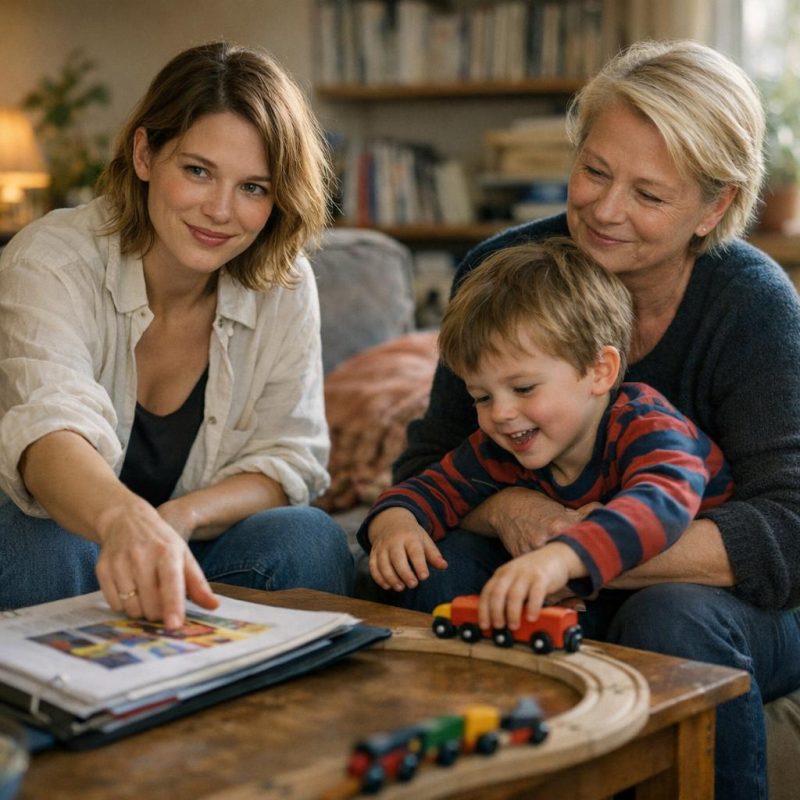 Image by RM AI
The Numbers
I've worked in accounting for thirty years, so I asked the questions someone should ask. What's the purchase price? What's your down payment? What are your monthly payments going to be, and what percentage of your income is that? Tyler had answers for everything. The house was $340,000. They had $25,000 saved for the down payment—seven percent, which isn't great but isn't terrible. Their combined income would keep the mortgage at twenty-eight percent, which is within the acceptable range. His credit score was 680, which he explained was 'temporarily low' because of some medical bills from when Owen had tubes put in his ears. Brianna jumped in with the payment history—they'd paid off those bills, she said, but it takes time for credit scores to recover. It all sounded reasonable. It sounded rehearsed, too, but reasonable and rehearsed aren't mutually exclusive. I asked about their other debts. Tyler listed them: one car payment, Brianna's student loans, a small credit card balance they were 'aggressively paying down.' Numbers I couldn't verify but had no specific reason to doubt. They had an approval letter from the bank, contingent on a co-signer. They showed me the property listing—a three-bedroom ranch with a fenced yard, good bones, nothing fancy. Everything added up on paper, so why did I still feel like I was missing something?
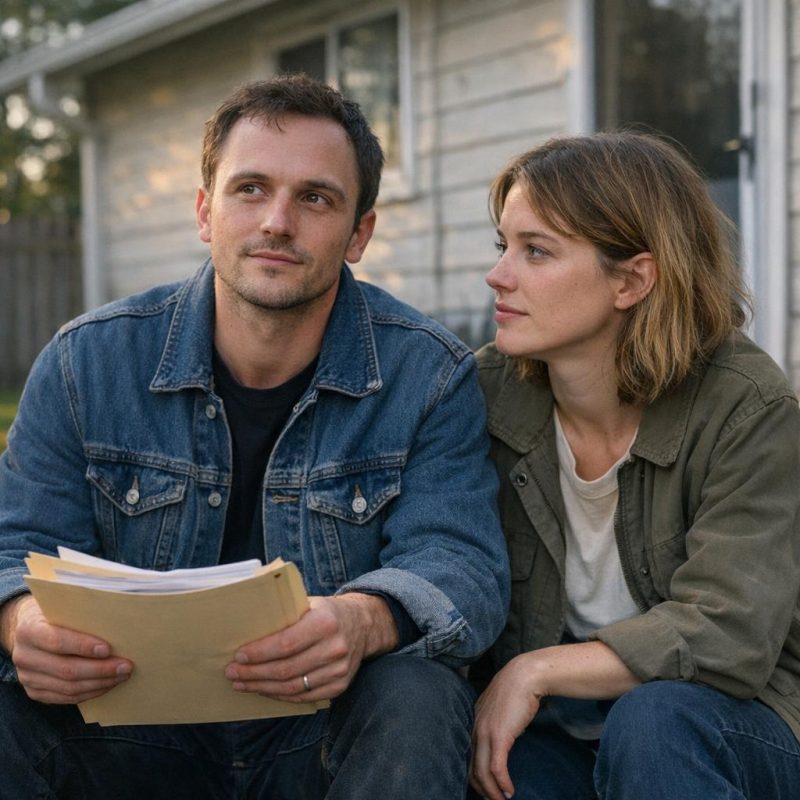 Image by RM AI
The History Lesson
I kept thinking about Linda, my friend from church who co-signed for her daughter's car loan eight years ago. The daughter stopped making payments after six months, and Linda's credit was destroyed. She couldn't refinance her house when interest rates dropped. Couldn't get approved for a credit card. The daughter felt terrible about it—I believe that—but terrible doesn't pay bills. And then there was Roger from my old office, who co-signed his nephew's business loan and ended up declaring bankruptcy when the business folded. These weren't irresponsible people. They were parents and aunts and uncles who loved someone and wanted to help. I looked at Tyler and tried to imagine him doing that to me. Tried to picture him just... stopping payments and leaving me holding the debt. But he was my son. I'd raised him. I'd taught him about responsibility and consequences and keeping your word. Surely that meant something. Surely I knew him better than Linda knew her daughter or Roger knew his nephew. I started to say no. I really did. The word was right there, forming in my throat, and then Tyler leaned forward and his eyes got shiny and he said, 'I would never do that to you, Mom,' and I wanted so badly to believe him.
 Image by RM AI
The Conditions
I told him I needed time. That I'd meet with the loan officer and review the actual documents, but I wasn't promising anything yet. I said I wanted to see their bank statements from the last six months and proof that they'd been paying rent on time. Tyler's face did this thing—this flood of relief so visible I could practically see his blood pressure dropping in real time. 'Of course, Mom. Absolutely. Whatever you need to feel comfortable.' He was nodding too much, agreeing too quickly. Brianna was already pulling up their banking app on her phone, ready to show me transactions right there in my kitchen. I held up my hand. 'Email it to me. I want to look at everything carefully, on my own time.' That slowed them down just slightly. They exchanged a glance—quick, almost imperceptible—and I couldn't read it. Was it relief? Concern? I couldn't tell. Tyler stood up and hugged me, and he held on just a second too long. 'Thank you for even considering it. I know it's a lot to ask.' It was a lot to ask. That was exactly right. But he was already talking about scheduling the meeting with the loan officer, already moving forward like my conditional maybe was as good as a yes. Tyler's relief was so visible I wondered how long he'd been holding his breath.
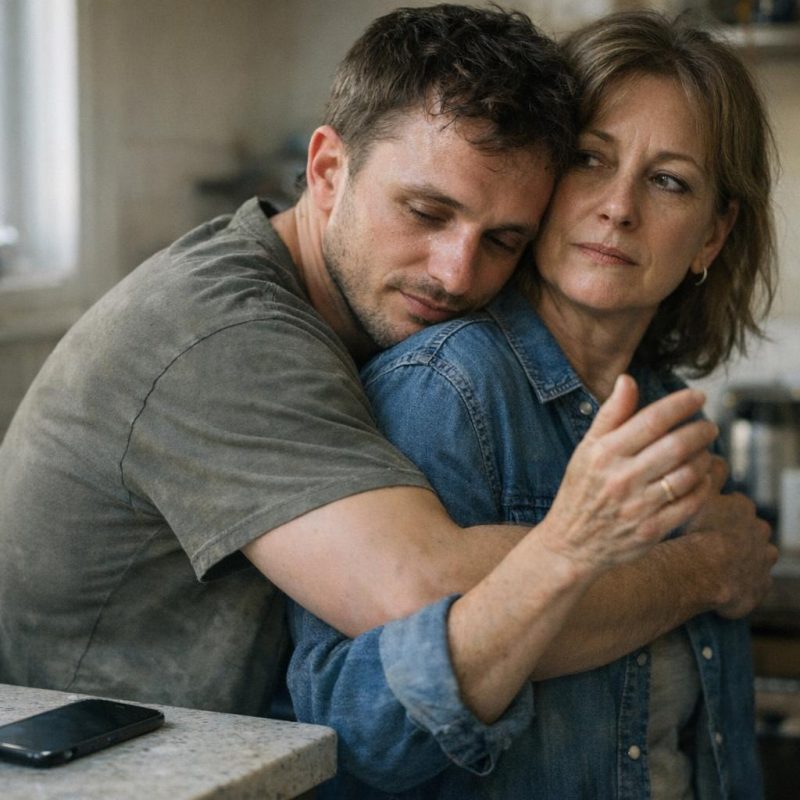 Image by RM AI
The Research
I spent the next week doing what I do best: research. I read every article I could find about co-signing. I joined an online forum where people shared their co-signing horror stories—and let me tell you, there were hundreds of them. Pages and pages of parents who'd lost their savings, ruined their credit, destroyed their relationships with their kids. The statistics were grim: according to the FTC, as many as three in four co-signers end up having to pay some or all of the debt. Three in four. Those aren't comforting odds. I read about the legal implications, about how co-signing doesn't just mean you'll pay if Tyler doesn't—it means the lender can come after me first, without even trying to collect from him. I learned that co-signing can affect my ability to borrow money for myself, because that debt counts against my credit utilization even when Tyler's making every payment. I made spreadsheets. I calculated worst-case scenarios. I figured out exactly how much of my retirement savings I'd need to liquidate if I had to cover the mortgage for six months, a year, two years. The numbers made me nauseated. Every article said the same thing: don't do it unless you're prepared to lose the money and the relationship.
 Image by RM AI
The Dinner Invitation
Three days before my meeting with the loan officer, Brianna texted me. Not Tyler—Brianna. 'Hi Judith! Would you like to come to dinner this week? I'd love to talk through any concerns you might have about the house. No pressure, just want to make sure you feel good about everything! 💕' The exclamation points and the heart emoji felt strategic. So did the timing. I stared at that message for ten minutes, trying to decide if I was being paranoid or appropriately cautious. Then a second text came through. It was a photo of Owen holding up a piece of construction paper with crayon drawings—stick figures labeled in Brianna's handwriting. One house with flowers and 'Grandma's house' written underneath. Another house with a tree and a swing set and 'Our new house' written above it. An arrow connecting them with the words 'So close!' Owen was grinning at the camera, proud of his artwork, completely unaware he was being used as leverage. I knew exactly what Brianna was doing. I could see the manipulation clearly. And it didn't matter. That's the thing about emotional manipulation—sometimes you can identify it perfectly and still be powerless against it. She ended the message with a photo of Owen holding a drawing of 'Grandma's house next to our new house,' and I knew I was being played but couldn't resist.
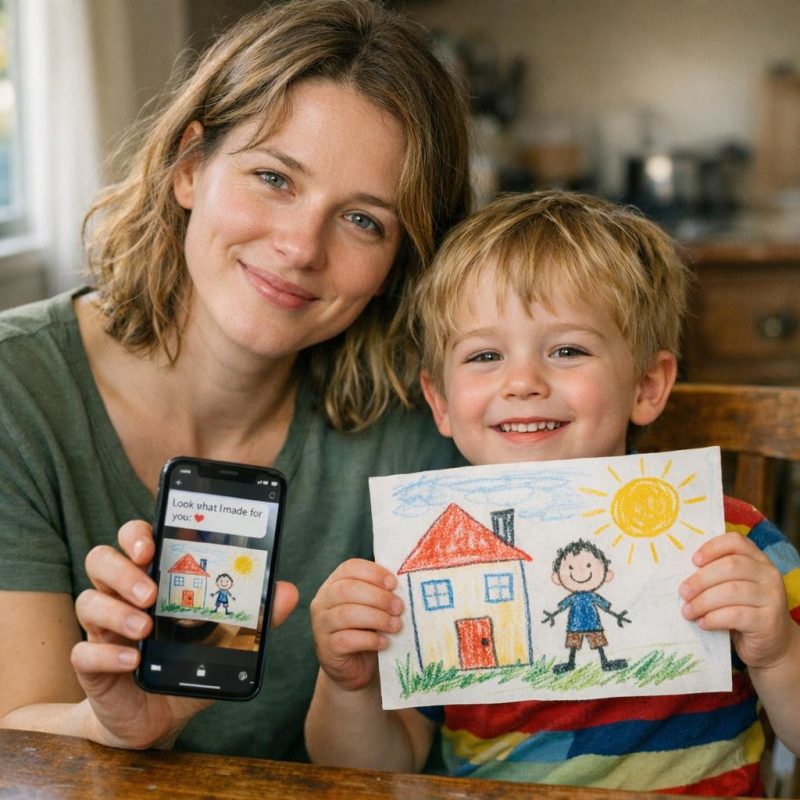 Image by RM AI
Sister's Warning
I called Donna because that's what you do when you're about to make a potentially terrible decision—you call the person who'll tell you the truth even when you don't want to hear it. My sister listened to the whole story without interrupting, which should have been my first warning that she was gearing up for something big. When I finally finished, there was this long silence. Then: 'Judith. Are you out of your goddamn mind?' Not a question. A statement. She went through every point methodically—Tyler's mediocre credit, Brianna's convenient timing, the fact that they'd clearly rehearsed their pitch. 'You know what co-signing means, right? It means you're not helping Tyler buy a house. You're buying a house that Tyler gets to live in.' I tried to defend it. I talked about Owen and stability and giving them a chance. Donna made a noise that was half laugh, half disgust. 'You're being an idiot, and you know you're being an idiot, which somehow makes it worse.' We argued for twenty minutes. I told her she didn't understand. She told me I understood perfectly fine and was choosing to ignore my own judgment. Finally, she sighed. 'Fine. Do what you're going to do.' Then, quieter: Donna said, 'If you do this, call me when it all goes to hell—I'll help you pick up the pieces, but I won't say I told you so.' That was a lie. She absolutely would.
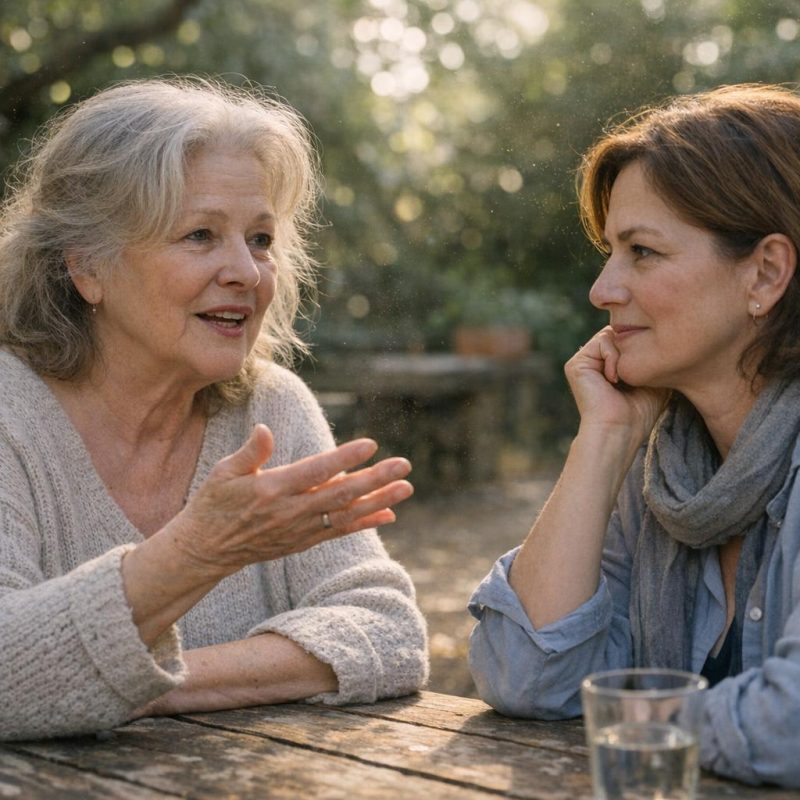 Image by RM AI
The Dinner Performance
They invited me over for dinner a few days before the bank appointment, which felt deliberate. The table was set like something from a magazine—cloth napkins, actual candles, Owen in a button-up shirt that probably cost more than my weekly grocery bill. Brianna had made pot roast, which she knew was my favorite, and it was perfect. Too perfect. She kept refilling my wine glass and asking questions about my work at the library, nodding like every answer fascinated her. Tyler was quieter than usual, pushing food around his plate while Brianna outlined their plans for the house—the garden Owen would play in, the home office where Tyler could finally focus on his graphic design business. She had this way of painting pictures that made you want to believe in them. Then she pivoted to gratitude. 'You're the person who makes this possible, Judith. I want you to know that. We couldn't do this without you.' Tyler's fork scraped against his plate. She said it again during dessert, hand on my arm, eyes bright. 'You're the person who's giving Owen the childhood he deserves.' Every time she said it, Tyler looked down. Not embarrassed-grateful like you'd expect. Something else. She kept calling me 'the person who makes this possible,' and every time she said it, Tyler looked at his plate.
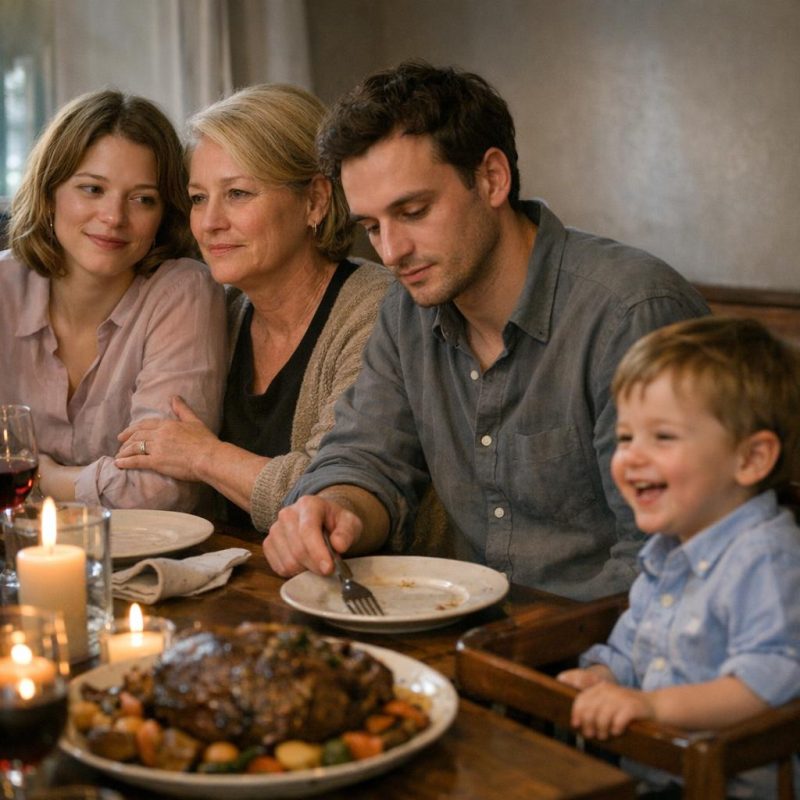 Image by RM AI
The Hesitation
The night before the bank appointment, I almost called Tyler to cancel. I'd been lying awake since midnight, running through all the ways this could go wrong, hearing Donna's voice in my head. At two a.m., I was rehearsing how I'd say it—I'm sorry, I just can't take this risk. Then my phone rang. Tyler. He never called that late. His voice sounded strange, tight and rushed. He said they'd gotten a call from the realtor—another buyer was trying to swoop in with a cash offer, and if we didn't move forward tomorrow, they'd lose the house. 'Mom, I know it's scary. I know it's a lot to ask. But we're so close.' There was this edge to his voice I'd never heard before, something frantic. I told him we could find another house, something less expensive. He made a sound like a laugh that wasn't a laugh at all. 'If we lose this house, Brianna will never forgive me,' he said. The fear in his voice wasn't about losing a house. It was something deeper, darker. He said, 'If we lose this house, Brianna will never forgive me,' and something about the fear in his voice made me wonder who he was really afraid of.
 Image by RM AI
The Bank Lobby
The bank lobby was all glass and marble, the kind of place that makes you aware of every scuff on your shoes. Tyler and Brianna were already there when I arrived, sitting on a leather bench near the elevators. Brianna stood up first, and I almost didn't recognize her. She was wearing a navy blazer and heels, her hair pulled back in a sleek ponytail. Professional. Polished. She looked like she was interviewing for a corporate job, not applying for a mortgage. She hugged me and whispered, 'Thank you for believing in us.' Tyler looked exhausted, dark circles under his eyes, but he managed a smile. We rode the elevator in silence. The loan officer who met us was probably my age, with reading glasses on a chain and a nameplate that said Patricia Chen. She shook everyone's hands, welcoming and warm, guiding us into a small conference room. But when her eyes landed on me—not Tyler, me—something changed. Just for a second. Her smile stayed professional, but there was this flicker in her expression. The loan officer greeted us warmly, but when her eyes landed on me, something flickered across her face—recognition, maybe, or sympathy.
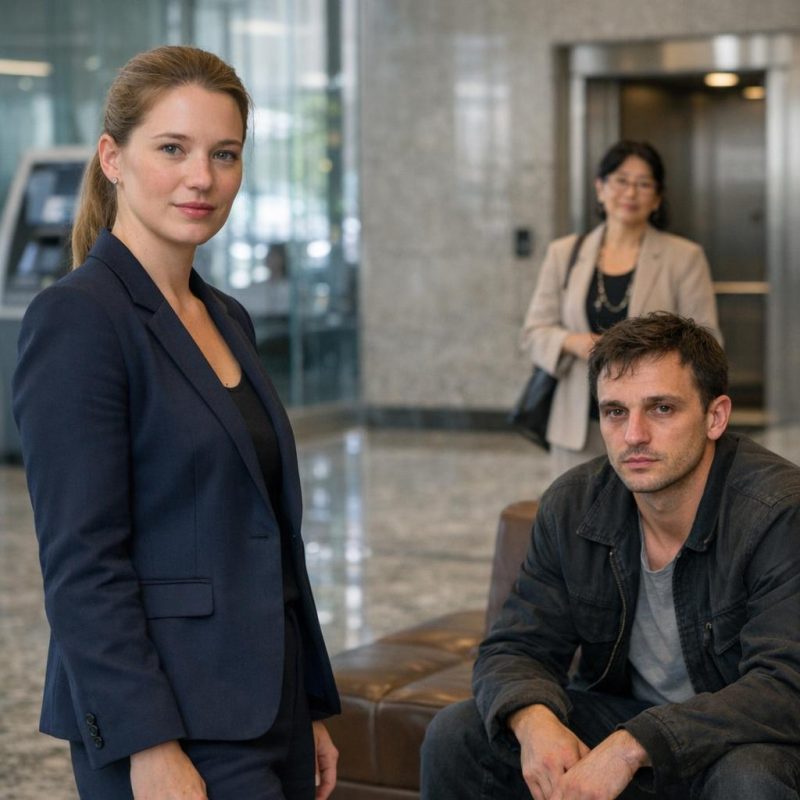 Image by RM AI
The Signing
Patricia spread the documents across the table like a dealer laying out cards, explaining each section in that practiced voice mortgage officers use—friendly but efficient, designed to keep things moving. She pointed to signature lines, initials here and here, date boxes. Tyler kept leaning over to reassure me. 'That's standard, Mom. That's just the escrow terms. That's normal.' Every time I slowed down to actually read something, Brianna would make a small comment—'Owen's so excited about his new room' or 'The seller's being very patient with us'—just enough to break my concentration. I wasn't reading. I was skimming, trusting, signing. Then I hit a page near the back, something about occupancy. The header said 'Primary Residence Affidavit.' I paused, trying to parse the legal language, something about the borrower certifying they would occupy the property as their primary residence within sixty days. Tyler leaned in close, his shoulder pressing against mine, and said, 'That's standard, Mom.' His voice was steady. Reassuring. But under the table, his knee was bouncing so hard it shook the entire surface. I paused at a page that mentioned an 'occupancy affidavit,' and Tyler leaned in close and said, 'That's standard, Mom,' but his knee was bouncing so hard it shook the table.
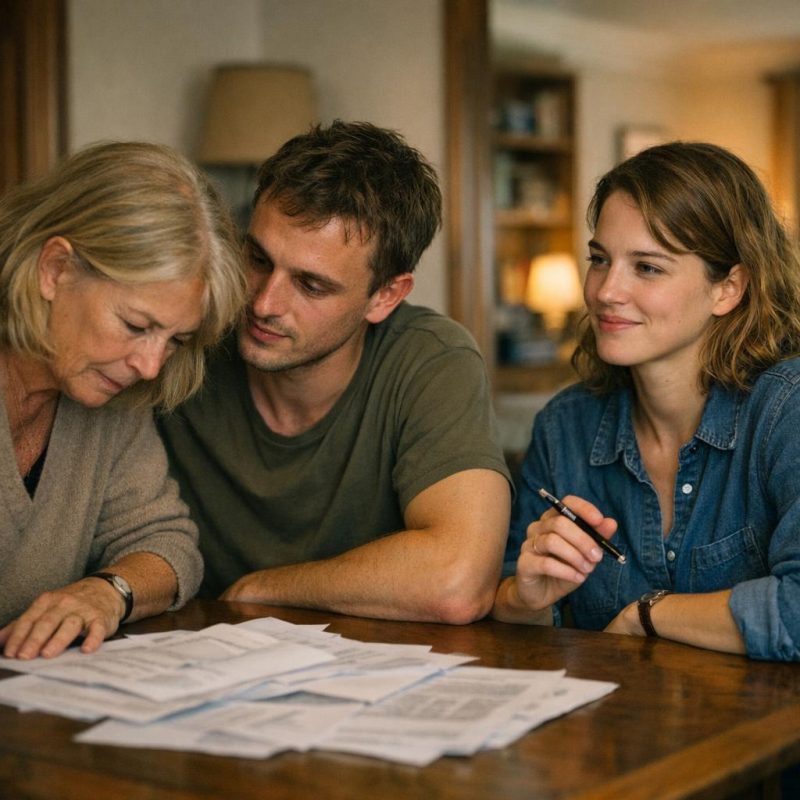 Image by RM AI
The Aftermath
They hugged me in the parking lot like I'd just donated a kidney. Brianna was crying—actual tears—and Tyler held on longer than he had since he was a kid. Owen was in the car seat in Brianna's SUV, waving at me through the window. They promised to have me over as soon as they were settled, made me promise I'd help Owen plant his first garden. I got in my car and sat there for a minute, watching them drive away. I should have felt good. Proud, even. I'd helped my son buy a house. I'd given my grandson stability. Instead, I felt like I'd just walked out of a exam I'd forgotten to study for—that specific kind of dread that comes from knowing you've made a mistake but not being able to identify what it was. I kept replaying the signing. The speed of it. Patricia's expression. Tyler's bouncing knee. The way Brianna's tears had appeared so suddenly, so perfectly timed. And that page I'd hesitated on. The occupancy thing. Standard, Tyler had said. So why had his knee been shaking? I kept replaying the moment I'd hesitated on that one page, wondering what I'd missed.
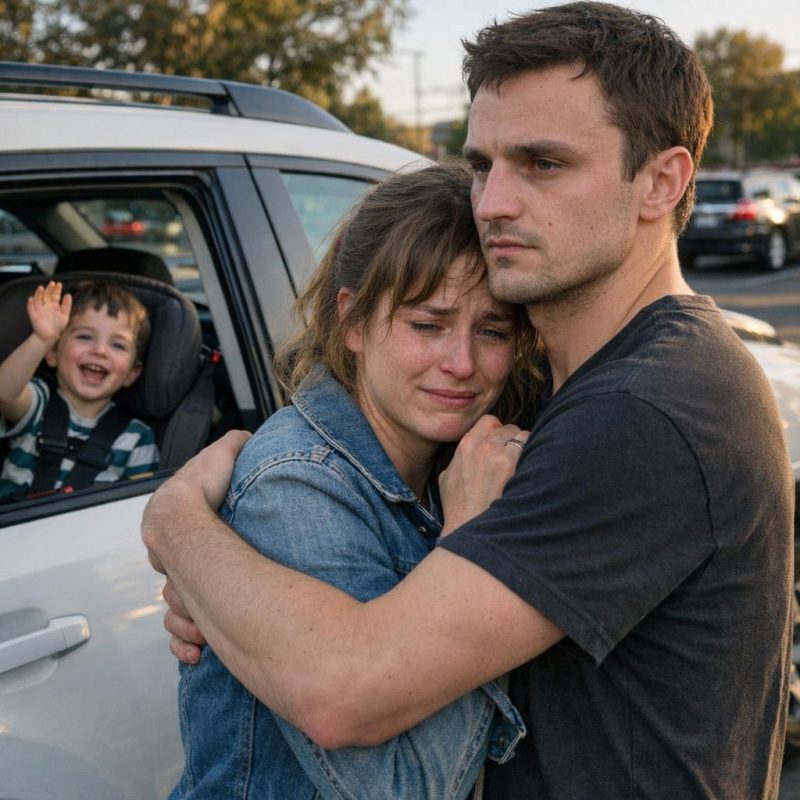 Image by RM AI
The Silence
Tyler usually texted me every few days—random stuff, memes, photos of Owen. After the signing, nothing. Four days passed. Then five. I told myself it made sense. They were packing, coordinating with movers, dealing with all the chaos that comes with buying a house. I'd been through it myself. It's overwhelming. Still, I found myself checking my phone more often than usual, scrolling back through our old conversations like I might have missed something. On day six, I almost texted him, then stopped myself. I didn't want to be that mother, the one who needs constant reassurance, who can't let her adult son have space. But it felt different this time. Before the house, Tyler and I had an easy rhythm. Now there was this silence, and the silence had weight to it. I tried calling once and it went straight to voicemail. I left a message—casual, breezy, just checking in. He didn't call back. Maybe they were avoiding me. Maybe I'd become a reminder of what they owed, a physical embodiment of their debt. Or maybe I was being paranoid. I told myself they were just busy with the move, but a small voice asked: or are they avoiding me?
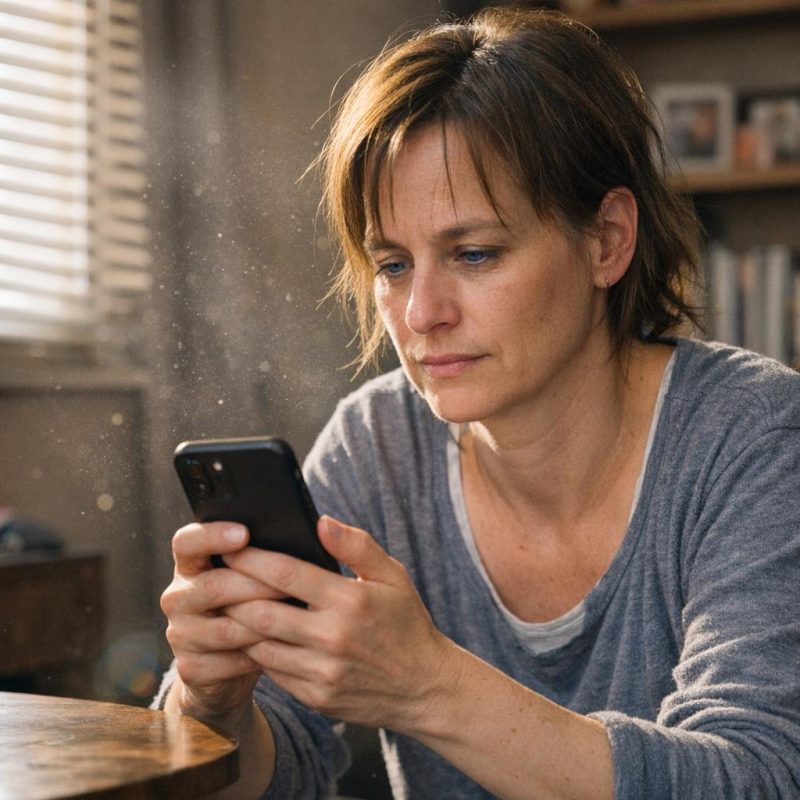 Image by RM AI
The First Photo
The text came on day eight: a photo of their new living room with sunlight streaming through enormous windows. The caption read, 'Dreams do come true! 🏡✨' with about fifteen emojis. It was a beautiful room. Hardwood floors, high ceilings, a stone fireplace. And furniture. All new furniture. The couch was one of those mid-century modern pieces, caramel leather, the kind I'd seen in design magazines in the dentist's waiting room. Matching armchairs. A glass coffee table. Built-in bookshelves already filled with color-coordinated books. In the corner, a fiddle-leaf fig tree in a ceramic planter that probably cost more than I'd spent on all my houseplants combined. I stared at that couch for a long time. I didn't know exactly what it cost, but I could estimate. Tyler had never had money for furniture like that. When he'd moved into his apartment, we'd gone to IKEA and I'd helped him assemble everything. This was different. This was aspirational Pinterest living. I texted back: 'Beautiful! You guys have great taste.' Then I sat there, phone in hand, trying to do math that didn't add up. The couch alone probably cost more than I spent furnishing my entire house, but I reminded myself I didn't know their finances.
 Image by RM AI
The Invitation
The invitation came as a group text—Tyler, Brianna, and me. 'Sunday dinner at the new house! 5pm. Can't wait to show you everything! Owen's been asking for Grandma.' I responded immediately that I'd be there, then spent the next three days thinking about that living room photo. I told myself it was natural to be curious. I'd co-signed the mortgage. I had a right to see where my signature had taken them, what my financial risk was protecting. But it wasn't just curiosity. It was something more complicated. I wanted to see their kitchen, their bedrooms, their backyard. I wanted to inventory what my help had bought them, to measure whether the risk I'd taken matched the reality of their need. The thought made me uncomfortable. It felt possessive in a way I didn't like. I wasn't their landlord. I wasn't expecting gratitude every time I walked in the door. But I also wasn't just a dinner guest anymore. Something had shifted. I'd signed papers that tied my financial future to their address. That gave me certain rights, didn't it? Or was I just being entitled? I wanted to see what my signature had bought them.
 Image by RM AI
The Tour
Brianna met me at the door wearing white linen—who wears white linen with a four-year-old in the house?—and immediately launched into the tour. Not the casual 'come in, let me show you around' kind of tour. The kind real estate agents give. She gestured toward the living room with an open palm, stood at specific angles, used phrases like 'the flow of the space' and 'intentional design choices.' Every surface was clear. Every pillow was positioned. The sunlight came through the windows at exactly the right angle, illuminating a fiddle-leaf fig that probably cost more than my first car. Owen followed us from room to room, quieter than usual, like he'd been coached not to touch anything. Tyler trailed behind, hands in his pockets, offering small comments when Brianna paused for breath. The kitchen had copper fixtures. The bathroom had heated floors. The nursery had a chandelier. A chandelier. For a baby. I admired everything appropriately, made the right sounds, but something felt off. It wasn't just that the house was beautiful. It was that the house was perfect. Magazine perfect. Photo-shoot perfect. And then Brianna pulled out her phone to show me 'how the light hits the dining room in the morning,' and I saw her camera roll—hundreds of photos, all of this house, these rooms, this carefully curated life. Every room was camera-ready, and I realized she'd been posting photos of the house on social media—lots of photos.
 Image by RM AI
The Performance
Over dinner—a beautiful dinner, everything arranged on matching serving platters I didn't recognize—Brianna mentioned her 'brand partnerships' the way someone else might mention a dentist appointment. Casual. Routine. She'd been 'collaborating' with a kitchen supply company, she said, which is why the copper fixtures were such a good deal. A home goods brand had 'gifted' the living room rug in exchange for posts. The chandelier in Owen's room was part of a 'nursery design partnership.' Tyler cut his chicken into smaller and smaller pieces, his jaw tight. I nodded like I understood, but I had no idea what any of this actually meant. Were these jobs? Was she getting paid? How did someone make money from taking pictures of their kitchen? 'So this is your business?' I asked, trying to sound supportive rather than confused. 'Lifestyle content creation,' Brianna said brightly, like that explained everything. Tyler looked like he wanted to crawl under the table. I watched him push food around his plate, avoiding eye contact, and felt that familiar parental radar ping—the one that says something's wrong but you can't quite name it. When I asked what her business actually was, she said 'lifestyle content creation,' and I had no idea what that meant but Tyler looked like he wanted to disappear.
 Image by RM AI
The Accounting
I went home and couldn't stop thinking about the copper fixtures. The heated floors. The chandelier. I got out a notepad—yes, an actual notepad, because I'm sixty-three and that's how I think—and started adding things up. Conservative estimates. The cheapest versions of everything I'd seen. The sectional sofa, at least three thousand. The dining table, another two. The kitchen appliances, all matching stainless steel, maybe four thousand if they got a package deal. The rug Brianna said was 'gifted' retailed for eighteen hundred—I looked it up. The nursery furniture, the outdoor patio set I'd glimpsed through the window, the landscaping that hadn't been there in the listing photos. I kept writing numbers, kept adding, kept feeling my stomach drop further. These were people who'd barely qualified for the mortgage. People who needed me to co-sign because they didn't have enough credit history, enough savings, enough financial stability to convince a bank they were safe. And now they had twelve thousand dollars of furniture? Fifteen? Twenty? I told myself they probably financed it all, but that only made me more uneasy—how much debt were they carrying?
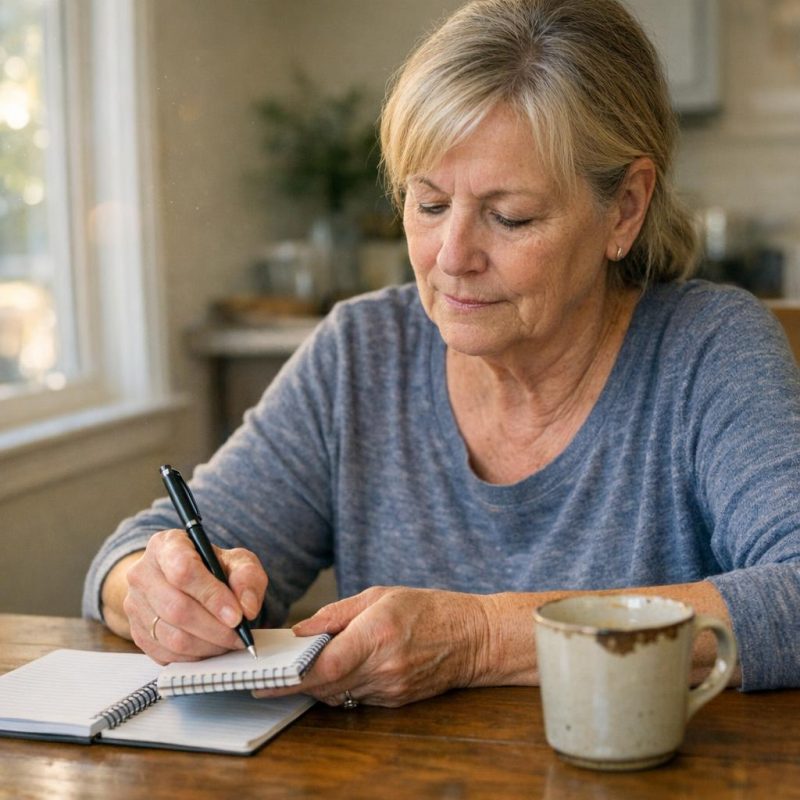 Image by RM AI
The Baby
Harlow arrived on a Tuesday in October, six pounds and nine ounces, with Tyler's dark hair and Brianna's delicate features. I brought casseroles in disposable containers, folded laundry while Brianna nursed, read picture books to Owen while Tyler caught an hour of sleep on the couch. The house smelled like baby and exhaustion and that particular kind of chaos that comes with a newborn. Brianna's hair was in a messy bun. Tyler wore the same shirt two days in a row. The perfection had cracked, just a little, and underneath it they were just tired parents trying to figure out how to keep two small humans alive. I held Harlow while she slept, her tiny fingers wrapped around my thumb, and felt something shift in my chest. Maybe I'd been too suspicious. Maybe the furniture was financed, maybe the 'brand partnerships' were real income, maybe they were making it work in ways I didn't understand because I was from a different generation. Maybe my help had actually helped. Holding that tiny baby, watching Tyler's exhausted smile, I wanted to believe I'd helped build something good.
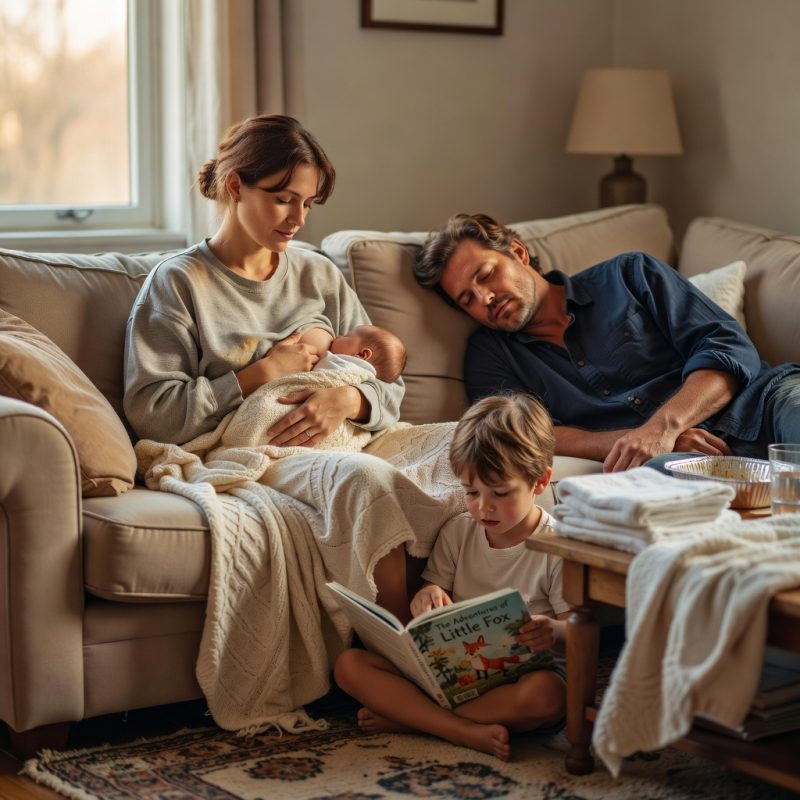 Image by RM AI
The Sunday Routine
We fell into a rhythm after that. Sunday dinners at their place, me arriving at four to help with the kids while Brianna cooked and Tyler set the table. Owen would show me his latest drawing or train track configuration. I'd hold Harlow while Brianna finished the meal, feeling her warm weight against my chest, breathing in that particular baby smell. We'd eat together, talk about their week, about Owen's preschool progress, about whether Harlow was sleeping any better. It felt normal. It felt like family. Like maybe this was what my signature had bought—not just a house, but this routine, these moments, this connection. Almost. But I kept noticing little things. A new stand mixer on the counter, professional-grade. Owen's shoes, tiny Nikes that cost more than my monthly electric bill. The way Brianna was always adjusting angles, moving a vase two inches left, asking Tyler to hold Harlow by the window while she grabbed her phone. The way she'd pause mid-conversation to jot something in a notebook, capturing a phrase or moment. It should have felt intrusive, this constant documentation, but everyone just acted like it was normal. Almost normal. But I kept noticing little things—new kitchen gadgets, Owen's expensive shoes, the way Brianna was always taking photos.
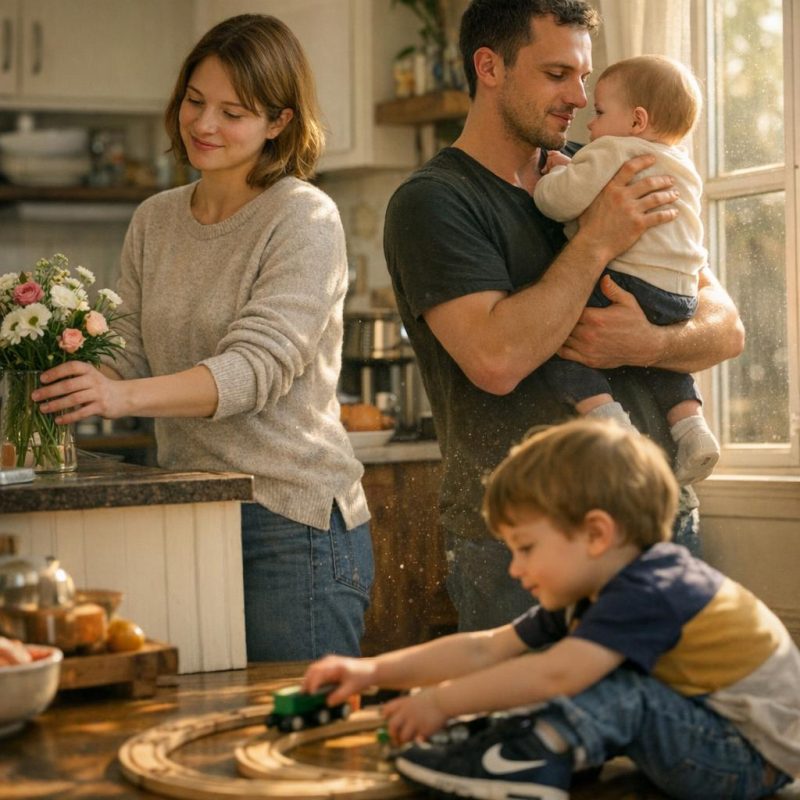 Image by RM AI
The Comment
Donna came over on a Wednesday with wine and takeout Thai food, the way we'd been doing since our kids were small. We ate pad thai on my couch and complained about our backs and laughed about things our mothers used to say that we now understood. Then she pulled out her phone, scrolling while she talked, the way everyone does now. 'I saw Brianna's Instagram,' she said casually. 'Did you know she has like fifteen thousand followers?' I looked up from my spring rolls. 'Brianna has Instagram?' Donna's expression shifted—surprise, then something else. Concern, maybe. 'Judith. Her whole life is on Instagram. The house, the kids, everything. It's like... a whole production.' She turned her phone toward me, showed me a photo of Brianna's living room—my collateral, I thought reflexively—perfectly lit, perfectly styled. The caption was paragraphs long. 'How many followers did you say?' 'Fifteen thousand. Maybe more now. She posts every day.' Donna was watching my face carefully. 'You really didn't know?' I didn't even know Brianna had Instagram, which made me feel old and out of touch—but Donna's expression suggested I should be paying attention.
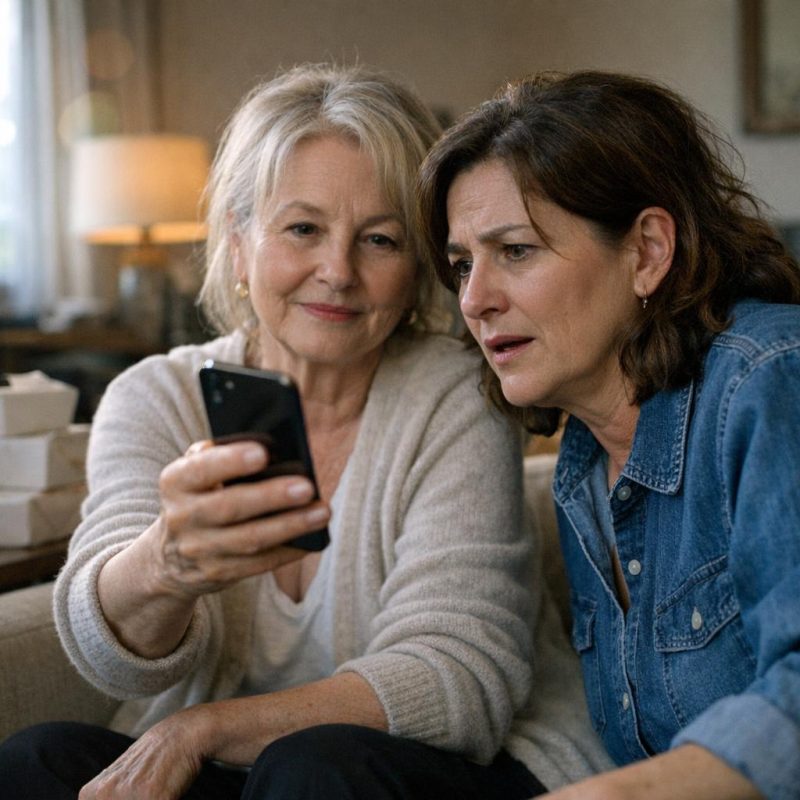 Image by RM AI
The Investigation
After Donna left, I got out my laptop. It took me twenty minutes to remember my Instagram password—I'd made an account years ago to see photos of my college roommate's grandkids and then forgot about it. I searched for Brianna's name. Found her immediately. The profile photo was her and Tyler and Owen, all of them in white shirts against a neutral background, everyone's teeth showing. Sixteen thousand followers now, not fifteen. I started scrolling. Photos of their living room from eight different angles. Photos of their kitchen, their bedroom, their backyard. Photos of Owen playing with wooden toys arranged just so. Photos of Harlow sleeping in that chandelier-lit nursery. Everything was captioned with paragraphs about gratitude, about manifestation, about choosing joy, about the journey. The comments were full of strangers saying 'gorgeous!' and 'living for this aesthetic' and 'where did you get that rug?' I scrolled and scrolled, looking at my son's life packaged for consumption, and felt something cold settle in my stomach. Every image was captioned with gratitude and affirmations, and not one of them mentioned that their 'dream home' was possible because of my signature.
The Scroll
I spent an hour scrolling, maybe more. Lost track of time the way you do when you're learning something you can't unlearn. Post after post about their 'journey to homeownership.' About 'building the life they deserve.' About 'manifesting abundance' and 'staying true to their vision.' The language was all positive, all aspirational, all about them. Their hard work. Their sacrifice. Their dreams coming true. There were posts about budgeting and saving—which made me want to throw my laptop across the room, given what I knew about their finances. Posts about 'investing in quality pieces' that showed the furniture I'd been mentally tallying. Posts about 'creating a home that reflects your values' that featured every room I'd co-signed for. Strangers commented with heart emojis and congratulations and questions about where to buy things. Brianna responded to everyone, warm and engaging, building her 'community.' In one post from last month, she'd written a long caption about gratitude, about how they 'couldn't have done this without everyone who believed in us.' The comments were full of people saying she'd inspired them. In one post, Brianna thanked 'everyone who believed in us,' and I wondered if that included me or if I was just collateral.
 Image by RM AI
The Wrong Turn
Three months after the signing, I had a follow-up appointment with my cardiologist in the medical complex across town. Nothing serious—just the routine monitoring that comes with being sixty-three and aware of mortality. Traffic on the interstate was backed up for miles, some kind of accident, so I pulled off and wound through the residential streets I don't usually drive. You know how GPS just recalculates and sends you down roads you've never noticed before? That's what happened. I was following the blue line on my phone, half-listening to the turn-by-turn directions, when I realized I was on their street. Not right in front of their house, but close enough. Close enough that I could see the roofline, the landscaping they'd added, the FOR SALE sign from the neighbors' yard that had finally come down. My heart did this stupid flutter that had nothing to do with my cardiac health. I told myself to keep driving. I had no reason to stop, no reason to turn my head and look. But you know how it is when you're specifically trying not to look at something. I wasn't planning to stop, but my eyes went straight to their driveway like it had magnets.
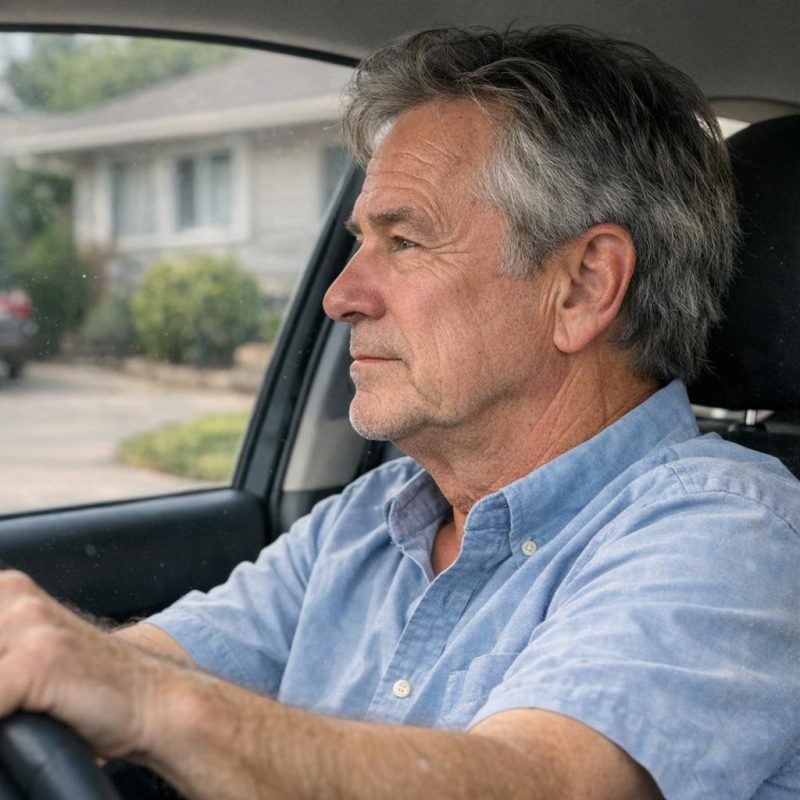 Image by RM AI
The SUV
The SUV sat there gleaming in the afternoon sun, black and chrome and aggressive in that way expensive vehicles are. Not just new—obviously new, with temporary tags still in the window. I'm not someone who knows cars particularly well, but even I recognized this was luxury tier. The kind with a price tag that starts around sixty thousand and climbs from there depending on the package. I slowed down without meaning to, my foot easing off the gas like my body had made a decision my brain hadn't caught up to yet. They'd told me six months ago they couldn't afford anything bigger than a two-bedroom starter home. They'd needed my co-signature because they were 'stretching' for even that modest property. Now there was this beast in their driveway, shining like someone's aspirational Pinterest board had manifested in metal and leather. My hands tightened on my steering wheel. I thought about the mortgage payment I'd co-signed for, the modest number that had seemed responsible, the reassurances about their budget. This vehicle cost more than some people's annual salary. It was the kind of car you buy when you want people to know you've made it, not the kind you buy when you can't afford a bigger house.
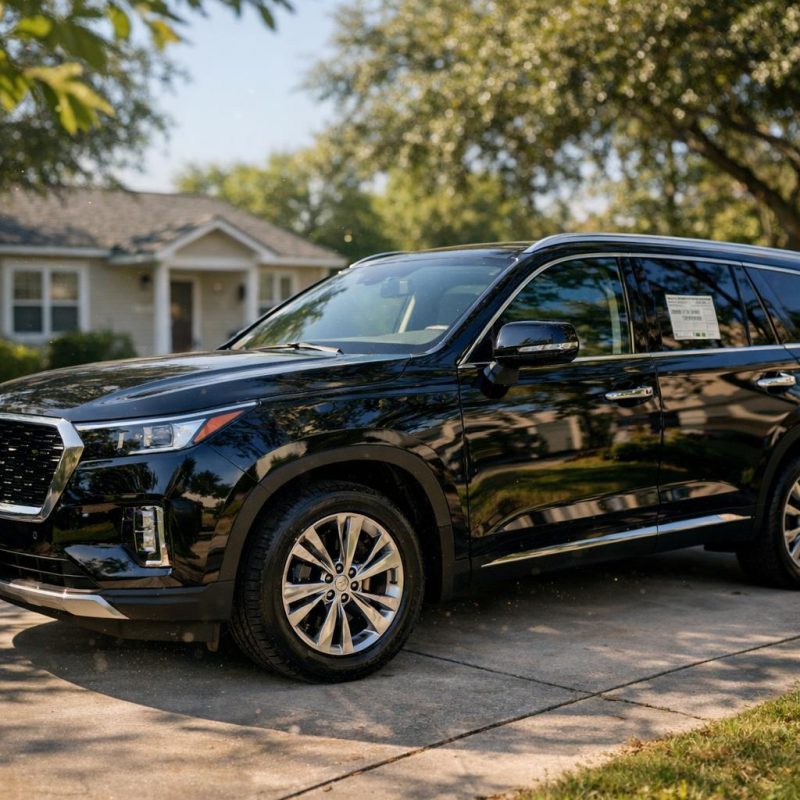 Image by RM AI
The Vigil
I found myself pulling over two houses down, parking under a maple tree that gave me a clear view without being obvious about it. This wasn't like me. I'm not someone who stakes out my own son's house like some kind of private investigator. But I sat there with the engine running, air conditioning on, just staring at that SUV. Trying to make sense of it. Trying to fit it into the narrative they'd given me about being financially responsible, about building slowly, about the sacrifice of homeownership. Maybe it was leased. That would be smarter, right? Lower monthly payments, tax deductible if Brianna used it for her social media business. Or maybe someone had given it to them—Tyler's father, perhaps, though we both knew Alan had his own financial issues. Company car? Did Tyler's job do that sort of thing? I ran through every possible explanation that didn't involve what I was starting to suspect. Every scenario where this made sense, where my son and his fiancée weren't living beyond their means while I stood as guarantor for their mortgage. None of them landed right. I tried to think of innocent explanations—lease, gift, company car—but none of them felt true.
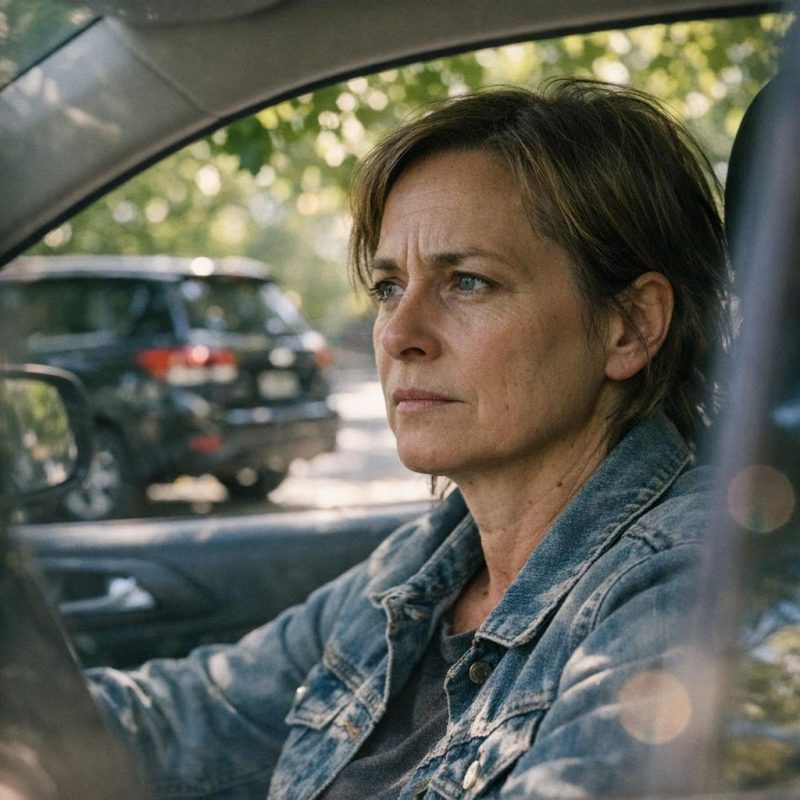 Image by RM AI
The Credit Check
I have credit monitoring. One of those services that alerts you when something changes on your report, when someone runs your information. I'd set it up years ago after a colleague had her identity stolen, and then I'd mostly ignored it because my credit life is boring. Mortgage paid off, one credit card I pay in full monthly, car loan finished three years back. That night, sitting at my laptop with a glass of wine I didn't really want, I logged in for the first time since probably February. The dashboard loaded slowly, or maybe it just felt slow because my heart was already racing. There was a notification. Recent inquiry. I clicked through, my reading glasses sliding down my nose. Auto loan inquiry from a lender I didn't recognize, dated two weeks ago. Then below that, a new account. Opened. Active. Balance: $68,000. My name listed as co-borrower. The wine glass left a ring on my desk as I set it down, hands shaking too much to hold it. I read the entry three times, four times, like the words might rearrange themselves into something that made sense. They didn't. Another inquiry. Another loan account. My name attached.
 Image by RM AI
The Sleepless Night
You know those nights where you're exhausted but your brain won't shut off? Where you lie there in the dark running through scenarios, each one worse than the last? That was every hour until dawn. I'd get up, pace the hallway, go back to bed, stare at the ceiling. The numbers kept looping through my head. Sixty-eight thousand for the car. Two hundred and eighty thousand for the mortgage. That was three hundred and forty-eight thousand dollars with my name on it, my credit backing it, my retirement potentially on the line if things went sideways. How had they even gotten approved for the auto loan? Had they used my information without asking? Had I signed something I didn't remember? The furniture, the renovations, Brianna's social media 'investments'—it all started clicking into a pattern I didn't want to see. By three a.m., I was catastrophizing. Foreclosure. Repossession. Bankruptcy. My comfortable retirement turned into financial ruin because I'd wanted to help my son. By five a.m., I'd moved past panic into something colder. I needed facts. Documentation. Real information, not just credit alerts and suspicions. By dawn, I'd decided: I needed to see the actual paperwork, all of it.
 Image by RM AI
The Bank Visit
The bank branch opened at nine. I was there at 9:03, still wearing the outfit I'd picked out the night before because I knew I wouldn't sleep. Professional, put-together, the kind of clothes that say you're someone who handles your business. The teller who helped me was young, maybe thirty, with that trained friendliness they teach in customer service. I explained what I needed—copies of the mortgage documents, all related paperwork, anything with my signature. Her expression shifted. Not dramatically, but enough that I caught it. That careful neutrality that professionals use when they recognize a situation they've seen before. 'Of course, Ms. Reese,' she said, typing something into her computer. 'I'll need to request the full packet from our document services. It usually takes two to three business days.' The way she said 'full packet' made something in my chest tighten. Not 'the documents' or 'your paperwork.' The full packet. Like there was more than I knew about. Like this was going to be thick. She printed a receipt for my request, and when she handed it to me, her eyes held something that might have been sympathy. She said she'd have to request the full packet, and something about the way she said 'full packet' made my stomach drop.
 Image by RM AI
The Wait
Tyler called twice during those two days. Once Wednesday evening, once Thursday around lunchtime. Both times, my phone buzzed on the counter and I stared at his name on the screen until it went to voicemail. I couldn't talk to him. Not yet. Not until I knew exactly what I was dealing with. If I answered, he'd hear it in my voice—the anger, the fear, the sense that the ground had shifted under everything I thought I understood about him. He'd ask what was wrong, and I didn't trust myself not to unleash everything before I had all the information. So I let it ring. I texted back generic things. 'Busy with work stuff, call you this weekend.' 'Everything's fine, just swamped.' The lies felt necessary. Thursday dragged. Friday worse. I kept checking the mailbox like it might magically produce the envelope early. Saturday morning, there it was. Thick manila envelope, bank logo in the corner, my name and address typed in that impersonal font. I brought it inside and set it on the kitchen table, where it sat like evidence while I made coffee I didn't drink. When the thick envelope finally arrived, my hands shook as I opened it.
 Image by RM AI
The First Read
I'm methodical when I need to be. It's what made me good at my job for thirty years. So I cleared the dining table, got my yellow highlighter and reading glasses, set up my laptop for cross-referencing. The stack of papers was maybe forty pages thick. I started at the beginning. Loan application—familiar. My signature at the bottom, next to Tyler's and Brianna's. Initial disclosures—seen these before. Truth in Lending statement—matched what I remembered. Interest rate, payment schedule, amortization. Page after page of legal language and numbers that aligned with what I'd signed that day in the conference room. About fifteen pages in, I started to relax slightly. Maybe the auto loan was separate. Maybe I was panicking over nothing. Then I turned to page twenty-two. It was labeled 'Additional Borrower Agreement and Asset Declaration Addendum.' The formatting was slightly different, like it had been added to the packet later. The language was dense, full of 'heretofore' and 'whereas' and clauses that referenced other sections. My eyes scanned down, trying to parse the meaning. At first, everything looked familiar—until I reached a section buried under legal language that I didn't remember seeing at all.
 Image by RM AI
The Addendum
The section was titled 'Cross-Collateralization Agreement and Secondary Security Interest.' I read it once, fast, not understanding. Then I read it again, slower. It said that in addition to the primary collateral (Tyler and Brianna's house), the lender was granted a security interest in additional real property to ensure loan performance. Below that was a property description with an address. I recognized the street name immediately because I'd lived there for twenty-eight years. The house number was mine. My house. My three-bedroom ranch with the garden I'd spent two decades building and the mortgage I'd paid off seven years ago with my retirement buyout. According to this document, my fully paid-off home—the thing I owned outright, the security I'd worked my entire adult life to achieve—was tied to their mortgage as additional collateral. If they defaulted, the lender could come after my house too. Not just my credit score. Not just my ability to borrow. My actual home. The place I lived. I set the paper down very carefully on the table, like it might explode if I moved too quickly. My stomach felt hollow. The address was mine, my home, my fully paid-off house tied to their mortgage as additional security.
 Image by RM AI
The Signature
I flipped forward, looking for the signature page for that specific addendum. Found it three pages later. There were lines for all the borrowers. Tyler's signature, messy and familiar. Brianna's signature, that careful cursive she'd probably practiced in high school. And then mine. Except it wasn't quite mine. I pulled the page closer, angling it under the light. The overall shape was right—the J of Judith, the flowing middle letters, the final upward sweep. But I've signed my name thousands of times. I know how I form the letters. I always start my last name with a simple vertical line, then the connecting curve. This signature had a decorative loop at the beginning of the last name, almost like a capital L. I never do that. Ever. My hands felt cold. I got up, went to my purse, pulled out my checkbook. Opened it to a recent check stub where I'd signed my name. Compared them side by side. Different. Definitely different. Someone had practiced my signature well enough to fool a casual observer, but not well enough to fool me. The first letter of my last name had a strange loop I never use, and I felt the floor drop out from under me.
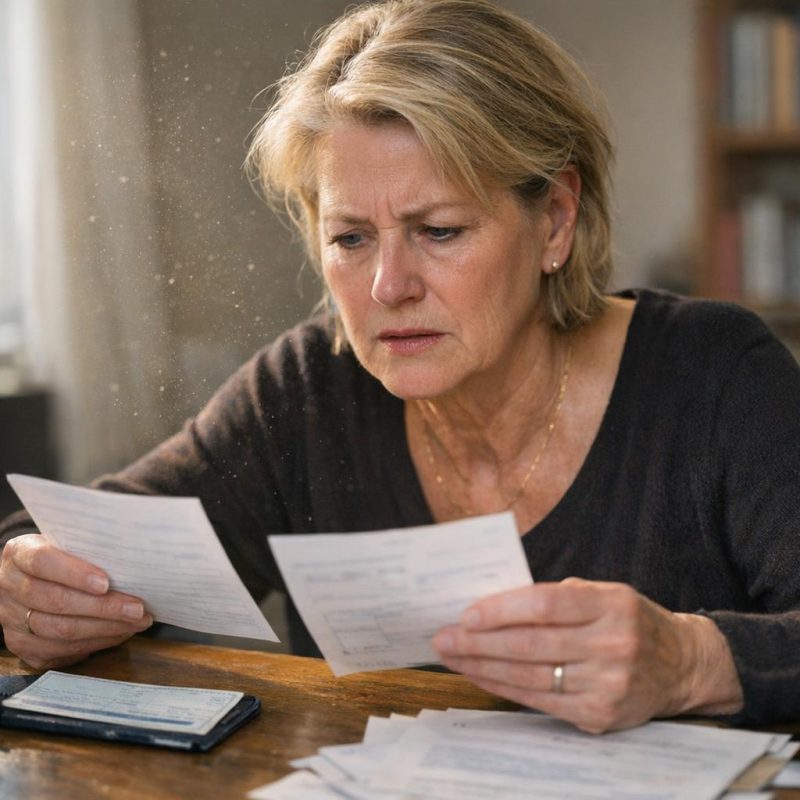 Image by RM AI
The Physical Response
My hands started shaking. Not a little tremor—a full shake that made the papers rattle against the table. I set them down and pressed my palms flat against the wood, trying to steady myself. My heart was doing something complicated in my chest, this irregular flutter that made me briefly wonder if I should call someone. But I didn't move. I just sat there, breathing carefully through my nose, feeling my body react to something my mind was still trying to process. This wasn't about being a co-signer anymore. This wasn't about credit scores or payment history or even the SUV I'd been so upset about two hours ago. Someone had forged my signature on a legal document that put my home at risk. That's fraud. That's a crime. And it wasn't some stranger who'd done it—it was someone who had access to examples of my signature, someone who knew where I lived, someone who'd been in my house enough times to know exactly what they were stealing. I stood up, still shaking, and walked to the sink for water. My reflection in the window looked pale and shocked. I'd been worried about co-signing a mortgage; I hadn't known I should be worried about losing my home.
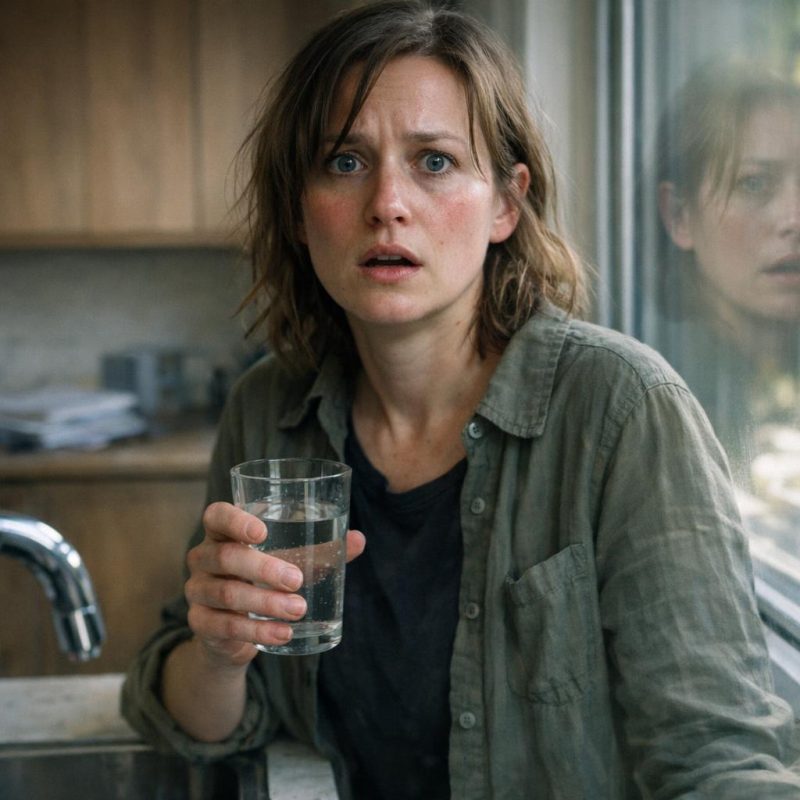 Image by RM AI
The Call
I found my phone and called Tyler. My hands were steadier now, that initial shock settling into something colder and more focused. He answered on the third ring, his voice artificially bright. 'Hey, Mom, what's up?' I didn't bother with pleasantries. 'I need you to explain something to me,' I said, keeping my voice very calm. 'I'm looking at the mortgage documents right now, and there's an addendum here that lists my house—my address—as additional collateral on your loan. Can you tell me why that is?' Nothing. Just the sound of him breathing on the other end. Not surprised breathing. Not confused breathing. The breathing of someone who'd been expecting this conversation and had been dreading it. 'Mom, I—' he started. 'Why is my house listed in your mortgage packet, Tyler?' I repeated. My voice was still calm, but I could hear the steel underneath it, and I think he could too. More silence. I heard him swallow. I heard ambient noise in the background—maybe a TV, maybe Brianna saying something I couldn't make out. The silence lasted long enough for me to hear him exhale, and I knew—he'd been waiting for this call.
 Image by RM AI
The First Lie
When Tyler finally spoke, the words came out in a rush. 'Mom, it's not what it looks like. It's just paperwork, it's standard stuff, it doesn't actually mean anything. The loan officer said they add that language sometimes for backup but they never actually use it. It's like insurance. Just a formality.' He was talking faster than normal, his voice climbing half an octave. I let him finish. Then I said, very quietly, 'I have the documents in front of me, Tyler. It says cross-collateralization. It says security interest. It has my address written out in full. And there's a signature page.' I paused. 'The signature that's supposed to be mine doesn't look right.' His breathing changed. Shallower. Faster. The sound of someone whose last exit just closed. 'What do you mean it doesn't look right?' he asked, but his voice had gone thin. 'I mean the person who signed my name made a mistake in how they formed the first letter of my last name,' I said. 'I've been signing my name for sixty-three years, Tyler. I know what it looks like.' The silence this time was different. Heavier. I could practically hear him calculating, trying to figure out what to say next, and his breathing changed.
 Image by RM AI
The Ultimatum
I didn't give him time to come up with whatever lie he was formulating. 'Here's what's going to happen,' I said, and my voice had gone completely flat. 'You and Brianna are going to come to my house tonight. You're going to explain exactly what happened and who signed that document. And then tomorrow morning, I'm calling Margaret Chen—she's the attorney Linda recommended—and we're going to decide whether I'm just contacting the loan officer or whether I'm also filing a police report for fraud.' 'Mom, please—' he started. 'Tonight,' I repeated. 'Both of you. If you're not here by eight o'clock, I'm making those calls first thing tomorrow regardless.' I hung up before he could respond. Then I sat there, phone in hand, feeling strangely calm. The power had shifted. I wasn't the confused co-signer anymore, trying to understand what had happened. I was the person with evidence of a crime. My hands had stopped shaking. I called Margaret Chen and left a voicemail explaining I needed to speak with her urgently about possible document fraud. Then I waited. He arrived an hour later, alone, his face pale and shiny with sweat like someone who'd been running from a truth that finally caught him.
 Image by RM AI
The Confession Begins
Tyler sat down at my kitchen table without being asked. He looked terrible—dark circles under his eyes, hair uncombed, that sweatiness that comes from stress rather than exertion. I set the documents in front of him, opened to the addendum. 'Talk,' I said. He stared at the papers for a long moment, then rubbed his face with both hands. 'We were denied at first,' he said finally, his voice barely above a whisper. 'The mortgage. Back in January. Before we even asked you to co-sign.' I waited. 'They said our debt-to-income ratio was too high. We had... we had more credit card debt than I told you about. And Brianna's car loan. And some medical bills from when she had that procedure last year.' He looked up at me, then away. 'We thought if we paid some of it down, we could reapply. But we didn't have the money to pay it down, and we'd already told everyone we were buying a house. Brianna's parents, my friends at work. We'd already started packing.' My jaw tightened. 'So you lied about why you needed a co-signer.' He nodded miserably. 'We thought if you co-signed, that would be enough. But then the loan officer ran the numbers again and said even with you, we were borderline.' They'd been denied the mortgage at first—not because the house was too small, but because they had too much debt.
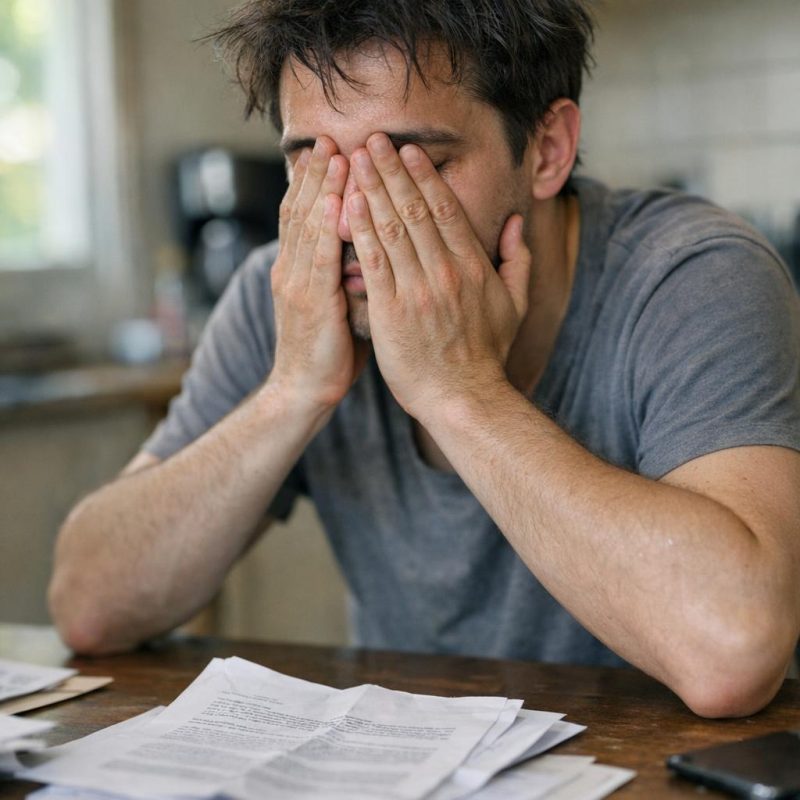 Image by RM AI
The Advisor
Tyler kept talking, the words spilling out now like he couldn't stop them. 'Brianna found this guy online. Like a consultant or advisor or something. He said he specialized in helping people with complicated loan situations. He looked at all our paperwork and said he could make the numbers work, that he knew how to structure things so the lender would approve it.' I felt something cold settle in my stomach. 'What was his name?' I asked. Tyler shook his head. 'I don't remember. Marcus something? Brianna handled most of it. She said he explained everything to her, that it was all legal, just creative financing. He charged us two thousand dollars.' 'For what, exactly?' 'For advising us. For preparing some additional documents. He's the one who arranged the SUV thing too—said it would actually help with the mortgage somehow, folding it into a separate loan structure that wouldn't show up the same way on the debt calculations.' Tyler's voice had gotten quieter. 'I didn't fully understand it. Brianna said she did, that the advisor had explained it all.' I stared at him. The advisor arranged the SUV too, folded into a separate loan Tyler claimed he didn't fully understand—and I wondered how much of that was true.
 Image by RM AI
The Image
Tyler rubbed his face with both hands. 'Brianna kept saying we had to buy now. Like, right now. All her friends were homeowners and she couldn't stand being the only one still renting. She'd come home from dinner parties or baby showers and just—spiral. She'd show me everyone's Instagram posts, all these perfectly staged living rooms and kitchen renovations, and she'd say, 'We're being left behind.' Not 'I want a house.' Not 'This would be good for our future.' Just—being left behind, like home ownership was a race and we were losing.' He looked up at me. 'I told her we should wait until we saved more, but she said waiting meant admitting we were failures. She had this whole thing about how people were judging us, about how we looked unsuccessful.' I thought about all those photos Brianna posted, the carefully arranged shots. The house wasn't something they needed. It was something she needed to display, to prove she belonged in whatever competition she'd invented in her head. I felt something shift—not quite sympathy for Tyler, but a kind of sad comprehension that he'd gotten swept up in someone else's desperate need for validation. It wasn't about the house at all, I realized—it was about the story she could tell with the house.
 Image by RM AI
The Business
Tyler kept going, his voice flat now, exhausted. 'She kept saying her social media business would take off once we had the right backdrop. That's the word she used—backdrop. She said she needed the aesthetic, the right kind of lighting, the kitchen island for product photos, the living room for lifestyle content. She had this whole plan about monetizing it, about brand partnerships and sponsorships. She said the house was an investment in her business, that it would pay for itself once she built up her following.' I remembered her setting up those tripods, arranging the flowers just so, spending twenty minutes getting the angle right for a single shot of coffee on the counter. I'd thought it was a hobby, something harmless. But she'd needed my credit, my home, my financial security to build her stage. She hadn't been living in that house—she'd been performing in it. And I'd been the one who bankrolled the whole production, who made myself responsible for a mortgage on a property that was never meant to be a home at all. It was meant to generate content, to manufacture an image of success that could be packaged and posted and liked. The house wasn't a home; it was a set, and I was the person who'd financed the production.
 Image by RM AI
The Question I Was Afraid to Ask
I made myself ask the question I'd been avoiding. My mouth felt dry. 'Tyler. That addendum—the one that put my house up as collateral. Who signed my name on that?' He stared at his hands for a long time. The kitchen clock ticked. Outside, a car drove past. I watched his face, watched him trying to decide something, and I felt like I was falling. I already knew the answer. I think I'd known it for days, but I'd been protecting myself from knowing, the same way I'd protected myself from seeing so many things about this whole mess. Tyler's shoulders curved inward. He looked smaller than I'd ever seen him, like he'd physically shrunk in the chair. His voice, when it finally came, was so quiet I almost couldn't hear it. 'I didn't sign it,' he said. Then he stopped, swallowed hard. I waited. The silence stretched out like a physical thing between us, something I could almost touch. I needed him to say it, needed the words spoken aloud even though I already knew. When he finally spoke, his voice was barely a whisper: 'Brianna did it. I found out after.'
 Image by RM AI
The Claimed Ignorance
I sat very still. 'After.' Tyler nodded, still not meeting my eyes. 'She told me—maybe two weeks after closing? She broke down crying. She said she did it 'for the family,' that the lender needed the extra collateral and if she'd told us first, we would've said no and then we'd have lost the house. She said she was going to tell you, but then she couldn't, and then it was too late, and she made me promise not to say anything because you'd be so angry and it would ruin everything.' His voice cracked. 'I was terrified, Mom. I was ashamed. I thought maybe if I just kept working, kept making the payments, you'd never have to know. I thought I could fix it before it became a problem.' He looked up at me finally, and his eyes were wet. 'I'm so sorry. I should have told you immediately. I should have—I don't know. I was paralyzed.' I looked at my son, this man who was asking me to believe he'd been a victim too, that he'd found out about fraud committed in my name and just... kept quiet. Kept paying. Kept hoping. I felt pity for him, I did—but I also felt something harder beneath it. He said he thought if he just kept working, kept paying, I'd never have to know—but I couldn't tell if he was asking for forgiveness or trying to avoid consequences.
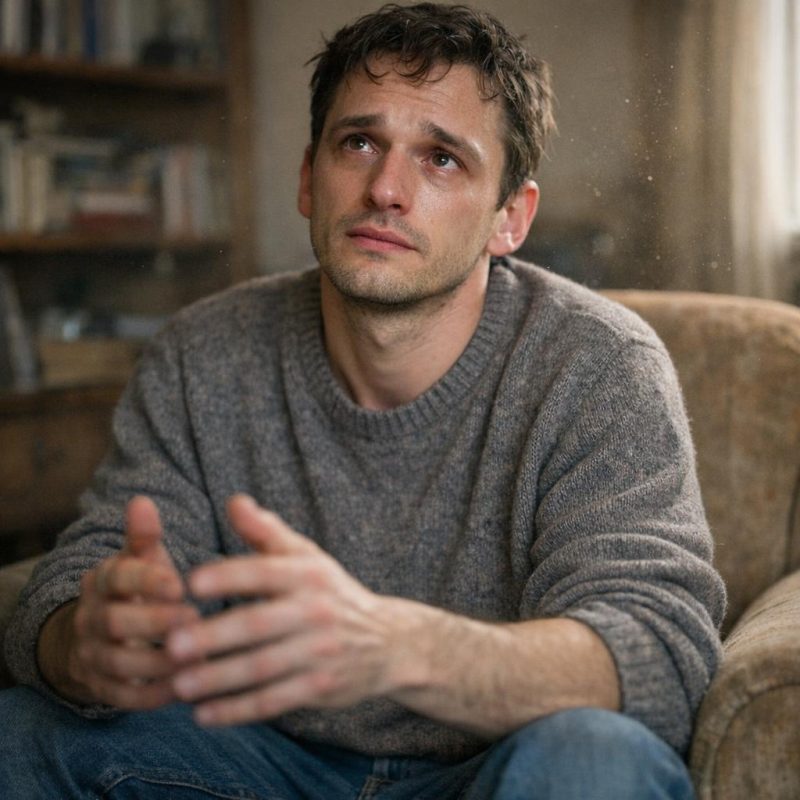 Image by RM AI
The Current Status
I took a breath. My voice came out steadier than I felt. 'Tyler. Is the mortgage current? Are you up to date on payments?' The way he looked down told me everything before he even opened his mouth. My stomach dropped. 'We're a little behind,' he said quietly. 'Just a little. Brianna's been between brand deals and my hours got cut back in February, and we thought we'd catch up but then the car needed work, and—' 'How behind?' I interrupted. He shifted in his chair. 'Three months.' Three months. On a fraudulent mortgage that had my house as collateral. Three months of missed payments that I'd known nothing about while Brianna kept posting her perfect morning routine content. 'Just a little,' he said again, like if he minimized it enough, it wouldn't be real. But we both knew there's no such thing as a little behind when your house is on the line. I thought of my kitchen, my garden, the home I'd lived in for thirty years—all of it at risk because I'd tried to help my son, because I'd signed papers I shouldn't have, because someone had forged my signature on documents I'd never seen. 'Just a little,' he said, but we both knew there's no such thing as a little behind when your house is on the line.
 Image by RM AI
The Decision
Tyler left around nine. I told him I needed time to think, which was code for 'I can't look at you right now.' I sat alone in my kitchen after he left, the documents spread across the table in front of me. The addendum with the forged signature. The original mortgage application. The loan paperwork with numbers that didn't match what Tyler told me they'd borrowed. All of it laid out like evidence at a crime scene, which I suppose it was. I've spent my whole life being the person other people could count on. The reliable one. The one who helped. The one who smoothed things over when situations got complicated, who made sacrifices so other people could have what they needed. I'd thought that was strength. But sitting there looking at those papers, I understood something I should have learned decades ago: reliability without self-protection isn't strength. It's just surrender. It's making yourself available to be used. And I was done surrendering. I gathered the documents into a neat pile. I put them in a folder. I made a list of phone numbers I needed to call—the bank, a lawyer, the credit bureaus. My hands were steady. I felt clear-headed for the first time in weeks, like I'd been underwater and finally surfaced. I'd spent my whole life being the reliable one, the one who smoothed things over—but reliability without self-protection is just surrender.
 Image by RM AI
The Preparation
The next day, I worked methodically. I called the credit bureaus first and froze my credit—all three agencies, following the instructions carefully, writing down every confirmation number. Then I went through my files and pulled every piece of documentation related to Tyler's mortgage: every email, every text message, every scrap of paper. I made copies of everything. I scanned documents and saved them to three different locations. I built a folder that was organized by date, with tabs and labels and a typed summary sheet at the front. It looked like evidence because it was evidence. I spent four hours on it, and by the end, I felt something I hadn't felt in weeks: competent. In control. Like I was taking action instead of just absorbing blow after blow. This was something I knew how to do. I knew how to organize information. I knew how to build a case. I'd done it my entire career, and now I was doing it to protect myself from my own son's wife. The irony wasn't lost on me. I made one more copy of everything and put it in a separate envelope. Then I picked up my phone. And then I called Donna and told her I need her to come with me to the bank, because witnesses matter.
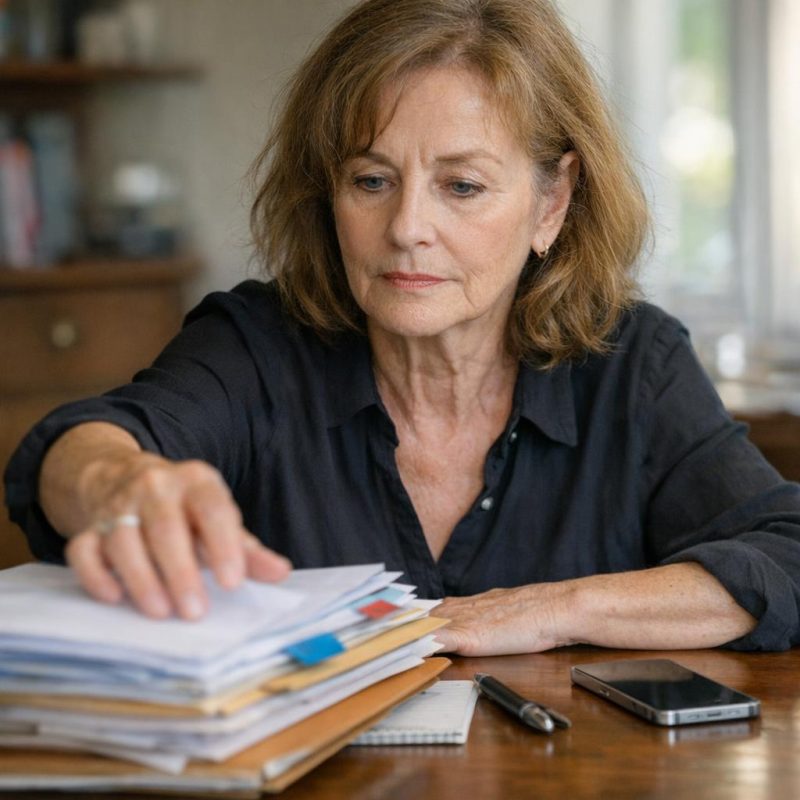 Image by RM AI
The Pattern
The bank's fraud department was on the second floor. Donna came with me, her presence solid and reassuring beside me. The investigator's name was David, and he was younger than I expected, maybe forty, with the kind of careful attention that made me feel like he was actually listening. I walked him through everything—the co-signing, the addendum I never saw, the forged signature, the SUV loan that appeared out of nowhere. I showed him my folder. He looked through it carefully, nodding, making notes. Then he paused on one document, and his expression changed. He looked up at me. 'This advisor—Marcus Delgado. And your daughter-in-law arranged the financing?' I nodded. He leaned back in his chair. 'Mrs. Patterson, I need to tell you something. We've seen this pattern before. Recently. Same advisor, same loan structure, same setup.' My heart started pounding. 'What do you mean, same pattern?' David pulled up something on his computer. 'In the last eighteen months, we've identified four other cases with the same signature: older relative co-signs, younger couple gets approved, mystery addendum appears after closing, collateral includes family home, couple ends up in default. Same advisor coordinating. And in three of those four cases, the younger borrower was someone building a social media presence.' Brianna and her advisor hadn't just done this to me—they'd done it to other older relatives, using family homes as silent collateral while the younger couples played rich online, and it was all documented in a pattern the bank was already tracking.
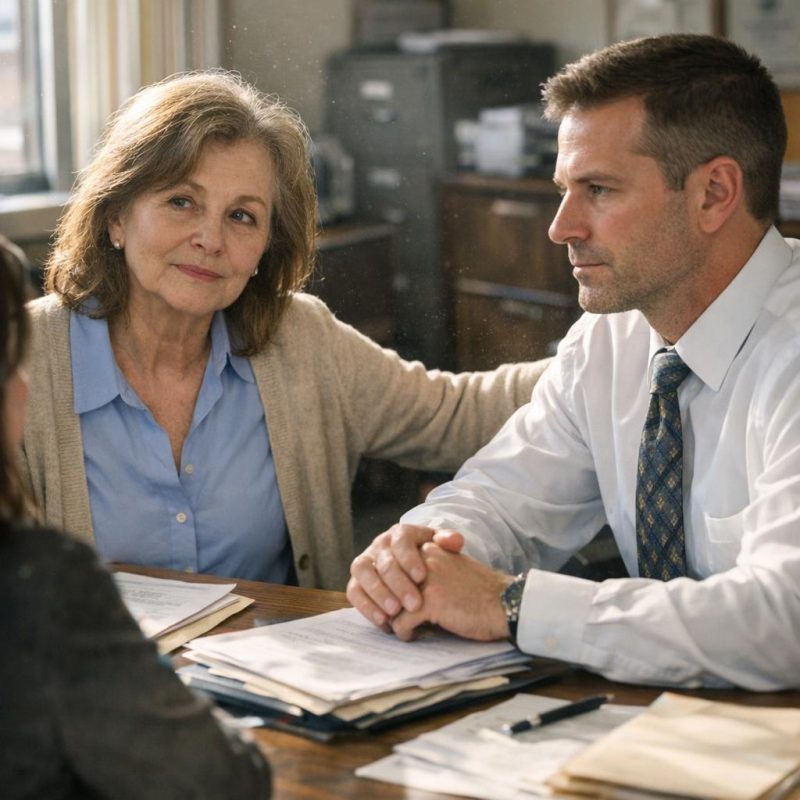 Image by RM AI
The Reframing
David walked me back through it—the whole thing. The rushed closing appointment that I thought was just efficiency? Standard practice for this scheme, he said. It creates urgency, reduces scrutiny, makes the victim feel pressured rather than careful. The emotional appeals from Tyler, all that talk about giving his kids stability? Classic manipulation tactic to override practical concerns with guilt. Brianna's performance at the signing, how warm and grateful she'd been, touching my arm, calling me 'Mom'? That was the charm phase, designed to make questioning anything feel like betrayal. I sat there feeling colder with each explanation. Every moment I'd interpreted as family connection had been something else entirely—strategic moves in a con I hadn't known I was part of. David said she'd refined it over multiple families. She knew exactly which emotional buttons to push, which vulnerabilities to exploit. Older women with paid-off homes and adult children were the ideal targets because we wanted so badly to believe we were helping. The advisor had provided the technical framework, but Brianna provided the performance. She'd studied what worked. And I'd been too blinded by love, too desperate to be needed, too proud of finally being useful to my son, to see what was right in front of me. The rushed signing, the emotional appeals, Brianna's perfect performance—it had all been a script she'd used before, and I'd been too blinded by love to see I was being cast in a role.
 Image by RM AI
The Investigation
David said they were opening a formal investigation. My documentation, the folder I'd built so carefully, was the missing piece they needed. The other victims hadn't kept such detailed records—most hadn't even realized they'd been defrauded until they were in foreclosure. My evidence showed intent, showed pattern, gave them what they needed to pursue criminal prosecution, not just civil fraud. I felt a strange combination of empowerment and horror. I'd done something right, something that mattered beyond just my own situation. But it also meant this was real in a way I'd been avoiding. Donna squeezed my hand. I asked David how many others there were. He pulled up a file on his screen, and his expression was grim. 'At least four that we know of,' he said. 'All older women, all with adult children, all with paid-off homes. Three are in their sixties, one is seventy-three. Two have already lost their houses to foreclosure. One is in bankruptcy. The fourth came forward last month, like you, before it was too late.' The room tilted slightly. Four other women. Four other mothers who'd thought they were helping their children build a better life. Four other families destroyed by the same scheme, the same advisor, the same perfect performance. I asked how many others there were, and he said, 'At least four that we know of—all older women, all with adult children, all with paid-off homes,' and I felt sick.
 Image by RM AI
The Confrontation Setup
David closed the file and looked at me directly. 'Mrs. Patterson, to build the strongest case possible, we need to document her tactics in real time. That means conducting a formal interview with both Tyler and Brianna present, confronting them with the evidence, and observing their responses. You'd be there, along with counsel if you choose. It won't be comfortable.' I didn't hesitate. 'Yes,' I said. 'When?' He looked surprised at how quickly I'd agreed, but Donna wasn't. She'd seen something shift in me over the past few days—a hardening, maybe, or a clarifying. I wasn't the woman who'd walked into that closing appointment eighteen months ago, desperate to be useful, willing to ignore red flags because ignoring them felt like love. I was someone who'd been conned, yes, but also someone who'd fought back, documented everything, and was now in a position to stop it from happening to anyone else. David said he'd set it up for three days from now. That would give them time to prepare the evidence presentation and give Brianna no time to coordinate a strategy with the advisor. He wanted her off-balance, reactive rather than prepared. I liked that. Donna squeezed my hand and said, 'Let's make sure that woman understands who she picked a fight with.'
 Image by RM AI
The Meeting
Three days later, I was back at the bank in a small conference room. David was there, along with another investigator I hadn't met before. Donna sat beside me, her posture alert and protective. We'd been there about ten minutes when Tyler and Brianna arrived. I heard them in the hallway before I saw them—Brianna's voice, bright and cheerful, thanking someone for directions. Then they walked in, and I had to work to keep my expression neutral. Brianna was wearing a pale yellow dress, something flowy and expensive-looking, with delicate jewelry and perfect makeup. She looked like she was going to a garden party, not a fraud investigation. Her smile was bright and practiced, the same warm expression I'd seen at the closing, at Sunday dinners, in all those carefully filtered Instagram posts. Tyler looked uncomfortable in a button-down shirt, his jaw tight, but he was following her lead. She scanned the room as they entered—saw David and the other investigator first, professional and official, then saw Donna, whose presence clearly confused her, and then her eyes landed on me. When she saw me sitting with Donna and the investigator, that smile flickered for just a second—and I saw her recalculate.
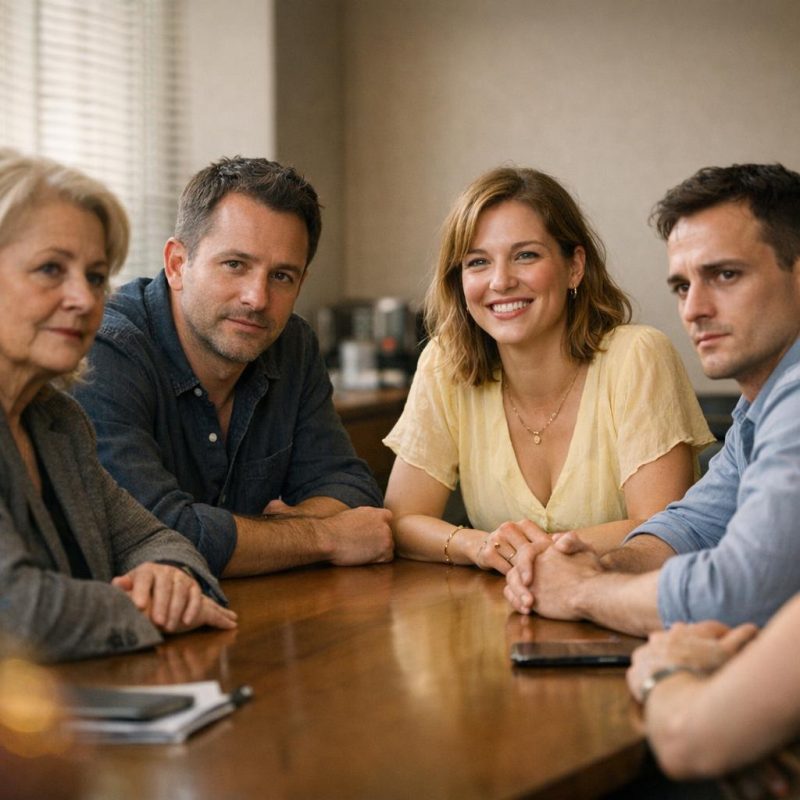 Image by RM AI
The Charm Offensive
Brianna recovered quickly. She came around the table and reached for my hand, her voice warm and concerned. 'Oh, Judith, honey, I'm so glad you're here. I think there's been some terrible misunderstanding, and I've been so worried about you.' She touched my arm, leaned in close like we were confidantes. 'I know how confusing all those documents can be, and I should have explained everything better. That's on me, really. But we're family, and we'll figure this out together, okay?' It was the same performance I'd fallen for before—the warmth, the pet names, the physical closeness designed to create intimacy and obligation. But this time I was watching it from the outside, seeing it as David had described it: the charm phase, designed to make confrontation feel like betrayal. I didn't pull my hand away, but I didn't squeeze back either. David cleared his throat and gestured to the chairs across the table. 'Ms. Patterson, Mr. Patterson, please have a seat. We have some documents to review.' Brianna's smile stayed fixed, but something shifted in her eyes. She sat down gracefully, crossed her ankles, folded her hands in her lap like she was posing for a photo. Tyler sat beside her, silent. David opened a folder and slid a document across the table—the signature comparison, my real signature next to the forged one on the addendum. The investigator slid the signature comparison across the table, and Brianna's hand froze mid-gesture.
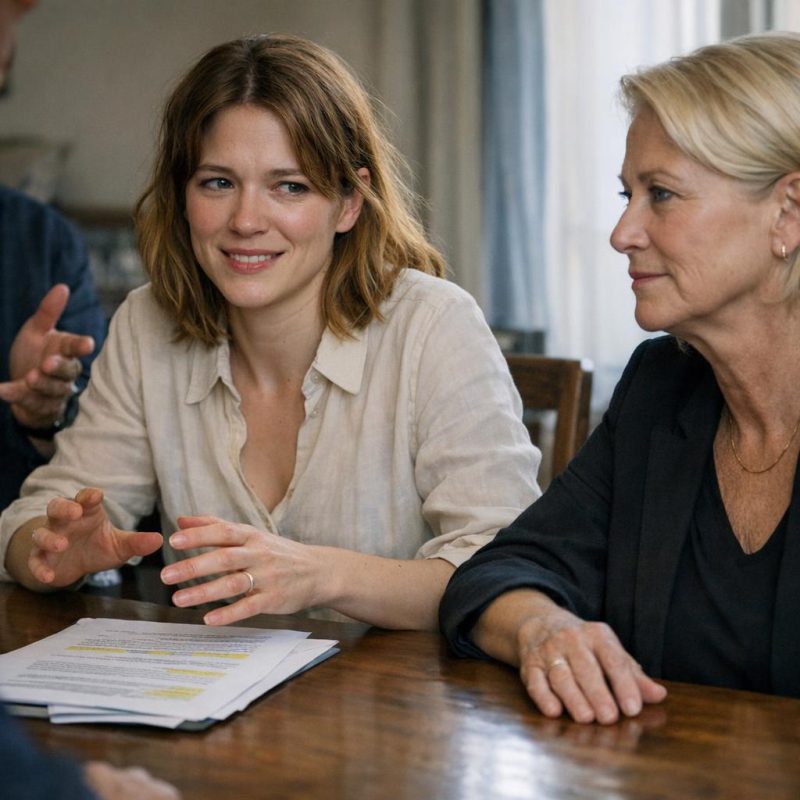 Image by RM AI
The Tears
Brianna stared at the document for a long moment. Then her eyes filled with tears. Just like that—one second she was composed, the next she was crying, her voice breaking. 'I never wanted any of this,' she said, looking at me with those wet eyes. 'You have to understand, Judith, I was just trying to give my children a stable home. Everything I did, I did for them. Tyler and I, we just wanted to build something real, something that would last.' Her hand reached across the table toward mine. 'I know I made mistakes with the paperwork, and I should have been more careful, but I never meant to hurt you. You're family. You're the grandmother of my children. How could you think I'd ever deliberately—' Donna leaned forward, cutting her off. 'Funny how that stable home required stealing someone else's.' Brianna's tears stopped like a faucet. Just stopped, mid-sob, her face going still. It was the most unnatural thing I'd ever seen, that instant transition from crying to blank. For a second, nobody moved. Then Brianna's expression rearranged itself, the tears gone completely, replaced by something cooler, more calculating. She sat back in her chair, no longer reaching for my hand. Tyler was staring at the table, his shoulders hunched. Donna leaned forward and said, 'Funny how that stable home required stealing someone else's,' and Brianna's tears stopped like a faucet.
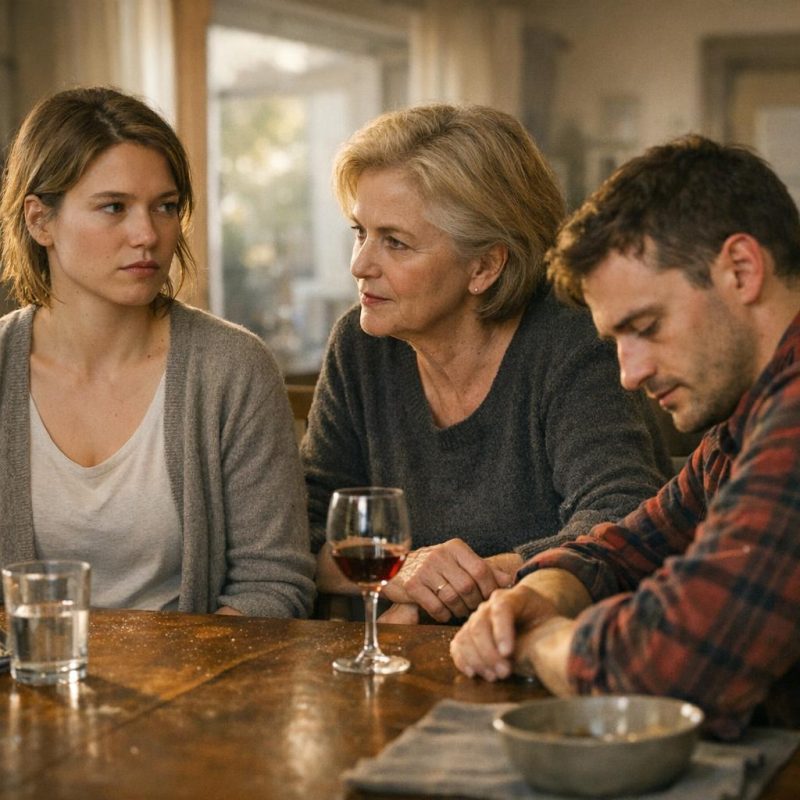 Image by RM AI
The Anger
When the tears didn't work, when Donna's words hung in the air like an accusation Brianna couldn't charm her way past, something in her face changed completely. The softness disappeared. The warmth evaporated. What replaced it was cold and sharp and furious. 'You know what?' she said, her voice hard now. 'This is exactly what Tyler said you'd do. You can't stand that he has his own life, his own family. You've always wanted to control him, and the second he stopped needing you, you decided to ruin everything we built.' She leaned forward, her eyes locked on mine. 'We gave you grandchildren. We included you in our lives. And this is how you repay us? By accusing me of—what, forgery? By trying to destroy our family?' Her voice was rising now, all pretense of victimhood gone. 'You're a bitter, lonely woman who can't let go, and you're going to take everyone down with you.' The silence that followed was absolute. David and the other investigator were watching carefully, documenting this. Donna's hand found mine under the table. I looked at Brianna—really looked at her, at this stranger wearing my daughter-in-law's face—and felt something settle in my chest. I said, very quietly, 'I didn't ruin your family. You did, the moment you forged my signature and gambled with my home,' and Tyler started crying.
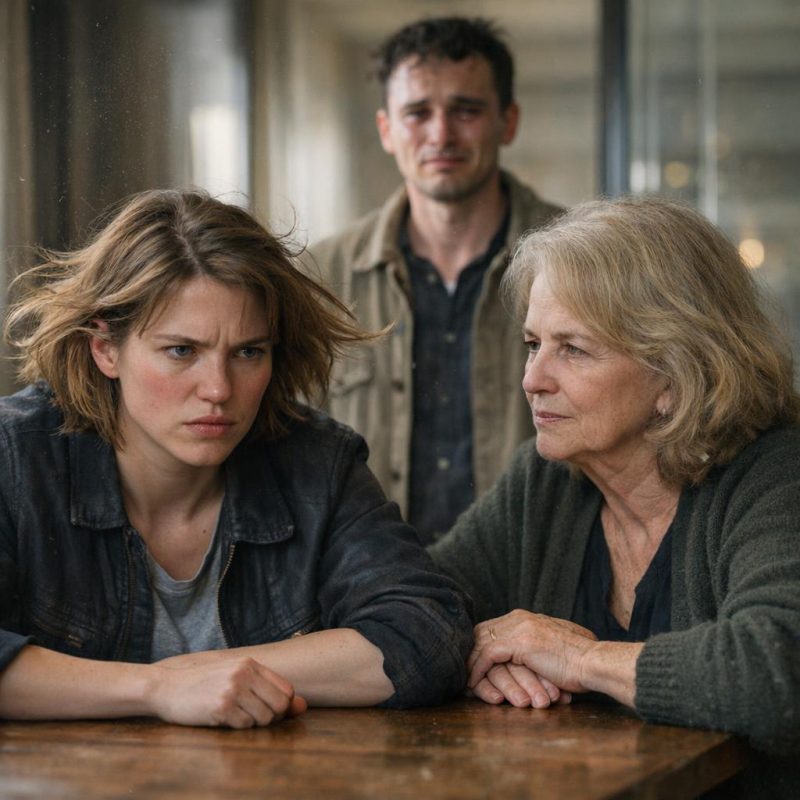 Image by RM AI
Tyler's Choice
David let the moment sit for a few seconds, Tyler's quiet sobbing the only sound in the room. Then he turned to my son, his voice professional but not unkind. 'Mr. Patterson, I need to ask you something directly, and I need you to understand that how you answer matters significantly. Before these documents were filed with the county—before the addendum became part of the official record—did you know that your mother's signature had been forged?' The room held its breath. Tyler looked up, his face wet with tears. He looked at Brianna first, and I saw something pass between them—a question, maybe, or a plea. Then he looked at me. Really looked at me, for the first time since they'd walked into the room. I wanted to look away but I didn't. I held his gaze, this man I'd raised, this person I'd loved more than anything, and waited for him to choose. 'I knew,' he said, his voice barely a whisper. 'I knew before we filed. Brianna showed me, said it was just fixing a mistake, that you'd meant to sign but forgot, that we were just correcting it. I knew it was wrong, but I—' His voice broke. 'I knew.' The words hung in the air between us. He looked at Brianna, then at me, and said, 'I knew,' and I watched my son become a stranger.
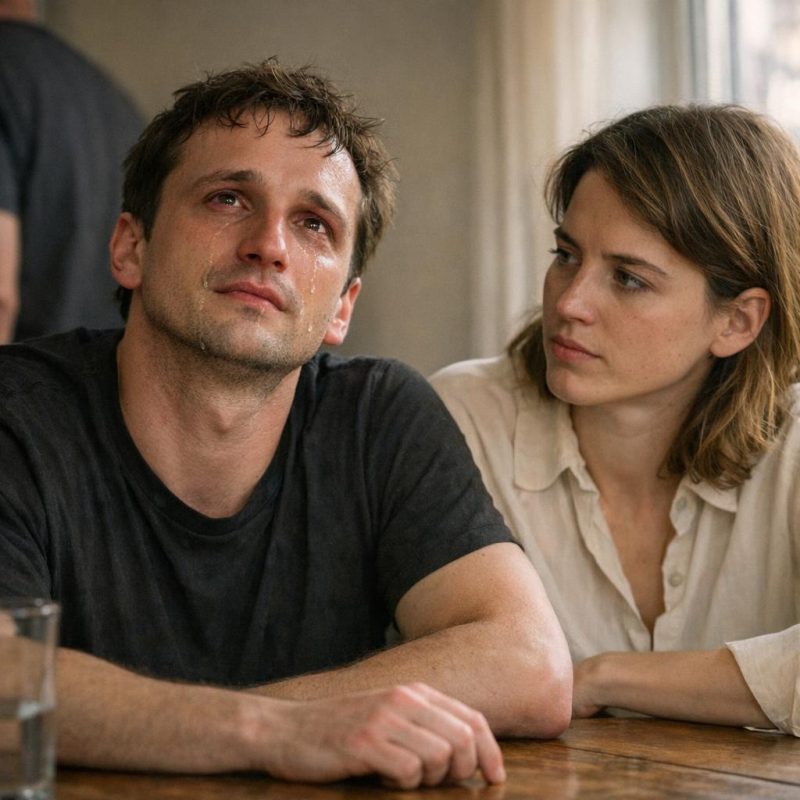 Image by RM AI
The Consequences Explained
David explained it all in that measured way investigators have, laying out consequences like items on a receipt. Brianna would face fraud charges, multiple counts. The financial advisor was already cooperating, which meant reduced charges for him but didn't look good for her. My home was protected—the forged documents would be invalidated, the equity line dissolved, my mortgage returned to its original paid-off status. The county was already processing the corrections. 'Your property was never legitimately encumbered,' David said. 'These filings will be expunged from the record.' I felt something loosen in my chest, something I'd been holding tight for weeks. Donna reached over and squeezed my hand. Then David turned to Tyler, and his voice shifted slightly. 'Mr. Patterson, because you've admitted to knowing the signature was forged before the documents were filed, you're also facing potential charges. Conspiracy to commit fraud, at minimum. The DA will make the final determination, but your cooperation today will be noted.' Tyler made a sound like he'd been punched. He looked at me, his eyes desperate, that same look he'd had when he was seven and broke Mrs. Henderson's window with a baseball. That look that used to make me reach for my checkbook, my excuses, my endless capacity to smooth things over. I looked away. I looked away, and I let him sit with what he'd done.
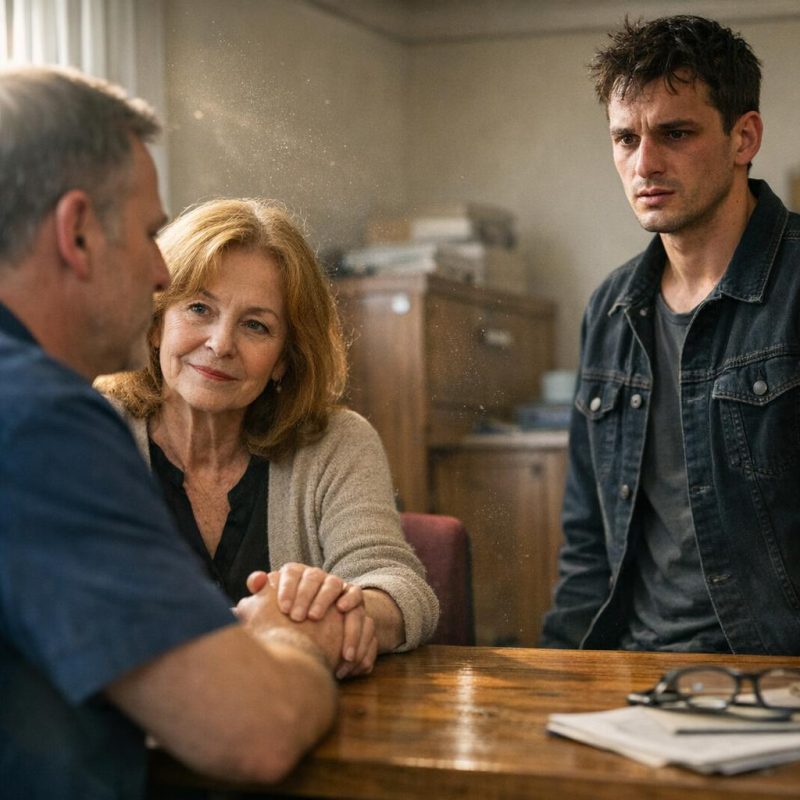 Image by RM AI
The Aftermath
The legal system moves slowly, but it moves. Over the next few weeks, I watched from a distance as everything unraveled. Charges were formally filed—three counts against Brianna, one against Tyler. My name was officially removed from all the fraudulent documents. The house was mine again, cleanly and completely, like waking from a nightmare to find your bedroom exactly as you left it. Tyler moved out of the house with Owen and Harlow—Brianna was apparently 'staying with family' while her lawyer worked on her defense, which I translated as: she'd left him holding the bag with two small children. He found a rental in a less trendy neighborhood, no granite countertops, no open concept. I heard this through Donna, who heard it from her sister, who'd seen Tyler at the grocery store with both kids in the cart, looking exhausted. I didn't reach out. And then one evening, scrolling through my phone while pretending I wasn't looking for information, I checked Brianna's Instagram. The account was gone. Not private—gone. All those carefully curated photos of the perfect kitchen, the perfect family, the perfect life. All of it deleted, the carefully built image collapsed like a stage set after closing night.
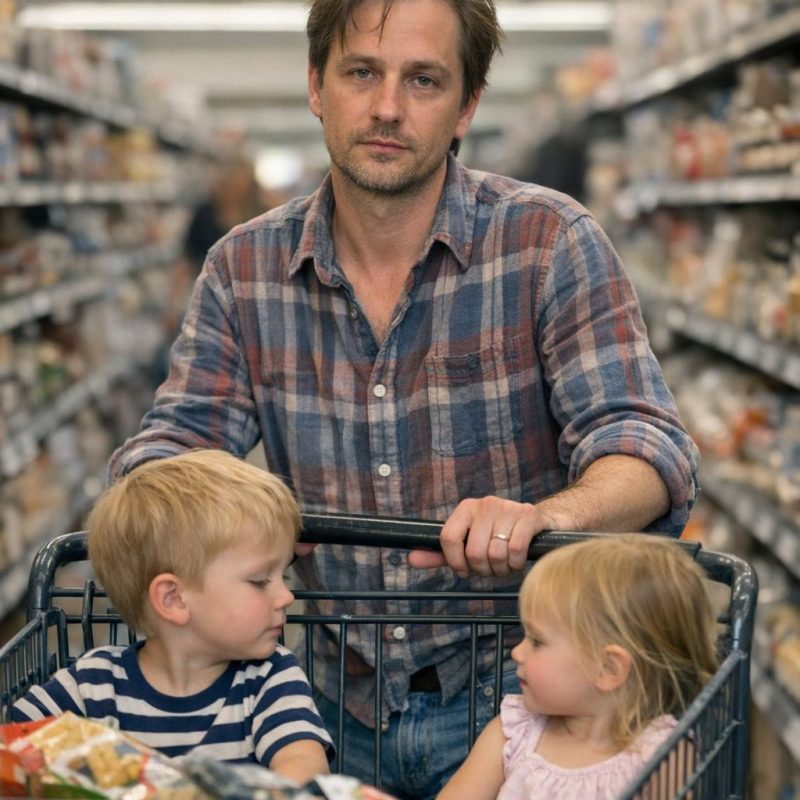 Image by RM AI
The New Boundaries
Tyler called on a Thursday evening. His voice was careful, stripped of the defensiveness that had been there before. 'Mom, I was wondering—could I bring Owen and Harlow by this weekend? They miss you. Owen keeps asking about Grandma.' I felt my throat tighten. 'The children are always welcome,' I said. 'Always.' The silence on the other end told me he heard what I didn't say. Saturday afternoon, his car pulled up—not the Escalade, that was long gone, repossessed probably. This was a beat-up Corolla with a car seat in back. I met them on the porch. Owen ran to me immediately, arms outstretched, and I scooped him up like I always had. Harlow was bigger now, already crawling, and Tyler carried her carefully. We went inside, and I had cookies ready, juice boxes, the things grandmas keep on hand. Tyler hovered near the door, uncertain. Owen, perceptive in that way four-year-olds are, looked between us. 'Grandma, why don't we have Sunday dinners anymore?' he asked. I knelt down to his level, brushed his hair from his forehead. 'Sometimes families change shape,' I told him. 'But love doesn't disappear—it just learns to set better boundaries.'
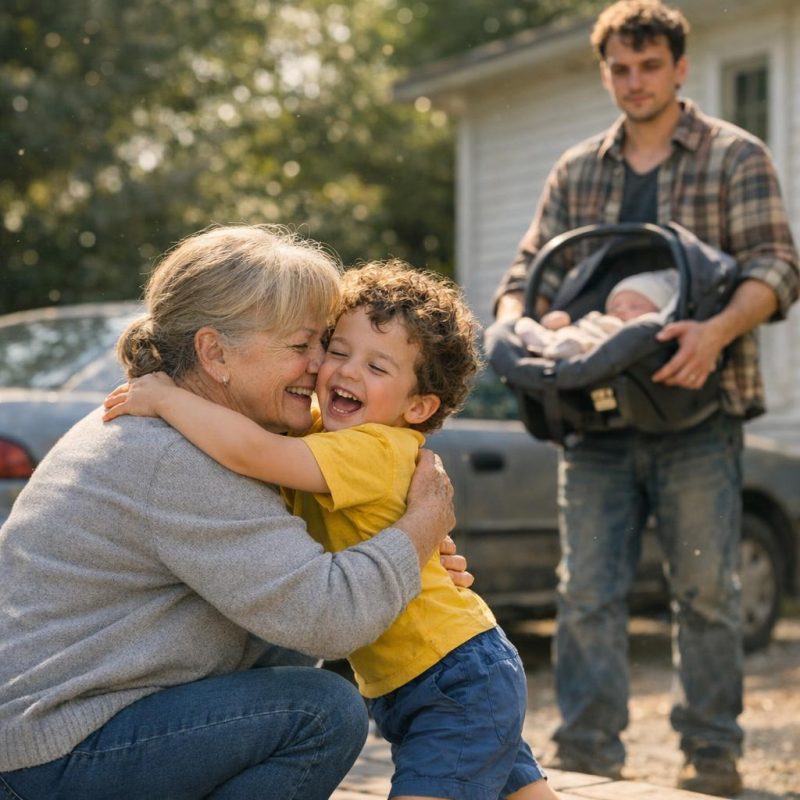 Image by RM AI
What I Know Now
I sit here now in my living room—my paid-off, protected, safe living room—and I think about everything that happened. The mortgage papers are back in my file cabinet, clean and uncomplicated. Tyler sees the kids twice a week, brief visits where I hug my grandchildren and maintain polite distance from my son. Brianna's lawyer is apparently negotiating a plea deal. Donna comes over for coffee every Wednesday. My life is smaller than it was, but it's mine. I used to believe there were only two kinds of family problems: the kind you could talk through, and the kind you had to endure with a smile. The kind where you make excuses, cosign loans, pretend not to notice the red flags because family means never giving up. But I was wrong. There's a third kind—the kind you have to walk away from to protect yourself, even when it breaks your heart. Especially when it breaks your heart. I think about that Escalade in the driveway, that shiny symbol of everything I thought I was helping to build. What I was actually building was a foundation made of my own diminishment. And if my family wants stability, it's going to start with honesty, not a shiny SUV in the driveway. That's where I draw the line. And I'm finally okay with that.
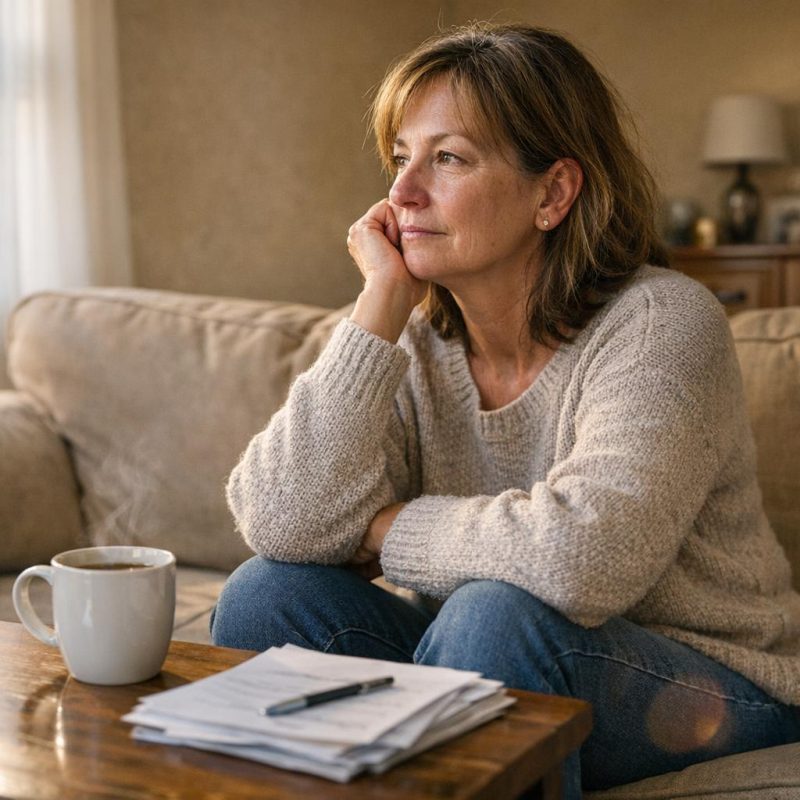 Image by RM AI