I Was Called to School Over a 'Threat' My 9-Year-Old Posted—Then I Realized They Knew She Didn't Do It
I Was Called to School Over a 'Threat' My 9-Year-Old Posted—Then I Realized They Knew She Didn't Do It
The Call That Didn't Make Sense
So I was in the middle of replying to a work email—one of those passive-aggressive 'just circling back' ones that require diplomatic translation—when my phone lit up with the school's number. You know that instant stomach-drop feeling? I answered expecting maybe Mia forgot her lunch or needed permission for something, the usual nine-year-old stuff. Instead, Mrs. Henley from the office asked if I could 'come in as soon as possible' to discuss a 'disciplinary matter.' I actually laughed. Mia's the kid who apologizes when someone else bumps into her. She's never even gotten a warning during recess. I asked what happened, thinking maybe there'd been some mix-up with names, and Mrs. Henley said they'd pulled her from the field trip—the one to the science museum she'd been talking about for two weeks. My confusion must have been obvious because there was this pause, then she repeated that Mr. Dwyer needed to speak with me 'urgently' about 'concerning online activity.' Online activity. Mia, who still asks permission before watching YouTube videos on my phone. I told her I'd be there in twenty minutes, already mentally rehearsing the conversation where I'd politely explain they had the wrong kid. The office secretary's voice had that careful flatness people use when they're reading from a script someone else wrote.
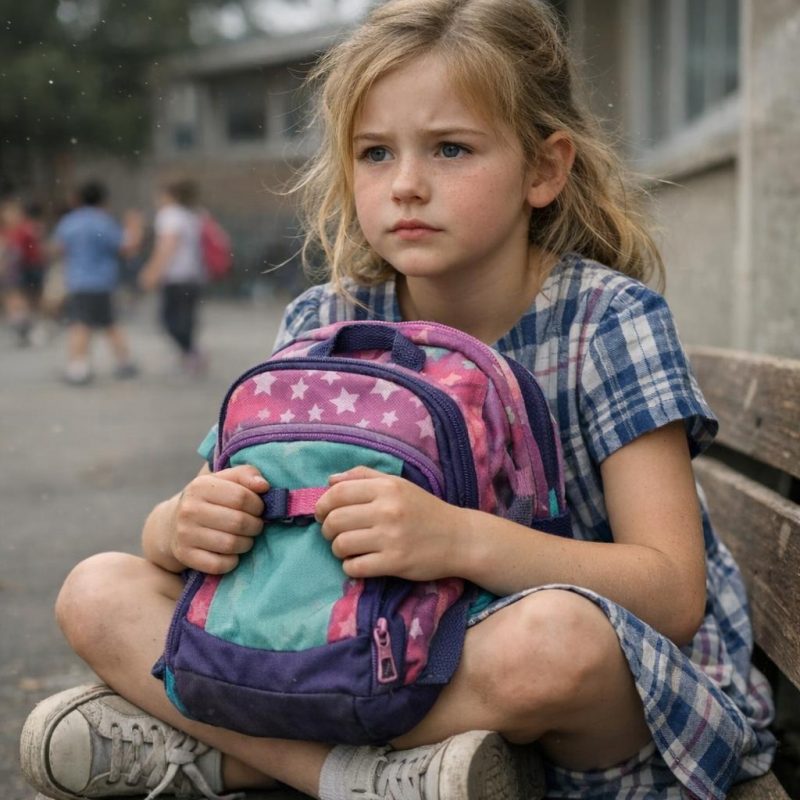 Image by RM AI
The Office That Went Quiet
The school parking lot was nearly empty on a Wednesday afternoon, which made everything feel more surreal. I walked through the main entrance expecting someone to greet me, maybe explain the misunderstanding before I even reached the office. Instead, the hallway had that echoey quiet you only hear during class time, and when I pushed through the office door, three staff members suddenly found very important things to look at on their computer screens. Mrs. Henley wouldn't meet my eyes when she said Mr. Dwyer was 'ready for me,' gesturing toward his office like I was expected. No small talk, no 'thanks for coming so quickly.' I've been to this school dozens of times for conferences and volunteer shifts, and people usually chat about the weather or upcoming events. Not today. Today felt like I'd walked into a room where everyone knew something I didn't, and they'd all agreed not to tell me. I knocked on Mr. Dwyer's door even though it was open. He looked up from his desk, and I swear his expression was already set—not angry, not confused, but decided. That's the word that comes to mind now. Decided. The principal didn't ask me to sit down—he just slid a piece of paper across his desk like I was supposed to already know what it meant.
 Image by RM AI
The Screenshot
It was a printed screenshot, color, on regular office paper. At the top was a profile picture that looked like Mia—same haircut, same yellow sweater she wore for school photos last month. Below it was a post, maybe two paragraphs long, targeting another student in her class. I'm not going to repeat what it said, but it was cruel in a way that made my skin feel cold. Specific insults about the kid's appearance, their family situation, threats about 'making sure everyone knows.' Mr. Dwyer watched me read it, his hands folded on the desk, and when I looked up he said they'd received multiple reports from concerned parents. I stared at the page again. The language was wrong—not just mean, but calculated. Phrases like 'social consequences' and 'reputation management.' I teach marketing to undergrads; I know when someone's using terminology they learned in a professional context. I said, 'This doesn't sound like a child wrote it,' and Mr. Dwyer did this little dismissive head tilt. 'Children can be surprisingly articulate when motivated by emotion,' he said, like he was reading from an HR manual. The words on the page didn't sound like any nine-year-old I'd ever met—they sounded like someone who knew exactly how much damage language could do.
 Image by RM AI
The Wrong Answer
I set the paper down carefully, trying to keep my voice level. 'Mia doesn't have social media accounts. She's nine.' Mr. Dwyer sighed, and I recognized that particular brand of exhale—the one adults use when they think you're being naive about your own kid. He said that many parents believe their children aren't on these platforms, but 'the evidence speaks for itself.' I felt my jaw tighten. 'No, I mean she literally doesn't have accounts. I monitor her tablet. She doesn't have a phone. She's not on Instagram or TikTok or whatever this is.' I tapped the paper. He leaned back in his chair, doing that steepled-fingers thing, and started talking about digital literacy and how 'at this age' kids are more tech-savvy than we realize. I was about to interrupt him, to say he wasn't listening, when the door behind me opened. Ms. Pruitt walked in behind him just as he said 'many children do,' and the look on her face made me forget my next sentence.
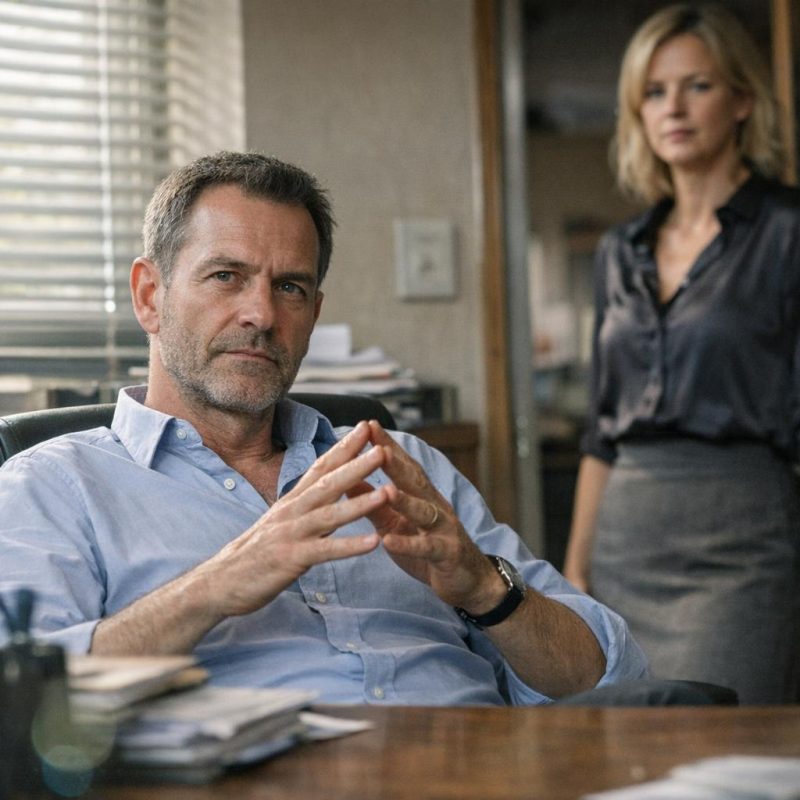 Image by RM AI
The Username
Ms. Pruitt closed the door too carefully, if that makes sense. She stood near the wall, not quite joining the conversation but not leaving either. I picked up the screenshot again, forcing myself to actually look at the details instead of just reacting to the content. The profile picture was definitely from Mia's school photo—same backdrop, same photographer's lighting. But the username. I squinted at it. 'MiaJ_2015.' Mia's birthday is 2014, and she doesn't have a middle initial J. Our last name starts with R. I pointed this out, my finger hovering over the printed text. 'This isn't even her name. The year's wrong.' Mr. Dwyer barely glanced at it. 'Children often use variations, approximate birth years for privacy—' 'She doesn't have an account to use variations on,' I cut him off. Ms. Pruitt shifted her weight, and when I looked at her, she was staring at the paper in my hands with an expression I couldn't read. Not anger. Something closer to recognition, maybe? I looked back at the username. One letter swapped, an extra underscore—close enough to fool someone who wanted to be fooled.
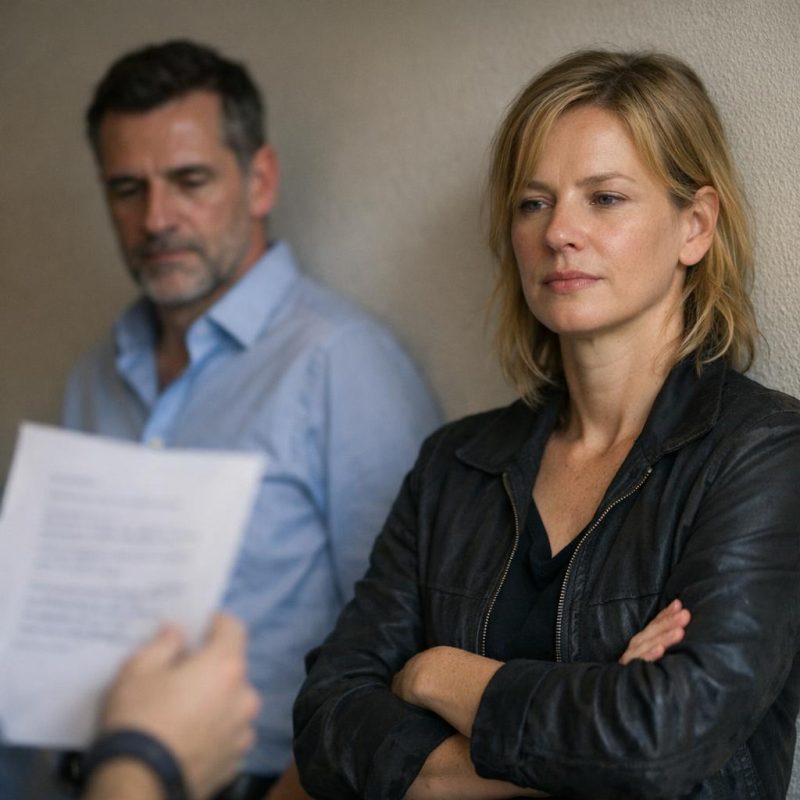 Image by RM AI
The Request They Couldn't Answer
I pulled out my phone. 'Okay, so let's pull up the actual account right now. If it exists, we can look at the creation date, the post history, the device it was posted from.' Mr. Dwyer's face did something subtle—not quite a flinch, but a recalibration. He said that wasn't necessary, they'd already 'documented everything appropriately.' I stared at him. 'You're accusing my daughter of cyberbullying and you won't show me the actual account? Just a screenshot?' He adjusted the paper on his desk, aligning it with the edge. 'The screenshot is sufficient evidence for our purposes. The IT department has confirmed—' 'Then let's call the IT department,' I interrupted. 'Let's have them show me the account on their screen.' The silence that followed felt intentional, like he was waiting for me to back down. Ms. Pruitt hadn't moved from her spot by the wall. When Mr. Dwyer finally spoke, he said they didn't 'need to' pull it up, and that the priority was addressing Mia's behavior and 'moving forward constructively.' He said they didn't 'need to' pull it up, and that's when I knew someone had decided what truth looked like before I ever walked in.
 Image by RM AI
The Fear in Her Eyes
I turned to Ms. Pruitt, because she'd been Mia's teacher last year and actually knew her. 'Ms. Pruitt, does this seem like something Mia would write?' She opened her mouth, then closed it. Her eyes darted to Mr. Dwyer, then back to me, and I watched her choose her words like she was defusing a bomb. 'Mia has always been... very kind in my classroom,' she said carefully. That pause before 'very kind' told me everything. She wasn't disagreeing with me—she was trying not to disagree with him. Mr. Dwyer jumped in before I could press her. 'Children can behave differently in different contexts. What we see in school isn't always—' 'I'm not asking you,' I said, more sharply than I'd intended. 'I'm asking her teacher.' Ms. Pruitt's face went pale. Not red, not flushed with anger, but actually pale. Her hand moved to her lanyard, fingers worrying the plastic badge holder, and she glanced at Mr. Dwyer again. She looked at him the way you look at someone who can decide whether you keep your job.
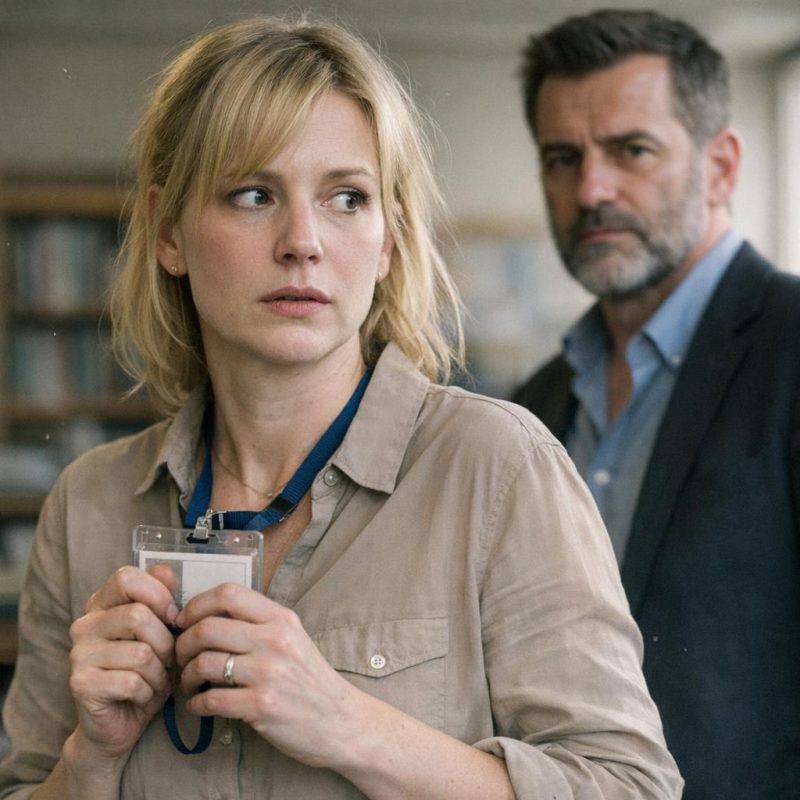 Image by RM AI
Mia in the Side Room
I stood up so fast my chair scraped the floor. 'Where is Mia right now?' Mr. Dwyer said she was in the conference room with the guidance counselor, 'processing the incident.' Processing. Like she was a data point. I didn't ask permission—I just walked out of his office and down the hall to where I knew the conference room was. Ms. Pruitt called my name once, but I didn't stop. I pushed open the door and found Mia sitting in one of those too-big rolling chairs, her feet not quite touching the ground, her face blotchy and wet. The guidance counselor stood up immediately, startled, but I only saw my daughter. She looked at me and her whole face crumpled again. 'Mom, I didn't do anything. I don't even know what app they're talking about. I didn't write those things.' Her voice cracked on the last word. I crossed the room and knelt in front of her chair, taking her hands. They were freezing. She whispered 'I swear, Mom,' and I believed her so fast it felt like my ribs cracked.
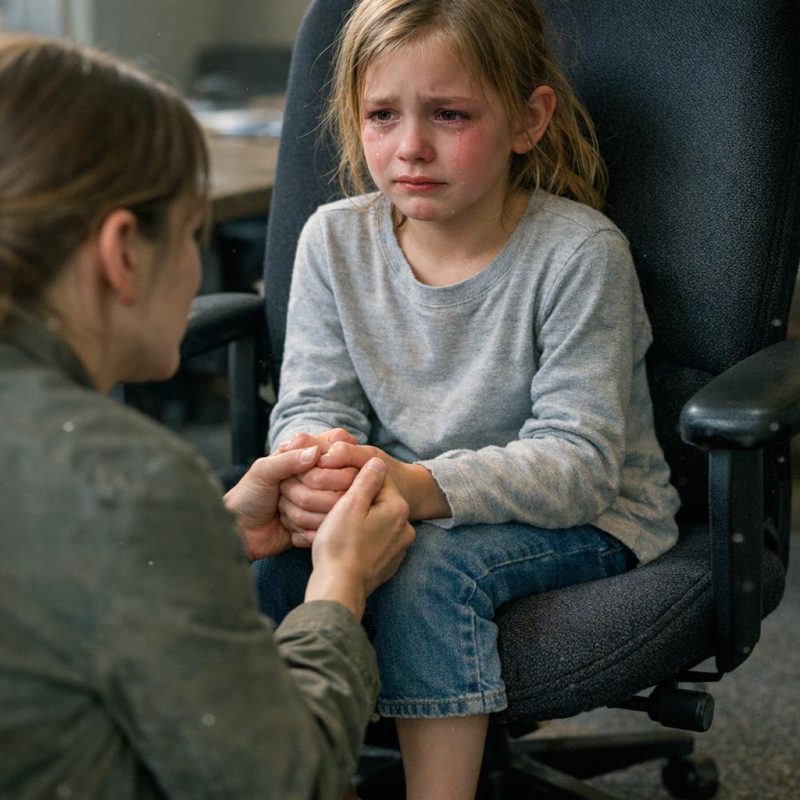 Image by RM AI
The Question That Changed Everything
I wiped her cheek with my thumb and asked, as calmly as I could, 'Mia, what app did Mr. Dwyer say this happened on?' She blinked at me, her eyelashes still wet. 'I don't know. He didn't really say.' I looked over at the guidance counselor, who was shifting her weight near the wall. 'What was the platform?' She glanced toward the door like she was checking if someone was listening. 'I believe it was… uh, the principal mentioned it was Voxer? Or something similar?' I turned back to Mia. 'Honey, do you know what Voxer is?' Her eyebrows pulled together—genuine confusion, not performance. 'No?' I felt something lock into place. 'Have you ever used it? Maybe at a friend's house, or—' 'Mom, I don't even know what that is.' Her voice was small but steady. I could see the guidance counselor watching us, her expression unreadable. Mia tilted her head like she was trying to work out a puzzle. 'Is it like Instagram?' she asked. Something hot expanded in my chest.
 Image by RM AI
The Classroom Tablets
I pulled a tissue from the box on the table and handed it to her, buying myself a second to think. 'When was the last time you used a tablet or computer at school?' Mia wiped her nose and shrugged. 'I don't know. Maybe yesterday? We use them for math sometimes.' The guidance counselor cleared her throat softly. 'The classroom tablets are monitored, of course.' I glanced up at her. 'Of course.' Mia kept talking, her voice picking up a little now that she wasn't crying. 'They've been checking them more lately, though. Like, Ms. Pruitt comes around and looks at what we're doing.' I sat back on my heels. 'Why's that?' Mia shrugged again. 'I think there was a problem or something? She didn't say.' The guidance counselor shifted again, and I noticed the way her jaw tightened. I turned toward the door just as Ms. Pruitt appeared in the doorway, her arms crossed. Her eyes flicked to Mia, then to me. Ms. Pruitt flinched when Mia said 'problem,' and I filed that word away like evidence.
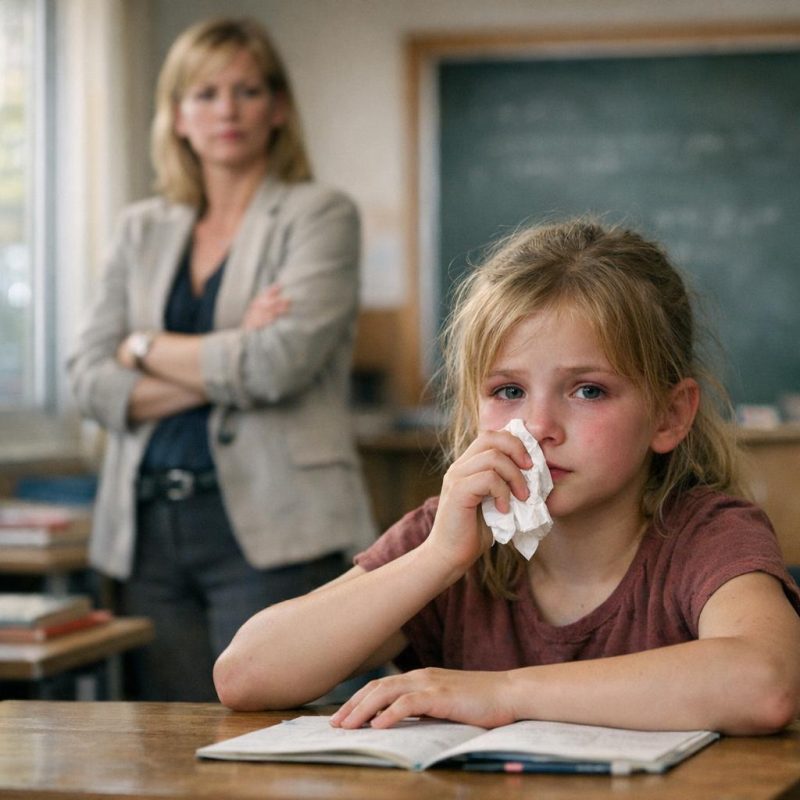 Image by RM AI
The Convenient Deletion
I told Mia to wait with the counselor and walked back to Mr. Dwyer's office with Ms. Pruitt a few steps behind me. He was standing by the window when I came in, hands in his pockets, trying to look contemplative or something. I didn't sit. 'I need to see the post.' He turned around slowly. 'As I mentioned, it's been removed.' I crossed my arms. 'By who?' 'The account holder, I assume. Or the platform—they have protocols for threats.' His voice was smooth, rehearsed. I stared at him. 'So you're telling me you called me here, accused my daughter of making a threat, and now there's no way for me to verify what was actually said?' Ms. Pruitt stood near the door, her hand resting on the frame. Mr. Dwyer gave me a patient smile. 'I understand your frustration, but we acted on credible information.' 'From the screenshot?' 'Yes.' I asked how he knew it was deleted if he hadn't looked at the original, and he said the reporting parent told him.
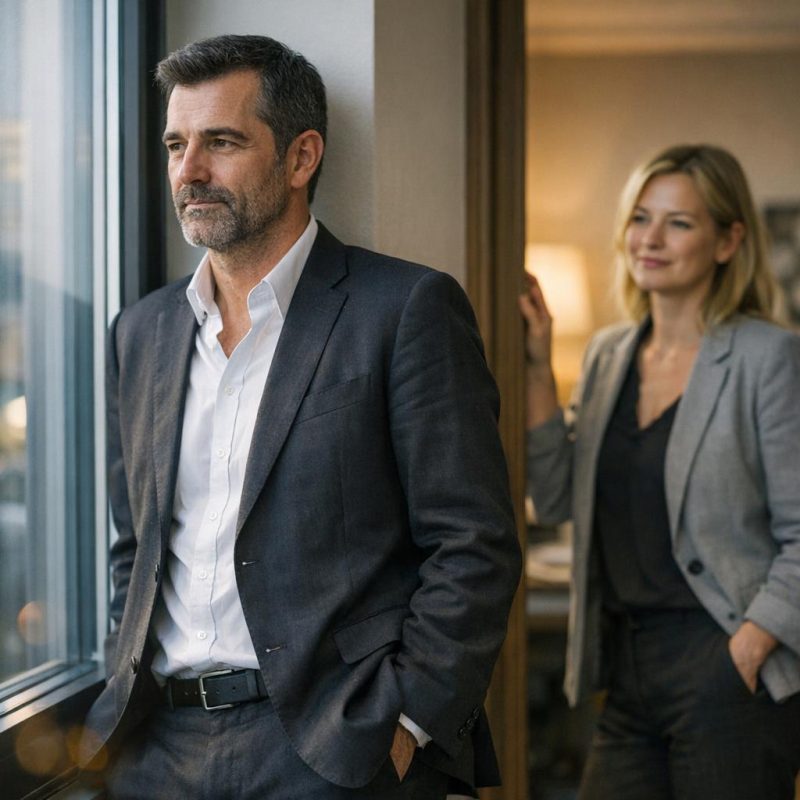 Image by RM AI
The Parent Nobody Will Name
I let that sit in the air for a beat. 'Okay. So which parent reported it?' Mr. Dwyer's smile tightened at the edges. 'I'm not at liberty to disclose that.' I tilted my head. 'Why not?' 'It would be inappropriate. We have to protect the privacy of families who come forward with concerns.' I felt my pulse in my throat. 'But you can publicly accuse my nine-year-old of making a violent threat.' 'This isn't a public accusation, Ms.—' 'You called me out of work. You interrogated my daughter without me present. You're telling me she did something she didn't do, and now you won't even tell me who's saying it.' Ms. Pruitt shifted behind me. I could feel her watching. Mr. Dwyer's expression stayed neutral, but his hands came out of his pockets. 'I understand you're upset—' 'I want the name.' 'That's not going to happen.' He said it would be 'inappropriate,' and I wondered what exactly was being protected—privacy or something else entirely.
 Image by RM AI
Ms. Pruitt Speaks
Ms. Pruitt cleared her throat, and we both turned toward her. She was standing straighter now, her arms uncrossed. 'The account wasn't created by a child.' Her voice was quiet but clear. I blinked. 'What?' Mr. Dwyer's face went still. Ms. Pruitt kept her eyes on me. 'The account. It wasn't set up by a student. The language, the settings, the way it was structured—it wasn't done by a nine-year-old.' I felt my heartbeat in my ears. 'How do you know that?' She swallowed. 'Because I looked at it before it was deleted. I took a screenshot for documentation.' Mr. Dwyer finally moved. 'Ms. Pruitt, I don't think—' 'She has a right to know.' Her voice didn't waver. I stared at her. 'Do you still have the screenshot?' She nodded. 'On my phone.' The room went so quiet I could hear the fluorescent lights buzz, and Mr. Dwyer's head snapped toward her like she'd broken an unspoken rule.
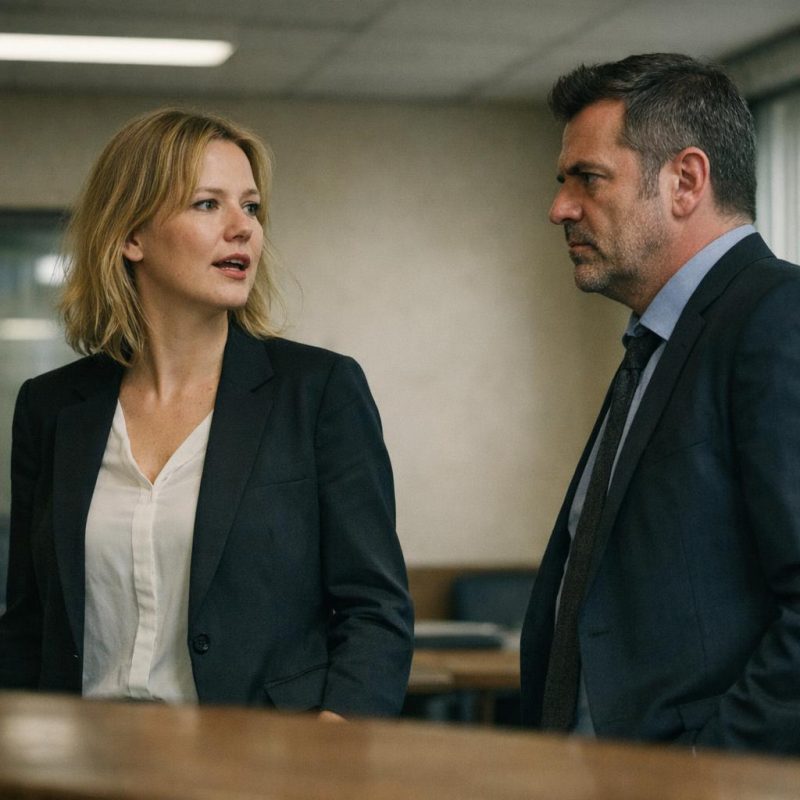 Image by RM AI
The School Photo System
Ms. Pruitt pulled her phone from her pocket, scrolled for a second, then turned the screen toward me. The profile picture was Mia—last year's school photo, the one with the blue background they all had. The username was something generic and weird, letters and numbers. The bio was blank. I zoomed in on the photo. 'Where did this picture come from?' Ms. Pruitt hesitated. 'What do you mean?' 'I mean, I've never posted Mia's school pictures online. We don't use them for anything except the yearbook and family stuff. So where did this come from?' Mr. Dwyer stepped closer. 'Parents share photos all the time—' 'Not this one.' I looked at Ms. Pruitt. 'Where?' She glanced at Mr. Dwyer, then back at me. Her voice was quieter now. 'It's from the school database. The photo system we use for IDs and records.' My stomach dropped. 'The school system.' She nodded. She said the photo wasn't one we posted—it was from their system, accessible only to staff and approved volunteers.
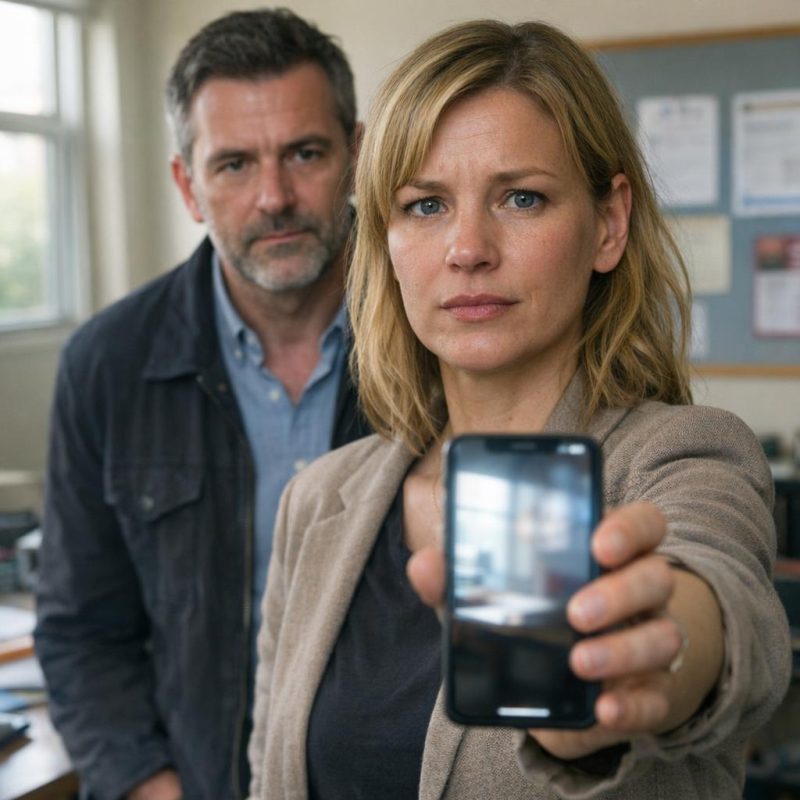 Image by RM AI
The Principal Turns Pale
I turned to Mr. Dwyer. 'So someone with access to your school's internal photo database used my daughter's official picture to create a fake account and post threats.' His face had gone pale—not confused, not surprised, just pale. He opened his mouth, closed it, then tried again. 'That's… we don't know that for certain.' 'Ms. Pruitt just told us the photo came from your system.' 'Lots of parents have portal access—' 'Do they have access to download high-resolution student photos?' I kept my voice level, but I could feel the heat rising in my chest. Ms. Pruitt spoke quietly. 'Parent portal access doesn't include photo downloads. Only staff and certain approved volunteers.' Mr. Dwyer rubbed his forehead. 'We'll need to look into this further.' 'You already knew.' I said it before I'd fully formed the thought. He looked at me sharply. 'Excuse me?' 'You already knew this wasn't Mia. That's why you wouldn't let me see the post. That's why you won't name the reporting parent.' He tried to recover by saying lots of parents have portal access, but his voice had gone thin, like he was reading from a script he'd forgotten.
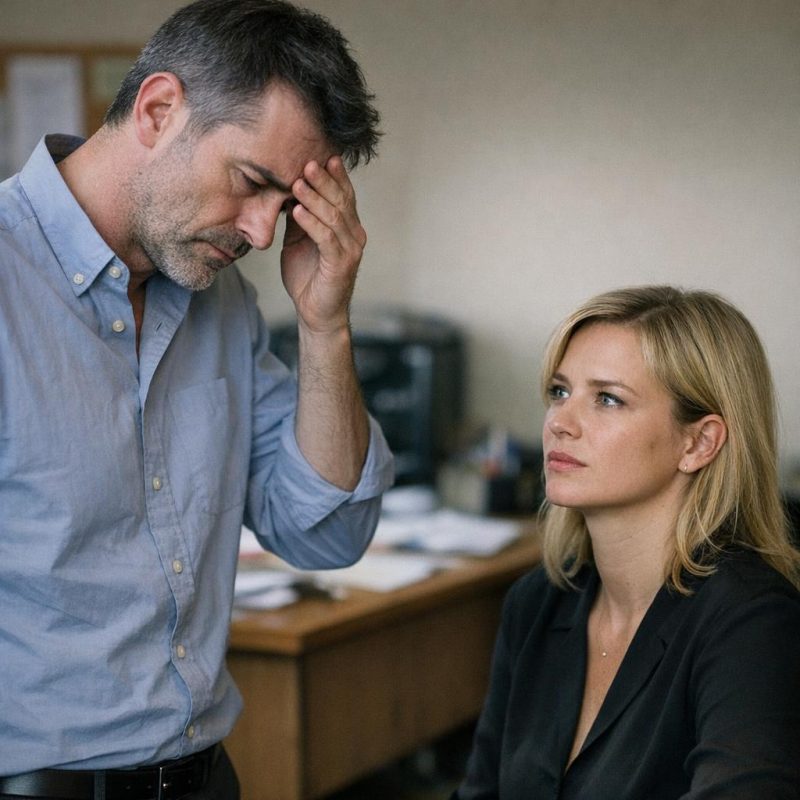 Image by RM AI
The Question About Other Kids
I took a step toward his desk. 'How many?' He frowned. 'I'm sorry?' 'How many other kids have been pulled into this office recently and accused of things they didn't post?' Mr. Dwyer's mouth tightened into a flat line. 'I'm not going to discuss other students with you.' 'That's not what I asked.' I kept my eyes locked on his. 'I asked how many children have been disciplined for posts they didn't make.' He glanced at Ms. Pruitt, but she was looking at the floor now. Her shoulders were tight, her jaw clenched. I turned to her. 'Ms. Pruitt?' She didn't answer right away. When she finally looked up, her eyes were wet. She opened her mouth like she was going to say something, then closed it and shook her head. Just once. That tiny motion. Ms. Pruitt's eyes filled with tears and she looked away—that was answer enough.
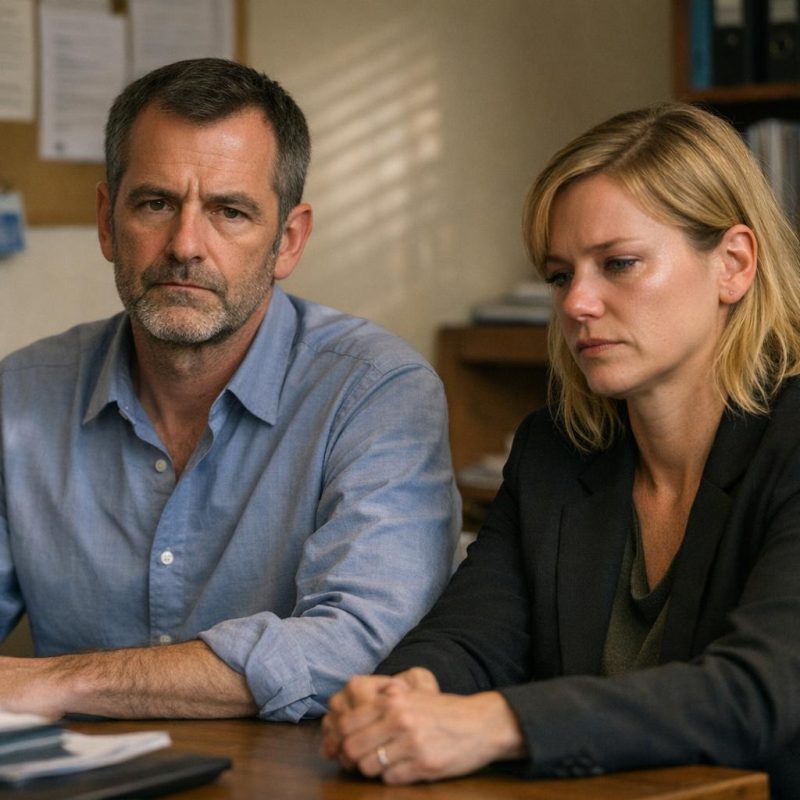 Image by RM AI
Taking Mia Home
I didn't say much as I walked back to the office where Mia was waiting. She looked up when I came in, her eyes red-rimmed but dry, her backpack clutched tight against her chest like a shield. 'Am I in trouble?' she whispered. I crouched down in front of her chair. 'No, baby. You're not in trouble. Not with me, not ever.' Her chin trembled. 'But Mr. Dwyer said—' 'Mr. Dwyer was wrong,' I said firmly. 'And we're going home now.' The secretary watched us leave without a word, her eyes sliding away when I glanced back at her desk. Mia stayed quiet the whole drive, staring out the window with her hands folded in her lap. When we got home, she went straight to her room and closed the door. I heard the soft click of the lock. I made her favorite dinner—mac and cheese with the spiral noodles she liked—and she came out long enough to eat a few bites before asking if she could be excused. By eight-thirty, her light was off. I checked on her twice before I was sure she was actually asleep, her face finally relaxed against the pillow. After Mia fell asleep that night, I did what I always do when fear tries to take over—I got practical.
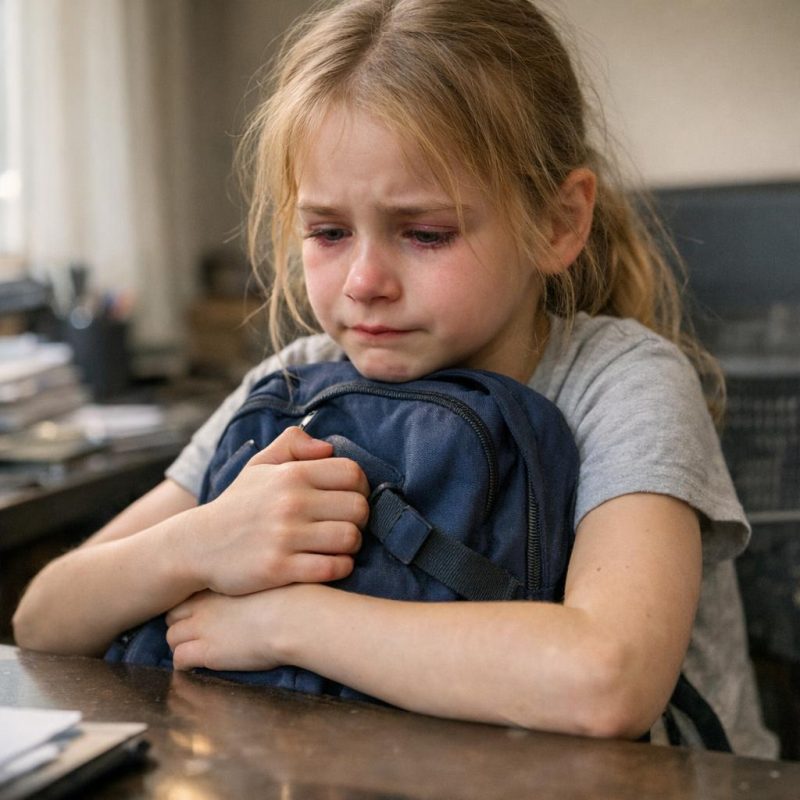 Image by RM AI
The Parent Facebook Group
I opened my laptop and pulled up the school parent Facebook group, the one I usually muted because it was mostly arguments about fundraisers and parking lot drama. I typed Mia's name into the search bar. The screenshot appeared immediately. Someone had posted it that afternoon—just hours after the meeting—with the caption 'This is what we're dealing with at our school now.' My stomach dropped. It had already been shared thirty-seven times. Parents I'd never met were commenting like they knew exactly what had happened, like they'd been in that office with us. 'Unacceptable behavior,' one wrote. 'Kids these days have no respect,' said another. Someone else: 'Thank God the school is taking this seriously.' I scrolled through the thread, my chest getting tighter with every comment. Most people were piling on, agreeing that whoever posted the threat deserved whatever consequences came. A few asked for context, but they were drowned out by the outrage. And then, buried about halfway down the thread, I saw a comment that made me stop cold. The comments were brutal—'kids these days' and 'good riddance'—and buried in the thread was a name I recognized: Mrs. Kline.
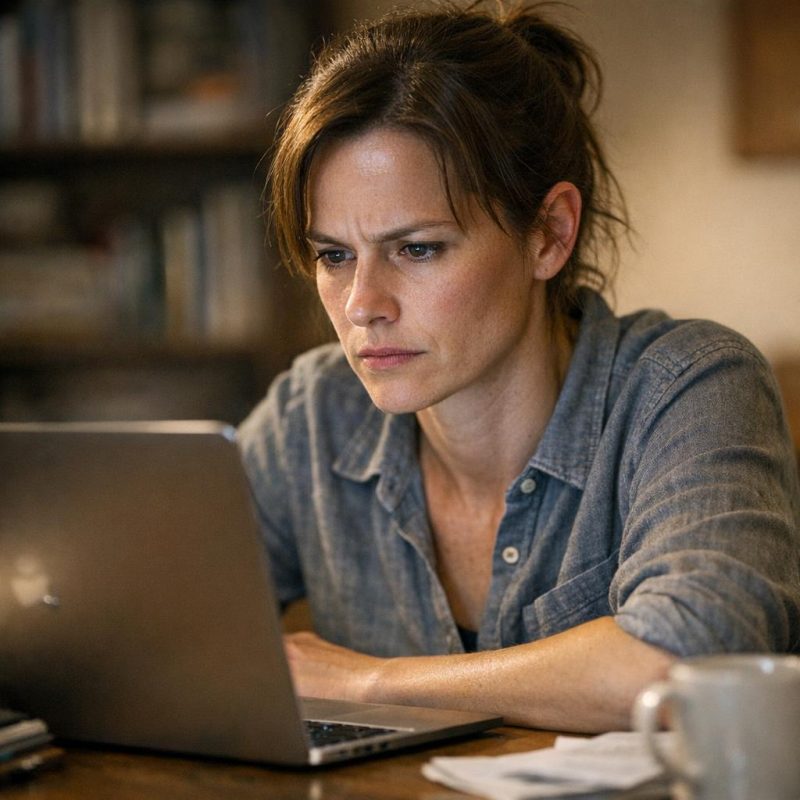 Image by RM AI
The Woman Who 'Warned' the School
I clicked on her comment. Mrs. Kline had written three paragraphs, all formatted like a press release. She explained that she'd been 'monitoring concerning social media activity' and had personally discovered the account in question. She claimed she'd immediately contacted the school administration to warn them about the 'disturbing content' and praised Mr. Dwyer for taking swift action. 'As a concerned parent and community member,' she wrote, 'I feel it's my responsibility to ensure our children are safe from this kind of influence.' People had replied to her comment with heart emojis and thank-you messages. Someone called her a hero. Another parent wrote, 'We're so lucky to have people like you looking out for our kids.' Mrs. Kline had responded to each one graciously, like she was accepting an award. There was no hesitation in her tone, no acknowledgment that maybe she could be wrong. She wrote like someone stating facts, not opinions. Like someone who'd seen the evidence firsthand and knew exactly what she was talking about. She'd written it with the confidence of someone who expected to be believed without question.
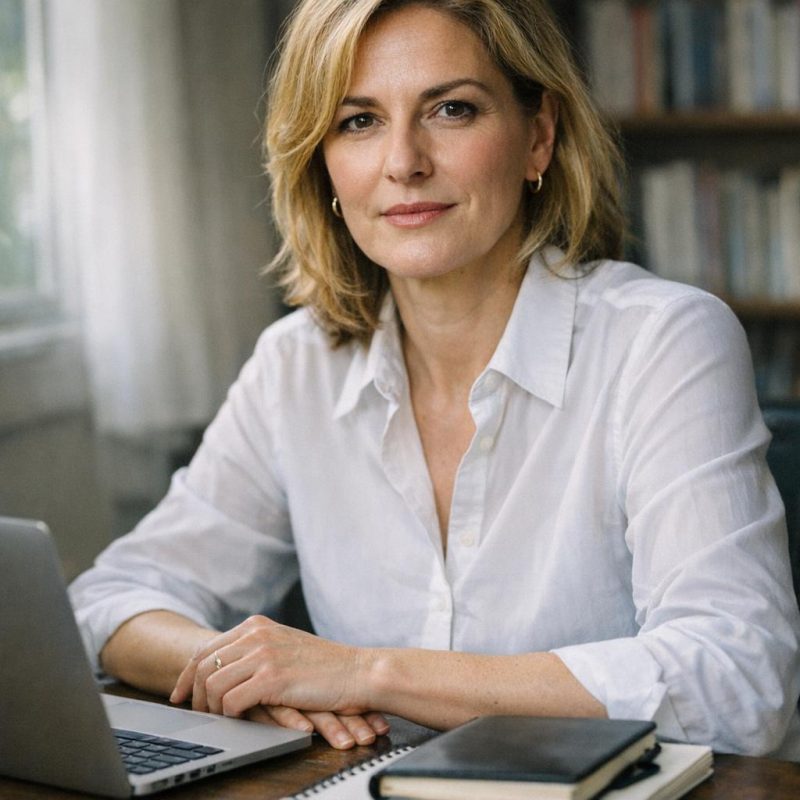 Image by RM AI
The Public Profile
I clicked on Mrs. Kline's profile picture—a professional headshot with an American flag background—and her page loaded immediately. It was public. Completely public. Every post, every photo, every comment visible to anyone who cared to look. And there was a lot to look at. She posted multiple times a day, mostly about school events and community issues. Photos from PTA meetings where she stood front and center. Complaints about parents who didn't volunteer enough or didn't follow the carpool rules properly. Long rants about 'entitlement culture' and how children today weren't being raised with proper values. She tagged the school in almost everything. Tagged administrators by name. She posted about bake sales like they were congressional hearings, critiquing everything from the quality of the brownies to the 'attitude' of the parents who'd organized them. One post from last month complained about a family who'd questioned the dress code policy, calling them 'disruptive influences who don't respect our community standards.' I scrolled back months, then a full year. The pattern was consistent. She posted constantly—parent meetings, bake sales, complaints about 'disrespectful parents and ungrateful kids'—like she ran the place.
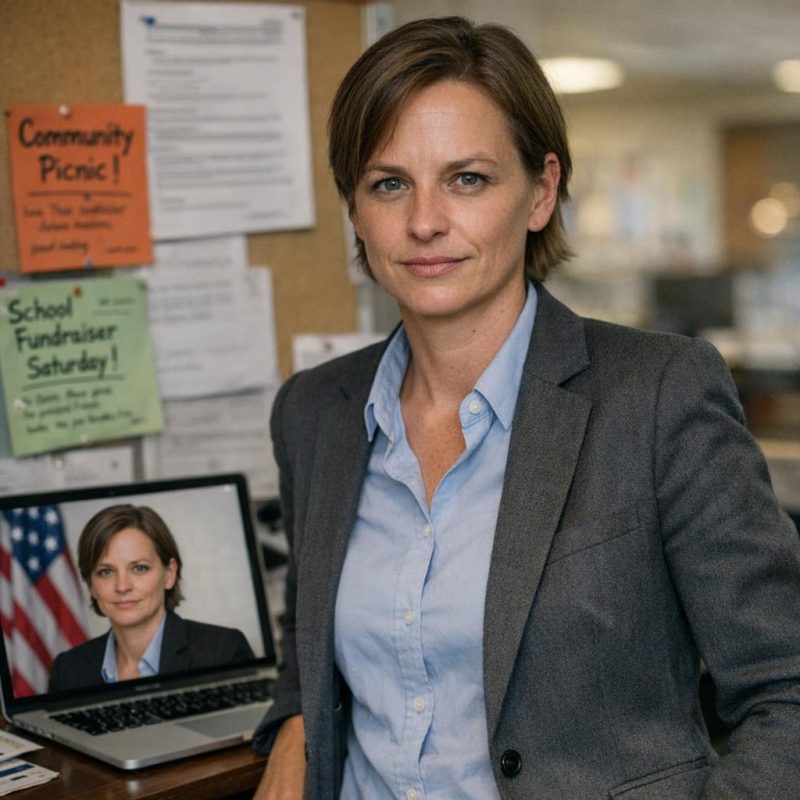 Image by RM AI
The Sloppy Screenshot
I kept scrolling, my eyes starting to blur from the screen light, and then something caught my attention. It was a post from two weeks ago, another complaint about 'inappropriate student behavior' that she'd 'personally documented.' She'd included a screenshot as evidence—a blurry image of what looked like a text message exchange. But the screenshot itself wasn't what made me stop. It was the border around it. She'd photographed her computer screen instead of taking a proper screenshot, and the image was slightly crooked, showing part of her desktop in the background. I zoomed in, my heart suddenly pounding. In the top corner of the photo, barely visible behind the main image, was a browser tab. I could just make out a small icon—a blue and white logo I'd seen before. It was the same portal icon from the school's website, the one parents used to access student photos and permission forms. The page header read 'Student Records Access.' I stared at it for a long minute, my brain trying to process what I was seeing. In the corner of her screen grab, barely visible, was the same portal icon I'd seen on the school's website—she'd photographed her own computer and hadn't cropped it carefully enough.
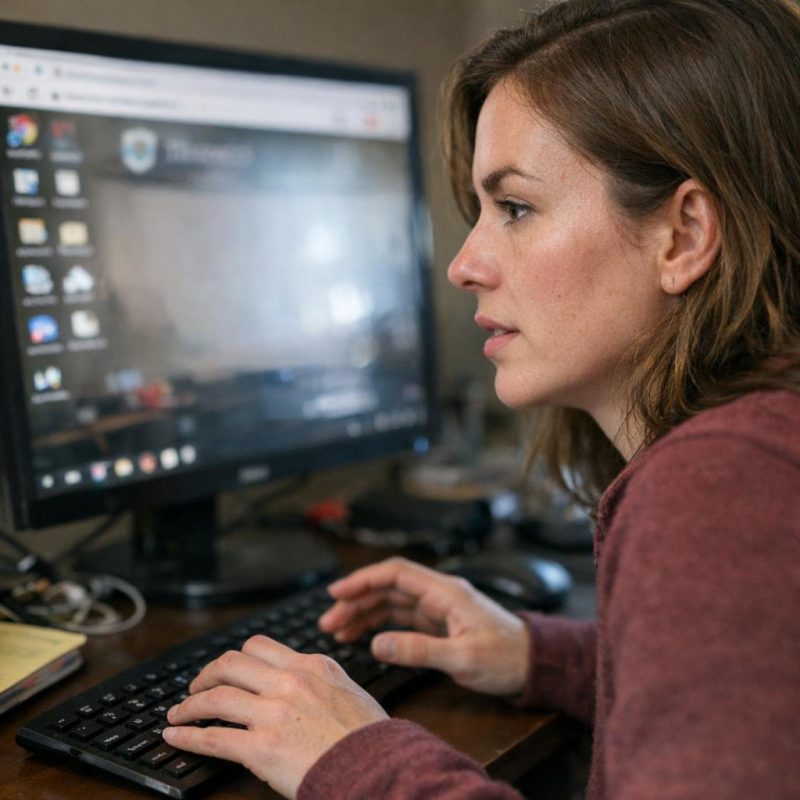 Image by RM AI
The IT Friend
I grabbed my phone and scrolled through my contacts until I found Marcus. We'd worked together years ago, before Mia was born, and he'd moved into IT security for a school district two states over. I opened a message thread. 'Quick question,' I typed. 'Do school photo systems track when someone downloads a student's picture?' I hit send before I could second-guess myself. It was nearly eleven at night, so I didn't expect a response until morning. I set my phone down and went back to staring at Mrs. Kline's careless screenshot, zooming in and out, making sure I wasn't seeing things that weren't there. The portal logo was definitely there. Small, but unmistakable. My phone buzzed. I grabbed it so fast I almost knocked over my water glass. Marcus's name lit up the screen. He replied at midnight: 'Yeah, most systems log that. Why?'
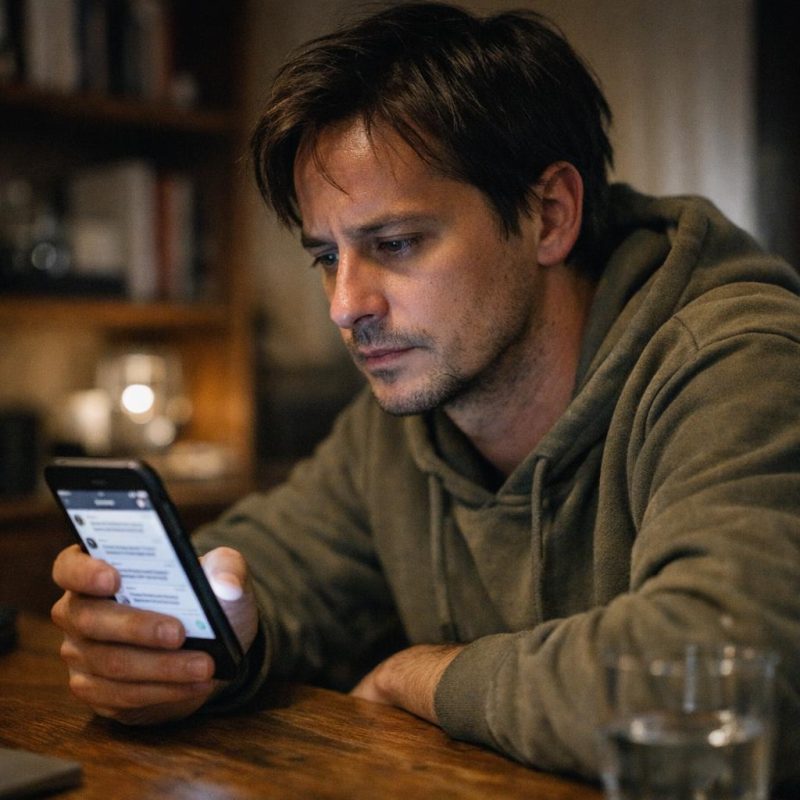 Image by RM AI
Building the Folder
I didn't answer Marcus right away. Instead, I opened a new folder on my desktop and labeled it 'Evidence.' I started taking screenshots of everything—the original Facebook post with the fake account, the comment thread with Mrs. Kline's statement, her public profile showing months of complaints and interference. I captured the sloppy photo with the portal icon visible in the corner. I saved each image twice, once in the folder and once to a thumb drive I dug out of my desk drawer. Then I opened my email and scrolled back through the message from Mr. Dwyer, the one that had started all of this. I copied the text into a document, along with every detail I could remember from the meeting—who said what, when, and how they'd reacted. Ms. Pruitt's hesitation. Mr. Dwyer's deflection. The way neither of them would answer my direct questions. I printed everything. Every screenshot, every email, every note I'd written. The printer hummed and whirred for twenty minutes straight, spitting out page after page. When it finally stopped, I had a stack nearly an inch thick. I laid everything out on the kitchen table like I was preparing for trial, because in a way, I was.
 Image by RM AI
Sister's Warning
I called Rachel at seven the next morning. She answered on the second ring, her voice still rough with sleep. 'You okay?' she asked immediately. I told her everything—the meeting, the Facebook group, Mrs. Kline, the screenshot with the portal logo. Rachel listened without interrupting, which is how I knew she was taking it seriously. When I finished, she was quiet for a long moment. 'Okay,' she said finally. 'So you think this woman created a fake account using Mia's photo and then reported it herself?' 'I think she had access to student photos through the school portal,' I said. 'And I think she's done this before.' Rachel exhaled slowly. 'You know screenshots are the easiest things in the world to fake, right? Even if you're right, even if you can prove she accessed the portal, they'll say it doesn't prove she made the account.' 'I know,' I said. 'But it's a start.' 'It is,' Rachel agreed. 'Just—be careful. These people close ranks fast when they're threatened. You're not crazy, but you need to remember something.' She paused. Rachel said, 'You're not crazy—but you need to remember these people protect their own before they protect the truth.'
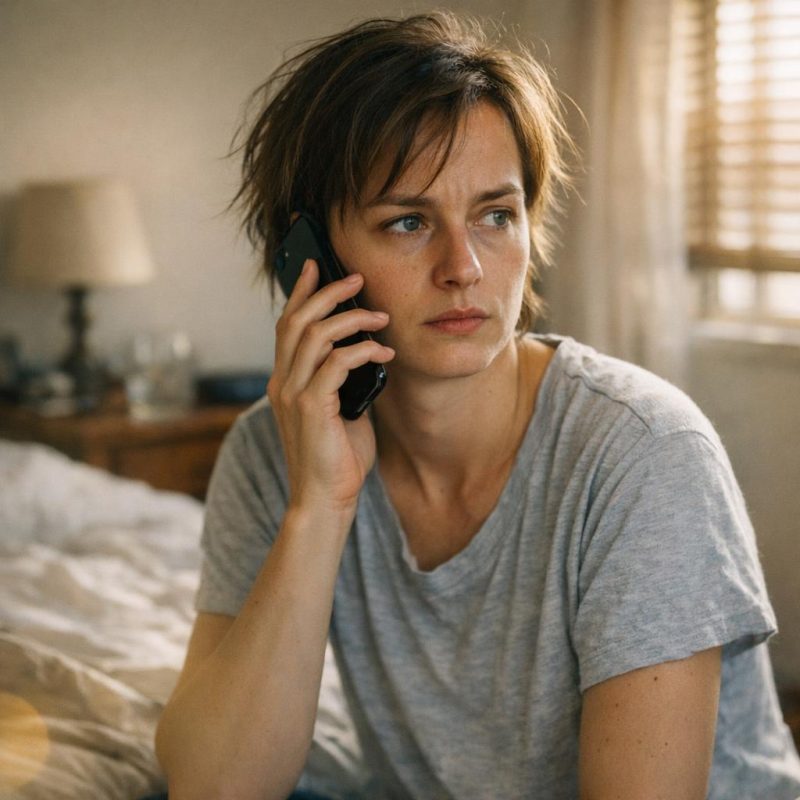 Image by RM AI
Mia's Questions
Mia came downstairs the next morning in her uniform, but she didn't go straight to the kitchen like usual. She stood in the doorway holding her backpack straps and asked, 'Am I going to be expelled?' I set down my coffee. The question was so direct, so small in her voice, that I felt something crack open in my chest. 'No,' I said. 'Baby, no. That's not going to happen.' She nodded, but she didn't look convinced. Her eyes had this distant quality, like she was already rehearsing what it would be like to be that kid. The one who got kicked out. The one everyone would remember. I knelt down and took her hands. 'I know this is scary,' I said. 'I know the adults are making it feel big and confusing. But you didn't do anything wrong, and I'm going to make sure everyone knows that.' She looked at me with those wide brown eyes. 'What if they don't believe you?' 'Then I'll make them listen louder,' I said. She smiled a little at that. Just a flicker. I kissed her forehead and lied the way mothers do: 'It's all going to be fine.'
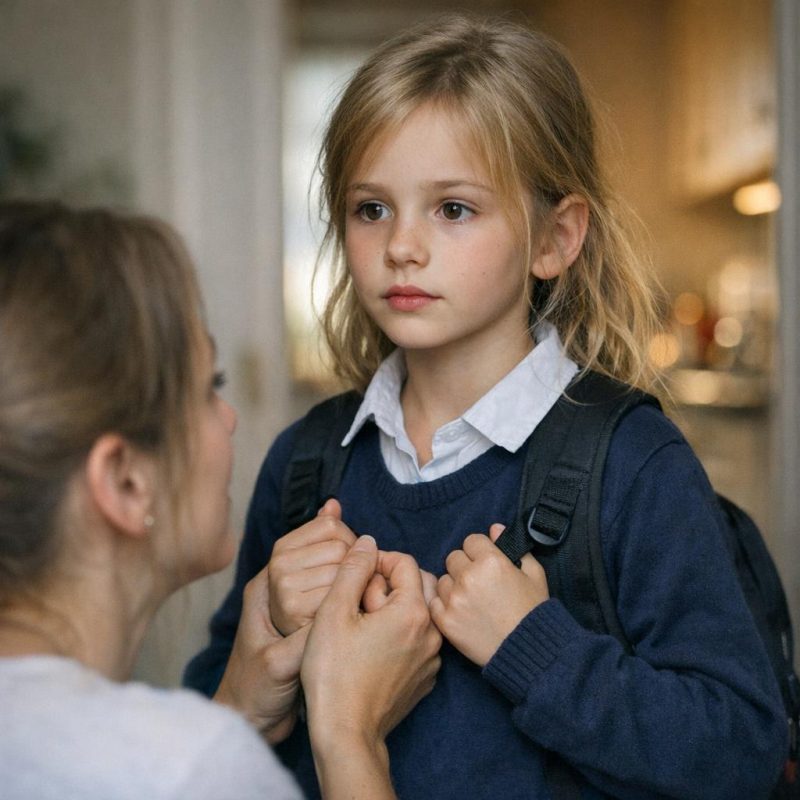 Image by RM AI
Skipping the Principal
After I dropped Mia at school, I sat in the parking lot and stared at my phone. I'd been replaying the meeting with Mr. Dwyer over and over, and every time I came back to the same conclusion: he wasn't looking for the truth. He was managing the situation. There was a difference. A big one. I pulled up the district website on my phone and navigated to the administration section. There was a contact form for 'Concerns and Complaints,' and below it, a phone number for the district office. I took a screenshot, just in case, and then I called. The woman who answered sounded polite but brisk. I told her I needed to schedule a meeting regarding a serious issue involving student safety and potential identity misuse. She paused. 'Is this something the school principal is addressing?' 'The principal is part of the problem,' I said. Another pause. Then she asked for my name and student information and told me someone would call me back within twenty-four hours. I thanked her and hung up. My hands were shaking a little, but in a good way. Like I'd finally stopped waiting for permission. If the school wouldn't give me answers, maybe someone with actual authority would.
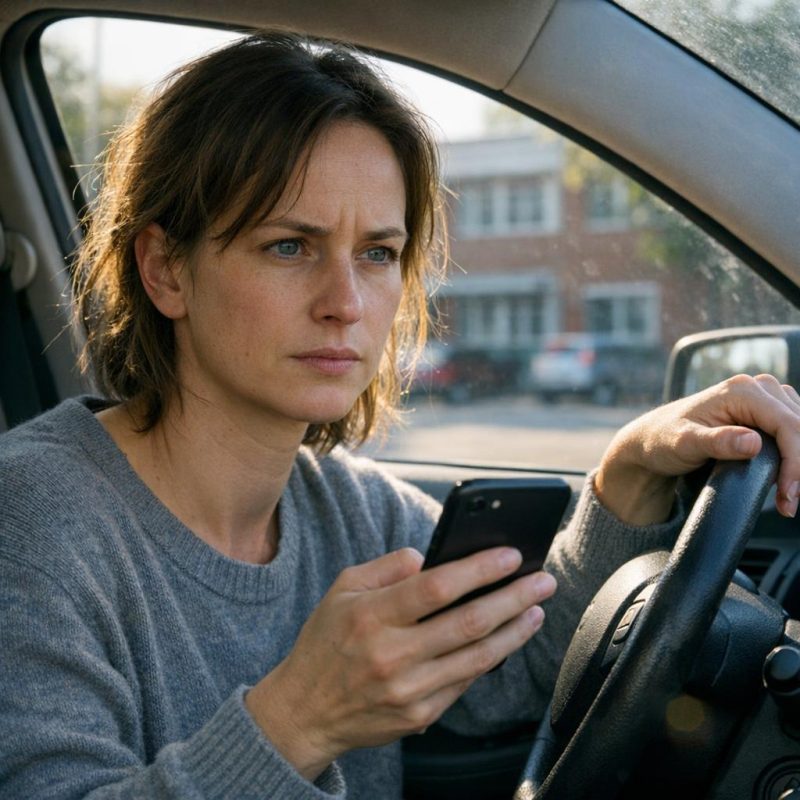 Image by RM AI
The District Office
The district office was housed in a low brick building about fifteen minutes from Mia's school, tucked behind a strip mall in a way that felt deliberately unremarkable. I arrived twenty minutes early with my folder of evidence—the screenshots, the timeline, the notes I'd written about every inconsistency. I'd labeled everything with color-coded tabs because I wanted to look like someone who had done her homework. Someone who wasn't going to be dismissed. The waiting area smelled like old carpet and coffee. There were motivational posters on the walls about growth mindsets and community values, which felt almost insulting given the circumstances. I checked in with the receptionist, a woman in her fifties with reading glasses on a chain. She glanced at my folder and then at me, and something in her expression shifted. Not quite alarm, but close. Like she'd seen this before. 'You can have a seat,' she said. 'Someone will be with you shortly.' I sat down and smoothed the folder on my lap. I'd rehearsed what I was going to say at least a dozen times. I wasn't going to be emotional. I wasn't going to be vague. I was going to be clear, direct, and impossible to ignore. The receptionist looked at my folder like it was a live grenade and asked me to wait.
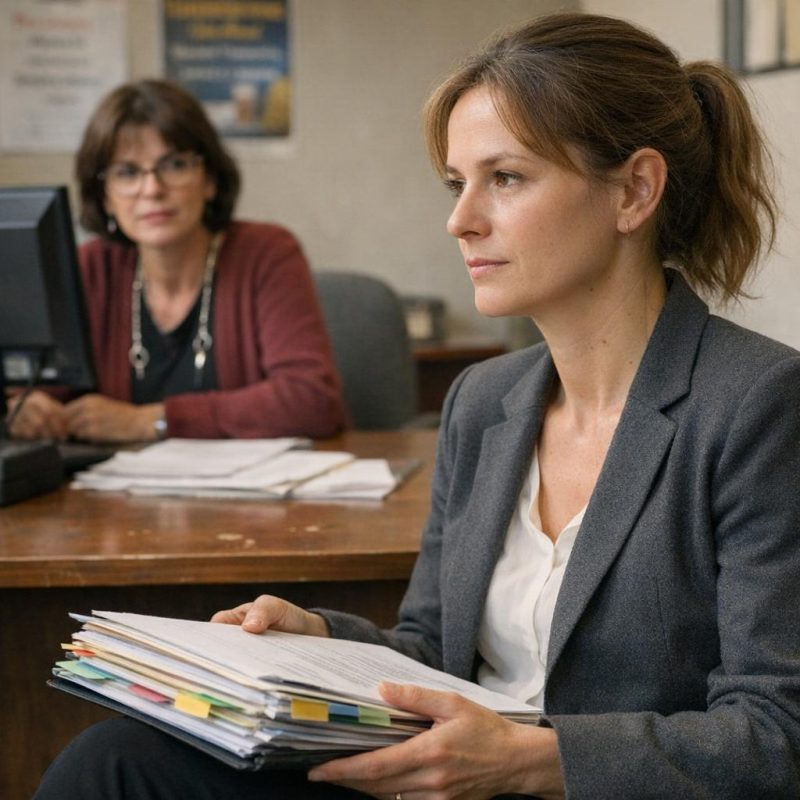 Image by RM AI
Administrator Chen
District Administrator Chen was younger than I expected, maybe mid-forties, with perfectly styled hair and a blazer that looked expensive. She shook my hand with a firm grip and led me into a small conference room with a window overlooking the parking lot. She sat across from me and folded her hands on the table. 'So,' she said. 'Tell me what's going on.' I opened my folder and walked her through everything. The account. The photo. The inconsistencies in the school's timeline. The fact that they'd called me in as if Mia were guilty before anyone had even investigated. Chen nodded along, her expression neutral and practiced. When I finished, she leaned back in her chair. 'I understand your frustration,' she said. 'But I want to assure you that the school takes these matters very seriously. I'm sure there's been some miscommunication.' 'Miscommunication?' I repeated. 'My daughter's photo was used to post a threat, and the school acted like she was responsible before they even looked into it.' Chen's smile tightened. 'We don't want to escalate this,' she said. I met her eyes. 'My daughter's image was used to publish a threat—if that's not already escalated, what is?'
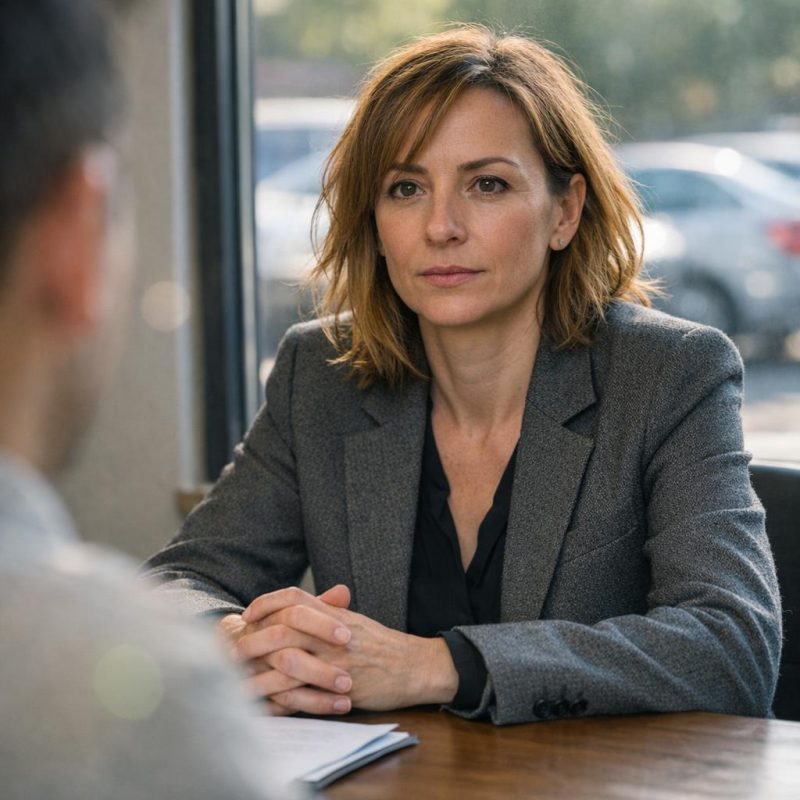 Image by RM AI
The Access Log Request
Chen's expression shifted. Not a lot, but enough. She uncrossed her hands and reached for a notepad. 'What exactly are you asking for?' she said. I'd been waiting for that question. 'I want to know who accessed and downloaded my daughter's student photo in the past month,' I said. 'The school portal tracks that information. If someone used her image to create a fake account, there's a record of who pulled that file.' Chen wrote something down, her pen moving slowly. 'That's an IT request,' she said. 'It would take some time.' 'How much time?' 'A few days, maybe a week.' I nodded. 'That's fine. I'll wait.' She looked up at me. 'You understand that even if we pull those records, it may not prove anything definitive.' 'It'll prove who had access,' I said. 'And right now, that's more than I have.' Chen set down her pen. She looked at me for a long moment, and I could see the calculation happening behind her eyes. This wasn't about Mia anymore. This was about liability. About what the district would have to acknowledge if I kept pushing. The temperature in the room changed the moment I said 'identity misuse' and 'safety issue' in the same sentence.
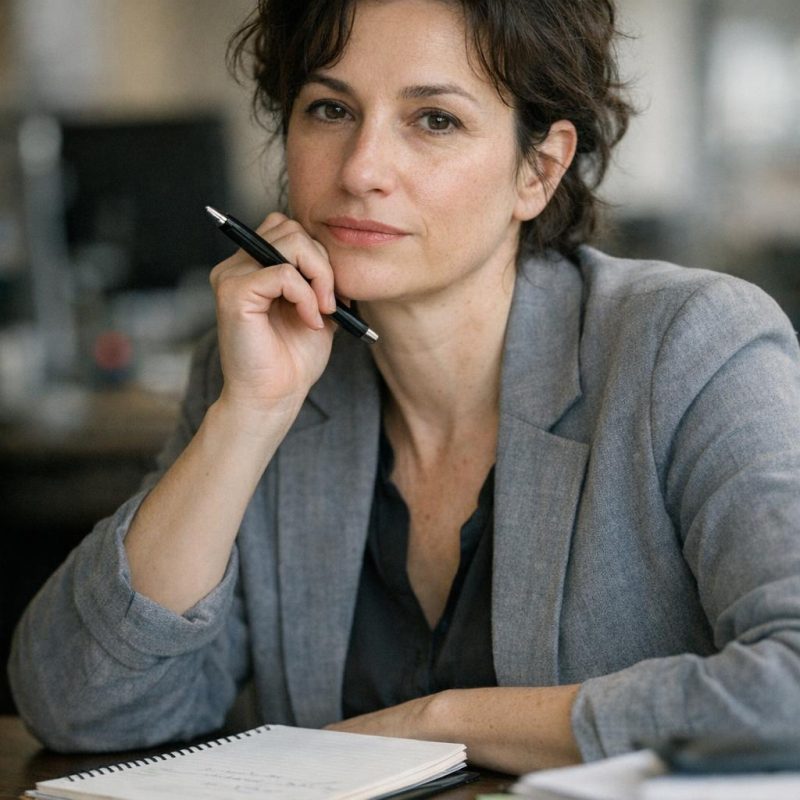 Image by RM AI
Waiting for the Log
I drove home in a fog of adrenaline and exhaustion. My hands were still steady on the wheel, but my chest felt tight, like I'd been holding my breath for hours. Chen had promised to follow up within the week. She'd written everything down. She'd used words like 'concerning' and 'appropriate measures,' which I knew were code for covering the district's ass. But she'd also agreed to pull the access logs, and that felt like something. Maybe not a victory, but a crack in the wall. I parked in the driveway and sat there for a minute, staring at the dashboard. I kept thinking about Mia asking if she'd be expelled. About the way Mr. Dwyer had looked at me like I was the problem. About Mrs. Kline's name appearing in that Facebook group at the exact wrong time. I went inside and made myself tea I didn't drink. I opened my laptop and stared at the same screenshots I'd been staring at for days. I checked my email twice. Nothing yet. Rachel texted to ask how it went, and I told her I'd requested the access logs. She sent back a thumbs-up and the words 'You're not crazy.' I told myself that if I was wrong, I'd apologize—but the weight in my chest told me I wasn't wrong at all.
 Image by RM AI
Ms. Pruitt's Blocked Call
My phone rang at three-fifteen that afternoon. The caller ID said 'Unknown,' and I almost didn't answer. But something made me pick up. 'Hello?' There was a pause, and then a woman's voice, shaky and low. 'Tessa? It's Ms. Pruitt.' I sat up straight. Ms. Pruitt was the third-grade teacher who'd been in the meeting—the one who'd looked uncomfortable when Mr. Dwyer shut down my questions. 'Hi,' I said carefully. 'Is everything okay?' Another pause. I could hear her breathing, uneven and deliberate, like she was trying to steady herself. 'I'm calling from a blocked number,' she said. 'I don't want this traced back to me.' My pulse spiked. 'Okay,' I said. 'What's going on?' 'I just—' She stopped. 'I need you to know that I tried. I tried to tell him.' 'Tell who? Tell him what?' 'Mr. Dwyer,' she said. 'I told him days ago that something wasn't right. That the account didn't make sense. That Mia wouldn't—' Her voice wavered. 'I told him we should look into it before calling you in.' I gripped the phone tighter. 'What did he say?' She said, 'I tried to tell him days ago,' and then her voice cracked.
 Image by RM AI
Don't Make Waves
Ms. Pruitt took a breath, and when she spoke again, her voice was barely above a whisper. 'He told me not to make waves,' she said. 'He said we had important visitors coming—donors touring the school—and he didn't want any distractions. He said we'd handle it quietly after the trip was over.' I felt my stomach drop. 'Donors,' I repeated. 'Yes. Mrs. Kline had arranged for them to visit. She's been working on a fundraising initiative for months. Mr. Dwyer said it was critical that everything went smoothly.' The pieces were sliding into place, and I didn't like the picture they were forming. 'So he knew,' I said. 'He knew the account didn't make sense, and he called me in anyway.' 'I think he thought it would just—go away,' Ms. Pruitt said. 'That you'd accept the explanation and move on. I told him it wasn't fair to Mia, but he said we couldn't afford to question Mrs. Kline right now. Not with the donors coming.' My hands went cold. 'Why not?' Ms. Pruitt was quiet for a moment. Then she whispered, 'Donors that Mrs. Kline brought in,' and suddenly everything clicked into a shape I didn't want to see.
 Image by RM AI
The Mother Who Asked Questions
Ms. Pruitt's expression shifted then, and I saw something that looked almost like pity cross her face. 'There's something else you should know,' she said quietly. 'About why Mia's account was used specifically.' I waited, my pulse quickening. 'The post didn't just threaten anyone,' she continued. 'It targeted the one child whose mother had recently challenged Mrs. Kline's authority in front of other parents.' My mouth went dry. 'What do you mean?' 'I mean,' Ms. Pruitt said carefully, 'that after you complained last month, your name came up in staff meetings. Mrs. Kline was very upset about it. She mentioned it more than once.' The air felt thin suddenly. 'She mentioned me?' 'Yes. She said certain parents didn't understand the program, that they questioned her methods without appreciating her expertise.' Ms. Pruitt's voice was barely audible now. 'When Mr. Dwyer showed me which account had made the threat, I recognized the name immediately. It wasn't random, Tessa.' I felt like the floor had dropped away beneath me. All those careful explanations, all that concern about safety—and they'd known from the start that this was personal. That it was aimed at my daughter because I'd dared to speak up. Ms. Pruitt looked at me with something between sympathy and shame. She said, 'You asked questions, Tessa—and Mrs. Kline doesn't like questions.'
 Image by RM AI
The Lunch Lecture
The memory hit me like cold water. Last month. Jesus, of course. It had been over lunch—Mia's lunch, to be specific. I'd sent her to school with her usual: a turkey sandwich, some grapes, and yes, a small bag of chips and two Oreos. Not a nutritional crime, just normal kid food. But Mia had come home that afternoon unusually quiet, and when I'd asked what was wrong, she'd told me that Mrs. Kline had called her to the front of the room during snack time. That she'd held up Mia's lunchbox and said something about 'processed foods' and 'brain development' in front of the entire class. That she'd asked Mia if her mother knew that junk food made it harder to learn. I'd been furious. I'd called the school the next morning and asked to speak with Mr. Dwyer. I'd been polite but firm—I'd said it was inappropriate to shame a child about food choices, that if there were concerns about nutrition, they should be addressed privately with parents, not broadcast to nine-year-olds as a teaching moment. Mr. Dwyer had been sympathetic, promised to speak with Mrs. Kline, assured me it wouldn't happen again. But Mia had come home two days later saying, 'Mrs. Kline says you don't care about my brain,' and I'd called the school—and they'd smiled politely and done nothing.
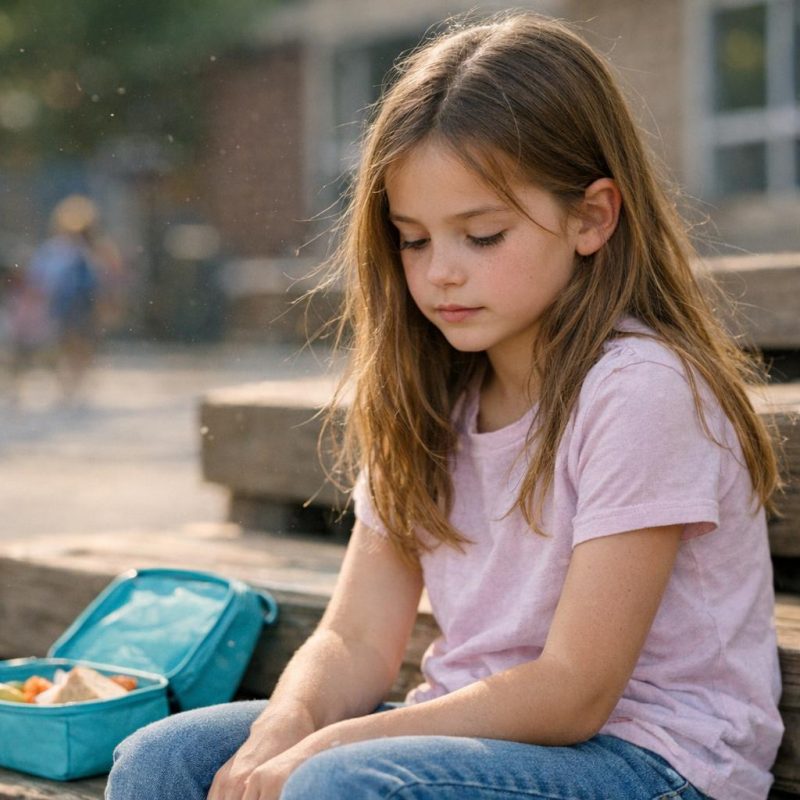 Image by RM AI
The Payback
Sitting there in my car after leaving Ms. Pruitt, the whole thing finally made horrible, perfect sense. This wasn't about student safety. It wasn't about a compromised account or a cybersecurity concern or any of the careful language they'd wrapped it in. This was retaliation. Mrs. Kline had been embarrassed by my complaint, and instead of addressing her behavior, she'd found a way to punish me—by punishing Mia. By making my daughter look dangerous. By hauling me into that office and forcing me to sit there while they pretended to investigate a threat they knew she hadn't made. The fake post had been designed specifically to humiliate us, to make me scramble and panic and feel powerless. And Mr. Dwyer had gone along with it because questioning Mrs. Kline would risk the donor visit, would make waves when they needed everything to look smooth and functional. They'd turned my nine-year-old into a scapegoat to protect their funding and Mrs. Kline's ego. I sat there with my hands on the steering wheel, staring at the school building through the windshield, and felt a cold fury settle into my bones. This wasn't a random mix-up—it was payback dressed up as concern for the children.
 Image by RM AI
The Other Parents
As soon as I got home, I went straight to my laptop. If this had happened to Mia because I'd complained, then maybe it had happened to other parents too. Maybe I wasn't the first mother who'd dared to question the beloved Mrs. Kline. I opened the school's private Facebook group—the one all the parents were automatically added to—and stared at the search bar. My hands were shaking slightly. I wasn't even sure what I was looking for exactly, just some sign that I wasn't alone in this, that someone else had noticed the pattern. I started scrolling back through months of posts: fundraiser announcements, field trip reminders, cheerful photos of class projects. Everything looked normal, supportive, exactly what you'd expect. But I knew what questions to ask now. I knew what to look for. So I stopped scrolling and went straight to the search function. My cursor hovered over the keyboard for a moment. Then I typed it in: 'Mrs. Kline complaint.' I hit enter. The page refreshed, and suddenly there were results—fragments of conversations, half-visible threads, comments that referenced things I couldn't see anymore. Deleted posts. Removed content. Parents mentioning 'concerns' and 'incidents' without details. I typed 'Mrs. Kline complaint' into the group search bar, and the results made my hands go cold.
 Image by RM AI
Deleted Posts
I clicked through everything I could find, piecing together a strange, fractured picture. There was a thread from eight months ago where a parent had asked if anyone else had experienced 'classroom issues' with their child—but the original post was gone, replaced by a gray box that said 'content no longer available.' Beneath it, a handful of comments remained: 'Sending you a DM,' and 'Let's talk offline,' and one that just said, 'I had something similar happen last year.' I searched for that commenter's name. She wasn't in the group anymore. I found another thread from last spring—a mother asking about 'miscommunication' regarding a school event. That post was also deleted. But in the replies, someone had written, 'This happened to us too—are you talking about the email thing?' Email thing. What email thing? I kept digging. I found parents who used to post regularly in the group and then just stopped. No goodbye, no explanation, just silence after a certain date. I found references to meetings that had been scheduled and then abruptly canceled. I found careful, vague language that skirted around something no one wanted to name directly. Threads that ended abruptly, parents who stopped posting, comments that said 'let's take this offline'—and then silence.
 Image by RM AI
The Class Trip Meeting Notice
The email arrived in my inbox the next morning, and I almost laughed at the timing. Subject line: 'Mandatory Pre-Trip Parent Meeting – Tomorrow Evening.' I opened it and scanned the details. The meeting was scheduled for six-thirty in the school cafeteria, attendance required for all parents of students attending the upcoming field trip. There would be information about logistics, safety protocols, and chaperone assignments. At the bottom, in bold: 'Presented by Mrs. Kline and Mr. Dwyer.' Of course. Of course they'd hold a mandatory meeting now, right after everything had blown up. I wondered if they thought I'd skip it, if they assumed I'd be too embarrassed or too intimidated to show my face. Or maybe they were counting on me being there—counting on me staying quiet in a room full of other parents, nodding along like nothing had happened. I stared at the email for a long moment, my jaw tight. They wanted this to go away. They wanted me to accept their explanations and move on and let my daughter carry the weight of their lie. But I'd spent the last twenty-four hours digging through deleted posts and finding breadcrumbs of other parents who'd been silenced, and I wasn't about to let this drop. It was scheduled for the cafeteria, and I knew exactly who would be standing at the front of the room.
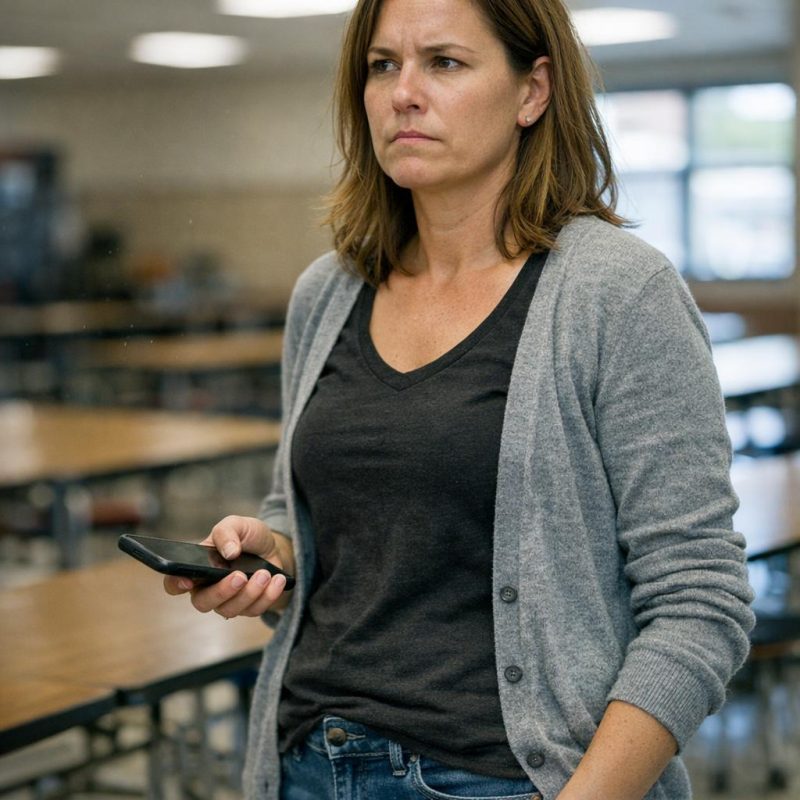 Image by RM AI
Rachel's Coaching
I called Rachel that afternoon and told her everything—the lunch incident, Ms. Pruitt's confession, the deleted Facebook posts, the mandatory meeting. She listened without interrupting, and when I finished, she was quiet for a moment. Then she said, 'Okay. You're going to that meeting, and you're going to say something.' 'I know,' I said. 'But I need to do it right. If I go in there emotional, they'll dismiss me. They'll make me look like the hysterical mom who can't accept that her kid screwed up.' 'Exactly,' Rachel said. 'So we're going to practice.' We spent the next hour on the phone, with Rachel playing the role of Mr. Dwyer and Mrs. Kline while I rehearsed how to present what I knew. She made me repeat my points until I could say them calmly, without my voice shaking. She reminded me to stick to facts—the time stamps, the impossible login, Ms. Pruitt's admission that the account never made sense. 'Don't accuse,' she said. 'Just ask questions. Make them explain the inconsistencies in front of everyone. Let the other parents hear it.' By the time we hung up, I felt steadier. Still furious, but focused. Rachel said, 'Don't let them make you the hysterical mom—you walk in there with facts, and you make them answer.'
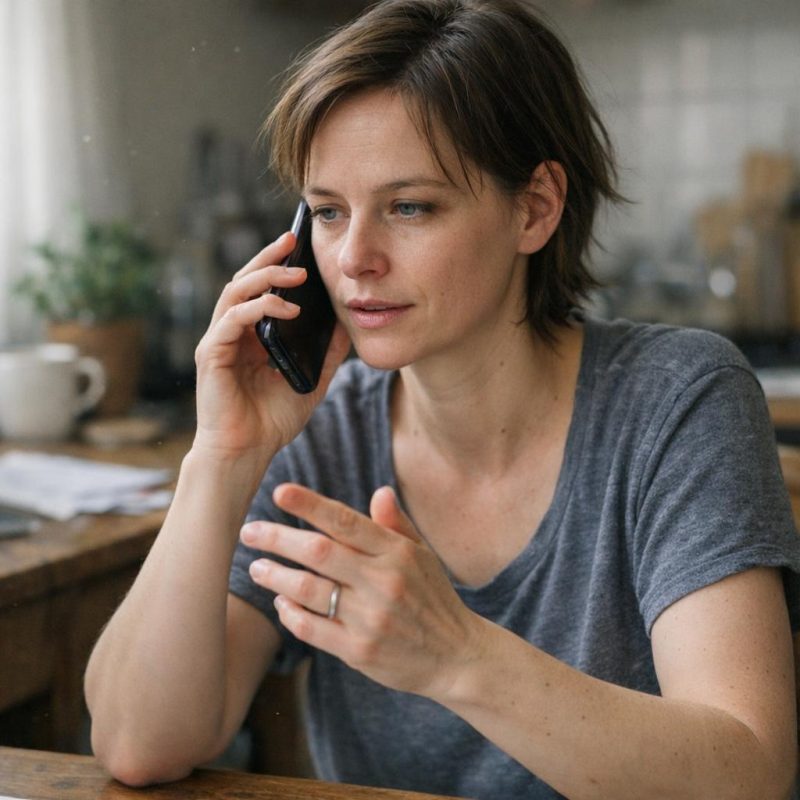 Image by RM AI
The Night Before
I barely slept that night. I lay in bed staring at the ceiling, replaying every conversation, every detail, every moment since that first phone call from Mr. Dwyer. I kept thinking about Mia sitting in that side room, confused and scared, while they questioned her about something she hadn't done. I thought about Ms. Pruitt's face when she'd admitted they knew the account didn't make sense. I thought about Mrs. Kline holding up my daughter's lunchbox in front of the class, using her as an example of what not to do. And I thought about all those other parents who'd asked questions and then disappeared from the Facebook group, their posts deleted, their concerns swept away. Every time doubt crept in—every time I wondered if I was overreacting, if maybe I should just let it go—I pictured Mia's face. The way she'd looked at me in the car afterward, like she was waiting for me to fix it. Like she trusted me to make it right. That was the thing they'd miscalculated. They'd thought targeting a kid would make a parent back down, would make me too scared of consequences to push back. But it had done the opposite. I wasn't backing down. Tomorrow I'd walk into that cafeteria, and I'd make them answer for what they'd done. I kept thinking about Mia's face in that side room, and every time doubt crept in, I reminded myself: she doesn't deserve this.
 Image by RM AI
The District Calls
The morning of the meeting, my phone rang at 7:48 a.m. I was standing in the kitchen, staring at the coffee maker like it held answers, when Administrator Chen's name lit up the screen. I answered on the second ring, my heart already hammering. 'Ms. Warren,' she said, and her voice had changed from our last conversation. Less bureaucratic. More... human. 'The access log you requested is ready. I pulled it myself last night.' I set down my mug, suddenly hyper-focused. 'And?' There was a pause, the kind where you can hear someone choosing their words carefully. 'It shows exactly what you thought it would show,' she said slowly. 'The timestamp, the user account, everything. It's all documented.' My chest tightened with something that felt like vindication mixed with rage. 'Can you email it to me?' Another pause. 'I could,' she said. 'But this is the kind of thing that needs to be handled with care. There are... implications.' I understood what she meant. This wasn't just about proving Mia innocent anymore. This was about proving someone guilty. 'Okay,' I said. 'So what do I do?' She cleared her throat. 'You'll want to come pick this up in person,' and her tone was different—careful, almost respectful.
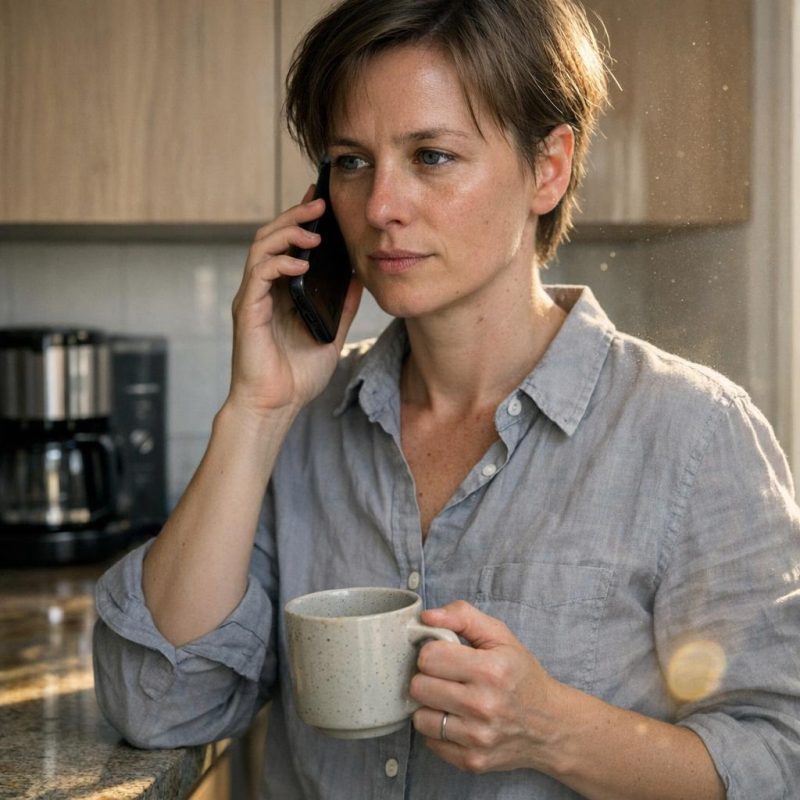 Image by RM AI
The Log
I drove to the district office with my hands white-knuckled on the steering wheel, running every possible scenario through my head. What if the log didn't show what I thought? What if there was some technical explanation that made it all make sense? But when Administrator Chen handed me the printed pages across her desk, her expression told me everything before I even looked down. The log was simple. Clean. Undeniable. On Sunday, October 15th, at 9:14 p.m.—hours after the fake Instagram account had been created—someone had accessed the school's student photo database. They'd downloaded exactly one image: Mia's fourth-grade class photo, the same one that had appeared on that account. The user login was listed as 'volunteer_mkline,' and beside it, in smaller text, was the associated email address. I read it twice, then a third time, just to be sure. My hands weren't shaking anymore. They'd gone completely still. The email address on the log belonged to Mrs. Kline, and my hands didn't shake when I read it—they steadied.
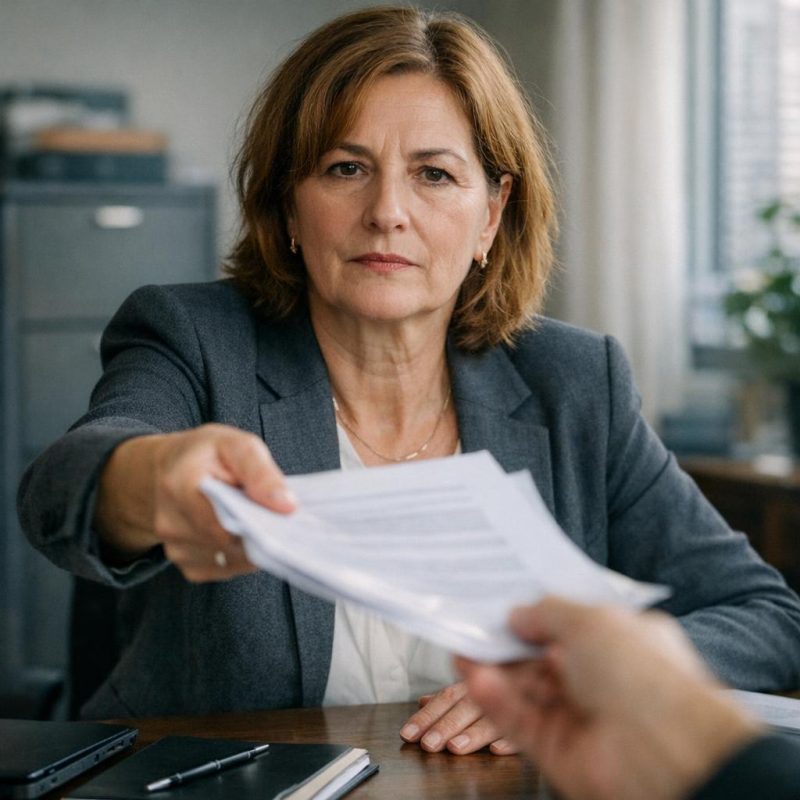 Image by RM AI
The Extra Detail
Administrator Chen sat back in her chair, watching me process the information. I looked up from the pages, and she met my eyes with something that looked like grim satisfaction. 'There's something else,' she said quietly. 'When I pulled the full access history for that login, I noticed a pattern.' She slid another sheet across the desk. 'Same account, different dates over the past eighteen months. Three other student photos were downloaded outside of normal volunteer hours.' I scanned the list. Each entry showed a timestamp late at night or on a weekend. Each one was a different student. 'Do you know whose kids these are?' I asked, though something in my gut already knew the answer. Chen nodded slowly. 'I cross-referenced them with district communications. All of them connected to parents who filed complaints,' and I felt something darker than anger settle in my chest.
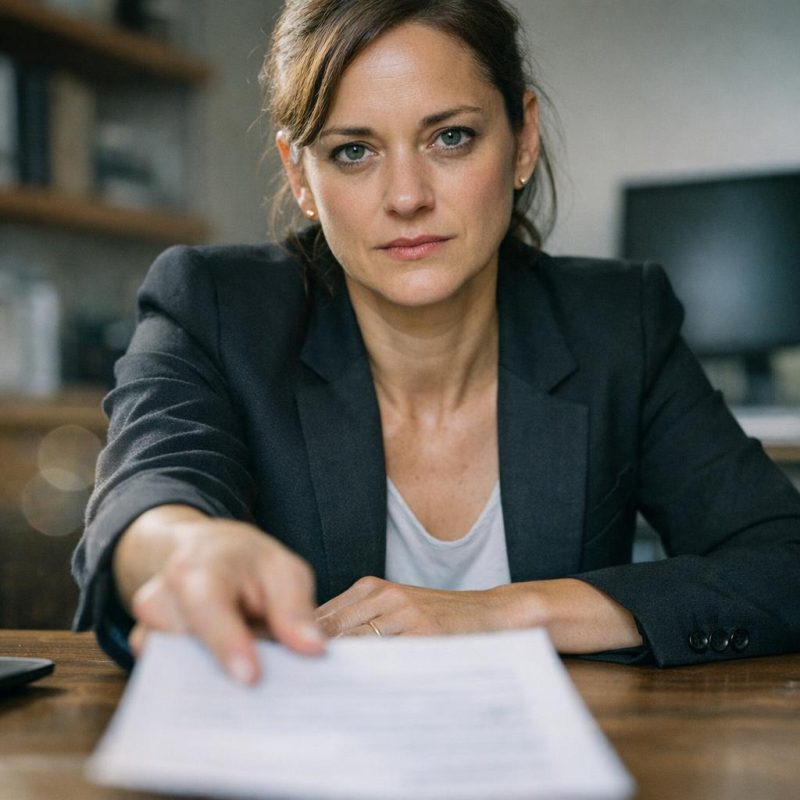 Image by RM AI
Who Else Knew
I stared at the list of names, my brain working through the implications. Four kids. Four families targeted. 'How long has this log existed?' I asked. 'How long have these records been available to view?' Chen folded her hands on her desk. 'Access logs are generated in real-time. Anyone with administrative credentials can pull them at any time.' The weight of that statement hung between us. 'So when Mr. Dwyer told me they were investigating,' I said slowly, 'he could have just... looked at this. He could have pulled this same log and known exactly who accessed Mia's photo.' Chen's expression didn't change, but something flickered in her eyes. 'Yes.' 'Did he?' I asked point-blank. 'Did he know about this before today?' Chen hesitated, and in that hesitation I saw the truth she was trying to navigate around. She couldn't accuse a building principal without evidence. But she could give me the pieces. 'The principal has access to these reports,' she said carefully, and I understood what she wasn't saying.
 Image by RM AI
The Resource Officer Question
A thought hit me, cold and sharp. 'Why wasn't the school resource officer involved from the start?' I asked. 'If someone was actually making threats online using a student's photo, shouldn't that have been reported to Officer Torres immediately?' Chen's jaw tightened. 'That's an excellent question,' she said. 'And one I asked myself when this crossed my desk.' She pulled up something on her computer, then turned the screen so I could see the email chain. 'Officer Torres reached out to Mr. Dwyer the day after the incident was reported. She asked to be briefed on the situation since it potentially involved online harassment of a minor.' I leaned forward, reading Torres's email. It was professional, thorough, exactly what you'd expect from someone trained in school safety protocols. 'What did he say?' Chen scrolled down to show me Mr. Dwyer's response. Two sentences. 'Thank you for your concern. The matter is being handled internally through appropriate channels.' My jaw went tight. Chen said Officer Torres had actually asked to be briefed, but Mr. Dwyer told her it was 'handled internally,' and my jaw went tight.
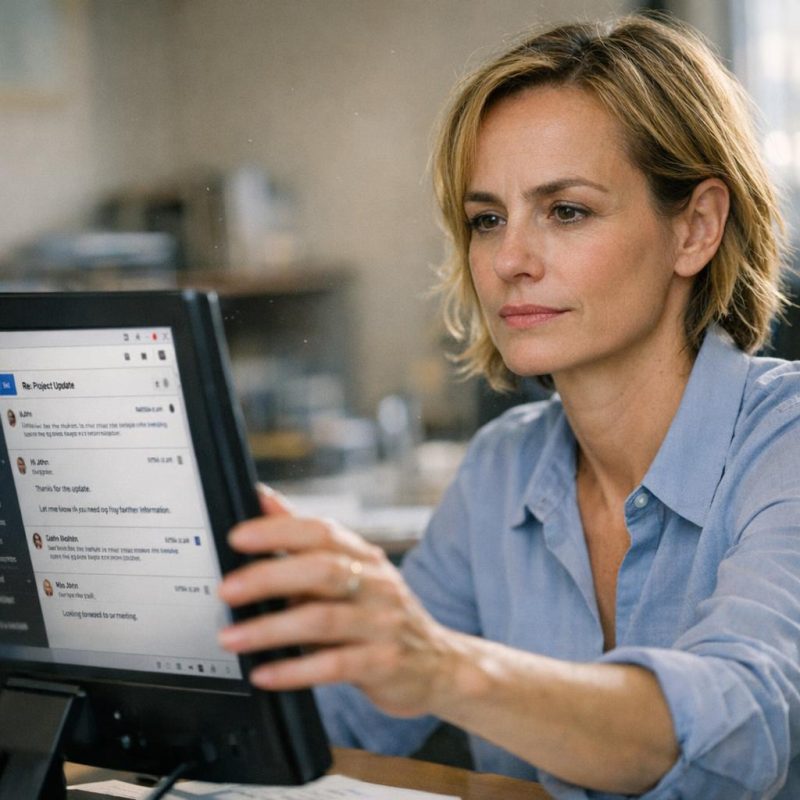 Image by RM AI
Chen's Offer
Chen closed her laptop and looked at me directly. 'There's a parent meeting tonight, correct? The one Mr. Dwyer scheduled?' 'Yes,' I said. 'Six o'clock in the cafeteria. I assume he's planning to control the narrative, maybe present some watered-down version where everyone made honest mistakes.' 'Would you mind if I attended?' she asked. The question caught me off guard. District administrators didn't usually show up to building-level parent meetings unless something was seriously wrong. 'Why would you want to?' I asked. She chose her words carefully again. 'The district has a vested interest in ensuring that school policies are communicated accurately. Given the... complexity of this situation, I think it would be beneficial to have someone present who can clarify district-level protocols and procedures.' I understood what she was really offering: backup, and the authority to make sure I wasn't dismissed again.
 Image by RM AI
Rehearsing the Moment
I spent the rest of the day preparing. Not notes, exactly—I didn't want to read from a script. But I needed to know exactly what I was going to say and when I was going to say it. I practiced in front of the bathroom mirror, then in my car in an empty parking lot, then pacing around my living room while Mia was at her after-school program. The access log sat on my kitchen counter in a manila folder, and every time I walked past it, I felt that steady, cold certainty again. I wasn't going in there to argue or plead my case. I was going in there to expose what had been done. The timing mattered. I needed to let Mr. Dwyer speak first. Let him present whatever sanitized version of events he'd prepared. Let the other parents hear his explanations, his reassurances that everything had been handled appropriately. And then I'd show them the log. I'd let them see Mrs. Kline's login, the timestamp, the other students whose photos had been accessed. I wanted them to hear Mr. Dwyer try to explain before they knew what I knew—I wanted them to hear him lie.
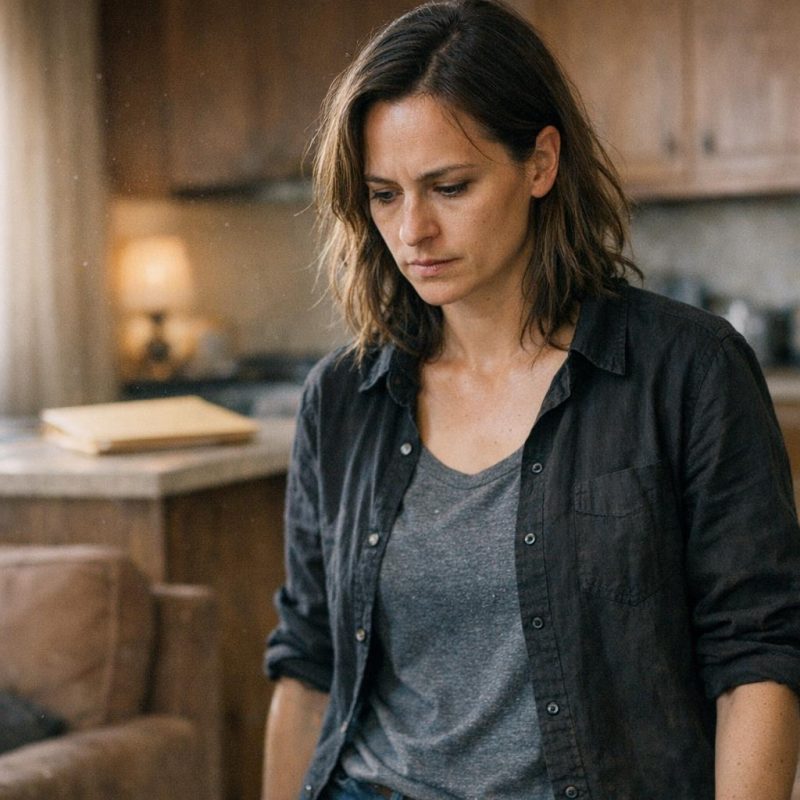 Image by RM AI
The Pattern
Sitting at my kitchen table with the access log spread out in front of me, I finally saw the whole picture. This wasn't about one vindictive volunteer losing her temper. Mrs. Kline had done this before. Multiple times. To multiple families. Each time, a parent had raised a concern about something at the school—food quality, safety protocols, teacher conduct—and shortly after, their child became the center of some incident that made the parent look hysterical or their kid look troubled. The Instagram account with Mia. Another student accused of sending threatening texts last spring, also using photos from the school database. A third kid flagged for 'concerning drawings' that the parent swore weren't theirs. All of it traceable back to that same volunteer login, all of it happening just after a parent asked the wrong questions. And Mr. Dwyer had known. He'd had access to these logs the entire time. He could have stopped it with one simple check, but he hadn't. Because Mrs. Kline donated to the school. Because her husband sat on committees. Because keeping wealthy parents happy mattered more than protecting the kids those parents were weaponizing this system against. Mrs. Kline wasn't just vindictive—she was methodical, and Mr. Dwyer had let it happen because money mattered more than protecting kids.
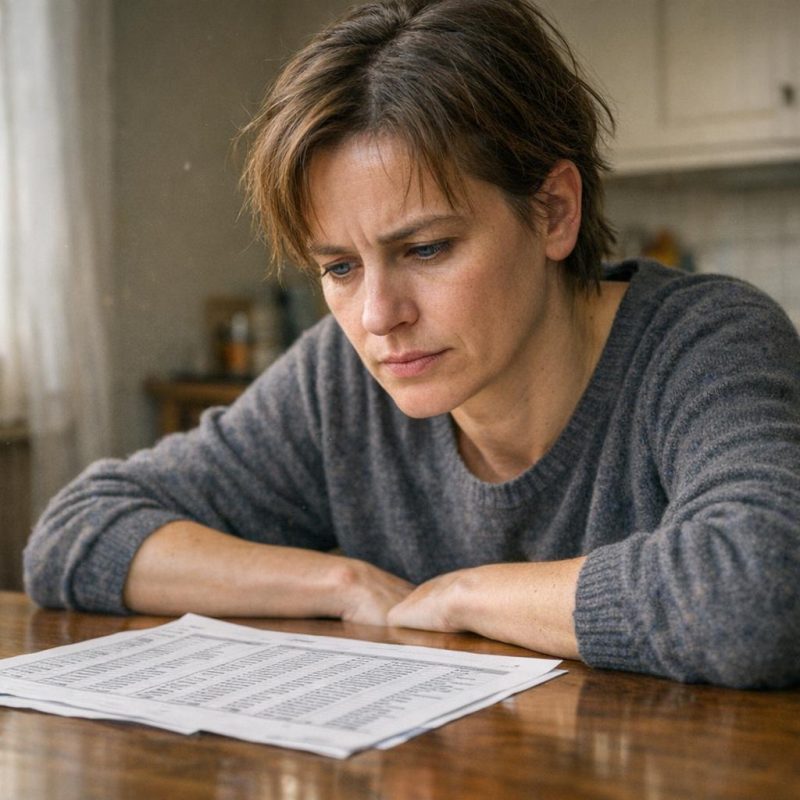 Image by RM AI
Arriving at the Meeting
I got to the cafeteria twenty minutes early because I didn't trust myself to walk in calm if I was rushing. The folder sat heavy in my bag, the access log printouts inside already dog-eared from how many times I'd reviewed them the night before. Parents started trickling in around six forty-five, most of them looking tired, a few clutching coffee cups like lifelines. The usual parent meeting vibe—resigned obligation mixed with mild curiosity about what administrative nonsense we'd be subjected to this time. I took a seat near the middle, not too close to the front, not hiding in the back. I wanted to be visible when the moment came. The fluorescent lights buzzed overhead, casting that particular institutional glow that makes everyone look slightly unwell. Mr. Dwyer stood near the projector, fussing with his laptop. Administrator Chen sat off to the side, her expression neutral but watchful. I'd emailed her the logs yesterday. She'd responded with three words: 'See you Tuesday.' Then I saw her. Mrs. Kline stood at the front table arranging donation envelopes, and when she saw me, her smile didn't quite reach her eyes.
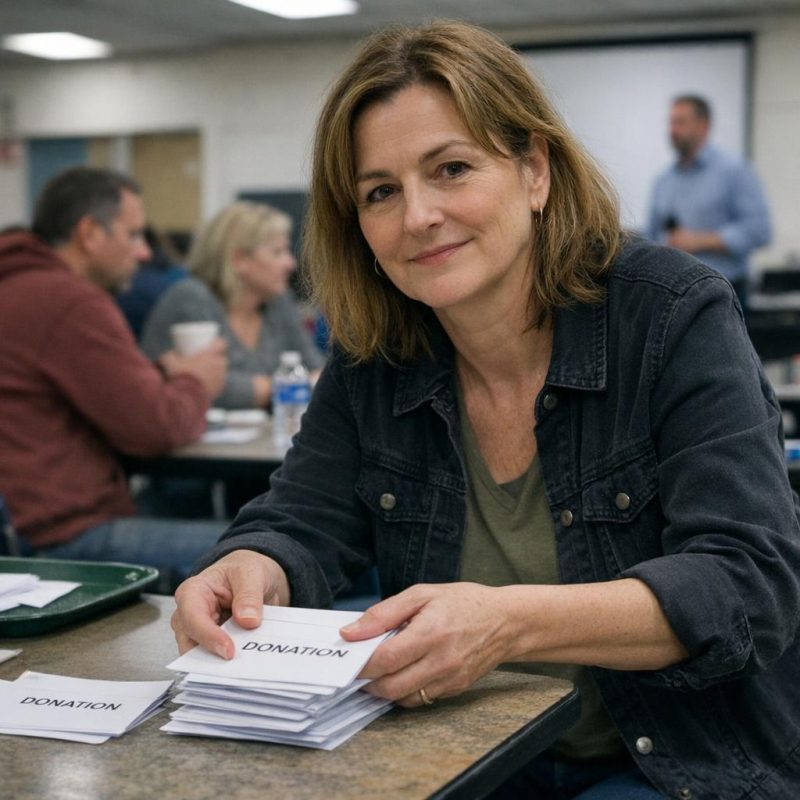 Image by RM AI
Mr. Dwyer's Opening
Mr. Dwyer cleared his throat and started his spiel about how 'recent misunderstandings' had caused 'unnecessary concern' in the community. He used that principal voice—soothing, vaguely patronizing, designed to make parents feel like they were overreacting. He said the field trip was back on track, that we needed to 'focus on the positive,' and that dwelling on 'social media rumors' wasn't productive for anyone. Mrs. Kline nodded along from her spot near the donation table, her expression serene. A few parents shifted in their seats, glancing at each other. I could feel the energy in the room—most people just wanted this over with so they could get home. Mr. Dwyer was counting on that exhaustion, that desire to smooth things over and move on. He gestured toward a slide about bus schedules and chaperone assignments. He said we needed to 'move forward as a community,' and I stood up before he could finish the sentence.
 Image by RM AI
The Printout
I pulled the folder from my bag and held up the first printout. My voice came out steadier than I expected. 'I need everyone to see something before we move on,' I said. Mr. Dwyer blinked at me, his mouth still half-open from whatever he'd been about to say. I walked toward the front, holding the page so people could see it. 'This is an access log from the school's photo database. It shows which accounts accessed student photos and when.' I pointed to the highlighted rows. 'This volunteer account accessed my daughter's photo at nine thirty-seven PM on a school night. The same account accessed photos of three other students after hours over the past year. Each time, those students were later accused of doing something they didn't do.' I laid the page on the table in front of Mr. Dwyer. 'The Instagram account that impersonated Mia used a photo that only existed in this database. My daughter never posted it anywhere public.' The room went silent in that special way it does when people realize they've been fooled, and they hate that they believed the lie so easily.
 Image by RM AI
Mrs. Kline's Laugh
Mrs. Kline let out a laugh—loud, performative, designed to break the tension. 'Oh, this is ridiculous,' she said, shaking her head like I'd just suggested the moon landing was fake. 'Those logs are notoriously unreliable. Anyone could have used that login. We share passwords all the time for efficiency.' She looked around the room, appealing to the crowd. 'I've been volunteering here for six years. Six years of my time, my money, my energy. And now I'm being accused of—what exactly? Framing children?' Another laugh, sharper this time. A few parents looked uncertain, caught between the evidence I'd presented and the confidence radiating off Mrs. Kline like a force field. She crossed her arms, her smile still fixed in place. 'This is what happens when parents get hysterical over social media nonsense. They start seeing conspiracies everywhere.' But I was watching the other parents' faces. They weren't laughing. They were looking at the printout, then at her, then back at the printout. Her laugh was too sharp, too loud, and I saw the exact moment she realized nobody else was laughing with her.
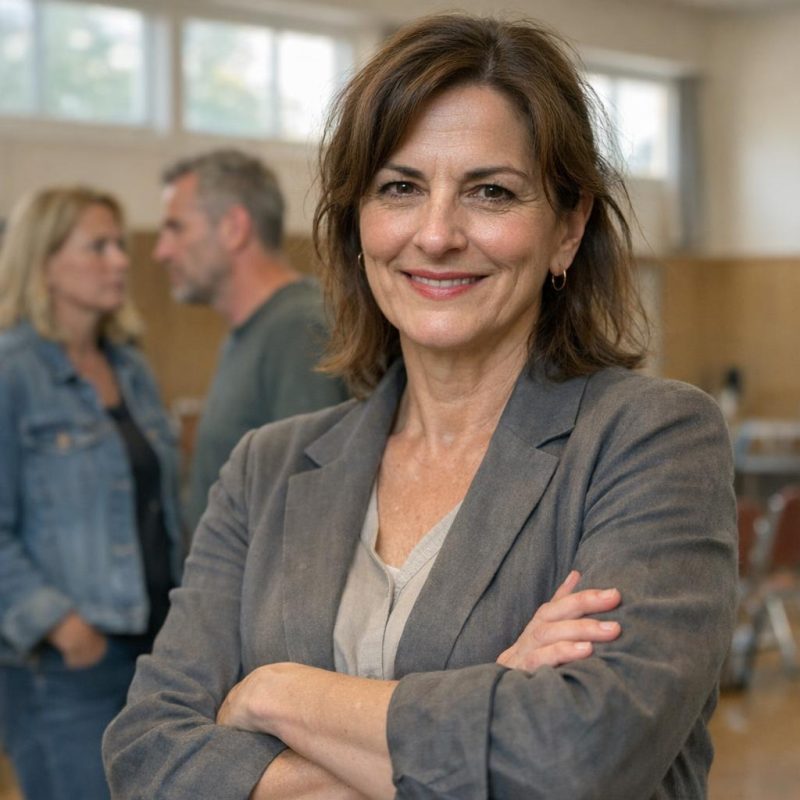 Image by RM AI
Administrator Chen Speaks
Administrator Chen stood up from her seat at the side of the room. She didn't raise her voice, but the authority in it cut through everything else. 'Mrs. Kline,' she said, 'the district takes database security very seriously. When Ms. Monroe sent me these logs yesterday, I reviewed them personally.' She walked to the front, her expression professional and cold. 'Your login was used exclusively from your home IP address on each occasion. No one else accessed that account during the relevant timeframes.' Mrs. Kline's smile faltered. 'I'd also like to know why you accessed these particular students' photos after hours, outside of any school event or legitimate volunteer activity.' Chen pulled out her own folder. 'And I'm very interested in understanding why each of these children was subsequently accused of policy violations within days of your access.' The room was so quiet I could hear the ventilation system humming. Mrs. Kline's face changed—just for a second—from confidence to something colder, sharper, like we'd finally seen what she really looked like underneath.
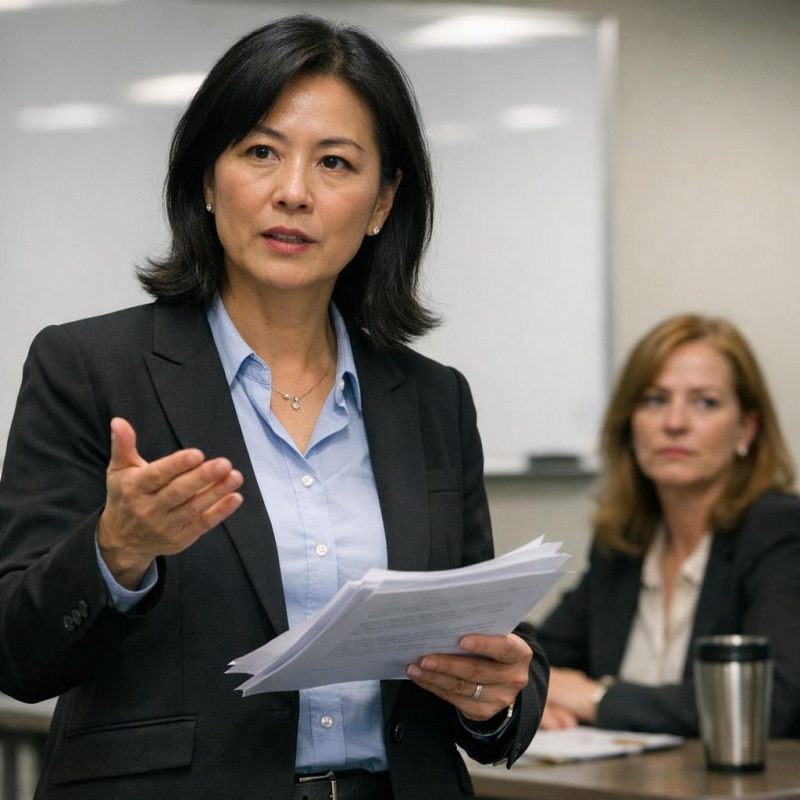 Image by RM AI
The Other Names
Chen opened her folder and read from a list. 'Marcus Whitley, photo accessed October third. Accused of sending threatening texts October seventh. Lily Chen—no relation—photo accessed March nineteenth. Accused of vandalism March twenty-first. James Rodriguez, photo accessed last May. Accused of creating a fake teacher email account days later.' She looked up at the crowd. 'In each case, the evidence trail led back to school resources the children couldn't have accessed from home.' Several parents gasped. A woman in the third row stood up slowly, her face pale. 'That's my son,' she said. 'James. They said he hacked a teacher's email, but he didn't even know the password.' Her voice shook. 'They made us sign a behavior contract. We almost moved schools because of it.' Another parent spoke up. 'Marcus is mine. We took away his phone for months. He kept saying he didn't do it.' The room erupted—not in chaos, but in that specific kind of collective realization when a group of people simultaneously understands they've been manipulated. One mother stood up and said, 'That's my son—he was accused too,' and the room erupted.
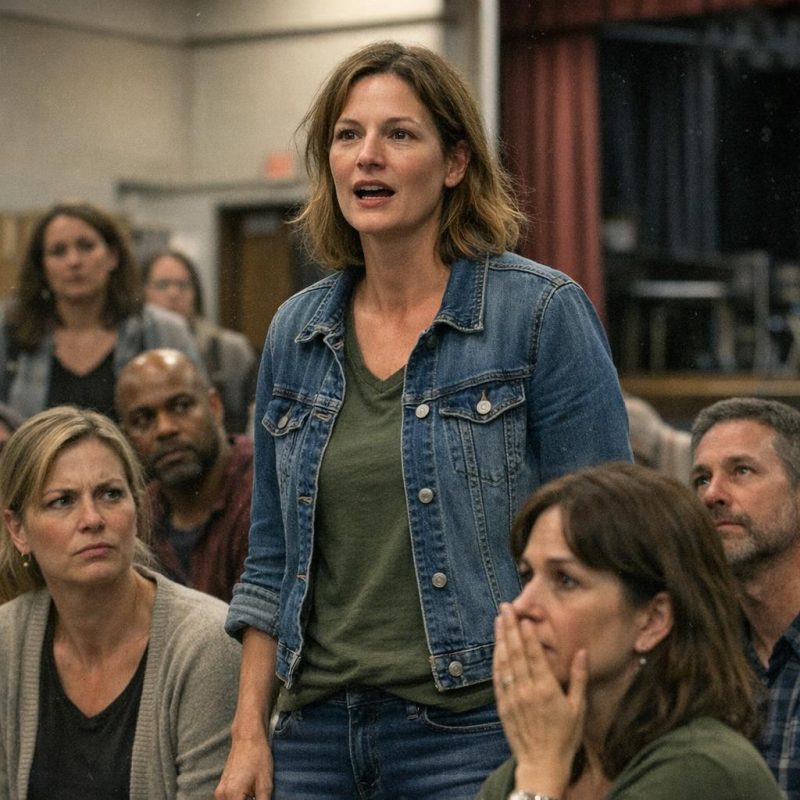 Image by RM AI
Mr. Dwyer's Trap
Administrator Chen held up her hand for quiet. When the room settled, she turned to Mr. Dwyer. Her expression was carved from ice. 'Mr. Dwyer, I have a question for you.' She pulled out another document. 'Last April, James Rodriguez's parents filed a formal complaint about the email incident. You investigated and signed a resolution form stating the issue was definitively traced to James and the matter was closed.' She laid the form on the table. 'But you never checked the database access logs, did you? Because if you had, you would have seen the same pattern Ms. Monroe discovered. You would have seen that the volunteer account accessed James's photo right before someone created that fake email using his name and photo.' Mr. Dwyer's face drained of color. 'You closed the case without doing basic due diligence. Why?' The room waited. Every parent was staring at him now. Mr. Dwyer opened his mouth, closed it, and I watched a man realize he'd protected the wrong person.
 Image by RM AI
The Donors
Mrs. Kline's voice cut through the silence, sharp and desperate. 'This is absurd. Do you know how much money I've raised for this school? The library renovation, the new playground equipment, the STEM lab—I made those happen.' She looked at Chen, then at the crowd. 'My family has donated thousands of dollars. We've given our time, our resources, our connections. And now you're going to believe some—some technical glitch over everything we've contributed?' Her voice rose. 'Those logs don't prove anything. They're circumstantial at best.' She turned to Mr. Dwyer, like he might back her up, but he was staring at his hands. Chen stepped forward, her voice quiet but absolute. 'Mrs. Kline, your financial contributions to this school are noted and were appreciated. But those contributions came with an implicit agreement that you would act in the best interests of all students.' She paused. 'Donations don't grant authority to harm children,' and Mrs. Kline's mouth snapped shut like a trap.
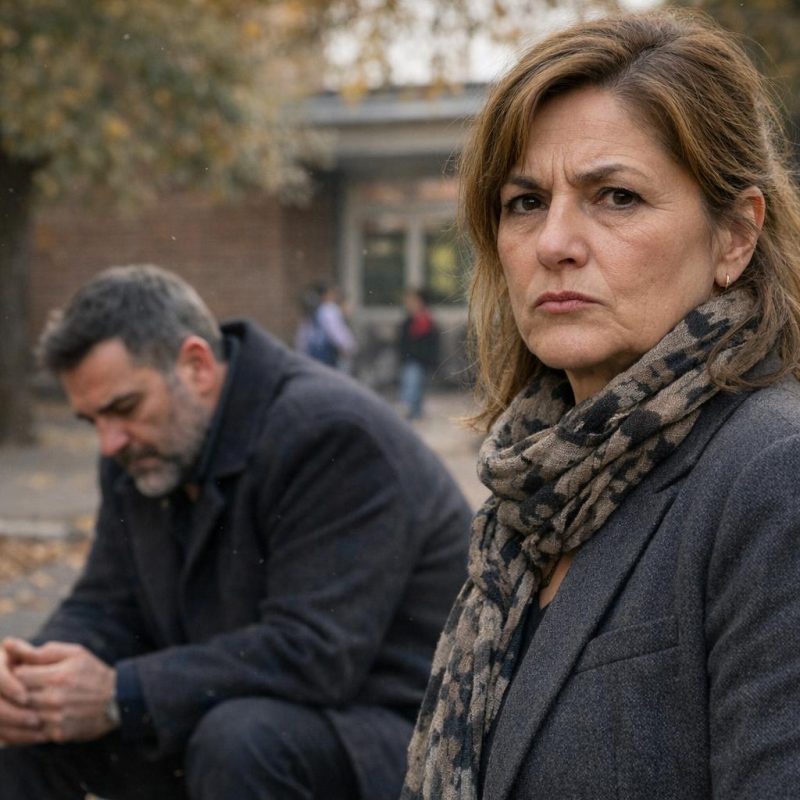 Image by RM AI
Escorted Out
Chen didn't raise her voice. She just said, 'Mrs. Kline, I'm going to ask you to leave the building now.' Officer Torres stepped forward from where she'd been standing near the doorway, and honestly, I'd forgotten she was even there. She'd been so still, just watching everything unfold. Mrs. Kline's face went through about five different expressions in two seconds—shock, indignation, rage, then something that almost looked like fear. 'You can't be serious,' she said, but her voice had lost that commanding edge. It sounded hollow. Chen didn't respond, just gestured toward the door. Torres moved closer, not threatening, just present. Professional. 'Ma'am,' Torres said quietly, 'let's make this easy.' Mrs. Kline grabbed her purse from the chair like it had personally offended her, yanked it onto her shoulder. The hallway was still full of parents, all of them silent, watching. I stood near the wall as she walked toward the exit, Torres a few steps behind. The clicking of Mrs. Kline's heels echoed in that awful silence. A couple of parents stepped aside to let her pass, but nobody said anything. Nobody defended her. She walked past me without looking, and I didn't need her to—I'd already won.
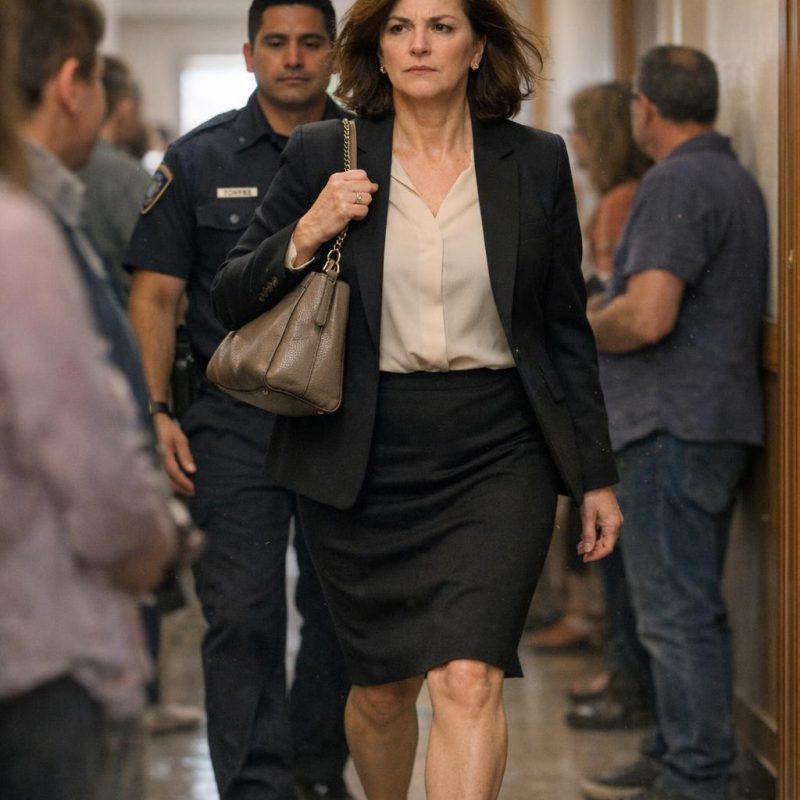 Image by RM AI
Mia Goes on the Trip
The next morning felt surreal. I drove Mia to school at 7:15 for the museum trip departure, and she was bouncing in her seat the whole way there. 'Do you think they'll have the dinosaur exhibit?' she asked for the third time. 'Mom, can I get something from the gift shop?' She had no idea what had happened the night before. To her, this was just another field trip, another normal day. I'd decided not to tell her the full story, not yet. Maybe not ever. What would I even say? The bus was already idling in the parking lot when we arrived, exhaust puffing into the cold morning air. Kids were lining up with their permission slips and lunches. Mia hugged me quick, then ran toward her friends. I watched her climb those big bus steps, backpack bouncing against her shoulders, turning to wave at me through the window. Mrs. Chen was there checking clipboards. Mr. Dwyer was notably absent. Ms. Pruitt stood near the bus door, and when she saw me, she gave a small, hesitant nod. I waved back. Mia pressed her face against the window, grinning. She looked so small climbing those bus steps, and I realized she'd never know how close we came to her believing she was the problem.
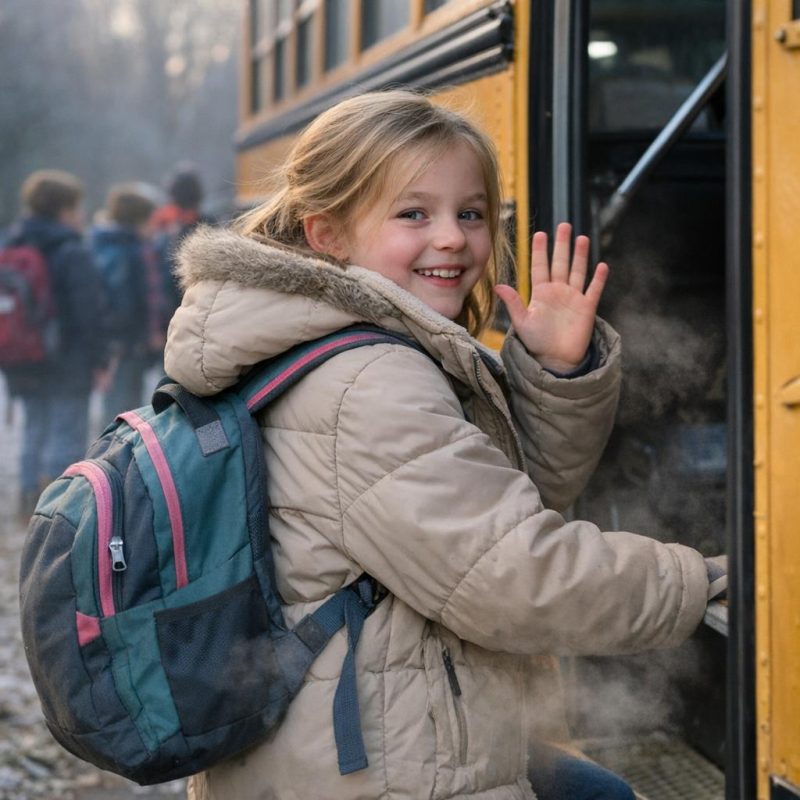 Image by RM AI
The Quiet Apology
I was unlocking my car when I heard footsteps behind me. 'Tessa?' I turned. Ms. Pruitt stood a few feet away, arms crossed against the morning chill. She looked tired, like maybe she hadn't slept much either. 'I just wanted to say—' She stopped, looked at the ground. 'I should have said something sooner. When I saw what was happening with Mia, I knew it wasn't right, but I didn't know how to...' She trailed off. I waited. 'I was scared,' she finally said. 'Of Mrs. Kline, of losing my job, of making waves. And I'm sorry. I should have been braver.' The parking lot was mostly empty now, just a few cars scattered around. Somewhere nearby, a crow cawed. I thought about all the times I'd stayed quiet in my own life, all the moments I'd chosen safety over honesty. 'I understand fear,' I said. She nodded, and something in her face relaxed, like I'd given her permission to forgive herself. 'Thank you for fighting for her,' she said quietly, then walked back toward the building. I told her I understood fear, and she nodded like I'd given her permission to forgive herself—but I wasn't sure I could do the same for everyone else.
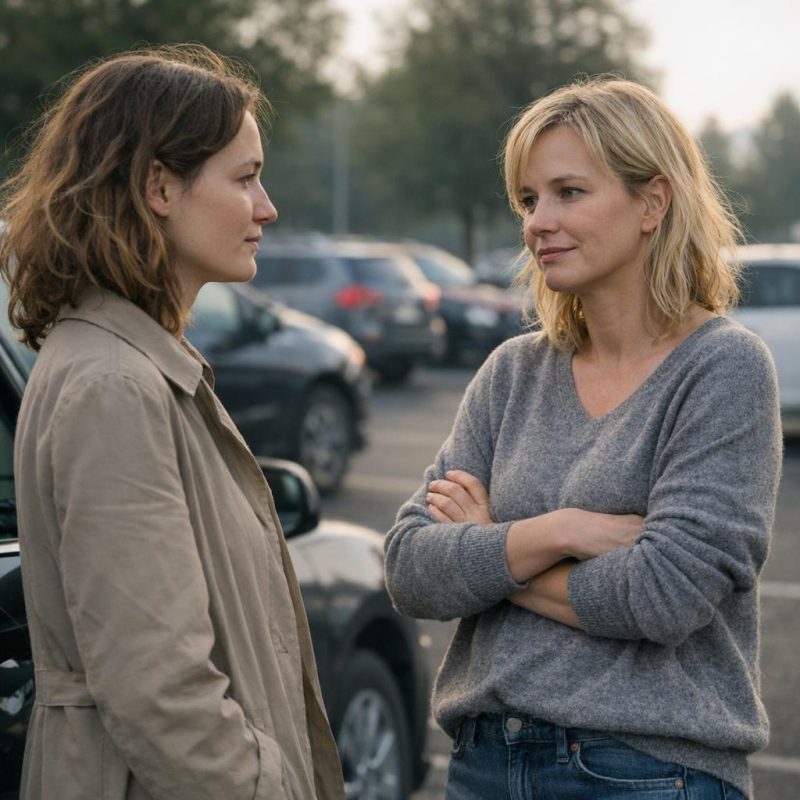 Image by RM AI
The Woman I Became
I sat in my car for a while after she left, engine off, just thinking. I'd learned something important through all of this: institutions protect themselves first. Always. They'll protect reputations, donors, the path of least resistance. They won't protect your kid unless you make them. And the fastest way to protect a child isn't to be polite or patient or understanding. It's to refuse to stay quiet. To be inconvenient. To ask questions nobody wants to answer and demand proof nobody wants to provide. To stand in hallways and parking lots and make yourself impossible to ignore. I thought about my mom, about friends' moms, about older women I'd seen do exactly this over the years—make themselves unmovable obstacles between harm and their kids. I used to think they were being difficult. Overreacting. Making scenes. Now I understood they were doing the only thing that actually works. I'd become one of them in the past few days, and I wasn't polite about it, and I wasn't sorry. Not even a little. I thought about older women I'd seen do this—make themselves inconvenient, unmovable, impossible to ignore—and I realized I'd finally become one of them, and I wasn't sorry at all.
 Image by RM AI