My Grandson Was Accused of Cheating—Then I Found the Teacher's Name Hidden in His Essay
My Grandson Was Accused of Cheating—Then I Found the Teacher's Name Hidden in His Essay
The Silence That Spoke Volumes
Noah came home from school on a Tuesday in November, and I knew something was wrong before he even set down his backpack. He's thirteen, and usually he walks into my kitchen already mid-sentence—telling me about some YouTube video or complaining about the cafeteria pizza. That day, though, he was silent. He dropped his bag by the door with this careful, deliberate movement, like he was trying not to make noise. I was folding laundry at the table, and I looked up to see his face all tight and closed off. His shoulders were hunched in a way that made him look smaller. 'You hungry, sweetheart?' I asked, keeping my voice light. He shook his head without meeting my eyes. I set down the towel I was folding and really looked at him. His jaw was clenched, and there was this dull, faraway look in his eyes—the kind I'd only seen once before, years ago, when his father left. 'Noah,' I said more firmly. 'What happened?' He stood there for what felt like a full minute, just staring at the kitchen floor. Then he whispered, 'Mrs. Kline said I cheated.' But it wasn't the words that got me—it was what came next. When Noah whispered what happened, the word 'everybody' hit me like a slap.
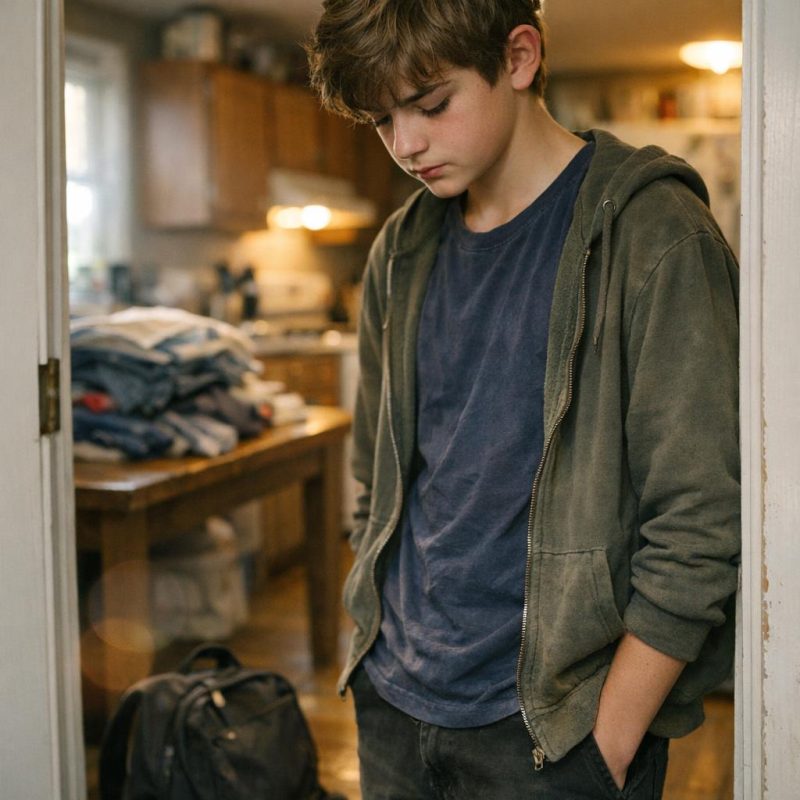 Image by RM AI
The Accusation
I pulled out a chair and gestured for him to sit down. He did, slowly, like his legs weren't working right. I poured him a glass of water and sat across from him, hands folded on the table, waiting. Noah took a shaky breath and started talking. He'd written an essay about Harriet Tubman—something he'd been genuinely excited about, I remembered that clearly. He'd turned it in on Friday, and on Monday, Mrs. Kline called him to the front of the classroom. In front of everyone. She held up his essay and told the class she was 'disappointed.' That the writing 'didn't sound like him.' That it was 'too sophisticated' for a seventh grader. Noah's voice cracked when he told me this part. He said some kids started whispering right away. A few laughed. One boy in the back row said 'busted' loud enough for everyone to hear. Mrs. Kline didn't stop them. She just stood there with his essay in her hand, shaking her head like he'd personally betrayed her. My chest tightened with a white-hot anger I hadn't felt in years. This wasn't a private conversation or a gentle question. This was public humiliation. This was a teacher using her authority to shame a child. He said Mrs. Kline held up his essay and told everyone she was 'disappointed'—that it 'didn't sound like him.'
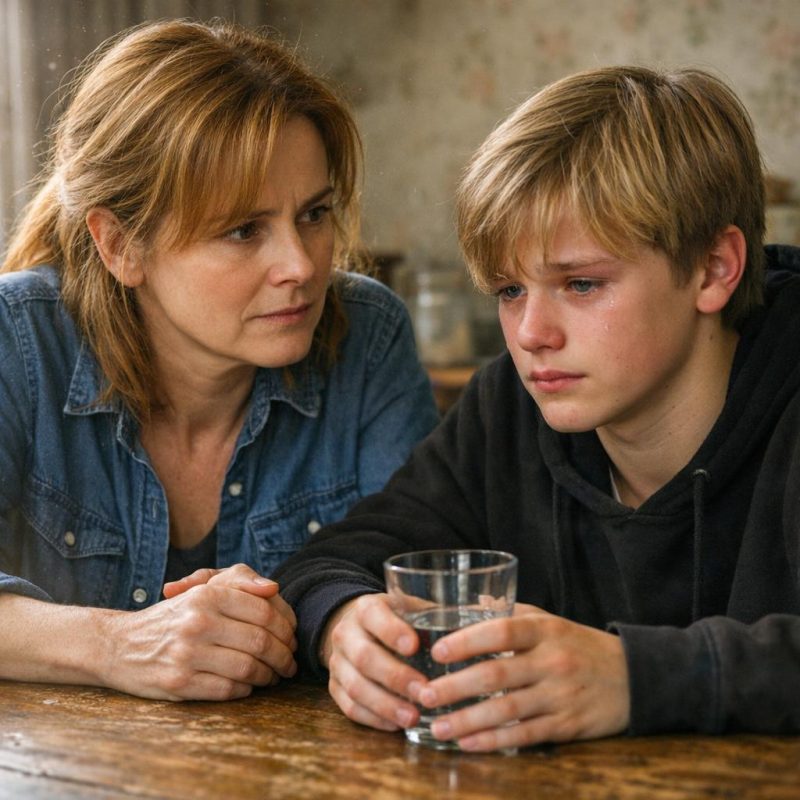 Image by RM AI
The Essay He Actually Wrote
I remembered those two nights vividly. Noah had sat at my kitchen table with his notebook open, surrounded by library books about the Underground Railroad. He'd asked me how to spell 'perseverance' and whether 'conductor' was the right word for what Harriet Tubman did. I'd watched him chew on his pencil, scratch out sentences, rewrite them. He'd read passages aloud to me, asking if they made sense. 'Does this sound okay, Grandma?' he'd asked, and I'd told him it sounded great—because it did. It sounded like a kid who cared about what he was writing, who was trying his best to get it right. He'd typed it up on my old laptop, hunched over the keyboard with two-finger typing, stopping every few words to check his handwritten draft. I'd made him hot chocolate while he worked. The second night, he'd printed it out and read the whole thing to me, proud and a little nervous. 'Think Mrs. Kline will like it?' he'd asked. I'd told him she'd be impressed. I should've known better than to assume a teacher would give him the benefit of the doubt. He said he turned it in online, waited for the Wi-Fi to load, and hit submit—and the next day, everything changed.
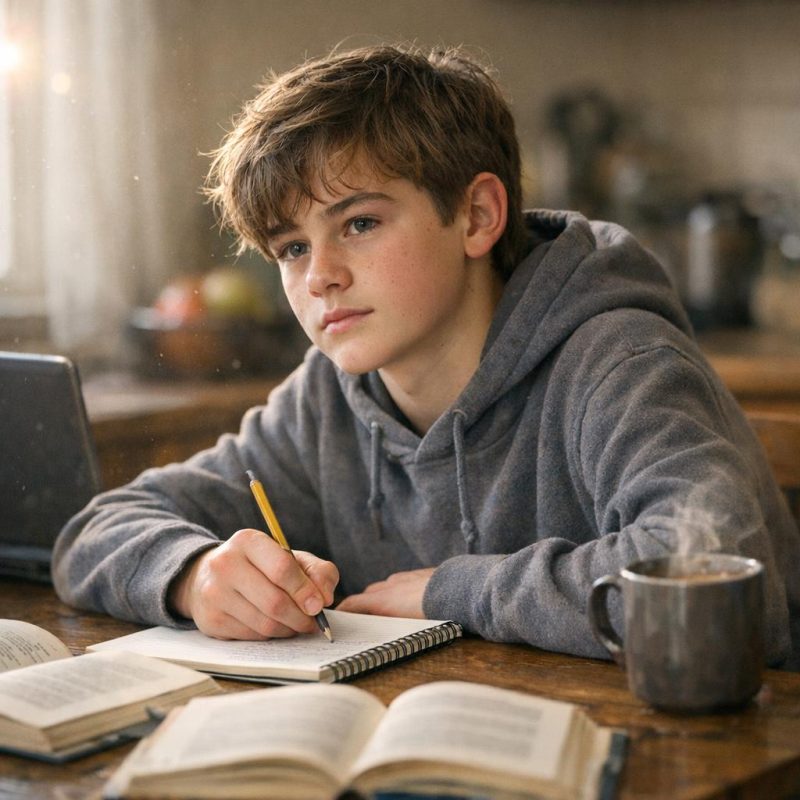 Image by RM AI
The Zero and the 'Investigation'
Mrs. Kline hadn't just accused him. She'd announced she was giving him a zero while she 'investigated' where he'd copied it from. A zero. Before any investigation, before asking him a single question in private. She'd decided he was guilty and made sure everyone else knew it too. Noah told me that by lunchtime, kids were calling him a cheater in the hallway. Someone had written 'FAKER' on his locker in marker. Another kid asked if he'd used ChatGPT, which Noah didn't even know how to access. He'd sat alone at lunch, he said, because his usual friends didn't want to be associated with him. One girl he'd known since elementary school had looked right through him like he didn't exist. He'd tried to tell Mrs. Kline after class that he'd really written it himself, but she'd cut him off. 'We'll discuss this when I have proof,' she'd said, her voice cold. 'Until then, the zero stands.' I could see the toll it was taking on him. His voice had gotten quieter as he talked, and his hands were trembling. He reached for the pack of crackers I'd set on the table, but he wasn't really eating—just fidgeting. By the time he finished telling me, his hands shook so badly he crushed the cracker packet without realizing it.
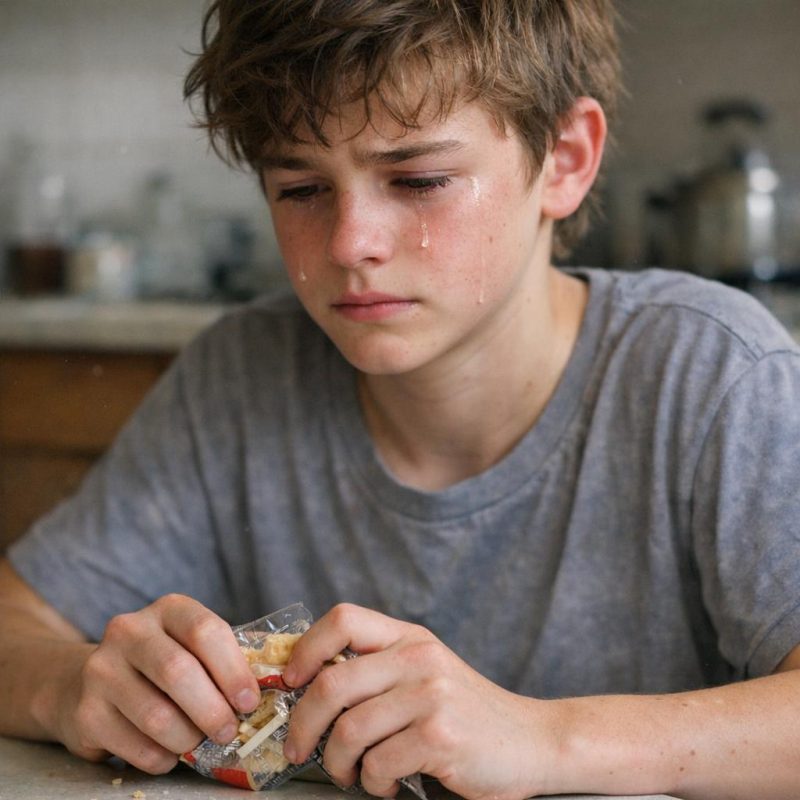 Image by RM AI
A Mother's Fear, A Grandmother's Fight
I raised Noah alongside my daughter Megan after his father walked out when Noah was four. Megan worked two jobs to keep us afloat, so Noah spent most afternoons and evenings with me. I'd helped him with homework since kindergarten, watched him grow from a shy kid into this thoughtful, curious boy who asked questions about everything. I'd seen him struggle with reading in second grade and celebrate when he finally got it. I'd watched him write stories about dragons and superheroes, then essays about historical figures he admired. I knew this kid. I knew his voice, his effort, his heart. And I was not going to let some teacher brand him a liar and a cheat without a fight. That night, after Noah's mom picked him up, I sat at my computer and opened my email. I found the school's contact form and typed out a message to the principal, keeping my tone professional but firm. I requested a meeting as soon as possible to discuss the accusation against my grandson. Then I went to my phone and scrolled through my photos. There they were—pictures I'd taken of Noah working at my kitchen table, bent over his notebook, books spread around him. I printed them out. I gathered his handwritten outline, the one he'd left on my counter. I emailed the school immediately and asked for a meeting—I went in with a folder like I was going to court.
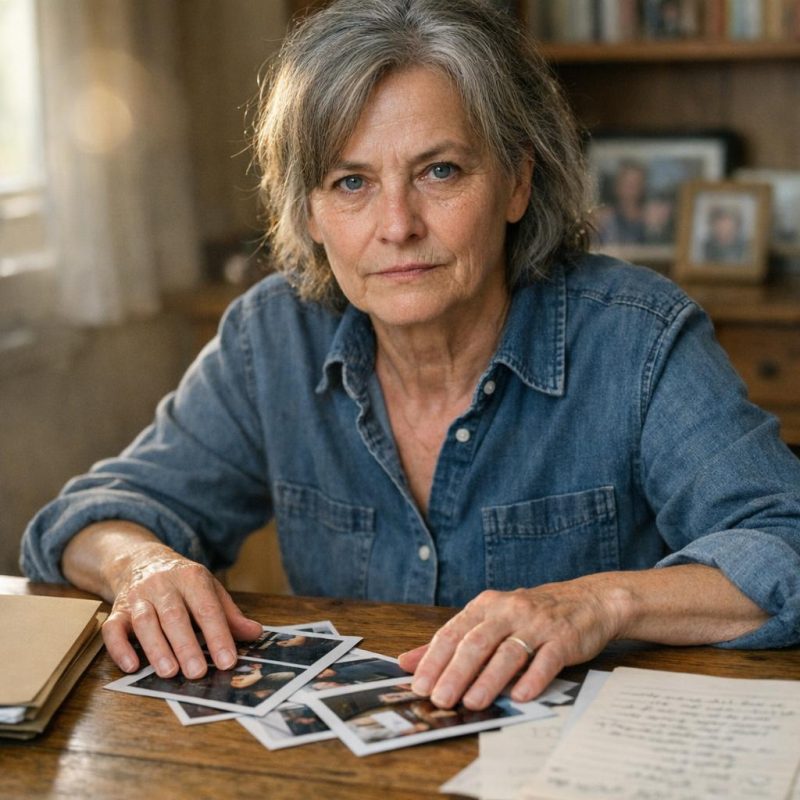 Image by RM AI
Gathering Evidence
The next morning, I got a reply from the school secretary. The meeting was scheduled for the following afternoon at three o'clock with Mrs. Kline and the vice principal. I spent the day organizing everything I had. The photos of Noah writing. His handwritten outline with his messy, kid handwriting all over it—arrows, cross-outs, little doodles in the margins. I had the printout of the final essay he'd shown me before submitting. I even had the library receipt showing he'd checked out three books on Harriet Tubman the week before the essay was due. I laid it all out on my dining room table like evidence in a trial. But even as I did this, a knot of anxiety tightened in my stomach. Would they believe me? I was a grandmother, not a teacher. I didn't have credentials or authority. I just had my word and a few photos. Mrs. Kline had the power of her position, her degree, her professional reputation. She could say whatever she wanted about Noah's work, and people would believe her because she was the expert. Who was I to challenge that? Just someone who'd watched a kid pour his heart into an essay and get destroyed for it. I couldn't shake the feeling that I'd need more than a grandmother's word against a teacher's authority.
 Image by RM AI
The Night Before
I didn't sleep well that night. I kept replaying Noah's story in my head, imagining him standing at the front of that classroom, every eye on him, while his teacher publicly called him a cheat. I thought about the other kids laughing, whispering, writing on his locker. I thought about how small he must have felt. How betrayed. He'd trusted Mrs. Kline. He'd worked hard because he wanted to impress her. And she'd repaid that effort by humiliating him in front of his peers without even asking him a single private question first. What kind of teacher does that? Every time I closed my eyes, I saw his face at my kitchen table—the way he'd looked up at me with that nervous hope when he'd asked if Mrs. Kline would like his essay. I'd told him yes. I'd told him she'd be impressed. God, I felt like I'd failed him somehow, even though I knew logically that wasn't true. Around two in the morning, I got up and made myself tea. I sat at the kitchen table in the dark, folder of evidence beside me, and tried to prepare for what I'd say. How do you prove a negative? How do you prove a kid didn't cheat? I kept thinking about the way Mrs. Kline said 'disappointed'—like she'd already decided Noah was guilty.
 Image by RM AI
Walking Into the Lion's Den
The school hallway smelled like floor wax and old cafeteria food. Noah walked beside me, quiet again, his backpack straps clutched tight in both hands. I'd told him he didn't have to come, but he'd insisted. 'I want to be there,' he'd said, and I couldn't argue with that. The walls were covered in motivational posters—'Reach for the Stars' and 'Respect, Responsibility, Results'—the kind of corporate slogans that sound nice but don't mean much when a kid is being publicly shamed. We checked in at the main office, and the secretary told us to wait. The chairs were small, meant for children, and I felt ridiculous perched on one with my folder on my lap. After five minutes, the vice principal appeared and led us down another hallway to a small conference room. Mrs. Kline was already there, sitting on the far side of the table with a leather portfolio in front of her. She stood when we entered, extending her hand. 'Mrs. Crawford,' she said, her voice smooth and pleasant. 'Thank you for coming in.' But there was something in her eyes—something cold and assessing—that didn't match the warmth of her words. She glanced at Noah, then back at me, and I felt the power imbalance immediately. She was the professional. I was just the grandmother. Mrs. Kline greeted me with a tight smile and a tone that sounded sweet on the surface but sharp underneath.
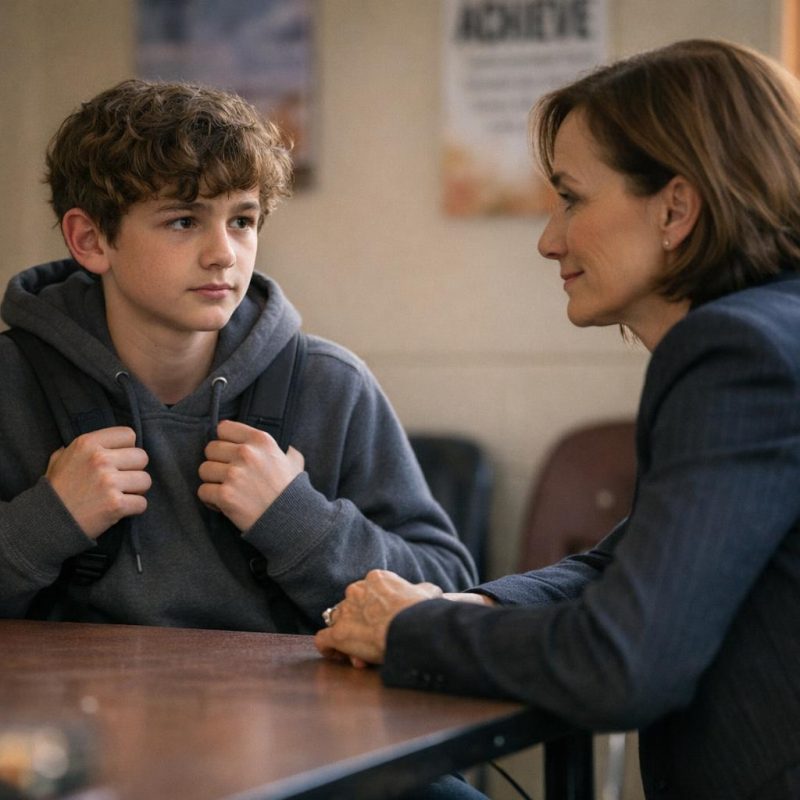 Image by RM AI
The Printed Essay
Mrs. Kline opened her leather portfolio and slid a printed copy of Noah's essay across the table. It was marked up in red pen, underlined passages everywhere, question marks in the margins. Vice Principal Torres sat beside her, arms folded, listening but not speaking. He had a tired, bureaucratic look about him—someone who'd seen a hundred of these meetings and wanted them to end quickly. Mrs. Kline tapped the essay with her index finger. 'This is well beyond eighth-grade writing,' she said, her voice measured and professional. 'The vocabulary, the structure—it's simply not what I'd expect from a thirteen-year-old.' She glanced at Noah, who sat rigid beside me, staring at the table. 'Our plagiarism checker flagged multiple sections,' she continued. 'And frankly, when I read it, it was immediately obvious. The sophistication, the tone—it doesn't match his usual work.' I leaned forward to look at the marked-up page. The essay was about Harriet Tubman, just like Noah had told me. I could see his research, his careful phrasing. But Mrs. Kline pointed to a paragraph about Tubman's courage, her pen hovering over the words. She looked at me with an expression that was almost pitying, like I was naive for defending him. 'This is not the voice of an eighth grader.'
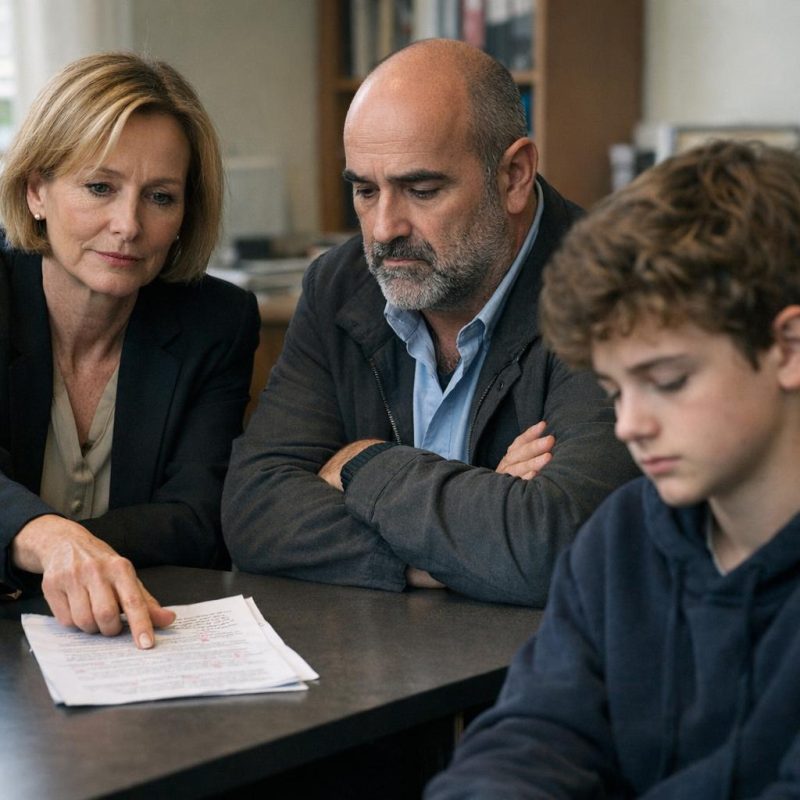 Image by RM AI
The Voice of an Eighth Grader
I felt something hot rise in my chest—not panic, but anger. I'd watched Noah write this essay. I'd sat across from him at my kitchen table while he struggled over word choices, asked me how to spell 'abolitionist,' and rewrote his introduction three times. 'He wrote it with me,' I said, keeping my voice calm. 'I was there. He worked on it for hours over two evenings. I helped him organize his thoughts, but every word is his.' Mrs. Kline's expression didn't change. She tilted her head slightly, like she was humouring me. 'With respect, Mrs. Crawford, that doesn't mean he didn't copy portions from an outside source. Many students do this—they mix their own writing with passages they find online. It's very common.' I shook my head. 'He didn't. I watched him type it. I saw his outline. He used the library books I checked out for him.' Vice Principal Torres shifted in his seat but said nothing. Mrs. Kline's fingers drummed lightly on the table, just once, then twice—a small, almost imperceptible movement. Her confidence was still there, but something flickered beneath it. I couldn't name it yet, but I felt it. She wasn't just enforcing policy. This felt personal. Mrs. Kline's expression didn't shift, but I saw her fingers tap the table once, twice—a tiny crack in her confidence.
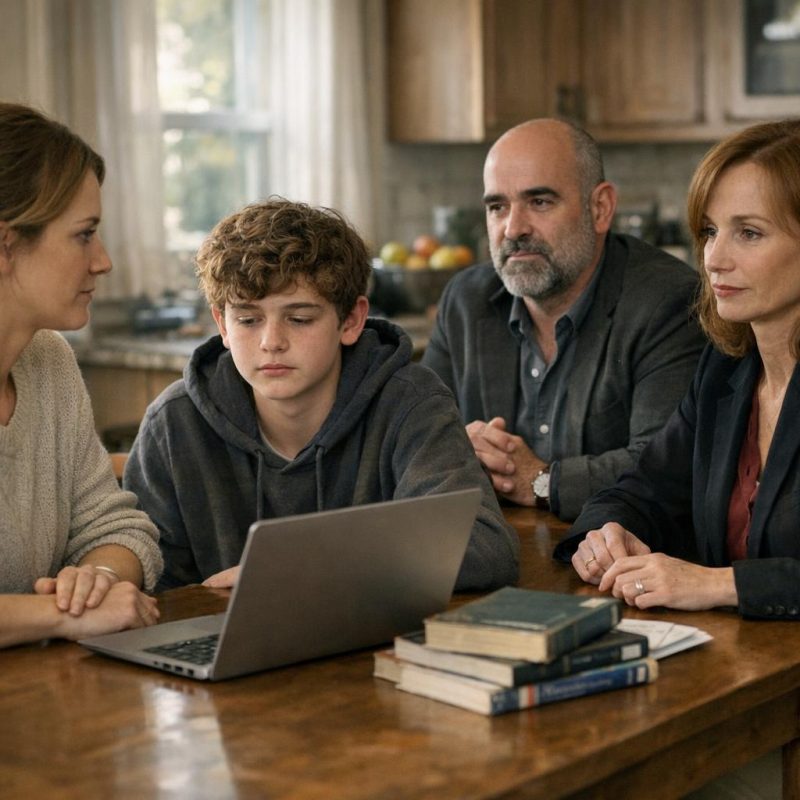 Image by RM AI
The Header That Didn't Belong
I reached for the printed essay, pulling it closer to examine the marked passages. My eyes moved over the red ink, the underlined sentences, the question marks. And then I noticed something in the top margin—so faint I almost missed it. A gray header, barely visible against the white paper. It read: 'Last Edited by: MKLINE.' I blinked and read it again. My pulse quickened. Why would Noah's essay have Mrs. Kline's name in the file metadata? He'd written it on his own laptop, submitted it through the school portal. There was no reason her name should appear anywhere in the document. Unless she'd opened it. Unless she'd edited it. I felt a cold, prickling sensation along my arms. I didn't understand what this meant yet, but I knew it was wrong. I glanced at Noah, who hadn't noticed—he was still staring at the table, shoulders hunched. I looked back at the header, then at Mrs. Kline, who was watching me with that same smooth, professional expression. My mind raced. Was this normal? Did teachers edit student files? Or was this something else entirely? I couldn't jump to conclusions, but my instincts were screaming. I looked up slowly and asked, 'Can I see the original file?'
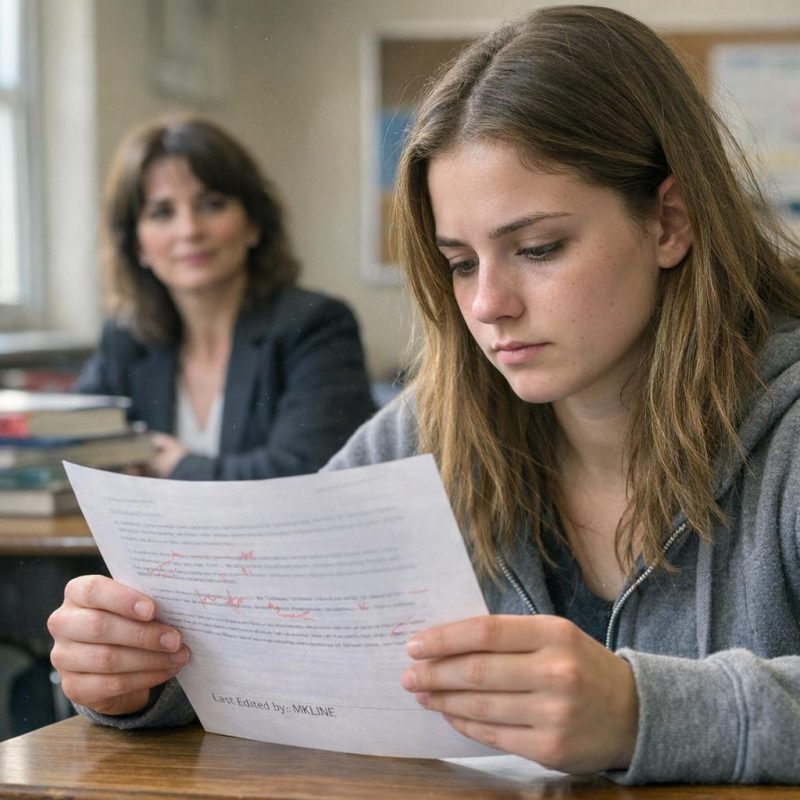 Image by RM AI
The Request for Digital Records
Mrs. Kline's expression flickered—just for a second—before she recovered. 'The original file?' she repeated, as if she didn't understand. 'Yes,' I said, keeping my voice steady. 'The one Noah submitted through the portal. With the version history and timestamps. I'd like to see when it was uploaded and if there were any changes made after submission.' It was a reasonable request. If Noah had cheated, the file history would show it. But if he hadn't—if someone else had altered the document—that would show too. Mrs. Kline glanced at Vice Principal Torres, then back at me. 'I don't have access to that right now,' she said. 'The submission is in the grading system, but the technical details—version history, metadata—that would require IT support.' I nodded slowly. 'Then let's get IT support.' Vice Principal Torres shifted in his chair, uncrossing his arms. He looked at Mrs. Kline, and I saw it—just the smallest hesitation, the slightest doubt. He'd heard the question. He'd heard her deflection. 'We can request that,' he said carefully. 'It may take a day or two, but we can pull the full submission record.' Mrs. Kline's jaw tightened, but she nodded. 'Of course,' she said. She said she didn't have access 'right now,' but the vice principal's shift in his chair told me he'd heard the doubt in her voice too.
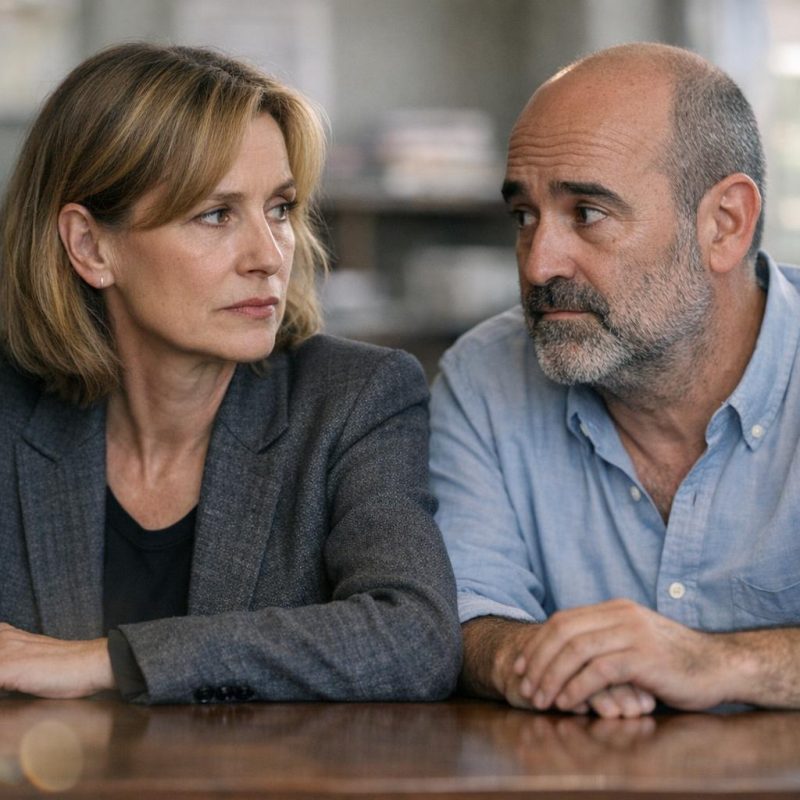 Image by RM AI
Presenting the Photos
I opened my folder and pulled out the photos I'd printed that morning. Three pictures, timestamped, showing Noah at my kitchen table with his laptop open, notebook beside him, and books spread across the surface. 'These were taken while he was writing the essay,' I said, sliding them across the table. 'That's his handwritten outline, his research notes, and the library books we used.' Mrs. Kline glanced at the photos, her mouth tightening. Vice Principal Torres leaned forward to look, studying them carefully. I pulled out Noah's outline next—two pages of notes in his messy handwriting, topic sentences circled, quotes copied from the books. 'He planned the whole thing out before he started typing,' I said. 'This is his process. This is how he works.' For a moment, no one spoke. Then Mrs. Kline picked up one of the photos, examined it, and set it down with a small shake of her head. 'That doesn't prove he didn't paste something at the end,' she said, her voice cooler now. 'He could have written part of it and copied the rest. Photos don't show what's on the screen.' I stared at her. She wasn't considering the evidence. She was dismissing it. Every piece I offered, she found a way to twist. This wasn't about truth. This was about winning. Mrs. Kline's face tightened, and she said, 'That doesn't prove he didn't paste something at the end.'
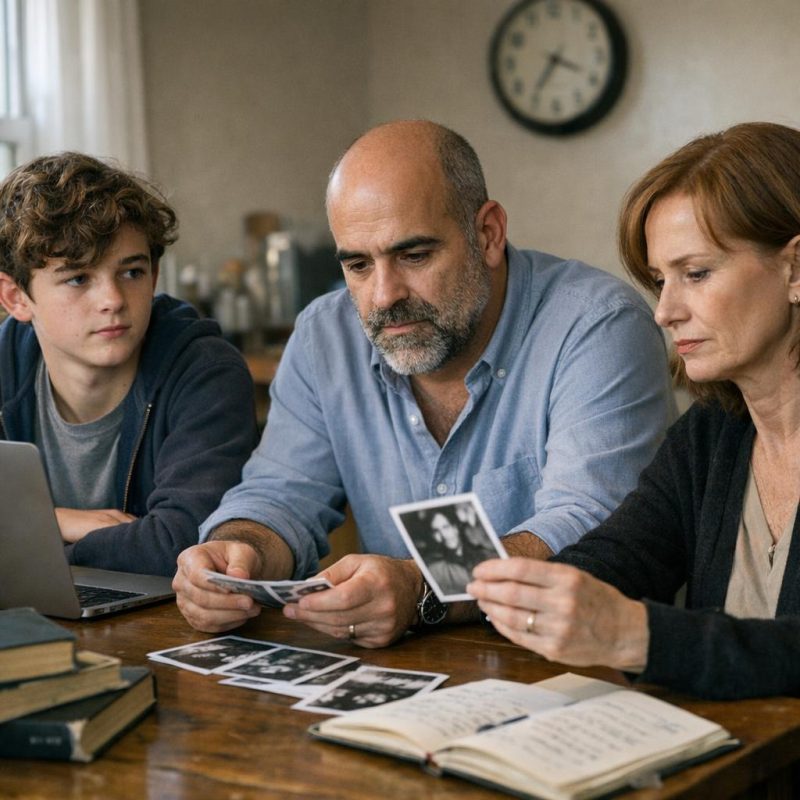 Image by RM AI
The Submission Lag
Noah spoke for the first time since we'd sat down. His voice was quiet, almost apologetic. 'I clicked 'turn in' twice,' he said. 'The Wi-Fi was being slow, and I didn't think it went through the first time, so I clicked it again.' Mrs. Kline's head snapped toward him. Her eyes sharpened. 'Twice,' she repeated, and I heard the shift in her tone—triumphant, almost gleeful. 'You submitted it twice?' Noah nodded, looking confused. 'Yeah, but it was the same file. I just thought—' 'That explains it,' Mrs. Kline interrupted, looking at Vice Principal Torres. 'He may have uploaded different versions. One with his original work, and one with copied material. That's why the system flagged it.' I felt my anger surge, hot and immediate. 'That's not what he said,' I snapped. 'He said the Wi-Fi lagged. He clicked the same button twice on the same file. That's not uploading different versions—that's a technical glitch.' But Mrs. Kline wasn't listening. She was already writing something in her portfolio, nodding to herself like the case was closed. She'd taken Noah's honesty—his attempt to explain—and twisted it into evidence against him. I looked at Vice Principal Torres, hoping he'd see how absurd this was, but he just looked uncomfortable. 'Twice,' she repeated, like it was a confession—'That explains it. He may have uploaded different versions.'
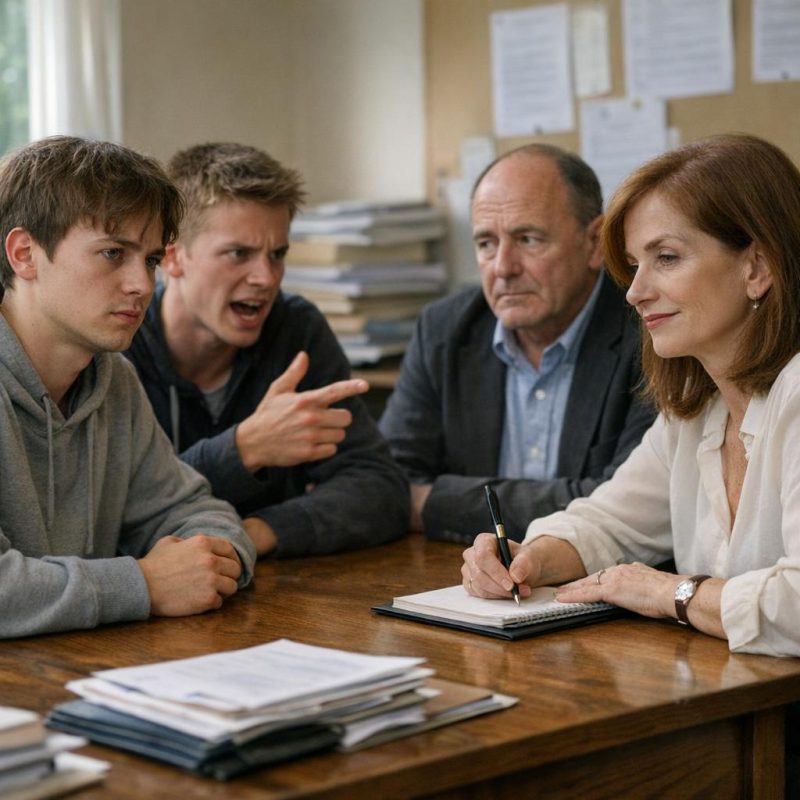 Image by RM AI
The Submission History Promise
I leaned forward, forcing calm into my voice. 'Then the submission history will show exactly what happened,' I said. 'If he uploaded the same file twice because of a Wi-Fi issue, that will be in the records. If someone edited the file after submission, that will show too.' Vice Principal Torres nodded slowly. 'That's fair,' he said. 'I'll contact IT today and request the full submission log—timestamps, file versions, edit history, everything.' Mrs. Kline's expression remained neutral, but I saw her fingers curl slightly around her pen. 'Of course,' she said. 'Whatever's needed to resolve this.' But there was no warmth in her voice, no willingness to consider she might be wrong. She'd made up her mind before we walked in, and now she was scrambling to make the evidence fit her conclusion. Vice Principal Torres stood, signaling the meeting was over. 'We'll be in touch once we have the records,' he said. 'Until then, Noah's grade will remain pending.' I gathered my folder and stood, placing a hand on Noah's shoulder. He looked pale, exhausted. We walked out of that conference room without resolution, without apology, without acknowledgment that maybe—just maybe—a teacher could be wrong. We left with no resolution, but I could feel the shift—Mrs. Kline had expected me to apologize and accept the zero.
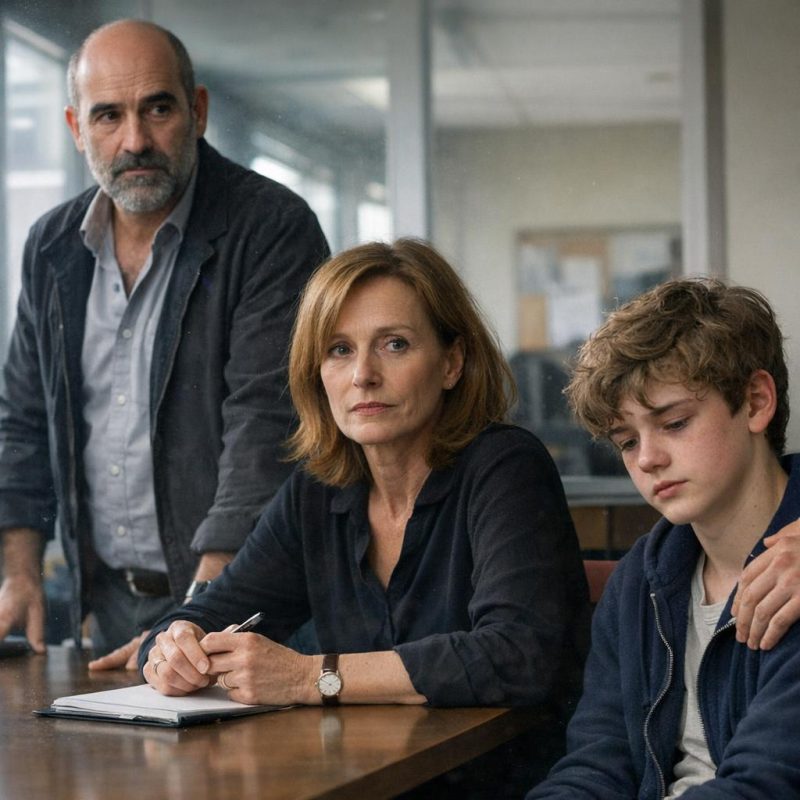 Image by RM AI
Megan's Phone Call
That night, my phone rang just after nine. It was Megan, and I could hear the panic in her voice before she even finished saying hello. 'Mom, what happened? Noah said the teacher wouldn't listen. He said she's still calling him a cheater.' I sat down heavily on the couch, suddenly exhausted. 'We presented evidence,' I said. 'Photos, his outline, everything. But she's insisting he plagiarized. The vice principal is pulling the submission records from IT.' Megan's voice cracked. 'This is going to go on his permanent record, isn't it? Colleges look at this stuff. What if this follows him forever?' I closed my eyes. That thought had been clawing at me all evening—the idea that a false accusation could shadow Noah for years, that a teacher's stubbornness could derail his future. 'It won't,' I said, forcing certainty into my tone. 'Not if I have anything to do with it. We'll prove he didn't cheat. The digital records will show the truth.' But even as I said it, I wasn't sure. Mrs. Kline had been so confident, so determined. What if the records didn't show what we needed? What if she found another way to twist the evidence? Megan was quiet on the other end of the line, and I knew she was thinking the same thing. I told her it wouldn't go on his record, not if I had anything to do with it—but I didn't sleep that night.
 Image by RM AI
The Gray Line That Haunted Me
I lay in bed that night staring at the ceiling, replaying every moment of that meeting in my head. The confidence in Mrs. Kline's voice. The way Principal Morgan kept his hands folded on the desk. The way they looked at Noah like he was already guilty. But what bothered me most—what kept circling back—was that gray text at the top of the printed essay. 'Last Edited by: N. Harris.' I'd seen it for maybe three seconds before Mrs. Kline snatched the paper away, but it was burned into my memory now. Noah's file name had been 'Harris_MLK_Essay_Final.docx.' Simple. Standard. The kind of label any thirteen-year-old would use. But that header line—it didn't match. It was too formal, too specific. Like something generated automatically by a system, not typed by a kid. I turned onto my side, pulling the blanket tighter. Why would a header even show up on a printed document? Word processors didn't usually print those unless you specifically formatted them to. And if Noah had submitted a Google Doc through the school portal, would it even have that kind of metadata visible? My chest felt tight. I wasn't a tech expert, but something about it felt off. It didn't belong—and the more I thought about it, the less sense any of this made.
 Image by RM AI
Going Around Them
The next morning, I made a decision. I wasn't waiting for Principal Morgan or the vice principal or whoever was supposed to pull those IT records. Schools had a way of dragging their feet when it was convenient, and I wasn't about to let Noah's future hang in limbo while they took their time. I opened my laptop and searched for the school district's main office contact page. It took some clicking through bureaucratic menus, but eventually I found what I needed: the Student Records and Privacy Compliance office. There was a form. A phone number. A policy document that mentioned parents' rights to access all educational records pertaining to their child or grandchild—including digital submissions. I printed it out, highlighted the relevant sections, and picked up the phone. My hands were steady. My voice was calm. I wasn't going to yell or threaten or demand. I'd learned a long time ago that the trick to dealing with bureaucracy wasn't volume—it was persistence. Polite, unshakable persistence. The kind that made it harder to say no than to just give you what you wanted. So I dialed the number, waited through the hold music, and when someone finally picked up, I explained exactly what I needed. I didn't threaten. I didn't yell. I used polite, relentless sentences—the kind older women learn when people try to talk over them.
 Image by RM AI
The District's Privacy Contact
The woman on the other end introduced herself as Linda, a records compliance officer for the district. Her tone was brisk but not unkind—the voice of someone who dealt with parent requests all day and had learned to stay neutral. I explained the situation carefully. My grandson had been accused of plagiarism. The school claimed they were pulling digital records, but I wanted to request them directly under the student privacy policy. I gave her Noah's name, his student ID number, the date of the assignment, and the name of the class portal. She asked a few clarifying questions, typed something I could hear clicking in the background, then paused. 'Okay,' she said. 'I can submit a request to IT for the submission logs and version history for that assignment. It'll take up to forty-eight hours, but you should receive everything via email.' I felt a flicker of something—hope, maybe, or relief. 'Everything?' I asked. 'Timestamps, file names, the works?' 'Everything we have on record,' she confirmed. I thanked her, wrote down a reference number she gave me, and hung up. For the first time in days, I felt like I'd done something concrete. But the hope was fragile, edged with dread. What if the records didn't show what I thought they would? What if they made things worse? The woman on the phone was professional and brisk—she said I'd have the records within 48 hours.
 Image by RM AI
The Waiting Game
Those two days felt like two weeks. Noah stayed home from school. Megan called the attendance office and said he was sick, which wasn't entirely a lie—he looked pale and hollowed out, like he hadn't slept. He didn't want to go back. Didn't want to face the other kids who'd probably heard by now that he was accused of cheating. Middle schoolers talk. Word spreads fast, and once a label sticks, it's almost impossible to peel off. I tried to keep him busy. We watched old movies, played cards, made cookies he barely touched. But he was quiet in a way that scared me. On the second afternoon, he looked up from his phone and asked, 'Grandma, even if we prove I didn't cheat... do you think people will still think I did?' I froze. The question was so small, so painfully honest. And I didn't have a good answer. Because the truth was, yes—some people would. Some people always believed the first thing they heard, and no amount of evidence could change their minds. But I couldn't tell him that. So I said, 'The people who matter will believe you. And we're going to make sure the record shows the truth.' He nodded, but he didn't look convinced. He asked me if people would still think he was a cheater even if we proved he wasn't—and I didn't have an answer.
 Image by RM AI
The Email Arrives
The email arrived on the second day, just before noon. I was washing dishes when my phone buzzed on the counter, and I saw the subject line: 'Student Records Request – Noah Harris.' My stomach dropped. I dried my hands on a towel, picked up the phone, and stared at the screen. The preview showed the first line: 'Attached please find the requested submission logs and version history...' I didn't open it right away. I know that sounds strange, but I needed a minute. Because once I opened those attachments, I'd know. One way or another, I'd know whether Noah was telling the truth or whether I'd been wrong to defend him so fiercely. My heart was pounding. My hands felt shaky. I sat down at the kitchen table, took a breath, and tapped the email. It opened. There were two attachments: a PDF labeled 'Submission_Log_Harris_Noah' and another labeled 'Version_History_Detail.' I stared at them. My mouth was dry. This was it. This was the proof we needed—or the confirmation of every doubt Mrs. Kline had planted. I clicked the first file. The spinning loading circle felt like it lasted forever. I opened it with trembling hands, my heart pounding so hard I could hear it in my ears.
 Image by RM AI
One Submission, One Time
The submission log was a simple table. Student name. Assignment title. File name. Date. Time. There was only one entry. 'Harris, Noah – MLK Essay – Harris_MLK_Essay_Final.docx – Submitted 02/14 at 9:14 PM.' One submission. One time. Exactly when Noah said he'd turned it in. I felt a wave of relief so strong it almost made me dizzy. He'd told the truth. He'd submitted his essay on time, and there was no second submission, no late upload, no last-minute swap. I opened the version history file next. It listed every change made to the document, every save, every edit. The last save was at 9:11 PM, three minutes before submission. The changes matched the kind of edits a kid would make—fixing a typo, tweaking a sentence. Nothing suspicious. Nothing plagiarized. I sat back in my chair, exhaling. This was proof. This was everything we needed to clear Noah's name. But then I looked at the printed essay again—the one Mrs. Kline had shoved across the table at us, the one with the highlighted passages and the gray header text. I compared the file name. It didn't match. The log said 'Harris_MLK_Essay_Final.docx.' But the printed essay Mrs. Kline showed us—that was a different file entirely.
 Image by RM AI
Uploaded at 6:02 AM
I scrolled down further in the records, my pulse quickening. There was a second entry I hadn't noticed at first. It wasn't in the submission log—it was in a separate section labeled 'Class Folder Activity.' The entry read: 'File uploaded to Grade 8 History – Essays folder: Harris_MLK_Revised.docx – Uploaded 02/15 at 6:02 AM – User: A. Kline.' I read it again. And again. The file had been uploaded the morning after Noah submitted his essay. At 6:02 in the morning. By Mrs. Kline. Not by Noah. Not by accident. By the teacher. I felt cold all over, like someone had opened a window in the middle of winter. This wasn't a misunderstanding. This wasn't a mix-up or a technical glitch. Someone had uploaded a different file to the class folder—a file Noah never created—and then accused him of submitting it. My hands were shaking now, but not from nerves. From anger. From the horrifying realization that this had been deliberate. That someone had set my grandson up. My blood ran cold because suddenly this wasn't a misunderstanding—it was something else entirely.
 Image by RM AI
Text from a Teacher Resource Site
I printed everything and laid it out on the kitchen table. Then I did something I should've done from the beginning—I went back to the printed essay Mrs. Kline had shown us and really looked at it. The highlighted sections. The passages she claimed were plagiarized. I typed one into Google. The first result was a teacher resource website—one of those educational content libraries that provide sample essays and discussion prompts for classroom use. I clicked through. There it was. Word for word. Polished, formal, grammatically flawless. The kind of writing that would absolutely set off a plagiarism checker. I typed in another highlighted section. Same site. Same resource library. Every single passage Mrs. Kline had flagged came from the same place. But here's the thing—Noah's original essay, the one in the submission log, didn't have any of this text. I'd seen his draft. I'd watched him write it. His voice was present, his ideas were his own. This altered file—this 'revised' document uploaded at six in the morning—had been stitched together with content from a teaching website. Someone had taken Noah's real essay and replaced chunks of it with plagiarized material. On purpose. This was text that would absolutely trip a plagiarism checker—and it wasn't Noah's.
 Image by RM AI
Forwarding the Evidence
I sat at my desk and drafted the email. My hands were steady—steadier than they'd been in days. I attached the IT report, the submission logs, the screenshots, everything. Then I addressed it to Vice Principal Torres and copied Principal Henderson directly. I wrote that I was requesting an immediate meeting with both administrators present to discuss the evidence of file tampering in my grandson's academic misconduct case. I kept the language formal, factual. No accusations. Just facts and a request. But here's what I wanted to write: someone deliberately sabotaged my grandson. Someone took his work and replaced it with plagiarized content to make him look like a cheater. Someone did this on purpose, and I have proof. I didn't write that. Not yet. Instead I wrote that the evidence raised serious questions about the integrity of the accusation and that I believed Noah deserved a full review with senior administration present. I read it three times. Added the district records officer's email to the attachments. Double-checked every link. Then I moved my cursor to the send button and paused for just a second, knowing that once I sent this, there was no going back. I hit send and sat back, my hands still shaking—this time not from fear but from rage.
 Image by RM AI
The District Records Officer's Note
The district records officer replied within two hours. I saw her name in my inbox and opened it immediately, expecting a simple confirmation that she'd sent the logs. But there was more. At the bottom of her email, below her signature, she'd added a personal note. She wrote that she wanted to make sure I understood that the discrepancies I'd identified were highly unusual. She said that in a normal workflow, students submit their work through the platform, and teachers grade what's submitted. Sometimes there are technical issues—uploads that fail, timestamps that glitch—but those leave error logs. What I'd found, she explained, was different. The original submission was intact and logged. But a second file, with different content, had been uploaded to the grading queue from the teacher's account hours later. That shouldn't happen. She said she'd reviewed the metadata twice to be certain, and she was willing to provide testimony or documentation if the school administration needed it. Then she wrote something that made my chest tighten. She wrote, 'In my ten years doing this work, I've never seen a submission record altered like this.'
 Image by RM AI
The Second Meeting
The meeting was scheduled for the next afternoon. I picked Noah up early from school, and we walked together to the main office. He was quiet, but I could feel the tension coming off him in waves. This time, Principal Henderson's assistant led us to a larger conference room. Vice Principal Torres was already there, sitting across from an empty chair. Principal Henderson arrived a moment later, carrying a leather portfolio and a laptop. He nodded at me, shook Noah's hand, and sat at the head of the table. Then Mrs. Kline walked in. She looked different. Paler. Her usual composed expression was strained, and she didn't make eye contact with Noah or me as she took her seat. Principal Henderson opened his laptop and glanced at Torres, who gestured for him to begin. He said we were here to review new evidence related to Noah's case and that he wanted to hear from everyone before making any decisions. His tone was calm but firm, the kind of voice that doesn't allow for interruptions. Mrs. Kline folded her hands on the table, and I watched her fingers tighten. Mrs. Kline arrived looking pale, and when the principal asked her why there were two files, something in the room shifted.
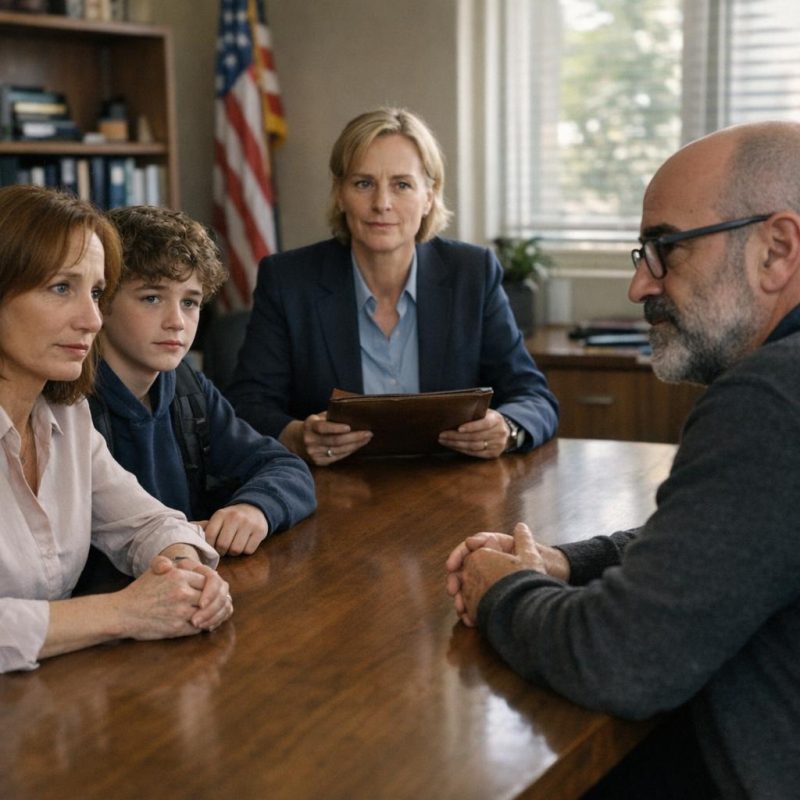 Image by RM AI
The IT Specialist Testifies
Principal Henderson introduced IT Specialist Jordan, who'd been waiting just outside. Jordan was younger than I expected, maybe late twenties, with dark-rimmed glasses and a calm, methodical way of speaking. He pulled up the submission logs on the projector and walked everyone through what he'd found. He showed Noah's original upload—9:47 PM on the due date. He showed the file name, the timestamp, the word count. Then he showed the second file, uploaded at 6:14 AM the next morning from Mrs. Kline's teacher account. Different file name. Different content. Same assignment slot. He explained that the platform doesn't allow students to revise submissions after the deadline without teacher approval, and there was no approval log. He said the second file had been uploaded directly to the grading queue, bypassing the student submission process entirely. Then he pulled up a side-by-side comparison. Noah's original essay on the left. The altered version on the right. The differences were impossible to miss. Jordan highlighted the sections that had been replaced with text from the teaching resource site. He confirmed that the plagiarized passages didn't exist in Noah's original file. Mrs. Kline opened her mouth to speak, then closed it—and I realized she had no explanation ready.
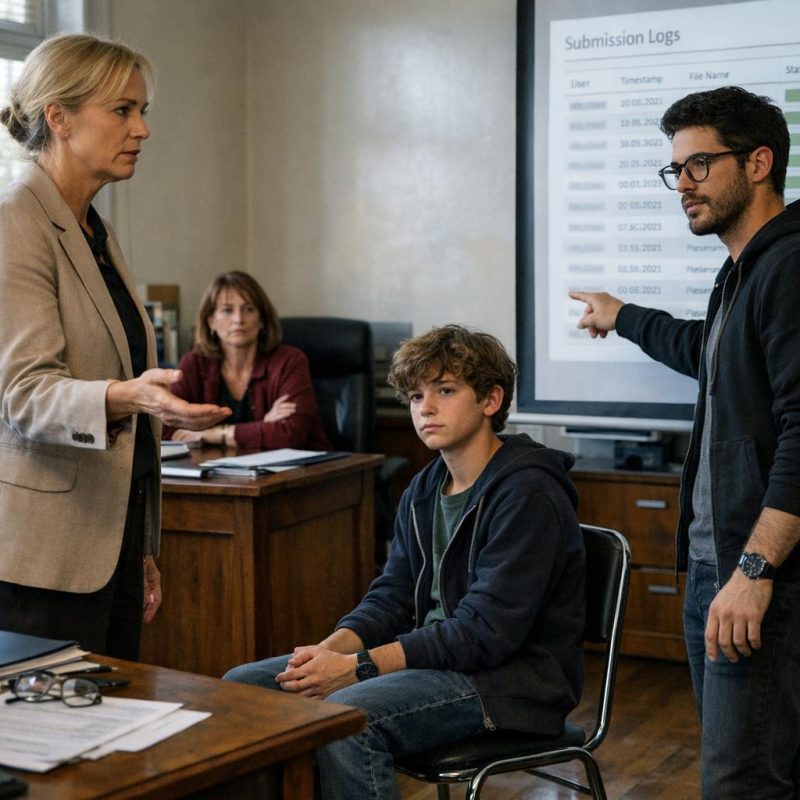 Image by RM AI
The Principal's Direct Question
Principal Henderson turned to Mrs. Kline. His voice was measured, but there was an edge to it that hadn't been there before. He said, 'Mrs. Kline, I need you to explain why there are two files with different content.' The room went still. Mrs. Kline looked at her hands, then at the screen, then back at the principal. She opened her mouth, hesitated, and then said she needed a moment to gather her thoughts. Principal Henderson nodded but didn't break eye contact. Vice Principal Torres leaned forward slightly, his expression unreadable. I could feel Noah beside me, barely breathing. Jordan closed his laptop but stayed seated, clearly waiting for an answer. Mrs. Kline finally spoke. She said she'd been reviewing Noah's submission and had concerns about the originality of his work. She said she'd run it through a plagiarism checker and thought she'd found matches, so she'd created a revised document to highlight the problem areas for discussion. Her voice was steady, but her hands weren't. Principal Henderson asked why she'd uploaded a different file instead of just annotating the original. Mrs. Kline looked at her hands, then at the principal, and said something I wasn't expecting.
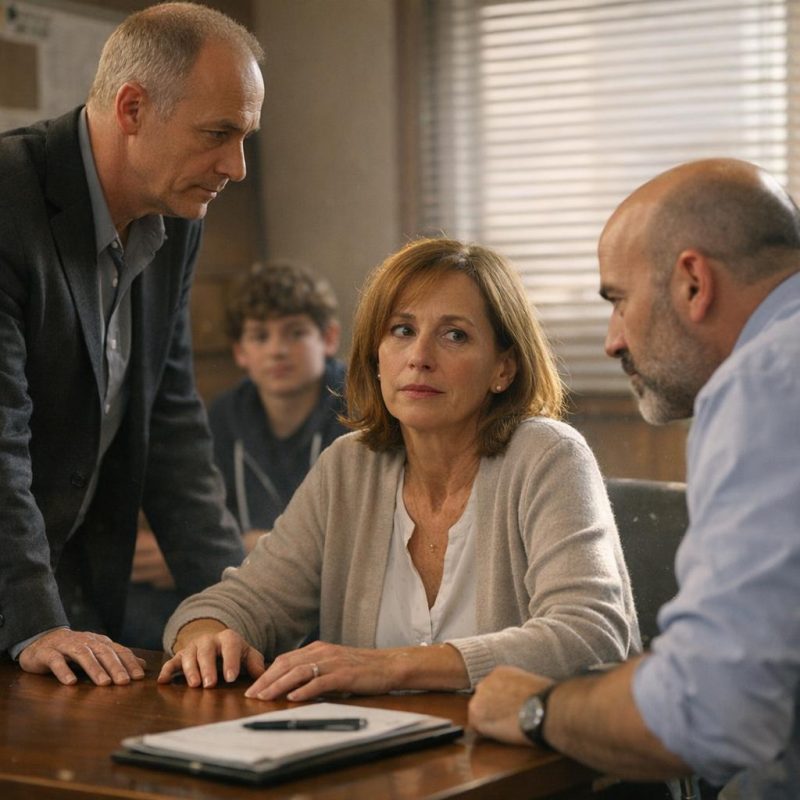 Image by RM AI
A Lesson in Integrity
She said she'd been trying to teach Noah a lesson. Her voice was quieter now, almost defensive. She said that in her experience, some students don't take academic integrity seriously unless they see the real consequences of dishonest work. She claimed she'd altered the essay to show Noah what plagiarism actually looked like, to make the lesson more concrete. She said she'd planned to walk him through the differences and help him understand why his original work had raised red flags. She said it was meant to be educational. I felt my stomach drop. Noah turned to look at me, his face pale and confused. Principal Henderson's expression didn't change, but I saw his jaw tighten. Vice Principal Torres set down his pen and leaned back in his chair, arms crossed. Jordan looked from Mrs. Kline to the principal and then at his hands. I couldn't stay quiet. I said, 'You framed him. You took his real work and replaced it with plagiarized content, then accused him of cheating.' Mrs. Kline shook her head quickly. She said that wasn't her intent, that I was misunderstanding her teaching approach. 'I was trying to teach him a lesson about integrity,' she said—and I felt my stomach drop.
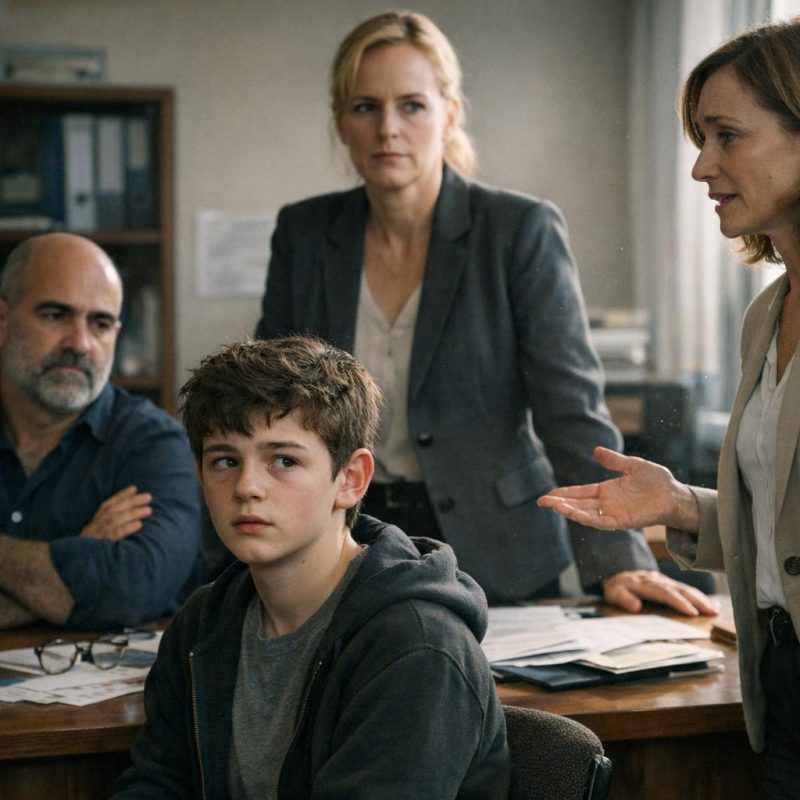 Image by RM AI
By Humiliation
I leaned forward and kept my voice steady, but I wanted to scream. I said, 'You taught him a lesson by publicly humiliating him? By putting a false accusation in his permanent record? By making him think he'd done something wrong when he hadn't?' Mrs. Kline started to respond, but I didn't let her. I said that if she'd had real concerns about his work, she could have talked to him. She could have asked him to explain his process, to show his notes, to walk her through his thinking. But instead, she'd fabricated evidence and made him defend himself against something he didn't do. Noah's hands were shaking on the table. Principal Henderson raised a hand, and I stopped. He looked at Mrs. Kline and said, 'Even if your intent was educational, altering a student's work without their knowledge and then accusing them based on that altered version is not an acceptable teaching method.' His voice was calm, but there was steel underneath. Vice Principal Torres nodded. Mrs. Kline looked like she wanted to argue, but she stayed silent. Then Principal Henderson glanced down at something on his desk—a file I hadn't noticed before. The principal's face hardened, and I saw him glance at a file on his desk—something he hadn't mentioned yet.
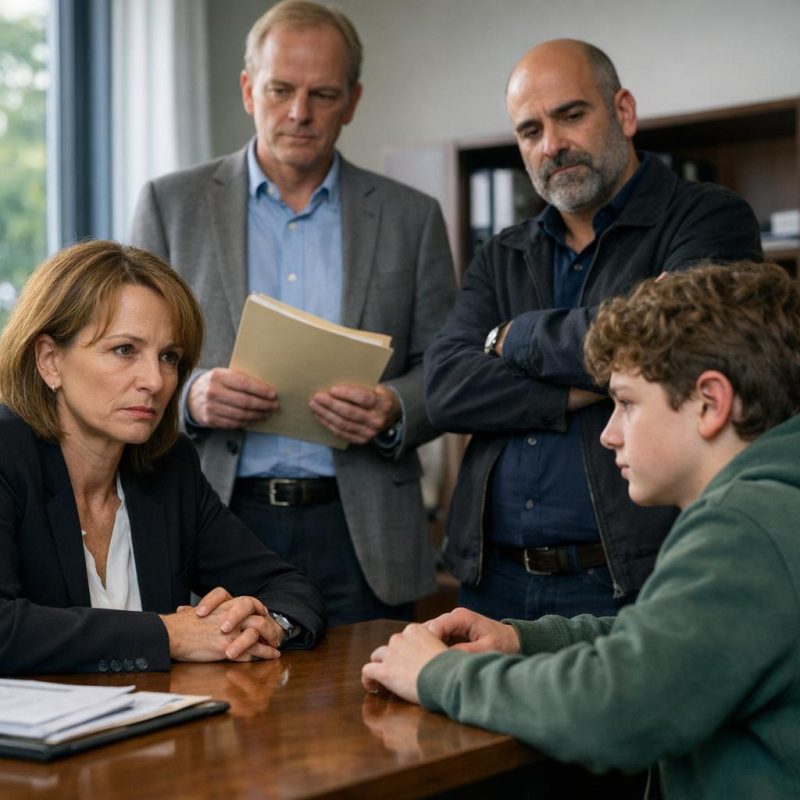 Image by RM AI
The File on the Desk
Principal Henderson opened the file slowly, and I saw Mrs. Kline's expression shift—just for a second—into something that looked like panic. He said he'd received the IT report the night before and had spent the morning reviewing records. He said that after reading my email, he'd asked his assistant to pull any other complaints or concerns related to academic misconduct cases in Mrs. Kline's classes over the past two years. He slid the file across the table toward Vice Principal Torres, who opened it and scanned the first page. Then Henderson looked directly at Mrs. Kline. He said, 'There have been four other parents who contacted the school about cheating accusations involving their children in your class. In two of those cases, the parents claimed the evidence didn't match their child's original work.' Mrs. Kline's face went pale. Torres looked up from the file, his mouth set in a hard line. I felt Noah's hand grip the edge of the table. Principal Henderson's voice didn't rise, but the weight of his words filled the room. He said, 'Mrs. Kline, this isn't the first time'—and the room went silent.
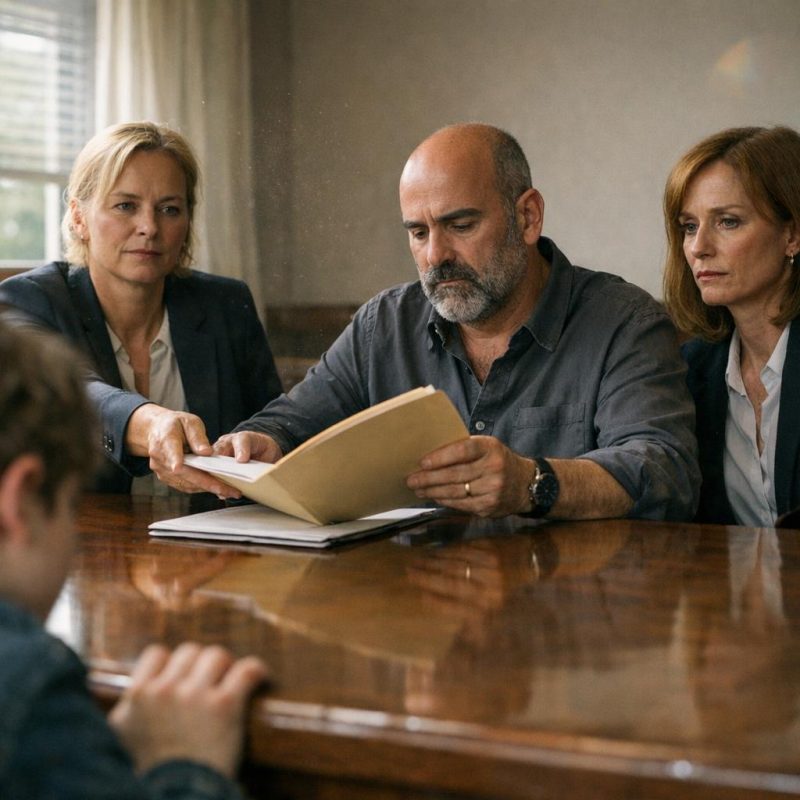 Image by RM AI
Two Other Students
Principal Henderson opened another file, this one thinner, and I watched his expression harden even more. He said there were two other students whose parents had complained about false cheating accusations in the past month alone. Two other kids. Two other families who'd been put through what we were going through right now. My stomach turned over. Noah shifted in his seat beside me, and I could feel his confusion radiating off him in waves. Henderson looked at Mrs. Kline, then at Vice Principal Torres, then back at the file. He said both cases involved printed essays that didn't match the students' submitted files. Both cases had the same inconsistencies—formatting differences, word choices that didn't align, the kind of details that would make a parent or student question what they were looking at. Torres leaned forward, his elbows on the table, his face grave. Jordan, the IT specialist, nodded slowly like he'd already seen these patterns in the system logs. Mrs. Kline was still pale, her hands folded so tightly in her lap that her knuckles had gone white. I felt a cold weight settling in my chest, something darker than anger. This wasn't a mistake. This wasn't even negligence. He said both cases involved printed essays that didn't match the students' submitted files—just like Noah's.
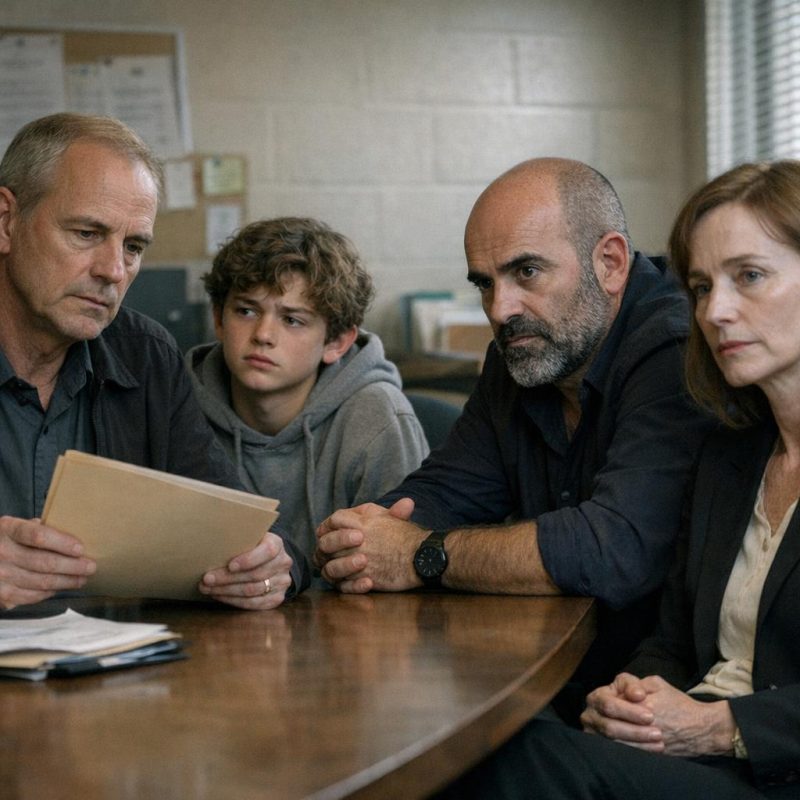 Image by RM AI
The Common Thread
I heard my own voice before I realized I was speaking. I asked what the three students had in common—Noah and the other two. Principal Henderson looked at me for a long moment, and I saw something shift in his expression, like he'd been hoping I wouldn't ask that question yet. Vice Principal Torres glanced at him, then down at the file, and neither of them spoke right away. The silence stretched out, filling the room with a kind of awful weight. Mrs. Kline's jaw tightened, but she didn't look up. Jordan shifted uncomfortably in his chair. Noah was staring at the principal, waiting, and I could feel my heart hammering in my chest. Henderson finally exhaled and leaned back in his chair. His voice was quieter when he spoke again, careful, like he was picking his words one at a time. He said they're all students whose parents work multiple jobs or who live with grandparents—kids who might not have someone to fight for them. The words landed like a punch. I felt my breath catch. Noah's hand gripped the edge of the table again, his eyes wide. Mrs. Kline had chosen vulnerable kids. She'd picked the ones she thought wouldn't have advocates. She'd targeted my grandson because she thought I wouldn't notice.
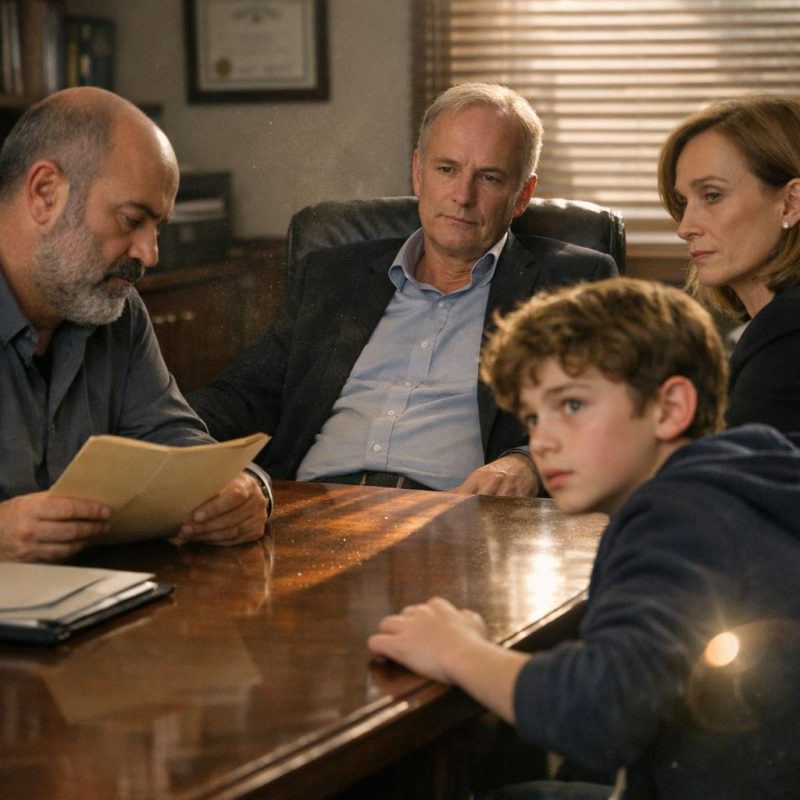 Image by RM AI
Mrs. Kline's Silence
Principal Henderson looked directly at Mrs. Kline and asked her to explain the pattern in these cases. He asked her to walk him through why three vulnerable students had all been accused of cheating in her class within weeks of each other, all with the same kind of evidence discrepancies. His tone was calm, but there was steel underneath it. Vice Principal Torres watched her closely, his expression unreadable. Jordan had his laptop open, the screen glowing faintly, like he was ready to pull up more data if needed. Noah sat frozen beside me, barely breathing. I kept my eyes on Mrs. Kline, waiting for her to say something, anything—an explanation, a defense, even an excuse. But she didn't speak. She just stared down at the table, her jaw clenched so tightly I could see the muscle twitching. Her hands stayed folded in her lap, her shoulders rigid. Henderson waited. Torres waited. The silence stretched on, thick and suffocating, and it felt like the entire room was holding its breath. I realized she wasn't going to answer. She wasn't going to defend herself. She wasn't going to explain away the pattern or offer some reasonable justification. She looked at the table, her jaw tight, and said nothing—which felt like the loudest confession of all.
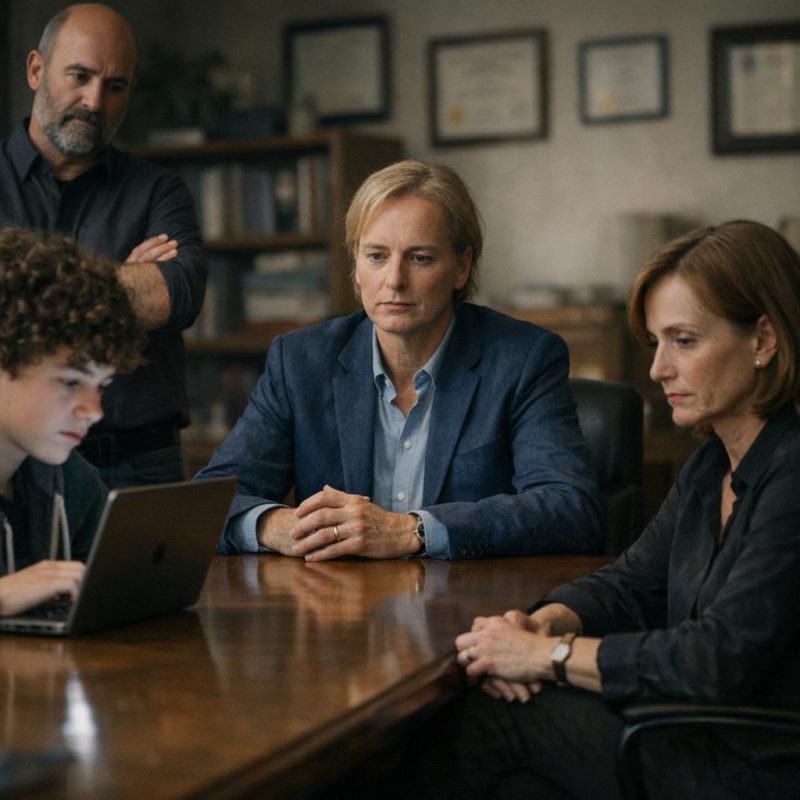 Image by RM AI
The District Audit
Principal Henderson closed the file in front of him and folded his hands on top of it. He said there was something else we needed to understand about the context. He said the school had been under pressure after a district audit six months ago that flagged low academic integrity enforcement across the building. The district had wanted to see stronger documentation, more consistent reporting, better follow-through on suspected violations. I felt something cold creep up my spine. Torres nodded slowly, confirming it, and said the audit report had been circulated to all staff with recommendations for improvement. Jordan glanced at me, then back at his laptop screen. Noah's eyes were wide, and I could see him trying to piece it all together. Henderson said the audit report had specifically recommended that teachers document cheating incidents more thoroughly and submit formal reports to administration to demonstrate that the school was taking academic honesty seriously. He said it quietly, almost reluctantly, like he knew how it sounded. I sat there, my hands gripping the armrests of my chair, and felt the pieces starting to shift into place. The pressure to report. The vulnerable students. The fabricated evidence. He said the audit report recommended stronger documentation of cheating incidents—and I felt the pieces starting to connect.
 Image by RM AI
The Promotion She Wanted
Vice Principal Torres looked at Principal Henderson, then at me, and I saw something flicker in his expression—hesitation, maybe, or discomfort. He cleared his throat and said there was one more thing we should probably know. He said Mrs. Kline had applied for a promotion earlier this year to become an instructional coach, a position that would involve training other teachers on best practices and classroom management. My pulse quickened. Torres said the position required demonstrated leadership in areas like academic integrity and student accountability. He said it quietly, almost like he wasn't sure he should be saying it at all, like he was breaking some unspoken rule by connecting the dots out loud. But once the words were in the air, they couldn't be taken back. I looked at Mrs. Kline, who was still staring at the table, her face pale and frozen. Jordan shifted in his seat. Noah's hand tightened on the table edge again. Principal Henderson's jaw tightened, and I could see he was putting it together too. The audit pressure. The vulnerable students. The fabricated evidence. The promotion. He said it quietly, like he wasn't sure he should say it at all—but once it was out there, I couldn't unhear it.
 Image by RM AI
The Paper Trail
Principal Henderson opened yet another file, this one with a stack of printed forms clipped together. He said Mrs. Kline had been creating detailed reports of cheating incidents over the past few months, submitting them to administration with documentation and evidence. He said the reports were thorough—formatted correctly, following district protocols, the kind of thing that would demonstrate strong enforcement and follow-through. Vice Principal Torres leaned over to look at the stack, flipping through a few pages, his expression darkening. Jordan nodded, confirming something on his laptop screen. I felt my chest tighten. Henderson said most teachers submit maybe one or two formal cheating reports per year, if that. He said it's not that cheating doesn't happen—it's that most teachers handle it informally, with conversations and grade penalties, without escalating to administration. He paused, looking down at the stack of reports in front of him. Then he looked up at Mrs. Kline, his expression hard. He said she'd submitted three formal reports in four weeks. Three in four weeks. More than any other teacher had submitted in five years. The room went silent. I stared at the stack of papers, my mind racing. She'd been building a case. She'd been manufacturing evidence to demonstrate enforcement. He said she'd submitted three formal reports in four weeks—more than any other teacher in five years.
 Image by RM AI
The Question I Had to Ask
I felt the words rising up before I could stop them. I looked directly at Mrs. Kline and asked her if she'd fabricated cheating incidents to build a case for her promotion. My voice was steady, calmer than I felt, but the question hung in the air like a blade. Noah went completely still beside me. Vice Principal Torres looked at me, then at Mrs. Kline, his expression unreadable. Jordan stopped typing. Principal Henderson leaned back in his chair, watching, waiting. Mrs. Kline's face went white—not red with indignation, not flushed with anger, but pale, drained, like all the blood had left her body. Her hands trembled in her lap. She opened her mouth, closed it, then looked down at the table again. For a moment, I thought she might stay silent, might refuse to answer at all. But then she whispered, so quietly I almost didn't hear it, 'You don't understand the pressure.' Her voice cracked on the last word. She didn't deny it. She didn't say I was wrong. She didn't defend herself or explain it away. She just sat there, pale and trembling, and let the truth settle over the room like ash. Mrs. Kline's face went white, and she whispered, 'You don't understand the pressure'—but she didn't deny it.
 Image by RM AI
The Principal Takes Charge
Principal Henderson's voice was firm when he spoke again. He said Mrs. Kline was suspended effective immediately, pending a formal investigation by the district. He said he would personally contact the families of the other two students and inform them of the findings. He said every case she'd reported would be reviewed, every document re-examined, every piece of evidence cross-checked. Vice Principal Torres nodded, his expression grim. Jordan closed his laptop quietly. Mrs. Kline sat frozen, her face still pale, her hands still trembling. She didn't argue. She didn't protest. She just sat there, silent, like the fight had gone out of her entirely. Noah exhaled beside me, a shaky, relieved breath, and I reached over to squeeze his hand. Henderson looked at me, then at Noah, and said he was sorry—for all of it, for what we'd been put through, for what the other families had endured. He said, 'This ends now.' I nodded, feeling a rush of vindication, of relief, of something close to triumph. But underneath it, there was something heavier, something sadder. Because Noah had spent weeks believing he'd done something wrong. Because two other kids had been through the same nightmare. He said, 'This ends now'—but I knew the damage to Noah and the other kids had already been done.
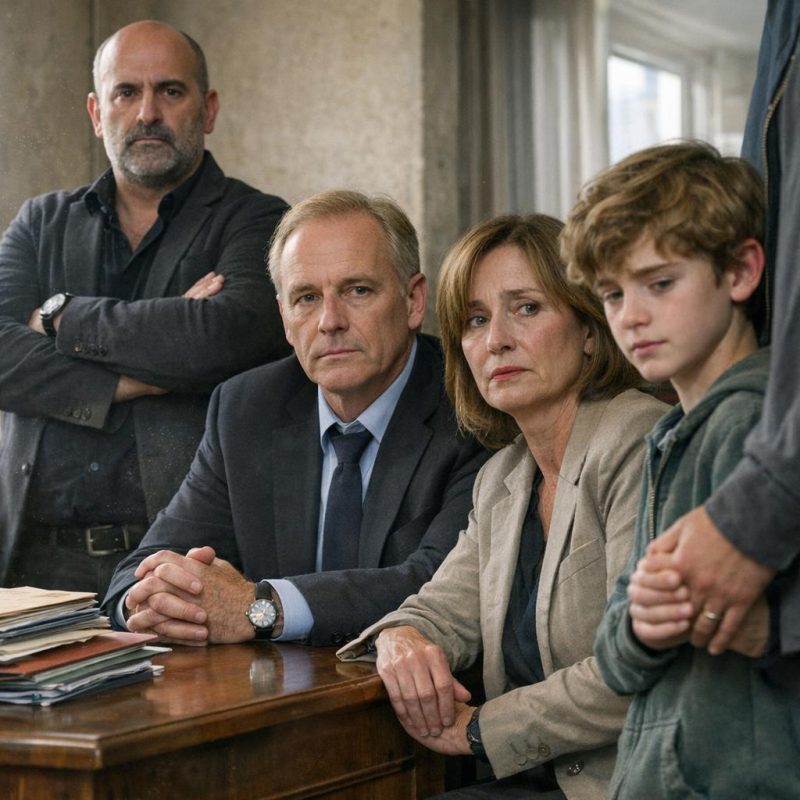 Image by RM AI
Walking Out
We walked out of that conference room together, Noah and me, and his record was officially cleared. Principal Henderson had said the words himself—no cheating, no plagiarism, no mark on his transcript. It was exactly what we'd come for. Noah's shoulders seemed a little less hunched as we moved through the hallway, past the bulletin boards and trophy cases, past students rushing to class. But when I glanced at his face, I didn't see relief. I saw confusion. Maybe hurt. We got to the parking lot and he stopped beside my car, hands shoved in his pockets, staring at the asphalt. He was quiet for a long time. Then he looked up at me, his eyes still carrying that wounded, uncertain look. 'Grandma,' he said, his voice small. 'Why would she do that?' And there it was—the question I'd been dreading, the one I didn't have a complete answer to. I could tell him what I suspected, what the evidence suggested, but I didn't have the full truth yet. I didn't have her confession. I didn't know for certain what had driven her to target him, to fabricate evidence, to put him through weeks of hell. So I took a breath and told him the only honest thing I could. I said I didn't know yet, but I was going to find out.
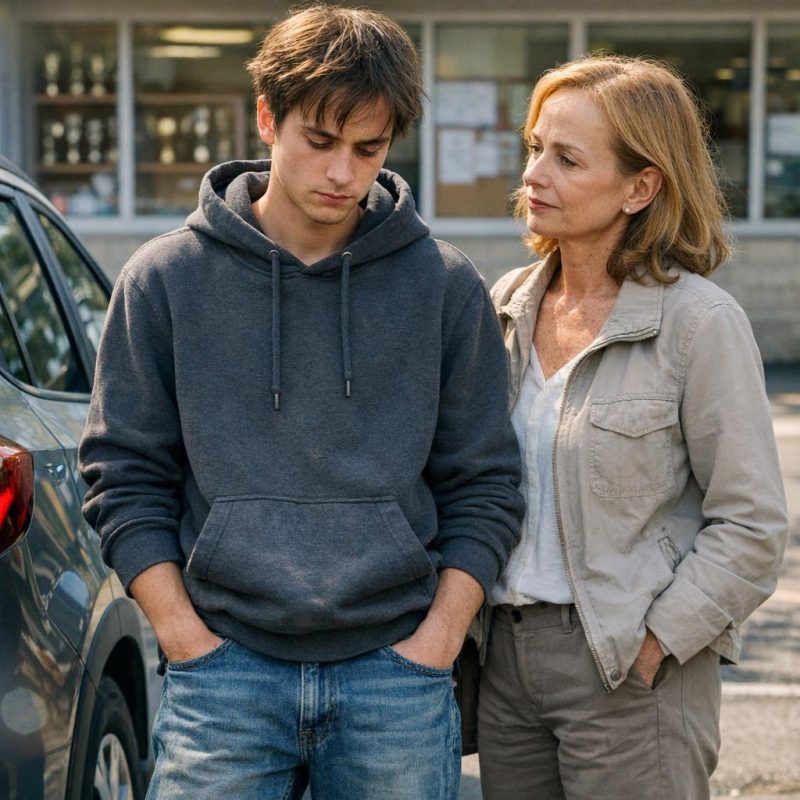 Image by RM AI
The Counselor's Offer
Two days later, I got a call from Ms. Park, the school counselor. Her voice was warm, professional, and she said she wanted to offer Noah some support—counseling sessions, check-ins, whatever he needed to process what had happened. I thanked her, genuinely grateful, and we talked for a few minutes about Noah's emotional state, about how he was holding up. Then her tone shifted slightly, became quieter, almost hesitant. She said she'd heard some troubling things about Mrs. Kline over the years. Nothing concrete, nothing she could prove, but little things—students who seemed scared of her, parents who complained about unfair treatment, colleagues who mentioned her aggressive approach to discipline. She said she'd always chalked it up to a strict teaching style, maybe a personality clash. But now, looking back, she wondered if there had been more to it. She paused, and I could hear the regret in her voice. 'I should have spoken up sooner,' she said. And I sat there, phone pressed to my ear, feeling a mix of gratitude and frustration. Because how many people had noticed something off? How many had seen the signs, felt the unease, but convinced themselves it wasn't their place to intervene? I wondered how many people had seen something but stayed silent.
 Image by RM AI
Calling the Other Parents
Principal Henderson had promised to contact the other two families, the ones whose kids had also been accused by Mrs. Kline. I imagined those phone calls, the way he'd have to explain that their children had been wrongly accused, that the evidence had been manipulated, that the teacher they'd trusted had betrayed them. I wondered how those parents would react—relief, anger, disbelief, all of it at once. I didn't have to wait long to find out. That night, my phone rang. The voice on the other end was shaky, raw with emotion. She introduced herself as the mother of one of the other students, a girl in tenth grade. Henderson had called her that afternoon, she said, and explained everything. She said she was grateful, relieved, furious—but mostly, she was heartbroken. Because her daughter had spent months believing she was a cheater. She'd internalized it, accepted it, let it define her. Even now, even after being told the truth, she couldn't shake the shame. 'My daughter still thinks she's a cheater,' the mother said, her voice breaking. And I felt it then, the full weight of what Mrs. Kline had done—not just to Noah, but to these other kids, these other families. The damage wasn't just about a mark on a transcript. It was deeper, more insidious, and it wouldn't be erased by a single phone call.
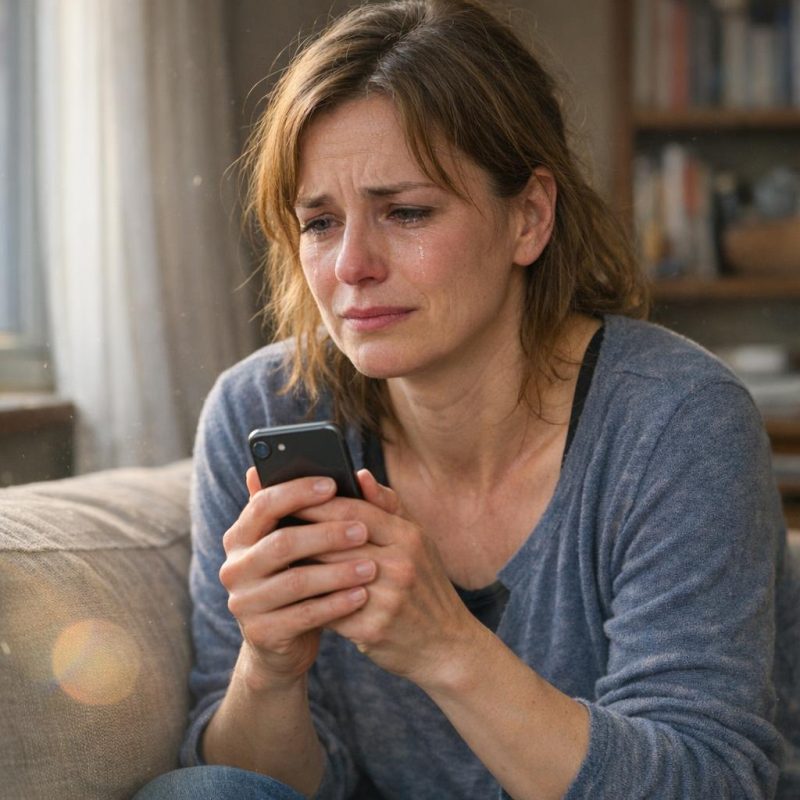 Image by RM AI
The Investigation Begins
The district moved quickly after that. Within a week, I received a formal letter stating that a full investigation had been opened into Mrs. Kline's conduct. They were requesting all related documentation—emails, essays, meeting notes, anything connected to Noah's case or any other accusations she'd made. The letter was professional, bureaucratic, but I could sense the seriousness behind it. This wasn't just a slap on the wrist. This was a real investigation, the kind that could end careers, that could have legal consequences. I felt a grim sort of satisfaction reading it. Then, a few days later, my phone rang. It was an investigator from the district, a woman with a calm, measured voice. She explained the process, the timeline, the steps they were taking. She said they were interviewing everyone involved—teachers, administrators, students, parents. And then she asked if I'd be willing to provide a formal statement about what had happened, about what I'd discovered, about the evidence Jordan had found. I didn't hesitate. Of course I would. I'd document every detail, every discrepancy, every moment of doubt. I'd make sure they had everything they needed to understand exactly what Mrs. Kline had done. I received a call from an investigator asking if I'd be willing to provide a statement—of course I would.
 Image by RM AI
The Audit Report Reexamined
A week into the investigation, I got another call—not from the investigator directly, but from Vice Principal Torres. He said the district had asked him to pull together a timeline of Mrs. Kline's cheating reports over the past two years. They wanted to see if there were any patterns, any irregularities. He'd compiled the data and sent it to the investigator, but he thought I should know what they'd found. Mrs. Kline had been teaching for twelve years at the school. For the first ten, she'd reported an average of one or two suspected cheating incidents per year—completely normal, completely unremarkable. Then, two years ago, the district published that audit report, the one highlighting low academic integrity enforcement across the district. And immediately after that report came out, Mrs. Kline's cheating reports spiked. Suddenly she was reporting five, six, seven cases a year. Suddenly she was the most vigilant teacher in the building. Torres said the investigator had flagged it immediately. The numbers didn't lie. The pattern was too clear, too deliberate. I hung up the phone and sat there, staring at the wall, feeling the pieces lock into place. The timing wasn't a coincidence—it was a response.
 Image by RM AI
Parent Angela Martinez Comes Forward
That same week, I got an email from another parent—Angela Martinez, the mother of one of the other accused students. She said Principal Henderson had given her my contact information, said I might be able to help her understand what had happened. We arranged to meet for coffee. Angela was younger than me, maybe late thirties, with tired eyes and a guarded expression. She told me about her son, a quiet ninth-grader who loved science, who'd been accused of plagiarizing a lab report. Mrs. Kline had presented evidence—highlighted passages, a document comparison, the same meticulous breakdown I'd seen with Noah's essay. Her son had denied it, of course, but the evidence seemed overwhelming. Angela said she'd wanted to believe him, but she didn't know how to fight it. She didn't know where to start. So her son had accepted the punishment, taken the zero, and stopped talking about science. Angela's voice cracked when she said that part. Then she showed me the documents Mrs. Kline had used. I looked them over, and my stomach turned. The structure was identical to Noah's case—the same phrases, the same formatting quirks, the same meticulous fabrication. She said her son was accused of plagiarizing a science report—and the evidence looked exactly like Noah's case.
 Image by RM AI
The Instructional Coach Job Posting
I couldn't stop thinking about Mrs. Kline's promotion application, the instructional coach position she'd applied for. Jordan had mentioned it in passing during the meeting, but I hadn't looked into it closely. Now, I needed to know more. I found the job posting online—it had been archived on the district website. The description was detailed, listing the qualifications, the responsibilities, the expectations. And there, in the middle of the requirements section, was a bullet point that made my blood run cold. It said candidates must demonstrate a 'proven track record of enforcing academic integrity policies and identifying misconduct.' I read it again. And again. The pieces weren't just falling into place—they were snapping together with a terrible, sickening clarity. Mrs. Kline hadn't been enforcing academic integrity because she cared about honesty. She'd been manufacturing cases to build a résumé. She'd been targeting students—vulnerable students, students she thought wouldn't fight back—to create evidence of her so-called vigilance. Every accusation, every fabricated document, every zero she'd handed out had been a line item on her application. A credential. A selling point. I sat there, staring at the screen, feeling a cold fury settle over me. The job posting said 'track record of enforcement'—and suddenly every piece fell into place.
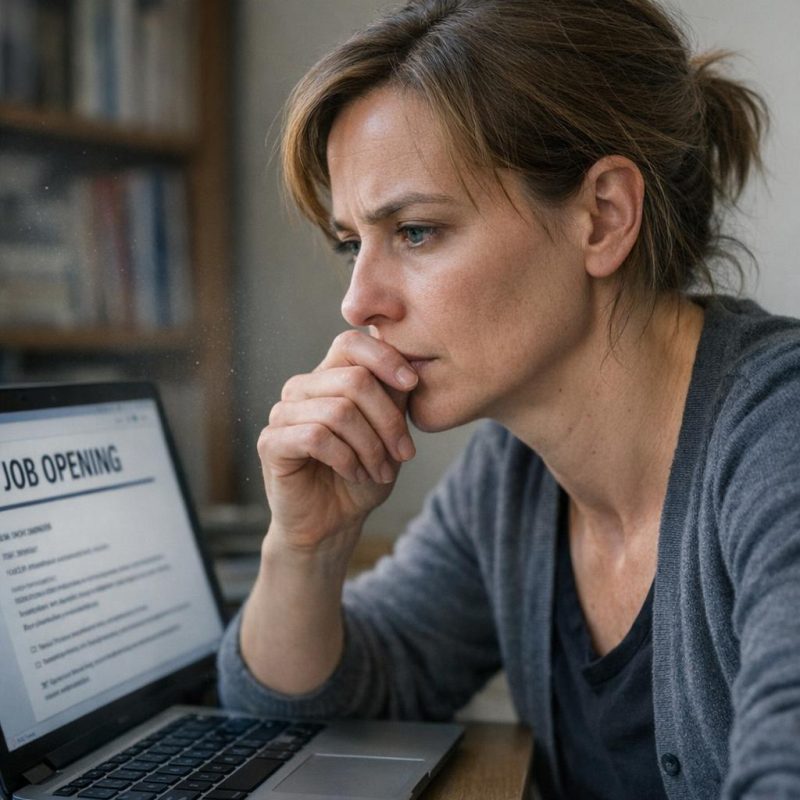 Image by RM AI
The Confession
The investigator called me three weeks later. Her voice was steady, professional, but I could hear the weight behind it. She said the investigation had concluded. Mrs. Kline had confessed. Not immediately—she'd resisted at first, tried to justify her actions, claimed she was just doing her job. But when confronted with the timeline, the document metadata, the pattern of accusations, she'd finally admitted the truth. She'd been fabricating cheating incidents. All of them. She'd been targeting students she thought were vulnerable—kids without advocate parents, kids who were shy or struggled socially, kids she believed wouldn't push back. She'd been manufacturing evidence, planting her own writing into their work, doctoring documents to create the appearance of plagiarism. And why? To build a track record. To demonstrate her commitment to academic integrity. To make herself look like the most vigilant, most dedicated teacher in the district. Because that's what the instructional coach position required. That's what would get her promoted, get her out of the classroom, get her the job she wanted. The investigator's voice was calm, but I could hear the disgust beneath it. She said Mrs. Kline had targeted three students over two years. Noah was the third. She'd been manufacturing accusations against vulnerable students she thought wouldn't fight back—and Noah was supposed to be one of them.
 Image by RM AI
The Manufactured Narrative
The investigator explained the method in detail, and I'll tell you—it was chilling how simple it was. Mrs. Kline would collect a student's essay during class or after school. She'd scan it or photograph it, then open it on her computer. She'd copy sections of the student's original work, paste in plagiarized content from online sources, then adjust the formatting to match. Sometimes she'd insert her own name or phrases into the text—like she'd done with Noah. Then she'd print out this altered version and present it as the student's submission. The original? She'd destroy it or claim it never existed. When parents or students protested, she'd point to the printed 'evidence' and the metadata from her own computer. She'd constructed an entire false reality, complete with documentation that appeared legitimate. The investigator said most people never questioned it because teachers are trusted. Because we assume they're acting in good faith. Because who would ever think someone would go to such lengths to destroy a child's reputation? I sat there, phone pressed to my ear, understanding the full scope of what she'd done. This wasn't a mistake or a misunderstanding. This was calculated, methodical, and cruel. She'd been systematically destroying children's reputations to build her own—and it almost worked.
 Image by RM AI
How Many Others
I asked the question that had been burning in my mind since the moment the investigator said 'pattern.' How many students were affected? How many children had she done this to? The investigator paused, and I heard papers rustling in the background. She said they'd identified five confirmed cases so far. Five students over two years. Three at the middle school, two at the elementary level before she'd transferred buildings. Five kids who'd been branded as cheaters, who'd sat through disciplinary meetings, who'd lost recess or lunch privileges or academic opportunities. Five families who'd been put through hell, who'd questioned their own children, who'd wondered if they'd failed as parents. The investigator said they were still reviewing her files, still reaching out to families, still trying to piece together the full damage. But five confirmed. Five children whose lives she'd tried to ruin so she could list 'commitment to academic integrity' on her résumé. I felt sick. I felt angry. But mostly I felt responsible. Because if I hadn't pushed, if I hadn't found that hidden text, how many more would there have been? Five children branded as cheaters—five families put through hell—all for one woman's career ambitions.
 Image by RM AI
The Demand for Public Accountability
I called Principal Henderson the next morning. I didn't wait for the district to schedule a meeting or send a formal letter. I told him exactly what I wanted: public accountability. Mrs. Kline's actions needed to be acknowledged openly, and every single affected student deserved a formal apology read aloud to their classmates. Not a quiet note in their file. Not a private conversation in the principal's office. A public restoration of their reputations in the spaces where they'd been humiliated. He started to respond, but I cut him off. I said those children had been accused in front of their peers, had walked through hallways with whispers following them, had sat in classrooms knowing their teachers questioned their integrity. Silence wouldn't fix that. Administrative corrections wouldn't undo the social damage. They deserved to have their names cleared out loud, in front of the same people who'd heard the accusations. Principal Henderson was quiet for a moment. Then he said he understood my concern, but there were privacy issues to consider. He said some families might not want their children's situations discussed publicly. He said the district had protocols for these matters. The principal hesitated, citing 'privacy concerns,' but I told him those children deserved to have their names cleared—out loud.
 Image by RM AI
Clearing Records Isn't Enough
I pushed back hard. I told Principal Henderson that clearing records wasn't enough. Those files would be corrected, yes, but what about the damage that couldn't be documented? What about the shame those kids carried? What about the classmates who still believed they were cheaters, the teachers who still harbored doubts, the social stigma that would follow them if nothing was said? I said, 'These kids were called cheaters in front of their peers—silence won't undo that.' He tried to explain the district's position, something about protecting student privacy and avoiding further trauma. But I wasn't letting it go. I asked him how it protected a child's privacy to let them continue being thought of as dishonest. I asked him how it avoided trauma to leave them living under a cloud of suspicion. Those children had been publicly accused, and they deserved to be publicly exonerated. Not because we wanted to embarrass the district or Mrs. Kline—though honestly, I wouldn't have minded that—but because those kids needed their dignity restored in the same spaces where it had been taken. I could hear Principal Henderson's tone shifting. He was starting to understand. 'These kids were called cheaters in front of their peers—silence won't undo that.'
 Image by RM AI
The Restorative Justice Meeting
I told Principal Henderson there was something else I wanted. Not just apologies, but actual healing. I proposed restorative justice meetings—facilitated sessions with a counselor present where each student could tell their story and be heard. Where they could express how the accusations affected them. Where the school could acknowledge the harm and commit to doing better. I'd been reading about restorative practices online, and it seemed like the right approach. Not punitive, not bureaucratic, but genuinely focused on repair. The principal listened. He asked questions about logistics, about who would facilitate, about how we'd structure it. I could tell he was considering it seriously. Finally, he said he thought it was a good idea. He said he'd work with the district's counseling team to set it up. But—and there was always a but—he said it would have to be voluntary. He couldn't require families to participate. He wasn't even sure all families would want it. Some might prefer to just move forward quietly. Some might not want to revisit the trauma. I understood that, even though it frustrated me. These kids deserved healing, but they also deserved choice. The principal finally agreed—but he said it would have to be voluntary, and he wasn't sure all families would want it.
 Image by RM AI
The Written Apology to Noah's Class
Principal Henderson scheduled Noah's public apology for the following week. He agreed to read a formal statement to Noah's eighth-grade English class—the same class where Noah had been working on that Steinbeck essay, the same class where he'd first been accused. The statement would acknowledge that Noah had been falsely accused, that the school had failed to protect him, and that his academic integrity was beyond question. It would be read during class time, in front of all his peers. I asked if he'd send me the text beforehand, and he agreed. When it arrived in my email that evening, I read it three times. It was clear, direct, and unambiguous. It named the harm without naming Mrs. Kline directly. It apologized on behalf of the school. It was what Noah deserved. I showed it to him that night after dinner. He read it silently, his expression unreadable. Then he looked up at me and asked if he had to be there when it happened. If he could maybe stay home that day, or wait in the library, or just not have to sit through it. I told him the choice was entirely his. That he'd earned the right to decide how this ended. Noah asked me if he had to be there when it happened—I told him the choice was his.
 Image by RM AI
The Day of the Apology
Noah decided he wanted to be there. He told me the morning of the apology, while we were having breakfast. He said he'd thought about it all week, and he didn't want to hide anymore. He wanted to hear it. He wanted his classmates to hear it with him there. I drove him to school that day, my heart pounding the entire way. I asked if he wanted me to come inside, to wait in the hall, but he shook his head. He said he needed to do this part on his own. So I waited in the parking lot, sitting in my car with my phone in my lap, watching the clock. Twenty minutes felt like hours. I kept imagining what was happening in that classroom—Principal Henderson standing at the front, Noah sitting at his desk, his classmates listening. When the time was finally up, I walked into the building and positioned myself near his classroom door. I didn't go in, didn't interrupt. I just waited. The door opened a few minutes later, and students started filing out for their next class. Then I saw Noah. He was walking slowly, wiping his eyes with the sleeve of his hoodie. But he was smiling. When the door opened and Noah walked out, he was crying—but he was smiling too.
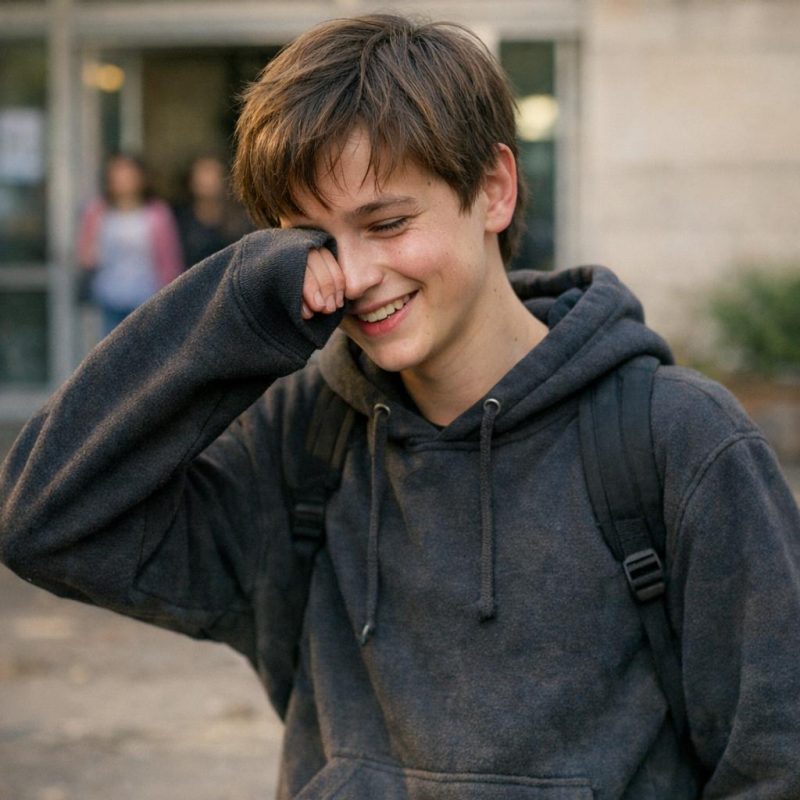 Image by RM AI
His Classmate's Apology
We were walking toward the exit when I saw Marcus approaching. He was the boy who'd whispered 'cheater' in the hallway weeks ago—I recognized him from Noah's description. My body tensed, protective instinct kicking in, but Noah didn't flinch. Marcus stopped a few feet away, hands shoved in his pockets, looking uncomfortable. He said, 'Hey, Noah.' Noah said hey back. Then Marcus said he was sorry. He said he'd believed Mrs. Kline because she was the teacher, and teachers don't usually lie. He said he'd felt like crap ever since he found out the truth, and he should've just asked Noah directly instead of listening to rumors. He said he was really, really sorry. Noah stood there for a moment, and I held my breath. Then Noah said it was okay. He said he got it. He said he probably would've believed it too if it had been someone else. Marcus nodded, looking relieved, and then walked away. Noah turned to me, and I saw something different in his face. Confidence, maybe. Or just the beginning of it. Noah accepted the apology, and I watched him stand a little taller—like he was reclaiming something he'd lost.
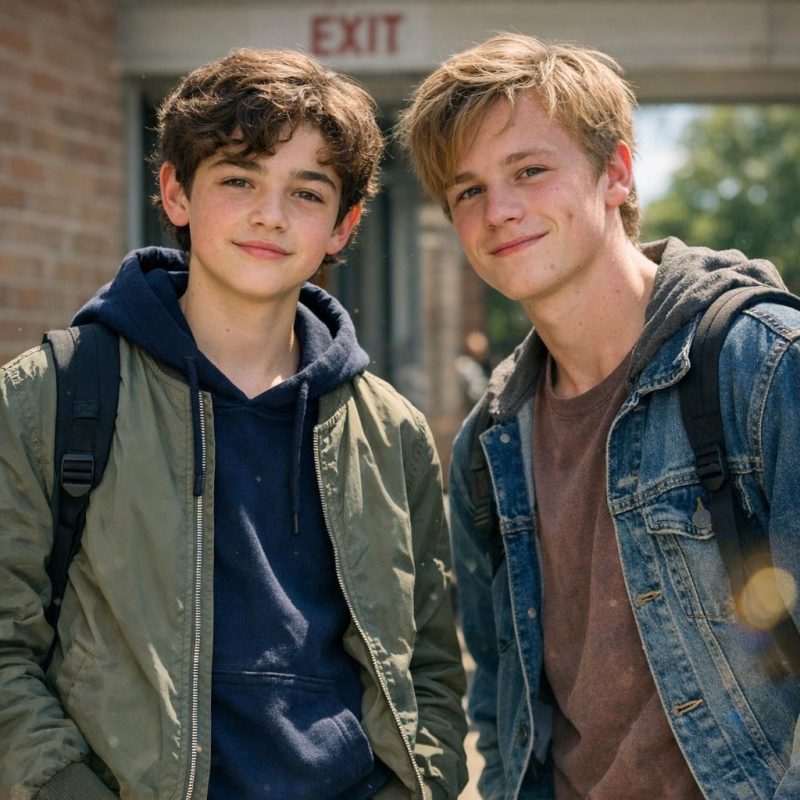 Image by RM AI
Mrs. Kline's Resignation
The email came from the district two days later. It was formal, carefully worded, and brief. Mrs. Kline had resigned effective immediately. She would not be eligible for rehire in any capacity within the district. There would be no further comment due to personnel privacy regulations. I read it three times, sitting at my kitchen table with my coffee going cold. I felt relief, yes—this woman would never teach another child again, at least not here. But I also felt something heavier. Anger, maybe, that she'd been allowed to resign rather than face a more public reckoning. Sadness for all the kids over the years who'd suffered under her and never had someone fight for them. I thought about Noah, about Marcus, about the three other students whose names I didn't even know. I thought about how many others there might have been—kids who'd been gaslit, humiliated, accused of things they didn't do, and who'd just accepted it because she was the authority figure. Mrs. Kline was gone. The formal consequences had been delivered. The system, slow and bureaucratic as it was, had finally acted. It was over—but the scars she left on those five kids would take much longer to heal.
 Image by RM AI
The Essay That Started It All
Noah came to me the following weekend with his laptop. He looked nervous but determined. He asked if I thought he could resubmit his original Harriet Tubman essay for credit. The new English teacher, Mr. Davies, had told the class they could submit one piece of work from earlier in the year for reassessment if they felt it hadn't been graded fairly. Noah said he wanted to submit his. I felt my throat tighten. I told him I thought that was a wonderful idea. I said his essay had been excellent, thoughtful, well-researched, and entirely his own work. He nodded, scrolling through the document on his screen. Then he said he wanted to make some changes first. Not to the research or the main argument, but to the conclusion. He said he wanted to add something new. I asked what. He looked up at me, and I saw that same quiet confidence I'd seen in the hallway with Marcus. He said he wanted to write about what it means to fight back when someone tries to silence you. He said Harriet Tubman had done that, and he'd done it too, in his own way. I felt tears prick my eyes, but I didn't let them fall. I just nodded and told him I couldn't wait to read it. He said he wanted to add a new conclusion—about what it means to fight back when someone tries to silence you.
 Image by RM AI
 Image by RM AI
The Formatting Detail That Changed Everything
I've thought about that header a lot since this whole thing ended. That tiny gray line at the top of the document: 'Last Edited by: MKLINE.' It was so small, so easy to miss. I hadn't even been looking for it—I'd just been trying to understand why Mrs. Kline's comments felt so invasive, why the document didn't look the way Noah's other assignments did. And there it was. One little piece of metadata that unraveled an entire manufactured narrative. It's funny, in a way that isn't funny at all. Mrs. Kline had been so confident, so assured in her authority. She'd accused Noah in front of his class, refused to hear his explanation, escalated to the principal, and stood by her story even when confronted. But she'd missed one detail. Or maybe she didn't even know it was there. Maybe she was so used to getting away with things that she'd stopped being careful. I'd spent my whole career noticing details—tracking project timelines, catching discrepancies in reports, spotting when something didn't add up. I'd learned to trust that instinct. And in this case, that instinct had been right. Sometimes the smallest details tell the biggest truths—you just have to know how to look.
 Image by RM AI
What Grown-Up Lies Look Like
Noah asked me one evening, after dinner, how I'd known to keep fighting. We were sitting on the porch, watching the sun go down. He said most people would've believed the teacher. He said even he had started to doubt himself for a while. I thought about how to answer. I could've talked about the metadata, the formatting, the evidence. But that wasn't really what he was asking. I told him I'd recognized what lies look like when they try to wear a child's face. I said I'd seen too many times in my life when people in power used that power to avoid accountability, to twist the truth, to make someone smaller feel like they were the problem. I told him I knew he wasn't lying because I knew him—his character, his honesty, his integrity. And I knew Mrs. Kline was lying because her story kept changing, her explanations didn't add up, and she was more interested in protecting herself than in finding the truth. I said I kept fighting because he mattered. Because the truth mattered. Because no child should ever be made to feel like their voice doesn't count. He nodded, quiet for a moment. Then he said thank you. I squeezed his hand. I told him the truth matters—and so does he.
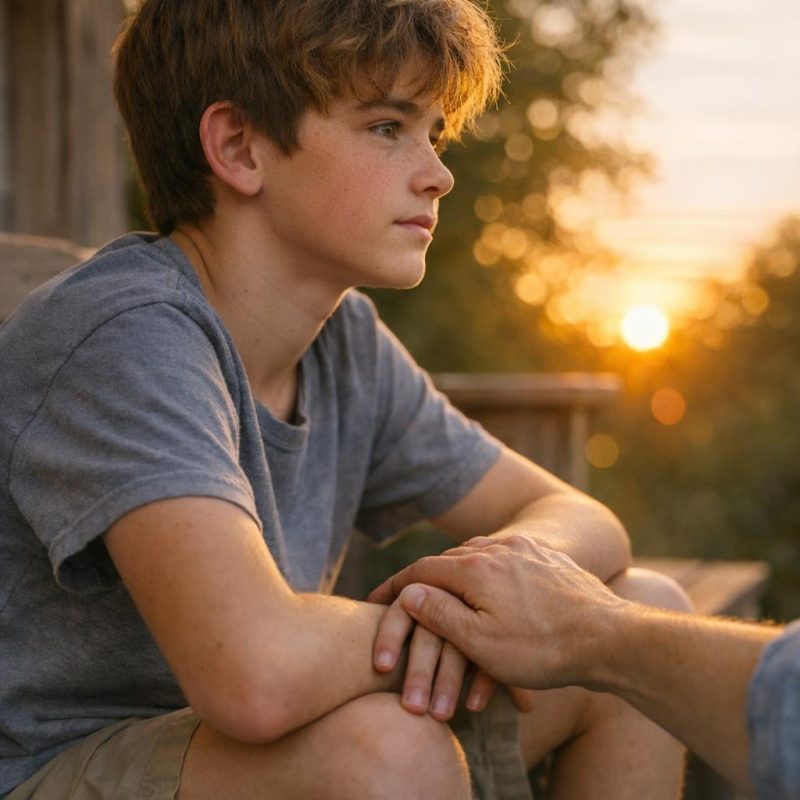 Image by RM AI