The Plane Probably Won't Crash If You Don't Turn on Airplane Mode—So Why Do We Still Need to Do It?
The Plane Probably Won't Crash If You Don't Turn on Airplane Mode—So Why Do We Still Need to Do It?
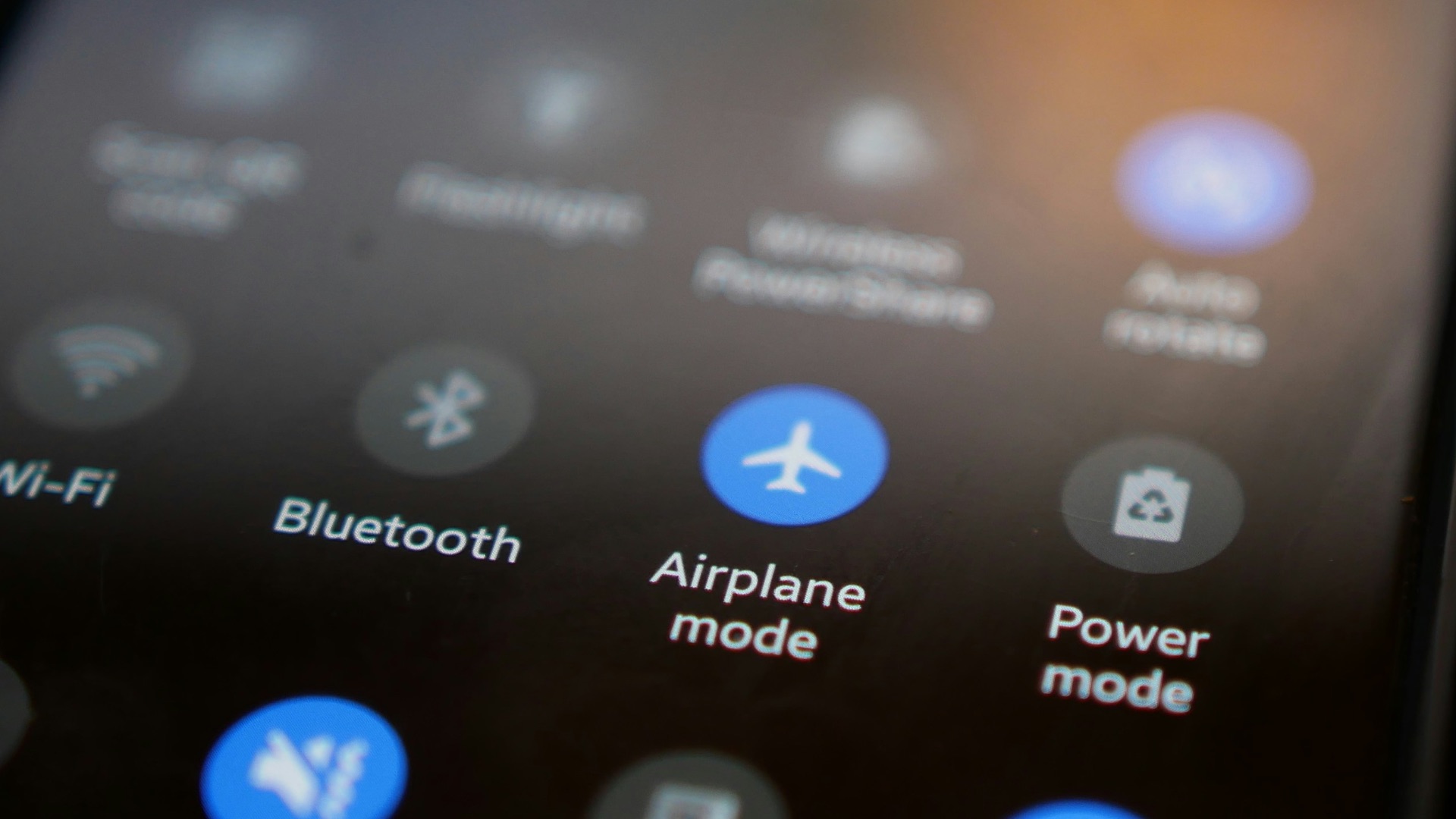
You’ve finally boarded, put away your bags, and settled into your seat. You take out your phone to download some last-minute entertainment—podcasts, audiobooks, music, TV shows, movies—when a flight attendant comes around and tells you to switch your device to airplane mode. Begrudgingly, you listen. But does turning on airplane mode really make flying any safer? What real difference does it actually make?
It might seem like a minuscule thing to do, tapping the airplane mode button on your phone, and while accidentally leaving it off probably wouldn't crash the plane, there's still some risk involved. And if you're flying at some 30,000 feet in the air, you probably want to erase any chance of risk that might exist. So: here's why you should turn on airplane mode.
Reducing Small, Avoidable Risks
Unless you study aviation, you probably don't know what goes on behind the scenes, so we'll set the stage. Modern jets are engineered and certified with electromagnetic compatibility in mind, and regulators have detailed guidance on how aircraft should tolerate interference from portable electronic devices. That’s part of why airlines have been able to expand when and how passengers can use devices over the years. Even so, regulators still treat uncontrolled radio transmissions in the cabin as a variable worth managing, not ignoring.
The key issue isn’t that your phone becomes a magic off switch for a plane, it’s that avionics rely on sensitive radio receivers for navigation and communication. Regulators have long required operators to assess and control onboard device use to prevent interference with aircraft systems, especially during phases of flight where workload is high and margins are smaller. Guidance to operators emphasizes a structured approach rather than casual guesswork.
Airplane mode, therefore, is a blunt but effective way to reduce the chance that lots of devices are simultaneously transmitting at full power in a metal tube full of antennas and wiring. The probability of a serious issue may be low, sure, but aviation tends to manage risk by stacking small reductions until the overall system is meaningfully safer. Airlines can allow more device use when they’ve shown their fleet can tolerate it; the default instruction helps keep that tolerance from being tested unnecessarily.
If you’ve ever noticed an intermittent buzz in audio systems near a phone, you already understand the basic concept: radio emissions can couple into electronics in annoying, unpredictable ways. In aircraft, the concern isn’t your playlist crackling—it’s avoiding any avoidable nuisance that could distract crews or degrade a signal at the wrong moment. That’s why crews can still ask for devices fully off under certain conditions, even if you think the risk or action is minuscule.
Airplane Mode Also Protects Networks on the Ground
There’s a separate, very practical reason aviation still cares about your cellular radio: in the U.S., airborne cellular use is prohibited under FCC (Federal Communications Commission) rules. The regulation is straightforward: cellular phones carried aboard aircraft “must not be operated” while the aircraft is airborne. Airplane mode is the easiest way for passengers to comply without powering down the device entirely.
From the phone’s perspective, staying connected at altitude is inefficient and noisy. Your device can “see” multiple cell sites at once and may repeatedly try to register, hand off, and transmit at higher power than it would on the ground because it’s continually chasing a stable connection. That extra transmitting is exactly what airplane mode stops: it prevents the cellular radio from constantly searching and transmitting and creating unnecessary chatter.
If you forget to turn on airplane mode, this may also explain why you might land with a battery that looks like it ran a marathon even though you barely used your phone. When the cellular radio is hunting, it burns power, and you’re getting little benefit in return. Airplane mode shuts down those radios by design, which turns off the device’s wireless connections by default, though you're allowed to re-enable Wi-Fi or Bluetooth when permitted and if you need it.
An Operational Tool That Keeps Cabin Instructions Simple
Airline policies have to work for a whole cabin, not just for the most conscientious passengers. A rule that says “turn off transmitting functions unless you’re sure your device is only doing X, and only during Y, and only if Z” would turn every takeoff into a debate. Airplane mode is a clean instruction that’s quick to follow and easy for crew to verify at a glance.
That simplicity matters most during takeoff, approach, and landing, when crews are coordinating checklists, traffic, weather, and clearances. Regulators and operators treat those phases differently because mistakes or distractions are costlier when altitude and time are limited. A consistent passenger-device policy is one less variable in an already dense operational environment.
Airplane mode also creates a useful baseline for exceptions. As we mentioned earlier, since many airlines now allow Wi-Fi and sometimes Bluetooth accessories once the cellular radio is disabled, you can switch on airplane mode and then manually re-enable Wi-Fi or Bluetooth after you've been given the go-ahead.
Finally, there’s a compliance reality that people don’t love admitting: rules that rely on perfect individual judgment don’t scale. A shared standard, however conservative it feels, helps ensure the cabin behaves predictably, and predictability is a safety feature in itself. At the end of the day, your phone probably won’t bring anything down, but the system works best when everyone follows the same low-effort step.