I Ignored the Warning Signs of a Heart Attack Because It Felt Like Indigestion—What Happened Next Changed Everything
I Ignored the Warning Signs of a Heart Attack Because It Felt Like Indigestion—What Happened Next Changed Everything
The Pressure That Wouldn't Pass
It started about twenty minutes after dinner—this dull pressure in the center of my chest that felt like I'd eaten too fast. I'm fifty-six years old, and I know what indigestion feels like, you know? Sarah had made this incredible lasagna, and I'd gone back for seconds, maybe eaten a bit too much garlic bread. So when that familiar tightness settled in, I just figured my stomach was protesting. I grabbed a glass of water and tried to relax on the couch. Sarah glanced over at me during a commercial break. 'You okay?' she asked. I nodded, waving her off. 'Just ate too much,' I said with a weak smile. The pressure wasn't sharp or stabbing—nothing like what I'd always imagined a heart attack would feel like. It was just there, this uncomfortable heaviness that wouldn't quite let go. I loosened my belt a notch and told myself to give it fifteen minutes. People don't have heart attacks after eating lasagna on a Tuesday night. That's not how life works. But then the pressure began to spread, and something in my gut told me this wasn't about the food.
 Image by RM AI
Waiting It Out
I did what any reasonable person would do—I tried to fix it myself. First came the antacids, those chalky tablets I kept in the kitchen drawer for moments exactly like this. I chewed two of them and chased them down with more water. Sarah was watching me now, really watching, with that concerned expression I'd seen a thousand times over twenty-eight years of marriage. 'Maybe we should—' she started, but I cut her off. 'It's just heartburn, babe. Give it a minute.' And honestly, for about ten minutes, I thought I was right. The pressure eased up just enough that I could take a deeper breath. See? I told myself. Just indigestion. Nothing to panic about. I even laughed a little, feeling silly for the brief moment of concern. But then, like someone had turned a dial, the tightness came roaring back. This time it was deeper, heavier, like someone had placed a weight on my sternum. I shifted positions on the couch, trying to find relief. Nothing helped. Sarah moved closer. 'David, you're sweating.' I touched my forehead—she was right. The tightness eased for a moment, just long enough to make me think I was right—and then it came back twice as strong.
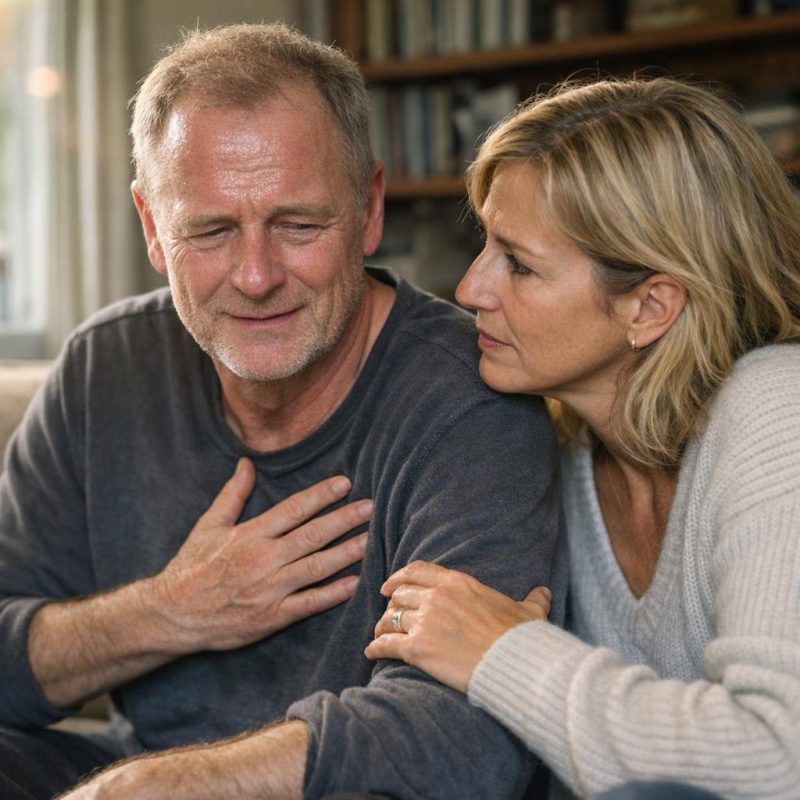 Image by RM AI
The Spread
That's when everything changed. The pressure that had been confined to my chest suddenly radiated upward into both shoulders, like invisible hands were squeezing them. Then came the sensation in my left arm—not quite pain, but this odd heaviness that made my whole arm feel foreign. I sat up straighter, my heart now racing for reasons that had nothing to do with whatever was happening in my chest. This was different. This was the stuff you read about in pamphlets in doctor's offices. 'Sarah,' I said quietly, and my voice sounded strange to my own ears. She was already reaching for her phone. 'We're going to the hospital,' she said firmly, no room for argument. 'It's probably nothing,' I heard myself say, even as every cell in my body was screaming that it was definitely something. 'I don't want to waste their time if it's just—' 'Now, David.' Her voice had that edge it only got when she was truly scared. I stood up slowly, testing my legs. The room tilted slightly. I looked at Sarah and saw the fear in her eyes—the same fear I was trying so hard not to name.
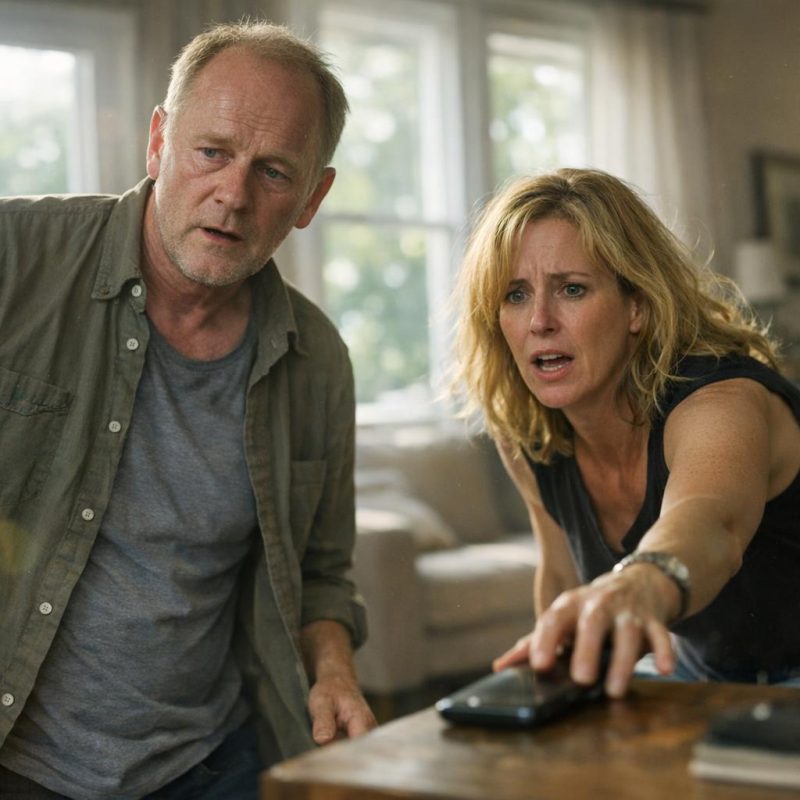 Image by RM AI
The Drive
The drive to the hospital felt like it took hours, even though it was only twelve minutes. I know because I watched every single minute tick by on the dashboard clock. Sarah drove with this focused intensity, one hand on the wheel and one hand reaching over to touch my leg every few seconds, like she needed to confirm I was still there. The pressure in my chest had settled into a constant, crushing sensation that made it hard to think about anything else. Each breath felt like work. 'Tell me if it gets worse,' Sarah kept saying. How do you explain that it wasn't getting worse—it was just staying terrifyingly, consistently bad? I tried to focus on normal things. The streetlights passing overhead. The late-night traffic. The fact that I might actually be having a heart attack at fifty-six years old. That thought kept circling back, unwelcome and insistent. I'd always been relatively healthy, or so I thought. This wasn't supposed to happen to me. My left arm had gone from heavy to numb, and now I couldn't quite make a fist with that hand. As we pulled into the hospital parking lot, I realized I couldn't feel my left hand anymore.
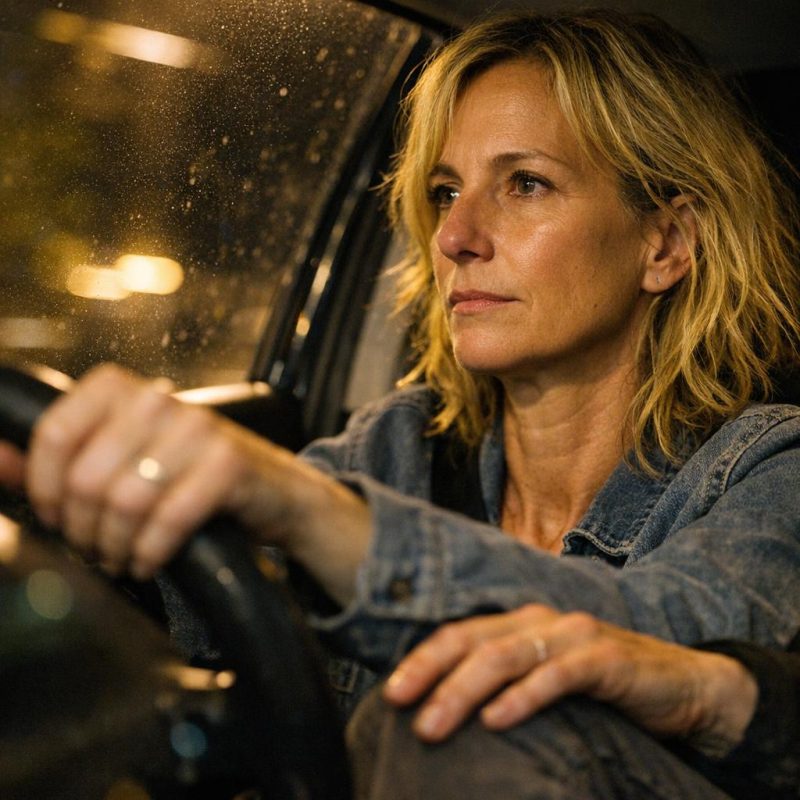 Image by RM AI
Code Blue Protocol
The moment we walked through those automatic ER doors, everything shifted into this surreal fast-forward. Sarah told the triage nurse what was happening, and suddenly I was in a wheelchair being rushed back before people who'd clearly been waiting longer. Nurses appeared from everywhere, moving with practiced efficiency that was both reassuring and terrifying. Someone was taking my blood pressure while someone else was hooking me up to a heart monitor. The beeping started immediately—loud, insistent, irregular. A doctor in blue scrubs appeared, dark eyes scanning the monitor with an expression I couldn't quite read. 'I'm Dr. Patel,' he said calmly. 'How long have you been experiencing chest pain?' 'Maybe an hour,' I admitted, and saying it out loud made me realize how stupid I'd been. An hour. I'd waited an hour. He didn't lecture me, just nodded and ordered what sounded like a dozen tests. EKG. Blood work. Something about troponin levels. Sarah stood in the corner, her arms wrapped around herself. The room spun with activity and medical terminology I barely understood. Dr. Patel looked me straight in the eye and said the words I'd been dreading: 'Mr. Collins, you're having a heart attack.'
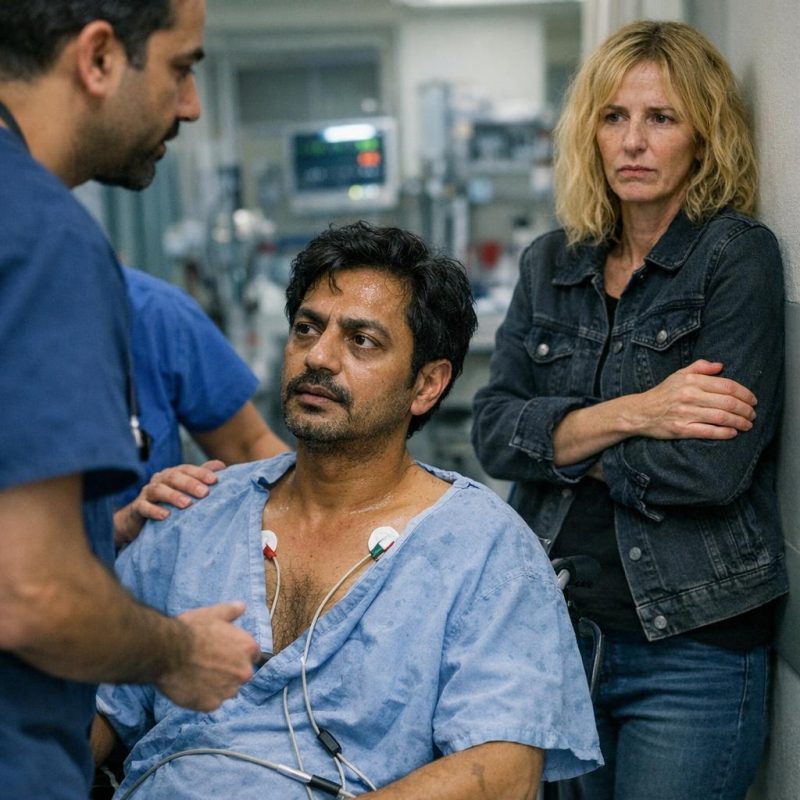 Image by RM AI
The Blockage
Dr. Patel pulled up the imaging on a screen beside my bed, and I could see Sarah's reflection in it, her hand covering her mouth. 'You have a significant blockage in your left anterior descending artery,' he explained, pointing to something on the screen that looked like a dark spot interrupting a line. 'We call this the widow-maker.' The nickname alone made my blood run cold. He continued talking in that measured, professional way that doctors have when delivering terrible news. Something about plaque buildup, about restricted blood flow, about myocardial infarction—which was just a fancy term for heart attack, I was learning. 'The good news is you got here in time,' Dr. Patel said. 'We can fix this.' But then his expression shifted slightly, became more serious if that was even possible. 'I need you to understand how close this was, though. The damage to your heart muscle is still progressing as we speak. Every minute matters.' Sarah made a small sound from the corner. I wanted to reach for her, but I was tangled in wires and monitors. He said I was lucky—another hour and we might be having a very different conversation, if we were having one at all.
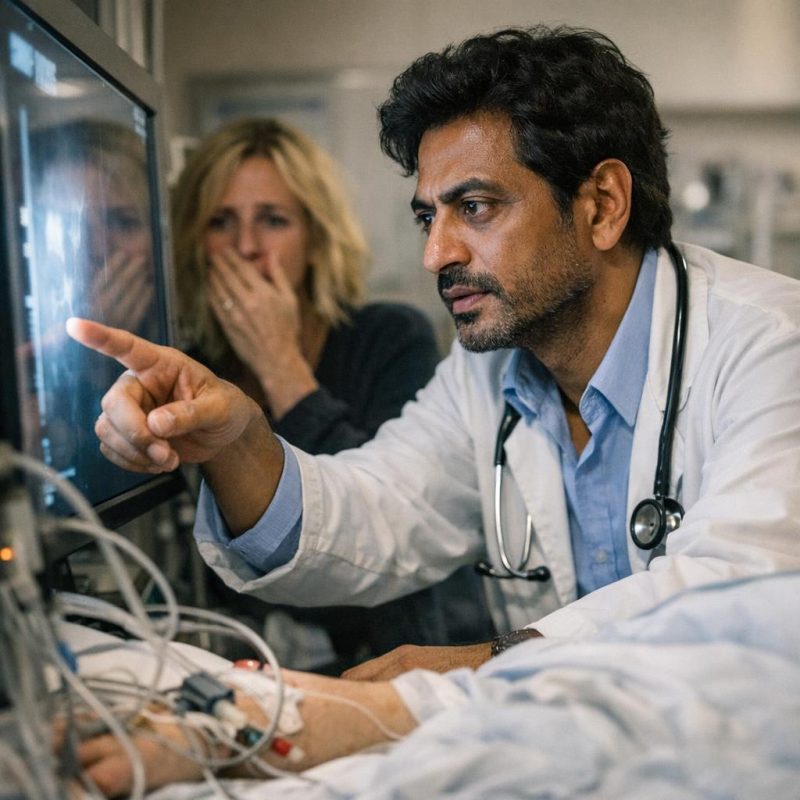 Image by RM AI
Emergency Catheterization
They prepped me for the cardiac catheterization right there in the ER—there wasn't time to wait. Dr. Patel explained the procedure in quick, efficient terms: they'd thread a catheter through an artery in my wrist, navigate it to my heart, and place a stent to open the blocked artery. 'You'll be awake but sedated,' he said. 'You might feel some pressure, but no pain.' Honestly, I barely heard him. My brain had latched onto the phrase 'thread a catheter to your heart' and couldn't move past it. Nurses were shaving my wrist, prepping the area, moving with that same urgent calm. Sarah managed to get close enough to grab my right hand. 'I love you,' she whispered, and her voice cracked. 'I'll be right here when you wake up.' I wanted to tell her I was scared, that I was sorry for waiting so long, that I should have listened to her an hour ago when she first suggested the hospital. But they were already wheeling the bed toward the doors. The fluorescent lights passed overhead in a steady rhythm. I caught a glimpse of Sarah's face one more time before the doors closed between us. As they wheeled me into the operating room, I caught Sarah's face—and I couldn't tell if I'd ever see it again.
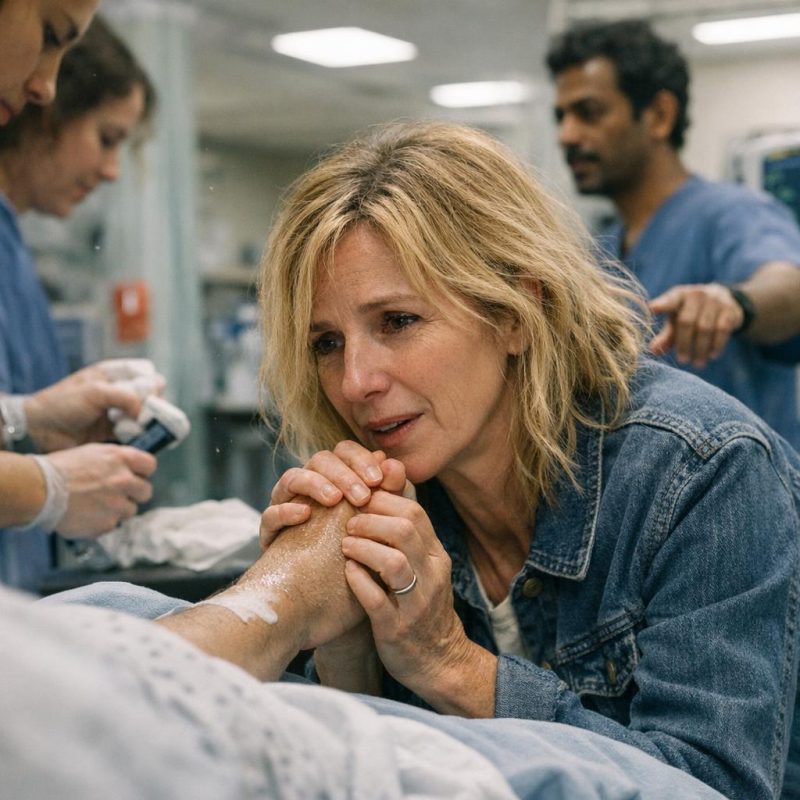 Image by RM AI
Recovery Room Reflections
I woke up to the sound of steady beeping and Sarah's voice saying my name. My mouth felt like cotton, and there was a strange soreness in my right wrist where they'd gone in with the catheter. 'Hey,' I managed to croak out. Sarah's face flooded with relief, tears streaming down her cheeks. 'It worked,' she said. 'Dr. Patel said the stent is in place. You're going to be okay.' The weight of those words—'you're going to be okay'—hit me like a physical force. I'd come so close to not being okay. So close to this going a completely different way. The recovery room was quiet except for the monitors, and I had this overwhelming moment of clarity about how stupid I'd been, how my denial had nearly cost me everything. Sarah held my hand gently, careful of all the IVs and wires. We just sat there for a moment, both of us processing what had almost happened. Then the door burst open and Rebecca rushed in, my twenty-eight-year-old daughter, her face streaked with tears and mascara. She looked terrified, young, completely undone. Rebecca burst through the door in tears, and I realized my kids had no idea how close they came to losing their father.
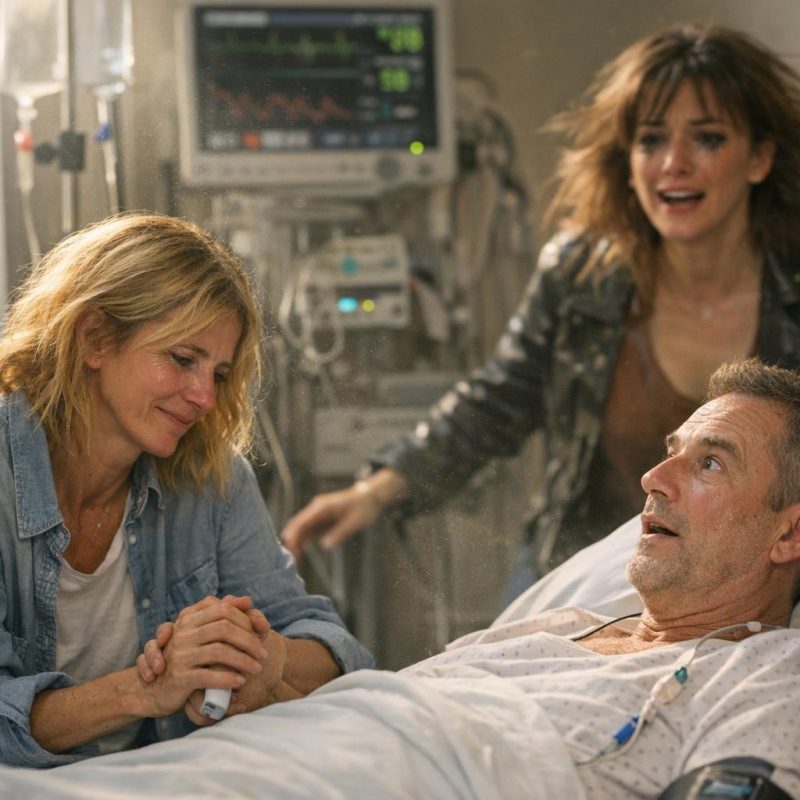 Image by RM AI
The Family Gathers
Tom showed up around eight that evening, still in his work clothes from the flight. My thirty-two-year-old son had driven straight from the airport, and he looked wrecked—exhausted and angry and scared all at once. Rebecca jumped up to hug him, and Sarah went over too, but Tom just stood there in the doorway of my hospital room, staring at me like he was trying to reconcile the father he knew with this guy hooked up to machines. 'Hey, buddy,' I said, trying for casual and failing completely. He nodded once, his jaw tight. The silence stretched out, painful and heavy. Rebecca was crying again, Sarah had her arm around her, and I realized the full magnitude of what my stupidity had done to them. They'd all dropped everything—Tom had been in the middle of a major project presentation, Rebecca had left work without explanation, Sarah had been living in this nightmare for hours before they even knew. I'd put them through hell because I'd convinced myself it was just indigestion. Tom finally moved into the room, but he stayed near the wall, arms crossed. He couldn't even look at me, and I knew exactly what he was thinking—because I was thinking it too.
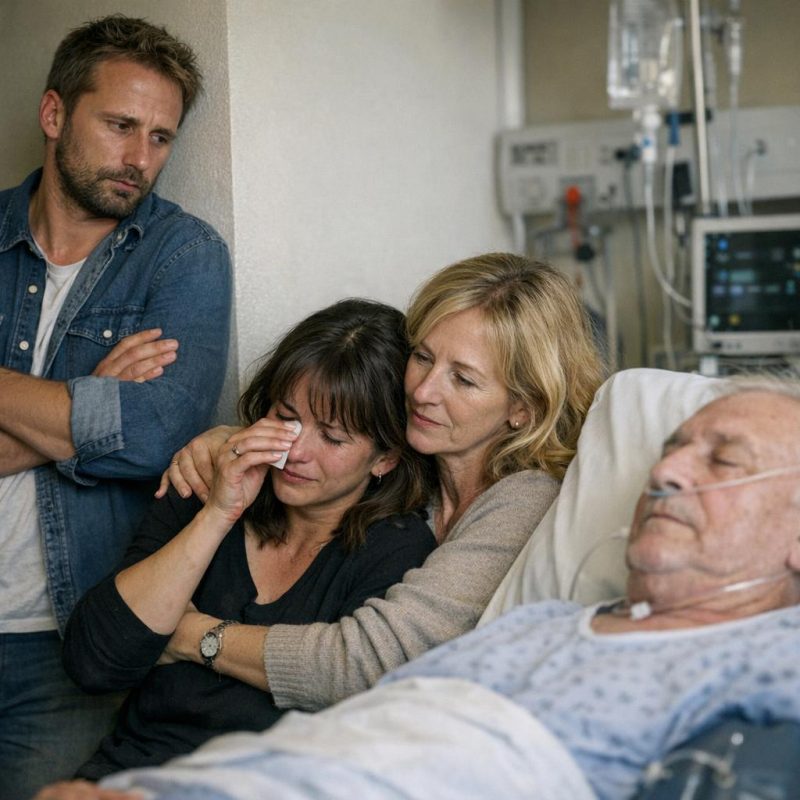 Image by RM AI
The Questions I Couldn't Answer
Tom was the one who finally asked it. 'Dad, why didn't you go to the hospital right away? Mom said you were having symptoms for hours.' His voice was controlled, but I could hear the anger underneath. Rebecca looked up at me, waiting for an answer that would make sense of this. Sarah shifted in her chair, and I could feel her wanting to defend me but also needing to hear my explanation. 'I thought it was heartburn,' I said, and the words sounded pathetic even to my own ears. 'I'd had a big lunch, and it just felt like indigestion. I took some antacids, thought I'd lie down...' Tom shook his head. 'For hours, though? Even when it got worse?' Rebecca's voice was small: 'Didn't you know the signs, Dad? They teach them in school now.' That hit me hard—my daughter had learned the warning signs in health class, and I'd ignored them. Sarah spoke up: 'Your father was scared. Sometimes when we're scared, we tell ourselves it's nothing.' But even she looked uncertain, like she was trying to convince herself. The truth was simpler and more terrifying than fear. I didn't have a good answer—and that terrified me more than the heart attack itself.
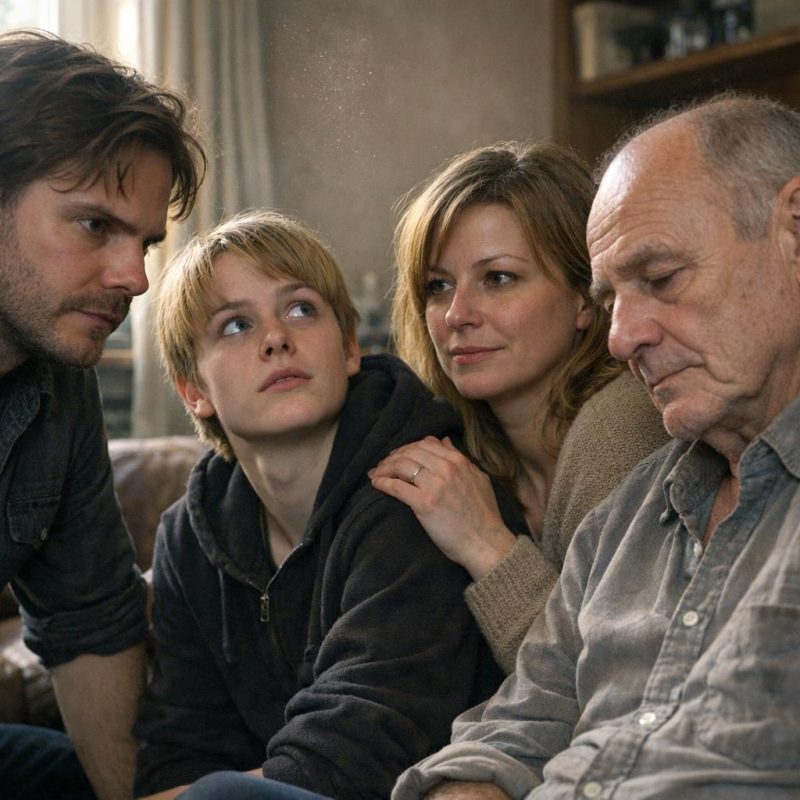 Image by RM AI
The First Night
The family left around ten, and the cardiac care unit settled into its nighttime rhythm—dimmed lights, hushed voices at the nurses' station, the constant electronic symphony of monitors. I couldn't sleep. Every time I closed my eyes, I was back in that moment on the bathroom floor, wondering if I was dying. The nurse came in every hour to check vitals, adjust something, make notes on a tablet. Other patients' monitors beeped and alarmed throughout the night, each sound making my heart rate spike, which of course set off my own monitor. Around two in the morning, I started doing the math on all the moments I might have missed. Rebecca's eventual wedding. Tom's kids, if he had them. Retirement with Sarah, those trips we'd always planned but kept postponing. I'd almost thrown it all away because I was too stubborn or scared or stupid to admit something was wrong. The ceiling tiles had water stains that looked like continents. I counted them, tried to name them, anything to stop the spiral of thoughts. A man down the hall cried out once, and I heard the rapid footsteps of medical staff responding. Every beep of the monitor reminded me how fragile everything was—including the time I almost threw away.
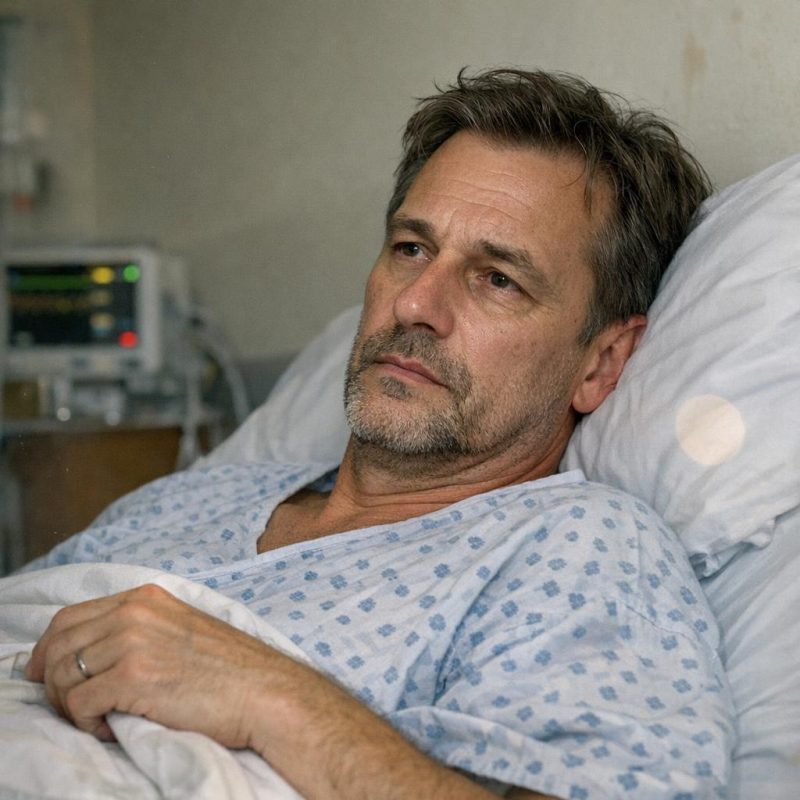 Image by RM AI
Meeting Dr. Chen
Dr. Chen came in the next morning with Sarah, introducing herself as the cardiologist who'd be managing my case long-term. She was probably in her early fifties, with reading glasses hanging on a chain and a direct manner that I appreciated. 'Mr. Harrison, you had a significant cardiac event, but you're lucky—if you can call it that. The blockage was in the LAD, the left anterior descending artery. We call it the widowmaker.' Sarah's hand tightened on mine. Dr. Chen pulled up my scans on the room's computer, showing us the before and after images of my coronary artery. 'The stent is functioning well. You'll be on blood thinners and other medications permanently. We'll start you on cardiac rehabilitation as soon as you're discharged.' She outlined a follow-up schedule—appointments every two weeks initially, then monthly, then quarterly if things went well. Stress tests. Echocardiograms. Bloodwork to monitor medication levels. Lifestyle modifications—diet, exercise, stress management. It was overwhelming. 'What's the prognosis?' I asked. Dr. Chen looked at me steadily. 'Many patients go on to live full, active lives. But it requires commitment to the treatment plan and lifestyle changes. It's possible.' Dr. Chen said recovery was possible, but the word that stuck with me was 'possible,' not 'guaranteed.'
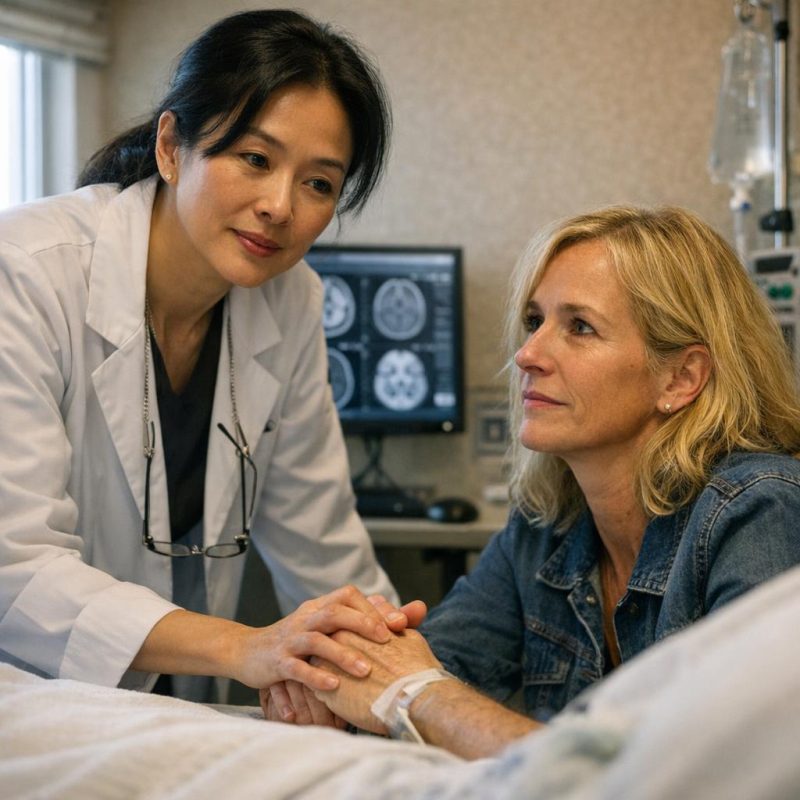 Image by RM AI
The Medication Regimen
The medication talk came that afternoon. Dr. Chen returned with a printed list and started going through each one: a blood thinner to prevent clots around the stent, a beta-blocker to control heart rate and blood pressure, a statin for cholesterol, aspirin, an ACE inhibitor for cardiac remodeling. 'You'll take some of these in the morning, some at night. Some with food, some without,' she explained. Sarah was taking notes furiously on her phone. The nurse brought in sample bottles to show us what each one looked like. Side effects were extensive—potential bleeding from the blood thinner, fatigue from the beta-blocker, muscle pain from the statin. 'These are for life?' I asked, though I already knew the answer. 'For life,' Dr. Chen confirmed. Sarah organized them on the bedside table, arranging them by time of day. Morning, evening, bedtime. The bottles looked like a pharmacy display. This wasn't a temporary fix, a course of antibiotics that would end. This was permanent. My body had fundamentally changed, become something that required constant chemical management to function properly. I counted seven different pill bottles—seven daily reminders that nothing would ever be the same.
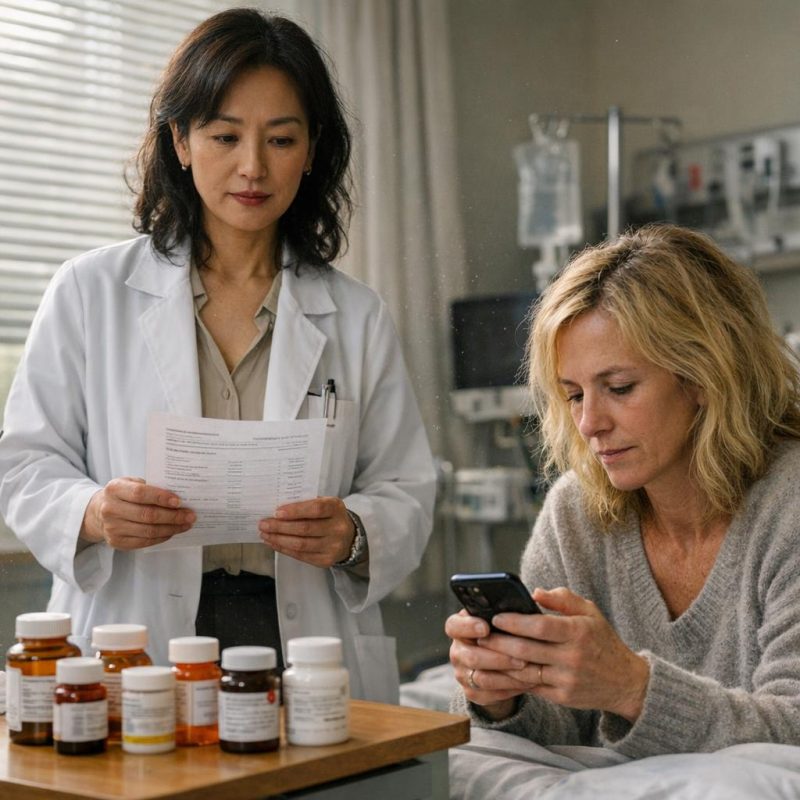 Image by RM AI
The Hospital Monotony
The days started blending together in that strange hospital time-warp where nothing marks one day from the next. Morning bloodwork at six. Breakfast tray at seven-thirty. Dr. Chen or her resident making rounds at nine. Physical therapist getting me up to walk the hallway at eleven. Lunch. More walking. Vitals every four hours. Sarah came every day, bringing changes of clothes, books I didn't read, my phone charger. Rebecca visited after work. Tom came twice more, our conversations still strained and careful. The cardiac monitor continued its endless tracking, every heartbeat displayed in green lines across a black screen. I watched a lot of bad daytime TV. Tried to nap but the constant interruptions made real sleep impossible. Other patients came and went from nearby rooms—I heard their families, their discharge celebrations, their emergencies. A guy across the hall coded one night; I listened to the organized chaos of the response team and felt my own heart hammering. By day four, I was getting irritable. The food was terrible. The bed was uncomfortable. The walls were closing in. But underneath the boredom and frustration was something else: resentment. I started to wonder if the worst part wasn't the heart attack itself—but realizing I had to live differently now.
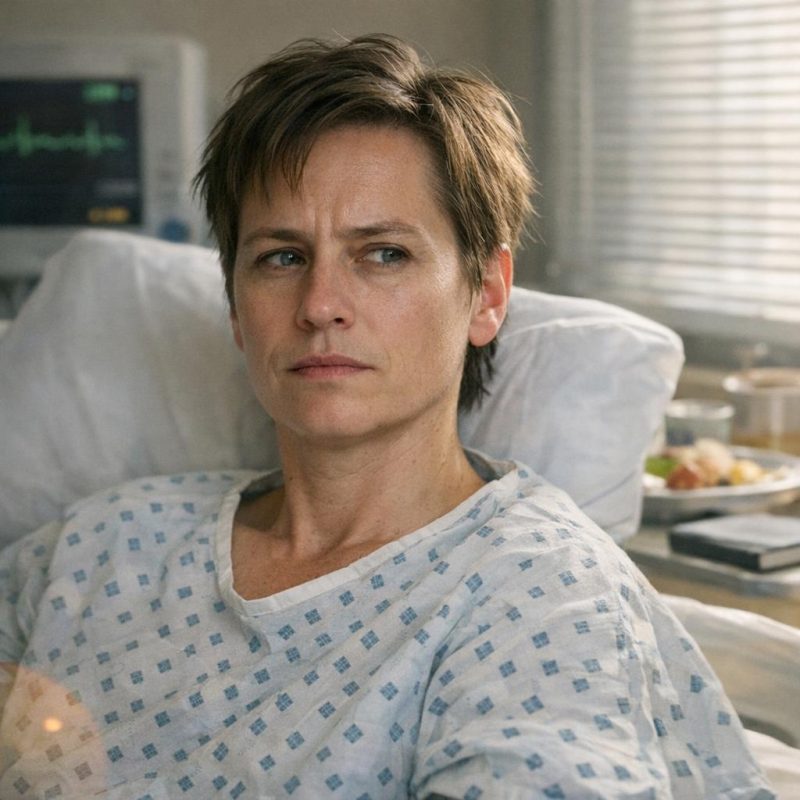 Image by RM AI
Paul's Visit
Paul showed up on day five with contraband—a decent cup of coffee from the place we usually met on Saturday mornings. 'Don't tell the nurses,' he said, handing it over. We'd been friends since college, been through career changes and divorces (his, not mine) and raising kids and everything else life throws at you over three decades. He looked uncomfortable in the hospital setting, too big for the visitor's chair, unsure where to put his hands. 'You scared the hell out of me,' he said finally. 'Sarah called and I just... I couldn't believe it was you, you know?' I knew. Paul and I had always been the guys who pushed through, who didn't complain, who handled things. We'd helped each other move, built decks, coached our kids' soccer teams. We drank beer and fixed things and never talked about feelings much. 'I thought I was invincible too,' I admitted. 'Thought heart attacks happened to other guys. Guys who were out of shape or had obvious problems.' Paul shook his head. 'We all think that. Think we've got time to fix things later, that we're somehow immune.' The coffee was good, tasted like normal life. Paul said he'd always thought of me as invincible—and I realized I'd thought the same thing.
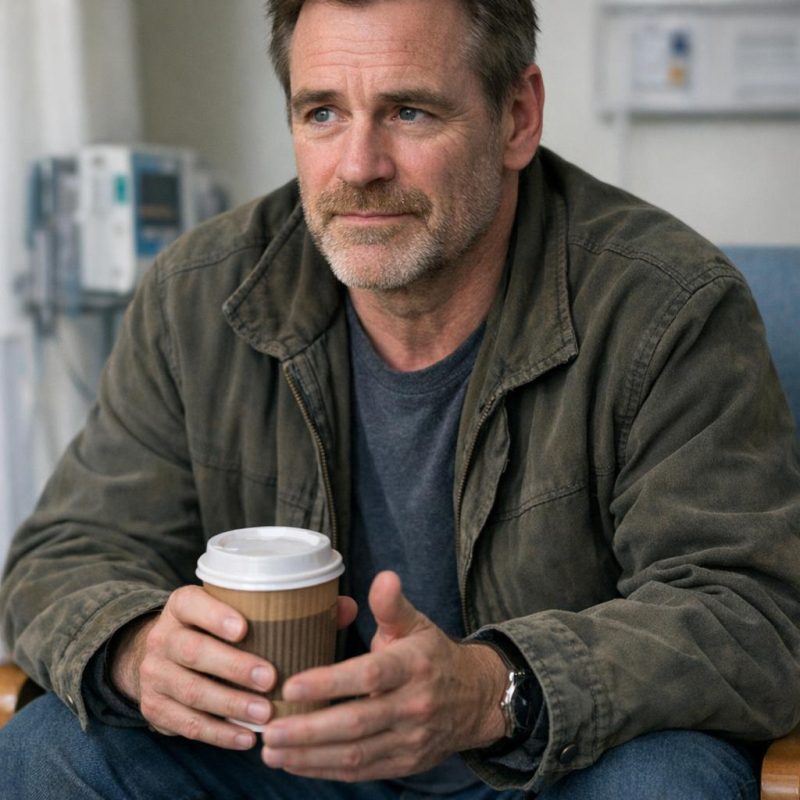 Image by RM AI
The Discharge Plan
Dr. Chen came in on day six with Sarah to discuss discharge. 'You're progressing well. I think we can send you home tomorrow with a comprehensive outpatient plan.' She pulled up a chair and opened a thick folder. The cardiac rehabilitation program met three times a week for twelve weeks—supervised exercise, education sessions, dietary counseling. 'Attendance isn't optional. The data shows it significantly reduces the risk of subsequent cardiac events.' She went through the diet restrictions: low sodium, low saturated fat, portion control. No more than two thousand milligrams of sodium daily. Read every label. Limit red meat. Increase vegetables and whole grains. The exercise prescription was specific too—walking program starting at ten minutes twice daily, gradually increasing. Monitor my heart rate. Stop immediately if I felt any chest discomfort. Follow-up appointments were scheduled through the next six months. She handed me the folder—meal plans, medication schedules, emergency protocols, rehab facility information, warning signs to watch for. It was organized with colored tabs and printouts and appointment cards. Sarah took it from me, already flipping through, starting to process the logistics of this new life we'd be living. She handed me a folder an inch thick—my new life, spelled out in medical protocols and dietary restrictions.
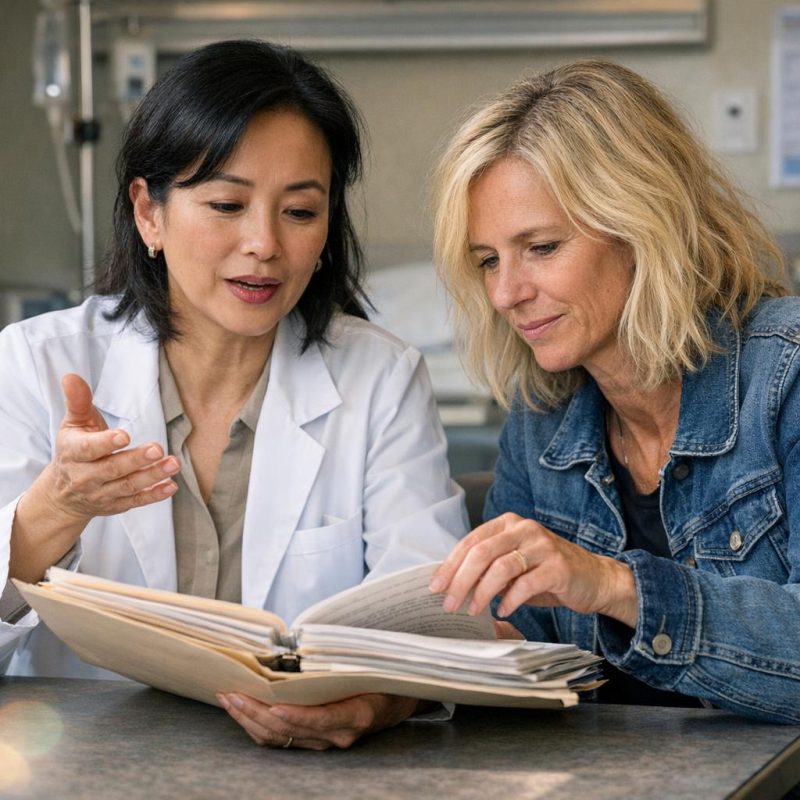 Image by RM AI
Going Home
Sarah helped me out of the car like I was made of glass, and I hated it. The front door looked exactly the same—same welcome mat, same scuff marks on the frame where I'd hit it with the lawn mower two summers ago. Inside, everything was where it had always been. The couch in the living room. The coffee table with the water ring I'd never managed to get out. The kitchen with its familiar smell of whatever Sarah had been cooking before everything went sideways. But walking through those rooms felt like visiting a museum of my old life. Sarah had set up a pill organizer on the counter—one of those weekly things with morning, noon, and evening compartments. There was a blood pressure cuff next to it, instructions printed out and taped to the cabinet. She'd moved the TV remote to my side of the couch, put a water bottle on the end table. Small accommodations for an invalid. I stood in the middle of our living room, surrounded by thirty years of accumulated life, and felt like a stranger. Everything looked exactly the same as when I left—but I knew I'd never see any of it the same way again.
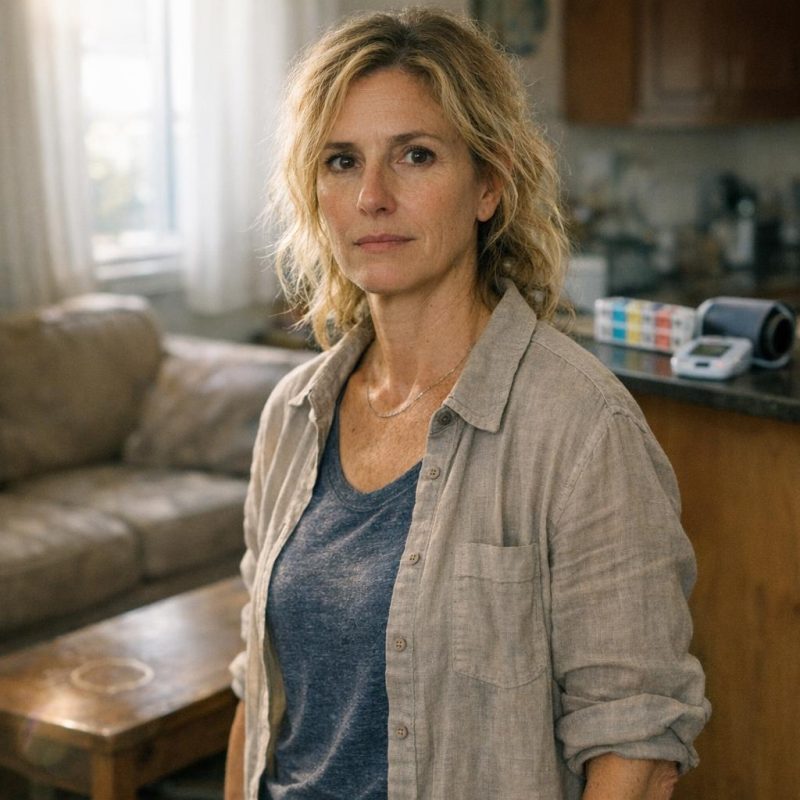 Image by RM AI
Linda's Concern
Linda showed up the next afternoon with three insulated bags full of heart-healthy meals she'd prepared. Sarah's older sister had always been like this—decisive, organized, slightly overbearing. 'I made everything low-sodium,' she announced, unpacking containers into our refrigerator. 'This one's salmon with quinoa. This is chicken breast with steamed vegetables. I portioned everything out according to Dr. Chen's guidelines.' She'd printed the nutrition information on labels and stuck them on each container. Sarah thanked her, but I could see the tension in her jaw. Linda turned to me with that concerned expression I was already sick of seeing. 'You really need to take this seriously, David. My friend Karen's husband ignored his warning signs and now he's on permanent disability.' She meant well. I knew she meant well. But standing in my own kitchen being lectured about my near-death experience while she reorganized my refrigerator made me want to scream. I nodded and thanked her for the meals, which actually looked pretty good. Linda looked at me like I was a ticking time bomb, and maybe she wasn't wrong.
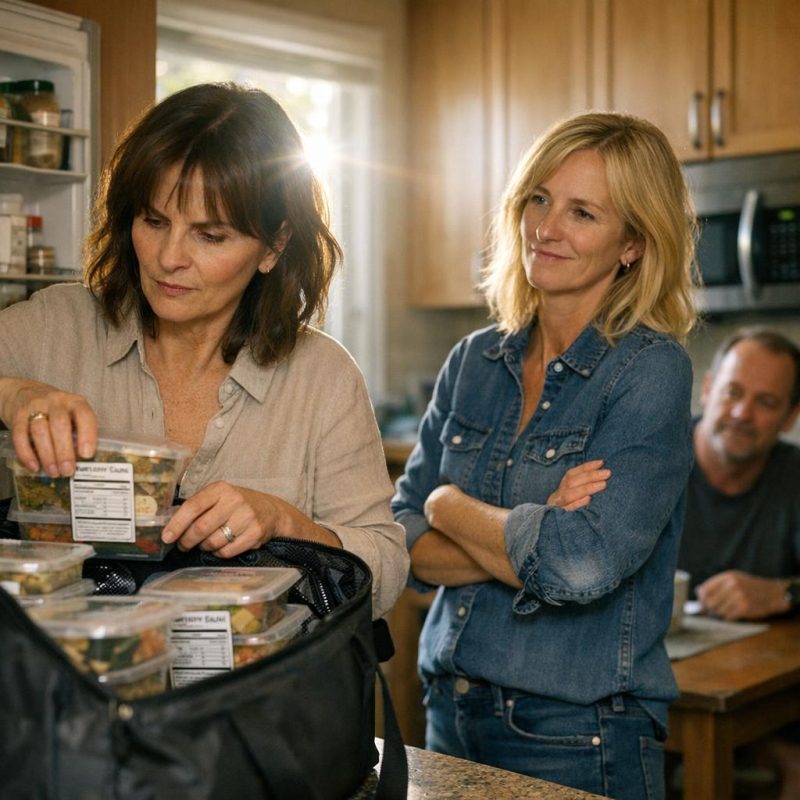 Image by RM AI
The New Normal
The medication schedule was ridiculous. Morning pills with breakfast—Plavix, metoprolol, atorvastatin, lisinopril. The aspirin I'd been taking for years, except now it was a specific dose at a specific time. Afternoon metoprolol. Evening atorvastatin and lisinopril again. Sarah hovered every time, watching to make sure I took them all. The first morning home, I tried to do normal things. Made coffee—decaf now, which tasted like disappointment. Read the paper. Decided to walk down to check the mail. It's maybe two hundred feet to the mailbox and back. I made it there fine, felt almost normal. Grabbed the stack of bills and medical statements that had piled up. Started back toward the house and my legs felt heavy. My chest got tight—not painful, just tight. I made it to the front steps and had to sit down. Sarah found me there twenty minutes later, still catching my breath from a walk to the goddamn mailbox. She didn't say anything, just sat down next to me. I made it to the mailbox and back—and had to sit down for twenty minutes to catch my breath.
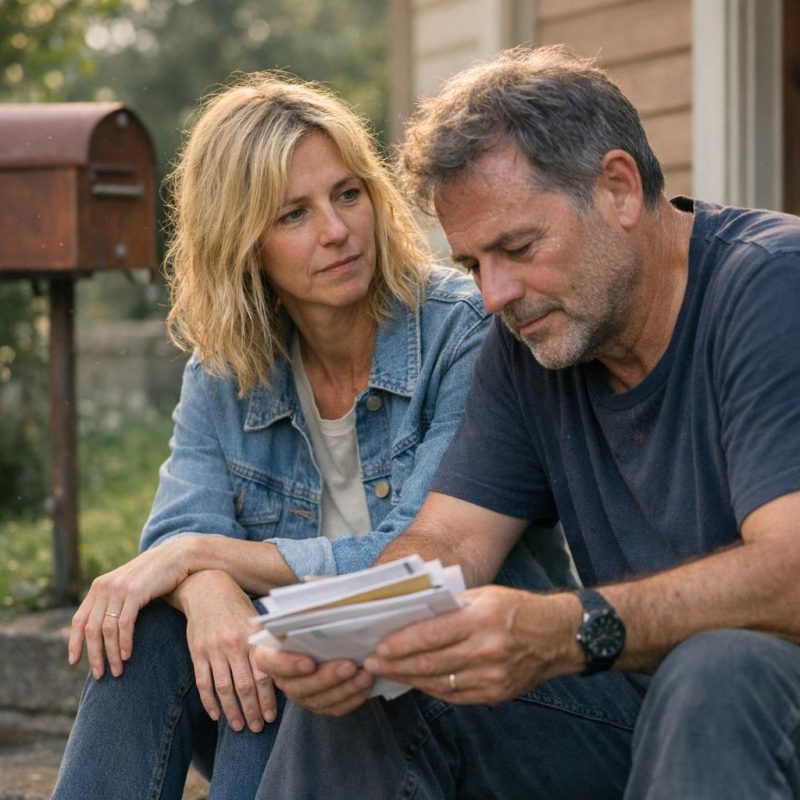 Image by RM AI
Sleepless Nights
Sleep became impossible. I'd lie there listening to my heartbeat, analyzing every rhythm, every skip, every variation. Was that normal? Was that another blockage forming? The bedside clock would say 1:47 AM, then 2:23, then 3:14. Sarah would be breathing steadily beside me, and I'd be running through symptoms in my head. Chest tight? A little. Arm tingling? Maybe. Jaw aching? Hard to tell. The fourth night home, I woke up at 3 AM with my heart pounding, absolutely convinced it was happening again. The pressure in my chest, the fear, the certainty that this was it. I sat up, started doing the breathing exercises they'd taught me. Sarah woke up immediately. 'What's wrong?' I couldn't speak, just pointed at my chest. She turned on the light, grabbed the blood pressure cuff. 120 over 78. Heart rate elevated but not dangerously. She made me take my pulse manually. Normal rhythm. We sat there for forty minutes while my panic slowly subsided, reality creeping back in. I woke up at 3 AM convinced I was having another heart attack—but it was just fear this time.
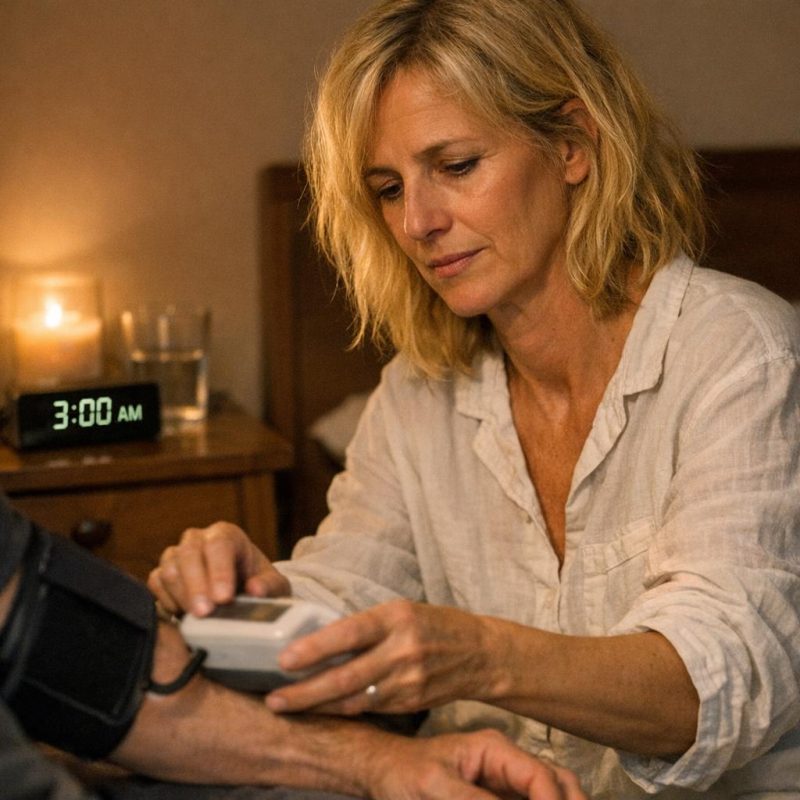 Image by RM AI
The First Follow-Up
Dr. Chen's office felt different as an outpatient. Sarah came with me, sitting in the corner while Dr. Chen reviewed my chart. 'Your EKG looks good,' she said, studying the printout. 'Ejection fraction is holding steady at forty-eight percent. The stents are functioning well. You're healing nicely.' Relief washed through me. Physical progress. Evidence that my body was actually recovering. Then she closed the folder and looked at me directly. 'How are you sleeping?' The question caught me off guard. 'Fine,' I said automatically. Sarah shifted in her chair. Dr. Chen didn't buy it. 'Any anxiety? Intrusive thoughts about another cardiac event?' I shrugged, trying to downplay it. 'Maybe a little. That's normal, right?' She made a note in my chart. 'It's common, but that doesn't mean we should ignore it. Depression and anxiety after a cardiac event can actually impede physical recovery. Have you considered talking to someone?' I hadn't. I wasn't going to. I was fine. Dr. Chen said I was healing well physically—but then she asked about my mental health, and I didn't have a good answer.
 Image by RM AI
Michael's Phone Call
Michael called on a Tuesday evening. My younger brother and I had never been particularly close—different cities, different lives, the usual drift. 'Hey, man. Just wanted to check in. See how you're doing.' We talked about the basics—the surgery, the recovery, the medications. He told me about his kids, his job, the renovation he was doing on his house. Normal brother stuff. Then he got quiet for a moment. 'This is probably weird, but I've been thinking about it since Sarah told me what happened. Did Dad ever have heart problems? Before, you know...' Our father had died at fifty-eight when I was twenty-seven. A heart attack, sudden, no warning. I'd always assumed it was just one of those things. 'I don't know,' I admitted. 'Mom never really talked about it. Why?' Michael hesitated. 'Just wondering if it runs in the family, I guess. If I should be worried too.' The question hung there between us. I realized I'd never asked for details, never pushed Mom for information about his medical history. Michael asked if Dad ever had heart problems—and I realized I didn't actually know.
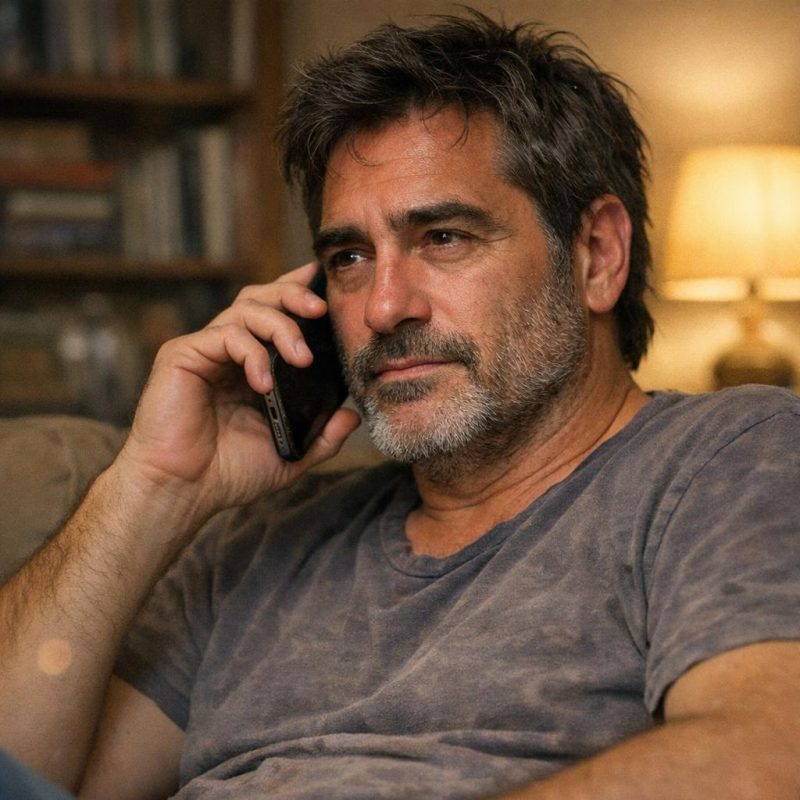 Image by RM AI
Researching Dad
I couldn't stop thinking about Michael's question. The next afternoon, while Sarah was at the grocery store, I went up to the attic. We had boxes of old family stuff up there—photos, documents, things from my parents' house after Mom moved to the assisted living place. I found the box labeled 'Important Papers' and started digging through. Birth certificates, my parents' marriage license, old tax returns. Then I found it—my father's death certificate, folded in an envelope with his obituary clipped to it. Cause of death: acute myocardial infarction. I knew that already. But I'd never noticed his age. Fifty-eight years, three months, fourteen days. I did the math in my head. I'm fifty-six now. Two years. He'd been two years older than I am right now when his heart gave out. I sat there on the attic floor surrounded by dusty boxes, holding that yellowed paper, and felt something cold settle into my chest. Had he had warning signs? Had he ignored them too? Was this genetic? I found my father's death certificate in a box in the attic—he died at 58, just two years older than I am now.
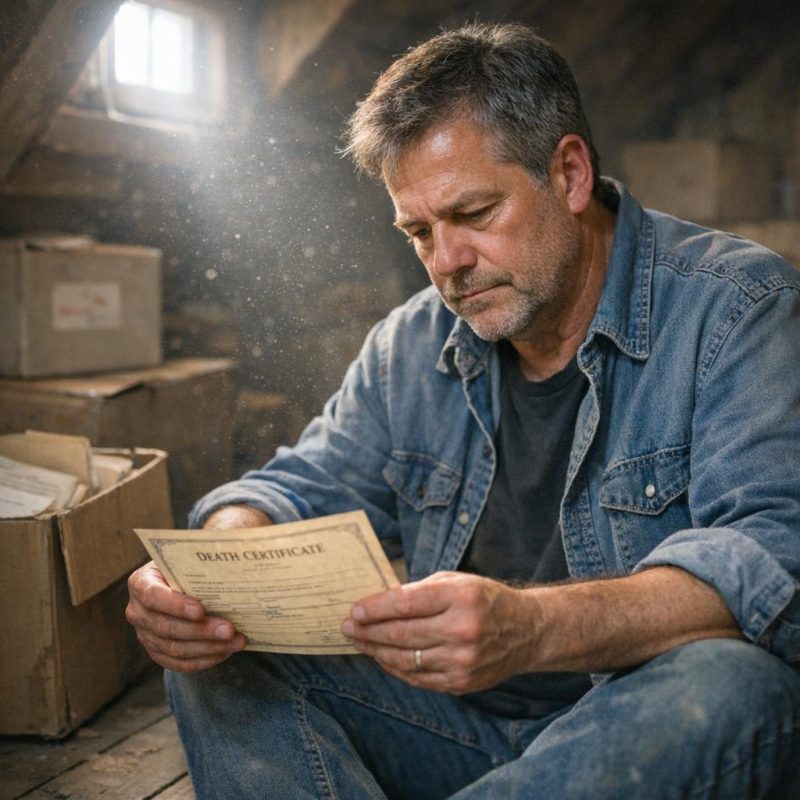 Image by RM AI
Mom's Evasion
I called my mother that evening. She was seventy-nine now, living in an assisted living facility about an hour away. We talked every couple of weeks, mostly surface-level stuff. 'Mom, I need to ask you something about Dad.' Her tone shifted immediately, became guarded. 'What about him?' I explained what had happened to me, the heart attack, the stents. She made sympathetic noises but didn't seem surprised. 'Did Dad have any heart problems before he died? Any warning signs? Did doctors ever tell him anything about his heart?' The line went quiet for too long. 'I don't really remember, David. It was so long ago.' But I knew my mother. Her memory was sharp as ever—she could recall what dress she wore to my wedding, what I'd given her for Christmas in 1993. 'Mom, this is important. For me, for Michael. We need to know if there's something genetic.' She sighed, that particular sigh that meant she was done with the conversation. 'It was a heart attack. That's all I know. I need to go—they're serving dinner.' She said she didn't remember the details—but her voice had that edge it always got when she was lying.
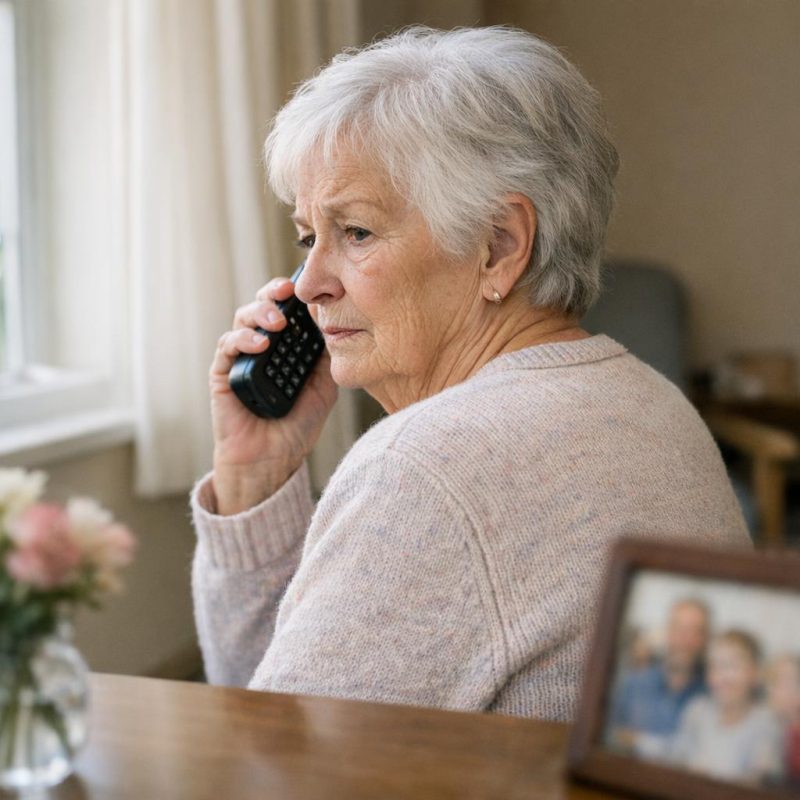 Image by RM AI
Cardiac Rehab Begins
The cardiac rehab center was in a medical building two miles from the hospital. I walked in on a Tuesday morning, three weeks post-stents, ready to prove I was bouncing back just fine. The room looked like a gym crossed with an ICU—treadmills, exercise bikes, blood pressure cuffs everywhere. There were maybe six other people there, all hooked up to monitors. A woman in her seventies was on a recumbent bike, pedaling away like nothing had happened to her. A guy who had to be in his eighties was doing arm raises with two-pound weights. I was fifty-six. I told myself this would be easy. The therapist, a no-nonsense woman named Linda, fitted me with a heart monitor and led me to a treadmill. She asked how I was feeling. 'Good,' I said. 'Ready to get back to normal.' She smiled that smile healthcare workers give you when they know something you don't. She explained we'd start slow, just a baseline assessment. The therapist set the treadmill to the lowest setting—and even that felt like climbing a mountain.
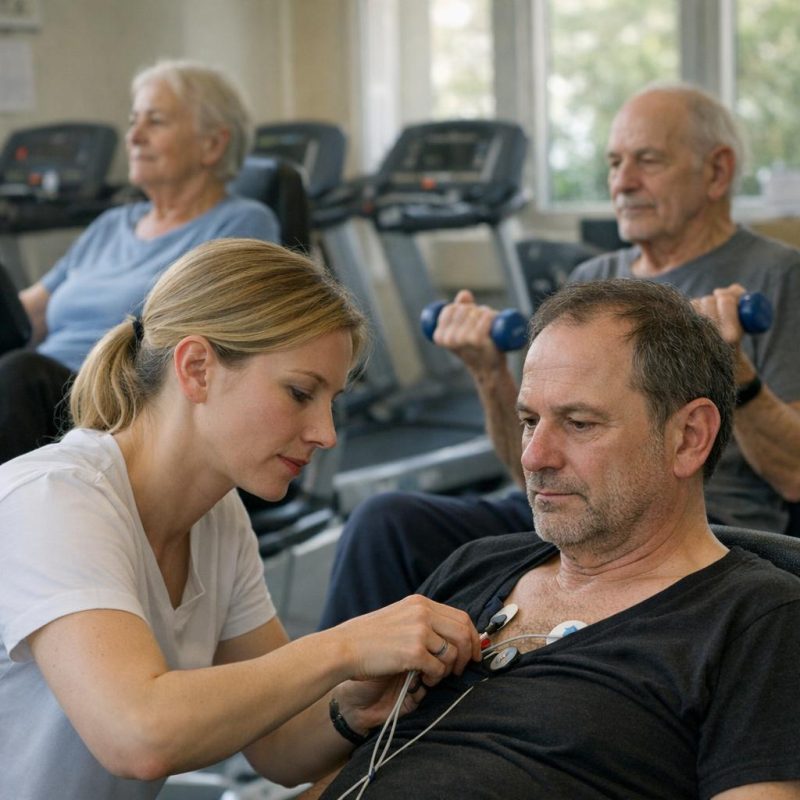 Image by RM AI
The Diet Wars
Sarah had turned into the food police. Every meal became a negotiation. She'd printed out charts from the American Heart Association, bought a dozen cookbooks with titles like 'Eating for Your Heart' and 'The Low-Sodium Life.' Dinner used to be something we enjoyed together. Now it was steamed fish and vegetables with no seasoning, whole grains that tasted like cardboard, and portions she measured with actual measuring cups. I tried to be grateful. I knew she was trying to save my life. But two weeks into this new regime, I snapped. She'd made chicken breast—dry, bland, joyless—and when I reached for the salt shaker, she moved it away. 'David, you can't.' Something in me just broke. 'I can't have salt? I can't have butter? I can't have anything that doesn't taste like punishment?' She looked hurt, which made me feel worse, which made me angrier. 'I'm trying to keep you alive,' she said quietly. I threw the salt shaker across the kitchen—and immediately felt like a child throwing a tantrum.
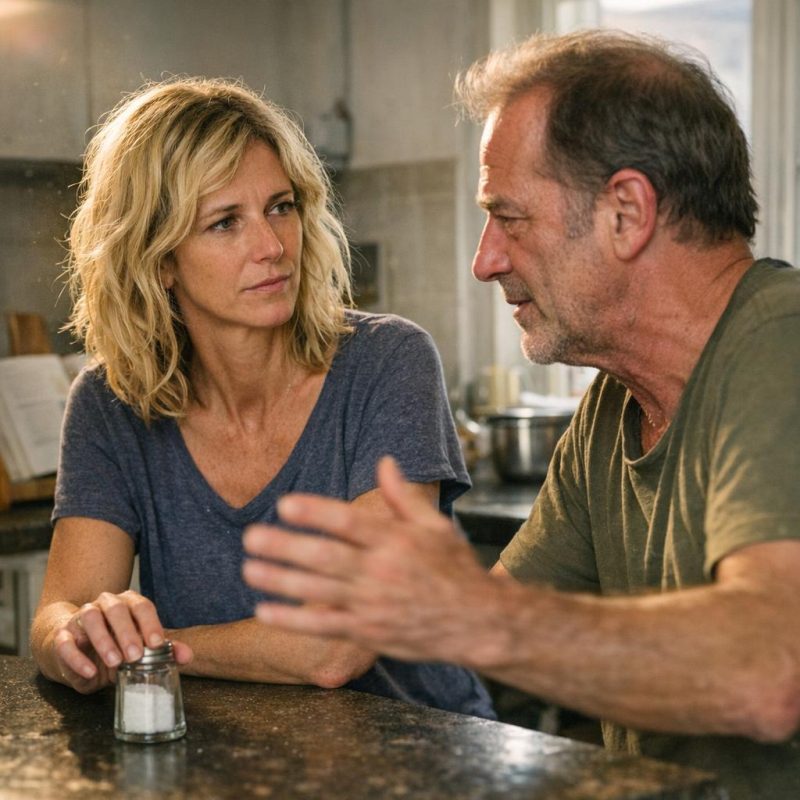 Image by RM AI
Work Concerns
My boss called on a Thursday afternoon. I'd been out of work for almost a month by then, burning through sick leave and short-term disability paperwork. 'David, hey, just checking in. How are you doing?' The concern sounded genuine enough, but I could hear the question underneath: when are you coming back? I told him I was making progress, doing rehab, feeling better. 'That's great, that's great. Listen, take all the time you need. Your health comes first.' There was a pause. 'We've got Jenkins covering your accounts for now, but obviously that's temporary.' Obviously. After we hung up, I sat there staring at my phone. Sarah found me like that twenty minutes later. 'What's wrong?' I told her about the call. She said what she was supposed to say—that they couldn't fire me for having a heart attack, that I needed to focus on recovery, that money wasn't worth dying over. She was right, of course. But right doesn't pay the mortgage. My boss said to take all the time I needed—but I heard the unspoken deadline in his voice.
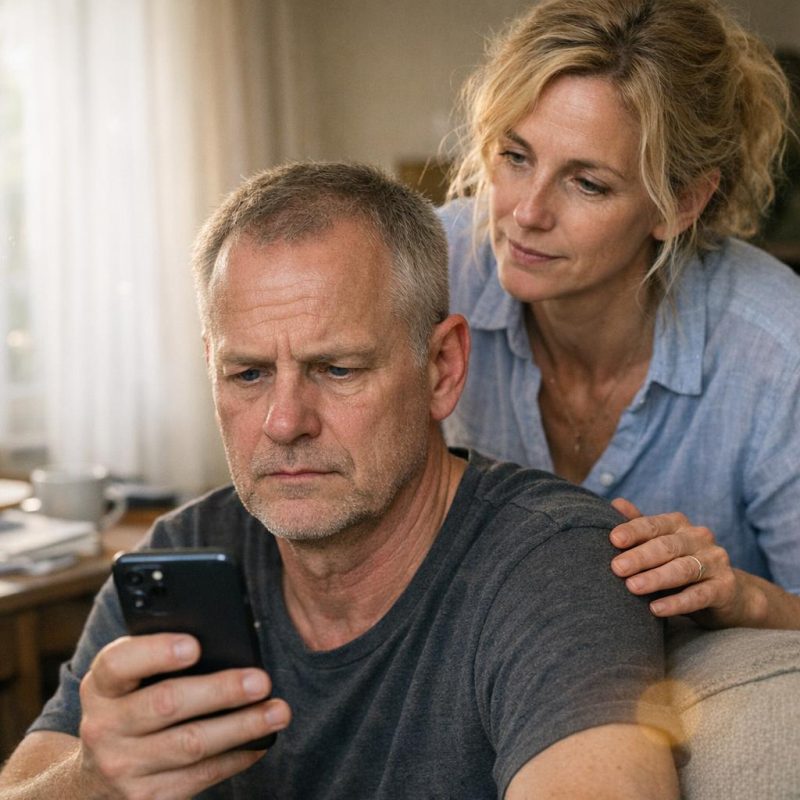 Image by RM AI
Dr. Morrison's Program
Dr. Morrison's office was down the hall from the rehab gym. She was maybe fifty-five, with gray hair she didn't bother to dye and eyes that didn't miss anything. Linda had referred me after I'd apparently looked 'emotionally distressed' during my second session. I felt ambushed, honestly. I was there to fix my heart, not lie on some couch. Dr. Morrison asked me to walk her through what happened, and I gave her the abbreviated version. Heart attack, stents, rehab, getting better. She listened without interrupting, then asked, 'How are you sleeping?' The question caught me off guard. 'Fine,' I lied. She wrote something down. 'Nightmares? Anxiety? Racing thoughts?' I shifted in my chair. This felt invasive. 'Sometimes I wake up and check my pulse. That's normal, right?' She explained that cardiac events often triggered PTSD symptoms, that depression and anxiety were common, that addressing the psychological component was as important as the physical rehab. I must have looked skeptical because she leaned forward. Dr. Morrison said the physical recovery was only half the battle—the psychological part would be harder.
 Image by RM AI
The Comparison Trap
I started keeping score at rehab, even though I knew I shouldn't. There was Bill, who was seventy-three and had a triple bypass six months ago. He could do thirty minutes on the treadmill at a moderate pace. There was Joyce, seventy-one, who'd had two heart attacks and did better on the resistance machines than I did. And then there was me, fifty-six, supposedly in the prime of my life, struggling through exercises people two decades older handled easily. Linda kept telling me everyone's recovery was different, that comparing myself to others wasn't helpful. But how could I not compare? I was younger. I should have been doing better. One Tuesday morning, I watched an elderly man—had to be pushing eighty—complete a full circuit of exercises while I was still catching my breath from the warm-up. His name was Arthur. He'd had his heart attack nine months ago. He gave me an encouraging smile as he passed. I wanted to throw something. I watched a man twenty years older than me complete twice the exercises I could manage—and something in me broke.
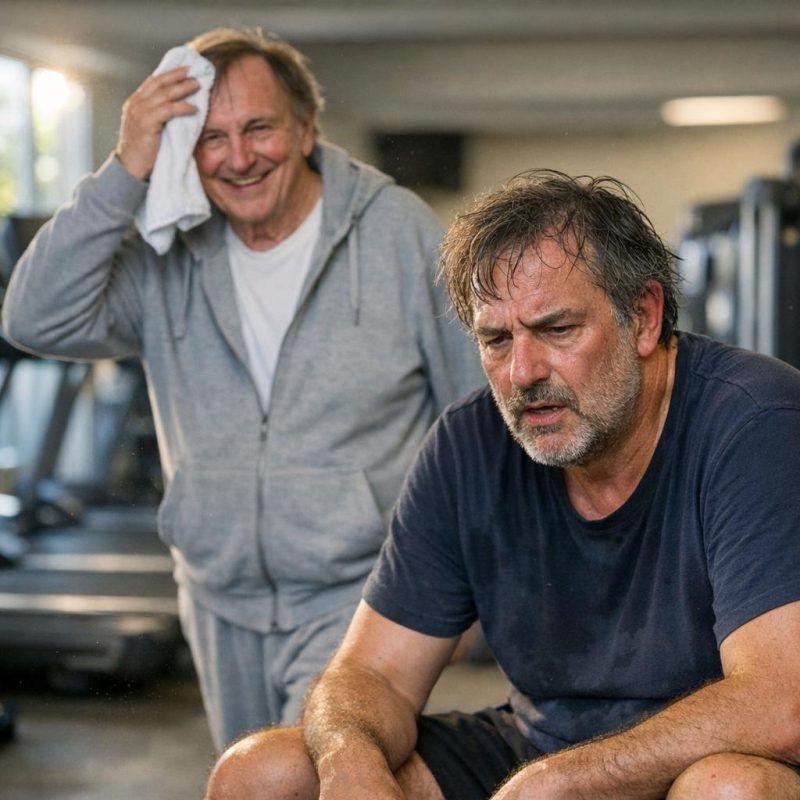 Image by RM AI
Rebecca's Fear
Rebecca showed up at the house on a Saturday afternoon. Sarah had gone grocery shopping, so it was just the two of us. She'd been quiet since my heart attack—supportive, but distant in a way that worried me. She made tea, which should have been my first clue that something was up. Rebecca didn't drink tea unless she was nervous. 'Dad, I need to talk to you about something.' My chest tightened instinctively. She sat across from me at the kitchen table, wrapping her hands around the mug. 'I've been having panic attacks. Since you were in the hospital. They're getting worse.' She described waking up at three in the morning convinced something terrible had happened, checking her phone compulsively, feeling her own heartbeat and wondering if it was normal. The guilt hit me like a physical thing. I'd done this to her. My heart attack had broken something in my daughter. 'I keep thinking about Grandpa,' she said quietly. 'How he just... died. How nobody saw it coming.' She asked if she was going to lose me the way she lost her grandfather—and I had no way to promise her she wouldn't.
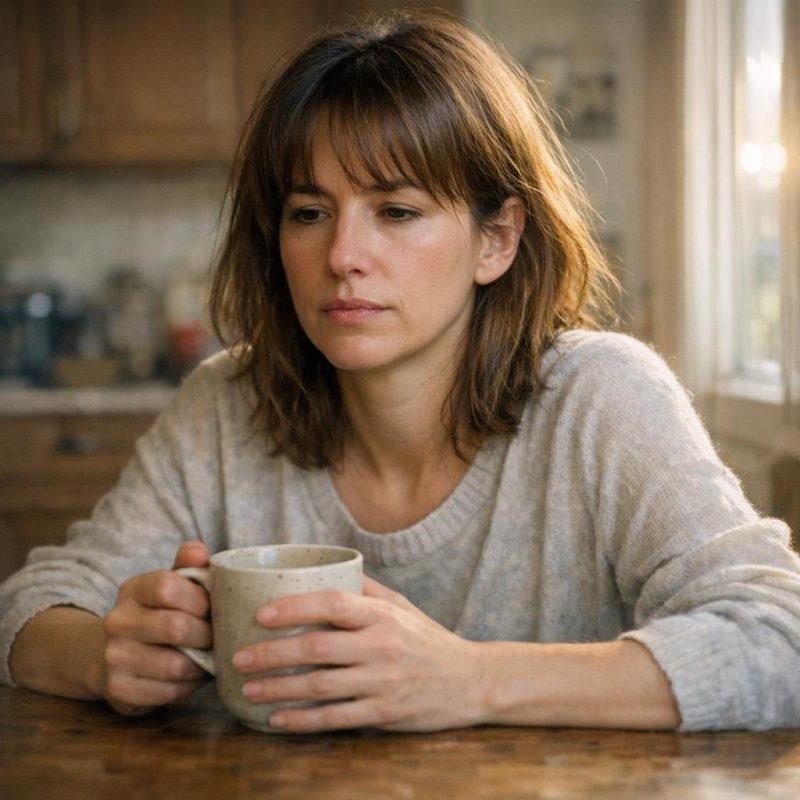 Image by RM AI
Genetic Testing Discussion
Dr. Chen called us both in for a follow-up appointment six weeks after the stents. She reviewed my progress—rehab was going okay, medications were stable, follow-up imaging looked good. Then she shifted gears. 'I want to discuss genetic testing.' Sarah and I looked at each other. Dr. Chen explained that given my father's early cardiac death and my own relatively young age for a heart attack, there might be an inherited component worth investigating. Conditions like familial hypercholesterolemia or hypertrophic cardiomyopathy could run in families. 'Would knowing change anything?' I asked. She was quiet for a moment. 'For you? Maybe not immediately. But for your children, it could be crucial. If there's a genetic factor, early monitoring could save their lives.' The room suddenly felt smaller. Rebecca. Tom. My grandkids eventually. I thought about Rebecca's panic attacks, about her asking if she was going to lose me. What if there was something in my blood that I'd already passed to her? What if not knowing was worse than knowing? Dr. Chen said the test could tell us if there was something in my DNA waiting to strike my kids too.
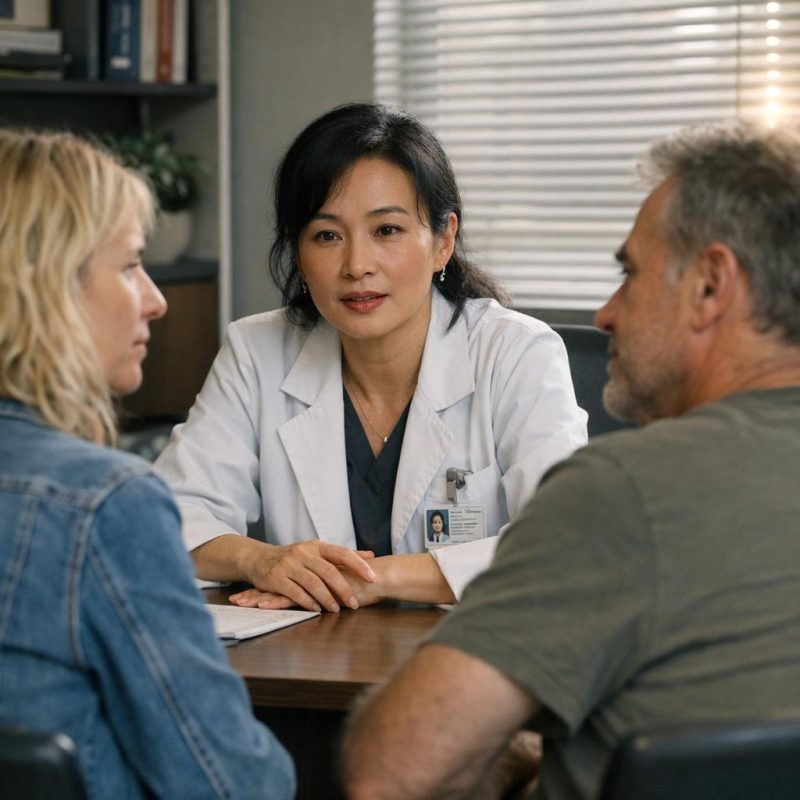 Image by RM AI
The Test
The genetic testing happened the following week. It was just a blood draw, simple and quick, but it felt monumental. Sarah came with me. We sat in the phlebotomy waiting room surrounded by people getting routine labs done, and I was sweating like I was about to have another heart attack. The technician was cheerful, efficient. She tied the tourniquet around my arm, found the vein on the first try, filled three vials with blood that might hold answers I wasn't sure I wanted. 'All done!' she said brightly, pressing gauze to the puncture site. I wanted to grab those vials back, make her return whatever truths they contained. Sarah held my hand in the parking lot. 'Whatever it says, we'll deal with it,' she said. But what if we couldn't? What if I'd already condemned Rebecca and Tom to the same fear, the same ticking time bomb I was living with? The nurse said results would take two weeks—fourteen days to wonder if I'd passed a death sentence to my children.
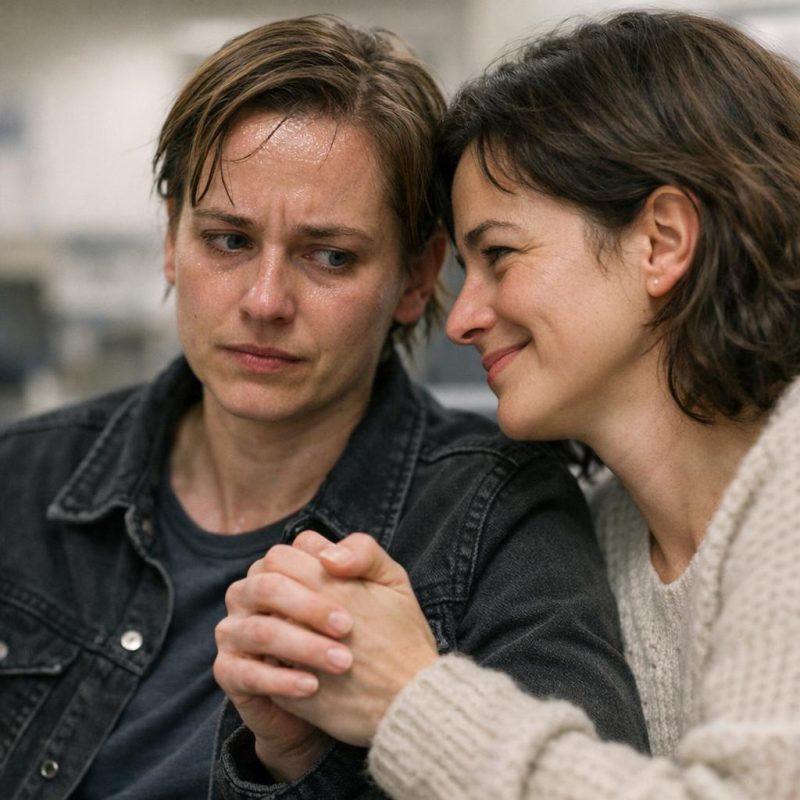 Image by RM AI
The Support Group
Dr. Chen suggested the support group at my two-week follow-up. 'There's one specifically for heart attack survivors,' she said, handing me a printed flyer. 'Tuesday evenings at the hospital. I really think it would help.' I nodded and stuffed it in my pocket, fully intending to throw it away. But Sarah found it when she was doing laundry, and three days later I was walking into a conference room that smelled like burned coffee and antiseptic. Eleven people sat in a circle of plastic chairs. A woman with silver hair and kind eyes introduced herself as Janet, the group leader. 'Welcome,' she said warmly. 'We're glad you're here.' I wasn't glad. I wanted to leave, to pretend I didn't belong with these people who looked tired and scared and older than their years. But Janet asked everyone to share briefly about their experience, and as they went around the circle—a teacher, a plumber, a retired nurse, a guy who worked at the auto parts store—I heard my own story reflected back at me in different voices. The denial. The fear. The bizarre feeling of being grateful and terrified at the same time. I sat in a circle with eleven strangers who'd all faced the same moment I had—the moment they almost didn't get another chance.
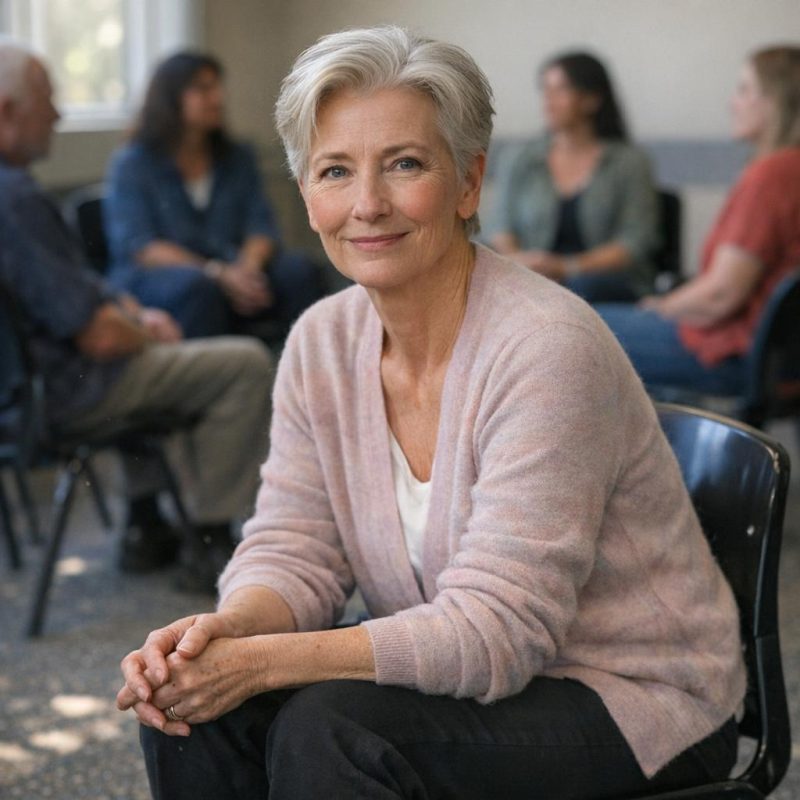 Image by RM AI
Mark's Story
Mark spoke fourth. He was maybe my age, looked fit, the kind of guy who probably ran marathons before his first event. 'Three times,' he said casually, like he was talking about the number of cups of coffee he'd had that morning. 'First one at forty-three. Went back to work too soon, didn't take it seriously. Second one two years later—that one scared me. Got the stents, did everything right for a while.' He paused, rubbing his chest absently. 'Third one last year. That's when I finally got it—this isn't something you beat once and move on. It's forever.' The room went quiet. I felt my pulse in my throat. Three times. Three separate moments of thinking this is it. I wanted to ask him how he functioned, how he got out of bed every morning knowing it could happen again. And again. Janet thanked him for sharing, moved on to the next person, but I couldn't focus. I kept staring at Mark, trying to read his face for answers. Was he at peace with it? Was he terrified every second? Did the third one damage him more than the first two? Mark said the third one was the charm—and I couldn't tell if he was joking or warning me.
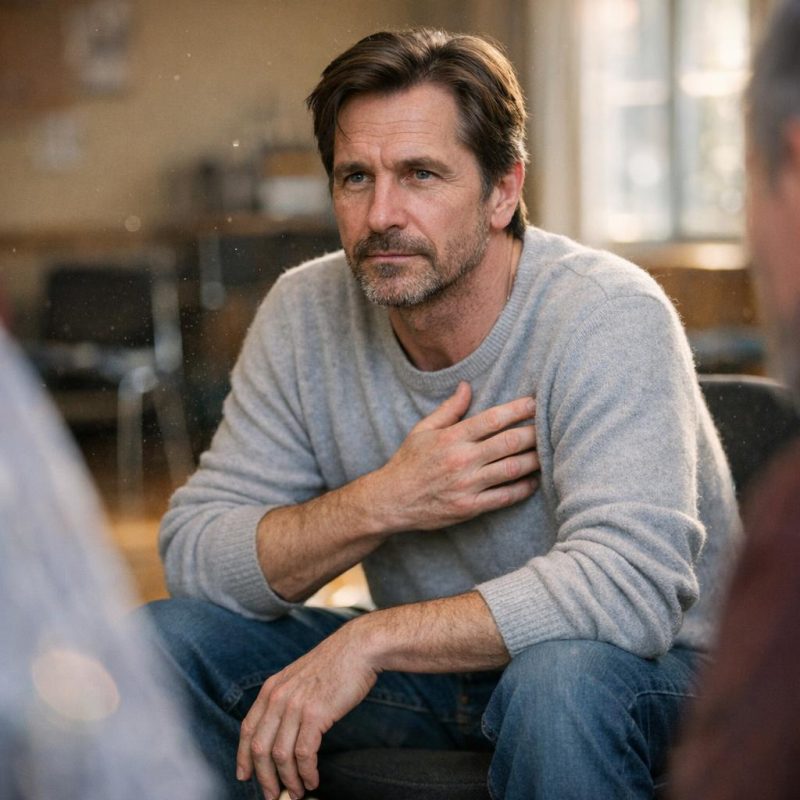 Image by RM AI
The Waiting Game
The genetic test results were supposed to take two weeks. It had been nine days. I counted them. I counted hours sometimes. The waiting was its own kind of torture—worse than the treadmill stress tests, worse than the blood draws, worse than anything physical because there was nothing to do but exist in this suspended state of not knowing. I went to cardiac rehab three times a week. I walked every morning. I took my medications at exactly the same time each day. Sarah and I had fallen into a strange domestic rhythm of healthy meals and early bedtimes and carefully not talking about what we were waiting for. But every time the phone rang, my whole body tensed. Unknown number? Heart rate spike. My doctor's office showing up on caller ID? Instant sweat. Even telemarketers triggered a physiological response that felt dangerously close to panic. Sarah noticed. 'You need to breathe,' she'd say, watching me stare at my phone like it was a bomb. 'The anxiety isn't good for your heart.' I knew she was right. Every time the phone rang, my heart rate spiked—and I started to wonder if anxiety was going to kill me before genetics could.
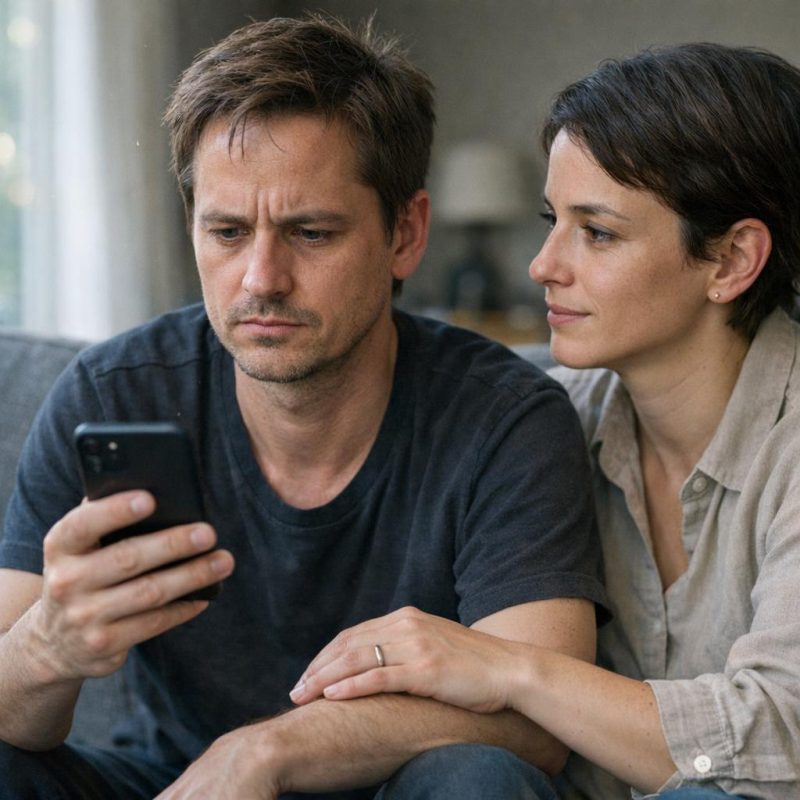 Image by RM AI
Tom's Confession
Tom showed up on a Saturday morning, unannounced. I was in the garage, organizing tools I'd barely touched in months, when I heard his truck in the driveway. He looked exhausted. 'Can we talk?' he asked. We sat on the back patio, and for a long moment he just stared at his hands. 'I'm sorry I haven't been around much,' he finally said. 'I know I should have visited more, called more.' I started to tell him it was fine, that I understood he was busy, but he cut me off. 'That's not it, Dad. I haven't been busy. I've been avoiding you.' The honesty stung. 'Seeing you in that hospital bed—seeing you weak and scared—I couldn't handle it. You've always been the strong one. The one who fixes things. And suddenly you couldn't even fix yourself.' His voice cracked. 'I needed you to be okay because if you're not okay, then nothing is.' I understood then what I'd done to him, what decades of stoicism and masculine pride had taught him. That strength meant never showing fear. That vulnerability was failure. He said he needed me to be strong—and I realized I'd taught my son that vulnerability was weakness.
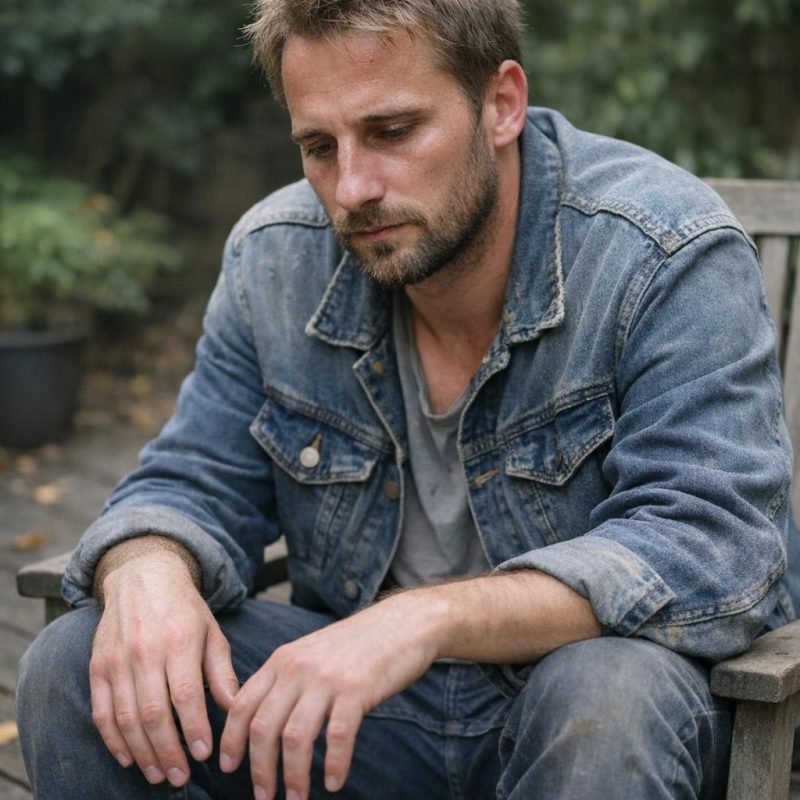 Image by RM AI
Progress and Setback
By week five of cardiac rehab, I was crushing it. That sounds dramatic, but it's true—my endurance had improved, my numbers were solid, and the therapist kept using words like 'excellent progress' and 'ahead of schedule.' I felt almost normal again. Almost like the guy I'd been before everything went sideways. Sarah noticed the change in my mood. I was laughing more, worrying less. 'You seem good,' she said one evening, and I realized I actually felt good for the first time in weeks. Then, two days later, during my morning walk, the tightness came back. Right in the center of my chest. Not sharp like before, but present. Undeniable. I stopped on the sidewalk, hand pressed to my sternum, trying to breathe through the rising panic. Was this it? Was this happening again? I made it home, told Sarah, and she grabbed her keys without a word. The drive to urgent care was silent except for my ragged breathing. I couldn't tell if the tightness was getting worse or if I was making it worse by thinking about it. The tightness was back—and I couldn't tell if it was real or if I was losing my mind.
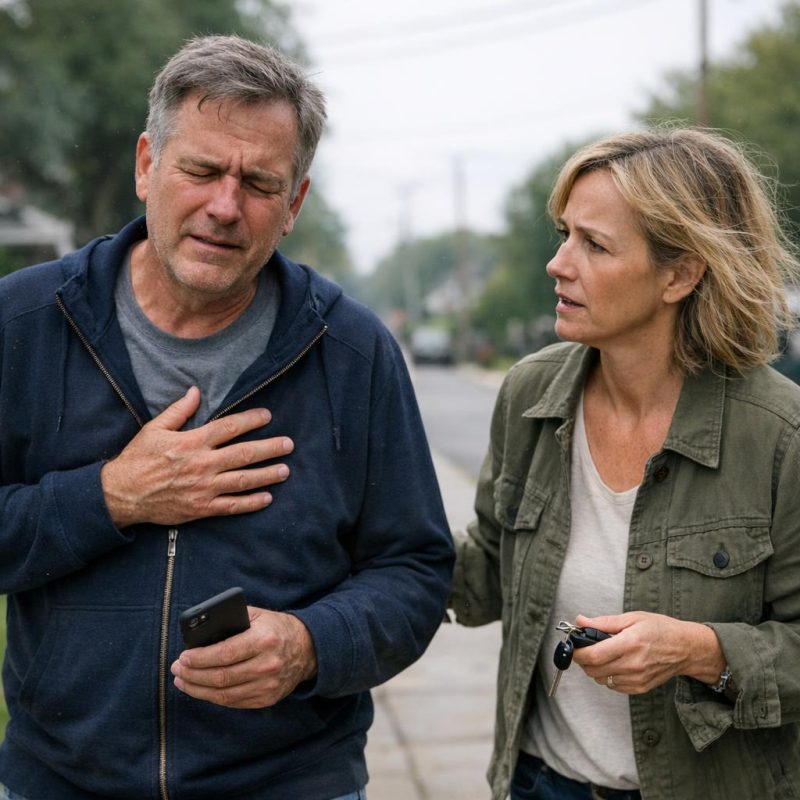 Image by RM AI
False Alarm
The EKG came back normal. Blood work normal. Dr. Patel reviewed everything twice, then sat down across from me with that careful expression doctors get when they're about to deliver news you won't want to hear. 'Your heart looks good, David,' he said. 'Really good. No new damage, no concerning patterns. What you experienced was very likely anxiety-related.' I wanted to argue. The tightness had been real—I hadn't imagined it. 'Anxiety can cause very real physical symptoms,' he continued, like he'd read my mind. 'Chest tightness, shortness of breath, heart palpitations. Your body has been through trauma. Your mind is trying to protect you, but sometimes that protection manifests as panic.' Sarah reached for my hand. Part of me felt relief that my heart was okay. But another part felt stupid, weak, like I'd wasted everyone's time with phantom symptoms my broken brain had conjured. 'This is completely normal,' Dr. Patel added. 'Post-cardiac event anxiety affects most survivors. There's no shame in it.' But I felt shame anyway. I felt like I was failing at recovery in a whole new way. Dr. Patel said my heart was fine—but that didn't make the terror I felt any less real.
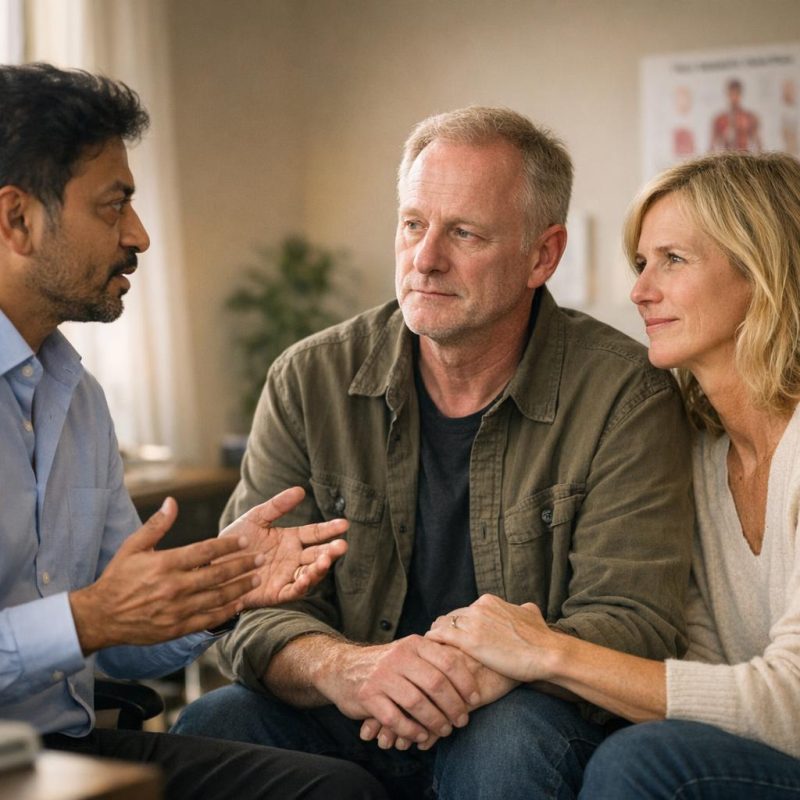 Image by RM AI
Therapy Consideration
Dr. Chen brought it up at my next appointment. 'I want you to consider seeing someone,' she said. 'A therapist who specializes in cardiac trauma and post-event anxiety.' I must have made a face because she smiled slightly. 'I know what you're thinking. That therapy is for people who can't handle things. That you should be able to power through this on your own.' She wasn't wrong. 'But David, what you're experiencing is a medical issue, not a character flaw. Your brain chemistry has been affected by the trauma your body went through. We treat your heart with medication and procedures—why wouldn't we treat your mind the same way?' Sarah jumped in before I could deflect. 'I think it's a good idea,' she said. 'Just try it. Once. See if it helps.' I felt cornered, defensive. I'd spent fifty-six years handling my own problems, working through my own struggles. The idea of sitting in some office talking about my feelings to a stranger felt impossible. But they were both looking at me with that expression people get when they're not going to let something drop. I told her I'd think about it—but what I really meant was I'd avoid it as long as possible.
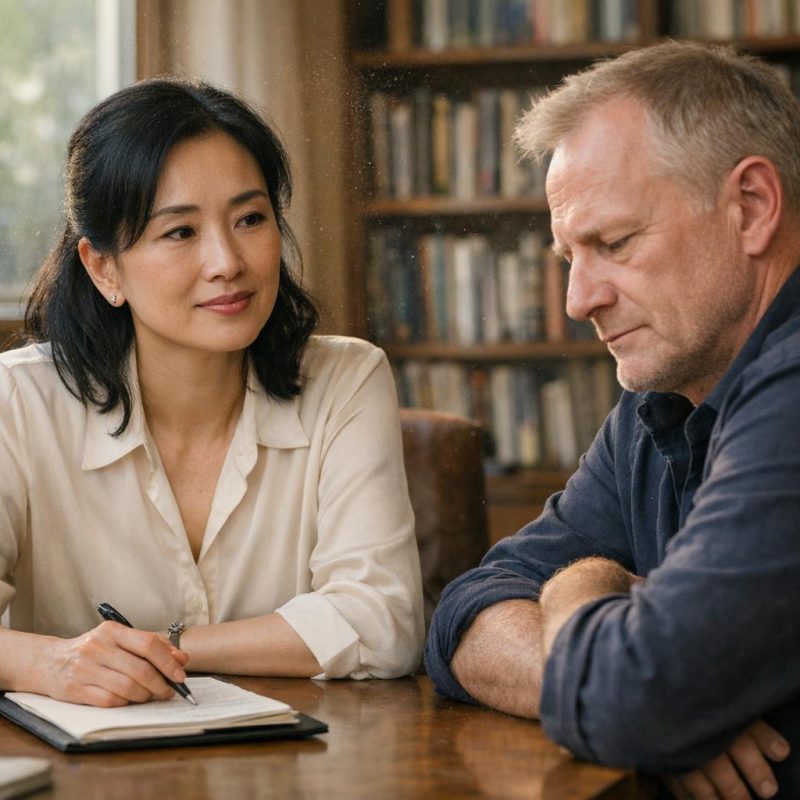 Image by RM AI
Mom's Unexpected Visit
My mother showed up on a Thursday afternoon without calling first. Sarah answered the door, and I heard her surprised voice from the kitchen: 'Helen! What a lovely surprise!' Mom came in carrying a casserole dish and wearing a smile that didn't quite reach her eyes. 'I wanted to check on you,' she said, kissing my cheek. 'See how you're doing with my own eyes.' We sat in the living room, made small talk about the weather and Rebecca's kids and the neighbor's new fence. But something was off. She kept fidgeting with her wedding ring, asking questions about my recovery but not really listening to the answers. 'Have you heard anything from the genetic testing yet?' she asked, too casually. 'Not yet,' I said. 'Should be any day now.' She nodded, looked away, then stood up abruptly. 'Well, I should let you rest. I just wanted to make sure you had a proper meal.' The visit lasted maybe twenty minutes. As she left, she pulled me into a tight hug. 'I'm so glad you're okay,' she whispered. She hugged me tight and said she was so glad I was okay—but she wouldn't meet my eyes when she said it.
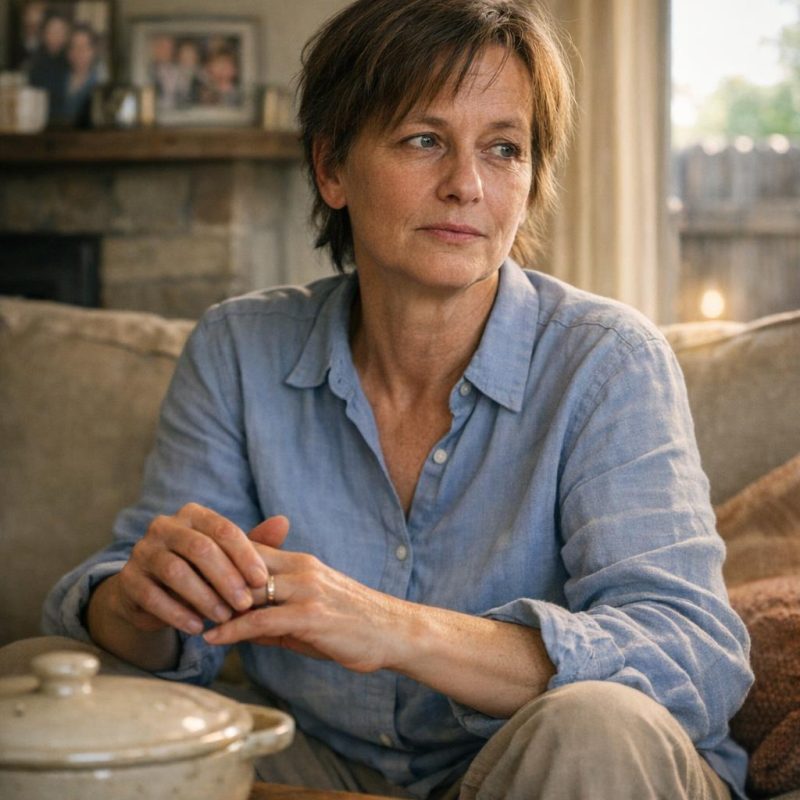 Image by RM AI
The Unopened Box
I stopped by my mother's house three days after her strange visit, finding her in the den surrounded by old photo albums. She looked up when I walked in, startled, and I noticed a cardboard box beside her chair she quickly tried to cover with a newspaper. 'Just going through some old memories,' she said, too brightly. I recognized the photos spread across the coffee table—Dad at my high school graduation, Dad teaching me to change oil, Dad at Rebecca's wedding. 'What's in the box?' I asked, nodding toward it. She followed my gaze and her whole body tensed. 'Oh, that? Just some old paperwork. Nothing important.' But her hands were gathering the photos too quickly, fumbling them. I took a step closer and saw the label on the box side: 'James—Medical.' My father's name in her handwriting. 'Mom, what—' 'Really, David, it's nothing,' she interrupted, standing up and positioning herself between me and the box. 'Just old insurance forms and receipts. You know how I keep everything.' Her voice was steady but her hands weren't. I asked what was in the box, and she said it was nothing important—but her hands were shaking.
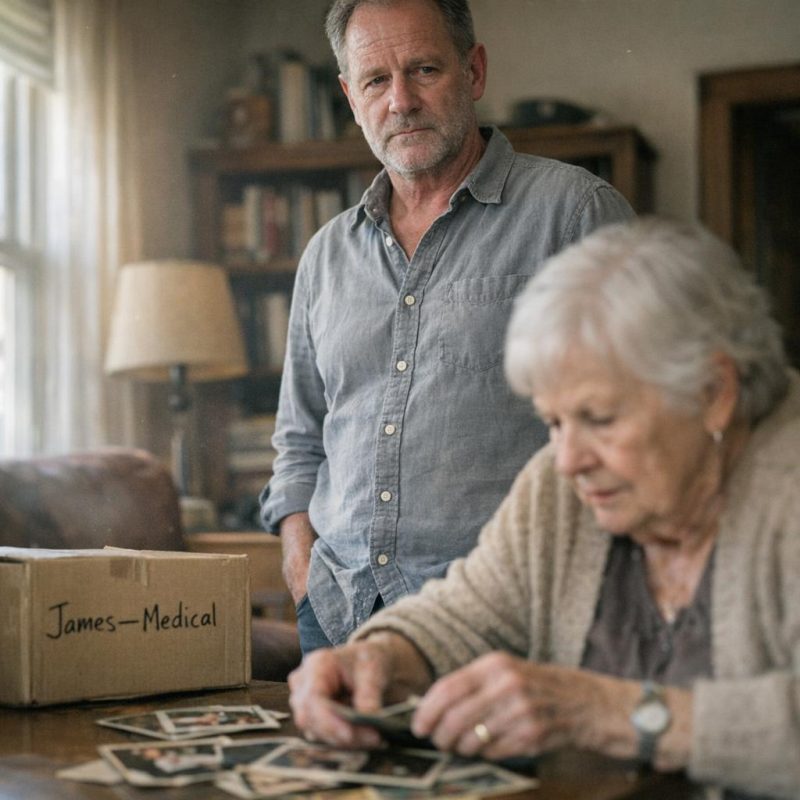 Image by RM AI
The Results Call
Dr. Chen's call came on a Tuesday morning while Sarah and I were having coffee. I saw the hospital number on my phone and felt my stomach drop. 'Mr. Thompson, your genetic test results are back,' she said, her tone professional but careful. 'I'd like you to come into the office.' 'Can't you just tell me over the phone?' I asked, already knowing the answer. 'I really think this conversation is best had in person,' she said. 'Can you come in tomorrow morning? Nine o'clock?' Sarah was watching my face, reading every micro-expression. 'That bad?' I asked Dr. Chen. There was a pause. 'I want to explain everything thoroughly, and I want to make sure you understand all your options going forward.' Not 'it's fine,' not 'nothing to worry about,' not even 'it's manageable.' Just clinical language about thorough explanations and options. 'I'll be there,' I said. 'Should my wife come too?' 'Yes,' Dr. Chen said immediately. 'I think that would be very helpful.' After I hung up, Sarah reached across the table and took my hand. We sat there in silence, both knowing what that careful non-answer meant. She wouldn't tell me over the phone—and that silence told me everything I didn't want to know.
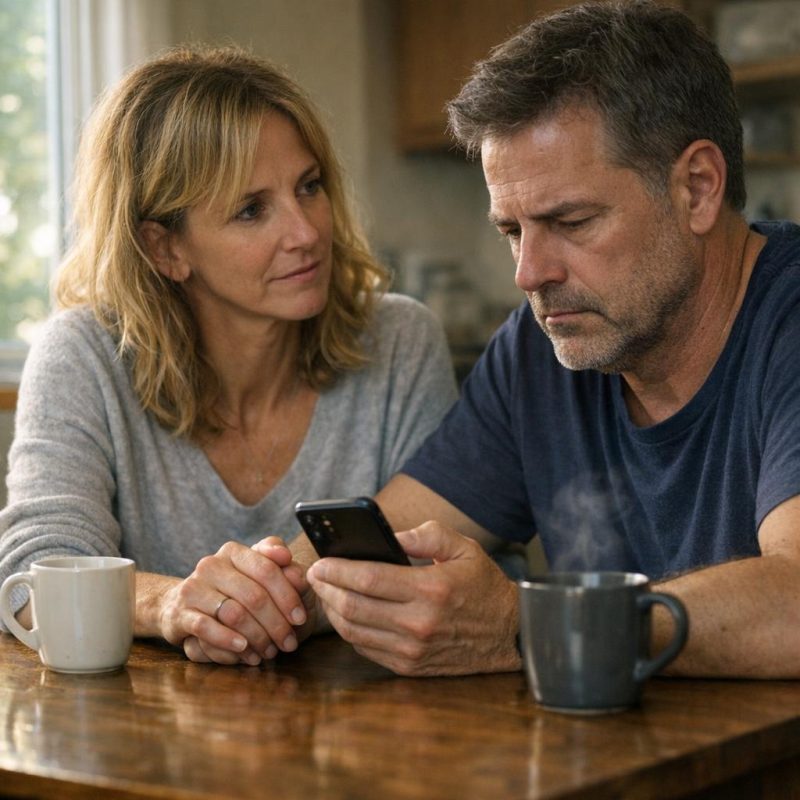 Image by RM AI
The Diagnosis
Dr. Chen's office felt smaller the next morning, the walls closer than I remembered. She had my chart open on her desk, pages of lab results I couldn't read from where I sat. Sarah's hand was tight around mine. 'Your genetic testing shows you have hypertrophic cardiomyopathy,' Dr. Chen said, direct but gentle. 'It's a condition where the heart muscle becomes abnormally thick, making it harder for the heart to pump blood.' She showed us diagrams, explained about electrical problems and sudden cardiac events. 'This is what caused your heart attack. The virus triggered it, but the underlying vulnerability was already there.' Sarah asked about treatment. 'It's manageable,' Dr. Chen said. 'Medications, lifestyle modifications, regular monitoring. Some patients need an ICD—an implantable defibrillator—as a precaution.' She paused. 'The important thing to understand is that this is genetic. Autosomal dominant. Which means...' 'My kids,' I said. She nodded. 'Each of your children has a fifty percent chance of having inherited this mutation.' The room tilted. Tom. Rebecca. My grandchildren. 'And there's something else,' Dr. Chen continued. 'Based on your family history, your father—' I asked if there was a cure, and the look on her face was answer enough.
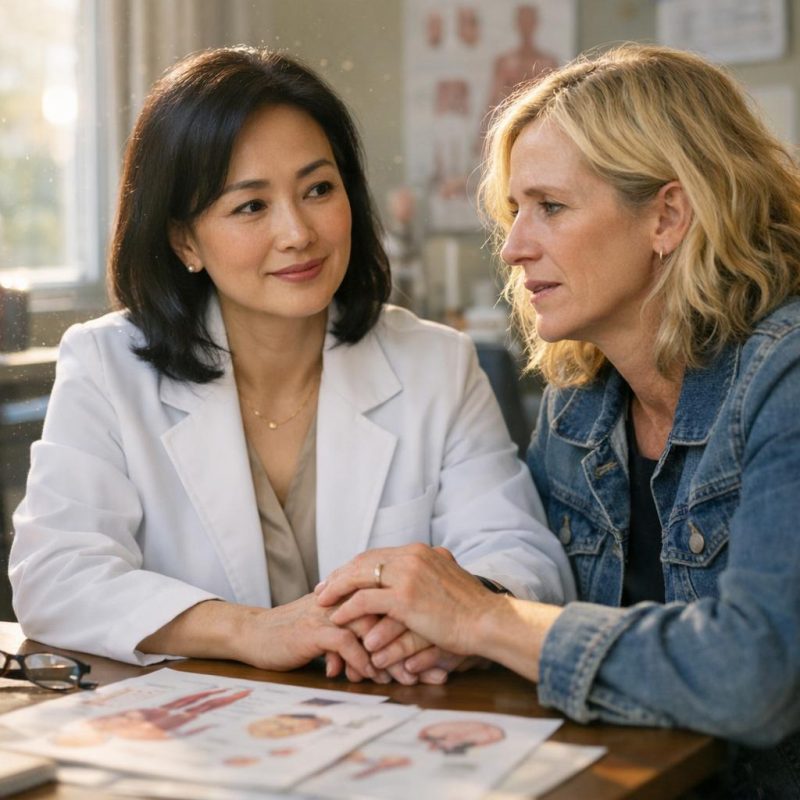 Image by RM AI
The Hereditary Truth
Dr. Chen pulled up what she called a 'retrospective analysis' on her computer screen. 'When I reviewed what you told me about your father's death—the sudden cardiac arrest at fifty-eight, the mention of heart problems in his forties—I went back and requested his medical records.' She turned the screen toward us. 'The autopsy report describes findings completely consistent with hypertrophic cardiomyopathy. The thickened septum, the scarring pattern. He almost certainly had the same genetic mutation you have.' My father. All those years I'd thought it was just bad luck, random tragedy. 'Did he know?' I asked. 'The records suggest he was being monitored for cardiac abnormalities,' Dr. Chen said carefully. 'Whether he understood it was genetic, whether anyone explained the hereditary nature...' She trailed off. Sarah's grip on my hand tightened. 'This means David could have known,' she said. 'Could have been tested, could have been managing this.' 'Genetic testing wasn't as accessible then,' Dr. Chen acknowledged. 'But yes, with family history, screening would have been recommended.' She looked at me directly. 'Did anyone in your father's family ever talk about his condition? Did anyone suggest you get screened?' She asked if my father's family knew about his condition—and I realized I had no idea what anyone knew.
 Image by RM AI
Confronting the Past
I walked into my mother's house without knocking. Sarah was with me, a steadying presence I desperately needed. Mom was in the kitchen, looked up surprised when we came through the door. 'David, I didn't know you were—' 'Did you know?' I asked. No preamble. No polite conversation. 'Did you know Dad had a genetic heart condition?' Her face went pale. The dish towel in her hands dropped to the counter. 'David, I don't—' 'Don't lie to me,' I said, and my voice was shaking. 'His medical records. The autopsy report. Dr. Chen found everything. Hypertrophic cardiomyopathy. The same thing I have. The same thing that almost killed me.' She sank into a kitchen chair. 'David, please understand—' 'Did. You. Know.' Sarah put a hand on my arm but I shook it off. Mom looked up at me, and I saw tears in her eyes. Then she nodded. Just a small movement of her head. 'Yes,' she whispered. 'I knew.' The floor seemed to tilt beneath my feet. 'How long?' 'They diagnosed him in 1985,' she said. 'When you were in college.' Thirty years. She'd known for thirty years. She finally admitted she knew—she'd known for thirty years—and I felt the ground drop out from under me.
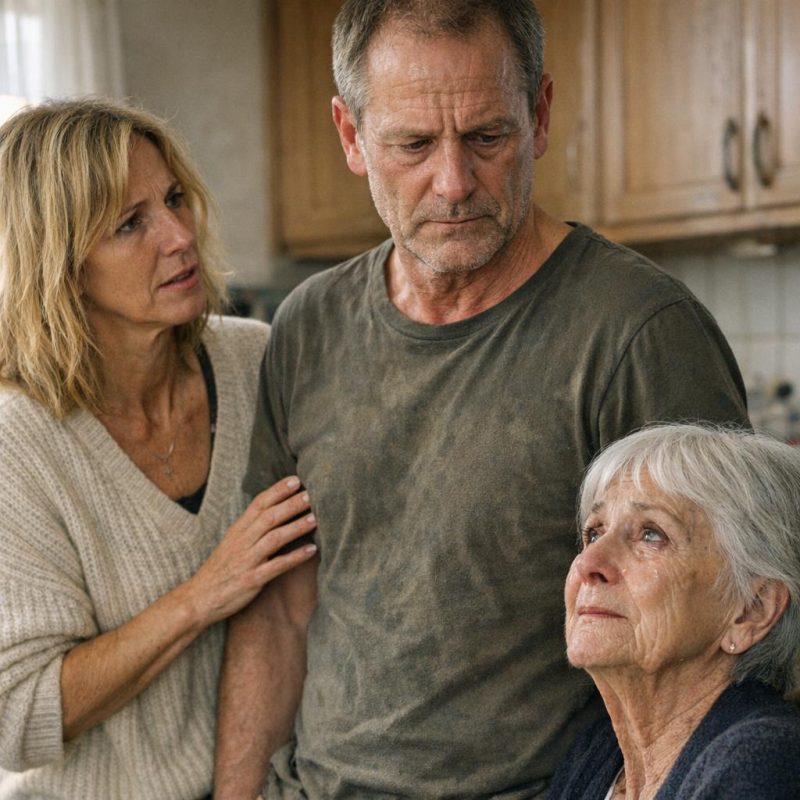 Image by RM AI
Her Reasons
My mother stood up from the kitchen chair, reaching toward me. 'Let me explain,' she said. 'Please, David, just listen.' 'You had thirty years to explain,' I shot back, but Sarah gently guided me to sit down. Mom took a shaky breath. 'When your father was diagnosed, they told us it was genetic. That you and Rebecca might have it too. They wanted us to tell you both, to get you tested.' Her voice broke. 'But then he died. Just three years later. Gone so fast.' Tears were streaming down her face now. 'I watched him decline, watched him afraid every single day. Checking his pulse constantly, limiting everything he did, living in terror of the next episode. And I thought—I couldn't do that to you. Couldn't make you live that way.' 'That wasn't your choice to make,' I said. 'I know,' she whispered. 'I know that now. But you were so young, so full of life. Rebecca was planning her wedding. I kept thinking I'd tell you later, when you were older, when the medicine was better. And then later became never.' Sarah was crying too. 'Helen, he almost died. He had a heart attack and we didn't know why.' 'I'm sorry,' Mom sobbed. 'I was trying to protect you.' She said she was trying to protect me—and all I could think was how her protection almost killed me.
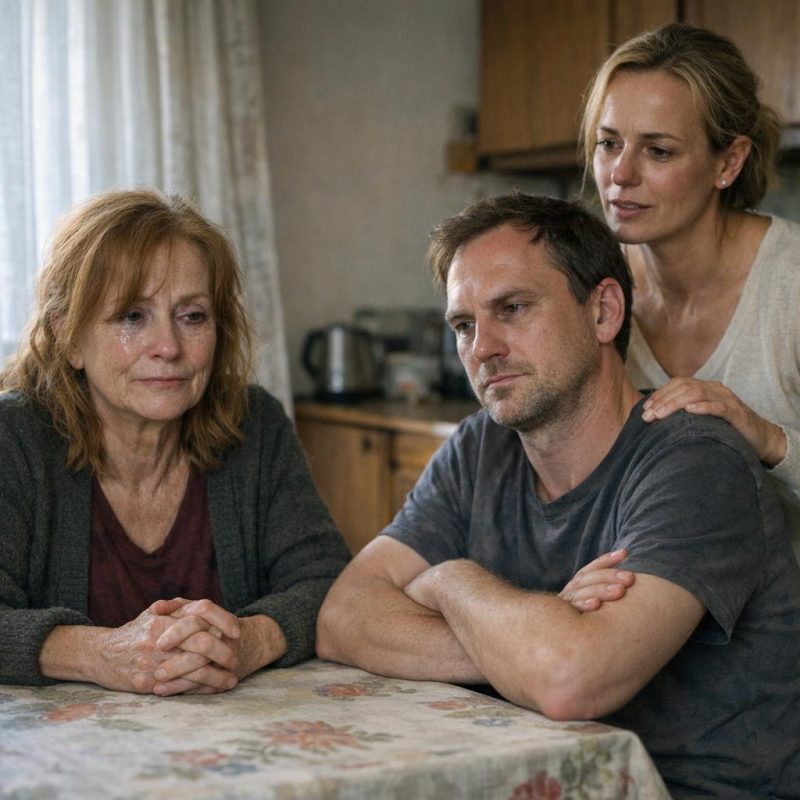 Image by RM AI
The Medical Records
The cardboard box sat on my dining room table like an accusation. Mom had handed it over before we left, couldn't look me in the eye as she did it. Sarah stood beside me as I cut through the packing tape, my hands steadier than I expected. Inside were manila folders, organized by date. The first one I opened was from 1985: consultation notes from a cardiologist at Johns Hopkins. 'Patient presents with syncope and palpitations. Echocardiogram reveals asymmetric septal hypertrophy consistent with HCM.' I flipped through more pages. EKG results. Genetic counseling intake forms—blank, never completed. A letter from 1986 recommending that 'all first-degree relatives undergo screening for familial HCM.' There was even a pamphlet about hereditary heart conditions with a section circled in blue pen: 'Informing Your Children.' My father had circled it himself. Sarah read over my shoulder, her breath catching. 'David,' she whispered, pointing to a note from 1987. The cardiologist had written in the margin: 'Patient declines family notification. Will revisit.' He'd known. They'd both known. They'd been told exactly what to do, who to tell, what it meant for me and Rebecca. And they'd chosen silence. There it was, in black and white—diagnosis, genetic counseling recommendation, everything I should have known my entire adult life.
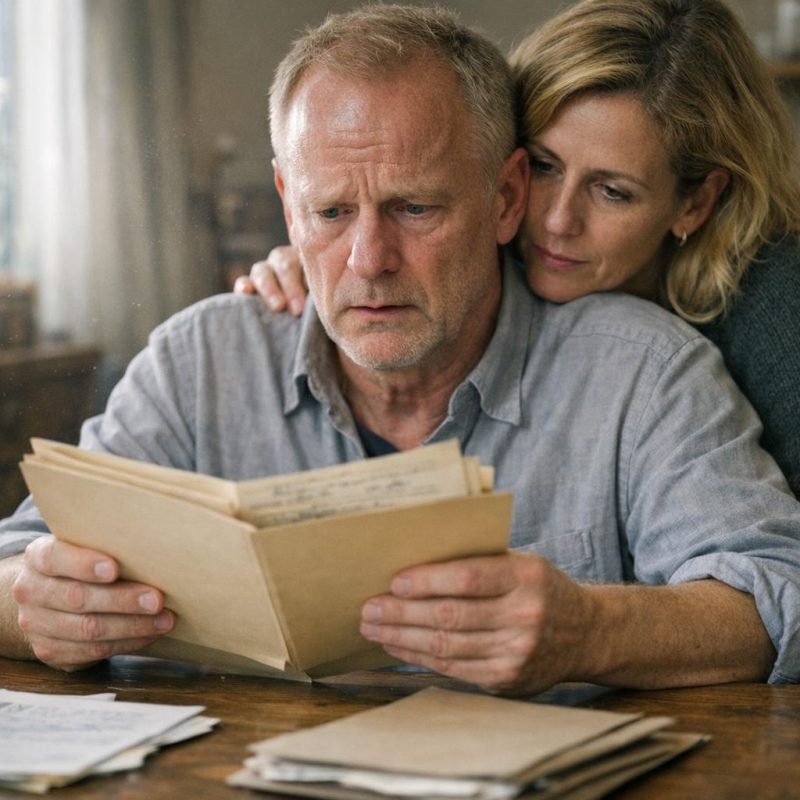 Image by RM AI
The Pattern Revealed
I sat with those medical records spread across my dining room table until well past midnight, Sarah beside me, both of us trying to process what we were seeing. This wasn't just family medical history that got lost in the shuffle. This wasn't a misunderstanding or poor communication between doctors. My mother had made a deliberate choice, year after year, to keep me in the dark about a genetic time bomb ticking in my chest. I thought about that morning in the motel room, thinking I had indigestion. I thought about how close I'd come to dying because I didn't know what symptoms to watch for. About how I could have been on medication for years, could have had an ICD implanted, could have made different choices about stress and exercise and everything else. Tom and Rebecca—they could have known before they had children of their own. Could have made informed decisions about their health, about genetic testing during pregnancy, about everything. Instead, my grandson has a fifty-fifty chance of carrying this mutation, and nobody in the family knew to watch for it. 'It all could have been different,' Sarah said quietly. I nodded, feeling something between rage and grief settle into my bones. I could have been managing this condition for decades, could have warned my kids before they had kids of their own—but instead I almost died ignorant.
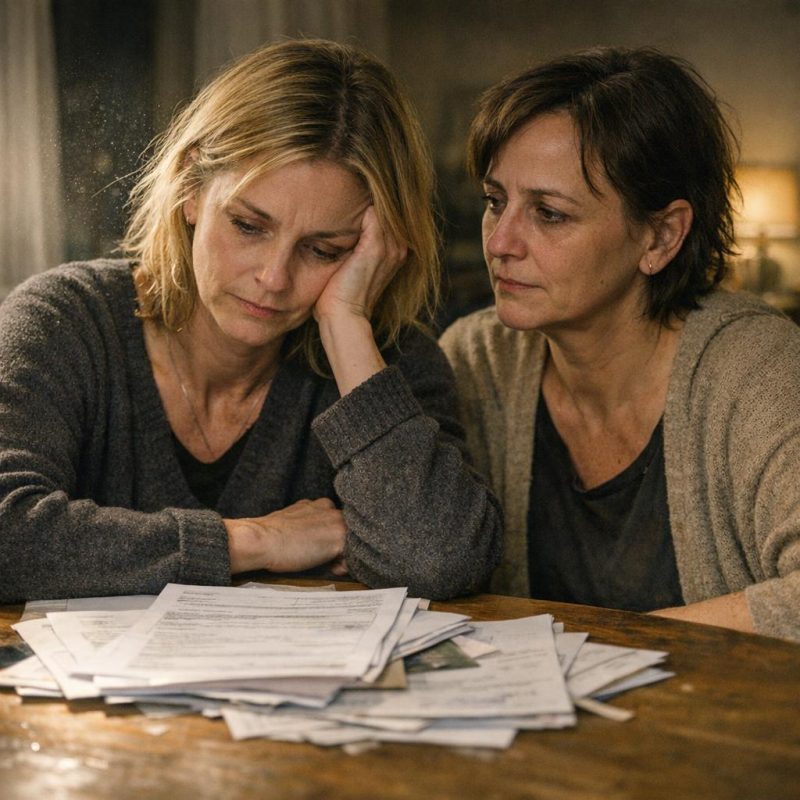 Image by RM AI
Telling the Kids
We called Tom and Rebecca over that Sunday afternoon, and the moment they walked through the door, they knew something was wrong. You can't hide that kind of weight—it shows in your shoulders, in the way you can't quite meet someone's eyes. Sarah had made coffee nobody was going to drink, and we all sat around the same dining room table where I'd spent the night reading through those medical records. I didn't know how to start this conversation. How do you tell your children they might be carrying a genetic time bomb? That there's a fifty-fifty chance each of them inherited the same condition that nearly killed me? Rebecca kept glancing between me and Sarah, her jaw tight. Tom sat perfectly still, hands folded on the table like he was bracing for impact. I told them about the SCN5A mutation. About the thirty percent risk of sudden cardiac death. About how they needed to get tested immediately, how their kids might be at risk too. The words came out clinical and hollow, like I was reading from a medical textbook instead of talking about my own children's lives. Then Rebecca asked the question I'd been dreading: 'Why didn't we know about this sooner?' And I had to tell her that someone made sure we wouldn't.
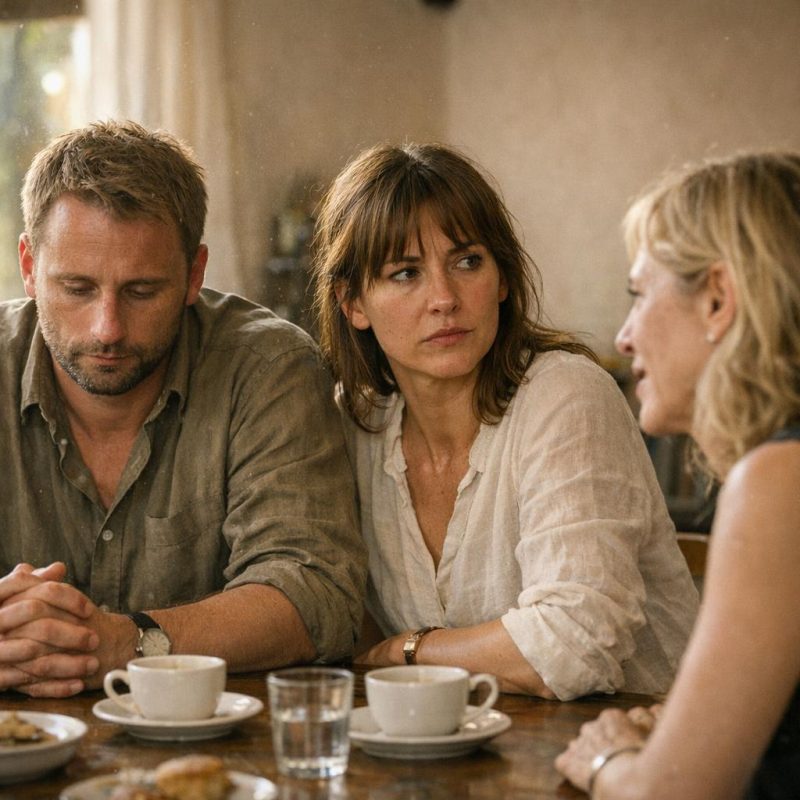 Image by RM AI
Rebecca's Anger
Rebecca didn't wait for me to finish explaining. She was out the door within five minutes, Sarah calling after her, asking her to wait, to think about this first. But I knew exactly where she was going. My mother lived twenty minutes away in that same pristine house where she'd stored those medical records for decades, and Rebecca made it there in probably fifteen. Sarah and I followed because we knew this confrontation was coming and someone needed to be there to pick up the pieces. We heard the shouting from the driveway. Rebecca's voice, shaking with fury, demanding to know how her grandmother could have kept this secret. How she could have let me almost die. How she could have put her grandchildren at risk without a second thought. My mother's response was exactly what I expected—something about not wanting to worry anyone, about how I'd always been 'sensitive' about medical things, about how these conditions often never manifest anyway. Rebecca wasn't having it. The ugly truth of family dysfunction was spilling out into the open—years of my mother's control disguised as protection, her need to manage information and people like we were children who couldn't handle reality. When we finally got inside, Rebecca's face was streaked with tears. She looked at my mother and said she'd never forgive her—and I realized I wasn't sure I could either.
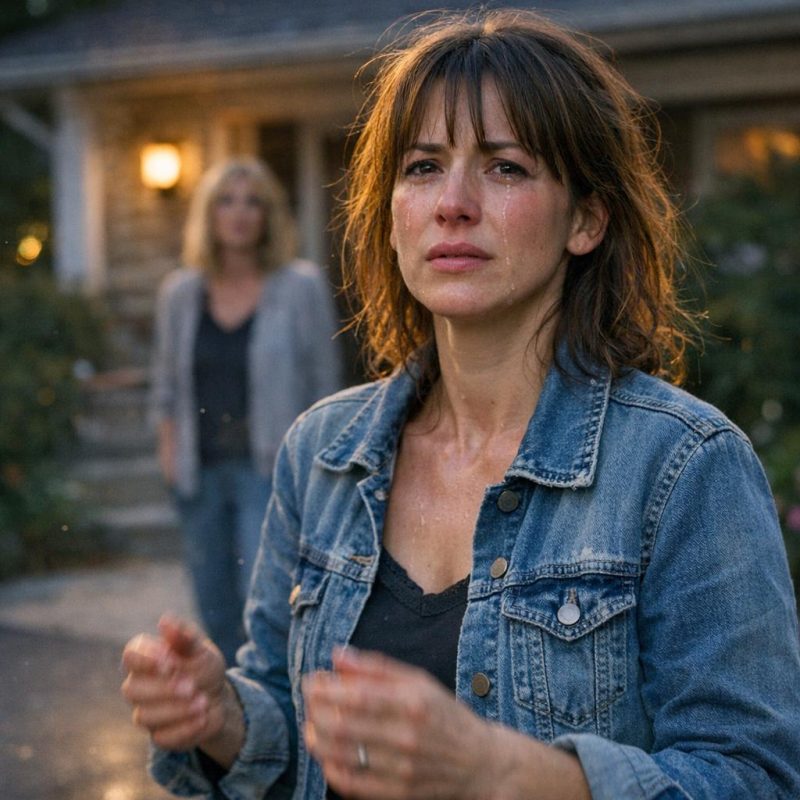 Image by RM AI
The Testing Begins
The genetic testing appointments were scheduled within the week. Dr. Chen had referred Rebecca and Tom to a genetics counselor who specialized in cardiac conditions, and suddenly my kids were sitting in medical offices discussing their own mortality in ways no one in their twenties and thirties should have to. Tom was quiet about the whole thing, methodical in that way he gets when he's trying to control something uncontrollable. He researched the test, the lab, the accuracy rates. Rebecca was angrier, which honestly made more sense to me. She kept asking questions nobody could answer yet—what it would mean for her son, whether she should have more kids, whether she'd need the same surgery I did. Sarah and I went with them to both appointments. Watching them give blood samples, sign consent forms, discuss family medical histories that should have been common knowledge years ago—it gutted me. The waiting period was two to three weeks. Three weeks of not knowing if I'd passed this condition to one or both of my children. Three weeks of guilt that sat on my chest heavier than any heart attack symptom. Tom hugged me before he left the genetics office and said it wasn't my fault—but we both knew that if I'd known earlier, they might have had more choices.
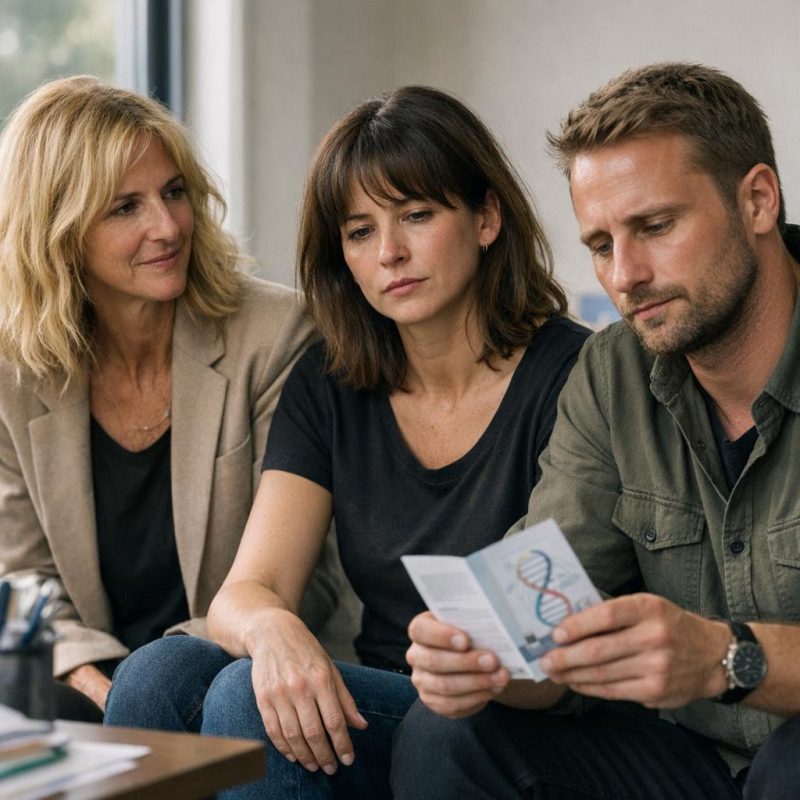 Image by RM AI
Support Group Confession
I hadn't planned to share my story at the support group that Thursday. I'd been going for weeks, mostly listening, nodding along when others talked about their fear and their recovery and their families. But Janet had a way of looking at you that made silence impossible, and when she asked if anyone had something they needed to get off their chest, my mouth opened before my brain could stop it. I told them everything. About the morning at the motel when I thought it was just indigestion. About learning I had a genetic condition that could have been managed for years. About my mother hiding the medical records in her closet like they were something shameful instead of life-saving information. About my kids getting tested right now, waiting to find out if they inherited my defective genes. About the guilt that woke me up at three in the morning, sweating and breathless, wondering if my daughter's son would someday clutch his chest in a motel room because I'd been too ignorant to warn anyone. Mark was staring at his hands. A woman I didn't know well had tears streaming down her face. Janet sat perfectly still, her expression unreadable. When I finished talking, the silence was so heavy I thought I'd said too much—until Janet spoke.
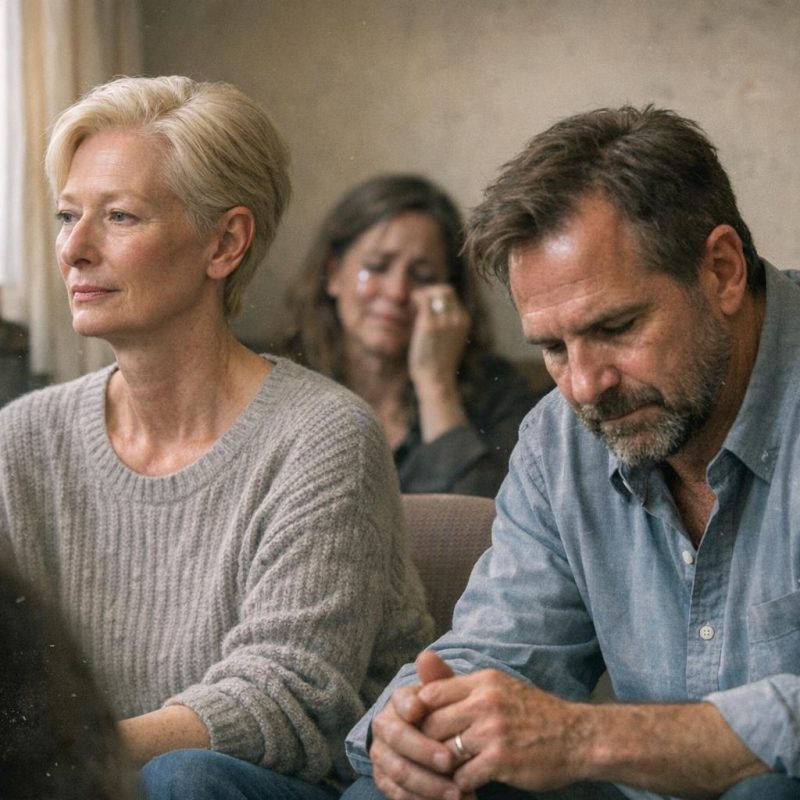 Image by RM AI
Sarah's Breaking Point
Sarah broke that night after the support group. We'd come home, gone through our usual evening routine—checking blood pressure, sorting medications, the small rituals that had become our new normal. Then she sat down at the kitchen table and just started crying in a way I'd never seen before, not even in the hospital. These weren't quiet tears. These were the kind that come from somewhere deep and terrible, the kind you've been holding back so long they've turned toxic. She said she'd been terrified every single day since my heart attack. That she woke up multiple times each night to check if I was still breathing. That sometimes when I was in the shower she'd stand outside the door, listening, waiting for the sound of me collapsing. That she'd been holding all of this rage and fear inside because I was the patient and she was supposed to be strong, supposed to be supportive, supposed to keep it together. But she was drowning. She was furious at my mother for creating this situation. She was angry at me for not going to the hospital sooner that morning. She was scared of losing me and scared of what we'd just put our kids through and scared that this was our life now—always waiting for the next cardiac event, the next crisis, the next loss. She said she couldn't lose me—and for the first time, I realized how close she'd come to having to.
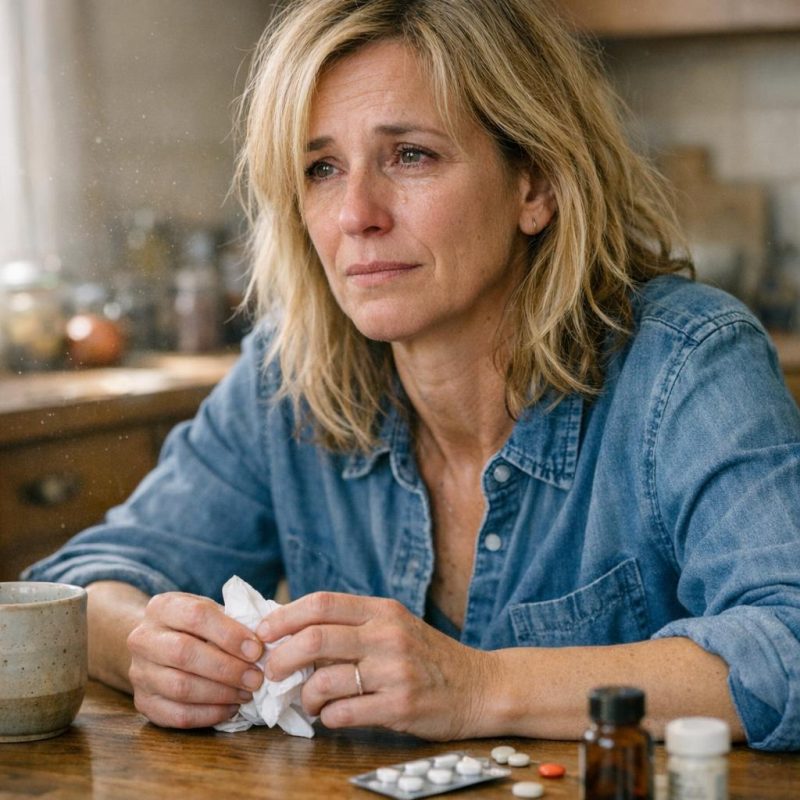 Image by RM AI
Tom's Results
Tom's results came back first, on a Tuesday afternoon. He called me from his car outside the genetics counselor's office, and I could hear in his voice that he already knew what he was about to say. My hands were shaking so badly Sarah had to take the phone. He'd tested negative. No mutation. No inherited time bomb. No fifty percent chance to pass on to his future kids. The relief was physical—like something that had been crushing my ribs for three weeks suddenly dissolved. Sarah was crying, and I realized I was too. Tom kept saying he wished both results had come back at the same time, that he felt guilty for being relieved when Rebecca was still waiting. He was such a good kid. Such a good brother. We talked for a few more minutes, but I could barely focus on the words. He tested negative—and the relief was so overwhelming it took me a moment to remember Rebecca was still waiting.
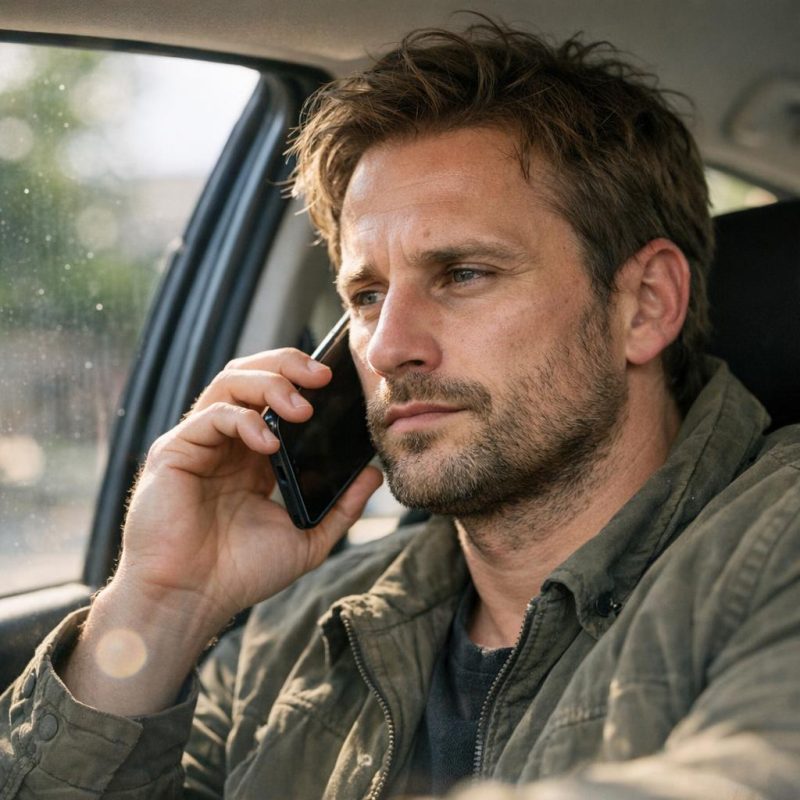 Image by RM AI
Rebecca's Results
Rebecca's call came four days later, on a Saturday morning. Sarah answered because I couldn't make myself pick up the phone—I knew from the timing, from the way the week had stretched out, from some terrible parental instinct. Rebecca asked if we could come over. She didn't say anything else, but she didn't need to. We drove to her apartment in silence. She was sitting at her kitchen table with the genetics report in front of her, and her husband was holding their son, keeping him occupied in the other room. Rebecca looked at me with this expression I'd never seen before—grief and fury and determination all mixed together. She had tested positive. The same SCN5A mutation I carried was written into her DNA, every cell in her body, passed down from me to her like some terrible inheritance. She was twenty-eight years old and already scheduling appointments with Dr. Chen, already researching ICDs and medication protocols, already making plans to tell her son when he was old enough to understand. I wanted to apologize, to take it back, to somehow undo the genetic lottery that had made her pull the short straw. But she was talking about monitoring schedules and early intervention strategies, already taking control in the way she does. She tested positive—and I watched my daughter's face as she realized she was carrying the same sentence I was.
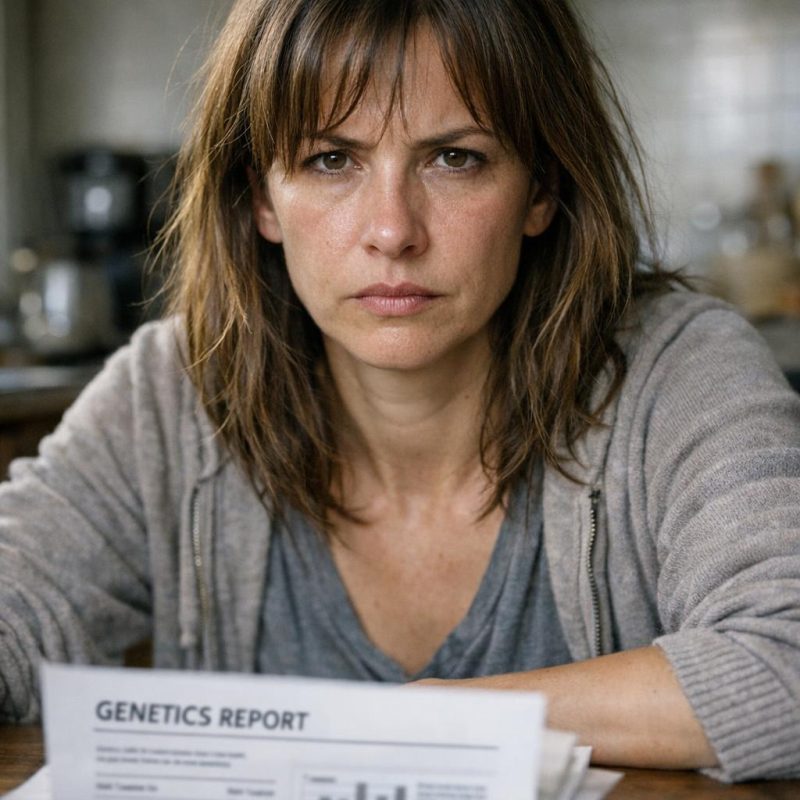 Image by RM AI
The Medical Plan
Dr. Chen cleared her schedule to see Rebecca within forty-eight hours. We all went—me, Sarah, Rebecca, her husband. Dr. Chen spread out a treatment plan that was nothing like what I'd experienced. Because Rebecca was asymptomatic, because we'd caught it early, there were options I'd never had. Baseline cardiac MRI to check for any structural changes. Monthly monitoring for the first year. Genetic counseling for her son. Beta-blockers as a preventive measure. An ICD implantation scheduled for next year, before any symptoms appeared. Lifestyle modifications that could reduce her risk factors. A complete roadmap for living with this condition instead of being blindsided by it. Dr. Chen talked about new research, clinical trials, better medications in development. She emphasized that knowledge was power—that unlike me, Rebecca would never be caught off guard in a motel room thinking she had indigestion. Rebecca asked detailed questions, took notes, scheduled follow-ups. She was handling this better than I was, honestly. On the drive home, she studied the treatment plan in the passenger seat, and I could see her processing everything, organizing it in her mind the way she'd always organized problems into manageable pieces. She looked at the treatment plan and said at least she wouldn't be caught off guard—and I knew that was aimed at me.
 Image by RM AI
The Final Confrontation
I called my mother three weeks after Rebecca's diagnosis. Not to yell, not to blame—just to talk. We met at a coffee shop halfway between our houses, neutral territory, and for the first time in months we weren't shouting at each other. She looked older than I remembered, tired in a way that went deeper than lack of sleep. She told me she'd been thinking about my father constantly, about the choices she'd made, about what she'd put Rebecca and me through. She said she'd convinced herself that not knowing was protection, that she was shielding us from worry, from the burden of genetic uncertainty. I told her that wasn't her choice to make—that she'd taken our autonomy, our ability to make informed decisions about our own lives. She nodded, tears running down her face, and said she understood that now, that watching what had happened to me and then Rebecca had broken something open in her. We talked for two hours. About Dad. About fear. About how trauma makes us do irrational things. About how love sometimes looks like control when you're terrified of loss. She asked if I could ever forgive her, and I told her the truth—I didn't know yet.
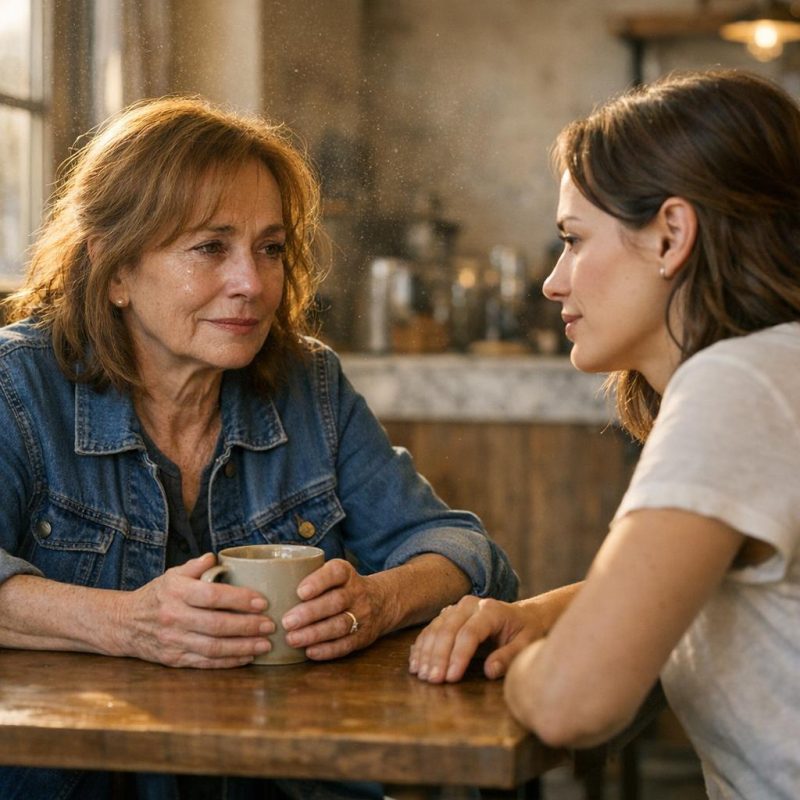 Image by RM AI
Six Months Later
Six months post-heart attack, I'm sitting in Dr. Chen's office for my routine follow-up, and the numbers look better than anyone expected. My ejection fraction has improved slightly—not back to normal, but better. The cardiac rehab sessions have become part of my weekly routine, not a punishment. I've lost twenty-three pounds. My blood pressure is controlled. I take my medications religiously, setting phone alarms because I refuse to be the guy who thinks he knows better than his cardiologist. Sarah and I walk every evening now, sometimes in silence, sometimes talking about everything we used to take for granted. The ICD in my chest still feels foreign, a constant reminder that my body betrayed me once and might again. Some days I'm angry about what I've lost—the spontaneity, the assumption of immortality, the luxury of not thinking about my heartbeat. But most days I'm just grateful to be here, to have this second chance that my father never got. Dr. Chen says I'm doing everything right, that this is what successful recovery looks like—imperfect, ongoing, requiring constant vigilance. I can't say everything is perfect—but I'm here to say anything at all.
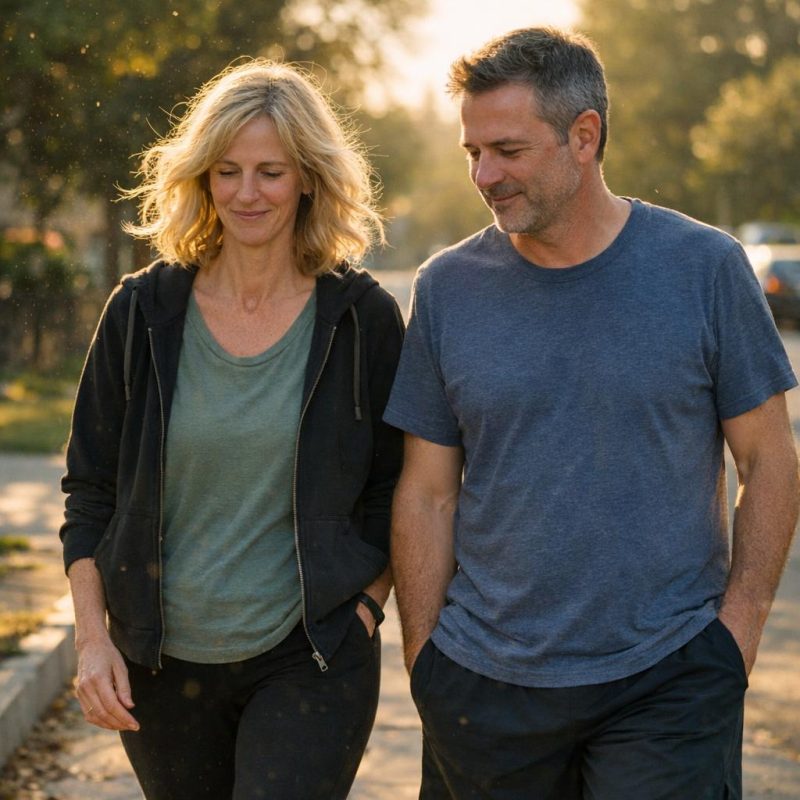 Image by RM AI
Rebecca's Advocacy
Rebecca started a blog three months after her diagnosis. Not the polished influencer kind—raw, honest posts about living with inherited cardiac disease, about getting tested, about the rage and relief of early detection. It started small, just friends and family reading, but then a cardiac advocacy group shared one of her posts and it went viral in the heart disease community. Last month she spoke at a medical conference about the patient perspective on genetic testing. I sat in the back row with Sarah, watching our daughter stand at that podium and tell hundreds of doctors and researchers about her experience, about how my near-death had saved her life, about the importance of family medical history and proactive screening. She talked about her son, about breaking the cycle of silence and secrets that had defined our family for generations. Her voice didn't shake. She didn't cry. She was powerful and articulate and absolutely fearless in a way I'd never been. After the presentation, people lined up to talk to her, to share their own stories, to ask about genetic testing resources. She said if her story could save one person from going through what I did, it would be worth it—and I'd never been more proud.
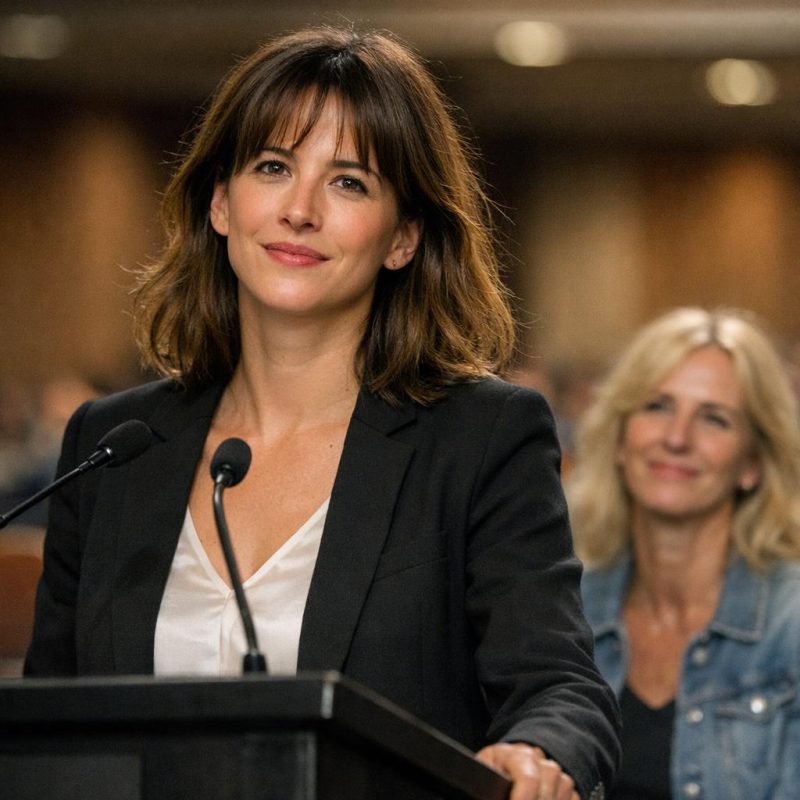 Image by RM AI
The Warning Signs I Almost Ignored
Sometimes I think about that dinner with the investment group, back when all this started with what I thought was just bad chicken. I remember the discomfort creeping up my chest, the way I convinced myself it was nothing, the hours I spent in denial while my heart muscle was dying. I remember Sarah's face when she realized I'd waited, the terror in Rebecca's eyes when she learned about her own risk. I think about my father, who never got the warning I got, who died without knowing what was written in his DNA. I'm not the same person I was that night. I measure my life differently now—not in deals closed or promotions earned, but in morning walks with Sarah, in watching Rebecca advocate for others, in my grandson's laughter. The scar on my chest is a reminder that I almost didn't get any of this. Some people call it a wake-up call, but that phrase feels too gentle for what actually happened—I came within hours of dying because I ignored what my body was screaming at me. My cardiologist says I'm lucky. Rebecca says I'm stubborn. Sarah says I'm learning. I almost didn't go—and now I tell everyone who'll listen: Don't ignore what your body is trying to tell you, because the life you save might not just be your own.
 Image by RM AI