The Storm That Changed Everything
The February storm hit on a Tuesday night, one of those Midwest blizzards that starts with freezing rain and ends with snow so heavy you can't see your own mailbox. I woke up Wednesday morning to find my front porch collapsed on one side, the railing torn completely off and scattered across the lawn like kindling. The wooden steps I'd walked up and down for thirty-seven years were split down the middle, sagging at an angle that made them impossible to use. I had to go out the back door just to see the full damage from the street, standing there in my boots and bathrobe like some disaster victim on the evening news. The insurance adjuster came out Friday and basically told me what I already knew: the porch was old, the damage was 'wear and tear accelerated by weather,' and I'd be covering most of the repair costs myself. He threw out a number that made my stomach drop. My savings account wasn't meant for this kind of emergency. I stood staring at the wreckage, wondering how I'd ever manage to fix it without asking my kids for money I knew they didn't have to spare.
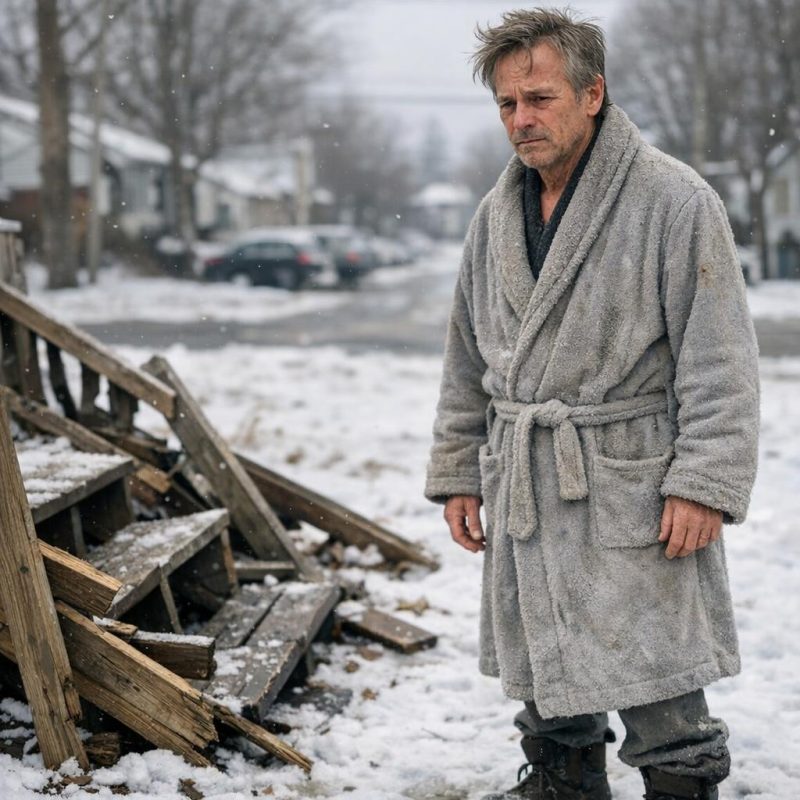 Image by RM AI
Three Years of Trying
It had been three years since Doug passed, three years of figuring out everything he used to handle without ever making it look like work. The furnace filter changes, the gutter cleaning, the way he'd spot a loose shingle before it became a leak—I'd learned it all through YouTube videos and stubborn determination. My son offered to fly in from Denver after the funeral, said he'd handle the 'house stuff,' but I could hear the relief in his voice when I told him I'd be fine. And I was fine, mostly. I fixed the leaking toilet myself, replaced the garage door opener, even patched the drywall in the hallway after I accidentally put my elbow through it moving furniture. My sister said I was being too proud, that asking for help wasn't weakness, but she didn't understand. This was my house, my life, my proof that I wasn't just falling apart without him. The porch, though—that was different. That needed real carpentry, real tools, real money. I'd proven I could handle most things on my own, but this porch felt like the universe testing how much I could take.
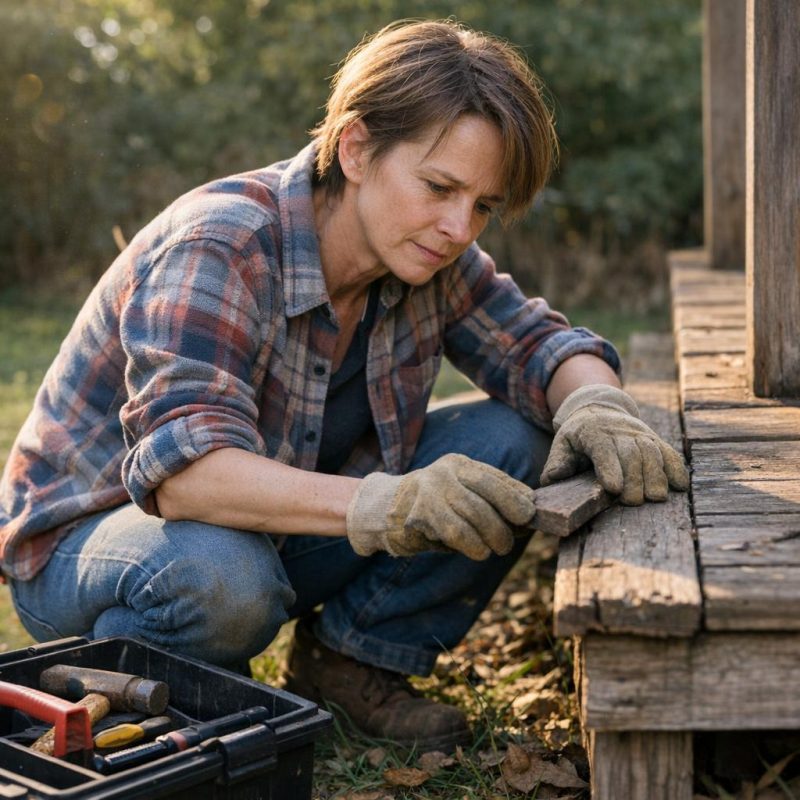 Image by RM AI
The Neighbor's Offer
Mark came over that Saturday afternoon while I was sitting on my back steps, staring at repair estimates on my laptop and trying not to cry. He'd moved into the Johnson place six months earlier, one of those quiet neighbors who waves but doesn't chat, keeps his lawn neat but doesn't make a show of it. 'I noticed your porch,' he said, and I must have looked mortified because he quickly added, 'I do carpentry. Used to contract before I semi-retired.' He offered just like that, said he had the tools, the time, and the skills, and he'd hate to see it sit there getting worse through spring. When I asked what he'd charge, he actually looked offended. Said he didn't want money, just liked keeping busy and helping out when he could. I tried to argue, told him I couldn't accept that kind of work for free, but he smiled—this warm, genuine smile—and said neighbors should look out for each other. When he said he hated to see a widow struggling with something he could fix in a weekend, the relief hit me so hard I said yes before I could think twice.
 Image by RM AI
Saturday Morning
He showed up at seven-thirty Saturday morning with a truck full of lumber, a toolbox that looked like it had seen decades of real work, and a cooler of water bottles. I'd barely finished my first coffee when I heard the sound of his circular saw cutting through the damaged wood. From my kitchen window, I watched him work with the kind of efficiency that only comes from years of experience—no wasted movements, no hesitation, just methodical progress. He'd already torn off the old railing and half the decking by the time I brought him a muffler at nine. The precision amazed me: every measurement double-checked, every cut clean, every board laid perfectly level. Doug had been handy, but this was different—this was craftsmanship. Mark didn't chat much while he worked, just nodded his thanks when I refreshed his water, smiled when I apologized for the mess. By noon he'd framed the entire structure and was already laying new decking boards. I made him a sandwich he barely touched, too focused on getting the angles right. Watching him measure and cut with such precision, I wondered why someone this talented would offer to work for free.
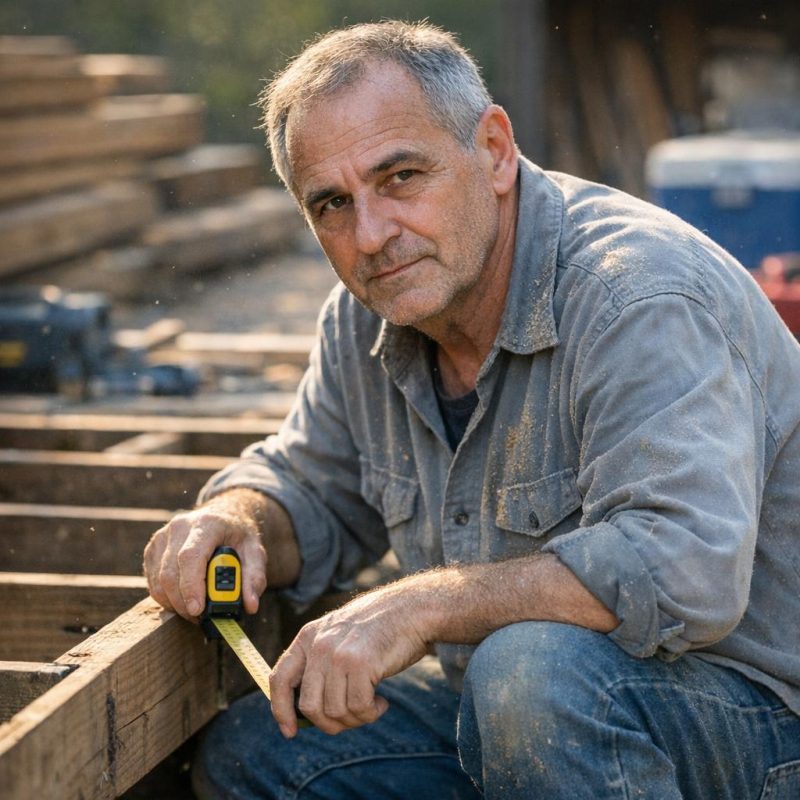 Image by RM AI
Coffee and Small Talk
Sunday morning I brought him coffee around eight, the good stuff from the French press Doug used to use for special occasions. Mark took a break, sitting on my back steps while he drank it, and we talked about the neighborhood—how the Hendersons had just repainted, how the streetlights kept going out on the corner. I asked how he was settling in, whether he liked the area. He said it was peaceful, exactly what he needed at this stage of life. 'Change of pace from where you were before?' I asked, trying to be friendly, trying to show I was interested in knowing my helper as more than just free labor. His smile didn't quite reach his eyes when he answered. 'Something like that,' he said, taking another sip. I pressed a little, asked what brought him to our street specifically, and he gave that same pleasant but closed-off smile. When I asked where he'd moved from, he smiled and said 'not far' in a way that didn't invite more questions.
 Image by RM AI
Sunday Evening Completion
By Sunday evening, my porch looked like something from a home improvement show. New railing with spindles that actually matched, steps that didn't creak, decking boards sealed and stained in a rich cedar tone that complemented the house better than the old weathered gray ever had. Mark had even replaced the porch light fixture with one he said he 'had extra' from another project. It was beautiful—better than it had been even when Doug and I first bought the place. I tried to pay him four times over those two days. Offered cash, offered to write a check, offered to at least cover the materials, but he waved it all away with that same warm smile. 'Seriously, Linda, I'm just glad to help a neighbor,' he said, packing up his tools in the dusk light. I felt this crushing wave of gratitude mixed with something else—guilt, maybe, or the uncomfortable weight of owing someone something I couldn't quantify. He refused every offer of payment, just kept saying he was glad to help a neighbor, and I felt guilty for even suspecting his kindness might have strings attached.
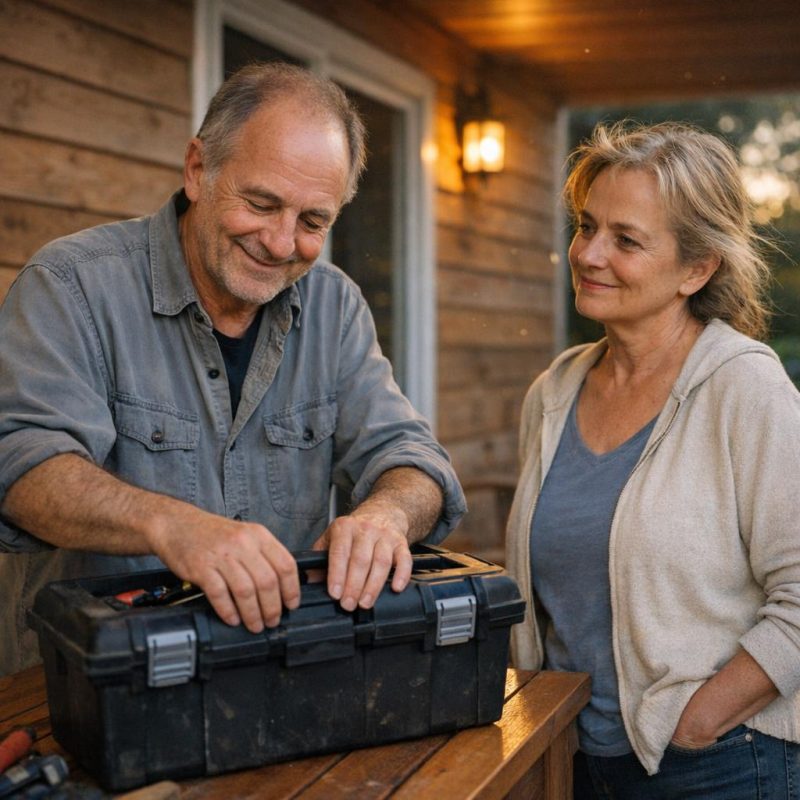 Image by RM AI
Mother's Warning Echo
That night I couldn't sleep, kept thinking about my mother's old saying: 'Nothing free ever really is, Linda.' She used to say it when I was a kid and someone would offer her something without asking for anything back—a ride, a favor, a 'don't worry about it.' She'd been wrong most of the time, just bitter from her own hard life, suspicious of kindness because she'd seen so little of it. I'd spent years trying not to be like her, trying to believe in good people doing good things because it was right, not because they wanted something. Mark seemed genuinely kind, the sort of quiet, decent person who just liked being useful. There was nothing sinister about a semi-retired carpenter helping out a neighbor, nothing strange about someone who valued community over cash. The porch was real, solid, beautiful—proof of his good intentions, not evidence of some scheme my mother's ghost wanted me to imagine. I told myself this was different, that people could still be good for no reason, but her voice lingered in my head like smoke I couldn't clear.
 Image by RM AI
Sarah's Concern
I called Sarah Monday morning, excited to tell her about the porch, about how I'd met a genuinely good neighbor, about how not everything in the world was as cynical as the news made it seem. She listened while I described Mark's work, how skilled he was, how he'd refused payment, how grateful I felt. Then the line went quiet for too long. 'Mom,' she finally said, in that careful voice she uses when she's trying not to sound like she's parenting me, 'you don't really know this guy, right?' I bristled, told her I knew him well enough, that he'd lived next door for six months, that he'd just done two full days of skilled labor out of the goodness of his heart. 'Just be careful,' she said. 'I'm not saying he's a bad guy, but you don't know why he's being so generous.' I got defensive, told her she'd become too suspicious living in the city, that she should be happy someone looked out for her mother instead of treating kindness like a crime. Her silence on the other end of the phone felt heavier than any lecture, and I realized she was genuinely worried.
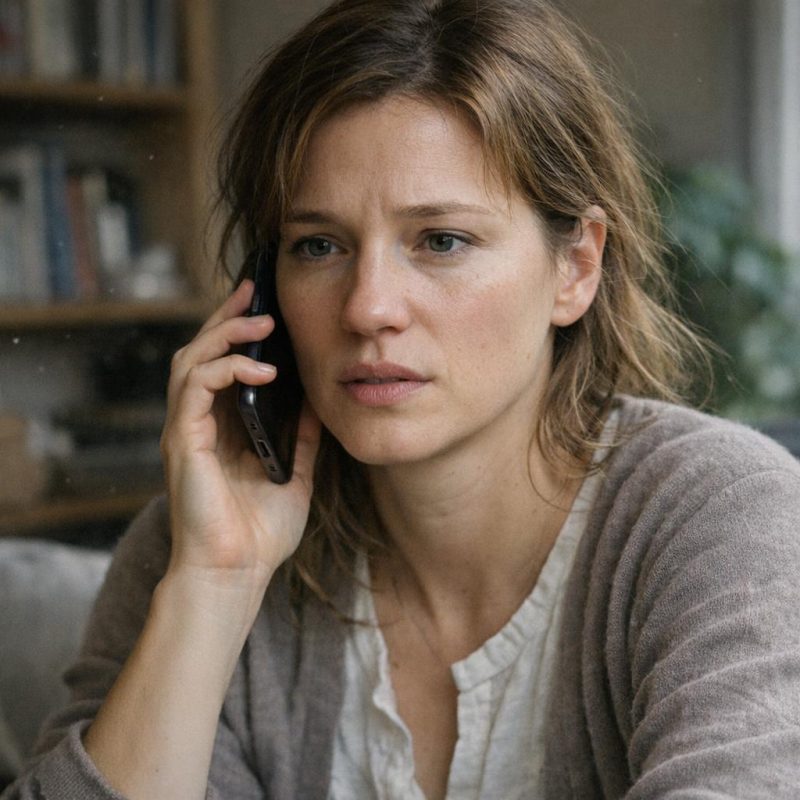 Image by RM AI
The Shoveled Driveway
The first snow came Tuesday night, about four inches of heavy, wet stuff that would take me an hour to shovel. Except when I came downstairs Wednesday morning with my coffee, already dreading the work ahead, I looked out and saw my driveway perfectly cleared. Not just cleared—scraped clean down to the concrete, the snow piled in neat banks on either side. Mark's truck sat idling at the curb, exhaust billowing white in the predawn darkness. It couldn't have been later than six-thirty. I stood there in my bathrobe, coffee mug warming my hands, watching him climb back into his truck. He must have been out there since five, maybe earlier, shoveling in the dark while I slept. The gratitude hit me first—honest, warm gratitude that someone cared enough to do this for me. But right behind it came something else, something I couldn't quite name. He'd been in my driveway while I was asleep upstairs, working in the darkness, and I hadn't heard a thing. I waved my thanks from the window, but something about seeing him there in the dark, exhaust rising around his truck like fog, made my stomach tighten.
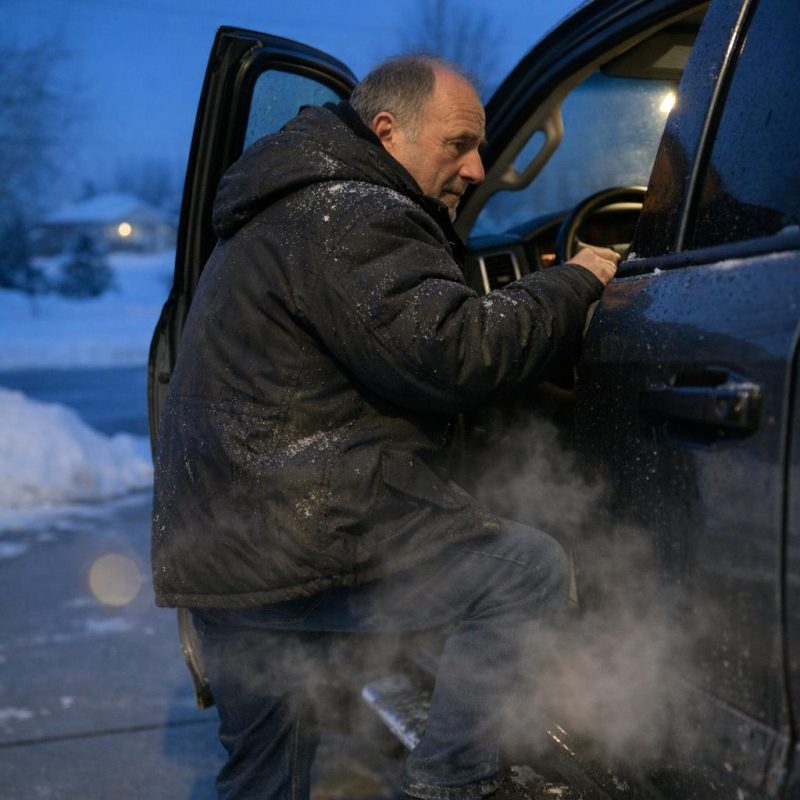 Image by RM AI
The Trimmed Lilacs
The lilac bushes along the side yard had gone wild over the years—Tom had always meant to trim them back, but there were always other projects, and after he died they just kept growing. I'd looked at them a dozen times, thinking I should hire someone, but never got around to it. Then one Saturday afternoon I heard the buzz of hedge trimmers and found Mark working his way through them, already halfway done. 'They needed attention before spring,' he said when I came out, not stopping his work. 'Once they leaf out, you've missed your window.' He was right, of course, and the bushes looked so much better, shaped and manageable instead of scraggly. I thanked him, offered him lunch, which he declined. But as I headed back inside, I glanced over my shoulder and saw him standing at the property line where the bushes ended, one hand resting on a branch, his eyes tracing something I couldn't see. He stood there for a long moment, perfectly still, studying the ground, the fence posts, something. I thanked him, but as I watched him study the property line where the bushes ended, I wondered what he was really looking at.
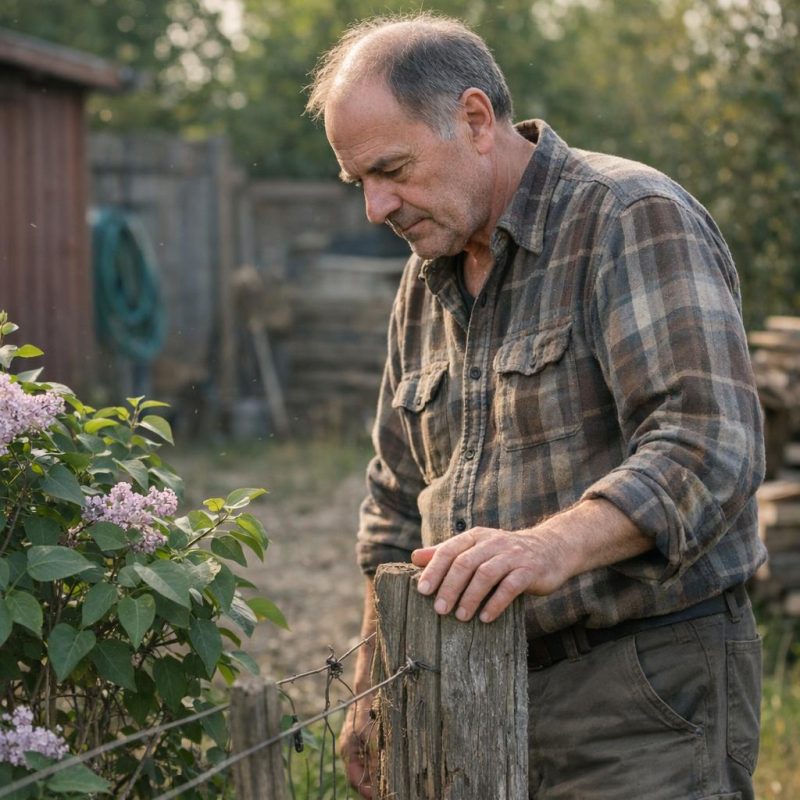 Image by RM AI
The Fixed Shutter
I didn't notice the shutter right away. It was on the second floor, on the side of the house facing Mark's property, and it had been hanging loose for months, maybe longer. I'd stopped seeing it, the way you stop seeing things that have been broken so long they become part of the landscape. Mark mentioned it one evening when I was getting the mail. 'Fixed that shutter for you this afternoon,' he said casually, like he was reporting the weather. 'Noticed it banging in the wind the other night.' I looked up at it, perfectly straight now, and felt that split-second of gratitude before the questions started forming. I'd never mentioned the shutter. I wasn't even sure I'd noticed it was loose. How long had he been watching my house to know about a second-story shutter I couldn't see from my own yard? When I asked how he'd noticed, trying to keep my voice light, he smiled. 'I've been keeping an eye on things,' he said, and the phrase sat in my chest like a stone.
 Image by RM AI
Old Movie Nostalgia
That night I tried to talk myself down. I'd grown up watching old movies where neighbors looked out for each other, where Mr. Wilson groused at Dennis but would have taken a bullet for him, where everyone on the block knew everyone else's business and that was just how it was. Maybe Mark was old-fashioned that way. Maybe he was just one of those men who needed to fix things, who couldn't stand seeing something broken without setting it right. Maybe I'd become too much like Sarah, seeing threats in kindness, suspicion in generosity. Tom had been that way sometimes, always ready to help, always noticing what needed doing. I wanted Mark to be like Tom. I wanted so badly to believe in simple goodness. But those movies never showed what happened when the neighbor got too close, when the help became something else. And they definitely never showed the neighbor standing at the property line in the evening, like Mark was right then when I looked out my bedroom window, measuring something with his eyes.
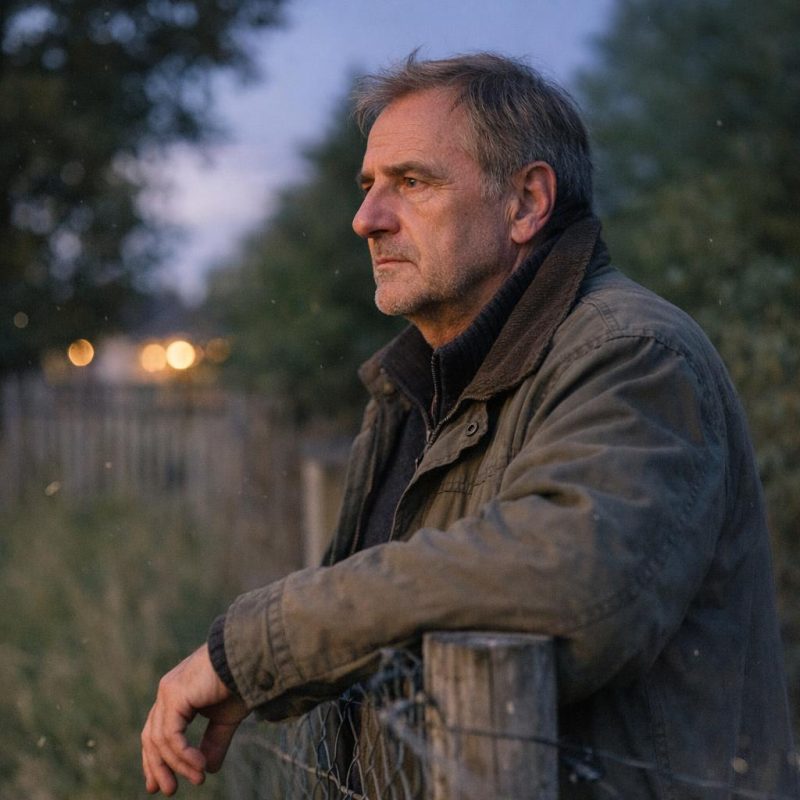 Image by RM AI
The Simplifying Question
We were talking about the weather, about how unpredictable March could be, when Mark shifted the conversation. 'You ever think about simplifying?' he asked. We were standing by his truck, which he'd parked in my driveway while he checked something with my gutters. 'Simplifying?' I asked. 'You know,' he said, 'downsizing. A house this size, all this property—it's a lot for one person to maintain. A lot of my friends your age are moving into condos, townhouses. Less to worry about.' It was a reasonable question, the kind of thing people asked widows all the time. But the way he asked it, leaning against his truck with his arms crossed, felt different somehow. Like he was interviewing me. 'I'm not going anywhere,' I said, trying to sound light about it. 'This is my home.' His smile changed then, tightened at the corners, and for just a second something flickered across his face. I laughed it off, but the way his smile tightened when I said I wasn't going anywhere made my laugh sound hollow even to me.
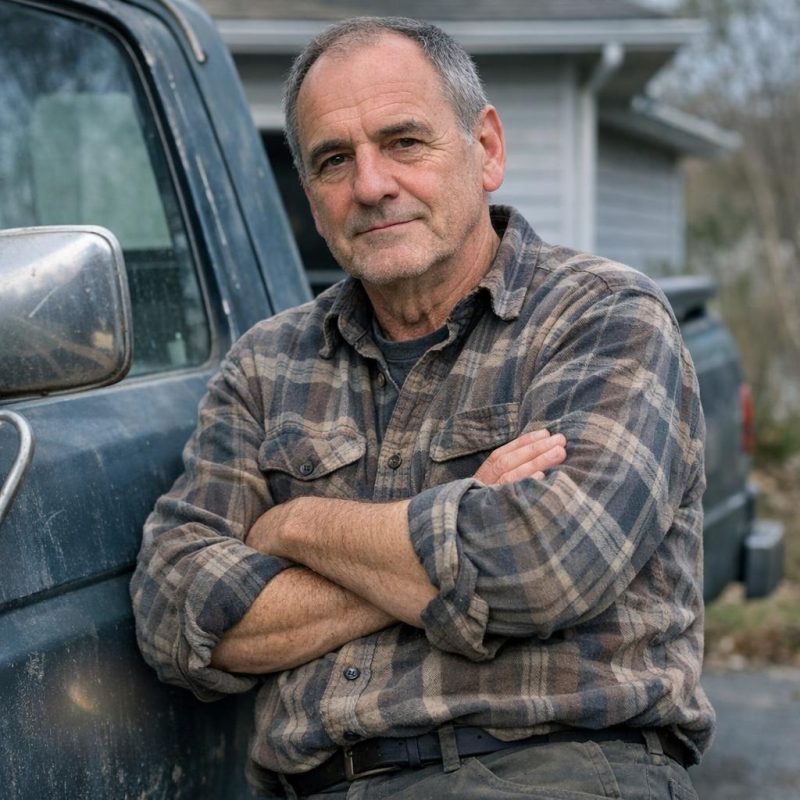 Image by RM AI
The Admiration That Wasn't
A few days later, Mark stopped by with coffee cake from the bakery in town. We sat on the porch—my beautiful, solid porch—and talked about nothing much. Then he looked out at the yard, at the space stretching back to the tree line, and said, 'You know, you've got an unusually large lot for this neighborhood. Three-quarters of an acre, if I had to guess.' I'd never really thought about it. 'Sounds about right,' I said. 'It's perfect,' he continued, his eyes scanning the property. 'With lot sizes like they have now, you couldn't build anything like this. The setback requirements alone—' He caught himself, laughed. 'Sorry, I'm boring you with technical stuff. I just mean you're sitting on something special here. Perfect for expanding, if someone wanted to. Perfect location, perfect size.' He was smiling when he said it, the same warm smile he'd given me a hundred times. But this time it didn't reach his eyes. He said it almost like a compliment, but the comment landed in my stomach wrong, like he wasn't admiring my home but planning for it.
 Image by RM AI
Sleepless Night
I couldn't sleep that night. I lay there in the dark, listening to the house settle, replaying every conversation Mark and I had ever had. And here's what bothered me: I couldn't remember a single real thing he'd told me about himself. I knew he lived alone. I knew he was skilled with tools. I knew he'd moved here six months ago. But from where? Why? What did he do for work? Was he retired? I'd asked these questions, I was sure of it, but when I tried to remember his answers, there was nothing there. Just deflections, vague responses, subject changes so smooth I hadn't noticed them happening. He'd been in my house, on my property, fixing my things, studying my boundaries. And I didn't even know his last name—not really, not in a way I could verify. Every favor he'd done suddenly looked different in my mind, less like kindness and more like something else, something with weight and purpose behind it. The more I thought about it, the more I realized he'd never really answered a single personal question I'd asked.
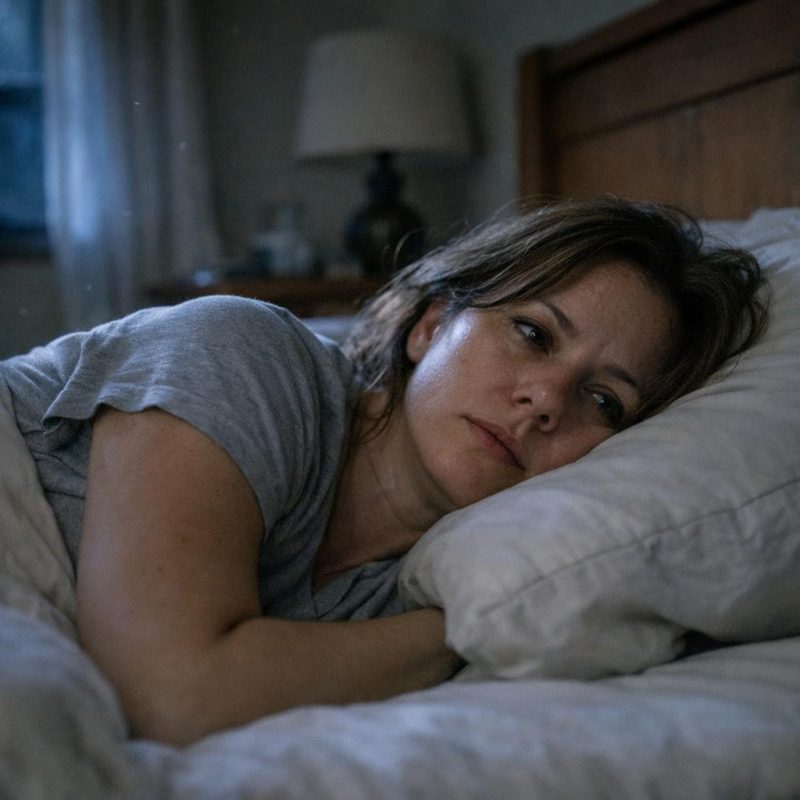 Image by RM AI
The Filing Cabinet
At six in the morning, I gave up on sleep and went down to Tom's study. I'd been meaning to go through his filing cabinet for three years, one of those tasks you keep putting off because it feels like disturbing the dead. But suddenly I needed to look at our property records, needed to see the documents Tom had kept so carefully organized. I found the file marked PROPERTY in the second drawer, thick with papers I'd never examined: the deed from when we bought the house in 1987, inspection reports, tax assessments. Underneath everything else was a manila envelope, unsealed, containing a surveyor's map from 1998. The lot lines were marked in red ink, with stakes noted at each corner. But it was the handwritten note paperclipped to the corner that made my hands start shaking. Tom's handwriting, unmistakable: 'Boundary confirmed. Adverse claim dismissed.' I read it three times, trying to make sense of it. Adverse claim. Someone had claimed our property. Someone had challenged our boundary. In an envelope labeled PROPERTY, I found a survey from 1998 with a handwritten note: 'Boundary confirmed. Adverse claim dismissed.'
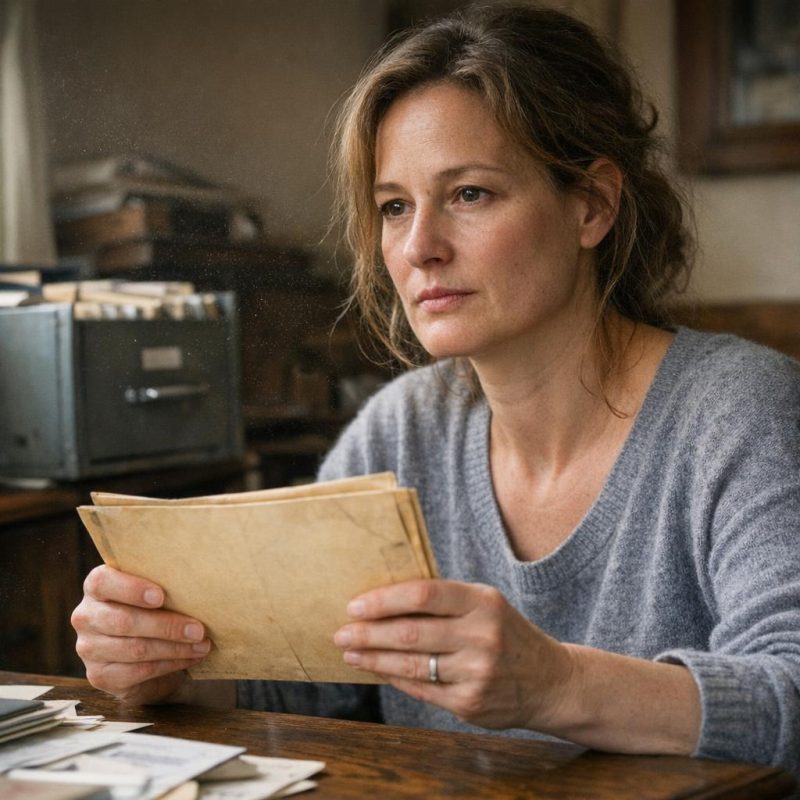 Image by RM AI
Legal Jargon Mystery
I sat at Tom's desk staring at those two words until they blurred. Adverse claim dismissed. I knew what 'dismissed' meant, obviously, but 'adverse claim'? That was legal jargon I'd never encountered in my life. I tried breaking it down logically—someone claiming something adverse to us? Someone claiming our property adversely? I Googled it on my phone, squinting at the screen in the dim light of early morning. The definitions were dense, full of more legal terms I didn't understand. Something about hostile possession, continuous use, open and notorious occupation. It read like a foreign language. But here's the thing—I didn't need to understand every word to feel the weight of it. Tom had kept this document. He'd written that note. Someone had tried to take something from us, and Tom had fought them off. The surveyor's map showed stakes marking our boundary, proof that we'd had to defend what was ours. And sitting there in his study, surrounded by his careful records and his handwritten notes, I felt it in my bones. But I knew in my bones it had something to do with Mark, even if I couldn't explain how or why.
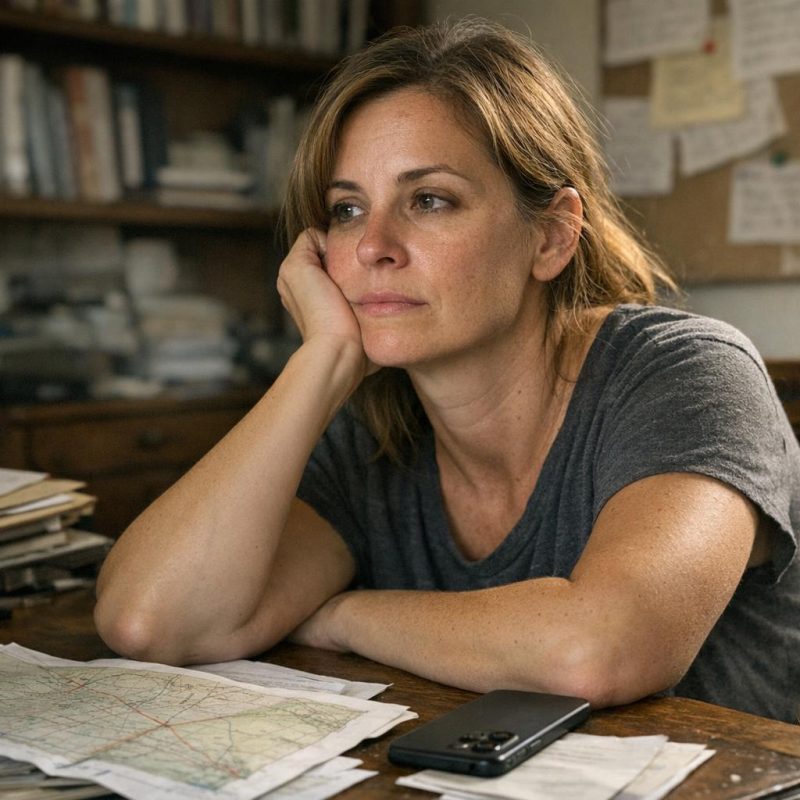 Image by RM AI
Waiting for Daylight
I spent the rest of that night hunched over my laptop at the kitchen table, coffee growing cold beside me. I searched 'property disputes between neighbors' and 'adverse possession' and 'boundary conflicts.' The rabbit hole went deep. Article after article described cases where neighbors had fought for years over inches of land, where friendships had turned into lawsuits, where people had lost everything because they didn't protect their property lines. Some states had laws where if someone used your land openly for long enough—ten years, fifteen, twenty—they could actually claim it as their own. One article described it as 'legalized theft if you're not paying attention.' Another talked about how property disputes often passed down through families, feuds that outlived the original parties. I read about neighbors who'd sabotaged each other's homes, who'd filed endless legal complaints, who'd waited years for revenge. My eyes burned from the screen, but I kept reading. Each story felt like a warning I'd missed. By dawn I'd learned enough to know that property lines can be weapons, and that some people never forgive losing land.
 Image by RM AI
The Morning After
By seven in the morning, I was exhausted and terrified, but I'd made a decision. I couldn't figure this out alone, and I couldn't just sit in my house waiting for something to happen. I needed to talk to someone who'd been in this neighborhood longer than I had, someone who might remember whatever dispute Tom had dealt with in 1998. I grabbed a notepad and started writing down names. The Hendersons had moved in around 2005. The Patels bought their place in 2010. The young couple with the twins just arrived last year. I needed someone old enough to remember the nineties, someone who'd been here long enough to know the history. Margaret's name came to me immediately—she'd lived on our street since the seventies, back when this whole development was brand new. She'd know. She had to know. If there'd been some property dispute, some boundary conflict, Margaret would have seen it unfold. I made a list of the oldest neighbors I knew, and Margaret's name rose to the top—she'd been here since the seventies.
 Image by RM AI
Walking to Margaret's
I waited until nine o'clock to walk over, giving myself time to shower and rehearse what I'd say. How do you ask someone if they remember a property dispute from twenty-five years ago without sounding paranoid? 'Hey Margaret, did my husband ever fight with anyone over land?' Too blunt. 'I found some old paperwork and wondered if you remember...' Better, but still awkward. I practiced different versions in my head as I walked down the sidewalk, my stomach tight with nerves. Margaret's house was six doors down, a tidy brick ranch with flower boxes she replanted every season. The morning was cool, and a few other neighbors were out getting their newspapers or loading kids into cars. Everything looked so normal. So safe. But as I reached her porch, movement caught my eye down the street. Mark's truck, parked two houses down from Margaret's. He wasn't in it, but the sight of it made my breath catch. Was he visiting someone? Was he watching? I stood frozen on Margaret's front walk, my courage nearly failing.
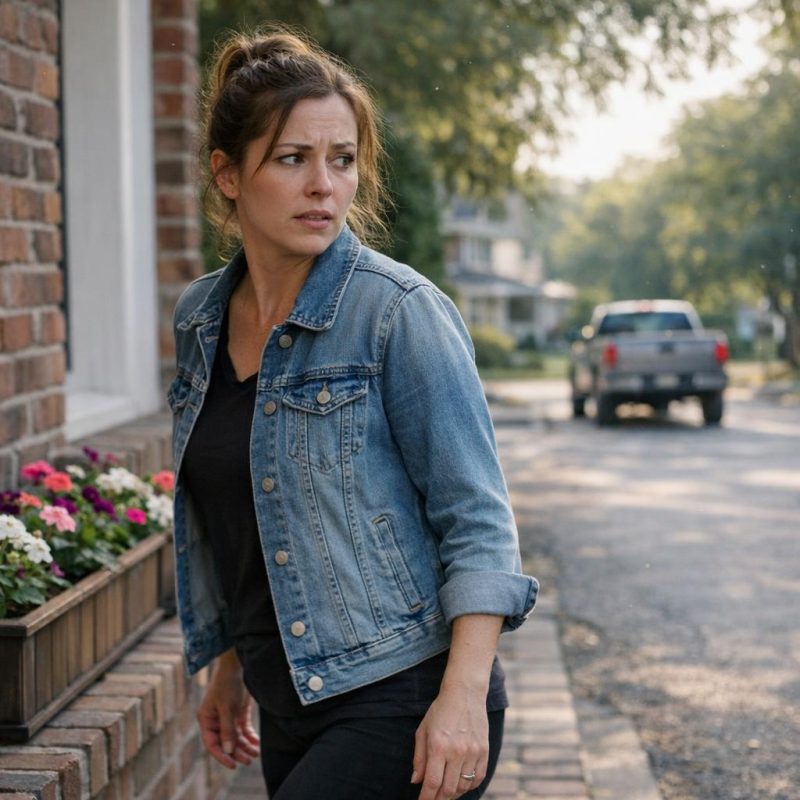 Image by RM AI
Margaret's Reaction
Margaret answered on the second knock, wearing a cardigan despite the warming day. I launched into my rehearsed opening—I'd found some old property documents, just curious about the history—but I barely got through two sentences before I mentioned the phrase 'property dispute.' Her whole face changed. Her eyes went wide, and her mouth actually opened slightly, like I'd said something shocking. 'A property dispute?' she repeated, her voice going quiet. 'From when?' I told her 1998, and she nodded slowly, her expression shifting from surprise to something like dread. 'I didn't think that would ever come up again,' she said, more to herself than to me. My heart started racing. 'Margaret, what are you talking about? What happened?' But she was already stepping back from the door. 'I really shouldn't—I don't want to get involved in this.' 'In what?' I pressed. 'Margaret, please, I need to understand—' Before I could ask what she meant, she said she had to go and practically shut the door in my face.
 Image by RM AI
Standing on the Sidewalk
I stood there on Margaret's sidewalk like an idiot, staring at her closed door. She'd shut me out. Not politely declined to talk, not asked me to come back another time—she'd literally closed the door in my face, and I'd heard the deadbolt click. Whatever had happened in 1998, it was bad enough that Margaret wanted no part of it twenty-five years later. Bad enough that just mentioning a property dispute had frightened her. My chest felt tight, and my hands were clammy. This wasn't just some minor boundary disagreement that Tom had resolved. This was something that still scared the neighbors. I forced myself to turn around, to walk back toward home like everything was fine, just a friendly visit that ended normally. But the moment I turned, my stomach dropped. Mark was standing at the end of the block, maybe thirty feet away, just standing there on the sidewalk. Not walking, not checking his phone, not doing anything except watching me. His face was completely blank, unreadable. I turned to walk home and found Mark standing at the end of the block, watching me with an expression I couldn't read.
 Image by RM AI
The Walk Home
I had two choices: turn around and go back toward Margaret's, which would look like I was running away, or walk past him and act like everything was normal. My legs made the decision before my brain caught up. I walked forward, keeping my pace steady even though every instinct screamed at me to run. As I got closer, I could see he hadn't moved. Just stood there, hands in his pockets, watching. When I was maybe ten feet away, I forced myself to nod, the kind of casual neighbor greeting I'd given him a hundred times before. 'Morning, Mark.' My voice came out almost normal. He didn't respond. Didn't nod back, didn't say hello, didn't even change his expression. Just watched me walk past him, his head turning slightly to follow my movement. I kept walking, feeling his eyes on my back, feeling exposed and vulnerable on the empty sidewalk. My house was four doors away, then three, then two. I climbed my porch steps and fumbled with my keys. By the time I locked my front door behind me, my hands were shaking so badly I could barely turn the bolt.
 Image by RM AI
Uneasiness Becomes Certainty
I leaned against the door, my breath coming in short gasps, and something crystallized in my mind. All those weeks of vague uneasiness, all the little moments that had felt slightly off, all my gut feelings that something wasn't right—they'd been leading to this moment of absolute certainty. Mark wanted something from me. This wasn't about being a good neighbor. It wasn't about kindness or community or helping a widow. Every favor, every conversation, every smile had been leading somewhere, building toward something. The porch repair, the groceries, the offers to help—they weren't random acts of kindness. They were calculated. He'd been watching Margaret's house. He'd been watching me talk to her. And the way he'd looked at me on that sidewalk, silent and cold, confirmed what I'd been afraid to admit. Whatever Tom had fought over in 1998, whatever 'adverse claim' he'd defeated, it hadn't ended. It had just been waiting. I just didn't know yet what it was, or how far he'd go to get it.
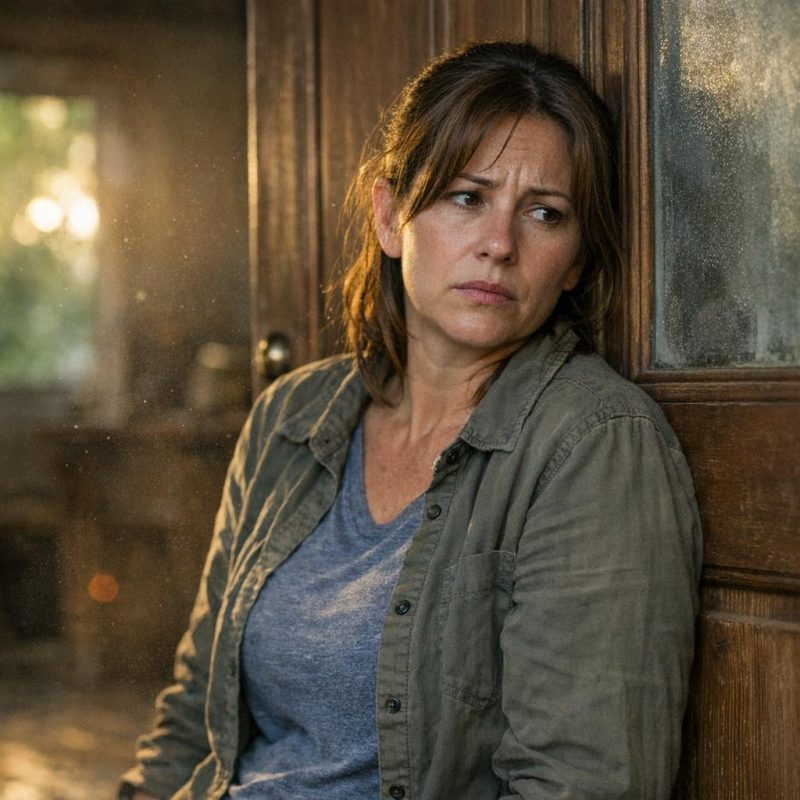 Image by RM AI
Two Days of Silence
For two days after that encounter on the sidewalk, I didn't see Mark at all. No friendly waves from his driveway. No offers to help with groceries. No 'just checking on you' visits. The silence should have been a relief, but instead it felt like waiting for the other shoe to drop. I kept finding myself at the windows, peeking through the curtains like some paranoid shut-in. Was he still there? Was he planning something? Had he given up, or was he just regrouping? The uncertainty ate at me worse than his presence ever had. At night I'd lie awake listening for footsteps on my porch, for the sound of his truck starting up, for anything that would tell me what was happening. During the day I'd catch myself staring at his house, watching for movement behind his windows the same way I suspected he'd been watching mine. My coffee went cold while I stood there, my book lay unread on the table, my shows played to an empty room while I kept vigil. The rational part of my brain knew I was being ridiculous, but the rest of me couldn't shake the feeling that the quiet was just him winding up for something bigger. I found myself checking the windows obsessively, wondering if the quiet meant he'd given up or was planning something worse.
 Image by RM AI
The Knock on the Door
On the third day, the knock came. Three sharp raps that made me jump so hard I spilled tea down my shirt. I knew it was him before I even looked through the peephole. Mark stood on my porch holding a manila folder tucked under his arm, wearing that same friendly smile he'd worn the first day we met. 'Linda, hey,' he said when I opened the door about six inches. 'I hope I'm not catching you at a bad time. There's something I really need to show you. Something important.' The casual way he said it didn't match the tension in his shoulders or the way his eyes darted past me into my house. I didn't invite him in, just stood there in the doorway with my hand gripping the frame. He pulled the folder out from under his arm and held it up like it was a peace offering, but nothing about this felt peaceful. 'I've been doing some research,' he said, 'and I think there's been a misunderstanding about our property lines. A pretty significant one, actually.' The folder was thick, official-looking, and the smile on his face didn't reach his eyes.
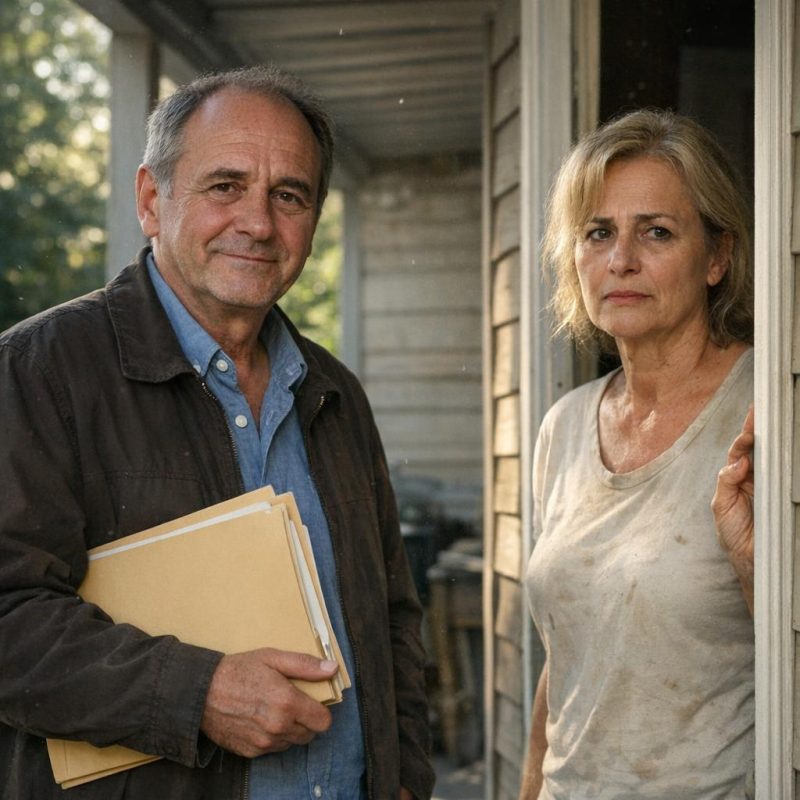 Image by RM AI
The Yellow Highlighted Map
Mark opened the folder right there on my porch and pulled out what looked like a printout from some online mapping site. There was my house, his house, and a thick yellow highlighted line running between them. 'See, this is what the county records show,' he said, running his finger along the yellow line. But the shape was wrong. The angle was wrong. It cut across my yard in a way that didn't match the survey I'd found in Tom's files at all. According to his map, that strip where my lilac bushes grew, where my fence stood, where I'd planted tulips every spring for thirty years—none of it was actually mine. 'I know this probably comes as a shock,' he continued, his voice all concerned sympathy that made my skin crawl. 'But see how the line goes here? This whole section should actually fall on my side of the boundary.' I looked at the printout, then at my yard, then back at him. The property line he was showing me would give him nearly fifteen feet of my land. It would put his boundary right up against my house. He pointed to the strip where my lilacs and fence stood and said it should actually be his.
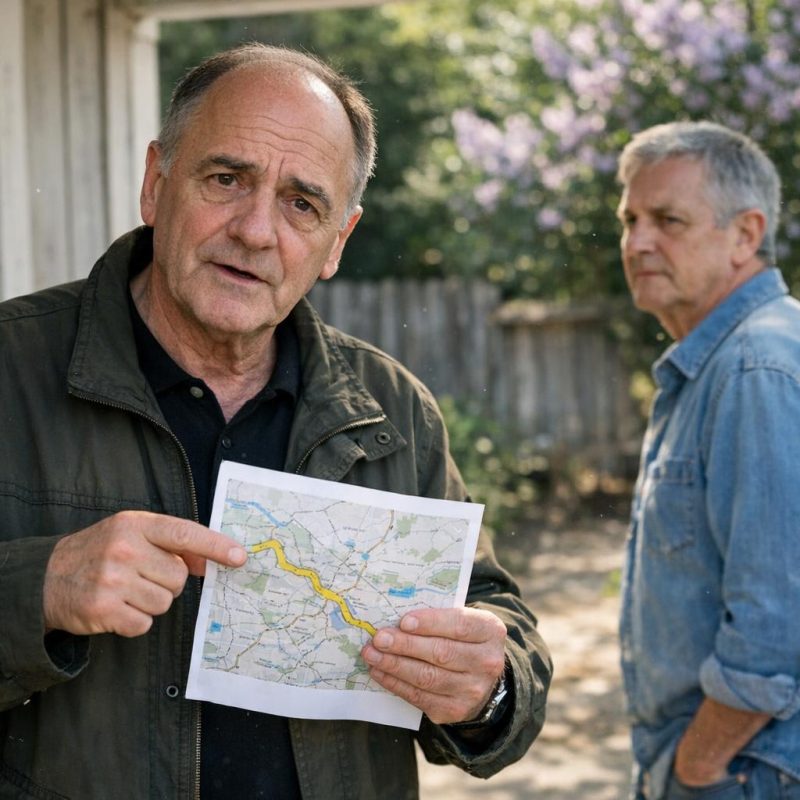 Image by RM AI
The Favor He's Asking
Mark shifted his weight, settling in like he was about to explain something to a child who didn't quite understand. 'Now look, Linda, I know this is awkward. But the thing is, I've been thinking about all the work I did on your porch. The materials, the labor, the time. I didn't ask for payment because we're neighbors, because I wanted to help.' He paused, and that smile got wider. 'But I am going to ask you for a favor. Just a small one. I need you to sign a quick agreement correcting this boundary issue. Just a formality, really. Getting the paperwork to match what the actual property line should be.' The way he said 'favor' made my stomach turn. Like fixing my porch had been some kind of down payment. Like those bags of groceries had been installments on a debt. Like every smile and wave and offer to help had been him putting coins in a meter, buying his way toward this exact moment. 'It's really simple,' he continued. 'I've already had the paperwork drawn up. You just need to sign, and we can get this all sorted out.' He said it so smoothly, like I owed him this, like repairing my porch had bought him a piece of my land.
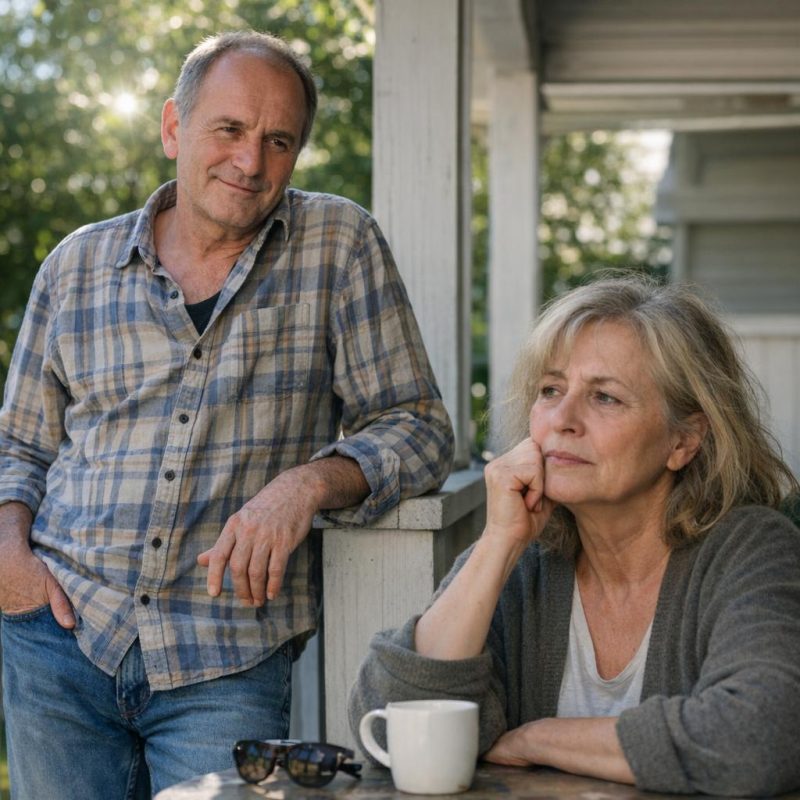 Image by RM AI
Avoiding the County
Mark pulled another paper from the folder, and I could see signature lines at the bottom. 'The best part is, we can handle this just between us. No need to get the county involved, no need for lawyers or surveys or any of that expensive nonsense. Just neighbors working things out the friendly way.' He said 'friendly' but his eyes had gone flat and hard. 'I mean, we could go through official channels if you want. File claims, get attorneys involved, have surveyors tramping all over both our yards. That process takes months, costs thousands of dollars. Gets real messy real fast.' There was that word again. Messy. The way he said it made it sound like a threat wrapped in a warning wrapped in fake concern. 'I'd hate for this to turn into one of those neighbor disputes you read about, you know? The kind that drag on for years and make everyone miserable. Much easier if you just sign this and we can both move on with our lives.' His smile had frozen into something that didn't look friendly at all anymore. The word 'messy' hung in the air like a threat, and I realized he wanted me scared enough to sign without question.
 Image by RM AI
I Need Time
My mouth had gone dry, but I managed to find my voice. 'I need time to think about this.' The words came out steadier than I felt. Mark's smile didn't just fade—it froze, then twisted into something cold and calculating. 'Time to think,' he repeated slowly. 'About what, exactly? The property line is the property line, Linda. Facts don't change just because you think about them.' He pulled the papers back toward his chest, but his eyes stayed locked on mine. 'I'm trying to be reasonable here. I'm giving you the chance to do this the easy way. But if you need time...' He let the sentence trail off, shaking his head like I was being difficult. Like I was the problem. He tucked the folder back under his arm and took a step back. 'Okay. You think about it. But don't take too long. Like I said, these things can get really complicated really fast.' He turned and walked down my porch steps, and I watched his back, watched the casual way he moved, like he'd already won. As he walked away he said, 'You'll do the right thing. You don't want this to get messy,' and his tone made my knees weak.
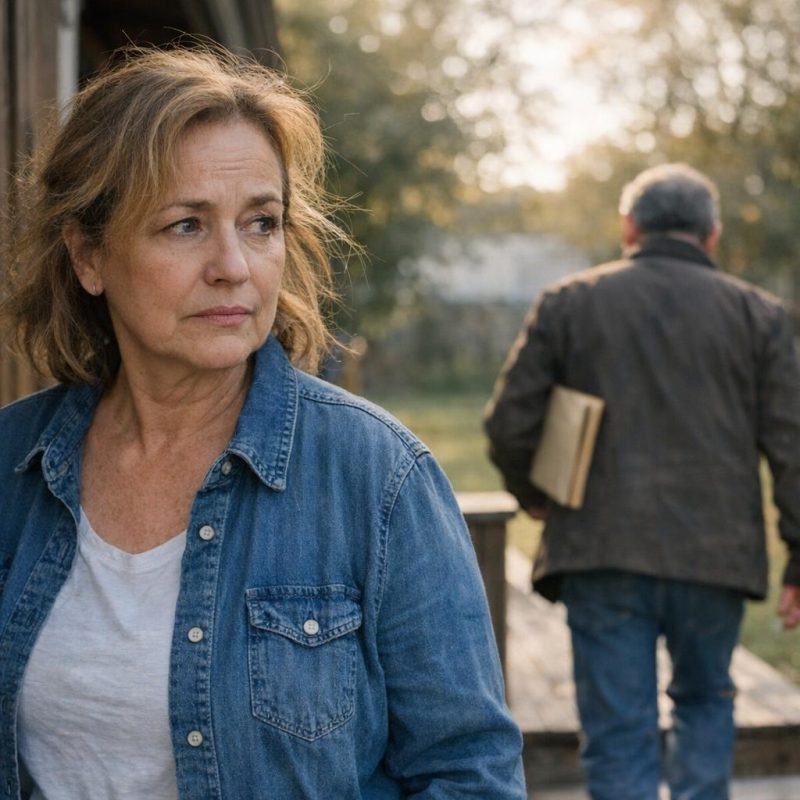 Image by RM AI
Digging Deeper
The second his truck pulled away, I went straight to Tom's filing cabinet. My hands were shaking so hard I could barely work the lock. There had to be something in there, something Tom had kept, something that would explain what was really happening. I yanked open drawers and started pulling out folders, scattering papers across the floor around me. Insurance policies. Tax returns. Mortgage statements. Warranty deeds. Nothing that helped. Nothing that explained why Mark thought he could just take my land or why Tom would have kept records about a property dispute unless it mattered. I was about to give up when I pulled out a hanging folder marked 'Legal—1998' that I'd somehow missed before. My heart was pounding as I flipped it open. There were court documents inside. Filings and responses and motions with official stamps and case numbers. Tom had never mentioned any of this to me, had never told me we'd been involved in a legal battle over our property. Why would he have kept this from me? Buried under insurance policies and tax records, I found a letter from an attorney addressed to my husband in 1998.
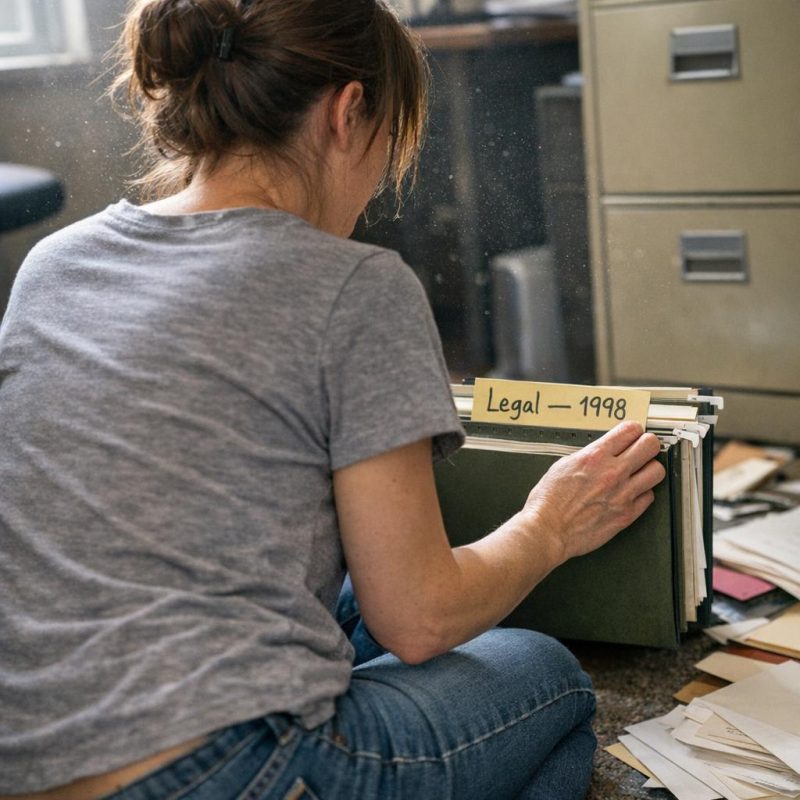 Image by RM AI
The Attorney's Letter
I pulled the letter out with trembling fingers and started reading. It was dated November 1998, and the attorney was congratulating Tom on the favorable ruling. According to the letter, the previous owner of Mark's property—someone named Robert Caldwell—had tried to claim that same strip of land, that same fifteen feet, using old survey maps that had been proven inaccurate. Tom had fought it. He'd hired this attorney, gathered evidence, and taken it to court. And he'd won. The judge had examined all the evidence and ruled that our boundary was exactly where our fence stood, exactly where it had always been. More than that, the ruling had been declared permanent and binding on all future owners of both properties. The attorney's letter made it crystal clear: the boundary could not be challenged again. The case was closed. Done. Settled. Mark's whole story about correcting the property line, about fixing some mistake in the records, about getting the paperwork to match reality—all of it was a lie. The judge had ruled the boundary permanent, which meant Mark couldn't change it—but he clearly didn't want me knowing that.
 Image by RM AI
The Previous Homeowner
I read through the attorney's letter again, more carefully this time, trying to understand every detail. The previous owner of Mark's property had made a claim about the boundary line back in 1998. His name was listed right there in the second paragraph—Robert Caldwell. He'd argued that old survey maps showed the property line ran fifteen feet into our yard, the exact same claim Mark had been making to me. Tom had fought it hard, hired this attorney, gathered all the evidence. The judge ruled against Caldwell completely, declaring the boundary permanent and binding on all future owners. That should have ended it forever. But here's what confused me—if the ruling was binding on future owners, then Mark would have known about this when he bought the house next door. He would have seen it in the title search, in the property records. He couldn't claim ignorance. So why was he trying the exact same thing that had already been legally dismissed? I sat there staring at that name, R. Caldwell, turning it over in my mind. The name on the old claim was listed as 'R. Caldwell,' and I had no idea who that was or if it mattered.
 Image by RM AI
Sleep That Won't Come
I didn't sleep that night. I lay in bed holding the attorney's letter against my chest like a shield, feeling both powerful and terrified. I had proof now. Legal proof that Mark was wrong, that the boundary had been settled decades ago by a judge. I could confront him with this. I could walk right over there tomorrow morning and show him this letter and watch his face when he realized I knew the truth. But every time I imagined doing that, my stomach turned over. Because what would he do when I confronted him? Would he back down and apologize? Would he pack up and leave quietly? Or would he get angry—really angry—the way he'd gotten that day when he told me not to waste his time? I kept replaying all those moments in my mind. The way he'd studied my house that first day. The way he'd insisted on fixing things I hadn't asked him to fix. The way he'd talked about the property line like it was already decided, like I just needed to sign the paperwork to make it official. I kept thinking about the way he'd looked at my house—not with admiration, but with ownership—and I knew this wasn't over.
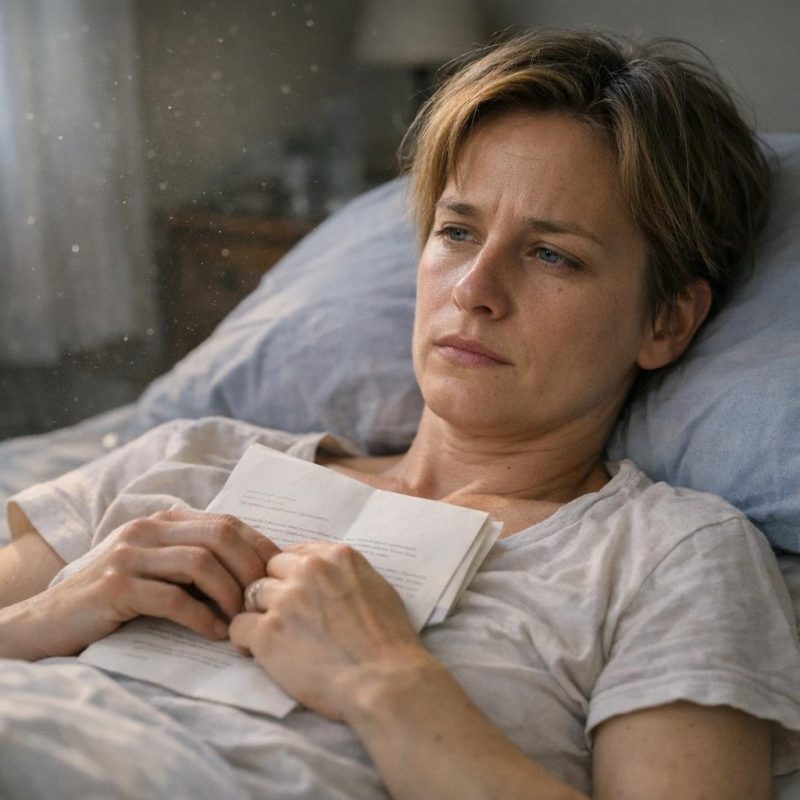 Image by RM AI
Margaret's Voicemail
The next morning, I found a voicemail on my phone from Margaret. It must have come in sometime after midnight, because I hadn't heard it ring. Her voice was barely above a whisper, like she was afraid someone might overhear her. 'Linda, it's Margaret from down the street,' she said. 'I've been thinking about your neighbor, and I need to tell you something. He's not who he says he is. I didn't recognize him at first because it's been so many years, but I finally placed him. He's not new to town, Linda. He used to live here, decades ago, but he went by a different last name back then. I can't remember exactly what it was, but I know for certain it wasn't the name he's using now. And I think—I'm almost sure—it has something to do with that old property dispute your husband dealt with.' There was a long pause, and I could hear her breathing, like she was trying to decide whether to say more. She said he used to live here years ago under a different last name, and that it had something to do with the property dispute, then the message cut off.
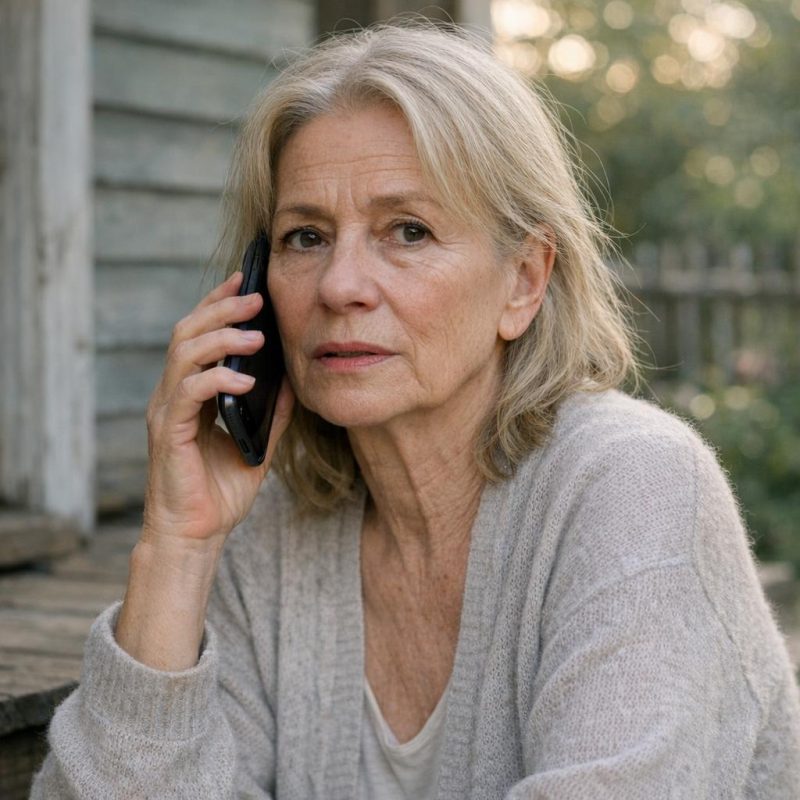 Image by RM AI
Calling Tom
My hands were shaking so badly I could barely dial Tom's number. He answered on the second ring, his voice thick with sleep. 'Mom? What's wrong?' I tried to explain everything—the attorney's letter, Margaret's voicemail, Mark's lies about the property line—but it all came tumbling out in a confused rush. I heard myself starting to cry, which I hadn't meant to do, hadn't wanted to do. 'Mom, slow down,' Tom said, and I could hear him moving around, fully awake now. 'Are you safe right now? Is he there?' 'No, he's not here,' I managed. 'But Tom, I think I might be in danger. He's been lying about everything. He's not who he says he is.' There was a pause, then Tom's voice came back firm and steady. 'Listen to me. Lock all your doors and windows right now. Don't answer the door for anyone except the police. I'm getting in the car right now.' Relief flooded through me, but then he added the part that made my stomach drop. Tom said he'd drive up immediately, but it would be six hours before he could get there, and I didn't know if I had that long.
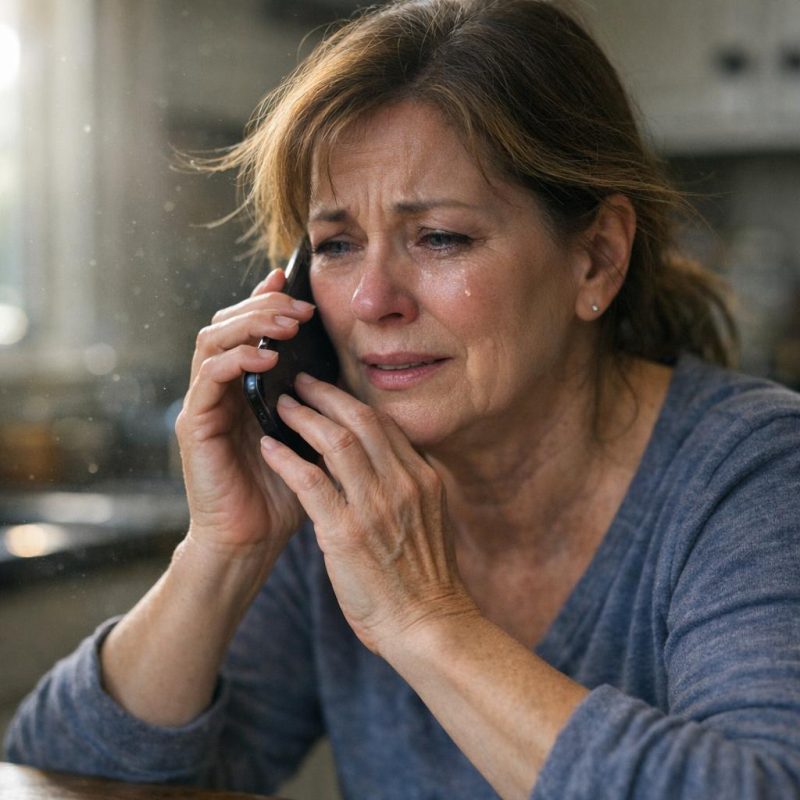 Image by RM AI
The Last Name Search
I went straight to my computer after hanging up with Tom. My fingers felt clumsy on the keyboard as I typed Mark's name into the search bar along with our address, then added 'Caldwell' to see if anything would connect. Nothing came up. I tried different combinations—Mark plus property dispute, Mark plus boundary line, Mark plus our street name. Still nothing useful. Just random results that had nothing to do with him. I was getting desperate, feeling like I was running out of time even though the sun was barely up and Mark's truck was still parked quietly next door. Then I remembered the attorney's letter had mentioned Robert Caldwell as the previous owner of Mark's house. I pulled up the county property records website, the same one I'd looked at weeks ago when I was trying to understand the survey maps. This time I searched specifically for the history of the house next door, scrolling through the list of previous owners. And there it was, clear as day. Then I tried searching property records for the house next door, and the name 'Robert Caldwell' appeared as the previous owner in 1995.
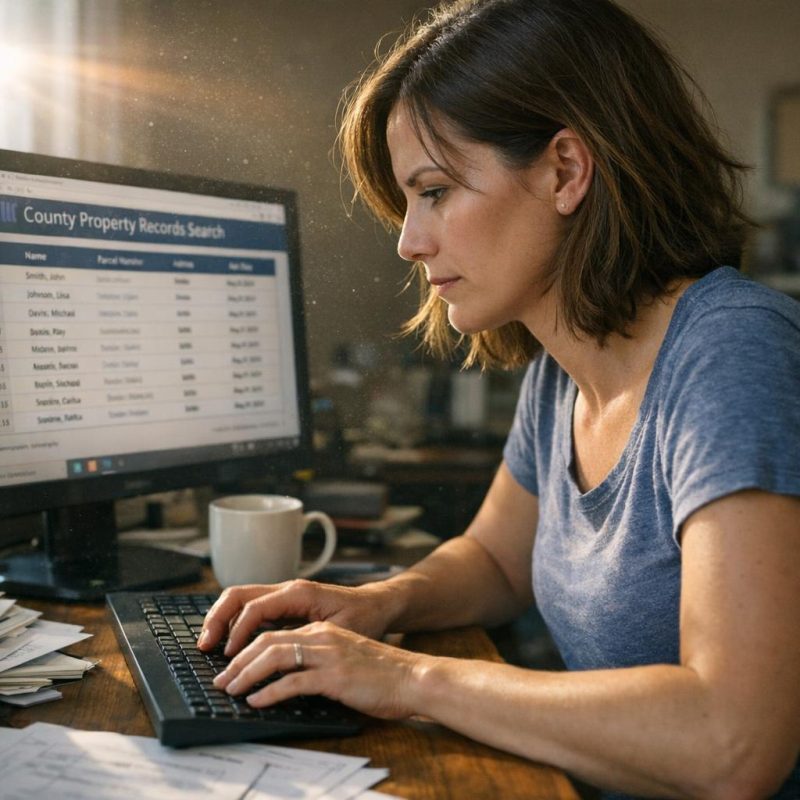 Image by RM AI
Pieces Falling Into Place
Robert Caldwell. The same man who'd tried to claim our land in 1998. The same man Tom had fought in court and beaten. And now Mark was living in that same house, making the exact same claim. It couldn't be a coincidence. They had to be connected somehow—family, probably. Maybe Robert was Mark's uncle or his father. Maybe Mark had inherited the house and the grudge along with it. But I still couldn't prove it, couldn't find the connection between Robert Caldwell and whatever Mark's real last name was. I started searching for Robert Caldwell's name in every database I could find. Social media, public records, old news articles. I was looking for anything that might mention family members or give me a clue about who Mark really was. That's when I found the obituary. It was from 2019, just five years ago. Robert Caldwell, age seventy-eight, longtime resident, survived by one son. I scrolled down to see if the son's name was listed, and my heart stopped. I pulled up every public record I could find, and that's when I saw the name 'Marcus Caldwell' listed as Robert's son on an old obituary.
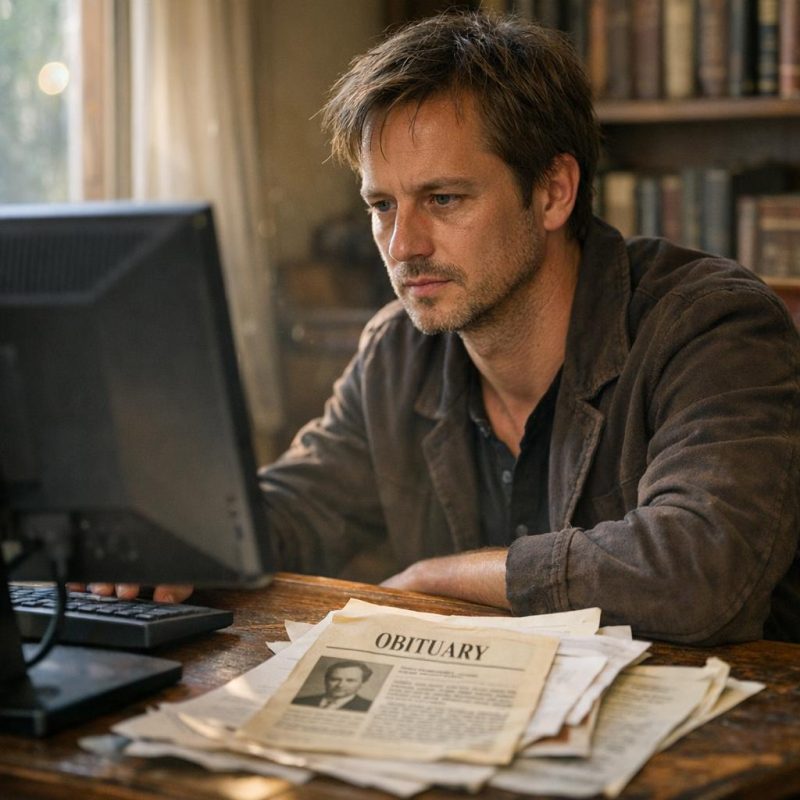 Image by RM AI
The Son Who Returned
Marcus Caldwell. Mark. He'd shortened his first name, dropped his last name entirely, and moved back into his father's house pretending to be a stranger. Pretending he'd never lived here before, never heard of the property dispute, never lost in court to my husband. I kept reading through the obituary, looking for more details. There was a photo at the bottom—one of those old grainy pictures from a newspaper. It showed Robert Caldwell standing at a construction site, wearing a hard hat and work clothes, and beside him stood a younger man, maybe in his twenties. The caption identified him as 'Robert Caldwell and son Marcus at the Riverside Mall construction project, 1989.' I zoomed in on the photo, squinting at the younger man's face. It was blurry and the image quality was terrible, but I could see enough. The shape of his jaw. The set of his shoulders. And those eyes—I'd know those eyes anywhere because I'd been looking into them for months. I stared at the obituary photo and recognizing Mark's eyes in the younger man standing beside Robert Caldwell at a construction site. He'd come back—decades later, under a shortened name—to finish what his father started.
 Image by RM AI
The Construction Connection
Everything clicked into place with a sickening clarity. Mark's construction skills weren't just some hobby or side business—they were the family trade. Robert Caldwell had been a builder, one of the contractors who'd developed half the neighborhoods in this area back in the eighties and nineties. The obituary mentioned several local projects he'd worked on. Mark—Marcus—had grown up in that world, learning the trade from his father, probably working alongside him on job sites just like the one in that photo. He knew how to fix porches and install railings and build ramps because his father had taught him. And he'd grown up right next door to us, in that house, watching our property, hearing his father complain about the boundary line, about the fifteen feet of land he believed should have been his. I thought about all those times Mark had commented on my house, had noticed things that needed fixing before I'd even mentioned them. He hadn't been observant or kind. He'd been intimately familiar with every inch of my property because he'd spent his childhood staring at it, coveting it. He'd grown up knowing every inch of my property because his father had fought for it, and now he wanted it back.
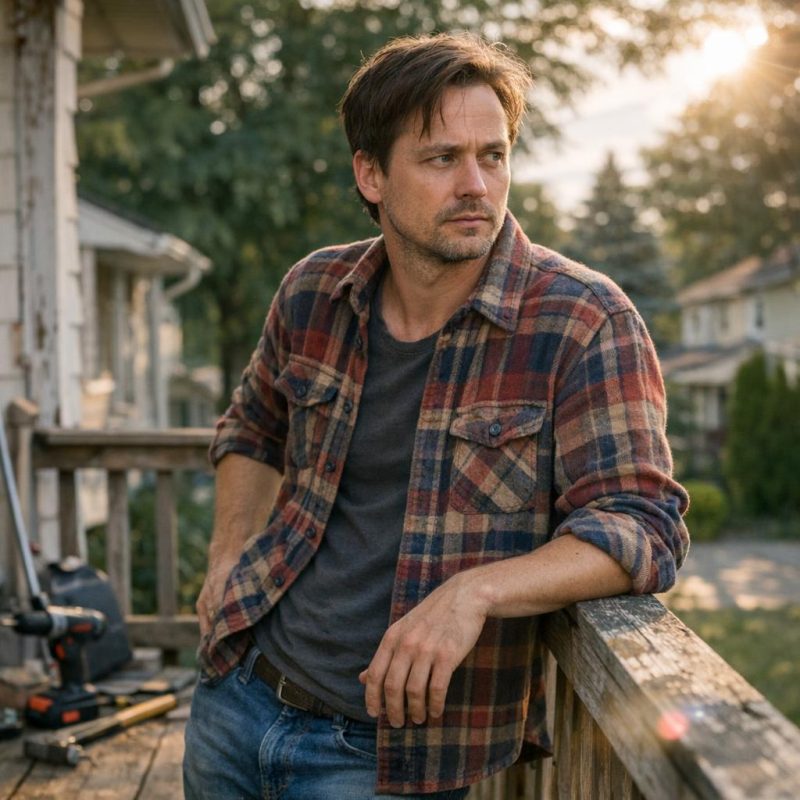 Image by RM AI
Watching the Clock
I spent the rest of that morning watching the clock like it was my only lifeline. Tom said he'd come by around three, which meant I had hours to wait, hours of sitting in my living room with every nerve on edge. I kept checking my phone to make sure I hadn't missed a call. I checked the windows every few minutes, scanning Mark's driveway for his truck, looking for any sign of movement. The house felt too quiet, too exposed. I thought about Carol's offer to come sit with me, but I'd told her I was fine, that Tom would be here soon. Pride, you know? Even in the middle of all this, I didn't want to be the hysterical widow who needed babysitting. But as noon came and went, I started regretting that decision. Every creak of the house settling made me jump. Every car that drove past made my heart race. I kept the attorney's letter on the coffee table in front of me like some kind of talisman, proof that I had a right to be here, proof that I wasn't crazy. Then I heard footsteps on my porch, slow and deliberate, and my blood turned to ice.
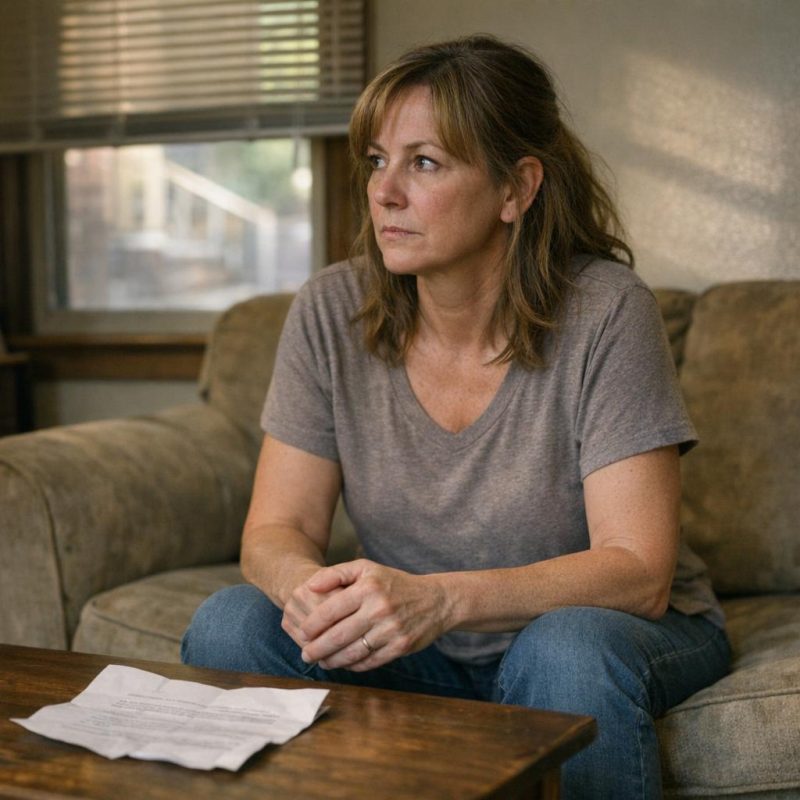 Image by RM AI
Mark at the Door
The knock came a moment later. Three firm raps on the door. 'Linda?' Mark's voice came through, pleasant and friendly like always. 'You home? Just wanted to check in.' My hand went to my chest. I could feel my heart hammering against my ribs. He knocked again. 'Linda? I saw your car in the driveway. Everything okay?' I moved closer to the door without making a sound, barely breathing. Through the peephole, I could see him standing there in his usual jeans and flannel shirt, hands in his pockets, looking for all the world like the helpful neighbor he'd always pretended to be. 'I was thinking,' he continued, his voice still calm, still reasonable. 'We should probably talk about that property line situation. Have you had a chance to look over those documents I mentioned?' There was a pause. 'I know these things can feel overwhelming, but I really think we can work this out between us. Neighbor to neighbor. That's how these things should be handled, don't you think?' The pleasantness in his tone had something underneath it now, something sharp. I stood frozen on the other side, the attorney's letter clutched in my hand, trying to decide if I should confront him or call the police.
 Image by RM AI
The Choice to Confront
I made my choice. Maybe it was stupid, maybe it was the stubborn Midwestern part of me that refuses to be intimidated on my own property, but I unlocked the door and pulled it open. Mark's eyebrows went up slightly, surprised. 'I know who you are,' I said, holding up the letter with one hand while gripping the door frame with the other. 'Marcus Caldwell. I know about your father, about the boundary dispute from 1987, about everything.' For a second, he just stared at me. Then something happened to his face. It was subtle at first, like watching ice crack. 'Well,' he said slowly. 'I guess we don't need to dance around it anymore, then.' His voice had changed. The friendly neighbor tone was gone, replaced by something colder, harder. 'Makes this easier, actually. Saves us both time.' He took a step closer to the door, and I instinctively tightened my grip on the frame. 'Your husband and the previous owners, they all knew the truth. They knew my father had the better claim. They just had better lawyers.' His pleasant expression cracked, and what I saw underneath made me step back instinctively.
 Image by RM AI
The Admission
Mark didn't wait for me to respond. 'My father spent fifteen years fighting for that land,' he said, his voice tight with emotion I'd never heard from him before. 'Fifteen years in and out of court, paying lawyers, presenting surveys, trying to prove what everyone in his family knew was true. That strip of land was supposed to be ours. The original survey was wrong, the boundary markers were placed incorrectly, and by the time anyone realized it, your predecessor had already built on it.' He shook his head, like he was explaining something obvious to a child. 'The judge ruled against us on a technicality. A technicality. Said too much time had passed, that the structure was already there. But that didn't make it right. It didn't change the fact that fifteen feet of land that belonged to the Caldwell property got stolen by bad surveying and legal loopholes.' The way he was talking, you'd think he was the victim here. You'd think I was the one who'd done something wrong. He said 'theirs' with such conviction, like I was the thief and he was the victim, and I realized he truly believed it.
 Image by RM AI
Good Faith Investment
Mark gestured toward my porch, the railing he'd installed so carefully. 'When I moved back here and saw the state of this place, saw that you were alone, struggling to keep up with it all, I thought maybe this was a chance to make things right. Not through courts this time, not through lawyers. Just neighbor to neighbor, the way it should have been from the start.' He looked at me like he expected gratitude. 'That porch was dangerous, Linda. You know it was. I fixed it as a gesture of good faith, to show you I wasn't trying to hurt you or take advantage. I just wanted to open a conversation about correcting an old mistake.' His tone was so reasonable, so calm, like he was proposing we split the cost of fence repair. 'All I'm asking for is what was taken from my family. Fifteen feet. You'd barely notice it. Your house would still have plenty of yard. And in return, you'd have a neighbor who actually cares about this property, who maintains it, who respects it.' But the way he said 'good faith' made it clear he saw it as currency, as payment for something he'd already decided was his.
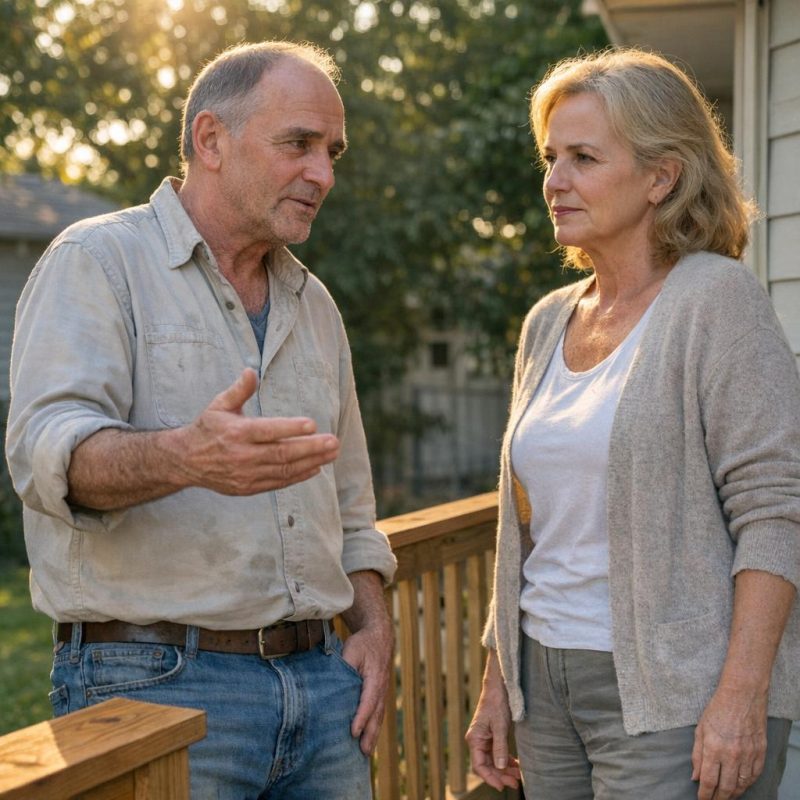 Image by RM AI
The Boundary Is Permanent
I held up the attorney's letter with both hands now, my fingers trembling slightly. 'This says the boundary was legally settled thirty-seven years ago. It says the case was dismissed with prejudice, which means it can't be reopened. Your father's claim was rejected. Not on a technicality. Because it had no merit.' My voice was stronger than I felt. 'The land is mine. It was the previous owners', it was my husband's and mine, and now it's mine. That's the law.' Mark barely glanced at the paper. He actually smiled a little, like I'd said something naive. 'That's what lawyers tell you, sure. They deal in technicalities and documents and old court rulings. But laws change, Linda. Judges make mistakes. What matters is what's fair, what's just. And you know, deep down, that taking fifteen feet of land that should have been my father's wasn't just.' He leaned forward slightly, and I felt the temperature drop between us. 'Now, you can acknowledge that and work with me to correct it peacefully. Or we can go through another round of legal battles, surveys, disputes. Except this time, you're doing it alone.' He said laws change and judges make mistakes, and that I'd regret not settling this between neighbors before it got ugly.
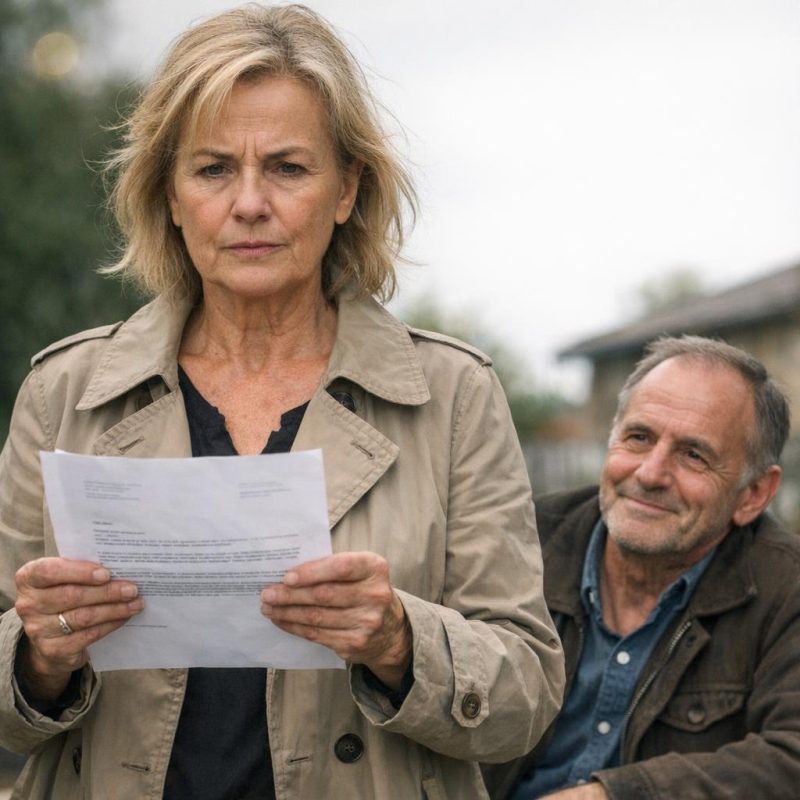 Image by RM AI
Refusing to Sign
Something in me snapped. Maybe it was fear turning into anger, maybe it was months of manipulation finally coming into focus, but I found my voice. 'I'm not signing anything. Not now, not ever. This land is mine, the boundary is settled, and you need to leave my property. Now.' Mark's expression went completely flat. For a moment, he just stood there, staring at me like he was recalculating something. Then he took one step forward, crossing the threshold, and I backed up instinctively. He didn't follow further, but he was inside now, his body blocking the doorway. 'You don't understand,' he said softly, so softly I had to strain to hear him. 'You think this is about a porch? About a few favors? Linda, I've been planning this since the day I heard your husband died. Since the day I realized the house was vulnerable again. Since I knew exactly how alone you were.' His voice dropped even lower. He leaned close and whispered, 'You don't understand how determined I am,' and the look in his eyes told me he'd been planning this much longer than I'd realized.
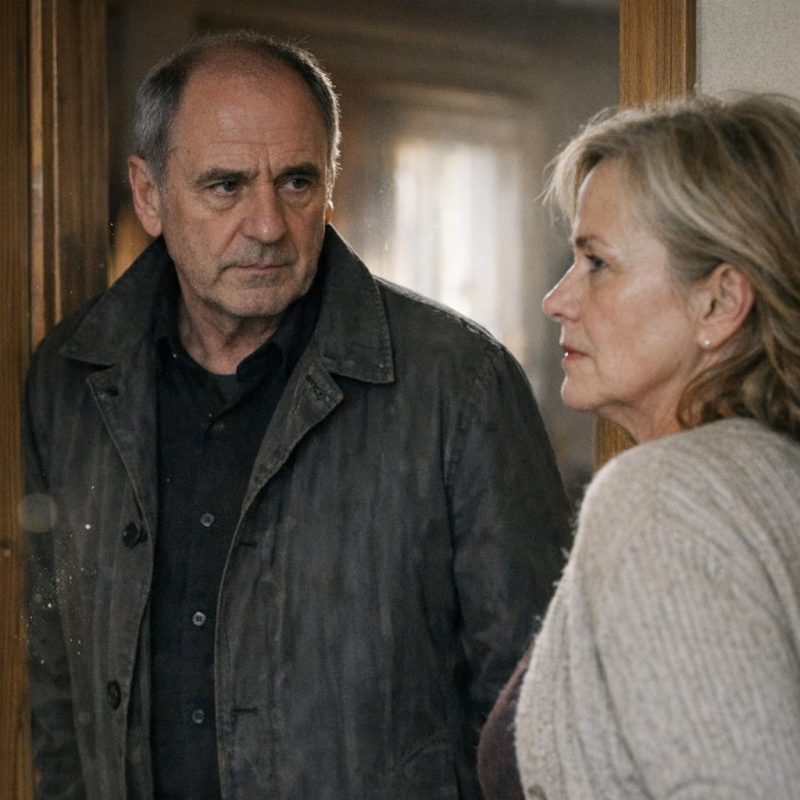 Image by RM AI
The Truth I Should Have Seen
Mark stepped back from the doorway then, his expression smoothing back into something almost pleasant again. 'Think about it,' he said casually, like we'd just had a disagreement about trash pickup schedules. 'I'll give you a few days to reconsider.' He turned and walked down my porch steps, his footsteps unhurried. I stood there watching him go, my hands shaking, and that's when everything crashed together in my mind. The timing of his arrival. The way he'd moved in just weeks after Bill's funeral, after the obituary ran in the paper with my name listed as 'survived by his wife, Linda.' The quiet waves across the yard, the careful observation before he ever approached. The construction skills he 'happened' to have, the exact skills needed to notice and fix the exact problems I was struggling with. The friendly offers, always perfectly timed when I was most overwhelmed. The way he'd positioned himself as my savior, my helper, the good neighbor. None of it was accident. None of it was kindness. He hadn't stumbled into helping me—he'd engineered it, studied my vulnerability, and built a trap out of kindness, planning every favor to create a debt I'd feel guilty not repaying.
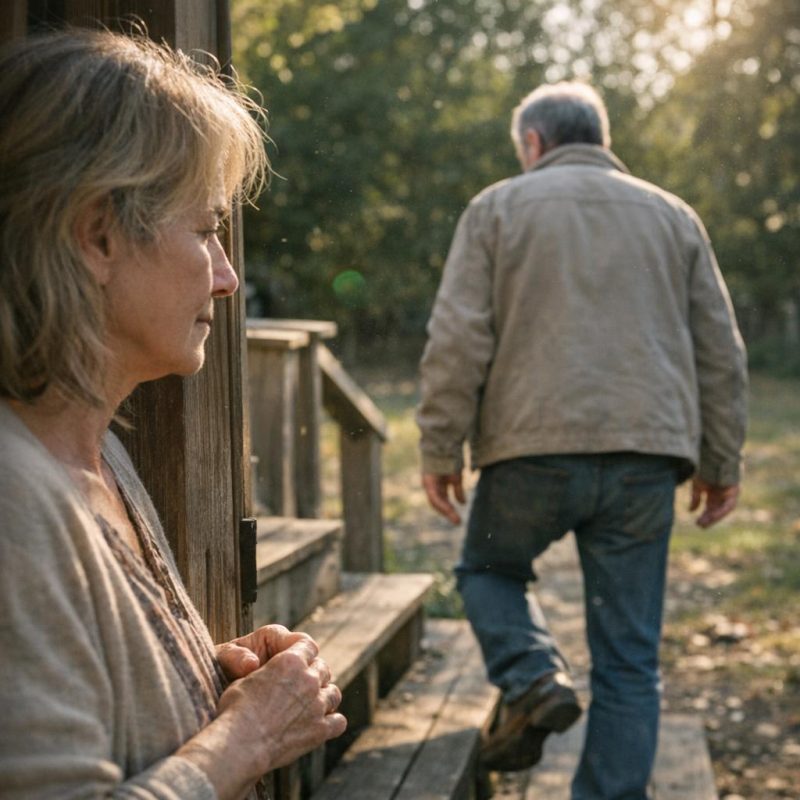 Image by RM AI
Tom Arrives
Tom pulled into my driveway maybe twenty minutes after I called him, and I watched from the window as he got out of his car, his face already creased with worry. When I opened the door, I must have looked as shaken as I felt because he pulled me into a hug immediately. 'Mom, what's going on?' he asked, and I just started talking, everything spilling out at once. I told him about the genealogy searches, the property records, Mark's real identity, the inheritance claim he'd tried to force on me just hours earlier. I showed him everything I'd printed—the family trees, the deed information, the timeline I'd pieced together. Tom sat at my kitchen table reading through it all, his jaw getting tighter with each page. 'He planned this whole thing,' I said, my voice shaking. 'From the moment he moved in, maybe even before that. He studied me, Tom. He knew exactly when Bill died, he knew I'd be vulnerable, and he built this whole... trap out of kindness.' Tom looked up at me, and I could see the anger and fear mixing in his eyes. His face went white, and he said we needed to call both an attorney and the police immediately.
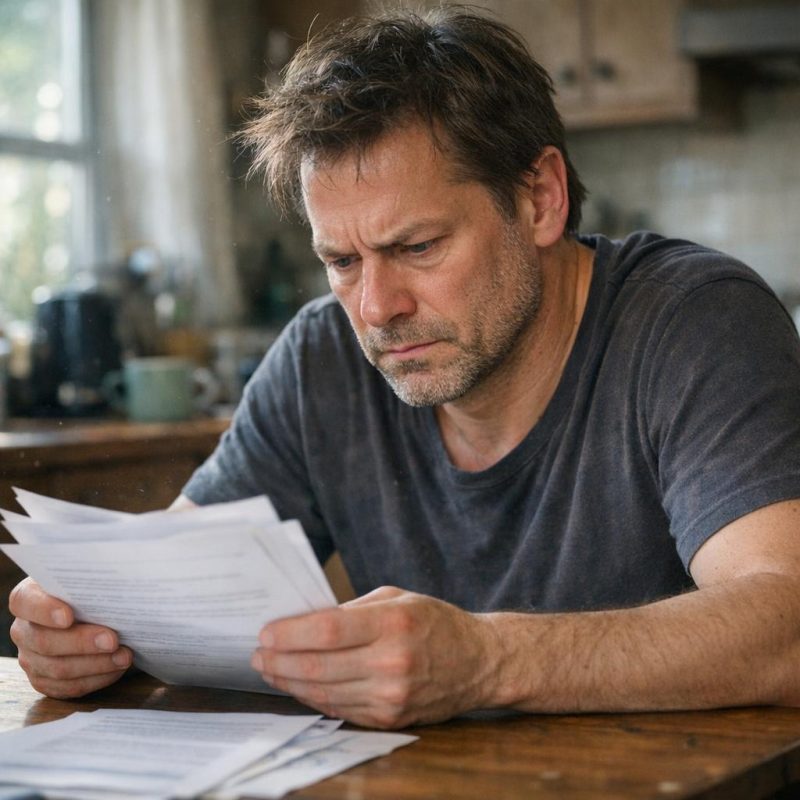 Image by RM AI
Sarah's Video Call
Tom pulled out his phone and set up a video call with Sarah right there at my kitchen table. When her face appeared on the screen, I started crying again—I couldn't help it. 'Mom, what happened?' she asked, and Tom quickly explained what I'd discovered about Mark. I watched Sarah's expression shift from confusion to horror as she understood. 'Oh my God,' she whispered. 'Mom, I'm so sorry. I should have pushed harder when you first told me about him. Something felt off, but you seemed happy, and I...' She trailed off, tears in her own eyes. Tom shook his head. 'We both should have been more involved. We left you alone to deal with everything after Dad died.' I wanted to protest, to tell them it wasn't their fault, but the truth sat heavy in my chest. They'd both expressed concerns, hadn't they? Sarah had questioned why a neighbor would do so much. Tom had worried about me being isolated. And I'd dismissed them both, told them I was fine, that they were overreacting. Mark had made me feel like my own children didn't understand, didn't trust my judgment. Sarah said she should have trusted her instinct when I first mentioned him, and I realized I'd been manipulated into dismissing the people who actually loved me.
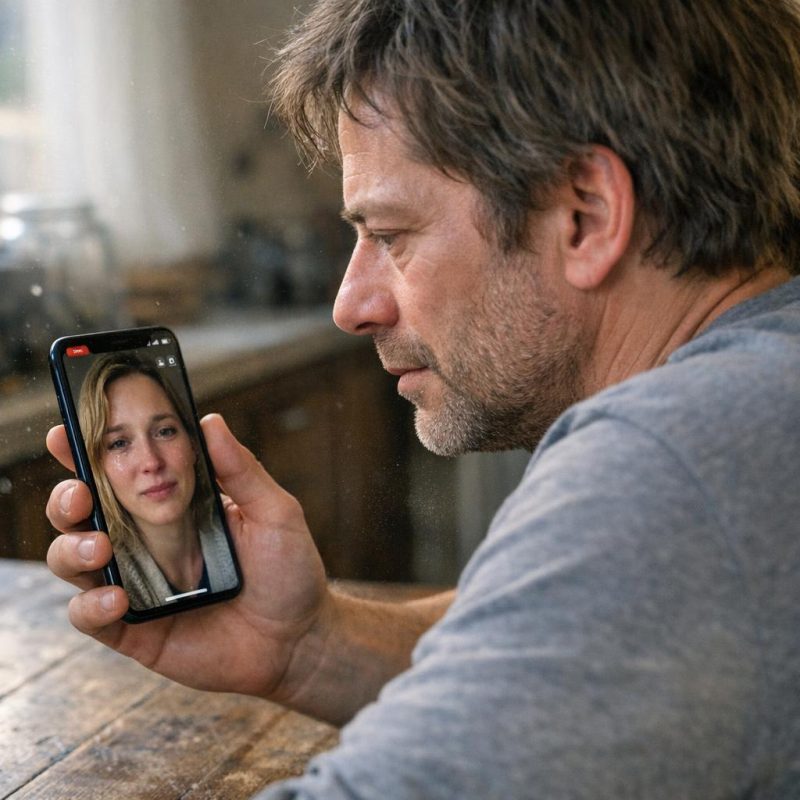 Image by RM AI
Attorney Harris Takes the Case
Tom had an attorney friend from work, a guy named Harris who specialized in property disputes and harassment cases. We called him that same evening, and he agreed to meet us first thing the next morning. In his office, I laid out everything again—the documents, the timeline, Mark's claim to Bill's estate. Attorney Harris listened carefully, making notes, his expression growing more serious. When I finished, he sat back and shook his head. 'Mrs. Patterson, I want to be very clear with you,' he said. 'This man has absolutely no legal claim to your property or your late husband's estate. None. The inheritance laws don't work the way he's describing, and even if there was some distant family connection, which I doubt, it wouldn't matter. Your husband left a will. You're the sole beneficiary. End of story.' The relief that washed over me was so intense I thought I might faint. 'So I don't have to worry?' I asked. Harris held up his hand. 'Legally, his claim is nonsense. But...' He paused, and I felt my stomach drop again. 'But he also said that harassment cases like this can get dangerous, and he wanted to file a restraining order immediately.
 Image by RM AI
Filing the Restraining Order
Attorney Harris moved quickly. Within two days, he'd filed for a temporary restraining order and sent Mark a formal cease-and-desist letter via certified mail. 'This tells him in legal terms that any further contact with you, any attempt to enter your property, or any continued harassment will result in immediate legal action and potential criminal charges,' Harris explained. I held a copy of the letter in my hands, reading the formal language that described Mark's behavior as 'predatory' and 'legally actionable.' Seeing it in black and white like that made it feel more real somehow. Tom stayed with me those days, sleeping in the guest room, and we kept all the doors locked even during the day. 'Do you think he'll just back off?' I asked Harris during one of our phone check-ins. There was a long pause. 'Some people do,' he said carefully. 'When they realize their target has legal representation and isn't going to be intimidated, they cut their losses and move on.' Another pause. 'But others...' He didn't finish the sentence. The attorney said we should expect pushback, that people like Mark don't give up easily, and we needed to be prepared for retaliation.
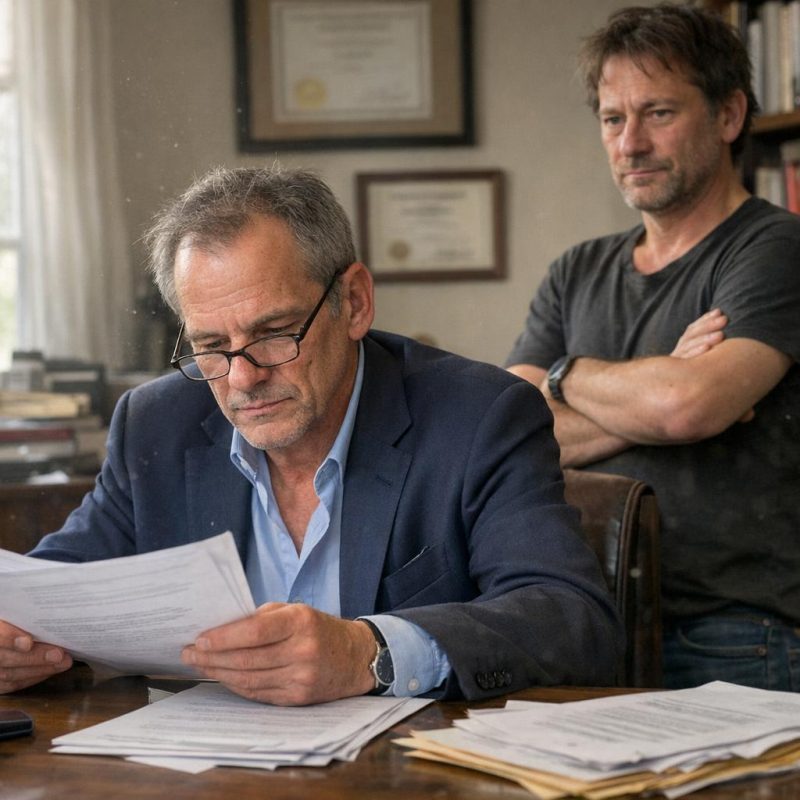 Image by RM AI
Two Days of Silence
For two days after Mark received the cease-and-desist letter, nothing happened. Tom insisted I stay with him at a hotel near his apartment, and I didn't argue. We drove past my house twice a day just to check on it, and everything looked normal. Mark's truck sat in his driveway. The lights in his house went on and off at regular times. But he didn't come outside when we drove by, didn't wave, didn't approach. 'Maybe he's actually backing down,' I said hopefully on the second evening. Tom didn't look convinced. 'Or he's planning something,' he replied. I tried not to think about that. The silence felt almost worse than the confrontation had—at least when Mark was making his threats, I knew what I was dealing with. This quiet felt like waiting for a storm you could see building on the horizon. Then, on the third morning, Attorney Harris called while Tom and I were having breakfast at the hotel. His tone was clipped, professional, but I could hear the frustration underneath. 'Linda, we have a situation,' he said. Then Attorney Harris called and said Mark had responded—not with an apology, but with a counterclaim alleging harassment and trespassing.
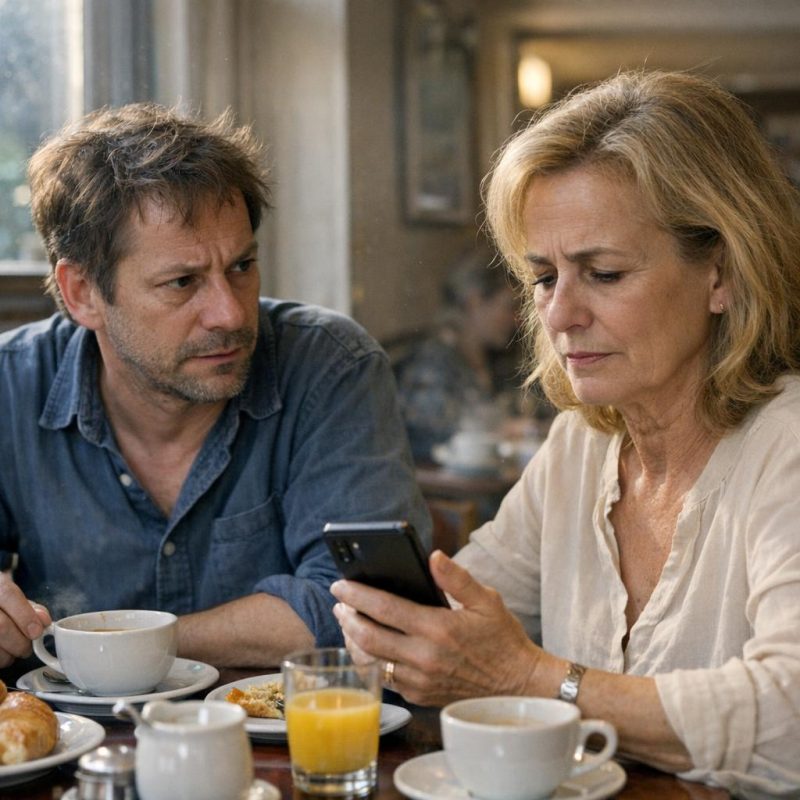 Image by RM AI
The False Allegations
Attorney Harris read me Mark's counterclaim over the phone, and I couldn't believe what I was hearing. According to the document, I had repeatedly trespassed on his property, made false and defamatory statements about his identity and intentions, and engaged in a campaign of harassment designed to damage his reputation in the neighborhood. 'He's saying I harassed him?' I practically shouted into the phone. 'He's the one who came into my house uninvited! He's the one who tried to extort money from me!' Tom grabbed the phone. 'Harris, this is insane. We have documentation of everything he did.' I could hear the attorney's measured response even though Tom was holding the phone. 'I know it's absurd,' Harris said when Tom put him on speaker. 'The claims are completely fabricated and won't hold up in court. But that's exactly the point—he's not trying to win. He's trying to drag this out, make it expensive and exhausting, punish you for standing up to him.' My hands were shaking again. 'So what do we do?' Harris sighed. Attorney Harris said the claims were absurd and would never hold up, but they'd force us into court and cost time and money—exactly what Mark wanted.
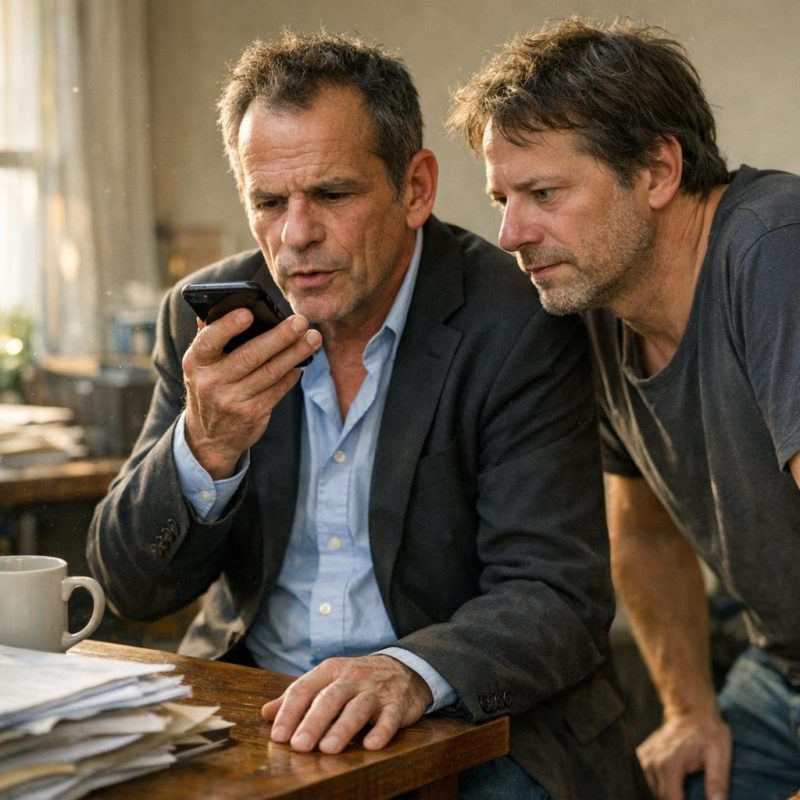 Image by RM AI
Margaret's Testimony
I was sitting in Attorney Harris's office, feeling completely defeated, when his secretary knocked and said Margaret was here to see us. I hadn't even known she was coming. Margaret walked in looking older than I'd ever seen her, but her back was straight and her expression was determined. 'I heard about the counterclaim,' she said without preamble. 'I want to provide a statement.' Attorney Harris immediately pulled out his recording equipment. Margaret told him everything—about Mark's grandfather losing the property dispute decades ago, about the family's bitterness, about Mark asking her questions about me after Bill died. 'He was scouting,' she said firmly. 'I didn't understand it at the time, but looking back, he was gathering information about Linda's situation.' She described Mark's family history, the property records she remembered, details that corroborated everything I'd found. When she finished, Harris was already typing notes. 'Mrs. Chen, this testimony is extremely valuable,' he said. Margaret looked at me, her eyes tired but clear. 'I should have said something sooner, Linda. I was afraid—afraid of conflict, afraid of making trouble. But watching what he's putting you through...' She shook her head. She said she'd been too scared to speak up before, but watching Mark try to destroy Linda made her realize silence had its own cost.
 Image by RM AI
Court Hearing Scheduled
The court hearing for the restraining order was scheduled for three weeks out, and Attorney Harris spent the time preparing me for what to expect. We met twice in his office to go over my testimony, to review all the documentation, to practice staying calm under pressure. 'Mark will be in the courtroom,' Harris reminded me during our last prep session. 'He'll probably have an attorney with him. He'll be dressed nicely, he'll speak politely, he'll try to present himself as the reasonable party who's been wrongly accused.' The thought of being in the same room with Mark again made my stomach turn. 'What if he tries to talk to me?' I asked. 'He won't,' Harris said firmly. 'And if he does, you don't respond. You look at me, and I'll handle it.' Tom had already requested time off work to be there with me. Sarah was flying in the day before. But even knowing I'd have support, even knowing the law was on my side, I felt sick with dread. I kept imagining Mark's calm, reasonable voice describing me as the aggressor, the unstable widow who'd attacked an innocent neighbor. He warned me that Mark would likely try to appear reasonable and victimized, and that I needed to stay calm no matter what he said.
 Image by RM AI
The Unexpected Resolution
The morning of the hearing, I was in my kitchen trying to force down toast when my phone rang. Attorney Harris's name on the screen made my heart jump—it was too early, something had to be wrong. 'Linda,' he said when I answered, and his tone was strange, somewhere between confused and relieved. 'Mark's attorney just contacted me. He's withdrawing the counterclaim.' I set my coffee cup down carefully. 'What does that mean?' 'It means there won't be a hearing today,' Harris said. 'His lawyer says he's dropping all legal action and moving out of state. Immediately.' I should have felt victorious. I should have felt relief flooding through me. Instead, I felt the floor tilt slightly under my feet. 'Moving?' I repeated. 'When?' 'Apparently he's already gone,' Harris said. 'The attorney said he left last night.' We talked for a few more minutes, Harris explaining that this was the best possible outcome, that Mark couldn't contact me again without violating the protective order, that I was safe now. But when I hung up, all I could think about was how Mark had simply vanished, like smoke, without ever having to answer for what he'd done. He'd packed up overnight and left without explanation, and while I should have felt relief, I couldn't shake the feeling that he'd only retreated, not surrendered.
 Image by RM AI
The Empty House Next Door
I drove to the courthouse anyway—Sarah and Tom were already on their way, and I needed to tell them in person. We stood in the parking lot, the three of us, while I explained what Attorney Harris had told me. Then we drove back to my house together, and that's when I saw it: Mark's house was completely empty. The blinds were gone from the windows. His car wasn't in the driveway. When Tom walked over to peek through the glass, he reported that the living room was bare—no furniture, no boxes, nothing. It was like he'd never lived there at all. Except, of course, for my porch. That beautiful, sturdy porch with its perfect boards and solid railings. The porch he'd built with such care and attention. The porch that was supposed to make me trust him, supposed to make me feel indebted, supposed to soften me up before he asked me to sign papers that would have cost me everything. Sarah touched my arm. 'Mom, are you okay?' she asked. I nodded, but I wasn't sure it was true. Victory was supposed to feel different than this—cleaner, more final. I stood in my driveway looking at that beautiful porch—the porch that was supposed to buy my silence—and felt a chill I couldn't explain.
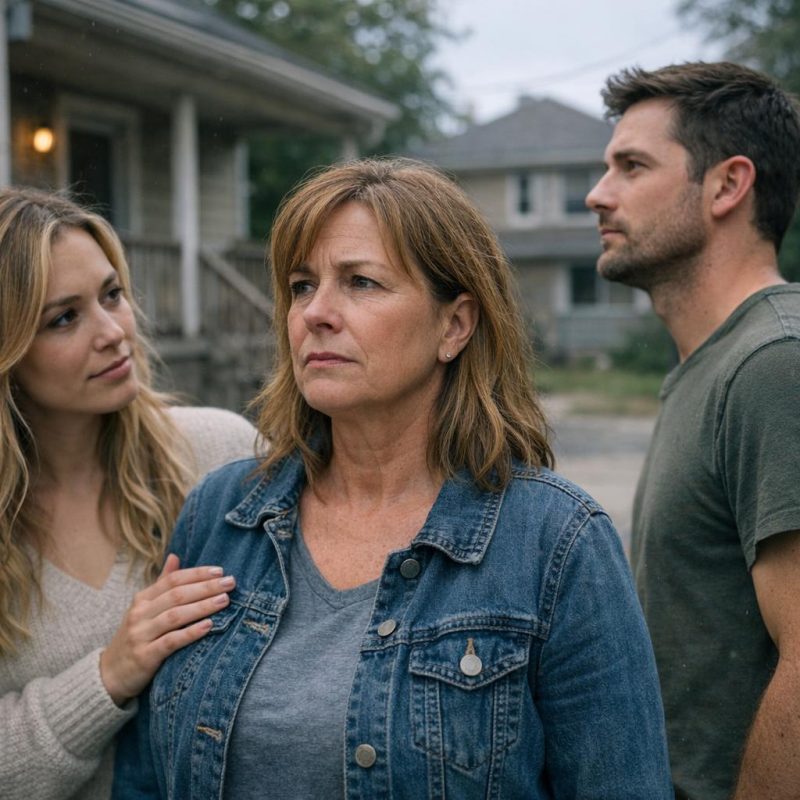 Image by RM AI
Family Gathering
Sarah and Tom both stayed for the weekend, and on Saturday afternoon, the three of us sat together on that porch—the scene of the crime, as Tom darkly joked. We talked for hours about everything that had happened, about how close I'd come to signing those papers, about what might have happened if I hadn't called Sarah that night. 'I've been doing research,' Sarah said quietly. 'About property scams targeting older people, especially widows.' She pulled out her phone and showed me article after article: stories about contractors who befriended elderly homeowners, gained their trust, then pressured them into signing away their property or taking out loans they didn't understand. Some of the schemes were nearly identical to what Mark had tried with me. 'It's a whole pattern,' she said. 'These people know exactly who to target and how to manipulate them.' Tom shook his head. 'And most of them probably get away with it, because people are too embarrassed to report it.' I thought about how ashamed I'd felt, how I'd almost convinced myself I was overreacting, how easy it would have been to stay silent. Sarah said she'd researched property scams targeting widows and found dozens of similar stories, which made me realize I'd been part of a pattern I never knew existed.
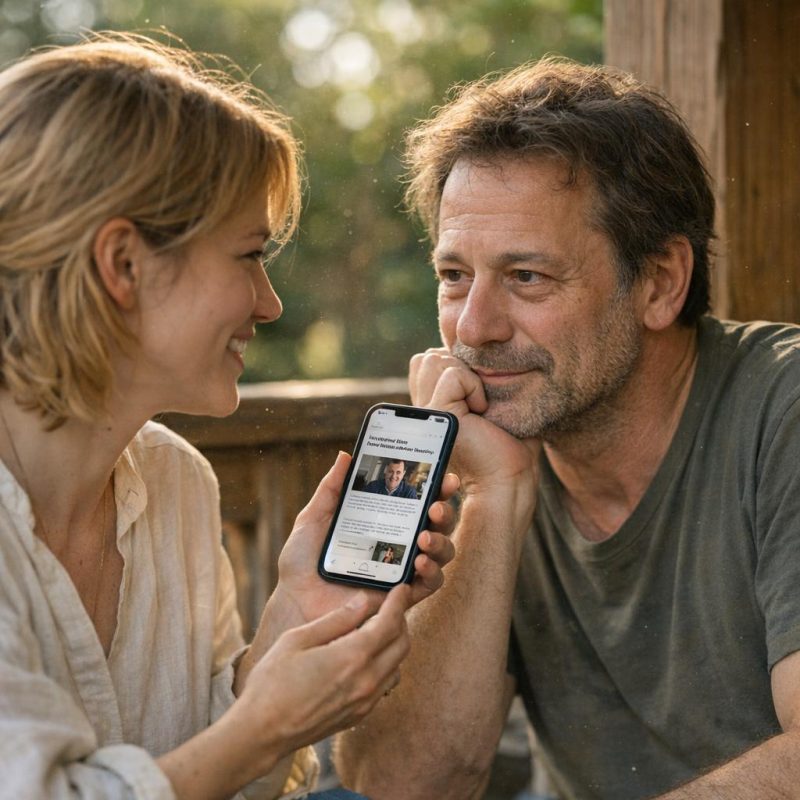 Image by RM AI
The Porch I'll Never Forget
It's been eight months now, and I'm still living in my house, still sitting on this porch that carries so much weight. The wood has weathered a bit through the winter, and I've learned to see it differently—not as Mark's manipulation, but as evidence that I survived something that could have destroyed me. I think about how easy it would have been to sign those papers, to trust that kind smile and those helpful hands. I think about all the other people out there, maybe sitting on their own porches right now, wondering if they should trust the neighbor who's being just a little too generous, a little too interested. Some days I want to shout from the rooftops: If something feels wrong, it probably is. If someone's kindness feels like it comes with invisible strings, trust that feeling. If anyone ever pressures you to sign something quickly, without time to think or ask questions, run. My kids check in more often now. I've gotten better at asking for help when I need it. And I've learned that being cautious doesn't make you paranoid—it makes you smart. I still get a shiver sometimes when I sit here, remembering how easily generosity can become a weapon—but I also feel stronger now, knowing I trusted my instincts when it mattered most.
 Image by RM AI